Tag: 1986

  • Lynda Chalker – 1986 Statement on the Foreign Affairs Council

    Below is the text of the statement made by Lynda Chalker, the then Minister of State at the Foreign and Commonwealth Office, in the House of Commons on 30 January 1986.

    With permission, Mr. Speaker, I should like to make a statement about the meeting of the Foreign Affairs Council which took place in Brussels on 27 January. I and my hon. Friend the Under-Secretary of State for Industry represented the United Kingdom. A statement of forthcoming business in the European Community has been deposited in the Vote Office.

    Ministers had a further preliminary discussion of the Commission’s proposals for a negotiating mandate on renewal of the multi-fibre arrangement. They reviewed progress in negotiations to adapt the European Community agreements to take account of enlargement. In response to the imposition by the United States of quotas on imports of EC semi-finished steel, the Council decided to introduce quotas on United States exports of fertiliser, coated paper and bovine fats. These restrictions will not be introduced until 15 February, allowing time for further efforts to achieve an agreed outcome. The President of the Commission reported on his discussion with the Japanese Government on EC-Japan trade relations during his recent visit to Tokyo. I emphasised the importance that we attach to the achievement of a better balance in trade between the European Community and Japan.

    In political co-operation, the Foreign Ministers of the Twelve agreed and issued a statement on international terrorism. They announced further measures to strengthen defences against terrorism within the Community and to discourage support from other Governments for terrorist attacks. They agreed to set up a new group within political co-operation to ensure effective follow-up in the areas covered by the statement. They agreed not to undercut measures taken by others against Governments which support terrorism. The Foreign Ministers reviewed briefly the implementation of the measures vis-à-vis South Africa which were agreed at Luxembourg on 10 September.

    In the Intergovernmental Conference member states finalised the text of the amendments to the EC treaties and treaty provisions on European political co-operation. On the question of the working environment, we secured inclusion in the treaty text of provisions protecting the position of small and medium-sized undertakings, as proposed by my right hon. Friend the Prime Minister at the European Council in Luxembourg last December. This enabled the only outstanding United Kingdom reserve to be lifted. All member states have accepted the agreed text. The Netherlands Presidency hope that the new Act will be signed by all member states on 17 February. If the Danish Government cannot sign on that date, they will aim to do so after the referendum in Denmark.

  • John Stanley – 1986 Statement on the Army

    Below is the text of the speech made by John Stanley, the then Minister of State for the Armed Forces, in the House of Commons on 30 January 1986.

    The past year has been one of sustained progress and achievement for the Army both at home and overseas.

    In addition to the Army’s normal deployments, 1985 saw continuing and effective operations against terrorists in Northern Ireland, the largest home defence exercise we have ever conducted, significant progress in the modernisation of the Army’s equipment, the provision of military training to over 70 foreign countries, important contributions to international peacekeeping in Cyprus and the Sinai, and a rapid and highly valued response to the natural disasters in Mexico and Colombia.

    Nineteen eighty five also saw no fewer than 12 regiments of the British Army celebrating 300 years of continuous service to the Crown — a record that we believe is unmatched by that of any other army in the world.

    I shall start with the main areas of actual or potential Army operations. During the past year, there has been no let-up in the modernisation of the Warsaw pact nuclear and conventional forces facing us on the central front. The Warsaw pact has continued to deploy new self-propelled artillery in eastern Europe, both conventional and nuclear capable. There has been significant additional deployment of its latest main battle tank, the T80, which has a gas turbine engine and a laser range-finder system, and which can fire an anti-tank guided missile as well as normal tank ammunition through its main gun barrel.

    The deployment in eastern Europe of Frogfoot aircraft which are designed to provide close air support for Warsaw pact ground forces, and which has been used extensively by the Russians in Afghanistan, has continued. The aircraft has now made its first appearance with Soviet forces in the forward areas of East Germany. The formidable Hind anti-tank helicopter is still being added to the Warsaw pact front line at a fast rate.

    The Warsaw pact’s logistic support for its forces will shortly be further improved with the deployment of its new heavy lift helicopter, designated, somewhat improbably, by NATO as the Halo. We saw for ourselves in the Falklands what a force multiplier helicopters in the logistic role can be.
    The Soviet chemical threat remains as significant as ever. To counter the Warsaw pact threat, important improvements to the Army’s equipment programme have been made in the past year. My hon. Friend the Minister of State for Defence Procurement will refer to these when he comes to reply.

    From the operational standpoint, I am glad to say that these improvements will give 1st British Corps larger numbers of modern main battle tanks, much improved protected mobility with new wheeled and tracked armoured personnel carriers, new small arms, improved air defence, an improved targeting capability for the artillery and a quantum jump improvement in its communications and data processing facilities. These all represent very important contributions to NATO’s plans for strengthening the Alliance’s conventional defences right down the central front.​

    Mr. Robert Atkins (South Ribble)

    Regrettably, I must go north tonight to my constituency to face the problem of the redundancies at the royal ordnance factories in my constituency and elsewhere. Will my hon. Friend confirm that the regrettable redundancies at ROF Chorley result from Ministry of Defence war stocks being returned to their requisite high level following the Falklands conflict? Will he further confirm that the contract for 105 mm shells, which will go some way towards alleviating the obvious distress caused by those job losses, has been awarded as a direct result of ROF’s improved competitive edge and the sheer quality of product compared with foreign alternatives?

    Mr. Stanley

    My hon. Friend is again forcefully representing the interests of his constituents. As he knows, my hon. Friend the Minister of State for Defence Procurement has been in correspondence with him about the detailed background to those particular redundancies. I know that my hon. Friend wishes to refer to them when he replies.

    Mr. John McWilliam (Blaydon)

    If the Minister of State for Defence Procurement has been in detailed correspondence with his hon. Friend, why has he not yet been in correspondence with me? I have not received a letter.

    Mr. Stanley

    My hon. Friend the Minister advises me from a sedentary position that he has.

    Mr. James Wallace (Orkney and Shetland)

    The Minister of State for Defence Procurement has kindly been in correspondence with me. He has made it clear that although orders will be placed with royal ordnance factories, and they will go some way towards reducing the size of the announced redundancies, the reduction will be by less than 10 per cent. Will the Minister confirm that?

    Mr. Stanley

    As I have already said, my hon. Friend the Minister will deal with that specific issue when he replies, and in view of the interest shown by three hon. Members I am sure that he will do so.

    The past year has also been notable for the adoption of an improved concept of operations by northern army group (NORTHAG) of which C-in-C BAOR is the Army Group commander, and of which 1st British Corps comprises one of the four NORTHAG army corps.

    The adoption of this new concept of operatons marks no change in NATO’s wholly defensive posture, and no change in NATO’s fundamental strategy of forward defence and flexible response. It has been adopted in response to the continuing improvements in Soviet firepower, the Russians’ tactic of concentrating their forces so as to achieve local superiority, and their creation of operational manoeuvre groups of divisional size or larger, which are intended to exploit initial breakthroughs and penetrate rapidly into NATO’s rear areas. In the light of those developments, NORTHAG needed a less static: defence, more defence in depth and strong armoured reserves. The new concept of operations provides all of these.

    The House will wish to he aware of the major contribution to the formulation of this new concept of operations, and to getting it agreed by the Alliance as a whole, played by General Sir Nigel Bagnall, then the commander of NORTHAG and now chief of the general staff. ​ In a letter to The Times on 3 July last year, General Chalupa, commander-in-chief allied forces central Europe, said:

    “I would also wish to acknowledge General Bagnall’s significant contribution towards the successful accomplishment of our primary task, which is the prevention of war by maintaining a credible defence posture. I appreciate in particular his untiring efforts in developing and refining further the defence concepts and plans evolved by his predecessors.”

    I am sure the House was gratified to see General Chalupa’s generous tribute to General Bagnall.

    Turning to northern Norway, although the Royal Navy and the Royal Marines have major roles in protecting this key area of NATO territory, the Army also makes a significant contribution, and trains accordingly. We deploy to northern Norway, not merely 3 Commando Brigade, but the battalion with logistic support that the Army contributes to the ACE mobile force (land) AMF(L).

    These units undertake the same arctic warfare training as the Royal Marines, and have recently been equipped with the new BV206 over-snow tracked vehicle. The AMF(L) role is currently being discharged by the 1st Battalion of the Parachute Regiment.

    In terms of operations outside the NATO area, the House will recall that in November 1983 my right hon. Friend the then Secretary of State for Defence announced, in the light of our Falklands experience, an important range of enhancements for 5 Brigade. That brigade has been renamed 5 Airborne Brigade to reflect its new ability to mount a parachute assault with a minimum of one parachute battalion and its supporting air defence, artillery, signals, engineer and medical elements, all of which can now be parachute dropped.

    The House will be glad to know that all the enhancements announced in November 1983 have now been implemented, as has the programme of fitting station-keeping radars to a number of Hercules aircraft so that the whole of the leading parachute battalion group can be delivered in a single parachute drop. In view of the importance we attach to our out-of-area capability, we announced last month that a major strategic exercise would be held in Oman later this year involving British forces and those of the Sultanate of Oman. The exercise is to be called Saif Sareea, which I am advised is Arabic for Swift Sword.

    The aim of the exercise will be to practise our ability to respond rapidly to a crisis outside the NATO area. The exercise will involve some 5,000 service men from all three services. The units taking part will include elements of 5 Airborne Brigade and 3 Commando Brigade. It will also involve ships from the Royal Navy task group, which will be on its way back from its planned deployment to the Pacific. In addition, the RAF will make a major contribution in the form of a detachment of Tornado aircraft and substantial air transport resources. Exercise Saif Sareea will be the largest out-of-area exercise we have undertaken for many years and should prove to be of great value.

    The one operation in which the Army is involved every day of the year is supporting the police against terrorism in Northern Ireland. In recent years, and indeed over the centuries, terrorism has taken many forms. Today, terrorism is increasingly assuming an international dimension, and in Northern Ireland takes one of the most ​ sophisticated forms of any in the world. Fortunately, the British Army has unique experience and unique expertise in combating this menace.

    The Army’s assistance to the police in dealing with terrorism is not confined to Northern Ireland. It also assists the police, who have the primary counter-terrorist responsibility in the rest of the United Kingdom. It does so through the provision of specialist skills such as Royal Engineers explosive search teams, Royal Army Ordnance Corps bomb disposal teams, and through specialist training and equipment. In June last year it was an RAOC team that rendered safe and cleared the large quantity of terrorist bomb-making equipment found by the Strathclyde police in Glasgow.

    However, it is of course in Northern Ireland in support of the RUC that the Army’s counter-terrorist effort is overwhelmingly concentrated. Last year saw some significant successes. As a result of the security forces’ efforts, 522 charges were brought relating to terrorist offences and 237 weapons were seized and nearly seven tonnes of explosives were recovered. One cannot speak too highly of the skill and bravery of all those elements of the armed forces and the RUC who secured these results.

    The work of the Army’s bomb disposal and search teams in Northern Ireland in saving lives, property and jobs from destruction by terrorist bombs continues to be outstanding. These teams dealt with some 200 explosive devices last year, one of which contained 1,600 lbs of explosive. For the bomb disposal teams, the smallest device represents as great a personal danger as the largest. The way those teams combine outstanding technical skill with selfless personal bravery commands our highest admiration.

    The achievements of the security forces in Northern Ireland in 1985 were not obtained without cost. Twenty nine police officers and soldiers lost their lives last year, and a further 340 were injured. Of the 29 killed, 27 were members of the RUC or the UDR. As the House recognises, the men and women of the RUC and the UDR, knowingly and willingly, accept the particular risks that service with either force or its reserves automatically confers. These men and women are at risk on duty, at home, and, if part-timers, at their place of work as well. They are at risk both when they are serving and when they retire. One man killed last year had finished his service with the UDR seven years previously. They are at risk at any place and at any time. The commitment and the courage of the men and women of the RUC and the UDR are of the highest order.

    That commitment and that courage have been recognised in the award to service personnel last year of a further 73 decorations for gallantry in Northern Ireland. Those decorations included one George medal, one military cross, 12 Queen’s gallantry medals and six military medals, one of which, sadly, was posthumous. In addition, 102 service men and service women were mentioned in dispatches. We salute those who were honoured in this way. My only regret is that for security reasons the citations cannot be made public. They make remarkable reading.

    Over the years the terrorist threat in the province has moved through various phases, and the security forces have had to adapt their response to meet each phase. Currently, the terrorists are making particular use of homemade mortars against police stations. This has been coupled with the attempted intimidation of building ​ contractors doing work for the security forces. The Government are firmly determined to ensure that such tactics do not succeed.

    An additional battalion, the 2nd Battalion of the Royal Anglian Regiment, was moved at short notice to Northern Ireland at the beginning of this month and became operational there with commendable speed. Additional Royal Engineers have also been deployed in the province and, as I saw for myself recently, they are doing a first-class job in providing the security forces with additional protection. The House will be glad to know that the work of rebuilding the first of the RUC stations that was severely hit before Christmas has already started.

    The events of the last few weeks have underlined once again the importance of security co-operation across the border between Northern Ireland and the Republic. We are in no doubt that the Anglo-Irish agreement marks a crucial step forward in this area which is equally vital to the Republic and to ourselves. I should mention that the terrorist weapon find — about which we were all delighted to hear—made by the Garda last weekend just south of the border was one of the largest ever such finds in the Republic.

    It is to the immense credit of the security forces that we have come a long way from the peak of violence in the early 1970s. The RUC has increasingly been able to resume policing on the streets, and the overwhelming majority of the people of Northern Ireland are able to live normal lives. I know that the whole House will wish me to express our gratitude to all the members of the security forces in Northern Ireland for the dangerous and essential work that they do.

    Last year reminded us, to an unusual degree, of the Army’s value in being able to respond quickly and effectively to civilian needs. In the last 12 months, the British Army has helped in three major natural disasters outside the United Kingdom. Successive teams of Army air dispatchers from the Royal Corps of Transport, including three Territorial Army members, served continuously in Ethiopia from February to December last year air-dropping desperately needed grain to areas inaccessible by vehicle.

    With the RAF, the air dispatchers air-dropped over 14,000 tonnes of grain in a huge total of 954 separate sorties. Almost all these airdrops were made at extremely low level from RAF Hercules aircraft flying at about 50 ft from the ground. This reflected both flying and air-dropping skills of the highest order. Following the Mexico earthquake disaster, a Royal Engineer troop was on the scene within 48 hours of our being asked to help. It was given the key job of trying to save the partially collapsed building that was the hub of a high proportion of Mexico’s telephone network and therefore represented a vital communications link for the whole country. The building was unstable, and contained a number of rapidly decomposing bodies. The Royal Engineers worked round the clock on that building for nearly three weeks in physically hazardous and most unpleasant conditions. They rightly earned the high regard and very warm appreciation of the Mexican authorities.

    Only a few weeks after that, the Army was again on hand with the service team that was deployed to Colombia to help evacuate and get relief supplies to civilians in the Armero district who survived the devastating volcanic eruption there. ​ In case anyone should think that the Army is only likely to play that sort of a role outside the United Kingdom, the House will recall that when over a quarter of a million people in Leeds suddenly found themselves without a water supply just before Christmas, the situation was saved by all three services sending water bowsers to Leeds with most impressive speed, following a no-notice emergency call-out in the middle of the night. The speed and proficiency of the responses made by the Army and of course by the other two services to these major crises for civilian communities has been extremely creditable.

    Mr. Nicholas Winterton (Macclesfield)

    My right hon. Friend has talked about the admirable service given by the armed services here and overseas. I endorse everything that he has said. Can he tell us whether he will deal with the crisis in the services brought about by so many young, skilled, qualified officers, NCOs and other ranks leaving the services because they are deeply upset and concerned about the level of pay and the dramatic reduction in allowances when they are serving in not very popular parts of the world, including the British Army of the Rhine?

    Mr. Stanley

    My hon. Friend is anticipating a later section of my speech.

    I now want to turn to the other main commitments that the Army has. My right hon. Friend the then Secretary of State for Defence made it clear that we shall continue to be responsible for the defence and internal security of Hong Kong up to 1997, and that we shall maintain the forces needed for that purpose. He also made it clear that we intend that there will be a continuing role for the Gurkhas after 1997 with the British Army, though not of course in Hong Kong. We shall be giving continuous consideration to the Army’s force level in Hong Kong up to 1997.

    There is no change at present in the Army’s commitments in Brunei, Cyprus, Gibraltar and Belize, or to our contingent in Sinai with the multinational force and observers on the border between Egypt and Israel.

    As far as the Falklands are concerned, our policy is to maintain the forces at the minimum size necessary to defend the islands and the dependencies. The opening of Mount Pleasant airport has greatly improved our rapid reinforcement capability. Once the airport and garrison facilities are complete, we should be able to reduce still further the level of forces permanently stationed on the islands.

    Given the events of the last few days, the House will wish to know the situation of our small training team in Uganda. The value of the British Army presence to foreign expatriates in Uganda, of which British expatriates are still the largest component, was shown immediately after the coup against President Obote last July. A considerable number of expatriates wanted to leave at that point. An evacuation convoy from Kampala to the Kenyan border was, therefore, jointly planned and administered by the British high commission and the British Army training team in Uganda. That action won widespread praise and gratitude from all involved. During the events of last weekend we did, of course, keep in the closest touch with our team in Uganda. We will now be considering its future in the light of the new situation in that country.

    The House will also be interested to know that, building on the success of British training teams in Zimbabwe since ​ independence, it has been agreed by the Governments of Zimbabwe and Mozambique and ourselves that the British army training team in Zimbabwe should provide some training for Mozambican officers and NCOs at the Battalion battle school at Nyanga in Zimbabwe. The first course is due to begin in February.

    The contribution we make to providing military advice and training to foreign countries all over the world through the loan service personnel of all three services receives less prominence than I believe it merits. The Army contributes some 450 personnel in 20 countries. Those teams maintain an excellent standard of training, are highly regarded by their host countries and are an asset to Britain, and to the West, out of all proportion to their size and their cost.

    I have spoken so far about the operations and commitments of the Army’s full-time professionals. I now turn to the Regular and volunteer reserves. The critical importance of the reserves is shown by the fact that, in a period of tension and after full mobilisation, the size of the Army as a whole would increase by some 175,000 through the addition of the reserves, and the size of the Army in Germany would almost treble. From that it can be seen that the Army would be in no position to discharge its wartime commitments without our reserve forces. Moreover, the reserves are strikingly cost-effective. The TA, for example, generates over 30 per cent. of the Army’s order of battle for only some 5 per cent. of its budget.

    As for the regular reserves, we are carrying out more detailed planning for fitting them to their wartime tasks. We also started a new training scheme last year to give regular reservists a week’s refresher training in their third year out of the Army, and we gave some 2,000 of them the opportunity to take part in exercise Brave Defender last year. We shall continue to look for cost-effective ways in which we can make greater use of our regular reserves.

    Mr. Derek Conway (Shrewsbury and Atcham)

    My right hon. Friend’s words on the Territorial Army and the volunteer regular reserves are welcome in many quarters of the House but particularly on these Benches. Can he say whether progress has yet been made with his right hon. and hon. Friends in the Department of Health and Social Security to try to help those members of the TA who are unemployed and who find that their supplementary benefit or dole is cut immediately whereas it can take several weeks for the pay office to go through the administration of payment? That is causing great hardship in areas of high unemployment. Progress would be very much welcomed by the TA.

    Mr. Stanley

    I am aware of the problem to which my hon. Friend has referred. I assure him that my noble Friend the Minister of State for Defence Support is pursuing the matter personally with my right hon. and hon. Friends in the DHSS.

    Mr. John Browne (Winchester)

    We greatly applaud my right hon. Friend’s remarks about the TA, its reliance and its cost-effectiveness. None the less, can he assure the House that cost-effectiveness will not be taken to the point of penny-pinching? I am thinking particularly of the recent successful recruiting drive which is bringing in many young people who are enthusiastic and are excellent material. However, they have to train in drill halls that ​ were built for the 1930s and have been virtually unmaintained, giving an uncared for impression that can be discouraging to young recruits.

    Reference has been made to people leaving the services. Can my right hon. Friend assure the House that he is aware of the serious drain at the level of lieutenant-colonel or of regimental and battalion commanders, a rank that is crucial?

    Mr. Deputy Speaker (Mr. Harold Walker)

    Briefly, please.

    Mr. Browne

    It is a matter not just of pay but of career opportunities.

    Mr. Stanley

    I am grateful to my hon. Friend for the points he has made. I have not yet completed what I wish to say on the TA but I can assure my hon. Friend that we are encouraged by the levels of recruitment which we have been achieving. I am about to come to that. I take his point that if we could provide a training base in reasonably attractive conditions that would be a plus for recruiting.

    Dr. Alan Glyn (Windsor and Maidenhead)

    I hope that my right hon. Friend will say something about the cadet force because that is the nursery for recruiting. I understand that the cadet force is now much better equipped. On page 45 of volume 1 of the “Statement on the Defence Estimates” a good deal of space is rightly given to the cadet force. If young people are properly trained, not only does it do them good for civilian life but a very high proportion join the regular forces or the TA.

    Mr. Stanley

    I endorse what my hon. Friend has said. One meets a large number of people who have come into all three services, but particularly the Army, from the ranks of the cadets and the junior leaders. As he will see in the second volume of the “Statement on the Defence Estimates”, we have been maintaining a high level of entry into the cadet force and we hope that will continue.

    The expansion of the Territorial Army is making steady progress towards our target of 86,000. The strength of the TA was only some 59,000 when we came into office in 1979. It is over 76,000 now, having increased by some 4,000 in the past year.

    The House will be interested to know that we are having good results from our trial scheme to raise TA units from the many British people living on the continent. Many of these are ex-service men, and they invariably have language skills and good local knowledge as well. These continental TA units look like proving a very valuable addition to our reserve forces.

    Equally successful has been the expansion of the home service force. The enthusiasm of the force can be judged from the fact that 92 per cent. of the force’s strength participated in exercise Brave Defender.

    The HSF has already grown to 2,800 — in other words, over halfway to our initial target strength of nearly 5,000. We shall be considering whether we can go beyond that figure.

    As I have made clear, the Army’s Regular and volunteer Reserves are an indispensable element of the British Army. We are very grateful indeed to employers who are generous and sympathetic towards the release of their staff with TA commitments, recognising that it is in the national interest that those commitments should be fulfilled. In this context, I am very pleased to be able to announce the formation of a national employer liaison ​ committee, under the chairmanship of Mr. Tommy Macpherson. I know that Mr. Macpherson and his committee will make a most valuable contribution to maintaining and increasing the essential support that the TA receives from employers. Mr. Macpherson has the two essential qualifications: substantial experience as an employer in industry and substantial experience in the services as well.

    We are very grateful to all those in the Regular and volunteer Reserves for giving their time, their skills and their enthusiasm to the British Army.

    Mr. Keith Best (Ynys Môn)

    I am grateful to my right hon. Friend. He will know that his remarks and the emphasis that the Government place on the Territorial Army are widely welcomed. Is he satisfied that there are now sufficient man training days for the Territorial Army to carry out its task adequately? Will he say something about the history of the expansion of man training days?

    Mr. Stanley

    It is obviously a matter of judgment as to what level of training days will meet the particular requirements of the TA. We make that judgment as accurately as possible. There is a trade-off: the more the training days are expanded, the more difficult it is for some individuals to get the necessary degree of release, which makes it that much more difficult for units to carry out their exercises as formed units. So there is a balance to be struck. The recent major exercises, both Lionheart and Brave Defender, have shown that the Territorial Army units, the Volunteer Reserve, and the Regular Reserve are now achieving a good level of training and have done very well in both exercises.

    The calibre of the British Army rests ultimately on the calibre of its people. I am glad to say that recruitment overall goes well, with both officer and soldier entries being close to target. The Army’s view is that the quality of entrants has been rising. Amongst officers the proportion of graduate entrants is now about 45 per cent. compared with 30 per cent. as recently as 1978–79.

    Rates of retention are as important as rates of entry. Though the rate of premature voluntary retirement has risen from its historic low point in 1981–82, it is still well below the record high in the last year of the previous Government. Pay and conditions of service clearly bear on rates of retention. Although we are fully aware of the concern over the reductions in local overseas allowance that have taken place in Germany, our view is that there is nothing basically wrong with the LOA system, which provides absolutely essential financial compensation for those service men who have to serve in overseas countries where the cost of living is substantially higher than in the United Kingdom.

    As far as pay is concerned, this Government, unlike our predecessors, have accepted the service pay recommendations in seven successive reports of the armed forces pay review body, with the one exception of part of the 1984 award being made subject to seven months’ phasing.

    We have also made a number of important improvements to conditions of service. We have introduced a scheme to sell surplus married quarters to service personnel at 30 per cent. discount. We have allowed time in service accommodation to count for discount purposes in the local authority and new town “right to buy” scheme. We have improved the free travel entitlement for married personnel serving in Northern ​ Ireland and the Scottish islands and we have abolished the contribution that parents serving overseas had to make towards their first child’s visit to them for the third school holiday each year, which saved many parents several hundred pounds. There is no question that the record of the present Government on service pay and conditions is very much better than that of our predecessors.

    Mr. Nicholas Winterton

    My right hon. Friend said that he was going to raise the matter later in his speech, but would he admit to the House that it is not only graduate officers and others who are very important to the armed services, it is the qualities of motivation and leadership, which do not always accompany a university degree? Would he indicate that in the future the position of non-graduate officers will be given a higher priority by the Government than has perhaps been the case in the immediate past? The position of graduate officers is very much better moneywise than that of non-graduate officers. Will my right hon. Friend attend to this point in future?

    Mr. Stanley

    I understand fully the point that my hon. Friend makes. I would not want him to think from what I have said about statistics in relation to graduate entry that the Army is reluctant to have non-graduate officers. There are very many of them and they are of the highest calibre. When people are considering the Army and, perhaps even more important, once they are in the Army, it is good to know that all officers are treated exactly the same, whether they have degrees or not, and that they are treated entirely on their merit. I can assure my hon. Friend that that will continue.

    Mr. John Browne rose—

    Mr. Stanley

    I think that this will have to be the last intervention because many of my hon. Friends want to speak, and I want to draw my remarks to a close.

    Mr. Browne

    Would my right hon. Friend comment on the fact that retention is a matter not just of pay—1 agree with much of what he has said —but of career prospects?

    Mr. Stanley

    Yes, I agree. It is a question of career prospects and a multitude of other factors. There is the degree of stretch on the force. career prospects, pay, conditions of service, it is the total of all the elements that go towards to job satisfaction.

    In the last Army debate I announced the Government’s scheme to make it possible for war widows, for the very first time, to visit their husbands’ graves overseas, almost entirely at public expense. I can tell the House that the scheme has been an unqualified success, as I know at first hand. It was a privilege to meet a number of widows taking part in the scheme at the El Alamein commemoration service last October. The letters I have had from widows taking part in these pilgrimages have been as appreciative and as moving as any I have received.

    In the first year of the scheme, some 350 widows, often accompanied at their own expense by other members of their families, visited cemeteries in a total of 11 countries, stretching from Europe to the far east. I cannot speak too highly of the way in which the scheme has been run by the Royal British Legion, both at the legion’s headquarters and at its newly created pilgrimages department at Aylesford which, as it happens, is in my own constituency. ​ The British Legion’s organisation and sensitivity, both in the preparations and on the actual pilgrimages, has been superb, as the war widows themselves have been the first to say. I should like to express our very warm appreciation to the president of the Royal British Legion, General Sir Patrick Howard Dobson, and his pilgrimages team for the outstanding way in which the Royal British Legion is running this scheme.

    The Army today is a well balanced and highly trained fighting force. It has amply demonstrated its superb professionalism in NATO reinforcement and home defence exercises, in supporting the police against terrorism, in international peacekeeping, in providing military training for many other countries, and in responding with speed and great effectiveness to a large variety of civil emergencies. The Army, like the other two services, does our country the greatest credit.

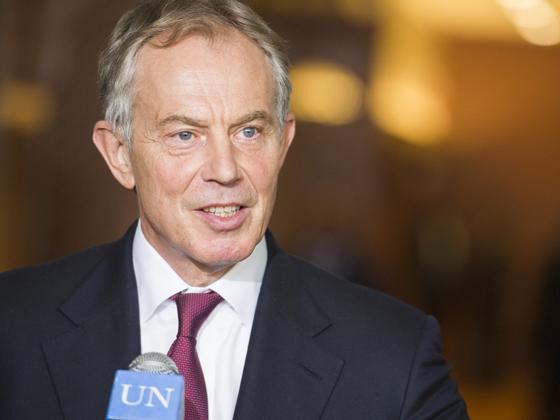
  • John Major – 1986 Speech on Poverty in Barnsley

    Below is the text of the speech made by John Major, the then Parliamentary Under-Secretary of State for Health and Social Security, in the House of Commons on 30 January 1986.

    It is never a hardship to listen to the right hon. Member for Barnsley, Central (Mr. Mason) representing his constituency. Yet again, he has spoken movingly about the problems that he sees in Barnsley, and I am pleased to be able to respond. I will try to pick up as many of the issues that he raised as possible in the time remaining to me. I am pleased to see that the hon. Members for Pontefract and Castleford (Mr. Lofthouse) and for Barnsley, West and Penistone (Mr. McKay) are in their places.

    I am aware that social security provision is an emotive matter, which arouses considerable controversy. I also understand that the present Bill, which I strongly support, which proposes fundamental changes in the social security structure, is a matter of high political dispute. I hope that the right hon. Gentleman and his hon. Friends accept that, whatever might be the political disagreement between us, the Government share their deep concern for the effects of poverty. We believe that many of the proposals in our Bill, as with many of our other policy proposals, are geared to alleviate precisely the problems that the right hon. Gentleman has outlined.

    The right hon. Gentleman mentioned some of the problems that apply to Barnsley at the moment. I appreciate, and would not deny, the special difficulties that have been caused to that area by pit closures and the resultant high unemployment. The latest unemployment figures for Barnsley are depressing and dispiriting. I cannot deny that and would not wish to.

    I share with Opposition Members the hope that unemployment will soon begin to fall, but I can understand their frustration at the fact that the present high levels appear to be remaining for so long. Despite the difficult circumstances, people in Barnsley are finding jobs. Between April 1985 and January this year, the employment service placed more than 2,300 people in ​ permanent employment in Barnsley—an increase of 23 per cent. on the same period in the previous year. I am sure that we all hope that that trend will continue.

    It is not true that the Government are unconcerned and harsh about the problems in Barnsley and elsewhere. I might draw attention to the substantial funds that are made available to Barnsley in the urban programme. In recognition of its economic problems, the need to help the area and the need to broaden its industrial base, Barnsley qualifies for help under the Inner Urban Areas Act 1978. The council, to which the right hon. Gentleman paid tribute, has responded by establishing industrial and commercial improvement areas in Barnsley and in the outlying mining town of Goldthorpe. There is also a conservation workshop at Hoyle Mill, which is funded in conjunction with the Manpower Services Commission. It places 80 trainees, who are engaged in restoring sites of historic interest in and around Barnsley. There are other interesting and innovative projects in the area.

    The right hon. Gentleman talked about housing and some of the related problems. To help Barnsley overcome its difficulties, some £6·7 million has been allocated under the housing investment programme, and there is a further allocation of up to £1 million to meet obligations under the Housing Defects Act 1984. Despite those and other initiatives with which I shall not bore the House, Barnsley faces great problems, many of which spill over into social security requirements.

    The right hon. Gentleman spoke of current board and lodging regulations. We have monitored their effect carefully. On the basis of preliminary information, there is no evidence that they are causing nomadism on the scale that many people feared. The time limits to which the right hon. Gentleman referred are subject to many exemptions. For one reason or another, large numbers of young people will find that they are exempt from the time limits, even if they are in circumstances in which they would otherwise be applied. The right hon. Gentleman will know that the limits do not apply to people who were in their accommodation some time ago.

    I am not familiar with the cases that the right hon. Gentleman has mentioned this evening, but I strongly suspect, although I cannot guarantee it, that those young people may have been entitled to some form of exemption. If the right hon. Gentleman cares to let me have the details of the cases, I shall carefully consider them and respond to them.

    In his remarks the right hon. Gentleman spoke of social security provision. At present. spending on social security is running at more than £40 billion a year. That is a pretty substantial amount by any standards. It is the Government’s responsibility to ensure that that money is well spent, and primarily that is what we seek to do through the proposed changes in the Social Security Bill, which will go into Committee early next week. In many quarters, the review that preceded the Bill has been represented as a cost-cutting exercise. That is simply not so. I understand that that is the type of representation that often occurs in political debate. We believe that the proposals that underpin the Bill are principled and worthwhile. They are a part of the reform that we believe will simplify a social security system that is far too complex. They will direct resources far more effectively than at present to the people of whom the right hon. Gentleman spoke, who are in the greatest need.

    The right hon. Gentleman is clearly worried about the living standards of those families in his constituency on low incomes. We, too, are worried about people on low incomes. Under the Bill those families are likely to be eligible for income support, if unemployed, or family credit if in work. The right hon. Gentleman said that many of his constituents would be worse off if the White Paper proposals were enacted. On the basis of the illustrative figures published with the White Paper we shall be spending £200 million a year more on family credit than we spend at present on family income supplement. The income support scheme is likely to cost more than we spend now on the main structure of the supplementary benefit scheme.

    One aim of the social security reforms is to ensure that help goes to the people who need it most. Our reforms will direct that help to families with children. That applies to low-income working families and to those where the parents are unemployed. Today, those families are often in the greatest need, in Barnsley and sadly, in other areas too.

    Our proposals will substantially reduce the unemployment trap, in which people are better off out of work than they are in work. They will eliminate the worse effects of the poverty trap, where a rise in earnings can be more or less wiped out as benefits are withdrawn.

    The new family credit scheme will cost substantially more than family income supplement—about twice as much. It should reach more than 400,000 families—double the present number on family income supplement. Almost all those families will be better off than they are with family income supplement.

    On the basis of the illustrative rates in the technical annex to the White Paper, a couple with two children on gross earnings of £100 could receive £27·40 in family credit compared with £5·50 on family income supplement.

    The right hon. Gentleman is rightly concerned about people who are not in work. Our proposals will get more help to families who are not working. Income support will replace supplementary benefit and in our judgment that will be a significant improvement. A noticeable feature will be its simplicity. At present, to determine the amount of weekly benefit, staff may need to make intrusive and detailed inquiries, such as the number of baths taken by a claimant or what his special laundry needs are if someone in the family is incontinent. However tactfully those inquiries are handled, they are plainly embarrassing and often insulting to the people to whom the inquiries are directed. Yorkshire men and women especially would find those inquiries deeply offensive.

    We must find a better way of getting help to people who are in need, and with the system that we propose—one of premia based on easily identifiable criteria—it will be entirely possible to remove many of those intrusive inquiries. That simplicity—that certainty of entitlement —will be a great improvement, and will be generally welcomed in the House when the proposals are more fully understood.

    I would have wished to have been able to say much more this evening, but only a short time remains. On the transitional protection for claimants, no one receiving supplementary benefit at the point of change to income support will have his weekly income reduced by the change. Anyone on family income supplement whose FIS award is higher than his family credit will keep the FIS award—the higher award—for the remainder of the ​ 12-month award period. We made that clear in the illustrative figures published with the White Paper, and I emphasise it again this evening.

    The right hon. Gentleman mentioned single payments. I deeply regret the fact that time does not permit me to deal in detail with the points that he raised, but if he wishes to discuss that matter later, I shall be happy to meet him and his hon. Friends at any time, when we can discuss the anxieties that he expressed this evening.

    The reforms that we shall make will be seen in due course as a positive advantage to people on low incomes, whether in or out of work. That is part of the intention of ​ the reforms, and we shall seek to persuade the House and the country that they are compelling and worthwhile reforms. In the meantime, may I conclude by telling the right hon. Gentleman that I understand the difficulties which he faces in Barnsley and which he has expressed this evening in such compelling fashion. I hope that he will accept from me that our reforms are aimed at helping people in special difficulty, wherever they live. We believe that they will, and we hope that they will generally be seen to do so when they are more fully understood.

  • Roy Mason – 1986 Speech on Poverty in Barnsley

    Below is the text of the speech made by Roy Mason, the then Labour MP for Barnsley Central, in the House of Commons on 30 January 1986.

    Rapidly increasing poverty in Barnsley over the past five years has had a dramatic and depressing impact on my town. I have represented Barnsley for nearly 33 years, and I have never known such misery on such a large scale as today. I lived through the 1930s and the pre-war depression years, but have never witnessed so many personal pictures of soul-destroying unhappiness through being penniless and pleading for help as are evident in Barnsley today.

    That awful and worrying rise in poverty in Barnsley over the past five years of Tory administration has shattered individuals, many families, our small communities and our local economy. The crucial poverty indicators, such as the local level of unemployment, the number of social security claims and the increasing demand on social services section 1 moneys all reveal a sharp decline in personal and household incomes against a background of increasing job losses, redundancies and pit closures. That scale of poverty is placing intolerable pressure on our local services and resources, both statutory and voluntary, especially the social services, the advice services and housing.

    Although Barnsley metropolitan district council has responded with various practical initiatives, trying to stave off the harshness of personal distress, Government cuts in the rate support grant, and the further cuts proposed in the so-called reform of social security will only exacerbate the serious poverty levels and the social security problems in Barnsley.

    One might ask, where is the evidence? I believe it to be the frightening catalogue of social concern, which is the most distressing that I have ever come across in my time. One in five people in Barnsley is now without a job. In January this year 16,897 people were on the dole, and there was a 20 per cent. rate of unemployment, approximately 6 per cent. higher than the national average and 9·2 per cent. higher than in 1981.

    The mass of poverty is startling. The social services, working on Department of Health and Social Security criteria, establish Barnsley’s poverty line as being a family of four on supplementary benefit receiving £69 weekly income. In Barnsley, there are 7,875 people on the poverty line and, below the poverty line, 3,375 unemployed and 1,500 in work—a total of 12,750 poverty-striken people in the town of Barnsley. Is it any wonder that I decided to bring that to Parliament’s attention?

    In November, 16,739 people were claiming unemployment benefit in the Barnsley travel-to-work area. Most disturbing was the rise in the number of long-term unemployed. Although most people believe them to be in the older age brackets, that is just not true in my town. Of the registered claimants between 19 and 24 years of age, there were 1,087 people unemployed over the year. That is 45·4 per cent. of all the registered unemployed in that age category. What a damning indictment of the Government it is that so many young people in one small town in Britain should be condemned to the dole for so long with no hope on the horizon. What, then, of their poverty? ​ Since the beginning of 1981, 11,420 redundancies in Barnsley have been notified to the Department of Employment. Barnsley council is on a fast-moving treadmill, struggling to fight this surge of job losses. The Regional Manpower Intelligence Unit in January 1985 compared the vacancy levels in travel-to-work areas throughout England. Barnsley was ranked as having the second highest number of unemployed per vacancy in England, with 128 registered unemployed for every vacancy.

    That is an appalling picture of misery thrust upon my town and constituency by a Government who have used monetarist controls, who have squeezed the economy, slashed regional aid, ruthlessly closed steelworks and coal mines, cut social services and caused massive job losses in coal mining towns like Barnsley. Yet the Government cannot provide any answer to the problems in such areas.

    Barnsley council has made strenuous efforts to stem the tide. It has established an employment strategy, built an enterprise centre, small factories, seedbed workshops, and an information technology centre. The council has 35 staff working in teams to help new firms to set up, to help existing firms to survive and expand and to attract new industry and training. I have led teams to Brussels to obtain European regional development grants for the development of a business and innovation centre. This worked has saved and created 1,000 jobs in 1985.

    Barnsley council launched the coal field communities campaign, which now involves more than 60 local authorities representing 16 million people, in an attempt to draw attention to the social, economic and environmental problems facing coal field areas like Barnsley. The community campaign was also intended to advocate policies to alleviate poverty, misery and unemployment in the declining economies of the coal fields.

    As everyone can see, Barnsley council has not sat on its backside. It is fighting the problem. Government policies will have to be radically changed if there is to be any hope of a solution to these problems. National Coal Board Enterprise Ltd. is not the answer. Even if it is creating 500 jobs a month, that is for Great Britain as a whole. Barnsley alone needs that figure every month this year just to stem the tide and avoid being swamped.

    Some 50 per cent. of all Barnsley households are in receipt of housing benefit. Earlier this year the housing department undertook a review of the waiting list. The review revealed that there are now more than 4,700 people on the council’s waiting list. That means that over the past two years the waiting list has grown by 16 per cent. and in some cases in the borough the list has grown by more than 20 per cent. Of particular concern is the increased number of old-age pensioners on the list and the increasing demand for single person accommodation, which has increased by 22 per cent. over the past two years.

    During that time the number of single persons sharing households has increased from 200 to 286, an increase of 43 per cent. That is another tragic story of social distress for which the Government must accept responsibility.
    The ratio of new house building has declined markedly in the council sector due almost entirely to Government restrictions. The rate of council house building has declined from an average of 330 units per annum in the mid-1970s to 128 in 1981–82; 15 units in 1982–83; 19 units in 1983–84; and 33 units in 1984–85.

    With regard to housing benefits, I quote the case study of a miner’s widow on a widow’s pension of £38·38 and an NCB pension of £8·43. She receives a total housing benefit of £11·53. Under the new scheme her total housing benefit will be £9·01, a weekly loss of £2·52. That sum will be taken away from a miner’s widow. Bearing in mind that 50 per cent. of all Barnsley householders are in receipt of housing benefit, thousands more people will be driven into deeper poverty because of the effects of the Social Security Bill now going through the House.

    It is estimated that 29,000 people in Barnsley could lose some or all of their benefits. In Barnsley, more than 19,000 people are dependent upon supplementary benefit for the whole or part of their income. Local DHSS officers are so overstretched that they are taking up to six weeks to process the many claims for single payments for exceptional need. According to their statistics, the Barnsley, east office has 10,893 supplementary benefit recipients and the Barnsley, west office has 8,155. That amounts to 19,048, which is a considerable work load for an overworked staff.

    Also noticeable is the number of supplementary benefit and family income supplement appeals listed for Barnsley. Between January and December 1985 there were 699. The abolition of the right of appeal and the review which has been mentioned are not satisfactory. They represent a major erosion of the legal right of Barnsley claimants. A significant number win their case on appeal. If the appeals procedure is abolished, a claimant’s only recourse will be to the local DHSS manager. I doubt whether many decisions will be overturned under that system.

    Many more claimants will approach the local authority’s social service departments for financial assistance. It is inevitable that the demand on the limited section 1 moneys will be intolerable. How much more poverty will result?

    In Barnsley, the most significant area of increased demand on statutory and voluntary services arising from increasing poverty is on the welfare rights officers. Within the social services department, referrals to the welfare rights officers have increased by 100 per cent. in the past two years. All staff record a dramatic rise in the number of cases with a primarily financial content. There has been an alarming increase in the volume of debt-related problems. Council staff have recently attended a training course on debt counselling. A special leaflet has been produced to help people to cope with enormous debts owed to building societies, fuel boards and hire purchase firms.

    The emergence of loan sharks during the recent miners’ strike was a new and worrying social phenomenon. Mrs.Catherine Allan, the Barnsley citizens advice bureau organiser, wrote to me and said:

    “During 1984–85 the bureau dealt with 1,751 social security inquiries —a 63 per cent. increase in one year…In December 1985 the Barnsley CAB dealt with 731 inquiries compared with 569 in December 1984 …Indicators of the increasing poverty of clients are the large numbers of debt problems.”

    I received a letter from the Soldiers’, Sailors’ and Airmen’s Families Association. Mr. J. R. Foster. secretary of the Barnsley division, said:

    “1985 saw an increase of 25 per cent. in the number of applicants, a 33 per cent. increase in the Funds disbursed, and of the total number of cases, 41 per cent. were for assistance with. fuel, light, water rates and funeral expenses … I have one case of a pensioner whose gas supply was cut off two years ago, one of a pensioner who has had no water supply since October 85 and some others who are or have been subject of court orders. Some ​ of these are elderly ladies and the thought of court action frightens them a great deal so they cut out other things to pay these bills. I may add that being the widow of ex servicemen or the men themselves, they are very uptight at having suffered the privations of wartime service they have to call on SSAFA and like organisations in their last years.”

    Fiona Moss, the secretary of Age Concern in Barnsley, wrote to me saying:

    “I am perturbed by the increasing number of enquiries related to the standard of living of this area. In fact some are individuals who through pride have deliberately avoided what they believe to be the acceptance of charity. Many tears have been shed in my office. We have miners widows with approximately £7 a week extra pension. Their claim for housing benefits are reduced by the same amount.”

    She goes on to say:

    “Can we afford to die? The £30 state grant is soon to be abolished. What will replace it? Our local paper states that elderly people worry about a ‘Pauper’s Grave’, and figures show that a Barnsley family paid almost £600 for a funeral in 1985 compared to £90 in 1972. I should know—it was my own mother’s funeral. In the past with fuller employment many elderly people were cared for by their own families. These families are also now in the poverty trap. I get many more of these families coming for advice about their parents’ problems —they themselves are at their wits end struggling to survive on low incomes.”

    What a tale of woe and distress and more and more poverty.

    The Barnsley Council’s co-ordinated welfare rights group, Barnsley’s anti-poverty team, has mounted several successful benefit take-up campaigns which have injected substantial amounts of cash to vulnerable groups such as the unemployed, the sick and the physically disabled. A team of dedicated civil servants and volunteers led by Roy Wardell, the director, and Councillor Judith Watts work well beyond their wage-related hours to alleviate stress and worry in the town.

    Unfortunately, the council’s anti-poverty measures have to be seen against a background of appeals by central Government for restraint in spending and of targets set by the Government and block grant penalties. At present, Barnsley is penalised at the highest level. Existing spending plus allowances for inflation and current commitments will result in the target which has been set by the Government by 1985–86 being significantly exceeded.

    Education officers in Barnsley have estimated that the percentage of schoolchildren on free school meals will be reduced from 26 per cent. to 18 per cent. under the proposed changes. This almost certainly will have an effect on the number of school meals staff employed by the council and increased poverty in many families.

    The financial and housing restraints on the under-25 age group, forcing young people to stay in sometimes intolerable family situations, will lead to increased family stress and breakdown in Barnsley. I received a report from one welfare rights worker at the Barnsley centre against unemployment, which says:

    “One of the most serious problems faced by the young unemployed is their inability to find accommodation. Shortage of rented property has forced up rents and many landlords refuse to let their property to unemployed people.

    Consequently, many young unemployed people find themselves having to move into board and lodging accommodation, the disadvantages of which have recently been exacerbated by the new board and lodging regulations, resulting mainly from landlords charging exorbitant rates for their accommodation in the knowledge of DHSS payments. Although landlords have been largely to blame for the abuse of the system it is the young unemployed who have been ​ penalised by reduction in benefits and time limits on their receipt of payment. Within two days of each other two young men, aged 16 and 17, attempted suicide, one by an overdose of valium and the other by slashing his wrists with broken glass. They were both lodgers in the same boarding house and both faced penalisation under the four week rule. In the same week, the week beginning 13 January, an 18 year old girl also overdosed.

    It is a nonsense to say that the under 25s should, if they have no employment, remain at home. The girl mentioned desperately needed her own accommodation due to her father’s violence towards her. Also unemployed families have their benefits reduced by having adult children at home leading often to domestic tension and violence.”

    It is all so sickening to me and I hope that it is to the Minister.

    Barnsley council and I believe that there is a direct link between economic decline, Government policies and the resulting fall in individual and household incomes —poverty. The local economy has suffered more than most from the effects of disputes in the coal industry. Punitive and inequitable legislation in social security reform and local government finance will serve only to increase rather than decrease the scale of the problem of poverty in Barnsley.

    This is the story of poverty in Barnsley brought about by heartless and ruthless Tory Government policies. The town refuses to be dejected. We shall fight on, but we deplore being neglected. That is why the Minister has had to listen to this case today.

  • David Mellor – 1986 Speech on Pamela Megginson

    Below is the text of the speech made by David Mellor, the then Parliamentary Under-Secretary of State for the Home Department, in the House of Commons on 29 January 1986.

    I do understand the very great sense of commitment that my hon. Friend the Member for Cambridgeshire, South-West (Sir A. Grant) feels about this sad case, and I am most grateful to him for the acknowledgement he has made of the exceptional treatment this case has received in the Home Office, details of which I shall be happy to put on the record this evening.

    As he has indicated, my hon. Friend has taken a personal interest in the case of this unfortunate woman, and he has written to me about it on several occasions. I have also received numerous other representations on Mrs. Megginson’s behalf. As my hon. Friend has said, it is an ​ unusual case. In September 1983, some two years and four months ago, at the Central Criminal Court, Mrs. Megginson, who was then aged 62 was convicted of the murder of her 79-year-old co-habitee. Although the offence had taken place in the south of France, it was justiciable here by virtue of the Offences against the Person Act 1861. The relationship between the couple was of long standing but, in 1980 or 1981, Mrs. Megginson’s co-habitee started an association with a younger French woman. Matters came to a head in October 1982 and Mrs. Megginson killed him by striking him at least three times with a champagne bottle. She immediately returned to this country and confessed to the killing.

    At her trial, Mrs. Megginson invited the jury to convict her of the lesser offence of manslaughter because, first, when she struck her co-habitee she did not intend his death or to cause him grievous bodily harm and, secondly. when she struck him it was because she had been provoked to such a degree as to cause her to lose self-control. That issue went before the jury, as happens in all criminal cases, but after hearing all the evidence presented by the prosecution and the defence, the jury decided—albeit by a majority of 10:2 — that the charge of murder was proved. The law provides that only one penalty may be imposed following a conviction of murder, and that is life imprisonment, and my right hon. Friend the Home Secretary has no authority to vary such a sentence. Mrs. Megginson exercised her right of appeal without success and, in the absence of any evidence to the contrary, we must proceed on the basis that she was rightly convicted of murder and properly sentenced to life imprisonment.

    There is no other basis on which Ministers could exercise the powers given to them by Parliament, which do not include any powers to impose any different views other than those which the courts have taken on these points of conviction and sentence.

    The release of a life sentence prisoner is at the discretion of my right hon. Friend the Home Secretary, but, under the provisions of section 61 of the Criminal Justice Act 1967, he may authorise release only if he is recommended to do so by the parole board, and after he has consulted the Lord Chief Justice and, if available, the trial judge.

    There are two essential ingredients to the decision whether a life sentence prisoner should be released: has he or she been detained for long enough to satisfy the requirements of retribution and deterrence for the offence, and, is the risk to the public acceptable? My right hon. Friend looks to the judiciary for advice on the time to be served to satisfy the requirements of retribution arid deterrence and to the parole board for advice on risk. He is, however, not bound to accept a recommendation for release made by the parole board; nor is he bound by the views of the judiciary, although, of course, he attaches much weight to them.

    There are no fixed times at which the release of a life sentence prisoner must be formally considered by the parole board machinery. It is for my right hon. Friend to decide when this should be done. Under the revised procedure for the review of life sentence cases announced on 30 November 1983 by my right hon. and learned Friend the Member for Richmond, Yorkshire (Mr. Brittan) when Home Secretary, the date of the first formal review is decided by the Home Secretary after obtaining an initial view from the Lord Chief Justice and the trial judge on the length of detention necessary to meet the requirements of ​ retribution and deterrence for the offence. The first formal review will normally take place three years before the expiry of that period to give sufficient time for preparation and, where necessary, further testing before release is finally authorised, if the parole board should recommend it.

    The decision when to fix the first formal review of a life sentence prisoner’s case is not normally taken until after the prisoner has been detained for at least three or four years. However, it was recognised that there were unusual and exceptional features about Mrs. Megginson’s case and, in those circumstances, it was decided to ask the judiciary for its views on the retributive and deterrent element of the sentence at a much earlier stage than usual. This was done in May 1985—a little over 18 months after Mrs. Megginson’s conviction. In the light of the judiciary’s views, I decided that the case should be referred to the local review committee at the prison within weeks after receiving the judicial view. I decided also that the review should take place commencing in September 1985 as the first stage of the formal parole board review mechanism.

    It might assist if I make clear the stages that were then followed. When the local review committee considers the case of a life sentence prisoner, it has before it all the information available about the offence for which the life sentence was imposed and the circumstances in which it was committed; the prisoner’s history, including any previous offences; the assessments and opinions of doctors who may have examined the prisoner before the trial; and any remarks made by the trial judge. It also has copies of all the reports made previously by the staff at the prisons in which the prisoner has been detained and reports prepared specially for the review, together with any representations which the prisoner may have made to the committee, as he or she is entitled to do. In the light of all this information, the committee makes a recommendation on the prisoner’s suitability for release.

    All the papers are then sent to the Home Office, with the local review committee’s recommendation. The case is very carefully considered in the Home Office, in consultation with the Department’s professional advisers. Sometimes, reports from independent doctors, including psychiatrists, are obtained. An assessment is made of all the considerations, including the possible risk to the public if the prisoner were to be released and the case is then referred to the parole board. All this takes time, and prisoners are themselves warned not to expect a decision in their case until at least six months after the local review.

    The parole board, which does not necessarily endorse the recommendation made by the local review committee, may recommend either that the prisoner should be given a provisional date for release or that the case should be ​ reviewed again after a specified period. If it does the latter, my right hon. Friend has no power to authorise the prisoner’s release and the further review follows the same procedure, starting once again with the local review committee in the prison in which the prisoner is located.

    Mrs. Megginson’s case was duly reviewed by the local review committee at Durham prison in September last year. The internal procedures to which I have referred have been completed and the papers have been referred to the parole board. The case will be considered by the parole board next month—only five months after the local review committee procedure began.

    That is another sign of recognition in the Home Office that the circumstances of the case merit processing faster than we are generally able to achieve, given the pressure of work, in all of the many cases that come before us. I know that my hon. Friend will understand if I cannot speculate on the outcome of the parole board’s consideration of Mrs. Megginson’s case or when she might be released. I can assure my hon. Friend that the decision will be conveyed to her as soon as possible after the parole board gives its decision to us.

    Sir Anthony Grant

    I think that my hon. Friend said that the case will be considered by the parole board next month—in February.

    Mr. Mellor

    The lifer panel of the parole board will consider the matter next month. The decision will be conveyed to me. I can assure my hon. Friend that I shall personally ensure, as I have tried to do throughout the case, that matters are then handled expeditiously.

    What happens then will depend very much on what the parole board says. Obviously, I must not say anything that would influence its decision one way or another. Parliament established the parole board procedure to ensure that the public had the additional safeguard, and fetter on the Home Secretary’s discretion of independent evaluation by a lifer panel, which consists of a High Court judge, a psychiatrist and two other members.

    I understand my hon. Friend’s proper concern to ensure that Mrs. Megginson should not be in prison for any longer than is necessary. My right hon. Friend has to act within the statutory framework and he has to give due weight to the views of the judiciary when deciding when it would be right to commence the formal review. We have done that. He then has to await the parole board’s deliberations, which will happen next month.

    I assure my hon. Friend that we have treated this case exceptionally and given it considerable priority by comparison with the normal run of murder cases, and I hope to be able to give him further advice before too many weeks have elapsed.

  • Anthony Grant – 1986 Speech on Pamela Megginson

    Below is the text of the speech made by Anthony Grant, the then Conservative MP for South-West Cambridgeshire, in the House of Commons on 29 January 1986.

    In 1982 Mrs. Pamela Megginson, a widow over 60 years of age, killed her lover, Mr. Hubbers aged about 79 in southern France by striking him with a champagne bottle. She had been provoked because Mr. Hubbers taunted her with the youth and beauty of the new mistress he had acquired. One might think that he got no more than he deserved, but Mrs. Megginson was convicted of murder and sentenced to life imprisonment. She is serving that sentence in Durham prison where she is with some of the worst, violent offenders in the land. She is serving in a wing which has already been condemned for male prisoners. With that lady, who has had no previous convictions, are some of the scum of our society.

    Mrs. Megginson’s only close relative in this country is my constituent—her daughter—Mrs. Bennett. Mrs. Bennett is a mother of three small children and obviously she cannot visit her mother regularly as far away as Durham. I make a plea that Mrs. Megginson be moved to a prison nearer to her daughter, and one more suitable to a person of her record.

    My main point is that to keep someone such as Mrs. Megginson who, as I have said, has no previous convictions or record of violence, in prison while perpetrators of the most bestial crimes are released is totally unacceptable and an affront to the values generally held by the public.

    It has been my purpose for a long time to have Mrs. Megginson’s case reviewed, and I at once acknowledge the most sympathetic care that my hon. Friend the Parliamentary Under-Secretary has taken. I originally took up the question of an appeal with the Lord Chancellor in January 1984. Then I took up the question of a review with the Home Secretary in August 1984. In September 1984 my hon. Friend the Parliamentary Under-Secretary kindly told me that the case would be referred to the Lord Chief Justice in early 1985.
    In November 1984 I asked for this exceptional case to reviewed at the earliest possible moment. In reply, I was pleased to be told in December 1984 that the Home Office had identified Mrs. Megginson’s case

    “as one which should be brought into the review procedures quickly and it is already receiving wholly exceptional treatment”.

    Perhaps that happened behind the scenes, but as far as my constituent and I were concerned, nothing happened until 27 September 1985, when she was seen by a member of the local review committee. She understood from that person that she would hear something by Christmas, but she has not heard, and I have not heard. I shall be interested to hear the Minister tell us exactly what is happening. Generally, the injustice of the case contrasts most strongly with recent sentences, and, indeed, releases, for horrible crimes, especially against children.

    I have practised law for many years. I appreciate only too well that one cannot judge cases from newspaper reports, and I recognise the old saying that “comparisons are odious”. Nevertheless, the disparity in some sentencing in our courts and in some of the charges preferred in criminal cases these days is so stark as to leave the public totally perplexed as to what we are all about.
    ​ There is a feeling that some of our courts and some aspects of our criminal law system are divorced from reality. I say in haste that I do not in any way make a criticism of my hon. Friend the Minister or the Home Office. Their task, and the task of Parliament, is merely to provide the necessary sentences and machinery. It is for the courts and the authorities to carry them out.

    The case of Mrs. Megginson is just such a case that deserves comparison with others. Her case contrasts remarkably with that of a recent case concerning Mrs. Doris Croft. She too was a middle-aged widow, also from Cambridgeshire, who also discovered that her elderly lover was about to desert her for a younger woman. She killed him, not with a champagne bottle, but with a rolling pin, equally in a fit of jealous rage. She was put on probation for three years, compared with the life sentence imposed on my constituent Mrs. Megginson. In that case, the charge was manslaughter instead of murder. That is why this case is inexplicable. I am sure that members of the public will find inexplicable the different way in which the case was appoached by the prosecution, but there it is.

    Equally, one can look at more horrible cases. I cite a recent case which attracted a great deal of publicity in the borough of Brent, when a brute by the name of Beckford slaughtered a little girl in the most disgusting circumstances, and was sentenced to seven years. It is difficult for people to understand the vast disparity between the way in which people are treated in our society. I do not believe that that is good for the law, or the maintenance of a stable society.

    I compare the case of Mr. Fenton, who shot his former wife and her second husband with a shotgun. He was also put on probation for three years. In that case, the judge used these words in conclusion:

    “neither justice nor public reaction would be advanced ‘one jot’ by leaving him in prison.”

    Precisely the same considerations apply to Mrs. Pamela Megginson.
    I have the greatest respect for my hon. Friend, whom I know has applied himself diligently to the case, and for my right hon. Friend the Home Secretary. They are both men of reason and compassion. In all sincerity and humanity I ask them to do all that they can to see that this case is properly reviewed at the earliest possible moment in the hope that it will be possible to allow this sad, unhappy lady, in the latter stages of her life, who has suffered so much already, and is no conceivable danger to the public, and really has already paid for her crime, to return to the bosom of her family, and let her live the rest of her life in peace and tranquillity.

  • Tony Blair – 1986 Speech on the Exchange Rate Mechanism

    Below is the text of the speech made by Tony Blair, the then Labour MP for Sedgefield, in the House of Commons on 29 January 1986.

    The question whether the United Kingdom should join the EMS is not an ideological argument but a practical one. Although the present level of the exchange rate makes the argument for joining stronger than it has been for some time, the balance of advantage still lies against our joining.

    One reason for saying that is that we think that insufficient attention has been paid to the obligations of ​ membership of the EMS. We should treat with extreme caution claims about the stability which membership would bring to our currency. The EMS is essentially a means to an end and for it to succeed there must be a clear and common area of agreement between members on economic policy and objectives. We are not convinced that policy objectives that are currently pursued in the EMS converge sufficiently with those which we would want to be pursued domestically.

    The first thing that we should do when discussing the EMS is to debunk some of the mythology surrounding it. There is a risk of it being seen not as a palliative, which is what it would be at best, but as a panacea that can cure the problems of instability in the exchange rate. It is important that our choice is informed and not a careless embrace of anything with the word “European” in it.

    We should start by examining what the EMS is. It is a club that can yield benefits to the participants, but only at the expense of certain obligations. The stability arises not by natural process but by the agreement of the members to keep their exchange rates within agreed boundaries. It is essentially a statement of intent to act individually or collectively to ensure that the value of currencies is maintained within agreed margins of a set of bilateral central rates.

    Three types of action can be taken. It can be done collectively through mutual support from the pool of reserves—it can also be taken under various short-term financing facilities—it can be taken through members intervening individually and it can be taken through the use of interest rates. France virtually controls its exchange rate by the use of interest rates. The latter two methods of control might be chosen by countries outside the EMS, but they are methods of obligation within it.

    The proponents of the EMS say that those obligations are worth carrying because of the stability that will accrue to our currency. Stability can be long-term or short-term. I do not believe that there is compelling evidence that long-term stability has been brought to the exchange rates of currencies in the EMS. The long-term stability will to a considerable extent be contingent upon policy convergence. Such stability as there has been would equally have occurred if the exchange rates had been outside the EMS.

    It is worth remembering that, when we talk about the medium term, because there are several realignments in the EMS, it is still possible to get considerable variations in the exchange rate. It is worth examining the two major realignments of the past few years—that of the French franc in March 1983, and that of the Italian lira in July 1985. When the French franc came under sustained speculative pressure in March 1983, there was a realignment, but it occurred as a result of the French agreeing much tighter budgetary fiscal measures. We can disagree about whether that was right or wrong, but it is important to emphasise that it was part of a package.

    Mr. David Howell (Guildford)

    Has the hon. Gentleman understood that, whatever might be the arguments for or against membership of the EMS, currencies that are in it and that are exposed to speculative pressure have the support of the entire monetary authority system of the member countries? That is why the speculators were seen off against the French franc in ​ March 1983 and why the devaluation was relatively controlled. I do not think that the hon. Gentleman has quite grasped that point.

    Mr. Blair

    With respect, I have grasped it. I said that one of the courses of action available to members of the EMS was collective action from the pool of reserves. France effectively keeps its median line against the deutschmark through the use of interest rates, so the pool of reserves alone is not sufficient to ensure against currency speculation. More important is the fact that the realignment, took place in conjunction with other policy measures. Exactly the same thing happened when the Italian lira was subjected to an 8 per cent. devaluation in July 1985. The price for the realignment was considerable other measures demanded of the Italian Government.

    The two lessons to be learnt from those examples are, first, that realignment can occur, but only when combined with other policy packages — that means yielding up some freedom of action in the EMS — and, secondly, that, although short-term fluctuations in currency might be smoothed out by membership of the EMS, some companies say that that short-term risk can be borne by covering oneself in the forward market whereas a much greater risk, to which one is subjected in the EMS, is realignment where volatility can be intense, sudden and unpredictable.

    The only compelling argument in favour of membership of the EMS is that it provides a hedge or some certainty against short-term instability in the currency. There has been considerable short-term instability in Britain during the past few years. I accept that there is a strong argument to the effect that being in the EMS might cut such speculative pressure, but I would put qualifications even on that claim. There is no clear evidence, for example, that day-to-day volatility of exchange rates damages trade flows. There have been numerous attempts to find such evidence, but it has not been found.

    Mr. Ian Wrigglesworth (Stockton, South)

    What about the Confederation of British Industry?

    Mr. Blair

    I shall deal with its stance shortly.

    The level at which we fix the exchange rate is obviously extremely important, and there is still tremendous disagreement about what its level should be. The most important qualification on our ability in the EMS even to withstand short-term pressures is that Britain has a petrocurrency. With great respect to the right hon. Member for Glasgow, Hillhead (Mr. Jenkins), he has not dealt fully with the consequences of that provision.

    The first consequence is that the EMS is essentially a deutschmark bloc. It could be said that we would be putting Herr Pöhl of the Bundesbank in 11 Downing Street. He might be preferable to the present incumbent, but we should yield our freedom of action. With regard to Britain as an oil exporter, cheaper oil for Germany would put up the deutschmark. If there is a drop in oil prices, cheaper oil prices mean that the deutschmark lifts and, conversely, that the pound is subject to downward pressure. That tension would be built into the system once sterling joined the EMS.

    Perhaps most important of all is that we do not prevent speculation as a result of oil price fears by joining the EMS. Much of the clamour for joining the EMS during the past few months results from people thinking that the ​ exchange rate crisis in January last year and the flutters of the past few weeks would be cured by joining the EMS. That is quite definitely not so.

    The alliance says that we should go into the EMS forthwith. It said that we should go into the EMS forthwith last year. It has been saying that we should join the EMS forthwith for years. If we had joined the EMS last year, the best rate that we could have got in against the deutschmark was DM 3·60 or DM 3·50. Many suggest that we would not have been able to negotiate such a rate.

    The current rate is DM 3·33. When the oil price exerted pressure on the pound last week, the Government, as a member of the EMS, would have been shoving up interest rates and I guarantee that if interest rates had gone up last week, we would have had an alliance motion criticising the Government for raising interest rates. They cannot have it both ways. Penalties are involved and those penalties should be clearly understood.

    The problems is not merely the lack of a guarantee that we will not have interest rate crisis of that type. I would go further than that. If the price of oil falls, it is rational that our exchange rate should be allowed to fall, because the price of a major export item is falling. That difficulty, which faces Britain because of its petrocurrency status, does not fit into the circumstances of the other nations in the EMS.

    Contrary to what has been said, criticisms of the Government’s interest rate policy could be made irrespective of membership of the EMS. January 1985 is the obvious example. The Government appeared to be giving the lie to the market that they would not intervene to prop up the exchange rate. Currency speculators had a one-way bet against our currency. The exchange rate plummeted and the Government had to compensate for that initial period of inaction by jacking up interest rates by 4 per cent. The Government can be legitimately criticised for not cutting rates last summer. They had the opportunity to cut them and their starting base would have been that much less.

    When we consider the Government’s policy during the past week, we cannot criticise them for not being in the EMS and also for allowing the exchange rate to slide. In many ways is is easier to understand the case for the Government, rather than the Opposition parties, wanting us to join the EMS. Joining the EMS implies a fiscal and monetary policy convergence. The fiscal and monetary polices of the German Bundesbank are tight. One would have thought that the alliance, which proposes a fiscally expansive policy, would be the last party to want to join the EMS. There is a clear argument for the Government wanting to join the EMS.

    The argument for the EMS is much stronger if there is an agreement, or the prospect of an agreement, on the fundamentals of macro-economic policy between the member countries. The exchange rate is important, but it is a residuary, not a fundamental. If we join the EMS, it is much better to be certain of the agreed, common policy objectives between the member countries. In relation to the importance of international monetary stability, the initiatives of the Group of Five are of greater significance than what has happened within the EMS. The G5 initiative that forced down the dollar was more important than what was happening in the EMS. The G5 countries criticised Germany for pursuing too tight a fiscal policy, but that is the fiscal policy with which we would be aligning ourselves if we were to join the EMS.

    Whether it be the EMS or the G5, acronyms are no substitute for analysis of Britain’s economy and its problems. The central and fundamental problem is how to prepare for post-oil Britain. Flutters of speculation against our exchange rate are warning signals. We either build up our manufacturing industry to generate the wealth that we shall need when oil production declines, or we face a poor and unstable future. No amount of juggling at the margin will eliminate the central dilemma. The Labour party, and only the Labour party, has the political will and economic sense to address the dilemma.

  • Ian Stewart – 1986 Speech on the Exchange Rate Mechanism

    Below is the text of the speech made by Ian Stewart, the then Economic Secretary to the Treasury, in the House of Commons on 29 January 1986.

    The right hon. Member for Glasgow, Hillhead (Mr. Jenkins) has made, as is his custom, an elegant speech. He was a distinguished President of the European Commission. He has always been an eloquent advocate of the cause of Europeanism.

    It is important to put the question of our membership of the exchange rate mechanism of the European monetary system into its proper perspective. It is not a question of our being for or against the development of the European Community. The Government’s commitment to constructive membership of the European Community is beyond dispute. The fact that we have remained outside the exchange rate mechanism of the EMS casts no doubt on our European commitment. On the other side of the coin, it is right to point out, too, that, contrary to the assertions from time to time of some of those on the Opposition Benches, membership of the exchange rate mechanism would not lock us into some irrevocable commitment to full economic and monetary union. The truth is more complex, yet more prosaic. The ERM is a fixed, but adjustable, exchange rate system on Bretton Woods lines intended to promote greater economic convergence between its participants, particularly on inflation.

    The Government’s position on membership has been clear throughout. We would be ready to join the ERM as and when we judge the conditions are right for us to do so. ​ I recognise that the right hon. Member for Hillhead believes that those conditions are right today. That is his judgment. However, he will recognise that many factors affecting sterling need to be weighed carefully.

    The Government have to take account of the fact that, unlike all other ERM currencies except the deutschmark, sterling is a widely held and internationally traded currency. It is, furthermore, a currency subject to different and often opposite strains from those that affect the other currencies currently in the system. We have seen evidence of these conflicting pressures in exchange market movements in recent weeks. The House does not need me to explain that conditions in the exchange markets have been, even by their standards, remarkably turbulent of late.

    In recent weeks, the major influence on sterling has been the weakening of the oil price. To some extent, this is a problem of perception. Even before the latest movements in the market, oil accounted for only 5 per cent. or 6 per cent. of our national income and less than 8 per cent. of all our exports. It accounts for only 0·5 per cent. of all our employment and only 5 per cent. of capital investment, despite the massive capital investments required to develop the major fields in the North sea. Those who operate in the markets, as many commentators are increasingly coming to note, often have an exaggerated perception of the importance of oil to the United Kingdom. That is something with which we have to live. It came as no surprise that a fall in the price of oil on the scale we have seen in the past three or four weeks, when the price has fallen by around 30 per cent., should have had some impact on sterling. I would like to think that the markets have already begun to take a more balanced view, but these realities can take time to gain hold.

    The other major factor in the exchange markets recently has, of course, been the decline of the dollar and its differential impact on other currencies. Since the Plaza agreement, the yen has appreciated by nearly 19 per cent. against the dollar, the deutschmark by about 16 per cent. and sterling by 22·5 per cent.; so the decline in the value of the dollar has given rise to substantial adjustments between the exchange rates of other currencies.

    It is against this background that we must judge the question of membership of the exchange rate mechanism of the EMS. We must recognise in so doing that for sterling to join the ERM would bring about a significant change in the operation of the system itself. At present, the deutschmark plays a dominant and central role. The addition of sterling, another widely held and traded international currency, would undoubtedly introduce an element of bi-polarity into the system with which it has not yet had to cope. It may be that it could do so, but it is a question that must give us pause. We should note that the currencies of the other two major countries in the mechanism—the French franc and Italian lira—are both protected by a variety of exchange controls.

    I need hardly say to the House that we have no intention whatsoever of restoring the exchange controls which my right hon. and learned Friend the Foreign and Commonwealth Secretary removed in 1979 when he was Chancellor of the Exchequer. Such controls inevitably hinder the development of financial markets. Indeed, it is interesting to note, following a point made by the right hon. Member for Hillhead, that London is one of the ​ leaders in the ecu market even though the United Kingdom does not participate in the exchange rate mechanism of the EMS.

    The question for the United Kingdom is, therefore, in a number of respects rather different from that which other member states have faced. The common element, which is insufficiently understood by many alliance Members, is that for our European partners the exchange rate mechanism is not seen as a soft option to be adopted as an alibi. There is no disputing the view of our partners that the ERM can be a helpful and effective anti-inflationary discipline. Indeed, it has by and large worked successfully for those countries participating, particularly since 1983.

    The vital question is not so much membership itself as the resolve with which responsible financial policies are pursued. It is on this point that we must have doubts about the attitude of the right hon. Member for Hillhead and his party. They are very keen to join international organisations. They want us to join the exchange rate mechanism. Indeed, the hon. Member for Stockton, South (Mr. Wrigglesworth) was using language at Prime Minister’s Question Time yesterday that suggested they also wanted us to join OPEC.

    In spite of that apparent enthusiasm for the exchange rate mechanism, it is clear that they would not be joining it in the same spirit as our other European partners. The other European countries have submitted to the discipline it imposed, and had significant success in reducing their inflation rates. Yet the Social Democratic party has revealed that this is not its intention at all. Its autumn statement published last year — a rare example of precision by a party that usually likes to leave its intentions as vague as possible—explained how it would manage the economy. It showed that the Social Democratic party expected, if its policies were implemented, inflation to rise to 7·5 per cent. in 1987. That makes it clear that the Social Democratic party regards the ERM not as a discipline against inflation but as a cover for its own inflationary public spending plans. As such a cover, of course, it would not work.

    This Government may not have joined the exchange rate mechanism, but we have remained firmly committed to the principles of financial discipline which underlie it. We have chosen a different route to success against inflation, but one which has been equally effective. The average rate of inflation during this Parliament has been just over 5 per cent., which compares with an average of over 15 per cent. for the Labour Government of the 1970s. The prospect this year is for continued falls. We expect inflation to be below 4 per cent. in 1986.

    This inflation record has been accompanied by a remarkable turnround in our growth rate, especially when compared with that of our European partners. For a decade from 1973 to 1982 we were consistently at the bottom of the European growth league. In 1983 we grew faster than any of our major European partners, we would have done so again in 1984 were it not for Mr. Scargill’s strike, and every indication is that in 1985 we shall once again be the fastest growing major European nation.

    Mr. Douglas Hogg

    My hon. Friend has told us that the Government are not opposed in principle to joining the EMS and that we shall do so when the time is right. Will my hon. Friend tell us what the conjunction of circumstances will be which will suggest to him when the time is right?​

    Mr. Stewart

    I am not going to offer my hon. Friend or the House a check list of circumstances because, as we have seen in recent weeks and days, circumstances of many kinds can change unpredictably and at short notice. The balance of judgment has to be made in the conditions of the time.

    Sir Russell Johnston (Inverness, Nairn and Lochaber)

    The hon. Gentleman has said that we in the alliance have perhaps misunderstood certain consequences of joining the exchange rate mechanism. Can the hon. Gentleman say succinctly—he has not yet done so—what disadvantages would affect this country if we joined?

    Mr. Stewart

    Greater fluctuations in the market in relation to sterling, to which I have already alluded, do create difficulties in operating any financial or monetary system. That is a point to which the hon. Gentleman’s right hon. Friend the Member for Hillhead drew attention. One has to take these questions into account. There are arguments both ways on this matter and one must take a balanced judgment.

    The record of success which this Government have had, without being a member of the ERM amply demonstrates that it is commitment to sound finance and lower inflation which is the key to economic prosperity, rather than the fact of holding a club membership card in the exchange rate mechanism.

    The judgment the Government have to make in relation to the exchange rate mechanism is not, as I emphasised at the outset, one of being for or against Europe. Nor is it one of being for or against international co-operation on exchange rates. Our participation in the Plaza agreement along with other major European countries, as well as the United States and Japan, amply demonstrates such cooperation. It is rather whether, bearing in mind the practical problems, membership of the exchange rate mechanism would provide a more effective and safer means of achieving our economic objectives than the strategy the Government have followed for the last six years. Membership of the exchange rate mechanism is not a panacea, nor is it the only option. There are no magic guarantees that it would reduce inflation by itself. Membership would be successful only if monetary and fiscal policies were appropriately firm.

    Mr. Beaumont-Dark

    I agree with the right hon. Member for Glasgow, Hillhead (Mr. Jenkins) that this is an interesting and important debate. We have talked about whether we should join the ERM or the EMS. However, one of the great problems that we face in this part of the western world is that interest rates are at such high levels — higher than any level in the history of western Europe. America should co-operate and should cease sucking in vast sums of money because it is unwilling to balance its books — there is a $200 billion deficit. Unless we get the co-operation of the United States, whether we join the EMS or any other system, we and Europe as a whole face problems never faced before. We are all pulled down because of the United States’ unwillingness to get its own books and ship in the right order.

    Mr. Stewart

    I do not think I should be drawn into a disquisition on the United States fiscal and monetary policy. I certainly accept the point that the large ​ imbalances in the domestic economy and trade account of the United States have created conditions which have caused turbulence to the rest of the world.

    The United States Administration addressed themselves to these problems more realistically in 1985—the Plaza meeting was evidence of that. The new attitude of Secretary Baker at the annual meeting of the World Bank and the International Monetary Fund shows that there has been an important shift in American perception of its domestic economy and the international implications of its policies. However, this does not remove the need for each country to deal with its own financial circumstances according to its own policies.

    Mr. John Browne (Winchester)

    My hon. Friend has just mentioned that the United States now has a more international perspective on these matters. Does my hon. Friend agree that the reason for this debate is that early in the 1970s the United States broke the gold exchange window and agreed with other western countries to move into an era of floating exchange rates? Membership of the EMS is not the critical issue but the restoration of fixed interest rates based on convertibility of at least one currency—

    Mr. Douglas Hogg

    It cannot be convertibility to gold.

    Mr. Browne

    It used to be the gold exchange standard. The EMS is founded on a floating base. If we choose a fixed exchange rate—which is much more important—it must be done with at least one currency that can be converted into gold at a price to be agreed. Can my hon. Friend persuade the Americans that this is an urgent problem? Would my hon. Friend urge this factor, given the Americans’ new international perspective?

    Mr. Stewart

    I am not sure that I follow my hon. Friend’s analysis and argument. However, the era of floating exchange rates was not a perverse decision taken out of the blue in the 1970s. It was the consequence of increasing instability between a number of major economies under which the old system, under any circumstances, could not be maintained. That is a different cause. Ten years or more later, we are still grappling with the consequences. The major changes in commodity prices —of which oil is the main one—were bound up with this.

    The Government have always said that they recognised the advantages that the exchange rate mechanism could offer in the way of providing a framework of financial discipline. It is not the only possible framework, as we have fully demonstrated, but, combined with the appropriate political commitment, it can indeed provide a method of reducing inflation. The considerations which I have discussed this afternoon suggest that, at present, sterling’s participation in the mechanism would not, on balance, be of benefit, although it is a question which is kept under continuous review.

  • Roy Jenkins – 1986 Speech on the Exchange Rate Mechanism

    Below is the text of the speech made by Roy Jenkins, the then SDP MP for Glasgow Hillhead, in the House of Commons on 29 January 1986.

    I beg to move,

    That this House urges the Government to bring the United Kingdom into the Exchange Rate Mechanism of the European Monetary System forthwith.
    The European monetary system, which this motion calls upon the Government to join forthwith, will be seven years old in a couple of months time. It was the most recent major initiative taken by the European Community and it was put into place remarkably quickly, partly because it did not involve a great series of interlocking individual decisions and therefore did not fall foul of any unanimity rules or even the need for a qualified majority.

    I tried to relaunch the idea of a monetary route forward in a speech in Florence in the autumn of 1977. The European Council after that, in December, showed polite interest, but to say that there was any great sense of urgency or serious intent at that stage would be an exaggeration. The whole thing changed dramatically in the late winter and early spring. For most of its life the EMS has had to contend with the dollar being too high. Paradoxically, that changed because of the temporarily collapsing dollar in the early months of 1978. I vividly remember the occasion when I went to Bonn and Helmut Schmidt told me that he had changed his mind and he thought it was essential to go forward straightaway. He believed that he could get it on board as soon as the French legislative elections, due that year, as this year, were out of the way. So it happened.

    The scheme was unveiled at the Copenhagen European Council that spring and was in place exactly a year later. I do not think there is serious doubt about its limited but substantial success for the participating countries. It has established the fact that it is a lasting entity, despite the fact that the buffeting waves of a violently fluctuating dollar, in particular, have been much greater than anybody expected when the scheme was being put into place. The EMS has survived well.

    There have been many changes of central rates affecting nearly all the currencies in varying degrees but they have been carried through remarkably speedily and smoothly. That is a dramatic contrast to the delayed and traumatic devaluation under the otherwise admirable Bretton Woods system. Those changes have gone through with remarkable speed. When the Foreign Secretary held the post of Chancellor of the Exchequer he presided over a number of meetings of the Economic Monetary Council which put them through. That is an extraordinary example of presiding from outside over a thing which was working extremely well internally.

    Some of the changes have not been such as to render the system nugatory. The Italians asked specially for a wider margin of 6 per cent. either way for the lira compared with the margin of 2·25 per cent. for the other participating currencies. When the Italian lira moved sharply last July, that was the first move for three years. The idea that there has been constant instability and change is certainly not true.

    The fairly recent International Monetary Fund study calculates that the EMS has taken about 30 per cent. off the fluctuations between the participating currencies that would have occurred otherwise. That has been extremely valuable, particularly in view of how much Europe has been plagued by currency fluctuations within the Community, especially in the mid-1970s. This is one of the things that set my mind moving in this direction in 1977. Europe had been doing well throughout the 1960s and the early 1970s compared with America or Japan, but in the mid-1970s it suddenly started to do much worse. I was convinced that one of the major reasons was that the 1960s and early 1970s were a time of relative currency stability in the world, whereas the late 1970s were a time of violent currency and exchange rate fluctuations. That was internal, in Europe—outwith Japan and the United States. There was a considerable effect, but it was external to those countries.

    In addition, there has been a remarkable recent development in the past couple of years in the private use of the ecu, paradoxically, perhaps, more than in the public use of the ecu. It is now a major borrowing and lending currency.
    Therefore, there is no question but that the system which, by our own choice, we are outside, is successful. I think that all the participants value it and other potential participants are eager to join it. For instance, Senor Gonzalez told me just before he came into the Community that he believed that he could bring forward by a year the date of Spanish adherence to the EMS, and he would regard that as very desirable from the point of view of full Spanish membership of the Community and influence within the Community. We might well take a little notice of that point.

    How was it that we did not join at the beginning? Three countries had doubts, although at slightly different stages. Italy and Ireland went away from the last European Council leaving serious doubts as to whether they would join. Then they took their courage in both hands and cam:, in. I am sure that neither of them has regretted that decision at all. Why not us? I heard the reasons given by two successive Governments. Indeed, they are engraved on my mind. I remember that in November 1978 I went to see the right hon. Member for Cardiff, South and Penarth (Mr. Callaghan), and he assured me that, in principle, he would like the Labour Government to bring Britain into full participation in the exchange rate mechanism. However, he added, “I am extremely worried at being locked in at too high a rate, which would inhibit our ability to deal with unemployment.” Almost exactly six months later I went to see the right hon. Lady who still presides over the Government, and she assured me that in principle she was extremely anxious for Britain to be a full participant, but, she said, “I am extremely worried about being locked in at too low a rate, which would inhibit our ability to deal with inflation.” So we did not join. As a matter of fact, all the participating countries had lower unemployment and lower inflation than we did in the two years that followed.

    Therefore, it is difficult to believe that such fears—no doubt legitimate—as well as an endemic offshore mentality were not at work in both those Governments. That worked still more strongly than the reasons given. It was careless and sad that we should have repeated for the third time the mistake of joining late. We did so with the European Coal and Steel Community in 1951 and the ​ European Community in 1957. If one is joining an organisation it is sensible, if possible, to be there at the beginning because one can influence the organisation’s shape. It is better to do that than to stand aside for the third time, never learning the lesson, and saying that the shape does not fit, when one has not been there to influence its creation.

    Mr. Douglas Hogg (Grantham)

    Will the right hon. Gentleman comment on the point that the volatility of sterling, because it is an oil currency, makes membership of the EMS more difficult for this country than for the non-oil economies?

    Mr. Jenkins

    That will make British membership more difficult for the European monetary system rather than for this country. In a way, we are lucky that it has been, and is still, willing to have a more volatile currency in full membership. We want to try to control the volatility of sterling as much as we can.

    In view of the fear of the right hon. Member for Cardiff, South and Penarth—[Interruption.]—what happened to sterling subsequently—(Interruption.]—

    Mr. Deputy Speaker (Mr. Ernest Armstrong)

    Order. If the hon. member for Bolsover (Mr. Skinner) wants to intervene in the debate, he should come into the Chamber.

    Mr. Jenkins

    Following the fear of the right hon. Member for Cardiff, South and Penarth that he would be locked in at too high a rate, what happened was that, with us outside the EMS, sterling appreciated beyond the wildest fears of anybody in 1978–79. Over two years it rose from $1·60 to $2·40. The result was that our competitive index worsened by 60 per cent., on the scale measured by the IMF. The result of that was the destruction of one fifth of our manufacturing industry and the associated increase in unemployment.

    Nobody should suggest that membership of the EMS would have obviated all that. However, I believe that it would have reduced it substantially. It is a great mistake to believe that any monetary scheme or monetary mechanism can or perhaps should resist the long-term swell of the currency ocean. It can substantially take the top off the waves, particularly when, as happens too often, exchange rates are reacting not to differing levels of inflation, not to differing rates of productivity growth, not to trade imbalances, but much more to changes of sentiments or capital flows. The monetary system can do a great deal to cut the top off such waves.

    That was very much the case in 1980. Everybody knew that rate could not be sustained. It was just a question of when it came down. If we had been in the EMS, the bubble would have been pricked much more quickly, and the damage to our industry and employment would have been much more limited. We would have avoided much of the ridiculous parabola in the sky of sterling going up from $1·60 to $2·40 and then coming down within 18 months back to $1·60, and, for a short period, down to $1·07.

    Mr. Nigel Spearing (Newham, South)

    I should like to take the right hon. Gentleman back to some of the possible disadvantages he mentioned in relation to my right hon. Friend the Member for Cardiff, South and Penarth (Mr. Callaghan). Is it not a fact that the EMS is ​ much more than a smoothing insurance mechanism? Are there not potential disadvantages in a Government’s requirements in respect of a general economic policy to maintain parities? Is not the ruling mechanism—that of the central banks—likely to create difficulties for any member Government which they might not have if it were not a member of the system, bearing in mind particularly the strength of the Bundesbank and of the market?

    Mr. Jenkins

    I hear the hon. Gentleman and his colleagues, but I think that the hon. Gentleman has himself complained about how British economic policy has developed over the past seven years. He has complained that we have had by far the highest unemployment rate in years. I do not understand how his dedicated, dogmatic anti-Europeanism can lead him to say that he would rather have what has happened outside the EMS than operate on a co-operative basis. In my view, we would have been able to avoid a significant part of the sterling fluctuation. That would have given us a substantial and healthier base for our economy.

    I have been dealing in detail largely with the past. I shall now consider the position today. Although it would be better to enter the exchange rate mechanism at any time than never to enter it at all, there are obviously some times when it would be much better to enter. This is a very good time because there is a particular conjunction between the sterling-dollar rate and the sterling-deutschmark rate. Those are the two factors of primary importance at which people have been looking in seeking the most favourable juncture.

    Last February, 11 months ago, there was a good occasion. The right hon. Member for Guildford (Mr. Howell) noted that in his interesting publication, which I read carefully. That opportunity was allowed to slip away, but now there is another good occasion. The pound is approximately 3·33 deutschmarks, down from 3·75 a month ago — a devaluation of more than 11 per cent. against a major European currency.

    I believe that most of the decreases in oil prices may have occurred. The price was $30 a barrel in November. The price is moving, but let us assume that it settles down somewhere between $17 and $20 a barrel. We will have a very uncertain market, but at least the really substantial move has probably occurred.

    Sentiment in the oil markets is very uncertain, and the price is likely to fluctuate with every rumour about what Saudi Arabia is going to do, or about the date of the next OPEC meeting. The problem is how to tame the impact of the short-term changes in sentiment without hopelessly disrupting the domestic economy.

    Outside, interest rates are almost the Government’s only weapon. If we were fully in the EMS, support from our partners would provide an alternative means to manage short-term fluctuations. We would have a much better chance of living through a period of see-sawing expectations without disruptive alterations to either exchange or interest rates.

    Mr. Anthony Beaumont-Dark (Birmingham, Selly Oak)

    I am following the right hon. Gentleman’s argument with great interest. He talked about interest rates and the damage that fluctuation of the pound has done to manufacturing industry. The right hon. Gentleman knows Birmingham almost as well as I do, so he realises the effects. Control of the EMS would not rest on good will, ​ which does not exist between central banks—only logic does. Because of what has happened to the pound as a result of the influence of the petrocurrency, and because of the present interest rates structure, would not interest rates be 2 to 3 per cent. higher now if we had been in the EMS? Would that not be more dangerous for us than the present system?

    Mr. Jenkins

    I think that interest rates would be lower if we were in the EMS. I would not say that interest rates would in all circumstances be lower in the EMS, but I would say at the present time in my view—one can only express one’s own view—interest rates would be lower, and the immediate prospect would be one of lower rather than higher interest rates.

    Mr. Tony Blair (Sedgefield)

    The motion says that we should forthwith join the exchange rate mechanism. Suppose we had joined in October or November last year and the best rate we could have achieved was 3·60 or perhaps 3·50 deutschmarks to the pound. Considering the pressure on the pound last week, is it not the case that we would have been raising interest rates?

    Mr. Jenkins

    I am saying that we are now at the best juncture we have reached for some time. There have been other good ones. I would not have joined last October. I would have joined last February—

    Mr. Dennis Skinner (Bolsover)

    The right hon. Gentleman said “at any time”.

    Mr. Jenkins

    I said it is better to get in, rather than never to get in. Over the past seven years we have become like lift dwellers in a department store. We have gone into the lift, and it has gone up and down past every floor. The attendant has called out, “Soft furnishings, hard furnishings, sports goods, toys” and we have said “No, we want none of those.” We always want to move on to the next floor. Lifts are very useful objects, but they are not suitable for permanent living. If one is always to say that there is never the perfect opportunity and thus try to get out before it is suitable, it would be more advantageous to get out on the floor that suits one, rather than on the floor that does not suit one. I would not stay in the lift indefinitely, and that is what the policy of the Government is about.

    Apart from the short-term fluctuating position, there is also the medium and long-term position, and without the oil price shocks of recent weeks we would anyway have been in for a rough landing as our oil surplus runs down. What I am saying is that our huge surplus of oil will certainly be given to Russia, and it seems to me that we greatly want the assistance, if we can have it, of our other European partners to try and make that landing smoother. Be in no doubt that having reserves 10 times ours, which are those that are at the disposal of the EMS, is a considerable benefit. We are lucky that they still want us in.

    Why do they? I think the reason bears upon another more general reason. They want us in more because of the importance of the City of London as a financial centre, rather than because of the importance of sterling as a currency. It is not nearly as important as the deutschmark.

    It is greatly in the interests of every trading country and every economy to make sense of the world monetary system. Be in no doubt, with the fluctuations that we have had recently — and I am in favour of changes in ​ currency rates which reflect realities in the performance of different economies—nobody is suggesting that we can or should resist the violent changes which make the free-floating rate the enemy of international trade, of international investment flows, and bring into being the grave danger of creating protectionist forces to a strong degree with currencies such as the dollar, which are forced up and kept at artificial lengths for some time. I do not think we can possibly put Bretton Woods back on its pedestal again, but we can create a tripod of greater stability, and if we are to do that, it manifestly has to be on the basis of the dollar, the yen, and the ecu as the currency of the European system.

    As long as Britain is outside the mechanism, the European leg of the tripod will be hobbled by the absence of the City of London more than by the absence of sterling. It is as though New York and Chicago were outside the dollar area. That is why Britain is still welcome in the exchange rate mechanism. It is also an additional reason why we should be in favour of entering it. Enlightened self-interest is our motive for getting some sense and stability back into the international monetary system.

    I am convinced that so long as Britain remains outside the ERM—outside the only major Community initiative in the past 10 years— and so long as she manifestly repeats the old habit of 1951 and 1957, we shall inevitably diminish our influence on other matters concerning the European Community. Spain noticed that fact as soon as she entered the EEC. She said, “We want to have full influence and we must be a fully participating member.” It is curious that somehow we cannot see that.

    On direct and indirect grounds, the case is strong. The moment is as good a one as we are likely to get. I urge the Chancellor to overcome what I fear has now become the Prime Minister’s prejudice and, in accordance with what is now a substantial balance of informed opinion, to get on with it.

  • Neil Kinnock – 1986 Speech on Westland

    Below is the text of the speech made by Neil Kinnock, the then Leader of the Opposition, in the House of Commons on 27 January 1986.

    For all of the people in the Westland company, the affairs of that company are obviously vital. For most of us outside the company, the affairs of the company have become increasingly important in recent months. But no one inside or outside the Westland company would have considered four weeks ago that this matter could become one of such current critical significance.

    As the Prime Minister said yesterday, it was a comparatively small thing. Now it is palpably a very big thing. It has grown in size because of the actions and the attitudes of the right hon. Lady and Members of her Administration. Of course, the Prime Minister says that it would never have assumed this proportion but for the fact that one member of the team was not playing like a member of the team. It is plainly true that we and the country would not have known what we know now but for the fact that the right hon. Member for Henley (Mr. Heseltine) kicked over the bucket of worms by resigning earlier this month. All the dishonesty, duplicity, conniving and manoeuvring would still have been taking place. We would not have known about it quite so quickly and quite so clearly.

    Evasions, manoeuvrings and deceits nurtured this comparatively small thing until it became a very big thing. It was turned from an issue into a crisis by the dishonesty of people in this Administration. That dishonesty infected the Government’s whole approach to the affairs of Westland plc. There was a basic duplicity of their public dispassion about the affairs of that company and their private partisanship in the bids that were being made for Heseltine—[Laughter.]—for Westland. I think that may be the last occasion on which Conservative Members of Parliament have cause to be amused in this debate. Clearly, they hold a cavalier attitude towards dishonesty, which may explain the attitude of many of them—

    Mr. Tony Marlow (Northampton, North)

    On a point of order, Mr. Speaker. Is it in order for the Leader of the Opposition to accuse hon. Members of this House of dishonesty?

    Mr. Speaker

    I think the Leader of the Opposition would wish to withdraw any allegation of dishonesty against Members of this House.

    Mr. Kinnock

    I only withdraw allegations if the cap does not fit—[Interruption.]

    Mr. Speaker

    Order. This is a debate in which the House is taking a great interest. I ask the House to keep it on a level which is in keeping with our conventions. I am sure that the Leader of the Opposition, at the beginning of his speech, would wish to get us off to a good start.

    Mr. Kinnock

    You have that guarantee, Mr. Speaker, and it will continue like that—

    Hon. Members

    Withdraw.

    Mr. Speaker

    Order. I would ask the right hon. Gentleman to withdraw any allegations of dishonesty.

    Mr. Kinnock

    I said that hon. Members opposite have a cavalier attitude towards dishonesty. [HON. MEMBERS: “Withdraw.”] On the point of order, Mr. Speaker. On the basis of the view that you take of affairs, I will certainly withdraw what I said earlier. I said that the Government’s attitude was one of public dispassion and private partisanship. There are also the standing charges that still exist about moved meetings and minutes that were incomplete, and now we have the differing versions still existing of the meeting between Sir Raymond Lygo and the then Secretary of State for Trade and Industry. We know enough of the truth about the connivings of 6 January to understand that the dishonesty has run right through this whole episode. [Interruption.]

    All dishonesty has to stop. We have had two dress rehearsals from the Prime Minister full of half-truths and concealments. Today the Prime Minister must come clean. That is not only my view; it is the view expressed throughout the country and expressed by the Home Secretary in the course of his interview yesterday. Today, the Prime Minister must answer the questions that she signally and significantly failed to answer six times last Thursday.

    First, when did the Prime Minister find out about the decision to leak, how it was to be done and who was to do it? Secondly, how can the Prime Minister explain her claim that she did not know what action was being taken? Thirdly, did the Prime Minister establish an inquiry in response to the justifiable outrage of two Law Officers who felt that their integrity was being abused and compromised—

    Mr. Churchill (Davyhulme) rose—

    Mr. Kinnock

    —or was there an additional reason for that? After seven days delay, did the Prime Minister establish an inquiry whose conclusions would not in the normal course of events be published, simply because she knew that demands for such an investigation would most certainly be made? Was that inquiry established for detection or was it established for deception? Was it set up to obscure the issues and to provide an excuse for silence? Was it set up by a Prime Minister who knew very well who had leaked, why they had leaked, when they leaked and what they did it for?

    The Prime Minister must give clear and truthful answers to all of these questions. She must make no mistake. Today the Prime Minister is on trial. [HON. MEMBERS: “Rubbish.”] The main testimony against the Prime Minister is provided by herself. It is provided by her own words to this House last Thursday, and testimony is further provided by the whole nature of her style of governing. How could it be that a Prime Minister who prides herself so earnestly on her involvement in detail; who prides herself so much on her knowledge of the minutiae of her Government; who has such a deep engagement historically in the Westland affair did not know of a supremely important decision, taken by those so very close to her, to manipulate events on 6 January?

    How can it be—

    Mr. Churchill

    I am much obliged to the right hon. Gentleman for giving way, but before he accuses others ​ of deceit, will he explain whether it was deceit that led him to falsify his age when he first put himself forward for political candidature or did he just forget how old he was?

    Hon. Members

    Oh, no.

    Mr. Kinnock

    I think that that may be the best that Conservative Members will be able to do in the course of this afternoon. That was certainly the last time that I inadvertently added a year to my age.

    On the testimony against the Prime Minister, provided by herself, we have to ask how it could be that seven days could pass before she recognised that the issue of the leak was so important that it warranted an inquiry. Who would expect us or the country to believe that 16 days could pass between the corrupt practice of that leak and the Prime Minister’s discovery of the details when the plotters were her closest confidants—her most frequent companions?

    Who would expect the House or the country to accept that in all that time the Prime Minister never asked her associates to venture even a guess about the identity of those involved in the leak? Who can expect us to believe that in all those endless hours of contact, through all those days of discussion and debate and questions, and statements in the House and in the even closer quarters of No. 10 Downing street, the Prime Minister was really blundering around in blissful ignorance of the actions of 2 January? Who would expect us to believe any of that?

    Well, obviously the Prime Minister expects us to believe that. It is clear that the Prime Minister expects the House, her party and her fellow citizens to suspend all normal standards of belief and to accept that it is strange but true.

    “Truth,” she said on television yesterday, “is often stranger than fiction.” When we heard that, as when we heard her last Thursday, many of us wondered whether the Prime Minister had lost the ability to tell the difference between truth and fiction.

    We want to know truthfully now exactly when the Prime Minister first knew of the decision to send the Solicitor-General’s letter. We want to know truthfully now exactly when she first knew of the decision to leak the Solicitor-General’s letter. We want to know now exactly when she first knew of the involvement of the then Secretary of State for Trade and Industry and her office in the conspiracy. When did she first know that he had given his authority, as she put it, and when they had given their cover, as she put it, to act in good faith—act in good faith by making a furtive phone call to the Press Association for the specific and carefully contrived purpose of discrediting another member of her Cabinet?

    We know that the right hon. Lady has not answered those questions. She has admitted that herself. Any statement, she said yesterday, is almost always a basis for further questions. That may be the understatement of the Prime Minister’s lifetime. [Interruption.] But all we have had so far are excuses for the omissions and evasions of last week—no apologies for not answering questions with meticulous accuracy; just attempted excuses. All we have had is the propaganda about “toughing it out”—a phrase, Mr. Speaker, which you will recall first entered the British vocabulary when it came out of Richard Nixon’s office.

    We are told that last Thursday the Prime Minister was sheltering the Secretary of State for Trade and Industry. The Home Secretary told Mr. Brian Walden yesterday—[Interruption.] They are going to hear it all, Mr. ​ Speaker—that he could feel the courage going through the Prime Minister when she made her statement, as the Home Secretary put it, “protecting Mr. Leon Brittan”. That excuse has palpably gone because the late Secretary of State for Trade and Industry has gone, although, interestingly, he went not without resistance. Even when the right hon. and learned Member for Richmond, Yorks (Mr. Brittan) wanted to do the right honourable thing and resign, the Prime Minister tried to talk him out of it and even invited him to apply for the next vacancy for “high office”, as she put it.

    But what of the Prime Minister’s excuses for the omissions from last Thursday’s statement and questions? [Interruption.] The Prime Minister said that the majority of the inquiry report—[Interruption.] Even the deliberate efforts, that will be heard by the nation, by Conservative Members to interrupt the House and to prevent someone from getting a fair hearing, will not stop the truth being heard. [Interruption.]

    The Prime Minister said that the majority of the inquiry report was new to her. She said that, until the report was available, she did not have the full facts—what she called an “enormous number” of facts. As I listened to her then and to the Home Secretary yesterday, saying how much they wanted to be able to give the full facts, I began to think that it was the Government, not the Opposition, who had got the emergency debate today. [Interruption.]

    The protest that there were just too many facts to be absorbed does not carry any weight at all. Of course, it is handy to have the full details for the historians—the dates, the times, the places, the footnotes. But only one fact was absolutely essential for the Prime Minister; one fact really mattered, and that was the fact that the Secretary of State for Trade and Industry and her office had conceived, organised and executed the leak. That was the fact which mattered and it was the fact which the right hon. Lady was forced to admit last Thursday. It was also the fact—the single salient fact—that the right hon. Lady was denied for over a fortnight.

    Who were these people who decided to keep the right hon. Lady in the dark?

    Who were these merciless people who made the Prime Minister, in her innocent ignorance, go through the charade of the inquiry into the leak? [Interruption.]

    Mr. George Foulkes (Carrick, Cumnock and Doon Valley)

    Do something about the giggling schoolgirls opposite.

    Mr. Speaker

    Order. I did not see anything going on.

    Mr. Kinnock

    Whatever anyone sees, the whole country will be able to hear what has been going on. Once again, Conservative Back Benchers have decided that, because they cannot take the truth, they will try to bury it. [Interruption.]

    We want to know who were the people who prevented the Prime Minister from being able to gain access to the single fact about the involvement of the Secretary of State for Trade and Industry and her office in the decision to leak. Who were the cynics who let the Prime Minister be in the dark for 16 days? Who let her come here to tell truths so partial, so incomplete, that they began to look like untruths and who let her come to make a whole speech in this House on 15 January without telling her that they ​ knew who had leaked, how they had leaked and why they had leaked? Who were these callous people who caused the Prime Minister so many problems over the weeks?

    Why, they were the Prime Minister’s own Secretary of State for Trade and Industry and, strangest of all, her own office—the Prime Minister’s very own office, her closest, most senior staff; her office which, in her own words, did not seek her agreement; her office, which, in her words,

    “considered—and they were right—that I should agree with my right hon. Friend the Secretary of State for Trade and Industry”.—[Official Report, 23 January 1986; Vol. 90, c. 450.]

    That begs the question. If her office did not tell the Prime Minister, why did her office not tell the Prime Minister? There can be only two reasons. It was either because they did not want to tell the Prime Minister or because they did not think that there was a need to tell the Prime Minister. If they did not want her to be involved, that could be for only one reason—the simple, straightforward reason that they were doing wrong, that they knew that they were doing wrong and that they did not want the Prime Minister to be contaminated by the guilt.

    Of course, it may be that they thought that the Prime Minister did not need to know about what was going on. They might have said to themselves, “There is no need to tell the Prime Minister. We know what her attitude is to Westland. We know her attitude to the turbulent Secretary of State for Defence. We know what her attitude is to his campaign and we know what her attitude would be to us using dirty tricks to defame and undermine the Secretary of State for Defence.”

    Were the people in the Prime Minister’s office actually right about that? Do they really know the Prime Minister? Either they do know the Prime Minister and they think of her as a woman who would stoop to conquer, no matter how low, or they are totally mistaken and she is not the woman that they think.

    From the Prime Minister’s statement last Thursday it appears that they do not know the Prime Minister. We have the Prime Minister’s own word for it. She told us that her office did know her well enough to guess accurately that she would agree to the attitude taken by the Secretary of State for Trade and Industry and that she did not and would not have consented, if she had been consulted, because she felt that there was a different way, a better way, to make the relevant details known.

    Despite their years of close proximity and despite the deep mutual trust that has to exist between the Prime Minister and her office, it appears that they did not know the Prime Minister at all. There they were taking important decisions in her name—[Interruption.]

    Hon. Members

    Order.

    Mr. Speaker

    Order. May I say to the House that backchat does no credit to the House.

    Hon. Members

    It is deliberate.

    Mr. Kinnock

    Either they knew the Prime Minister or they did not know the Prime Minister. She says that they knew her well enough to understand that she agreed with the Secretary of State for Trade and Industry, but that, had she been consulted, she would have told them that there was a different way and a better way that must be found to make the relevant facts known. ​ That is all despite those years of close proximity and all that close contact. Despite all of that, there they were, taking important decisions for the Prime Minister as she busied herself yards away in Downing street.

    They did not tell the Prime Minister, so we are told. All the time, they were outrageously miscalculating the Prime Minister’s attitude towards the correct method of putting matters into the public domain. Having made that miscalculation, they then apparently compounded the fault by allowing her to set up an inquiry into a leak which they themselves had perpetrated.

    They must have been wrong—practically wrong and terribly wrong; too wrong to enable them to endure in their present positions. At least that is what we would think. How can they continue to carry out the immense responsibilities and be the object of the Prime Minister’s trust when they could be so terribly wrong, so we are told, about her attitude towards the way in which that information should be released.

    If they are so wrong, why have they not gone? They have not gone, and they are not going. They are not going because the Prime Minister says that she has complete confidence in them. Why has she that confidence in them? Is it because the Prime Minister, who has the reputation for. being ruthless with those who fail her, has suddenly gone soft? It cannot be that. It must not be because of charity. Can it be because of complicity by the Prime Minister? Can it possibly be that the Prime Minister is not innocent but that she is implicated and involved?

    For the moment, we withhold our judgment while we wait for the Prime Minister to give her account. Last Thursday, in reply to my right hon. Friend the Member for Morley and Leeds, South (Mr. Rees), the Prime Minister said that she hoped that we would have the decency to accept her version of events. We have the decency; what we lack is the gullibility to accept the Prime Minister’s version of events.

    We want the facts. We want them now. We want only the one version that will be believed—the truth, the whole truth and absolutely nothing but the truth. If the Prime Minister cannot tell that truth, she cannot stay. If she will not tell that truth, she must go.