Tag: 1986

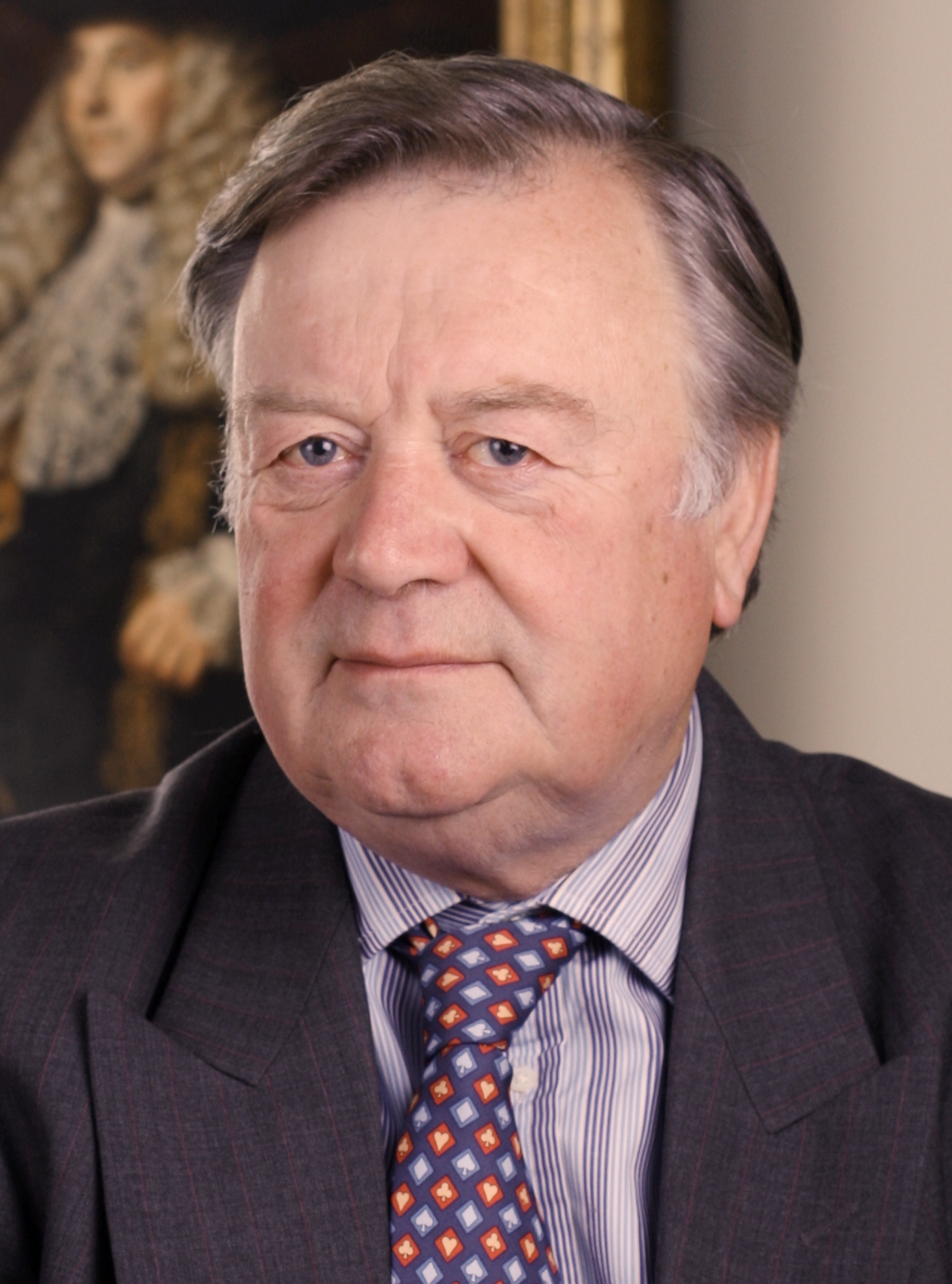
  • Ken Clarke – 1986 Statement on the Inner Cities

    Below is the text of the statement made by Ken Clarke, the then Paymaster General and Minister for Employment, in the House of Commons on 6 February 1986.

    With permission, Mr. Speaker, I should like to make a statement on Government help to people living in inner city areas.

    We are all only too well aware that people who live in many inner areas of our cities suffer from a wide range of long standing problems. The Government have increased the amount of central Government money spent on employment and training programmes, urban regeneration and industrial assistance in these areas. We have taken a number of measures, including setting up last year city action teams to co-ordinate and target Government effort in the seven inner city partnership areas.

    In order to complement and build on that existing work, we have now decided to try out a new approach to the task by intensifying and bringing together the efforts of Government Departments, local government, the private sector and the local community in eight small inner city areas.

    This initiative is a further step to improve the targeting and enhance the benefit to local people of the money channelled through existing central Government programmes. They include the employment and training programmes of the MSC, the Department of Trade and Industry’s programme of regional and industrial assistance, the Department of the Environment’s urban programme, and the Home Office programmes of black business support and grants to support staffing of services to ethnic minority populations.

    Within the chosen areas we shall try out new approaches, particularly on training provision, and employment or self-employment opportunities for local residents. That will be tackled through projects and activities of wider but direct benefit to the residents of the areas concerned and their environment. We shall seek to stimulate enterprise and provide a stronger base for the local economy. We shall give special attention to the problems of young people from ethnic minorities where they are particularly disadvantaged.

    To test our approach we have selected eight areas which are diverse in their character but whose residents all share problems of deprivation and lack of opportunities. They are not necessarily the eight most deprived areas in our cities, but the people who live in them need more employment opportunities, support for their local business economy, and a better physical environment. We shall introduce our new initiatives in Notting Hill and north Peckham in London, the Chapeltown area of Leeds, north central Middlesbrough, the Highfields area of Leicester, Moss Side in Manchester, St. Paul’s in Bristol and Handsworth in Birmingham.

    We shall be establishing small task forces in each of those areas. They will work with the local authorities and local community and voluntary organisations. They will quickly seek to attract private sector participation.
    We shall seek early discussions with the local authorities concerned about the details of this initiative. We hope to persuade the local authorities to join us and use their own programmes alongside our own in a concentrated and targeted effort to improve work prospects and the quality of life in those areas.

    Large sums are already available to the chosen areas under existing Government programmes, but, in order to help the initiative get off the ground, the Government will be supplementing the sums with £8 million of additional money of which £3 million will be found from within my Department’s existing provision and £5 million will be found from the reserve.

    The initiative will be led by a team of Ministers drawn from the Departments of Employment, Education and Science, Trade and Industry, Environment and the Home Office. My right hon. and noble Friend the Secretary of State for Employment will have overall responsibility for the co-ordination of the initiative. I shall have responsibility for its day-to-day management and supervision with the support of a small central unit. This inner cities initiative will complement and not replace existing Government programmes.

    I hope that the House will welcome a bold experiment in concentrating all available efforts and resources in a joint way on the improvement of job expectations and the quality of life of the residents of those small inner city areas.

  • Alistair Goodlad – 1986 Statement on Sellafield

    Below is the text of the statement made by Alistair Goodlad, the then Parliamentary Under-Secretary of State for Energy, in the House of Commons on 6 February 1986.

    British Nuclear Fuels plc has reported that during maintenance operations yesterday there was a small release of plutonium radioactivity within the main reprocessing building at Sellafield. The incident arose during maintenance operations on a pump, during which air was accidentally blown across a flow of liquid with plutonium in it. This caused a mist with a small amount of plutonium in suspense. Monitoring equipment in the building, which is extremely sensitive, gave an alarm. The staff quickly traced the sources of the escape, shut off the flow of air and instituted procedures for evacuating all non-essential staff.

    Tests on staff contamination have so far shown no cause for concern. BNFL will carry out further tests on staff over the next few days. On present evidence, there was no risk to the public.

    A member of the nuclear installations inspectorate was on site and was notified at the time. My Department and other interested Government Departments were notified shortly afterwards. The company has estimated that a very small radiation release from the building of 50 micro-curies may have occurred, but no release was, in fact, discernible from its monitoring equipment outside the building.

    The nuclear installations inspectorate has already initiated an investigation in co-operation with the radio-chemicals inspectorate, and will make a statement about the incident within the next few days. The company is also conducting its own inquiries into the incident.

  • Kenneth Baker – 1986 Statement on Water Privatisation

    Below is the text of the speech made by Kenneth Baker, the then Secretary of State for the Environment, in the House of Commons on 5 February 1986.

    With permission, Mr. Speaker, I will make a statement about the future of the water authorities in England and Wales.

    On 7 February 1985, the then Minister for Housing and Construction, my hon. Friend the Member for Eastbourne (Mr. Gow), announced that the Government would examine the prospects for privatisation in the water industry. A discussion paper followed in April. In the light of the responses, and of professional advice on the financial issues, the Government have now decided to transfer the 10 water authorities in England and Wales to private ownership; already, 25 per cent. of water is supplied by private sector water companies.

    With my right hon. Friends the Secretary of State for Wales and the Minister of Agriculture, Fisheries and Food, I have today presented to Parliament a White Paper setting out our proposals. Legislation will be necessary, and we shall put the water authorities on the market as soon as possible thereafter.

    Transferring water to the private sector will offer unique opportunities and challenges. The water authorities are not merely suppliers of goods and services. They are managers of natural resources. They safeguard the quality of our rivers. They control water pollution. They have important responsibilities for fisheries, conservation, recreation and navigation. These functions are inter-dependent and inseparable.

    We will maintain the principle of integrated river basin management and we will maintain existing boundaries. The water authorities will be privatised with all their existing responsibilities but for the one exception of land drainage and flood protection. Financing and co-ordination of that function will remain a public sector responsibility.

    The authorities are largely natural monopolies. The public will, rightly, expect us to set up a firm regulatory framework. We will appoint a director general of water services. He will control the authorities through an operating licence. This will lay down strict conditions on pricing and on service standards. The system of promoting the interests of consumers will take into account a report which I am publishing today from Professor Littlechild of Birmingham university. Under the director general, there will also be strong machinery for representing consumer interests and investigating complaints.

    Water authorities are responsible in England and Wales for the implementation of national policy for the water environment. Necessary existing safeguards—including appeals against water authority decisions on discharges and Government controls on the authorities’ own discharges—will continue. And we shall strengthen the system of pollution control in two main ways: first, we shall legislate to make their river quality objectives subject to ministerial approval; secondly, we shall provide for any new requirements to be laid down through a parliamentary procedure. In this way we shall use the opportunity of privatisation to improve environmental standards on a continuing basis.

    Over the last seven years considerable progress has been made in improving the management efficiency of ​ water authorities. Their operating costs have been reduced in real terms, even while the demand for their services has been growing. Manpower has been reduced by 20 per cent. The number of board appointments has been reduced even more dramatically — from 313 to 123. In 1979 their investment was falling; in real terms it is now above its 1979 level and it is rising. In the last six years we have made the water authorities fit and ready to join the private sector; and, as reported to the Public Accounts Committee, the quality of water services has been improving in almost all regions.

    Privatisation is the next logical step. It will bring benefits to customers, to the industry itself and to the nation as a whole in improved quality, more efficient service, greater commitment of the staff to the work they are doing, and greater awareness of customer preference.

    With the disciplines and freedoms of the private sector, I expect the industry to move from strength to strength. I know that these proposals will be welcomed.

  • Ray Whitney – 1986 Speech on Horton Hospital in Banbury

    Below is the text of the speech made by Ray Whitney, the then Parliamentary Under-Secretary of State for Health and Social Security, in the House of Commons on 4 February 1986.

    I am very grateful for the opportunity to respond to this Adjournment debate. It is well known to the House that my hon. Friend the Member for Banbury (Mr. Baldry) takes a very close interest in all the affairs of his constituency but particularly in the medical cover that is provided for his constituents—appropriate indeed for the son of a medical family.

    I am grateful to my hon. Friend for placing his entirely fair points in the context of the increasing and expanding medical care that is being provided by this Government. I do not wish to enter into a statistical knock-about, but it cannot be said too often that significantly and steadily, in real terms, this Government have increased the proportion of resources that are devoted to the National Health Service both nationally and regionally, including the Oxfordshire district and the Horton general hospital.

    The real terms increase in expenditure since 1979 will be over 20 per cent. this year. My right hon. Friend the Secretary of State for Social Services has announced that during the next three years we shall continue to give the same degree of priority to the NHS. Expenditure in Great Britain on the NHS is set to rise by nearly £2·8 billion to well over £20 billion in 1988–89. That represents a real terms increase in each year.

    I shall now refer briefly to the Oxford region. I represent an Oxfordshire constituency and therefore take a particular interest in the region. It reinforces my ministerial responsibilities. My hon. Friend referred to the resource allocation working party. Pressures continue upon the Oxford region. They spring largely from its rapid growth in population. The pressures on the Oxford region have been taken into account in the allocations. For example, the allocation to the region in 1986–87 represents an increase of 7·3 per cent. over 1985–86. That compares with increases in other regions that range from 5·7 per cent. to 8 per cent.

    This is a slightly lower allocation, in cash terms, than that which the region had hoped for or expected, but an increase of 7·3 per cent. is significant when there are heavy pressures upon expenditure generally. That allocation will put the region back on the course from which it was deflected. It will move towards its target of receiving a fair share of resources and it will correct the drift away from that target which has been a feature of recent years. The region, we estimate, is now within 2 per cent. of its target. The planning guidelines which we are now issuing to the regions, predict growth for Oxford of 1·7 per cent. in 1987–88 and 1·8 per cent. in 1988–89, and are designed to continue this process. I therefore submit that Oxford is feeling the benefit of the change in the RAWP formula in 1985–86 from past population figures to population projections for the year of allocation, a change specifically aimed to reflect more fully the needs of regions with rapidly growing populations. Coming from the region, as I have said, I well recognise that factor.

    My hon. Friend referred to the impact of RAWP formula. The regional health authority has put a paper on RAWP to Ministers, and it will have an opportunity to put to Ministers its arguments on this issue in a regional review which will be chaired by my right hon. Friend the Minister for Health. We have also asked the National Health Service management board to undertake a review of the ​ RAWP formula, keeping the guidelines which aim at a general equalisation of health provision throughout the country. While the terms of reference of the review have not yet been finalised, the objective is to ensure that the RAWP formula is applied with common sense and sensitivity. This will provide an opportunity for the region to put to the department its particular concerns about the application of the RAWP formula to the Oxford region.
    I therefore hope that my hon. Friend recognises in the application of these figures that substantial funds are available. I hope that they have been applied flexibly, recognising the changing pressures in the regions, and specifically in the Oxford region and district.

    I deal now with other points which my hon. Friend made about the general pressures on the health authority to meet the pay awards. That is recognised, and it must inevitably be part of any arrangements of the funding of the Health Service. We have provided increases which are above the rate of inflation. It is important to understand that the cost improvement programmes are making available additional funds to authorities which go back into the kitty to cover not only the pay awards but improvement in the services. Resources released in this way through increased efficiency and cost improvements added something like 1·5 per cent. nationally to the money available for services and pay awards. Authorities are expected to improve on that next year. Oxfordshire has a cost improvement programme in 1986–87 of 1·8 per cent. In fact, in 1985 authorities have been able both to fund the 1985 pay awards and to develop services.

    Health authorities cannot expect, any more than employers in other industries and services, to be insulated from uncertainties about the level of pay settlements. It would be wholly unrealistic to expect the taxpayer to pick up whatever costs arise. We have no plans to increase health authorities’ cash limits to fund pay awards. As we have made clear, there is an inevitable trade-off between expenditure on pay and on services, and the precise balance will vary from year to year. I hope that my hon. Friend will accept that that is the way that we must conduct our services.

    Mr. Baldry

    The difficulty is that district health authorities and others fix their budgets at the beginning of the year in anticipation of a pay award and halfway through the year they find themselves with percentage increases that they did not and could not have anticipated, because of review body decisions.

    Mr. Whitney

    No one pretends that it is an easy problem. The pay awards must be contained within the steadily increasing percentage of the national wealth that is devoted to health. I hope that with cost improvements authorities will accept that and find sufficient flexibility. The awards are phased and that helps health authorities solve the problem which, I accept, is difficult.

    It may not be possible for me to cover all the points mentioned by my hon. Friend. Nationally, there has been an increase of about 50,000 nurses and midwives. My hon. Friend said that the shortening of their working week is a factor in that. We have significantly—perhaps not as much as we should have wished—increased the rates of nurses’ pay in real terms. That produces pressures.

    I understand that there are problems at the Horton hospital in Banbury and with the Oxfordshire health authority. The authority has set a review committee to ​ work. I am not sure whether it has reported, but when it does we shall consider how the health authority can cope. It is a problem that must be solved locally, because the national picture shows a steady increase in the number of people employed in nursing since we took office.

    My hon. Friend mentioned those elderly people who would be better off in a nursing home. He referred to the level of supplementary benefit. From November, the allowance for an elderly person in a private nursing home was increased to £170 per week. That is subject to examination and review. Management consultants are studying the level and its feasibility. We have set in train studies on the assessment of old people to ensure that the service is being provided for those who genuinely need it. At £170 per week, the provision is not ungenerous.

    As a Minister with responsibility for social security I had the privilege of going around the country looking at nursing and residential care homes. It struck me as entirely possible to provide a good level of care in nursing homes with such funding. I hope that will continue to be the case.

    It is regrettable if facilities are not used. Because of the way in which we run our Health Service, many decisions ​ at local level must be taken by the district health authority. My hon. Friend was kind enough to accept that the resources made available to the Oxfordshire health authority and the Horton hospital were not ungenerous. The Oxfordshire health authority has gained substantially and expenditure on Oxford district between 1978–79 and 1984–85 has more than doubled, representing an increase of 13 per cent. above inflation.

    During the past six years £2·1 million has been spent on capital developments at the Horton hospital, and in 1983 four new operating theatres were completed. Next year a new phase will begin which will provide 100 beds for elderly people and a new day hospital at a cost of £5·2 million. There are plans to replace the accident and emergency unit. The upgrading scheme will be assisted by local fund-raising, which, as my hon. Friend says, demonstrates the support for the hospital.

    This is a good story. I understand the problems, but with the support that the health authority is receiving at national level, I hope that it can cope with them.

  • Tony Baldry – 1986 Speech on Horton Hospital in Banbury

    Below is the text of the speech made by Tony Baldry, the then Conservative MP for Banbury, in the House of Commons on 4 February 1986.

    I am grateful for the opportunity to raise this important subject and I thank the Minister for the care that he has taken so far in dealing with the representations that I have made about the Horton hospital.

    As both my parents have spent their working lives in the National Health Service—my father is a doctor and my mother a nurse—I have, naturally, always had an interest in the NHS, and since becoming the Member for Banbury I have taken a particular interest in the Horton general hospital. It is a first-class general hospital with well-qualified and highly motivated staff serving the medical needs of a wide catchment area stretching into Northamptonshire and Warwickshire.

    Any debate on the NHS is liable to become either a statement of statistics or an exercise in special pleading. I hope to do neither. Horton is a well run hospital. The local community has every reason to have confidence in the hospital’s unit administrator, Dennis Baston, and his team. Whereas the average national daily cost per inpatient is £79, at Horton hospital it is only £66, and whereas the national average in-patient case cost is £577, at Horton it is £528.

    Some people seek to give the impression that the NHS is in a state of constant decline, is starved of resources and has ever-shrinking staff numbers. In fact, the figures show that local health services have never had so many resources devoted to them. Revenue spending on health services in Oxfordshire has increased by 101·7 per cent. in cash terms since 1979, representing an increase in real terms of 13·2 per cent. That means that the Health Service in Oxfordshire has a budget 13·2 per cent. bigger than it was in 1979. Revenue spending on Horton general hospital has increased by 103·8 per cent. in cash terms since 1979, which represents an increase in real terms of 14·4 per cent.

    During the past six years, about £2·25 million has been spent on new building works at the hospital, and during the next five years about £6,640,000 is planned to be spent on new building works. Since 1979, about £670,000 has been spent on new medical equipment at the hospital. There is no doubt that Horton general hospital is a more secure, better district hospital now than it was in 1979.

    Against that background of consistent achievement in the NHS and consistent extra resources for the hospital, I raise my specific anxieties, because, despite the consistent improvement, many beds at the hospital are empty for want of nurses and some financial resources. The first legitimate anxiety relates to RAWP which, as my hon. Friend will know, is the formula by which resources are allocated from central Government to regional health authorities. There are good grounds for suggesting that Oxfordshire regional health authority is underfunded. As my hon. Friend will know, it is one of the fastest growing areas of population in Britain, yet although in 1977–78 the region was 7 per cent. above its RAWP target, it is now 3 per cent. below target. It would appear to have had a more negative movement than any other region. I do not understand why Oxfordshire regional health authority should be in that position. The region’s budget may be underfunded, so, however hard it tries, it will have ​ difficulties in meeting all its commitments. At the end of the day, that means that in a good district general hospital beds are not being used as they should be.

    In a letter to me last October, my hon. Friend the Minister acknowledged that Oxfordshire is not receiving its fair share of resources. He said:

    “It is true to say that Oxford RHA receives 3 per cent. less than its fair share of the available resources, whereas in 1977–78 it received 7 per cent. more than its share.”

    What happened was that, just at the point when the region was on target to receive exactly its fair share, its relative need for health care increased because of rapid population growth. The target shifted. This had the effect of converting Oxfordshire health authority from an over-target region to an under-target region. In simple terms, that means that the regional health authority has insufficient funds for its means and is not receiving a fair share of the funds available.

    I appreciate that, this year, Oxfordshire is receiving about £1·4 million of growth money from the Government to pay for better services. However, that entire sum may be swallowed by unexpected bills: £344,000 to cover Oxfordshire massive rates increase; £700,000 to pay for higher than expected wage awards; and £250,000 to pay for a new national agreement on ambulance men’s pay. I simply ask: when will Oxfordshire again receive its fair share of central Government money?

    Our second anxiety relates to the nurses that the district health authority can provide at the Horton. That is partly a consequence of the resources that the regional health authority can apply to the district and the district health authority can apply to the hospital. Recently, Oxfordshire health authority undertook a comprehensive review of nursing. That review is not yet completed, but its results so far demonstrate such low numbers of nurses at present on the wards as to give rise to great anxiety. It is neither fair, sensible nor acceptable to allow the numbers of nurses on wards and in the community to reach such levels that the staff who remain become demoralised It is unfair to the nurses and to the patients. I fully appreciate that some of the problems relate to difficulties in recruiting nurses. Horton, like every other hospital in Oxfordshire, is suffering and is finding it difficult to recruit either state registered or state enrolled nurses. Nursing services are extremely stretched.

    At Horton beds are closed because of a combination of recruitment problems and revenue difficulties.

    In a recent letter to the county’s Members of Parliament, the district group manager, Dr Paine, observed:

    “The options will have to be those which will bring up the level of nursing staff on individual wards to such a level that they can feel that they carry out their duties effectively and without exhaustion and disillusion, as is too commonly the present case. It looks as though some reductions of service will be inescapable if this is to be achieved within even the optimistic predictions for the district’s funding in 1986.”

    That letter was written prior to certain of the unexpected expenditure which the district will incur, such as the rates increase to which I drew the attention of the House earlier.

    There is genuine concern that, because Oxfordshire health authority has not been able fully to fund the increases in nurses’ pay, the number of nurses at Horton has had to be cut. That has meant that beds have had to come out of service and it has hit, in particular, cold ​ surgery so that the waiting times for operations have lengthened and on a number of occasions the hospital has not been able to use the operating theatres in the most cost effective way.

    I have read with interest the auditor general’s recent study into nursing and I fully appreciate the argument that substantial savings can be made nationwide on redeploying nurses. However, having made several visits to Horton hospital, and having discussed the matter at considerable length with those involved, I am more than satisfied that in Horton the nursing staff are already being used as cost effectively and efficiently as possible, given the size of the hospital, the present 37½ hour working week which makes it difficult to provide 24-hour-a-day, seven-day-a-week cover, and other constraints imposed by the Royal College of Nursing. I should be very surprised if anyone going into Horton could find a more cost effective way of using the money available for the nursing staff. The situation with nurses will be even more critical next year as each 1 per cent. increase in nurses’ pay, which is not funded centrally, costs Oxfordshire health authority £8 million. When will we have a system of pay reviews that ensures that health authorities have available locally the resources necessary to honour pay awards agreed nationally.

    The last matter to which I wish to draw the attention of the House and which impinges upon the efficiency and effectiveness of Horton hospital is the effect of the recent introduction of the regulations on the maximum amount of money available to keep people in private nursing homes. I support fully the need to control such demand spending and understand why it was necessary to introduce the regulations. However, it is estimated that at any time there are up to 20 people in Horton hospital who are not really ill. They are old and would be far better off in nursing homes, but they cannot be admitted to private nursing homes because the Department of Health and Social Security cannot fund them. In consequence, they are costing the community far more by being in hospital and they are also taking up valuable beds which could be used by patients in need of acute medical beds.

    The chairman of Oxfordshire health authority and the chairman of Oxfordshire community health council have as a matter of urgency been carrying out an evaluation of all the private nursing provision in Oxfordshire. If it should be shown that the present DHSS levels have been set too low to enable private nursing homes to provide proper accommodation for those who are entirely dependent upon the DHSS for support, I trust that my hon. Friend will again consider the limits. It must be in everybody’s interest that no acute bed in a general hospital is unnecessarily occupied.

    I hope that by the tenor of my comments I have made it clear to my hon. Friend the Under-Secretary of State and to the House that I do not approach this matter by way of special pleading. I hope that I approach it by way of balanced and objective analysis, wishing to try to discover how it is that at a time when more money than ever before is being devoted to the Horton hospital and to the National Health Service as a whole we find ourselves in the curious position that, notwithstanding, there are empty beds at a good, efficient hospital like Horton. The Horton hospital is a first class general hospital. We intend to ensure that it remains a first class general hospital that is able effectively and efficiently to serve the medical needs of local people.

  • Paul Channon – 1986 Statement on British Leyland

    Below is the text of the statement made by Paul Channon, the then Secretary of State for Trade and Industry, in the House of Commons on 3 February 1986.

    With the approval of the BL board, discussions are in progress between BL and General Motors with the aim of creating an internationally competitive United Kingdom commercial vehicle industry and improving the long-term prospects for the constituent BL companies. These talks cover Leyland Trucks, Land Rover, Freight Rover and certain related overseas operations. Discussions are at an advanced stage, but a number of important issues remain to be settled Separate discussions are taking place with the Laird Group, which owns Metro Cammell Weyman, about the future of Leyland Bus.

    As to the other BL businesses, it remains the policy of Her Majesty’s Government to return them to private ownership as soon as practicable. Talks with other car manufacturers on a variety of potential business ventures are in progress; some of them are wide-ranging, but are at an exploratory stage, and it is too early to tell whether they will lead to any potential equity stake, acquisition or merger.

  • Peggy Fenner – 1986 Speech on the Scotch Whisky Industry

    Below is the text of the speech made by Peggy Fenner, the then Parliamentary Secretary to Ministry of Agriculture, Fisheries and Food, in the House of Commons on 3 February 1986.

    One of the delights of my job in the Ministry has been the opportunity to visit some of those fine Scottish distilleries, so I welcome this opportunity for a debate on the Scotch whisky industry. The hon. Member for Gordon (Mr. Bruce) has paid tribute to the industry as well as challenged it, and I wholeheartedly endorse what he has said. The Government fully recognise the importance of this industry as an important source of employment—some 16,500 jobs, many of them in disadvantaged areas—and as one of the United Kingdom’s top five net export earners, the value of exports last year having topped the £1 billion mark. At home, the industry is very important, making a similar level of contribution to the revenue. There can, therefore, be no question but that the Government fully recognise the important role of this industry in the country’s economy.

    I recognise, however, that the hon. Member, in seeking this debate, is concerned at current trends in the industry and especially the effect of several recent major bids. As the House well understands, responsibility for monopolies and mergers policy does not rest with my Department. The Ministry, however, has responsibilities for the Scotch whisky industry and that is why I am pleased to reply to this short debate. As regards competition policy, as my right hon. Friend the then Secretary of State for Trade and Industry made clear in a statement in this House on 5 July 1984, references to the Monopolies and Mergers Commission would be made primarily on competition grounds. “Primarily” does not of course exclude other considerations. For example, the major consideration behind the recent decision to refer the bid for Allied-Lyons plc by Elders IXL Ltd., was the method of financing, which was thought to raise issues deserving of further consideration. On the other hand, the decision not to refer the Guinness bid for Bell’s and Argyll’s bid for Distillers was guided primarily by considerations of competition.

    I know that there has been comment on these decisions. Reference decisions, whichever way they go, often arouse controversy. I do not want to stray too far into the responsibilities of my right hon. Friend the Secretary of State, but I should point out that there were significant differences between the financing of the Elders and the Argyll bids which led my right hon. friend to his different decisions on the need for a reference. ​ The hon. Member has also raised the question of a possible referral of the recent Guinness bid for Distillers. This decision of course rests with my right hon. Friend, the Secretary of State for Trade and Industry. He will take that decision on the basis of advice submitted by the Director General of Fair Trading. It would not be appropriate for me to anticipate that decision or to comment on the matter at this stage.

    Mr. lain Mills (Meriden)

    Surely Guinness should have the same chance to bid to the shareholders as Argyll?

    Mrs. Fenner

    I have made the point that this is a matter for my right hon. Friend the Secretary of State. I have no doubt that the Secretary of State will be aware of the question of balance that has been put by my hon. Friend.

    As the hon. Member for Gordon will be aware, my hon. and learned Friend the Parliamentary Under-Secretary of State with responsibility for corporate and consumer affairs, the hon. Member for Folkestone and Hythe (Mr. Howard), has announced that a review of the Government’s competition policy will begin this year. The precise scope of the review has not yet been finalised but will be announced in due course. In the meantime I am sure that the interesting points made in this debate by the hon. Member will be considered in the review.

    The hon. Member has mentioned several problems which are worrying the industry. As he is aware, the distilling sector working group of the National Economic and Development Office, which includes representatives of the industry, Government and the trade unions, has carried out a wideranging review which was published as recently as October 1984. This followed an earlier review in 1978. Matters have been examined carefully in a short time.

    The report identified all the major issues of current concern to the industry, several of which the hon. Member has mentioned, and made recommendations for action by Government and the industry during the next five years. We are still very much involved in implementing these recommendations and, of course, we are ready to play our part with the industry in tackling any new issues that may arise.

    The possibility of the Government restricting bulk exports, particularly of malt whisky, has been suggested because of the benefits that would bring to the UK in employment and in other respects. I should point out that this issue was examined in the 1978 report, which concluded that the industry was insufficiently united voluntarily to regulate its bulk exports, while Government were restrained from such action by their international commitments under the GATT and by Community obligations. The 1984 study reached similar conclusions. Nonetheless, its analysis suggests that such exports have tended to stabilise around the 1978 levels, and figures just released in respect of last year’s exports show a substantial fall in this trade. I am sure that that will reassure the hon. Member.

    As for the abolition of stock relief in the 1984 corporation tax changes, the Government are well aware that because of its large stocks of maturing whisky, the Scotch whisky industry has been particularly affected by these measures, although in the longer term, as ​ corporation tax rate falls, the industry should pay slightly less tax even without stock relief than it did before the 1984 changes.

    In his decisions on taxation at the last Budget, my right hon. Friend the Chancellor of the Exchequer recognised the difficulties faced by the industry. I cannot of course anticipate the decisions that he will take in this year’s Budget, but I am aware that the Scotch Whisky Association has made detailed representations.

    The Government are working closely with the industry in several areas in which there is agreement that progress can be made. For example, the Government are currently considering proposals for whisky definitions to be prescribed in new regulations under the Food Act 1984. Any proposals will be subject to the usual consultation with all the interests concerned. We are also giving strong support to Community proposals laying down clear definitions of the spirit drinks most commonly traded within the Community. The industry is keen for the enactment of measures which should help the competitive position of Scotch whisky in export markets. We shall aim to press ahead with these proposals during our Presidency of the Community in the second half of this year.

    We maintain regular and close contacts with the industry on the trade barriers it faces throughout the world and we pay special consideration to its efforts in the far east. The Government also have the interests of the industry very much in mind in their approach to the EC Commission’s proposals on the harmonisation of the structure of duties on alcoholic drinks. Our joint aim is to help establish fairer terms of competition for the industry throughout the Community.

    I know that the Scotch whisky industry has been through a difficult period during the past six years. World recession, coupled with changes in drinking fashions, has contributed to a drop in sales in many key markets. I would not, however, like to conclude on such a pessimistic note, which would not, I think, reflect current attitudes in the industry. In the past year or so, the industry has made substantial efforts to bring maturing stocks more into line with sales expectations. There is also some evidence now that the decline in world sales may be taking a turn for the better. In the domestic market, there was a 6 per cent. rise in consumption in the first nine months of 1985 as compared with the same period in 1984, with considerably greater growth in the as yet small malt whisky market. These are encouraging indications which we hope foreshadow a sustained improvement in the industry’s performance to the benefit of the whole economy.

    Sir Hector Monro (Dumfries)

    Will my hon. Friend bring home to my right hon. Friend the Chancellor the strength of feeling in the debate and the number of hon. Members who attended it? We want a revitalised Scotch whisky industry. The only way in which there can be a dramatic improvement in the near future is through budgetary measures. I hope that my hon. Friend will bring that point home to my right hon. Friend the Chancellor.

    Mrs. Fenner

    My hon. Friend puts his point very clearly.

  • Malcolm Bruce – 1986 Speech on the Scotch Whisky Industry

    Below is the text of the speech made by Malcolm Bruce, the then Liberal MP for Gordon, in the House of Commons on 3 February 1986.

    I am extremely pleased to have the opportunity of this debate, particularly as events in the Scotch whisky industry are so topical. However, the debate is on the industry and not just the immediate developments in it.

    The Scotch whisky industry has had a difficult few years. Volume sales have declined from a peak in 1979. The number of distilleries has reduced since then from about 130 to 100, and employment has fallen from over 25,000 to about 16,500. While smaller companies have performed fairly well, especially those selling single malt whiskies, the industry leader, Distillers, has generally not done well, and the facts show it.

    The industry is obviously extremely important, to Scotland, but it is also important to the whole of the United Kingdom. It provides manufacturing jobs, many of them in areas where there is little or no alternative, and it still represents a major export industry, with sales approaching £1 billion a year. It is important to maintain and develop its employment and export potential.

    The recent developments began in the middle of 1985, when Guinness took over Arthur Bell and Sons plc for £356 million and so acquired the top domestic brand of whisky. The Fosters lager consortium, Elders IXL, has put in a bid for Allied Lyons, which includes William Teachers, whose two distilleries are in my constituency. Teachers is the second largest United Kingdom brand. That bid has rightly been referred to the Monopolies and Mergers Commission, involving as it does the acquisition of a key product by an Australian group, which must be examined carefully in this strategic industry.

    It is not surprising that bids and counterbids have been launched for a company such as Distillers, which seems to be under-achieving its potential under its present management. The first bid came from James Gulliver’s Argyll Group, which offered £1·89 billion. When the bid arrived, there were calls for it to be referred to the MMC. On competition grounds that did not seem to be justified, but in relation to the strategic national interest the bid warranted at least deep consideration about whether it would secure jobs and promote exports.

    Mr. Alexander Pollock (Moray)

    In that context, does the hon. Gentleman recall the words of my hon. and learned Friend the Member for Folkestone and Hythe (Mr. Howard), the Under-Secretary of State for Trade and Industry, who said that in addition to competition there might be referrals

    “where the destiny of a vital national capability is at issue?”

    Mr. Bruce

    I am grateful to the hon. Gentleman for mentioning a factor that must be considered in all bids. I am anxious that the bids are treated equally and fairly and that similar considerations are applied in all cases. That is the critical factor.

    Nevertheless, the Argyll bid was cleared. Then Guinness made a bid, which was agreed with Distillers —it invited Guinness in and offered to pay its expenses —for £2·19 billion. If that merger were to go ahead, it would create a group that accounted for 35 per cent. of the whisky market. There is a dispute as to how much whisky ​ production that group would represent, but it is between 35 and 50 per cent.—probably nearer to 35 per cent. The group would also own, as Distillers still does, 50 per cent. of United Glass, which accounts for half the sales of bottles to the whisky industry.

    Mr. George Robertson (Hamilton)

    When the hon. Gentleman produces statistics about the capability of the Distillers-Guinness conglomerate, will he take into account the spare capacity that is available to Distillers and not rely on a suggestion of actual output? Distillers has a considerable amount of capacity which is at present unused but which could come back on stream.

    Mr. Bruce

    I am grateful to the hon. Gentleman. I intend to deal with the point later.

    As Guinness has acquired Arthur Bell, it would, with Distillers, become a bigger group than Distillers alone and would be bigger than a Distillers group owned by Argyll. That presents a dilemma, because it is difficult to believe that a bid to create such an enlarged group should not be referred to the Monopolies and Mergers Commission, although the Government may take a different view. However, if that merger is referred, it would leave Argyll clear and free in the market and would handicap Guinness. Not to refer it would undermine the credibility of the Office of Fair Trading. Could it say, “We will not refer this bid because we did not refer the Argyll bid; but had there not been an Argyll bid, we might have referred it”? We must have a clear statement, whether or not the bid is referred, of the reasons for so doing. The Minister and the Government must take that point on board.

    That clearly leaves the Government with limited options. If the Guinness bid is not referred to the commission there must be a clear explanation for that, as it is difficult to see why it should not be referred. If there is a good reason, it should be made available.

    If, on the other hand, the bid is referred to the commission, the Ministers responsible have two further choices. They can either review the decision of Argyll on the ground that they need to consider all the implications for the industry and it would be fair to consider both bids at the same time, or they can state, as this would be the effect of their decision, that they are effectively endorsing the Argyll bid, at least by implication, and explain that they are happy for that to happen. How the bids are referred and judged should not be left to luck. Both bids have every right to be treated fairly. All the factors, jobs, exports, management potential, the merits of the bid and the implications of competition should be considered equally for both bids.

    The sheer scale of these bids and the wide issues that they raise require a clear statement by the Government of their position. I do not think that we can accept a “hands off” approach, unless it is a genuine “hands off” approach. There should be no under-the-counter meddling over the decision to refer or not to refer. That would have a perceived effect, and that fact must be taken into account.

    It is unfortunate for those of us who are caught in the middle of these battles that they frequently degenerate into an argument between the management of the two different companies. There are claims and counter-claims, which does not add to the clarity of information on both sides. The merits of both companies are such that there is no doubt that if either of them were to take over Distillers there would be a re-invigorated whisky industry, using the ​ brands to lead a new attack on the export market. That would be desirable. It is important that the relative accounts of both companies are considered.
    Argyll launched its bid with an attractive statement—attractive to me as a Scottish Member—which claims that the company will bring Scotch whisky back home. It would establish a new company in Scotland. Its management team would be based in Scotland and the industry would be run from there. Argyll claim that its management team has a marketing background which can revitalise the industry, and it feels that its actions are a logical development of its own business.

    Guinness countered that by claiming that it had greater international marketing expertise which would be much healthier and better for the industry. It also claimed that it would establish headquarters in Scotland. We should be grateful that there now seems to be renewed enthusiasm for operating international businesses within Scotland. All Scottish hon. Members will be glad to see that it seems from that point of view that we cannot lose. We shall get an enlarged whisky management group in Scotland.

    I should not at this stage take sides in the issue other than to ensure that a fair deal is secured. I accept that the Scotch whisky industry needs a boost and injection of new creative management. It needs aggressive and creative marketing. I am looking for, and I believe that the Minister should want, a commitment to centering employment and management in Scotland and to securing the quality of Scotch whisky as a product and to ensuring that it is backed with effective, creative marketing to beat off the challenge it has suffered from its competitors, namely white spirits, white wine, brandy and so forth.

    Although it may be invidious to mention the two together, I think we can learn something from the way the producers of Armagnac and Cognac have established the imprimatur on their quality product in a way which Scotch whisky could benefit from if it is to establish itself as top of the heap.

    One of the difficulties in relation to white spirit in competition with Scotch, which will lead me to make specific recommendations at the end of my speech, is that there is, of course, no ageing process, no skilful blending and no mystique. One can make gin today and sell it effectively next week. There is no difficulty involved in forward planning, no expense in stock holding, and no creative skills are required. Yet, in the long run, that is not in the best interests of Scotland or the United Kingdom. It would certainly not create jobs in rural Scotland and it does not have the export potential that whisky has, as gin can be made relatively easily almost anywhere. Pure, good quality Scotch whisky can only be made in the right circumstances, in the right place—in Scotland.

    The Scotch whisky industry is vital to rural communities and towns in Scotland which have blending and bottling plants. Teachers has its only two distilleries in my constituency and employs 50 people in two relatively small communities. Distillers had a distillery in my constituency but closed it many years ago. I am pleased to say that Morrisons of Glasgow took it over and not only generated employment by producing malt whisky but produces tomatoes and house plants from the waste heat. The company has generated some imaginative tourism on the back of those products.

    The importance of the industry to rural areas can be explained by the example of a minister whom I met. He told me that he went for a charge in a rural parish and was ​ asked, “Do you take a dram, minister?” Normally, a minister would assume that the correct answer was no. On this occasion he would have been wrong because the parish was entirely dependent for its employment on a malt whisky distillery. Fortunately, the minister gave not merely the right answer but the honest answer. He admitted that he took a dram and finished up with the charge.

    After considering the points that I have made about the two bids the Government should make their position clear. That is critical. They should ensure that they take account of the interests of Scotland and the United Kingdom market. They should treat the bids fairly and evenhandedly and explain their position clearly.

    There are three further things that the Government should do for the Scotch whisky industry. I should like to address those points to the Minister. The Government should recognise their responsibility to work with the industry to ensure a good quality product. As the Minister will recognise, a definition of Scotch whisky is required by law. The ageing process is required by law. There are one or two further areas where legislation could strengthen and develop the Scotch whisky industry.

    The first point is controversial. The Government should legislate to ban the export of bulk malt whisky. I accept that some distilleries would have some difficulties as a result, but I believe that it would protect the quality of our market. We export bulk malt whisky to Japan where it is blended with the local inferior product so as to pass it off as a more acceptable product. The result is that it is harder for Scotch whisky to penetrate the Japanese market. We face the possibility of the Japanese launching a major export assault on third markets using as a base bulk malt Scotch whisky. That is nothing like as advantageous as us selling Scotch whisky to those markets. In the long term such legislation would be in the best interests of the quality of the product and the market.

    The Government should insist that the legal definition of Scotch whisky should provide that it should be full strength, at least three years old, distilled, matured, blended and bottled in Scotland and contain a statement of the percentage of malt whisky included.

    Mr. George Foulkes (Carrick, Cumnock and Doon Valley)

    No.

    Mr. Bruce

    I understand the hon. Gentleman’s anxiety and I appreciate that it is an important constituency point. Such a quality product would enable the whisky industry generally to be extended to everyone’s benefit.

    Mr. Foulkes rose—

    Mr. Bruce

    I must press on, because the Minister needs time to reply.

    I know that the Minister will have to consult her colleagues on these points, but these are important issues. The Government should re-introduce stock relief to the Scotch whisky industry. The abolition of stock relief was effectively a tax on the quality of Scotch whisky. Scotch must be matured for three years. The cost of that three-year maturing process is estimated to be £53 million in lost stock relief. That £53 million would be much better deployed within the industry expanding the market. The re-introduction of stock relief would be to the Government’s advantage.

    I do not believe that the position of the Scotch whisky industry was appreciated when stock relief was abolished. It put Scotch whisky at a disadvantage compared to competitive products when it was facing a major assault from those products.

    I urge the Minister to explain to her colleagues that Scotland feels that it should have a thriving and developing Scotch whisky industry, and they should recognise that bids of the scale that we are now witnessing fall, effectively to be the Government’s responsibility. They should ensure that all the strategic considerations are taken into account, that the bids are treated fairly and equally and that Scotland obtains the best possible Scotch whisky industry, with local management, control and ownership and growing export sales. That is what we want, I hope that the Minister will be able to give answers which show that the Government are prepared to take on board their responsibilities and ensure that that is what we get.
  • Angela Rumbold – 1986 Speech on the Rate Support Grant

    Below is the text of the speech made by Angela Rumbold, the then Parliamentary Under-Secretary of State for the Environment, in the House of Commons on 31 January 1986.

    I thank my hon. Friends the Members for Sutton and Cheam (Mr. Macfarlane) and for Carshalton and Wallington (Mr. Forman) for the kind words with which they began their contributions. I am also grateful to them on behalf of the civil servants who worked in Marsham street for many a long year with my hon. Friend the Member for Sutton and Cheam.

    I do fully understand my hon. Friend’s arguments about the manner in which the London borough of Sutton has conducted its affairs over a number of years. My hon. Friend the Member for Carshalton and Wallington paid tribute to the local authority’s good management and spoke of how such good management affects people who live and work in that outer London borough. I sympathise and I do not want anything that we do to be to the detriment of such boroughs.

    My hon. Friends will accept that the rate support grant system is at the best of times undeniably complex. This settlement has been more complex because of the additional task of accommodating the abolition of the Greater London council and the metropolitan authorities. I welcome the opportunity to try to reassure my hon. Friends and their constituents about the borough’s position.

    First, I shall deal with how the 1986–87 rate support grant settlement might have affected Sutton if we had not made any changes to the grant system. Like all other outer Londer authorities the borough would have lost block grant because we have reduced the proportion of overall spending which is met by the Exchequer grant, of which block grant is a part. We have followed that policy because we wanted to reduce the Exchequer support to local government in an attempt to improve local accountability. My hon. Friend the Member for Sutton and Cheam accepted that. The loss of grant for this reason amounted to over £1·5 million. Sutton would have lost a further £333,000 due to increased rateable values. It would have gained about £800,000 because we have moved resources between various services.

    With some other smaller losses and gains, overall Sutton would have received about £900,000 less in grant than in 1985–86 if we had simply rolled the old system forward to 1986–87.

    However, we could not leave the basic grant system alone. The most important feature of the settlement next year is that we have removed targets and holdback. At the same time, we have increased the effects of the existing mechanism so as to continue the constraints on spending. Sutton gained £1 million in grant from that move.

    We have also continued the development of grant-related expenditure as an objective measure of spending ​ need. Sutton gains a further £1·2 million in grant from those changes which mainly affect its education and concessionary fares provision. As I said, we have abolished the GLC, which means that Sutton has gained a further £1·5 million of grant towards the services that it has taken on as a consequence of abolition.

    The net result of all the changes to which I have referred is that if Sutton were to spend at a level equal to its own 1985–86 spending and include its share of the GLC’s 1985–86 spending — increased by 3·4 per cent. — its block grant would increase by £2·8 million to £27·8 million—an increase of 11·3 per cent.
    Many outer London boroughs have claimed that profligate inner London boroughs have been rewarded rather than penalised, as the outer boroughs would wish. However, many inner London boroughs are subject to lower expenditure limits next year. For example, Greenwich is being required to reduce its expenditure by 10 per cent. in real terms, Hackney by over 12 per cent. and Lewisham by 14 per cent., all as a direct consequence of rate capping.

    Such demands are difficult to achieve, as I know to my cost. It is hard for a local authority to achieve much more than a 3 per cent. direct cut in expenditure during the rollover of one financial year. However, we are required to operate the block grant system on general principles which have to be consistent. We have no power to single out authorities for favourable or unfavourable treatment. The rate support grant system is based on the principles of need and resources equalisation. The aim is for authorities to provide similar services at broadly the same rate poundage cost to their ratepayers, regardless of differences in their needs and rateable resources.

    Although we are not here today to decide the future of the local government finance system, it would be appropriate for me to mention that my right hon. Friend the Secretary of State has just launched a major Green Paper which addresses the fundamental issues of equalisation and the extent to which it should continue under a new financial system for local government. We shall certainly welcome all thoughts and contributions from local authorities in the coming months. I hope that my hon. Friends will take that message back to their local authority.

    The abolition of the GLC is particularly important to the London borough of Sutton. My hon. Friends will recall that we intended that the financial effects of abolition would be neutral—there would be neither gainers nor losers arising out of the abolition. We have not built into the rate support grant settlement any assumption about what savings can be made by the successor authorities.

    Our aim has been that, taken as a whole, London will receive the same level of grant to which it would have been entitled if the GLC had continued to exist and to spend at the level assumed in the settlement. We have done that by allocating the GLC’s grant-related expenditure and its 1985–86 budget to the successor authorities on the most objective assumptions that we could find, after a full process of consultation with the local authority associations.
    We have also extended the London rate equalisation scheme to replace the equalising effect of the GLC precept. That was necessary to avoid windfall gains to the central boroughs at the expense of ratepayers outside London.

    It is important to understand that not only do authorities inherit expenditure obligations from the GLC, and the grant-related expenditure to go with them, but they inherit an obligation to raise some of the resources to meet those needs from their own ratepayers, just as the GLC did by precepting. That means that there is no uniform relationship between GRE increases and grant increases due to abolition.

    However, in Sutton’s case the grant entitlement on our spending assumption of an increase of 3·4 per cent. would suggest a rate rise of only 2·5 per cent. If Sutton could repeat last year’s use of balances, the rise could be even lower—perhaps even zero.

    My hon. Friends asked me to touch on Sutton’s grant related expenditure. I know that Sutton is unhappy about several aspects of that. It lost about £500,000 from figures provisionally announced in October 1985, mainly due to new data on traffic flows affecting the highway maintenance grant-related expenditure. We made it clear that such changes were possible. The concessionary fare GRE does not match what Sutton believes it will be required to spend according to the statutory scheme, although the new GRE methodology is better for Sutton than the old one. I assume my hon. Friends that we are, looking at whether we can help on this aspect for future years. We are acutely aware of the problems that arise from continually looking at the grant-related expenditure assessment. That throws up problems not only for Sutton, but for other authorities, and one has to be careful about how one changes the assessments.

    I know that Sutton has been worried about the costs associated with the abolition of the GLC. The likely reduction of the proposed London Residuary Body levy from £180 million to around £60 million, to which my right hon. Friend the Secretary of State referred in the RSG debate on 20 January, represents a saving to Sutton of over £3 million.

    My hon. Friends may also know that no less than £200 million of the provisional charges, London-wide, circulated by the LRB in November, related to housing debt that the boroughs already pay for. To add this as a new expense due to abolition would be mistaken. It would result in double counting, and this may help to explain some of the figures for rate increases put about by boroughs generally, although I know that Sutton has not made that mistake.

    Furthermore, my right hon. Friend announced that the GLC’s balances will now be distributed on a population basis. Sutton will get £250,000 instead of £150,000 for every £10 million of balances distributed. I hope that takes care of that point.

    I should like to refer to a mistake that has occurred in the split of the GLC’s highway maintenance expenditure to the boroughs when the RSG settlement was being prepared. I recognise how difficult it is for anyone not immersed in this system, which is known for its Byzantine complexity, not to become confused, but this error is different from the changes of highway maintenance and other GREs between provisional announcement and settlement which I talked about earlier. It has to do with the calculation of the expenditure to be taken on by each borough from the GLC, which is necessary so that limits are set on the gains and losses of grant as a result. These limits—safety nets—were needed to achieve the neutral effect that I mentioned before. The grant loss to Sutton is almost £800,000. ​ I am urgently considering how this can be corrected within the grant year. There are various ways in which we might do this. I am committed to consulting the local authority associations with a view to producing a solution which will correct this error before boroughs have to make a rate.

    I know that the council’s latest forecast for next year’s expenditure, taking account of some of these changes, is now about £1·5 million less than when I met my hon. Friends with a deputation from the borough of Sutton. But at £71 million, it is still almost £2 million above our settlement assumption. It would be about 9 per cent. up on last year — a far bigger increase than can be accounted for by inflation. On these figures Sutton could lose about £3 million of grant overall. I hope Sutton can find ways of reducing that forecast.

    My right hon. Friend the Secretary of State used the phrase “grant recycling.” Last year, penalties incurred by overspending authorities went back to the Treasury. This year, grant lost by those spending above the settlement assumptions will be recycled to all by the traditional process of close ending. My right hon. Friend showed to the House in the RSG debate the effects of distributing a ​ pool of £400 million. Sutton would have received nearly £1·25 million as a result. How much of this is a grant gain will depend upon how much Sutton contributed to the pool by spending above the assumptions we have made. If it can keep its own spending down, it will maximise the benefits for ratepayers.

    I think it is fair to say that Sutton has not had a bad settlement. I would be fairer to say that Sutton had rather a good settlement. If its overall spending goes up in line with inflation—4·5 per cent.—we estimate that its rates need only go up by 5·2 per cent. That will be as little as 2·7 per cent. if Sutton can repeat last year’s use of balances. If it can get its spending below that figure, rates rises could be even lower.

    I hope that I have provided additional information which I am sure my hon. Friends can take back to help mitigate some of the differences between the borough’s estimate of expenditure next year and our own. Therefore, the message I should leave with my hon. Friends is to urge the council to keep up its record of exemplary housekeeping. The rewards for its ratepayers will be great.

  • Neil Macfarlane – 1986 Speech on the Rate Support Grant

    Below is the text of the speech made by Neil Macfarlane, the former Conservative MP for Sutton and Cheam, in the House of Commons on 31 January 1986.

    I am grateful for the opportunity to raise a subject which is of great importance to my constituents—the rate support grant settlement and the London borough of Sutton. It is interesting—I hope it will be an illuminating experience—to be on this end of an Adjournment debate, having sat for many hours on the Front Bench over the past six years.

    I am encouraged and honoured by the excessive presence of the worthies from the Department of the Environment who have just joined us in the Box. I have great admiration and a lot of affection for them after my years with them, so I am glad that they are here today and I am sure that they will be able to assist us in many ways.

    The rate support grant settlement was debated fully on 20 January, but, with hindsight, it seemed to many of us, not only in the House but outside in the wider world through the media, that there was a tendency for my right hon. Friend the Secretary of State, and indeed others, to concentrate on the problems facing the shire counties. I do not make that for one moment as an accusation against my right hon. and hon. Friends at the Department of the Environment. That is the way that it was largely presented. It absorbed much of the media’s attention throughout those few days, as it tended to in December when my right hon. Friend the Secretary of State made his announcement on 18 December about the settlement for 1986–87.

    That is why many of us who represent outer London boroughs feel that the problem is just as acute there as it is in the shire counties and it is to that to which I wish to turn my attention. I have every confidence that my hon. Friend the Member for Mitcham and Morden (Mrs. Rumbold), the Under-Secretary of State who is to reply, is well in tune with outer London politics and equally well in tune with outer London Government finance. I am sure that my hon. Friend the Member for Carshalton and Wallington (Mr. Forman), who is anxious to have a few moments in which to speak in this debate and hopes to catch your eye Mr. Deputy Speaker, when I have sat down — with the full recognition of my hon. Friend the Minister — has just the same problems. We both represent the London borough of Sutton. I want to express my warm thanks to my hon. Friend the Minister for the way in which she received a large delegation from both of us a fortnight ago, including various officials of the London borough of Sutton. That provided an opportunity for a detailed survey on Sutton’s finances.

    Sutton’s financial control has been well in accordance with prudence and has reflected the Government’s demands since 1979. Sutton has for many years complied with Government guidelines and target requirements. It has also given the fullest support to Government policies in connection with the abolition of the GLC and has cooperated more than fully in setting up the consortium arrangements to handle waste disposal in south London in spite of receiving a transfer station far larger than required. That is an important dimension for us in the overall assessment.

    No charges of profligacy can be laid at Sutton’s door, as opposed to the other inner London authorities which ​ have for many years been locked in battle. I need not enumerate those except to say that we all know where they are and we all know what they have done to the ratepayers of Greater London. Indeed, many of the inner London boroughs and the outer London boroughs that make up the metropolis are in an identical position.

    I did not support the Government’s proposal on Monday 20 January, because the whole settlement is inequitable. I ask my hon. Friend to give urgent consideration to our problem with my right hon. Friend so that we may achieve a more equitable distribution. I am heartened by the comments made by my right hon. Friend the Secretary of State who received a delegation of outer London Members of Parliament in the same week, and for that we are grateful. But I hope that there will be more to come from some of the comments and observations that he made.

    A feature of the 1986–87 settlement is that it is supposed technically to benefit metropolitan areas, but the increased benefit for London is concentrated almost exclusively on the inner London boroughs. Having worked for some years in the Department of the Environment I am well aware of the problems in the inner cities, but we must ensure that our programme is not to the detriment and exclusion of the outer London boroughs which, in many respects, are facing problems similar to any other capital city.
    It must be said that most of the metropolitan areas receive, justifiably, all forms of other additional Government support through the inner city partnership, urban development grants and derelict land grants. There is a whole series of additional sources of funding which we tend not to see in the outer London borough of Sutton.

    I want first to look at grant-related expenditure assessments. That has assumed a far greater importance in 1986–87 because previously rate support grant penalties commenced for expenditure in excess of target. Now, withdrawal commences in relation to GRE level. Thus the more GRE received, the higher is the grant. Indeed, an analysis of the total percentage GRE change in London, excluding GRE related to services transferred from the Greater London Council shows that inner London receives an increase of about 15·4 per cent. Outer London, on average, receives an increase of 8·2 per cent., but in Sutton the increase is only 6·4 per cent. The figures including transferred services are: for inner London an increase of 51·7 per cent., outer London 21·8 per cent., on average, and for Sutton merely 20·5 per cent.

    Officials in Sutton are concerned that details of individual GREA components for existing services were not made available to Sutton until after the debate on the settlement in the House of Commons. I know the reasons for that policy over the years, but the timing is difficult. Without access to data, any conclusions drawn from the information available so far can be based only on assumption. That places us in all sorts of difficulties at this critical time with just a few months to go before the end of the financial year.

    Pre and post-abolition GREs have been provided for former GLC services and one area where Sutton seems to have suffered is in the post-abolition highways maintenance GRE. I hope that my hon. Friend the Parliamentary Under-Secretary will say something about that when she winds up because that is just one of several features that concern my hon. Friend the Member for Carshalton and Wallington and myself.

    I must make it clear to my hon. Friend the Parliamentary Under-Secretary that we understand that we cannot expect detailed and specific answers to all the points we might hope to make during the debate, but I hope that in the immediate future it may be possible to have some follow-up guidance so that we can relate it to our colleagues in the London borough of Sutton.

    I also want to make it clear that the electorate wholeheartedly approves the Government programme to reduce expenditure. We also applaud the containment of inflation, which is a key factor in all of this. It is also worth pointing out to hon. Friend that, on all services, Sutton had the lowest net cost per capita in 1984–85. Sutton is an efficient local authority. It had the third lowest rate rises in outer London and between 1981 and 1985 rate rises were contained at just over 10 per cent. when the RPI increase was 28 per cent. for the corresponding period. That speaks volumes for Sutton’s financial management. Indeed, I venture to suggest that many other local authorities should follow that. So far, we have had some recognition from my right hon. Friend the Secretary of State towards our problem, but I should like some answer. Can my hon. Friend say whether the reduced budget for the London Residuary Body helps Sutton and by how much can it help?

    From the correspondence I have received in recent months it seems surprising to ratepayers that the benefits derived from abolition do not seem to be followed by a good grant distribution. Accordingly, we need specific details. I expected, as a firm supporter and believer of the abolition of the top tiers of Government in this country —the seven metropolitan authorities—that there would be such a distribution.

    During his speech on 20 January my right hon. Friend used the phrase “grant recycling”. I do not think that I would have chosen that phrase myself, but I know what he means and it is a graphic description. He spoke about grant recycling for low-spending authorities, meaning that those that have been in penalty will be required to help low-spending authorities. My hon. Friend the Member for Carshalton and Wallington and I are curious to know, as will other outer London borough Members who are in similar positions, how that will help the boroughs and, more specifically, how it will help Sutton. Can my hon. Friend be specific on that?

    Third, is the all-important question of GLC balances — which my hon. Friend the Member for Carshalton and Wallington and I discussed before, when we went to see my hon. Friend the Parliamentary Under-Secretary and her officials at the Department — and their future distribution, based on the population of each borough? It is important for us to know precisely what that means. It is an important concession that the distribution of GLC balances might be on a fairly equal basis throughout the population of each borough. Have any studies been pursued by my hon. Friend’s officials? If not, can they get in touch with officials in the London borough of Sutton? We need to know what the help will be. Again, the timing is crucial, bearing in mind the fact that it is only a couple of months until the year end.

    Those are critical points for my constituents in Sutton and Cheam, Belmont and Worcester Park. Sutton’s problems are not unique, but we are talking about specifics in this debate. I fully understand that my hon. Friend might not be able to reply to all the points that I have raised, but ​ I should be grateful if, in the fullness of time—within a couple of weeks, I hope—she will provide answers to the more detailed points that I have raised.