Tag: 1986

  • Mark Carlisle – 1986 Speech on the Roskill Report

    Below is the text of the speech made by Mark Carlisle, the then Conservative MP for Warrington South, in the House of Commons on 13 February 1986.

    I hope that the right hon. Member for Manchester, Gorton (Mr. Kaufman) will forgive me if I do not follow his latter remarks, but I wish to be brief. Many of the recommendations of the Roskill report go far beyond the ambit of serious fraud crimes, and it is a vital report.

    We are right to be worried about fraud. The feeling that major fraud may go undetected, unprosecuted or unpunished would do immense damage to the international standing of our institutions, and it worries many people greatly. We are also right to be worried about what is happening at present in the investigation, prosecution and trial of cases. We should be worried that many people seem to disappear to other countries before we have an opportunity to bring them to trial, that some cases may not be brought to trial because of delay and their complexity and that there is delay in bringing cases to trial. Above all, we should be worried about the length, complexity and expense of trials.

    I believe that Lord Roskill is right when he says that the present system is inadequate to bring the perpetrators of fraud effectively and expeditiously to trial, and that the opportunities to create delay and abuse within the system are too great to be acceptable. I suggest that the test against which this report should be judged is to ask whether its proposals reduce complexity. Do they reduce delay, or the length and expense of trials? Do they ensure expedition and efficiency? Those are the tests against which I propose to judge this report. I believe that those are the aims of many of the Roskill recommendations.

    It is inevitable that there has been much public comment on the proposals on juries, and I shall state my views on that later.

    I welcome particularly the proposals on pre-prosecution. It is important for counsel to be involved at an early stage, and on a full-time basis, if delay is to be avoided. I say that as someone who is in chambers where there are a fair number of Treasury counsel. I have seen the piles of paper which they are required to look through out of court hours, having been involved in other cases during the day. That is one of the practical problems that lead to delay.

    I welcome Lord Roskill’s proposals on committal proceedings. Fraud committal proceedings are expensive. They cause delay. I believe that they are largely unnecessary, and they can, by delay, be the subject of abuse.

    For many years, most committals have been by means of paper committals. That system has worked well, but the time has come to look at the whole question of the right to full committal proceedings. If we are serious in our attempt to accept those recommendations which are aimed at reducing delay and complexity, and at speeding up the system, the replacement of committals by the system of a transfer certificate, with the right of application for discharge by the defendant through the trial judge, with or without the right of some form of limited cross-examination, is a sensible proposal which we should be willing to accept.

    The proposals about evidence are even more important. I commend to my right hon. Friend the Home Secretary the speech made my Lord Griffiths in another place. Frankly, I see no reason why the judge should not have the power to allow copies of documents, rather than originals, to be introduced. I see no reason why documents should not be allowed in certain cases to be evidence of the truth of the contents, without the necessity of calling the maker.

    I believe that our rules of evidence are outmoded and that we, as lawyers, should not be unwilling to review these rules and change them where necessary. It is important that we should be able to get evidence from abroad taken on commission in cases of international crimes, as the report recommends. I believe that the proposals on evidence will go a long way towards meeting the proposals on mounting a prosecution and proving a fraud, and will help to shorten substantially, and thereby reduce, the complexity and nature of trials.

    Most important of all are those proposals in chapter 6 of the report, beginning with pre-trial review. A pre-trial review is often of little value, and might well be described as a farce. It takes place before a judge, who is not the judge who will try the case, and usually with different counsel from those who will be involved in the case. The system must be improved if we are to use it as a means of simplifying the subsequent trial. The proposals by Lord Roskill go a long way towards that end.

    Proper preparatory work, which is fairly remunerative is needed. I believe — I disagree with what the right hon. Member for Gorton said, although I agree with much of what he said about the report itself—that we have to accept the proposals in the report on the disclosure at an early stage of the outline of the case for the defence. That is not such a radical recommendation as might be thought. We have been doing that for some years with alibi defence and, so far as I know, we have done so without concern. If we are serious about tackling the problems of delay and complexity which the report has identified, we must be prepared to accept some radical departures from certain rules that we have accepted in the past as right for the conduct of criminal trials.

    I welcome the proposals on the requirement to disclose the outline of the defence and the requirement for the defendant to admit facts in advance. If that is achieved, trials can be shortened and simplified, and the things that concern many of us in the report need not be considered. If the proposals that I have mentioned so far are implemented, they will go to the heart of the problem and do more than anything else to simplify, speed up and shorten the trial procedure, and thus ensure that justice is done.

    I deal now with the comments on juries. I should not be sorry to see the peremptory challenge disappear. For the first 10 years of my life at the Bar I did not know whether that existed. I never heard it used on circuit, where I believe I was involved in a substantial junior criminal practice. The fashion of challenging juries came about after I went to the Old Bailey. I know that I express a minority view, and that many of my colleagues believe that they should have the right to challenge juries, but I have always stuck firmly to the view that although one has a right to be tried by one’s peers, one does not have the right to select who those peers will be.

    I have no doubt that while it is right and proper that defence counsel, so long as the power exists, should use the right of challenge, and should be responsible for using ​ it, in the interests of their clients, the fact is that it can be used to tip the balance in favour of the defendant in an unreasonable way. I should not be sorry to see it go.

    Finally, I turn to a more fundamental proposal—that to change the mode of trial. I agree with almost everything that was said by the right hon. Member for Gorton, although he was a bit unfair to the committee, because the report makes it clear that the proposal is limited to complex fraud trials.

    I commend to hon. Members the debate on this matter in the other House. It is interesting to note that the Law Lords seemed to favour the abolition of trial by jury, and that the one layman who spoke did so passionately in favour of retaining trial by jury. The arguments set out in the Roskill report do not justify a change of this nature.

    The right hon. Member for Gorton referred to the paper published by the criminal law committee of the Law Society and the Criminal Bar Association, which said that to do away with juries would raise grave constitutional issues. I do not believe that the case for ignoring those grave constitutional issues is made out in the report. I prefer the arguments advanced by Mr. Walter Merricks in his note of dissent. The evidence of those who were involved, both on the side of the prosecution and of the defence, the police and others, was in favour of retaining juries. I do not like the idea of changing the system so that people are sent to prison for long periods without first going through the accepted method of trial which we have always used.

    I suggest to my right hon. Friend the Home Secretary that it is unnecessary at this stage to pursue that recommendation. I believe that there is no evidence that juries are not working. There is certainly no serious evidence that they unduly acquit. I do not believe that there is any evidence that cases are not being brought to trial because of their complexity, as the right hon. Member for Gorton said. The real objection to jurors in these fraud cases is the unbearable strain imposed on jurors by the length and complexity of the case that they are asked to try.

    I believe that, sensibly used, the report’s other recommendations will lead to greater simplification and understanding of the issues involved and shorter trials. I think, therefore that one objection to the continuation of jury trial—the unbearable strain on juries, as trials of between four months and six months in the Old Bailey make clear—and the raison d’etre for the recommendation to abolish juries are removed.

    I was delighted at the tenor of the speech by my right hon. Friend the Home Secretary. I hope that he is willing to be bold with regard to the other proposals. I hope that he will stand up to the objections that may be made by members of my profession, although we must obviously look at the details. I hope also that he will turn his face against the proposal to do away with juries as a means of trial.

  • Gerald Kaufman – 1986 Speech on the Roskill Report

    Below is the text of the speech made by Gerald Kaufman, the then Shadow Home Secretary, in the House of Commons on 13 February 1986.

    The debate comes at at time when public concern about fraud is greater than it has ever been. A batch of unwholesome City scandals has justifiably aroused that concern. But, even without Johnson Matthey, without Lloyd’s and without the unsavoury aromas surrounding Westland share dealings, the extent of fraud and its increasing dimensions would certainly justify the disquiet among all sections of the population and in all parts of the country, especially among the small savers, who can least bear the irrecoverable loss and even ruin that fraud inflicts.

    Mr. Doiran Williams, the Assistant Director of Public Prosecutions, in a rare public announcement, has voiced the feelings of millions in describing fraud as

    “a significant destructive factor in our national life.”

    In the outstanding report which we are debating this evening, Lord Roskill and his colleagues declare starkly:

    “in the United Kingdom. fraud is a growth industry”.

    The report goes on to warn:

    “We hope that the gravity of this situation will not be underestimated. Fraud is posing a threat to London as a financial centre and to the considerable volume of invisible exports which represents a major factor in the economy of the country.”

    The sums involved are enormous. A few days ago it was reported in the press that a Home Office survey soon to be published estimates that the loss to the United Kingdom financial community from fraud runs annually at £750 million.

    Another study calculates that British companies are now being defrauded of £3 billion or more a year. A survey conducted by the accountants Ernst and Whinney has discovered that the average loss per company from fraud amounts to £6,156 a year, which again comes to around £3 billion nationally.

    Let us be clear that these are not abstract losses which can easily be borne with a shrug. They are huge sums of money which could have been directed to constructive investment and to the creation of jobs. The extent of this plague of fraud is very wide. Fifty-six per cent. of companies feel that they have experienced fraud in the past, are experiencing it now or may be vulnerable to fraud in the future. Sixteen per cent. suspect that their companies may be a victim of fraud now, and only 1 per cent. of companies surveyed believe that fraud has decreased in the past five years. No fewer than 54 per cent. feel that it has increased. The latest crime statistics show that in the 12 months to September 1985 the increase in the crimes of fraud and forgery was 9·8 per cent. Among all categories of crime, this increase was second only to the 9·9 per cent. in robbery, and there were six times as many frauds as robberies. Those were only the crimes which were notified. Many more frauds are never brought to the attention of the authorities.

    Even if all frauds were reported, the authorities are simply not equipped to deal adequately with them. For one thing, the pursuit of fraud is fragmented among far too many organisations whose co-ordination, where it exists at all, is often makeshift.

    Between 1978 and 1985 the joint strength of the Metropolitan and City of London fraud squads itself was steadily rising. The Roskill report informs us that in 1983 the Metropolitan and City police company fraud department had its strength deliberately reduced by 10 per cent. because more officers were needed to combat street crimes and burglaries, a point to which the hon. Member for Bury St. Edmunds (Sir E. Griffiths) drew attention. ​ Over the country as a whole, as the Roskill report points out, the strength of the fraud squads represents approximately 0·5 per cent. — one two-hundredth—of total police manpower.

    For England and Wales, the fraud squad totals fewer than 600. We should compare that with nearly 300 in Hong Kong, which has only one twelfth of our population and therefore proportionately six times as many police pursuing fraud. What is more, the London fraud squad personnel are constantly changing, and it is said that it is common for an officer to be promoted in the middle of a complicated case to traffic or diplomatic protection.

    It is no wonder that Mr. Doiran Williams, the Assistant Director of Public Prosecutions whom I have already quoted and who controls the fraud investigation group, recently complained that all who work in the fraud divisions struggle with what he called a “quite monstrous case load”. From start to finish, the process of pursuing fraud is bedevilled by a shortage of resources. To me, one of the most shocking revelations is to be found in paragraph 6.34 of the report, which says:

    “It is important, in our view, for the judge who is studying a voluminous set of papers in a fraud case out of court to be able to dictate the crucial points in the case so that they can be set out in typewritten form for his later benefit. We understand that the secretarial facilities (typists. audio equipment) available to judges at the Central Criminal Court and elsewhere are seriously inadequate and make little or no allowance for this kind of work to be done. This is a matter of concern.”

    A matter of concern! I admire Lord Roskill’s measured language. It is nothing short of a scandal. It is lamentable that a major report such as this has to be reduced to such de minimis recommendations as the recommendation that judges should be given adequate secretarial facilities. That is only one out of 112 recommendations in this definitive document.

    It is a tribute to the thorough and thoughtful work of Lord Roskill and his colleagues that no more than a handful of the recommendations are controversial. My right hon. and learned Friend the Member for Aberavon (Mr. Morris) will, with his special expertise, discuss many of these matters if he catches your eye, Mr. Deputy Speaker. Those which give rise to some concern and which I feel should be mentioned now include recommendation 58, which says:

    “The law should be altered so that the defence are required to outline in writing the nature of their case at the preparatory hearing stage.”

    This suggestion is made the more worrying by recommendation 59(i), which says:

    “The prosecution and the judge should be entitled to comment at the trial, and the jury should be entitled to take account of and draw any appropriate inference from the defendant’s failure to disclose a particular line of defence on which he relies at the trial.”

    Mr. Gerald Bermingham (St. Helens, South)

    Does my right hon. Friend agree that it would be highly prejudicial and completely contrary to the whole of our judicial system if, in a case in which the defence did not discover its line of defence until after the preparatory hearing, adverse comments could be made at the trial?

    Mr. Kaufman

    My hon. Friend has a legal experience that is denied to me. I accept and am impressed by what he says. My view, as a non-lawyer, when I read the report was that this provision was potentially dangerously prejudicial and I hope that it will be examined with great care before the Government contemplate proceeding with it.

    ​ I am also worried by recommendation 78, which is that the defendant’s right of peremptory challenge of the jury would be abolished together with the prosecution’s right to stand by for the Crown. That needs the most gingerly consideration.

    The recommendation that has aroused the greatest controversy is 82, to which the Home Secretary referred, and which states:

    “For complex fraud cases falling within certain Guidelines, trial by a judge and two lay members should replace trial by judge and jury.”

    I have already said, and I shall plainly say again now, that this recommendation is not acceptable to the Opposition. We want fraudsters to be convicted and we want them to be punished. We would like the worst to be punished in an exemplary way, but we believe that they should he fairly punished after being fairly tried and clearly found guilty.

    One of the things that worries us most is the concept which is introduced by the majority procedure on the proposed tribunal of reasoned acquittal. The concept of reasoned acquittal is a very dangerous innovation, and I very much hope that it will not be proceeded with. Our objections are best summed up in the note of dissent by Mr. Walter Merricks, which are published at the end of the report. He refers to the constitutional argument advanced by Lord Devlin, among others, that the right to jury trial has become so much of an institution that it has become more or less a convention of the constitution that citizens should not be liable to more than a limited term of imprisonment otherwise than on a jury verdict. He said:

    “The burden is on those who wish to alter the system of jury trial, not simply because that is the present system, but because the right of the citizen not to be liable to incarceration for a lengthy period (the maximum sentence for conspiracy to defraud is life imprisonment) other than on a jury verdict has become a civic right which should only be dislodged for good cause.”

    The Home Secretary has said that the problem of definition of complex cases is difficult. The report draws attention to the fact that, last year, in Hong Kong, these difficulties were revealed and had to be discussed when it was there proposed to try complex commercial crimes without a jury.

    Moreover, as Mr. Merricks says, there is little or no evidence to suggest that complexity is a deterrent to prosecution. Figures for 1983 provided by the Director of Public Prosecutions show that, out of 71 cases in which it was decided not to prosecute, only one failure to prosecute was due to complexity.

    It seems that, in that case, cost was just as important. There is a danger that, with no incentive to simplify, trial before only a judge and expert lay members would involve more complexities, not fewer, and that that would work to the disadvantage of the accused as well as to the bewilderment of the public.

    Even more worrying is the possibility of the removal of the right to a jury trial being extended from fraud cases to others. The Roskill report states frankly:

    “We realise that if our recommendations are adopted in fraud cases it would be logical for some of them to apply in all criminal cases … we have been careful to ensure that we were not proposing changes in law and procedure which we would not be prepared to see applied to other types of criminal case.”

    In Monday’s debate in the other place, for the Home Office, Lord Glenarthur rather assuringly said:

    “I should make it clear that we do not consider this recommendation”—

    to dispense with a jury in complex fraud cases— ​

    “to have any application wider than the complex fraud cases which the committee had in mind.” —[Official Report, House of Lords, 10 February 1986; Vol. 471, c. 72.]

    That was not the impression given by the Home Secretary in his statement last month when he said:

    “Some of the recommendations may well be applicable in other sectors of the criminal law besides fraud.”—[Official Report, 14 January 1986; Vol. 89, c. 928.]

    Mr. Hurd rose—

    Mr. Kaufman

    I may save the right hon. Gentleman making an intervention, but if he wishes to make it I shall give way. Tonight, he appeared to have shifted from that stance towards that given by Lord Glenarthur. If so, it is welcome and the right hon. Gentleman need not rise from his relaxed position to reiterate it. Whatever assurances we receive, I believe we should heed the important warning in the joint statement issued by the Criminal Bar Association and the Law Society Criminal Law Committee. The warning they give is of great importance:

    “History shows that constitutional changes based upon particular problems are seldom correct and often regretted.”

    Mr. Hurd

    I am sure that the right hon. Gentleman is aware that the report itself makes it clear that, although some of its other recommendations might be applied to sectors outside fraud, that one was argued simply on the basis of complex fraud. That has always been my position.

    Mr. Kaufman

    I am glad that the right hon. Gentleman has said that. I had the privilege—I shall not go so far as to say the pleasure, although I do not mean that as a criticism of the literary style — of reading the report from beginning to end. Of course I saw that. I also saw the two quotations which I felt it right to make.

    The committee did not make any caveat or exclusion in paragraph 1.5 when it said:

    “if our recommendations are adopted in fraud cases it would be logical for some of them to apply in all criminal cases … we have been careful to ensure that we were not proposing changes in law and procedure which we would not be prepared to see applied to other types of criminal case.”

    It is important to get it clear because we are opposed to the Government proceeding along that path. We do not believe that it is a proper and acceptable change. If they do so, it is very important indeed for it to be made clear that it is a unique change even though my right hon. and learned Friend the Member for Aberavon has already intimated in an intervention that it would be illogical.

    Mr. Richard Hickmet (Glanford and Scunthorpe)

    Whether or not the recommendation about jury trials is confined to complex fraud cases, no doubt the right hon. Gentleman will be concerned with the final sentence in paragraph 8.22:

    “Society appears to have an attachment to jury trial which is emotional or sentimental rather than logical.”

    Mr. Kaufman

    I accept that completely. There is logic to a jury trial, but in a democracy based upon consent, emotion and sentiment have an important place. I warn the Conservative party that far too often it makes the mistake of pursuing the path of tidy logic against possibly fuzzy public sentiment. Fuzzy public sentiment is important in a consenting democracy.

    Mr. Hickmet

    The right hon. Gentleman has made precisely the point which I was endeavouring to put to him. The statement in that paragraph is extremely ​ dangerous. I agree with the manner in which the right hon. Gentleman has analysed it and despatched it. It is a most dangerous statement with which I hope the Home Secretary does not agree.

    Mr. Kaufman

    Then we are pals together and that is all right.

    I sum up my argument at this stage by advising the Government to steer clear of that proposal. If they do, I believe that they will have the support of most hon. Members on both sides of the House.

    Mr. Ivan Lawrence (Burton)

    Since he is as concerned as everyone else that the system should not be unfair, has the right hon. Gentleman considered the possibility that some accused people in very complex fraud trials involving, for example, City institutions may be worried that juries may not be able to understand the matter and may think that a special tribunal could understand it? In very complicated trials, might there not be an argument, for the protection of the innocent individual, that he should be able to choose, if he wished, a specialist tribunal in which he had more confidence than a jury? Has the right hon. Gentleman considered that and has he ruled out all possibilities of having a special tribunal even in such circumstances?

    Mr. Kaufman

    If I were to go to trial for any offence, I am sure that I would cast around and try to decide the best way to be acquitted. But we do not base jury trial on subjective approaches in individual cases. I wonder whether, before his trial started, Mr. Ponting believed that he would be tried fairly by a jury. I wonder too if he believed that when it was decided, rightly in my view, by the Government to make available the extremely complex document, the “crown jewels”, for the jury to consider. The jury considered it and came to a conclusion with which I agree. Hon. Members may make an ex parte judgment, but we are considering the general question of the rightness of jury trials in cases where people are liable to long terms of imprisonment. On that I do not wish to depart from the views that I have put to the House. The proportion of my speech on those matters has been lengthened by the interventions, but I do not regret that.

    Dozens—scores indeed—of the Roskill recommendations can usefully be implemented by the Government with the support of the Labour party and no doubt with the support of Conservative Members. For example, it is plainly absurd that the pursuit of fraud should be split among 47 organisations, co ordinated imperfectly where it is co-ordinated at all.

    I welcome especially the recommendations to examine the creation of a new unified organisation responsible for all the functions of detection, investigation and prosecution of serious fraud and, meanwhile at any rate, the establishment of a fraud commission. The recommended appointment of a case controller for each serious fraud case makes obvious sense, as does the provision of more expert accounting staff for the Director of Public Prosecutions and police fraud squads.

    We also support nomination of a trial judge at an early stage after transfer or committal to a Crown court and the provision of adequate time for the judge to familiarise himself with the case before the preparatory hearing. Again, speaking as a layman and referring back to the ​ passage about secretarial facilities for judges, I am astounded that such facilities are not already available. It shows the makeshift way in which we approach justice.

    Above all, recommendation 10 goes to the heart of the whole problem.

    Without the Government’s commitment to that recommendation they might as well not have asked Lord Roskill to do this essential and painstaking job. The recommendation states:

    “The resources devoted to the pursuit of fraud must be expanded as a matter of priority.”

    That sounds elementary, but resources will be provided only if the determination exists to provide them. It must be said that far too often the determination to pursue fraud has not been evident. The Economist has drawn attention to what it calls the “lack of determination”. It stated that, in 1983, 323 reports of alleged company fraud were reported to the Director of Public Prosecutions but only 47 were prosecuted.

    There are other failures, too. The Roskill report deplores what it calls:

    “the reluctance of individual police fraud squads to seek assistance from other fraud squads because the requesting force would be required to pay for the help given.”

    In Manchester we are complaining because we have had to pay £400,000 out of our rates to finance security round a trial which we did not ask to be held in Manchester. That financially prudent consideration—the reluctance of a requesting force to pay for help given—was not evident during the miners’ strike when police forces spent £200 million, if not more, on exactly that kind of mutual assistance.

    Again, The Times—pre-Wapping—quoted the Roskill report’s estimate that the cost of a complex fraud trial is £500,000, stated that the Director of Public Prosecutions or the tax authorities were reluctant to press cases which cost so much unless they can safely predict conviction on serious charges. No such financial meticulousness has governed other decisions to prosecute. Only recently and at great expense there have been the trials of miners from Orgreave and Nottingham. The Orgreave trials cost taxpayers £500,000, and those in Nottingham cost a cool £1,500,000. Yet they ended, not in failure, but in a complete fiasco. The position may be more satisfactory if the Government pursue guilty fraudsters with a fraction of the zeal with which they have pursued miners who have been shown to be innocent.

    Although fraud is a disgraceful crime which bleeds individuals, small savers, companies and the economy of vast sums, it is still more socially acceptable and genteel—a nicer crime—than burglary, robbery or theft, all of which are rightly pursued by the police with great zeal, although, regrettably, with varying degrees of success. During the period of the Government, for every one person sent to jail for Inland Revenue fraud, 20 have been sent to jail for social security benefit fraud. It is no wonder that Mr. Walter Merricks calls for prison sentences for unscrupulous operators, both to deter fraud and to reassure the public that double standards are not being applied.

    There is a strange whiff of those double standards in a circular issued to chief officers of police by the Home Office last February, and I should be grateful if the Minister would explain that when he replies. The circular, which is printed in the Roskill report, states:

    “The following types of fraud case should also be reported to the Controller of FIG so that he may exercise his discretion whether they should be investigated by FIG.”

    He gives five categories where that procedure should apply. The fourth relates to people connected with Lloyd’s of London, the stock exchange and other commercial exchanges, and the fifth involves well-known public figures — for example, Members of Parliament and captains of industry. Why is it believed that such people require special treatment before an investigation is authorised?

    The Solicitor-General (Sir Patrick Mayhew)

    The right hon. Gentleman has unwittingly perpetrated or contributed to a widespread misunderstanding that prosecutions are initiated by the Government. He compared the zeal, or lack of it, with which the Government prosecute fraudsters with that with which they prosecute miners. Does he accept that, in the case of the Director of Public Prosecutions, a prosecution is initiated on the director’s independent judgment—he is supervised by the Attorney-General, but there is no Government involvement — and that the miners’ prosecutions were initiated by a county prosecuting solicitor at the instance of the chief officer of police? I hope that the right hon. Gentleman will acknowledge that important distinction.

    Mr. Kaufman

    I have known the Solicitor-General for many years, and his integrity is absolute. I always accept what he says, but he misunderstands what I am seeking to say, and, indeed, what other people believe. Obviously, I know that the Government do not instigate prosecutions. Recent cases prove that, if anything could. The Solicitor-General acts independently, and resents it if there is any intrusion on his independence. On the other hand, there is what the judge who sentenced Sarah Tisdall called the “climate of the times”. There is also the climate created by Ministers, such as the right hon. and learned Member for Richmond, Yorks (Mr. Brittan), who was Home Secretary when the trials were pending and called for heavy sentences on men who had still to be tried. That was prejudicial to those trials. Therefore, what the Solicitor-General said does not in any way contravene what I have said.

    My point is borne out by a leading article in The Times which was published at the same time as the Bill—pre-Wapping. It states about the failure of the detection and prosecution system to bring most of the major professional fraudsters to court:

    “In social terms that has led to a suspicion that the rich and well-connected can get away with it.”

    The Times knows a bit about the rich and well-connected. At the same time, the Financial Times warned even more emphatically at the conclusion of a leading article:

    “the idea that white collar crime is somehow different is not one that society as a whole can tolerate.”

    Mr. Doiran Williams states of fraud:

    “It is divisive in terms of class because where the law enforcement agencies fail—for whatever compelling reason—to prosecute those whose conduct has been demonstrably and grossly dishonest, the cry goes up that ‘there is one law for them and another for us’.”

    It is extremely important that society should recognise that fraud is a crime more serious and more damaging than most others, but which is not pursued with the zeal and relentlessness that it should be. That is what the Roskill report is all about. That is why, with the exceptions that I have mentioned, we in the Labour party believe that the ​ recommendations in the Roskill report form a firm basis for speedy action, and that the public is looking to Parliament for that speedy action.
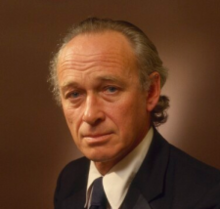
  • Douglas Hurd – 1986 Statement on the Roskill Report

    Below is the text of the statement made by Douglas Hurd, the then Home Secretary, in the House of Commons on 13 February 1986.

    In the month since the publication of the Roskill report there has been much interest in the media concerning its recommendations, and this debate gives the Government an opportunity to hear the views of Parliament. I am glad it has been possible to arrange early debates, both here and in the other place, because it fits exactly the structure of our response to this report, which is to consider, consult and conclude with care and speed. I do not intend to make a long speech this evening because this is an opportunity for the Government to listen rather than to pronounce. The Government will take full account of the views of this House before we reach a firm decision on a report which is important.

    A will to listen does not mean a will to delay. We intend, in the next Session of Parliament, to introduce a criminal justice Bill which will seek improvements in many aspect of the criminal justice system and the powers of the courts. The Bill will be wide and substantial and the proposals following the Roskill report will be a crucial part of the Bill. A White Paper will be published shortly which will set out the proposed measures in greater detail.

    We intend to create and seize every opportunity for stern action against fraud. We think this is crucial for the City and for the country so that private enterprise can flourish in a clean environment. It is crucial for public confidence, and our competitive position in international markets that the probity of our financial institutions, especially in the City, should be beyond doubt. Those who save and invest, whether grand or small, should be well protected by our law from dishonest practices, however complicated the transaction. We are determined that the pursuit and the bringing to justice of fraudsters should be carried out with commitment and skill. If our present instruments for cutting our fraud are blunt we must manufacture a new carefully directed scalpel.

    The report is radical. Some of its recommendations have been criticised but no one has criticised the skill and thoroughness with which the Committee completed its task. On behalf of the Government and the House, I would like to thank the Committee for its work and record our immense admiration and sincere thanks to Lord Roskill and his colleagues for the major contribution which the report makes to the fight against fraud.

    When one studies the subject in a wider prospective it is fair to say that the strategy adopted in 1983 is beginning to show results. The fraud investigation group has been established on a permanent basis for more than a year. This has been a successful attempt to reduce the fragmentation in the investigation and prosecution of complex fraud cases. We have to go further down that path. The report vindicates the 1983 decision to appoint a committee to look at the way in which fraudsters are caught and brought ​ to justice. The Financial Services Bill, now before the House, contains measures which should substantially improve the effectiveness of self regulation within the financial markets. Early detection of irregularities can often prevent serious fraud and as with all crime, prevention is our first aim. If prevention fails then the machinery for dealing with fraud must be effective.

    The legal profession may have doubts about altering some time-honoured ways. I have already learnt the deep suspicion with which many hon. Members who are members of the legal profession regard the suggestions for change. Those whose professions put them in the centre of financial transactions are perhaps less hesitant. Certainly Lord Roskill’s committee was not hesitant.

    The committee’s message to the House and to the Government is that one cannot send a policeman on a bicycle to catch a runaway car. We have to equip those who chase fraud with the same speed already possessed by the fraudster. I do not doubt that there are valuable conclusions to be drawn from an examination of the present investigation and prosecution arrangements. If fraud is not effectively uncovered and detected then no procedural reforms of the law and later conduct of criminal proceedings, will deter the big fraud operators. At present responsibility for investigation and prosecution is shared by the police, the Director of Public Prosecutions, the Department of Trade and Industry and other agencies. From April the prosecution functions of the police will move to the Crown prosecution services in certain areas and from October throughout England and Wales. The cooperation between these major agencies has greatly improved in recent years and permanent Fraud Investigation Group arrangements are now in place.

    FIG brings together the police and other investigators —accountants, interested Government Departments, counsel and members of the DPP’s staff. One of the Director’s lawyers exercises day-to-day supervision —acting almost as one of the “case controllers” which the report recommends. The aim of FIG is to concentrate on major frauds, although the categories are not closed, and to complete investigations quickly and to bring to an end inquiries which turn out to be fruitless. That is the present position.

    Lord Roskill suggests that other arrangements are still too fragmented and he recommends an urgent inquiry into the possibility of a new unified organisation responsible for all the functions of detection, investigation and prosecution of serious fraud cases. My right hon. Friend the Chief Secretary to the Treasury is studying this most closely with other Ministers. He is also considering much of what the report has to say about the deployment of resources to combat fraud—that is probably the most artistic job for a Chief Secretary to undertake.

    The Department of Trade and Industry and the office of the Director of Public Prosecutions have a provision for extra staff—the DTI for nearly 200 posts, which is a big increase, and the Director of Public Prosecutions for nine extra lawyers who will be assigned, full time, to fraud cases. I know my right hon. Friend the Chief Secretary’s inquiry will be done briskly. I understand that he hopes to reach conclusions by early summer. If, as may well be, those conclusions require something extra in the criminal justice Bill, we shall see to that.

    The inquiry will, of course, have a bearing on the role of the police. Lord Roskill has some practical recommendations of immediate relevance to the police. The House is aware that I am carrying out an urgent review to assess the specific need for further increases in the resources in the establishment of the Metropolitan police. The fraud squad is part of that review, and I hope to complete it very shortly now.

    The accounting advice which Lord Roskill thinks the police need is available through the fraud investigation group, and steps are being taken to recruit three additional accountants. On the initiative, which is welcome, of the accounting profession, a panel of experienced accountants in private practice has been set up in London to help the police and the director on a case-to-case basis as necessary.

    The committee recommends also a career structure for officers in the fraud squad. Being a practical committee, it recognises the difficulties in implementing the recommendation within a generalised service such as the police. The joint Metropolitan and City fraud squad is realistically the only squad of sufficient size —its strength is about 190 officers — to offer a practical opportunity to introduce a career structure. Both commissioners have now agreed to my request that they should examine the feasibility of a career structure for officers in the joint squad. Outside London, the Association of Chief Police Officers will consider the scope for second or subsequent periods of service in the fraud squad to build up the experience which officers accumulate. The association will report back to me.

    Lord Roskill recommends better training for the police in fraud investigation and the Association of Chief Police Officers has agreed to review the training provision for fraud squad officers.

    Sir Eldon Griffiths (Bury St. Edmunds)

    My right hon. Friend will be aware that in a complicated City fraud as many as 25,000 man hours of detective time will be expended. If some of the best detectives are brought into the fraud squad, as I believe they must be, that will have the consequence of removing experienced officers from other areas of detective work.

    Mr. Hurd

    That is right. That is one of the matters that will be in the two commissioners’ minds as they undertake the exercise of considering a career structure.

    I turn to the substantive law on which the committee makes recommendations, especially the use of the common law charge of conspiracy to defraud, where there is clearly something amiss. With the agreement of the Chairman of the Criminal Law Revision Committee, Lord Justice Lawton, I have asked the committee to produce a report with the following terms of reference:

    “To review the restrictions on the use of a charge of conspiracy to defraud in the light of the decision in Ayres [1984] AC 447 and subsequent cases and to consider whether these restrictions could be removed without causing injustice to defendants.”

    I have asked for urgent advice. In the relative excitement generated by proposals to reform the enforcement of the law, we must not neglect the need to ensure that the law itself is sensible and enforceable.

    I shall not say much this evening on the committee’s proposal for a fraud commission. It would be a body within the existing machinery of Government with an independent chairman and it would monitor the pursuit of ​ fraud, inquire into major breakdowns, look into delays and publish an annual report.

    At this rather early stage I have much sympathy with the idea of a watchdog body of that sort but I shall be interested in any ideas that right hon. and hon. Members have about the proposal. Before reaching a conclusion, we shall set up a model of how such a commission would operate and then come to our conclusions upon it.

    Our approach to the recommendations that touch on the jury system is still open and I shall listen with close attention to the views of the House. I have noted the views which were expressed in an excellent debate in another place. When we publish our White Paper on the Criminal Justice Bill, there will be a wider forum for consultation.

    I shall put one or two considerations before the House that might focus the debate. The main recommendation is that a judge and two assessors should replace a jury in especially complex fraud trials. Naturally many questions arise. The right hon. Member for Manchester, Gorton (Mr. Kaufman) began to raise these questions on 14 January and expressed the belief that we cannot define complexity. I accept that that is a major issue. I do not think that the guidelines in the report could be translated easily into statute, but there might be no need for a rigid approach of that sort. One criterion which could have an honourable place if the idea of a tribunal took root is as follows

    “the complexity lies in the fact that the markets or areas of business operate according to concepts which bear no obvious similarity to anything in the general experience of most members of the public”.

    What are the arguments for placing such cases beyond the jury system?

    Mr. Robert Maclennan (Caithness and Sutherland)

    Does the Home Secretary agree that many complex crimes are quite beyond the comprehension and experience of the general public apart from fraud?

    Mr. Hurd

    Indeed. I understand that argument. I wish to make it clear that there is no feeling in the Government’s mind that we should go beyond the Roskill report. I think that Lord Roskill advanced an argument for ring fencing in this area, but I would not want the element of truth in what the right hon. Member for Caithness and Sutherland (Mr. Maclennan) has said to lead us into considering doing away with jury trials for other types of offence, even though they might also he complex. It is the comprehension of the issues that is basic to the Roskill recommendation.

    Mr. John. Morris (Aberavon) rose—

    Mr. Hurd

    I shall make a little progress and then I shall be happy to allow the right hon. and learned Gentleman to intervene.

    In a complex transaction, the final question may be whether the accused was a party to an illegal arrangement, but perhaps that cannot be decided fairly until the nature of the transaction is fully established and analysed. I think that juries can have serious difficulties in understanding the evidence in complex fraud cases, and understanding the relevant evidence is important to the doing of justice both to the innocent and the guilty.

    The argument does not seem to hinge on the precise rate of acquittal in fraud trials. Instead, it is directed to whether the complexities of the proceedings may be leading to arbitrary rather than just verdicts. The committee received anecdotal evidence to the effect that the difficulties of ​ presenting the facts in complex cases may lead to decisions to proceed with lesser charges than might be justifiable in some cases. I think that the House would regard that as unacceptable.

    Finally, I must have regard to the interests of all involved in the criminal justice system, not least the accused, in adopting mechanisms which reduce congestion and delay and dispose of cases with reasonable speed.

    All these considerations are in favour of the committee’s conclusion on juries, but there are arguments against it, some of which appear in the powerful minority report of Mr. Merricks. No one doubts that major fraudsters deserve substantial periods of imprisonment, but in our system of open justice is it right that those who risk substantial terms of imprisonment should forfeit the right to be tried by a jury, not because their crime was more serious but because it was more intricate than the next man’s? Would a tribunal remove some of the disciplines from counsel to present the case in a comprehensible manner? Might individuals lose their liberty for reasons which few of us could understand? If the real issue is dishonesty, are not ordinary people as good or better judges of the facts than experts in high finance? If the other reforms will simplify matters, is there a case for trying them out first?

    The House might wish to pause to reflect on a point which I have not heard put before. If a tribunal were judged to be the fitting answer, as it might be, is it right that majority verdicts should prevail so that the judge might differ from the eventual verdict, having been outvoted by the two assessors?

    Mr. John Morris

    Will the Home Secretary address himself to the issue which was raised by the hon. Member for Caithness and Sutherland (Mr. Maclennan)? What is the argument for ring fencing fraud cases, which might include experiences outside the normal for a jury, as opposed to other complex cases which might also involve experiences outside the normal for a jury?

    Mr. Hurd

    I think that Lord Roskill would argue that there are a substantial number of complex fraud cases and sufficient for special provision to be reasonably argued. I believe that he would argue also that there would not be a sufficient number to justify special provision on other indictments, although occasionally such cases may occur. Nonetheless, they would not be of sufficient number to make necessary the introduction of special arrangements.

    There are obviously strong and different views about this which cut across party lines. It seems to me that the legal profession is divided on the recommendation, and the financial professions are overwhelmingly in favour. I expect that this is the last occasion I shall be able or, indeed, shall want to tread a path down the middle.

    I should like to end the analysis on this point. It would be wrong and unjust to the committee if we saw this as an attack by it on every person’s right to a fair trial in our courts. The committee has made a careful and sensitive attempt to tackle the fundamental question of how to secure a sound verdict. I think that a sound verdict must be our objective. It is as much in the interest of the innocent defendant as it is in the interest of society to bring fraudsters to book. I hope therefore that we will have, as I am sure we shall, a reasonable and balanced debate on this point.

    Dealing still with juries, the committee put forward views on the defence right of peremptory challenge and the ​ prosecution right of standby. The distinction between this and the last point about complex fraud tribunals is that with the tribunal case, for the reasons which we have been discussing, discussion is confined to the relatively few cases of major fraud. When one is discussing what Lord Roskill had to say about peremptory challenge, it must be right to look at that more widely.

    There has been a lot of discussion, quite independent of fraud, on the merits of change both here and elsewhere. I do not need this evening to go over that discussion. I am quite sure that it cannot sensibly be dealt with for fraud cases alone. In the criminal justice White Paper, we will set out options for change. We shall not seek to abolish ancient rights lightly, but nor shall we hesitate to act if the preservation of the integrity of the jury system is in question.

    These two jury matters have aroused high feelings, and that is quite right, but in my view they do not lie at the heart of the report. At the heart of the report are the radical proposals to reform the rules of evidence, including the easing of the gathering of evidence from abroad and the easing of the rules about documentary evidence. We have also here major procedural suggestions to formalise hearings preparatory to Crown court trial, and an associated obligation on the part of the defence to outline the nature of its case.

    We find these recommendations immensely constructive and timely. We believe that their potential effect on most cases arising from fraud should not be lost sight of in hot argument over the mode of trial for a minority of particularly complex cases. Few people now believe in my experience that our rules of evidence have kept pace with the 20th century, and the reforms begun in the Police and Criminal Evidence Act 1984 to allow more documents to speak for themselves found favour with the Roskill committee. Let us now see whether we can go further, as he suggested. Let us also hope that some formalisation of the pre-trial reviews already operating in many Crown courts can clarify the issues to be put at the trial, and that a spirit of co-operation can prevail so that both parties are saved the laborious ritual of arguing matters of no consequence before patient jurors. Let us look particularly hard at the scope for participation in mutual assistance treaties with other countries to facilitate the tracing and conviction of those who perpetrate international fraud.

    I have skimmed through these important proposals quite quickly, but I should like to make it clear that we welcome this batch of proposals warmly. We shall take account of views expressed today and of those which may yet be offered by the judiciary, practitioners and others with relevant experience. But we start from a position of willingness to legislate on the basis of these highly significant proposals at the earliest opportunity.

    That is the spirit in which we approach the report. I hope that I have clarified some of the central themes. I hope that I have re-emphasised our stern approach to this subject and our willingness to think and act radically about it. The touchstones of our response are justice, efficiency and effectiveness in bringing to account the perpetrators of fraud. We shall carry through all the proposals in the report which pass those tests.

  • David Hunt – 1986 Speech on Oakthorpe Underground Fire

    Below is the text of the speech made by David Hunt, the then Parliamentary Under-Secretary of State for Energy, in the House of Commons on 12 February 1986.

    I congratulate my hon. Friend the Member for Leicestershire, North-West (Mr. Ashby) on securing an important opportunity to draw attention to the difficulties faced by the people of Oakthorpe. My hon. Friend has acquired a well-deserved reputation as a diligent and effective constituency Member and on this topic he has argued tirelessly and strongly for a just and equitable solution to the problems that he has outlined. I welcome this opportunity to participate in the debate. I do so primarily as a member of the Government, but I am the Minister with special responsibility for the coal industry.

    I am grateful to my hon. Friend for his eloquent account of the events at Oakthorpe and of the impact on the people there. I and many of my ministerial colleagues—I am pleased to see my hon. Friend the Member for Mitcham and Morden (Mrs. Rumbold), the Under-Secretary of State for the Environment, on the Government Front Bench—much appreciate the concern which must be felt by those living in and around the village and by the bodies concerned, the two local authorities—Leicestershire county council and the North-West Leicestershire district council—and the National Coal Board, irrespective of any issues of liability. I am pleased to see present tonight my hon. Friends the Members for Derbyshire, South (Mrs. Currie) and for Sherwood (Mr. Stewart), both of whom have been strong supporters of my hon. Friend the Member for Leicestershire, North-West in his determination to help those of his constituents who are facing serious difficulties.

    One of the things which tends to characterise a community at a time of difficulty is the way in which all concerned pull together to deal with the problem in hand. I understand that all three of the parties I have mentioned are working closely together to do what is necessary to fight the fire and to deal with the consequences.

    The Government have been following with close interest and concern events at Oakthorpe since the fire was first drawn to their attention last autumn. I have received letters from a number of people who live at Oakthorpe. They have been very moving letters. I am therefore pleased to be able to report to the House tonight that much positive progress has been made in helping them.

    I have been regularly informed by the National Coal Board of the action which it has decided to take. I have been impressed by the depth of its concern. It has not waited for legal wrangles about liability—a matter which can be settled ultimately only by the courts—before taking action as a good neighbour at Oakthorpe. I understand that it has brought together its own mining expertise and that of contractors specially brought in to work there to consider how to fight the fire and how to deal with the effect of the damage by the underground heating on properties in the area. My hon. Friend the Member for Leicestershire, North-West has paid tribute to that. The business of tracing the origins of the fire and then of dealing with it is, I am told, a specialised engineering feat.

    Since the beginning of January a highly specialised firm of construction engineers under contract to the board has completed an initial drilling programme. The purpose of this was exploratory, to ascertain ground temperature and so plot the fire’s course. Several drilling rigs made a total of 62 boreholes and the evidence from these has led the board to instruct the contractors to embark on an extensive exercise to limit and dowse the fire.

    The current operation involves constructing a cement curtain around each individual property affected, with the object of shielding it from the effects of high temperatures. In addition, the introduction of cement into the surrounding coal seam acts to cut off the underground air flow and so contributes to extinguishing the fire. The cement is pumped into the seam by way of holes drilled around each property or by a surrounding trench. The process is called grouting.

    The latest figures from the National Coal Board show that to date the contractor had drilled 182 boreholes and introduced over 88 tonnes of grouting material into the earth. The results of this operation have been encouraging. The grouting of one house is now complete and tests have been carried out. These show early indications that the process is beginning to bring the fire under control. The board has decided therefore to pursue the grouting operation on other properties in close consultation and with the consent of individual owners and tenants.

    Furthermore, I have been assured that the health and welfare both of the inhabitants of Oakthorpe and the contractor’s employees is a priority during this operation. Regular monitoring and testing of temperature and for the presence of carbon monoxide are being carried out, and remedial measures would be put into effect, if the levels were to rise. Emergency arrangements have been well planned. Some properties have, for example, been fitted with carbon monoxide alarms as a precautionary measure. I understand, having talked to senior officials earlier tonight, that so far there has fortunately been very little evidence of carbon monoxide. That is good news for all concerned.

    The National Coal Board is also in regular contact with the Oakthorpe residents’ action group, dealing with individual and general queries and the supply of regular information on work in progress. Day-to-day problems are dealt with on the spot by an NCB engineer who visits the ​ village daily. I understand that as part of the general information gathering and dissemination process a further public meeting is to take place.

    Remedial work is of course at an early stage as this operation requires precision and expertise, but the National Coal Board has good reason to believe that the methods employed will be successful. Plans are already being formulated for renovation of the sites by landscape gardening. I hope that my hon. Friend the Member for Leicestershire, North-West will have found this catalogue of National Coal Board action encouraging.

    I think that the fire at Oakthorpe demonstrates very convincingly that the NCB is a concerned body which is anxious to do all that it can to relieve hardship to communities. In this case it is not even the board’s actions which have caused the problem, nor does it necessarily have any responsibility in the matter. But because NCB staff are best placed technically to provide advice and practical assistance, they have stepped in and co-operated with the local authorities to solve the problem, as I have explained tonight. I am grateful to my hon. Friend for his suggestions that the board’s actions are the result of my intervention; but I have to tell him that he exaggerates my influence. I am sure that the board acted out of generosity and public spirit.

    Throughout the exercise at Oakthorpe, the National Coal Board has been working in close co-operation with the local authorities and their contractors. This is a fine example of community effort. In addition to helping on the technical side, I understand that the local authorities are also taking action to ensure that people in the village are being rehoused, if necessary. I am sure the House will agree that all those concerned have made and are continuing to make strenuous efforts to deal swiftly and energetically with the immediate problem of dowsing the underground fire. I congratulate them on their skill, energy and enthusiasm. However, there is a distressing side to the story of which my hon. Friend reminded us tonight. He rightly pointed out that we are speaking of damage to people’s homes and the resulting heartache and anxiety caused to a close-knit community. That is, indeed, a serious matter.

    The local authorities have been energetic in seeking help to meet costs already incurred. My hon. Friend the ​ Minister for Environment, Countryside and Local Government has been in touch with them recently to ascertain the position, and my hon. Friend the Member for Leicestershire, North-West referred to the letter of 5 February. I understand that the Department is now considering the position but is still awaiting from the local authorities my hon. Friend’s request for further financial information. I hope that that can be provided as quickly as possible. I know from my hon. Friend the Member for Mitcham and Morden that her Department will then consider urgently whether any financial assistance would be appropriate.

    The question of liability is, however, a complex issue which cannot be addressed without careful consideration of the long-term consequences. Both the Government and. the NCB must remember that they are dealing with public money. The immediate and overriding aim must be to dowse the fire. I hope that I have persuaded the House that the NCB and the other parties concerned are doing all that is humanly possible to do that.

    I should like to end by assuring the House and. through my hon. Friend, the people of Oakthorpe that the Government are keeping closely in touch with the position there, and that I and my ministerial colleagues hope that progress will quickly be made to overcome their problems. My hon. Friend has rightly emphasised an invitation for me to visit Oakthorpe, and I thank him for it. I accept the invitation, obviously, without any commitment regarding eventual financial liabilities, but as an opportunity to see for myself the results of work already carried out. providing me with first-hand experience of the position which I can also pass to my hon. Friends at the Department of the Environment.

    There will undoubtedly be difficult judgments to make in the future about where responsibilities for this fire lie. But we may congratulate all the parties concerned on being prepared to take action to solve the immediate problems. at Oakthorpe on a without prejudice basis. I know that I can rely on my hon. Friend to keep me in touch with progress, and I hope that what I have said will have done much to reassure the people of Oakthorpe.

  • David Ashby – 1986 Speech on Oakthorpe Underground Fire

    Below is the text of the speech made by David Ashby, the then Conservative MP for Leicestershire North West, in the House of Commons on 12 February 1986.

    I thank the Parliamentary Under-Secretary of State for Energy, my hon. Friend the Member for Wirral, West (Mr. Hunt), for his kindness in waiting up so late to respond to my Adjournment motion. I thank my hon. Friend the Member for Mitcham and Morden (Mrs. Rumbold), the Parliamentary Under-Secretary of State for the Environment, for taking such an interest in the debate, which concerns an underground fire in a coal seam at Oakthorpe.

    Who would have thought a few years ago that the village of Oakthorpe in the depths of Leicestershire would have achieved such fame and notoriety. We would rather not have that fame and notoriety. If we were not debating people’s homes, investments and lives, the facts would be amusing. Few can have the doubtful pleasure of living above a smouldering coal seam with a temperature of 60 degrees celsius a few feet below the surface providing their own central heating. Even fewer can have gone to dig up potatoes in their back gardens to find them already baked, as Mr. Bates of School street did recently.

    Oakthorpe is a most attractive mining village, close to the Derbyshire border of Leicestershire. Mining has been carried out in the area since the thirteenth century. Currently there are a number of active deep mines in the area.
    As well as coal seams at a deep level, in the area of School street, there is a shallow seam of coal which outcrops just south of School street. It inclines away from School street at an angle of about 20 degrees in a northerly direction. This outcrop is composed of a sulphurous coal which is capable of, apparently, spontaneous combustion when exposed to sufficient air. It is that which is causing the problem.

    I hasten to add that the outcrop is limited in its width to the east and west by major geological faults and that a large part of the village has nothing to fear. Furthermore, since the outcrop inclines so rapidly it reaches a substantial depth by the time it reaches an area called New street and beyond. I say this immediately, Mr. Deputy Speaker, because there is a fear, bordering on panic, among some villagers who would not be affected. There has also been a substantial loss of confidence in the property market for homes that would not be affected. I say to prospective purchasers and vendors: consult the divisional surveyor of the Leicestershire county council, who will be able to explain the outcropping and the geological faults and the facts about the property to be purchased or sold.

    In September 1983, a property known as The Bungalow, in School street, suffered substantial damage. As is common in a mining area, the National Coal Board was notified and in September 1984 it sank boreholes. Those showed that the ambient temperatures were substantially raised. However, the board denied liability and did nothing to halt the fire, inform the county, the district or the parish councils, or adjacent property owners. It even did a smoke test which showed an influx of air—the very cause of combustion. As a result of that failure to notify anyone, the fire continued to smoulder unchecked. ​ On 4 April 1985, the county council noticed a deformation of the carriageway, and that the garden area of No. 59 had subsided. The NCB was contacted and denied and liability. By mid-July, Mr. Sparham at The Bungalow was forced to evacuate his house due to a structural change and at the end of July smoke issued from another depression in the garden of No. 59 which belonged to a Mrs. Kent.

    Leicestershire county council moved into action and engaged consultants who commenced monitoring procedures for subsidence, temperatures and gaseous emissions. By mid-October the consultants had produced an interim report and the possible extent of the problem was becoming apparent. It was at that stage that I was told of the problem and became involved.

    In early November the consultants’ first report was received and it was agreed by the county council that a borehole investigation would have to be done to find out the extent of the fire. On 18 November I met the county council’s environment committee, which is chaired by Mr. Eric Lodge. I praise Mr. Lodge for the decisive and caring way in which he has dealt with the problem. At that meeting reports were given which stressed the potential dangers and spread of the fire. The NCB had the expertise and detailed knowledge of the area, but was hardly involved, for fear that it might be considered that it was admitting liability.

    After that meeting I sought an urgent meeting with my hon. Friend the Under-Secretary of State for Energy. He immediately recognised the emergency and promised the involvement of the NCB. I am very grateful for the way in which my hon. Friend has dealt with the problem and for the help, assistance and guidance that he has given. I have been told that there are few meetings in his Department at which the problem of Oakthorpe does not arise at some stage.
    In the meantime, two further disasters had overtaken the village. Mrs. Kent’s house had become so unfit for habitation, due to subsidence caused by the fire, that it had to be demolished. Mrs. Kent was rehoused by the North-West Leicestershire district council.

    By November, the media were getting interested in Oakthorpe and when Mr. Bates dug up his ready-baked potatoes the story reached the national headlines. It was the subject of chat shows and “Any Questions” on the BBC and was even featured on Chinese television. However, the story masked the anxieties that Mr. Bates and his aged mother were having about their home, which was literally falling to bits about them.

    There are 100 properties in the area that could be affected by the fire and 30 of them have already been affected in one way or another. Since my request to the Under-Secretary, the Coal Board has been increasingly involved. It has done a thermal survey and has four rigs in the area, drilling and injecting grouting to fill the voids left by the burning seam. I am told that in April the NCB will be moving in four more rigs to under pin and protect the local school. The board is working on the protection of The Gate public house by trenching and boring.

    The NCB has publicly committed itself to do all that is necessary. The residents of Oakthorpe and I are grateful for its response. However, the NCB is always careful in its statements. It is anxious not to admit liability for the damage. However, as the NCB owns the coal, as it did nothing to stop the fire after its borings in September 1984 ​ and as it has been mining to within 250 m of School street, many of us say that the board has a liability under the Coal-Mining (Subsidence) Act 1957.

    As we agreed in November, when I met the Minister, we are dealing with people’s homes and not with piles of bricks. We are grateful that the NCB has been acting speedily to save those homes. Although the board has taken the initiative in carrying out remedial work, the extent of the proposed works is not clear.

    We should like a statement from the Government or the NCB that they will deal comprehensively with the problem, whatever its extent. We should like to hear that the cost will be borne by the Government, or the NCB. We should like to hear that the NCB or the Government will meet the full cost of repairs to property and infrastructure caused by this underground heating and its associated subsidence, including all the necessary redecorating to property and reinstatement of gardens.

    Not only have foul sewers been damaged, but grouting has filled such things as drainage outfalls, all of which will have to be relaid. The county council has incurred large costs in dealing with the crisis, and a unique disaster of this sort should not be a burden on the ratepayer.

    I have seen a letter from the Minister of State, Department of the Environment to the chief executive of the county council, dated 5 February. This letter shows sympathy, but it is sympathy without commitment. I am asking for that commitment.

    There are other areas where environmental crises have been due to former mining operations. I am told that in Barnsley and Strathkelvin district methane gas leaking from old workings had gone into the buildings above and been a problem.

    In Blaeneu Gwent, three houses over old workings collapsed. A mountainside was destabilised and it is sliding slowly into 170 houses. This was first noted in 1980. If action had been taken then, rather than in 1986, any action would have been far cheaper than it is now. It would have been better to act sooner rather than later.

    Simply because this fire is slow burning, is it any less a disaster than if it were a sudden demolition of property? Is it any less a loss of property or hardship to those living in the area because there has fortunately been no loss of life or injury? This is a real and continuing emergency on a large scale, which demands Government action.

    There are some possibilities and some solutions. Could the Department of the Environment and the Welsh and Scottish Offices perhaps consider an emergency fund as an insurance? If such a fund could finance immediate remedial work and reclaim costs from whoever was judged responsible for this cost later on, a great deal of good would be done. This would allow the immediate work to be done before the problems worsen, and it would not require anyone to prejudice their legal rights. While some might be insured, the insurance does not always cover all the problems, nor is everyone fully covered.

    One very important aspect is that some people are quite unable to sell their properties. Mr. and Mrs. Bown, who have a property, at present unaffected, at 87 School street, in May 1985 purchased another property and put theirs on the market. Then the story of Oakthorpe broke, and although one or two people expressed an interest, they broke off negotiations for fear of the fire.

    Can something not be done about this very real hardship? At the very least, either the owners should be compensated for the loss of market value caused by that ​ fire, or the Government or the NCB should purchase, at full market price, any property in the area affected by the heat, if the owner wishes to sell.

    These disasters are not unknown in the mining villages. My hon. Friends the Members for Sherwood (Mr. Stewart) and for Derbyshire, South (Mrs. Currie), who are both from coal mining areas, know these problems well. I am rather surprised that not one person is on the Labour or SDP Benches to discuss the suffering of a mining village. They care very little for these mining villages.
    We should like a statement of NCB liability, but we realise the real difficulty in which the NCB may be placed by the 1957 Act. We cannot wait for the result of a court case to relieve the situation in Oakthorpe. Even if we had a court case and the NCB were found not to be liable, could the Government abandon the people of Oakthorpe?

    In the spirit of our discussions throughout, I do not ask for a finding of legal liability. Instead, I ask for action. I ask my hon. Friend the Minister to visit Oakthorpe to see the work that the NCB has been doing and to obtain the facts for himself. Above all, I ask him to meet those who are affected, the local councillor, Mr. Horace Sankey, to whom I must pay tribute for his dedicated assistance, and county council officials. I ask that my hon. Friend visits the area to show that the Government care and to lift the morale and confidence of the residents in the area.

  • Robert Hughes – 1986 Speech on the Channel Tunnel

    Below is the text of the speech made by Robert Hughes, the then Shadow Secretary of State for Transport, in the House of Commons on 10 February 1986.

    I beg to move, to leave out from “House” to the end of the Question and to add instead thereof:

    ‘whilst accepting that the Channel Tunnel Group-France Manche scheme may have the potential to encourage the development of modern British Rail network and bring benefit to some parts of the country, declines to approve the White Paper “The Channel Fixed Link”, Cmnd. 9735, without full knowledge of the terms of the Treaty and its Protocols, without any Government commitment to necessary financial assistance to British Rail, without any Government plans to maximise the opportunities for industry and communities away from the immediate location of the Fixed Link, and without the Government accepting responsibility for and safeguarding against the damaging employment implications of the scheme, or providing adequately for the rights of those affected by the decision to have their views ​ taken into account; and recognises that the proposals present a threat to consumer choice in crossing the Channel with the creation of a private monopoly with its implications for prices and charges, without the guaranteed continuation of port and ferry facilities’.

    Three hours to debate what has been described as a historic decision is far too short a time. I apologise to the House in advance if I do not give way to interventions as frequently as I might have done. There are a lot of issues to be covered, many of which were not covered by the Secretary of State.
    In the speeches and statements and in the White Paper, the Secretary of State repeats that the Channel tunnel is an imaginative and exciting project. He has waxed eloquent about the job creation factors of the scheme and the benefits that he hopes will accrue. When he has been asked pertinent and penetrating questions, he has replied, “All will be revealed in the White Paper.” We have the White Paper now and there is little in it, if anything, which could not have been put before us a fortnight ago. There is nothing in it which could have delayed its publication for a few days, as the right hon. Gentleman said, but which became a fortnight.

    We accept that the CTG-FM scheme is the best of the schemes that the Government examined. In our view, it suits our transport needs and provides opportunities for British Rail. We believe that it could allow the benefits for some parts of the country to be distributed more evenly. If we were starting afresh to consider job creation schemes, we might well not start from where we are now. However, we are starting with the Government’s decision, and we have a responsibility to ensure that the best outcome is achieved. We have tabled a positive amendment, and we are not defensive about it.

    The problem is that the Secretary of State, having made a decision—or having had it made for him—wishes to cut and run. He wishes to avoid responsibility for developments that are damaging to the economies of various parts of the country and for the necessary planning to maximise potential benefits. He has prepared his alibi well in advance. In page 2 of the White Paper there is an all-embracing disclaimer which appears as a footnote:

    “The Government expressly asserts that it makes no representation, either express or implied, as to the viability of the project with any intention or desire that such representation be relied upon by any investor. It should be noted that, in this White Paper, estimates of CTG-FM’s financing needs are their own, and the impacts of the CTG-FM scheme — on employment, the environment, the merchant fleet etc.—are all based upon the promoters’ estimates of traffic.”

    I cannot recall seeing such a massive cop-out in any other White Paper. We shall press the Secretary of State to accept the figures and to take the action appropriate to them.

    The treaty is due to be signed on Wednesday. It is unfortunate that the White Paper gives us only the broadest outline of what the treaty contains. We are merely told in paragraph 50 that the treaty

    “will also enshrine the private sector nature of the link and the concessionaire’s right to compensation in the event of political interference or cancellation by either Government.”

    Can we not be told, less than two days before the treaty is signed, what the financial penalties are that the Government have negotiated? Why are we being asked, in effect, to buy a pig in a poke? Surely the Prime Minister will not sign a blank piece of paper in Canterbury in less than 48 hours from now? ​ Paragraphs 53 to 60 tell us that negotiations will continue on the concession agreement and that the final package will contain the freedom to set tariffs, subject only to the European Community’s and the Government’s rules on competition. These and many other issues need to be clarified.

    I was disappointed when the Secretary of State told us that he would leave the consultation arrangements to be dealt with by his hon. Friend the Minister of State, Department of Transport when he replies to the debate. The White Paper suggests what will happen. The Secretary of State from the beginning ruled out a formal public inquiry. In earlier debates he has asserted that the hybrid Bill procedure gave better opportunities for those affected to canvas their concerns, and it is clear in the White Paper that he has conceded his failure to convince a wide section of opinion in the House. Equally, he has failed to satisfy the doubts of many interests in Kent, for example. In paragraphs 46 to 48 he attempts to present a more convincing case and to answer the many representations that have been made on consultation.

    I shall deal with paragraph 48 in some detail. It seems that an extra statutory authority of planning machinery is to be established between the Government, the Kent county council and the other local authorities concerned. We understand that the committee will be chaired by the Minister of State and that the Parliamentary Under-Secretary of State for the Environment, the hon. Member for Mitcham and Morden (Mrs. Rumbold), will be involved in discussions. I note that the hon. Lady is in her place.

    We are told in paragraph 48 that there will be widespread consultations. It adds:

    “Among the subjects to be considered by the committee will be the adequacy of the road system in Kent to cope with the traffic flows expected to follow the building of the link, and specific local economic and environmental problems that may be caused by the development of the link. As one of its first tasks the committee is expected to commission a more detailed study of the potential impact on Kent of the CTG-FM scheme both during and after construction. This is to be carried out with the widest possible consultation of relevant interest groups in the county.”

    So far so good, but what will be the result of the consultation? Everyone knows that there will be economic dislocation of the local economy. That appears not to be in doubt.

    Paragraph 41 makes it clear that 7,000 jobs will go in the ports and ferries if the promoters’ forecasts are accurate. Several questions follow from paragraph 48. To whom will the consultative committee report? When will it report? Who will carry out the detailed study of the potential impact on Kent? A responsible Government would have carried out those studies before, not after, taking a decision in principle.

    Further questions will have to be posed. Will the consultation group make recommendations? There would seem to be no point in having such a formal machinery, nor in commissioning these studies, unless the schemes are drawn up and acted upon. Will the findings of the consultative group be finalised and incorporated into the drafting of the hybrid Bill? What will be the effect of the consultations on those who may wish to petition the Select Committees which are due to be set up under the hybrid Bill procedure? If any of those affected by the scheme take part in the consultations, will they be prevented from gaining access to the Select Committees?

    Paragraph 62 of the White Paper sets out the hybrid Bill procedure and attempts to define the term locus standi. In paragraph 62, the Minister, trying to assuage the feelings of his Back Benchers, says:

    “However, the Government, as sponsor of the Bill, will not seek to oppose the right of anyone to appear before the Committees on a petition to secure protection, either for their personal interests, or for the proper interests of any organisation or group which they may have been appointed to represent.”

    The use of the word “proper” seems to be a heavy qualification on who will go before the Select Committees. Will the Secretary of State give a categorical guarantee that appearance before the consultation group or submission of objections to it will neither prejudice the right of petitioners to appear before the Select Committees nor extinguish those rights? Unless these questions are answered fully, the consultative machinery will be seen as nothing more than a gigantic public relations exercise and a hoax on the public.

    At the heart of our concern is what will happen not just to the south-east, but to the rest of the country. If the economic benefit is to be distributed about the country, British Rail must be given the opportunity to develop its services and to have its infrastructure, its motive power and rolling stock ready for the opening of the tunnel. Therefore, I welcome the British Rail press statement, issued on 4 February, in which it explains how it intends to run through-trains from different parts of the country and hopes that there will be discussions with immigration and customs officials to have these facilities carried out on the train, although there seems to be some doubt as to whether those bodies will co-operate.

    British Rail, in its press statement, appears to be thinking ahead, even if the Secretary of State is not. If the required investment is made available, it will give a boost to British Rail’s estimates of both freight and passenger services; and if the money is spent in the United Kingdom, jobs will be created. However, I dispute the Secretary of State’s assessment of when the investment needs to be made available and whether his policy towards British Rail is adequate to match its requirements.

    At Question Time on Monday 3 February, in column 6, I asked the Minister to give an assurance that British Rail’s external financing limit would be expanded to accommodate Channel tunnel-related expenditure and that other BR expenditure would not suffer. It astonished me when I was given such an unequivocal “Yes” to that question. However, in a subsequent answer in the same column, he back-pedalled very fast and said that BR’s EFL would be smaller during the period 1990–93 in any event. If that means that the investment and infrastructure will be in place before that time, we might accept it. However, I suspect that the opposite is the case. I believe that investment in BR must be expanded, even if the Channel tunnel is not to go ahead. If passengers and freight traffic are to be encouraged back to the railways, then BR’s customer image needs to be enhanced throughout the entire network, and not just that part that is related to the Channel tunnel service.

    The Government must put money into BR. The White Paper concedes that there will be public spending associated with the tunnel. That much is evident from paragraphs 29, 30 and 31. There is a little hedging in paragraph 31, which says: ​

    “The Government will give sympathetic consideration to supporting with Transport Supplementary Grant proposals from the County Council arising directly as a result of the fixed link project.”

    We know with certainty that public money will be going into roads development. Why, then, will the Government not do the same for British Rail? Paragraph 27 makes it clear beyond any doubt:

    “It will be for BR to raise the money for this”—

    that is all the investment about which we have spoken—

    “as for all its investment programmes, out of its own resources or borrowing, and not by way of Government grant.”

    Nothing can be more clear that the Government will not put any money in.
    In paragraph 66, the Minister expresses his hopes in this way:

    “The Government has high hopes of seeing the link built and of it becoming a valuable national asset serving the interests of the nation for many years to come.”

    I should like to see those high hopes come to fruition, but they will remain just pious hopes unless there is positive Government intervention.

    I commend to the House the latest issue of Town and Country Planning. In an article called “Where have all the planners gone?”, Andrew Thorburn says:

    “So far, no one has sketched out the consequences for Britain of the funnelling of traffic through this small corner, and the extra traffic likely to be stimulated … Never has the need for proper regional planning been more apparent.

    Some have felt that we can get by without this in times of recession when little is changing, but the construction of the largest infrastructure provision in Britain’s history will require the rethinking of many development and investment policies, and rural conserveration policies, as well as a review of the transportation services throughout the south east. Where is our machinery for this?”

    I concede that that was written about the south-east of England, but it is of equal relevance to the country as a whole. The Secretary of State will have nothing to do with this. His view is that if everything goes well, the scheme will be a success; and, if it does not, he is simply abrogating his responsibility in advance. He is like an old lag in a Scottish court pleading the special defence of “incrimination” or “impeachment”. He is saying, “It wasn’t me who did it; it was someone else. It was market forces that did it.”

    Without proper planning, investment and regional development, the nation will come to regret the decision and wonder what went wrong. The Opposition have a duty and a responsibility to the nation to seek to remedy the failings of the Minister and of the Government. We shall press the Government for as long as we are in opposition, and we shall discharge our responsibilities and duties to the nation when we become the Government. I commend our amendment to the House and invite right hon. and hon. Members from both sides of the House to join us in the Lobby tonight.

  • Nicholas Ridley – 1986 Statement on the Channel Tunnel

    Below is the text of the statement made by Nicholas Ridley, the then Secretary of State for Transport, in the House of Commons on 10 February 1986.

    I beg to move,

    That this House approves the Government’s White Paper on the Channel Fixed Link (Cmnd. 9735).

    I am delighted, but surprised, that the Opposition want this debate on the Channel tunnel. I am delighted because many of my right hon. and hon. Friends have important points to raise, and surprised because I do not understand what the Opposition seek to gain. Perhaps they want to embarrass the Liberals, as the hon. Member for Isle of Wight (Mr. Ross) is in favour of our decision, but the Liberal candidates in east Kent are all against it. That is strange. The Liberal manifesto for the 1984 Euro-elections advocated
    “Community Investment in major transport links, including a Channel Tunnel”.
    I wonder whether the Kent Liberal candidates dissociated themselves from the manifesto at the time of the campaign.

    Mr. Stephen Ross (Isle of Wight)

    I continue to support our manifesto, and the Secretary of State congratulated me on that recently during Question Time. I suspect that some Conservative Back-Bench Members are not keen on the scheme.

    Mr. Ridley

    I am not criticising the hon. Gentleman. I was merely wondering whether he could have a word with some of his candidates.

    The Labour party also has its problems. Some Labour Members are in favour of our decision, and some are against it. So why choose to debate it? It puts the hon. Member for Aberdeen, North (Mr. Hughes) in a terribly embarrassing position. He must steer between the Scylla of the hon. Member for West Bromwich, East (Mr. Snape) who represents the National Union of Railwaymen, and the Charybdis of the hon. Member for Kingston upon Hull, East (Mr. Prescott), who represents the National Union of Seamen. It is beastly of the Labour party to make him run the gauntlet again between those two political rocks. Surely he found it unpleasant enough the first time.

    But the Labour party has a worse failure to answer for. Labour Members keep demanding more infrastructure spending. They have debate after debate about the need for spending, and more jobs. Indeed, there is another one this week. Yet here is a massive infrastructure project, which will create a great number of jobs—we estimate about 40,000 man-years of employment. The jobs will by no means all be in the south-east. There could be orders of £700 million to £800 million for railway equipment alone which can be fulfilled only by midlands and northern firms. There are also great opportunities for more employment on railway operations. The tunnel will bring benefits to all regions of the kingdom by providing quicker, cheaper, more reliable means of transport to the Continent, thus helping employment. But what does the ​ Labour party do? It voted against the tunnel before Christmas, and it has a three-line whip to vote for its amendment tonight. Does it want jobs, and infrastructure, and investment, or not?

    When I announced the invitation to promoters last year the hon. Member for Crewe and Nantwich (Mrs. Dunwoody), who was then Labour’s transport spokesman, said:

    “We welcome any suggestion of considerable investment in the infrastructure. Indeed, we have been asking the Government for many years for precisely this sort of infrastructure development, with its impact on jobs and industry.”—[Official Report, 2 April 1985; Vol. 76 c. 1078-79.].

    How can the Opposition say that with one transport spokesman, and with another ask the House to vote against the project that they welcomed? The Labour party’s inconsistency is extraordinary, although some individual hon. Members hold different views.

    Mr. Robert Sheldon (Ashton-under-Lyne)

    The main point is that the infrastructure development will assist the south-east. Many of us are worried that the White Paper pays no regard to transport links with the north. The bottlenecks around London will become more constricted, not less, as a result of the link. Expenditure is needed on the road network to the north, but that will be even harder as a result of the Channel link. The right hon. Gentleman should be providing better links to the north, not to London.

    Mr. Ridley

    I know that the right hon. Gentleman is in favour of the link and sees the importance of connecting it to all areas, and I entirely agree. For that reason we are building the M40 as a relief to the Ml. It is as quick to go from London to Birmingham up the M6 via Oxford as it is via the Ml. There is massive infrastructure development taking traffic from the south-east to all quarters. There is a huge road programme to the south-west. Wherever we can, we are investing in roads to improve the position. Moreover, there are great opportunities for the railways to run through services from the north to the Continent. The right hon. Gentleman must welcome our decision and encourage all concerned to grasp the opportunities.

    Mr. Teddy Taylor (Southend, East)

    What evidence prompted my right hon. Friend to make the statement that the Channel tunnel could offer a “cheaper” means of transport across the Channel? Does he accept that the more British people hear about the tunnel, the less they like it? That is clear from a recent opinion poll which shows that more than half the population do not want the tunnel, and that only one third are in favour of it.

    Mr. Ridley

    First, the magic has worked even quicker than I believed because the ferries are now saying that they will cut the cost of the journey by 30 per cent. That is even before the tunnel is built. Therefore, my hon. Friend must concede that the tunnel route is cheaper. That shows what a little competition can do. Secondly, if my hon. Friend intends to steer a course according to every favourable opinion poll, I do not know what he will do when they are unfavourable. That is not a sound basis for forming opinions.

    There is another dilemma. The Labour party complains that all the benefits of the tunnel will go to east Kent, and not to the north of England. But my right hon. and hon. ​ Friends from Kent have expressed the opposite concern, that the tunnel will have unfortunate employment effects on the county. Let me tell the House my view of the truth, which is also contained in the White Paper.

    For the next eight years, during the construction period, there will be growing employment in Kent, both because of the increasing ferry business, and the construction work on the tunnel, roads, railways and so on. There could even be a shortage of labour during that period. In the long term, after the tunnel is open, a great deal depends upon the extent to which it attracts traffic which would otherwise be carried by the ferries, and also upon the extent to which local authorities in Kent can use, imaginatively, the opportunities created by the link to generate new employment in the county. When the link opens, employment on the ferries will certainly fall. On the basis of the promoters’ estimates of traffic, the Government judge that the total direct employment on cross-Channel transport operations will be some 1,500 less than it is now. But thereafter, employment will rise again, both on the link and the ferries. Moreover, there will be jobs from associated developments, so I suggest that the truth is that the long-term employment effects are fairly neutral.

    Mr. Andrew Rowe (Mid-Kent)

    My right hon. Friend will be aware that there is anxiety in the Medway towns that the very considerable infrastructure improvements to cope with the direct effects of the fixed link may militate against the essential project which the Medway towns are proposing to improve what is almost the blackest unemployment spot in Kent. Will my right hon. Friend reassure the Medway towns that he will look with considerable sympathy upon their proposals for a third Medway crossing?

    Mr. Ridley

    The M20 is the main road to the Channel ports and will be the main road to the Channel tunnel. That road will be developed to three lane motorway standard irrespective of whether there is a Channel link. Traffic going to the Channel ports will be so great that it will demand that upgrading in any case. Building the link does not add to the road programme in respect of that road as that road is already allowed for in the programme. In no sense is money being taken from other parts of the road programme because of the decision on the fixed link.

    I have already said that we shall look extremely sympathetically at any other roads needs which arise in Kent because of the link, and the discussions are already planned to start such an investigation.

    Mr. Jonathan Aitken (Thanet, South)

    Before my right hon. Friend leaves the employment consequences which he said would amount to a loss of only 1,500 jobs at the ferry ports, I draw his attention to the fact that that figure is based on what, by the White Paper’s own admission, is a most misleading basis. The White Paper bases that calculation on two ferry ports only, Dover and Folkestone. My right hon. Friend must know that there are well founded fears in at least 15 ports up and down the country, including the second largest Channel port, Ramsgate, which is not mentioned in the White Paper. One would not base a calculation on test cricket on the basis of what happened at Lords or the Oval and make no mention of Old Trafford, Headingley, Trent Bridge, and so on.​

    Mr. Ridley

    I was a little confused about the last part of my hon. Friend’s intervention and I confess I do not see the relevance of that, but the figure I gave was based on the estimates of tunnel traffic made by the Channel Tunnel Group. That includes the whole of the ferry industry, not just the two ports that my hon. Friend mentioned. We believe that some ferry ports will increase employment as the link opens rather than reduce their employment. I cannot give my hon. Friend detailed figures for every port. I would have to have the wisdom of Solomon to say what will happen, but my hon. Friend knows my views about the future of Ramsgate.

    Mrs. Ann Clwyd (Cynon Valley)

    I recently wrote to the right hon. Gentleman to ask if his Department had estimated the effect which the Channel tunnel would have on the container ports. He replied that that information was confidential. How is it possible for container ports to plan for the future if they do not know what the tunnel’s effect will be on their trade?

    Mr. Ridley

    That is true of all industrial enterprises at all times. When the west coast ports lost business to the east coast, nobody was able to warn them or provide any precise estimates. That is normal business risk. It is quite impossible to make a detailed forecast of the effect on every port.

    The White Paper sets out the reasons for our choice of the Channel Tunnel Group’s scheme. This was the joint choice of the British and French Governments. Both Governments would have liked to see a drive-through scheme, but the uncertainties and risks of all three drive-through alternatives led us to believe that there was a risk that they might prove too expensive to finance. I repeat that no Government funds or guarantees will be available. The CTG scheme appeared to the Governments to offer the best prospect of proceeding to completion. It has other advantages as well and these are set out in detail in annexe B of the White Paper.

    The main purpose of the White Paper is to look forward. It is not the job of the Government to set out the virtues of the CTG scheme and its potential attractiveness to customers and therefore to investors. That is for the promoters to do over the next few months as they set about raising the capital. We believe the Channel tunnel will greatly enhance the choice for travellers between Britain and France by adding to the existing air and ferry options a shuttle service for road vehicles and an efficient city-centre to city-centre rail link. For road travellers, the shuttle link will reduce the crossing time, with all stops included, by well over half compared with the ferries.

    The rail link from London to Paris and Brussels will be very competitive with air transport. These are great benefits. Already, there is talk of reducing fares in order to compete. That, too, is excellent news. The Government’s task is solely to consider the impacts of the scheme upon the transport network, and the environment.

    Mr. Roland Boyes (Houghton and Washington)

    Surely the Government’s task is to consider the impact on employment. Paragraph 39 of the White Paper states:

    “Firms in the East and West Midlands will be well placed to compete for contracts to build the shuttle trains, and there are firms in Scotland and the North-East able to supply construction materials.”

    As the Minister knows full well, I believe that the Channel tunnel will have a negative effect on jobs in the north-east. We shall lose jobs as a consequence. It might ​help the situation if the Minister can give me a guarantee that the construction materials that firms in the north-east are able to supply will be the ones which the tunnel builders will order or will the Minister say that it is a free for all where the construction firms can shop around the Continent and the world and get their goods at the cheapest price?

    Mr. Ridley

    I have already dealt with the employment aspects. If the hon. Gentleman did not hear what I said, he can read it in Hansard. I made it clear what the employment consequences are likely to be. I said that in my opinion the jobs which will go to the midlands, the north and Scotland were considerable as there were £700 million to £800 million worth of railway orders alone to go, as well as the building material orders to which the hon. Gentleman referred. He knows full well that I cannot promise that those orders would go to any particular firm. His constituents have the opportunity to gain employment if they can win these contracts. I am certain that they have a very good chance of doing so.

    I was about to describe the effects on the transport network. British Rail is to invest between £290 million and £390 million in rolling stock, the Waterloo terminal and certain other limited improvements between Folkestone and London. The impact upon the roads programme in the foreseeable future is not large. The Government’s proposals for the M20 from London to Folkestone are already in the programme and would be necessary whether a fixed link were built or not. We shall also press ahead as fast as possible with the replacement of the A20 between Folkestone and Dover. We shall also consider with Kent county council what improvements to local roads may be necessary.

    The environmental impacts of the Channel Tunnel Group’s scheme are set out in some detail in the appraisal by Land Use Consultants and their associates of the promoters’ environmental impact assessments. That is a valuable independent report. It does not necessarily represent the Government’s views on all points, but it forms the basis of the Government’s assessment of the environmental aspects of the further work that needs to be done. It quite deliberately looks far into the future.

    It is not surprising that if one looks 30, 40 or 50 years ahead, the M20 may need to be widened to four lanes in each direction. It will not, by any means, be the only motorway requiring such treatment by then. It would be for our successors to deal with these problems. In the short term, however, our concern is to make the scheme environmentally as acceptable as possible, in matters such as the arrangements for the disposal of spoil, the workings at the foot of the Shakespeare cliff, the landscaping of the Cheriton site, and the arrangements for the construction of the tunnels under Holywell Coombe.

    Mr. David Howell (Guildford)

    Does my right hon. Friend accept that one of the important impacts could be the attraction of freight away from the roads and back to rail when the Continental freight network is linked with the British network and substantial savings are achieved? Has he received any more recent estimates of the impact of that change, and does he recall that an earlier estimate was that only about 250,000 tonnes of road freight would go to rail? Will he comment on whether that is rather an underestimate? Does he agree that it might be considerably ​ more than that, with great benefit for the environment generally and a reduction in the number of heavy lorries rolling through villages?

    Mr. Ridley

    My right hon. Friend is entirely right. I speak without having a figure before me, but I think that the latest estimate is that there may be a fivefold increase in the amount of freight that the railways carry across the Channel as a result of the project. If I have misremembered the figure, I shall correct myself in writing to my right hon. Friend. There will be a considerable increase.

    We have retained the right to require the promoters to investigate and then implement the most acceptable arrangements, and the promoters accept this. My right hon. Friend the Secretary of State for the Environment and I intend to work closely together on this and my hon. Friend the Minister of State, Department of Transport will be consulting locally in Kent about it. If he is fortunate enough to catch your eye later, Mr. Deputy Speaker, he will describe the plans for consultation.

    With the tunnel becoming nearer to a reality, the natural conservatism of the British people is coming to the fore. Will rabies come? Will the Russians invade along the tunnel? Should Britain not remain an island? I sympathise with these emotional arguments, but I do not believe that they are rational. I shall conclude by answering the most frequently asked question, which is “Do we really need a tunnel?” Those who do not want to use it need not do so. Nor will they be asked to pay for it. But if millions want to use it and pay for using it, whether they be tourists, businessmen, importers or exporters, what right have we to stop them? It is for the Channel Tunnel Group to persuade the investors that we need a tunnel. If it considers that it should be built and is ready to pay for it, I do not think that the House would want to stop it.

    Mr. Jim Craigen (Glasgow, Maryhill) rose—

    Mr. Ridley

    I shall not give way. I must bring my remarks to an end.

    It is remarkable that the two Governments were in the invidious position of having to choose between four schemes. All were well prepared and those behind them were prepared to raise the money and to take the risks. What a transformation this is from the drab, centrally planned, Socialist concept of soak the taxpayers and ram it down their throats because the gentleman in Whitehall knows best. It is a sign of the virility of our entrepreneurs, our economy and our engineers that we can give the Channel tunnel the green light.

  • Barney Heyhoe – 1986 Speech on Normans Riding Hospital in Gateshead

    Below is the text of the speech made by Barney Heyhoe, the then Minister for Health, in the House of Commons on 7 February 1986.

    As I would expect, the hon. Member for Blaydon (Mr. McWilliam) has deployed his case with both case and concern on behalf of his constituents in raising again the decision to close Normans Riding hospital. I have listened with great interest to all that he has said and I will certainly write to him if there are points which, on reflection, I think deserve a further response from me other than that which I can give in this brief debate. I am most grateful to the hon. Gentleman for his kind comments about my ministerial colleague the Parliamentary Under-Secretary of State my hon. Friend the Member for Wycombe (Mr. Whitney) with regard to the way in which the deputation led by the Member for Blaydon was received and the manner in which the matter was dealt with.

    To set the closure of Normans Riding in its proper context, I should perhaps begin by referring to the important developments taking place at the Queen Elizabeth hospital in Gateshead. As the hon. Gentleman knows, schemes 1 and 2 of that hospital were commissioned in 1967 and 1972 respectively. Those two schemes provide a full range of radiological diagnostic support services, out-patients’ department, and so on, to support the 263 acute and maternity beds. As the hon. Gentleman also knows, scheme 3, built at a cost of some £9 million, will add a further 200 acute beds, six operating ​ theatre suites, six intensive therapy unit beds and further supporting services. Scheme 3 is due to come into use in the next few months and various groups of patients will be transferred to the new facilities. One result will be that facilities at Dunston Hill hospital will become vacant. Patients currently at Normans Riding hospital will be transferred to the vacant facilities at Dunston Hill.

    In addition to scheme 3 of the Queen Elizabeth hospital, there are other exciting developments taking place in Gateshead. For example, there is the recently opened community unit for those with mental handicap. There are priority service developments for the elderly who are severely mentally ill.

    The hon. Gentleman referred to beds for the elderly and the general provision in his area, and I understand that with the completion of the schemes to which I have referred a number of beds for the elderly will become available. If further beds for the elderly are required, these could be provided at Bensham or at Dunston in a rather more economic fashion than would be achieved by retaining the facilities at Normans Riding.

    Mr. McWilliam

    Does the right hon. Gentleman have any idea of the distance or the transport difficulties that are involved in getting from Ryton, Blaydon or Winlaton to Bensham or Dunston?

    Mr. Hayhoe

    I would not claim any knowledge that meets even remotely that which the hon. Gentleman has of the area which he represents. I intended to say something about transport facilities but, as he will understand, I must rely upon advice that I am given.

    Within the general area there is increased provision for patients flowing from the increased resources that have been provided for the NHS. That does not mean — I accept what the hon. Gentleman says on this score — that there is not real pressure on the available resources. As he has said, the district is achieving only 92 per cent. of its target under the RAWP arrangements, though it is moving up steadily as a result of the overall policies that are being implemented. I hope that 100 per cent. of the RAWP target will be achieved over the course of the next decade. This means that health authorities must examine carefully the way in which services are organised to ensure that they are provided in a sensible and efficient manner. If money is tied up in a hospital which is not required, other developments cannot take place.

    It was against that background, and with the desire to concentrate services for the elderly at the Dunston Hill hospital site, that the Gateshead health authority considered carefully the need to retain the Normans Riding hospital.
    The hon. Gentleman will know much better than I do that the Normans Riding hospital is sited in a relatively remote part of the district away from any real back-up medical facilities. I have read past correspondence and I have found that much has been made of the pleasant site of the hospital. I accept fully that that is so. At the same time, I cannot ignore the high cost of upgrading — estimated at £500,000 — that would be required if the hospital were to be retained. The relative isolation of the hospital causes difficulties for patients and staff alike. I am advised that the only public transport to the site is the twice-weekly special bus service that is laid on to coincide ​ with visiting times. On other days, relatives without their own transport must use taxis or make other special arrangements.

    Mr. McWilliam

    The hospital is within three quarters of a mile of one bus terminus, from which there is at least one bus an hour. It is within 500 yd of a bus stop at which buses stop less frequently but fairly regularly.

    Mr. Hayhoe

    I do not think that that detracts from what I have said. The hon. Gentleman has put the matter in a local context, which local people will know.

    Patients who require investigative treatment must usually be taken by ambulance to the Queen Elizabeth hospital in Gateshead. Day-to-day medical cover at the Normans Riding hospital is provided by local GPs. Any condition requiring a specialist opinion currently requires a special trip by the consultant.

    That overall situation will be greatly eased when the patients are transferred to Dunston Hill hospital where patients and staff will have easier access to important diagnostic and other services. The medical aspects of these matters must loom large in all the attention which is given to them.

    I understand that Dunston Hill hospital is served by about 10 bus services, making visiting by most relatives and friends much easier. It is important not to expect old folk to have to walk, perhaps in inclement weather such as that that we have experienced recently, and there is a great advantage in having the public transport going close to the hospital.

    Inevitably, much has also been made of what is seen as the loss of a good hospital. I fully appreciate the local anxieties and loyalties that are always amplified when an issue of this kind comes before the public’s attention, but perhaps those aspects have been somewhat exaggerated. In practice, only a quarter of the patients currently at the Normans Riding hospital come from the immediate area and the move to Dunston Hill hospital will bring the majority of patients nearer to their homes and families. That is my advice, and I presume that people have looked carefully at where the families and friends of the current patients of Normans Riding live.

    Mr. McWilliam

    I do not want to take up much more of the Minister’s time because he has been more than fair to me in giving way, but patients from the immediate area of Normans Riding hospital are being transferred miles across the borough deliberately and patients from miles across the borough are being transferred into Normans Riding hospital to prove the point. It is being done deliberately.

    Mr. Hayhoe

    I am not in a position to confirm or deny that. I have not examined the records myself. As I say, I am advised that the position is as I have given it to the House today.

    Two of the four wards at Dunston Hill hospital which will be used for existing patients from Normans Riding have already been upgraded. There has been talk of the standard of accommodation. Plans are in hand to upgrade the other two wards. I should stress that that upgrading is for real; I have seen some suggestions that it is merely a cosmetic operation.

    I hope that the hon. Gentleman will have seen for himself on his visit to Dunston Hill hospital earlier this week, to which he referred, the efforts that the authority ​ is making to provide attractive, homely surroundings for the patients. The two wards yet to be upgraded will be upgraded to a high standard and over the next few years attention will be given to landscaping the hospital site and to a number of other significant improvements to parts of the site.

    It has been suggested that the developing expertise in the care of terminally ill patients at Normans Riding hospital will be lost as a result of the move. The hon. Gentleman referred to that aspect. The Gateshead health authority is aware of that concern and will be seeking to ensure that that expertise will continue when patients transfer to Dunston Hill hospital. As the hon. Gentleman may know, all the permanent staff at Normans Riding hospital are being offered similar appointments at Dunston Hill hospital. It is hoped that a majority will be able to transfer with their patients, thus providing a high measure of continuity of care.

    The hon. Member referred to the health advisory service report which was broadly welcomed by the Gateshead health authority because it contained many helpful recommendations. The authority established a small group of members to look at its specific points. One can quote from a report a sentence or paragraph or two to sustain one position or another. Perhaps the hon. Gentleman will therefore appreciate it if I quote one paragraph to buttress my case, just as I would expect him equally fairly to quote another paragraph that was more in tune with his point. Paragraph 100 states:

    “The policy of integrating geriatric medicine with general medicine on the Queen Elizabeth site following scheme 3 and concentrating facilities for the elderly on fewer sites is commendable and should secure the medical care of the elderly in the mainstream of clinical medicine. This will give all ​ patients, irrespective of age, immediate access to the diagnostic and therapeutic resources of the district general hospital which will improve morale and recruitment of staff to the speciality of geriatrics and last, but by no means least, create the means of introducing the multidisciplinary patient-oriented approach to illness at all ages into the acute sector wards.”

    There is a real bonus in medical terms to be gained from the proposition which I have agreed. Revenue savings will be achieved by closing Normans Riding hospital and transferring the services to Dunston Hill hospital. The savings are estimated at £178,000 in a full year, all from non-direct patient care services — administration, domestic, catering, portering and estate managing services. Those savings are to be deployed elsewhere to improve services to patients.

    I have accepted the assurance from Gateshead health authority that the transfer of the facilities from Normans Riding hospital to Dunston Hill hospital will enable the authority to provide the same level of service more efficiently and will release much needed money to improve existing services across the district to the overall benefit of the community who look to the authority for health care.

    For these reasons, and after careful consideration, I concluded that I should support the decision of the Northern regional health authority and the Gateshead district health authority by approving the closure of the hospital. Although I have listened with great care and interest to the hon. Member for Blaydon, I am not persuaded by what he said that the closure decision I made was wrong.

  • John McWilliam – 1986 Speech on Normans Riding Hospital in Gateshead

    Below is the text of the speech made by John McWilliam, the then Labour MP for Blaydon, in the House of Commons on 7 February 1986.

    First, may I thank the Minister for Health for the fair and interesting hearing that the hon. Member for Wycombe (Mr. Whitney) gave to the deputation from Gateshead that came to discuss the closure of the Normans Riding hospital. The Under-Secretary of State took on board several points. Unfortunately, he did not take on board all the points of concern. The Minister for Health wrote to me on 22 January informing me that the hospital was to close. He said that he had concluded

    “that the interests of patients were best served by allowing the proposed closure to proceed. I am satisfied that by closing the hospital, significant financial savings will be achieved with no reduction in the services provided.”

    That is the point on which I take issue.

    In September 1985 the National Health Service health advisory service and the DHSS social services inspectorate reported on services for the elderly provided by the Gateshead health authority and the social services department of the borough of Gateshead. The report raises several problems and difficulties that do not confirm the Minister’s view that he kindly set out in his letter to me. Although not directly related to the closure, but related to the cause of the closure, paragraph 5 states:

    “Despite the fact that Gateshead is a deprived District the Regional Health Authority’s budgetary distribution does not, in the short term, improve the situation in that the 1985–86 allocation leaves the District even further from target.”

    Gateshead spends only 92 per cent. of what, even by the Government’s standards, should be spent on health. Gateshead was specifically mentioned in the Black report. We have severe problems of social deprivation and unemployment and the general difficulties of an area without major teaching hospitals. However, my constituency has a further problem, because it has a large number of former coal miners who worked in one of the dustiest coalfields in Britain. Consequently, the number of those with bronchial and other complaints associated with working with coal is markedly higher than it is in other areas. The fact that we have only 92 per cent. of the resources that we should have can only exacerbate the problems, because people are not getting the health care that they require.

    Normans Riding hospital is largely a geriatric hospital. There are 10 general practitioner beds that deliberately have never been used as such. In the report, the general practitioners’ view on the provision of geriatric services is as follows:

    “All but one of the general practitioners met expressed concern about difficulties in achieving admission to hospital of elderly people with sub-acute illness compounded by sociological and psychological overtones that precluded continued care at home. In such cases, a domiciliary consultation was virtually a precondition of direct admission to a geriatric bed and then usually via a waiting list.”

    It is still via a waiting list.

    The community health councils view of the proposed closure of Normans Riding hospital is,

    “that there was considerable under-provision for the elderly in Gateshead with a fear that the needs upon which the Health Authority plans were based did not match the needs in the community: there was deep concern about the closure of Normans Riding hospital.”

    That is true. Those needs do not match the needs in the community.

    The decision of the district health authority is based on an assumption about the local authority provision, especially part III provision, that can be made. I have consulted the leader of Gateshead authority, the chairman of social work and the deputy chairman of social work. Their problem is that if the local authority increased expenditure to provide the part III provision that is needed to alleviate the problem, although it would not solve it completely, the local authority would inevitably incur penalty under the rate support grant scheme. The DHSS has not taken sufficiently into account the restraints which the Department of the Environment has placed on that local authority.

    If we are to do something effective about care for the elderly in Gateshead, the two Departments must come together, and one of them—presumably the Department of the Environment—must admit that the allocation of rate support grant to Gateshead and the grant-related expenditure assessment for social work in Gateshead will have to be increased to meet what the district health authority expects the local authority to provide, because it clearly cannot be provided now.

    The Minister’s officials also stated:

    “The hospital service relies heavily on the practice of ‘swapping’ to gain admission to Part III beds. The present allocation system, with no health service input, reinforces this practice which medical have used to gain what they see as a fair proportion of beds for their patients. Between 4 January and 17 May 1985, 35 beds were allocated to the hospitals … of which 20 were ‘swapped’ with existing hospital patients.”

    It is clear from cases that I have taken up in my constituency that, even in semi-acute cases, people cannot obtain geriatric beds unless something else is seriously wrong with them or unless arrangements can be made with the local authority.

    The report continues:

    “The Health Authority have proposals for the closure of the Normans Riding Hospital. In this situation it is inappropriate to dwell on the structural problems observed. However, the toilets and sluices on most wards are most unsatisfactory for elderly patients.”

    They are, but it would be fairly inexpensive to bring those toilets and sluices up to standard. What is more, it would be a fairly inexpensive. job to sort out the structural problems in Normans Riding hospital, because they are not fundamental problems, but problems of construction begun at a time when people were working in a hurry because a war was about to break out. There would not appear to be too great a difficulty. The advice given by the Minister’s officials is:

    “If patients are to be accommodated at the Normans Riding Hospital for any length of time, it is imperative that”

    the sluices be brought up to date.

    The suggestion is that those patients should be transferred to Dunston Hill hospital, which is also in my constituency and which I visited on Monday. I have every regard for the dedication and skill of the people who work an that hospital and for what they are trying to do in difficult conditions, but the advice of the Minister’s officials is this:

    “The Health Authority should not transfer patients from Whinney House, Normans Riding and St. Mary’s Hospitals to Dunston Hill Hospital until accommodation of a satisfactory standard is available for each group of patients. Application to the Regional Health Authority for special funding to ensure this work is carried out should be considered.”

    Within the last month, the northern group of Labour Members met the chairman of the regional health authority. Although helpful, he could not give the kind of commitment that we want. It will cost £400,000 to bring the wards at Dunston Hill to the standards suggested. If Normans Riding is left in place that expenditure will not be needed.

    Two aspects of this annoy me particularly. First, the decision to close Normans Riding was taken on the casting vote of the chairman of the district health authority who is appointed and paid by the Minister. Secondly, I believe that we need both Normans Riding and the upgraded Dunston Hill to meet the needs of our elderly. The assumptions being made about the ability of the local authority to cope appropriately with the problems faced by elderly people in my constituency and in the rest of Gateshead will not be fulfilled unless that provision is made.

    The decision to close Normans Riding was a mistake. It is an excellent hospital with special expertise nationally in the care of the terminally ill. I am very upset indeed that the Minister has decided to close that hospital on the casting vote of his paid chairman and against the wishes of the community and the GPs when all the evidence shows that insufficient provision has been made and when it is perfectly clear that £400,000 will have to be spent to provide an alternative.

    Finally, Normans Riding is the only purpose-built isolation hospital on Tyneside. It is not connected to the main sewerage system, it has its own kitchens, and so on. I should not like to think of a situation arising in which we would need those isolation facilities, but if we get rid of Normans Riding we shall never again have a facility which — God help us — may at some time be needed. The alternative — the Queen Elizabeth hospital — is in the most densely populated part of the borough and is clearly not appropriate for the provision of isolation facilities in an emergency.

  • Paul Channon – 1986 Statement on British Leyland

    Below is the text of the statement made by Paul Channon, the then Secretary of State for Trade and Industry, in the House of Commons on 6 February 1986.

    Yesterday, I informed the House that talks were at an advanced stage on the proposal for a merger between Land Rover —Leyland and the Bedford Commercial Vehicle subsidiary of General Motors. It is the Government’s intention that, subject to satisfactory terms and conditions, and the receipt of firm undertakings from GM on its manufacturing and sourcing intentions, these negotiations should be brought to an early and successful conclusion.

    I also confirmed that, following an approach by the Ford Motor Company, wide-ranging but, at this stage, exploratory discussions with the Austin Rover Group were in progress which might lead to a proposal for the merging of those businesses. I wish to inform the House at the earliest opportunity of the most recent developments affecting these discussions, in particular as regards Austin Rover.

    The Government would have preferred to have waited until the exploratory talks had clarified the difficulties and opportunities a merger might have created and then taken a decision in principle, on the basis of a considered analysis, whether to pursue the possibility further. Speculation surrounding these exploratory talks has itself given rise to very great public concern and uncertainty. If that were to continue for an extended period, it could have seriously damaged the prospects for Austin Rover’s business, its employees, its suppliers and its dealers. Nor would such a period of uncertainty have been helpful to many people associated in comparable ways with Ford’s business in this country. Concern about these developments was expressed very clearly on both sides of the House in yesterday’s debate. The Government have given full and immediate consideration to the situation so created. We have decided that the right way to end the uncertainty is to make it clear that the possibility of the sale of Austin Rover to Ford will not be pursued.

    It is the Government’s intention, with the agreement of the BL board, that negotiations should be pursued for the separate privatisation of Unipart by the early placement of shares with United Kingdom institutions.

    Collaborative arrangements in the motor industry will become increasingly necessary and important. Austin Rover Group’s successful relationship with Honda is an example of that. I hope that Ford and Austin Rover will also consider positively other opportunities for collaboration. I should like to pay tribute to Ford’s contribution to the British economy through research and development, manufacturing and employment.

    I hope that the Government’s decision and the ending of uncertainty will leave Austin Rover free to devote its efforts to the further development and growth of its volume car business, building on creditable progress which has already been achieved.