Tag: 1985

  • Alan Glyn – 1985 Speech on the Loyal Address

    Below is the text of the speech made by Alan Glyn, the then Conservative MP for Windsor and Maidenhead, in the House of Commons on 6 November 1985.

    I agree with the right hon. Member for Glasgow, Rutherglen (Mr. MacKenzie) that this country is in the middle of a third industrial revolution and that the pattern of industry is changing. As he said, we are moving towards microchip technology, and people must be trained to undertake that kind of work. It is no use trying to shore up old-fashioned industries such as steel. There is a world surplus of steel. It is difficult to estimate how much will be required. It is that kind of challenge with which we are faced. I agree with the right hon. Member for Rutherglen that unemployment is a source of concern for all hon. Members, but the Government are trying to reduce it.

    It is quite right that the Gracious Speech should put defence first. I note that it says that the Government

    “will continue to play a full and active part in the Atlantic Alliance and to enhance the United Kingdom’s own defences.”

    This point was very well made in a recent debate, and I shall not bore the House with it. However, it is essential for this country to have adequate defences if an attack should be made upon it, and there must be sufficient ​ personnel to man those key installations and to ensure that the enemy cannot infiltrate. Paragraph 4 of the Gracious Speech says:

    “My Government will continue to work for progress in arms control”.

    Of course they must. However, that progress must be mutual and balanced, and provision must be made for full and comprehensive mutual inspection. That is very important.

    My right hon. Friend the Prime Minister mentioned gas. One cannot, of course, provide for mutual inspection of gas, because this country does not have gas; only the Soviet Union has a stock of gas.

    The Gracious Speech also refers to the Falkland islands and to the honouring of the undertakings given to the people of the Falkland islands. However, it does not mention sovereignty. This is a very important point. It must not be forgotten that there may be vast reserves in the whole of the south Atlantic which could be exploited.

    My right hon. Friend the Prime Minister said that in most cases privatisation has been not only economic but has enabled this country to become a nation of shareholders. People have a share in the industries in which they work. This is just as important as being a householder. If people have a share in the industries in which they work, they realise that if those industries make a profit they will benefit. This is important not only from the national point of view but from the point of view of encouraging a sense of responsibility in individuals and a desire to co-operate with management in order to make industry profitable.

    Napoleon said that we were a nation of shopkeepers, and he was right. Our small businesses must be given more freedom. One of my hon. Friends complained earlier about the burden of VAT, but the main problem facing small businesses is the innumerable number of forms that have to be filled in. A small business man finishes his week’s work and then has to fill in all these forms. We need a simplified form of accounting, whether for income tax, VAT or anything else, which everybody can understand and deal with quickly so that valuable time is not wasted.

    Reference is made in the Gracious Speech to social security. There is a crying need for legislation, because our social security system is so confused that no one knows who to go to and people do not know their rights. We need the new legislation that the Government are to introduce. The emphasis should be on the needy, and our NHS should not be in conflict with private practice, but should work in partnership for the good of the nation.

    The two great issues facing the country are unemployment and law and order. We must consider the three important aspects of law and order—the law, its enforcement, and the punishment for breaking it. I have taken up the case of a woman constituent who has suffered because Hell’s Angels have moved in next door to her. I will not describe what goes on in that house; hon. Members can imagine what happens. There is no law that can touch them.

    We must support the police. Discipline starts in the school and the home and it must continue into respect for the police. If the police have to be given more powers, that must be accepted. I do not mind the police having water cannon. As long as they are given sufficient power and are not continually criticised, we shall be able to make progress.

    Where is the punishment? People go before the courts and get practically no punishment. The law, its enforcement and punishment must be looked at carefully.

    When the Hell’s Angels moved into my constituency, we examined the law carefully because they were making life hell for Mrs. McSorley. We could find no way of catching them. If we go on like this, we shall find that the incidents that have occurred in various cities will get worse and will eventually spread. Now is the time to stamp out crime and violence. We must not wait until it overcomes us.

    My right hon. Friend the Prime Minister is to tackle drug abuse and drug trafficking, and I am sure that she will also tackle crime. If we do not tackle the problems of unemployment and crime, we shall be criticised heavily at the next election.

  • David Harris – 1985 Speech on the Loyal Address

    Below is the text of the speech made by David Harris, the then Conservative MP for St. Ives, in the House of Commons on 6 November 1985.

    I welcome many parts of the Queen’s Speech and especially endorse the proposals for tougher legislation against riotous assemblies. The powers of the police need to be strengthened. I was delighted at the way in which the Prime Minister called on the nation to stand four square behind our police forces in the difficult role that they have had to play in recent months, particularly in the inner city riots.

    I am encouraged by the presence of the Under-Secretary of State for Transport, my hon. Friend the Member for Worcestershire, South (Mr. Spicer), to say how glad I am that the Government are apparently going ahead with the Okehampton bypass Bill. I believe that it is an open secret in the House that the Government intend to introduce such a measure, and I hope that it will have the backing not just of this House but of another place, in view of the importance of that bypass to the south-west of England, to west Devon and to the whole of Cornwall. One of the problems faced by the county of Cornwall is the communications bottleneck caused by the awful state of the A30. If ever a road needed to be built quickly, it is the Okehampton bypass. I ask hon. Members in this House and in another place who have sincere doubts, based on a misconception of the facts about that Bill and the effects of the proposed road on the Dartmoor national park, to look at the map and see how the proposed bypass will just clip the edge of Dartmoor national park. It is the best route in environmental terms.

    I have reservations about one aspect of the Queen’s Speech which has already been mentioned today—the Government’s intention to legislate on Sunday shopping hours. This will come as no surprise to the Whips, because I was one of those Conservative Members who voted against the proposals that were put to the House earlier in the year. My right hon. Friend the Prime Minister rightly spoke of the importance of choice. Choice is important. I do not see why we necessarily need a uniform approach to the subject. What might be right in the suburbs of Greater London or the midlands could be wrong in areas such as the far west of Cornwall which I represent. I do not see anything wrong with letting localities decide whether they want shops open. I urge my right hon. Friend to look again at this proposal. The arguments that I have heard developed since the House debated this subject have not changed my views.

    I am grateful for the opportunity to discuss the crisis which is facing Cornwall and, indeed, the whole of the tin industry. Thirteen days ago trading in tin on the London metal exchange was suddenly suspended. The decision cast a long shadow over the Cornish economy, especially those parts of Cornwall which still have tin mines, one of which, Geevor, is in my constituency. I am grateful to my right hon. Friend the Minister for Trade for seeing me about this issue. The hon. Member for Truro (Mr. Penhaligon) also attended that meeting. We urged my right hon. Friend to do everything he could to ensure that Britain took the lead in reopening talks in the International Tin Council. Those talks had already started when we met the Minister, but it was clear that they would not end in agreement. I am pleased to say that since then, my right hon. and learned Friend the Secretary of State for Trade and Industry has taken the lead in reconvening the International Tin Council, and a meeting started earlier today. I hope that, at that meeting, there will be an attempt to achieve some stability in what is an international crisis.

    However, what disturbs me is that, up to now, comment has been chiefly concerned with the consequences for the City and for the London metal exchange. These are extremely important matters, and I would not wish to belittle them, but what concerns me is the plight of the tin mines in Cornwall. I fear that their plight has been overlooked because of major financial considerations. My simple plea to the Government is not to overlook the tin industry in Cornwall. Ministers might be tempted to think that it is a somewhat insignificant industry in United Kingdom terms. It employs just over 1,500 people directly in Cornwall and the same again indirectly. It is vital to certain parts of Cornwall.

    Geevor mine is a few miles from Land’s End on the north coast of Cornwall. The remote area of St. Just and Pendeen is absolutely dependent on that tin mine, which employs over 300 people. It would be devastating for that area if that or any other tin mine in Cornwall were to close. Closure would have a serious impact on a region which already has very high unemployment.

    I believe that tin mines have a strategic importance, because they are the only ones of their type in the whole of the European Community. If the talks in the International Tin Council do not stabilise the situation, the Government would be justified in giving special temporary assistance to enable them to withstand this temporary crisis. I am convinced that it is a temporary crisis brought about by the fluctuation in currencies and other factors which have complicated the international situation. Only ​ a few months ago, the trading price of tin was over £10.000 a tonne. When trading was suspended, it was £8,000 and falling. Unless something is done, the price could drop to £4,000 a tonne. I hope that that never happens, because it would cast serious doubts on the viability of the mines in the short term. I am prepared to wager, however, that after a reasonable period the price of tin will go up again. It would be ridiculous if in the meantime, tin mines were to close, never to reopen. That must not be allowed to happen. I am aware of the difficulties facing the Government, but my hon. Friends and I will do everything in our power to ensure that those mines have a chance to survive and that the mining communities are saved.

  • Ian Paisley – 1985 Speech on the Loyal Address

    Below is the text of the speech made by Ian Paisley, the then Leader of the Democratic Unionist Party and the MP for North Antrim, in the House of Commons on 6 November 1985.

    I should like to follow the lines on which the right hon. Member for Lagan Valley (Mr. Molyneaux), the leader of the Official Unionist party, has spoken.

    I say to the hon. Member for Ryedale (Mr. Spence), the Chairman of the Select Committee on Agriculture, of which I am also a member, that I, too, will not be in the same Lobby as him when we vote on the Bill dealing with Sunday trading. The laws for the protection of employees, and for those who have religious convictions, should not be swept away. They should be retained for the people who need protection and the benefit of one day’s rest in the week, whatever their religious persuasions may be. I do not agree with the hon. Member for Bournemouth, East (Mr. Atkinson) that Scotland has altogether apostasised. In the land of John Knox there are still some who respect, honour and attend the kirk.

    My purpose in speaking is to tell the House what the majority of the people of Northern Ireland are thinking at this time. It is as well that this House should know what they are thinking. As we meet here, the Deputy Prime Minister and the Foreign Minister of the Irish Republic are locked in talks with representatives of Her Majesty’s Government. Talks between Governments are supposed to be confidential, and everyone recognises that they should be, but the present talks are confidential only in relation to the majority population in Northern Ireland. The spokesman of the SDLP—which is represented in this House by the hon. Member for Foyle (Mr. Hume)—said that the Dublin Government were having consultations with leaders of his party at every stage of the negotiations. Therefore, one section of the population of Northern Ireland knows exactly what is taking place and is making recommendations accordingly.

    The Prime Minister and the Foreign Secretary of the Republic of Ireland have been making tours to various foreign places. The Secretary-General of the United Nations has been briefed, as has the President of the United States, and Mr. Barry even went to the Vatican to let the Pope know what was happening. Yet the majority of the population of Northern Ireland, who will be most concerned with the outcome of the talks, have not been told what is happening. For that reason, a serious position is developing in Northern Ireland.

    I hope that the long-awaited summit will soon take place and that matters will then be out in the open, as far as that is possible. I do not believe that the people of Northern Ireland will hear everything that has taken place. I do not believe that the declaration will tell us everything that has been agreed. But at least we shall see the tip of the iceberg and know what is to take place.

    One point has been established through Dublin—that the aim of the Government of the Irish Republic is to set up a permanent joint secretariat, chaired by the Secretary of State for Northern Ireland with a co-chairman, the Foreign Minister of the Irish Republic. It has been suggested that, because he will be answerable in the Dail for what takes place in the joint secretariat, the Dublin Government may appoint a Minister for Northern Ireland to answer the deliberations, recommendations, discussions and actions of that joint secretariat. I ask the House to note the effects of that. At present, when legislation is proposed for Northern Ireland, the elected representatives of both sections of the people make their wishes known at Council level and in the House. Ordinary lobbying takes place, the views of each section of the community are made known to the Government, and the appropriate Minister then takes his decision. Although both sections of the community in Northern Ireland have clearly elected representatives to do the job for them, it appears that in future all legislation and administration will be referred to a new body, and that, after that body has had its say, the proposals will come to the House.

    No one doubts—the Government have reiterated this—that the House will continue to deal with legislation for Northern Ireland. But how will legislation be produced? Will it be produced as all legislation in the House is produced, or will it be referred to the joint secretariat, in which we will have representations from a foreign Government who have not looked in a friendly way on the people of Northern Ireland or their wish to remain ​ part and parcel of the United Kingdom? It should also be emphasised that article 2 of the constitution of the Republic of Ireland reads:

    “The national territory consists of the whole island of Ireland, its islands and territorial sea.”

    That is a strong claim. That foreign Government, through their new role, will have a definite input in all laws, administration and jurisdiction over part of the United Kingdom. The way in which Northern Ireland is governed will therefore be radically changed, and the constitutional structures of government in Northern Ireland will be changed. If that is so, the people of Northern Ireland have a right to decide on the matter. The House will know that in the Northern Ireland Constitution Act 1973 the law of the land states that if there is to be a change, it cannot be made without the people of Northern Ireland expressing a wish for that change.

    Hon. Members will remember what happened in the House when the constitutional arrangements of Scotland and Wales were to be changed. The people of those two parts of the United Kingdom had an opportunity through a referendum to express their wishes. We are telling the Government today, as the right hon. Member for Lagan Valley and I told the Prime Minister recently, that, because of their proposed change and the different way in which the constitutional structures of Northern Ireland will work, the people of Northern Ireland must have an opportunity to express their wishes. If we do not have such a constitutional expression of view and the rule of the ballot, we shall find ourselves in serious difficulties—and let no hon. Member think that those difficulties can be overcome, because they cannot.

    Many years ago, when I first came to the House, hon. Members thought that in doing away with the old Stormont all would be well, but I warned them that the House would have to reap what it had sown. Today the House should think carefully about putting its hands to creating a structure in Northern Ireland in which the Irish Republic will have a genuine say—a consultative role and a right to be consulted about the affairs of the people of Northern Ireland.

    The House should consider the record of the South. If there is one body in Northern Ireland that should be commended, it is the judiciary. Our judges and magistrates have stood the test. They come from both sides of the community, and some from both sides have been slaughtered. Indeed, one magistrate saw his daughter murdered beside him as he left his Roman Catholic place of worship after attending mass. The members of the judiciary have carried out the administration of the laws passed by the House in the face of great danger to themselves and their families. Yet no body has been more savagely attacked by the Foreign Secretary of the Government in the South than the Northern Ireland judiciary. He has said that the judiciary must be changed and that people cannot give their consent to it. Yet the only failure of those men was faithfully to administer the laws passed by the House. Will those attacks be considered by a structure, in which the South will have a legislative role, under the new proposals? Will the South be able to attack the judiciary of the North through that structure?

    What about the security forces in Northern Ireland, who bear the brunt and heat of the battle? When members of the IRA, who rebel, murder and carry out crimes, are ​ about to be arrested by the Army, they stretch out their hands and say that they would rather be arrested by the Royal Ulster Constabulary. They plead not to be arrested by the British Army. Yet the RUC has come under serious criticism and denunciation. We all know that in any body of men some will deviate from the rule, but that does not mean that the whole body should be condemned.

    Today the Prime Minister read a homily to the Opposition about supporting law and order, and Opposition spokesmen said that her accusations were groundless and should not be made. But in Northern Ireland the SDLP openly declares that it will not associate with the police force or invite its people to join the police or any of the security forces. That is what we are up against. The right hon. Member for Tweeddale, Ettrick and Lauderdale (Mr. Steel) said that if certain people were recruited into the police force, many problems would be cured. The old RUC allocated one third of its places to the Roman Catholic community, and many Roman Catholics were members of it, but that did not alter the antagonism that the force faced while it tried to keep the writ of the Queen’s peace.

    The suggestion that is being made is creating a serious situation in Northern Ireland. I do not know what the Government’s other policies will be. I can only learn from what is leaked from Dublin and said by those who are party to the discussions. Like all free peoples, the people of Northern Ireland claim the right to declare their wishes about a change in the constitutional structure of government. That right, as I have already mentioned, has been upheld by the Northern Ireland Constitution Act 1973. That Act purports to guarantee Northern Ireland’s place within this kingdom, and permits change only with the consent of the people of Northern Ireland by voting in a poll.

    When the miners’ strike was taking place, the Prime Minister was adamant in saying that Mr. Scargill should hold a poll. We heard that continually. The Prime Minister should hold a poll in Northern Ireland. The people should have a right to say whether they are to be governed in this manner. It is entirely different from any other part of the United Kingdom.

    I shall give an example. If France claimed Cornwall, what would the House think if the Government said that they would set up a secretariat and run Cornwall as a condominium, as a covert joint authority? There would be a great outcry in the House. If there was a group of determined terrorists in Cornwall who were bombing, killing and maiming, the outcry in the House would be even greater. Yet in Northern Ireland the bombing and the maiming of our citizens go on and the Government are negotiating with the Republic along those lines.

    What is more, I find it difficult to understand why yesterday, when addressing the East Belfast rotary club, the Secretary of State spoke about the minority and its fears. I know what the fears of the minority are. I represent a sizeable section of the minority in my constituency. Anybody who looks at the figures will see the swing that has taken place in the vote since I went to that constituency. There are real fears not only in the minority community but in the majority population. The Secretary of State sneered at those fears yesterday and talked about phobias and things brought out of the cupboard. He should recognise that a serious state of affairs is developing in Northern Ireland, and the sooner it comes to a head the better it will be for everyone.

    ​I trust that when the House hears those proposals and the representations that will be made by members of the Unionist parties in the House, it will know exactly what the majority of the people are thinking. We in Northern Ireland are thinking of our founding father, who was a very eminent Member of this House. He served in the British Government and also in the inner Cabinet of the world war 1 Government with the Liberals. Many years ago, in a statement that sums up what Ulster is saying today, he said:

    “Our demand is a very simple one. We ask for no privileges, but we are determined that no one shall have privileges over us. We ask for no special rights, but we claim the same rights from the same Government as every other part of the United Kingdom. We ask for nothing more; we will take nothing less. It is our inalienable right as citizens of the United Kingdom, and heaven help the man who tries to take it from us”.

    That is the determination of the people of Northern Ireland. They want to maintain and have equal rights for every citizen in the land firmly within this kingdom.

  • Jim Molyneaux – 1985 Speech on the Loyal Address

    Below is the text of the speech made by Jim Molyneaux, the then Leader of the Ulster Unionists and the MP for Lagan Valley, in the House of Commons on 6 November 1985.

    The hon. Member for Ryedale (Mr. Spence) will not expect me to follow him on the subject of Sunday trading hours. He will not expect me to support what he said. I imagine that we shall find ourselves in opposite Division Lobbies in the coming Session.

    I make no complaint against the Prime Minister for her omission of any reference to that section of the Gracious Speech which mentioned Northern Ireland, because I appreciate that she would not wish to go beyond what is carefully set out in the Gracious Speech. I trust that her silence and failure to refer to that section—again I am not blaming her—is a sign that she does not have a closed mind, especially on the outcome of the Anglo-Irish talks. The Leader of the Opposition and I are in the same ​ position in one regard: we are not in the know about those talks. I trust that the Prime Minister will not disregard our views, or those of the hon. Member for Antrim, North (Rev. Ian Paisley), who I hope will catch your eye, Mr. Deputy Speaker, or any advice that we may give in the coming critical days.

    We welcome the sentence in the Gracious Speech at the opening of the paragraph on Northern Ireland which pledges the Government’s support for the security forces. There is a matching statement in the international section of the Gracious Speech, in which the Government promise to

    “make vigorous efforts to combat international terrorism.”

    As terrorism in Northern Ireland is plainly one element in the international terrorist scene, Her Majesty’s Government have a right to expect unconditional support for their efforts from all civilised nations without price tags being attached.

    We trust that there is no truth in the report that during the Anglo-Irish discussions earlier—I emphasise “earlier”—the two Governments considered a barter arrangement under which the quid pro quo for the United Kingdom would be the promise of some co-operation from the Government of the Irish Republic in return for significant concessions at the expense of the people of Northern Ireland.

    I repeat that that may have been discussed earlier, but it can hardly be a factor in the light of the known assessment by the Army and the police that any such undertaking by the British Government would be worthless and meaningless. That is not intended to be a hostile comment. I say that because one of the obvious defects in any such undertaking—and only one—is the obstacle to effective joint action between the Irish army and the Irish police, because the Irish army does not have powers which would make co-operation with the Gardai effective, nor does it want those powers.

    People talk glibly about effective co-operation between the security forces on either side of the frontier. It is nonsense which no one should attempt to deny because of the defect I have mentioned. It is sheer folly to imagine that any Dublin Government could deliver on anti-terrorist promises. That is now recognised by all involved, because, given the proportional representation electoral system in Dublin, no Government have a stable base in the Parliament of the Irish Republic.

    The Gracious Speech says that the Government

    “will seek to improve further their co-operation with the Government of the Irish Republic.”

    We assume that that means bringing up to a level which would be regarded as normal relations between two neighbouring sovereign, friendly nations. If that is what is meant by that phrase, Ulster Unionists will agree, and the hon. Member for Antrim, North and I said so in a document which we delivered to the Prime Minister. We recognise the enormity of the task of bringing relations between the United Kingdom and the Irish Republic up to what we, and I believe all civilised nations, would regard as the norm.

    It might be prudent to take as a guide an earlier phrase from the Gracious Speech, because it is a more modest suggestion. The phrase is contained in the international section and it talks about trying to establish “more normal relations” with another foreign sovereign state. That more ​ modest objective would be prudent, because there are so many obstacles to remove before we can have a normal relationship with the Irish Republic. I shall list some of the problems. The first is the territorial claim by one neighbouring friendly state which is unique in western Europe and the Western world. The second is the habit and practice of the Irish Republic consorting with unaligned states on, for example, major international issues such as the Falklands war. The third is a regrettable tendency to drag Her Majesty’s Government, whether it be Labour or Conservative, before international courts, usually on trumped-up charges. The fourth is the fact, which makes some of us despair, that they make rather hysterical protests over accidental, minor frontier infringements.

    Those are but a few of the obstacles to the normal relationship, which must be removed before we can start to talk about the unique relationship beloved by Mr. Haughey. We are prepared to support Her Majesty’s Government in removing those road blocks, and removed they must be before anyone can contemplate a degree of interference or influence in another’s internal affairs.
    We have never sought to interfere in the internal affairs of the Irish Republic. Criticisms are made by others, but we have taken the view—I think that I speak for Unionist parties, in the plural—that whatever is decided by the people of the Irish Republic is good enough for us, that it is a matter for them, that they are free to make their choice, and that we respect their freedom to do so.
    Internal affairs are mentioned in the phrase of the Gracious Speech to which I previously referred. The words used are:

    “widely acceptable arrangements for the devolution of power”.

    It is obvious that all democratic arrangements and structures have to be acceptable to a given majority, or, to put it in another way, to the greater number of people. But I trust that we can assume that the words “widely acceptable” do not in any way imply or suggest that any relatively small group or party has the right to veto the granting to the people of Northern Ireland of the same rights as are enjoyed by their fellow citizens in the rest of the United Kingdom. Who could object to that proposition? Were Her Majesty’s Government to concentrate on that laudable objective, and were they to step off the treadmill of initiative after initiative, much good would follow.

    The latest example of what not to do is the current Anglo-Irish discussions. It has been one of the longest running ventures. Although it is believed by some that the talks began about 10 months ago, the initiative dates back to at least early 1982. In that year, one of the designers of the project was good enough to reveal that the next time they would have to be much more devious—that was the word used by a person in high places—than in certain other ill-fated experiments, in the hope that the majority of people in Northern Ireland would not spot the hidden traps. I am not quite as naive as that person would appear to think.

    The initiative, dating from January 1982, was interrupted for six short weeks after the Prime Minister’s realistic response to questions on the evening of the last Anglo-Irish summit in November 1984. Much criticism has already been heaped on the head of the Prime Minister by some speakers in the debate. She has been accused of choosing presentational options rather than solid proposals for legislation. I would not fault the Prime Minister on her ​ presentation in November 1984, because it achieved something that was very important—stability in Northern Ireland.

    Unionists, Nationalists, Catholics and Protestants said to themselves, “At least we now know where we stand. There is no point in haggling and squabbling over something that is not going to happen. Let us get on with working together and living together.” That was one of the great achievements of the Prime Minister’s presentation, and if she would keep up that good work I would find no fault with her. But there were those, even at that time, in the governmental machine—I use that term deliberately—who resented her words to a greater extent than they were resented by the Dublin Government. By the end of the six weeks the tram had been put back on the rails, and it has trundled along ever since, jumping the points occasionally, but still lurching in the same general direction.

    It would be a gross understatement to say that all the attendant suspense and suspicion have seriously damaged confidence, and nowhere is that truth more evident than in the economic and employment fields. The Gracious Speech concludes its reference to Northern Ireland with the stated intention

    “to create and sustain employment”.

    The present Secretary of State for Northern Ireland has rightly declared that those aims can be achieved only if stability is restored. Only yesterday the Northern Ireland Economic Council advised, or warned, him that on present form the situation will get worse, not better, in an economic sense. What else could one expect, given the present political and constitutional uncertainty?

    That uncertainty will be increased if Her Majesty’s Government yield to the pressure to establish a structure to give any foreign nation a role in administering or governing Northern Ireland—a device which would demolish completely any written or verbal assurance that the status of Northern Ireland would not be affected. It would be clear to anyone with any common sense that the act of setting up a structure, with a permanent secretariat, was a clear contradiction of all the earlier assurances. Any such device would have a disastrous effect on the Northern Ireland economy, on security and, worst of all, on relations between the two sides of the Northern Ireland community. The effect, dare I say, would be utterly devastating for the political parties upon which so much will depend in the future.

  • David Steel – 1985 Speech on the Loyal Address

    Below is the text of the speech made by David Steel, the then Leader of the Liberal Party, in the House of Commons on 6 November 1986.

    I happily join the other party leaders in congratulating the mover and seconder of the Loyal Address.

    The hon. Member for Birmingham, Hall Green (Sir R. Eyre) is a respected senior colleague and a former Minister and we greatly enjoyed his references to his previous constituents. I noted with particular enjoyment his reference to Tony Hancock and the episode in the “Blood Donor”. The hon. Gentleman might have regaled the ​ House with the line that I remember best from that episode. Tony Hancock was explaining to the attendant at the blood donor centre why he had been motivated to go to the centre. He said that he felt that he had to do something for his country and it was either giving blood or joining the Young Conservatives. I believe that Tony Hancock made the right choice, and I am sure that the hon. Member for Hall Green agrees.

    On a more serious note, the hon. Member for Hall Green was surely right to make a plea to the Government to invest more in our decaying cities and less in the green belt. His view finds an echo on the Opposition side.

    I have a warm affection for the hon. Member for Aberdeen, South (Mr. Malone). The leader of the Labour party gave a less than complete biography of the hon. Gentleman whose contribution to the alliance began not with his defeat in a by-election by my right hon. Friend the Member for Glasgow, Hillhead (Mr. Jenkins), but in the 1979 election with his defeat by me at Roxburgh, Selkirk and Peebles. The hon. Gentleman is a unique embodiment of how much the Liberal party and the SDP have in common.

    Again on a serious note, we not only enjoy the hon. Gentleman’s self-deprecating humour and appreciate his obviously genuine devotion to Aberdeen after sojourns in the Borders and Glasgow, but I strongly agree with him that the success of the Government will be judged by how they manage to reform our industrial base. On that proposition, we can rest content and we shall see what happens in the next year or two.

    There is no doubt that the whole tone of the Queen’s Speech follows closely the tone of the Conservative party conference. The whole emphasis was on the presentation of policies rather than on the policies themselves. Any criticism was of the presentation, not the substance.

    Great emphasis is placed on presentation, so much so that, during the Conservative party conference, The Guardian reported:

    “It is a week in which presentation … is the name of the game.”

    It reported a particular and, I believe, significant episode:

    “Mr. John Patten, the new Minister for the Environment, may have gone too far presentationwise. An advance handout of his speech winding up a local government debate began: ‘This has been a marvellous debate.’ It was distributed some two hours before the debate began.”

    That is the sort of presentation that we are becoming used to and we find echoes of it in various phrases throughout the Gracious Speech. For example, we are told that the

    “Government will continue to work for progress in arms control and disarmament negotiations”.

    Continue to work? What efforts have the Government made in arms control negotiations? Not only did they refuse to count in the Polaris missile system during previous East-West discussions, despite almost semi-public prodding by Vice-President Bush to do so, but they have made a lukewarm response—to put it mildly—to Mr. Gorbachev’s alternative suggestion that there could be direct discussions to see whether reductions on both sides could be achieved between Britain and the Soviet Union.

    The House has debated many times the effect on the Budget in general and on conventional defence spending in particular of the Government’s commitment to the Trident missile programme. We do not concentrate often enough on the fact that that commitment represents a major escalation of nuclear fire power by this country at a time when we hope for greater optimism in East-West ​ relations. An increase from a targeting capability of 64 to 896 is not working towards arms control and reductions; that is working positively for a major escalation of nuclear fire power. There is a gap between the presentation and the reality.

    In the next paragraph of the Gracious Speech we are told that within the European Community the Government

    “will work for improved decision taking”.

    They could have fooled me. Where have we found Britain in recent Community discussions? We have been in company with Denmark and Greece in resisting the political and constitutional reforms that are necessary to end stagnation within the Community. That will be an important issue as Spain and Portugal join the Community. I hope that it signals a major change in the Government’s attitude to the Community.

    The Queen’s Speech states that the Government

    “will continue to seek more normal relations with Argentina.”

    I hope that that will be so. I was glad to see published for the first time in yesterday’s press a fact that I reported privately to the Foreign Office a couple of weeks ago following my discussions with President Alfonsin—that the Argentine Government are ready to join in a multilateral effort to secure agreements on fishing. It is a small step, but it is welcome, and I hope that the Government will build on it.

    My basic quarrel is with the Government’s negative stance on the future of the Falklands. We tend to forget that, proud though we all were of our great victory in the Falklands, we not only brought liberty to the Falkland Islands but we were also instrumental in bringing liberty and democracy to Argentina. We have not built upon that, nor have we built upon the good will generated there.
    If the Government were willing to negotiate the future constitution of the Falkland Islands with a military dictatorship, it is not unreasonable to ask two democracies to come to an agreement on this long-standing dispute. We should be looking forward in this Session to the lifting of the protection zone, the cessation of hostilities, and a return to normal diplomatic relations. If no other argument appeals to the Prime Minister, she should listen to the many British business men who are complaining bitterly about the loss of trade and export potential.

    The Queen’s Speech continues:

    “My Government will work for peaceful and fundamental change in South Africa with the European Community and the Commonwealth”.

    I hope that the emphasis will be on work, not just hope, because “peaceful and fundamental change” is what we are after.

    The Government’s record is not good. At the European Community meeting the unfortunate Minister of State took a negative stance and, even in the tiny sanctions agreed by the other Community countries, following the Prime Minister’s performance in the Bahamas, we held out to resist any international pressure on South Africa. That does not give us hope that the Government intend to work constructively to ensure a peaceful change.

    I asked someone who was in the Bahamas at the time whether the atmosphere was as bad as it appeared to us at home, and I was told that it was worse. I was told, “You do not understand. Your Prime Minister treats other Heads of Government as if they were members of the Dorking Conservative association with the same narrow, blinkered view of the world perspective.” I appreciate that a growing ​ part of Conservative philosophy is to believe that everyone else is wrong and that the Tory Government are right, but I hope that the Government really intend to work for that change and that it is not mere presentation.

    The Government promise to

    “maintain a substantial aid programme.”

    No one could honestly use the word “maintain” in relation to the Government’s aid programme. Our contribution has never reached 0·7 per cent. of gross domestic product—the United Nations target. When the Government took office our contribution was 0·52 per cent., and it is now only 0·33 per cent. Our contribution is in decline. When we came back after the summer recess we were treated to a warm demonstration from the World Development Movement. It was one of the most impressive demonstrations outside the House for many years. I remember asking the Leader of the House, who was standing in for the Prime Minister, why we gave only $25 a head to overseas aid when the Americans gave $37 per head and the French $47. He said that one had to consider the relative strength of resources. That is fair, but the Canadians gave $65 per head and the Danes and the Dutch $88. That has nothing to do with the strength of resources, but more to do with strength of will—or the lack of it. Maintaining “a substantial aid programme” must be more than presentation; it must become a reality.

    Similar phraseology is used in relation to domestic matters. We are told:

    “Legislation will be introduced to facilitate funding by the industry of agricultural research, advice and related services”.

    That is a euphemism for cutting agricultural research along with medical, scientific and engineering research. The words “facilitate funding” seem to bestow a benefit upon agricultural research, but no one in the farming world will believe that for a second.

    The Gracious Speech says:

    “Measures will be brought forward to reform the operation of Wages Councils”.

    If the Government intend to make it easier to bring young people into the labour market without plunging straight in at adult wage rates, they will get some sympathy, but we suspect that this proposal might open the door to a return to sweatshops for young people because the Government intend to abandon the International Labour Organisation code. Why do they intend to do that if reform is their genuine aim?

    In Scotland legislation is planned

    “to improve legal aid arrangements”.

    The legal profession in Scotland knows what that means. It means cutting legal aid access; it has nothing to do with improving legal aid arrangements. That is another example of presentation which has nothing to do with reality.
    The most brazen piece of presentation is contained in the paragraph which says:

    “Legislation will be introduced … to promote the professional effectiveness of teachers.”

    This Government have done more to undermine the professional effectiveness of teachers than any previous Government. I met union members yesterday, so I know what I am talking about. They reinforced my view that the issue is not just about the current pay dispute, but about the Government’s attitude to education. We must take note of the Audit Commission report on the universities published yesterday. We must take into account what has happened to school books and buildings.

    Of course, a problem is caused by falling school rolls, but the Government have given the figures as expenditure per head, which conceals the decline in morale in the classrooms.

    The Prime Minister referrred to the powers of the police in combating disorder. We shall give our constructive support to any legislation designed to combat public disorder. However, we must be careful that we do not turn our police into a buffer to deal with problems which politicians and society have failed to tackle. I say that retrospectively with reference to the miners’ dispute and to the inner city problems. It is no use piling all the responsibility on to the police if we have not tackled the root of the problem.

    The crime record under the present Government is appalling. It reveals a glaring gap between presentation and image and reality. The Government claim to be the Government of law and order. The people believe it because Conservatives constantly make speeches about it, but their record reveals something different.

    All reported crimes are up 40 per cent. Crimes of violence are up 20 per cent., robberies have doubled, and burglaries have nearly doubled since the Government came to power. Crimes against property have increased, and I believe unemployment to be the root cause. People who are not part of the criminal fraternity are turning to crime almost as a way of life. We must tackle that problem immediately.

    We shall support any Government moves to tackle drug addiction. The increase in drug addiction is also related to some extent to the feeling of helplessness in our inner cities—[HON. MEMBERS: “Rubbish.”] Hon. Members may doubt that, but one of the most depressing conversations that I had during the summer was when I spent a week in Liverpool. I met members of the Merseyside drug council and talked to drug addicts. One addict commented to me, “What is the point of coming off drugs? What is it for?” When there is that feeling of frustration, helplessness and hopelessness among some of our young people, we have an obligation to be aware that it exists. We must tackle that as well as the problem of drug trafficking, although I welcome what the Prime Minister had to say about that. To ignore that atmosphere, to say that it is all a question of going after the pushers, is to ignore what life is really like in our inner cities.

    I am sorry that the Prime Minister did not have time to see the Rev. Jesse Jackson when he was here, although I do not criticise her. He saw the other party leaders individually and voiced important opinions about the effect of black consciousness in the inner cities and the American experience. He gave one very good piece of advice to the black community in this country, which deserves wider attention, about recruitment to the police force. It is undoubtedly true that while only 300 of our 20,000 Metropolitan police are black, the tensions that Lord Scarman highlighted in his 1981 report will continue. The Rev. Jesse Jackson said that the attitude of blacks boycotting entrance into the police was wrong, and we must all endorse what he said. We must try to recruit more black people into the police and integrate them—[Interruption.] I wish that the hon. Member for Macclesfield (Mr. Winterton) would not interrupt from a sedentary position and make such ludicrous remarks. I object to those who, on political grounds, say that they are ​ not interested in entering the police force. I am not saying that there should be different qualifications for different people; only that we should recruit more black people.

    Surely we want people to help themselves. I say to the leader of the Labour party that one of the problems of the Labour council in Liverpool is that it believes that it can find the people to do for Liverpool people what they should be doing for themselves. It appointed as a race relations officer a member of Militant Tendency—a surveyor in London. Yet there is a perfectly good black consciousness movement in the city capable of generating its own leadership, and it should be encouraged to do so.

    This summer I also visited Handsworth, some time after the riots had occurred. Again, there is a lesson to be learned. The Prime Minister and the Home Secretary—

    Mr. Robert N. Wareing (Liverpool, West Derby)

    The right hon. Gentleman is telling the Labour party what it should be doing, yet the Liberal party was in control of the city of Liverpool for 10 years, during which time it stopped the building of council houses, slashed student grants, sacked 4,000 workers from the Liverpool corporation and refused a grant to Toxteth community council almost immediately after the riots so that the bill had to be met by the Labour-controlled Merseyside county council. The right hon. Gentleman’s remarks are rich indeed.

    Mr. Steel

    I shall happily send the hon. Gentleman the 66-page document that we have prepared showing how false are the statements being made by the hon. Gentleman, Mr. Hatton and others—[Interruption .] I am sorry that I have been diverted from my speech, but I wish to deal with this point. During the Liberal party’s period of control in Liverpool, there was a switch from council housing to co-operative and other forms of low-cost housing. In a city that has thousands of empty council houses, to talk about building more and giving people what the Labour party thinks is best for them is quite the wrong attitude. If the hon. Gentleman had dared to talk to the Eldon housing co-operative, which has many good Labour party members, he would have learned a great deal about what should be done for housing in the city, and at much less public expense than the Labour party’s proposals.

    Birmingham gives us an important lesson in the way in which money has been spent in the cities. The Prime Minister was right to say that a great deal of money has been spent in those areas—

    Mr. Eric S. Heffer (Liverpool, Walton) rose—

    Mr. Steel

    I shall not give way. Although I am usually willing to give way, I have now moved from Liverpool to Birmingham. This will not be the last time that we discuss the problems of Liverpool, and I look forward to returning to them in future.

    There is an important lesson to be learned from Handsworth. I accept that money has been spent there, but one of the complaints of the people of Handsworth is that it has gone to outside national contractors which have brought in outside labour, carried out the work, and taken away the profits. We must look for better ways to spend the money.

    A specific complaint is that projects put forward by the community following the 1981 experience have not yet been processed. I could not believe that and asked that the details be sent to me. The other day I forwarded to the ​ Home Secretary one specific example of this problem. A self-help project was proposed by the Afro-Caribbean group. It was dated 11 September 1981, but has still not been processed by the city council and the Manpower Services Commission. The project would involve young, unemployed blacks in restoring and repairing houses in the area. Surely that is the sort of project that we should be encouraging. Rather than throw money at the problem, we should use money to help people to help themselves.

    What I have said about the inner cities is true of the general housing position. The Government’s house-building record is appalling. We hope that the Secretary of State for the Environment will succeed in persuading his Cabinet colleagues that the house repair problem is serious. It must be tackled more imaginatively. More could be done by turning local authority estates and new council housing into housing co-operatives. That is the way for the future, and it is one means of building communities rather than simply building houses. The Government should concentrate on that.

    Finally, and most important of all, my quarrel with the tone of the Gracious Speech is that it offers nothing towards changing the Government’s economic direction. It refers to

    “improving the efficiency of industries”

    and to certain privatisation measures. Some of those measures may be acceptable, but we will have to wait to see the legislation. However, none of that is relevant to the central issues. The sale of assets, whatever the merit in spreading share ownership, is simply Treasury creative accounting. What will the Government do after the next election when there is nothing left to sell? What will they do in five years when there is no oil revenue? They have raised billions of pounds of capital from the sale of public assets, but pumped nothing back into the investment and infrastructure of our country.

    It is significant that during the past few weeks other people—usually sympathetic to the Conservative party—have made that same criticism. Reference has already been made to the House of Lords Select Committee report. Not only was the report all-party, which is unusual; it was signed by people who are not theoretical economists, but have major experience of the industrial and commercial life of our country. In the report they said:

    “Unless the climate is changed so that steps can be taken to enlarge the manufacturing base, combat import penetration and stimulate the export of manufactured goods, as oil revenues diminish the country will experience adverse effects which … constitute a grave threat to the standard of living and to the economic and political stability of the nation … Urgent action is required.”

    The Association of British Chambers of Commerce said that there should be a much more positive Government approach to manufacturing industry and that the Government’s decision to reject the House of Lords report had been “rash and unwise”.

    The Confederation of British Industry spoke about the Chancellor

    “tying British industry’s shoelaces together”

    with a combination of high interest rates and an overvalued pound.

    The president of the Chartered Institute of Building said that the Government must act; they have got it wrong. He said that the Government seemed devoid of meaningful ideas, yet rejected serious initiatives from industry. He ​ said that the harsh, unpalatable fact was that Britain was spending a much lower proportion of GNP on superstructure and infrastructure.

    This autumn the alliance published its detailed budget proposals, designed to stimulate the economy, to obtain some growth and to create jobs. They were tested on the Treasury model. The Government may disagree with them, but they cannot doubt their validity. We should concentrate hard on improving our manufacturing and economic base.

    This is fundamentally a tinkering Gracious Speech; it does not go to the heart of the problem. It is all presentation. The Government, in rejecting all those other people’s views, remind me a little of a Victorian embroidery that I recall seeing on a wall in the home of an elderly couple in my constituency. I can imagine the Prime Minister saying to the Chancellor of the Exchequer,

    “All the world’s a little wrong save thee and me, and even thee’s a little wrong.”

    That sort of attitude will not carry the Government through. The editor of the Spectator was correct in his view of the Government’s presentation when he commented:

    “it is a waste of time for anyone to try to alter the Prime Minister’s political persona. You may be able to persuade her to raise her voice or lower it, but it will still say the same things.”

    That is true, and, because of it, the Government refuse to listen and to change and they are leading us to disaster in the long run. Because the Government will not change, we must change the Government.

  • Neil Kinnock – 1985 Speech on the Loyal Address

    Below is the text of the speech made by Neil Kinnock, the then Leader of the Opposition, in the House of Commons on 6 November 1985.

    I have long admired your perspicacity, Mr. Speaker, but never more than now.

    I warmly compliment the hon. Members for Birmingham, Hall Green (Sir R. Eyre) and for Aberdeen, South (Mr. Malone), who moved and seconded the Loyal Address. I do so without reservation but with the merest twinge of anxiety. On this occasion last year I offered compliments to the hon. Members who moved and seconded the Loyal Address, and appealed to the Prime Minister that the hon. Member for Wiltshire, North (Mr. Needham) be given a job. For once, the Prime Minister ​ agreed with me and the hon. Gentleman is now Under-Secretary of State for a part of the United Kingdom for which I know he has immense affection and strong commitment—Northern Ireland. I shall not be making recommendations this year—but who knows, the hon. Member for Aberdeen, South might end up on some bed of thistles in the Scottish Office, and I know that he would find that very difficult.

    The hon. Member for Hall Green is well known and respected as a senior Member of this House. Indeed, he will not take it amiss if I say that he even provokes affection in this place—something that has not a little to do with his personal appearance. He is one of the cherubs of the Conservative party, along with the seraphims, the hon. Members for Wokingham (Sir W. van Straubenzee) and for Leicester, East (Mr. Bruinvels), who I am glad to see in his place.

    One mystery has been dispelled for me this afternoon. Having discovered the connection between the hon. Member for Hall Green and J. R. Tolkien, through Camp Hill school, I now realise on whom the eminent author modelled Bilbo Baggins. That is a compliment to the hon. Gentleman, which I am sure he will accept.

    As the hon. Gentleman reminded us, he has been in this place for 20 years, and there is not the merest blot on his escutcheon, nor on any other part of his apparel or weaponry. There has been not an intemperate word, not so much as an admonition from Mr. Speaker, not a bogus point of order, and not a single rebellion to his name in all those years.

    The hon. Gentleman is a model to us all, and to some more than to others. He has a record of concern, of which we heard again this afternoon, for the inner cities. He has been a campaigner for open government and freedom of information, he is committed to the improvement and development of small businesses, and, unlike the Prime Minister, he does not wish to manifest that objective by seeing that all businesses are made small businesses.

    Here, indeed, is a paragon, a blameless man—so blameless that that can be the only reason why he is not still a member of Her Majesty’s Government. His speech delighted us. We compliment him strongly on it, and I am sure that the whole House is united in that sentiment.

    The hon. Member for Aberdeen, South, the junior member of the Loyal Address partnership today, also delighted us. After hearing of the attention that Mr. Edward Pearce—a rose by any other name—has drawn to the hon. Gentleman’s oracular opportunism, I shall continue to think of him from now on as “Ayes to the right.”

    Hon. Members may recall that the hon. Member for Aberdeen, South first became a household name, not as the Member for his present constituency, but as the Conservative candidate for Glasgow, Hillhead in 1982. There he gained fame, if not exactly fortune, and, through the medium of The Times, was able to tell us and an unsuspecting public:

    “I have always wanted to be a Member of Parliament, the way that some people have always wanted to be engine drivers.”

    In view of what the Government have done to engine drivers, I can only hope that, for the sake of us all, they do not have the same intentions for Members of Parliament.

    It was a remarkable by-election, as hon. Members will recall. The hon. Gentleman was not, as we have been reminded, elected to represent Glasgow, Hillhead. That ​ seat was won by the right hon. Member for Glasgow, Hillhead (Mr. Jenkins), a Welshman, as everybody knows from his accent—[Interruption.] I do not know whether you heard, Mr. Speaker, but I heard an hon. Member comment, “Cheap.” One thing that the accent certainly is not is cheap.

    The hon. Member for Aberdeen, South, meanwhile, was obliged to find another locomotive, and off he went to his present constituency. It was unexpected—indeed, some would say that it was even gallant—that he should have gone to Aberdeen, South and climbed aboard there, the then Member having decided that there were more comfortable and possibly safer political pastures.

    The House will recall that that Member was Mr. Iain Sproat, affectionately known here sometimes as “Cutya” Sproat. He went off to seek his political fortune elsewhere—in Roxburgh and Berwickshire—and, as we know, he proved to be as good a judge of safe political pastures as he was of social security needs. He was defeated. I am informed by reliable witnesses that on the night of the general election, as Aberdeen, South’s Conservatives joined together in the New Marcliffe hotel in celebratory mood to watch the results coming in, they naturally gave particular attention to the verdict of the electors of Roxburgh and Berwickshire. When the news of Mr. Sproat’s defeat came through, the new Member for Aberdeen, South was observed in a corner to be whooping with uncontrollable grief. That is a testament, indeed, to his human nature, and we heard a testament to his considerable talent during his speech.

    We feel some rather more genuine grief when we contemplate the Queen’s Speech which the Government have offered us today. Parts of it will gain some support from the Opposition, although we shall want to scrutinise the details. The reference to Northern Ireland,

    “to improve further their co-operation with the Government of the Irish Republic”

    is to be commended, but we shall want methods and measures in Northern Ireland which will positively help people in both communities and improve the social environment and the political climate.

    The proposals to combat the awful rise in drug selling, drug taking and drug-related crimes will gain support in principle and, depending upon the precise proposals, I suspect support in practice during their progress through the House.

    We also welcome the proposals outlined to protect animals used for experiments and other scientific purposes.

    A similar welcome cannot be extended to many of the other proposals in the Queen’s Speech—proposals for further privatisation, the demolition of the wages councils and, most of all, for what the Government glibly and euphemistically describe as the reform of social security. They will receive no welcome for that from the Opposition. The Government are not interested in improving protection for the poor, the disabled and the old. They are intent upon removing that protection.

    The Government are not reforming the social security system. They are intent upon deforming it. In the course of doing that, they will cause great chaos and cost, as well as greater injustice in our society as they take a lot from the needy, to give very little to the destitute. That will be the result of their income support scheme, their social ​ fund, their cuts in housing benefit and the abolition, or at least, as we are now led to expect, their grievous bodily harm to the state earnings-related pension scheme.

    The measures that I have mentioned, and others, will meet with the strongest hostility from my right hon. and hon. Friends. Most of all, we shall be condemning the Government for their complete failure, yet again, to offer in this Queen’s Speech any policies that will help the economy and the people to get work and get on.

    On this occasion last year the Prime Minister opened her speech with the triumphant news:

    “While the right hon. Gentleman”—

    that is me—

    “was speaking, Barclays bank decided to cut by half a percentage point, from 10·5 per cent., the basic bank rate. That is a great tribute to my right hon. Friend”—

    the Chancellor of the Exchequer—

    “for the firmness with which he has controlled the money supply. The money supply figures were published at 2.30 this afternoon, and the cut in interest rates came shortly thereafter.”—[Official Report, 6 November 1984; Vol. 67, c. 21.]

    A year later, what do we find? Interest rates have, on average, been 3 per cent. higher this year than they were last, and at the moment interest rates are 1 per cent. higher than they were at this time last year. An average £21,000 mortgage now costs £40 a month more than it did at this time last year. Every business man and home buyer knows only too well what that means. Is that a testimony to the Chancellor’s firmness in controlling the money supply? Of course it is not. It is a continuing record of flop and failure, so much so that the Chancellor had to go to the Mansion House last month and announce that the money supply figures, which have defined all that is good and bad in our economy for the past six years, suddenly do not matter any more.

    There is no more talk about firmness in controlling, the money supply. No more claims will be made this afternoon that the Chancellor of the Exchequer—the Maginot of the money supply—can pull interest rates down. Graven images have gone and sacred cows are to be butchered. The sacred cows are now turning out to be old bull, as they were all the time. Everything now is ruled by interest rate rises and public expenditure cuts.

    In a country where interest rate rises cripple small, medium and large businesses, where public expenditure cuts deprive communities and people of vital services, the Government’s continuing strategy consists entirely of using higher interest rates and public spending cuts as the main weapons of economic policy. That is what the Chancellor of the Exchequer said in his Mansion House speech:

    “Should it at any time become desirable to tighten monetary conditions, that would be achieved—and let there be no doubt about this—by bringing about a rise in short-term interest rates”.

    The trouble is that hardly any of the Government’s interest rate rises, on short-term money or long-term money, ever turn out to be short term, because the ending point of the interest rate cycle is always higher than the starting point of the cycle.

    The strategy of shrinking our economy is obvious, too, in the Queen’s Speech. Stripped of virile phrases about firm policies, we are left with a vacuous combination of higher interest rates and more public spending cuts. It is a sure recipe for a further rundown of our economy. I am not alone in knowing that, and neither are the Labour party and the Trades Union Congress. The Confederation of ​ British Industry, together with many others, acknowledges the rundown—and continuing rundown—without significant changes in policy. Indeed, many Conservative Members know it. There are members of the Cabinet who realise it.

    I am not speaking only about the Secretary of State for Energy, who said at the Conservative party conference, in the understatement of the year:

    “Many now find the Government remote, perhaps uncaring, about what concerns them”.

    I am speaking much more of the Secretary of State for the Environment, who, we are repeatedly told, wants more money for housing, of the Secretary of State for Social Services, who wants more money to maintain the real value of child benefit, and of the Foreign Secretary, who wants more money to stop the lethal cuts that have been made in overseas aid to the Third world in recent years. They are the people who are looking for additional resources, and from the Chancellor of the Exchequer and the Prime Minister, they meet resistance.
    If the Prime Minister is asked whose side she is on—on the side of her Secretaries of State or on the side of the Chancellor of the Exchequer—the reply is that she is on the side of the taxpayers. That takes some cheek when, in six years of the right hon. Lady’s Government, the tax burden has gone up from 38 per cent. to 44·5 per cent. of the gross national product—an extra £18,000 million on the tax burden. It takes some nerve, too, when the taxpayers are all to pay higher charges for water and for gas than even the boards have been asking for, and when the taxpayers, as mortgage payers and rent payers, are all paying higher charges as a consequence of the Government’s policies.

    Audacity laced with mendacity is now the right hon. Lady’s stock in trade. When the Prime Minister talks of taxpayers, she talks as if there are taxpayers who do nothing but pay, and old people, poor people, sick people, disabled people and homeless people who do nothing but make claims. There is, of course, no such division in our society. She talks as if starving people abroad want to sponge on the British taxpayers.

    The truth is that the Prime Minister is getting the British taxpayers absolutely wrong. Does she not realise that the taxpayers are also the parents who are worried about the cuts in child benefit, and worried about the rundown in schools which Her Majesty’s inspectors refer to as being inadequate, shabby, dilapidated and outdated? Does the Prime Minister not realise that the taxpayers are the same people who make up the families that are worried about the cuts in house building and the virtual abolition of house improvement grants? Does the Prime Minister not know that the taxpayers, in the most direct and practical way, have been telling the Government that they want their contributions to be used more generously to relieve suffering in the Third world? British taxpayers repeatedly demonstrate those views in every measure of opinion that is made.

    It is not only the poor who want the relief of poverty in this decent country, the homeless who want the Government to commence a new house building programme or the jobless who want the Government to combat unemployment. Those are now national demands, and are the products of care, conscience and constructive attitudes. That is not bleeding-heart do-gooding, but the ​ realistic response of millions, who know that division and decay impoverish, demean and endanger the whole of our society. Yet the Prime Minister ignores them and tells the Conservative party conference:

    “One thing we will not do. We will not reflate.”

    The conference cheered that—the turkeys cheered for Christmas.

    In reality, the Prime Minister was saying that the Government would not repair homes, hospitals, railways or roads, invest in modernising Britain’s industries, educate and train our young people, retrain our adult workers, or expand research and development to give British industry an extra cutting edge in competitiveness. Most of all, the Prime Minister was saying that the Government would do nothing to build a strong, modern manufacturing base, which will be even more vital when the oil runs out. As the Government know. British chambers of commerce, the House of Lords Select Committee on Overseas Trade, and just about everyone outside this torpid Government, incessantly say that the Government have provided no answer to the question of what happens “when the oil runs out.”

    There is another question which the Government never answer. What will they do about unemployment? There are certainly no answers to that in the Queen’s Speech. Perhaps we should follow Black Rod back up the corridor to the House of Peers and find the Secretary of State for Employment. Even on the Government’s fiddled figures, 3·3 million people are unemployed, 1·25 million have been out of work for more than a year, and 1·5 million under 25 are unemployed. When we ask where the future lies and where jobs will come from, the Secretary of State for Employment says that the real hope for the future lies in tourism. [Interruption.] Only a few weeks ago that was in the newspapers, written in his own fair hand. [Interruption.]

    If that spellbinding answer does not convince people, as it plainly does not convince Tory Members, the Secretary of State tries to take a second trick. He gets the statisticians and samplers of the Department of Employment to tell us that there is hardly any unemployment. Last week a headline in The Times read:

    “940,000 on dole are not seeking work”.

    The story that it headed began:

    “Nearly one million—about a third—of the unemployed claiming benefit are not looking for work, according to the Department of Employment.”

    Of those 940,000, 200,000 were in part-time, low-paid employment or had just commenced work, and the remaining 740,000 were described as “discouraged workers” who had given up—defeated people. Last Saturday night I met one of them after a meeting in my constituency. He came up to me and said, “Do you want to shake hands with a man in a million?” I asked what he meant, and he said, “I am one of those that the newspapers were writing about last week. I am one of the unemployed who has given up looking for work.” He went on, “I have been looking for work since the factory closed in February 1983. I have been everywhere looking for work. I would do anything to get work, but in June this year I decided that I was going to stop. I have even stopped looking at the ‘Jobs Vacant’ pages in the newspapers.”

    There are hundreds of thousands of people like that in our country. They have been on courses, they have waited in queues, they have written scores of letters, and made dozens of phone calls. Eventually the day comes when ​ they just stop looking because they do not want the rising burden of repeated failure and refusal to be added to the basic misery of being without a job, without money, without independence and—this is what is beloved of the Prime Minister—without any choices.

    Without any self-pity, the man said to me, “Fifty-four and finished.” Then he said, “I saw herself on the telly telling the Tory party conference, ‘Come to the 1990s when people can look forward to their retirement.’” He said, “She just doesn’t know anything, does she?”

    Minutes after meeting that fellow at that meeting in my constituency, I met a youngster who told me that he had stopped looking for work when the board and lodging regulations changed. [HON. MEMBERS: “Oh!”] Yes. That youngster came home to certain unemployment in an area where there is more than 20 per cent. male unemployment. Why? Because he was afraid of being stranded.

    He said, “I came home because I thought that it would be better to be unemployed at home than without a roof over my head. Of course, if they ask me, I shall say that I am looking for work, just like I am panning for gold and prospecting for oil as well.” He reminded me of a friend of my father’s, Mog Miles. Fifty years ago, when he went before the commissioners and was asked whether he was seeking work, he said, “Seeking work? See this whippet by the side of me? It was a racehorse when I started.” The one thing that can save people from total despair is such an attitude.

    Another man who was looking for work said to me, “Of course I want work. Of course I need work, and I am prepared to go anywhere, if only there is some work.” There is no work to be had. This is the insecure society. This is the climate of caution and fear, of anxiety and aggression. Misery can produce tenacity, neighbourliness and humour, but it also spawns great evils, illness, despair and desperation. In some cases it pushes people into resigned aimlessness, and in others it pushes people into dumb resentment. In a few cases misery brings hatred, and that hatred generates its own greed and brutality. I am not saying, nor would I ever say, that unemployment, poverty or hopelessness is the sole cause of crime in our country, still less would I say that those things are excuses for crime. There can be no excuse for the pain, terror and loss that are inflicted increasingly on victims, whoever they are and wherever they live.

    This question is asked repeatedly of every Member of the House. I am simply asking, can any rational person believe that a 40 per cent. rise in crime in six years at the same time as the obvious increase in hopelessness brought about by unemployment, deprivation, division and decay, is an accident? Is that a pure coincidence? I do not think that it is an accident. There have always been crimes for gain. Now we have crime for kicks. There has always been crime as an occupation. Now, in our times, we have crime as a brutal, vicious entertainment. That has been the awful change in our times.

    The roots of crime have always been in malice and in greed, but a 40 per cent. increase in six years, especially in crimes of robbery and brutality, cannot be explained as a sudden surge of evil and depravity in our generation. It cannot be explained on such irrational grounds.

    We want drug sellers to feel the full rigour and the heaviest penalties of the law. We want the law to embrace solvents, gases and all the other awful substances that are used. We want an orderly society, a just society and a secure society. That is fundamental to freedom. The ​ brutishness of crime makes us, like all other decent citizens, angry and vengeful. But anger is not enough. We need action. We need action to help the police to prevent and detect crime. We need action to make their task much easier in many ways. [Interruption.] Conservative Members can help in that, too. We want action to assist the police in catching and punishing criminals.

    The orderly society, however, cannot and will not be gained merely by policing the problems or punishing the results of crime. The police know that. A fairly senior young officer recently said—[Interruption.] The whole country will note the amusement with which the Conservatives treat the dreadful problem of rising crime in their period of office. They should have the sense to listen to what the police say. That officer pointed out to me that society could not put all its problems in a dustbin and then ask the police to try to keep the lid on. He was absolutely right. We cannot treat the people or the problems with simplistic answers. We cannot go on making an ever bigger dustbin of decay and unemployment and asking the police to clean it up or to contain it. That is neither reasonable nor realistic. It simply ensures more crime, more criminals, more cruelty and more young people completely alienated and estranged from what the vast majority of our fellow citizens, including the great majority of young people, understand to be tolerable conduct in society.

    Clearly, dealing with that problem is not just a matter for the Government. It is also a matter for teachers, for parents and for every responsible citizen in society, but the problem cannot be dealt with unless the Government try to meet it with methods that get at the roots of behaviour, rather than just trying to deal with the results. That is the Government’s duty. A Government who destroy jobs, divide people and deny them homes and hope are not doing their duty by the people of this country. In trying to evade the truth that crime is logically, inevitably, historically and obviously rooted in part in social and economic conditions, the Government are deserting their duty.

    It is obvious that the Government wish to dodge the obligations which stem from that truth about the roots of much, though not all, of the crime in our society, but that attempt to dodge will not work. The Government will not be acquitted of the guilt for deliberately worsening economic and social conditions in this country and for dividing and depressing both the economy and society. The Government cannot acquit themselves, and they will not be acquitted by the British people, who, when they get the chance, will throw this Government out.
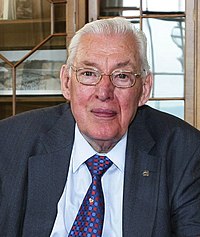

  • Gerald Malone – 1985 Speech on the Loyal Address

    Below is the text of the speech made by Gerald Malone, the then Conservative MP for Aberdeen South, in the House of Commons on 6 November 1985.

    I suppose that the first thought that always occurs to those of us who are given this task and honour is why the eyes of the Patronage Secretary should have turned on us.

    As I contemplated that thought over the past few days, I concluded that the Patronage Secretary’s decision must have had something to do with his reading matter during the recess. I believe that I was mentioned in only one book that was published during the recess, and I thought that my right hon. Friend might have read the flattering reference to me in that book.

    I refer hon. Members on both sides of the House to the publication “Humming Birds and Hyenas”. Of course, I maintain that the humming birds are on the Government side, and I shall say nothing about the hyenas. I was sure that the Patronage Secretary had read the reference to me, which started, rather flatteringly:

    “No one should doubt Malone’s profound commitment to getting on.”
    So far, so good. It went on, rather strangely:

    “Malone, though, is ill-served by his physical appearance”—

    [Laughter.] I am glad that the House contradicts that view— ​

    “He has very small eyes that, as they constantly swivel for a better view of the main chance, seem to be operating independently of one another.”

    It is one thing to be thought of as having an independent mind; it is quite another to have the fact testified to by one’s eyeballs. The reference continued:

    “He is also a hard, combative, aggressive man, temperamentally not equipped for the graceful side of politics.”

    No wonder the Patronage Secretary chose me for this great honour.
    However, the quality of the judgment of the author, who seems to be called Edward Pearce—obviously a nom de plume which must have caused great irritation to the sketch writer of the Daily Telegraph—can be assessed by the fact that, after saying all that, he concluded:

    “And I like him.”

    I am deeply grateful for this honour, which I consider to be an honour not only for me, but for my constituency and for the city of Aberdeen, which is also represented by the hon. Member for Aberdeen, North (Mr. Hughes), whom I congratulate on his success in achieving shadow Cabinet office. I do not intend to say more about that because I do not want to prejudice his chances on Thursday, when I understand that something else might or might not happen to him.

    The hon. Gentleman and I are both proud to represent Aberdeen, It is a city of great contrasts. It is a city which has constantly played a part in Scotland’s affairs, no more so than now, when it is actively involved in the oil industry. Oil is not all that Aberdeen has to offer. Unlike the constituency represented by my hon. Friend the Member for Birmingham, Hall Green (Sir R. Eyre), my constituency, although residential in part, is active industrially. It has a fishing industry, a fish processing industry and a shipbuilding industry, over which I regret there is some uncertainty, which I hope will be resolved. Aberdeen has a proud shipbuilding history.

    A mark of the character of the people of Aberdeen is that the city has always met new industrial challenges. North sea oil was a great challenge, to which the city adapted. The city has changed with that challenge. For that reason, I am fortunate to represent an urban constituency where the unemployment rate is only 6 per cent. This is due mainly to the character of the people of Aberdeen.

    Aberdeen has more than that. The House will know that it has a football club which has known some success, and I trust that it will continue to be successful in the coming season. The club is known for its success on the field, and the quality of its supporters is recognised throughout Europe. Aberdeen’s supporters are an example to football club supporters throughout the United Kingdom. Other clubs should try to achieve a similar standard of behaviour.

    I am pleased that the Gracious Speech refers to Scotland and particularly to public sector housing in Scotland. In my constituency, selling council houses has been successful, but only up to a point. I am pleased that the policy is now to be taken further. Expenditure on public sector housing in Scotland was successful in the 1930s, but not in the post-war period. It is significant that we have to knock down and rebuild council housing stock built in the 1950s and 1960s, whereas stock built in the 1930s is sought after avidly by council house tenants. Hon. Members on both sides of the House can learn a lesson from that—that the way in which we plan and run council housing stock is unacceptable.

    We have taken some steps forward in selling off council housing stock to the private sector, but we must now go ​ further. It is up to the Government to adopt a more radical attitude to public sector housing. Selling it to the private sector is not the whole answer. There are many other options, such as housing co-operatives and other forms of co-ownership. It is crucial that we remove public sector housing stock from politicians’ control. That should be our ultimate priority. I hope that the Gracious Speech will take us one step further in that direction.

    The Gracious Speech will be judged by people outside the House on whether the Government continue with their policy to reform our industrial base. I believe that they are doing that, not by measures of the type that would be adopted by the Opposition, which would take us back to the evil days of the past, but by facing the challenges of the future.

    Many have said that Governments half way through their second term begin to lose spirit and their radical edge. I am pleased to be able to say today that the Gracious Speech does not reveal that fault. This Government were elected to have a radical edge and to continue to try to bring about change in our society, and especially in our industry to make it competitive so that it will stand head and shoulders above our competitors in Europe and the world.

    I regret having to say that in the days to come, when we debate the Gracious Speech, we shall probably hear the prescriptions of yesterday from Her Majesty’s Opposition. We shall hear tales of more state controls, when we have pushed back the boundaries of such controls, tales of the undoing of the reforms of the trade unions which we have undertaken and which have been so successful, and a programme, in contrast with that put forward in the Gracious Speech, which would, quite simply, turn back the clock in Britain and stop our progress toward a more prosperous future.

    I am pleased to note from the Gracious Speech that the Government will continue their efforts to reform our industry. I can take that back to the people of my constituency, who have taken on that challenge. It is my wish that the spirit be translated throughout the United Kingdom, so that the understanding that prosperity can be based only on industries that are truly competitive will at least be realised.

    I believe that that is the message of the Gracious Speech. It is a message for the future.

  • Reginald Eyre – 1985 Speech on the Loyal Address

    Below is the text of the speech made by Reginald Eyre, the then Conservative MP for Birmingham Hall Green, in the House of Commons on 6 November 1985.

    Throughout my time as a Member of this honourable House—about 20 years—I have often felt that I have received in all quarters more kindnesses and consideration than anything I have deserved. The privilege that I have in moving the motion strengthens that feeling, and I am very conscious of the honour that is accorded to me, which my constituency and city share.

    My constituency consists mainly of pleasant residential areas, including large housing estates, on the southern side of Birmingham. There are only small areas of industrial activity in Hall Green, where the successful production and export of wirework goods, handbag frames and specialised marble cladding are carried on. The great majority of my constituents follow their careers in the commercial, industrial, education and administrative areas of Birmingham.
    The schools of the King Edward foundation continue to temper strenuous sons and daughters from all kinds of Birmingham homes. Camp Hill, my own school, stands at the edge of the constituency.

    Hall Green claims two famous sons who, in their different ways, have contributed to the cultural life of Britain. One is J. R. R. Tolkien, author of “Lord of the Rings” and other books of huge appeal. The other is Tony Hancock who appeared to have emigrated to the southeast, where he took up residence at 23 Railway cuttings, East Cheam, but I always thought that his humour continued to have a strong Brummagem flavour, as was exemplified in the “Blood Donor”, when he said, “It’s only a drop of blood to you, but it’s life or death to me.”

    I referred to the large council housing estates in my constituency. They include tower blocks. Despite repeated efforts to improve administration on council housing estates, complaints from tenants about inefficiencies in repairs and transfers of tenancies continued unabated. I hope that the proposals for change in the Gracious Speech will lead to the development of more humane and efficient services to the great benefit of council tenants in my constituency, in Birmingham and throughout the country. The measures to encourage the purchase of flats by tenants will also be welcomed.

    History has decreed that we have a very diverse and varied society in Birmingham. As a native, every day I see examples of kindness, tolerance and understanding. How else could we put up with each other? People from all groups in the city play active parts in community affairs and become local government and parliamentary candidates. Membership of the city council includes councillors from the ethnic minorities representing six wards in the city, including Handsworth. At the same time, it is fair to emphasise that there is on all sides a strong desire for improving standards. The urban aid programme is much welcomed. Since the Birmingham inner city partnership began in 1978, the Government have provided £125 million in special funds for improvement in the inner areas, including substantial housing renewal projects.

    Throughout the city there is clear evidence of the wish for a wider spread of personal independence by way of home and small business ownership. This is accompanied by a powerfully developing desire for an orderly and law-abiding society in which people can live their lives in peace—doing their jobs, developing their businesses and looking after their families in a stable and civilised atmosphere, safe in their streets and homes. That is why the deplorable events at Handsworth came as a great shock, and it is right to make it clear that the overwhelming mass of Birmingham people of all origins—Afro-Caribbean, Asian, other varied groups and the large indigenous population—shared a sense of revulsion against the criminality which was seen as a threat to their security. We want to put those events behind us as soon as possible and to move on to better things. It is essential now that people throughout the city are involved in co-operation with the police in a firm resolve to protect their own law-abiding society. I believe that the measures referred to in the Gracious Speech relating to public order will provide a strengthened framework for this vital purpose.

    Perhaps surprisingly for a great inland city, Birmingham has been and still is one of the best recruiting centres for my former service, the Royal Navy. There are so many Navy and former Navy men in the city that, if Drake’s drum were to be hung anywhere, there is a strong case for suspending it over spaghetti junction.

    It has to be admitted that Birmingham’s economy, which is so dependent on manufacturing and on metal bashing industries, was in increasing difficulty during the 1970s as the competitive thrust of world trade sharpened. The world recession of 1980–81 intensified those problems in all industrial centres and struck harshly at Birmingham and the west midlands conurbation. Our great concern about unemployment includes the apprehension that essential modernisation and the adoption of advanced technology in industry can reduce the demand for manpower at a time when the work force is growing.

    There is a great realism in Birmingham industry, which knows that we must match world competition in design, quality and cost of production to safeguard existing jobs and to create new ones. Great efforts are being made to meet this challenge and to diversify the local economy, to strengthen existing companies and to encourage the formation of more small businesses and of new service industries so that they all, in their various ways, make the best possible contribution to job creation.

    We should acknowledge that progress has been made. The motor industry, which is so important to us—and especially British Leyland which has had substantial Government support—is leaner and fitter, producing an attractive range of new models. The components manufacturers—GKN, Lucas, Wilmott Breeden—and large numbers of smaller suppliers are fighting hard and well to beat strong international competition. Everyone wishing to support the cause of job creation must remember the importance of buying British. The reference in the Gracious Speech to Spain’s entry into full membership of the European Community will be welcomed in Birmingham. As a result, one source of unfair competition for our motor industry will be brought under control.

    With regard to engineering and manufacturing more generally in the second city, the abolition of the damaging industrial development certificates and the changes in regional policy of 1983 have reduced the severe disadvantages from which Birmingham and the west midlands have suffered for many years. Now grants are available from the Government and the European regional development fund to assist large and small companies to modernise, diversify and to get started.

    Under the new regional policy, 156 grants in the west midlands have so far been offered—a total of £17·5 million of approved grants. Most important, with the addition of private money, the total investment associated with the approved projects amounts to £155·7 million, with 11,617 jobs to be created or safeguarded as a result. Another 147 applications are under appraisal. The renewed jewellery and gunsmiths quarter, housing several thousand jobs as highly-skilled operations, was achieved by grants of £1·7 million, attracting over £5 million of private sector investment.

    Both Birmingham and Aston universities are contributing high scientific and technological skills to new industrial projects in the city. Remembering its tradition as the city of a thousand trades, Birmingham is encouraging new entrepreneurs. The capacity of Birmingham’s small manufacturers should never be underrated. In Tudor times they flooded the entire kingdom with counterfeit coins.

    There is a proposition that I should like the Government to consider. The Home Secretary has stated that he wishes to examine ways of bringing together the means and funds available to assist inner areas and to ensure their best and most effective employment. I agree with him in this approach. I ask my right hon. Friend and also my right hon. Friend the Secretary of State for the Environment to consider in this connection one vital basic aspect—the availability of land. There are considerable areas of derelict land in inner Birmingham, as in other cities. Much of it is in public ownership and it is valued at unrealistically high figures.

    I look with some envy at the successful policy pursued by the Government in the redevelopment of London’s docklands. Could not some agency be set up to put more drive into the process of bringing this land into practical use? I should like to see an agency assembling parcels of land for development and thus attracting more private funds for investment, making sites available for small industrial and business premises, as demand grows, and also making sites available for small homes for sale and for housing associations to provide more sheltered accommodation for the elderly.

    The simplified planning zones proposal and the modernised and liberalised law for building societies, referred to in the Gracious Speech, give us new hope for progress in this way. The positive use of inner area wastelands would help to ease the pressure for green belt development and would add to all the efforts to stimulate activity in the inner areas.

    Let me describe briefly the other factors and projects, some of them very large indeed, which will help to build up the new Birmingham. The National Exhibition Centre is a product of civic and Birmingham chamber of industry and commerce initiative. It is huge, popular and expanding, attracting thousands of overseas visitors to trade exhibitions, conferences and sporting events of international standard, providing demand for hotels, entertainment and related service industries. It is upon that unrivalled centre that Birmingham’s bid for the Olympic games is based. The city will combine with nearby Stoneleigh park to provide supremely attractive facilities.

    An added attraction of the city will be the annual Birmingham road race, making use of our unique road formations near the city centre and featuring marching bands and other entertainments for families, making it a festive occasion in the city at the heart of the motor industry. We intend to add the jewel in the crown with the new Birmingham convention centre to foster business tourism. We appreciate Government support for our application for European Community funds.

    We shall extend cultural facilities in the city by providing a home for the superb city of Birmingham symphony orchestra under its outstanding conductor Simon Rattle. That will supplement the attraction of a lively theatre world and the renowned Birmingham art gallery. All this will enhance Birmingham’s position at the centre of one of the country’s premier tourist areas, which includes Warwick, Stratford-on-Avon and the Cotswolds.

    Britain’s major concentration of manufacturing and commercial activity is in Birmingham. We are proud of that, and we have in the city the energy and will to go forward.

  • Queen Elizabeth II – 1985 Queen’s Speech

    Below is the text of the speech made by Queen Elizabeth II in the House of Lords on 30 October 1985.

    The Duke of Edinburgh and I were pleased to receive the State Visits of the Life President of Malawi in April and the President of Mexico and Senora de la Madrid in June. We were saddened by the devastation caused by the earthquake in Mexico in September, for which my Government provided prompt assistance.

    We recall with much satisfaction the State Visit to Portugal in March. I have also visited Belize, and was in the Bahamas for the Commonwealth Heads of Government Meeting. Our tour of Commonwealth countries in the Eastern Caribbean is still in progress.

    My Government welcomed the decision of the Maldives and of St. Vincent and the Grenadines to become full members of the Commonwealth.

    My Government have maintained Britain’s contribution to Western defence, and enhanced the United Kingdom’s own defences through improvements in equipment and in the regular and reserve forces. They have played a full part in the Atlantic Alliance, and promoted British and Western defence interests outside the NATO area.

    My Government have continued to work vigorously for agreements on verifiable arms control and disarmament, and to seek improved relations with the Soviet Union and Eastern Europe. They warmly welcomed the opening of talks in Geneva between the United States and the Soviet Union and fully support the United States’ efforts to reach concrete agreements.

    My Government have signed the Treaty on the Accession of Spain and Portugal to the European Communities, and have signed and ratified the third Convention of Lomé. An Act has been passed implementing the Fontainebleau Agreement on the future financing of the European Communities, including the correction of the British budgetary contribution.

    My Government share the widespread public concern for the victims of the famine in Africa. They have continued to provide substantial emergency assistance both directly and through the European Community.

    My Government have continued fully to honour their undertakings to the people of the Falkland Islands, while taking positive steps to seek more normal relations with Argentina. The Sino-British Joint Declaration on Hong Kong was signed last December and an Act consequent upon its terms was passed. My Government have reached agreement with Spain on the implementation of the Lisbon statement concerning Gibraltar.

    ​My Government have supported efforts to restore the independence and non-aligned status of Afghanistan. They have urged peaceful change in South Africa and the early independence of Namibia.

    My Government welcomed to the United Kingdom in June the Premier of the State Council of the People’s Republic of China. The great importance my Government attach to their relations with the Countries of South East and South Asia was marked by the Prime Minister’s visit there in April and by the visit here this month of the Indian Prime Minister.

  • Gerald Kaufman – 1985 Speech on Immigration

    Below is the text of the speech made by Gerald Kaufman, the then Shadow Home Secretary, in the House of Commons on 29 October 1985.

    I apologise for not being in my place when the Home Secretary rose to make his statement.

    The House will wish to thank in equal measure both yourself, Mr. Speaker, and my right hon. Friend the Member for Blaenau Gwent (Mr. Foot), without whom the statement would not have been obtained. Even after the right hon. Gentleman’s statement, and the strange letter sent to me yesterday by the Minister of State, the reckless allegations made by the Minister of State remain unsubstantiated.

    The Home Secretary appears to be totally confused about the rules relating to visitors. He said that the Minister of State had talked about the right to enter. The Home Secretary talked about the qualification of visitors —he used the phrase “qualify as visitors”—when most would-be visitors have the automatic right to enter unless deprived of it by the Home Secretary. The huge increase in representations from hon. Members to which Ministers have drawn attention proves that the Minister of State is increasingly withdrawing the right of entry from certain categories of visitor.

    We totally reject the claim that there has been no change in the way in which the rules are being administered, and we are worried by the Home Secretary referring in his statement to changes in procedure. Will he categorically assure the House that he has no intention of imposing a visa requirement for visitors or limiting the existing rights of hon. Members?

    As for alleged “abuses,” they are not abuses at all. If an hon. Member was confined to taking up cases the full particulars of which he knew, as mentioned by the Minister of State in his letter, we should none of us be able to take up social security or income tax cases, because we take up those cases to get the facts. That is so in these cases as well. If an hon. Member—again, as requested and apparently required by the Minister of State — were ​ confined to taking up only the cases of constituents he knew personally, thousands of people in every constituency would never have any cases taken up.

    Other allegations made by the Minister relate to relationships between hon. Members. They are matters, if at all, not for the Government, not for the Home Secretary, not for the Minister of State but for you, Mr. Speaker, and the House.
    In essence, the allegations that the Government are making add up to a whine about the actions of hon. Members being an inconvenience to the Executive.

    But one of the most essential functions of an hon. Member is to be an inconvenience to the Executive. If the volume of representations is a burden to the Home Office and its Ministers, let me make it absolutely clear that the administration of the rules of entry is a burden to thousands of our constituents looking forward to visits from relatives. The Home Secretary looks upon those people as inconvenient statistics, but they are human beings with warm family feelings, and they have the same right to have visits as any other of our constituents. Our efforts to help them may be a great deal of trouble to Ministers, but we are determined to go on helping them, and that is a lesson that the Home Secretary had better learn.

    On Thursday, the Minister of State twice asserted that some hon. Members were “abusing their right.” Yesterday in the exchanges in the House he used the word “abuse” three times. In his letter to me he used the word “abuse” nine times. Today in his statement the Home Secretary did not once use the word “abuse.” Instead, he mentioned 23 hon. Members whose cases, he said, were examples of

    “the problems that we are facing.”

    We want to know clearly and without equivocation from the Home Secretary whether he alleges that hon. Members have been abusing their position. If he says that there has been abuse, we want the names. We demand the names, because hon. Members have the right to defend themselves against charges made by Ministers in this House. Either the Home Secretary provides the names or he resiles from the accusation. If he resiles from the accusation, the Minister of State should resign.