Tag: 1985

  • Adam Butler – 1985 Speech on the Anglo-Irish Agreement

    Below is the text of the speech made by Adam Butler, the then Conservative MP for Bosworth, in the House of Commons on 26 November 1985.

    I do not have in my voice today the power of the hon. Member for Belfast, East (Mr. Robinson), but I hope that I can emulate my hon. Friend the Member for Eastbourne (Mr. Gow). Even if I speak quietly, I hope that I can speak as much sense as he did. So far, there have been three contributions from those who represent different parties in Northern Ireland. They make me believe that I was right the other night to vote for the televising of the proceedings of this Chamber. If the television cameras had been here, the viewers, whether in Northern Ireland or in the remainder of the United Kingdom, would have obtained a much better appreciation of the problem and of the advocates of the various points of view.

    I served as a Northern Ireland Minister for nearly four years. Since then I have had the opportunity for reflection. Perhaps my views are now a little more objective than they were then. Whatever my right hon. Friend the Member for Waveney (Mr. Prior) said, although there was mistrust of English Ministers when we first appeared, I hope that I and my colleagues and friends who served with me in Northern Ireland left the impression that we were seeking to do our bit and to make our contribution to the resolution of the problems of Northern Ireland. I know that my right hon. Friend did that.

    I have already expressed my view, on the occasion of the statement made by my right hon. Friend the Prime Minister last week. It is one of general welcome for the agreement. However, I cannot say that I like it, or necessarily welcome one of its fundamental points. Why should I, as a British citizen, automatically like and welcome the fact that advice can come from a Minister of a Government of a foreign state? That is the technical position of the Republic of Ireland, whatever history tells us.

    However, I accept the agreement, for a reason that lies in what the hon. Member for Foyle (Mr. Hume) said. This is where I fall out with my hon. Friend the Member for Eastbourne and others who have spoken. This point is probably the fundamental point at issue in the Northern Ireland problem. Are we talking about a democratic system, or part of a democratic system, where a simple majority should hold sway regardless, where first-past-the-post should rule and 50 per cent. plus should win the day? If so, life would be easy, but Stormont tried that for 50 years.

    I believe the reason to be that stated by the hon. Member for Foyle, and that is the difference within Northern Ireland between the two communities. There is a division now that has been made worse by recent history. I do not need to lecture hon. Members about the position in Northern Ireland. However, one has to recognise certain basic facts. Two thirds, or less now, of the population are fundamentally unionists and loyalists, looking to London and Westminster, while the remainder of the population, on the whole, are nationalists, some republicans and nearly all Roman Catholic with a distinctive regard for the South and the Republic. It is with that that we have to concern ourselves, and that is what the agreement seeks to recognise.

    It is no good saying to the people in the minority that, as they are in a minority in part of the United Kingdom, they must think like us, become totally British and prefer the Union flag, not the tricolour. Those people found themselves, because of a stroke of history, north of the border, thanks to the Boundary Commission of that time.

    Mr. Harold McCusker (Upper Bann)

    If the right hon. Gentleman believes that a simple majority rule is not appropriate in Northern Ireland—I can understand arguments along those lines—why should I accept, through article 1 of the agreement, that a simple majority should take me out of my citizenship of the United Kingdom and into a united Ireland?

    Mr. Butler

    That point is somewhere among my notes to be dealt with later. If, by some magic, there were a 51 per cent. majority today, the position would be just as bad in terms of divided communities. The fact is that a majority in favour of leaving the United Kingdom—if such a situation should ever arise—is many years away. It is important to grasp this point because it is no good the Republic of Ireland saying that it has only to wait a little while longer, or for the minority in Northern Ireland to say that it has only to wait for a little while. It must be the greatest consolation to the unionist population that it is a question not of a few years but of many decades, if at all. Therefore, the imperative is on both sides to get together to work out their future.

    Mr. Nicholas Budgen (Wolverhampton, South-West)

    Is not the advice of the Northern Ireland Office to all those who visit Northern Ireland that demographic changes within Northern Ireland will lead, perhaps within the next 20 years, to the nationalist population becoming the majority? Has that not been said? [Interruption.]

    Mr. Butler

    I am reinforced in what I believe—that there are no such official forecasts—by the remarks of other of my hon. Friends. There are those who see a trend that will lead that way, but I re-emphasise the point that nobody, as far as I am aware, believes that a simple adverse majority—now now I am a unionist—could arise within several decades, if at all.

    In looking at the options that should be considered, I have in the past taken seriously the possibility of repartition, because that is the only other option if the two communities will not resolve the problems themselves. Frankly, it is not an option. Anybody who knows he demographic map of Northern Ireland knows that in every square mile of every part of the Province there is a significant minority population. The hon. Member for Fermanagh and South Tyrone (Mr. Maginnis) would hardly welcome that part of Ulster going to the South. The hon. Member for Londonderry, East (Mr. Ross), who is ​ not in his place at the moment, would not relish such a proposition for his constituency. I cannot imagine unionists ever wanting to give up the city of Londonderry.

    Although that is not a feasible option, it is important to look at it so that it can be rejected, thus leaving the one option, which is working together. One welcomes the agreement because it recognises the fundamental character of the Province.

    I follow that point one step further, in regard to the obligation on the two Governments that if a simple majority to leave the United Kingdom were achieved, those Governments would be required to lay before their Parliaments proposals for such a move. It is now in the agreement, although I would prefer that it were not. However, in that event, it would put the decision into the hands of this House, on behalf of the United Kingdom, regardless of what the proposals were, because this is where the decision should rest. We are talking about the choice not of Ulstermen, on whichever side of the divide they come, but of the British people. If I may presume to advise many of those whom I call my friends sitting on the Unionist Bench, this is why it is important to have regard to the feelings of the English, Welsh and Scottish about this affair. As others before me have said, too many are conscious of the resources that have been put into Northern Ireland and of the lives that have been lost by the Regular Army not to feel that this matter could be resolved through a united Ireland.

    My last point is the one that I raised in an intervention following my right hon. Friend the Prime Minister’s statement last Monday. No one must think that this is the tip of the iceberg or the prelude to a united Ireland. It is merely an opportunity for a step forward.

    The hon. Member for Foyle was challenged from a sedentary position when he said that he was prepared to sit down and talk. If I may say so to the hon. Member for Belfast, East, it was typical of him to ask why the hon. Member for Foyle had not sat down and talked in the past. I have asked the hon. Gentleman before why he was not in the Assembly, and I am as critical as anyone of the fact that he has not been. But now that we have heard his positive statement as the leader of the constitutional nationalists, it is for the Unionist parties to accept that offer and to try to find a way forward. Only in that way can peace and stability be achieved.

  • John Hume – 1985 Speech on the Anglo-Irish Agreement

    Below is the text of the speech made by John Hume, the then SDLP MP for Foyle, in the House of Commons on 26 November 1986.

    Listening to some of the hon. Members who have spoken in the debate one could have been forgiven for thinking that we were not discussing a serious problem, but, after listening to the hon. Member for Belfast, East (Mr. Robinson), one should not be in any doubt that we are discussing a serious problem.

    I was glad to see a full House at the beginning of the debate. That is the first achievement of the Anglo-Irish conference. It shows that the serious human problem facing the peoples of these islands has at last been given the priority that it deserves. It has been put at the centre of the stage.

    I was glad also that a meeting took place at the highest level between the British and the Irish Governments at which a framework for ongoing discussion was set up. In an excellent unionist speech, the hon. Member for Eastbourne (Mr. Gow) told us what we already knew—that he was a committed unionist and that he did not particularly like to associate with the loud-mouthed persons with whom I have to live. We did not learn from him of the problem in Northern Ireland—that we have a deeply divided society. The hon. Gentleman did not bother to analyse why we have a deeply divided society and the political instability and violence which the agreement seeks to address.

    This is the first time that we have had a real framework within which to address the problem. The problem is not just about relationships with Northern Ireland. One need only listen to the speeches of Northern Ireland Members to know that it is about relationships in Ireland and between Ireland and Britain. Those interlocking relationships should be addressed within the framework of the problem. The framework of the problem can only be the framework of the solution, and that is the British-Irish framework. There is no road towards a solution to this problem that does not contain risks. The road that has been chosen by both Governments is the road of maximum consensus and is, therefore, the road of minimum risk. We should welcome that.

    Our community has just gone through 15 years of the most serious violence that it has ever seen. Northern Ireland has a population of 1·5 million people. About 2,500 people have lost their lives in political violence—the equivalent of 86,000 people in Britain. Twenty thousand people have been seriously maimed. When I say “maimed”, I mean maimed. That is the equivalent of 750,000 people on this island. About £11 billion-worth of damage has been caused to the economies of Ireland—North and South. In 1969, public expenditure by the British Government in subsidy, subvention or whatever one calls it was £74 million; today it is £1·5 billion. Two new prisons have been built and a third is about to be opened—our only growth industry. There are 18-year-olds who have known nothing but violence and armed soldiers on their streets. Young people reach 18 and then face the highest unemployment we have ever had. Forty-four per cent. of the population is under 25.

    If that is not a time bomb for the future, what is? If that is not a problem that needs the serious attention of the House and the serious attention that the Prime Ministers of Britain and of the Republic of Ireland have given it in the past 18 months, what is? Is this not a subject that screams out for political leaders in Northern Ireland to take a good look at themselves, their parties and the leadership ​ that they have given? There is only one clear-cut lesson to be learnt from this tragedy—that our past attitudes have brought us where we are. Unless we agree to take a hard look at our past attitudes, we shall be going nowhere fast and we shall be committing ourselves to the dustbin of history, clutching our respective flagpoles.

    We are being given some choices. The agreement gives us no more than an opportunity to begin the process of reconciliation. The choices offered to the people of Northern Ireland are the choices offered by hon. Members here present. The unionist parties have consistently sought to protect the integrity of their heritage in Ireland—the Protestant heritage—and no one should quarrel with that. A society is richer for its diversity. My quarrel with the unionist parties has been that they have sought to protect their heritage by holding all the power in their own hands and by basing that on sectarian solidarity. That is an exclusive use of power which is inherently violent because it permanently excludes a substantial section of the community from any say in its affairs.

    That was spelt out clearly by the right hon. Member for Lagan Valley (Mr. Molyneaux) when he said that he offered an act of leadership. He was sincere. He said that the majority should assure the minority that they would be made part of society. He tells me that it is an act of leadership to make me and the people I represent part of our society 65 years after Northern Ireland was created.

    We have been lectured about democracy and the democratic process by hon. Members from both unionist parties. They are practitioners of the democratic process. I do not want to spend too much time on examples of their practice, but they were the masters of gerrymander. Today their voices are somewhat muted, but they have not changed much.

    In Belfast city council not one position on any board has gone to a minority representative. One council has even apologised to the electorate because it made a mistake in appointing a member of the SDLP to one position out of 105.

    Mr. Patrick Nicholls (Teignbridge)

    The hon. Gentleman is complaining because his party cannot win elections. Many people here have to face the fact that their party cannot win elections. It is a fact of life, but it is not a reason for power sharing.

    Mr. Hume

    I thought that the hon. Gentleman’s intervention might be intelligent. I shall not lecture him on how Northern Ireland was set up, how it was deliberately created and how from day one it has been run on a sectarian basis. The only way to break that down is through partnership.

    Hon. Members from both unionist parties have lectured us about democracy. That brings us to the heart of the Irish problem. The sovereignty of this Parliament is the basis of the British system and of the rule of law. The sovereignty of Parliament has been defied only twice in this century—on both occasions by Ulster Unionists.

    In 1912 the Ulster Unionists defied the sovereign wish of Parliament to grant home rule. That was only devolution within the United Kingdom. They objected and accepted instead home rule for themselves. That taught them a lesson which they have never forgotten—that if one threatens a British Government or British Parliament and produces crowds in the streets from the Orange lodges the British will back down. Others learnt from that that if ​ one wins by the democratic process the British will back down to their loyalist friends and then they say, “Why not use force instead?” Those two forces are still at the heart of preventing a development in relationships within Ireland. Those who threaten violence are those who use it. The same two forces are opposing the agreement today.

    Mr. Ken Maginnis (Fermanagh and South Tyrone)

    Does the hon. Gentleman recall that in 1969 he brought on to the streets of Ulster the hordes who, when he left them alone, fell into the hands of violent men? The hon. Gentleman says that he is not allowed to share responsibility in Northern Ireland, but as I have told him before the SDLP refused to put their names forward for positions within the council of which I am a member and tried to nominate Sinn Fein members instead. Perhaps the hon. Gentleman will apply his mind to that.

    Mr. Hume

    I am applying my mind to the record of the unionist parties, the members of which have spoken today. I shall apply my mind to my own party later. I am expecting everyone to do a little rethinking.

    The logic of the road down which the unionist leadership is taking its people is inescapable. Unionists once again are prepared to defy the sovereign will of this Parliament. When they come back after their elections and Parliament says that it refuses to back down, what will they do? Where will that lead us? They are going down the UDI road. That is their logic. They say that they are loyal to the United Kingdom. They are the loyalists and they must accept the sovereignty of Her Majesty’s Parliament. But they do not.

    What would happen if London Members resigned, were re-elected and returned saying that the majority in Greater London wanted to keep the Greater London council? That would lead to a complete breakdown of parliamentary sovereignty. That is where the unionists are leading us and they must know it.

    It is sad in 1985 to meet people who are suspicious of everybody. They are suspicious of London, suspicious of Dublin and suspicious of the rest of the world. Worst of all, they are suspicious of the people with whom they share a little piece of land—their neighbours. It is sad that they never talk of the future except with fear. They talk always of the past. Their thoughts are encapsulated in that marvellous couplet

    “To hell with the future and Long live the past.
    May God in his mercy look down on Belfast.”

    That is more relevant than the words of Rudyard Kipling.

    There has to be a better way. However grand we think we are, we are a small community. We cannot for ever live apart. Those sentiments were expressed in 1938 by Lord Craigavon, one of their own respected leaders. What are we sentencing our people to if we continue to live apart? People are entitled to live apart, but they are not entitled to ask everyone else to pay for it.

    The other opposition to the agreement comes from the Provisional IRA and its political surrogates. They murder fellow Irishmen in the name of Irish unity. They murder members of the UDR and RUC—fellow Irishmen. Those members see themselves as protectors of their heritage, but the Provisional IRA brutally murders UDR and RUC members in the name of uniting the Irish people, the heritage with which we must unite if we are ever to unite Ireland.

    The IRA’s political wing is full of contradictions. I hope that no one in the House has any sympathy with it. ​ Its members blow up factories, yet complain about unemployment. Its political spokesmen complain about cuts in public expenditure and in the same evening the military wing blows up £2 million of public expenditure in one street. A motion rightly condemns the execution of a young South African poet, but the IRA then shoots in the back of the head a young unemployed man and puts bullets in the head of a young man and his wife in west Belfast. The IRA complains about Diplock courts, yet runs kangaroo courts. What does that offer Ireland?

    The hon. Member for Belfast, East (Mr. Robinson) asks about Irish unity. In the late 20th century it is nonsense that there should be divisions. If European nations which twice in this century alone have slaughtered one another by the millions can build institutions that allow them to grow together at their own speed, why cannot we do the same? He quoted me in an interview as saying that I was working for Irish unity, but I went on to say that those who think that Irish unity is round the corner are wired to the moon.

    The divisions in Ireland go back well beyond partition. Centuries ago the leaders of Irish republicanism said that they wanted to unite Ireland by replacing the name of “Catholic-Protestant dissenter” with the common name of “Irishman”. That was in 1795. Thirty years before partition Parnell said that Ireland could never be united or have its freedom until the fears of the Protestant minority in Ireland could be conciliated. This is a deep problem. It will not be solved in a week or in a fortnight. The agreement says that if Ireland is ever to be united it will be united only if those who want it to be united can persuade those who do not want it to be united. Sovereignty has nothing to do with maps but everything to do with people.

    The people of Ireland are divided on sovereignty. They will be united only by a process of reconciliation in which both traditions in Ireland can take part and agree. If that happens, it will lead to the only unity that matters—a unity that accepts that the essence of unity is the acceptance of diversity.

    Our third choice is the agreement. For the first time it sets up a framework that addresses the problem of the interlocking relationships between the people of both Irelands. It is the approach of maximum consensus. It is the way of minimum risk. For the first time—this is a positive element in the agreement—it respects the equal validity of both traditions. That is what the right hon. and hon. Members of the Unionist party are complaining about. It is not a concession to me or to the people whom I represent. It is an absolute right to the legitimate expression of our identity and of the people I represent. Nobody can take that from us. The recognition of the equal validity of both traditions removes for the first time every excuse for the use of violence by anybody in Ireland to achieve his objective. A framework for genuine reconciliation is provided. Both sections of our community can take part in it.

    Several hon. Members have said that the SDLP has a double veto on devolution. I have already said several times to them in public, but let me say it again so that they may hear it, that I believe in the partnership between the different sections of the community in Northern Ireland. That is the best way to reconcile our differences. By working together to build our community we shall ​ diminish the prejudices that divide us. The agreement means that I am prepared to sit down now and determine how we shall administer the affairs of Northern Ireland in a manner that is acceptable to both traditions.

    Mr. Ivor Stanbrook (Orpington)

    Will the hon. Gentleman give way?

    Mr. Hume

    No. [HON. MEMBERS: “Give way.”] I noticed that the right hon. and hon. Members of the Unionist parties were allowed to speak without interruption. When they were interrupted, they did not agree to give way.

    The second question that appears to excite people about my party’s attitude relates to the security forces and to policing in Northern Ireland. Our position—this is not a policy but a statement of fact that applies to every democratic society—is that law and order are based upon political consensus. Where political consensus is absent there is an Achilles heel. Violent men in Northern Ireland take advantage of that Achilles heel. For the first time the Intergovernmental Conference will address that question. It has committed itself to addressing that question. It has also committed itself to addressing the relationship between the community and the security forces. I want to give every encouragement to the conference to do so at the earliest possible opportunity. If it does so, it will have our fullest co-operation. I want the people whom I represent to play the fullest possible part, as do any citizens in a democratic society, in the process of peace and order. While we await the outcome we shall continue to give our full and unqualified support to the police force in impartially seeking out anybody who commits a crime in Northern Ireland.

    Mr. Dalyell

    On a point of order, Mr. Deputy Speaker. The hon. Member for Orpington (Mr. Stanbrook) has a position to state in this argument. I may not happen to agree with him, but just as it was wrong—

    Mr. Deputy Speaker (Sir Paul Dean)

    Order. The hon. Gentleman has raised this point of order before. He knows that it is at the discretion of the hon. Member who has the floor to decide whether to give way.

    Mr. Hume

    What is the alternative to the process of reconciliation and the breaking down of barriers? Why should anybody be afraid of the process of reconciliation? Anybody who is afraid has no confidence in himself or herself. It means that they cannot engage in a process of reconciliation. If they cannot retain mutual respect for their own position as well as for that of somebody else, they have no self-confidence. Therefore, they should not be representatives of the people of Northern Ireland. The only alternative is the old one of hopelessness, tit-for-tat, revenge—the old doctrine of an eye for an eye which has left everybody blind in Northern Ireland.

    This is well summed up by a better poet than Kipling, the good, honest voice of the North, Louis MacNeice. Describing the old hopelessness, which is what we are being offered by those who will not take this opportunity, he said:

    “Why should I want to go back
    To you, Ireland, my Ireland?
    The blots on the page are so black
    That they cannot be covered with shamrock.
    I hate your grandiose airs,
    Your sob-stuff, your laugh and your swagger,
    Your assumption that everyone cares
    Who is the king of your castle.

    Castles are out of date.
    The tide flows round the children’s sandy fancy,
    Put up what flag you like, it is too late
    To save your soul with bunting.”

    It is far too late for the people of Northern Ireland to save their souls with bunting or with flag waving. We should note that the followers of those who wave flags as though they were the upholders of the standards of those flags paint their colours on kerbstones for people to walk over. In other words, there is no leadership and no integrity in that approach and no respect. The alternative that we are offered is an opportunity which, like others, may fail. It poses great challenges and risks. The challenges are daunting and difficult, but the choices are not. There is no other choice. There is no other road.

  • Peter Robinson – 1985 Speech on the Anglo-Irish Agreement

    Below is the text of the speech made by Peter Robinson, the then DUP MP for Belfast East, in the House of Commons on 26 November 1985.

    This debate provides a unique occasion for Ulster Unionist representatives, because it is not often that a man gets the opportunity to deliver the oration at his own funeral. When the Prime Minister signed the agreement in Hillsborough castle, she was in reality drafting the obituary of Ulster as we know it in the United Kingdom.

    It is important for the House to understand why Ulster Unionists came to that conclusion. We did not reach that conclusion simply because of one document that arrived on 15 November. A long series of events led to that occasion. I am old enough to remember when, in 1969, the Labour Government issued the Downing street declaration, which said:

    “the affairs of Northern Ireland are entirely a matter of domestic jurisdiction.”

    I can recall how our Prime Minister, on 8 December 1980 when in Dublin castle, signed a communiqué with Charles J. Haughey which altered that stance, because the communiqué said that

    “the totality of relations within these islands”

    was now a fit subject for discussion between the two Governments. From that moment we had the outworking of the “unique relations” between the Governments of the United Kingdom and the Republic of Ireland. We had joint studies, cross-border co-operation and then the Anglo-Irish Intergovernmental Council, the purpose of which was

    “to provide the overall framework for intergovernmental consultation … on all matters of common interest and concern”—

    wait for it—

    “with particular reference to the achievement of peace, reconciliation and stability and the improvement of relations”.

    At that stage, the council had a responsibility to deal with matters of mutual interest and concern. We have moved from that to a new status which, under this institution, is to give the Republic of Ireland—a foreign Government—a direct role in the government of Northern Ireland.

    It does not end there, because the agreement announced at Hillsborough castle is but the tip of the iceberg. I know that the Prime Minister, the Secretary of State and others have been careful to say that there is no other agreement. But, then, we were told that there was no agreement right up until it was signed at Hillsborough castle. Indeed, some weeks in advance of 15 November, the deputy Prime Minister of the Irish Republic had already had a document printed which he sent to every member of his party. It indicated the full text of the agreement. Incidentally, he said that that agreement was signed by

    “the Taoiseach and the Prime Minister of Great Britain.”

    It represents quite a change in our status when the deputy Prime Minister of the Irish Republic recognises that Northern Ireland is not to be one of our Prime Minister’s responsibilities.

    The document says that the task upon which the conference will embark involves trying to achieve an agreement with our Government on matters such as parades and processions, and putting the UDR out of business. It implies—although we have not yet been told—that the meeting of Ministers will take place in Belfast. It is clearly a framework for further agreements. What other reason could there be for a front cover entitled, “The Republic of Ireland No. 1 Agreement.”?

    I notice that the hon. Member for Foyle (Mr. Hume) is in the Chamber. He has at least been honest with the people of Northern Ireland in saying that the agreement is a process. In the Irish News—where else?—he said that it was “a first step.” The next day he said that there were to be “progressive stages.” Those who had any doubt about where they were to lead were told by him on RTE:

    “We are not waiting for Irish unity. We are working for it.”

    I accept that there is no harm in the hon. Gentleman wanting to work towards that goal, but I wish to ensure that the unionist community in Northern Ireland knows what he and the Republic are working towards. It is clear that this process is intended to take us out of the United Kingdom. Yet the people of Northern Ireland have democratically expressed their wish to stay within it.

    The agreement is intended to trundle Northern Ireland into a all-Ireland Republic.

    The unionist community in Northern Ireland has identified this process. It is not an end in itself, and was never intended to be. It is one step towards a united Ireland. Indeed, the Prime Minister has excused the deal by saying that its laudable aim is to achieve peace, stability, reconciliation and co-operation.

    That is my aim too. Like some other hon. Members, I live in Northern Ireland. Our stake and investment are in the Northern Ireland community and, most importantly, our families and constituents live there. It is in our interests to have peace, stability, reconciliation and co-operation. If I felt that they were achievable I would grasp them with a heart and a hand, but not outside the union. That would be too high a price to pay.

    The document reminds me of another piece of paper waved by a former Prime Minister. In many ways the words are too similar. That Prime Minister’s words were “Peace in our time”. Under this agreement, peace, stability, reconciliation and co-operation are not achievable. How can they be achieved by alienating the majority of people in Northern Ireland? It was never intended that there should be peace, stability, reconciliation and co-operation as a result of this agreement. After all, if that had been the intention, the Government would have wanted, above all, to take the elected representatives of the majority community in Northern Ireland along with them.

    Mr. Tam Dalyell (Linlithgow)

    Will the hon. Gentleman give way?

    Mr. Robinson

    This may be my last opportunity to address the House. The first time I did so, it was without interruption. I trust that I will be able to speak without interruption today.

    Mr. Dalyell

    Will the hon. Gentleman give way?

    Mr. Robinson

    If the document has been intended to do us good, the Prime Minister would have been only too ​ willing to allow the unionist community to be consulted. She would have been only too pleased to take it along with her and to ensure that the representatives of the unionist people in Northern Ireland could have some input to the discussions.

    The Government of the Irish Republic were only too happy to give the hon. Member for Foyle that facility. The Government of the Irish Republic and this Government briefed people all over the world. The Government of the Irish Republic briefed the Secretary of State to the Vatican. The President of the United States was briefed, as were the United Nations and the European Community. But those who were to be affected by the deal were kept in the dark.

    Mr. Dalyell

    Will the hon. Gentleman give way?

    Mr. Robinson

    I do not intend to give way during my speech. The hon. Gentleman can ask me to give way as much as he likes, but I do not intend to be interrupted by giving way.

    I ask the Government to scrap this one-sided, anti-unionist deal and to involve unionists in the process of obtaining peace, stability, reconciliation and co-operation in Northern Ireland. As I have said, we would participate with a heart and a half. More than many, I recognise that it is not my duty simply to say, “No, we will not have it.” It is my duty and that of other Unionist representatives to say what can be done in a positive way in Northern Ireland. Before the debate ends, I hope that I shall have had the opportunity to do that.

    I want to point out what unionists have done, and are prepared to do within the union.

    Mr. Dalyell

    On a point of order, Mr. Deputy Speaker. My point of order relates to the very nature of the House. I understand that, other than for major speeches and ministerial statements, the House is a place in which hon. Members’ views can, within reason, be scrutinised. Some hon. Members complain that they are misunderstood and that we, on this side of the water, do not fully comprehend this or that. However, if we cannot ask questions of clarification, how can we be expected to understand them?

    Mr. Deputy Speaker (Sir Paul Dean)

    With his long experience of the House, the hon. Gentleman knows that it is for the hon. Member who has the Floor to decide whether to give way. The hon. Member for Belfast, East (Mr. Robinson) has made it clear that he does not intend to give way.

    Mr. Robinson

    The hon. Member for Linlithgow (Mr. Dalyell) knows very well that I have given way to him and many other hon. Members before. But because of the uniqueness of the occasion, I do not intend to do so today. I have a message that I want to leave with the House before I walk out through those doors, and I do not intend to be diverted by any hon. Member.

    I call upon the Government to consult and not to confront the unionist community. Unionists have been positive. The former Secretary of State for Northern Ireland who laid the Assembly legislation before the House knows very well that it was the unionist community in Northern Ireland that went into the Assembly and that co-operated with the Government. It was the hon. Member for Foyle and his party who stayed outside and withdrew their consent. Is it the reward for those who co-operate ​ with the Government that an agreement that is ultimately to their destruction should be foisted upon them to the benefit of the hon. Member for Foyle and his party?

    The Northern Ireland unionist parties—the Ulster Unionist party with its document, “The Way Forward” and the Democratic Unionist party with its document, “Ulster—the Future Assured”—put forward positive proposals for peace, stability, reconciliation and co-operation in Northern Ireland.
    Even in the Northern Ireland Assembly, with the help of the conciliator, Sir Frederick Catherwood, the parties sat down and reached agreement on a framework that the Government could use in negotiations with the political parties—not only the Unionist parties but the Alliance party. We have been positive in Northern Ireland.

    I say again that we are prepared to remain positive within the United Kingdom. We are prepared to allow the Prime Minister to engage unionists in constructive politics, and if the Prime Minister wishes to call my bluff, I should be only too happy. Do not confront us and put us out of the union with this deal.

    The willingness of the unionist community to seek an agreement is undeterred. If the Government want peace and stability in Ulster, I ask them where that can best be achieved? There seems to be a new rule in British politics—if there is a dispute within a house, the way to solve it is to reach an agreement with the two neighbours. It is even more strange when the agreement reached between the two neighbours gives aid and succour to one of the parties to the dispute.

    If the Government want peace, stability, reconciliation and co-operation in Northern Ireland, they must recognise that that can be achieved only by the politicians—the elected representatives of the people of Northern Ireland—reaching agreement. They cannot impose reconciliation; they cannot impose peace and stability and they certainly cannot impose such an agreement which strikes at the fundamental principle in which the majority in Northern Ireland believe, and that is the union. That is the strangest of British strategies.
    Does the agreement measure up to the Government’s test for the sort of proposal that would be acceptable? The former Secretary of State for Northern Ireland brought the 1982 Act before the House on the basis of

    “widespread acceptance throughout the community.”

    He argued passionately that there had to be “cross-community support.”

    Throughout the years there have been homilies from politicians of one party or another about the necessity for consent in Northern Ireland. They told us that Northern Ireland could not be governed without the consent of the minority.

    If that is true, I have to tell the Government that they can never govern Northern Ireland without the consent of the majority. Do they have that consent? Have they tried to access whether there is such consent? Will they test whether there is consent? The people of Northern Ireland have the right and entitlement to be consulted about their constitutional future.

    Our citizenship of the United Kingdom does not allow the Government to do whatsoever they may wish with Northern Ireland. Our citizenship of the United Kingdom must be on the same basis as applies in any other part of the United Kingdom. If, for whatever reason—be it good or ill—the Government decide that Northern Ireland must be treated differently from the remainder of ​ the United Kingdom, that can be done only if there is consent, and the consent not only of the Government and Parliament, but of the people of Northern Ireland.

    It was that principle, enunciated in the House, that resulted in the referendums for Wales and Scotland. Have not the people of Ulster the same right to be consulted as the people of Wales and Scotland? Do they not have the same right to give their approval to any deal that, ultimately, will affect their future and the way that they are governed? I believe that they have that right and that they should be given it. If this House is not prepared to give them that right, it is incumbent upon the elected representatives of Northern Ireland to give them that right.

    Right hon. and hon. Members criticise me, but I ask them how they would like it if the agreement affected their constituencies—if the governance of their people was not directly by this House, but by a structure that allowed a foreign power, at its own behest, to make challenges and to request consultation. The agreement goes even further than that and requires that

    “a determined effort is made to resolve the differences”

    between the two Governments. I doubt whether many right hon. and hon. Members would want that for themselves or their constituents.

    The agreement is not merely consultative. The House should not pass this measure believing that it is only a talking shop, in which the Irish Republic can make comments. It is much more than that. I am sure that the Prime Minister will not mind if I divulge certain comments made during our meeting yesterday, when we put the point about consultation to her on two occasions.

    On the first occasion, she was about to speak when the question was answered by the Secretary of State for Northern Ireland. I asked whether only a consultative role was involved or whether it was more than that. He said, “It is not executive.” On the second occasion, the Prime Minister said, “It is what it is in this agreement.”

    What do those who have been more candid say about the agreement? The Prime Minister of the Irish Republic says:

    “it is more than consultation”.

    The deputy Prime Minister of the Irish Republic says:

    “the agreement goes beyond the right to consult.”

    John F. O’Conner, the dean of the faculty of law at UCC, said:

    “Whatever the eventual political results, the legal result of the new agreement is that Northern Ireland has now become subject to a status in international law which has no real parallels elsewhere. It never was, nor has it become, a separate entity in international law. It is not a condominium. It is a province of the United Kingdom which for the first time has become subject to the legal right of two sovereign governments to determine how all matters which go to the heart of sovereignty in that area shall in future be determined.”

    It is not only the unionists—[Interruption.] Hon. Members may not like what the dean of the faculty of law said, but if they want to dispute it, they had better do so with him.

    It is not only the unionists who believe that the deal is unfair to the unionist community in Northern Ireland. Senator Mary Robinson of the Irish Republic—no relation of mine, I assure the House—rejected the agreement because it went too far. She said:

    “This is absolutely the most serious moment in the political development of this island since we gained independence.”

    That lady is no unionist—she was one of the signatories to the Forum report.

    Yet even she says that the agreement goes too far.

    The Belfast Telegraph, never a close friend of the unionist community, said:

    “Even those who, like this newspaper, can see benefit flowing from closer consultation with Dublin, must draw the line at such institutionalised links between the two countries.”

    I say again that it is not only the Ulster Unionists and the Democratic Unionists who believe that the deal goes too far. The ordinary citizens of Northern Ireland, never previously involved in politics, were present at the mass demonstration at the city hall in Belfast.

    I was born a free citizen of the United Kingdom. I was brought up to respect the Union flag. At my father’s knee I was taught the love that I should have for the monarchy, and throughout my life I have put that into practice. I was nurtured on the principle of the greatness of our British heritage. I have taught all that to my children. I now have to tell this House that over the last 17 cruel years, when Ulster has been confronted by a vicious campaign of terrorism, not one of the unionist community was prepared to allow that campaign to shatter his loyalty to the United Kingdom.

    It is not a one-way street. It never has been for Ulster. We cheered with this country during the Falklands campaign. Ulster suffered its losses just as many did on this side of the Irish sea. During the second world war, we made sacrifices, just as many people in this part of the United Kingdom, and we did it without conscription. During the first world war, Ulster gave of its best for Britain. After watching the Ulster Volunteers on the Somme when 5,000 Ulstermen lost their lives at the enemy’s hand, a great British general—General Spender—said, “I am not an Ulsterman but there is no one in the world whom I would rather be after seeing the Ulster Volunteers in action.” In peace and in war Ulster stood by the kingdom. That has been the way of loyal Ulster.

    I never believed that I would see a British Government who were prepared to damage Ulster’s position in the United Kingdom. Our resolve has been hardened by the bitter times in past years when a terrorist campaign was aimed at undermining our position in the United Kingdom. There would never have been a Hillsborough castle agreement if the IRA had not been bombing and shooting. That is a fact of life. Can one blame the people of Northern Ireland for thinking that violence works? It makes the task harder for those of us who chose the way of constitutional politics to tell people not to involve themselves in violence.

    I wish that the House had a sense of the deep feeling of anger and betrayal in Northern Ireland. Yesterday, while I was waiting in an ante-room in No. 10 Downing street before meeting the Prime Minister I saw on the wall a portrait of Rudyard Kipling, who was a great patriot. I recall the words of his poem

    “Ulster 1912”, which begins:

    “The dark eleventh hour
    Draws on and sees us sold
    To every evil power
    We fought against of old.”

    Later, it states:

    “The blood our fathers split,
    Our love, our toils, our pains,
    Are counted us for guilt,
    And only bind our chains.
    Before an Empire’s eyes
    The traitor claims his price.
    What need of further lies?
    We are the sacrifice.”

  • David Alton – 1985 Speech on the Anglo-Irish Agreement

    Below is the text of the speech made by David Alton, the then Liberal MP for Liverpool Mossley Hill, in the House of Commons on 26 November 1985.

    During the course of this debate it seems that we have been tilting at a number of imaginary windmills. Some speakers have referred to the breaking of the Union while others have talked about the creation of a united Ireland. It is quite clear to anyone who has taken the trouble to read the proposals that neither of these issues is contained within the agreement. Repeatedly arguments have been put up to defeat issues that are not within the agreement.

    The right hon. Member for Lagan Valley (Mr. Molyneaux), the leader of the Ulster Unionist part, talked about the possibility of a high-powered initiative for federation which he said was in the 1979 briefing notes sent out by Conservative central office. I personally believe in confederation as an approach. Confederation would enable the Irish of the north who are Catholics to look towards Dublin, whilst the Irish of the north who are Protestants or unionists would look towards London. However, this agreement is no more about confederation than it is about breaking the Union or the creation of a united Ireland.

    The agreement is a genuine attempt by the Prime Minister and the Taoiseach to break the straitjacket that has become Northern Ireland. The Hillsborough agreement represents the outcome of months of effort by politicians and civil servants who have made a genuine effort to reconcile the two traditions in Ireland. Like the hon. Member for Eastbourne (Mr. Gow), I have had the privilege of spending time in Northern Ireland and the Republic, most recently as part of a Liberal-SDP commission under Lord Donaldson. In July, we published our report entitled “What future for Northern Ireland?” Many of the ideas promoted in that report are contained in the agreement. However, we would have gone further on issues such as the Anglo-Irish parliamentary tier. I was pleased when the Prime Minister said earlier that it is something that the House and the Dail could consider further. A parliamentary tier would help to compliment those initiatives which have been taken in this agreement.

    We recognise the Hillsborough agreement as an honest and brave attempt to wrench the initiative from the men of violence and to take a few, albeit faltering, steps away from the bigotry and hatred which have led to 2,500 deaths during the past 16 years, 24,000 injuries, and some £11 million-worth of damage in Ulster caused through acts of political violence. We welcome the initiative because it marks an important change in the attitude of the two Governments towards one another.

    Some years ago the brave non-sectarian Alliance party in Northern Ireland said:

    “positive development of Anglo-Irish relations could lead to the growth of mutual trust and respect in place of bitterness and recrimination which has bedevilled Anglo-Irish relations for too long.”

    Hillsborough is a step along that road.

    This agreement is the bulwark against Sinn Fein. If it fails, it will give credence to the lie that violence alone can bring progress. It will lead to the enticement of more young men and women into violent organisation and violent actions. This agreement is a courageous step by the Prime Minister and the Taoiseach to challenge and defeat that lie.

    Those who choose to distort and lie about the content of this agreement will be taking the side of violence to sustain their tribalistic and sectarian positions, deliberately ​ keeping alive divisions for their own selfish political ends. The Nobel peace prize winner, Solzhenitsyn, understood the nature of violence. He said:

    “Violence can only be concealed by the lie. Anyone who has once proclaimed that violence is his method is inevitably forced to choose the lie as his guiding principle.”

    The way forward in Northern Ireland is through mutual respect, mutual forgiveness for past injuries and wounds and building up the common ground.
    During the Donaldson commission inquiry, I visited the Maze prison where I met a young man, Liam McAnoy. That young man, brought up on the Falls Road, at the age of 18 joined the official IRA, and he committed a murder. He has since renounced violence and 12 years later I had the privilege to meet him. Since then we have corresponded.

    The hon. Member for Eastbourne spoke earlier about people who had written to him and who had genuine fears about what might happen in Northern Ireland. Liam McAnoy, who has been consigned to the Maze for an act which he bitterly and sincerely regrets, can now see what needs to be done in Northern Ireland if we are to avoid more bitterness and hatred. In a letter to me he says:

    “Justice requires, just as peace demands, the pacific coexistence of both communities in mutual acceptance and respect and in equality of rights. Violence and talk of civil war makes the attainment of co-existence more difficult.”

    The creation of that justice requires the establishment of bodies such as the Intergovernmental Conference which must win the respect of the Protestant and Catholic communities alike. The founder of the Corrymeela Community, the right Reverend Dr. Ray Davey, in a sermon at Westminster abbey in March 1980, signalled the other prerequisites for peace in Northern Ireland. He said:

    “Truth demands that we be willing to look at another’s point of view when it is opposed to ours and to try to understand it.”

    Liberals believe that this requires a moderation which is the only hope of reconciliation.

    In the spirit of trying to understand another point of view it is incumbent on all the people of Great Britain, especially the English people, to try to understand the fears and anxieties of the unionists. This agreement was made in secrecy, largely without consultation, without information and without consent. While Dublin—I make no complaint about this—kept the SDLP in the picture, the British Government chose not to involve the Northern Ireland parties in the Hillsborough process. Assemblyman John Cushnahan, the Alliance leader, whom I met here last Friday, told me that many people in Northern Ireland are gravely dissatisfied with the way the agreement was made. We agree with him. Their condition, which is a fair one, is that the secrecy must now end. At the minimum, agendas and conclusions reached by the Intergovernmental Conference must be published. If that does not happen, every matter pursued by the Secretary of State will be represented by some unionists as deriving from the Republic through the deliberations of the Intergovernmental Conference.

    Unionists may be tempted to shout treachery and no surrender and to retreat behind historical images of the siege of Londonderry. The unionists claim to be law-abiding members of the Union. How will that square with the erection of shutters and barricades and the repudiation of an agreement endorsed by two democratically elected Parliaments? The remarks by the hon. Member for Upper ​ Bann (Mr. McCusker) were out of accord with the unionist tradition which has always pledged itself to constitutionality. This morning, my right hon. Friend the Member for Tweeddale, Ettrick and Lauderdale (Mr. Steel) said:

    “The so-called loyalists in Northern Ireland must look again at their definition of loyalty, which means nothing if it does not include support for the authority of the Westminster Parliament. To threaten unconstitutional action even before Parliament has had a chance to debate the proposals will be the action of disloyalists and would only harden the belief of the British people that the unionists are quite incorrigible.”

    Mr. Molyneaux

    Would the hon. Gentleman accept that at the rally on Saturday in Belfast, when passions were running somewhat high, the main cheer came for the portion of my speech when I said:

    “Violence is no part of our campaign”?

    I was speaking on behalf of my colleagues on this Bench and of my colleagues who represent the Democratic Unionist party.

    Mr. Alton

    I am glad to hear the right hon. Member for Lagan Valley say that. It is in complete sympathy with everything that I have heard him say in my six years here. I was distressed to hear the comments of one of his colleagues. I hope that we shall talk, as we have during this debate, about how Parliaments and elected Members can reconcile the two traditions. That is the only way to defeat the people who murder and maim to achieve their political objectives.

    We appreciate the suffering of unionists, especially during the past 16 years. As many right hon. and hon. Members have said, they are a keen and proud people, but they should remember that we on this side of the water have also suffered. Many of our constituents who were members of Her Majesty’s forces have been murdered in the Province. The financial burden has been heavy, and there has been a not inconsiderable loss of civil liberties in Britain because of the tragedy of Northern Ireland.

    We in the United Kingdom do not regard the Republic as our enemy. There is a special relationship between us. Many millions of Irish people live and work in Britain and many thousands of British people live and work in Ireland. We are closely integrated. The unionists have a right to be upset by the triumphalism and the talk of victors and vanquished, of which some Catholic clergymen, alas, and politicians have been guilty.

    As an English Catholic, I regret the continued intransigence of the Catholic Church on issues such as mixed and inter-Church marriages and integrated Christian education. Like the right hon. Member for Waveney (Mr. Prior), I regret that the SDLP has so far made no gesture to the unionist community about whether it will participate in the Assembly. I hope that the leader of the SDLP will be able to say something about that later.

    Mr. John Hume (Foyle)

    The hon. Gentleman should listen to me more often.

    Mr. Alton

    I listen regularly to the hon. Gentleman and admire much of what he stands for. The SDLP should now drop its veto on the Northern Ireland Assembly and commit itself to partnership in government in the North. It should also encourage more Catholics to join the Royal Ulster Constabulary. When I was in Northern Ireland earlier this year and met Sir John Hermon, I was intensely worried by the RUC’s difficulty in encouraging more Roman Catholics to join, although there has been some improvement this year.

    A MORI poll, conducted in 1981, showed that 70 per cent. of Protestants and 62 per cent. of Catholics would accept Northern Ireland remaining as part of the United Kingdom, but with its own Assembly and guarantees for Catholics. My right hon. Friend the Member for Plymouth, Devonport (Dr. Owen) earlier this year said:

    “What is needed is a partnership at the level of a devolved government”.

    If the Government use the Northern Ireland (Constitution) Act 1973 as a framework for devolving power, the guarantees that the Catholic community in the North should be able to expect would be missing. I hope that the Secretary of State will be clearer about the power-sharing proposals and that the SDLP’s lingering doubts will be removed. Partnership in government is the best way to remove the alienation of the north’s Catholics—of finally extinguishing the Bunsen burner that has kept the cauldron smouldering.

    Those of us who heard Noel Dorr, the Irish ambassador in London, speak here last night will have noted that he stressed the alienation of the Roman Catholic community in Northern Ireland. The agreement is about removing that alienation. That is why it is worthy of support.

    For unionists, the incentive for being involved in such a partnership is that it will reduce the influence held by Dublin. If political leaders refuse to provide their people with the leadership that they are entitled to expect, the people must be prepared to change those leaders, whether they be unionist or nationalist. The Government should ensure that a copy of the agreement is sent to every household in Northern Ireland. It is not good enough to be told that it has appeared in some Belfast newspapers. If unionist politicians now try to wreck the agreement by forcing by-elections—and I desperately hope that they will reconsider such action—the Government should be prepared to consider holding those elections under a system of proportional representation, as currently applies to local government, Assembly and European Parliament elections. That would turn the elections into a far more convincing test of public opinion and enable the Government to reach over the heads of sectarian leaders.

    There is something in the agreement for everyone. For unionists, there is a double guarantee of their right to self-determination within the Six Counties. There is an acceptance of their identity by Dublin and an acceptance that it will be registered publicly at the United Nations. There is to be no Executive rule and no joint authority, both of which are anathema to unionists. There is also the Republic’s commitment to ratify the European convention on the suppression of terrorism. There is the promise of better cross-border co-operation and improved security—progress on extradition and trials in another jurisdiction.

    For nationalists, there is a recognition of their identity, respect for their democratic aspirations and for their symbols, culture, sports and repeal of offensive legislation such as the Flags and Emblems (Display) Act 1954. There is a chance to be partners in government and of parity of esteem and equality of opportunity.

    For all, there is an opportunity of better human rights for individuals and groups and a framework for greater cooperation between our two countries. There is the opportunity for more common services to be developed and the chance in the longer term of parliamentary cooperation and a permanent body to oversee the ​ Intergovernmental Conference. There really is something in this agreement for everyone, and I hope that moderate Unionist politicians will re-examine it in that light.

    The alliance report, which we published in July, said:

    “the status quo in Northern Ireland is not an option.”

    That view has been echoed time and again today. The Irish and British Governments have acted boldly in an attempt to shift the status quo. They deserve broad support. Perhaps a small window has opened in Northern Ireland. If men and women of ill will now slam it shut, the violence and despair that will inevitably follow will be upon their heads.

  • Jim Prior – 1985 Speech on the Anglo-Irish Agreement

    Below is the text of the speech made by Jim Prior, the then Conservative MP for Waveney, in the House of Commons on 26 November 1985.

    Taking part in this debate is bound to be a painful business for anyone who has served in Northern Ireland, as one is bound to have mixed emotions. Over a period, in Northern Ireland and among one’s unionist friends on the Back Benches, one develops a great affection and respect for their views. I have come to respect the views of the right hon. Member for Lagan Valley (Mr. Molyneaux) and of other unionist Members.

    I did not share the views of my hon. Friend the Member for Eastbourne (Mr. Gow) three years ago when I tried to set up the Assembly, but recognise that my hon. Friend has always held very strong views in favour of the unionists. I have always considered my hon. Friend to be a romantic unionist. I do not believe that his idea for a regional council, included in the 1979 Tory party manifesto, was a runner in Northern Ireland, but I am sure that I speak for my right hon. Friend the Prime Minister when I say that if it had been a runner it would have been by far the easiest course to take. I do not believe, however, that at that time or at any time since the proposal would have commanded the support of the people of Northern Ireland.

    The right hon. Member for Barnsley, Central (Mr. Mason) was applauded by the right hon. Member for Lagan Valley, but I must tell him that there was no great peace in his day. He will accept that terrorism continued and stability was lacking. It is a myth to believe that there has been peace or stability in Northern Ireland in the last 14 or 15 years, because there has not.

    More hon. Members are dominated by a feeling that if one is in politics and trying to make a contribution one must take some risks, because the risk of doing nothing does not necessarily solve the problem. Had the Government accepted the option of simply continuing without change, there would be no progress towards peace and stability and the agony of terrorism, the murders and the funerals would continue. Accusations that the Government and the defence forces are not sincere in trying to contain and destroy terrorism would also continue. I came to the conclusion that the risks of doing nothing were greater than the risks of trying to make ​ changes, given that any change in Northern Ireland would be bound to be resisted by one side or the other. We have seen some examples of that today.

    We have heard, too, that the rundown of the economy, rising unemployment and the sheer weight of public expenditure are far greater in Northern Ireland than anywhere else in the United Kingdom, and it is a very bad thing for any economy to be so dependent on public expenditure. All those things lead one to believe that efforts must be made to bring the community together so that terrorism can be isolated and perhaps in the long term greater peace and security provided. I use the phrase “in the long term” advisedly, because we know that in the next few weeks wicked people will seek to raise the temperature by murdering people to ensure that no settlement takes place.

    We all know that such people are to be found in the IRA. Therefore, things may well get worse before they get better.

    Sir Humphrey Atkins (Spelthorne)

    They may not get better.

    Mr. Prior

    That may be so—who can tell?—but it does not and should not stop us making a great effort to see what we can do.

    The unionists are proud people with a great tradition and they have suffered enormously. The whole House should recognise that. My hon. Friend the Member for Eastbourne has said that the silent unionist majority are not understood. I believe that my right hon. Friend the Prime Minister and most people in the House understand that silent majority and the worries expressed by the right hon. Member for Lagan Valley today. We know that the agreement offends their view of the constitution. We must also accept that, although it makes no difference to the status of Northern Ireland within the United Kingdom, in the eyes of the unionists it changes that status in Northern Ireland itself. Frankly, if it did not do so to some extent, there would be no chance of getting the minority community to accept it. We must accept that and understand why it raises problems for the unionists. We do them less than justice if we do not appreciate that.

    I believe that, despite the fears of the unionists, there are great advantages for them. First, there is the reaffirmation of the binding international treaty.

    Secondly, the signing of the agreement on extradition for political offences is also important. Thirdly, if they can do a deal on devolution, the effect of the Intergovernmental Conference will be reduced. Fourthly, they should now press for more local government powers, to which they are entitled under these arrangements.

    I hope that the nationalists, too, will do a deal on devolution, because it is also to their advantage to have government within Northern Ireland by the people of Northern Ireland with less influence from the Republic and perhaps from the Government and Parliament in London. Secondly, the nationalists should now co-operate much more fully on security. We know that the vast majority of them abhor violence, but in the past they have not done enough to convince all the people, and especially the unionists, that they are really serious about security matters. I hope that names will now go forward to the police authority and to the other institutions in Northern Ireland engaged in security matters.

    The nationalists should also convince the Government of the Republic that, as the agreement has been well ​ received in the Republic, it is time for the Republic to go a step further and renounce article 2 of its constitution. The Government of the Republic may have been surprised at the welcome given to the agreement, so they are now in a stronger position to take action in that respect.

    I am sure that the British Government understand the mood of the unionists, and it is important that they should do so. Hard things will be said and done. Hard things are often said in Ulster because that is the way in which people express themselves, although only the more adventurous spirits do so while the others simply keep quiet.

    I believe that my right hon. Friend the Prime Minister has shown enormous courage. I do not know whether my support is a help or an embarrassment to her, but I assure her that I have nothing but praise for the part that she has played in these negotiations. She has made a very difficult decision. If she has taken some time to make up her mind about it, that is the more to her credit and shows her desire that the unionists should in no circumstances be excluded from the United Kingdom.

    A genuine effort has been made to try to achieve peace in Northern Ireland. We cannot go on as we are. Neither the right hon. Member for Lagan Valley nor my hon. Friend the Member for Eastbourne has put forward any convincing alternative. There is no other way but to take some chances in the interests of peace in Northern Ireland as a whole. All who have been working for reconciliation will wish to know that there is much greater understanding of the position of the unionists in Northern Ireland than they may have thought in the past, but at the same time we look to them to try to come to terms with people whom that have disliked—I put it no higher than that—for so long.

    I believe that the unionists should trust my right hon. Friend the Prime Minister and the House. I beg unionist Members to reconsider their proposal to resign their seats. I believe that by trusting the House and my right hon. Friend the Prime Minister, who is a unionist, they will be able to achieve a more peaceful and prosperous life for their constituents and that the whole of Northern Ireland will benefit. Those of us who have lived in Northern Ireland but are English make no bones about the difficulty of understanding all the workings of the Irish mind. I know that the Irish do not trust us and that they object to much of what we do, but perhaps for once they will recognise that there is genuine respect for their point of view and a determination to try to make some slight progress in the interests of all the people of Northern Ireland and of the United Kingdom. If they can approach this issue in that way, the courage of my right hon. Friend the Prime Minister—which is echoed a thousand times over by the courage of unionists and others in Northern Ireland—will have some reward.

    Some of my hon. Friends may have doubted my motives over the years. My right hon. Friend the Member for Brighton, Pavilion (Mr. Amery), for instance, may not always have thought that I was pursuing policies designed to achieve reconciliation or that I fully understood the views of the unionists. I believe that we should all unite under the leadership of my right hon. Friend the Prime Minister at this difficult time, because, if we show unity and understanding here, that may have at least some effect on the people of Northern Ireland.

  • James Molyneaux – 1985 Speech on the Anglo-Irish Agreement

    Below is the text of the speech made by James Molyneaux, the then Leader of the Ulster Unionists, in the House of Commons on 26 November 1985.

    It is a privilege to follow the hon. Member for Eastbourne (Mr. Gow), not only because he has articulated, in a way that I could never attempt, the views of the rank and file citizens of Northern Ireland—unionists, nationalists, Protestants and Roman Catholics—but because he was a promising Minister who sacrificed a promising career because of his integrity. The fact that the hon. Member was intently listened to, even by those who disagree with him, proves that he is respected and admired for that integrity.

    The House will have gathered that my right hon. and hon. Friends and I will be voting against the motion. However, I fully recognise that I have a duty and responsibility to explain plainly and sincerely why we shall take that course. We opposed the Anglo-Irish agreement because it will destroy any possibility of achieving peace, stability and reconciliation—three words that have found themselves by accident in the agreement’s preamble. Those words have been repeated—I do not say this in a disrespectful way—rather aimlessly in the debate so far.

    During my six years as leader of the Ulster Unionist party, my objective has been to achieve for all the people of Northern Ireland those prizes of peace, stability and reconciliation. As leader of the largest party in Northern Ireland I feel, as I have always felt, that I have a duty to lead. For any party leader, that means some political risk. I accepted those risks, because I had to consider—today I still have to consider—the young people to whom the Prime Minister referred when she spoke at Hillsborough on the day of the signing. The fact that I am nearer the finishing post than are those young people, makes that consideration all the more compelling.

    With all that in mind, in April 1984 I endorsed the policy paper “The Way Forward”. The main thrust of that paper was equal British rights for all British citizens. I shall read what I believe, and what the Prime Minister conceded in the aftermath of her statement a week ago, to be the key paragraph:

    “The time is now ripe for both communities in Northern Ireland to realise that, essentially, their problems will have to be solved in Northern Ireland by their political representatives and that any future prospect for them and their children is best provided for within the Northern Ireland context. This will require a mutual recognition of each other’s hopes and fears. Only rights can be guaranteed, not aspirations”.

    The next phrase is probably the most telling for an Ulster Unionist leader to use:

    “but it is the responsibility of the majority to persuade the minority that the Province is also theirs.”

    When a leader gives a positive lead, there is always criticism. All party leaders, great and small—I do not mean in stature but in the numbers of their Back-Bench Members—are criticised, and this case was no ​ exception. After much criticism, discussion and persuasion, the entire document was endorsed as party policy. However, although there was widespread interest from within the ranks of the minority, as well as the majority, there was little response from the elected representatives of the minority, except one good friend of mine who said, “You really terrified us with that phrase about convincing our people that the Province is also theirs. That would not suit us.” The Leader of the Opposition said that it was a tragedy that we did not carry forward our thinking on that occasion more than 18 months ago. He said that it was a tragedy that there was not fuller debate on that document and on the considerable shift in principles set out in the document. To my great regret, those proposals for achieving peace, stability and reconciliation within the bounds of Northern Ireland have been snuffed out by the Anglo-Irish agreement, and that document must be regarded as so much waste paper.

    I owe it to the House to explain why the agreement will bring not peace, but the sword. On the day when the right hon. Member for Old Bexley and Sidcup (Mr. Heath) announced his decision to abolish Stormont, he justified his decision—he could be forgiven for putting forward that justification at such an early stage—on the grounds that it would end violence. However, as the IRA had demanded Stormont’s removal, it naturally regarded the decision as the first payment of the Danegeld. The right hon. Gentleman did not intend it in that way, but I hope that he will accept my word for it that that was how it looked to the so-called army council of the IRA.

    The Prime Minister, like many of us in humbler positions, is tempted, especially in times of stress, to use phrases produced by her advisers—to give them their polite title—and such may have been the origin of a sentence uttered by the Prime Minister in her address to journalists at the signing ceremony. The sentence made my blood run cold. To quote from the transcript, she said:

    “I was not prepared to tolerate the situation of continuing violence.”

    That fatal sentence—I fear that it will literally be fatal for many—will convince the so-called army council of the IRA that, reinforced by the sweeping one-way concessions in the agreement, continued violence will extract the third and final payment of the Danegeld in the shape of an Ireland designed to their specifications, not the specifications of Dr. FitzGerald or even Mr. Haughey.

    Indeed, the IRA claimed credit for the concessions two weeks before the signing. At the Sinn Fein conference, the IRA spokesman, Martin McGuinness, declared that any concessions to violence in the coming agreement would be welcomed by the IRA as a surrender to the armed struggle.

    Far from the prospect of peace, I fear that we must brace ourselves for a renewed onslaught from a terrorist movement convinced of victory. That movement is in no way worried about the possible weaning away of Catholic support, which will not reduce its capacity for murder. As General Grivas said, there is a handicap in having too many supporters. He reckoned—he knew what he was talking about—that the maximum number of murderers he needed at any time was about 150. The IRA cares nothing for the predicted drop in support for Sinn Fein in terms of the ballot box, which it regards as ancillary to what it calls its “cutting edge” of terror.

    The second casualty of the agreement is stability, because stability depends on a known way. But how can there be a known way when there is no consent? During ​ the past 15 years, the only period of stability was that achieved by the right hon. Member for Barnsley, Central (Mr. Mason). He achieved that stability by making it clear in the honest, forthright terms for which he is noted, what was not going to happen, and by making it equally clear, in words and in deeds, that he would stand no nonsense from any quarter. I must say—this may pain Conservative Members—that, ironically, Conservative Central Office accurately forecast the end of what I call Mason stability, in the daily notes to candidates dated 11 April 1979. It stated:

    “The next government will come under considerable pressure to launch a new high-powered initiative on Northern Ireland with the object of establishing another power-sharing government in the province which would pave the way for a federal constitution linking Ulster to the Irish Republic.”

    We need not await the verdict of history to judge the accuracy of that forecast. For the past six years, we have seen a constant stream of foolish, failed initiatives, confusion and instability.

    The third casualty of the agreement is reconciliation. Progress in that area is possible only if those who must be reconciled believe themselves to be secure. If Roman Catholics are meant to be assured by the agreement, why do so many of them say that they share my view? Why do so many of them tell me that they have conveyed their reservations to the Northern Ireland Office? I am in no position to confirm that; I depend upon their word. The answer is that they have never accepted—nor do they want—Dublin’s protecting power stance. Far more significantly, they have made it clear that they do not wish to live in a cold war atmosphere created by this proposed regime for which the necessary consent simply does not exist.

    Tallying with the impressive quotations by the hon. Member for Eastbourne, the nightmare of Roman Catholics was expressed to me last Saturday by three young Roman Catholic constituents as they left the so-called loyalist rally—in reality a pro-union rally—at the city hall. They begged me to persuade the Prime Minister to think again and, as one of them put it, to

    “beg her not to condemn us to spending the rest of our lives in an atmosphere of distrust and tension with our Protestant neighbours.”

    That was a very moving occasion for me.

    That grim prospect has been publicly recognised by church representatives, authoritative newspaper editors, moderate organisations and individuals, and, most of all, by those who have worked so hard for reconciliation in Northern Ireland and are now depressed because all that they have achieved has been obliterated at a stroke.

    I notice that newspapers such as The Sunday Times and The Observer criticised the Government’s failure to reassure unionists. I understand—this was hinted at by the Leader of the Opposition—that the Northern Ireland Office is contemplating, at the expense of the taxpayer, providing copies of the agreement to every household. But the Secretary of State, who is observant, will know that the main newspapers in Northern Ireland have twice set out the full text of the agreement, unabridged and without journalistic comment. The people have read it for themselves, and the Government’s difficulty is that the people understand what they have read. Perhaps the Government intend to circulate a publication placing a gloss on the agreement. Dublin will do likewise, but they will conflict. The statements are already conflicting. I fear that the second state will he worse than the first.

    The Government have a credibility problem, created not by them but for them by the Dublin Government, who leaked the agreement four days before the signing and who circulated copies of it two days before the signing to foreign embassies and other institutions. That breach of good faith with Her Majesty’s Government, not by the Government, placed Her Majesty’s Ministers in a position where they had no alternative but to mislead. That is no accusation; I am trying to defend Ministers. In good faith, they had agreed with Dublin to maintain as late as the Thursday afternoon before the signing on the Friday that agreement had not yet been reached. It is not in a spirit of accusation but out of sympathy with Her Majesty’s Ministers that I say that three Ministers of the utmost integrity were placed in such a position—the Secretary of State for Northern Ireland during Northern Ireland Question Time, the Prime Minister at Prime Minister’s Question Time and the Leader of the House at Business Question Time. All were forced to use the phrase, “if an agreement is reached”, when, thanks to the Dublin double-cross, the whole world knew that agreement had already been reached.

    I should like to address a personal word to the Prime Minister. Millions of our fellow British citizens throughout this nation feel that the Prime Minister has a lasting contribution to make to the destiny of the nation, but if she is to fulfil their expectations she must retain her standing and authority. I am sure that the Prime Minister knows that she owes it to those people not to damage those assets by lending her name to statements which have no validity or veracity.

    One of the Prime Minister’s statements asserted that the status of Northern Ireland is unchanged. I accept that the territory is not to be transferred—or not yet at any rate—and technically it could be claimed that the final approval of legislation will rest with Parliament and the Crown. In reality, however, as all hon. Members know and as the hon. Member for Eastbourne clearly stated, the legislation will be formulated and agreed, because the agreement states:

    “determined efforts shall be made through the Conference to resolve any differences.”

    In reality, therefore, Parliament and the Queen will give rubber stamp approval to legislation designed by a form of coalition with a foreign sovereign state.

    As I said earlier in my comments about the Prime Minister’s commanding position in the nation, my plea to the Prime Minister is not to allow anyone to continue to say in her name that the status of Northern Ireland is unchanged. I trust that she has already rebuked the subordinates who led her to claim that the agreement contains, to quote her own words,

    “the most formal commitment to the principle of consent made by any Irish Government.”—[Official Report, 18 November 1985; Vol. 87, c. 19.]

    The right hon. Member for Old Bexley and Sidcup pointed out that the same commitment was given by a previous Irish Government in the Sunningdale agreement of 1973—which was also registered as an international agreement at the United Nations. The right hon. Gentleman will also confirm that an even earlier commitment was entered into by the Irish Government in 1925 and that that agreement was lodged at the League of Nations.

    In the course of what I hope will be a constructive and well ordered debate—I am not casting any reflection ​ upon the Chair, Mr. Deputy Speaker, because the responsibility lies with hon. Members—the House is entitled to ask what is new about that commitment or in Irish attitudes since 1925 and 1973.

    The Prime Minister will not mind my saying that, over the years, she has sought my assessment of attitudes and feelings in Northern Ireland. In what may be my last contribution in the House, I am sure she will not object if I report to her in the presence of right hon. and hon. Members. I have to say honestly and truthfully that in 40 years in public life I have never known what I can only describe as a universal cold fury, which some of us have thus far managed to contain. I beg the Prime Minister not to misjudge the situation but to examine and assess the damage which will be done to the aims of peace, stability and reconciliation. Perhaps the leader of the Labour party and the leaders of the other opposition parties will not mind me saying to the Prime Minister that she will lose nothing in the eyes of the House or of the country if she decides to steer a safer course.

  • Ian Gow – 1985 Speech on the Anglo-Irish Agreement

    Below is the text of the speech made by Ian Gow, the then Conservative MP for Eastbourne, in the House of Commons on 26 November 1985.

    Since my departure from the Government 10 days ago I have made no public statement or comment. I wanted first to explain to the House the reasons for that departure.

    My first encounter with Northern Ireland took place nearly 30 years ago. As a young subaltern I was stationed at Omagh in county Tyrone. It has been my good fortune to return to Ulster on many occasions since then, first as a soldier and then as a Member of this place. I have been proud to count unionist Members of this House as my friends.

    It is nearly seven years since I spoke in a debate on Northern Ireland, from the Opposition Front Bench, with Airey Neave at my side. I speak today to show that it is not necessary to have a big mouth or a loud voice to care deeply about Ulster. I speak, too, as one who condemns violence in all its forms. I speak as a unionist who repudiates today and who will repudiate tomorrow, every kind—I repeat, every kind—of unlawful or unconstitutional action. Unlike others I do not impugn the motives of Her Majesty’s Government. In particular, I do not doubt for one moment the sincerity and the sense of honour of my right hon. Friend the Prime Minister.

    Those who fashioned the Anglo-Irish agreement, principally my right hon. Friend the Prime Minister and my right hon. and learned Friend the Foreign Secretary, said to themselves, “We are faced with a continuing tragedy in Northern Ireland.” I say in passing that I regret that no Foreign Office Minister is taking part in the debate. The Prime Minister and the Foreign Secretary also said to themselves, “Lives are being lost, innocent people are being maimed and injured, property is being destroyed, unemployment is higher and investment lower in Ulster than in any part of the kingdom. We must try to abate those evils. Things cannot go on as they are. We must make a new initiative. We must do something about Ulster.”

    For years, successive Governments and successive Secretaries of State have told the House that a particular initiative could not be pursued in Northern Ireland because it would be unacceptable to the minority. Note that in this part of the United Kingdom the Government take pride, in my view rightly, in pursuing policies that they believe have the support of the majority despite the objections of a minority.

    However, I will be told that Northern Ireland is different from England. I will be told that in Northern Ireland one cannot proceed save with the broad assent of the minority. I do not necessarily subscribe to that argument but if it is valid, how is it possible to proceed now with a policy that may be broadly acceptable to a minority but that is totally unacceptable to the overwhelming majority, among whom is a significant number of Catholic unionists?

    The Government believe that the majority ought to be well satisfied with the agreement and profess some surprise that it is not. Conor Cruise O’Brien puts it well in The Times today. He writes:

    “But the political impact will not be determined by … theories about how people ought to feel, but by how people actually do feel. And the feeling, on both sides … is that the Catholics have won a significant step in the direction of a united Ireland.”

    In round figures, as the House knows, there are 1 million Protestants and half a million Roman Catholics in Ulster, but it is a grave over-simplification to equate religion with political allegiance. I do not ask the House to accept my word for that. It is not only my hon. Friend the Member for Epping Forest (Sir J. Biggs-Davison) who is testimony to that truth. In the past few days I have received letters from Roman Catholic unionists who endorse that view. I have been authorised to quote from one. A doctor now working in Liverpool writes:

    “As an Ulsterman—and incidentally a Catholic—who has always voted Conservative (and Ulster Unionist before I came to England) I can only say that I am absolutely appalled by the terms and implications of the Anglo-Irish agreement which gives a ​ foreign Government a say in the affairs of a part of the United Kingdom. There is not a shadow of doubt that the status of Northern Ireland has been changed without the consent of the majority of its people”.

    Nor is it only the so-called Protestant bigots—and there are Protestant bigots in Northern Ireland—who oppose the agreement. Again, with the authority of the writer of the letter, I wish to quote. I do so not because I need to rely on others to support the views that I hold, but because the views of decent people from Northern Ireland are tragically misunderstood or simply unknown in the House. This is the letter that I have been authorised to read:

    “I am now living quietly in a bungalow with my two sisters … We are the ordinary ‘silent’ Unionists of Northern Ireland. Our days are filled with caring for our families and homes, and we do not have the time, or the inclination, to demonstrate at protest marches, or wave banners, or gather at meetings of hate. But we are British. And we are also bewildered, and hurt, and angry. How do we, the silent majority, effectively express our hurt and fear and protest at what is being done to us? Our politicians hurl abuse and anger, but I do not think that they gain sympathy that way. The ordinary quiet-living British people of Northern Ireland are totally united in their opposition to the Hillsborough agreement, and in their desire to remain British without condition, but can you tell me, please, if there is any possible way we can convey our wishes to those who are in Government over us and at the same time to gain understanding and support from the other citizens of the United Kingdom? I feel that the lack of understanding from those who do not live here, together with the feeling of helplessness at not knowing how to gain that understanding, is the hardest part to bear.”

    I have done as my correspondent asked. I have brought her fears to the attention of my right hon. Friends on the Treasury Bench. However, I want to repeat her crucial words:

    “the lack of understanding from those who do not live here … is the hardest part to bear.”

    For many Members of the House, Northern Ireland is a faraway country of which we know little. Indeed, it may be that more Members of the House have visited the Republic than have visited Ulster. I hope that in the coming months more hon. Members will be able to visit the Province, not just to listen to soldiers and members of the Royal Ulster Constabulary, heroic though they are, but to listen to the views of ordinary people who often are equally heroic.

    Following the signing of the agreement at Hillsborough on 15 November, my right hon. Friend the Prime Minister said that she was a unionist and a loyalist. I shall never question her sincerity, but I have to say to my right hon. Friend that those words were received with incredulity by unionists in Northern Ireland.

    The Anglo-Irish agreement has been signed without understanding of the views of the overwhelming majority of the people of Northern Ireland. It has been signed against a background that gives wholly disproportionate consideration to the views of the minority. Under the agreement, the Irish Government will put forward views and proposals on political, security and legal matters, including the administration of justice. The Government who will put forward their views and proposals relating to Northern Ireland are the same Government from whose territory murderous assaults have been made on the innocent in the Province and to whose territory the guilty have returned and found too often a safe haven.

    Article 2 of the constitution of the Irish Republic lays claim to the territory of the whole of the island of Ireland. One might have thought at least that if the Republic’s Government were to be allowed—and in the most ​ solemn terms of an international treaty—to put forward proposals relating to political, security and legal matters, they would have agreed to remove article 2 from their constitution. The British Government claim that it is a major step forward for the Government of the Republic to have given formal acceptance of Northern Ireland as part of the United Kingdom. If that is so, why was article 2 not removed?

    We are told that the agreement will mean more effective co-operation on security matters between the Republic and the United Kingdom. Is it really suggested that without the agreement such co-operation would have been less effective? All civilised Governments, with or without a formal agreement, should commit themselves unreservedly to the elimination of terrorism. If the Government of the Republic have been unable hitherto to be as effective in combating terrorism as we were entitled to expect, why are we so confident that they will be able to deliver now?

    The Intergovernmental Conference will be composed of my right hon. Friend the Secretary of State and a Republic Minister, who, in effect, will be the Minister for Northern Ireland affairs. The two Ministers will be the joint chairmen. The Republic Minister, even though he has only a consultative role, will be perceived to be the representative of the minority community. Thus, for the first time, a Minister from a foreign country will be representing at official level citizens of this kingdom. My right hon. Friend the Prime Minister referred to the arrangement in her speech. That arrangement leaves unionists with no comparable status. That arrangement will be damaging, and incalculably damaging, for those who are asserting the principle that unionists and nationalists are fellow citizens. Instead of reconciliation there will be further division.

    Our fellow countrymen from Northern Ireland will perceive—and will not be wrong in perceiving—that the agreement would never have been signed unless there had been a prolonged campaign of violence. The agreement will be perceived as having been won as a result of violence. The Irish National Liberation Army and the Irish Republican Army will believe that their violence is succeeding. The Royal Ulster Constabulary and the Ulster Defence Regiment will perceive that they have been betrayed.

    The new agreement is being trumpeted in Dublin mainly because the Irish Government will be able, in the most solemn terms, to

    “put forward views and proposals on matters relating to Northern Ireland”.

    When those views and proposals are submitted to the United Kingdom Government, they will be made known in Dublin. When those views and proposals are accepted by Her Majesty’s Government, Ulster will feel that the views of a foreign power are being given greater weight than the views of the majority in Northern Ireland. The Intergovernmental Conference will not be able to receive the views of the majority. The views of the minority will be expressed, not by the minority itself, but by the Government of a foreign power.

    No Member of the House should criticise the agreement without putting forward an alternative policy. I remember the words of our manifesto at the 1979 general election. They were words in which I had a hand. The manifesto said: ​

    “In the absence of devolved government we will seek to establish one or more elected regional councils with a wide range of powers over local services.”

    Alas, following the assassination of Airey Neave, that policy was never implemented. It may be that he was assassinated because that was his policy. Successive Secretaries of State have abandoned that policy. Six years on, although there is still an absence of devolved government, there is still no

    “one or more elected regional councils”.

    I approved of the policy set out in the 1979 manifesto.

    I approved, too, of the words of my right hon. Friend the Prime Minister at a meeting organised by the Ulster Unionist Council in Belfast on 19 June 1978, when she said of the Conservative and Unionist party and the Ulster Unionist party:

    “Our two parties share one overriding common purpose: the maintenance and strengthening of the union of Great Britain and Northern Ireland. we shall not consider any plans for the political future of this part of the United Kingdom which could result in the weakening of the union.”

    To my deep regret, the Anglo-Irish agreement is inconsistent with those words.

    The Government assert, and continue to assert,

    “that any change in the status of Northern Ireland would only come about with the consent of a majority of the people of Northern Ireland.”

    I ask my right hon. and hon. Friends on the Front Bench to understand that, with this agreement, the overwhelming majority of people in Northern Ireland believe that there has been a change in status. I must tell the House that frankly, so do I.

    We should implement the policy laid down in the 1979 manifesto. We should assert that those in Northern Ireland who aspire to a united Ireland will be respected. We should assert that Ulster Unionists are ready to acknowledge the place in Ulster of the Roman Catholic, whether unionist of republican, as in any other part of the kingdom, and that all men and women should be entitled to express their views, opinions and identities under a rule of law which would safeguard their rights. We should assert that the policy of the Government is to maintain and to strengthen the union.

    Sir Nicholas Bonsor (Upminster) rose—

    Mr. Gow

    I shall not give way. The House has been patient and I have almost done.

    My right hon. Friend the Prime Minister is in her place. I do not recommend resignation. It is every bit as painful as I had expected. No doubt the Prime Minister would face the departure of some of her colleagues with greater equanimity than that of others. I do not know into which category I fall.

    However, Ministers of State are of no importance. They come and go, and when they go their room is soon filled. Life goes on for the Department very much as before—although, following the appointment of my hon. Friend the Member for City of London and Westminster, South (Mr. Brooke), to whom we send our congratulations and good wishes, no doubt very much better than before.

    As right hon. and hon. Members on both sides of the House know, for the departed Minister, tomorrow is very different from today. Only my right hon. Friend the Prime Minister, and possibly not even she, understands how deep is my regret at my departure. But I have one consolation that is denied to all others the memory of the four years of the previous Parliament, when it was my privilege to ​ have tried to be of some help to the finest chief, the most resolute leader and the kindest friend that any Member of this House could hope to serve.

    I disagree profoundly with the new policy on which the Government have embarked. I fear that this change of policy will prolong and not diminish Ulster’s agony. With all my heart—it is quite a big heart—I pray that I am wrong.

  • Neil Kinnock – 1985 Speech on the Anglo-Irish Agreement

    Below is the text of the speech made by Neil Kinnock, the then Leader of the Opposition, in the House of Commons on 26 November 1985.

    Today, as at all times when we discuss the affairs of Northern Ireland both inside and outside the House, we do so against a background of tragedy and atrocity. We think of those who have lost their lives, as the Prime Minister said, and we think of their loved ones and those whose lives have been devastated by sectarian killings and attacks. We remember those families who, when they felt the forces of violence, no matter what the status of those killed—soldiers, policemen, adults, relations or children—have always ended with a despairing question—”Why did it happen to us?” Many hon. Members have heard that question from grieving relations much too often, and, tragically those who represent Northern Ireland seats have heard it more often than the rest of us.

    As we debate the accord, we remember too the courage and the fortitude of those who have lived and worked with ​ and within the tortured community of Northern Ireland. We know that the problem of Northern Ireland, plainly, has spilled across the water and scarred Britain. We acknowledge the debt that we owe, both on the mainland and in Northern Ireland, to the civil servants, the police, Members of the House and so many ordinary men and women in Northern Ireland who have been willing to help in the search for peace and a way out of the sterile sectarian divisions.

    As we think of these things, we have to remind ourselves yet again that there are matters other than security that are of importance to the people of Northern Ireland, and that there are issues worthy of report and debate other than the constant plague of conflict.

    We are sometimes told that there is no solution to the historic problems of Northern Ireland, but, however difficult it may be, and however long it may take, we must never give up the search for a solution. That would be defeatism paid for in blood. If we give up the search for peace, we say to the people of Northern Ireland, “Your agony must endure for ever”. In all conscience, we cannot and must not do that.

    This House has a special duty to recall that the problems of Northern Ireland are a matter not just for the Province or for the Republic but, most definitely, for Britain as well. In addition to the tragedies and their irreparable costs, there is the price of conflict which the New Ireland Forum research team has reasonably estimated to be over £9,000 million between 1969 and 1982 and a further £1,500 million or so a year with the addition of the £120 million or so a year that we spend out of public coffers in maintaining the armed forces in Northern Ireland. It is not fitting for this House remorselessly to consign such sums to Northern Ireland without at least being able to demonstrate to the people of Wales, Scotland and England that we deliberately pursue all means of achieving an end to the conflict and the massive costs that go with it.

    We must also recognise that many of the legislative and other changes that have come about as a result of our inability to find a political solution in Northern Ireland disfigure the democracy of our entire country. Courts without juries, strip searches in prisons, internment without trial and many other things can be said to have arisen from the circumstances of their time, but no democracy can or should bear such changes lightly or for long, because if it does it puts at risk the very liberty that it seeks to defend.

    For all those reasons, the Opposition will do whatever they can to promote the chances of peace, and the prosperity that depends on that peace, in Northern Ireland.

    The status quo offers absolutely no solution to anyone at all. For that reason, we shall approve the Anglo-Irish agreement, which for reasons of accuracy and not affectation I wish had been called the British-Irish agreement.

    The agreement is clearly a development from the New Ireland Forum set up in Dublin in 1983. That was a bold and visionary step taken by the major political parties in the Republic, together with the Social Democratic and Labour party.

    I pay tribute to those parties and their leaders, one of whom we are fortunate enough to have in this House. None of those leaders has given up his legitimate commitment to constitutional nationalism or his commitment to the reunification of Ireland. They have recognised that, just as they cannot be forced to relinquish their aspirations of getting rid of the border, neither can ​ the unionists be forced to relinquish their desire to keep that border between the north and the south. The constitutional nationalists have decided that, while retaining their historic ambition of unity, they will now give pre-eminence to reconciliation and a formal and binding acknowledgement of the fact that they have long recognised—that unification cannot be achieved without consent.

    In the Dail last Tuesday, the Taoiseach, Dr. FitzGerald, said:

    “No sane person would wish to attempt to change the status of Northern Ireland without the consent of the majority of its people. That would be a recipe for disaster and could, I believe, lead only to a civil war that would be destructive of the life of people throughout our island.”

    As well as speaking for the Irish people, Dr. FitzGerald recorded the sentiments of all the British people.

    That is the reward that the gunmen got for their violence. They have engendered such revulsion against insecurity, fear and brutality that they have made nationalists seek change even at the cost of indefinitely postponing their own nationalist aspirations.

    The terrorists can and will treat the matter with complete cynicism. They will undoubtedly deride the action of the Irish Government and Irish political parties, and they will rely on their sworn enemies in the unionist groupings to erode and erase the agreement. No doubt that is what the Provisional IRA and the Irish National Liberation Army seek. Since they know that the most critical test of the credibility and acceptability of the agreement is its effect on security in Northern Ireland, they will continue with their terrorism and the noxious insincerity of their bullet and ballot strategy to sustain insecurity throughout the Province and in the Republic. Those terrorists, like every hon. Member, must know that the success of the agreement will be difficult to build and prove, but that its failure will be easy to contrive.

    The gunmen alone cannot make the agreement fail. That outcome would need the most unholy, unsigned, unspoken alliance with those whom they most despise. Will that alliance be forged? Some hon. Members can make a major contribution to providing the answer to that. They do not belong to the Government or a future Government. They are not men of violence, and not even people who tolerate violence—to their eternal credit. They belong to the unionist parties of Northern Ireland. I recognise their fears, I know that they feel beleaguered, and excluded from designing their own destiny, that they live in constant anxiety about a sell-out, and that any failure by a British Government to explain their intentions heightens those feelings of fear. I know that they feel that deals have been done behind their back, and some will feel deep and genuine resentment at that. However modest the agreement, and however cautious and conditional the change, those feelings run deep, and in many quarters of the unionist community those feelings are absolutely genuine.

    However, I cannot help thinking that there is a minority in the unionist community who quite enjoy the opportunity that is afforded by anxiety, and who will mobilise fear and bigotry in Northern Ireland. Zephaniah Williams, the Welsh Chartist, said:

    “When prejudice blinds the eye of the mind the brightest truth shines in vain.”

    I do not address the bigots or the wallies on either side of the sectarian divide, when I plead with the majority of non-nationalists not to be blinded by prejudice. I ask them to ​ see that the sole beneficiaries of a breakdown would be the terrorists, that the objectives of the constitutional nationalists for the foreseeable future are limited to reconciliation and stability, and to see their acceptance of consent as the absolute precondition of any change. I ask them to see that the common cause of peace is a greater cause than the preservation of this miserable murderous status quo, and that in the agreement there is no loss of sovereignty by either Government or Parliament—certainly nothing that can begin to compare with the concessions of sovereignty that come as a natural consequence of our membership of the European Community.

    I also plead with the non-nationalists to see that, if sovereignty is to be meaningful, it must involve the power to live effectively in peace under the law. Sovereignty cannot be an expression of vanity that covers the inability to rule with those conditions, like clothing on a skeleton. I ask them to see that the role of the Irish Government is consultative, and no more, that even that role can be transferred by progress with devolution, and that the basic reason for the involvement of the Irish Government, even in this capacity, is to be found in the refusal or inability of constitutional Northern Ireland unionists and constitutional Northern Ireland nationalists to share power, despite the opportunities afforded to them to do so.

    I plead with them to see that the feelings of slight and suspicion, which are manifested, do not overwhelm them and leave them isolated as unionists from all those people, north and south of the border and on both sides of the water, who want to use their common longing for peace as the means of defeating violence. I ask them to recognise that the motives that led the constitutional nationalists, south and north of the border, to make the agreement are a convincing mixture of material self-interest and moral duty, not a cunning strategem for unification by stealth with the agreement of the British Prime Minister. That is the truth about the agreement.

    The Irish state suffers from the contagion of violence—arms, robberies, killings, casualties, the waste of resources and the degeneration of its whole society which comes from a climate of conflict. The Republic cannot and does not want to afford that constant drain on its meagre fortunes, or the risk from it to the fabric of its society. Those are some of the pressing realities that brought Garret FitzGerald, Dick Spring and their colleagues first to the Forum and then to the agreement.

    The other motivation, which is less tangible but no less forceful, of those men, whom I am happy to count among my friends, is their moral obligation towards the communities of Northern Ireland—the nationalist community, which is alienated and prey to either the temptations or the intimidation of terrorism, and the unionist community which is impaled, like its neighbours, on insecurity and estrangement.

    The suspicious will understandably ask what is in the agreement for FitzGerald’s Fine Gael, Spring’s Irish Labour party and Hume’s SDLP. There are three things that are in it for them. First, there is the possibility of promoting reconciliation. Secondly, there is the practical demonstration that they are trying to fulfil their moral obligations to the whole of Ireland—the Ireland that they love with a special passion. Thirdly, there is the chance of combating the terrorists by intensified joint security measures, and by achieving extra credibility ​ within Northern Ireland for constitutional nationalism to throw back the tide of terrorist nationalism that comes with various pretences.

    All those people and parties take great risks, and bring great credit on themselves. They are earnestly trying, against all the odds piled up by history, to put the purpose of securing peace above the easier course of indulging prejudice and courting popularity. Some people in every land are paralysed by history. Others are provoked by it, and they are such people. They have decided to try to be makers of history, rather than observers of it. They took that decision in modesty and responsibility, not in vanity or ambition. They want the history of conflict and waste to be changed to a future of conciliation. They are certainly Irish nationalists, but they are front-door agents for peace, not back-door fixers of unification. Unlike many others, they have decided to be part of the answer, rather than part of the problem. For that, my colleagues and I will support them in their aims and the practical application of them.

    In doing so, I wish to acknowledge the contribution made by the Prime Minister to the agreement. I do not underestimate the effort that she has made, and I say without any taunt that it has involved a significant and welcome adjustment in her position during the past six years. I say further that the change is all the more credible because those six years have not only been marked by the continuing pressures of tragedy that come from Northern Ireland; they have also for her been punctuated by personal losses with the killing of Airey Neave and with the death and destruction of the Brighton bombing. I recognise her contribution freely, and I recognise it fully.

    It is not, therefore, in any spirit of recrimination that I put this consideration to the right hon. Lady. The cause of this agreement would have been better served if she had taken the advice of my right hon. and learned Friend the Member for Warley, West (Mr. Archer) and my hon. Friend the Member for Hammersmith (Mr. Soley) last year when they asked her to try to spell out to the unionist communities what her intentions were in developing the relationships with the Dublin Government. That might not have assuaged all fears, it might not have silenced all the shouts, but it would have been evidence of trust and consultation which could have provided an essential credential for the agreement now.

    I have to say, too, that the right hon. Lady’s response to the report of the New Ireland Forum was, as I said at the time, precipitate and peremptory. Subsequent events, including the signature of the Hillsborough agreement, have demonstrated that. My party was the only party in Britain which gave the Forum the interest which it deserved, although I acknowledge the contribution made by a section of the unionist community in providing a coherent and cogent alternative review and set of proposals. That provided an opportunity for an informed debate, but unfortunately that debate was killed before it got started. But had we proceeded along those lines the atmosphere of accord may have been more literal and the atmosphere in which the agreement has been made may have been more propitious.

    We gave evidence to the Forum on 19 January 1984. We said then that the way forward lay in the joint British-Irish initiative that could not easily be vetoed by either side of the entrenched communities of the North. We are glad ​ that the agreement recognises that. We further suggested major innovative attempts to cross-border co-operation which could lead to the closer operation of the economic and social policies of the North and South. That is also recognised in the agreement.

    We suggested ways of creating links between the criminal justice system in the North and in the South and we note that the Government are at least going to consider such links at meetings of the intergovernmental conference. We endorsed the view of the report that the crisis in Northern Ireland and the relationship between Britain and Ireland required new structures that could accommodate the rights of unionists to effective political, symbolic and administrative expression of their identity, their ethos and their way of life, and the rights of nationalists to effective political, symbolic and administrative expression of their identity. The agreement establishes and defines such structural change and the accommodation of rights, and we welcome that.
    That is all to the good, and I draw attention to these matters simply to show that there has been for some time a course which could have been navigated, as we recommended, in a different way and at a different speed, which might have made the circumstances of this agreement more propitious.

    In addition to the matters of consultation with unionists and recognition of the validity of the report from constitutional nationalists, there is another point that I must put to the Prime Minister. It is not in any way retrospective and it has a direct bearing on the conduct of affairs and the potential of the agreement. It concerns the economic condition of Northern Ireland. As everyone knows only too well, Northern Ireland is a poverty-stricken place. It has the lowest male wages, the highest shop prices and the highest energy charges of any economic region in the United Kingdom.

    The poverty is manifested in many ways, not least the high morbidity and hospital admission rates. It is also manifested among the young in the fact that a high proportion of them leave school without any form of qualification.

    Most of all, Northern Ireland has a 21·4 per cent. unemployment rate, and that has increased from 9·7 per cent. in 1979. Those rates do not respect religious or political demarcations. In Craigavon and Armagh, unemployment is more than 20 per cent. In Coleraine and Enniskillen, it is more than 25 per cent. In Dungannon, Derry and Magherafelt, it is more than 28 per cent. In Newry, it is 32 per cent. In Cookstown and Strabane, 35 per cent. of the registered workers are unemployed.

    Against that background, it is obvious that the agreement between Governments for the purpose of promoting common objectives of reconciliation is a fine thing and the effort at popular consent is a creditable activity. But both need a crucial further element—the prospect, at the very least, of economic development and security.

    In addition to the usual arguments for fighting unemployment and sponsoring recovery, Northern Ireland has its own special and unenviable case. It is that violence cannot be excused by poverty, idleness or unemployment, but it clearly cannot be said to be unconnected with those evils. Violence, support for violence, toleration of violence may come from political fanaticism or plain gangsterism, but it can thrive on the scale of Northern Ireland only in conditions of economic insecurity and the ​ alienation which that breeds.

    [Interruption.]

    I am telling the truth. I know that the hon. Member for Littleborough and Saddleworth (Mr. Dickens) is never very keen on that.

    Therefore, I say to the Prime Minister that it is essential in Northern Ireland, as elsewhere, for her to adopt new policies of expansion and employment in order to stimulate recovery, to increase opportunity and to generate jobs.

    [Interruption.]

    Those hon. Members who are groaning now must answer the question: Do they think that an increase in employment, a reduction in unemployment and the generating of prosperity in that community would have the effect of increasing or decreasing the alienation in that community? Common sense of today, not some imagined history of which the hon. Gentleman speaks, tells us that such alienation, especially among the young, is rooted in the poverty, ugliness and strife that comes out of continual levels of economic deprivation.

    We want that kind of economic development and recovery for the United Kingdom and will continue to work for it. Meanwhile, in Ireland, steps could be taken through the provisions and procedures of the Hillsborough accord, to promote the possibilities of economic development. Transport and tourism, as the Secretary of State and, indeed, his predecessors have previously recognised, have obvious possibilities for joint economic strategies, and so, too, does energy, as we have heard from many Northern Ireland Members.

    What an absurdity it is that Britain can exchange electricity supplies with continental Europe but that Northern Ireland and the Republic cannot. Why do the Government refuse to put money into the Kinsale gas link when it appears that they are going to accept EEC and even American money for projects?

    What proposals will the Government make for bringing the agricultural systems of North and South together so that the whole island can secure the advantages that would accompany that? Will the Government make proposals to fill the surplus college places in Northern Ireland with the students who encounter a shortage of places in the Republic?

    Those are areas of action which can all give life to the words of the accord and meaning to the work of the Intergovernmental Conference. But the most useful source of reassurance and stability—I repeat it in order to emphasise it—would come from the promotion of economic recovery, deliberately and systematically by Her Majesty’s Government.

    There are other areas, of course, in which the Government could work in order to mobilise support for the accord. We expect the Government to take deliberate steps to go beyond the current strategy of sending out letters and circulars in order to ensure clear understanding among the unionist and nationalist communities in Northern Ireland of the nature, purpose, potential and limitations of the agreement.

    Exaggeration, either of hopes or fears, will be of no practical help to anyone. That will not impress the bullies or the bigots on either side of the sectarian divide. In any case, they are beyond communication. That still leaves a huge majority in both communities to be talked with and not talked at. There are opportunities for Parliament to communicate with the majorities in both communities, too.

    We note that the Intergovernmental Conference shall be a vehicle through which initiatives regarding the wellbeing of Northern Ireland are being channelled. However, that should not obviate the role of the United Kingdom ​ Parliament also to come forward with its own initiatives—for instance, the initiative to put into effect the recommendations of the Baker report which was debated in the House last year concerning the operation of the Northern Ireland (Emergency Provisions) Act 1978. In addition, we need not wait upon the Intergovernmental Conference before demanding a review of the procedures for strip searching at Armagh prison, to get prompt action on a Bill of Rights for Northern Ireland and secure an early repeal of the Flags and Emblems (Display) Act 1954 that has long been sought by the Opposition.

    [HON. MEMBERS: “Too long.”]

    Conservative Members should be acquainted with the fact that too many people in Northern Ireland say with justification that democracy is what happens in Westminster after 10.30 pm. When we have the opportunity for a two-day debate on those matters, they can expect the debate to be exhaustive and comprehensive, covering matters that concern our fellow citizens in Northern Ireland.

    Mr. Gerald Howarth (Cannock and Burntwood)

    We are exhausted now.

    Mr. Kinnock

    The hon. Gentleman should go to bed earlier.

    The agreement of Her Majesty’s Government and the Government of the Republic of Ireland to give appropriate support to the development of a British-Irish interparliamentary body is worthy of further consideration, and we shall be seeking additional details from Ministers. In that area and in many others, there are obvious obligations for everyone in the House to demonstrate interest and commitment in communicating the opportunities that can arise from the agreement.

    As a matter of policy and of commitment, the Labour party wants to see Ireland united by consent, and we are committed to working actively to secure that consent. However, that is not the reason for our action in approving the Hillsborough accord. We recognise that the priority is reconciliation in the communities of Northern Ireland and between the communities of Northern Ireland. It is that objective which brings our agreement.

    I do not honestly know whether at some time in the future unity will come out of that reconciliation. That can be determined only by a majority which, in future decades, will probably have different components, be in different conditions and have different leadership. However, that peace will come only out of reconciliation and the normality and confidence that reconciliation brings. Further, any unity or development towards community between north and south will come only out of that peace. As an effort for that reconciliation and for that peace, the Labour party approves the agreement.
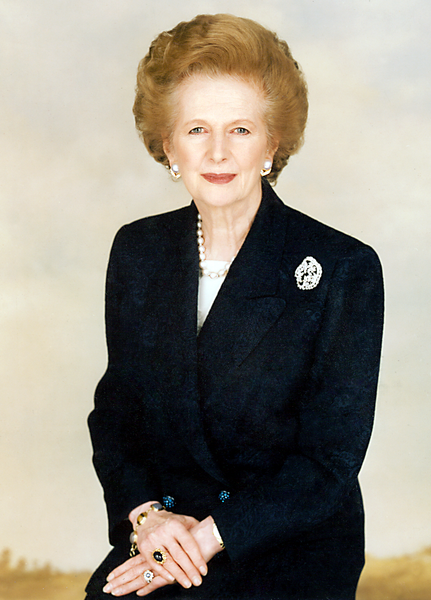
  • Margaret Thatcher – 1985 Statement on the Anglo-Irish Agreement

    Below is the text of the statement made by Margaret Thatcher, the then Prime Minister, in the House of Commons on 26 November 1985.

    I beg to move,

    That this House approves the Anglo-Irish Agreement (Cmnd. 9657) signed on 15th November by the Prime Minister and the Taoiseach, Dr. Garret FitzGerald.
    Since 1969, nearly 2,500 people have lost their lives in Northern Ireland as a result of terrorism, more than 750 of them members of the security forces. As the House is only too well aware, there has also been further loss of life among the armed forces, police and civilians in the remainder of the United Kingdom, including three of our colleagues in this House.

    That is the stark background to today’s debate and it takes us immediately to the historic divisions between the two communities in Northern Ireland, which we cannot ignore.

    Whatever the differences that may emerge in our debate, I believe that we shall all be united in our determination to end the violence and to bring to justice those who are guilty. We shall all be united in our deep sympathy for the thousands of families whose lives have been darkened by the shadow of the gunman and the bomber; and we shall all be united in our admiration and gratitude for the men and women of the security forces in Northern Ireland and, indeed, from all parts of Great Britain, so many of whom have paid the price of protecting us with their own lives.

    But it is apparent that any initiative, however modest, to bring the people of Northern Ireland closer together to beat the terrorists raises emotions and fears rooted deep in the past. I understand those fears, although I do not believe them to be justified.

    Faced with all that we have seen in the past 16 years, it was not enough for the Government to rely solely upon the security forces, valiant though they are, to contain and resist the tide of violence. Let me make it clear that there can be no such thing as an acceptable level of violence, whether in Northern Ireland or elsewhere in the United Kingdom. The Government owe a duty to the security forces and to all the law-abiding people of Northern Ireland, Protestant and Catholic alike, to do everything within their power to stamp out terrorism—not by giving in to the terrorist, not by giving him a single inch. Indeed, the fact that the terrorists have condemned the agreement is a demonstration that we have done no such thing.

    The fight against terrorism is greatly weakened if the community is divided against itself, and it is greatly strengthened if all people committed to democracy and the rule of law can join together against the men of violence. That, the Government felt, required a further attempt to reconcile the two communities in Northern Ireland.

    The Unionist community, firmly loyal to the Crown and to the United Kingdom, represent a proud tradition of devotion to the Union which everyone in these islands should respect, and which this agreement does respect. They have a right to feel secure about Northern Ireland’s position as part of the United Kingdom. This agreement, by reinforcing the principle of consent, should make them ​ feel more secure, not only today but in the future. Unionists have the assurance that neither an Irish Government, nor of course a British Government, will try to impose new constitutional arrangements upon them against their will.

    The nationalist community think of themselves as Irish in terms of their identity, their social and cultural traditions and their political aspirations. The House can respect their identity too and acknowledge their aspirations, even though we may not see the prospect of their fulfilment.

    The only lasting way to put an end to the violence and achieve the peace and stability in Northern Ireland is reconciliations between these two communities. That is the goal of this agreement.

    I now draw the attention of the House to what I consider to be the most significant points of the agreement. The preamble sets out the commitment of the United Kingdom and the Irish Republic to work for reconciliation; our utter and total rejection of violence; our recognition and respect for the separate identities in Northern Ireland; and our acceptance of the right of each to pursue its aspirations by peaceful means. These principles reflect the hopes of both communities.

    Article 1 of the agreement makes it abundantly clear that there is no threat whatsoever to Unionists’ heartfelt desire to remain part of the United Kingdom. It provides, in a formally binding international accord, a recognition by the Irish Government that the status of Northern Ireland will remain unchanged as long as that is the wish of a majority of the people of Northern Ireland. It recognises also that the present wish of a majority is for no change in that status. There can be no better reply to the fears that have been expressed in the House than this explicit recognition of the legitimacy of the Unionist position.

    Article 2 of the agreement acknowledges in a practical and strictly defined way the concern that the Irish Republic has with matters relating to Northern Ireland. In the past, that concern has sometimes been expressed in critical or negative terms which did not help the cause of harmony between the communities in Northern Ireland. Article 2, therefore, establishes an Intergovernmental Conference. This will have no executive authority either now or in the future. It will consider on a regular basis political, security and legal matters, including the administration of justice, as well as cross-border co-operation on security, economic and cultural matters.

    This co-operation will not be a one-way street. The Irish Government will be able to put forward views and proposals on certain matters affecting Northern Ireland. We for our part shall be able to pursue issues of concern to all peace-loving people in Northern Ireland. Notably cooperation in the fight against terrorism—co-operation which goes beyond the borders of Northern Ireland.

    The matters within the scope of the conference are spelled out in greater detail in articles 4 to 9 of the agreement. I should like to draw the House’s attention to three particular points about these articles. First, if devolution is restored, those matters that become the responsibility of the devolved Government will no longer be within the purview of the intergovernmental conference. We hope that the agreement will encourage the constitutional representatives of both communities to come together to form a local administration acceptable to both. This hope has been specifically endorsed by the Irish Government. My right hon. Friend the Secretary of State for Northern ​ Ireland will be exploring with the constitutional parties how best to make progress. Meantime, the Assembly continues in being, with all its statutory responsibilities.

    Secondly, article 8, which deals with legal matters, says that consideration will be given to the possibility of establishing mixed courts. Let me say straightaway that we have absolute confidence in the judiciary in Northern Ireland. Indeed, the integrity and courage which they have shown in recent years in maintaining high standards of judicial impartiality have been outstanding.

    We know the difficulties which would be involved in mixed courts both in Northern Ireland and in the republic. We recognise the reservations which are held by the legal profession. We see no easy or early way through these difficulties. That is why, although we are prepared to consider in good faith the possibility of them at some future time, we have made it clear that we are under no commitment to introduce them.

    Thirdly, I draw the House’s attention to the proposals for improved security co-operation in article 9. This provides for a programme of work to be undertaken by the Chief Constable of the Royal Ulster Constabulary and the Commissioner of the Garda to improve co-operation in such matters as threat assessment, exchange of information, technical co-operation, training of personnel and operational resources.

    The really vital element in this programme is fuller and faster exchange of information, especially pre-emptive intelligence which helps to prevent acts of terrorism.

    These are specific measures which I believe will lead to real improvements in security—improvements which will be welcome above all to those men and women who live in the border areas and who have been subjected to so many merciless attacks designed to drive them from their homes and farms.

    That improvement should be further reinforced by the Irish Government’s intention to accede to the European convention on the suppression of terrorism.

    The convention’s purpose is to ensure that those who commit terrorist offences should be brought to justice and that any offences involving the use of explosives or firearms should not be regarded as political.

    Irish accession should greatly increase our prospects of securing extradition from the republic of persons accused or convicted or terrorist crimes. This will be a major and a welcome step forward in the war against terrorism.

    I draw the House’s attention to the reference in article 12 to the possible establishment of an Anglo-Irish interparliamentary body. Both we and the Irish Government felt that this was a matter for our Parliaments themselves rather than for Governments to pursue. I hope that contacts will be established through the usual channels to consider how discussions on an interparliamentary body can most effectively be taken forward.

    I have tried to explain to the House the most significant points of the agreement. In view of some of the mistaken claims about it, I want also to say something about what is not in the agreement. The agreement does not affect the status of Northern Ireland within the United Kingdom. It does not set us on some imagined slippery slope to Irish unity, and it is nonsense to claim that it might.

    The effect of article 1 is to confirm the provision in section 1 of the Northern Ireland Constitution Act 1973 that Northern Ireland remains part of the United Kingdom as long as a majority there so wish. That again is a ​ recognition of reality. The guarantee for the majority lies in the fact that it is a majority. That fundamental point is reinforced by this agreement.

    Mr. Eric S. Heffer (Liverpool, Walton)

    I have listened carefully to the right hon. Lady. Can she explain why the Irish Government signed the agreement?

    The Prime Minister

    I believe that the Irish Government signed the agreement because they share with us its objectives: to try to defeat the men of violence and to try to achieve peace and stability for all the people who live, and who will continue to live, in Northern Ireland. If the hon. Gentleman wishes to read it, all of this is set out fully in the preamble to the agreement.

    Second, I want to make it clear that the agreement does not detract from British sovereignty in Northern Ireland—or, for that matter, from Irish sovereignty in the republic. We, the United Kingdom Government, accountable to Parliament, remain responsible for the government of Northern Ireland. Yes, we will listen to the views of the Irish Government. Yes, we will make determined efforts to resolve differences. But at the end of the day decisions north of the border will continue to be made by the United Kingdom Government and south of the border by the Irish Government. This is a fundamental point. There can be no misunderstanding.

    Third, I want to dispel the absurd notion that the Government will listen to the views of the republic on Northern Ireland matters, but not to the views of our own unionist community.

    There are already many ways in which the majority community in Northern Ireland can and do put their views to the Government. The right hon. and hon. Members of this House who represent the unionist parties are themselves an important channel. Another is the Northern Ireland Assembly, an important and experienced body which could be used to improve the arrangements for consultation. Yet another is the many representations that unionists make to Ministers. The unionist voice is clearly heard and will continue to be heard.

    If the Anglo-Irish agreement is to bring about a real improvement in the daily lives of the two communities in Northern Ireland, it must be matched by a determined effort on the part of all law-abiding citizens to defeat the men of violence. And that effort must rest on clear and consistent principles of justice, equity and fairness. For if democracy is the rule of the majority, the other side of the coin is fairness and respect for the minority, for all are citizens of the United Kingdom.

    On the economic front, we will continue to pay special attention to Northern Ireland’s needs. During direct rule, spending on economic and social programmes has risen since 1972–73 by 50 per cent. in real terms to £3,600 million last year. That amounts to nearly £2,500 a head, far more than in any other part of the United Kingdom. Spending on that scale shows the high priority given by successive Governments to the needs of Northern Ireland and its people. Our concern will continue.

    On security, our efforts will also continue. Thanks to the magnificent work of our policemen and soldiers, we have already made some progress, but we still have much to do. I believe that our security forces can take new heart from the promise of greater security co-operation that will flow from the agreement.
    In commending this agreement to the House, I should like first to pay tribute to Dr. Fitzgerald, who has worked ​ honestly and sincerely for an agreement to bring reassurance to both communities and a real prospect of peace and stability.

    Second, I say to the members of both communities in Northern Ireland that, if Parliament approves the agreement, the Government will steadfastly implement it. This House represents all the people of the United Kingdom and its decisions are binding on all of them. We shall not give way to threats or to violence from any quarter. We shall look to the co-operation of all men and women of good will who want a better future for Northern Ireland and for their families.

    Mr. Michael McNair-Wilson (Newbury)

    Before my right hon. Friend leaves the point about the accountability of Parliament, will she say whether there will be any opportunity for Parliament to know about the deliberations of the Anglo-Irish conference? Will its deliberations be made public anywhere, or debated?

    The Prime Minister

    It is not expected that everything that is said in the intergovernmental conference will be made public. I am giving consideration to how we can report to the House, for obvious reasons. We attend many intergovernmental conferences in Europe and elsewhere and usually report to the House about those that we attend. I am giving urgent consideration to this matter because I realise that there is concern about it.

    Finally, I address myself once more to those among the unionist community who have openly expressed their fears and worries about this agreement. Far from representing any threat to the union of Northern Ireland within the United Kingdom, the agreement reinforces the union, and that should bring reassurance and confidence to the unionist majority. It clearly recognises—as it should—the validity of their great tradition, and it holds out the prospect of greater success in the struggle against terrorism from which the majority have suffered so much. As one who believes in the union. I urge the unionists to take advantage of the chance offered by the agreement.

    We embarked on this agreement because we were not prepared to see the two communities for ever locked into the tragedies and antagonisms of the past. The younger generation, above all, has a right to expect more than that. The price of new hope is persistent endeavour. That is what we ask, and ask equally of all.

  • Peter Thurnham – 1985 Speech on Handicapped Children

    Below is the text of the speech made by Peter Thurnham, the then Conservative MP for Bolton North East, in the House of Commons on 25 November 1985.

    I apologise to my hon. Friend the Under-Secretary of State for keeping him up at this late hour. If he were to join those families who have chosen to adopt a handicapped child, he might get used to it. Before then, he would have to get through the hurdle of being approved by the local authority. One is asked whether one has secure employment. I hope that my hon. Friend feels, as I do that there is no reason to suppose that our employment is anything but secure.

    I am pleased to have the opportunity to bring this subject up for five reasons.

    First, this is the month that the British Agencies for Adoption and Fostering has launched its appeal for £200,000 towards its excellent work in placing children with special needs. This month we are celebrating the 2,000th placing in 17 years.

    Secondly, 1985 is the year in which the Exodus campaign has reminded us that many hundreds of children are still in long-term care in mental hospitals, despite repeated claims by Ministers over many years that they are not the right environment in which to bring up children.

    Thirdly, this is the year in which BAAF has produced an excellent publication—”Against the odds: adopting mentally handicapped children” by Catherine Macaskill. I have a spare copy if my hon. Friend the Under-Secretary of State would like to glance at it. The author describes the timing of this study as crucial to the changes that have occurred earlier in the United States and the revolution that is occurring in this country.

    Fourthly, this year has seen a great crusade for the sanctity of human life. More than 2 million signatures were on a petition presented to the House. This has occurred at the same time as BAAF’s director, Mr. Tony Hall, has appealed about the desperate shortage of families willing to take the children who are in long-term care.

    Fifthly, there is my personal interest, arising out of having fostered a handicapped child for two years. I hope that adoption can soon take place.
    My purpose in requesting this debate is, I regret to say, to make the usual call for more funding. I hope that my hon. Friend will listen particularly to the special reasons for my plea, because he is probably aware that I have not often called for more Government expenditure. I should like to link that with a request for more centralised co-ordination of services for handicapped children who need placement families.

    I think that I share a common purpose with the Government. In a recent letter, Baroness Trumpington wrote to the leader of the Exodus campaign, Mrs. Peggy Jay, stating:

    “We do have a common purpose, to achieve better alternative provision for mentally handicapped children at present in hospital. The only difference between us is in how this can best be achieved.”

    Much of the present spending is wasted. We do not have the exact figures, but it must be costing more than £10 million a year to keep 1,000 children in long-term residential care in NHS hospitals in England, Wales, Scotland and Northern Ireland and a similar sum to keep children in long-term care in local authority homes. This ​ money will be wasted if it fulfils an objective that runs counter to the Government’s policy that children should not be there in the first place.

    I link my appeal with humanitarian grounds. In 1946, nearly 40 years ago, the Curtis committee said that these children are the most deprived of all, yet we are still debating the subject. Government Ministers have said repeatedly that the Government’s aim is to get these children out of long-term hospitals. Cmnd. 9674 which was published last week states that the Government’s aim is to get all long-stay children out of hospitals for the mentally handicapped. They have asked all health authorities to ensure that these children are identified and that their needs are reviewed jointly.

    We have a common purpose, but I question whether the Government’s policies are working satisfactorily. My experience is that with these children it is more like the game “Pass the parcel.” The policy of leaving this job to local authorities is not working. The evidence is contained in the Government’s survey of local authority social services for handicapped children. If my hon. Friend the Parliamentary Under-Secretary of State has not yet had an opportunity to refer to this document I can show him a copy. It refers to the work being done by local authorities.

    May I also refer my hon. Friend to Catherine Macaskill’s book and to my personal experience. Catherine Macaskill’s book contains 20 case studies. Nine of the families first approached voluntary agencies while 11 of them first approached local authorities. The 11 families who approached local authorities saying that they were interested in taking a handicapped child were rejected. It was only when those 11 families approached voluntary agencies that they were given any sort of encouragement. The local authorities told them nothing at all or fobbed them off with unhelpful remarks.

    The attitude of social workers can be too negative. May I refer my hon. Friend to page 94 of Catherine Macaskill’s study. She describes what it is like for a family that says that it would like to adopt a second handicapped child. Such families are regarded as being not only singularly odd but doubly odd. She said:

    “Applicants for a second handicapped child were not generally viewed favourably. Some adoption workers expressed the view that the stress associated with integrating one handicapped child was more than enough for any family. One project leader had no hesitation in expressing her verdict: ‘Im dubious about it. I think we need to think about how the family look in the community. If a family adopt one handicapped child, they are considered odd — if they adopt two, they’re considered even odder.’”

    Of the few adoptions of children who have been difficult to place that my local authority has arranged in Bolton, half of them went to one family. This shows the division between what families are able to offer and what some local authorities are prepared to understand.

    My experience was that after telling the local authority that we were interested in fostering or adopting a handicapped child nothing happened for two years. We discovered later that 30 miles away the same local authority had at the same time been advertising a child for 18 months. We found out about the child who is now with us only when we were on holiday in Majorca. We read an advertisement in The Guardian. The same local authority was dealing with us and with that child, but two different offices were involved. There was a complete lack of liaison.

    I called upon the excellent officer in charge of social services in Bolton, North-East, Miss Barbara Swayles, and asked her whether she knew of any handicapped children who needed to be adopted or fostered. She made inquiries and said that there was none. The following week I visited the Elizabeth Ashmore home for handicapped children in Bolton. It is run by an excellent lady by the name of Mrs. Jean Farnworth. I asked her if she had any handicapped children who were in need of fostering or adoption. She said that she had three and that she had been looking for parents for them for up to five years, and yet a divisional officer of a different division only two miles away, although still within Bolton local authority, did not know about them.

    The social worker responsible for those children told me that the local authority had for years been making vigorous efforts to place those children. How vigorous can those efforts have been when they were so completely unsuccessful? We must regard such children as the truly forgotten children.

    The Government’s study shows a number of weaknesses. To start with, it does not contain one number. It is one of the most extraordinary documents that I have ever read. That is brushed off with the explanation that there was great difficulty in collecting reliable information.

    I refer my hon. Friend to paragraph 7.222. It states:

    “The chances of a handicapped child being placed in a substitute family varied widely from place to place.”

    We can see why from what I have just said.

    Paragraph 7.228 states:

    “Adoption of handicapped children is achieved very rarely.”

    That is hardly surprising.

    Paragraph 7.410 says, “Pressure of work”—one wonders what work it was—

    “prevented one authority from taking into care any children in hospital who had lost touch with their parents.”

    What work could that local authority have been doing that was more important?

    Page 89 of the Government’s report recommends:

    “Every local authority department should consider fostering and adopting.”

    That is a weak recommendation. Page 90 deals with, “Children with profound handicap.” That chapter does not mention fostering or adopting. It confirms the view held by many social workers that the more difficult the child’s need the more unlikely it is that the child can be placed. That is contrary to what Catherine Macaskill found. She found that the challenge that the more profoundly handicapped children present to would-be adoptive parents makes them in many cases keener to take the children who have the greatest needs, and yet local authority workers tend to view them as the ones least likely to be placed.

    Is my hon. Friend satisfied with the points that have emerged from the survey? Does he not consider that it shows that there is a failure by local authorities to collect the parcel that the Government are offering them? Does he think that it displays a failure by the staff in his Department fully to understand the potential of placing children with difficult needs? The social workers are failing to understand the revolution that is occurring. It started in America and it is now here. It is most important that people recognise that fact. The Government’s survey ​ also pointed to the need for legislation to tidy up uncertainties. I would be grateful if my hon. Friend would comment on that point.

    I would like the Government to review their policy on this matter and to estimate the cost of setting up a standard national minimum adoption allowance. BAAF called strongly for that. It is felt that the present system is crazy. In the United States, the adoption of children with special needs by low income families has been made much more possible by the standard adoption allowances that prevail there. Only 65 of our local authorities out of 128 have approved adoption schemes. That is 10 years after the Children Act 1975 was passed. That does not take account of special needs because the Disablement Income Group has estimated that it costs £130,000 to bring up a severely handicapped child compared with £70,000 for a normal child.

    The present scheme is described as experimental and it is due to lapse in 1989. Does my hon. Friend think that it is now time for the Government to grasp the nettle and introduce a standard national minimum allowance for adoptive parents? If we set the figure at £50 a week and enabled another 1,000 families to take children it would cost £2·5 million a year. The numbers are difficult to get at. The Government have access to a lot more information, and I challenge them to produce a costing.

    Attempts have been made to get the figures, and local authorities have told the National Foster Care Association that they would be willing and able to submit figures of payments to foster parents of handicapped children in their returns to the DHSS. I was shattered to learn from a written answer by my right hon. Friend the Minister for Health on 20 November that the Government did not feel that the information was necessary. As the local authorities say that they are willing and able to provide the details, it is offhand for the Government to say that they do not want them.

    We have some information about the numbers. It is estimated that between 2,000 and 3,000 severely mentally handicapped children are born each year in the United Kingdom; there are also about 2,000 abortions of what would have been severely handicapped infants. The vast majority of severely handicapped children live with their natural parents and the support services are much welcomed, but the work done by Madeline Simms at the Institute for Social Studies in Medicine shows the strains on many of these families. In a recent survey reported in The Lancet on 2 November, she showed that two thirds of mothers of mentally handicapped young adults said that they wished they had had an abortion. That shows the acute need for post-adoptive services to encourage would-be adopters.

    We know that it costs up to £20,000 per annum to keep a child in institutional care in London, and the latest figures that I have for Bolton show that it costs £19,000 per annum to keep a severely mentally retarded child in institutional care there. I hope that the Government do not underestimate the cost of transferring children from the NHS. I note that the White Paper issued last week showed that the money available had been increased from £9 million to £10·5 million, to be made available over an unspecified period, but that is a paltry subsidy for children who must be costing the NHS at least £10 million a year. Professor Lawrence of Cardiff recently estimated the lifetime cost of caring for a Down’s syndrome child at £250,000. Against those costs, £2,000 to place a child in ​ the BAAF “Be my Parent” book seems paltry, yet many local authorities claim that they cannot afford even the modest proportion of that fee which BAAF charges them.

    I recommend the Government to review policy in this area and introduce a national minimum adoption allowance, on the United States model, without delay. That would allow BAAF to get on with promoting its schemes nationally. The Government should also recognise the inability of local authorities to make placements of children with special needs. Each child is different, and each family is different. It is not easy to link the two. The policy of leaving that task to local authorities is clearly not working.

    I urge the Government to increase the grant to BAAF and the other voluntary services, such as Parent to Parent and Parents for Children, which do such excellent work. I am sure that a double grant would be cost effective. I also ask the Government to produce additional funds for post-adoptive services, especially for adolescents. Workers in this area say that there is a vacuum when children reach 18 or 19. Many parents adopting handicapped children must wonder what will happen when the children reach that age.

    I do not believe that local authorities can co-ordinate joint services properly. Surveys show how they are struggling, and the recommendations of the 1976 Harvie committee have still not been implemented.

    One of the most important aspects of post-adoptive services is respite care, which could help to avoid a number of the breakdowns that might occur if more children were placed. The Parents for Children survey showed that 14 of 89 placements over eight years broke down for this and other reasons. I recommend that there should he at least one place for each 12 who are mentally handicapped, so that the necessary care can be provided. I look forward to seeing the Government’s resources guide, which I understand is to be published shortly.

    I wonder whether my hon. Friend could persuade other newspapers to follow the lead of The Guardian, which carries a monthly advertisement of a child in need? Does he agree that the Daily Telegraph would be a much better newspaper if it showed the same enlightened attitude? If standard adoption allowances were introduced, does my hon. Friend accept that that would be an excellent basis on which to advertise in The Sun as well? We could have a page 3 Sun child of the week.

    The Exodus campaign should be recognised now by publicising the list of local authorities, and not merely a list of health authorities, with children in long-term care. That would enable pressure to be brought on the local authorities with any new legislation that may be necessary to help us transfer children who are in National Health Service hospitals.

    I am grateful to have had the opportunity of initiating this Adjournment debate at such a critical time. I look forward to my hon. Friend’s reply. I hope that the clock has not been running too fast in the limited time that is available to us.