Tag: 1984

  • Barbara Castle – 1984 Comments on the State of the Rail Network in the 1960s

    Barbara Castle – 1984 Comments on the State of the Rail Network in the 1960s

    The comments made by Barbara Castle in her 1984 book “The Castle Diaries 1964 -1970” as a background to the diary entries themselves.

    Nor had the railways been denationalised, merely decentralised. The 1962 Act had wiped out some of British Rail’s debt and then instructed it to pay its way. The Beeching Report, published in 1963, showed that this was to be done by drastic pruning of the network with over 2,000 stations and a third of the route mileage being eliminated. This had caused an outcry not only in the Labour Party, but among local communities.

    Labour spokesmen had bitterly opposed the 1962 Act as leaving transport without any unifying authority of any kind and I therefore faced demands from the Party and the unions for the re-establishment of the BTC, for the re-nationalisation of road haulage and for the reversal of the Beeching closure policy. While strongly believing in integration I felt we had to take account of transport developments since the 1947 Act. In the first place there was little evidence that the BTC umbrella structure has succeeded in integrating road and rail movements. Secondly, the nationalisation of road haulage had meant acquiring hundreds of small firms with inferior vehicles at excessive cost. It seemed better to encourage THC to continues its steady expansion of BRS by buying worthwhile firms and vehicles. Thirdly an explosion in the use of road transport – particularly the private car – had taken place. In 1947 there were only 3.5 million vehicles on the road, including nearly 2 million private cars, so the railways played the predominant role in the transport of passengers and goods. By 1964 the number of road vehicles had risen to over 12.5 million, including 8 million private cars, and the Road Research Laboratory was forecasting an increase to over 18 million cars by 1975. There had been a dramatic switch in transport of all kinds from rail to road, including a big expansion of C licences held by traders carrying their own goods. Recognising that it was no use nationalising road transport if own-account operators were to be left uncontrolled, the Labour Government in 1946 had at first announced that no C Licence holder was to be allowed to operate beyond  a radius of forty miles without special authority, but in the face of an outcry by industry it had lost its nerve and agreed to free own-account operators from any restrictive licensing.

    In such a situation it was no use trying to turn back the clock. I refused to be a King Canute, trying to force people onto railways which could not take them where they wanted to go. If the private car had brought the boon of mobility to millions of people, which it clearly had, then that boon should be available to everyone. We then must collectively faced the consequences and deal with them through new arrangements which reflected the new facts.

    In the first place we had to decide what size railway system we wanted in the new situation, how to subsidise it and how to get more traffic from road to rail. One obvious way was through the liner train concept which Dr Beeching had launched: the need to get away from small, slow waggon-load consignments of freight to a modern door-to-door through service by fast trains carrying containers, in which sundries traffic had been loaded at special depots for easy transfer from lorry to rail. But this hopeful development had been bedevilled by the question of ‘open terminals’. The BRB and the Government, anxious to get the highest return on their investment in the new container terminals, wanted them open to all-comers. The National Union of Railwaymen, fearful of redundancies for its members, wanted access limited to BRS and BR cartage vehicles. So the adoption of the new method had been stymied and this was one of the problems I had to solve.

  • Queen Elizabeth II – 1984 Christmas Broadcast

    Queen Elizabeth II – 1984 Christmas Broadcast

    The Christmas Broadcast made by HM Queen Elizabeth II on 25 December 1984.

    Last June, we celebrated the 40th anniversary of D-Day. That occasion in Normandy was a memorable one for all of us who were able to be there. It was partly a day of sadness, as we paid our respects to those who died for us, but it was also a day full of comradeship and hope.

    For me, perhaps the most lasting impression was one of thankfulness that the forty intervening years have been ones of comparative peace.

    The families of those who died in battle, and the veterans who fought beside them in their youth, can take comfort from the fact that the great nations of the world have contrived, sometimes precariously maybe, to live together without major conflict. The grim lessons of two world wars have not gone completely unheeded.

    I feel that in the world today there is too much concentration on the gloomy side of life, so that we tend to underestimate our blessings. But I think we can at least feel thankful that, in spite of everything, our children and grandchildren are growing up in a more or less peaceful world.

    The happy arrival of our fourth grandchild gave great cause for family celebrations. But for parents and grandparents, a birth is also a time for reflection on what the future holds for the baby and how they can best ensure its safety and happiness.

    To do that, I believe we must be prepared to learn as much from them as they do from us. We could use some of that sturdy confidence and devastating honesty with which children rescue us from self-doubts and self-delusions. We could borrow that unstinting trust of the child in its parents for our dealings with each other.

    Above all, we must retain the child’s readiness to forgive, with which we are all born and which it is all too easy to lose as we grow older. Without it, divisions between families, communities and nations remain unbridgeable. We owe it to our children and grandchildren to live up to the standards of behaviour and tolerance which we are so eager to teach them.

    One of the more encouraging developments since the war has been the birth of the Commonwealth. Like a child, it has grown, matured and strengthened, until today the vision of its future is one of increasing understanding and co-operation between its members.

    Notwithstanding the strains and stresses of nationalism, different cultures and religions and its growing membership, the Commonwealth family has still managed to hold together and to make a real contribution to the prevention of violence and discord.

    And it is not only in the Commonwealth that progress has been made towards a better understanding between nations. The enemies of 1944, against whom so many of our countrymen fought and died on those beaches in Normandy, are now our steadfast friends and allies.

    But friendship, whether we are talking of continents or next door neighbours, should not need strife as its forerunner.

    It is particularly at Christmas, which marks the birth of the Prince of Peace, that we should work to heal old wounds and to abandon prejudice and suspicion.

    What better way of making a start than by remembering what Christ said – “Except ye become as little children, ye shall not enter into the Kingdom of Heaven”.

    God bless you and a very happy Christmas to you all.

  • Queen Elizabeth II – 1984 Queen’s Speech

    Queen Elizabeth II – 1984 Queen’s Speech

    The speech made by HM Queen Elizabeth II in the House of Lords on 6 November 1984.

    My Lords and Members of the House of Commons,

    I look forward with great pleasure to receiving the President of Malawi and the President of Mexico on State Visits during the next twelve months, to paying a State Visit to Portugal in March, and to visiting the Caribbean in the autumn on the occasion of the Commonwealth Heads of Government Meeting in the Bahamas.

    My Government consider as their highest priority the maintenance of national security and the preservation of peace. They will accordingly continue to play an active part in the Atlantic Alliance. They will promote Western defence interests outside the NATO area. They will make vigorous efforts to combat international terrorism.

    With the allies of the United Kingdom, my Government will contribute to arms control and disarmament negotiations and will work for the resumption of negotiations where these have been broken off. They will work continually for a greater atmosphere of trust between East and West.

    Following the agreement at Fontainebleau on the fairer sharing of the Community’s budget burden and on the overall control of Community spending, my Government look forward to the further development of the European Community. They will continue to press for improvements in the Common Agricultural Policy and for completion of the common market in goods and services. They will work for the early conclusion of the negotiations to enable Spain and Portugal to join the Community, and to conclude a new agreement to succeed the Lomé Convention.

    My Government will continue fully to discharge their obligations to the people of the Falkland Islands, while seeking more normal relations between this country and Argentina. They will consider the views expressed by the people of Hong Kong on the draft agreement with China, and report to Parliament. They reaffirm their commitment to the people of Gibraltar and hope to see the early implementation of the Lisbon statement.

    My Government will continue to work for a settlement in Namibia, a solution to the Arab/Israel dispute and the restoration of the independence and non-aligned status of Afghanistan.

    My Government will continue fully to support the Commonwealth, to play a constructive role at the United Nations, to maintain a substantial aid programme, and to encourage investment in developing countries.

    My Government will continue to work closely with other nations and international institutions to strengthen and spread economic recovery; and to co-operate on issues connected with the settlement of international debts.

    Members of the House of Commons,

    Estimates for the Public Service will be laid before you.

    My Lords and Members of the House of Commons,

    My Government will continue to pursue policies founded on sound money and lower public borrowing and aimed at securing a further reduction in inflation. While noting that the numbers of people in work are steadily rising, my Government remains deeply concerned about unemployment and will continue policies designed to achieve better opportunities for employment and to help the unemployed obtain the training or work experience needed to fill them.

    Firm control of public spending will be maintained. My Government will work for a more flexible and competitive economy through lower taxation, further reform of the tax system, increased efficiency in the public sector and encouragement of initiative and enterprise which will sustain rising living standards.

    In order to promote efficiency and growth, my Government will continue their policies of exposing state-owned businesses to competition and, where appropriate, returning them to the private sector. A Bill will be introduced to increase competition in the provision of local bus services in Great Britain and to transfer to the private sector the operations of the National Bus Company.

    A Bill will be introduced to increase competition in retail banking by completing the transition of the Trustee Savings Banks to private sector status.

    Bills will be introduced to reform insolvency law in England and Wales, and in Scotland, and to remove the statutory levy on cinema admissions and establish an environment for the film and cinema industries free from regulation.

    A Bill will be introduced to abolish the Greater London Council and the metropolitan county councils.

    Legislation will be introduced to extend the franchise to certain British citizens resident abroad, to change absent voting arrangements in order to enable those on holiday to vote, and to increase the parliamentary election deposit but reduce the threshold for forfeiture. A Bill will be introduced to establish a national prosecution service independent of the police in England and Wales and to enable the Attorney General to refer Crown Court sentences for the opinion of the Court of Appeal. A further Bill will establish a new and comprehensive statutory framework governing the interception of communications.

    Measures will be introduced for the administration of justice in England and Wales and making further reforms in the law following reports of the Law Commission. There will be a measure dealing with the international aspects of child abduction and the custody of children.

    A Bill will be introduced to improve the occupational pension rights of people who leave schemes before pensionable age and to ensure that members are able to obtain information about their schemes.

    Legislation will be introduced for the better protection of food and the environment.

    A Bill will be introduced to give parents of children educated at public expense the right to exempt them from corporal punishment. My Government will continue to develop policies to raise educational standards.

    My Government will encourage the constitutional parties in Northern Ireland to consider how powers can be restored to local administration on a basis acceptable to all sides of the community, and will seek to maintain good relations with the Government of the Republic of Ireland. The security forces will continue to receive my Government’s full support. Legislation will be introduced to prevent personation at elections in Northern Ireland.

    Bills will be introduced to establish trustee bodies to manage certain Scottish institutions, and to reform Scots law, including provisions on matrimonial property and financial provision on divorce, following Reports by the Scottish Law Commission.

    Other measures will be laid before you.

    My Lords and Members of the House of Commons,

    I pray that the blessing of Almighty God may rest upon your counsels.

  • Colin Shepherd – 1984 Speech on Leptospirosis

    Below is the text of the speech made by Colin Shepherd, the then Conservative MP for Hereford, in the House of Commons on 11 April 1984.

    I am very grateful to my hon. Friend the Parliamentary Secretary for coming to the House this evening to discuss the—to me—very interesting subject of leptospirosis, and cattle-associated leptospirosis in particular. We can both heave a sigh of relief that we are here at a modest hour and not early in the morning, as has been the case of late.

    My hon. Friend will know that among the many important functions—and there are many—which go on in Hereford, the Public Health Laboratory Service has its leptospirosis reference unit. It is very much as a consequence of the work done by that unit, and by Dr. Sheena Waitkins in particular, that I have sought to utilise this opportunity to draw attention to the concern which should be shown in the dairy sector of the farming community in respect of one particular strain of leptospirosis—cattle-associated leptospirosis.

    In this matter the interface between this House and departmental responsibility is complex. The disease is one which affects cattle, with associated problems of cattle suffering abortion and milk loss, together with financial loss for farmers. It is also capable of being easily transmitted to man. The evidence points to a greater level of infection than was previously apparent.

    My purpose in drawing attention to the various interrelated problems is, first, to increase agricultural awareness of the disease; secondly to increase medical awareness of the condition; and, thirdly to sound out my hon. Friend—who is the Minister with particular responsibility for animal health matters—on the possibility of developing a programme of containment of the disease at source, that is to say, to deal with before it leaves the infected cattle.

    I raised the matter with my hon. Friend the Parliamentary Under-Secretary of State for Health and Social Security, who gave me a somewhat disappointing reply on 27 March. He said that he was satisfied that GPs have an adequate knowledge of the risks of the disease, especially in dairying areas.”—[Offical Report, 27 March 1984; Vol. 57, c. 133.] My hon. Friend the Parliamentary Secretary has no responsibility for the replies of a Minister in another Department, and I would not ask her to comment on that reply. It is worthwhile noting, however, that the disease is being discovered by those medical practitioners who have become attuned to look for cattle-associated leptospirosis. Other doctors may mistake it for flu.

    One Herefordshire milk producer, with a herd of 130 milkers, contracted human leptospirosis or CAL. His herd became infected in 1982, and he contracted the disease. He became very poorly. Because the illness was not like ordinary flu, his wife called in the doctor. The doctor said that it was a bad case of flu. He said, “It’s just a case of sweating it out.” The next day, the cowman went down with the disease and a standby cowman was called in to help with the milking. Four days later, the standby cowman, too, fell ill. Because of the dairy connection, his doctor, who lived in Hereford, suspected brucellosis, and treated him with penicillin. Because penicillin deals with CAL as well as brucellosis, the cowman recovered speedily. When his blood sample was sent to the reference unit and showed leptospirosis, Dr. Waitkins became aware of the problem. She went out to the farm, took blood samples and found that the producer and his cowman had the same problem. A few days later, after taking tablets and penicillin, they had begun to recover.

    That milk producer said, I have never had anything like it before. The NFU and the farmworkers’ union should press for urgent research into this disease, and if eradication is shown to be possible then they should be supported to the hilt. He had had a blinding headache, worse than anything he had ever known before. It was so bad that he could not bear to touch a single hair. He was miserably feverish—hot and cold—and poured sweat in torrents to no avail. One can understand his sentiments. Two years later, he still has to wear a woolly hat to keep his head warm, and so does his cowman.

    Today, when the dairy industry is under severe pressure, it is relevant that the economic losses which the disease can cause are also severe. One farmer in the Welsh borders with 250 cows lost some £11,000 in 18 months in 1980 and 1981. That was accounted for by 21 dead calves, half the normal milk yield from 10 cows that calved early, replacements for two dead cows which had developed chills while ill, lactation loss from 80 cows—the average loss being two and a half litres for 150 days—and milk from 80 cows held back for three days following antibiotic treatment.

    Another producer near Ludlow recently aggregated the losses that he had suffered at about £15,000 on his herd of 230 cows. Such losses are in no way inconsequential.

    A logical progression from the human and economic factors that I have outlined must take one to the conclusion that prevention is better than cure. But one might ask whether there is in fact a real problem to prevent.

    As brucellosis recedes into the past because of the extremely successful eradication of the problem, the wider extent of the human aspect of CAL is becoming more apparent. It has certainly been cloaked before. In a recent written answer I was told: The increase in cattle-associated infections”— of leptospirosis— in 1983 is thought to be due largely to increased awareness of the disease in the farming community and not to an increase in the disease in herds.”—[Official Report, 20 March 1984; Vol, 56, c. 424.] So far, so good, but the work done by Dr. Waitkins of the leptospirosis reference unit points to the probability that at least one third of Britain’s dairy herds are infected or show serological evidence of past infection. That shows that the problem could be far more serious than has hitherto been appreciated. In economic terms, that means that one third of dairy farmers will at some time stand to lose a lot of money. There seems to be an incipient problem which, if the experience of New Zealand is anything to go by, could increase. The rate of infection there is 90 per cent., and climatic conditions are not dissimilar to ours.

    Our Herefordshire milk producer who suffered asked for urgent action. In New Zealand it was the farmers’ wives who showed the greatest anxiety. It was the women’s division of the New Zealand Federated Farmers, the equivalent of the women’s section of the National Farmers Union, which built up the pressure for action. Action is being taken and vaccination is becoming much more frequent. Indeed, as many as 50 per cent. of cows in New Zealand are now vaccinated. Hitherto, vaccines have not been available in the United Kingdom although they have been made here. I am given to understand, however, that vaccines are now available for British herds. That is encouraging news. I do not want to pre-empt anything that my hon. Friend the Minister might want to say, but, as Dr. Waitkins put it: Once there is a vaccine for animals then the human problem should be reduced. Whilst vaccines don’t totally eracicate leptospira, treated cows become such low rate shedders that their urine does not contain enough bacteria for humans to be at risk. New Zealand is well ahead of the United Kingdom in the war against leptospirosis—as it should be with its 480 cases in humans which are notified each year. Although we have so far examined only the tip of the iceberg with our 40 cases last year and 100 cases in the past six years, it is probable that there are many more unnoticed and therefore unnotified cases. I do not want our problem to grow to the level of New Zealand’s. I am therefore asking my hon. Friend to do all that she can to promote understanding of the problem and to develop a vaccination programme, as the more vaccination that is carried out, the cheaper will be the cost to dairy farmers.

    One of the inhibitory factors so far has been the cost of vaccine. I should also like the Ministry’s advice service to draw farmers’ attention to the economic benefits of vaccination. The present anticipated cost of £4 per cow per year seems a good investment when compared with possible losses of £10,000, as has been experienced in several farms. I should also like there to be the provision of a continuous reporting system on Leptospira in the farming community, which involves collaboration between the central veterinary unit, the communicable disease surveillance unit and the Leptospira reference unit in Hereford.

    This would have the effect of broadening the base of knowledge of what is going on in the farming community and determining from that the direction that further research ought to take in order to get a full understanding of the nature of the disease and what needs to be done.

    Action now can prevent much bovine and human misery, and I will draw my remarks tonight to a close by giving the last word to that disease-hit Hereford dairy farmer, who said: We were told that all three of us had only a mild leptospirosis problem, but you can take it from me even the mild attack was agony. Anyone who comes in contact with cows should keep Leptospira in mind if their doctor blandly tells them they have ‘flu. That is the nature of the problem. It is the reality of the interface between the two areas, and I believe that the answer lies in terms of animal health, to get at the problem at source.

  • Jeremy Corbyn – 1984 Speech on Care of the Elderly

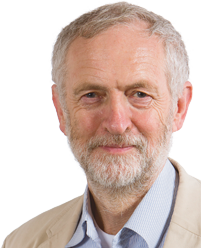
    jc-small

    Below is the text of the speech made by Jeremy Corbyn in the House of Commons on 22 February 1984.

    I shall attempt to be brief. It is a shame that so few hon. Members can participate in the debate. My hon. Friend the Member for Oldham, West (Mr. Meacher) pointed out that there was a link between Health Service cuts, the effects on local social services and the effects on the elderly within each community. The council in the area that I represent has just been told by the Government that its social services budget is being overspent by well over 30 per cent. and that it is spending too much money on providing for the needs of the elderly. Yet the services for the elderly provided by Islington council, excellent as they are in many ways, are insufficient and do not meet the demands and wishes of councillors, the director of social services and others.

    The council provides 900 meals on wheels. 1,700 elderly people’s holidays, 2,674 households with home helps and 285 places for elderly people in day centres. Obviously, the cost of those services is considerable. It is incredible that, considering the borough’s needs and the increasing dependence of elderly people on the council to provide services, the Government should be telling the council to make cuts.

    On a first look at the demographic pattern of arty inner city area Ministers and many civil servants would say that there is a continual outflow of population from the boroughs. In many cases, that is true. An increasingly elderly and single population is dependent on local authorities to look after it. A document produced in 1982 by Islington council’s social services programme plan working party states: The elderly now form a higher proportion of our population than they did 10 years ago, since emigration from the borough has been mainly by adults and children, leaving the elderly with less support from their families and neighbours. The number of single-pensioner households has decreased from 10,563 in 1971 to 10,170 in 1981. More importantly, the proportion of such households has increased. In 1971, single-pensioner households formed 13.7 per cent. of all households in the borough, while in 1981 they formed 16 per cent. In 1971, people over retirement age formed 15 per cent. of the total population; in 1981, they formed 17.3 per cent. It is important to emphasise that the great majority of the elderly do not require, or do not use local authority services; but when other support to the elderly becomes less available from family and neighbours then increasingly the Social Services Department is asked to fill the gaps, particularly when Health Service bed norms fail to reflect the significance of high proportions of single pensioner households. Local authorities are facing an increasing demand upon their services and a demand for better services and more imaginative use of homes for the elderly. Like my hon. Friend the Member for Wolverhampton, North-East (Mrs. Short), I have often been in old people’s homes. I have been profoundly depressed not just by the conditions within them — I am talking of homes throughout the country—but the attitude that leads us to force people to live in old people’s homes with a colour television blazing away in the corner as a piece of moving wallpaper and with people not participating in arty activity in the homes. That promotes and provokes senility.

    We need a more imaginative approach towards care for the elderly and a recognition of the growing needs of the ethnic minority elderly communities in many parts of London and the major cities. I am pleased that my area has formed an elderly persons’ luncheon club for retired West Indian people. The same is happening in many other places. It is incredible, and it makes me angry, that many old people in my constituency who rely entirely on the local authority to provide services for them do not have any relatives living nearby. They are not in a position to buy luncheon club facilities, to have meals on wheels delivered to them or to pay for maids or other people to come in to help. We do not have a huge, generous, middle class able to provide daily volunteers to do the work for the elderly. Unlike the case referred to by the hon. Member for Mid-Kent (Mr. Rowe), who spoke on behalf of Kent county council, the local authority and political system in my area is determined to provide for all our old people.

    We resent the Government’s attitude when they say that Islington is spending £9 million too much on its social services when there is clearly a demand for them. That figure has not just been thrown at Islington council; nearly every London social service department has been told that it is spending well over the Government’s grant-related expenditure assessment formula. This is a scandal. If Conservative Members are serious about caring and supporting the elderly in a decent and humane way, they would not be imposing spending cuts on local authorities or attempting to control their spending.

    Conservative Members have been quick to tell us that there have been no Health Service cuts. I challenge and refute that. A further £163 million is required for the National Health Service to provide for the elderly. As the motion points out, we are looking for a comprehensive policy on care for the elderly. That means an end to the attacks on local authorities that are trying to provide services, an end to the cuts and closures in the Health Service and a different attitude towards transport, mobility allowances and bus passes.

    Mr. Winnick Does my hon. Friend agree that one of the most unfortunate aspects of the Minister’s speech, and his sneering remarks about 1945, was his refusal to recognise that many advances have been made in the care of elderly people since 1945? With a Labour Government, with a large majority, 1945 was a watershed in the provision of services by the state and local authorities. Without such provisions the elderly would be far worse off than they are at present.

    Mr. Corbyn I thank my hon. Friend for that intervention. The Government’s policies of controlling local authority spending, cutting National Health spending and promoting private medicine and care for the elderly are a return to the workhouse. The only difference is that it is a capitalist workhouse rather than a discreet workhouse stuck away in the hills outside the town.

    Last week saw the culmination of a massive campaign by pensioners throughout London, who are determined not to lose their concessionary bus and train passes, and who are determined not to see the gains won for them by a Labour-controlled GLC in 1973 swept away by the London regional transport authority.

    We must recognise the other matters that are affected by the Government’s change in policy. If cuts are made in public spending on the elderly or people in the Health Service, many relatives will be forced to look after elderly people. That care is often inadequate because the relatives cannot do the work. Women are forced to give up work to nurse elderly relatives. The problem caused by women having to give up jobs to look after elderly relatives is growing. One hears of unpaid carers giving up their work to look after elderly relatives without support or recognition from the state, despite lectures about bounteous volunteers.

    I have heard of people in their sixties and seventies being full-time carers for elderly patients in their nineties. That will become worse unless the Government change their attitude towards the elderly and recognise the work done in homes for the elderly, by meals on wheels workers and home helps. I am sponsored by the National Union of Public Employees. The Government have said that those workers are not worth £100 a week for the jobs they do and the dedication they show. They are subjected to moral blackmail, in the way that Health Service workers were two years ago.

    In addition to forcing local authorities to cut their spending, we have the Government’s privatisation policy. There is a growing number of residential and nursing homes for the elderly. Conservative Members have asked what is wrong with them. I believe that there are two things wrong. First, I am not satisfied that the DHSS has the resources or the capability, or is prepared to provide them to enable local authorities to undertake the necessary tight supervision and inspection of those homes to ensure that they adopt progressive caring policies. Secondly, there is motive. If there is a local authority home with a caring policy for the elderly, the motive is clear. The people who work in that home, who manage and administer it, are doing so because they care for the elderly and wish to see them looked after.

    The motive in operating a private home—not from the point of view of the staff but from that of the owners —is simply to make money out of care for the elderly. I reject the idea that one can privatise care for the elderly, which is what Conservative Members in their arrogant way continually tell us.

    Mr. Boyes Does my hon. Friend agree with the Association of Directors of Social Services, which says that the system is unfair and that the Government are prepared to allow private money to be poured into these homes whereas local authority homes are continually monitored by expensively paid auditors? On the one hand, private owners can provide even poorer services and get away with it, while, on the other, local authority homes are continuously under pressure.

    Mr. Corbyn My hon. Friend has hit the nail squarely on the head. The Government are restricting money for publicly run, publicly owned and publicly administered homes for the elderly yet at the same time are encouraging the development of private homes for the elderly without imposing the same conditions on them.

    My own authority has been told that it is 33 per cent. over budget on social services. When the Minister kindly finds the time to visit my borough, or any other poor inner city areas, he might care to tell the people which home for the elderly should be shut, how many home helps ought to be dismissed from post and where exactly the cuts should be made.

    Mr. Kenneth Clarke The hon. Gentleman’s whole speech is based on the ridiculous claim that his borough is in trouble for overspending solely because of its caring policies for the elderly. It is in trouble because of the totality of its spending. Islington is notorious for the money that it pours into crackpot political groups and the curious hiring of fringe officials to perform unnecessary duties on behalf of the borough. Does not the hon. Gentleman accept that something must be done to tackle Islington’s wasteful expenditure so that it can maintain the services and reduce the rate burden for some of its elderly population?

    Mr. Corbyn The Minister, who is a member of a Government who are promoting the Rates Bill, which seeks to control local authority spending, shows a worrying misunderstanding of the way in which the GREA formula works. That formula is specified department by department. My borough, along with others, has been told that it is overspending on social services. I am not talking about the totality of its spending. Indeed, virtually every other London borough has been told exactly the same thing by the Minister and his Government colleagues. He ought to understand the way in which the Government’s policies operate on social services spending.

    Mr. Clarke With respect, targets are not based on GREAs, as the hon. Gentleman, as an experienced councillor, knows perfectly well. He makes a quite misleading use of GREAs by suggesting that that is the measure of overspending that the Government are taking into account. They are taking account of the inexorable year-on-year increase in Islington’s budget, because that borough spends its money in profligate, wasteful and sometimes downright foolish ways. That has got the borough into trouble and is threatening its services.

    Mr. Corbyn I do not know how long we shall be able to continue this discussion. The Minister ought to get a new brief on what the rate capping legislation means. The GREA formula is specific on each department, and it is specific that social services departments in London are overspending.

    Care for the elderly is an important issue. It cannot be left to volunteers, charities or to people going out with collecting boxes to see that old people are looked after properly. The issue is central to our demands for a caring society. That means an end to the cuts and an end to the policy of attacking those authorities that try to care for the elderly. Instead, there should be support for and recognition of those demands.

    Elderly people deserve a little more than pats on the head from Conservative Members. They deserve more than the platitudinous nonsense talked about handing the meals on wheels service over to the WRVS or any other volunteer who cares to run it. Instead, there should be a recognition that those who have worked all their lives to create and provide the wealth that the rest of us enjoy deserve some dignity in retirement. They do not deserve poverty, or to be ignored in their retirement, having to live worrying whether to put on the gas fire, or boil the kettle for a cup of tea, or whether they can afford a television licence or a trip out. They should not have to wonder whether the home help who has looked after them so long will be able to continue. The issue is crucial. The motion says clearly that care for the elderly comes before the promotion of policies that merely increase the wealth of those who are already the wealthiest in our society.

  • Arthur Scargill – 1984 NUM Conference Speech

    Below is the text of the speech made by Arthur Scargill, the then General Secretary of the National Union of Mineworkers, to the 1984 NUM Conference.

    Fellow members, this Presidential Address has been completed within the last 24 hours, and obviously I have tried to take account of all the factors which have taken place in what can only be described as the most memorable and certainly the most important period in the history of this Union. This Extraordinary Annual Conference takes place during the eighteenth week of the most bitter dispute seen in the mining industry since 1926 -a strike sparked off by the Coal Board’s announcement on March 6th that it intended to close 20 pits and destroy 20,000 jobs over the coming year alone, as part of what Ian MacGregor termed “bringing supply into line with demand”.

    It was obvious that this decision marked the beginning of the pit closure programme announced by the Coal Board Chairman at a Consultative Council meeting over a year ago. On June 14th, 1983 he declared it was the Board’s intention to take 25 million tonnes of capacity out of the industry with the advent of the Selby coalfield. Translated into flesh and blood terms, this meant over 70 pit closures and 70,000 job losses. By the time the Union presented its claim for wages in 1983, it had become clear that the Board’s intention was to run down the industry, getting rid of what it termed “uneconomic capacity”. This programme for butchering coal was strikingly similar to the industrial vandalism inflicted on the British steel industry, where Ian MacGregor wiped out over 100,000 jobs, and, earlier, at British Leyland, where (in collaboration with Sir Michael Edwardes) he destroyed a similar number of jobs.

    The policy now openly pursued by the National Coal Board utterly violates the Plan For Coal, agreed between Government, Coal Board and mining Unions in 1974, reaffirmed in 1977 and, more significantly, accepted by the present Government in 1979 and as recently as 1981. Delegates will not need reminding that our Union has consistently pledged itself to fight against pit closures and reductions in manpower levels, while at the same time demanding decent wages and conditions for British miners.

    We do not need reminding of what took place in the 1960s when, in an era of what can only be described as collaboration, the Union acquiesced to a policy of mass destruction of jobs, pits and mining communities. We vowed that never again would we stand by and witness such vandalism – never again would we sit back and watch our people turned into industrial gypsies, wandering from coalfield to coalfield, from pit to pit, searching for work: victims of the narrow, balance-sheet mentality of both Coal Board and Government.

    Today, the devastation threatening our communities is dramatically and tragically compounded by the destructive monetarist policies which this Government has unleashed. With over four-and-a-half million unemployed people, Britain’s industrial base crippled by lack of investment, and the nation’s social services network being torn to shreds, there is a climate of helplessness, hopelessness and outright despair. It is our responsibility as trade unionists to fight that despair and oppose the policies which created it.

    When I was elected President of this Union, by over 70 per cent of the votes cast, I was elected on a programme of total opposition to pit closures and reductions in manpower – a programme demanding better wages and conditions, aimed at restoring the wages of miners to at least the level approved by Parliament itself following the dispute in 1974. Against this background of the last few years, the Coal Board announcement on March 6th, and its decision to close Polmaise and Cortonwood as part of the programme, the Union decided to approve strike action in the coalfields under Rule 41. This decision, taken within the Rules and Constitution of our Union was in fact a reaffirmation of unanimous decisions taken by successive Annual Conferences, both on the issue of pit closures and on the demand for better wages and conditions.

    From the start of this dispute – in fact, from the day our overtime ban began last November-there has been a lot of talk, particularly from the media, about democracy. I have noted with interest that those who are most vociferous in attacking our Union, telling it what it should and should not do, are in fact the non-elected editors of newspapers, or non-elected judges. They include such public figures as Vice Chancellor Sir Robert Megarry, who is now openly trying to run the affairs of our organisation. I would hope that Conference rejects this blatant state interference in the affairs of an independent and democratic trade union. Indeed, what Sir Robert Megarry is trying to do is in violation of I.L.O. conventions, but his actions reveal clearly the level and weight of the state interference with miners in this dispute.

    Through the police, the judiciary, the social security system – whichever way seems possible, the full weight of the state is being brought to bear upon us in an attempt to try and break this strike. I would further remind all those super-democrats and others both inside and outside our Union, that in 1977, following a National Conference decision and an individual ballot vote which rejected an incentive bonus pay agreement, there were Areas (Areas which in the current situation have called for a ballot before taking strike action) which on that occasion deliberately ignored a national ballot result. They went ahead and introduced into the coalfields an Area-based scheme which has led to deep and damaging divisions within our Union: a scheme which has set man against man, pit against pit, Area against Area.

    Throughout the past eighteen weeks, with over 80 per cent of British miners out on strike fighting for the survival of our industry, our pits, jobs and communities, we have witnessed the sad sight of a small section of our members ignoring, or trying to ignore, the Union’s fight for the future. I want to say to all those men who are still at work: no matter what arguments you put forward, you cannot ignore the most important and precious trade union principle upon which the strength of our movement has been built. When workers are in dispute, you do not cross picket lines.

    During the course of this strike, well over 4,000 of our members have been arrested. Nearly 2,000 have been injured – many of them very seriously. Two miners have been killed fighting for the right to work. Each of these facts alone should have convinced any trade unionist to stop work immediately -and give their support to policies for which our members have been prepared to give their lives. Miners on strike and their families are suffering intense hardship in this dispute, and I can only applaud their incredible determination and courage. Not only have they faced deprivation and hunger – they have found themselves in the front line facing the most massive assault on civil liberties and human rights ever launched against trade unionists in this country. On the picket lines, riot police in full battle gear, on horseback and on foot, accompanied by police dogs, have been unleashed in violent attacks upon our members.

    We have seen in our communities and villages a level of police harassment and intimidation which organised British trade unionists have never before experienced. Preventing the right of people to move freely from one part of the country, or even county, to another; the calculated attacks upon striking miners in the streets of their villages; the oppressive conditions of bail under which it is hoped to silence, discourage and defeat us – all these tactics constitute outright violation of people’s basic rights. It may well be that we will have to go before the European Court of Human Rights to challenge these flagrant acts of injustice. Against such a background I say without equivocation that not one miner should be going to work.

    If the Nottinghamshire, South Derbyshire and Leicester Areas – regardless of whatever differences exist – had come out on strike along with their colleagues throughout the coalfields, this dispute would by now have been brought to a successful conclusion. I appeal to those who are still at work: search your conscience. No trade unionist can justify crossing an official picket line. No trade union official can condone or collude in such an action. Look instead at the reasons why your colleagues are out on strike. They are fighting for your future and that of your families as well as for their own.

    Through the magnificent solidarity of our membership, this Union has proved that the National Coal Board (despite the public statements of Ian MacGregor) can be brought back to the negotiating table. For the first time over the past two years, we are involved in negotiations at which the Board can no longer treat us with contempt. In the course of this strike, the Coal Board has this far lost 36 million tonnes of production, with a further ten million lost during our overtime ban – a production loss valued at £2,100 million. Add to this the £30 million per week paid by the C.E.G.B., which has increased its oil burn from five to 27 per cent in an effort to defeat the miners’ fight for jobs. On top of that is the enormous public cost of the police operations which have hi-jacked our people’s civil liberties and human rights. It can thus be seen that the taxpayers of Britain will have to bear the weight of more than £3,000 million for a dispute caused by Ian MacGregor and the National Coal Board.

    Mr. MacGregor’s appalling stewardship of our industry is even more incredible when we consider the costs of closing pits and making miners redundant. These costs are more than twice those required at present to keep pits open and communities intact. Negotiations with the Coal Board have over the past week alone involved the Union in a marathon 25 hours of talks aimed at seeking a solution which would maintain our industry and guarantee employment not only for our members today, but for our sons and daughters. Throughout this dispute, however, it has been clear that the Board’s negotiators are manipulated in every move by the Prime Minister, who seems obsessed with trying to defeat the National Union of Mineworkers. MacGregor is reported to have said that, rather than settle this bitter and costly dispute which has already savaged our nation’s economy, he would prefer to see the miners strike continue in order to try to defeat our Union. We will not be defeated.

    The magnificent courage and determination of our people will see us through to victory. And, at this point, I want yet again to pay special tribute to two elements within our ranks which have provided a unique inspiration in our fight for the future. Throughout the strike, we have seen our young miners out on the picket lines, demonstrating a commitment to principle, and to people, which makes me proud to be President of this Union. We have also seen, in every mining village around the country, the birth and growth of women’s support groups, displaying and inspiring a community solidarity the like of which we have never witnessed in any industry or any union, ever before. Their work and their campaigning has had its own special effect on the broader trade union movement, within which solid support for our strike grows day by day. Much of that support, of course, is historical and long-standing.

    I can only pay the highest tribute to our colleagues in A.S.L.E.F. and the National Union of Railwaymen, whose solidarity has been nothing short of fantastic. To the members of the National Union of Seamen, which has from the very beginning of our strike put into practice the basic principles of trade unionism, and blocked each coal shipment coming into Britain, our Union expresses its deepest appreciation. We will not forget their support. The Transport and General Workers’ Union has also been magnificent in backing us. The solidarity of the T.& G. shines triumphantly in the decision of the nation’s dockers to take action against Biritish Steel’s blatant disregard of trade union rights.

    In calling on all our colleagues throughout the trade union movement-including those working in steel, in the power stations and industry generally-to give physical support to our strike, I say: the best way to protect your own jobs and your families is to support the N.U.M.. By violating picket lines, you are supporting the management of British Steel and other key corporations which have combined with the Tory Government to destroy all our industries. They are the ones responsible for four-and-a-half million unemployed people. There can be no compromise in our Union’s principled opposition to the Coal Board’s pit closure programme. Ours is a supremely noble aim: to defend pits, jobs, communities and the right to work.

    We are now entering a crucial phase in our battle for the survival of this industry. For the first time since the strike began, even the pundits and the experts have started to admit that the pendulum is swinging in favour of the N.U.M.. Coal stocks have dropped dramatically; there are little more than 14 million tonnes at the power stations, and the situation in industry generally is becoming critical. As we move towards the autumn and the winter, even the most intransigent Tories must recognise that our negotiating position will improve, while that of the Coal Board, backed by the Government, will steadily deteriorate.

    When I was elected President of the N.U.M. at the end of 1981, I promised that I would never betray the decisions of this Conference, the rights of our members, nor the principles enshrined in the history of our Union. At the same time, I said I believed that the leadership had the right to demand from the rank-and-file the same loyalty and commitment that the leadership was prepared to give. Over the past eighteen weeks I have witnessed in our rank-and-file a degree of loyalty and commitment that is almost unbelievable, and a dedication to principle among British miners which has roused admiration around the world. I have always felt proud and privileged to be a member of this Union, but never more proud than at the present time.

    This Conference has the task of re-dedicating itself to the policies laid down to protect pits and jobs. We are fighting in defence of our communities for the right to work-and for our dignity and self-respect. The sacrifices and the hardships have forged a unique commitment among our members. They will ensure that the National Union of Mineworkers wins this most crucial battle in the history of our industry. Comrades, I salute you for your magnificent achievements and for your support – together, we cannot fail. I feel privileged to be your President.

  • Margaret Thatcher – 1984 Conservative Party Conference Speech in Brighton

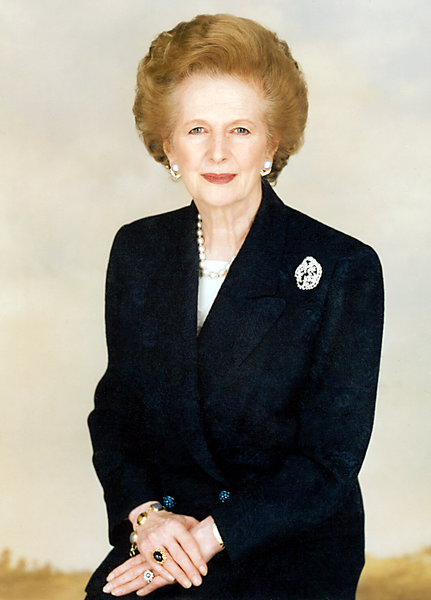
    margaretthatcher

    This speech was given by the Conservative Party leader, Margaret Thatcher, in October 1984, just hours after the Brighton bomb.

    The bomb attack on the Grand Hotel early this morning was first and foremost an inhuman, undiscriminating attempt to massacre innocent unsuspecting men and women staying in Brighton for our Conservative Conference. Our first thoughts must at once be for those who died and for those who are now in hospital recovering from their injuries. But the bomb attack clearly signified more than this. It was an attempt not only to disrupt and terminate our Conference; It was an attempt to cripple Her Majesty’s democratically-elected Government. That is the scale of the outrage in which we have all shared, and the fact that we are gathered here now shocked, but composed and determined is a sign not only that this attack has failed, but that all attempts to destroy democracy by terrorism will fail.

    I should like to express our deep gratitude to the police, firemen, ambulancemen, nurses and doctors, to all the emergency services, and to the staff of the hotel; to our ministerial staff and the Conservative Party staff who stood with us and shared the danger.

    As Prime Minister and as Leader of the Party, I thank them all and send our heartfelt sympathy to all those who have suffered.

    And now it must be business as usual. We must go on to discuss the things we have talked about during this Conference; one or two matters of foreign affairs; and after that, two subjects I have selected for special consideration are unemployment and the miners’ strike.

    This Conservative Conference, superbly chaired, and of course, our Chairman, Dame P. Hunter, came on this morning with very little sleep and carried on marvellously, and with excellent contributions from our members, has been an outstanding example of orderly assembly and free speech. We have debated the great national and international issues, as well as those which affect the daily lives of our people. We have seen at the rostrum miner and pensioner, nurse and manager, clergyman and student. In Government, we have been fulfilling the promises contained in our election manifesto, which was put to the people in a national ballot.

    This Government, Mr. President, is reasserting Parliament’s ultimate responsibility for controlling the total burden of taxation on our citizens, whether levied by central or local government, and in the coming session of Parliament we shall introduce legislation which will abolish the GLC and the Metropolitan County Councils.

    In the quest for sound local government, we rely on the help of Conservative councillors. Their task should never be underestimated and their virtues should not go unsung. They work hard and conscientiously in the true spirit of service and I pay special tribute to the splendid efforts of Conservative councils up and down the country in getting better value for money through greater efficiency and putting out work to competitive tender. This is privatization at the local level and we need more of it.

    At national level, since the General Election just over a year ago, the Government has denationalized five major enterprises, making a total of thirteen since 1979. Yesterday, you gave Norman Tebbit a standing ovation; today, our thoughts are with him and his family.

    Again and again, denationalization has brought greater motivation to managers and workforce, higher profits and rising investment, and what is more, many in industry now have a share in the firm for which they work. We Conservatives want every owner to be an earner and every earner to be an owner.

    Soon, we shall have the biggest ever act of denationalization with British Telecom and British Airways will follow; and we have not finished yet. There will be more to come in this Parliament.

    And just as we have stood by our pledge on denationalization, it is our pride that despite the recession, we have kept faith with 9 million pensioners and moreover, by keeping inflation down, we have protected the value of their savings. As Norman Fowler told the Conference on Wednesday, this Government has not only put more into pensions, but has increased resources for the National Health Service. Our record for last year, to be published shortly, will show that the Health Service today is providing more care, more services and more help for the patient than at any stage in its history. That is Conservative care in practice. And I think it is further proof of the statement I made in Brighton in this very hall two years ago; perhaps some of you remember it; that the National Health Service is safe with us.

    Now Mr. President and Friends, this performance in the social services could never have been achieved without an efficient and competitive industry to create the wealth we need. Efficiency is not the enemy, but the ally, of compassion.

    In our discussions here, we have spoken of the need for enterprise, profits and the wider distribution of property among all the people. In the Conservative Party, we have no truck with outmoded Marxist doctrine about class warfare. For us, it is not who you are, who your family is or where you come from that matters. It is what you are and what you can do for our country that counts. That is our vision. It is a vision worth defending and we shall defend it. Indeed, this Government will never put the defence of our country at risk.

    No-one in their senses wants nuclear weapons for their own sake, but equally, no responsible prime minister could take the colossal gamble of giving up our nuclear defences while our greatest potential enemy kept their’s.

    Policies which would throw out all American nuclear bases which, mind you, have been here since the time of Mr. Attlee, Mr. Truman and Winston Churchill, would wreck NATO and leave us totally isolated from our friends in the United States, and friends they are. No nation in history has ever shouldered a greater burden nor shouldered it more willingly nor more generously than the United States. This Party is pro-American.

    And we must constantly remind people what the defence policy of the Opposition Party would mean. Their idea that by giving up our nuclear deterrent, we could somehow escape the result of a nuclear war elsewhere is nonsense, and it is a delusion to assume that conventional weapons are sufficient defence against nuclear attack. And do not let anyone slip into the habit of thinking that conventional war in Europe is some kind of comfortable option. With a huge array of modern weapons held by the Soviet Union, including chemical weapons in large quantities, it would be a cruel and terrible conflict. The truth is that possession of the nuclear deterrent has prevented not only nuclear war but also conventional war and to us, peace is precious beyond price. We are the true peace party. And the nuclear deterrent has not only kept the peace, but it will continue to preserve our independence. Winston Churchill’s warning is just as true now as when he made it many many years ago. He said this: “Once you take the position of not being able in any circumstances to defend your rights against aggression, there is no end to the demands that will be made nor to the humiliations that must be accepted”. He knew, and we must heed his warning.

    And yet, Labour’s defence policy remains no Polaris, no Cruise missiles in Britain, no United States nuclear bases in Britain, no Trident, no independent nuclear deterrent.

    There is, I think, just one answer the nation will give. No defence, no Labour Government.

    Mr. President, in foreign affairs, this year has seen two major diplomatic successes. We have reached a detailed and binding agreement with China on the future of Hong Kong. It is an agreement designed to preserve Hong Kong’s flourishing economy and unique way of life and we believe that it meets the needs and wishes of the people of Hong Kong themselves.

    A few weeks ago, the unofficial members of the Executive Council of Hong Kong came to see me. We kept in touch with them the whole time and they frequently made journeys to No. 10 Downing Street as the negotiations with China proceeded. We were just about to initial the agreement and we consulted them, of course, about its content. Their spokesman said this: he said that while the agreement did not contain everything he would have liked, he and his colleagues could nevertheless recommend it to the people of Hong Kong in good conscience. That means a lot to us. If that is what the leaders of Hong Kong’s own community believe, then we have truly fulfilled the heavy responsibility we feel for their long-term future.

    That agreement required imagination, skill, hard work and perseverance. In other words, it required Geoffrey Howe.

    And in Europe too, through firmness and determination, we have achieved a long-term settlement of Britain’s budget contributions, a fair deal for Britain and for Europe too. And if we had listened to the advice of other party leaders, Britain would not have done half as well. But patient diplomacy and occasionally, I confess, a little impatient diplomacy, that did the trick.

    Also, we have at last begun to curb surplus food production in the Community. Now, we know that for some farmers this has meant a painful adjustment and we are very much aware of their difficulties. Their work and their success are a great strength to our country. Michael Jopling and his colleagues will continue to fight to achieve a fair deal for them.

    We have also won agreement on the need to keep the Community’s spending under proper control. The Community can now enter on a new chapter and use its energies and influence to play a greater part in world affairs, as an example of what democracies can accomplish, as a very powerful trading group and as a strong force for freedom.

    Now, Mr. President, we had one of the most interesting debates of this Conference on unemployment, which we all agree is the scourge of our times.

    To have over 3 million people unemployed in this country is bad enough, even though we share this tragic problem with other nations, but to suggest, as some of our opponents have, that we do not care about it is as deeply wounding as it is utterly false. Do they really think that we do not understand what it means for the family man who cannot find a job, to have to sit at home with a sense of failure and despair? Or that we do not understand how hopeless the world must seem to a young person who has not yet succeeded in getting his first job? Of course, we know, of course we see, and of course, we care. However could they say that we welcome unemployment as a political weapon? What better news could there be for any Government than the news that unemployment is falling and the day cannot come too soon for me.

    Others, while not questioning our sincerity, argue that our policies will not achieve our objectives. They look back forty years to the post-war period, when we were paused to launch a brave new world; a time when we all thought we had the cure for unemployment. In that confident dawn it seemed that having won the war, we knew how to win the peace. Keynes had provided the diagnosis. It was all set out in the 1944 White Paper on Employment. I bought it then; I have it still. My name is on the top of it. Margaret H. Roberts. One of my staff took one look at it and said: “Good Heavens! I did not know it was as old as that!”

    Now, we all read that White Paper very carefully, but the truth was that politicians took some parts of the formula in it and conveniently ignored the rest. I re-read it frequently. Those politicians overlooked the warning in that Paper that government action must not weaken personal enterprise or exonerate the citizen from the duty of fending for himself. They disregarded the advice that wages must be related to productivity and above all, they neglected the warning that without a rising standard of industrial efficiency, you cannot achieve a high level of employment combined with a rising standard of living.

    And having ignored so much of that and having ignored other parts of the formula for so much of the time, the result was that we ended up with high inflation and high unemployment.

    This Government is heeding the warnings. It has acted on the the basic truths that were set out all those years ago in that famous White Paper. If I had come out with all this today, some people would call it “Thatcherite” but, in fact, it was vintage Maynard Keynes. He had a horror of inflation, a fear of too much State control, and a belief in the market.

    We are heeding those warnings. We are taking the policy as a whole and not only in selected parts. We have already brought inflation down below 5%. Output has been rising steadily since 1981 and investment is up substantially. But if things are improving, why ‘you will ask’ does unemployment not fall?

    And that was the question one could feel throughout that debate, even though people know there is always a time lag between getting the other things right and having a fall in unemployment. Why does unemployment not fall?

    May I try to answer that question?

    Well, first, more jobs are being created. As Tom King pointed out, over the last year more than a quarter of a million extra jobs have been created, but the population of working age is also rising very fast as the baby boom of the 1960s becomes the school-leavers of the 1980s; so although the number of jobs are rising, the population of working age is also rising, and among the population of working age a larger proportion of married women are seeking work, and so you will see why we need more jobs just to stop unemployment rising and even more jobs to get it falling.

    Now, on top of that, new technology has caused redundancy in many factories, though it has also created whole new industries providing products and jobs that only a few years ago were undreamed of.

    So it has two effects: the first one redundancies, the second and slightly later, new jobs as new products become possible. This has happened in history before.

    A few days ago I visited York, where I saw the first railway engine, Stevenson’s Rocket. I thought of the jobs, the prospects and the hope that the new steam engines and the railways then brought to many people. Communities queued up to be on a railway line, to have their own station. Those communities welcomed change and it brought them more jobs.

    I confess I am very glad we have got the railways, but if we were trying to build those same railways today, I wonder if we would ever get planning permission, it sometimes takes so long. And that is one thing that can sometimes delay the coming into existence of jobs.

    That was one example from history, but let us go through during my lifetime as we have this same phenomenon, redundancies from new technology more jobs from new technology.

    In the 1940s, when I took a science degree, the new emerging industries were plastics, man-made fibres and television. Later it will be satellites, computers and telecommunications, and now it is biotechnology and information technology; and today our universities and science parks are identifying the needs of tomorrow. So there are new industries and new jobs in the pipeline.

    I remember an industrialist telling me, when I first went into business, and I have always remembered it, our job is to discover what the customer will buy and to produce it. And in Wrexham the other day, at a Youth Training Centre, I was delighted to see a poster saying ‘It is the customer that makes pay days possible.’ So those young people are not only learning new technology; they were learning the facts of business life and how we create new jobs. Because it is the spirit of enterprise that provides jobs. It is being prepared to venture and build a business and the role of Government in helping them to do that? It is in cutting taxes; it is in cutting inflation; it is keeping costs down; it is cutting through regulations and removing obstacles to the growth of small businesses. For that is where many of the new jobs will come from small businesses. And it is providing better education and training.

    The Youth Training Scheme, now in its second year, was set up to give young people the necessary skills for the new technologies and the necessary approach to industry. A majority of the first year’s graduates are getting jobs. A much bigger proportion of those leaving the Youth Training Scheme are getting jobs than of those which left the Youth Opportunities Scheme, and so they should, because it is a much better training scheme and it will improve again this year. I was very interested in it. David Young started it and I offered to take a trainee for our office at No. 10 Downing Street. We would love to have one. Now, he or she might not have made it to be Prime Minister in one year, but the work at No. 10, because we have a staff, obviously, to run the office, of about a hundred, is varied and interesting and we really wanted to take on a trainee, and we also said we would take some trainees into the other parts of the Civil Service. So we were willing; we were really welcoming this person or people and looking forward to it.

    At first, the union said yes, then they said no, and the result is that young people have been denied training places.

    The same problem arose at Jaguar. First the union said yes, then they said no. So 130 unemployed teenagers have been denied training, and that means young people were denied jobs.

    Mr. President, we cannot create jobs without the willing cooperation not only of employers but of trade unions and all of the workforce who work in industry and commerce as well.

    Yesterday, in the debate, we were urged to spend more money on capital investment. It looks a very attractive idea, but to spend more in one area means spending less in another or it means putting up taxes. Now, in Government, we are constantly faced with these difficult choices. If we want more for investment, I have to ask my colleagues in Cabinet: ‘What are you going to give up or you or you? Or you or you?’ Or should I perhaps ask them: ‘Whose pay claim are you going to cut, the doctors, the police, the nurses?’ I do not find many takers, because we have honoured the reviews of pay for doctors, nurses and the police and others in full. And you would not have cheered me if we had not done so and quite right too, but I am bringing this to you because although people can say the way to solve unemployment is to give a higher capital allocation, I have to say what are we going to give up or I have to turn to Nigel Lawson and ask him which taxes would he put up. Income tax? The personal income tax is already too high. Value Added Tax? Well, I should get a pretty frosty reception from Nigel and I should get a pretty frosty reception from you. But I would be loth to ask him anyway.

    But you see, governments have to make these difficult choices, because as you know, whether your own households or whether your own businesses, there is a certain amount of income and you are soon in trouble if you do not live within it.

    But what I want to say to you is that we do consider these difficult choices in the public expenditure annual round and we are just coming up to it, and we have managed to allocate a very considerable sum to capital investment. Indeed, we have found the money for the best investment projects on offer and believe you me, it has been because of very good management in each and every department. It has been cutting out waste so we could make room for these things and be certain that we could say to you that we were getting value for money.

    Let me just give you a few examples of some of the investment projects for which we have found money, by careful budgetting.

    There is the M25 road for example. It is being completed. British Railways have been given the green light to go ahead with electrification, if they can make it pay. We have started or built forty-nine new hospitals since 1979. Capital investment in the nationalized industries as a whole is going up. Of course, we look at those things like new power stations and in a year after drought we look at things like more investment in the water supply industry. So we are going ahead with major capital investment.

    So what is the conclusion that we are coming to? It is the spirit of enterprise that creates new jobs and it is Government’s task to create the right framework, the right financial framework, in which that can flourish and to cut the obstacles which sometimes handicap the birth of enterprise, and also to manage our own resources carefully and well.

    That is more or less what that Employment Policy White Paper in 1944 said, so let me just return to it, page 1. It is getting a bit old.

    ‘Employment cannot be created by Act of Parliament or by Government action alone. The success of the policy outlined in this Paper will ultimately depend on the understanding and support of the community as a whole and especially on the efforts of employers and workers in industry.’

    It was true then, it is true now, and those are the policies that we are following and shall continue to follow, because those are the policies that we believe will ultimately create the genuine jobs for the future. In the meantime, it is our job to try to mitigate the painful effects of change and that we do, as you know, by generous redundancy payments and also by a Community Enterprise Scheme, which not only finds jobs for the long-term unemployed, but finds them in a way which brings great benefits to the communities. And then, of course, where there are redundancy schemes in steel and now in coal, the industries themselves set up enterprise agencies both to give help to those who are made redundant and to provide new training. All of this is a highly constructive policy both for the creation of jobs and a policy to cushion the effects of change.

    May I turn now to the coal industry?

    For a little over seven months we have been living through an agonising strike. Let me make it absolutely clear the miners’ strike was not of this Government’s seeking nor of its making.

    We have heard in debates at this Conference some of the aspects that have made this dispute so repugnant to so many people. We were reminded by a colliery manager that the NUM always used to accept that a pit should close when the losses were too great to keep it open, and that the miners set great store by investment in new pits and new seams, and under this Government that new investment is happening in abundance. You can almost repeat the figures with me. Two million pounds in capital investment in the mines for every day this Government has been in power, so no shortage of capital investment.

    We heard moving accounts from two working miners about just what they have to face as they try to make their way to work. The sheer bravery of those men and thousands like them who kept the mining industry alive is beyond praise. ‘Scabs’ their former workmates call them. Scabs? They are lions! What a tragedy it is when striking miners attack their workmates. Not only are they members of the same union, but the working miner is saving both their futures, because it is the working miners, whether in Nottinghamshire, Derbyshire, Lancashire, Leicestershire, Staffordshire, Warwickshire, North Wales or Scotland, it is the working miners who have kept faith with those who buy our coal and without that custom thousands of jobs in the mining industry would be already lost.

    And then we heard unforgettably from the incomparable Mrs. Irene McGibbon who told us what it is like to be the wife of a working miner during this strike. She told us of the threats and intimidation suffered by herself and her family and even her 11-year-old son, but what she endured only stiffened her resolve. To face the picket line day after day must take a very special kind of courage, but it takes as much, perhaps even more, to the housewife who has to stay at home alone. Men and women like that are what we are proud to call ‘the best of British’ and our police who upheld the law with an independence and a restraint perhaps only to be found in this country are the admiration of the world.

    To be sure, the miners had a good deal and to try to prevent a strike the National Coal Board gave to the miners the best ever pay offer, the highest ever investment and for the first time the promise that no miner would lose his job against his will. We did this despite the fact that the bill for losses in the coal industry last year was bigger than the annual bill for all the doctors and dentists in all the National Health Service hospitals in the United Kingdom.

    Let me repeat it: the losses in the coal industry are enormous. 1.3 billion pounds last year. You have to find that money as tax-payers. It is equal to the sum we pay in salaries to all the doctors and dentists in the National Health Service.

    Mr. President, this is a dispute about the right to go to work of those who have been denied the right to go to vote, and we must never forget that the overwhelming majority of trade unionists, including many striking miners, deeply regret what has been done in the name of trade unionism. When this strike is over, and one day it will be over, we must do everything we can to encourage moderate and responsible trade unionism so that it can once again take its respected and valuable place in our industrial life.

    Meanwhile, we are faced with the present Executive of the National Union of Mineworkers. They know that what they are demanding has never been granted either to miners or to workers in any other industry. Why then demand it? Why ask for what they know cannot be conceded? There can only be one explanation. They did not want a settlement; they wanted a strike. Otherwise, they would have ballotted on the Coal Board’s offer. Indeed, one-third of the miners did have a ballot and voted overwhelmingly to accept the offer.

    Mr. President, what we have seen in this country is the emergence of an organized revolutionary minority who are prepared to exploit industrial disputes, but whose real aim is the breakdown of law and order and the destruction of democratic parliamentary government. We have seen the same sort of thugs and bullies at Grunwick, more recently against Eddie Shah in Stockport, and now organized into flying squads around the country. If their tactics were to be allowed to succeed, if they are not brought under the control of the law, we shall see them again at every industrial dispute organized by militant union leaders anywhere in the country.

    One of the speakers earlier in this Conference realized this fact, realized that what they are saying is: ‘Give us what we want or we are prepared to go on with violence,’ and he referred to Danegeld. May I add to what that speaker said.

    “We never pay anyone Danegeld, no matter how trifling the cost, for the end of that gain is oppression and shame, and the nation that plays it is lost.” Yes, Rudyard Kipling. Who could put it better?

    Democratic change there has always been in this, the home of democracy. But the sanction for change is the ballot box.

    It seems that there are some who are out to destroy any properly elected government. They are out to bring down the framework of law. That is what we have seen in this strike, and what is the law they seek to defy?

    It is the Common Law created by fearless judges and passed down across the centuries. It is legislation scrutinized and enacted by the parliament of a free people. It is legislation passed through a House of Commons, a Commons elected once every five years by secret ballot by one citizen, one vote. This is the way our law was fashioned and that is why British justice is renowned across the world.

    “No government owns the law. It is the law of the land, heritage of the people. No man is above the law and no man is below it. Nor do we ask any man’s permission when we require him to obey it. Obedience to the law is demanded as a right, not asked as a favour.” So said Theodore Roosevelt.

    Mr. President, the battle to uphold the rule of law calls for the resolve and commitment of the British people. Our institutions of justice, the courts and the police require the unswerving support of every law-abiding citizen and I believe they will receive it.

    The nation faces what is probably the most testing crisis of our time, the battle between the extremists and the rest. We are fighting, as we have always fought, for the weak as well as for the strong. We are fighting for great and good causes. We are fighting to defend them against the power and might of those who rise up to challenge them. This Government will not weaken. This nation will meet that challenge. Democracy will prevail.


  • Harold Wilson – 1984 Maiden Speech in the House of Lords

    haroldwilson

    Below is the text of the maiden speech in the House of Lords of Harold Wilson, made on 14th March 1984.

    My Lords, in hoping for the indulgence of the House for my maiden speech, I should perhaps confess that this is not in fact the first time that I have spoken from these red Benches. My first parliamentary speech in 1945, in the role of the then lowest form of ministerial life—Parliamentary Secretary to the Ministry of Public Building and Works—was made from the Front Bench in here because, owing to the bombing of another part of the Palace of Westminster, their then Lordships graciously made this Chamber available. I was assigned to the task of directing the progress of the other building.

    I should just like to mention that that was after Walter Elliot (remembered by the older ones of us here), seeing from Whitehall that the Palace of Westminster was on fire, ordered—simply ordered, without any authority—the fire brigade to let the other place burn, pointing out that it was only 100 years old, having been built after the Treasury, as usual, had tried to save money the wrong way and had burnt all those tally sticks. So the fire brigade managed to save at any rate this part of the building.

    I do not know whether in a debate such as today’s I have to declare an interest as Chancellor of the University of Bradford—unpaid. But at any rate this debate on education gives a number of us—including myself—the opportunity to express our anxieties over present and forecast future difficulties that the Open University (OU) is required currently to face.

    I had conceived the idea of the Open University well before anyone ever thought of making me Leader of Her Majesty’s Opposition. I think that I called it the University of the Air, and I kept it under wraps right through the summer of 1964 before announcing it. I announced it finally, with the usual hand-outs, in September. So far as I recall, not a single newspaper reported the plan, except the Economist, then edited by Geoffrey Crowther, who was rapturous about the idea, and later he became the first Chancellor of the University.

    In making that proposal, which, as I say, did not receive a lot of early support, I had particularly in mind the fighting men of World War II, many of who perhaps would have gone to university but for the war, and who had married and had family commitments: the Open University gave some of them a chance to earn wages or salaries and at the same time to study. I do not need to tell this House that the Treasury was implacably opposed. Well, of course—what would your Lordships expect? But so, I am sorry to say, was the Department of Education, which I understand has improved a little from those days. But the resources of civilisation were not to be discounted. I appointed my noble friend Lady Lee of Asheridge Minister of State in the Department of Education. It was no idle threat, I assure your Lordships, and she had to take charge of the whole operation, and the outcome was a triumph on her part.

    At the same time broadcasting involvement was essential. Fortunately, at about that time the heads of the BBC wanted something from me. They came to see me, for a second channel. Well, we negotiated—if you can call it that. The condition that they accepted was an adequate provision of time for the new broadcasting university; and in fact their co-operation was invaluable in those years when it was an entirely new operation, as it has been in all those years since. I think that the university has also been quite useful to the BBC in providing a new area of training for its people.

    I am not quite sure of the rules, but perhaps at this point I ought to record, or declare, a family interest. My elder son, who has been a maths don at four Oxford colleges, is an OU lecturer, and over the years he has given me a good deal of evidence that the course there is at least as tough and as difficult as they required for an Oxford degree; and our other son has graduated through the Open University.

    The interesting fact is that today there are over 50 such universities all over the world, all modelled on ours, and for many years our balance of payments was fortified by sales of teaching material and, at least for a time, of equipment. Some of the engineering students needed to have engineering equipment and others needed equipment for similar studies. But it is, sadly, on the record that two or three years ago, when they cut back on university finances in our new universities, Her Majesty’s Government at the same time put the brake on so far as the OU was concerned.

    I should like to refer to what happened to the British universities. There were big debates in both Houses. In Bradford, for example, all our students in, say, engineering (our main subject), are required to work about a third of their four-year course in British factories or firms. In a few years’ time—and here I am thinking in particular of those who come from the Commonwealth, or further afield—whether as civil servants who have to authorise the import of this or that particular piece of machinery, or whether as industrialists themselves, those former students, as a result of their presence here in this country, working in one British factory or another, may well dictate what equipment they should import.

    Now I should like to turn to the Open University. I believe that the recent cuts forced on OU programmes will prove at least as serious as this short-sighted anti-Commonwealth attitude which we have seen developing in other ways and in other parts in recent years. The 1982 financial provision for the OU of £58.7 million has been cut to £58.2 million in 1983. You may say that this is not very much, £58.7 million to £58.2 million. But it is, of course, a much sharper cut than it appears to be because the figures make no allowance for inflation. Again, if we look at student grants, they amounted to £924 in 1980 and, at constant prices, to £814 in 1981. In real terms, they were 13½ per cent. lower. Over four years from 1980 to 1984, the university’s grant from Whitehall has increased by 24 per cent.—yes, thank you very much, certainly—while the retail price index has risen by 42 per cent., or two-four reversed.

    The £50-odd million that I have mentioned may seem a large sum, but not if’ one realises that the university teaches three-quarters of the whole nation’s part-time university students. It is not sufficiently appreciated that there are these part-time courses and that three-quarters of them are taken in charge by the university. It is also worth knowing, and the Treasury, which perhaps has some responsibility in this area, ought to be pleased to hear—I hope that it will hear—that the Open University graduate costs the country only a little over half as much as a graduate from a conventional university.

    I shall not weary the House with the whole catalogue of cut and cut again. I shall just instance computers. There are two novel and highly successful courses for managers and engineers in industry all over the country, not simply for those who can travel locally to a university. These same managers and engineers in industry have courses dealing with micro-processors and product design and development. It is a fact that already 30,000 engineers and managers have taken these courses through the OU. This year there are 1,100 undergraduates studying the digital computer. There are 2,300 studying the course “Computing and Computers” at a very low cost to the nation. This is a good investment.

    Jointly with the Science and Engineering Research Council, itself of high repute, the university is now planning postgraduate courses which will bring working engineers, working scientists and managers up to date in the latest developments in both manufacturing and the industrial application of computers. Current plans are now at risk at the hands of the rather less than imaginative Treasury, which seems to resent the kind of world in which we all live; these threatened plans would provide for 60,000 citizens of this country operating in this field.

    To cut these research facilities is, to use an old cliché, selling the seed corn, and this at a time when the university’s own industrial company—yes, it is a limited company—the Open University Educational Enterprise Limited, has handed over nearly £440,000 from interest and profits on its activities. I am sure that my noble friend Lord Perry, who has much more experience of this subject than any of us and who was really the creator of the Open University as we know it today, could confirm and verify with far more authority than I can command the alarming figures I have quoted, these current trends and the threat of more to come. He could estimate, I think, their significance for higher education in the widest sense. The facts show that over the next three years, to 1986, on the plans laid down by the authorities, the university will have to cut expenditure by £13.5 million.

    What the statistics will not show are the disappointments and the broken prospects of a generation of students whose potential contributions to British industry and to British inventiveness and competitiveness in a growingly competitive world are being snatched away, from what industry and the education process could provide, by the Treasury, which could not, in my view, in terms of the problems I am describing—I may be a little biased but I have known the Treasury for 40-odd years, and I was First Lord of it once—with any marked success, run a fish and chip shop.

    Noble Lords, at least those of my generation—I remind them of this before I sit down—will know the story of the man during the war who, having climbed the Duke of York’s steps and walked along to Whitehall, was asked by a passer-by “Which side is the War Office on?”, eliciting the reply “Ours, I hope”. After what I have described, based on firm and irrefutable facts and figures—there are lots more of them if anyone wants to have them—the need is for more work, more jobs and, if I may say so, more proof that Her Majesty’s Treasury is really fully committed in this war, this most desperate war, that we have in this country today, the war against unemployment.

    I wish to conclude by referring briefly to this. During the war, I was involved at the head of a series of Government statistical departments. I have to emphasise—and I would be ready to give reasons for this estimate, perhaps when we debate economic affairs in a different way—that the real unemployment figure for Britain is not 3⅓ million. Not at all; that is a completely phoney figure. The real figure is at least 4⅓ million, if one allows for the fact that school-leavers, for example, have been given great help in the creation of training courses by leading firms. In every speech I make in America or when touring abroad, I always pay tribute to one or two in the constituency that I represented for what they do to create jobs that do not really exist for some of these kids. I am thinking of Messrs. Pilkington, British Insulated Callender’s Cables and our Ford factory. But, of course, if our industry is to flourish, and if we are to keep among the top nations in this new technological revolution, then it is essential that the Government stimulate education for industry.

    I had the privilege, as I have said, of working for a time on Winston Churchill’s staff, before he sent me round to other departments to try to get their statistics as he would like to see them—not “cooking” them, but making them credible, understandable and comprehensible. Winston Churchill—there are many here who knew him better than I did—was undoubtedly a humanist. He did a great deal for people who were unattached to him. If he or Clement Attlee were alive today, if either was in charge, I can just imagine that a battery of brief and pungent directives would be flying around Whitehall headed “Action this day”. Many in this House have seen or received and shuddered when they got those documents, as I did. However, on youth unemployment, on stagnation in industry and on training for industry, I am certain that their message would have been “Action now” to stir our people and, above all, the younger generation to genuinely satisfying work and to training facilities that anticipate economic needs and opportunities of the remaining years of this century.

    Is it too much to ask that the same power and sense of direction be now applied in our training and education systems, and in a relevant attack upon the factors that are producing youth unemployment, through the provision of adequate, however varied, educational opportunities on which not only the future of those children, the future citizens, depend, but on which the future of Britain herself in the next half century will most certainly depend?