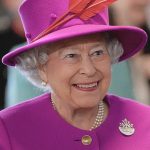
Below is the text of the speech made by Margaret Thatcher, the then Prime Minister, at the 1982 Conservative Party conference in Brighton on 8th October 1982.
Mr. President, thank you for that splendid welcome. You’re right. This has been a year of the unexpected, and in turning our thoughts to an issue which transcends party politics you do well to remind us of what happened in the spring of the year.
This is not going to be a speech about the Falklands campaign, though I would be proud to make one. But I want to say just this, because it is true for all our people. The spirit of the South Atlantic was the spirit of Britain at her best. It has been said that we surprised the world, that British patriotism was rediscovered in those spring days.
Mr. President, It was never really lost. But it would be no bad thing if the feeling that swept the country then were to continue to inspire us. For if there was any doubt about the determination of the British people it was removed by the men and women who, a few months ago, brought a renewed sense of pride and self-respect to our country.
They were for the most part young. Let all of us here, and in the wider audience outside, pause and reflect on what we who stayed at home owe to those who sailed and fought, and lived and died—and won. If this is tomorrow’s generation, then Britain has little to fear in the years to come.
In what by any standards was a remarkable chapter in our island history, it is they who this year wrote its brightest page.
In remembering their heroism, let us not forget the courage shown by those same Armed Forces nearer home. We see them and the other forces of law and order display these qualities day after day in Northern Ireland. Yes, and even closer at hand. I have seen no more moving sight in the last year than the Blues and Royals bearing their tattered standard proudly past the spot in Hyde Park where their comrades had been murdered in a cruel and cowardly bomb attack only two days before.
Terrorism is a deadly threat to our way of life, and we will not be cowed by it. We will continue to resist it with all our power and to uphold the principles of democratic government.
Mr. President, I cannot remember a better Conference. Our debates have been lively, good-humoured—indeed, at one moment I was very proud to think that I had served in John Nott’s Cabinet, and quite relieved to know that the Secretary of State for Employment will in future have confidence in the Treasury forecasts about the cost of living. He should. He actually compiles the index. He should be telling us.
They have been lively, good-humoured and humming with ideas, and they have tackled the real issues of the day.
There have been two other Party Conferences before this, and perhaps I will have a word to say about them later.
First, I want to come to something that dwarfs party politics—indeed, to an issue that dwarfs every other issue of our time.
We have invented weapons powerful enough to destroy the whole world. Others have created political systems evil enough to seek to enslave the whole world. Every free nation must face that threat. Every free nation must strain both to defend its freedom and to ensure the peace of the world.
The first duty of a British Government is the defence of the Realm, and we shall discharge that duty.
Ever since the War the principal threat to our country’s safety has come from the Soviet bloc. Twenty-six years ago the Russians marched into Hungary. Twenty-one years ago they built the Berlin Wall. Fourteen years ago they reconquered Czechoslovakia. Three years ago they entered Afghanistan. Two years ago they began to suppress the first stirrings of freedom in Poland.
Oh, they knew the strength of the human spirit. They knew that if freedom were allowed to take root in Poland it would spread across Eastern Europe and perhaps to the Soviet Union itself. They knew that the beginning of freedom spelt the beginning of the end for Communism.
Yet despite these regular reminders of the ruthless actions of the Kremlin there are still those who seem to believe that disarmament by ourselves alone would so impress the Russians that they would obligingly follow suit.
But peace, freedom and justice are only to be found where people are prepared to defend them. This Government will give the highest priority to our national defence, both conventional and nuclear.
I want to see nuclear disarmament. I want to see conventional disarmament as well. I remember the atomic bombs that devastated Hiroshima and Nagasaki. I remember, too, the bombs that devastated Coventry and Dresden. The horrors of war are indivisible. We all want peace, but not peace at any price. Peace with justic and freedom.
We seek agreement with the Soviet Union on arms control. We want to reduce the levels of both conventional and nuclear forces. But those reductions must be mutual, they must be balanced and they must be verifiable.
Oh, I understand the feelings of the unilateralists. I understand the anxieties of parents with children growing up in the nuclear age. But the question, the fundamental question for all of us is whether unilateral nuclear disarmament would make war less likely.
I have to tell you it would not. It would make war more likely, aggressors attack because they think they are going to win, and they are more likely to attack the weak than they are to attack the strong.
The springs of war lie not in arms races, real or imaginary, but in the readiness to use force or threaten force against other nations. Remember what Bismarck said
“Do I want war? Of course not. I want victory.” The causes of wars in the past haven’t, changed, as we know to our cost. But because Russia and the West know that there can be no victory in nuclear war, for thirty-seven years we have kept the peace in Europe, and that is no mean achievement.
That is why we need nuclear weapons, because having them makes peace more secure. Yet at Blackpool last week, the Labour Party, by a huge majority, adopted a new official defence policy. It went like this: Polaris to be scrapped; Trident to be cancelled; Cruise missiles in service to be removed. It is now clear beyond doubt that given the change the Labour Party wants, they would dismantle Britain’s defences wholesale.
And yet do you remember how Aneurin Bevan pleaded with an earlier Labour Party Conference not to send a Labour Foreign Secretary naked into the Conference chamber? Well, it is a good thing that there isn’t going to be a Labour Foreign Secretary.
Yet the Labour Party wants to keep Britain in NATO, continuing to shelter behind American nuclear weapons—so long as they are not on our soil. What utter hypocrisy. To expect an insurance policy but to refuse to pay the premium.
There must be millions of Labour supporters who are thoroughly disheartened by what they saw at Blackpool last week. I say to them “Forget about the Militant Tendency—come over and join the Tory tendency”.
Mr. President, a strong and united Western alliance is a guarantee of our peace and security. It is also a beacon of hope to the oppressed people of the Soviet bloc. Mr. President, Britain is a reliable ally, and with a Conservative Government will always remain so—reliable in NATO, reliable beyond NATO, an ally and a friend to be trusted. And trusted not least by our partners in the European Community.
Of course, ancient nations do not always find it easy to live together. Yet our commitment to the Common Market is clear. We are all democratic countries where freedom and the rule of law are basic to our institutions.
At present, as you know, Britain pays quite large sums to Community partners often richer than we ourselves. That is fundamentally unjust. It is also shortsighted.
As you know, we have just come to the end of our first three-year arrangement. We shall really have to fight — courteously, of course — to make sure that we have a fair deal for the future. But those who would pull us out of Europe must come to terms with the damage that that would do to our people. Even the threat of withdrawal destroys jobs. Firms that invest in the Common Market often decide to come to Britain. Labour’s threat to withdraw makes companies hesitate and look elsewhere. That Labour threat is losing us jobs now.
Mr. President, the great economies of Germany and France, once the engine of growth of the European Community, are struggling with declining output and a growing army of unemployed. Across the Atlantic, the United States, Canada and the countries of Latin America, they have been faced with the most prolonged slump for fifty years. Even the miracle economies of the Pacific Basin—Japan, Korea, Taiwan, Hong Kong and Singapore—even they are now being hit.
But the economies of the Eastern bloc are in a far worse state, far worse state than the West. Poland and Romania are hard pressed to pay their debts, and the Soviet bloc countries generally are riven with shortages of everything, from seed corn to sewing thread.
Of course, none of us foresaw a world recession of such gravity. Last week in Blackpool the Opposition suggested that I, single-handed, had brought it about. What powers they attribute to me! If I had that sort of power I would banish recession forever. But we’ve no time for dreams and delusions. The main culprit, and there are others, is the greatest sustained inflation in modern times. Almost every developed country has suffered from it.
For more than a decade economic growth has been thwarted. For more than a decade savers in America and Europe have been systematically robbed by the steady erosion of their savings and for more than a decade the ranks of the unemployed have swollen in the wake of inflation. In 1979 many of us in Europe began the long hard job of wringing a inflation out of the system. As you know Governments had promised to do this over and over again. But when the going got tough they resorted to the printing press. No wonder people became cynical.
Journalists, many but not all of them on the Left, were almost daily predicting U turns. Some indeed, confidently went around the bend. Now most commentators, with attitudes varying from awe to rage, recognise that we are sticking to our policy. Oh yes, we have been to the IMF. But unlike the last Government we went not as a nation seeking help but as a country giving help to others—a much more fitting role for Britain. From Socialist supplicant to Conservative contributor.
With inflation falling, interest rates coming down, and honest finance, confidence is returning. In spite of hostilities in the South Atlantic, the exchange rate held steady. What a tribute to the determined and unruffled Chancellorship of Geoffrey Howe. No longer will the saver find his money devalued. No longer shall we have two nations, those who profit from inflation and those who lose by it. No longer will paper booms explode in confetti money.
Mr. President, there is no road to inflation-free prosperity except through our own efforts. Two hundred years ago, Edmund Burke blamed the French revolutionaries for trying everywhere to “evade and slip aside from difficulty.” He said they had a “fondness for trickery and short-cuts.”
Mr. President, there are just as many evaders and short-cutters around today, in the Labour Party, the SDP and among the Liberals, taken jointly or severally, according to taste. Inflate a little here, expand a bit there; it’s all so easy. Mr. President, in real life such short cuts often turn out to be dead ends.
In the 60s and 70s the fashion was to say that the long term does not matter very much because, as Maynard Keynes put it, “In the long run we are all dead.” Anyone who thought like that would never plant a tree.
We are in the business of planting trees, for our children and grandchildren, or we have no business to be in politics at all. We are not a one generation party. We do not intend to let Britain become a one generation society. Let us not forget the lesson of history. The long term always starts today.
For, Mr. President, falling inflation on its own will not ensure growth and jobs. We need other things, too. Whether we like it or not, things are changing. They are changing in technology, as we have seen at this conference, with this thing that comes up. We keep abreast of the times. They are changing on the map. Far-away countries scarcely heard of ten years ago now overtake us in our traditional industries. Suddenly we are faced with the need to do everything at once—to wake up, catch up and then overtake, even though the future is as hard to predict as ever.
So we have to look as far into that future as we can, make sure that all the best talents are free to work at full stretch to help to lead this country into that future. Now Socialists believe that the State can do this better than individuals. Nothing could be more misguided. They are wrong. We can’t opt out of the technology race and try to stand comfortably aside. If we were to do so we should lose not just particular products but whole industries. And we dare not leave our neighbours to inherit the world of the microchip. As one production engineer put it, “The real threat in new technology is the threat of your worst enemies using it.”
Mr. President, inflation has not been beaten, even when prices stop rising. It is beaten only when costs stop rising. That makes wage costs vital. Pay must relate to output, as every self-employed person will tell you. In the last five years of the 1970s the amount we in Britain paid ourselves for what we produced went up by nearly 100 per cent. One hundred per cent. In Germany their increase was only 15 per cent. In Japan it was zero nought. Of course Japanese workers got more pay, but only from more output.
So, they got the orders and we lost the jobs. The CBI put it starkly: “Because we have lost over 100 per cent. of the home market to imports” I’m sorry, that’s not what they said. “Because we have lost ten per cent of the home market to imports, and 2.5 per cent. of world export markets to our competitors in the last 12 years we have lost 1.5 million jobs.”
One and a half million jobs—through losing a fair chunk of our home market to importers and a fair chunk of the export markets to our competitors. Now there is a challenge to management and unions. Get those markets back and we shall get our jobs back.
And the public sector, well, as you know the Chancellor of the Exchequer has just announced 3.5 per cent. more available for next year’s public pay bill. And before you say “that’s not much”, just remember, for the German civil service it is not going to be 3.5 per cent. but 2 per cent. In Japan, the Japanese civil servants are getting no rise at all. So maybe that will put the 3.5 per cent. in perspective.
But it is important to keep wage costs down, to accept new technology. If it is important to do all that, then good management and good industrial relations are vital to our future. We heard a lot at Blackpool about how Labour would work with the unions. Of course, they don’t really mean that. What they mean is a cosy get-togethers at No. 10. That is the old pals’ act. It has nothing to do with life on the shop floor and that is where the real problems are sorted out.
When I travel overseas, time and again they say to me, “Strikes. You have so many strikes. If it were not for that we would give you more contracts. We would invest more in Britain.” In vain do I say that private industry has very few strikes. But the fact is that the much publicised disruptions in the public sector do Britain down every time. I only wish that some of those trade union members on strike in the public sector would realise how many jobs their actions lose—oh, not necessarily their own jobs, but the jobs of people in manufacturing industries, whose taxes pay their wages. We can’t say it too often—“Strikes lose jobs.”
Mr. President, it’s going to take a long time to get employment up sufficiently, to get unemployment down as far as we all want. The task is even harder because we are going through a phase in Britain when the number of people of working age is rising.
There are many more more young people leaving school and wanting jobs than there are older people reaching retirement. Over a period of eight years there will be 1.25 million extra people of working age. So even without the recession we should have needed a lot more new jobs just to stop the number of unemployed rising. That shows you the magnitude of the task. Today’s unemployed are the victims of yesterday’s mistakes.
Government destroyed jobs by fuelling inflation; trades unions destroyed jobs by restrictive practices; militants destroyed jobs by driving customers away. But that is the past and whatever the problems, we have got to tackle them, not with words, not with rhetoric, but with action. Rhetoric is easy but it does not produce jobs. Indeed, if rhetoric could cure unemployment we would have jobs galore by this time.
Now for the future, you heard from Norman Tebbit that every 16-year-old who leaves school next year will either have a job or a year of full time training. Unemployment will not then be an option, and that is right. But, of course, the Government can’t do everything.
If we are to beat unemployment—and we must—we have to do it together. The Government’s getting inflation down, interest rates down, reforming trade union law, cutting regulations and removing restrictions. The rest is up to industry, the work force and management in partnership. Because in the end it is private employers who will produce the great majority of jobs.
Mr. President time and again history beats out the same message. Competition is better for the consumer than State control. We are acting on that conviction. Three and a half years ago defenders of the status quo tried to brand denationalisation as irrelevant. Now the critics are finding it harder to ignore the evidence of their own eyes. They cannot help seeing the new, long-distance coaches speeding down the motor-ways, at very much lower fares. They cannot miss the success of Cable and Wireless or British Aerospace. Britoil will be the next to be denationalised and British Telecommunications after that. How absurd it will seem in a few years’ time that the State ran Pickford’s removals and Gleneagles Hotel.
Mr. President we are only in our first term. But already we have done more to roll back the frontiers of socialism than any previous Conservative Government.
And in the next Parliament we intend to do a lot more. And we are seeing increasing evidence of the savings that can be made. Local authority after local authority has found that even the prospect of contracting out their refuse collection produced amazing economies from their staff. As Dr. Johnson nearly said: “Depend on it, when you know you are going to be privatised in a fortnight it concentrates the mind wonderfully.”
And I hope that every Conservative councillor in the land will act on what Councillor Chope of Wandsworth told us. Wandsworth has gone out to private contractors and down have come the rates. And don’t we all want that. Where Wandsworth has led, let other Conservative councils follow.
Mr. President I would like to say a word about the Health Service. Because value for money is just as important in the Health Service. Our opponents’ picture of us as a party that doesn’t care about the Health Service is utterly untrue, and is particularly ridiculous from the Labour Party. When they were in office they had nearly 2,000 fewer hospital doctors and 40,000 fewer nurses than we have, and every one of them was then much worse paid than today. But that same Labour Party now supports those who are disrupting the National Health Service and lengthening the very waiting lists that we have brought down. What sort of twisted compassion is that?
“I believe that we should condemn industrial action with its damage to the Health Service, whether it comes from doctors, nurses or anyone else who works in the service.” Those aren’t my words; that were the Labour Minister of Health’s, David Ennals , when he was in charge. He supported him because it was true then, and it is true now. We have a magnificent record in the National Health Service. We heard that splendid speech from Norman Fowler in one of the best debates in this conference. This year we are spending 5 per cent. more in real terms on the Health Service than Labour, so under Conservatives we have more doctors, more nurses, more money. Hardly the behaviour of a Government bent on destroying the Health Service.
Naturally, we have a duty to make sure that every penny is properly spent, and that is why we are setting up a team to examine the use of manpower in the National Health Service. Naturally we have a duty to do that. It is part of our duty towards the taxpayer. Of course we welcome the growth of private health insurance. There is no contradiction between that and supporting the National Health Service. It brings in more money, it helps to reduce the waiting lists, and it stimulates new treatments and techniques. But let me make one thing absolutely clear. The National Health Service is safe with us. As I said in the House of Commons on December 1 last: “The principle that adequate health care should be provided for all, regardless of ability to pay, must be the foundation of any arrangements for financing the Health Service.” We stand by that.
But Mr. President, it is not only in the National Health Service that our record has been very good. Next month the old-age pension will go up by 11 per cent., and that despite the worst recession since the 1930s. That is some achievement too. Whatever our difficulties, nine million pensioners have been fully protected from inflation. We gave our promise and we’ve kept it.
But we do not measure our success merely by how much money the Government spends. The well-being of our people is about far more than the welfare state. It is about self reliance, family help, voluntary help as well as State provision. In a society which is truly healthy responsibility is shared and help is mutual. Wherever we can we shall extend the opportunity for personal ownership and the self-respect that goes with it. Three hundred and seventy thousand families have now bought their own homes from councils, new towns and housing associations. That’s the result of this Government’s housing policy carried through in the teeth of opposition from the Labour Party. We have fought them all the way, and we won. Half a million more people will now live and grow up as freeholders with a real stake in the country and with something to pass on to their children. There is no prouder word in our history than “freeholder”.
Mr. President, this is the largest transfer of assets from the State to the family in British history and it was done by a Conservative Government. And this really will be an irreversible shift of power to the people. The Labour Party may huff and puff about putting a stop to the sale of council houses. They may go on making life unpleasant for those who try to take advantage of their legal rights, and what a wicked thing it is to do that. But they do not dare pledge themselves to take those houses back because they know we are right, because they know it is what the people want. And besides, they would be making too many of their own councillors homeless, not to mention one or two of their MPs.
And we want to bring more choice to parents, too. Parents, we as parents have the prime responsibility to set the standards and to instil the values by which our children are brought up. And more of us has the right to blame the teachers for failing to make up for our shortcomings. But we have every right to be involved in what goes on in our children’s schools. As parents we want to be sure not just about the teaching of the three Rs, but also about the discipline and about the values by which our children are taught to live. We have given parents more say in the choice of school. We have put parents on governing bodies. For the first time in modern Britain a Government is really paying attention not just to school organisation, but to the curriculum; not just to the buildings, but to what is taught inside them.
And we are not afraid to talk about discipline and moral values. To us “Law and Order” is not an election slogan. It is the foundation of the British tradition. And I believe that, looking back on this first Parliament of ours, it will be said that we have done more to support the police than any British Government since the war. There are more of them, we pay them better, we train them better and we equip them better, and for that you know who we have to thank. I am eternally grateful for the good sense, good humour and loyalty of Willie Whitelaw. Perhaps only I know how staunch he was throughout the whole of the Falklands Campaign, and the difficult decisions we had to take. Thank you very much.
Mr. President, it cannot be the police alone who are on duty. As parents, as teachers, as politicians and as citizens, what we say and do, whether in the home, the classroom or the House of Commons is bound to leave its mark on the next generation. The television producer who glamourises violence may find his viewing figures ultimately reflected in the crime statistics. And a public figure who comments to the camera on issues of the day should be especially careful what he says.
The other day, the last Labour Prime Minister—and I do mean “the last Labour Prime Minister” — spoke of what he called “a contingent right” in certain circumstances to break the law. Mr. President, none of us has a right, contingent or otherwise, to uphold the law that suits us and to break the one that does not. That way lies anarchy. The last Labour Prime Minister.
Mr. President, there are many people in Britain who share the hopes and the ideals of the Conservative Party. They share our great purpose to restore to this country its influence and self-respect. But they are anxious about the future and uncertain about the changes that we have had to make. They have not recognised how far the debating ground of British politics has moved to the Left over the last thirty years. Where the Left stood yesterday the Centre stands today. Yet the British people haven’t moved with it. Instinctively they know that we have to pull this country back to the real centre again. But the anxious say to us “You really cannot do everything at once. The recession and the international economic situation make things particularly difficult. Why not adapt your approach a little, give in for the time being, till things are getting better and then you can start again after the election, next election when you have longer time to do it.”
Mr. President, to do that would be a betrayal. People in Britain have grown to understand that this Government will make no false promises, nor will it fail in its resolve. How can the Government urge the people to save and build for tomorrow if the people know that that same Government is willing to bend and trim for the sake of votes today? That’s not trusting the people, and it is not the way to be trusted by them. Nothing could be more damaging to our prospects as a nation if this Government to throw away the reputation it has earned for constancy and resolve. It would throw away three years of hard-won achievement.
On what moral basis would we be entitled to ask for the nation’s support next time? Mr. President, the only way we can achieve great things for Britain is by asking great things of Britain. We will not disguise our purpose, nor betray our principles. We will do what must be done. We will tell the people the truth and the people will be our judge.