Tag: 1978

  • Hal Miller – 1978 Speech on Redditch Casualty Service

    Hal Miller – 1978 Speech on Redditch Casualty Service

    Below is the text of the speech made by Hal Miller, the then Conservative MP for Bromsgrove and Redditch, in the House of Commons on 3 November 1978.

    On Thursday, 30th May 1895, as reported in the Redditch Indicator, one Thomas Woodward, agricultural labourer, of Red Lion Street, Redditch was admitted as the first patient to the recently opened Smallwood Hospital, Redditch. I assure the Under-Secretary of State for Health and Social Security, for whose presence I am grateful, that I do not intend to set out the whole history of the difficulties besetting the provision of a casualty service in Redditch since that date. But it is significant that the first patient admitted was a casualty patient, there having previously been some argument as to whether a hospital was needed there for that purpose.

    The Minister may be familiar with the argument about whether a new district general hospital was required in my constituency at all, an argument happily concluded. But the hon. Gentleman will not be surprised to learn that even with the construction of the Smallwood hospital there was an argument for about three years over the choice of the site, and there was some delay in the construction. All that my constituents are hoping is that ​ the new hospital will be open well before the centenary of the Smallwood hospital.

    My intention in raising the matter this afternoon is by no means to conduct a witch-hunt of any kind. I pay tribute to the courtesy and attention with which I have been received by the Minister of State on several occasions—regrettably several occasions—on this most difficult matter.

    The truth is that we are confronted with a log jam. My purpose in raising the matter this afternoon is to seek the Minister’s assistance in attempting to break it. I hope that he will understand me when I say that it is also my intention to try to head off the possibility of a witch-hunt being conducted locally, in the press and by other means, against those who are imagined to be responsible for the difficulties affecting the provision of the casualty service. Such a public witch-hunt could only do serious damage to the morale of those who are continuing to provide the greatly reduced service and could well result in the complete withdrawal of the service.

    I hope that the Minister understands that that is a real possibility. I am a member of an action committee which I have been trying to head off from that very course, but I regret that it is one that it may determine to pursue.

    I spoke of a log jam and referred to several visits to the Department. I think that I should proceed to discuss the need for the casualty service before going on to list the various elements in the situation as I see them.

    The new town of Redditch now has a population of about 60,000. According to the statistics handed to me last week by the local employment office, there is a workforce of 33,000, practically all in manufacturing industry. The casualty service does not just provide for the growing new town of Redditch. It also provides for the surrounding areas. That has been recognised in the calculation of the population of the catchment area for the new district general hospital.

    The population of the area currently served by the Redditch casualty service, restricted as it unfortunately is, is about 90,000 and is increasing as the new town moves towards fulfilment in 1981. During the discussions we have had on several ​ occasions with the Department, mention has been made of the need for this service. The Under-Secretary referred to this in his letter to me of 19th August 1977. The area health authority was asked to undertake a survey at that time. A year later an interim survey was produced. We still do not have the results of any final survey, despite the lapse of time since the Under-Secretary was good enough to write to me.

    It can be said that the figure for the number of casualties from Redditch attending the Selly Oak hospital out of normal working hours, which are the only hours during which the Redditch service is provided—this can therefore be taken as a fair indicator of the increase in demand and consequently of the need— have risen from 13 per month in 1976 to 145 per month last year. More up-to-date figures are not available. A further illustration can be obtained by the fact that on a recent Saturday afternoon at the Bromsgrove cottage hospital there were 37 patients from Redditch in attendance.

    There is also a query about the extent of the treatment accorded to these casualties from Redditch at Selly Oak hospital. The question that arises is whether they are given full treatment or some first aid attention and then referred to the Redditch hospital during working hours on Monday for a full and proper examination. I am not qualified to speculate on that but I would point out that it is not unknown for there to be 110 cases awaiting the magic hour of 9 o’clock on Monday morning in Redditch. To the bulk of the 90,000 population the need for this service is totally apparent. People cannot understand why the service cannot be provided on a more satisfactory, that is continuous, basis.

    We must bear in mind that there is in Redditch a history of 24-hour provision of casualty service. Smallwood hospital is equipped not only with radiography but with an operating theatre. The staff at that hospital took a great and justifiable pride in the service they provided for their fellow citizens. It will readily be understood what a serious effect there was upon morale when the hours of operation of the casualty service were reduced to the normal working hours of 9 am to 5 pm, Monday to Friday.

    This reduction in service took place in April 1977. Previous warning had been given—very nearly a year’s warning—that the service would be reduced unless something could be done. Indeed, resignations from the general practitioners providing the service were finally handed in in October 1976, although they continued to provide the full service until April 1977.

    During that period of warning notice, there had been attempts to try to resolve the situation. The suggestion was made that the practitioners providing the service might qualify for the newly-constituted grade the previous year—1975— of hospital practitioner. This was found to be out of order on what appears to the layman to be the technicality that a consultant was not in overall charge. I say that it appears to be a technicality to the layman because consultants do provide a specialist consultant service on a sessional basis at the hospital. It may be that there is some professional objection at the bottom of this situation.

    It is not as if there has been adequate primary care available in the new town of Redditch. We need only to look at the new estate of Church Hill, with a population of 8,000 out of the 16,000 to be achieved in two years time, where there is at the moment a doctor operating from a semi-detached house. It is hoped to provide some portakabins next spring, but heavens knows what happens to people who get ill this winter.

    Adequate primary care is not available in this new town. I have raised this matter before in the House. I did so with the present Foreign Secretary when he was at the Department of Health and Social Security. There has been no provision in new towns for expenditure on health concomitant with the growth of new towns in the same way as has been provided for roads and education. This is a very serious matter.

    I turn now to the possible elements in the log jam. I have hinted that there may be some professional difficulties over the qualifications of these doctors. There may, indeed, be further professional difficulties or disagreements as to the provision of the casualty service and the priority it should be accorded in the expenditure of public funds.

    Whereas, for example, the medical staff committee in Redditch is quite convinced of the need for 24-hour coverage, and has accepted that, as a stage towards that, extension of the hours of the provisions of the casualty service might be a logical next move, expressing its willingness to do so if the necessary arrangements could be made, the district medical team, advising, apparently, the area health authority, did not share that opinion.

    There are administrative elements in the log jam. I will spare the Minister’s blushes about the effects on pay policy on the situation. That was one of the stumbling blocks to an earlier proposal during the period of notice in 1976. But it appears that there may well still be administrative difficulties. The Minister of State at one stage told me that a working party was to be set up with the Department of the Environment to examine new towns and the provision of medical facilities. That would appear to have made no progress. There has been, apparently, some administrative difficulty in the AHA concluding its survey, which has now taken well over a year.

    There may be differences of opinion between the hospital, the district and the area as to how these problems should be tackled, but the public simply cannot understand how it has proved impossible for this log jam to be resolved. With the withdrawal of the service, the increase of population and the advent of the new hospital, I should have thought it would have been perfectly possible to meet their quite legitimate aspirations and to treat this question as the special case which I believe it to be.

  • David Ennals – 1978 Statement on the NHS

    David Ennals – 1978 Statement on the NHS

    Below is the text of the statement made by David Ennals, the then Secretary of State for Social Services, in the House of Commons on 2 November 1978.

    I welcome the opportunity of today’s debate on the Gracious Speech to review the state of the National Health Service and to discuss its problems. No public service is held in higher regard than the National Health Service. It has within it men and women of high skill and dedication. None is held in higher esteem than the nurses—and I speak from experience, having had five weeks as a patient in an NHS hospital this summer.

    I believe that much of this respect is due to the basic principles on which the National Health Service is based—namely, a service for everyone, paid for by everyone, free at the point of delivery.

    Today’s debate provides an opportunity for the Government to set out their policies and aims. There is today concern about the state of the NHS. I hope that the Opposition, having chosen this subject, will give the House and the country some straight answers to some straight questions.

    There are three main areas of concern that worry patients, staff and the public generally. First, there is the problem of resources and the priorities for using them. Secondly, there is the bureaucracy in the NHS and the reorganisation carried out by the Conservatives. Thirdly, there are the difficulties over industrial relations ​ and pay, and the alarming effects that industrial action can have in our Health Service.

    I propose to deal with these three areas in turn, starting with resources and priorities. The needs for more cash and more staff in the NHS are plain for all to see. There are increasing demands on the service from growing numbers of elderly people.

    There are new methods of treatment for conditions that would have gone untreated only a few years ago. We have long waiting lists—now sadly longer still. There is a backlog of old, inadequate hospitals and the inheritance of an unfair share-out of health funds and facilities across the country. There are not enough staff, cash or facilities for our geriatric wards or our mental illness hospitals or our hospitals for the mentally handicapped. There is the need to cut still further the number of babies who die at or shortly after birth, and to reduce to a minimum those born handicapped.

    There is also the need for a further improvement in community care, and better primary care, particularly in inner cities. The list could go on. I said at the Labour Party Conference that I had the longest shopping list in the business. I have recognised—I think that we all do—the pressures on the Service, the strain on staff of all kinds, and the suffering of patients who have to wait too long for treatment or face unsatisfactory conditions—let us face it—in some of our hospitals.

    That is why we are planning to spend this year £120 million more in real terms on the NHS than we did last year. The £50 million Budget boost is only now beginning to show results. We have seen the opening of modern new hospitals in, for example, Newcastle, Northampton, Oxford and elsewhere. There has been the recruitment of more staff—especially nurses—and the provision of more resources for the Cinderella services. There is more home dialysis for kidney patients. This is beginning to happen.

    In addition, we have made provision in the Gracious Speech for a scheme of payments for those seriously damaged by vaccination—a problem which has caused great concern in this House over many years. I am proud that it was this Government who responded to that ​ concern. Legislation to cover the scheme of payments will shortly be introduced and will, I hope, have the support of the whole House.

    We are now spending about £8 billion a year on our health and personal social services, an increase from 4·7 per cent. of GNP in 1973 to 5·7 per cent. on the latest available figures. What is more, we are spending this money in accordance with a clear set of priorities, worked out after careful discussion. We are pressing ahead with a steady programme to achieve a fairer share of health funds across the country. That means that while programmes are held back in some regions, particularly in the Thames regions, areas of greatest need in the North, North-West and the East Midlands are seeing very rapid growth. I am sure that that principle is right and should be supported by the House.

    We are giving the Cinderella services for the elderly, the mentally handicapped and the mentally ill a higher priority.

    The House will know that during the recess there have been two important developments in these areas. First, the Government published a White Paper on our review of the Mental Health Act in which we propose new safeguards in the treatment and detention of mental patients and other reforms. Secondly, the National Development Group reported to me on “Helping Mentally Handicapped People in Hospital”, and I have made a statement setting out the Government’s proposals for further improving the quality of care for the mentally handicapped.

    The Cinderella services and geographical redistribution of funds are two of our key priorities. A third is a shift towards prevention. My hon. Friend will have more to say on this subject, especially in relation to perinatal mortality. I hope soon to announce some further initiatives, building on the much improved figures for perinatal mortality of the past few years.

    The Gracious Speech stated:

    “Fresh support will be given to enable the National Health Service to fulfil and extend its services to the public.”

    The Government have a firm commitment to strengthen and develop our National Health Service. We have made it plain that, as the economy improves, it will be possible to devote more resources ​ to the services. We have given practical effect to that commitment twice in the past year, in the November and April measures.

    The House will, of course, have to await announcements at the appropriate time on the Government’s plans for public spending in the period ahead, but there will be an increase in resources available for 1979–80, compared with figures in the last White Paper. It will give us some more room for manoeuvre and will, I am sure, be warmly welcomed in the country, especially by those working in the Service.

    We shall stick to our agreed priorities, and I hope to announce additional resources to help meet the needs of the elderly, to assist mentally-handicapped children, to assist disadvantaged groups, particularly in areas of high mortality, and to make some contribution to the assault on the long waiting lists.

    I have set out the Government’s priorities on resources and the way in which they will spend them. The House and the country will also wish to know where the Conservative Opposition stand. Let us start with the issue of spending on the Health Service. A few months ago, the right hon. Member for Wanstead and Woodford (Mr. Jenkin) was quite clear. He said that a Conservative Government would adopt the projections in last February’s White Paper on public expenditure. His actual words were

    “We have to live within that, and there is no possibility of extra money.”

    What could be plainer than that? And that was after the Budget injection of £50 million. He was saying that under a Tory Government there would not have been that £50 million boost and there would not be any further increases beyond the figures in the White Paper.

    I hope that the right hon. Gentleman will confirm that that is the dismal prospect facing the NHS if the Tories, by misadventure, were to be returned to power. [Interruption.] If the hon. Member for Reading, South (Dr. Vaughan) doubts that, his right hon. Friend will have an opportunity of dissociating himself from his own quoted statement.

    The subject of resources raises, I believe, two further issues—charges and the Tory plan to shift to an insurance ​ basis of finance. When we last debated the National Health Service in this House, I put a number of questions to the right hon. Member for Wanstead and Woodford. He refused absolutely to answer them. So, having got no way at all with the monkey, I went to the organ-grinder. In order not to confuse the public and the House about who really is the Leader of the Opposition, I should explain that when I use the term “organ-grinder”, I do not mean the organist. I am referring to the right hon. Member for Finchley (Mrs. Thatcher) and not to the right hon. Member for Sidcup (Mr. Heath). In any event, I got no reply. So I shall put the questions again, and give the right hon. Member for Wanstead and Woodford the chance to answer them.

    How much would a Tory Government put on the prescription charge? Will the Tories introduce a new charge for seeing a GP? If so, how much? Will they bring in so-called hotel charges for staying in hospital? If so, how much? Will they bring in a new insurance-based system of finance? If so, will there be different levels of service for different levels of premium, and will there be separate premiums for each member of the family, with extra to pay for the children? When will the Tories publish the Vaughan report on charges? We have had a lot of open government. It is about time we had a little open opposition.

    These are fair questions. I warn the right hon. Member for Wanstead and Woodford that he cannot get away—as he did once before—with saying “We are waiting for the views of the Royal Commission.” He is quite happy to tell us in detail what he wants to do about the organisational structure of the NHS without waiting for the Royal Commission—and that is purely technical matter. This is a matter of deep principle. He does not need the Royal Commission to tell him where his principles lie—or I hope he does not. Let us see what he has to say.

    While he is about it, I hope the right hon. Gentleman will spell out where the Conservative Party stands on the issue of queue-jumping. Where does it stand on common waiting lists for private and NHS patients in NHS hospitals? The Government’s position is plain. While pay beds are being phased out, we believe ​ that those who pay should not be able to jump the queue for treatment. That is why I made proposals in the summer for the implementation of common waiting lists. The hon. Member for Reading, South leapt up and sharply criticised this policy. The issue is all the more important since, as we understand, the Tories want to bring back more pay beds. So I ask the question today: do the Tories support common waiting lists, or are they now openly in favour of queue-jumping? I hope we shall hear an answer to that question from the right hon. Member for Wanstead and Woodford.

    I also hope that, instead of carping criticism, we shall get from the Opposition some recognition of what has been achieved by this Government and those who work in the Health Service. The fact is that, in spite of all the difficulties and the financial restraints, we have more and more staff treating more and more patients. The facts speak for themselves. I am comparing the position in 1977 with that in 1973, the last full year of the Tory Administration. The number of inpatients treated is up by 213,000 to 5,345,000—an all-time record. The number of day-patients is up by 123,000 to 532,000—again a record. The number of medical staff is up by 14 per cent. The number of nurses and midwives is up by 12 per cent.

    In spite of these achievements, waiting lists remain very long, with all the pain and the suffering that means for patients. This is one of the many problems we face in the National Health Service. We have a great deal still to do. But let us take a balanced view and recognise not only the tasks ahead but the real achievements of the many dedicated people who work in the Service.

    I have dealt with the first area of public concern: resources and priorities. I turn now more briefly to the second: the organisation and structure of the National Health Service.

    There is no disguising the very widespread concern over the reorganisation that the Conservatives foisted on the Service four years ago. The public believe—no one doubts it—that there is too much bureaucracy, that the machine is insensitive to the needs of patients and staff and, perhaps especially, that decisions are sometimes taken too far away from the patients themselves.

    I know that the right hon. Gentleman likes to wax eloquent on this last point—he makes speech after speech—but it is a little difficult to take seriously what he and the right hon. Member for Leeds, North-East (Sir K. Joseph) have to say on this matter. Somehow or other they talk as if they had no responsibility for it at all, as if somehow the situation that they are graphically describing is the responsibility of the Labour Government. But they are responsible for it—they and they alone. It was their pet scheme and it was vigorously opposed by Labour when we were in opposition. We knew that they had it wrong. But now they are coming forward with yet another Tory blueprint. The right hon. Gentleman’s party is coming forward with a new blueprint for the reorganisation of the NHS. I ask whether you, Mr. Speaker, would buy a second-hand reorganisation from the men who planted the first one upon us.

    My right hon. Friend the Prime Minister, in his speech to the Labour Party conference, made clear that this Government intend to make decision-making more democratic in a number of spheres of life. In the light of the views of the Royal Commission on the NHS, we are determined to make the Health Service more responsive both to those who use it and to those who work in it. As the Prime Minister made clear, we shall not take major steps on this before we have had a chance to consider the views of the Royal Commission that will be reporting to us early next year.

    This is in stark contrast to right hon. Members on the Opposition side. They are so embarrassed by what they have done that they are falling over themselves to suggest new remedies. I believe that in their haste they seem to be seeking to impose yet another rigid, ill-thought-out pattern upon the Service. Frankenstein may be dissatisfied with his first monster so he is helpfully making another. Let the public be warned.

    Mr. Stanley Newens (Harlow)

    Is it not a fact that one result of the dreadful structure which has been imposed by the present Opposition on the Health Service is not only bureaucracy and administrative waste but the diversion of too many resources from patient care to administration? Ought we not to be seeking some reorganisation which will put more of ​ the money which goes into the Health Service into patient care?

    Mr. Ennals

    That is absolutely right. Until we can carry out the changes that we need—because the burden of bureaucracy must be reduced—we have to see what we can do right now. I advise right hon. Gentlemen that we are first cutting down on management costs which, as my hon. Friend said, result directly from the reorganisation for which they were responsible. In the past two and a half years we have cut out nearly 3,000 administrative posts and at the same time we have seen the number of doctors and nurses increasing. As a result, this year we have been able to release about £13 million for patient care. In a sense, this is a form of organic change. As for districts, we are also looking at the structure at local level to see how we can meet local needs. I have already given approval for four area reorganisations and there are several others in the pipeline. We are making savings on fuel, supplies, drug costs and the rest. My hon. Friend is absolutely right. These are the issues on which we are concentrating.

    That brings me to the third and final area of concern for the Health Service—the problems of industrial relations, pay disputes and industrial action. That is perhaps the most immediate area of concern for the public generally. In fact, the last time this House debated the National Health Service—it was at a time when I was in hospital and could not be here—it was about industrial relations in the Service.

    As patients see only too clearly, the real damage that can be caused by industrial action is the lengthening waiting lists, postponed operations, real problems for staff morale and all the rest. It is in times of internal conflict that the NHS sometimes gives the appearance of having too many warring factions rather than being a united team. The right hon. Member for Wanstead and Woodford will understand what I mean by that. The difficulties are enormous.

    There are no easy answers to problems of pay. Many other disputes can blow up, and they blow up locally. We have all been greatly alarmed by the recent works supervisors’ dispute and by ​ troubles in particular hospitals. There may be more difficulties ahead as we enter the pay bargaining season.

    What judgment can we pass on the use of industrial action in the National Health Service? In 1973 it was the ancillaries who used it, in 1975 it was the doctors, and in 1978 the works supervisors. Some people have attacked industrial action within the NHS as part of a general attack upon the trade unions. That is absolutely unfair.

    I pay tribute to the commitment of the leaders of the Health Service unions to the Service and the interests of patients.

    Can we—as some people suggest—impose a requirement that because they work in the Health Service they should forswear the normal rights of trade unionists? I believe that that would be unrealistic. Most organisations—and I suspect that they include the British Medical Association—would not agree to have their hands tied. Of the three areas of concern being discussed today, I think that this is the one in which Tory hypocrisy is at its worst.

    Mr. Eldon Griffiths (Bury St. Edmunds)

    Before the right hon. Gentleman continues his attacks, may I say that the vast majority of people who work in the Health Service at all levels hate the idea of strikes against patients? They do not like it any more than we do.

    Would the right hon. Gentleman consider at least what was done in the recent police pay settlement, when the police agreed to continue to give up the right to strike but were compensated by an inflation-indexed pay increase and machinery to maintain it? Large numbers of doctors and nurses and other members of the National Health Service have written to me saying that they would like such a deal to be tried out in the Service.

    Mr. Ennals

    I suppose that many people would say that they were prepared to make some sacrifices if they were given 25 per cent. extra pay. I can see that prospect winning a battle across the country.

    I want to come on to the inflationary consequences, because we cannot totally exclude the National Health Service from this Government’s battle against inflation, as the hon. Gentleman seems to think we can. I believe that those who ​ choose to work in the NHS have a very special responsibility to those they serve and to sick people. A hospital is not like a factory complex. Human health and lives are at stake. It cannot be right to put human lives at risk and to cause suffering as an indication of industrial muscle. We must find a better way. We must get our procedures right. We owe it to the Health Service workers and to the patients. Let us look at what we can do in a serious way.

    I believe that there are two distinct problems. First, there is the question of pay and conditions of service, matters dealt with in the Whitley Council machinery. Secondly, there are the disputes that blow up locally—rows about the duty roster, the level of staffing on a ward, where someone parks his bicycle, or a clash of personalities. If they are not tackled, these problems fester and eventually erupt into industrial action, with all that it involves for patients, and all the publicity and effect upon morale.

    That is why earlier this year I brought together round my table the general secretaries of the main Health Service unions, the chairman and secretary of the British Medical Association council, the chairman of the Conference of Medical Royal Colleges and the secretaries of the Royal Colleges of Nursing and of Midwives, together with a representative of the Trades Union Congress and a representative of management. It was the first time that such a meeting had ever taken place in the lifetime of the National Health Service. As a result, I was able to put forward concrete proposals only last week for a new disputes procedure in the National Health Service. This up-to-date procedure is designed to settle disputes quickly at the local level where they arise. The general Whitley Council is now considering these proposals, and I hope that it will embody the essential features in an agreement that can be put into effect as soon as possible throughout the NHS.

    This is a practical down-to-earth initiative that I hope will cut to a minimum the number of avoidable local disputes. I was impressed by the extent to which the leaders of the professions and the unions came together and hammered out something that they could all support.

    ​The Opposition are always quick to criticise whenever they see the chance, but let us remember that when they had responsibility for these matters, they did absolutely nothing. Now they draw on their great reservoir of imagination and come up with fanciful ideas of a patients’ charter. I hope that the right hon. Member for Wanstead and Woodford will tell us about it. It sounds good. What does it mean? How will it work? I hope that it is more sensible than the right hon. Gentleman’s best known proposal that we should brush our teeth in the dark. At least I can understand that, and perhaps he will enable me to understand his ideas for improving industrial relations in the National Health Service. We are talking about industrial disputes. The Opposition’s attitude to disputes about pay is equally unconstructive. They did nothing to be proud of when they were in office, but they are quick to make capital out of any difficulties that we have.

    Mr. David Crouch (Canterbury) rose—

    Mr. Ennals

    I would have preferred to give way later to the hon. Gentleman. However, as I know he takes a great interest in this matter, I shall give way now.

    Mr. Crouch

    I wish to intervene only on the matter of pay policy. The Secretary of State told us that he had a meeting recently when he called together the representatives of the responsible trade unions operating in the Health Service. Do they appreciate that not only do they operate under the Cabinet’s pay policy so strongly advocated by the Prime Minister, but they also operate under the cash limits that fall on his Department? If they take more than the pay policy limits allow, it will be a matter of robbing Peter to pay Paul. Did he make that clear to them?

    Mr. Ennals

    The conference that produced this initiative on local disputes was dealing specifically with non-Whitley-Council-type disputes. I believe that there may be merit in inviting the same group of people to meet to see whether we can improve methods of dealing with the types of disputes that affect Whitley Council ​ issues. I shall cone to the main issue—the question of the supervisors—in a moment.

    In the case that we have been discussing, the machinery is not the real issue. The real issue is what sort of pay rises various groups of NHS staff are seeking and what they can be given. Here, not only the question of cash limits but the question of pay policy is crucial.

    I must comment briefly on two recent matters of concern—the supervisors’ dispute and the worries expressed about the pay and morale of nurses. I deal first with the dispute.

    I have no doubt that the House will have shared my great anxiety about the effect of the recent dispute on waiting lists and the very real risk to patients. Happily, a settlement has been reached with the help of the good offices of the general secretary of the TUC—and the House will, I know, be grateful to Mr. Len Murray for his most helpful initiative.

    I have no wish to rake over the coals. But there have been suggestions that this dispute could have been settled weeks earlier if Ministers had wished, suggestions that the issue had nothing to do with pay policy, and suggestions that the Government finally accepted a deal that I had said earlier was not on. All these suggestions are false.

    Ministers intervened on a number of occasions in efforts to settle the dispute. It was at my request that ACAS made an attempt to conciliate after talks had broken down. What was really being suggested by some critics of the Government was that we should simply have given the staff concerned all that they were demanding—regardless of pay policy and regardless of cash limits and the consequences for other groups of staff. It was a sure recipe for further disputes and further industrial action in the NHS. Pay up and hang the consequences seemed at one stage to have been the attitude of the hon. Member for Reading, South in a statement that he made. No doubt he or his right hon. Friend the Member for Wanstead and Woodford will tell us the purpose of his intervention at that time, if that was not it. I suppose that is what he wanted.

    Mr. Doug Hoyle (Nelson and Colne)

    Does not my right hon. Friend agree that this dispute was not connected with pay policy but was a hangover from the reorganisation that should have been settled much earlier?

    Mr. Ennals

    No. Let me spell it out. It is most important that the House should understand. Of course it was not a straight issue of whether the pay claim was above 5 per cent. This dispute was not about annual pay settlements. It was about a genuine regrading of staff.

    There were two very important issues of pay policy. First, the Government had to be satisfied that the new salaries offered for the new posts were commensurate with the job descriptions. On this basis, we approved the salary scales that had been offered by the management side several weeks before. The rejection of that management offer was the start of the supervisors’ action. Happily, six weeks later, after the disruption in the Service, they accepted precisely the same salary scales that they had rejected.

    Secondly, we had to be satisfied that any improvements to the supervisors’ productivity allowances were genuinely self-financing. That condition is met in the agreement reached last wek. Bonus payments are clearly subject to the financial viability of the scheme.

    During the negotiations, the staff side was demanding a minimum—I repeat minimum, because it was from 15 per cent. up to 30 per cent.—of 15 per cent. allowances for all supervisors regardless of whether they were involved in productivity schemes and regardless of whether the schemes were saving enough money to cover the costs. I said that that was not on. Productivity deals must be genuinely self-financing. I have stuck to that position. The agreement reached last week is entirely consistent with it. The 15 per cent. allowances provided for will not be an unconditional minimum available to all, regardless of membership of schemes and their viability. All supervisors will now have the opportunity to participate in schemes, but the allowances paid, which we hope may reach 15 per cent. six months after schemes are initiated locally, will depend upon the financial viability of the schemes. That is the crucial point. I am glad that the unions were able to ​ accept it. Until they did, no settlement was possible.

    The other subject that I have to mention is the morale and pay of nurses. I recognise the great pressure that nursing staffs are under, particularly during industrial action by other groups when, in a sense, nurses have to pick up the tabs and carry on seeing that patients are cared for. I think that the House will join me today in expressing the country’s deep feeling of thanks to the nurses and to other staff who did so much to maintain the services during that very difficult and, I believe, tragic period.

    Nurses are under stress for many other reasons. There has been a steady increase in the number of nurses working in the National Health Service. It has doubled in 30 years. There has been an increase in the proportion of trained nurses. But they are under very great pressure. I know that from my own experience in hospital. The number of patients increases, the period that an in-patient stays declines, and inevitably the amount of attention that each patient needs increases. As more patients are elderly, they make heavier demands upon the nurses. The nurses need to master new skills.

    I am very glad that we have managed to include in the legislative programme a Bill to establish a new, unified structure for the regulation, discipline, education and training of nurses, midwives and health visitors. This structure will comprise a United Kingdom central council and four national boards, one for each country of the United Kingdom, with supporting specialist committees which will replace the existing statutory and non-statutory bodies. For heaven’s sake, the nurses have been waiting for a long time for this.

    Mr. Laurie Pavitt (Brent, South)

    Since 1972.

    Mr. Ennals

    We can go back to 1974 at least, when my right hon. Friend the Member for Blackburn (Mrs. Castle) announced the Government’s acceptance of the main recommendations of the Briggs report.

    I am pleased to say that we can now start moving forward. I know that many nurses will welcome this, but that they ​ will also say that their pay has fallen behind. They have asked me to look at their position in the light of the “special case” provisions in the White Paper. The question of nurses’ pay is one that will have to be looked at by the Government in the light of our declared policy on pay as set out in the White Paper.

    I hope that Conservative Members will not seek to make capital out of this matter. With their record on nurses’ pay, they have nothing to be proud of. What did they ever do about it when they had the chance? It was a Labour Government who raised nurses’ pay by 20 per cent. in 1970—I know because I was a Minister in the Department at that time—and it was a Labour Government who gave nurses a further boost of 30 per cent. in 1974 following the Halsbury report. And what happened between 1970 and 1974? Nothing—because we had a Tory Government.

    In the months ahead we face many difficult problems over pay in the National Health Service. I hope that they can be resolved without industrial action. As I have said. I deplore any industrial action in the NHS that puts patients at risk. I hope to explore, with leaders of the profession and the unions, what scope there is for avoiding such action in relation to pay disputes. But to those who say that industrial action in the Health Service must be avoided simply by giving in to whatever demands are made, I give this reply. Of course we must see, within the scope of what is economically possible, that justice is done to the staff. But merely to give in to all demands is the road to anarchy, in the Health Service itself and in the wider pay context.

    I repeat what my right hon. Friend the Prime Minister said yesterday. This Government are not prepared to take that road. Here we see one of the great divides that is opening up in British politics today. The Conservative Party is taking up a series of extreme positions, on the NHS and on the economy. After 30 years of bipartisan approach to the principles behind the NHS, the Tories seem to be showing their true colours. They seem ready to tax the sick with new and heavier charges.

    Dr. Gerard Vaughan (Reading, South)

    Rubbish.

    Mr. Ennals

    I am glad. In that case the hon. Gentleman will be able to assure us that it is rubbish and that that part of the Tory programme has been set aside. That will be a great relief for the whole country. I shall see whether we can get some more cries of “Rubbish.” The Tories are committed to a two-tier Health Service. No “Rubbish”? We shall see. The right hon. Member for Leeds, North-East seems to know what it is, because he has been putting forward the idea himself, as have the right hon. Member for Wanstead and Woodford and the hon. Member for Reading, South. They do not know what it means. Perhaps they cannot spell it out; perhaps they do not understand their own proposals. But the moment will come in a minute for the right hon. Gentleman to explain.

    The Tories are committed to massive cuts in public spending which cannot fail to hit the health and personal social services. No doubt the right hon. Gentleman will speak of that. They are also in favour of a free-for-all approach to wages, which would send inflation through the roof. If they restrain pay at all, it will be in the public sector only, so that nurses and other Health Service workers will again have to bear the brunt of rising prices. That is the Tory prescription, not only for the economy of the country but for the National Health Service. The contrast between the positive achievements and the positive programme, of this Government and what the right hon. Gentleman and his hon. Friends have to offer is patently obvious.

  • Maurice Miller – 1978 Speech on the NHS

    Below is the text of the speech made by Maurice Miller, the then Labour MP for East Kilbride, in the House of Commons on 2 November 1978.

    I am sorry that the hon. Member for Canterbury (Mr. Crouch) has taken 25 minutes to tell the House that there is a crisis in the National Health Service, and has told us nothing else.

    I wish to add my welcome to the Government’s commitment to fresh support for the NHS. I was sorry that the right hon. Member for Wanstead and Woodford (Mr. Jenkin) devoted the major part of his speech to a post mortem examination of the recent industrial action which upset the Health Service. I am not saying that we should not discuss the problems in the NHS, but I wish that the right hon. Gentleman had stuck to the theme of today’s debate, namely, what is to be done in this Session of Parliament about the Health Service.

    Having listened to the right hon. Gentleman, and having heard press and television reports, one would imagine that the problems in the NHS were new, and that there was once a golden era in ​ medicine before the establishment of the NHS. Nothing could be further from the truth, as those of us who remember the days before 1948 can testify.

    The fact of the matter—and I say this with a good deal of regret—is that at present another battle is being fought in the long war against the NHS, a war which unfortunately has been going on for 30 years. It is all very well for the Opposition to pledge their support now for the Health Service. Their predecessors did not take that view in 1947 and 1948. There has been stubborn opposition to the development and continuation of the Health Service which has followed on from the stubborn opposition which occurred when the idea of the Health Service was first mooted in 1946 and 1947 during the long debates that then took place. That opposition has not disappeared.

    Yet if we face the situation honestly—and this was a matter on which the hon. Member for Canterbury was totally wrong—we must take the view that a Health Service is needed even more today than it was 30 years ago. It is all very well for the hon. Gentleman to say that people should make a contribution. Costs in the Health Service are growing in geometric progression. Not only do we have to pay much more for old-established, well-tried services, but in addition advances in science and in technology have yielded diagnostic and therapeutic procedures unheard of, indeed undreamed of, 25 or 30 years ago.

    All branches of medicine and surgery have made enormous strides enabling those with kidney failure, heart conditions and blood disorders, to mention only a few examples, which used to have rapidly fatal consequences, to lead useful and even completely normal lives. Orthopaedic procedures for hips and knees have literally transformed a generation of sufferers, who a short time ago would have been confined to wheel-chairs, into fully ambulant members of the community.

    Even in conditions which as yet are not amenable to cure, the Health Service is the great saviour. I have a constituent who suffers from a relatively rare disease of the nervous system known as Hunting-ton’s chorea. Recently I had a long discussion with the secretary of an organisation which is striving valiantly to combat ​ this genetic disease. Although the disease is incurable, the Health Service provides a great deal of support for the victims—support which has bankrupted families in the United States, for example, where there is no National Health Service. There the very rich can afford the enormous amount of money necessary to sustain the sufferer over many years, and the poor can obtain institutional care. But the vast majority of the population who are in the middle have to pay and pay and pay. This is also true of many other long-term illnesses.

    The point I am making is that this enormous expense must be met on a national and not on an individual basis. The Health Service must be free at the time of use. But I do not think that shortage of money alone lies at the root of present unrest in the Health Service. Part of the problem is of our own creation. I am referring to the greater and greater expectations which the nation now has in respect of the part which the Health Service can play in our lives. This applies to all the workers in the Health Service. It applies to doctors, nurses, medical laboratory scientists and all the staff, as well as to the patients.

    This is a good thing, but it imposes an enormous strain on our resources of skill. This is an important aspect of the matter. There is a limit to the total amount of skill upon which we can call. This is one of the great problems that face us in the Health Service. There is no panacea, no overall speedy cure for all the problems, no shibboleths to be mouthed as passwords to perfection.

    There is no lack of suggestions. Indeed, the suggestions are so numerous that it is obvious that we need a rethink of how to dispose of NHS income. But—and this is important—there can be no question of going back or of nibbling away at the Health Service until it is completely eroded. Perhaps the Royal Commission will come up with some answers.

    Is there, for example, a surfeit of organisation? If so, we know where the responsibility for that lies. It is interesting to note that Scotland has a different structure from that in England and Wales and, in addition, Scotland has a much higher proportion of consultants who are full time in the National Health Service. This is a mode of action which my right ​ hon. Friend the Secretary of State for Social Services would do well to examine carefully, and perhaps copy.

    Should we, for example, encourage even greater authority to the doctors in the Health Service? Would this help? One eminent medical journalist put the matter this way only a few days ago:

    “Doctors are the sine qua non of this or any other health service. We know that we are indispensable, or at any rate most of us believe it, and so do most of our patients.”

    He continues in the following vein:

    “The solution to the problems of the NHS, I suggest, is to restore doctors openly to the position of authority which they once held. There is no point in pretending that medicine is a democratic profession, for it is not. It is a profession where vital decisions often have to be made quickly and clearly and democracy is not a very good way of doing that, whatever advantages it may have in other fields.”

    He then concludes:

    “Doctors are despots, but they are on the whole benevolent and enlightened despots. Furthermore, they are elected despots, for the patient has—or at any rate should have—the right to tell his doctor to go to hell, and to seek another one.”

    I mention this at some length because there is no use denying that it is a widely held view in the medical profession, but I hasten to add that it is not my view. However, we must examine whether over-organisation has not given doctors the feeling that professional freedom has been seriously eroded. But doctors must realise that accountability must accompany the very real freedom which they enjoy.

    I make only one suggestion which, in my opinion, would go a long way towards accomplishing what the Government describe as:

    “Fresh support … to enable the National Health Service to fulfil and extend its services to the public.”

    I advocate a considerable switch of funds to the family doctor sector. It is not good enough that this sector should command only 8 per cent. of the total budget. General practitioner services are the vital element and the GP is the first, and for most people the only, contact with the NHS. An increase in resources in this area would pay handsomely in fewer referrals to hospital and consequently more time being available to surgeons to carry out operations and reduce waiting lists. It would also reduce the enormous drug bill and have other benefits on ​ which time does not permit me to elaborate. To accept the family doctor as the linchpin of the whole Service and to allocate funds accordingly would have a snowballing effect on the whole Service.

    I am not being complacent, because I know that there are problems, but I should like to move on to a serious omission from the Gracious Speech, namely, that we should have had a complete revision of the conditions that have to be satisfied before a pension is paid for industrial deafness. Unfortunately, deafness is regarded as something to poke fun at or, at least, as something not to be taken as seriously as blindness, and this is not so. The Secretary of State can be assured that those of us involved in this area will continue to press for legislation.

    Today’s debate concentrates on the NHS and, according to my calculations, should occupy about 5 per cent. of the total time allotted for the debate on the Gracious Speech. However, I know that you, Mr. Deputy Speaker, do not have a rigid 5 per cent. fixation and I should therefore like to mention briefly one other matter that is related to health, if not directly. I refer to housing. Proposed legislation for a new charter of rights for public sector tenants is included in the Queen’s Speech. Nothing could be more welcome, but I conclude with one question directed to my right hon. Friend the Secretary of State for Scotland and of which I have given him notice. Will the provisions envisaged in the Queen’s Speech apply to the development corporations of new towns in Scotland?

  • Patrick Jenkin – 1978 Speech on the NHS

    Below is the text of the speech made by Patrick Jenkin, the then Conservative MP for Wanstead and Woodford, in the House of Commons on 2 November 1978.

    May I begin with a word of welcome to the right hon. Gentleman? This. I think, is the first occasion on which he has addressed the House since he was struck down and whipped off to hospital in July. We very much welcome his return to health and hope that this time it will be lasting.

    I can agree with the right hon. Gentleman on two of the matters to which he ​ referred. First, he said at the outset of his speech that there is real concern in the country about the state of our Health Service. That is correct, and it is why we have chosen to devote the second day of the debate on the Queen’s Speech to the subject of health.

    Secondly, I agree with the right hon. Gentleman’s expression of the thanks of the House, and indeed of the whole country, to those who work in the Health Service. He singled out the nurses. That was certainly justified, and one can add all the other professional, para-medical and non-professional people who work and strive to give of their best, often in extremely difficult circumstances.

    The Prime Minister has intimated to me that he must depart very soon, so, if I may, I shall break the natural order of my speech and make one point now in his presence—and may I say how grateful I am to him that he has chosen to wait.
    One of the things that we expected to hear about in the Queen’s Speech was a Bill to reorganise the Health Service. The right hon. Gentleman made a powerful statement at Blackpool—in fact, I think that he startled his right hon. Friend. He certainly startled the Health Service when he said that it was to be further reorganised.

    Naturally enough, the press, caught a little unawares by this, tried to find out what was happening. There was an interesting article in The Times. After referring to the Prime Minister’s words, Mr. George Clark, whom we all know well and greatly respect, wrote:

    “According to the ministers closely involved, the area health boards will disappear in the reorganisation and there will be greater democratic control of the hospital service.”

    Mr. George Clark contacted me and asked me what were the implications of that statement—he was obviously making his inquiries. He is not a man who writes the words

    “According to the ministers closely involved”

    unless he has had some contact with Ministers closely involved. So there it was. Presumably, this was what the Prime Minister was referring to, and it is interesting because it is exactly what we have been advocating. We believe that there needs to be a slimming down of the ​ structure, the merging of a tier, and, in most of the country—although there must be flexibility about this—it is the area tier which must be merged into the others.

    But, alas, it was all wrong. That was not what the Prime Minister meant—or certainly not what the Secretary of State meant—because apparently a letter was written on behalf of the Secretary of State to administrators of regional and area health authorities of which, Mr. Speaker, for greater accuracy, I have obtained a copy. This was a little difficult because, despite the great importance of the Prime Minister’s remarks as interpreted by Ministers, and the very wide interest they had aroused, no publicity at all was given to the letter. There was no press release, no press guidance, no private briefings, not even one of the Secretary of State’s many speeches.

    But the letter is clear beyond peradventure. It is short, blunt and to the point. It reads:

    “Dear Administrator,

    In view of some of the misleading press comments on what the Prime Minister said at the Labour Party Conference on 3 October you may like to know that the Secretary of State has given an assurance that there is no commitment on the part of the Government to introduce legislation on the organisation of the National Health Service in advance of receiving and considering the Report of the Royal Commission.”

    The Prime Minister (Mr. James Callaghan)

    Hear, hear.

    Mr. Jenkin

    The Prime Minister said “Hear, hear.” What, then, are we to make of Mr. George Clark’s statement beginning:

    “According to the Ministers closely involved”?

    Mr. Ennals

    The right hon. Gentleman should not allow himself to be fooled by everything that he reads in the press. I can assure him that no such statement was made by any Minister in the Department. Perhaps the right hon. Gentleman should have taken the trouble to read what the Prime Minister actually said, which was:

    “Subject to the recommendations of the Royal Commission on the Health Service, we intend to undo much of the damage caused by the Tory reorganisation and make the management of the Health Service more responsive to the patients and to the dedicated people at all levels who work in the Service.”

    I hope that the right hon. Gentleman will warmly congratulate my right hon. Friend on setting that lead.

    Mr. Jenkin

    Yes, if I knew what the Government’s intentions were. What we have in this episide is that on Tuesday 3rd October the Prime Minister goes to Blackpool and cheers up the Labour troops by telling them that it is all going to be changed. On Friday 6th October, quietly and surreptitiously and without any publicity at all, the Secretary of State reassures the managers principally concerned that, of course, it is all nonsense and that nothing whatever will happen. All I can say is that it is one hell of a way to run a health service.

    I am grateful to the Prime Minister for staying in the Chamber, but he must realise that he caused great dismay by his talk of a major reorganisation at this stage. This most emphatically is not our policy.

    The Prime Minister

    I am not sure that it was worth staying. I have the very highest opinion of Mr. George Clark, as of every other journalist, as we all have; we all know how splendid they all are. But I think that the misapprehension could have been avoided if the initial words of my statement had been quoted, but, alas, they were left out of a number of the press documents.

    They were

    “subject to the recommendations of the Royal Commission”,

    which, I understand, we shall not have until several months from now. Anybody who really studied these matters would therefore know very well indeed that we could not possibly legislate in the current Session, so there was no need for the apprehensions.

    I would just say this in conclusion. Every morning I say to myself “Shall I really correct this error that is in the newspapers?”, and then I decide “No. If I spend my day correcting all the things that are wrong which are written about me I shall never do anything else”.

    Mr. Jenkin

    Perhaps we can leave it at that. I accept the Prime Minister’s bona fides on this. Apparently, he did not mean what was attributed. But it seems to me that with a matter of this importance—and the Secretary of State had a very strong letter from John Bettinson, the chairman of the National Association of Health Authorities—a little more publicity might have been given to the denial, as a good deal of publicity had ​ been given to the original misapprehensions.

    I said that we selected the subject of health for debate today because of the real concern of the people over the state of the National Health Service—not just because of the appalling damage done by the recent dispute, or even on account of the evidence that we have recently had from the Royal College of Nursing about falling standards and collapsing morale, but because as I go round and talk to people in the hospitals and in the constituencies I detect a growing fear that the NHS is rapidly sliding out of control while the Secretary of State stands, as it were, feebly expostulating on the sidelines and quite powerless to halt the slide.

    We read in the Queen’s Speech about “fresh support”. I come straight away to the points that the Secretary of State has made about the financial support. I thought that today he might be announcing additional spending for the Health Service. Certainly that is what I read into his remarks in his reply to the nurses’ deputation. He has said that this will come. May I put this to him? We would welcome this. It would be a step to get back to the rates of growth which the Health Service enjoyed under the last Conservative Government. Let me repeat the figures to get it clear. On capital expenditure alone, in real terms, for every £2 that is being spent now on Health Service capital spending, £3 was being spent when we left office—I am talking about real terms, taking account of inflation. After a prolonged period of more than 3 per cent. growth per year, the growth rate has been cut back to 2 per cent. over the last four years, and the figures in the public expenditure White Paper, even taking account of the £50 million, made it 1·8 per cent. over the next four years. There was a suggestion in one of the medical magazines that the Government were aiming to get back to the long run rate of growth of spending. That would involve very substantial sums indeed. We shall wait and see what comes.

    A more general point is that in the Health Service local health authorities are large and complex organisations. If they are asked to change speed and direction at short notice and suddenly, as, for ​ instance, with the extra £50 million in the Budget coming only three months after the public expenditure White Paper, this makes rational planning of health services for the future almost impossible. It is bound to lead to a waste of resources. Of course people welcome the extra money. But one does not get the best value for money if one is constantly chopping and changing; sensible planning is made almost impossible.

    Mr. William Molloy (Ealing, North)

    The right hon. Gentleman should have told the right hon. Member for Leeds, North-East (Sir K. Joseph) that.

    Mr. Jenkin

    On the contrary. When we were publishing White Papers on public expenditure and health expenditures over a prolonged period, we tended to stick to the projections. If more money is to be spent on the Health Service, the sooner that people know when it will be available so that they can incorporate it into their plans the better value we shall get for the money.

    Mr. Ennals

    I gave an assurance without giving the figures. However, the right hon. Gentleman is clearly dedicated to George Clark and what he writes in the columns of The Times. I read on 16th May:

    “Mr. Jenkin explained the scheme when he was asked whether the Conservatives, if returned to office, would provide extra resources for the National Health Service. He said the Conservatives would adopt the projections for spending contained in the present White Paper on public expenditure.

    ‘We have to live within that, and there is no possibility of extra money’.”

    Did George Clark get that wrong, too?

    Mr. Jenkin

    I was asked on that occasion whether we were proposing to cut the money for the Health Service. I gave an absolute commitment then, and have repeated it since on a number of occasions. We have no plans for cutting the Health Service below what we shall inherit. That is the phrase I am using. I made that statement soon after the publication of the White Paper on public expenditure. The phrase I have used, which I stand by and repeat today, is that we shall not cut spending on the Health Service below the figures that we shall inherit. How far and how fast we shall be able to increase spending will depend, as is common ground between the two parties, ​ on how successful we are at managing the economy and restarting economic growth. It will be our aim, when we can, to get back to the rate of growth and spending on health that we had under the last Conservative Government.

    Dr. M. S. Miller (East Kilbride)

    It is not the same thing for the Conservative Party to say that, if elected, it will not cut expenditure. Other allegations have been made about increasing the money going into the Health Service by charges which are to be levied.

    Mr. Jenkin

    I have nothing to add to what I said in the earlier debate. The Secretary of State played the same old tune and perhaps I may be allowed to: we must wait for the advice of the Royal Commission. Listening to the Secretary of State fiddling his old tune, one might have thought that everything had stood still in the meantime. The fact is that we are expecting the report of the Royal Commission in a few months and it would be foolish now to make pledges in advance of that.

    I turn briefly to the subject of the nurses, because they have made a long and detailed critique of the Health Service.

    They talk of the falling standards in the Health Service, of the collapse in morale, and use very serious language about “continuing deterioration” and

    “the serious threat to the maintenance of standards of care.”

    In describing clinical areas, they talk of the resulting

    “positively dangerous standards of care.”

    We need to take those criticisms very seriously indeed. I do not know whether the nurses’ complaints are to be included in the right hon. Gentleman’s description of “carping criticism” which he made in his speech, but I take the memorandum, which I have carefully studied, extremely seriously.

    I take no part more seriously than the figures given of the rapidly declining number of learner nurses in the Health Service. Initial entrants from March 1977 to March 1978 are down 17 per cent. and learners down 13 per cent. That is very bad news for the country and for the Health Service. We did not hear anything from the Secretary of State on what is to be done about that.

    In many parts of the country—and this is true in my own area—it is not possible to fill those posts for which funds exist and they are below the regional norms. What the future position will be like fills one with great despondency. We are in the grip of a vicious circle, with falling numbers that result in overwork, leading to lower standards and increasing job dissatisfaction for the nurses. Consequently, many leave early, many do not complete their period of training, and the situation deteriorates further.

    Job satisfaction for nurses is the absolute key. They want to feel that their work is up to the highest standards that they were taught in their nursing schools. There is nothing more demoralising for people in that kind of work to know that they are giving only second or third-rate service.

    Mr. Molloy

    I agree with much of what the right hon. Gentleman is saying. Indeed, I think that the whole House agrees with it. However, we should like to know whether he will also agree that there must be a massive resurgence of resources to put right the matters about which the nurses have been complaining.

    Mr. Jenkin

    I made the point that we could afford a substantial increase in money spent on health only when the economy is once again producing the resources to enable that to be done. That is common ground between the parties. I do not think that there is any point in calling for a huge influx of funds at this stage, because we know that that cannot be done.

    I turn to the Briggs report, which was referred to in the Gracious Speech. We shall debate that, I believe, on Monday week, so I need say little now about it. It has been a long time coming, and we welcome it. I know of the lengthy consultations that have taken place, because of the understandable desire on the part of professional groups who wish to preserve their separate identities within the profession, bearing in mind their long and honourable records of service to the community. At the same time, we must avoid—and this is a question of balance—creating an over-rigid, over-cumbersome structure. We support the general aims of the Bill, but we shall ​ certainly wish to study the details very carefully.

    The Gracious Speech referred to vaccine compensation. We also welcome that. May we ask the Under-Secretary to state whether that will be taken into account in the calculation of supplementary benefits for affected families? When the Government were last asked that question, they reserved their position, but we now need to know. I do not know whether the Under-Secretary intends to say something on the future of the Pearson report and where the Government stand on that. These subjects are clearly interrelated.

    I turn next to the Bill to pay attendance allowance to kidney patients. The conduct of Ministers here has been a good deal less admirable. The sad thing is that those payments could now be being made if the Government had had the sense to adopt the Private Member’s Bill presented by my hon. Friend the Member for Ealing, Acton (Sir G. Young) in the last Session. I have been singularly unimpressed by the excuses why that did not happen. The Government said that the Bill was not properly worded and did not cover the subject adequately. My hon. Friend—indeed, the whole House—would have been ready to accept any amendments that could have been made to the Bill, either here or in another place, to enable those payments to be made to kidney dialysis patients as rapidly as possible.

    I have a horrid suspicion that the reason we have not had that Bill is that the right hon. Gentleman has an almost obsessive compulsion to take the credit for everything that happens. Why cannot he have a little grace and give credit where credit is due? Why could he not have allowed my hon. Friend’s Bill to reach the statute book? The right hon. Gentleman has not enhanced his reputation in this affair.

    Important though all this is, it is overshadowed by recent events in the Health Service—the maintenance supervisors’ strike. I should like to examine in some detail the arguments which the right hon. Gentleman has put to the House and those which were advanced during the strike. By common consent, this has been the most damaging strike—although it should not be described as a strike but a ​ dispute; the supervisors were being paid all the time—in the history of the NHS. That point has been raised by my hon. Friend the Member for Aylesbury (Mr. Raison) on a number of occasions.

    We cannot know whether deaths actually resulted from it, but we certainly may assume that deaths may have been hastened and that some who could have been cured will not now be cured. A total of 9,000 beds were closed, 300 hospitals were on emergencies only and waiting lists are now up by 60,000—a 10 per cent. increase—with untold misery and despair for patients. The dispute certainly dealt a further blow to morale in the NHS.

    The Secretary of State’s explanation has left a whole raft of questions unanswered. It needs to be made clear why the dispute was left outstanding for so long. That point was made by the hon. Member for Nelson and Colne (Mr. Hoyle).

    The dispute dates back to 1974. For all the criticisms of this party, the Government have been in office for four and a half years; they have been in charge of matters. They really cannot put the responsibility back on the last Conservative Government.

    The pay structure was settled for senior work staff in grades 1, 2 and 3 but not for grades 4 and 5. Yet it was only two months ago that management got round to putting forward pay scales for grades 4 and 5. Why was the grievance allowed to fester for over four years?

    By his inaction on this matter alone, the Secretary of State deserves severe censure. However, a much more serious question that he must answer—he has not yet done so to my satisfaction—is why this dispute was not settled within the first few days. His case, as he presented it to the public throughout and as he presented it again today, was that the Government were standing firm in defence of their pay policy. In his letter of 9th October to Allan Black, the chief staff side negotiator, he wrote

    “The Government would not be prepared to authorise any offers which would involve further increase in cost … we must ensure that any agreement is consistent with pay policy.”

    He has maintained that attitude throughout, including his phrase, repeated this afternoon, that what the staff side was demanding was “just not on”.

    The Daily Mirror quoted him as saying on 26th October, that

    “…we mustn’t create a situation which makes such a hole in the pay policy that there is nothing left.”

    Yet there has now been substantial evidence, from authoritative sources, that pay policy had nothing whatever to do with it. The Sunday Times quoted one of the staff side negotiators, Mr. Ray Harris—[Interruption.] I am quoting what the paper reported him as saying, and I believe it to be true that he said it. He said:

    “he … first realised that pay policy was an issue when they met Ennals two days after their action began. We were amazed at his attitude.… until then, and from our meeting with the Secretary’s junior colleagues at the ministry,”—
    that will be the Under-Secretaries—

    “we had been led to believe that pay policy had nothing whatsoever to do with our dispute.”

    Mr. Len Murray, whom the Secretary of State praised—and to whom we pay tribute for his part in settling the dispute—said:

    “‘Whatever the merits of the pay policy this dispute was concerned with the relationship between supervisors and related grades on the one hand, and electricians on the other. In no sense did the works staff concerned, or their unions, regard this as an attempt to break the pay policy.’”.

    This is a powerful case, which the right hon. Gentleman must answer. Yet he later went on the radio simply repeating that it was a matter of pay policy. As I understand it—and I have made my own inquiries—the issue, at the end, was relatively simple. It was whether all supervisors should share in the productivity bonuses, or only where a productivity scheme was in operation. The unions were insisting “all”. The management side was insisting “No. A productivity scheme must be financially viable”. That is common form when anyone introduces a productivity scheme. It must pay its way. There were also arguments about the lead-in time.

    But does not this mean that all we had here was not a dispute that put at stake the whole Government pay policy but a haggle over the small print of a productivity deal? That was the view of The Times, which said:

    “… the immediate issues are small beer to both sides.”

    ​The Guardian, in one of the strongest worded leaders that I have seen on the issue, said that it was

    “a snivelling pay anomaly of the most petty nature … It was foolish to try to construe the present dispute as a challenge to pay policy. We may be in Stage Four, but the supervisors’ grievance, hoary with age, predates even this Government’s long-running incomes policy.”

    The House needs to know which was right. Was it the view of management? The management told me that at no stage in the negotiations was pay policy even mentioned. Was that right? Were the unions right—Mr. Harris and Mr. Murray? Were the junior Ministers right, when they gave their indications earlier that pay policy was not involved? Or are we now to believe the Secretary of State that it was all a matter of pay policy?

    I am bound to tell the right hon. Gentleman that he has not emerged from this episode with any credit at all.

    Throughout he has given the impression of thrashing about in frenzied futility, blaming everyone and everything except his own dilatoriness in settling the matter years ago, and one of the reasons for his ineffectiveness has been his total confusion about whether pay policy was or was not at the back of it.

    Mr. Ennals

    Of course I can well understand the right hon. Gentleman, who represents a party which does not believe in pay policy—well, part of it dots and part of it does not; the Front Bench does not. I can well understand that The Times or The Sunday Times, or all sorts of other spokesmen, would wish to say that it was not a pay policy issue. The people who have to decide whether it is a pay policy issue are those who have responsibility for pay policy. That is Her Majesty’s Government. I say straight away that my hon. Friends did not give that impression. That was incorrect. When I spoke, I spoke not just for myself. I spoke for my Government—our Government—who have responsibility for pay policy. I have spelt out in detail the two clear roles in which this was a breach of pay policy. I can understand that people would say “No, we are not trying to break the pay policy”. The Government have to decide whether the pay policy is being challenged.

    Mr. Jenkin

    I wish that I had not given way to the right hon. Gentleman because ​ I am coming to these points. I think there was throughout a confusion as to whether it was pay policy or not. But I should like to take the argument a little wider and look at it in the context of the discussion that took place here yesterday between the Prime Minister and my right hon. Friend.

    Let us suppose, in the first instance, that the negotiators were right and the Secretary of State was wrong—that the junior Ministers were right and that pay policy was not the issue. Where does the case stand then? Surely, it is that this episode demonstrated, as starkly as could be imagined, that if one has a rigid pay limit it can foul up negotiations even where it is not relevant at all.

    Alternatively, let us take the other way. Let us assume that the Secretary State was right—and there may be some grounds for saying that at the later stage, when the 25 per cent. claim across the board for productivity bonus was made—and pay policy did by then become an issue. Does not this, too, demonstrate the folly of brandishing about a fixed limit at this stage in a pay cycle in that one sets up an Aunt Sally for the trade unions? We know that there are unions which are prepared to have it as their objective to smash the limit, irrespective of the merits of the particular case. None of the unions which are used to negotiating in this Whitley Council can have believed for one moment that a 25 per cent. across the board productivity payment irrespective of financial viability was a starter at all; but it was as good a way as any of trying to smash the Government’s pay limit.

    Mr. Ennals

    That is right.

    Mr. Jenkin

    Yes, but let us see where it takes the right hon. Gentleman. This was the view of a person who perhaps should know, the chairman of the area works officers’ association, West Midlands region, who has written an extremely interesting letter in this week’s Health and Social Service Journal. I quote:

    “It is only within the past week that both the media and our colleagues within the Service have considered that this is a direct confrontation with the Government pay policy. There appears to be evidence that this dispute is being used as an attack on the Government pay policy by unions and preventing a reasonable settlement.”

    I have no doubt that the Under-Secretary was right when he saw the staff side some time ago and said that to settle this dispute need not involve pay policy at all.

    Mr. Ennals

    Absolute nonsense.

    Mr. Jenkin

    What has happened by having the Prime Minister’s 5 per cent. pay policy is that it provoked the unions into putting forward a totally unreasonable claim which the Secretary of State then had to say was in breach of pay policy.

    Mr. Ennals rose—

    Mr. Jenkin

    Let me just finish my case. Whichever way one looks at it, whether pay policy was involved or whether it was not, the fact of the matter is that this dispute has taken us right to the heart of the argument which we had yesterday. At this stage of a pay policy, does it help to have a rigid 5 per cent. figure, which either gets fouled up with negotiations which are not relevant or else is used as a target by the unions to try to smash?

    Mr. Ennals

    I did not wish to intervene again, but the right hon. Gentleman has made an accusation against my hon. Friends which I have already denied. I made it absolutely clear that my hon. Friends in their discussions said no such thing. The right hon. Gentleman really cannot do this in the House. It is quite wrong. I have given him an assurance that no such statement was made by Ministers, and if he wishes to turn this into an economic debate, let him do so.

    Mr. Jenkin

    I accept what the right hon. Gentleman says. If he gives me an assurance, of course I accept it. The fact of the matter is that we are in the heart of an economic debate, and as a result of the way in which the situation has been handled we have had now the worst dispute in the history of the National Health Service. It is well known that the 5 per cent. figure was plucked from the air by the Prime Minister in the course of a television interview, much to the dismay of many of his colleagues. They knew what the consequences would be. In 1974, a rigid limit plunged the country into the three-day week and brought down the Government. Now, in 1978, another rigid figure has hit the National Health ​ Service with the worst dispute in its history and may well have led to loss of life.

    In his speech yesterday the Prime Minister asked:

    “Are we to have a winter of strikes?”

    It means, he continued:

    “that life could seize up in a closely-knit industrial society such as our own.”[Official Report, 1st November 1978; Vol. 957, c. 53.]

    In the National Health Service it is not just that life seizes up, it is that lives are snuffed out. That is the price that we are now paying for an over-rigid pay policy.

    Of course, this would not be so if it were not for the activities of those in the National Health Service who use patients as weapons in their disputes, by taking industrial action. We debated this subject last July, but it has now become one of even more intense public concern.

    People have been horrified by what they have seen and read in recent weeks. In a straightforward battle for more money, the unions involved have not hesitated to use the torment of patients as a weapon in their struggle—and “torment” is the right word. There was the lady sent home with a fractured knee joint, in agony and untreated; the 85-year-old man with a broken shoulder joint, sent home in agony and untreated; cancer patients, where surgeons reported that cases which were operable were now becoming inoperable. The list is very long.

    My hon. Friend the Member for Aylesbury received a letter last week from an elderly lady of 77 with polio in one leg who needs an operation on an arthritic knee in the other. She has already been waiting over 10 months. She wrote:

    “Mr. Taylor the consultant has told me that owing to the industrial dispute the waiting list will now be much longer and as I live alone and am not able to get out life is becoming very depressing. When working before retirement I worked 10 years in the hospital service including the Royal Bucks.”

    What does she think of what has been going on during the past few weeks? All over the country there were similar stories, and 60,000 cases were added to the waiting list.

    I have to ask this—have we all gone mad? How can one justify using the sick and injured in this callous and inhuman ​ way? Have we reached such a level of moral bankruptcy that we accept with a resigned shrug that one man’s pay claim may be another man’s coffin? [Interruption.] I have said many times that I condemn all those who strike in the Health Service. We were very firm about that when we were faced with strikes in the medical profession.

    Look at the defences we have heard. First, there was the flat denial that anything at all was going wrong. COHSE’s spokesman, Nick Grant, said:

    “It is extremely doubtful whether there’s a cause-and-effect relationship between the patients being turned away and the supervisors’ action.”

    Further on he said:

    “The difficulty we always have in disputes is that certain consultants tend to exaggerate and make some sort of capital out of them.”

    We can treat that statement with the contempt it deserves.

    Then there was the counter-attack. The right hon. Gentleman felt its blast when he finally, from Norwich, made his appeal to the men to go back and pointed out what the consultants there had told him. Of what was he accused? He was accused of “blackmailing the union” which, when one considers what was going on really makes one puke.

    Perhaps almost more offensive than the other defences was the mealy-mouthed excuse “Yes, we know. We are very sorry, but it is not our fault.” I have said that I thought the men had a case that should have been dealt with years ago, but it seems to me absolutely outrageous that the sums of money involved should have given rise to the hardship which we have been facing.

    Geoffrey Drain, in his letter to The Times, which aroused a pretty fierce riposte from a number of people, said:

    “NALGO joins … in feeling sympathy for patients caught up in the effects of the industrial action currently being undertaken by hospital engineers and building supervisors. Mr. Rodger “—

    who had written earlier—

    “however, is misinformed. These NALGO members are not on strike. They are refusing to undertake tasks for which they are not being paid; additionally they are not carrying out certain maintenance work.”

    In law a man is presumed to intend the natural and probable consequences of his act. If a union orders men not to service ​ essential equipment and as a result patients have to be sent home in pain and untreated, it does not lie in the mouths of the union leaders to claim that that consequence is unintended. However we look at it, the object, the purpose, is to put the screws on management, but the result is to punish the patient.

    None of the men concerned would, individually, set out to cause suffering to a sick or injured person to secure a private gain. I must again ask the question that I asked on 3rd July, to which I have never had an answer: why does it apparently become quite acceptable to do so collectively in order to secure a collective gain? What is it about trade union morality which seems to blunt individual consciences?

    When I asked that question in July Albert Spanswick, the general secretary of COHSE, in reply to the debate, wrote a very intemperate article in the COHSE journal, accusing me of “an extraordinary display of Tory prejudice.” On some matters I admit to prejudice. I am prejudiced against depriving patients of urgent medical care as a weapon in a dispute over more money. That is one of the matters on which I shall maintain my prejudice, because I believe that that is totally wrong.

    Therefore, I ask—and I was half encouraged by what the Secretary of State said—that we now work towards what I have called a patients’ charter. Of course, that must mean improved negotiating procedures. The Secretary of State said that the Whitley machinery existed to avoid such disruption when difficulties arose. It is clearly not working. Four and a half years have passed without this grievance being dealt with.

    The action announced last week was a small step in the right direction, but, as the Secretary of State conceded, it does not deal with major issues. It may deal with the kind of case that occurred in the constituency of my hon. Friend the Member for Kingston upon Thames (Mr. Lamont), where, because of a keen and efficient security manager, thefts totalling £100,000 a year were traced and stopped, but the unions have walked out on strike because they think they are being victimised. I hope that the right hon. ​ Gentleman’s new procedure will stop that sort of scandal. It makes me very angry. That security manager has now been suspended because of union pressure pending the inquiry. It is absolutely outrageous.

    Mr. David Price

    Will my right hon. Friend answer the question that I wished to put to the Secretary of State? Surely, at the non-pay level we must have a more effective consultative industrial relations machine in the Health Service. I do not wish to be pompous, but I have had much experience in industry. Although one may have national agreements, a great deal of detail is filled in at work level. That is what participation is about. I do not wish to mention particular cases from my part of the country—I am speaking as one who was once a governor of a London teaching hospital—but surely we must have better machinery whereby more matters can be settled in the hospitals and not have to go higher.

    Mr. Jenkin

    I agree. We want more than just the short-term brush-fire operation which the Secretary of State announced last week. My hon. Friend is saying that there must be a greater capacity to deal with industrial relations problems at the working level. I am sure of that. The right hon. Gentleman has had the McCarthy report; practically nothing has happened—

    Mr. Ennals

    Oh.

    Mr. Jenkin

    No doubt, the Under-Secretary will tell us what has happened. Consideration of the McCarthy report, which dealt with the structure of the staff side, seems to be grinding exceedingly slowly. Meanwhile, the nation is having to suffer as we suffered over the past few weeks. It is already clear that we are to suffer again in the future. Other unions are threatening to follow the supervisors down the same road. The National Union of Public Employees has tabled a 40 per cent. pay claim for hospital ancillary workers, as reported in the Financial Times, warning that it has

    “completed detailed contingency plans for industrial action against the Government’s 5 per cent. pay policy.”

    The Financial Times gave an account of what is envisaged:

    “The plans are aimed at identifying areas of maximum disruption to the Health Service ​ and the effects could be similar to—and possibly worse than—the crippling action taken by hospital works supervisors over the last five weeks.”

    That is a grim outlook, which is already casting dark shadows over the next few months in the life of our hospitals. Yet against that background all that we have had is the bland and reassuring words of the Queen’s Speech that more resources will be made available. Against that kind of background it is empty rhetoric.

    The Government have presided over the Health Service for four and a half years and the result is now rock-bottom morale, falling standards and growing public disillusion with the whole concept of the NHS. It is time for a fresh start—the kind of start that only a General Election can bring.

    Mr. Laurie Pavitt (Brent, South)

    You must have heard hundreds of speeches, Mr. Speaker, in which an hon. Member has apologised to his predecessor, saying “I shall not be following you”. I want to reassure the right hon. Member for Wanstead and Woodford (Mr. Jenkin) that I shall be following him very closely because, somehow or other, without straying very far from my own notes, I seem to be moving step by step in the same framework.

    I wish to pick up three points which arose earlier. First, may I dispose of the intervention about Mr. George Clark? Mr. George Clark came to see me on the Friday after the Labour Party conference, and we had a chat. I assure the right hon. Gentleman that, although my right hon. Friend the Secretary of State has affection and respect for me, I have never been close enough to be able to influence what he says or what the Department does. So I am afraid that, as the right hon. Gentleman knows, the idea that someone could have direct access to the DHSS by talking to a Back-Bench Member is not feasible.

    The second point that I should like to take from the right hon. Gentleman’s comments is the challenge put to him by the Government Front Bench. He made the categorical statement that a Conservative Government will not in any way allow less expenditure than that which they inherit on the NHS budget. Secondly, he believes that public expenditure must ​ be contained. Thirdly, I accept that he sincerely believes that resources for the Health Service must be improved.

    If we take those three propositions together, we reach the inescapable conclusion that the only way in which he can get fresh resources without increasing public expenditure—while maintaining the expenditure which he inherits—is by some form of charging. I hope that whoever winds up the debate from the Opposition Front Bench will tell us whether there will be increased prescription charges, board and lodgings charges, increased charges for spectacles or teeth, a fee for an interview with a general practitioner, or any of the other kites that have been flown.

    The right hon. Gentleman concluded by expressing anger and concern. For every case that he has put to the House—and I know of these cases, too, in the past few weeks—I know from personal experience of cases where, in spite of difficulties, devoted Health Service workers—including some in the grades that we have been discussing—have managed to clear the lines, do a job of work and save people from going on the waiting list. I speak from personal knowledge.

    Why do we always hear this jeremiad about all that is wrong and how the trade unions do not do the job, yet never hear the compensating points? I hear both sides. It would be helpful if the House sometimes heard both sides as well.

    The right hon. Gentleman said nothing about the attitude of the Tory Party when industrial action by doctors raised the waiting list from 500,000 to 600,000. That was the time when he should have spoken out about industrial action being harmful to patients.

    Mr. Patrick Jenkin

    I have not checked back through Hansard, but the conduct of my hon. Friend the Member for Sutton Coldfield (Mr. Fowler), who was then our spokesman, was in marked contrast to the attitude of Labour Ministers when we were facing strikes not only in the Health Service but elsewhere. My hon. Friend made it abundantly clear that in no way could we support industrial action aimed at disrupting the Health Service or indeed at breaking the Government’s pay policy.

    That has been our consistent and responsible view throughout. I held my ​ peace entirely during this last dispute because I did not think that an Opposition spokesman not privy to the negotiations could make a comment upon it.

    Mr. Ennals

    What about the hon. Member for Reading, South (Dr. Vaughan)?

    Mr. Jenkin

    The natural revulsion of my hon. Friend the Member for Reading, South (Dr. Vaughan) stems from the fact that he is a doctor and perhaps feels more passionately than most of us what doctors feel when they are unable to treat patients whom they are asked to see.
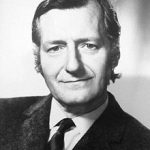
  • John Horam – 1978 Speech on the M25 Motorway

    Below is the text of the speech made by John Horam, the then Labour Under Secretary of State for Transport, in the House of Commons on 2 November 1978.

    I must confess that junior Ministers do not always welcome Adjournment debates, particularly junior Ministers at the Department of Transport. We have had only two days of this Session so far but this is already my second Adjournment debate. But I am grateful to the hon. Member for Twickenham (Mr. Jessel) for raising this issue tonight, and I think that we all agree that he has done the House a service in doing so. Perhaps that explains the unusually high attendance for an Adjournment debate.

    The Government have said continuously that we welcome more parliamentary discussion of the national road programme. This is clearly not a matter suitable for debate at local inquiries. I am therefore glad that the hon. Gentleman has provided an opportunity for the House to discuss the M25 in particular, and I welcome the chance to make the Government position clear.

    The question of priority has been to the forefront of the minds of those hon. ​ Members who have spoken. We said in our White Paper on roads, published in April, that we attach the highest priority to the completion of the M25. We mean what we say. We intend to give the work on the M25 all the available resources in terms of manpower and attention that it requires. Whenever the question of the M25 comes up, it gets first priority for available manpower and resources. That must be plain to all hon. Members, and it is the position that I want to establish.

    In reply to the hon. Member for Bexleyheath (Mr. Townsend), let me say that there has been no avoidable delay at all in sections of the M25. Of course, public inquiries take time. All the statutory procedures must be gone through, quite rightly, but there has been no delay due to any failure on the part of the Department to give this the highest priority. I assure the hon. Member of that.

    I hope, therefore, that I have established beyond doubt this evening, once again, the Government’s complete commitment to building the M25 as fast as we possibly can.

    Mr. Townsend

    Is it not possible, though, to bring forward the completion date?

    Mr. Horam

    The answer is “No”. Of course, we shall bring the completion date forward if it is possible to do so. But the major factor in determining completion dates is the progress of the statutory procedures and public inquiries. Everything else is done as quickly as possible, because it is given top priority, frankly, in the office and so forth. Therefore, I think that it is simply not physically possible to bring it forward. If there is any way in which we can save time, of course, we shall.

    But in the nature of things, there is a great deal of public interest in this matter, and there are bound to be long public inquiries. They cannot be avoided, and rightly so. Therefore, I think that we are probably stuck with the sort of timetable that we have now, which is probably fairly realistic in the circumstances. I think that we must avoid delay on that, but obviously I cannot promise that we shall bring anything further forward than we have already said.

    Let us look at the advantages of the M25. The Greater London area, 35 ​ miles across, is a great obstacle to through traffic, including traffic to and from the east coast and Channel ports and Tilbury docks, and the first advantage of the M25 will be to provide a way round this huge area. It will also provide a convenient link between Heathrow and Gatwick and from these airports to the M4 and the M1. This traffic has no business in London and there is a clear need to provide a bypass for it.

    In addition to that, the road will also act as a general distributor. It will link the radial routes which carry traffic in and out of London. Drivers will be able to reach places in London or find the most convenient exit road without crossing the centre or using existing inadequate orbital routes. This function has become more important since it was decided not to go ahead with Ringway 3.

    Thirdly, the M25 will provide some local relief for congested roads on the outskirts of London. This was of particular relevance to the hon. Member for Twickenham and to the other hon. Members who have spoken in the debate.

    Obviously, a road designed to serve an orbital function cannot produce relief for all local roads along all its route. We do not claim that the M25 will produce a marked reduction of traffic in central London. But many suburban areas will see a marked improvement to their environment when the road is finished. It will divert heavy through traffic from some roads in inner London. In some places the provision of an alternative route for through traffic will make it easier to introduce desirable traffic management schemes and to prevent rat-running through residential areas. As the hon. Member for Twickenham pointed out with great conviction and strength, it will be much safer than existing roads.

    I now turn to questions of present progress on particular parts of the road, with which the hon. Member and his colleagues are concerned. On the overall picture, the motorway is approximately 120 miles in length. Of that, 23 miles—not 20, as I think the hon. Member said—are now open. Fourteen miles are under construction, and for a further 50 miles the line has been fixed. As has been said many times, we hope for the completion of the entire thing by the middle 1980s. I do not quite know how that ties in with the ​ Golden Jubilee to which the hon. Member refers, but the mid-1980s is the target.

    Mr. Jessel

    It depends on what the hon. Gentleman means by ” he mid-1980s”.

    Mr. Horam

    “The mid-1980s” is a fairly flexible phrase, but, none the less, it cannot be stretched too far.

    On the details within the area, which will concern the hon. Member, which I define roughly as the area between the M4 and Reigate and Surrey—that broad south-west part of the M25—the short section between Egham and Thorpe, as the hon. Member knows, was opened to traffic in December 1976. Work is under way on the section between Thorpe and Chertsey—and we hope that that road will be opened to traffic in 1980—and on the bridge over the Thames at Runnymede. We hope that the bridge over the Thames will be completed next year. The section north of the bridge to Yeoveney will begin soon. The remaining sections still have formal procedures to complete, but I hope that the link between Chertsey and Reigate will be completed in 1983, and to the M4 and to the north by 1984.

    The hon. Member for Twickenham asked me for details of the consequential effect of the M25, when completed, on his constituency and the area generally around Twickenham, Hampton and Kingston. He quoted the figure of 25 per cent. for relief of traffic crossing over Hampton Court bridge, and wanted me to explain the difference between that figure and the GLC figures for relief, for example, on the A312. It was given, quite rightly, as 10 per cent. to 15 per cent. The difference is that Hampton Court bridge is more part of an orbital route, whereas the A312 is more a radial route.

    Mr. Jessel

    That is not correct. The A312 runs from north-west to south-east and at right angles to any radial route into London. It is a purely orbital route. I am afraid that the hon. Gentleman has been misinformed by his advisers on this.

    Mr. Horam

    I always regret being misinformed by my advisers, and obviously the hon. Gentleman’s knowledge of the local geography is infinitely superior to mine. But the basic point, however we define orbital and radial roads, is that radials will clearly benefit less than orbitals from the building of another orbital ​ route. We believe that, basically, relief on radial routes will be about 10 per cent., whereas that on orbital routes will be rather higher. That is the destinction, and it explains the difference between the two sets of figures.

    Concerning heavy goods traffic, the hon. Gentleman asked what would be the relief there. If we are talking about Hampton Court bridge, where we estimate that the traffic will be a quarter less as a result of building the M25, the figure for the reduction of heavy lorries will be roughly 8 per cent. That is the only figure I can make available at the moment. If I have further information on that point I shall make it available to the hon. Gentleman.

    The hon. Gentleman asked me a detailed point about the Hampton Residents’ Association. Obviously a residents’ association of that kind, with the interests it must have, must be given every facility to make its views known at any public inquiry. I do not know the exact circumstances of the particular case, but I shall have them looked into with that general objective in mind. I shall write to the hon. Gentleman after I have conducted my investigations. If he will bear with me on that, I shall certainly try to try to seek to facilitate the residents’ opportunity to present their views.

    The hon. Member for Hertfordshire, South-West (Mr. Dodsworth) and I have talked on many occasions about this road. Indeed, he has brought deputations to see me about the M40 to Maple Cross section in particular. We talked about this last July when he came with some of his constituents and other people interested in this part of the M25. I know of his desire that there should be no avoidable delay in that section. That is a matter which is fairly early in the pipeline. We do not expect it to be completed until the early 1980s, probably by about 1984. I know that he is anxious that the various sections should be completed more or less simultaneously. We shall do our best to meet that, although there are problems in completing a massive project of this kind and getting the timing exactly right in all the sections. We have the problems very much in mind.

    The hon. Member for Brentwood and Ongar (Mr. McCrindle) reminded me of his concern, which he has pursued assiduously in the House, and with me personally, for the A128 and the conditions on that. I fully recognise that this is unsuitable for the traffic that it is having to bear at the moment. It will be a major beneficiary from the building of the M25. Things have not gone entirely smoothly in that eastward section of the M25. We have had some problems over court orders and one mistake that we ourselves made set back the progress by some months. As the hon. Gentleman rightly said, there is now a public inquiry going on at this moment in Hornchurch. Perhaps by now it has been completed. Again this is something on which progress is being made. All things being said, there has been reasonably satisfactory progress.

    Mr. McCrindle

    Since the hon. Gentleman has confessed that an error at his Department, which I do not hold against him, did indeed hold up progress on the section of the M25 from the A13 to the A12, and remembering that there was to be a gap in time between that section being completed and the section between the A12 and M11, is it a practicable proposition now to try to bring the commencement of each of those sections sufficiently close so that effectively they are developed simultaneously?

    Mr. Horam

    That is a very interesting point and I shall have it looked into. The hon. Member for Bexleyheath was very much in favour of continued progress on this road and made a number of valuable points about the progress of public inquiries. I shall study carefully what he said.

    I come back to the more general point about which the hon. Gentleman was taiking in his contribution. Obviously, hon. Members wish that there was even faster progress than we are able to talk about tonight. I certainly wish that were so. But it would be wrong to underestimate the formidable amount of work in designing a motorway 120 miles long round the fringe of a built-up area such as London. Much of its passes through the Metropolitan green belt, including areas of outstanding landscape value such as Epping Forest and the Kent Downs. From the beginning we have tried to design the road so that it would do the minimum damage to the environment. The greatest care is also needed to avoid unnecessary disruption to homes and communities ​ strung along the route. The new road will affect traffic movements on all the existing roads which lie near its route. All these effects have to be assessed, and the junctions designed so that it brings the maximum relief to existing roads and yet does not create too many new traffic problems on roads which act as feeders.

    We have to consult the public living in the areas through which the road passes to get their views on the preferred route. Then we have to go through the formal procedures laid down in the Highways Acts. In the White Paper on the review of inquiry procedures we described the changes we have made in order to meet the concern expressed by the public about the existing system. I hope that the changes will help the objectors in presenting their case as well as preventing the difficulties which have been experienced at some inquiries and which have made it difficult to hold a fair and reasoned examination of the road proposals. The inquiries which have started this autumn are under the new rules, and I believe this has made things easier for all the parties concerned. In answer to the hon. Member for Bexleyheath, I do regret that some people have still sought to make their protests by noisy, undemocratic means. I am grateful that the inspectors have been able to ensure that this small minority have not been able to stop proceedings, and that examination of the proposals is going ahead.

    We recognise that in the past the scope of inquiries has not been wide enough to examine the justification for a road as well as its alignment and other more detailed effects. We accept that the case for each section of M25 should be examined at the line inquiry in the same way as any other road. But I must make it clear that it is the Government’s policy to build an orbital route round London and the individual sections must be considered against that background.

    The hon. Member has referred to the advantages which the road will bring. I think his views are shared by the over-whelming majority of other hon. Members. But there are some organisations which question that. They fear that when the M25 is completed it will act as a magnet for commerce and industry, drawing firms out of inner London and creating pressures for undesirable development in the green belt.

    Our view of the importance of the M25 is of course fully shared by all the local planning authorities concerned. The South Eastern Economic Planning Council has said that it will have a significant beneficial effect on the economy of the region. Once the M25 is built, journeys will become possible which would not be undertaken at present and new patterns of industrial, commercial and social activity may be formed. These cannot now be forecast except in the most general terms. But there is no reason why these new patterns of movement should create irresistible pressure for growth to the detriment of the green belt or of inner London. The planning authorities have a full range of powers to resist or contain pressures for undesirable development in green belt areas, amply backed by the reserve planning powers of my right lion. Friend the Secretary of State for the Environment.

    At this stage it would be both impracticable and not in the public interest to hold a public inquiry into the entire remaining length of the M25. Decisions have already been taken on the assumption that it will be completed. For example, the recommendations of the Layfield panel on the Greater London development plan and the Government’s subsequent decisions on them might well have been different if there had been no plans—

    [debate adjourned]

  • Toby Jessel – 1978 Speech on the M25 Motorway

    Below is the text of the speech made by Toby Jessel, the then Conservative MP for Twickenham, in the House of Commons on 2 November 1978.

    I am grateful for the selection of my subject—the urgent need to complete the M25 London circular motorway, which is of great concern to many of the 12 million people in South-East England who comprise a quarter of the population of our country.

    In 1934, Mr. Hore-Belisha, the Transport Minister who invented Belisha beacons, set up a committee which recommended strongly the building of an outer orbital road round London. Forty-four years have gone by, and now only 20 of the 116 miles of the M25 circular motorway are open.

    I hope that the Minister will be able not only to reassure us that the Secretary of State for Transport meant what he said in his roads White Paper this April that currently the M25 had top priority—but also that the M25 will at the current rate be completed in time for the golden jubilee of Hore-Belisha’s committee. We expect the Government to get on with it and to get on with it fast.

    The objectors to motorways get so much coverage from the media, both broadcasting and the press, that the case for motorways often seems to go by default.

    The first advantage of motorways is safety. On average, a motorway is three times safer to drive along than an ordinary main road.

    The second advantage is the ease of movement. We all know how exhausting and exasperating it is to try to get from one side of London to the other or to cross London at an oblique angle. If one tries to go from Twickenham to Essex, it is a slow, exhausting journey. The same is true if one drives from South London, for example, from Reigate, across to Enfield or from Sevenoaks to Watford. The journey is all but impossible. Anyone going to another part of the country and trying to do a similar 20 or 30-mile journey between two towns—Manchester to Liverpool, Derby to Nottingham, or Glasgow to Edinburgh—expects to find a fast road between them. There is no reason why the inhabitants of South-East England should be deprived of a fast road for a journey of similar length if they wish to make it.

    Thirdly, there is the benefit to towns and villages now enduring heavy through traffic which will be relieved by the motorway bypassing them.

    Fourthly, there is the economic benefit. Motorways cut costs in the distribution of goods, help to hold down the cost of living and inflation and improve our export prospects. This is especially true of the M25 which will link with the Channel ports.

    However, the construction of the M25 is being delayed, not only by the slipping of the Government programme but by the organised obstruction of local public inquiries relating to different stretches of it. Of course, routes have to be scrutinised closely and Parliament has insisted ​ that under the law people who might be affected have the right to have their say. That is as it should be in a free country. But some people are now abusing that right. They are deliberately obstructing public inquiries from getting on with their work. That is not only turning democracy on its head; it is also utterly selfish, and it is acting with total disregard for the safety and well being of other people.

    I said that on average motorways were safer than other roads. If a motorway is stopped, the effect is to kill and injure people. Let us take as an example the 12-mile section of the M25 from Reigate via Leatherhead to Wisley and the A3. The opening of that part is being held back by protestors against the Leather-head interchange. A delay of one year is likely to cost 600 personal injuries and three deaths among people who would otherwise have used that motorway.

    There are also the people who have to endure the exhausting nuisance of heavy traffic thundering past their houses which would be bypassed by the M25. Their needs are being wholly ignored by the motorway protesters. For example, a massive quantity of traffic is pouring through Uxbridge Road, Hampton Hill and the village of Hampton in my constituency. Part of this traffic would be taken away by the M25, although the amount is uncertain. On 4th February 1977 the Under-Secretary told me that the M25 would cut traffic over Hampton Court bridge by a quarter. Last month the Greater London Council estimated that the reduction of traffic in Hampton would be only 10 per cent. to 15 per cent. That is a lesser amount but it would be a significant cut. I would like to know the right figure and what the percentage would be for the cut in the proportion of heavy lorries, which are particularly annoying.

    I would also like to ask why my constituents who will benefit from the construction of the M25 were not notified by the Department of Transport of the public inquiry into the section which would benefit them. I would like to ask whether the Hampton Residents’ Association and the Hampton Hill Association can be invited to give evidence to the public inquiry.

    It is essential to speed up the completion of the M25. I hope to hear that ​ the Government intend to redouble their efforts to bring that about.

  • Alan Lee Williams – 1978 Speech on the Loyal Address

    Below is the text of the speech made by Alan Lee Williams, the then Labour MP for Hornchurch, in the House of Commons on 1 November 1978.

    I warmly welcome the Gracious Speech. Although it is not one of the most exciting Queen’s Speeches that we have heard for a number of years. It is an immensely practical speech. I think it indicates that the Government will give priority to the fighting of inflation, so I welcome that very strongly.

    I should like to make a brief reference to the paragraph in the Queen’s Speech which calls for an improvement in the Atlantic alliance. I draw attention to this item because I think that an opportunity has been missed by not giving higher priority to the question of standardisation. It is a missed opportunity, because President Carter made a very notable speech in March of last year on this subject. Both the Congress and the Senate have made their position clear. That is that they are very interested in pushing the standardisation of weapons within the Atlantic alliance, which, incidentally, would bring great economic benefits to Britain.

    Therefore, I am very disappointed that there is no particular reference to it in the Queen’s Speech, although, perhaps, proposals will be brought forward to the House. However, as there will not be a debate about defence included in the debate on the Loyal Address, the House will not be informed about that.

    I very much regret that during the debate on the Loyal Address, in which we shall be devoting a long time to a number of other subjects, there has been no demand from either the Opposition or other quarters of the House—apart from ​ myself and, I hope, others too—for at least some discussion about defence.

    Standardisation brings great benefits to us, but it also raises another subject of which I should like to give notice rather than attempt to debate tonight, because no Defence Minister is present. I am really just putting down a marker. In my judgment, one cannot discuss standardisation of weapons without dealing with the question of specialisation within the Atlantic alliance itself. One goes with the other. I should like to see the Government giving some priority to this matter in the coming Session.

    What I mean by specialisation is that further thought should be given to the proposition which has been discussed within the alliance for years—that is, that individual members of the alliance should be encouraged to concentrate on producing those forces that will not be copied or repeated elsewhere within the alliance. For example, there is a very strong case for having an air force composed of Dutch, German and United Kingdom elements, so that we have a tactical air force which is truly Europeanised, and one could extend that argument—I do not intend to do so this evening—to the naval forces.

    I do not think that enough attention has been given to this subject, and it is part of the argument for standardisation and the proper effectiveness of the Atlantic alliance to allow nation States to concentrate on the provision of the arms and services in which they have particular expertise. I believe that an opportunity has been missed by not giving proper priority to this subject. This will cause some disappointment, but perhaps my disappointment can soon be overcome if at some stage—perhaps my hon. Friends will pass this on—some reference is made to this subject by the Government.

    If it is not, disappointment will be felt by those who have been pushing this matter for a long time and asking the Government to give top priority to standardisation. I hope that, once the Government have accepted that, they will go on to look at the implications of specialisation so that we can increase the effectiveness of the Atlantic alliance.

    I welcome the Gracious Speech, but I ask the Government to make a statement at the earliest opportunity on the matters that I have raised.

  • Albert Costain – 1978 Speech on the Loyal Address

    Below is the text of the speech made by Albert Costain, the then Conservative MP for Folkestone and Hythe, in the House of Commons on 1 November 1978.

    The arc lights are now out, the ceremonies to which we looked forward today are over and we are back to reality. When history comes to record this last Session of a somewhat pathetic Parliament, it will be described as the marking time Parliament. It is marking time because the Prime Minister is waiting until the gush of oil from the North Sea is sufficient to give this country an income which will allow him to make up some of the defects which the Government have brought upon themselves.

    It was perhaps unusual for the general public this morning to see a House crowded with Members and tonight with as many empty spaces as there were Members this morning. It is hard for the public to understand what it is all about. But those of us with parliamentary experience realise that it is the custom of the House that certain days are given to certain subjects and that Members have gone away to prepare their speeches on specific subjects.

    I should like to deal in some detail with the hospital services referred to in the Queen’s Speech. Indeed, I promised the Secretary of State for Social Services that I would correct an impression which I gave in a speech in July when I drew attention to the fact that he had special priority for hospital treatment. The right hon. Gentleman took it the wrong way. Indeed, he wrote saying that I did not appreciate how ill he was. However, in my speech I said that we hoped his ​ illness was not severe and that he would soon be able to come back to the House.

    The point that I wanted to make was not that he had priority for hospital treatment. I should point out that my brother died from a heart attack because he could not get medical treatment quickly enough. His illness did not allow it. What I wanted to point out and would point out again—the Secretary of State will have the right to reply if he winds up the debate tomorrow—was the extraordinary situation of a Minister of the Crown saying that he would only go into a public ward and would expect to receive the same treatment as perhaps one of my constituents who might come from a more lowly background.

    The Minister rightly had conferences with his officials in a public ward. We know that took place. I do not suggest that he should not have done it. If he can do it and keep his health, so much the better. What I find so extraordinary is that, for doctrinaire purposes, the Government should feel that it is all right for a Minister to go into a public ward and to have press facilities when in fact it would be better for the hospital and everyone else concerned if the Minister were to go into a private ward, just like the director of a large company, and have his meetings there.

    I make no more of it. I apologise to the Secretary of State if I misled him into thinking that he got priority because he was ill. Anyone who is ill should get priority. However, the Minister should not boast that he went in to a public ward. I promised that the next time I spoke on the subject I would make the matter clear. I hope that I have made it clear. If the Minister speaks tomorrow, he may wish to add to what I have said. If he disagrees with what I have said, I shall be happy to intervene in the debate to make it clear if I have not done so.

    This Queen’s Speech is a marking time speech. It hopes to collect votes. It has been designed to appeal to and bring together the smaller parties. Therefore, we find promises and tempting bait for the smaller parties. We find that it makes reference to the national aspirations of each country of the United Kingdom. But let me leave that and come to the Speech itself.

    ​The first statement which I find particularly interesting is:

    “My Government will seek to ensure that respect for the law is maintained”.

    My hon. Friend the Member for Liverpool, Wavertree (Mr. Steen) has dealt with that matter in some detail. I shall not bore the House further, except to say that, as long as we have Cabinet Ministers in picket lines defying the police, I do not see how the Government will ensure the respect for law and order which they claim in the Gracious Speech they intend to maintain.

    I found another item interesting. It is an attempt to catch votes. It reads:

    “My Government are resolved to strengthen our democracy by providing new opportunities for citizens to take part in the decisions that affect their lives.”

    No hon. Member would deny the right of an individual to state his case. I was once PPS to the then Secretary of State for the Environment, my right hon. and learned Friend the Member for Hexham (Mr. Rippon). He was anxious that individuals should have the right to state their case, particularly at planning inquiries. I am glad to see the Under-Secretary of State for Transport in the Chamber because a number of such inquiries affect roads.

    Something has gone basically wrong. People seem to feel that the only thing that they should do when they are given an opportunity to state their case is to oppose. We have had the pathetic experience of public inquiries being interrupted by those who oppose a particular proposal. Such people act in an undemocratic manner. They act in that way because of the strong lobby which believes that that is the only way in which to state a case.

    Perhaps we should take this opportunity to give greater thought to a more constructive approach to planning. I can remember saying that the most important thing in a person’s life is to have a house of his own, and the next most important is to form a society to ensure that no one else comes along to spoil the view.

    Punch once published a cartoon showing someone at a half-built house saying to his bride “We have bought our house, let us now form a residents’ association to see that no other houses are built here.” We must have machinery to enable ​ people to express an alternative rather than a negative or positive view.

    I found it difficult to pick out the proposals which are intended to provide a greater opportunity for public participation. I presume that the public should have the opportunity to discuss the White Paper on broadcasting. All hon. Members receive many letters expressing opinions about programmes and broadcasting procedures. Hon. Members are regarded with slight suspicion by the broadcasting authorities. Perhaps arrangements could be made to enable constituents to communicate their views to the authorities without having to write to them. Some people find it difficult to write letters. Sometimes they sign petitions which they have not read, but they find it difficult to write letters.

    I am particularly interested in constituency terms in the Bills which will seek to improve safety and discipline at sea and to help control marine pollution. My constituency is particularly susceptible to the effects of Channel collisions. My hon. and learned Friend the Member for Dover and Deal (Mr. Rees), who is present tonight, knows very well that if the ships get past Folkestone they then have to get past Dover, with all the danger of the Dogger Bank and the Goodwin Sands. The difficulty is in meeting the need for more experienced officers and crew to control these ships.

    I have the honour of having Trinity House headquarters at Folkestone. I frequently have discussions with the pilots who operate from this station. I am always greatly impressed by their devotion to the service. They will board ships in the most treacherous conditions of storm, wind and wave because they feel it essential for them to guide the vessels through. I understand that the Government have consulted Trinity House, and it appears to be reasonably satisfied with the legislation which is proposed. Until we see the Bills, we are unable to judge them, but when they appear we shall study them most carefully.

    The next aspect of the Gracious Speech which concerns my constituency greatly is the part dealing with fishing policy.

    The Speech contains the extraordinary statement:

    “My Government will continue to press for improvements in the Common Agricultural Policy”.

    ​Of course they will. We always intended to do that. When I had the honour of working with the then Secretary of State for the Environment, he always said that until we got into the Common Market we would be unable to make our proper contribution; but having got into the EEC we are in a position to make it.

    The Gracious Speech continues:

    “They will also take all measures necessary to conserve fish stocks and will continue their efforts to achieve an acceptable Common Fisheries policy within the EEC.”

    I have never had any doubts, and those who have been connected with the negotiations and with our fishing policy know very well that we have always contended that the most important part of that policy is the conservation of stocks.

    I have a great suspicion that the Minister of Agriculture, when he thought that an election was about to be cast upon the country, over-exaggerated the difficulties so that he could solve them to his own satisfaction and try in that way to win votes.

    The Health Service is another item in the Gracious Speech which is to be debated at length—I believe it is tomorrow. It is extraordinary, in view of the amount which is now being spent on the Health Service, to realise how much it has deteriorated. My hon. Friend the Member for Wavertree represents an important part of Liverpool. I have been sitting on the Public Accounts Committee where we have been investigating in great detail the additional cost of the Liverpool teaching hospital. It is extraordinary that a hospital which cost nearly £50 million should be delayed from opening because of a disagreement between people in the hospital wondering whether they would be made redundant. A hospital of that sort, which costs so much in interest charges, should be used to the ultimate and not be delayed by bureaucratic procedures.

    In my own constituency we fought to get a new hospital built at Folkestone. In the event, it was built at Ashford. Again, we have a hospital which has been completed and ought to have been commissioned, but it has not been commissioned because there are some disagreements between the parties concerned.

    I hope very much that when the Secretary of State speaks tomorrow he will ​ explain in some detail and tell us what positive steps he is taking to get these hospitals running as the public expect them to run. I hope that he will say how he will cut down the numbers of bureaucrats, which have been building up. Many of the staff in the hospital services joined them in order to save lives. Many of them now say to me that all that they are doing is wasting paper. This is one of the problems. I hope that the Secretary of State will take the opportunity tomorrow to explain what positive steps he is taking to help to carry out what the hospitals are intended to do, which is to alleviate suffering and save lives.

  • Anthony Steen – 1978 Speech on the Loyal Address

    Below is the text of the speech made by Anthony Steen, the then Conservative MP for Liverpool Wavertree, in the House of Commons on 1 November 1978.

    I wish to speak about the part of the Gracious Speech to which I do not believe that other hon. Members have yet addressed their minds. I refer to the great towns and cities and revival of those great cities, because that has been a major plank of successive Government strategies, both economically and socially.

    I think it was the Wilsonian Administration about 10 years ago which started it off. It was quite natural, therefore, that in the Gracious Speech there should be a line about the inner city areas stating that the Government would continue to press forward with their partnership plans. Presumably, the Secretary of State for the Environment will be at the helm, as he has been up to now, directing the operations. This Session he will be armed with the Inner Urban Areas Act and the partnership committees now fully in being. The only problem is that the Secretary of State has now been at the helm for some three or four years and not very much has happened to show his work.

    If one looks at the cities, one will not see the new dawn about which the Secretary of State has been talking. In fact, many people have grown restless when they have seen no evidence that the cities are on the mend. They also find it difficult to reconcile the utterances of the Secretary of State, who keeps ​ saying how gratified he is with progress, with the stark reality which shows our major cities continuing in their rapid decline. How can the Secretary of State possibly equate his optimism with the persistently high levels of unemployment which we find in most of our major urban areas, with the lengthening list of firms wanting to leave the inner cities, or with the continuing exodus of people from the inner areas to the outer zones and the ever-increasing shortage of good homes? I am only sorry that the Secretary of State for the Environment is unable to be with us tonight. In the face of this situation, the provisions of the Inner Urban Areas Act are damaging. I shall explain why this is so.

    The Act has given the poor urban authorities the powers to increase their borrowing. Therefore, those already heavily committed in debt to crippling housing debt charges can just increase those charges. The Act has tempted some of the most deprived urban authorities to become even more deprived. It is driving them deeper and deeper into debt and creating even more problems for them in the future.

    The Inner Urban Areas Act is just one manifestation of the tricks up the Government’s sleeve. It is a mirage created by the Government that prosperity for our cities is on the horizon. The illusion has been fortified by a whole gamut of cleverly chosen named projects which convey positive thinking but which so far have meant absolutely nothing.

    For example, there are now seven so-called partnership schemes covering 15 local authority districts. There are 15 programme districts and 14 recently announced designated districts. These are on top of the existing areas which are included in development area status, special development status and the old assisted areas. No one quite understands what these areas are or what they do. All we know is that there has been no sign of any revival in our towns and cities in the last four years.

    It seems from the Gracious Speech that the Government propose to continue with those schemes and with those names. In the last few years the Secretary of State has followed the publication of the White Paper on policy for the inner cities by doing two things. He has topped up the ​ urban aid programme, which had lost its real force, and he has introduced a Bill, which is now an Act, which will make the poor local authorities poorer because they will be asked and expected to increase their debt charges.

    The White Paper from which we expected so much is no more than the culmination of a decade of activity in research analysis action projects which have now cost the taxpayer £100 million. The House will recollect where all this began—with the urban aid programme, which first came about in 1968. This was to deal with the pockets of deprivation. Then we had the community development project, the educational priority areas, the young volunteer force, the neighbourhood schemes, the urban guideline studies and the inner area studies. Then research was started into transmitted deprivation, followed by the quality of life studies. Then we had the urban deprivation unit and comprehensive community programmes, and the GLC set up a deprived areas project. There are now area management and research trials in Liverpool.

    When the White Paper was published 18 months to two years ago, the nation held its breath and thought that at last, after all the research schemes and action projects, the actual action was about to start. The principal actors seemed to be in the right place, the set-up was brilliant, the lyrics were racy, the producer came from a good stable, and, indeed, it was to be a spectacular. What, in fact, did we see? None other than our old friend Mickey Mouse. The Government’s approach to the cities’ problems has been as meaningful as a Walt Disney cartoon.

    In Liverpool there have been only three partnership meetings in the last 18 months. These were chaired by the Secretary of State for the Environment himself. There have been a few other Ministers present—from Industry, Employment and Education. Then the leaders of the Conservative, Liberal and Labour groups also attend, and county councillors, the health authority and many others are involved in partnership meetings.

    If that was all we were witnessing, we would perhaps be content that there was one group of people looking once again ​ into the problems of the inner city. But that partnership committee is but one of a great number of committees. There is an officers’ steering committee consisting of more than a dozen principal officers, not to mention the working groups of senior officials on the economy, housing, physical areas, environment, recreation and transport. There is also an inner area sub-committee made up of 20 councillors, and there are more committees and sub-committees than I have mentioned.

    But as the non-statutory bodies—the voluntary organisations and community groups—are not involved in the partnership, despite pressure from this side of the House that they should be included, the voluntary bodies have started to go it alone. They have set up rival partnership committees. The one that is now running in Liverpool has 170 organisations meeting every two or three months, running exactly in parallel to all the other Government committees. The conflict and confrontation are right there in the partnership.

    Despite the buzz and whizzing of papers through the official corridors, the numbers of acres of vacant and derelict land in Liverpool are still around 2,000, and over three-quarters belongs to the city council and nationalised industries.

    Therefore, despite the huge build-up to the effect that all the problems were to be solved, we have still exactly the same number of derelict and vacant areas which are not being used to produce wealth or create jobs in the very area where the partnership committee is at work. It is here that we see land hoarding at its worst. This has caused artificially high book values. Not surprisingly, authorities cannot find buyers because scarcity knocks up the rent and rates as well as driving small businesses away from the inner cities, and jobs with them.

    This is no way to woo back the thousands who have already fled the inner city in the last decade. But surely that is what the partnership is purported to be all about. It is about revitalising the inner areas, creating new jobs and new homes and developing new businesses. What is the point of building new advance factories in inner Liverpool on Government money when there are so may good, empty, older factories which are not used and which, with a little modernisation, rehabilitation and imagination, ​ could be good for use again? What justification can there be now that the Inner Urban Areas Act is in force for permitting the Lucas Aerospace factory, a company which has closed its large old premises in my constituency, to move out into a green field site on the edge of Liverpool, depriving the inner city of both jobs and rate income?

    That makes nonsense of partnership, because that is what partnership would not approve of. There is plenty of space left in Liverpool and many other principal areas which could be used first before green field site development. But green field site development on the edges of a city is always cheaper and the infrastructure in the new sites is more reasonable than if one seeks to put infrastructure back into the inner cities. One reason for this situation is the artificially high land value which the inner city now attracts.

    It is also strange that the partnership concentrates on the inner areas, because many of the large provincial towns, in which the population has moved from the inner city to the outer city, are where the concentrations should be. The populations are no longer in the core areas because, as a result of demolition, they have moved to the edges. Yet the edges of the city comprise the one area—and Liverpool is no exception—not included in the partnership.

    The partnership specifically excludes those major areas of population density and concentrates on inner area revival. It is in the outer city that the social problems exist. The one thing that the partnership areas have in common is that they include a number of marginal seats within their boundaries, and they have also suffered from severe cut-backs in public expenditure over the past five years.

    For example, we were spending £5·3 million on improvement grants in Liverpool in 1974–75. In 1977–78 that figure was down to £1·5 million. Local authority mortgage loans to buy and improve totalled £4·7 million in 1974–75 but barely £1 million last year. If the partnership is talking about reviving the inner city and rehabilitating the older houses, it must be pointed out that the sums of money in the local authority budget which could do this work have been drastically cut.

    What is partnership all about? All one can say about it is that the Government are trying to put right the money they took away. There is no question of giving more money or new money. They are merely putting back and making good the previous losses. If this is all the partnership is about, why set up such an elaborate structure? We could have done without the Minister and his colleagues walking down Dale Street in Liverpool, smiling from side to side and posing for local photographers. But that is what it appears partnership is about, because to date the new money is hardly sufficient to replace the old and the replacement money is accompanied by far greater Government controls and sanctions. First they took it away, then they put it back to what it was before—but with increased controls and sanctions.

    Even on the most charitable interpretation, the most that can be said for the partnership in our area is that it is a little more of the same thing, but it has done no particular good for people living in the inner areas. Far from finding cures for old ills, the partnership appears to have done little more than partly refill some of the local authority coffers for special needs—improvement of council housing, rehabilitation of private homes, grants for mortgages and loans and grants for voluntary work.

    Liverpool found its £30 million housing budget increased to £40 million—the level of some years ago—through the partnership. We then had the extraordinary situation of the director of housing passing a confidential note, which everyone now knows about, telling the local authority that he cannot spend £40 million because he does not have the machinery to cope with and process all the applications which will result from the increased cash and saying that, unless he is given more staff and resources or the rules and regulations are changed, he will have to hand back £3 million to £5 million this year. That has happened in an area where the housing is probably the worst in the country.

    There is no point in topping up a fund which has dropped unless it is accompanied by all the paraphernalia and bureaucracy that is needed to run the fund or unless the rules are changed. The partnership will not do that. It insists on playing according to the rules as they ​ have been, rather than having new approaches and innovations.

    I am told that similar problems exist in other spending departments where an injection of funds, far from helping to solve problems, is merely creating new problems within the departments. If the partnership were just this it would be an extremely sick joke, because the new machinery would be fouling up existing mechanisms which were working before the partnership came along. However, I suggest that there is a far more sinister move behind the partnership.

    One may ask whether this is the first step of the Government to establish a sort of regional supremo for the metropolitan areas which the Government feel have failed to rejuvenate their urban areas. Is there to be a sort of local dictator from London to push, chivy and ultimately control the local authorities in the area? Let me explain why I think that this is happening.

    In some ways the Government have lost faith in the Liverpool city council as well as the Mersey county council. They consider those local authorities to be without ideas, but that is not true. The Liverpool city council is already building houses for sale, and the county council has a number of exciting and interesting projects to revive the economy of Merseyside. However, such initiatives are seemingly discouraged because of the partnership’s insistence that every new project that emanates from the city council or county council must come under the partnership scheme.

    There is already talk about setting up sub-committees of the partnership so that the local authorities are subordinated to this new tier of government. Is the partnership to become a new tier of government? Has it been subtly erected above the local authorities so that the Minister has control of what goes on at that level? Can we expect this to be the first stage of manoeuvring in regional control and regional government? Is that what the partnership is all about? If the partnership means a new approach and a new initiative, where are they’? All that we have seen is a little more of the old thing served up in new guises.

    There is talk of the urban aid programme. It is the upgraded 1978 model of the 1968 scheme. It has broader terms of reference and an increased amount of public money. No one has ever seen the urban aid programme tackling our major cities’ problems. On the contrary, it has helped to bring forward some of the projects that are already in the pipeline that the city council would have undertaken in any event. It has helped to do that a little earlier. For example, there is a sports complex in Edinburgh Street, Liverpool. It is stuck in a park in the middle of nowhere. The council has been trying to bring it forward for many years. As a result of the urban aid programme it has managed to start building it now. The complex is virtually completed. However, it will do nothing to solve unemployment, housing or the provision of jobs in the inner area.

    One wonders whether the Government would be better to pay off Liverpool’s housing debt for a few years—it is now running at £28 million a year—instead of all this partnership nonsense. If they paid off the housing debt for two or three years, that would allow the council to spend its own money as it thought best.

    One of the problems of urban aid is that it distorts the existing priority lists of the local authority by pushing forward schemes in which the Government are particularly interested, thus distorting the picture locally.

    I should like to ask the Minister, if he ever turns up in the Chamber, one or two further questions. Does he expect to hear proposals from one partner in the partnership in areas of concern which are the responsibility of another partner in the partnership? Is it the Government’s belief that the needs of the inner cities can be met merely by taking existing local authority services and Government functions and trying to extend their boundaries? Surely the Home Office community development project showed the limitations of neighbourhood-based experiments finding new ways of meeting the needs of those living in areas of high social deprivation.

    If the Government are not planning to make the partnership a vehicle for new solutions and the creation of change, the cities have been hoodwinked, as well as the people living in them. All that we are ​ witnessing is another project in the same mould that will deceive and distort. It will do nothing to solve the real problems. If the sum result of the White Paper is another, more elaborate talking shop, dereliction and despair in our industrial towns will continue and worsen.

    It may be that the Government have already concluded that there are no solutions to the ailing cities. If so, why erect such an elaborate fa çade to conceal the truth, undermine local authority powers and block up the existing machinery? I cannot believe that the Government are that stupid. It must be part of a greater strategy to bring the cities under Government control with Whitehall and the Minister in a new tier of government on top and in charge.

  • John Stokes – 1978 Speech on the Loyal Address

    Below is the text of the speech made by John Stokes, the then Conservative MP for Halesowen and Stourbridge, in the House of Commons on 1 November 1978.

    It seems quite a long time now since I heard the Gracious Speech read over six hours ago. Apart from the excellent speech of the leader of my party, my main recollection of all the other speeches I have heard is of their length. I hope that in my case I can speak to the point and not perhaps at such excessive length.

    I found it hard to reconcile the complacent tone of the Gracious Speech with the state of affairs in the country today. I wish to speak with extreme seriousness for a few moments, quite broadly, on the present state of our country. There was no recognition in the Gracious Speech that the nation is demoralised and that our proud national spirit is to some extent diminished. Nor have the Government brought forward any new measures to fulfil their fundamental duty to defend the realm and maintain law and order in our land.

    The second paragraph of the Gracious Speech reads:

    “My Government will continue to safeguard the nation’s security and make a full contribution to the North Atlantic Alliance”.

    I do not believe that the Government are continuing to safeguard the nation’s security to anything like the extent that they should, nor do I believe that they are making “a full contribution” to NATO. We know this from the complaints that we have heard from Dr. Luns and others.

    Some weeks ago I was with our forces in Germany. As everyone knows, they are short of almost every kind of equipment, notably tanks and aircraft, but also vehicles. Many of those which they have are older than the men who drive them. The forces are also short of arms, ammunition and petrol for exercises and manoeuvres. Even more disgraceful, we found that in many units the soldiers were short of certain mundane articles such as boots, socks, and jerseys.

    The troops feel that they are to some extent neglected, and I am afraid that this is true. All ranks have lost faith in the Government. That is a deeply serious matter. They have no confidence that they will be paid properly. I have never come across such bitterness, not only among the serving men but among their wives. Yet now we hear that there is to be yet another defence review and that still more cuts in our defences are envisaged.

    Our forces may soon be reduced to the size of those of a small country such as Denmark or Belgium. In spite of these serious deficiencies, I am glad to say that I found the morale of our troops high. I am certain that this is due to the inspired leadership of the officers, warrant officers ​ and NCOs—leadership which, in my view, is far above that which we see in all walks of civilian life.

    Turning to the situation at home, the Gracious Speech says on the second page:

    “My Government will seek to ensure that respect for the law is maintained, and will give full support to strengthening the Police Service.”

    Yet, as we all know, there is probably more violence now in this country than at any time since the fearful disturbances of the Middle Ages.

    Violent crime, including the most distressing crime of rape, continually increases. Many people in my constituency—and I know that this is general throughout many towns in England—are fearful of leaving their homes at night.

    Protection by the police of private property against burglary or theft has almost broken down, and respect for authority and for the law has woefully diminished. There is general lack of discipline in the community. Vandalism and thuggery continue in many of our towns. The situation in our prisons is clearly dangerous and getting out of hand. Meanwhile, the Home Secretary does nothing. He hardly even wrings his hands. I doubt whether he could keep order in a nursery.

    On the economic scene, we observe a Government presided over by a Prime Minister and a Chancellor of the Exchequer who have seen both prices and unemployment double since 1974. If anyone had prophesied that situation in 1974, he would have been considered a dangerous lunatic. But I believe that there will be no escaping these trends for the nation as long as this Government remain in office.

    Production and productivity are still appallingly low, and unless the situation is improved rapidly there is nothing to prevent the nation from becoming the poorest in Europe. I have recently been in France and Germany. As more and more people now realise, they are increasingly drawing ahead of us in prosperity. One can see it in many ways. When one returns to this country, one’s first feeling is “My goodness, what a poor, shabby nation we have become,” starting at our railway stations, getting into our dirty trains and seeing our dirty streets in London or ​ Birmingham or many of our big towns. If we cannot even keep our trains and streets and public places clean, there is clearly a decline of very serious proportions.

    The conduct of foreign affairs is, after defence and law and order, one of the most important functions of government. As the House knows, I am a student and lover of English history. I am sorry to say so, but I believe that under our present Secretary of State for Foreign and Commonwealth Affairs the nation has reached its lowest point in esteem in many centuries. The Government seem to have ceased to believe in us and in our nation. Yet, if we do not stand up for ourselves, no one else—neither the EEC nor any other nation, and certainly not the United Nations—will stand up for us. What strikes one so forcefully in France is that every Frenchman puts France first, second and third on the list. Do we really think that our Government have the same feeling towards our beloved country?

    In Rhodesia, where I was a few weeks ago, we have the extraordinary and, I believe, almost unprecedented spectacle of our Foreign Office supporting terrorists who have been trained by the Cubans and armed by the Russians. These are the people who are being backed by our Government, particularly by our Foreign Secretary, against the interim Government of Rhodesia composed of blacks and whites. No doubt there are reasons of State for that. No doubt it is not just wishy-washy sentimentality. No doubt this is meant to placate America, which has always hated the British Empire, has never had the slightest idea of how to handle black people, and which certainly can teach us nothing. It may also be an attempt to placate Nigeria and some of the black countries in Africa. But if we do not respect ourselves as a nation, and look after our own people in Rhodesia, no black nation and no black people will have any respect whatever for us.

    I therefore very much hope that next week, when these grave matters come before this Chamber, my party will have the courage of its convictions, above all, listen increasingly to what most people in England are saying and vote determinedly against the continuation of sanctions.

    Finally, we see in education an attempt to devalue examinations and to water ​ down everything of merit. Under this Government, the country is rapidly losing its way, its sense of direction and its sense of purpose. If this goes on, I believe that we shall end up as a sort of second rate Socialist State with lower and lower standards and, of course, less and less freedom. The Government seem quite unaware of the grave deterioration which has taken place, certainly since 1974 and probably earlier. The sooner we have a General Election, the better.

    I noticed a poll in the West Midlands today—and I have some interest in that part of the country—which put my party 18 per cent. ahead. I am not surprised. That is a feeling which I have had all along. I am certain that if an election were held in the next few weeks, we should, at least in England, gain a substantial majority, and then the task of national recovery will have to begin.