Tag: 1978

  • Queen Elizabeth II – 1978 Christmas Broadcast

    Queen Elizabeth II – 1978 Christmas Broadcast

    The Christmas Broadcast made by HM Queen Elizabeth II on 25 December 1978.

    At Christmas, we look back nearly 2000 years to an event which was to bring new hope and new confidence to all subsequent generations.

    The birth of Christ gave us faith in the future and as I read through some earlier Christmas Broadcasts, I was struck by the way that this same idea – faith in the future – kept recurring.

    My grandfather, King George V, started the tradition of the Christmas Day Broadcasts back in 1932. As he spoke from his study at Sandringham, the ‘wireless’ – as we used to call it – made it possible for millions of people throughout the world to hear the voice of the Sovereign for the first time. And in that first broadcast, they heard him talk about the future – as he saw in 1932.

    Voice of King George V (1932)
    It may be that our future will lay upon us more than one stern test. Our past will have taught us how to meet it unshaken. For the present, the work to which we are all equally bound is to arrive at a reasoned tranquillity within our borders; to regain prosperity without self-seeking; and to carry with us those whom the burden of past years has disheartened or overborne.

    My father, King George VI, developed this theme of optimism and hope, even during the most difficult years of his reign.

    On Christmas Day 1939, just after the outbreak of the Second World War, he spoke the words that many of you listening today will remember well.

    Voice of King George VI (1939)
    I feel that we may all find a message of encouragement in the lines which, in my closing words, I would like to say to you:- “I said to the man who stood at the Gate of the Year, ‘Give me a light that I may tread safely into the unknown’. And he replied, ‘Go out into the darkness and put your hand into the Hand of God. That shall be to you better than light and safer than a known way.’”

    At the end of the war in Europe, there was rejoicing everywhere, although beneath it all the problems of the world were only too evident. But on Christmas Day 1945, my father expressed undiminished hope and trust in the future.

    Voice of King George VI (1945)
    Have faith in life at its best and bring to it your courage, your hopes and your sense of humour. For merriment is the birthright of the young. But we can all keep it in our hearts as life goes on, if we hold fast by the spirit that refuses to admit defeat; by the faith that never falters; by the hope that cannot be quenched. Let us have no fear of the future but think of it as opportunity and adventure.

    The optimism of that Christmas message is timeless. When it first fell to me to carry on the tradition that my grandfather and father had developed, I reaffirmed what I knew had been their deeply held beliefs in the future, beliefs which I myself share. This is what I said on Christmas Day 1952.

    The Queen’s voice (1952)
    Many grave problems and difficulties confront us all, but with a new faith in the old and splendid beliefs given us by our forefathers and the strength to venture beyond the safeties of the past, I know we shall be worthy of our duty.

    By 1957 television was a feature of most homes and for the first time the broadcast was televised. That year I spoke on Christmas Day of the qualities needed to sustain our faith in the future.

    The Queen’s voice (1957)
    Today we need a special kind of courage but not the kind needed in battle but a kind which makes us stand up for everything that we know is right, everything that is true and honest. We need the kind of courage that can withstand the subtle corruption of the cynics so that we can show the world that we are not afraid of the future.

    You have heard three generations talking about the future. My grandfather couldn’t have known what was in store for his grandchildren; yet his faith in the future gave him a quiet confidence that the stern tests would be overcome.

    And so it has proved. My father watched his grandchildren take their first steps and he knew that all the sacrifices and anxiety of the dark days of the War had been worthwhile.

    Now it is our turn to work for a future which our grandchildren will step into one day. We cannot be certain what lies ahead for them but we should know enough to put them on the right path.

    We can do this if we have the good sense to learn from the experience of those who have gone before us and to hold on to all the good that has been handed down to us in trust.

    Look around at your families as you are gathered together for Christmas. Look at the younger ones – they are the future and just as we were helped to understand and to appreciate the values of a civilised community, it is now our responsibility to help them to do the same.

    We must not let the difficulties of the present or the uncertainties of the future cause us to lose faith. You remember the saying “the optimist proclaims that we live in the best of all possible worlds, and the pessimist fears that this is true”.

    It is far from easy to be cheerful and constructive when things around us suggest the opposite; but to give up the effort would mean, as it were, to switch off hope for a better tomorrow.

    Even if the problems seem overwhelming, there is always room for optimism. Every problem presents us with the opportunity both to find an answer for ourselves and to help others.

    The context of the lives of the next generation is being set, here and now, not so much by the legacy of science or wealth or political structure that we shall leave behind us, but by the example of our attitudes and behaviour to one another and by trying to show unselfish, loving and creative concern for those less fortunate than ourselves.

    Christians have the compelling example of the life and teaching of Christ and, for myself, I would like nothing more than that my grandchildren should hold dear his ideals which have helped and inspired so many previous generations.

    I wish you all, together with your children and grandchildren, a very happy Christmas.

  • Harold Wilson – 1978 Speech on Rhodesia

    Harold Wilson – 1978 Speech on Rhodesia

    Below is the text of the speech made by Harold Wilson, the then Labour MP for Huyton, in the House of Commons on 7 November 1978.

    I associate myself with what my right hon. Friend the Foreign Secretary and the right hon. Member for Cambridgeshire (Mr. Pym) said about the retirement of John Davies. We shall remember his unfailing courtesy and his diligence in whatever task he was given. Some of us, of course, remember him in his FBI—and later CBI —capacity, ​ I am glad to have the opportunity today to comment on all that has been said and written before and since the publication of the Bingham report on Rhodesian oil sanctions. I was abroad when it was published. When I returned to London, I said then that I would reserve all public comment until this debate since, as I was Prime Minister during part of the relevant time covered by Bingham, I was answerable then to the House and therefore the statement is due to this House.

    At the same time, I called for a full public inquiry involving or invoking whatever powers were needed, which must mean the right to call for the appearance of persons and the production of papers, including all relevant Government documents, Cabinet minutes, Cabinet committee minutes—all papers submitted to the Cabinet and its committees and all interdepartmental exchanges. I have called also for all the relevant papers to be laid as soon as possible before the House itself and to be published. Before I sit down I shall say why I think that that is necessary.

    Even since that time a month ago when I made that statement, still further facts have emerged which keep putting the controversy into a yet different light. A fortnight ago, The Sunday Times carried a story asserting that one of the two British oil companies was still supplying oil to Rhodesia, on a transfer arrangement with Mobil, Caltex and others, right up to a date four days before the Bingham report was published. What that means, of course, is that not one but three Prime Ministers in office from 1968–69 to 1978 were unaware of this disreputable traffic. Whether it was disreputable and illegal must be a matter for the Director of Public Prosecutions and the courts. But over this period there have been three Prime Ministers, five successive Foreign Secretaries and nine Energy Ministers— counting my right hon. Friend the present Secretary of State for Energy as two because he held the position both in 1969 and from June 1975.

    I am perfectly certain that none of those Ministers—none of the holders of those posts in successive Governments—knew of any of these events. Indeed, I should mention that you yourself, Mr. Speaker, received an honourable mention in the Bingham report, particularly for ​ putting inconvenient questions to Shell at one of the meetings when, I think, you were Minister of State. There is in a letter reference to both my noble Friend Lord Thomson and to the then Minister of State, whose name at that time was George Thomas and, I understand, still is.

    The situation regarding knowledge of these facts has not changed from that time right up certainly to 1976. In 1976 the Government sent a report to the United Nations sanctions committee, and this is what it said:

    “The competent United Kingdom authorities have studied the report most carefully, and have discussed its contents with the British oil companies mentioned. These authorities are satisfied that the report contains no evidence of sanctions breaking by any British companies or individuals and have accepted the assurances given by Shell and BP that neither they nor any company in which they have an interest have engaged either directly or with others in supplying crude oil or oil products to Rhodesia.”

    I emphasise that the report said:

    “neither they nor … with others. This is the same position”

    —the report continued—

    “established as in 1968 when Her Majesty’s Government investigated similar charges at the highest level with the same companies.”

    That was 2nd September 1976. The Government made it plain that in 1976 it did not regard the position as having changed since 1968 and that no more about the illegal or disreputable traffic was known in 1976 than in 1968.
    In my own case the first time I received any information—I shall give details to the House in a moment—indicating this traffic now exposed in Bingham was last April, seven months ago. In a speech at Oxford I criticised on that occasion Mr. Andrew Young’s attack on my right hon. Friends the Prime Minister and the Foreign Secretary the previous day, when Mr. Young accused my right hon. Friends on the Treasury Bench of wanting to get rid of the responsibility for Rhodesia. On the following day, 2nd April, I was asked to appear on BBC radio to discuss Mr. Andrew Young’s position.

    I was asked in the course of that interview about sanctions. I repeated what I had always been told and what I had made public, namely, that in my view the breach of sanctions was due to President de Gaulle, who appeared to connive at oil shipments through Mozambique, crossing the border into South Africa, and then, some miles further into South Africa, forking right into Rhodesia. It was a tortuous route, now described in detail in the Bingham report, with place-names and maps. That was what we understood to be the position and it was what I told the House and said publicly.

    Indeed, I had been asked by the Cabinet, as the House knows, to raise this matter of French behaviour with President de Gaulle on my visit to Versailles in June 1967. Our conversation on that occasion and what President de Gaulle said has been reported and is public knowledge.

    My reference to this matter in the BBC programme led to my receiving a somewhat intemperate letter from Mr. Rowland, of Lonrho, which he has recently published. He said that I must have known about the action of BP and Shell, and he enclosed a number of documents of his own purporting to substantiate his allegations about them. I replied to him that I knew no more than what I said on a number of occasions, including the BBC broadcast, but that since his documents seemed to relate to his legal action against the oil companies concerned, I could not comment.

    At this point it is appropriate to quote the Bingham report. At the beginning—

    Mr. Robin Maxwell-Hyslop (Tiverton) rose

    Sir H. Wilson

    I am sure that I shall deal with the hon. Gentleman’s point later.

    Mr. Maxwell-Hyslop

    Could not the right hon. Gentleman send his dirty linen to a laundry—

    Sir H. Wilson rose—

    Mr. Maxwell-Hyslop

    —so that the House can get on with the debate? Will he not—

    Mr. Speaker

    Order. Once the right hon. Member who is addressing the House gets back to his feet, the hon. Gentleman must he aware that those who are intervening must resume their seats.

    Mr. Maxwell-Hyslop rose—

    Hon. Members

    Sit down.

    Mr. Maxwell-Hyslop rose—

    Mr. Speaker

    Order. I thought that the hon. Gentleman’s intervention was Over.

    Mr. Maxwell-Hyslop rose—

    Mr. Speaker

    I know that the House wants to give a good hearing to the right hon. Member for Huyton (Sir H. Wilson), who has an important statement to make to the House.

    Mr. Maxwell-Hyslop

    Ex-Prime Ministers are not absolved from the normal rules of the House. The right hon. Gentleman gave way to me. [HON.MEMBERS: “Sit down.”] I have the same rights as any other hon. Member of this House in debate. The point I wish to make—[HON. MEMBERS: “No.”]

    Mr. Speaker

    Order. May I explain the position? I thought that the hon. Member for Tiverton (Mr. Maxwell-Hyslop), who knows procedure very well indeed, knew that if the person who is being called to speak rises to his feet again he must be allowed to continue, otherwise it will be possible for an hon. Member with an intervention to speak for 20 minutes. The right hon. Gentleman had got back on his feet. Sir Harold Wilson.

    Mr. Maxwell-Hyslop

    On a point of order, Mr. Speaker. It is not in accordance with the rules of order of this House that when a Member gives way to another he can then terminate a short intervention by rising again. [HON. MEMBERS: “It is.”) It is not. I put the question to the right hon. Gentleman—

    Mr. Speaker

    Order. The hon. Gentleman is on one of those rare occasions when he is not correct. [HON. MEMBERS: “Quite right.”] Order. I wish the House would leave this to me. The hon. Gentleman, on reflection, must realise that the House wants the right hon. Gentleman to continue.

    Mr. Maxwell-Hyslop

    Further to that point of order, Mr. Speaker. I willingly and gratefully give way to your ruling.

    Hon. Members

    Oh.

    Mr. Speaker

    Order. I wish that some of those who laugh would give way as quickly.

    ​Sir H. Wilson

    There are some important matters to discuss, and I am sorry that I gave way and caused that long delay.

    At this point it is appropriate to quote the Bingham report. At the beginning of what he calls “Factual conclusions” on page 212, chapter 14, paragraph 3(b), Mr. Bingham says:

    “In making this summary we would emphasise … that the summary is of facts now known”.

    The word “now” was underlined by Mr. Bingham. He goes on:

    “many of the facts now summarised were not contemporaneously known to one or other or both of the Groups ”
    —that is BP and Shell—

    “in London; some were not known until the relevant documents were assembled from many sources for presentation to us”

    —that is, the Bingham pair. He continues:

    “some came to light in the course of the investigation. It would be wrong to assume that all the events now summarised were known to the Groups in London at the time the events were taking place.”

    That is certainly true. Bingham’s examination of 40 witnesses, mainly South Africa-based—especially Mr. Walker— has unearthed many facts. Some, I am sure, were not known to Shell and to BP headquarters. All the more so, they were not known to Her Majesty’s Government until Bingham was published.

    The Sunday Times report of 22nd October this year, referring to the supplies continuing until September this year until four days before Bingham was published, was first denied by BP within the day. The report was then confirmed by BP the following day. If BP did not know that, Her Majesty’s Government had an even smaller chance of knowing. Yet this was going on all the time until September this year. The same is true of fact after fact catalogued by Bingham—some but not all of which the London headquarters of the major oil companies did know, but they were facts, which we, the Government, did not know.

    In August, while I was on holiday, I read press reports seemingly anticipating what the Bingham report would say. They were mainly leaks of Lonrho’s submissions to Bingham. Therefore, in September I availed myself of a former ​ Minister’s right to look at all relevant documents, as well as Cabinet documents and papers, as well as two other documents sent from the Foreign and Commonwealth Office to No. 10. One of these was the letter from Lord Thomson of Monifieth. He said in a Granada Television programme that he had apprised me of the fact that British oil was getting through to Rhodesia. In fact, his letter said that British, French and American oil was getting through to Rhodesia.

    The second of the documents which I especially asked to see, and almost know by heart now, was the minute of the meeting chaired by my noble Friend on 6th February 1969, now published in Bingham, annex II pages 268 to 271. I shall address myself first to those two documents because most of the discussion was centred on them. My study of the documents at No. 10 confirmed that the letter of 15th March 1968, to which he had referred, was sent to me and that I had seen it. I had ticked it in the usual way. Now let me refer to its contents. The letter was from Lord Thomson’s secretary to mine. It was in reply to a memorandum from my office which had asked for an investigation into President Kaunda’s allegations of British breaches of oil sanctions.

    The reply began by outlining the action taken by the Commonwealth Office to secure a rebuttal of the suggestion that the British major oil companies were breaking the sanctions. It stated that it had been decided to use a Question tabled by my noble Friend Lord Brockway in another place that was answered by Lord Brown, then of the Board of Trade. The letter recorded the Minister’s answer of 5th March 1968, which read:

    “The investigations done into the activities of British oil companies leave Her Majesty’s Government satisfied that the British oil compaines themselves are not supplying oil to Rhodesia.”—[Official Report, House of Lords, 5th March 1968; Vol. 289, c. 1220.]

    That was an arranged answer that will be found in Hansard of another place.

    Hon. Members will have noticed the word that I accentuated—namely, “themselves”. I inquired into that. That was a reference to “unreliable purveyors” as we knew them in those days, secondary dealers in Lourenco Marques who were suspected by our people of not being ​ above passing on their supplies to South Africa. Some of them were suspected by our people of not being above sending on to Rhodesia by one of a number of routes the oil that they had bought. The oil majors and the British Government were all at one in warning British companies in Mozambique to be vigilant in checking the bona fides of those whom they supplied. The letter went on to refer to assurances of Mr. McFadzean of Shell and Mr. Fraser of BP on careless sales to those who were really spivs.

    The letter included another much publicised phrase that justified my noble Friend’s answer to a question put to him on the Granada programme. The passage in the letter reads:

    “although we are satisfied that British oil companies have at no time been directly involved in the supply of oil to Rhodesia through Mozambique, we now know that a good deal of the oil which is getting to Rhodesia has been corning from refined products delivered to Lourenco Marques by the French, British and US oil companies. In other words, the oil which is getting through to Rhodesia, does not all come from Sonarep or CFP”.

    My check on that point was again answered in terms of the spivs, the unreliable secondary dealers, whom the Government and the oil companies agreed should be investigated and dealt with by denying supplies case by case.

    The conclusion drawn at almost every Cabinet and Cabinet committee every time we met throughout the period, and for a long time afterwards, as the House was told on many occasions, was that French, Portuguese and some American companies were the real culprits. At every stage that was recognised, and at almost every ministerial meeting renewed demands were made for bilateral approaches to be made to France, Portugal and the United States and reference made to the need for a comprehensive United Nations resolution binding on all these suppliers.

    I have referred to my meeting with General de Gaulle. In the event—much later—we had the United Nations resolution. The countries that I have named ignored it or got round it.

    I have set out the Government’s aim during that period. I do not know what more we could have done. I take up a point, with which I totally agree, that was made by my right hon. Friend the Foreign Secretary. We knew that we ​ could not have a major military confrontation with South Africa. It would have been necessary to impose a blockade on South Africa. The Beira patrol took five frigates. A study of a possible Lourenco Marques patrol suggested that a further 17 would be needed. Any question of blockading South Africa would have been utterly unreal. Even if it had been possible, what would it have meant? Would it have meant cutting off all oil supplies to South Africa? If we had “rationed” South Africa, Rhodesia could still have been supplied. The oil consumption of South Africa was far greater than Rhodesia’s needs.

    At the beginning of the Bingham report it is made clear that South Africa needed 5 million tons a year while Rhodesia needed only 400,000 tons. Rhodesia’s consumption was 8 per cent. of South Africa’s. In an old phrase, the South Africans could have put aside the supplies needed for Rhodesia in their eye corner and seen no worse. The hope, forlorn as it proved, was to try to get a United Nations resolution and South African compliance.

    My right hon. Friend the Foreign Secretary has mentioned the arms embargo on South Africa. That was something we were able to deal with and we did. We had made an announcement before the General Election of 1964 that we would immediately impose an arms embargo. That was done the morning after the Government were formed—indeed, before the Cabinet had ever met. I gave an order that all shipments of arms to South Africa must stop. I heard to my surprise on the Sunday that arms were being unloaded from some ships at Southampton. Opposition Members may or may not have agreed with our policy, but they will recall that in 1974—some shipments of arms to South Africa had taken place while Labour was out of office—we announced to the House a short time after taking office that we had stopped the aircraft shipments and the shipments of other arms to South Africa.

    I turn to the second important document to which I referred—namely, the Foreign Office note of the meeting held between my right hon. and noble Friend Lord Thomson, Foreign Office officials and the chairmen of Shell and BP. My ​ right hon. and noble Friend took that meeting, but by that time he had no direct responsibility for Rhodesia and sanctions. The Commonwealth Office had been merged with the Foreign Office. In 1968 he had, as Minister without Portfolio, maintained a sort of residual responsibility for Southern African affairs. By 1969 he had entirely different duties as Minister without Portfolio. Later as Chancellor of the Duchy of Lancaster he had a number of entirely different duties—for example, the co-ordination of Government action on the Redcliffe-Maud report on local government reform to a growing, later full-time, preoccupation with renewed plans for seeking entry to the EEC. Nevertheless, at that time my right hon. Friend the then Foreign Secretary was away and my right hon. and noble Friend was asked to chair the meeting with the oil majors.

    The only Minister present with direct responsibility for African affairs was Maurice Foley. The House will remember that he had a great knowledge of Africa. As we can see in the note now published, his only contribution was on an entirely separate point that had nothing to do with the so-called laundering—namely, the rationing of South Africa.
    The text of the note of the meeting is published in the Bingham report. The report makes clear its circulation. A copy was sent to No. 10. It was not circulated to the Cabinet either by the Foreign Office or by No. 10. I have checked on that on a number of occasions in recent weeks.

    I have seen the copy that came over. It was not marked to me. There is no record of my seeing it. Nor is there any record of it having been seen by Sir Michael Palliser, as he now is. That may sound bizarre, but hundreds of documents, telegrams, despatches, notes of meetings, reports and assessments from the Foreign Office come in every week from the Foreign Office. This particular document—I note that the Prime Minister agrees with me—was not marked urgent or highlighted in any way. It was not marked in any way.

    A copy was also marked—I must tell the hon. Member for Staffordshire, South-West (Mr. Cormack) that this is not a laughing matter—to the private secretary ​ to the Cabinet secretary, Lord Trend. Again it was not marked for special attention by him. If Lord Trend had thought that it contained anything of the sort that the Bingham report has imported into it, I am sure that he would have come steaming in right away to insist that it go to the Cabinet. It was the document that set out the minutes of the meeting that I have mentioned, the Shell-BP-Total deal.

    The text of the meeting suggests that there was little realisation of the import of the disclosure. Partly in the light of material only later available, the Bingham report clearly regards it as important. If we had had the same material available, we would have regarded it as important. There is also published in the Bingham report a report of the oil companies of the same meeting. No one took the view that it was important at the time. They did not even open a file on it.

    My right hon. Friend the then Foreign Secretary saw me shortly after the document had been circulated. He saw me not about Total but about the Soames affair, which was greatly engaging the interest of the Foreign Office at the time. My analysis is that Michael Palliser was similarly preoccupied. He had been appointed to the post of Minister at the Embassy at Paris. He was being briefed and was, indeed, regularly visiting Paris at that time. He was also heavily engaged in preparation for my visit with him to Nigeria and Addis Ababa at the height of the Nigerian war. There is no reflection on him whatsoever for failing to realise what nine and a half years afterwards is now recognised in that particular document.

    It is tempting to ask: what would have happened if someone—a Foreign Office Minister or official—had realised the document’s importance? I know what would have happened. The Foreign Secretary, my right hon Friend the Member for Fulham (Mr. Stewart), would have dropped everything and come round to see me, perhaps stopping for a moment to telephone me to say that he was on his way. He would have put it as the first item on his weekly general report to Cabinet on foreign affairs. My right hon. Friends who were members of Cabinet know that this would have been reported there. But it was not in fact reported to ​ the Cabinet or to any relevant Cabinet committee or any other. I ask the House to consider what would have happened if our attention had been drawn to its implications.

    The Bingham report, nearly 10 years later, has been sent to the Director of Public Prosecutions. Obviously, I cannot comment further on this.

    Sir Bernard Braine (Essex, South-East)

    Will the right hon. Gentleman give way?

    Sir H. Wilson

    I am sorry, but I have given way once too often. [HON. MEMBERS: “Oh.”] I shall certainly give way to the hon. Gentleman. I always used to do so on similar subjects. However, I should like to develop this point before I give way.

    The then Attorney-General, now my noble Friend the Lord Chancellor, would in these circumstances have been no less vigorous in taking action, if the meaning of the minute had been realised, than the Director of Public Prosecutions. I do not think that my noble Friend the present Lord Chancellor would object to my saying—and there are former colleagues present tonight who will confirm it —that no member of the Administration was more hawkish on Rhodesia than my noble Friend when he was Attorney-General. He had been intimately involved long before UDI. He had been with me to Salisbury in our October 1965 mission, hoping to head off UDI. He was with me on HMS “Tiger” and on HMS “Fearless”. He was, if anything, critical of any willingness to do any kind of a deal with Mr. Ian Smith on those occasions, as indeed, equally, was my noble Friend Lord Thomson. Both of them were very critical of apparent easy ways out. So his duty as Attorney-General would have been clear if the significance of the Total deal had been recognised.

    Therefore, unless one suspects a conspiracy of the then Foreign Secretary, my noble Friend the Lord Chancellor, a wide circle of foreign officials and the Cabinet Secretary to deceive both the Cabinet and Parliament, it is certainly the case that the future conduct of every ministerial meeting involving Rhodesia would have been entirely different, and we would have been taking up these questions many years ago.

    Sir Bernard Braine

    The right hon. Gentleman is taking us through a catalogue of events as he remembers them. Will he take his mind back to the date when he saw President de Gaulle? Am I not right in saying that precisely 12 days before that Foreign Office officials had met French Foreign Office officials in Paris in order to discuss alleged breaches by British oil companies of sanctions? Is the right hon. Gentleman telling the House that he was not told of that at the time, that he and his senior civil servants were totally unaware that sanctions were being broken? I think that the right hon. Gentleman owes the House an explanation in view of the statement that he has been making, which would suggest that neither he nor his senior officials, at any time, knew anything about what was going on, and that is very hard to believe.

    Sir H. Wilson

    No, Sir. There were two cases in those years, and certainly at that time, in which allegations were being made about Britain. Indeed, the meeting to which I have referred concerned allegations from the Portuguese. The Portuguese themselves were spreading allegations that Britain was breaking sanctions at that time. [HON. MEMBERS: “Oh.”] It is all in Bingham. They were making allegations and our officials discussed with the French the allegations that were made against us. That was when we were trying to get the French to agree, before I met de Gaulle, that they would stop breaking sanctions. That is as I recall it. Certainly there was a meeting just before I went for that purpose.

    Mr. Roderick MacFarquhar (Belper)

    Accepting my right hon. Friend’s statement, of course, that there was no vast conspiracy of the type that he indicated at the end of his last set of remarks, may I ask whether he would not at least accept that there must somewhere have been a grotesque error of judgment and that it is impossible to see, in his catalogue of all the people who could not have been guilty of that grotesque error of judgment, where it lay?

    Sir H. Wilson

    Before I sit down I intend to say where I think criticism may be applied. [HON. MEMBERS: “Oh.”] Certainly. But the very point raised by my hon. Friends is my reason for pressing so strongly for a full and independent inquiry. Let the inquiry see all the papers and all the facts and let the inquiry say, independently—not those who were involved in this matter or those who were not involved, or those who put questions about it now—who, if anyone, was guilty of this evasion.

    As I have said, I have been through the record of every Cabinet and Cabinet committee meeting during those three years. These are the ones that I have suggested ought to go to an inquiry, and not only to an inquiry but to the House. I do not know whether the assent of one Prime Minister is enough to get the papers for his period. As far as I am concerned, if it is necessary to have my consent, I am agreeable, if the rules and conventions permit. I am sure that they do.

    I will say this much: at the Cabinet meeting of 7th March, one month after the famous meeting in February chaired by my noble Friend, we discussed sanctions. No reference was made to the 6th February meeting. At none of the meetings held that year—I cannot go into details, though I have read all the minutes and all the papers—was any reference made to that particular meeting of 6th February. At a sub-committee in April, I asked for a full report on sanctions to be submitted by the Foreign and Commonwealth Secretary, and we got a full report, on nearly 30 pages, both by my right hon. Friend and by a committee of all the officials of all the Departments concerned. There was no reference there to the Total deal, CFP, nor was there any reference whatsoever to the meeting on 6th February.

    Mr. Alexander W. Lyon

    Will my right hon. Friend give way?

    Sir H. Wilson

    No, I am sorry. I have given way too often. I might give way when I have finished developing my point.

    In addition to the Cabinet and associated minutes and documents, I asked No. 10—the people there are always ready to do this—to make available every letter, every minute, every comment, notes of telephone calls, the lot, during this relevant period—four bulky files, in all about 8 in. or 9 in. thick. I have been through them. They cover inquiries mainly by myself or by my right hon. Friend the Foreign Secretary on drought ​ in Rhodesia, registration of trade marks, successive drafts of speeches for my noble Friend Lord Caradon, a scheme of mandatory certificates of origin in reducing exports from Rhodesia, queries about Orders in Council, queries about reports from Lisbon about a questionable sugar deal, demands to chase up reports from Greece, Norway, Italy and West Germany, two more about dubious shipments of ferrochrome and maize, questions about certain European countries and Japan concerning CKD cars, and where the Dutch were getting their tobacco from.

    I cite all this. I think that Opposition Members felt that this was work that should not have been being done. I am just making it clear that so much work was going on and I was so much involved in this myself that it is inconceivable that any of us could have known about or colluded with the story about a total breakdown of sanctions on this important question of oil.

    As I say, some hon. Members might feel that I should have been concerned with weightier matters, but that was what was inevitable. As I say, it is inconceivable that it could have been involved at the time if we had known anything about an oil swap with France, Total or anyone else.

    I have mentioned these as well as the whole history that I have unfolded, and even the documents that I have quoted, because I believe that I have the right to ask the House to conclude that it would have been inconceivable for my Cabinet colleagues, myself, the Attorney-General or the officials to have connived at any action brought to our notice constituting a body blow to our sanctions policy.

    There was therefore, as far as the Government as a whole and individual Ministers were concerned, no awareness that the meeting of the oil company chairman with Lord Thomson had created a new situation. With the advantage of hindsight and what Bingham has revealed, this collusive agreement had shown the situation very clearly in terms of BP and Shell’s relationship with Total. Had we known then what Bingham has reported, it would have been taken much more seriously. It would have been the duty of myself or the Foreign Secretary, or the duty of us both, to report to Ministers ​ collectively. We would have to have initiated a fresh look at the whole situation and involved the whole Cabinet. The Attorney-General would have had to look at the situation and the Director of Public Prosecutions would almost certainly have been involved—nearly a decade earlier than he has been involved. All the heart-searching of Cabinet and Cabinet committee meetings in 1969 would have had to take account of this situation. Instead, the whole emphasis was placed on trying to secure South African, as well as French and Portuguese, adherence to United Nations policy.

    Mr. Alexander W. Lyon

    The whole implication of what my right hon. Friend is saying is that our colleague Lord Thomson did not disclose to him what we know, through the Bingham report of the meetings, was disclosed to the noble Lord. Is my right hon. Friend really saying that that would happen between the Commonwealth Secretary and the Prime Minister on an issue of this importance? How does my right hon. Friend meet the denial of Lord Thomson that he failed to disclose to the Cabinet what took place at the meetings?

    Sir H. Wilson

    Let me say first that Lord Thomson was not Commonwealth Secretary at the time. He was working on other things entirely. He might not have known whether there had been any developments. I certainly do not believe that when my noble Friend heard what was said he realised the implications. It is easy to he wise and critical 10 years after, but it is clear and the Commonwealth Office official—and I am not resting on officials here—interpreted it to him in terms which suggested that there was no necessity to get worried about it.

    We knew that, because of South Africa, oil was getting through to Rhodesia. Even if we had realised the extent and implications of the BP, Shell and Total agreement, apart from action with BP-Shell, I do not think that we would have gone to the United Nations and asked for oil sanctions to be ended.

    There have been recent press comments suggesting that, with this problem, we should have ended oil sanctions, but, with or without the knowledge that we now have, we would have been right in seeking, as we were all the time, a United Nations ban—even though the countries ​ I have mentioned proceeded to disregard it. There was no question of dropping the other sanctions which were, to a high degree, effective. In answer to a Question in the House, I said that, as a result of sanctions, Rhodesia’s gross product had fallen very considerably and I gave the figures. All the criticisms from Conservative Members were that we were doing too much damage to Rhodesia. There was never any suggestion that we had been slack in what we were doing.

    Though there was no change in the situation after the time the Conservative Party became the Government, despite the United Nations decision, even though, as we now know, the Total-British arrangement was still working throughout the early 1970s, I am sure that the incoming Conservative Government were no more aware than we were of the implications. I do not believe that they were told. The right hon. Member for Sidcup (Mr. Heath) will no doubt say whether this was so or not. My strong impression is that no one thought of telling him or Lord Home any more than they had during the period when we were in office. Lord Home was very active in relation to Rhodesia. He visited the country and made proposals for a settlement which were put to a test of the opinion of the people of Rhodesia. Clearly the Conservative Government knew as little and as much as the outgoing Government. Their ignorance of what was going on and their inability to stop the flow of oil to Rhodesia was the same as ours.

    I should like to rebut some views expressed in press comments about the conventional practice relating to the briefing of an incoming Administration. The suggestion has been made, apparently with authority, that an incoming Government are not told of anything that occurred under the previous Administration unless it has been made public. It is true that an incoming Government are not told of internal discussions round the Cabinet table during the outgoing

    Administration, but anything that bears on relations with external bodies, whether overseas Governments or, say, industrial corporations in this country, must be explained, whether those relationships have been publicly explained in detail or not. For example, if we had been involved in discussions ​ with the United States or the EEC, and they had not been announced, it would have been the duty of officials to tell the incoming Government how far that process had gone, though to do so with discretion, of course. Equally, the incoming Government in 1974 had to be told about the degree of commitment made by the previous Government in respect of Rolls-Royce engines. Were there to be a change of Government in a foreseeable period, the incoming Administration have to be told about the commitments entered into by the National Enterprise Board or Government Departments in relation to help for industry. I believe that the alleged constitutional bar is a fiction.

    I remind the House that in my statement on 6th September I expressed my strong support for an independent, high-level inquiry. Should the House, at the end of this debate, still have doubts or reservations, I would repeat my view in favour of such an inquiry and, as the Prime Minister responsible for the Cabinet and Cabinet committee meetings during part 1 and part 3 of the various phases of this period, I express the hope that all the internal papers of the Government during that period—I cannot speak for others—including the minutes and associated documents should be made available to the inquiry and to the House.

    This is only fair, not just to the three Prime Ministers who have been involved during this period, but to my right hon. Friend the Member for Fulham and his successors and, as is underlined by a careful study of the Bingham report, to my right hon. Friends who were Ministers or Secretaries of State for Energy, including my right hon. Friend who was Secretary of State for Northern Ireland until November 1969 and my right hon. Friend the present Secretary of State for Energy who took over the old Ministry of Fuel and Power in November 1969 and has got it again now. Was he told? I would judge that he was not. Only the internal papers of the Ministry, which I have not seen, can tell us.

    Ever since I prepared these notes last week, new evidence has come to light. Hon. Members will be able to form their own view on how far Foreign Office officials withheld information from Ministers. I would judge very little, though at the famous February meeting, ​ Lord Thomson’s conclusion followed advice. I believe that there is no complaint against Foreign Office officials about informing Ministers and doing so quickly, but if we are to believe what was published in the press this weekend, officials of the Energy Ministry were in much closer contact with the oil companies—that is to say, with the London headquarters of the major companies, not with the pro-consuls of the oil companies in South Africa.

    A book on the Bingham report was published yesterday. It has been written by a solicitor. I have not read it and few other hon. Members will have had time to read it, but The Sunday Times published an extract two days ago. In February 1968, Mr. Francis of Shell did not tell the Ministry. The Bingham report confirms this but points out that while the Shell note was explicit about the Total deal, the note of the meeting sent to the Foreign Office was not. The report goes on to say that in May 1968 much more detail was given to a Ministry official. The report in The Sunday Times said:

    “although the view was taken that neither the groups nor H.M. Government would wish to be too much involved with the details”.

    That is a quotation from what the oil companies said. The Sunday Times said that, according to the book by Mr. Andrew Phillips,

    “by this time it was too late for Ministers to undo the swap”.

    I believe that that would have been for Ministers to decide, but the accusation here is that information about the swap was given and that it was not until many months afterwards that we were told about it, even if one accepts that Lord Thomson meeting as being full information. It is alleged that it was known in the Ministry nearly a year before.

    What is even more suspicious—and this is something which, even if there had been no case before, makes the case for an inquiry now—is the suggestion in Sunday’s article that BP and Shell were giving assurances to Rhodesia before UDI and therefore resolving Smith’s doubts about going ahead. This is the accusation in a serious book, published after a lot of study and based on the Bingham report.

    Still worse, there are suggestions that there had been discussions between British oil companies and Total for a swap even at that time, before UDI. There have been all the stories about the letters which were missing. Bingham could not find them. There were the letters that were not written because it was thought that it would not be safe, and there were the letters that were destroyed.

    These matters really do provide the need for an inquiry, but perhaps most of all the need for an inquiry if there is any suggestion at all that Ian Smith—who was considering whether to go for UDI or not, and was being pushed this way and that—was helped to be persuaded into UDI by oil companies saying that they would look after him in regard to sanctions and “There is no need to worry, old chap”, and so on. These are the allegations, and there is certainly a case for their investigation.

    Some of my hon. Friends are deeply concerned about the power of multinational companies. I have not shared, and I do not share, their anxiety about many of them, and never have. But the Bingham report, and now the facts published this week, if verified, might suggest that their case has been not overstated but understated, certainly in respect of Shell, arrogantly asserting power with scant regard for responsibility. There were the BP revelations of only a fortnight ago, showing that, even while the Bingham report was being duplicated, the company was still engaged in sordid swaps with a group of international oil corporations, Caltex, Mobil and the rest.

    Mr. Russell Kerr (Feltham and Heston)

    It is in the nature of the beast.

    Sir H. Wilson

    It may be a laughing matter to Conservative Members, but they wanted this debate, as I wanted it. They have to be told these facts, whether they like them or not. Certainly, as I pointed out, while I do not go along with some of my hon. Friends in what they say about the multinationals, I have always felt—

    Mr. Dennis Skinner (Bolsover)

    My right hon. Friend ought to now.

    Sir H. Wilson

    My hon. Friend is having so many successes, he might be put in charge of this one day.

    ​Mr. Skinner

    If anyone has learned a lesson over this, my right hon. Friend has.

    Sir H. Wilson

    I absolutely accept this. But, concerning the multinational oil companies, it is a fact that successive Governments have had difficulties with them on the home front. For example, I remember a Minister of Fuel and Power who was flatly refused any statistics from the oil companies, although he could get statistics from all his other clients. I remember very well indeed that senior Treasury officials have told me that they could not get the information necessary from the oil companies. I believe, therefore, that if the latest book to which I have referred is true, we are up against a much more serious problem than any of us thought when this debate was decided upon some weeks ago.

    Mr. Stephen Hastings (Mid-Bedfordshire)

    I do not wish to be discourteous to the right hon. Gentleman. I recognise that he is making an important statement of a kind. Nevertheless most of us, I think, are here to discuss the tragedy of Rhodesia, which may seem to a good many of us to be even more important. You have appealed to all of us, Mr. Speaker, for brevity. I wonder if you would prevail on the right hon. Gentleman to move a little more rapidly towards his denouement or conclusion, or whatever it is.

    Sir H. Wilson

    The hon. Member for Mid-Bedfordshire (Mr. Hastings), if he was here earlier, will remember that we wasted 10 minutes as a result of an intervention of one of his hon. Friends on what, if this were not the House of Commons, I would call a piece of pure tomfoolery.

    Dr. Jeremy Bray (Motherwell and Wishaw)

    My right hon. Friend will recall that I was Parliamentary Secretary to the Ministry of Power in 1966–67. He will also be aware that I do not owe him any particular political debt. Will my right hon. Friend accept that if I catch Mr. Speaker’s eye I shall seek substantially to support and to elaborate some of the points that my right hon. Friend has made concerning the Ministry of Fuel and Power?

    Sir H. Wilson

    I am grateful to my hon. Friend. I will just say this about ​ the Ministry at that time. Looking back on it—it is a bit ludicrous, and we are all to blame for this—I recall that to police what was being done by these powerful corporations, as we now know, we had only a very small group. That was in addition to doing all the other oil work of the Ministry. There were three under-secretaries and five assistant secretaries, one of whom took up employment in BP in 1970. That is what we should look at.

    Suppose that we had had the reports to which reference has been made. Suppose that we had known—this is hypothetical—what could we have done? We would have informed the Attorney-General. Perhaps there would have been a cease and desist order under the sanctions power. This might have led to the oil companies withdrawing from South Africa, or the Government might have pressed them to do so. But Rhodesia would still have got the oil. South Africa would have seen to that. We should have had to come to Parliament for all the powers needed in that situation. Parliament would have had to comment on the cease and desist order.

    I believe that if all that had happened. Rhodesia would still have got the oil, because oil is a viscous fluid, and nowhere is it more viscous than in South Africa.

    We have learned a lot about that viscosity in South Africa. It would have flowed to Rhodesia, but the Government strategy would still have had to be what it was, in those circumstances, namely, to get a mandatory United Nations order binding on South Africa, France and Portugal. We did get action in the end by the United Nations, and it was defied by all three of those nations. But that is hypothetical, because Ministers were not told.

    Although that was the case all those years ago, there is one institution, the House of Commons, which cannot be denied a full disclosure, and which has the right and the duty to see all these facts—and, by the tabling of the information that I have asked for, the media and the British people also have the right to know. That is why I press for an inquiry, whether by Privy Councillors who are Members of this House or by Privy Councillors who are Members of another place, provided that they have ​ had no connection with these problems during this period. That is why I press for such an inquiry, however it may be done. I also press for all the papers to be laid, not just for the members of the inquiry but for this House and those we represent.

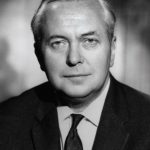
  • Francis Pym – 1978 Speech on Rhodesia

    Francis Pym – 1978 Speech on Rhodesia

    Below is the text of the speech made by Francis Pym, the Shadow Foreign Secretary, in the House of Commons on 7 November 1978.

    I beg to move, at the end of the Question. to add:

    But humbly regret that, hearing in mind the manifest inadequacy of the Government’s policies towards Rhodesia, the measures outlined in the Gracious Speech are incapable of creating the conditions in which free and fair elections can be held as the only basis of a peaceful and orderly transfer of power to a democratic majority in that country.

    I should like, first, to thank the Foreign Secretary for the kind words he said about John Davies at the start of his speech. I know that the whole House will be extremely sad and sympathetic at the news of his retirement from the ​ House. He is one of the most civilised and delightful of men and greatly respected here and far outside. I am sure that everyone wishes him a steady recovery to good health.

    Having been asked to act in the place of John Davies for the time being, I approach the subject of Rhodesia with a strong sense of humility, more especially because I was not one of those who went to Rhodesia in the course of the recess. So much is at stake and so many mistakes have been made. If we do not handle the matter of Rhodesia wisely now, the consequences for us and the free world will be grave. I want to say at the outset that, as far as we on the Opposition Benches are concerned, this debate is not the fulfilment of the Government’s undertaking, given in the recess, for a debate specifically on the Bingham report. Of course that report has relevance to the debate, but it is about the past, as the right hon. Gentleman’s speech showed. His speech about it, which I think took about 45 minutes, sounded something of a reluctant apologia and hardly appropriate to a debate upon the Gracious Speech, which is about the future.

    Today and tomorrow we are concerned with the whole Rhodesian crisis and the future of that country. That is the debate for which the Opposition asked and which the Government have facilitated. The right hon. Gentleman hardly addressed himself to it at all. [HON. MEMBERS: “Oh.”] Only for the last few minutes. What he did say I found profoundly disturbing. It seemed to me that he was asking everyone except himself to compromise.

    We asked for this debate because, obviously, Rhodesia is by far the most critical problem that faces us internationally. The strategic importance of Central and Southern Africa to Europe and the free world could scarcely be exaggerated. [An HON. MEMBER: “Including Zambia.”] Including Zambia. In Southern Africa a condition of war exists, certainly civil war. The risks and the dangers are frightening and fill us with foreboding. Thousands have lost their lives already, many of them in a horrible way. The death toll continues, it is said, at the rate of one death every hour.

    The anxiety we all feel was well described in this House in the debate in August, and since then things have got worse. It is the black Africans who have suffered the most through the atrocities committed by the guerrillas against their fellow Africans. In the first nine months of this year, nearly 4,000 people were killed in the guerrilla war inside Rhodesia, and 800 were killed in September alone. This compares with some 6,700 in the previous five years. In addition, many hundreds have been killed in the attacks of the Rhodesian security forces on guerrilla camps in Mozambique and Zambia.

    The very existence of those camps poses a threat to a peaceful settlement in Rhodesia now being sought by the transitional Government, and, of course, they cannot ignore them. Hundreds of schools have been either shut or destroyed, affecting at least 200,000 black children, as a result of the violence, and, as well as human beings, large numbers of cattle have died because the veterinary services have largely broken down—again, because of the violence.

    That is the grim position we have now reached. The worse the fighting gets, the more difficult it becomes to resolve the conflict. For the Foreign Secretary it must be far more than acutely worrying. I do not want to challenge his intention to bring about a multi-racial democracy and he has had better opportunities, perhaps, of bringing it about than existed previously—but the inescapable fact is that his policies have, however unfortunately, led to failure—failure to reduce the fighting, failure to start talks, failure to get a settlement.

    The right hon. Gentleman has admitted today that the situation is worse. However hard he has tried, however sure he may have been that he was right to handle the civil war—the struggle for power—in the way he has, the hard fact of his achievement is that he has made matters worse. Nothing in his speech today was hopeful or constructive for the future. As far as I can find out, in the time that I have been considering these matters intently he seems scarcely to have a friend anywhere in the world, and that is a position of weakness.

    I do not want to take up the time of the House by listing the Foreign Secretary’s errors and misjudgments as we see them, but I shall summarise them. First, he has clung with far too rigid an adherence to the Anglo-American proposals. Some of those proposals had sense—for example, a United Kingdom presence in Rhodesia. I should have thought that there was everything to be said for a United Kingdom presence and representation there. At least on that principle we can agree. But in the Anglo-American plan the detail of even that caused controversy when, surely, it need not have done so. The fact remains that the Foreign Secretary has so far failed to establish such a presence.

    Other Anglo-American proposals always seemed to us so unacceptable and unrealistic that the package as a whole was suspect from the start. It does not require a highly sensitive man to understand why the proposals for the security forces could not be appropriate and could not be acceptable. It is so self-evident that, by pursuing the idea, the Foreign Secretary, in effect, torpedoed himself from the start. His second major blunder was that, from 3rd March onwards, he has shunned the internal settlement. When one thinks of the history of it, that settlement was a big stride forward, ending the struggle of black versus white and bringing with it the prospect that at long last real progress would be made. The Foreign Secretary’s reaction to the settlement has been not to grasp it, not to support it, not to build on it, but to spurn it and to give the impression that there was no good in it, and apparently almost to frustrate it, while at the same time pretending that he was not doing that.

    I do not understand how that attitude could hope to make progress towards a settlement possible. The interests and passions of the various sides to the dispute are, as we know well, very different and equally strong. Somehow, they have to be reconciled. When any of the parties moves its ground significantly and produces a substantially new or changed position—in this case, the provisional settlement, which contains many of the very elements for which this House has long been asking—it seems a negation of common sense for the Government not ​ to take hold of it thankfully and positively and to build on it.

    The principle of majority rule had been conceded already.

    Mr. Frank Hooley (Sheffield, Heeley)

    The right hon. Gentleman claims that my right hon. Friend is isolated in his attitude to the internal settlement. Is he aware of the view taken of this settlement by the Commonwealth, the United Nations and the entire continent of Africa?

    Mr. Pym

    Yes, I am, and no doubt if the hon. Gentleman catches your eye, Mr. Speaker, he will be able to express his views about it. [HON. MEMBERS: “Ah.”] I will come to all these points —the United Nations and all—so hon. Members need not get fussed about it.

    As I say, this internal settlement contained many of the elements for which we had long been asking. The principle of majority rule had already been conceded. The firm intention to hold democratic elections was declared and racial discrimination is now being ended. The other side of this coin is, of course, the persistent bias that the right hon. Gentleman has shown in favour of the Patriotic Front, one of whose partners has proclaimed his aim to be the establishment of a single-party Marxist State. A balanced position was what was needed, not a biased one.

    The Foreign Secretary described Mr. Nkomo recently as “the father of his people”. That seemed strange when we saw Mr. Nkomo on television apparently laughing about the shooting down of the Viscount, about which the Prime Minister said this afternoon he would make no protest. That is not exactly a paternal attitude—

    The Prime Minister (Mr. James Callaghan)

    That really is not fair, is it? I did not say that I would not make a protest. I made my view clear at the time. What I said was that it was not the responsibility of President Kaunda, so I did not protest to him. However. I went on to say that President Kaunda thought that this was a matter of moral concern so far as he was concerned, and he would not support in any way attacks on civilians by Mr. Nkomo’s forces or by anybody else.

    Mr. Pym

    I have no wish whatever to misrepresent what the Prime Minister said about that. [HON. MEMBERS: “But you did.”] He said this afternoon that he would not make any protest and he has now explained what he meant by that. This description—

    The Prime Minister

    With respect, I have not added anything to what I said at Question Time. I should be grateful, therefore, if the right hon. Gentleman would not try to give the impression that I am adding something or explaining something that I failed to do at Question Time.

    Mr. Pym

    We shall, of course, see Hansard in the morning.

    The description that the Foreign Secretary used about Mr. Nkomo has had no effect whatever in the way of causing Mr. Nkomo to come to the conference table, to play his part—and a very important part—in achieving a democratic settlement in Rhodesia. Anyway, who is the Foreign Secretary to say, what right has he to judge who are the fathers of the people of Rhodesia? He said himself this afternoon that there was difficulty in interpreting the minds of the Rhodesians, so he should apply that standard to himself as well. At any rate, one result of the right hon. Gentleman’s mishandling is the statement of Mr. Nkomo that the only talks would be on the battlefield —the very opposite of what the right hon. Gentleman says he himself wants.

    This brings me to the last criticism that I wish to make today of the right hon. Gentleman. The one remaining crucial principle out of the six principles which has to be satisfied is the fifth—the test of acceptability. The actual result of the Foreign Secretary’s policies has been to make it more difficult for that test to be carried out—and that is the very heart of the problem, as he himself said at the end of his speech. What is worse, he has put at risk—I put it no higher than that and no lower—the fulfilment of the fifth principle. I hope that I am wrong, but that is what it looks like to me.
    Since our last debate, there have been several major developments, of which the Bingham report, of course, is one. It has an immediate relevance, even though it concerns events which began over a decade ago. The Government were absolutely right—we totally support them—to publish it. I do not intend to take this occasion to pass judgment on those events, but one point has to be made if one is to give an objective assessment, as the Foreign Secretary himself tried to do, namely, that the report has exposed the ineffectiveness of sanctions as a general policy.

    But there must be no question of sweeping those findings under the carpet. The report has exposed something which could be described as a scandal, which calls into question nothing less than the integrity of government. The Opposition, like the Government, will certainly wish to consider all the views that are expressed in this and any subsequent debate. However, we think that a tribunal under the 1921 Act would be quite inappropriate.

    How much more any further inquisition of any kind would reveal is uncertain. However, if such is thought necessary, as well it may be, our preliminary view is that it should be of a parliamentary kind, because the issue is wholly political and the buck stops in this House. It is a parliamentary matter because it is concerned essentially with the relationship between Ministers and this House. We therefore think that it should be confined to this House.

    However, as I have said, we do not regard it as satisfactory that this report can be debated in depth and detail as part of a general debate on the Rhodesian crisis.

    Another important and recent development has been the spread of the war to Zambia and the supply of arms by this Government. As my hon. Friend the Member for Cambridge (Mr. Rhodes James) said on 2nd August, referring to the war:

    “there is no guarantee that it can be confined to Rhodesia. There is no guarantee that it will be confined to Southern Africa”.— [Official Report, 2nd August 1978; Vol. 955, c. 835.]

    No longer is it confined to Rhodesia, and our anxiety now is about the danger of spreading the war further by the Government’s own contribution of arms.

    Although it was not clear at the time, it is clear now—the Prime Minister spelt this out this afternoon—that this was part of an understanding reached at Kano. We ​ still know very little about the deal that was struck then. The House is entitled to know and certainly wants to, because it relates directly to the securing of a settlement in Rhodesia.

    The announcement of the arms decision came not after the meeting, as might have been expected, but later and after the Rhodesian raid on guerrilla bases in Zambia. It has therefore caused genuine suspicions and fears which have not yet been allayed. Of course the Zambian president is entitled to obtain arms for the defence of his country—in fact one might say that it would be his duty so to do—and we would rather he had those arms from us, but, so far as the British Government’s decision to supply them in this instance is concerned, we have to be satisfied that there are real safeguards against the release of those or other weapons for use by the guerrillas.

    It is the existence of those guerrilla bases in Zambia which makes the Government’s decision controversial. That is the point which my lion. Friend the Member for Bury St. Edmunds (Mr. Griffiths) is making.

    Mr. Eldon Griffiths

    Will my right hon. Friend insist on this further assurance—that those arms should not be used to provide protection for the bases in which guerrillas are trained to invade Rhodesia and kill Her Majesty’s subjects?

    Mr. Pym

    That was very similar to one of the questions I put to the Foreign Secretary at Question Time the other day. That is part of the information and knowledge of the deal which was struck, of which we are still ignorant and with which I have asked the Government to provide us.

    Mr. Andrew Faulds (Warley, East) rose—

    Mr. Pym

    Will the hon. Gentleman allow me to continue?

    Mr. Faulds

    This is a matter—

    Mr. Pym

    I have given way several times—

    Mr. Faulds

    The right hon. Gentleman—

    Mr. Speaker

    Order. It is clear that the right hon. Gentleman is not giving way.

    Mr. Pym

    I have also asked whether President Kaunda had given any undertaking that he would use his position and influence to persuade Mr. Nkomo to take part in the talks. Unfortunately, there is little sign of that happening. But, until the Prime Minister or the Foreign Secretary explains these matters so that the House has the fullest information about the whole arrangement, it is difficult to make a judgment. Are we to be expected to take a view without knowing all the facts? The House will expect and hope for more clarification today or tomorrow. Of course, we shall also take into account what the Prime Minister said at Question Time.

    During the short time that I have had temporary responsibility for foreign affairs on the Opposition Bench, I have concentrated as intensely as I can on the situation as it actually is now and on what can be done to rescue it now.

    The Prime Minister

    I am not anxious that there should be misunderstanding. The right hon. Member for Cambridgeshire (Mr. Pym) might be asking me fair questions, but he will realise that when one is dealing with another Head of Government it is not always possible to report, even to the House of Commons, the full nature of the discussions that take place. I must ask the House, with respect, to accept that I am fully aware of the points made by the right hon. Member for Cambridgeshire, and that naturally I took those into account in my conversations with President Kaunda. Although I should like to help the right hon. Member and the House, I do not wish to go much further at present about the kind of discussions that we had.

    With his vast experience, the right hon. Member will realise that it is not usual to go into as much detail as we have perhaps gone into on this occasion. It is not out of lack of respect for the House but because of our relations with President Kaunda and the future of Zambia that I do not wish to go further.

    Mr. Pym

    I am certainly not unappreciative of the Prime Minister’s argument. He too will appreciate that in the circumstances that now exist in Zambia, with the guerrilla bases, the war that is going on and the effect on Rhodesia, there is an anxiety and concern about the decision ​ that he took. I have not made a judgment about it because I feel that I do not know enough about it. I hope that the Prime Minister appreciates that. We want him to be as forthcoming as he can, because otherwise it is difficult for us to make a judgment.

    I have been trying to work out how best we can rescue the situation. The crisis in Rhodesia is too far advanced to allow us to think in terms other than that of a first-class emergency, how we can end the fighting and secure a lasting settlement.

    Like my right hon. Friend the Member for Chipping Barnet (Mr. Maudling), I want to adopt the most constructive approach that I can. My right hon. Friend’s proposal is set out in last Session’s Early-Day Motion No. 555. It is an attractive and positive proposal. Since it comes from my right hon. Friend with all his experience, I hesitate to comment upon it. Months ago my right hon. Friend forecast that elections in Rhodesia would not take place in December. It looks as if he was right.

    Circumstances have changed since my right hon. Friend made his proposal. I share with him the objective of a return to legality at the earliest possible moment, with a consequent lifting of sanctions. But I have some doubt—and I put it no higher—about the extent to which this plan would be acceptable in Rhodesia.

    Even if it is temporary and transient, the idea of a status akin to colonial status raises hostile reactions among some in Rhodesia and that must be taken into account. The plan also carries with it a contingent responsibility and liability which this country might in some circumstances be unable to meet. It is all very well for Government Members to laugh, but if that happened the situation would be serious. If we could be reasonably confident that all the parties would remain reasonably quiescent, the risk might be worth taking, but the dangers are obvious.

    Whether my doubts about the proposal are valid—and I speak with humility—I accept absolutely that a new and more constructive policy is required to bring about a return to legality. The way to achieve that is through free and fair elections. However hazardous that might ​ seem, that is the central objective to which we must address ourselves.
    The alternatives are catastrophic for all Rhodesians. To the partners in the internal settlement, it would mean the denial and frustration of their genuine aspirations for democratic evolution, while the suffering and deprivation continued. For the external factions, and for the Patriotic Front in particular, the path of violence means the destruction of the country. It would mean the takeover through violence of a Rhodesia which was in ruins, deprived as it would be of a white population upon whom the jobs and prosperity of the country depend.

    The objective is to secure the test of acceptability. Nothing less will secure international recognition and the consequent removal of international sanctions. We must strive for international recognition.

    The question is whether, after all that has happened, and with all the opportunities that have been lost, especially this year, we can still achieve that. Given the right diplomacy and the best possible handling, I believe that it can be done.
    I shall put to the House some specific proposals that appear to me to hold out at least the best hope of success. I begin with a renewed call for the immediate establishment of a high-level mission in Salisbury. I know that the Foreign Secretary also wants that, but he has not managed to achieve it on his terms. It would be better to achieve it on somebody else’s terms than not to achieve it all. Demonstrably it is necessary to have a presence in Rhodesia. We must reconcile what might seem irreconcilable. Reconciliation must be attempted by every means at our disposal.
    Britain not only has the ultimate responsibility; it should also have the most positive contribution to make to that reconciliation. If we have no high-level presence in Rhodesia where all the action and argument are, our contribution cannot possibly be as sustained or as effective as it could and should be.

    Mr. David Steel

    The right hon. Member says that the Government should be willing to extend high-level representation in Salisbury on other people’s terms. Does that include the recognition of the present Government?

    Mr. Pym

    No. What I am saying is that the Foreign Secretary laid down conditions and has a strong view about what that representation should be. Many other people disagree. I am saying that the Foreign Secretary should think again about his own position on that matter.

    My second argument is that the internal settlement must be taken as the firm basis for progress to independence. Nothing less than a complete reversal of the Government’s attitude towards the settlement is called for. I am not asking the Government to recognise it, but to change their attitude towards it. It is so obviously the starting point that it is incredible that I have to emphasise it.

    After all the agony that everybody in Rhodesia has experienced, here we have a dramatic shift in position and outlook upon which, for all its limitations, we can build a democratic constitution for which we have all been working and which the people of Rhodesia want.

    It is the only basis for enabling elections to take place quickly. Nobody suggests that the internal settlement, or anything else, is perfect. but I ask the House to reflect upon the achievement of its creation. For example, Mr.Sithole, whom I saw last week, was sentenced to six years’ imprisonment in 1968 for plotting to assassinate Mr. Ian Smith.

    Today he is a member of the Executive Council with Mr. Smith. Bishop Muzorewa rallied African opinion against the 1972 settlement proposals made by Lord Home and Mr. Smith following the Pearce Commission. Today, he too is a member of the Executive Council.

    One has only to contemplate those circumstances to appreciate the remarkable fact of the internal settlement’s existence. There has been unexpected delay in publishing the constitution and holding the referendums. With the right encouragement from the Foreign Secretary, that need not have happened. There was delay in changing the law on racial discrimination. That was also unfortunate. But that is now in hand. We welcome the decision of the Executive Council to steer this legislation through as quickly as possible.

    The transitional Government are in office, with African and European Ministers working together handling day-to day affairs. Of course, the parties have their own separate party interests. How ​ could it be otherwise? We would not wish it to be otherwise. But it is no part of our responsibility to take sides. Our responsibility is to help them to independence, based on majority rule with full international recognition.

    The transitional Government is the only Government that can make possible the holding of elections in the near future. If that is to be done, whatever the Foreign Secretary’s prejudices, it is necessary for him to take a different attitude towards the internal settlement from that which he has taken so far. If he is also to establish a round-table conference, then again I say he must take a different attitude towards the transitional Government.

    I support the Government wholeheartedly in their desire to secure and establish that conference and to include in it leaders of the Patriotic Front. The prospect of setting it up is less bright than it should be but it is the best way forward.
    Such a conference has two functions to fulfil. The first is to obtain a ceasefire. If there are to be elections, there must be something very close to a ceasefire—obviously a complete ceasefire if that is possible and a minimum level of intimidation. Unfortunately, there are many participants in the war, and to stop it they must all agree to do so. The best way of achieving this is by such a conference.

    The second purpose of such a conference is this: both within and outside Rhodesia there is a strong desire that the elections should take place with a United Nations presence. My inquiries indicate clearly the widespread wish for United Nations observation. I emphasise observation, because there is also a strong feeling in Rhodesia against any idea that the elections should be administered by the United Nations. My hon. Friend the Member for Mid-Oxon (Mr. Hurd), who will speak in the debate tomorrow and who has just returned from a tour of Southern Africa, confirms that there is little or no support for that. But United Nations observation is clearly wanted and the most authoritative body to request it is the kind of all-party conference which the whole House would welcome.

    There are two other proposals that I wish to make—both with the purpose of ​ holding elections and obtaining independence as soon as possible. The first is to adopt a new approach in bringing, the parties together. This is an approach based on the technique used in Namibia. Some success resulted from a major diplomatic effort there. A contact group was created which established a relationship with all the parties concerned. This was a relationship founded on the detailed knowledge of all the issues and continuous discussion about them which made a comprehensive negotiation possible. It seems to me there are at least similarities —and I put it no higher—with the Rhodesian situation and the same technique seems wholly appropriate.

    At the moment there is no organisation, no body, no forum, that is capable of carrying through the sustained process of discussion and negotiation that is necessary here. The parties are not negotiating with one another; they are fighting one another. Bridges must be built. It is a very formidable task.

    The Queen’s Speech refers only to the Government continuing to strive with the United States to achieve a ceasefire. I believe that there must be a much wider approach—a much wider contact group that goes further than the Anglo-American concept. That would be invaluable in the present predicament.

    Over and beyond that, and in conjunction with it, there is another and perhaps more immediate possibility. Past history does not encourage me to propose it, and if the Prime Minister is not convinced about it it would not be worth pursuing. Nevertheless, the facts of Rhodesia are so awful and so urgent that I will pursue it. The Prime Minister has expressed his own misgivings about bringing the parties together. I want him to stir himself into much more positive action to bring it about. We have followed minutely the course of events in the Middle East, and we join in the congratulations to the Nobel Prize winners. Something must be learned from what has happened there. The circumstances are different, but the stakes are the same—thousands of human lives. My proposal is that the Prime Minister should conduct what I can best describe as a “Camp David”. The situation is grim enough to require the full authority of the highest office in the ​ land—the Prime Minister himself—to be brought to bear.

    The United Kingdom carries the ultimate responsibility for Rhodesia. It is upon our own consciences that our own actions lie. Without raking over the mistakes and misjudgments of the past, I urge a fresh, resolute and new approach.
    I am not suggesting any repeat of the ill-fated Geneva conference of 1976 which resulted in so much political posturing under the glare of the television cameras. I am talking about negotiation behind closed doors—at Chequers or wherever the Prime Minister wishes. I urge the Prime Minister to bring the leaders together. We are striving for reconciliation and peace. The Prime Minister should consider deeply using his office to take a major initiative of this kind.

    The Prime Minister

    I have thought about this a number of times and have been approached from Rhodesia on this matter. I have considered it and talked it over. If I can see a hope of bringing people together privately with any prospect of success—because, once engaged upon, if this moves fails, there is no card left—I give the assurance that I shall not hesitate to do so. I would conduct such a meeting privately, if necessary. That is probably the best way. But at the moment I regret to say that I do not think that either side is yet sufficiently willing to compromise to enable this final card to be played, but I will take the opportunity if I see it.

    Mr. Pym

    I am grateful to the Prime Minister for that intervention. We are glad to know that this has been considered. I think that my earlier proposal for a contact group much wider than the United Kingdom-United States effort might be a very valuable preliminary for getting us to the necessary stage.

    In putting forward these methods of making progress I am motivated solely by the necessity to facilitate the establishment of peace and multi-racial harmony before it is too late. Some say that it is too late now, but I do not accept that. It need not be so. I try to put myself in the position of the Foreign Secretary burning to end the war.

    Whoever the Foreign Secretary is, he must deal with the facts as they are and the situation as ​ it is. He must build a structure of bridges between the islands of differences. All parties have their own legitimate interests to pursue and all have their prejudices and preferences. I come to the question whether sanctions—such as they are—should continue. As soon as the six principles have been satisfied, of course they should go. That is common ground. Britain entered into certain obligations which cannot be lightly dismissed. However strong the temptation to make a gesture of protest, we should keep our faith with our obligations.

    There is only one principle to fulfil, and everything that I have said in this speech is intended to make that possible and practical at the earliest moment. It seems clear to me that our judgment at this time on the issue of sanctions must be based on the criterion whether the lifting of them would be more or less likely to be conducive to the fulfilment of the fifth principle.

    We regard sanctions as a highly undesirable and, as the Bingham report shows, a largely ineffective means of exerting pressure on another country. We opposed the previous Labour Government when they took the matter of sanctions to the United Nations. We foretold what would happen and we voted against them. It is no comfort now to have been proved right. As soon as the obligations then entered into, for better or worse, have been fulfilled—and there is only one left—a Conservative Government would go to the United Nations and seek the immediate lifting and removal of the sanctions. I wish to make it clear that as soon as the elections have been held satisfactorily we would apply to the United Nations for the lifting of sanctions. Indeed, even in Opposition we would, in those circumstances, bring the matter back to the House immediately.

    At present the significance of the Rhodesian sanctions has become more symbolic than economic on both sides of the argument. To the whites and blacks supporting the settlement, it is symbolic of our support, or lack of it. To the majority of black African leaders and to the United Nations, it is symbolic of their faith in our commitment to majority rule. No one can doubt that commitment now but it has yet to be fulfilled.

    A powerful case will be made by some of my right hon. and hon. Friends to end ​ sanctions now. I recognise the force of the arguments but I have to ask myself whether, if I were at the Government Dispatch Box instead of the Opposition one, I would find it easier or more difficult to bring the dispute to an end now if the order were rejected.

    In the immediate situation, in the actual circumstances which exist now, it is our considered view that it will be less difficult if things are left as they are. The last thing I want to do is to put at risk the strength of our relationships with our friends and allies. If we are to be in the strongest possible position to help Rhodesia, we shall need the active support of all our allies. A decision to oppose sanctions now, against the weight of international opinion, would not make that task any easier. Whether they are right or whether they are wrong, it is the fact that all our Commonwealth friends and allies and all our European and American friends and allies are against lifting sanctions now.

    When we go to the United Nations to get the sanctions lifted, we shall need the support of all our friends and allies if we are to help Rhodesia then, which is the sole purpose of our policy and our thought on this matter. What is more, it seems to me that by lifting sanctions immediately we should be diminishing rather than enhancing the chances of negotiating with the warring parties now. I want the British Government to be in the strongest possible negotiating position, with all our friends and allies.

    The Early-Day Motion No. 516 of last Session, in the name of my hon. Friend the Member for Croydon, South (Mr. Clark), urges the lifting of sanctions

    “to facilitate the success of the internal… settlement.”

    I agree that it would give that settlement a boost, but I think that it would turn out to be a transitory boost.

    There are many ways of encouraging the settlement, as I have argued in this speech, and we must weigh the repercussions of any actions that we take. The lifting of sanctions before we have fulfilled our undertaking would not stop the bloodshed and could cost us dear. Indeed, I must share with the House my Own fear—it may not be right but I have it—that ending sanctions now would intensify the war, with more and bigger arms ​ coming in. I may be wrong, but that is my fear and I think it right to say that to the House.

    I have studied carefully what John Davies said in July. I think that the conditions which he stated then, about progress towards majority rule and about elections being about to take place, were very right, proper and accurate.

    Unfortunately, they have not come about. I wish that they had. With a different Foreign Secretary they might have done. It seems that the elections may have to be delayed—we all hope, for the minimum time—but at any rate there is uncertainty. The draft constitution has not yet been published, although I believe that it is likely to be very soon, and the referendum is yet to be held, when it had been hoped to complete it by 20th October.

    It is obvious that we on the Opposition Benches do not have any confidence in the Foreign Secretary’s handling of this major crisis. He has bungled it. That is painful for us to watch and demeaning for our country. The Rhodesian crisis is a national crisis and it is an international crisis, and, speaking from the Opposition Front Bench today, I have treated it as such. I have sought to be as constructive, positive and forthright as I can. I ask the Prime Minister himself to come now to the forefront of the negotiations. The slide into war has gone too far already. An infinitely more resolute and realistic approach by the British Government is needed now, and it is hard to exaggerate the urgency.

    We want no more failures. We want a negotiated ceasefire and democratic elections. It may be too late already, though it need not be. Very soon it will be too late, and that would be a catastrophe which the British people could neither forgive nor forget.

  • David Owen – 1978 Statement on Rhodesia

    David Owen – 1978 Statement on Rhodesia

    Below is the text of the statement made by David Owen, the then Foreign Secretary, in the House of Commons on 7 November 1978.

    I think that the whole House would like to pay tribute to John Davies, who would have been speaking in this debate. We were all extremely sad to hear of his illness, and we all wish him a full recovery. He came into the House after a distinguished career in industry, and he deservedly built up a reputation of somebody who was fair and honest and objective in his comments. He will be missed from our debates.

    I shall try at the outset of this two-day debate both to deal with the current ​ situation in Rhodesia and to set it in the context of the report by Mr. Bingham and Mr. Gray, which investigates in detail the way in which oil had reached Rhodesia since 1965. The report is a model of careful research and balanced judgment. It brings out a whole range of facts and issues and provides helpful background for the specific debate tomorrow night on the order to renew section 2 of the Southern Rhodesia Act 1965.

    The report explains in the preface that no general attempt was made to relate it to the political, diplomatic and economic events of the time. This was not part of Mr. Bingham’s and Mr. Gray’s task, which was essentially to establish the facts concerning the supply of oil to Rhodesia and to investigate evidence relating to possible breaches of British sanctions controls by British nationals or companies subject to British law. It is for this House in the first instance and Parliament itself now to set the report in its wider political context, to consider the full implications of its findings, to establish such further inquiries as it thinks necessary and to learn the appropriate lessons for the future.

    To consider the facts, objectively it is necessary to recall the climate of the time and some of the political and economic factors which influenced past Governments in their framing of policies towards Rhodesia. It is not my intention to pass judgment now upon the actions of past Governments. I know that many members of those Governments will wish to speak both in this debate and when the report is discussed in another place.

    Only one month after Rhodesia had become a colony in rebellion against the Crown, oil sanctions were imposed by Britain acting under a non-mandatory resolution of the Security Council. The then Labour Government had forsworn the use of armed force—

    Mr. Geoffrey Robinson (Coventry, North-West)

    Cowardly.

    Dr. Owen

    —but realised that the measures taken immediately after Mr. Smith’s illegal declaration of independence would not prove sufficient in themselves for the short, swift campaign against the regime which was then envisaged.

    From the first there was always doubt whether international co-operation in an ​ oil embargo would be forthcoming. In particular, it was obvious that Portuguese and South African co-operation would be essential if oil sanctions were to be fully applied. It was believed at the time that the closure of the principal route for the supply of oil to Rhodesia— the Umtali pipeline—could deal a major blow to the Rhodesian economy and bring about an early return to legality. The Government decided to impose oil sanctions unilaterally on 17th December 1965. No oil entered Beira in Mozambique after that date, and none reached Rhodesia’s only refinery after 31st December. The refinery has remained closed ever since then.

    Early in 1966 there were reports of pirate tankers bound for Beira. These were intercepted, first with the authority of flag States concerned and then with the authority of Security Council resolution 221 of 9th April 1966. Mr. Bingham has described in some detail the action by the Government over this period.

    It is now alleged that the Beira patrol, which was maintained by successive Governments from April 1966 to June 1975, when the Portuguese pulled out of Mozambique, was ineffective and a waste of taxpayers’ money. It is perfectly true that it did not achieve the initial objective which the Government had hoped for, of cutting off all oil supplies to Rhodesia, but it did ensure that oil never reached Rhodesia from the quickest and cheapest route, namely Beira and the Umtali pipeline. Hon. Gentlemen can laugh about it, but it was an extremely important policy objective, which they sustained throughout the periods that they were in Government.

    At any time to have lifted the patrol and thereby acquiesced in oil flowing along the pipeline would not only have reduced the economic costs of alternative supply routes; it would have been a significant political act tantamount to recognition of the illegal regime. Successive Governments openly and publicly acknowledged that the route, initially through South Africa, subsequently through Lourenço Marques and then again through South Africa, remained open. Yet no Government from 1966 onwards were prepared to use force to close these alternative routes. It was optimistically hoped that diplomatic pressure and considerations of self- ​ interest would bring the South African and Portuguese Governments either to re-examine their sanctions policy or to use their political influence on the regime to achieve a settlement. Events have shown that that was much too optimistic an assessment.

    The House must appreciate the complexity of the factors which influenced successive Governments’ thinking during this period. Those who were responsible for policy towards Rhodesia had to weigh the implications of every action they took across a complex field of interrelated and often contradictory policy objectives for the prospects of successful talks with the Rhodesian regime, which were continuing throughout this period, for our relations with Commonwealth countries and the international community as a whole, for Britain’s own economic well-being, often coinciding with times of acute domestic economic difficulty, for the effect on Britain’s extensive commercial and investment interests built up over many years in South Africa, and for South Africa’s willingness to exercise a moderating influence on the regime.

    During this period some of our major allies lacked any enthusiasm for the implementation of even existing sanctions. There is no joy in laughing at that inability to mobilise international opinion. Many of them also certainly had no sympathy or support for any measures designed to strengthen those sanctions.

    The House should not forget that BP and Shell were not the only oil companies. The French and American oil companies—Total, Caltex and Mobil— appear not to have been influenced let alone controlled by their Governments. Moreover, chrome, for example, was reaching the United States from Rhodesia for many years before the 1971 Byrd Amendment actually gave congressional approval for breaking mandatory United Nations sanctions.

    I mention these facts just to stress that the international climate is very different now and, most important of all, that the attitudes of the French and the United States Governments are much more sympathetic now to the views of African countries and a firm United Nations-backed policy.

    The most difficult decision, and the one which the Government between 1966 and ​ 1968 agonised over most, was how to stop oil getting through Lourenço Marques to Rhodesia, once it became obvious that it was moving on from Beira. It was felt, rightly or wrongly, that there was no practicable way of monitoring or controlling the flow of oil through Lourenço Marques without a major confrontation with South Africa, to whose law the South African subsidiaries of the oil companies were subject. Much of the oil passing through Lourenço Marques was earmarked for the Transvaal province of South Africa, for Botswana and for Swaziland.

    It was established from the start and maintained as a policy by successive Governments that the burden which any economic confrontation with South Africa would entail should not be borne by Britain alone among the Western nations. There was never any attempt to conceal this fundamental conviction from Parliament or the country. As any hon. Members who were in the House at that time will attest, as a matter of political judgment taken at the highest level of Government decision-making, action was ruled out if it was thought it would lead to Britain facing economic confrontation with South Africa without the full support and involvement of some other Western industrialised countries as well.

    Other Western countries were as reluctant as Britain to face an economic confrontation. It was not until November of last year that it was finally agreed in the Security Council to put a mandatory arms embargo on South Africa, though Britain had, with a few exceptions in 1970–71, particularly been operating its own arms embargo since 1964. Even today, with the international climate far tougher towards South Africa and its policies, we and our Western allies still judge it to be far preferable for everyone —ourselves and those living in Southern Africa—to avoid confrontation. But to do this South Africa must use its influence over Namibia and Rhodesia in concert with the international community rather than against the international community and must also start to dismantle the institutional framework of apartheid. An economic confrontation with sanctions over South Africa may come. But let no one be under any illusion; this is not a course which should be relished by anyone who has the interests of the people of Southern Africa at heart, for those whom we do not wish to hurt will suffer most.

    After the failure of the 1966 “Tiger” talks, the Government proposed the resolution which was adopted by the Security Council on 16th December 1966, imposing mandatory sanctions on Rhodesia’s major exports and on certain key imports, including oil.

    Throughout 1967, the Government conscientiously sought to find ways of intensifying oil sanctions. The Bingham report describes 1967 as a year

    “dominated by a series of initiatives taken by HMG to make the oil embargo against Rhodesia effective”

    but observed that at the same time the problems of enforcement became plainer. Chapter 6 of the report sets out in detail some of the schemes advanced by the Government and discussed with the oil companies. All were eventually rejected on one or more of the following grounds.

    The first ground was that the refusal of Portugal and South Africa to apply sanctions left a gaping hole in the blockade of Rhodesia, which I have already mentioned.

    Secondly, it was felt that certain courses of action could lead to the economic confrontation with South Africa which had been ruled out.

    Thirdly, the reluctance of certain Western Governments at that time to put pressure on their oil companies, and the wider political arguments against attempting to exercise legal control over subsidiaries of United Kingdom companies operating abroad, meant that the oil companies could hide behind South African legislation. The legal problems were seriously explored at the time. They involve the whole question of the control of multinationals.

    Fourthly, there was reluctance for the Government to act alone, without effective support from their partners. This in turn meant that the various schemes to ration supplies of oil or oil products through Lourenço Marques were all reluctantly—and, after reading all the relevant papers, I stress the word “reluctantly”—judged to be unworkable.
    In July 1967, and again in March 1968, the Government actively considered the possibility of a naval blockade of ​ Lourenço Marques as well as Beira. The South African Government would not have prevented oil supplies reaching Rhodesia from South African suppliers should supplies through Mozambique cease and we were not prepared to threaten a naval blockade of South Africa. Despite the Salazar dictatorship, Portugal had been allowed to be a member of NATO, and this was also a factor which was considered. The American and French Governments of the time were judged as unwilling to agree to any blockade. A blockade which tried to ration imports of oil or oil products by limiting them to the needs of normal non-Rhodesian customers, including those in the Transvaal, Swaziland and Botswana, was seriously considered but eventually judged to be impossible to administer.

    A limitation of oil imports to a level below the normal demands of Mozambique, the Transvaal, Botswana and Swaziland would have entailed enforcement action against Mozambique and South Africa. There was no possibility that other international oil companies, which had their own interests both in Mozambique and in South Africa, would join in any rationing scheme. Whether one agrees or disagrees with the political judgments of the time, no one reading all the papers as I have done can make the charge of complicity, deceit or double-dealing. Here were honest men of successive Governments struggling with massive political problems, seeking the best solution bearing in mind all the restraints and all the limitations within which they felt they had to operate.

    By the end of 1967, Britain was grappling with the economic crisis which followed devaluation of sterling, and the Rhodesian authorities seemed more intransigent than ever. There was good reason to believe that support in many countries for the maintenance of sanctions was wavering and that the introduction of new sanctions would cause difficulties with our partners. In these circumstances, as the report records, Ministers decided collectively to defer further consideration of proposals to intensify sanctions, including the possibility of stopping the supply of oil to Rhodesia through Mozambique. Yet, even so, as I have mentioned, a further study was made in 1968 of the possibility of rationing oil supplies to Lourenço Marques ​ following the widespread outburst of indignation against the Rhodesian regime for its execution of a number of Africans despite the exercise of the Royal Prerogative of Mercy. The Government, however, reluctantly again reached the same conclusions as they had in 1967.

    It is against this background and in this political climate that I suggest Parliament should view the discussions which those Ministers directly involved had with the oil companies in 1967–69. I think it is important to stress, as indeed the report does, that it was only towards the end of 1967 that the Government began to suspect that British oil companies and their subsidiaries were involved, directly or indirectly, in the supply of oil to Rhodesia. It was widely assumed at the time, though not then proved, that the French company CFP, as the company most heavily involved in refining and marketing within Mozambique, was principally to blame. The Portuguese authorities had alleged that British oil companies were involved, but they did not produce firm evidence, and the oil companies themselves had rejected these allegations.

    The Government’s own investigations had suggested that any refined oil products delivered to Lourenço Marques for bulk storage by British companies—themselves only a small proportion of oil imports into Mozambique—were largely destined for the Transvaal. It was thought possible, however, that some of the oil companies’ customers were reselling oil to Rhodesia. It was at this point that the then Commonwealth Secretary decided to meet the directors of Shell and BP, with the outcome that is recorded in the Bingham report. The actual records of the subsequent meetings are printed in the annex to the report.

    I do not want to judge or justify now, the positions which were then taken in relation to what was said to the companies, the consideration given to it in Government, or on the question whether there should have been a reference to the Director of Public Prosecutions. Parliament and the country will hear from those who were directly involved. It is, however, the public dispute about exactly what happened over this period that has, above all, made people call for a further inquiry. It is in revealing exactly what did happen at this time that I believe ​ our parliamentary debates can now add an important dimension. Decisions throughout this period were taken in the full recognition that the denial of British oil to Rhodesia, while a necessary political instruction and legal obligation, would not and could not in itself reduce Rhodesia’s capacity to obtain oil.

    Whatever conclusion is reached about the legality, the morality or the justification for this swap arrangement, we must not delude ourselves into believing that Rhodesia’s imports would, in practice, have been seriously restricted if British companies and their subsidiaries had simply pulled out of the South African market in an effort to avoid any direct or indirect involvement in the supply of oil to Rhodesia.

    Mr. Alexander W. Lyon (York)

    Is it at this point in the narrative that my right hon. Friend ought to indicate his view that Parliament should have been informed that we were engaging in the swap arrangement which was manifestly against the spirit, at any rate—and I suggest the letter—of the mandatory regulation that we had passed?

    Dr. Owen

    I am trying to give an objective account of the events of this period, which is extremely difficult to do, and I have therefore decided not to make my own judgments about the morality, the justification or, indeed, the legality of the swap arrangement, and I would include in that the question whether or not Ministers should have explained matters to the House. I believe that many hon. Members will wish to comment on that issue and that it is this area which has caused the greatest concern to right hon. and hon. Members. I am trying to put the arrangement in its context and explain what I can from the documents that are available, and then I believe the House will be able to hear from people who were themselves intimately involved in the matter and to form a judgment. I believe that it is very important not to form a judgment at this stage.

    Certainly, if we had been able—

    Mr. Nicholas Ridley (Cirencester and Tewkesbury)

    Will the House be given another opportunity to make that judgment which the right hon. Gentleman ​ says it is very important for the House to make about the conduct of individuals and Governments in this matter?

    Dr. Owen

    The Government have promised to listen to this debate. We have always said that we would come first to both Houses of Parliament and listen to the debate and then reach a conclusion. Parliament itself, will be able to reach a conclusion and if the Government’s decision is challenged Parliament has ways of bringing this issue to them. Indeed, the Government have ways of bringing this issue to Parliament.

    The Government have been totally open about the whole of the handling of this process. We established an inquiry as soon as the allegations were made. When I said that we would publish the findings of the inquiry and had to make reference to the fact that in the actual legal provision there is a proviso that I had to get the agreement of those who had given evidence to the inquiry, many people suspected that we would not publish the report of the inquiry. We did publish the report at the earliest possible opportunity, and at all stages there has been the utmost openness and candour.

    I would say that if we had not made this swap arrangement we would have been spared the international and domestic criticism which has flowed from this finding in the report. But other international oil companies were in contact with agents for Rhodesia. I do not do this to explain away the decision; I do it to put it in the context in which the decision was made.

    A memorandum written by an employee of BP in South Africa some years later, and quoted in the report, not only set out in full the respective market shares of all the international oil companies involved in supply to Rhodesia; it revealed in paragraph 8.39, on page 270 of the report—which is worth looking up—that another major oil company, Esso, had in 1970 offered to supply 100 per cent. of the Rhodesian market at heavily discounted prices. The offer was turned down, probably because a continued diversification of sources of supply was considered more secure. But Rhodesia would have had no difficulty in finding compensating supplies through South Africa in the event of any shortfall from one supplier. It is hard to ​ escape the conclusion that without a higher degree of co-operation from our major trading partners than was then forthcoming, any British Government were powerless to affect the oil supply position on the ground in Rhodesia.

    From 1969 until 1975 there was little change in the position. The Conservative Government of 1970 to 1974 maintained virtually unchanged all the existing sanctions, including the Beira patrol. In 1971, according to the report, the swap arrangement, which the companies had set up to take Shell Mozambique, a British-registered company, out of the line of supply lapsed and a direct supply arrangement was apparently reinstituted. It is for the DPP to decide whether there was a breach of United Kingdom sanctions legislation, but the report found no evidence that the lapse of the swap arrangement was known to the then Government. I have no way of knowing whether or not new Government Ministers were told about the swap arrangement in 1970. The report states clearly that even the London offices of the oil companies did not know about the lapse of the arrangement until 1974, and that even then the companies did not inform the Government.

    In 1974, a Labour Government returned to office determined to seek any practicable way of enforcing sanctions more effectively, and I have found no evidence to indicate that Ministers were told about the swap arrangement then which could have been assumed to be still in operation though it had in fact lapsed. Particular efforts were made by the new Government—with some success—to encourage a more determined application of sanctions by our international partners, the United Nations and members of the European Community. The number of prosecutions for breaches of the sanctions controls increased.

    In 1977, it became a matter of increasing concern that there appeared to be grounds for believing that the oil sanctions legislation had been circumvented and perhaps broken. On 6th July, after the Bingham inquiry had been established, I tried to persuade Mr. Rowland to release all the documents in his possession. At our meeting, I had in front of me a letter which the Prime Minister had written to Mr. Rowland on 4th July stating quite categorically that ​ the Director of Public Prosecutions had not yet completed his consideration of the report on Lonrho. No reference was made, in any of the further letters to the Prime Minister, to his having received from me the assurances which he now claims he was given. In my meeting, and in all subsequent correspondence, it was made clear, as we would be bound to do, that any decision was for the Director of Public Prosecutions. His decision was announced last Friday.

    In establishing the Bingham inquiry, the Government believed that a searching examination of the entire history of oil supplies to Rhodesia since 1965 was inevitable and right. We were anxious that all the facts should be brought to light, however unpalatable some of them might be. The Government gave every help to the inquiry and unhindered access to all the departmental papers. Once the report had been received, the Government decided that it should be published virtually in its entirety, protecting only one annex, and that on the advice of the Director of Public Prosecutions. We concluded that, before deciding what further steps to take, both Houses of Parliament should have this early and full opportunity for debate.

    There has been no cover-up. There will be no cover-up. It is for the Government, this House and the country to face the implications of the report. We will listen carefully to this debate as we have promised. It will be for Parliament ultimately to decide.

    Mr. Willian Hamilton (Fife, Central)

    Will my right hon. Friend give an undertaking to the House, in view of what he said about unhindered access to Bingham and to the relevant papers? Will he now announce that the Government agree in principle to that unhindered access through any Select Committee that this House chooses to set up?

    Dr. Owen

    I imagine that my hon. Friend is referring to the question whether Cabinet papers should be made available. This is one of the issues that will be discussed in the debate. However, it is not for me to decide. These are Cabinet papers for two Cabinets, of which I was not a member, in two Administrations, and I believe that there are serious issues which the whole House will wish ​ to consider. They concern issues of precedent and issues of trust, in which Ministers participated in the decisions of Cabinet, believing that there would be a period of confidentiality, at present a 30-year period.

    The Government have not taken a view about this matter, particularly in view of the suggestion from my right hon. Friend the Member for Huyton (Sir H. Wilson), who was Prime Minister for part of this period. We shall want to consider what he has to say, the arguments which he wishes to produce, and why he thinks his suggestion would be helpful. I think that the House will need to take all these considerations into account but will wish to bear in mind that on many occasions in the past, when there has been a very good case on the issue involved for releasing Cabinet papers immediately, successive Governments have always resisted it because of the danger of precedent. This is an open issue, on which we should like to hear the views of Parliament.

    It is obviously urgent to satisfy ourselves—I think that everyone in the House will agree—that, whatever was the position in the past, British oil companies and their subsidiaries are now playing no part whatsoever in the supply of oil to Rhodesia. I personally saw the oil company chairmen of BP and Shell in April last year to tell them why I was establishing the inquiry and I made it clear to them that I expected them to take firm action to close any loopholes in their or their subsidiaries’ involvement in the supply of oil to Rhodesia. The report traces the efforts made since then by the British oil companies to ensure that they and their South African subsidiaries were no longer directly or indirectly involved in the supply of oil products to Rhodesia. Last autumn Shell and BP told me the terms of the assurances which they had received from their South African subsidiaries, to the effect that these companies were not directly or indirectly concerned in supplying Rhodesia.

    The report brought to light, however, an arrangement between the companies’ subsidiaries in South Africa and the organisations which continue to supply Rhodesia. The report records that, when in 1976 the supplies made by the South African subsidiaries of the British oil ​ companies to agents acting for the Rhodesian purchasing organisation were taken over by the South African State oil company, the subsidiaries were compensated by increased access to their own customers in part of the South African market, according to a formula which took into account their previous level of supplies to Rhodesia. Such arrangements were still in force when the Bingham report was completed.

    I took up this matter with the oil companies as a matter of the greatest urgency. I left them in no doubt that in my view such arrangements were totally incompatible with the spirit, if not the letter, of the assurances they had passed to me. They have now told me that, although their subsidiaries were until quite recently involved in such arrangements, these have now been terminated and their South African subsidiaries are not now involved in any marketing activity related to the supply of oil by others to Rhodesia.

    I have decided to refer the details of the Government’s exchanges with the companies on these matters to the Director of Public Prosecutions so that he may consider them in conjunction with the relevant passages of the Bingham report. I have also brought to his attention further material which has come to light relating to three “spot” sales of naphtha by BP Trading—a British-registered company—earlier this year to the South African State oil company, or brokers understood to be acting for that company. Where Castrol is concerned, in view of the reference in the preface of the report to that company, the DPP will be already considering whether to investigate the matter further.

    One further point remains outstanding. We are in discussion with Associated Octel, a company which has Shell and BP among its major shareholders and which supplies to South Africa a lead additive which is used in local refineries to improve the quality of petrol. This company falls outside the scope of the assurances given for their groups by Shell and BP relating to the sale of oil and oil products to Rhodesia, and we are seeking in its case also to obtain satisfactory assurances of non-involvement in supply to Rhodesia.

    I have now placed Shell and BP formally on notice of the Government’s ​ strongly held view that no company in the Shell or BP group should be involved in the supply of oil to Rhodesia, whether direct, indirect or by participation in marketing arrangements related to the supply of oil by others to Rhodesia. The Government expect that the head offices of the companies will at all times act accordingly, and in particular that the necessary steps will be taken by them to ensure that all the assurances in these matters which they have given to the Government are faithfully adhered to both in the letter and the spirit. I have sought and received undertakings that any difficulty encountered by their companies or their subsidiaries in maintaining this position will be immediately notified to the Government so that appropriate action, whether of a practical, diplomatic or legal nature, can be taken. Both companies assure me that they have put the necessary procedures into effect to ensure that this responsibility can be faithfully discharged. The Government are determined to take every step in their power to ensure that, so long as sanctions are in force, neither Shell nor BP, nor their South African subsidiaries, nor any other company in the Shell-BP groups, will ever again supply Rhodesia directly or indirectly, or enter into any arrangements related to the supply of oil by others to Rhodesia. I hope now that other Governments will feel able to take similar action in respect of their own oil companies.

    One fact is, however, self-evident. It is South Africa which supplies the oil that Rhodesia needs. It is argued by many countries in the United Nations— in fact, that debate has gone on over the last week—that all oil to South Africa should be cut off. This should apply, it is argued, even if South Africa were to decide to supply Rhodesia solely from its own resources—as it could, by giving Rhodesia only the 4 per cent. or so of its total oil consumption which it currently produces from coal mined in South Africa and making up the balance from its reserves.

    In a few years’ time, we estimate that South Africa could produce as much as one-sixth of its total consumption from its indigenous coal supplies. A total embargo now upon oil supplies to South Africa would therefore—bearing in mind its indigenous oil production capacity, conservation, alternative energy sources and a careful use of its substantial reserves of oil already stored in the country—take full effect only over a period of some years. It is not, therefore, a sanction which would have an immediate effect in terms of oil, although it could have a psychological effect.

    No one can say that such an embargo will never be introduced, but such sanctions could be justified only by a situation of the utmost gravity. Some understandably argue that we face such a situation now in Rhodesia. Others believe that we have reached this situation over Namibia. We have to consider all this, with our partners, in the context of the important negotiations that we are trying to carry forward. The pressures are undoubtedly mounting. It is in the self-interest of the South African people that their Government—as we have urged them to do over Namibia—should work with us for United Nations—supervised elections in Namibia and for a negotiated settlement in Rhodesia on the basis of the most recent Anglo-American proposals. There may be only a few months left in which to settle these issues. Instead of resting South African policy on the self-interest of the DTA Party in Namibia or on the Rhodesian Front Party in Rhodesia, it is time that South Africa took a broader view of its own interest

    South Africa’s refusal to apply the sanctions laid down by the United Nations has meant that sanctions could not by themselves have compelled the illegal regime to accept majority rule. The failure of sanctions stimulated the armed struggle. In the first few years after the illegal declaration of independence, it was hoped and believed by many hon. Members in this House that sanctions could achieve majority rule peacefully. Yet those who now spend their time castigating the Rhodesian Africans who took up the armed fight for their freedom would do well to remember that their undermining of the effectiveness of sanctions has fuelled the arms struggle.

    Mr. Eldon Griffiths

    Can the right hon. Gentleman say what is the logic of not applying sanctions to South Africa yet continuing to apply them to Rhodesia? Why does he not come clean and say that we cannot afford sanctions ​ on South Africa and, therefore, that sanctions against Rhodesia will not work?

    Dr. Owen

    I do not think that anyone could claim that I have tried to hide the economic background against which the sanctions policy has been developed under successive Governments. I have never believed that it is worth attempting to carry out a policy, either foreign or domestic, on the basis of trying to hide information. It is better for people to face the facts, and I have been very open about our involvement in South Africa. The logic is that I believe—as I have explained, and will continue to explain about sanctions, and hon. Members will have a chance to debate this later—that to lift sanctions would be seen as a political act at a time when I believe that it would be extremely foolish to take that act. Those hon. Members who have always held this view about sanctions ought seriously to consider the stance that they have taken over the past 13 years.

    It would be totally wrong to argue now that, because sanctions failed by themselves to bring about majority rule, the maintenance of sanctions was a waste of time or, as some have alleged, a farce. Sanctions have been a clear demonstration of a national and international resolve not to accept UDI. [Interruption.] I know that Opposition

    Members do not like this, but they are going to hear it, because it is time the consequences of some of their actions were brought home to them. Despite the fact that a group of people have constantly refused to face this situation, this House, under successive Governments, has not been prepared to accept UDI and has not been prepared to underwrite the regime’s refusal to accept majority rule. That position should be maintained.

    Over the years, sanctions have had a steadily debilitating effect on the Rhodesian economy and, more recently, have been enhanced by a world recession. They have been part—only part—of the outside pressures imposed on the regime.
    The wish to secure the lifting of sanctions has been an influence on, though certainty not a determinant of, the policy of the illegal regime. As the armed struggle has intensified and as world opinion has toughened, the regime ​ has begun to shift its ground. While rejecting the inclusive settlement proposals put down by ourselves and the United States last September, it nevertheless felt obliged to work for the exclusive “internal settlement” signed in Salisbury on 3rd March. As part of that agreement we were promised elections in December. These, it appears, may not now take place and may be postponed to the spring —we are told, for technical reasons.

    Yet, ever since March, private briefings to civil servants and others, not only from Mr. Smith and Mr. Van der Byl, but from other members of the regime, have demonstrated that they at least had little intention of keeping to the December date. So it comes as little surprise to those who doubted their sincerity that the election date may now be postponed.
    To those in this House—and there are some—who genuinely feel that the internal settlement could still enable fair and free elections to be held in a manner which could satisfy the Africans on the basis of the fifth principle—we can never rule out this possibility—there are very strong arguments for maintaining sanctions. Otherwise, the elections may be postponed from December, possibly never to take place. Sanctions were never relaxed throughout the period of successive Governments and throughout even the period of the Pearce Commission. To lift sanctions now would be to give up the one peaceful pressure that we have, first, for a proper negotiation at an all-party conference and, secondly, to honour even the terms of the internal agreement of 3rd March.

    To those in this House who genuinely believe that the internal agreement cannot provide a settlement capable of being endorsed by this House, that elections cannot be fair in the present atmosphere of violence and martial law, and that only an all-party conference followed by agreement on the basis of the Anglo-American plan can provide for a genuine transfer of power to majority rule acceptable to the people of Rhodesia as a whole, there are, similarly, very strong arguments for continuing the pressure of sanctions. Those in this House, however, who support Mr. Smith, and have done so for very many years, will continue to argue for the lifting of sanctions. They will be joined by others who appear ​to believe that they now know what the people of Rhodesia as a whole want. The Pearce Commission’s findings are a reminder of the dangers for us in this House of trying to interpret the minds of the Rhodesian people.

    At the time, many people thought that it was a simple matter for the Pearce Commission to report that proposals negotiated by Sir Alec Douglas-Home were favoured by the people of Rhodesia. The real argument of many of those in this country who want sanctions lifted is that they do not want—some never have wanted—genuine majority rule.

    Mr. Ronald Bell (Beaconsfield)

    The right hon. Gentleman has made many references to people, such as myself, who have held these views. Will he help us, and perhaps the House, by clarifying our minds and his own about what he means by majority rule? Will he relate it to something that he sees in one of the African countries around Rhodesia?

    Dr. Owen

    There is a country which has shown a good example of majority rule and democracy which happens to be alongside Rhodesia—Botswana.

    But what is acceptable is the fifth principle. It is the fifth principle which successive Members of this House have subscribed to, and that is a judgment on the question whether something is acceptable to the people of Rhodesia as a whole. It is this to which we have resolutely stuck throughout this period.

    The hon. and learned Gentleman and his hon. Friends have, publicly or privately, supported the regime against their own party policy or against their own Government when their party was in power, and some even supported the regime before UDI. They justify the regime every twist and turn, and they lend credence and respectability to the endless attacks on the integrity of this country. Where is their patriotism? Each year when the sanctions debate arrives they seek different arguments to justify their basic position, wholly unable to come to terms with the need for a genuine transfer of power.

    The hon. and learned Gentleman poses the question what is majority rule as if he were a living example of someone who has held out for years and years for the principle of majority rule. To give ​ him credit, he has been quite open about his position. Nobody who has been in the House over the past 10 years can be under any illusion about where the hon. and learned Gentleman stands on the issue.

    Since 3rd March and the internal settlement the Rhodesian situation has sharply deteriorated. The violence has increased. Nearly 4,000 people have lost their lives within Rhodesia, while an estimated 3,000 people in neighbouring countries have been killed in the war so far this year—and that estimate may well be wrong.

    Of the 3,000 primary schools in Rhodesia, 900 are now closed, and martial law is declared over roughly half the country. In whole areas of the country the Rhodesian security forces do not venture. Many of the tribal trust lands are near to being abandoned. Censorship ensures that our own newspaper and television reporting is totally inadequate, and many distinguished British reporters have been thrown out since UDI. It is hard to ensure objective reporting. The news comes from Salisbury, but the real news story is the situation outside Salisbury.

    We are in grave danger in this House, and in the country, of underestimating the deterioration since March. The Catholic Institute for International Relations has produced an analysis of the situation which gives a very different account from that which we read in British newspapers. It concludes that

    “the signing of the internal agreement in March 1978—because of its inherent defects— simply intensified and prolonged the struggle”.

    The internal settlement, we were told by the signatories to the March agreement, had the support of the Rhodesian people. We were told that they were in contact with the liberation fighters and that they would influence them to return to Rhodesia. We were told that the war would wind down and that elections in December were a firm commitment. It is utter nonsense to pretend now that a failure to achieve these objectives can be laid at the door of the British and American Governments. Even if we had given wholehearted and enthusiastic support to the March agreement, as some hon. Members wish, and had taken sides and tried to buttress the agreement, it would not have made it any ​ more attractive to the Rhodesian people, and probably would have hardened opposition to it. Within weeks our credibility would have been damaged by the Byron Hove incident, we would have been identified with the regime, and our credibility would have been undermined month by month, as has the credibility of Bishop Muzorewa and Rev. Ndabaningi Sithole. Our policy would have been identified with the minority whites and we would have had no standing in the world and no influence to bring about a negotiated settlement with all the parties.

    To act now, as some hon. Gentlemen appear to want, in defiance of mandatory resolutions of the Security Council which we proposed and which successive British Governments have supported, would have the most serious repercussions on our political and economic interests throughout Africa and, I dare say, the world. It would certainly destroy once and for all our ability to contribute to a negotiated settlement.

    We and the United States Government have put forward our own detailed proposals for a negotiated settlement to focus discussion at a conference but not to exclude other proposals. The proposals offer three options: A, B and C. All depend on full agreement by all the parties and a viable ceasefire. A and C options involve elections after six months, followed by independence. Option B is more controversial. It involves a referendum within three months on the basis of a fixed agreed date for elections and an outline independence constitution.

    If endorsed, independence would be granted provided this House was satisfied that the fifth principle had been upheld prior to elections. If rejected, elections would automatically follow within six months, and independence would follow elections. The British and United States Governments have made it clear that they prefer options A or C. Option B was included in an attempt to satisfy those who would prefer self-government as soon as possible and the presence of a neutral resident commissioner for as short a period as it takes for a referendum to be organised.

    I would be interested to hear the views of this House on option B and on this issue. Option B has already been criticised by some of the parties, and we have our own doubts about its merits. The proposals give the detail of a transitional constitution for a council with executive and legislative powers which could be enacted by an Order in Council under the legislative authority given under section 2 of the Southern Rhodesia Act 1965, which will be debated tomorrow night.

    We believe that the council must not give dominance to either the Executive Council or the Patriotic Front if we are to develop the basically neutral transition which is essential for a ceasefire to be agreed and fair elections held. We envisage an agreed figure as commissioner being appointed to hold executive authority for all the forces of law and order with a United Nations military force and a United Nations police monitoring unit. We have made detailed proposals for integrating the forces, put by Field Marshal Lord Carver to all the parties, not as a blueprint but as a basis for further negotiations.

    The whole framework depends on agreement. It cannot be imposed, and in the last analysis, if all the parties can agree to any alternative proposals, the British and United States Governments and, I believe, this House will not stand in the way. It is for the Rhodesian people and all those who intend to live in Zimbabwe to decide their destiny. [Interruption.] It is no one particular group, and there are no vetoes.

    We can point the way. We can indicate what we feel is negotiable. But we are not the sole arbiters. We stand by the all-important fifth principle. It is for the people of Rhodesia as a whole fairly and freely to decide.

    The Government will, therefore, in the formal debate on the order providing for the renewal of section 2 of the Southern Rhodesia Act 1965, be asking this House to approve that order.

    The most important task for Britain and the United States, having forsworn force and therefore having influence rather than power—a point which the right hon. Member for Down, South (Mr. Powell) has often made—is to continue, despite all the obvious difficulties, to work for a negotiated settlement. We cannot change the minds of men. The regime can continue to berate the British and American Governments, but this hostility ​ convinces fewer and fewer people even in Rhodesia.

    What more can they do, the regime ask? The answer is clear: face reality; stop blaming everyone but yourselves; stop ignoring the evidence of the widespread hostility to the internal settlement. The parties to the Salisbury agreement who have persistently refused since April to come to an all-party conference must now recognise by their actions that the Patriotic Front, which has been ready to come to a conference since April—

    Mr. F. A. Burden (Gillingham)

    Humbug.

    Dr. Owen

    The hon. Gentleman can call out “humbug” if he likes. However, it is a fact that the Patriotic Front has been ready to come to a conference since April. We shall now face difficulties in getting members of the Patriotic Front to a conference because they will not be bombed into submission. Launching offensive raids deep into Zambia on the very day one at long last accepts a conference is not the best way of ensuring success at the conference, let alone ensuring the attendance of the other parties.

    If a negotiated settlement is wanted—I am pointing to the atmosphere which has to be developed on all sides—it is time that Mr. Smith recognised, too, that accepting an invitation to come to a conference without pre-conditions means that one cannot simultaneously, first, rule out proposals for a neutral figure to hold executive power over the forces of law and order during the transition; second, rule out, as the basis for a ceasefire, serious proposals for integrating the forces currently fighting each other, by saying that that will dismantle the existing forces; third, rule out the presence of a neutral United Nations force during the transition aimed at helping to maintain law and order at a particularly vulnerable time; and, fourth, when Britain and the United States have fought against any party demanding dominance and fought against the Patriotic Front in its demand for dominance, insist on a transitional authority on the basis of the existing Executive Council with two additional seats for the Patriotic Front. Equally, he cannot insist that legislative power should remain in the hands of the Rhodesian Front parliament. If they ​ genuinely want to end the fighting, restore legality and lift sanctions, the Salisbury parties will have to develop a more flexible negotiating position than that.

    Everyone will have to compromise to make a negotiated settlement possible The compromise will either come from submission of one side through force of arms or from persuasion, with both sides recognising the horrors of a continued conflict. Britain cannot impose a settlement. We shall not, in 1978, interpose ourselves between the forces currently fighting each other and assume an administrative responsibility we have never held and which we rejected in 1965. We shall contribute fully to a negotiated settlement and to fair and free elections, but we shall not commit British troops or a British presence until there is a settlement and a ceasefire, and only as part of an international force.

    We shall continue to work with the United States, our European partners, our African and Commonwealth friends and the United Nations to bring to bear the influence of the international community. We shall convene an all-party conference the moment that we think there is a chance of success. We shall not wait for certain success. We shall seek to narrow the differences and widen the areas of agreement. Above all, we shall stand by the fifth principle endorsed by this House and successive Governments and embraced in the broad framework of the proposals that we have recently put, with the United States Government, to all the parties. This is the way to the fair and free elections that I believe everyone in this House wants.

  • David Howell – 1978 Speech on the Home Office

    David Howell – 1978 Speech on the Home Office

    Below is the text of the speech made by David Howell, the then Conservative MP for Guildford, in the House of Commons on 6 November 1978.

    I begin by reassuring the Home Secretary of one thing. He may sometimes feel that events are moving against him on every side, especially when he reads the newspapers, but let me make it clear that we fully back all firm steps that he and his Department take to tackle crime and uphold the law. In particular, we back every step that he now feels necessary to maintain order in the prisons and safeguard the proper administration of the law against any threats from the current industrial action. I shall make more comments on the prisons later, but I thought that I should make that clear now.

    We have also supported all along the approach through the Edmund-Davies committee inquiry. Indeed, we urged it on the Home Secretary and thought that it should have come earlier. On Thursday my right hon. Friend the Member for Penrith and The Border (Mr. Whitelaw) said that he welcomed the prisons inquiry, although some of us have criticised it for being a bit belated. We were glad to learn about the Home Secretary’s conference on vandalism and were glad of the message of concern about vandalism on the part of not only the right hon. Gentleman but the Prime Minister.
    We are glad that that matter has been taken on board, although I must say that the Central Policy Review Staff, the Think Tank in the Cabinet Office, still has something to learn about the dangers of producing sketchy reports—or illustrative and rapid reviews, as I think it calls them—on issues as sensitive as this. I am not sure that that is the right role for the CPRS to play, and I do not think that its report added much to our understanding of matters.

    We have followed the Home Secretary’s efforts and support the moves that we believe are firm and right in tackling this matter. Naturally, we hope to push him a little further or at any rate to lay the foundations for the reforms that we plan to carry out under the next Conservative Government. Meanwhile, we are glad to ​ see that the Home Secretary recognises the importance of the law and order issue, not always with quite the support from behind him that one would like to see. We shall back his constructive efforts.

    The second preliminary point that I want to make is addressed to those who believe strongly and sincerely in penal reform, and who in a sense have had all the running in the past 20 years in our penal policy. The impulse for penal reform is a very fine thing, of course, but unless and until society is more reassured than it is now that violence is being con tamed and dealt with, and particularly violence by violent young people, believe that it will be virtually impossible to carry forward sensible penal reform or to tackle prison overcrowding, which the Home Secretary mentioned.

    We believe that the public are entitled to more protection than they have had and even than they are now getting, and that vigorous action is required at all stages in the cycle of crime control and the system of criminal justice. It is not good enough to react to crises as they develop or to blame each development on nameless forces. There is a need for action at every stage in the process of administering the law, right from policing and prevention at one end through the whole problem of the powers and procedures of the courts, up to the structure of punishment and penalties and the organisation of penal institutions at the other end.

    We recognise that that is an enormous programme. It will demand the calling out of major resources of energy. It is not correct to say that we are doing all we can, as has been suggested. Without a doubt there is much more to be done, and it should be done.

    I come to some of the areas that the Home Secretary touched upon, beginning with policing and crime prevention. As I said, we strongly welcome the Edmund Davies conclusions. We on the Conservative Benches are convinced that it would have been much better to pay the increase all at once and not to have phased it. There we are echoing the conclusions of the report, which made it quite clear in paragraph 206 that that was what the committee recommended.

    Clearly, what the Home Secretary says about recruitment is welcome. I should ​ like to know how that spreads over the regions. Is the increase only in London, where there is the additional London weighting, or can the right hon. Gentleman tell us good news all over the country? Are the resignation rates really down? Has the bleeding stopped? That is the real problem—not just raising the number of recruits by increasing pay rates, but stopping the experienced men going. Can the right hon. Gentleman bring us good news about that?

    We have always said, and the right hon. Gentleman himself has said, that those questions are vital, but they are not the only questions when it comes to improving policing. There is, first, the whole problem of easing the administrative burden on the police. I was interested to see in the Edmund-Davies report a list of no fewer than 98 laws passed since 1960 by this House that have added to the administrative and paper work falling on the police. It must be possible to reduce some of the enormous administrative burden and to release more manpower and womanpower for policing on the beat and in the housing estates. I am sure that there are gains to be made here.

    Then there is the question of traffic. Over the past 10 years there has been an increase in traffic offences—not just parking tickets, but offences involving the police—from about 1½ million to well over 2½ million. It must be right to consider the idea of simplifying the traffic laws and of having ticket offences. My hon. Friend the Member for Sutton Coldfield (Mr. Fowler) has said a certain amount about that in recent days. It is an area to which the Home Office and the right hon. Gentleman should be applying their minds.

    That is the first point—the burden must be eased to release more manpower so that it can go on the beat. The second need, which the Home Secretary touched on, is to encourage the public to be not only law-abiding but law-assisting. That means a number of things.

    My hon. Friend the Member for Birmingham, Edgbaston (Mrs. Knight) referred to co-operation with the schools, and the Home Secretary added to her point. It is a very valuable one. It is not merely a question of expecting chief ​ constables and police forces to make the first approach. I should like to see the education authorities suggest that it would be a good idea to welcome the police into the schools, for two reasons. One is that there could perhaps be fitted into the curriculum some basic and interesting tuition on how the legal system works and how the system of criminal justice operates. The second is that the school authorities and police authorities in a particular locality could keep closely in touch and that in general the police in the locality could have the firm support of the school authorities, local trades people, local public service officials and all the rest.

    I think and hope that the Home Secretary recognises that the need is to give the police firm and unstinted support. But that applies not only at the local level, in the village, in the street, in the city centre, but all the way up—in Whitehall as much as at the town hall and in the village. I am not saying that we want, and we would certainly be against, any development towards a national police force. But it is disturbing to find that it is clear that some chief constables—they are the people who have to run the police forces—feel and give expression to a lack of support from the top and from Whitehall. I believe that improvements could be made in co-ordination and in the regular contact that those with the difficult job of managing our police forces have with Whitehall and with Ministers.

    Mr. Merlyn Rees

    I wonder whether the hon. Gentleman can help me. Can he tell me which chief constable said that? I have met the chief constables recently, and they have not put that matter to me.

    Mr. Howell

    I shall certainly provide the Home Secretary with a number of comments, both published and in papers circulated to hon. Members, about worries expressed by chief constables that they are not receiving enough support from the Government and the highest authorities. I am surprised that the right hon. Gentleman asked me about this, because a number of these matters have been published in the press. There is a great deal of worry that Ministers have not been showing sufficient support for the forces of law and order, [HON. MEMBERS: “Where”?] If hon. Members want ​ examples, they know them. They do not need to ask.

    The Minister of State, Home Office (Mr. Brynmor John)

    Name one.

    Mr. Howell

    Perhaps the Minister of State remembers that some of his Cabinet colleagues went on the picket lines at Grunwick.

    I have said that I shall provide the Home Secretary with details—

    Mr. Peter Hardy (Rother Valley)

    Does the hon. Gentleman agree that it is not sufficient for him to give this important information to my right hon. Friend? He should give it to the House. He has suggested to the House that the information is available. We suggest to him that he should present it to the House now.

    Mr. Howell

    I have made it clear that a number of chief constables have expressed their worries about the lack of support from on high for the forces of law and order. I shall certainly provide details to the Home Secretary. I am very willing to do that, and there is no problem about doing so. What is more, hon. Members know that this view is quite widespread.

    From the problem of policing, I now move one stage along the cycle of law enforcement to the area of arrest and police interrogation, which is a very difficult one.

    I do not agree with all that Sir Robert Mark, the former Commissioner, has had to say recently. But I thought that he was hitting the nail on the head when he wrote the following in his book:

    “The surest and quickest way to reduce crime and to achieve a more humane and enlightened penal system is to increase the likelihood that the guilty will be convicted.”

    I think that that is profoundly true. I know that these are matters at which the Royal Commission is looking. But this matter has been debated for a very long time, as the Home Secretary knows. In 1972 the Criminal Law Revision Committee, under Lord Justice Edmund-Davies, as he was then, recommended that

    “adverse inferences may be properly drawn from the silence of the accused”

    —a matter about which the police are very concerned. I do not know when the Royal Commission will reach its conclusion—I hope that it is soon—but on the present time scale it could be as late as 1982 before much begins to happen in this area.

    Let us at least agree that the Royal Commission needs to get on with its work with all speed, because these matters have been debated for a very long time and they are very important in the campaign against crime.

    I come next to the courts and their powers. Here the Opposition have a straight disagreement with the Home Secretary.

    The right hon. Gentleman now believes that the powers of the courts are adequate. I have tried to check this, but I think that he said it last to the Bromley Rotarians. On that occasion he said precisely that. His words were:

    “Some people think the powers of the courts are inadequate to deal with crime. I do not believe this to be true.”

    So he is now satisfied that the courts have all the powers that they need. The Opposition disagree with that view, especially in the case of juvenile courts, but also in one respect for the courts generally and for the Crown courts. I deal first with the juvenile courts. We in this House have all seen enough of the Children and Young Persons Act, which has been in partial operation since 1971, to realise that it is profoundly unsatisfactory to magistrates and social workers alike. The Opposition’s belief is that magistrates should have restored to them the power to make secure care orders, both when making care orders and when renewing them. In our view, it is unsatisfactory that at present the juvenile courts have no say in how care orders are discharged. It is true that under the Criminal Law Act 1977 they can attach some conditions to supervision orders, but in the case of care orders they have no say. We think that that is wrong and that it would be desirable for magistrates to be able to make care orders specifying secure accommodation.

    Of course, it is obvious that that means more places for secure accommodation. As I understand it, there are now only 223 places—[Interruption.] That was the information supplied in a parliamentary Answer which one of my hon. Friends received in July. Another 217 are being built, but there are only 223 now.

    Mr. Merlyn Rees

    July was four months ago.

    Mr. Howell

    Presumably more have come into operation. That is progress. But clearly the need is for more secure accommodation. If we do not have it and magistrates feel that a care order cannot be under the control of the courts, it leads to overloading of detention centres, and I am not sure that that is a healthy development. Certainly I shall have a great deal more to say in a moment about the results of what is happening in detention centres.

    Mr. Kilroy-Silk

    I appreciate the hon. Member’s concern, and it is one which is expressed on both sides of the House and outside it. However, there is no point in giving magistrates or courts powers to make secure care orders unless and until the facilities to hold juveniles are built. The hon. Member will know that that is not a criticism of the philosophy of the Children and Young Persons Act. It is in fact an indictment of successive Governments of both parties for not providing sufficient resources to build community homes and the secure units in community homes to hold these children.

    Unless and until it is done, no amount of additional powers given to magistrates will remedy this very difficult problem.

    Mr. Howell

    I am not sure that the hon. Member is right, although I know that he follows these matters very closely. It is a question of who has the powers. After all, the 1969 Act actually reduced the powers of magistrates and reduced their involvement. It put the social workers in the front line of dealing with juvenile crime and placed on them what in some areas is an impossible load. I think that it is right to start redistributing that load back in favour of the magistrates.

    I now come to detention centres and detention centre orders. Here, too, the Opposition think that the situation is profoundly unsatisfactory. In the case of junior detention centres, the present average sentence comes out at about 42 days —six weeks. It is really three months, but there is almost automatic remission so that it is about 42 days. We think that six weeks is a useless length. In some senses it is too short, in others it is too long.

    Let me explain that. For many youngsters, what is needed is a shorter and sharper sentence, especially for young criminals early in their careers. Anyone in a junior detention centre will explain that six weeks is unnecessarily long in some cases and that it could be much shorter provided that it was sharper. For other youngsters, six weeks is a hopelessly inadequate length of time because there is no time to begin training for a new skill and to build up proper rehabilitation. That is what I mean when I say that it is both too short and too long. It satisfies neither criterion. It does not help in either way. It is clear that change is needed.

    The Opposition do not want to tell the courts their business. That is not our proper role. However, I think that in this area three changes are required and that the Home Secretary should apply his mind to them and, I suggest, move away from the view which he expressed in September that the powers of the courts are adequate to deal with these matters I do not think that they are.

    First, I should like to see the pattern established by which young offenders are sent to detention earlier in their criminal careers. There is nothing more depressing than talking to some of these young people who have committed their fifth, sixth or seventh offence and are veterans of every kind of caution, care order and supervision order. It is much too late then, and the detention centre is doing them no good. They should go earlier. There should be powers vested in magistrates to give shorter and more flexible sentences generally—possibly down to 14 days—and they should be of a more rigorous and sharper kind. Two new centres should be provided for these shorter sentences to be served. The Opposition think that that is a development worth trying, and we regret the attitude so far—it may change; we have managed to get the Home Secretary to change his mind—that this is not a serious proposal or a serious intention. It is.

    We believe that it could be tried, that it would get the support of some of the staff, and that above all it is greatly preferable to waiting until young thugs become totally iured and hardened veterans of endless care orders and are sent to overcrowded detention centres, often arriving at the gates ​ without adequate documentation, when it is really too late.

    Mr. Ivan Lawrence (Burton)

    Does my hon. Friend agree that the same concept of the short, sharp early prison shock should be applied to adult offenders as well as to juvenile offenders?

    Mr. Howell

    I should like to see the first development in the case of juvenile offenders, but it may be that the same philosophy, which after all was the original philosophy of the detention centres when they were first set up under the 1948 Act, should be applied at the senior level as well. That is the way that the Opposition would like the system now to develop.

    As for the 17 to 21-year-old offenders —my hon. Friend the Member for Burton (Mr. Lawrence) has just mentioned older offenders—we should like to see senior attendance centres also expanded. We cannot understand the objection of the Home Secretary to this development. He told us last April that 18-year-olds would be admitted to some junior detention centres. He mentioned that again today. But what are the arguments against the expansion of senior attendance centres? We see that as a valuable development, and we should like an explanation of what the Home Office thinks about it.

    We should like to see the repeal of section 3 of the 1961 Criminal Justice Act which restricts sentences for those young offenders who have not already served a sentence to either less than six months or more than three years. I know that there were reasons why it was felt that that restriction was desirable, but we believe that it should be changed. That is another change that we should like to see in the courts’ powers. Our broad aim is to have a fitting range of penalties, which we lack at present, with prison as the final penalty in the range.

    Mr. Rees-Davies

    Does my hon. Friend recognise that there is plenty of room in the senior attendance centres and other places for weekend attenders, particularly as many of the older offenders are in work? Does he not think it would be best if they attended only for the weekends, when they could be directed to do appropriate work?

    Mr. Howell

    I recognise that there are arguments in favour of such a suggestion.

    Mr. Eldon Griffiths

    My hon. Friend has made some constructive suggestions. Can he say clearly that it would be his intention to see that any juvenile offender who, while in the care of a local authority, committed a second violent offence must be removed from the care of that local authority and at least be eligible to suffer a more severe penalty?

    Mr. Howell

    My hon. Friend would not expect me to commit myself precisely on that matter. I am sure that his suggestion is worth examining.

    I turn to the question of prisons, which is a topical matter. I have already reminded the House that my right hon. Friend the Member for Penrith and The Border has welcomed the inquiry. It has been set up with such speed that we do not yet know its terms of reference, its chairman or the form that it will take. On Thursday the Home Secretary appeared to indicate that hon. Members would have an opportunity to submit evidence to it. It will be a wide inquiry. I do not know how that will be reconciled with the urgency of it. I should like to know the form of the inquiry as soon as possible. There has been criticism of the Home Secretary and of Ministers for the delay in setting up an inquiry. It is right that we should at least take note of the comments of the distinguished home affairs correspondent of The Times.

    On Friday he wrote:

    “the worsening crisis has not been treated with the urgency it deserves…warnings have not been heeded or they have been dismissed as sensationalism, and action has been delayed until violence has made it impossible for the authorities to ignore it any longer.”

    That quotation is from a reasonably independent source. That is not partisan criticism but is a correspondent making a point which is shared widely outside the House. It is right that I should quote it.

    The Home Secretary cannot say that he was not warned about these matters. We have had the all-party Expenditure Committee’s report on prisons. There was a debate in the House in March 1977. The all-party Committee was chaired by my hon. Friend the Member for Plymouth, Drake (Miss Fookes), and the Committee warned about the need for an inquiry into prison conditions. My hon. and learned Friend the Member for Royal Tunbridge Wells (Mr. Mayhew) ​ led the debate in the House. There has been plenty of warning that something needed to be done.

    The inquiry comes at a time when pay disputes and the question of meal times are aggravating the issue. The inquiry will be made no easier as a result. Two separate and equally difficult issues will be mixed—the problems of pay and of the whole organisation of the prison service.

    First, I wish to deal with the question of organisation. The prison officers want a service of their own. They feel that their organisation is lost in the upper reaches of Home Office bureaucracy. In saying that, I make no criticism of existing officials or the director-general of the prison service, whom I know and respect. But the officers are worried because the service is not distinct and its upper echelons are too closely bound in with the departmental processes.

    In some cases there seems to be ill feeling between the prison officer and governor grades. Rigid norms have played havoc with differentials. The Prison Officers’ Association has behaved responsibly. I firmly endorse what the Home Secretary said about that. But it is not in control of all its branches. I am not sure that I go all the way with the Home Secretary’s belief that he and his colleagues have done everything possible to encourage a more coherent approach, at least over the last few years.

    The probable need—the inquiry will have to decide this—is for an autonomous service under a commissioner who is responsible to the Home Secretary. That is my bet on what will come out of the inquiry.

    I turn to the question of overcrowding. I find it difficult to see how the inquiry will be able to deal comprehensively with overcrowding because it extends far beyond the prisons into the whole penal system. We must be careful about bending sentencing arrangements and penal policy to suit the accommodation available. That is the wrong way round.

    The protection of the public must come first. There is a hard core, ruthless element in our prisons from whom society must be protected for a long time. I hope that I am not being too pessimistic ​ when I say that I expect its numbers to rise.

    There is a case for shorter sentences for the lower categories of prisoners. Some of my hon. Friends have produced a useful report entitled “The proper use of prisons.” We believe that it is the first impact that counts. That is a change that should be introduced for its own sake and not a desperate expedient to try to ease the pressure on our prisons. That is the wrong way.

    There are several hundred psychiatric cases who should be in secure hospitals. However, the Home Secretary would say rightly that they must first be built. More places are required in secure mental hospitals.

    There are also a few hundred alcoholics and inadequates. Some might be better treated outside, but we must remember that alcoholics are usually in prison for having committed violent crimes. That must be borne in mind.

    It will take a long time for any of these changes to have any significant impact. There is no avoiding the need to build new prisons. They must be prisons from which it is hard to escape. That is the most expensive type. There is no avoiding the need for a programme which goes beyond the programme of new places built since 1970 or that are in the pipeline. We must face the situation. There is no easy way round by juggling with penal policy.

    I have been speaking about crime itself and the response to it. I make no apology for that. The balance has gone too far towards seeking excuses for crime in deeper and more vague causes. Often one tends to address oneself to anything but crime when dealing with the problems of law and order.

    Wider influences are a vital part of the problem. Many of our troubles begin in the home. There is a need to give parents more support when they are trying to bring up their children in a disciplined manner. Many of the troubles begin in the schools. There should be an all-out campaign for better standards. Many of our troubles come from poor public example by leading figures in authority who might and should know better. I know that this is controversial, but some of our troubles also come from the nightly ​ television message that violence is a good way to settle an argument.

    The need in all these areas is to pursue policies which make it profitable for people and families to think and act responsible rather than policies which constantly take responsibility away and imply that everything will be handled elsewhere at some loftier or official level. This approach that I urge is needed not only in respect of discipline of upbringing and law observance. It extends to policies far outside the traditional Home Office area of preoccupation. It extends to matters such as taxation, education, housing, the social security system and even attitudes to pay bargaining.

    Some will say, and no doubt it will be said in the debate today, that it is impossible in an era of State domination and bureaucratised welfare to move in this new direction. I do not agree. In the past two years there has been a resurgence of public demand in all parts of the country not merely for government to come to grips with lawlessness but for policies which reinforce personal and family responsibility and the standards of conduct upon which a settled society rests. That demand is coming from supporters of all parties. We are receiving the pressure and we recognise it, and in that sense I think that there is a turning point in the public mood.

    In our view, the politicians’ response should be to stop blaming the situation on the media, the Opposition or anyone else and to start giving a vigorous lead from the top on all questions of law and order. Frankly, we do not see that approach from these Ministers. In my view, therefore, the task will fall to the next Conservative Government.

  • Merlyn Rees – 1978 Statement on the Home Office

    Merlyn Rees – 1978 Statement on the Home Office

    Below is the text of the statement made by Merlyn Rees, the then Home Secretary, in the House of Commons on 6 November 1978.

    I understand that the subject for today’s debate is Home Office affairs. The Home Office covers an enormous variety of topics. There is not only the police, the prisons and the criminal law; there is also immigration and race relations, the fire service and broadcasting. There is even more: electoral law, liquor licensing, relations with the Channel Islands and the Isle of Man, and betting and gambling. But I understand that the Opposition intend to place the main weight of their speeches on law and order, and I, too, will be concentrating on this aspect in my speech today—though my hon. Friend the Minister of State—as is always the case in the Home Office—will be ready to deal with anything at the end of the debate.

    Before I come to law and order, however, I want to say something about another major Home Office concern—immigration and race relations. Earlier this year there was a great deal of public discussion on immigration, much of which was sadly misinformed. There was talk of our being swamped—at a time when immigration from the Commonwealth and Pakistan is largely confined to the wives and children of people who are already here. I made the Government’s position clear in my statement to the House on 6th April and again in the White Paper published in July, commenting on the report of the Select Committee on Race Relations and Immigration.

    The Government have three principal aims in immigration. First, we affirm our determination to honour our commitments to the close dependants of those who are settled here. It is only right that wives and children should be enabled to join their husbands settled in this country as quickly as possible.

    The second objective of our immigration policy—bearing in mind the commitment to which I have referred—is to continue with strict limits on future immigration. We are a small and densely populated island. There have to be restrictions on the number of people we can accept. Undoubtedly that has a bearing on the harmony which exists among the people of this country.

    The third objective of the Government is to prevent evasion and abuse of the immigration control. We are determined to take firm action against illegal immigration. The number of prosecutions and convictions for overstaying, the number of illegal entrants removed and the number of people ordered to be deported have, because of the change in 1973, all more than doubled since the last full year of the Conservative Government. We are concerned about this problem. But the recent controversy about immigration numbers has diverted attention from the real problem—that of racial discrimination and racial disadvantage within our society. The Government are committed to equal opportunity for all our people and we will settle for nothing less.

    The Gracious Speech reflects this commitment in the proposals that it makes for the replacement of section 11 of the Local Government Act 1966. This section made provision for paying a grant to local authorities to meet the special needs of Commonwealth immigrants. It is proving increasingly defective and there is an urgent need to replace it. A consultative document setting out the Government’s proposals is being issued to a wide range of organisations and individuals today. Copies have been placed in the Library.

    The provisions of section 11 would be replaced by a broad enabling provision giving authority for grants to be paid to local authorities in respect of programmes designed (a) to meet the special needs of ​ ethnic minorities, or (b) to promote racial harmony. Local authorities will be encouraged to review systematically and comprehensively the impact of the whole range of services they provide on ethnic minority communities. Comments on the consultative document have been asked for by the end of January 1979. Subject to the outcome of these consultations the Government propose to introduce legislation as soon as possible in the new year.

    The Government recognise that the wider scope of the proposed new grant should be matched by a significant increase in the resources made available for expenditure on ethnic minorities. Details of this increase will be published in the White Paper on public expenditure. This new form of grant-aid will be separate from, and in addition to, the urban programme. There will be close and detailed discussions with local authority associations—not just on the principles of the proposals but on the sort of machinery necessary to advise the Government in the best ways of making use of the grant. The proposals for the new grant envisage that in the course of devising their programmes, and before submitting claims for grant, local authorities would consult the ethnic minority communities in their areas.

    I turn now to the main theme of my speech—law and order—for the preservation of law and order must be the major preoccupation of any Home Secretary and Government. During the summer, many claims were made about the relative rate of increase in crime during various periods. Of course, statistics can be used—out of context—to show that crime has risen faster under this Government—or any other—than under their predecessor—25 per cent. overall in 1974–77, as compared with 6 per cent. in 1970–73.

    But different statistics can be used to prove precisely the opposite. Violence against the person increased by 49 per cent. in 1970–73 compared with 29 per cent. in 1975–77, and criminal damage increased twice as fast in the earlier period under a Conservative Government as in the later one. I fear that, as usual, it depends on what one is trying to prove and on what statistics one wants to use. Innumerate people in public relations and advertising will be able to prove whatever they wish, and what they say will have no bearing whatever on the problem of law and order.

    The truth is that crime has risen relentlessly, under both Labour and Conservative Governments, for over 20 years. During that time there have been only two years, 1967 and 1973—one Labour and one Conservative—when the number of indictable offences recorded has gone down. In recent years the rate of increase, although subject to wide fluctuations, has seemed to be slowing down.

    The 15 per cent. increase of last year must be seen in the context of a 1 per cent. increase in 1976 and 7 per cent. in 1975; while the first two quarters of this year showed increases of 3 per cent. and 1 per cent. respectively compared with the same quarters last year. But one quarter’s figures—even one year’s figures—by themselves do not tell the whole story.

    The Government are determined to deal firmly with this rise in crime. One determination, but only one, is reflected in the tougher penalties that were provided in the Criminal Law Act 1977 and the greater powers which that Act gave to the courts to deal with younger offenders.

    Since 17th July of this year, magistrates have been able to impose a maximum fine of £1,000 on offenders convicted of theft, burglary, violent offences, criminal damage and many others. The amount of compensation which an offender may be ordered to pay—on summary conviction—has been increased from £400 to £1,000. The Criminal Law Act enables the Home Secretary to increase by order the maximum fine on summary conviction of most serious offences, should this be thought necessary following a change in the value of money.

    The Criminal Law Act strengthens the supervision orders for juveniles. It enables the courts to prescribe additional requirements and contains powers to deal with breaches of any requirement by fines or an attendance centre order. Under the Act, juvenile fines are increased to £50 for the under-14-year-olds and to £200 for the 14 to 16-year-olds.
    Magistrates’ courts have new powers to enforce fines on juveniles. Within that legislation I am glad that we were able to do something for the victims of crime ​ This is an aspect which is of increasing concern to us.

    The Government’s determination to deal effectively with crime is also reflected in the high priority that we have given to spending on law and order, even in times of financial stringency. This year the Government will spend over £2,000 million on law, order and protective services, of which over half is on police.

    In the 1977 public expenditure survey about £50 million a year in real terms was added to previously planned expenditure from 1978–79 onwards. This included a special law and order package of about £9 million announced in November 1977. Additionally, about £5 million was provided for law and order capital expenditure from the construction industry package.

    More recently has come the Budget package of April of this year, which provided about £10 million, of which £5 million was for the police, £2 million for the prisons, £2 million for the courts and £600,000 for the probation services. In real terms we are now spending over £300 million a year more on law, order and protective services than in 1974.

    Mrs. Jill Knight (Birmingham, Edgbaston)

    Will this expenditure encompass the question of getting the police into the schools for lecture courses as was envisaged in the Scottish recommendations? That seems to be an excellent idea.

    Mr. Rees

    It does seem a good idea, but it is a matter for the chief constable, or the commissioner in London. I know from my visits to police forces in different parts of the country that this sort of thing is done. It is valuable particularly in that it introduces the community constable for an area to the schools, particularly the primary schools.

    I turn to the question of police manpower and premature retirement, which is particularly important. An adequately manned and equipped police service is of central importance in sustaining the fight against crime.

    We made clear in the Gracious Speech that the Government are firmly committed to support strengthening the police. That is why we accepted without hesitation the recommendations of the Edmund-Davies committee on pay.

    We were right to have a deep investigation into Edmund-Davies, giving the very big increases this year. To have given 10 per cent. plus something last year, which would have made people feel that a victory had been achieved, would not have given the deep-seated investigation which was so necessary since the report of 1960.

    What will be the effect of Edmund-Davies? It would be wrong at this moment to be more than cautiously optimistic. There has already been a noticeable effect on wastage rates. The overall rate in the September quarter was 25 per cent. below average. Premature wastage dropped by 17 per cent. and retirements on pension by 37 per cent. As a result, the total strength showed a net gain of 241 in the September quarter, compared with losses of 371 in the June quarter and 31 in the January quarter.

    Metropolitan Police recruitment showed a rise of 27 per cent. above the average for the first six months of the year, and wastage fell by 30 per cent. As a result, the force showed a net gain in strength for the September quarter of 44, compared with losses of 228 in the June quarter and 153 in the March quarter. The strength now stands at 21,675. When I asked in the Metropolitan Police about these figures the other day, it was pointed out to me that it was impossible to show a figure that was meaningful until the end of the year because one must take account of the time it takes people to apply and go for tests.

    The Edmund-Davies committee is now taking evidence on the third part of its inquiry—the rights, duties and conditions of the police representative bodies—and it hopes to submit its report next spring. The Government and the House await the report with interest.

    This Government believe that the most effective way of dealing with crime must lie in improved methods of prevention. It is not enough, as someone has put it, to suppress the bad, although that is important; we must also activate and liberate the good in society. Everyone agrees that there is considerable scope for minimising criminal behaviour through practical steps.

    Vandalism is a good example. I held a conference only last week with a number of interested bodies to investigate the ​ action being taken to tackle vandalism and to exchange information. All kinds of interests were represented—the police, local authorities, people involved in education, planners, architects, and voluntary bodies.

    What clearly emerged from our discussions was that vandalism has to be tackled in the localities where it occurs. The advantage of a conference of this kind is to swap information, and I want to take further steps of circulating information from the local authorities on what is being done in other areas.

    Many groups have a part to play in this. The police, of course, have a primary responsibility for preventing crime. But they need information. Wherever there is vandalism—in a housing estate, in a park, or in a shopping precinct—the police must be told so that their expertise can be used in planning counter-measures. But local action to counter vandalism must be joint action. The police cannot do this job alone. Local authorities have a very important role to play, as do others in the schools and in voluntary bodies. Joint local action has to identify where the vandalism is happening, what is being done, what counter-measures can be taken, how a plan of action must be implemented, and how the results can be monitored.

    Following the conference, I hope that this can be done in three ways—through the police, local authorities, and voluntary bodies. There are some very interesting experiments taking place with the aid of social workers, for example, in Widnes and Wythenshawe, in Manchester. The result of those experiments are very valuable. Because of my responsibility for broadcasting, I am very interested in the possibility of a good local station bringing together people to discuss this matter with very good practical results.

    In my constituency last Saturday I went around a small and fairly new housing estate. It was clear to me that the police were not informed enough about what was going on. One suggestion that I put, which should be looked at, was that a local authority should have a centre in the council offices where people can telephone about the problem of vandalism in their area. There is a lack of ​ knowledge about this and there is sometimes exaggeration about what is going on. In a couple of hours on Saturday evening, when I went around with a police inspector to people’s houses, I found that I, as a constituency Member, had made the beginning of an effort to stimulate interest in these matters. There is no simple solution to the problem; it is a question of responding to local problems with local measures.

    There are those who have suggested particular panaceas, and I should like to look at them. One suggestion is for anti-vandalism patrols. I have checked with the police and they have told me that they already carry out such patrols. But they have also told me that they must decide to do it. Anti-vandalism patrols are a matter for the chief constable. The question of how they use their resources is a matter for them. They must decide these questions in the light of the needs in their own areas.

    In other areas the primary need will not be for such patrols, but for different housing policies or for special efforts in a school. Again on Saturday evening, the children who came up to me made it clear that a lot had been done on the estate but there was no provision for open space.

    Where prevention fails, those responsible for breaking the law must be caught and dealt with appropriately. In some cases there is the problem of penalties, and I should like to take up this point in more detail. Some people say that harsher punishments are needed. It is, of course, entirely right that offenders, whether they be young or old, should receive appropriate punishment for the offences they have committed.

    But I do not think we can afford to underestimate the rigour of the punishment inflicted by a simple act of imprisonment. The very fact of being uprooted from one’s normal life and placed instead in a Prison Department establishment—whether it be a detention centre or a borstal, or a prison—is a shock, and, indeed, a sharp shock. We cannot afford to underestimate that fact. To add to the shock of incarceration a regime that is designed to be oppressive and punitive would, in my view, go beyond the limits of what society would accept as reasonable. I say this, having visited prison ​ establishments recently, because they are not holiday camps or places where life is easy. When people talk about a system that is more oppressive, they do not take into account the existing system.

    We must provide firm discipline in our establishments and I believe that we do, but it would be a mistake to assume that an excessively rigorous discipline for short sentences would be able to overcome the effects of any previous indiscipline in the offender’s life. When I discussed this with the prison staffs they did not agree that it was necessary.

    They said “Look what is happening here already.”

    It is far more profitable, sensible and humane to provide a firm framework of discipline in our young offender establishments and to concentrate on our positive efforts, rather than on adding to the rigorous aspects of the discipline. They are there. We need to add to the offender’s capacity to conduct himself properly in society after his release and I think that not sufficient people know about the positive work done in these establishments through education and industrial training.

    Mr. W. R. Rees-Davies (Thanet, West)

    Does the Home Secretary recognise that there has been an increase of more than one-third in criminal damage in the past year and will he pay attention to the paragraph in the report of Her Majesty’s Chief Inspector of Constabulary that says that many agencies other than the police have a responsibility and a part to play in a concerted effort on a broad front?

    Does the right hon. Gentleman agree that if one could bring in the special constabulary and local volunteers to assist, they might be able to help with the detention of people over the weekend, particularly on Saturday afternoons? This would have a very much better effect than having to incarcerate them in prison. If their efforts were directed towards work over the weekend, it would not interfere—

    Mr. Speaker

    Order. This is almost a speech rather than an intervention.

    Mr. Rees

    It is not the view of the police that the hon. and learned Gentleman’s suggestion is the way to do it. I was going to deal with attendance centres.

    There are 70 junior attendance centres and plans are in hand for another 10 or so during the next 12 months. The increase of the past 12 months is a very great achievement. We recognise the arguments for extending the range of these junior attendance centres, though that was not the general advice that I received from those involved when I first looked at the matter.

    Eight of these centres have been extended for an experimental period to take offenders aged 17 and 18 and we shall be studying the experiment carefully to see what lessons it provides. It is important that it should be an experiment. It is far too easy for all of us to say that something should be done. Sometimes we set up something and let it go on for a long period when it is not doing what we originally thought it ought to do.

    Mr. Roger Sims (Chislehurst)

    Is the right hon. Gentleman aware that the two original senior attendance centres in Greenwich and Manchester were set up on an experimental basis and ran for years without the Home Office even observing what was going on? Are we to have a repeat of the same thing?

    Mr. Rees

    I understand what the hon. Gentleman is saying, but I hope that he will not suggest that what came out of those experiments was clear. The reason why I have authorised the new experiment is that there has been a feeling on both sides of the House that it should be done. I have not set it up in the knowledge that it will be a success. Let us see. People have said that it should be done, so let us see what happens.

    Some people argue that the courts do not have sufficient power to impose effective fines on children whose offences do not merit their being sent to attendance or detention centres. We have already acted on this aspect. The Criminal Law Act 1977 increased maximum fines for children and young persons and provided for parents to be made liable, in certain circumstances, for their children’s fines. The right hon. Member for Penrith and The Border (Mr. Whitelaw) asked that this should be done. It is being done under the 1977 Act.

    The courts have new powers to enforce fines, to make attendance centre orders, to require the offender’s parents or guardians to enter into recognisances to ensure ​ payment and, subject to certain safeguards, power to order that any sum remaining unpaid should be transferred to the parents or guardians.

    The Government are concerned about the problem of vandalism, but, as my right hon. Friend the Prime Minister said in his message to the vandalism conference last week, unless we can create a caring, sharing society which will make outcasts of vandalism and violence, we shall all, as individuals, be failing our children and jeopardising the future of this country.

    Mr. Eldon Griffiths (Bury St. Edmunds)

    Will the right hon. Gentleman accept that part of the problem, though only a part, is caused by the packs of youngsters who collectively commit violence and attack people, including the police? Has he set in motion any experimental work to examine the role of the gangs, which are often a problem?

    Mr. Rees

    I have spoken to Her Majesty’s Chief Inspector about this matter and I know that the police are giving attention to it. There is no doubt that group action is important, but, as I know from correspondence and from what I learned last week, individual action also matters.

    I yield to no one in my concern about the problem of unemployment. I was brought up among unemployment, and those experiences will never leave me. In discussions about law and order, I have found a number of people who have said that they wished that others did not claim that vandalism and violence were caused by unemployment. People who are unemployed are not necessarily those who are involved in these matters. Often it is people with plenty of money who are involved, as is seen in some instances of football hooliganism. I have no doubt that there is a link, but it is not as clear as is sometimes suggested.

    Turning to the prison service, I do not accept that the service is being starved of resources. This year, we are spending £23 million on new construction and £8 million on repairs and maintenance of existing premises. Present plans are expected to produce about 4,500 additional inmate places—to use the jargon —over the next four years, and some improvements to essential services.

    The new big prison will not be started until 1981–82. The right hon. Member for Penrith and The Border and I shared experience of problems in Northern Ireland, though perhaps I had more practical experience of this matter. When I went to the Northern Ireland Office and we were concerned about getting people into prison through the courts and doing away with detention in open prisons, I asked for the plans of new prisons. There were no plans. After obtaining planning permission west of Belfast, we set about building a new prison, based on the new prison that is to be started here in 1981–82, but that prison in Northern Ireland, also, will not be started until 1981–82. Anyone with ideas of building a proper new prison of that nature should know that it takes eight or nine years. In Northern Ireland, we were able to get new buildings put up in the Maze for the short term, but nothing could have been done in the past four years to bring new prisons on to the stocks now. They take time.

    Mr. Mark Carlisle (Runcorn)

    I accept what the right hon. Gentleman has said, but can he explain why his Government cut £80 million from the prison building programme in 1974–75? This money would have been coming on stream in 1977–78 and 1978–79.

    Mr. Rees

    I am pleased to debate public expenditure and £300 million extra, in real terms, is being spent. We did rather well overall in the Home Office. It is no good Conservative Members calling for cuts in public expenditure and then weeping about them whenever something in particular is affected.

    Mr. Carlisle

    Now answer the question.

    Mr. Rees

    It was cut because every budget had to take a knock. We in the Home Office did better than did other Departments. By the end of 1981–82, total capacity in the prisons is expected to reach 41,700 and the daily average population for that year to be 43,800. On the existing plans, our view is that the level of overcrowding may then be reduced by up to one-third.

    In regard to industrial action in the prison service, members of the Prison Officers’ Association came to see me today, and to say that they were upset is ​ to put it mildly. The action in the prison service is unofficial; it is not being carried out by the POA. Some parts of the press have been talking as if it were the association. Certain people have been flaunted on television and in the press as being important. It has been put to me that this sort of thing does great harm to those working responsibly in these matters.

    I will give the House the position as it was at 11 o’clock this morning. A total of 26 out of 113 prison service establishments are taking industrial action of some kind in pursuit of their claim for continuous duty credits—that is, meal breaks. We must be clear about the situation. A further four establishments are considering their positions. This figure does not include Parkhurst, where staff have been taking industrial action for some time in support of their claim for special allowance. Of the establishments taking action, 14 are located in the South-East region, seven in the South-West region, five in the Midland region, and none in the Northern region.

    There are 13 establishments in which the action being taken in some ways restricts the regime—for example, education classes, industrial training, and so on—and one establishment where prisoners are not being accepted from magistrates’ courts. That establishment is in London. The situation is different in the case of the Crown courts.

    The position is still very fluid, and full information about what is happening and, in particular, about how police holding facilities are likely to be affected will not be available until late this evening. If I learn anything further before close of play today, as it were, my hon. Friend the Minister of State can bring it to the House.

    Mr. Robert Kilroy-Silk (Ormskirk)

    On Thursday my right hon. Friend made a statement on the prison officers’ dispute. He said that the action of certain prison officers is clearly illegal in preventing prisoners appearing at court or probation officers, social workers, relatives and lawyers having access to their clients or relatives. He said that this situation “cannot be allowed”. What action is he taking?

    Mr. Rees

    On that matter, can we wait to see what happens today? What is ​ quite clear is that if the disciplinary code were broken action would have to be taken. I have only been able to convey to the House the position as it was at 11 o’clock this morning. It may be different before the evening is out, and I would rather wait to see what the true picture is.

    I turn now to the claim for continuous duty credits—the meal breaks claim. Reference was made to this last Thursday, when I made my statement. It has been suggested in the press that the Prison Department has made an offer to certain branches of the POA which have been taking action. This is completely untrue. I make it clear that on such matters the Prison Department deals only with the national executive committee of the POA and with nobody else. We are in daily contact with the NEC, and I met the chairman and general secretary only this morning.

    They have assured me that the action now being taken by these branches is contrary to the policy of the NEC. The NEC has throughout been acting entirely responsibly in this matter and, as I made clear in my statement last Thursday, it is mainly in consequence of the points put to me by the NEC in recent weeks that the Government decided that an inquiry should be held. It is vital to the prison service that these proper channels of communication with the NEC of the POA should be preserved.

    There has been comment in the press on the question whether the inquiry would cover continuous duty credits. The terms of reference are being discussed with the staff associations, but the POA has already made it clear to me that it will expect this matter to be included in the inquiry’s review of pay and conditions of service, and that retrospection must also be considered in the light of the inquiry on the principle of the matter. I can say now, in advance of the drawing up of the precise terms of reference, that I see no objection to these proposals, and I have so informed the POA.

    It is essential that the inquiry should proceed as fast as possible. I am hoping for a report as early as possible and I shall impress this upon the chairman of the inquiry.

    Mr. Stephen Ross (Isle of Wight)

    I welcome the last remarks of the Secretary ​ of State. Does he appreciate that there is evidence that prison officers in many parts of the country seem to have lost confidence in their association? That is why staff in a number of prisons are carrying out this action. Is he prepared to say, here and now, that the Government will accept the inquiry’s findings on these claims?

    Mr. Rees

    It would be one thing for me to say that I would accept the findings but it would also be necessary for other bodies to say that they would accept the findings. We had better wait until we have the terms of reference.

    Mr. Kilroy-Silk

    How long it is going to take?

    Mr. Rees

    I have said that it will be done as fast as possible.

    Mr. Kilroy-Silk

    Weeks? Months?

    Mr. Rees

    It is a matter of months. I hope that it will not go long into next year.

    The national executive committee of the association is an elected body. That is the case with trade unionism as a whole. [Interruption.] That is not true, but if there are people who feel it to be so they have the remedy in their own hands. The committee is the elected body. The NEC has been responsible and I understand that some of those who appear on television are speaking without the full authority of those in the prisons from which they come.

    In this situation, therefore, it is important that I, and, I believe, the House, should speak up for the POA, with which I have been in contact for some time now about industrial relations and the running of the prisons. It is not part of the wider problem of the prisons. It has made clear to me the particular things that it wants looked at; so have the governors and others.

    Mr. David Price (Eastleigh)

    The right hon. Gentleman has had experience of difficulties with firemen, police and now prison officers. Is there not a case for having a permanent independent review body available to look at special cases in the public sector, irrespective of whether the Government have a formal incomes policy?

    ​Mr. Rees

    It is quite surprising how many special cases there are. The hon. Gentleman had better consult his Front Bench, who want a free-for-all on the matter.

    Mr. William Whitelaw (Penrith and The Border)

    No, we do not.

    Mr. Rees

    The right hon. Gentleman says that they do not, but certain Front Bench speakers go round saying the opposite.

    I turn now to the Official Secrets Act. The Gracious Speech states the Government’s policy. We intend to push ahead with proposals also in the related area of open government. I know that it is very important to replace section 2 of the Official Secrets Act by an up-to-date provision.

    Broadcasting loomed large in the last Session. We have explained our proposals in the White Paper, and there is the passage in the Gracious Speech. A number of the proposals require detailed discussion with the organisations concerned. Those discussions have already begun and legislation is promised in the Gracious Speech, possibly in the next year. But some of our proposals need not await legislation. The House will have noted the proposals for the expansion of local radio. The stations have been announced, and I hope that, before we come to the General Election towards the end of next year, I shall be able to make an announcement also for further local radio stations.

    The Government recognise the depths of the concern felt at all levels of our society about crime. The Government share that concern. But resources alone will not win the day. There is only one way in this, as there is in aspects of incomes policy or pay policy, or whatever it is called—we will only win through if the people of the country as a whole help. The right hon. Member for Penrith and The Border and I both learnt this lesson in Northern Ireland. Civilised life depends on the support of the community for the forces of law and order.

    The Government give their support to the forces of law and order, and I am sure that the House as a whole does. But over-simplification on the hoardings only means that those involved with preserving law and order laugh and say “Is this ​ what politicians provide?” Such oversimplifications are nonsense. This House supports the forces of law and order in dealing with a very complicated matter.

  • Hamish Watt – 1978 Speech on Education

    Hamish Watt – 1978 Speech on Education

    Below is the text of the speech made by Hamish Watt, the then SNP MP for Banff, in the House of Commons on 3 November 1978.

    May I say how indebted I am to you, Mr. Speaker, for being slotted in in the debate. It will enable me to return to the part of the United Kingdom where the action now is—namely, the North of Scotland.

    There were times during the two opening speeches when I felt that I had wandered on to the stage of some well tried and often played pantomime. I am sure that you will forgive me, Mr. Speaker, if I do not become embroiled in the script of that pantomime.

    I shall confine my remarks to the part of the Gracious Speech that states:

    “New ways will be sought to help small businesses.”

    The next sentence reads:

    “Special encouragement will be given to the education and training of young people and others to, increase the supply of skilled manpower”

    I have no way of knowing whether it was purely coincidental that the two sentences were strung together. However, I am certain that the two ideas contained in those statements, when taken together, offer a positive way forward.

    At present, small businesses are totally frustrated by the apprenticeship system of training. An apprentice spends half of his time on day release or block release the other half being spent with the journeyman who is the apprentice’s mentor and teacher in the practical side of his training. What incentive is there nowadays for firms to take on apprentices when they get so little use of them? It is small wonder that the uptake of apprenticeships is low. The Government, in the shape of the Department of Education and Science, must take a long, hard look at the present inadequacies of the system.

    I was pleased to hear the Secretary of State say that she is concerned about the levelling off of young people taking further education. We must reconsider the whole system. It is no good the right hon. Lady or others on the Government Front Bench shutting their ears and saying “This is a matter for the Department of Employment “. It is not. It is a matter for the Department of Education and Science.

    An apprentice is as much a student as any university undergraduate. Adult education and training will play an increasingly important role in the country’s economy. Therefore, it must be the joint responsibility of the Department of Employment and the Department of Education and Science to ensure that our young people receive a sound grounding ​ in basic skills. To that end, I advocate that the first two years of any apprenticeship should be regarded as a studentship. I make no excuse for labouring that point and for being totally specific.

    As apprenticeships are now constituted, an employer has only two years’ benefit from a four-year apprentice. During the summer I spent many hours in discussion with tradesmen, craftsmen and apprentices in my constituency. They were adamant that something must be done soon to change the system and to give them some incentive to take on apprentices on the one hand and to be apprentices on the other.

    Unfortunately, far too few hon. Members have been employers or have been involved with apprentices. They do not realise that a starter apprentice who has not yet gathered the competence or knack of handling tools and machines may be a liability, and in some instances an expensive liability. If they did realise that, they would insist that the Government create incentives for employers to take on apprentices.

    An idea offered to me by one employer during the summer was that small firms should be allowed to take on two apprentices per journeyman. If that were done, the journeyman would always have one apprentice with him while the other was on block release. That is an idea that should be taken up. It came from a man who has nearly 40 years’ experience in small business and who cares what happens to his apprentices and to youth generally.

    I turn to the plight of the school leaver who cannot get an apprenticeship or a job of any sort. What sort of society is it that throws boys and girls aged 16 on to the scrap heap and condemns them to a life of boredom, hopelessness and frustration? Equally, it condemns them if they use their surplus energy, which so many youngsters have at that age, in acts of vandalism.

    It may be that those who occupy the Government Front Bench will claim that we live in a Socialist society. If that is so, it is high time that we saw something of the social face of Socialism. No doubt Ministers will smugly say ” It is nothing to do with us. Responsibility lies with the Secretary of State for Employment, the Home Secretary or somebody else.” I ​ am afraid that responsibility lies with the Department of Education and Science. It is responsible for the guidance of children from the age of 5 to 16. It cannot wash its hands of that responsibility the moment children reach 16.

    Responsibility must squarely lie with the Secretary of State for Education and Science to educate and train young people until they have the skills that some employer wants. A system must be evolved in which young school leavers may opt for a six-month training course in a wide variety of skills. For example, there is the need for basic training in electrical engineering, mechanical engineering, hydraulic engineering and, if need be, one course after the other until a boy has sufficient skills for someone to want to employ him. Time does not permit me to give parallels for girls’ courses.

    It is symptomatic of the House that no one will ask me at a later stage for my ideas on that subject.

    If the words

    “Special encouragement will be given to the education and training of young people”

    that appear in the Gracious Speech are to have any real meaning, let us have some action soon.

    The Prime Minister said a short time ago that Britain has its best chance for 100 years now that we have North Sea oil revenue at our fingertips. I have news for the right hon Gentleman. Scotland now has its best chance for 272 years. With Scotland’s share of its own oil, we shall have the chance to do things differently in a Scottish Parliament and a Scottish economy. We shall have the chance to look after our own young school leavers. We shall have the chance to do something about our unemployed youngsters.

    It may be that I was born impatient or that I grew up impatient, but the snail’s pace of this place and of Westminster thinking nearly drives me crazy. I continually tell the people of Scotland that even if Westminster agrees with a Member it takes 15 months to get anything done. If Westminster does not agree with him, it takes three years to get the message across. For example, the SNP was persistent at the beginning of the Parliament in calling for a 50-mile limit for our fishermen. After three years, the whole House agrees that we need such a limit.

    Finally, I return to the problem of education of the school leaver. It has been evident to anyone who has in any way been engaged in industry or commerce for the past 20 years that the apprenticeship scheme as we have known it is no longer working. It is not supplying our new developing industries with the skilled manpower that they need if they are to keep in the forefront in a world of rapidly changing technologies. Small businesses need positive help to allow them to take on additional apprentices. This old English tradition of muddling through is no longer good enough, and the people of Scotland are beginning to realise that.

    The children of Scotland must be given a fresh chance in life, fresh targets to aim for and fresh opportunities in education and training to reach those targets. We on the Scottish National Party Bench are disappointed that economic power has not been devolved to Scotland, but we are pleased that at least the control of education has been devolved. We intend to give education a new and wider meaning than a Westminster Government have ever given it. We should like, as we go, to commend our fresh ideas to England, but frankly we doubt whether the English will ever shake off their lethargy sufficiently to achieve any worthwhile change. This place can always find obstacles to put in the way of change. The Scottish people have now found a way round those obstacles, thanks to the Scottish National Party. That way is at present called the Scottish Assembly, but soon, by popular demand, it will be called the Scottish Parliament.

  • Renee Short – 1978 Speech on Education

    Renee Short – 1978 Speech on Education

    Below is the text of the speech made by Renee Short, the then Labour MP for Wolverhampton North-East, in the House of Commons on 3 November 1978.

    When the hon. Member for Chelmsford (Mr. St. John-Stevas) entertains the House we can always be sure that we get a good dose of sound Victorian ideas. He must be very unhappy that he was born about 100 years too late.

    If the hon. Gentleman wishes to quote Labour Party policy on education or anything else, he should get his facts correct. We are not in favour of low standards or lower standards. We are in favour of equality of opportunity. Nobody—not even the hon. Gentleman—wants to put the clock back to the time of social engineering when 20 per cent. of the age group went to grammar schools and the rest to secondary moderns. Surely the hon. Gentleman does not want to go back to that situation and place the burden on teachers to recommend children for grammar school entrance. That was a terrible time, and school managers, ​ parents, teachers and everyone else are glad that it has gone. The hon. Gentleman will have to find another line to pursue.

    I agree with what the hon. Gentleman said about public lending right. I was delighted to see that it was included in the Queen’s Speech and even more delighted to hear that it will be brought forward quickly and that we shall be debating it in a few days’ time. I hope that the back benchers on both sides will be under control.

    I was also delighted to see that the Queen’s Speech places the main burden of Government activity in this Session on the conquest of unemployment and inflation. This is the major concern of the Government, Ministers and the whole country and what we do in employment bears heavily on what we do in education through training and preparation for work.

    I was disappointed that selective import controls, an element of Labour Party policy which is strongly supported by the party’s national executive committee, have not been included in the Queen’s Speech. These controls are necessary to help our own industries. In the past few years we have seen many important traditional industries almost disappear from the scene. Several others are struggling against a massive inflow of manufactured goods not only from the EEC but from countries in the Far East, where no one could claim that competition is fair and equal. This should surely be a matter of very great concern to us all. It is certainly a matter of great concern to the trade union movement and the TUC. I am sure that the hon. Member for Chelmsford knows what those initials stand for.

    We have asked for selective import controls for a limited period, and the words to emphasise are “selective” and ” limited”. Areas such as the West Midlands have seen industries decline and products disappear from the market. In some areas, it is difficult to find any British-made goods, yet we sit back while this continues in the footwear, knitwear, clothing, motor car and motor cycle industries. I understand that there is now also competition from Japan in heavy vehicles, which worries my trade union—the Transport and General Workers’ Union—considerably. We find that across a whole range of household electrical products it is practically impossible to find anything that is made in this country.

    All this adds to unemployment, and if there is growing unemployment and the sort of tough unemployment that we find it difficult to deal with it means that young people leaving school find it difficult to get apprenticeships and jobs and this places considerable burdens on the education system, particularly further education.

    I am sorry that there appears to be a great deal of confusion about what I thought was to be a matter of policy introduced by my right hon. Friend the Secretary of State in this Session, namely the introduction of the recommendation of the thirteenth report of the Expenditure Committee on maintenance grants for the 16 to 18-year-olds. When my right hon. Friend appeared before the Committee, she gave the impression that she favoured this policy and later announced that the Government were ready to commit themselves to a mandatory scheme such as we recommended. However, she has now said that discussions are continuing and The Guardian reported yesterday that intense negotiations were continuing on this subject.

    The present system is a miserable one. Discretionary grants may be made by local authorities, but they are given to only about 10 per cent. of the young people who stay on at school. The grants are very small, and average only about £2 per week, which is neither here nor there at a time when so many families are under pressure because of low wages or unemployment.

    The Expenditure Committee proposed that grants should be mandatory because the mean local authorities will continue to be mean if grants are discretionary, and only small grants will be given. The main purpose behind our proposal is that we are surely all anxious to prevent a waste of skill and talent. It is terrible to deprive young people of additional education and training and to compel them to go into dead-end jobs when they leave school. The prevention of this waste of skill and talent should be a main consideration of the Government.

    The Expenditure Committee believed that the maintenance grant should be ​comparable at least with the social security payments that 16-year-olds can claim if they are unable to get work after leaving school. This would enable many bright young people to stay on at school, especially those from less affluent homes, with whom we are particularly concerned, to take examinations, whether the common examination, O-levels, A-levels, or whatever. If we do not do this, or if the grant eventually offered by the Government is too low, young people will still leave school at 16 and snatch at any dead-end job simply because they want to earn money, or they will draw the £11·50 a week social security benefit while looking for work and may never achieve their real potential or have the opportunity or desire to go back to education later.

    If the additional cost is £100 million, it is money that would be very well spent. If the money is not spent in that way, it will be spent in other ways. I remind my right hon. Friend that if young people leave school and join the youth opportunities programme under the aegis of the Manpower Services Commission, they can claim £19.50 a week, which the Government will meet. The Government are committed to providing opportunity courses for training for young people and to paying that amount of money. They would be well advised to think carefully about the options open to them and I hope that they will have second thoughts and that the mandatory maintenance grant will be introduced.

    I was also disappointed to see no mention in the Queen’s Speech of the proper organisation of nursery education. The Secretary of State made some telling points about the dereliction of duty of Tory-controlled education authorities. She described a perfectly disgraceful situation.

    We all know that a large number of authorities have not claimed the money that has been made available by the Government and that some have handed it back after claiming it, saying that they could not afford to start the nursery schools that they said were essential when they first applied for the money from the DES.

    The fall in the birth rate is welcome in education, not least in nursery education, because it means that we have teachers and premises available. For the information of the hon. Member for Chelmsford, I shall spell out the policy of the Labour Party. Is the hon. Gentleman listening? I want to tell him about an important aspect of the Labour Party’s education policy and I do not want him to get it wrong.

    Mr. St. John-Stevas

    I am taking extensive notes.

    Mrs. Short

    I do not see that the hon. Gentleman is doing that, but no doubt that is one of his perpetual exaggerations. I hope to recruit the hon. Gentleman as an ardent and enthusiastic supporter in the campaign for nursery education to be part of the State system. That is the Labour Party’s policy. It believes that for those parents who want it, nursery education should be part of the State system for 3 to 5-year-olds. That would be a welcome step forward in providing nursery education. It would mean a considerable increase in the number of children receiving nursery education. We know that an enormous number of families throughout the country are devotees of nursery education. They understand its value and want to see their children enjoying it.

    When the Prime Minister spoke at the Labour women’s conference earlier in the year, he launched his theme of support for the family. An important part of family support would be to make nursery education part of the State system. Further, it would provide the ground work and the basis for the rest of the education system that follows.

    We can only hope that the Government will have second thoughts about two major issues, namely, the introduction of maintenance grants for young people who stay on at school after reaching the age of 16 years and the provision of nursery education as part of the State system for those parents who want it. I commend those ideas to my right hon. Friend. I hope that she will do battle for those ideas in the places where she is able to take them up.

  • Shirley Williams – 1978 Statement on Education

    Shirley Williams – 1978 Statement on Education

    Below is the text of the statement made by Shirley Williams, the then Secretary of State for Education and Science, in the House of Commons on 3 November 1978.

    I think that everyone in the House will welcome the fact that we are having a debate on education today, because we have too few opportunities to discuss education here. I think that there is room for a good deal more debate, which many of us would like to see.

    I am very glad to say that at least some objectivity has been filtering into the great debate about standards, which has gone on for so long in the world of education. On 26th September this year the national primary survey was published.

    It covered 542 primary schools and 1,127 primary classes. It is perhaps worth recalling some of the things that the survey said. I quote first what the inspectors said about the three Rs:

    “High priority is given to teaching children to read, write and learn mathematics.”

    They also said:

    “The children behave responsibly and co-operate with their teachers and with other children … A quiet working atmosphere is established when necessary … The teaching of reading is regarded by teachers as extremely important, and the basic work in this skill is undertaken systematically.”

    The results of surveys conducted since 1955 by the National Foundation for Educational Research are

    “consistent with gradually improving reading standards of 11 year olds.”

    Indeed, those tests show quite a marked improvement over the past 20 years, and particularly over the past four years.

    Too often examination results are used as if they were the only yardstick by which standards can be judged. I do not accept that. As we all know, a school may he doing outstandingly well in difficult circumstances without coming high in any examination results league table. A good school in an inner city area may not achieve as many examination passes as a bad school in a rich suburb, and yet it is, for all that, a good school.

    The hon. Member for Brent, North (Dr. Boyson) recently attempted to suggest that the contrast between the Trafford and Manchester A-level examination results demonstrated the superiority of the old selective system over the comprehensive system. It does nothing of the sort. The social and economic differences between the two areas, measured by almost any index one likes to take—overcrowding at home, unemployment, dependence on supplementary benefit, unskilled or professional family occupations, single-parent families, car ownership or virtually any other index —show that Manchester is below all those indices, nationally taken, and Trafford substantially above.

    Yet, as if even that were not enough—and I believe that this demonstrates an essential weakness in the hon. Gentleman’s comparison—the hon. Gentleman also left out of account completely the A-level performance of Catholic pupils in Manchester, who constitute no less than 26 per cent. of the school population. Incidentally, there are no Catholic schools in Trafford, so the comparison could not apply.

    Such real evidence as there is about whether comprehensive schools are having an effect on standards of achievement points in a different direction. In national terms, almost twice as many young people obtained one or more A-level passes as was the case 15 years ago under the almost total selective system. Over four-fifths of school leavers now leave with some qualification as compared with barely half 10 years ago. This positive national evidence is reinforced by information from local education authorities such as Sheffield, Leicestershire, and East ​ Sussex, which shows marked signs of improvement.

    A Hertfordshire survey, the most recent we have, shows that in Welwyn Garden City, the first area of the county to go fully comprehensive in 1968, O-level passes almost doubled between that year and 1975, while A-level passes rose by 63 per cent. Nationally, in the 10 years between 1966–67 when there were few comprehensive schools, and 1976–77, the proportion of school leavers gaining the higher grades 1 to 4 in O-level GCE—and I take the Opposition spokesman’s measure of GCE and not CSE—rose from 17 per cent to 27 per cent. By any standards, that is a creditable achievement.

    There are, of course, some areas of concern and we tackle each of these where they are identified. For instance, in mathematics there have been problems arising from the adoption of modern maths in many schools and the preference of employers for those to whom they offer jobs to have traditional maths. This is why the Government announced, in March of this year, their intention to set up an inquiry into the teaching of mathematics. On 25th September I was able to announce the composition of the inquiry and to say that the chairman would be Dr Wilfrid Cockcroft.

    The Government have taken steps to engage in a curriculum survey. The replies from individual local education authorities, which were requested by 30th June 1978, have led so far to 90 responses from English authorities, out of a total of 97. We have had responses from all the Welsh authorities. We are promised returns from six more English authorities within the next few weeks. There is, so far, only one authority which has not submitted a return. Not too surprisingly, it is the Conservative-controlled authority of Kingston upon Thames, which will not respond to the curriculum survey.

    All of this shows that the survey has been taken very seriously. We are now engaged in assessing the replies received. We hope to be able to summarise the information and make it available early next year. It will, for the first time, give us a clear picture of what gaps there may be in our system, what its strengths are, and of variations in provision ​ between one area and another. It will be directly relevant to giving all of our children a fair deal in education. It is interesting to note that this is the first time that it has been attempted. As usual, we have not had much support from the Opposition Benches for the curriculum survey. I am bound to say that I believe there to be a certain element of hypocrisy in the endless reiteration of concern about standards by Tory Members.

    Dr. Keith Hampson (Ripon)

    Will the right hon. Lady give way?

    Mrs. Williams

    No. I will not give way because I have not yet indicated why I believe there to be an element of hypocrisy. I think that I had better explain why I think this is so.

    I mentioned Kingston upon Thames, which is just one example of an authority which is not co-operating in something which most people recognise to be crucial if we are to give our children adequate opportunities. There are a number of other instances to which I would like to draw the attention of the House. For example, the estimates made by CIPFA for the current year show that the average pupil-teacher ratio in all our schools is now 23 pupils per teacher in primary schools and 16·6 in secondary schools. Incidentally, these figures are the best we have ever had in our history.

    As for the worst records, the worst 10 authorities in terms of pupil-teacher ratio in primary schools are all Conservative. The worst 10 authorities in terms of pupil-teacher ratio in secondary schools are all Conservative, although most people recognise that small classes are helpful in achieving good education.

    Dr. Hampson

    I was trying to intervene on the accusation the Secretary of State made that the Conservative Front Bench and other education spokesmen on the Tory Benches had not given her support over the curriculum review. We have. All the way through the procedures on the Education Act 1976 we kept asking for this sort of review. Indeed, two years before the right hon. Lady set up the maths inquiry, we were calling for one, and a year and a half before she set up the scheme for the training of teachers in maths we were calling for that.

    Mrs. Williams

    I can only say that the hon. Gentleman’s Administration were in power for quite a long time, when all of these problems emerged, not least the problem of mathematics. They did absolutely nothing about them.

    Dr. Hampson

    Is the right hon. Lady withdrawing the accusation?

    Mrs. Williams

    I am not withdrawing the accusation, I am sustaining it.

    Turning now to the under-fives, let me say at once that the 1977 figures for educational provision—and we all say that nursery school education is important —indicate that all the 18 worst authorities giving 20 per cent. or less provision were Conservative-controlled. Of the nine authorities which provided 60 per cent. provision for the under-fives, six were Labour-controlled. In the past two years, the Government have mounted a modest nursery education capital building programme. It is not as large as I would wish to see, yet the interesting thing is that only 40 per cent. of Tory-controlled authorities made any bid whatever for that programme as compared with nearly 90 per cent. of Labour-controlled authorities.

    It is not too surprising, with regard to school milk, that all Labour-controlled LEAs and only a minority of Tory-controlled LEAs have taken advantage of the scheme. Hon. Gentlemen argue that the rate support grant distribution makes it difficult for some of their authorities to take up this Government provision. It is perfectly true that for some authorities, especially in the shire counties, the combination of a rising school population and the rate support grant distribution has made life difficult. I readily concede that. However, there are a great many Conservative-controlled authorities of which this is not true and which persistently try to keep down the rate and finance their education by doing so and which fail to take advantage of the opportunities offered to them.

    The hon. Member for Chelmsford (Mr. St. John-Stevas) sometimes trips into words or print on the basis of rather inadequate homework. I must be merciful to him, because not all of us have to bear the burden of the hon. Member for Brent, North, who, I am reliably informed, is known among his colleagues ​ as the Colossus of Rhodes. I would like to investigate two of the more recent sallies of the hon. Member for Chelmsford. Last year, the hon. Member said:

    “The Tories would reintroduce national standards of literacy and numeracy, which were unwisely done away with by the Labour Government in 1966.”

    He was then asked what he meant, and replied:

    “You will have to research that one for yourself. I don’t know.”

    I am bound to tell the hon. Gentleman that there were once minimum national standards of this kind for schools. They existed until the First World War. A child could not leave school without achieving those national minimum standards. We had minimum standards earlier when we had the payment by results system in 1866. But at no time since the First World War have there ever been national minimum standards laid down by any Government, for the straightforward reason that they tend to be a ceiling and not a floor.

    The hon. Member for Chelmsford might wish to go back to 1866—we all know that he is extremely fond of the era of Gladstone and Disraeli—but he must recognise that when he accuses the Labour Government of having removed national minimum standards he is talking about a fable.

    Let me give a more recent example. The hon. Member for Chelmsford recently made a speech in Coventry on the subject of the 16-plus common system of examinations. He began by denouncing me for irresponsibility, for dangerous and inadequate proposals, for doctrinaire attitudes—indeed, the thesaurus almost began to run out before the hon. Gentleman had exhausted his adjectives. It then emerged that the hon. Gentleman was backing every horse in the race—O-level, CSE, common examination and anything else we might care to name.

    Not too surprisingly, The Times of 27th October 1978 said:

    “Apart from a pledge to preserve the identity of the O-level examination, Mr. St. John-Stevas’s proposals do not seem to differ widely from those put forward by the Government in its White Paper.”

    The article also pointed out that the hon. Gentleman said that he was strongly in favour of a single system with a common seven-point grading system and of ​ national provisions to make sure that the subjects were effectively monitored. But this Government said long before he did that there should be a seven-point grading system of common examinations, a national monitoring body to monitor standards, and a proper rationalisation of the 22 boards we have for examinations. The hon. Gentleman may look good in my clothes, but I suspect that he would look even better in his own.

    With regard to the 16-plus examination there has also been a long and confusing discussion about what local authorities actually said, so I shall quote once again what they said and ask the House to make a judgment of whether it constitutes what the hon. Gentleman has seen fit to call opposition to the proposal for a common system of examinations.

    The education committee of the Association of County Councils said that it

    “fully accepts the desirability of a common system of examining at 16+; uncertainty should be ended and decisions quickly made”.

    The education committee of the ACC also said that it believed that the common system of examinations would improve standards.

    The Association of Metropolitan Authorities, also now under Conservative control said:

    “We resolve that the case for some reform is well made. There are far too many examination boards and many of them work far too separately. Public uncertainty needs to be resolved.”

    It went on to say that it wanted to see O-level standards maintained. It said this against the background of accepting the case for reform.

    The Confederation of British Industry, in a letter to me, said:

    “The CBI is therefore prepared to accept the overall judgment of the Committee ”

    —that is, the Waddell committee—

    “in favour of a common examining system from an educational standpoint.”

    It stressed the importance of maintaining standards.

    Since these responses to the Waddell committee and the White Paper, it is true that local authorities have in various ways qualified very much. My belief is that the hon. Member for Chelmsford is much too civilised to have leaned on them, but I am not quite so sure about some of his political colleagues. But what is clear is that ​ all the local authorities after considering the points made to them, made the statements that I have read out to the House, and those statements, only as recently as a few days ago, the ACC in particular has reiterated in the form that I have read out.

    Mr. Norman St. John-Stevas (Chelmsford)

    I am sure that the right hon. Lady would not want to misrepresent the truth or represent only a portion of it. Surely the vital point at issue between her and me and the ACC and the AMA is that she wishes to abolish O-levels whereas we all wish to retain them. Both the AMA and the ACC are on record on that point, and that is the point of difference between the two sides of the House.

    Mrs. Williams

    No, I do not think that that will quite do. I recognise and accept that the hon. Gentleman has said that he wants to retain O-levels. He has also said that he is not opposed to a single examination system. The problem is—and the House must get this clear—that just as hon. Members opposite so often claim that it is possible to have both grammar and comprehensive schools, they now appear to claim that it is possible to have a common system of examinations and the O-level. We have to face the fact that choices need to be made. The ACC has said that it wants to see O-level standards maintained, and I believe that that can be adequately done.

    I want to say something about the Bill that we shall bring forward under the terms of the Gracious Speech. One element will deal with the troubled question of school admissions. We need to strike a new balance between the legitimate desire of parents to be able to express their wishes about where their children should go to school—and it is worth recollecting to the House that under the old selective system 80 per cent. of parents exercised no choice at all, a fact constantly glossed over in the frequent comments about parental preferences—and the need on the other hand to plan the redeployment of education resources.

    Over the next few years, local education authorities will have a very difficult job of planning for and managing the decline in school rolls. We have to create a framework in which they can arrive at a sensible solution for their own areas, ​ and that must allow for some control over the capacity of schools. Without such control there is no way of phasing out of the system some of the very old and decrepit schools we still have in our cities and some other areas in such a way as to ensure that our children have better accommodation and better facilities than at present.

    But in order to strike this balance we also aim to give all parents the right to express a preference for the school they wish their child to attend and adequate information on which to base that preference. This would include a sensible system of local as well as national appeals.

    I hope that the House will recognise that the present system is beginning to break down before our eyes. There are no effective systems of local appeal in some authorities. The national appeal system involves parents in keeping children out of school, sometimes for months on end, at considerable suffering to the child and to his or her parents, in order, at the end of the day, sometimes to secure that the child attends the school they originally preferred but at a cost which in educational and psychological terms is unacceptably high.

    The Bill will also include reference to the question of the governing of schools. I draw the House’s attention to the fact that here again the Government will be taking steps to give parents as well as teachers a greater role in the governing bodies of schools. Here again we are acting where from other people only much lip service is paid to the importance of parents, but nothing has actually been done by previous administrations.

    We intend therefore to lay down a statutory requirement to provide for a minimum number of parents and teachers on each governing body. As the House will appreciate, the size of a governing body varies as between a primary school and a secondary school and according to the size of the school. Therefore, I cannot give a figure but we will be laying down minimum proportions. At the primary level we intend that district councils and other minor authorities should continue to have a right of representation on primary school governing bodies.

    Mr. A. J. Beith (Berwick-upon-Tweed)

    When the right hon. Lady says “other minor authorities “, does she have parish councils in mind? They lay great importance on their right to nominate to the local primary school.

    Mrs. Williams

    I hope that the hon. Gentleman will not mind awaiting the terms of the Bill. The question of minor authorities turns a great deal on the representation in schools, but we are not accepting the Taylor committee’s recommendation that the right of minor authorities to appoint governors should be phased out.

    With regard to secondary schools, it is our view that representatives of the wider community, in particular employers and trade unions, appropriately ought to be represented on governing bodies because the transition from school to work is of such importance. We do not believe that they are appropriate on primary school governing bodies, where there is a stronger case for other groups to be represented.

    I am particularly pleased to tell the House that the national bodies representing denominational schools have also been willing to discuss associated changes in the composition of governing bodies of voluntary schools. This has been a problem because of the way in which the Education Act 1944 enshrines a substantial majority for denominational bodies.

    Within the next few weeks a consultation document will be published setting out the background to our proposals for primary legislation and for the regulations to be made under that legislation. This will allow me to hold a further round of negotiations on the regulations and also to take full account of what is said in the House during the passage of the Bill.

    In response to fears which have been expressed about the prospect of radical change in the powers of governing bodies, I want to echo what I said in this corresponding debate 12 months ago. The changes in the composition of governing bodies are not intended to diminish the professional responsibility of teachers with regard to the curriculum and teaching methods. They remain, of course, the statutory responsibility of the local education authorities, and it is our view, that they should above all constitute a forum for discussion, explanation and influence on these matters. But there is no question that the governing bodies should take ​ over from the professionals with regard to the direction of the curriculum itself.

    I made it clear last March that in the Government’s view the Oakes working group’s proposals

    “taken in their entirety, mark a real advance towards a solution of the problem of forward planning and financial control of higher education in the maintained sector “.—[Official Report, 20th March 1978; Vol. 946, c. 428.]

    I also indicated our broad agreement with the report’s conclusions as the basis for possible future action to modify present arrangements, but I said that before taking steps in the matter we intended, as I had promised when the group was established, to consult all the various interests involved.

    Comments received show a broad consensus in favour of the report’s main proposal for the establishment of a national framework for the planning of higher education in the maintained sector. Certainly, there is no evidence from the comments received of an alternative solution to the problems of management likely to command more support from the various parties involved.

    The position of the local authorities as maintaining authorities would be both underlined and redefined if the proposals of the report are implemented. The Government fully appreciate the concern expressed by the local authority associations that the interests of maintaining authorities should be protected in any new system, and the legislation that we are proposing will reflect this.

    The House will also know of my concern for young people from poorer homes who leave education early because their parents are not able to afford to keep them there any longer. Some find jobs and perhaps are able, with luck and determination, to continue their education, probably part-time, in later life, but many are not so lucky. Some do not find a job.

    The provision for them, through the programmes of special help to the young unemployed, is of the greatest value and is growing rapidly, but none of these measures can fully make good all that these young people might have achieved if they had been able to carry on full-time with their better-off contemporaries in school or college. We lose many of our most able young people at 16 from the ​ school and further education system, because they cannot afford to stay on.

    There is growing evidence also that the participation rate of 18-year olds in higher education is levelling out in a way that suggests that we are not tapping as many of the groups in the population that would be capable of gaining from higher education as I believe all of us in the House would want to do.

    I am determined that we shall mend this broken bridge, and the Government —as I said to my hon. Friend the Member for Stockport, North (Mr. Bennett) —committed themselves in May this year in principle to the provision of a mandatory system of awards to meet this clear need. At that time it was fully supported by the local authority associations, and I greatly regret that since then they have seen fit, at least in part, to change their opinion on the matter. It seems to be a rather frequent occurrence at present among the local authority associations, but I would not wish to make any suggestion as to the reason for it.

    In the Government’s view, it is not a question of whether to do this but when to do it. I will make no bones at all about the fact that the climate for public expenditure has become more difficult since May, owing to there having been no agreement yet on an incomes policy, but, as the House knows, the Government are looking very carefully at proposals for major increases in public expenditure and at the timing for the introduction of an educational maintenance allowance system. I shall keep the House informed on this matter.

    I turn now to resources for education. I am not yet at liberty to tell the House what is the position with regard to public expenditure for the coming financial year, nor, as the House will know, has any announcement of the rate support grant settlement been made to the local authorities. The matter is still under discussion. But I can say that at present—I think it is worth reiterating this—education’s share of the gross national product, which was 4 per cent. in 1960, 5·8 per cent. in 1970, and 6·1 per cent. when the Conservative Administration left office, was last year 6·3 per cent. There are reasons to believe that the figure will increase in the coming year.

    There is already provision in 1979–80 for 7,600 additional teaching jobs, which will help to improve the staff/student ratios. The figure for employment of teachers this year is the highest ever, at 464,972. The figure of registered teachers unemployed was lower this September—only slightly lower but nevertheless lower —than it was last year, largely because of the provision for additional teaching jobs.

    I hope to be able to tell the House shortly the position with regard to teaching jobs next year. We hope also to be able to inform the local authorities, within the next short period, about the position concerning school meals, because we recognise that they are put in very grave difficulties by announcements about school meal charges being made at a late date, as happened last year.

    With regard to in-service expenditure and expenditure on books and equipment, the House will know that there was an underspending, on the basis of the RSG figures, of £13 million for in-service training and £8 million for books and equipment last year. I regret both of these, because both are crucial to the quality and standard of education. My hon. Friend the Minister of State will be talking to the local authorities about the ways in which in-service training can be more rapidly expanded in order to get back to the target for which the Government have provided resources, on the basis of achieving the equivalent of some 13,500 full-time teachers in the year 1981–82. But I have to say that local authorities have fallen behind our targets in the last two years. The same is true with regard to books and equipment, where we are making provision in the coming year for an improvement of 2 per cent. in real terms for non-teaching costs. I hope very much that authorities will take this up.

    I think that the Government have a good record in terms of the provision they have made for education, and I only regret that not all of that provision has been taken up. I end by saying that my real fear is that, at a time when the education system is beginning to show a real and measured improvement in terms of the quality and standard of education, we are offered by the Conservatives the recipe for a demoralised education service, a scheme for ​ skimming voucher schemes, aided places, and the reintroduction of selection in a curious back-door way, which in my view would disrupt our education all over again, just at the time when it is beginning to settle down and give all our children a better chance than ever before.

  • Eric Deakins – 1978 Speech on Redditch Casualty Service

    Eric Deakins – 1978 Speech on Redditch Casualty Service

    Below is the text of the speech made by Eric Deakins, the then Under-Secretary of State for Health and Social Security, in the House of Commons on 3 November 1978.

    I begin by congratulating the hon. Member for Bromsgrove and Redditch (Mr. Miller) on getting an Adjournment debate so quickly in the new Session and for giving me the opportunity to speak about the problem generally—it is a difficult one— and to assure the people of Redditch that the difficulties over their casualty service have not gone unnoticed here in London.

    As the hon. Gentleman well knows, through our correspondence, and in his meetings with my right hon. Friend the Minister of State, we have been involved in this issue for some time now. As he ​ said, it is a most difficult one, and I hope in the course of my remarks to clarify some of the problems.

    Our concern has been to ensure that the residents of Redditch are provided with an accident and emergency service appropriate to their needs and—of almost equal importance—that they are fully informed about the different services available. I hope, if there is time, to return to this latter point.

    Hospital treatment for the great majority of casualties from Redditch is provided in one of three ways. The most serious cases are usually treated at Selly Oak hospital in Birmingham—a journey of about 15 to 18 minutes by ambulance.

    Other, less serious, cases are dealt with either at one of the hospitals in Bromsgrove, about seven miles away, or, if the casualty arises between 9 a.m. and 5 p.m. on a Monday to Friday, at the Smallwood hospital in Redditch.
    Smallwood hospital is a general practitioner hospital of some 42 beds, with a casualty department staffed by 24 local general practitioners. They provide medical cover according to a rota which they themselves have drawn up. The general practitioners are not necessarily in attendance at the hospital throughout their period of duty, but they obviously have to be immediately available if required. During the last period of 12 months for which figures are available there were, on average, 170 new patients treated at Smallwood hospital each week. It does appear, however, that the numbers have recently been increasing. Until the end of March 1977 the general practitioners in Redditch provided 24-hour seven days a week cover and were, at that time, treating about 260 new patients a week.

    I think it might be helpful if at this point I briefly describe the general picture with regard to the remuneration of general practitioners who work in general practitioner hospitals. At present, the only approved methods of remuneration are the staff fund—also known as the bed fund—system as provided for by the terms and conditions of service of hospital medical and dental staff, or, where appropriate, sessional payments at the part-time hospital medical officer rate. These practitioners are commonly referred to as clinical assistants. Where the number of patients attending the ​ general practitioner hospital as casualties or the nature of the services being provided—that is, services other than those the general practitioner might have provided in his own surgery—are such that the staff fund alone is not considered to provide adequate remuneration for the work, health authorities may make sessional appointments at the clinical assistant rate to remunerate the work falling outside the scope of the staff fund.

    The clinical assistant rate is, at present, £720 per year for one session per week. Each session is equivalent to three and a half hours’ work at the hospital. There are no nationally agreed rates for “on-call” work for this group and health authorities are expected to agree locally on appropriate assessment of sessions for any on-call work, taking into account the amount of clinical work arising from the on-call commitment, not merely the length of time on-call. The rate of payment into the staff fund and the sessional fees payable to clinical assistants are those recommended by the Doctors’ and Dentists’ Review Body, the independent body set up to advise the Prime Minister of the day on matters of medical and dental remuneration within the NHS.

    Discussions between the general practioners and the Hereford and Worcester area health authority about its future level of remuneration for services at Smallwood hospital began in 1976 when the general practitioners were still providing full casualty cover. I understand that at one stage it was thought that the general practitioners might be eligible for the new hospital practitioner grade. As they were not working as part of a specialist consultant team, however, such a regrading was not possible. At another stage in the negotiations the general practitioners were made an offer that was subsequently withdrawn. I can well understand the general practitioners’ frustration at these events which must clearly have adversely affected their relationship with the area health authority.

    In the end the only agreement that could be reached was for the restricted casualty service now in operation for which the general practitioners as a group are paid 17 clinical assistant sessions a week. This total number is made up of three sessions per day plus an additional ​ two per week to cover bank holidays, sick absences and so on.

    The concern over the introduction of a restricted service and the need for the AHA to establish what kind of service was being provided and what kind was necessary, led the authority to set up a survey of general practitioner casualty provision. As the chairman of the AHA explained in his letter of 27th February 1978 to the hon. Gentleman, the aim of the survey was to establish three things. First, the degree to which the nature and quantity of work carried out by general practitioners at the Smallwood hospital compared with a consultant manned accident and emergency department. One case for paying additional remuneration would be if the general practitioners were dealing with more serious cases than was normal in such a casualty department.

    Secondly, the survey was to find out the degree to which the work undertaken in the department might be considered part of the general practitioners’ normal workload. There is little doubt that a proportion of the patients treated in the casualty department would, elsewhere, be treated in their general practitioners’ surgeries.

    Thirdly, the survey was to provide information to help the AHA to decide whether or not the restricted service provided an acceptable level of casualty cover for the town.

    Unfortunately, both because of the illness of the officer conducting the survey, and because of the complexity and number of patient records being analysed, this review took longer than expected and, indeed, is still incomplete. Apparently the analysis of patients’ records retrospectively has not provided as much information as was expected. It has therefore become necessary to consider embarking on a prospective survey in which, it is hoped specific information will be obtained from patients during the course of their treatment. An interim report from the survey was put before the authority’s meeting on 16th June 1978. On the first of the three questions the report concluded that although the contention that the work was more akin to that of a consultant department could not be conclusively refuted, the evidence thus far available was strongly suggestive to the contrary. The report also dealt at some length with the pattern of treatment ​ for Redditch patients with particular reference to the location of the treatment whilst the Smallwood hospital casualty department was closed.

    I understand that the AHA discussed the report and the whole situation in considerable detail but felt unable to depart from the general principle adopted for its area; namely, that one session per week should be paid for each 600 new attendances annually. The Redditch general practitioners’ current level of remuneration, which had been separately negotiated at 17 sessions a week, exceeds that which would be payable under the general formula; and their request for an ultimate payment of 42 sessions a week for 24-hour cover is well in excess of the level likely to be reached were they to provide such a service.

    The AHA asked the district management team to pursue with the general practitioners the possibility of rearranging the sessions currently worked so as to provide fuller cover at the hospital. This might have involved, for instance, transferring one of the three sessions from the morning period. As the hon. Gentleman is aware, the general practitioners have rejected this approach. The AHA also resolved to delay any final decision on the general level of remuneration payable to general practitioners in cottage hospitals pending the outcome of discussions on the consultants’ contracts.

    The hon. Member may like to know that a joint working group made up of representatives from the health Departments—DHSS, Scottish Home and Health Department and Welsh Office—representatives from NHS management and representatives from the British Medical Association has recently been set up to discuss the work of general practitioners in hospitals with particular reference to the implications for the remuneration general practitioners receive for this work which obviously is directly relevant to this problem. The payment of general practitioners for casualty work in general practitioner hospitals and units is one of the subjects being considered by the working group. The health Departments have made certain proposals on this to the BMA; these include the setting up of a special casualty fund, on the lines of the existing staff fund, to remunerate these casualty services. I cannot say more at ​ this point on progress in the working group or of the shape of any future agreement, but I can assure the hon. Member that we hope that an agreement may be possible in the reasonably near future.

    We must hope that these national discussions lead to a generally accepted basis for this type of remuneration. In the meantime, however, it is for the health authority and the general practitioners locally to agree on an acceptable level of service and of remuneration to the general practitioners for providing it, taking account, obviously, of the needs of the residents of Redditch and of the requirements of the pay policy that extra pay can be justified only by identifiably additional work.

    I ought perhaps also to draw attention to the long-term solution to the problem. As the hon. Gentleman knows, the West Midlands regional health authority is firmly committed to the provision of a major new district general hospital in Redditch. Its first phase is expected to include some 330 beds, together with a full consultant-staffed accident and emergency department. The question of the site for the new hospital has now been finally resolved and it is expected that construction will start in early 1983 with a view to completion of the first phase by 1986.

    A number of points were raised by the deputation which the hon. Gentleman brought to see my right hon. Friend the Minister of State on 20th July. I should like now to deal with these points. I hope that the hon. Member will treat my remarks as a further reply to his recent letter and parliamentary Question.

    Perhaps the most serious point raised was that unless the general practitioner’s remuneration was improved there was a danger that insufficient doctors would be prepared to participate in the scheme and the service might collapse altogether. I hope that the remarks I have made this afternoon about the comparison between the amount paid to Redditch general practitioners and that payable in other hospitals in the area will go some way to avert that danger. I should like to take this opportunity to say that there is no doubt that the local general practitioners are providing an extremely valuable service for their town.

    It was also suggested that the AHA might make its own arrangements for providing an extended casualty service, perhaps by advertising for additional staff. It must be said, however, that this is no more than a theoretical possibility. There would be very great difficulty in attracting suitable applicants for such a post and it is by no means certain that proper consultant supervision could be arranged.

    The deputation raised the possibility of a reduction in the number of new attendances on which the payment was based. I have already said that the AHA felt unable to depart from its general basis of one session for each 600 new attendances.

    Finally, the deputation spoke of the refusal of the Hereford and Worcester family practitioner committee to pay night visit fees for the work formerly undertaken after 11 p.m. by the general practitioners at Smallwood hospital. The statement of fees and allowances payable to general medical practitioners provides that a night’s visit fee will be payable subject to the relevant conditions being met where in the patient’s interest the general practitioner provides specific treatment at a general practitioner hospital, provided that the doctor is not on duty at or on call for the hospital at the time, and that the request for the patient to be seen did not come from the hospital. I think it is clear that those conditions were not satisfied and that the decision of the family practitioner committee not to pay a night visit fee was, therefore, correct.

    At the start of my speech I said that, if there were time, I would return to the question of the information available to the people of Redditch about the health services provided for them. The difficulties over the Smallwood hospital casualty service were discussed at a recent meeting of the West Midlands regional health authority. The authority concluded that the resolution of the dispute did not lie in its hands but felt that the local residents should be kept in touch with the facilities in the area. I understand that the authority’s public relations department is currently having information compiled about the whole range of these services and that, after discussions with the district management team, the family practitioner committee and the ​ local community health council, it is hoped to issue a comprehensive health information sheet within the next few weeks. It is expected that this will be issued by a professional distribution service on a door-to-door basis to every household in Redditch. Such an information sheet would thus have a wider distribution than the existing leaflet on the family practitioner services which is issued by the housing department of the new town development corporation to all its new tenants.

    One of the items which I should imagine will be included is a description of the hospital services available in Bromsgrove. I understand that there is some confusion about the location of the casualty department in that town. The department is, in fact, at the cottage hospital and not at the larger general hospital. I know that the community health council has suggested that a full accident and emergency department should be provided at Bromsgrove general hospital. The AHA has, however, pointed out that when, as would be inevitable, the unit transferred to the new district general hospital planned for Redditch there might be difficulties in reintroducing a general practitioner service in Bromsgrove.

    I should like to conclude by reiterating what I said at the outset. Our concern is to ensure that the residents of Redditch have the type of accident and emergency service they need as quickly as possible. In that connection I am sure that the chairman of the Hereford and Worcester area health authority will not mind my making public a comment in his letter of 27th February 1978 to the hon. Gentleman. In that letter he said that anyone who had direct information concerning patients who had suffered as a result of the restricted service should let either him or the area medical officer know as soon as possible. I understand that no such cases have yet been brought to their attention but the request for information still stands.