Tag: 1977

  • Queen Elizabeth II – 1977 Christmas Broadcast

    Queen Elizabeth II – 1977 Christmas Broadcast

    The Christmas Broadcast made by HM Queen Elizabeth II on 25 December 1977.

    I shall never forget the scene outside Buckingham Palace on Jubilee Day. The cheerful crowd was symbolic of the hundreds of thousands of people who greeted us wherever we went in this Jubilee Year – in twelve Commonwealth countries and thirty-six counties in the United Kingdom.

    But I believe it also revealed to the world that we can be a united people. It showed that all the artificial barriers which divide man from man and family from family can be broken down.

    The street parties and village fêtes, the presents, the flowers from the children, the mile upon mile of decorated streets and houses; these things suggest that the real value and pleasure of the celebration was that we all shared in it together.

    Last Christmas I said that my wish for 1977 was that it should be a year of reconciliation. You have shown by the way in which you have celebrated the Jubilee that this was not an impossible dream. Thank you all for your response.

    Nowhere is reconciliation more desperately needed than in Northern Ireland. That is why I was particularly pleased to go there. No one dared to promise an early end to the troubles but there is no doubt that people of goodwill in Northern Ireland were greatly heartened by the chance they had to share the celebrations with the rest of the nation and Commonwealth.

    Many people in all parts of the world have demonstrated this goodwill in a practical way by giving to the Silver Jubilee Appeal. The results of their kindness will be appreciated by young people – and by those they are able to help – for many years to come.

    The great resurgence of community spirit which has marked the celebrations has shown the value of the Christian ideal of loving our neighbours. If we can keep this spirit alive, life will become better for all of us.

    The Jubilee celebrations in London started with a Service of Thanksgiving in St. Paul’s Cathedral. To me this was a thanksgiving for all the good things for which our Commonwealth stands – the comradeship and co-operation it inspires and the friendship and tolerance it encourages. These are the qualities needed by all mankind.

    The evening before the Service I lit one small flame at Windsor and a chain of bonfires spread throughout Britain and on across the world to New Zealand and Australia.

    My hope this Christmas is that the Christian spirit of reconciliation may burn as strongly in our hearts during the coming year.

    God bless you and a very happy Christmas to you all.

  • James Callaghan – 1977 Response to the No Confidence in the Government Motion

    James Callaghan – 1977 Response to the No Confidence in the Government Motion

    The speech made by James Callaghan, the then Prime Minister, in the House of Commons on 23 March 1977.

    I listened to the right hon. Lady’s essay with considerable interest. It was a series of generalisations which, while certainly interesting, were perhaps not altogether novel. As her complaint against me and the bill of indictment built up minute after minute, until I was almost overwhelmed, I felt like repeating the immortal words of Adlai Stevenson” If the right hon. Lady will stop telling untruths about me, I promise not to tell the truth about her.”

    However, in the series of generalisations to which the House was treated I did not find any particular thread that led me to discover how the Conservative Party would deal with the issues of the day. At the end of the right hon. Lady’s speech I was still not clear whether it was the policy of the right hon. Member for Leeds, North-East (Sir K. Joseph) that would prevail on public expenditure. I was still not quite clear, on the matter of incomes policy, whether it was the good sense of the right hon. Member for Lowestoft (Mr. Prior) or the attitude of the right hon. Member for Leeds, North-East that would prevail.

    I have no idea what they would do about industrial strategy or securing industrial regeneration. Nor was there any indication of how they would see Britain’s social progress. There was none of that. I say to those who are not just blind followers of the right hon. Lady that before they vote tonight they should consider what they are voting for as well as what they are voting against.

    The truth is that since the events of last autumn there has been a new stability in the financial and monetary affairs of this country. It is true—reserves have risen by $3.7 billion in the last two months. We have successfully negotiated a safety net that has given stability to sterling. This is together with the $1.5 billion medium-term credit negotiated from the commercial banks on favourable terms, which indicates confidence in this country’s future and in the Labour Government’s policies.

    In the last four months there have been more than £6 billion worth of sales of gilts to help finance our borrowing requirements. Interest rates are now down, with the minimum lending rate at a full two points less than it was when the Opposition left office of 1974.

    Our domestic credit expansion is well within the target of £9 billion in a full year. Within the last year, the sterling money supply has increased by a little over 6 per cent. compared with 28 per cent. and 24 per cent. in the last two years that the Opposition were in office. If this situation continues, the home buyer can look forward to a reduction in building society rates of interest.

    The growth of industrial output of 2 per cent. and of gross domestic product of 1 per cent. in the fourth quarter shows that the economy is now turning upwards. In the most recent three months exports are up and imports are holding level, with the current deficit reduced to £288 million compared with £518 million in the preceding three months.

    Business confidence is on the upturn. The percentage of firms working below capacity is the lowest for two years and new orders for exports of engineering industries are up by 46 per cent. It was welcome news yesterday that unemployment has fallen again, as it has in each of the last two months. The fall last month, seasonally adjusted, was the biggest for four years.

    The most welcome news is the fall in the number of unemployed school-leavers, from 208,000 in July to 42,000 in February and 34,000 in March. There are more vacancies for jobs—these are up by a third on a year ago. Our industrial relations record, due to the work of ACAS and the industrial relations legislation which was passed on the basis of conciliation and consent and not on confrontation, is the best for 10 years.

    I will come to the matter of unemployment again in a moment. I cannot guarantee that this decline of the last two months will be continued in the next few months. [HON. MEMBERS: “Oh.”] I see no reason for hon. Members to mock that statement, unless they are seeking only to make party points. The immensity of the task on unemployment is added to by the fact that at the present time the number of additional new entrants to the work force is about 150,000 a year. That makes the problem all the more formidable.

    The world economy is still in a precarious state and the wrong decisions internationally could have serious effects on our economy and on those more vulnerable economies in the less developed countries. It is my hope that the Downing Street summit will achieve a unity of Western leaders in purpose and action. We must ensure a unity of action to prevent a trade war that will plunge the world back into an even deeper recession. We must ensure that there is unity of action to counteract unemployment, which is running at a rate of 15 million in the industrialised Western world. What kind of future are we offering to young people in the various industrialised countries if we tolerate these levels of unemployment as a permanent feature of Western industrialised society?

    It will be vital in May to seek a new initiative for the Western world to help the less developed countries overcome their balance of payments problems caused by the increase in oil prices.

    Mr. Nicholas Ridley (Cirencester and Tewkesbury) Does the Prime Minister think that it really helps less developed countries if we borrow $20 billion that would otherwise be available for development by them?

    The Prime Minister The two matters are not totally related. The future of the credit facilities for the less developed countries is something that is concerning the International Monetary Fund at the moment. Such calls as are being made upon it by Western industrialised countries will be offset by the creation of new facilities. We have a formidable agenda in front of us and this is something in which the whole future of society—whether it be capitalist, mixed, Socialist, or Marxist is at stake. Did hon. Members hear anything about this from the Leader of the Opposition today?

    Britain is not isolated or insulated from the rest of the world economically. But, especially with North Sea oil coming in at a rate of 30 million tons a year—one-third of our requirements—our economy presents a picture of some encouragement for the future—I emphasise “some encouragement”. That view is receiving endorsement by authoritative commentators throughout the world.

    Last week, the OECD, in its annual review of the United Kingdom economy, said: Britain could achieve a rapid rate of economic growth compared with past levels and a steady rise in living standards over the next few years. About this Administration it went on to say: As a result of the relatively novel approach”— adopted by this Government— less heavily orientated than previously towards the short term, the economy could—for the first time since the 1967 devaluation—be able to break away from the vicious circle of the past. That is the judgment of those who consider where the country has got to today, and it is a picture of some encouragement to the British people.

    There are many problems ahead. Our position is based, as the right hon. Lady said, on the industrial strategy. That strategy is not just the strategy of the Government, as she always seems to think. It is a strategy that has the full backing of the TUC and of the CBI. So when the right hon. Lady attacks the industrial strategy she is not just attacking the Government, as she seems to think; she is attacking a policy agreed among these three major elements. It is recognised that sustained recovery is needed. For the troubles of our economy are by now long-standing and deep-seated. To make the structural changes that are necessary to restore the dynamic of a mixed economy will need a settled approach over a long, hard haul. The foundations of economic health will not be relaid in less than a decade. Yes, that is from “The Right Approach”. I have been quoting from it for some time, and right hon. and hon. Members opposite did not even notice.

    Our policy is based not just on words but on a co-operative effort by Government, trade unions and management. So what can be done to regenerate our industry, since it is industry that will provide the basis for our future prosperity? I have described before what industrial sectors and firms are doing, and it is upon our industrial performance that the future of our standard of life and, indeed, the nature of our society will depend.

    But that is not all. We recognise that our greatest national asset is the skill of our own people. That is why we have devoted over £180 million for training and retraining, created over 86,000 extra training places, and applied special measures to keep people in work. The £202 million spent in the last 20 months on the temporary employment subsidy has helped to preserve against the world blizzard 214,000 jobs, and we have also provided £130 million for the job creation programme, and introduced many other measures besides.

    All round, the industrial strategy is blessed by representatives of both labour and management in industry. What would the Opposition do, for example, about the 40 sector working parties now going through their own industries, firm by firm to see how industrial efficiency can be increased? What would the Opposition do about the selective aids which are now going to vital industries such as machine tools, machinery, foundries and electronic components, where thousands of jobs are involved? We know what the right hon. Member for Leeds, North-East would do: he would have them out on the stones next week.

    Sir Keith Joseph (Leeds, North-East) Will the Prime Minister tell us where the money that the Government are spending to sustain some industries is coming from except by destroying other jobs by over-taxing, over-borrowing and printing money?

    The Prime Minister Did I hear the right hon. Gentleman say “printing money”? I have always known him to be an honest man, even if it costs him a great deal, but, really, he knows better than that. What has he to say for himself? “Printing money”? I shall answer him. I would sooner that taxation was a little higher and 200,000 people were kept in work than pursue the policy of abolishing all the subsidies and putting those people on the dole.

    I hoped that the Leader of the Opposition would spell out, as her leading spokesman is opposed to this policy, what she would do. What would she put in place of our policy? What would she do to regenerate industry? How would she create the jobs? Would she get rid of the temporary employment subsidy? These are questions that people will be asking the Conservative Party, and we have no idea of what the Conservative policy is in any of these areas.

    I turn now to the question of prices because prices are one of the key issues. Last year, with the co-operation of the trade unions, we had good success, and inflation came down to under 13 per cent. There have been set-backs since then, and it is right that the country should know the reasons and what the Government are doing to try to ensure that these set-backs do not recur.

    Last summer, when the pound came under heavy pressure in the currency markets of the world, the sterling prices of our imports rose, and we are still seeing the effects, although, as I have said, the value of the pound is now stabilised. It will still be a few months before the benefits of the more stable pound are seen in the shops, but already the benefits are coming through for our wholesale prices.

    In the last three months input prices rose by only 2¼ per cent.—a very low figure. In a few months’ time we shall be seeing the effect on the prices of goods in the shops, and the latest forecasts indicate a good prospect that by the end of this year inflation will be below the 15 per cent. estimated last December. Indeed, the latest forecast by the OECD, published last week, predicted a rise below 12 per cent. at an annual rate in the second half of the year.

    But no Government could guarantee that, because the prices of many of the goods in our shops are dependent on factors right outside any Government’s control. Last summer’s drought put up food prices by 6 per cent. or more, and, as the House knows, world commodity prices are outside the Government’s control. Indeed, world prices in dollar terms are currently more than 50 per cent. up on 12 months ago, and there have been particularly steep increases in the price of coffee, which has trebled, and that of tea, which has increased by two and a half times on the commodity markets.

    We have seen some glimpses of what the Opposition’s policy is on these matters. I shall take the House into my confidence in case they have not caught everyone’s attention. The hon. Member for Derbyshire, West (Mr. Scott-Hopkins) told my right hon. Friend the Minister of Agriculture on 16th March that he failed to understand why my right hon. Friend was unwilling to accept the package of the Commission in Brussels and devalue the green pound by 5.9 per cent. The effect of that would be to increase food prices in this country by 1¼ per cent. at a stroke—immediately—if my right hon. Friend accepted that misguided advice.

    What about the hon. Member for Cleveland and Whitby (Mr. Brittan), who I am glad to see has now been promoted to the Front Bench? His view is that there is a powerful case to be made against price controls altogether. Is that the policy of the Opposition? Is it?

    The Opposition seem to be a little confused. They are not quite sure whether their policy is to get rid of price control or to maintain price control. We shall give them the opportunity of making up their minds. They can vote for our new prices Bill when it is brought to the House in a week or two’s time. Let us see where they stand. Let them give us a clear indication.

    We cannot achieve success—[HON. MEMBERS: “Hear, hear.”]—Conservative Members are very sharp today—we cannot achieve success without ensuring other policy considerations and unless we take into account four elements. The Opposition should have told us where they stand on these elements.

    First, we need a stable currency. Secondly, we need a new incomes agreement. Thirdly, we need increased competitiveness and efficiency in British industry. Fourthly, we need Government intervention against unjustifiable price increases and profit margins.

    The Opposition will soon have the chance to stand up and be counted. The Government will be introducing a new prices Bill. The new policy will be based on profit margin control, subject to safeguards, for firms in manufacturing, services, and distribution. This will replace the detailed, over-restrictive and outdated cost controls written into the Price Code that we inherited from the last Conservative Government.

    The Price Commission will be given new powers to investigate and, if necessary, to disallow specific price increases anywhere in the economy. These changes will greatly increase the flexibility and efficiency of our system of price control. Are the Opposition in favour of this or are they against?

    I pass now to the future of this Parliament.

    Mr. William Whitelaw (Penrith and The Border) Before the Prime Minister leaves the subject of prices, is it not really time that the Chancellor of the Exchequer had the courage and the decency to admit to the British people that his claim that inflation was running at 8.4 per cent. at the October 1974 election was utterly and totally fraudulent? If the Chancellor will not do that, what can his credibility be for the future?

    The Prime Minister The right hon. Gentleman will have the pleasure of hearing my right hon. Friend the Chancellor of the Exchequer introduce his Budget next week.

    I turn for a moment to the future for us sitting in this House. First and foremost, the Government intend to use the time ahead to carry through our economic and industrial strategy. The various indicators to which I referred earlier all point perhaps for the first time for a generation, to the possibility of at last securing steady and sustainable economic growth in this country, with a stable currency, a surplus on the balance of payments, strict control of monetary policy, falling rates of interest, declining price inflation, a rising rate of investment in manufacturing industry, continuing industrial peace, tax reforms and a lower burden of personal taxation. On these foundations we shall build the growing prosperity of our people.

    We shall use the time of this Parliament to plan how best to distribute the fruits of success of our economic policy and to maintain a proper balance between the needs of the public services and the wish of the private individual to have more real income in his pocket to spend. It will require planning. I tell the right hon. Lady the Leader of the Opposition that this cannot be left to the brutal dictates of the laissez-faire market; nor can it be frittered away in current consumption. The future strength of our industry must be secured through investment in our industrial strategy. We shall plan not only the regeneration of our industry but that of our great cities, to eliminate ghettos of poverty and racial tension. We shall see these policies through.

    It will need the co-operation of all our people. The social cohesion that we have maintained through these last few difficult years was possible only because we were able to win and hold the trust of the working people of this country.

    We do not know where the Opposition stand on any of these major issues. We do not even know where they stand or whether they would try to get another voluntary incomes policy. But we know that without the voluntary co-operation of the British working people the whole of our recovery and the fight against inflation would be entirely jeopardised. There is only one way, that of conciliation and consultation, preserving the cohesion and consensus in our society, of which the Opposition were once rightly proud but which in recent years they seem to have deserted.

    This Government follow these objectives and have pursued them successfully during the past three years and will continue to do so in the remaining years of this Parliament.

    Mr. Eldon Griffiths (Bury St. Edmunds) rose—

    The Prime Minister Much else—

    Mr. Eldon Griffiths rose—

    Mr. Speaker Order. If the Prime Minister is not giving way, the hon. Member for Bury St. Edmunds (Mr. Griffiths) must sit down.

    The Prime Minister Much else remains to be done. I have already referred to the need to co-ordinate the responsibilities of industrialised countries to our global economic problems, and I gladly welcome contributions here.

    I shall say one other thing about the vote tonight and the attitude of the Opposition. There are hon. Members on both sides of the House who have a deep and genuine concern about the problems of East-West relations. Perhaps the biggest fear that we have is over whether we shall maintain peace or drift into war. The problems are those of nuclear proliferation, of who holds nuclear weapons, and of whether we endeavour to live in relative amity with those who hold an entirely different philosophic view about the organisation of society.

    If we cannot learn to live with them, we shall certainly die with them.

    Against that background I ask the House to consider whether the right hon. Lady, the Leader of the Opposition, contributes to detente and relations with the Soviet Union. The Opposition’s domestic policies are mirrored in their international policy which, where it is specific, is dangerous, and on many major issues and crucial areas of international economic co-operation it is totally non-existent. It is against this background that we have been conducting conversations to see on what basis these general policies should be continued.

    The conversations have taken place with many people. We have been anxious to discover whether there is sufficient identity of interest to enable the general policies that I have outlined to be continued. There is no doubt that the Government, half way through the life of this Parliament, wish to see that the policies which are being followed—they are not pleasant policies, and they are not intended to be pleasant—shall be followed through resolutely.

    We have had discussions with the leaders of the Ulster Unionist Party. It is not my intention to go into any detail on this except to say that I am impressed by the case that has been made by the hon. Member for Antrim, South (Mr. Molyneaux) and by the right hon. Member for Down, South (Mr. Powell) who accompanied him on the matter of the number of seats and the under-representation of Northern Ireland in this House. I indicated to the hon. Gentleman—and I hope that he will not mind my saying this—that, irrespective of the way in which he and his colleagues vote tonight, it is my intention, with the consent of my colleagues, to refer to a Speaker’s Conference, if you will care to preside, Mr. Speaker, the question of the representation of Northern Ireland.

    The hon. Member for Antrim, South has made no bargain with me about that. I have no idea how he intends to vote, but I told him and I repeat here publicly what I intend to do.

    Mr. James Kilfedder (Down, North) If the right hon. Gentleman feels that these are changes that should be granted to the Ulster people now why did he not grant them years ago when we were pressing for them in this House?

    The Prime Minister There has been considerable debate about that—[HON. MEMBERS: “Bribery.”]—but the latest reason is that the House was genuinely waiting for the result of the devolution discussions and for what would happen—[Interruption.] The Conservatives may not like it, but it happens to be the simple truth.

    Mr. Michael Mates (Petersfield) rose—

    The Prime Minister The Lord President and I have also had talks with the Leader of the Liberal Party.

    Mr. Mates rose—

    Mr. Speaker Order. The Prime Minister is clearly not going to give way.

    Mr. Mates rose—

    Hon. Members Name him!

    Mr. Speaker Order. I have no intention of naming anyone if I can help it.

    The Prime Minister Very well, Mr. Speaker, I shall give way to the hon. Gentleman.

    Mr. Mates I am grateful to the Prime Minister. His talk of bargaining over seats in Ulster is a part, albeit an unattractive part, of the political deals that go on. Will the right hon. Gentleman take this opportunity categorically to deny that any deal was offered or mentioned concerning the movement of two battalions of troops to Ulster as part of a political settlement? Will he confirm that this was no part of his discussions, because to use British troops as a political pawn in this chess game would be utterly disgusting?

    The Prime Minister It only goes to show that second or third thoughts are best, and I am glad that I gave way to the hon. Gentleman. I am sure that the hon. Member for Antrim, South will not mind my saying that at no time in our discussions did any questions of this sort come up and that the hon. Gentleman and myself would have regarded it as insulting if we had endeavoured to bargain on that basis.

    Mr. James Molyneaux (Antrim, South) I am grateful to the Prime Minister for giving me this opportunity for denying that any such point was raised at any time. I think that we would both view any such report with contempt. May I also say in fairness to the Prime Minister that all our discussions were conducted on the basis that there could be no concession or sacrifice of principle on the part of either of us?

    The Prime Minister I was saying that my right hon. Friend the Lord President and I had discussions with the Leader of the Liberal Party and with the hon. Member for Cornwall, North (Mr. Pardoe). It is our view that there is a sufficient identity of interest between us at present to establish some machinery that will enable us to consult each other about future developments in this Parliament—[HON. MEMBERS: “Oh.”] We therefore—[An HON. MEMBER: “Sing it again.”]

    Mr. William Molloy (Ealing, North) Chuck him out.

    Mr. Speaker Order. The House knows that I cannot see behind me, but I can hear. I hope that whoever has been shouting at my left ear will stop doing it and go away.

    The Prime Minister You have no idea how much you have relieved my mind, Mr. Speaker. I thought that it was you shouting at me.
    We have therefore agreed to establish some machinery to keep our positions under review and we intend to try an experiment that will last until the end of the present parliamentary Session, when both the Liberal Party and ourselves can consider whether it has been of sufficient benefit to the country to be continued—[Interruption.] I am very happy to see the Opposition applaud this new-found stability in Parliament. It will give this Administration the stability it needs to carry on with the task of regenerating British industry and of securing our programme.

    We therefore intend to set up a joint consultative committee under the chairmanship of my right hon. Friend the Leader of the House. This committee will examine policy and other issues that arise before they come to the House, and of course, we shall examine the Liberal Party’s proposals. [Interruption.] I think that Conservative Members should listen to this, because their fate may depend upon it.

    The existence of this committee will not commit the Government to accepting the views of the Liberal Party, nor the Liberal Party to supporting the Government on any issue. There will, however, be regular meetings between Ministers and spokesmen of the Liberal Party including meetings, for example—which have already begun—between the Chancellor of the Exchequer and the Liberal Party’s economic spokesman.

    Mr. Cranley Onslow (Woking) On a point of order, Mr. Speaker. Is it not a well-established practice that Budget proposals are not divulged to anybody in advance? May we be assured that that practice will not be set aside in this relationship between the Government and the Liberal Party?

    Mr. Speaker That is not a point of order. I suggest to the House that we shall not know more unless we listen.

    Mr. Kenneth Lewis (Rutland and Stamford) On a point of order, Mr. Speaker. In view of what the Prime Minister has lust said, may we take it that the next Liberal Party spokesman will be speaking from the other side of the House?

    Mr. Speaker Order.

    Mr. Kenneth Lewis rose—

    Mr. Speaker Order.

    Mr. Kenneth Lewis rose—

    Mr. Speaker Order. I warn the hon. Gentleman that he has been extremely discourteous to me. I warn hon. Members that unless they resume their seats when I stand up and call for order, I shall order them out of the Chamber. I know the importance of the vote tonight to both sides, but the House must treat its Speaker with courtesy.

    Mr. Timothy Raison (Aylesbury) Will the Prime Minister give way?

    The Prime Minister No. I know that there were complaints about the reception that the right hon. Lady received, but it has been repaid a thousand fold by the Opposition during the last half hour.

    In addition, the Prime Minister and the Leader of the Liberal Party will meet whenever necessary to discuss these matters. [An HON. MEMBER: “What does that mean?”] It means exactly what it says—that we shall meet for discussions.

    The issue of direct elections is a difficult one. I have already indicated that the Government will be presenting legislation on direct elections to Parliament in this Session, for direct elections next year. The Liberal Party has reaffirmed to me its strong conviction that a proportional system should be used as the method of election.

    Next week the Government propose to publish their White Paper on direct elections. As hon. Members will find, that will set out a choice among different electoral systems, but it will make no recommendation. The purpose of doing that is to enable the Government to hear the views of the House on these matters, but, in view of the arrangement that I now propose to enter into with the Leader of the Liberal Party, there will be consultation between us on the method to be adopted, and the Government’s final recommendation will take full account of the Liberal Party’s commitment. [Interruption.] I do not know whether Conservative Members think they are disturbing me, but I promise them that they are not. I could go on for a long time.

    To come back to the White Paper, whatever the final recommendation on these matters, it will be subject to a free vote of both Houses of Parliament. As far as the Government are concerned, all hon. Members will be entitled to vote in any way that they think fit.

    The Leader of the Liberal Party put to us very strongly, though it was hardly necessary to do so because we are agreed about this, that progress should be made on legislation for devolution, and to this end the Liberal Party has today submitted a detailed memorandum to us. Consideration will be given to that document and consultations will begin on it, and in any future debate on the devolved Assemblies and the method of representation—for example, proportional representation—there will be a free vote.

    The House has no doubt forgotten, but there was the Housing (Homeless Persons) Bill which I recommended to the House during the Queen’s Speech, but for which time was not able to be found, so the hon. Member for the Isle of Wight (Mr. Ross) took over the Bill and with some Government assistance has been endeavouring to put it through. We shall provide extra time to secure the passage of that Bill.

    The Local Authorities (Works) Bill will be confined to the provisions that are required to protect the existing activities of direct labour organisations, in the light of local government reorganisation.

    That, together with the fact that we agree that this should be made public, represents the contents of the discussions that have gone on between us. They will give the Government the opportunity of maintaining a stable position while they carry through their economic and social policies. It will enable us to take away what the right hon. Lady thought was a weakness, and that is the instability of the Government not knowing from day to day what will be the position of the Opposition. We shall now be able to overcome that, and for that reason I am certain that this is in the national interest.

    Mr. Dennis Skinner (Bolsover) It seems that my right hon. Friend and other members of the Cabinet will spend a great deal of their time and energy in future consulting the 13 Members of the Liberal Party. Will my right hon. Friend give a categoric assurance that there will be equal and if necessary better consultation with Back Bench Members of his own Parliamentary Labour Party, because we carry more weight in this Parliament than do the Liberals?

    The Prime Minister My hon. Friend is quite correct. As he will know and as the Opposition do not know, in recent weeks there has been correspondence between the Liaison Committee and the Chairman of the Parliamentary Labour Party and myself and my right hon. Friend the Leader of the House in which we have overhauled the whole process of consultation with the Parliamentary Labour Party. As my hon. Friend knows, this was not to be published, but the new machinery was reported to the Parliamentary Labour Party meeting two or three weeks ago when I was present, I believe that my hon. Friend was there, too. It was unanimously accepted as being appropriate and suitable to enable the views and opinions of the Parliamentary Labour Party to be borne in upon the Government before legislation was introduced. I thank my hon. Friend for enabling me to make that clear.

    Mr. James Sillars (South Ayrshire) I am grateful to the Prime Minister for giving way; he has given way a great deal this afternoon. I come back to the Liberal Party memorandum on devolution. Would not my right hon. Friend agree that the main problem about devolution has been and always will be the timetable motion? If the Liberal Party suggests that that should be a vote of confidence issue, we all know that the problem about the future of a timetable motion, as with the one on 22nd February, is the Labour Party’s own Members of Parliament.

    The Prime Minister I regret to say that I have not yet studied the Liberal Party’s memorandum. It has only just reached us.

    Hon. Members Oh!

    Mr. Speaker Order.

    The Prime Minister I see that the Opposition are in a giggly mood, and I suppose that it is a measure of their discomfiture.

    As far as the future of the Bill is concerned, I would have no hesitation in discussing by what method we can ensure that there is progress on the Bill to bring it to a conclusion on as agreed a basis as possible. I can go no further than that. My view on this matter has always been clear. It has always seemed to me that it is vital in the interests of Scotland that there should be a Bill on devolution, and the more we can get it agreed, the better it will be. I can go no further than that.

    Mr. Eldon Griffiths rose—

    The Prime Minister I will not give way.

    Mr. Eldon Griffiths rose—

    Mr. Speaker Order. It is quite clear that the Prime Minister has said that he will not give way.

    Mr. Eldon Griffiths rose—

    The Prime Minister I have given way much more to the Opposition, but that, Mr. Speaker, concludes my report to the House.

    Hon. Members Oh!

    The Prime Minister My report was set against a barrage of interruption. But I must say that I have a feeling that at the end of the day I shall not feel as worried as will hon. Gentlemen opposite.

  • James Callaghan – 1977 Speech on the Loyal Address

    James Callaghan – 1977 Speech on the Loyal Address

    The speech made by James Callaghan, the then Prime Minister, in the House of Commons on 3 November 1977.

    I join the Leader of the Opposition in paying tribute to the agreeable manner in which both the mover and seconder of the Loyal Address, my hon. Friends the Members for Leicester, East (Mr. Bradley) and Hemel Hempstead (Mr. Corbett), performed their tasks.

    My hon. Friend the Member for Leicester, East lived up to our expectations. He was well informed and combative. He has a distinguished trade union record in his own union, of which he has been President for 13 years. He has done a remarkable job there, on which all members of the Transport and Salaried Staffs’ Association have congratulated him. He is very well known for his work in international transport and, as the right hon. Lady the Leader of the Opposition said, he is Chairman of Kettering Town Football Club. We all know my hon. Friend’s disposition. I do not know how he survives now that the club has been top of the Southern League for so long. It must be a most depressing thought for him. Perhaps Mr. Ron Greenwood, the England manager, would like to have my hon. Friend’s telephone number. He might be able to do something with it.

    As the right hon. Lady said, both my hon. Friend the Member for Leicester, East and my hon. Friend the Member for Hemel Hempstead referred to complaints against the Government. But what were they complaining about? They were complaining about inadequate public expenditure. They were complaining that their hospitals were not being modernised, as I know from correspondence that I have received.

    The right hon. Lady cannot have the arguments both ways. She will try, but I do not think that the attempt will carry much conviction. Does she believe that we should immediately meet the complaints of both my hon. Friends in these matters of public expenditure? She asked us to do so in the matter of Forces’ pay, to which I shall refer a little later. It does not lie in the mouth of the right hon. Lady to pick up that kind of complaint, which I dare say will be used time after time in the country by the Conservative Party, and pretend that there is a painless way to reduce public expenditure. There is not. When it is reduced, people suffer and services go under.

    I congratulate both my hon. Friends on the way in which they represent their constituencies. They are basically both good constituency Members, and I congratulate them on that.

    Before I proceed with a discussion of the Queen’s Speech, I should like to refer to the statement that President Brezhnev made yesterday to the Joint Session of the Supreme Soviet and the Central Committee. As the House will know, President Carter, President Brezhnev and I agreed that negotiations would begin last July on the question of trying to bring about a comprehensive test ban treaty. I have said in the House on a number of occasions that there was a serious and businesslike atmosphere about these discussions, but we were held up because the Soviet Union genuinely advanced the view that peaceful nuclear explosions could be delineated separately from other nuclear explosions. We do not accept this view. We did not see how it could be so. The discussion proceeded in a very orderly way.

    The statement that President Brezhnev made yesterday, in which he said, as I understand it, that he was prepared to reach agreement on a moratorium covering peaceful nuclear explosions along with a ban on all nuclear weapon tests, is a most significant development of Soviet policy. It is something that I welcome very much. I would say that it is a signal—a signal to the West that the Soviet leadership are in earnest about the policy of detente. If they had merely been negotiating on the basis of propaganda, they would not have come to this decision, which is something that we should very much welcome.

    On the question of defence, I would only say to the right hon. Lady that it every other NATO country spent the same proportion of its gross national product as we spend on defence, the troubles of NATO would have been over long since. I seem to remember that whereas we cut about £200 million off our defence budget in the last round of public expenditure reductions—[Interruption.] I do not carry the exact figures in my head. I believe that I am right, but I am ready to be corrected in the House. I believe that if every other country spent the same proportion of GNP as we do, it would be worth about $21 billion to NATO. Therefore, let some other people also consider where their responsibilities lie.

    Mr. Norman Tebbit (Chingford) rose—

    The Prime Minister I shall not give way now. I have only just started my speech.

    Mr. Tebbit rose—

    Mr. Speaker Order. It looks as though the Prime Minister is not giving way.

    The Prime Minister We are only at the beginning of the Session. I have a feeling that I shall have enough of the hon. Gentleman before it finishes.

    The proposals in the Queen’s Speech constitute a full programme for a normal Session. The three major Bills—on devolution to Scotland and to Wales and to provide for direct elections to the European Assembly—will take up a substantial part of the available parliamentary time. In addition, there will be the usual essential Bills and some highly desirable Bills that we should like to introduce if time becomes available without putting too much pressure on hon. Members. The Bills falling in this category include the Bill to improve safety and discipline at sea and a Bill to bring the industrial rights of Post Office workers into line with those of other workers.

    As always, there are a number of measures that my hon. Friends have told me that they would like to see, and I have no doubt that there are Bills that Opposition Members will say they would like to see. Therefore, I should like to give an indication of other matters which are becoming ripe for legislation but which will depend on the parliamentary time we have available. There is a possible Bill to implement a European convention on the suppression of terrorism; and a Bill to establish new bodies to be responsible for professional standards in nursing and midwifery; and there are measures of consumer protection and cooperation, including legislation to establish a Co-operative Development Agency; and there is a measure to protect small depositors.

    The right hon. Lady spoke of the need for an education Bill. There is a prospect, although I put it no higher, of such a Bill, dealing with school management and parents’ wishes in the allocation of schools. There is a growing need to reorganise the higher courts in Northern Ireland. We shall take any suitable opportunity to begin legislation on one or more of these matters, although I repeat that at the beginning of the Session there seems unlikely to be much spare parliamentary time.

    My right hon. Friend the Leader of the House will bring forward the usual proposals on Private Members’ time. The allocation of Supply time provided by the Standing Order will apply, and the Leader of the Opposition will no doubt wish to discuss with the other parties what Supply Days should be allocated to them.

    Hon. Members will see that there is no likelihood of Parliament’s being short of work. Indeed, there seems enough work already not only for this Session but also for a full and fruitful Session in 1978–79. But perhaps we had better wait and see how things develop.

    Mr. Gordon Wilson (Dundee, East) rose—

    The Prime Minister I shall come to the hon. Gentleman’s troubles a little later, if that is agreeable.

    Obviously, the fact that the Government are in a minority in the House makes the task of legislation more difficult. It does not impede the Government on administrative matters, except where the administrative decisions need later to be submitted to Parliament, and then we tend to get into trouble. [Interruption.] Of course, there are certain administrative decisions that a Government can take. There are others that need to be submitted to Parliament. I am not stating any novel constitutional principle. On the whole, despite one or two mishaps, I think that we have managed rather well so far.

    Here I should like to refer to the decision of the Liberal Party to enter into a working arrangement with the Government. By doing so, whilst preserving their full independence as a party, the Liberals ensured—this, of course, is why the Opposition are so angry with the Liberal Party —a measure of political stability at a time when the country was passing through a period of economic and financial difficulties last spring. The decision of the Liberal Party gave greater certainty to the Government that we could pursue with steadiness the policies that are now being seen to provide results, and the Liberal Party is entitled to full credit for that and for its decision.

    But the Opposition never allow us to forget that the Government are still a minority in the House, although it is becoming more of a moot point whether we are in a minority in the country. I say this because we have an important legislative programme to carry through. I would not want to see the major items in that programme either mutilated or prevented from being brought to a conclusion.

    In the last Session we had to endure being held up on the Scotland and Wales Bill for reasons chat are now largely removed.

    In short, I see no need for an election. The Government, with Liberal support, have a working majority and I hope that hon. Members in the Scottish National Party and Plaid Cymru agree that it would be a disservice to the people of Scotland and Wales if the two Bills were not brought to a conclusion, so that Scotland and Wales can then vote on the issue in the referendum on the specific question of whether they want to see these Assembles brought into being. The passage of these two Bills is a major issue for the Government.

    Mr. Gordon Wilson If the Prime Minister is soliciting support in the House, would it not be better if he were to revise fundamentally the terms of the Scotland Bill as announced in July and give the Scottish Assembly not only powers to provide employment and to run the economy but Scotland’s oil wealth, which the right hon. Gentleman’s Government are presently stealing?

    The Prime Minister I was coming to some of the changes we have made. I never hoped to satisfy the Scottish National Party, but I hope to satisfy the Scottish people.

    As a result of discussions that my right hon. Friend the Lord President has had during the summer months, we have agreed to introduce separate Bills for Scotland and Wales, and I hope that that meets the criticism that was being made last Session. In addition, there are new proposals for a referendum and improvements in the procedures when disputes arise on the interpretation or application of the devolution statute for Scotland. The revised Bills will not seek to regulate in so much detail as before the way in which the Assemblies arrange and conduct their business. The Scottish Assembly itself will be able to determine the time of its own dissolution. The Government’s powers to override the actions of the devolved Administrations are more closely defined. These are changes that were pressed upon us and they go a long way to meet criticisms that were uttered. In all this the protection of flatters essential to the unity of the United Kingdom will remain assured.

    I would like to confirm that the passage of each Bill has an equal importance in the eyes of the Government.

    Mr. Gwynfor Evans (Carmarthen) Will the Prime Minister inform the House of the timing and the order of these two measures?

    The Prime Minister I think that my right hon. Friend the Leader of the House should make the normal business reply in due course. I think that even the hon. Member for Carmarthen (Mr. Evans) will understand that it is not possible to be running two Bills in the same afternoon in the same debating chamber, but I want to make clear to him—[Interruption.] I am glad to see that there is a new-found enthusiasm by the Opposition in this matter. My right hon. Friend the Leader of the House will make an announcement on this very quickly. I want to assure the hon. Gentleman that the passage of both Bills has equal importance in the eyes of the Government.

    For reasons that have never been made clear, but which we can all suspect, I think that we know somehow that the Conservative Party is still opposed to coming to conclusions on these matters. What they want is a never-ending round of talk and talk and talk. That was all I could make out of what the right hon. Member for Cambridgeshire (Mr. Pym) wanted.

    I remind the right hon. Gentleman that it is now nearly nine years since the Kilbrandon Commission was set up and discussions have been proceeding ever since. How can we bring it to a considered conclusion if the Opposition call for talks and talks and talks? Experience going back some years shows that it is always possible for the talkers to prevent the passage of measures of this kind unless there is a timetable. We believe that a fixed amount of time should be allocated to these Bills and we shall ask the House to agree to a timetable that will provide for systematic discussion and a proper conclusion.

    Mr. Tam Dalyell (West Lothian) Under the new Bill, shall I still be able to vote on many matters in relation to West Bromwich but not West Lothian, as I was under the last Bill, and will my right hon. Friend be able to vote on many matters in relation to Carlisle but not Cardiff?

    The Prime Minister If my hon. Friend the Member for West Lothian (Mr. Dalyell) does not vote for the Bill he will not be able to vote for anything much else. It will not be me who will deal with him.

    The policy of the Government is to play a strong and positive part in the development of the European Community. We shall again present to Parliament a Bill to provide for direct elections to the European Assembly. Our purpose is to strengthen unity and democracy in Europe.

    This will be done with two conditions in mind. First, the authority of national Government and parliaments must be maintained and, second, we must ensure that the common policies followed by the Community do not impede national Governments in attaining their economic, industrial and regional objectives. In that context we shall continue to work for changes in the common agricultural policy.

    In the formulation of new Community policies, we shall work for real agreement and co-ordination among the members without any reserve. But we shall also inject a full measure of realism and we shall ensure that full account is taken of our needs, for example in such an important matter as the common fisheries policy. It would be interesting to know where the Conservative Party stands in its attitude to some of these Community matters. I read the speech of the right hon. Member for Yeovil (Mr. Peyton) agreeing with the Commission that it would be a very good thing to get rid of the so-called green pound no matter that it would raise food prices substantially, without any compensation, as far as I could see. Surely the Conservative Party should make clear whether it supports, without reservation, and on every issue put forward by the Community, the line adopted by the Community. Surely the Conservative Party can support the Community in general without lying down in front of it on every single issue.

    Mr. Peter Tapsell (Horncastle) Does not the Prime Minister realise that it has been the collapse in the value of sterling which has created all the problems with the green pound?

    The Prime Minister The hon. Member for Horncastle (Mr. Tapsell) knows much better than that. He knows the history of the green pound. It came into operation long before there was any question of the problem of sterling at all. The conflict arose because of German agricultural problems.

    The Bill to provide for direct elections is substantially the same Bill as that to which the House gave a Second Reading last Session. Judging by the interruptions that are being made, it is likely to be the cause of some difficulties inside the parties. At its conference the Labour Party declared itself against the whole concept of these elections, and I have taken full account of that and also of the fact that my hon. Friend the Member for Bolsover (Mr. Skinner) did not sign the treaty. I fear that there is a difference of opinion between us. The Government’s opinion is that we are bound by the obligations undertaken when Britain entered the Community, that those obligations have been subsequently reinforced by the undertakings we have given to other European countries and that therefore we must proceed. The House gave the Bill a Second Reading last Session.

    There will be a free vote for Government supporters on the method of voting and the House will be able to make a choice between voting for a list of candidates or voting to elect a single Member by a simple majority. I notice the right hon. Lady’s early attempt to get an alibi on the subject. The system that will be chosen will be important because the choice of system will determine the date of the first elections. With the list system the elections can take place in 1978, whereas with the traditional first-past-the-post system the elections could not be held until 1979. [HON. MEMBERS: “Why not? ] That will have to be discussed when the Bill comes before the House, but it is basically because of the difficulties of delimiting constituencies in accordance with the practices and traditions laid down by the House. [Interruption]. I hear hon. Members saying that the delay has been our fault, but whatever the cause of the delay the simple fact is that we shall not have these elections until 1979 unless we choose the list system.

    Mr. Michael English (Nottingham, West) It may be that it is due to the opposite side of the House that my right hon. Friend is enforced to make this statement. Is he aware, however, that for centuries constituencies in this country were changed by being scheduled to the Act of Parliament concerned? It would be possible to do that if we so wished.

    The Prime Minister Of course that would be possible if the House wished to do it, but I should like to hear what the constituencies ad to say about that kind of practice. I think that my hon. Friend would find a great deal of difficulty if he proposed such an action without going through all the usual procedures.

    The Government will accept whatever decision the House arrives at on this matter. In order to reassure the right hon. Lady, I can say that our intention is to bring the Bill in on 10th November.

    I refer once again—and I think the House will be with me—to the continuing agony in Northern Ireland. Every year we return to this matter and each year there seems to be a growing understanding that the overwhelming majority of the people of the Province are totally opposed to the continuation of violence that has brought and will bring no political result but will lead only to death, maiming and destruction. The lawlessness continues. Murderous attacks are still frequent. However, in the last year there has been a progressive reduction in the level of violence, and the House will congratulate the security forces on their increased success in apprehending those responsible for such crimes. The House will pay tribute to the Royal Ulster Constabulary, the Army and the Ulster Defence Regiment for the way in which they are carrying out their duties.

    I believe that it is a common objective in the House to see a system of devolved government introduced in which all the community can participate and which would command widespread acceptance within the Province. My right hon. Friend the Secretary of State for Northern Ireland continues to seek sufficient common ground for this purpose among the Northern Ireland parties and will be prepared to consider a limited interim step if this seems more likely to be acceptable.

    However, direct rule must continue for the time being, and it must be as fair and as sensitive to the feelings of the community as possible. You, Mr. Speaker, have been good enough to say that you will be willing to continue with the conference under your chairmanship to consider the prospects of increased representation in Northern Ireland in this House.

    I place on record the deep respect of the whole House for the endurance and courage of people in all parts of Northern Ireland. We ask them to give no comfort to the men of violence, but to continue and increase their support for the forces that alone can bring security and quiet to the Province and enable the people there to live in peace.

    Mr. Churchill (Stretford) Does the Prime Minister not agree that it is a scandal that the Armed Forces of the Crown serving in Northern Ireland are earning half the wages of the average Grunwick worker, and will the right hon. Gentleman do something about that?

    The Prime Minister These matters will be discussed later. We all want to do the best we can for the Forces. There is no party issue between us on that. The hon. Gentleman knows, as do others, of the difficulties here. My right hon. Friend the Secretary of State for Defence is considering all these matters to see what help can be given.

    Perhaps I may here refer to the remarks of my hon. Friend the Member for Leicester, East on the problems of mixed communities and of the problems being caused in Leicester. I hope that the House will permit me to turn aside before passing on to other matters to comment on the disgraceful scenes that we witnessed during the recess in the attempts to foment racial discord.

    There could be few people of whatever party who did not feel a shaft of anger at the scenes at Lewisham and Lady-wood where ill-disposed people misused our democratic practices to create tension and raise up hatred and violence between black and white. I should like to offer a suggestion at the beginning of this Session which I hope the House will take in the spirit in which it is put forward. There may be some differences between the parties on how these matters should be handled, but for the sake of peace in our large cities I urge that we should not enlarge any differences which exist. The menace of the National Front is to all parties, and the methods of those who oppose the National Front by violence are equally unacceptable.

    The House has a responsibility through its attitudes on these matters when they are under discussion to foster harmony between all people living in these islands. We should have full and open discussions in the hope of coming to a common point of view so that on this, perhaps the most grave of issues, the House can act as a Council of State, giving a lead to the nation in creating a valuable cohesion in our society. We begin from the principle that all men and women, whatever their colour, who are citizens of this country should have equal rights under the law.

    I come to some of the other legislation. The purpose of the shipbuilding Bill will be to provide for a redundancy scheme for employees of British Shipbuilders and Harland and Wolff, which have been badly hit by the recession in shipbuilding throughout the world. The trade unions and British Shipbuilders have been consulted about the proposals and are participating in drawing up a scheme which will alleviate hardship on redundancy. This will be placed before the House in due course.

    Mr. Eric S. Heller (Liverpool, Walton) Will the National Enterprise Board be asked to seek out alternative employment in the areas concerned, since those areas are the worst hit by unemployment and just cannot tolerate more unemployment, even with redundancy payments?

    The Prime Minister My hon. Friend is quite right. Perhaps this matter can be raised again in the debate on trade and industry early next week. I shall see that my right hon. Friend the Secretary of State for Industry is informed about my hon. Friend’s point.

    On the new scheme to give help to people on the first occasions when they buy their own homes, there has been an improvement in the general situation because the mortgage interest rate is now down to 9½ per cent. That is saving many people a lot of money or is shortening the period of repayment. But we can now go further. Finding the deposit is often the first and biggest hurdle to jump. More than 40 per cent. of first-time buyers put down less than £1,000 as a deposit. We are therefore discussing with representative bodies the prospect of giving to young couples and others a loan of up to £500 which would be interest-free for the first five years. This would mean that their savings would be matched pound for pound up to the first £500 of savings. I am sure that this would be a very great boon.

    The purpose of the legislation on inner cities will be to give local authorities greater powers to help those who live and work there by means of direct financial assistance to industry to help with the conversion and improvement of old industrial premises, to give 100 per cent. grants in London to clear derelict land, and to subsidise rents and aid the preparation of sites.

    For the rural areas, a new transport Bill will remove restrictions which now make it illegal for car owners to make a charge when they give lifts, and it will also enable community buses to operate in areas that the ordinary bus service does not reach.

    We shall also need to reserve space in the legislative programme for legislation on Rhodesia, whose future the House will have the opportunity to discuss more fully next week during the debate on the renewal of the Southern Rhodesia Act. Therefore, perhaps the House will excuse me if I do not go into that in more detail now.

    With regard to our financial and economic position, we begin the parliamentary year at a time when Britain’s financial and economic position is improving, but the world climate has worsened. In the first half of this year world trade has been static. Only in the United States of America has there been a sustained expansion, but growth has slowed during the summer. In many countries like our own, unemployment has risen until total unemployment in the industrialised world now stands at no less a figure than 16 million—many of them young people.

    Nor do the latest forecasts for world economic growth and trade show much improvement next year, I regret to say. Some of the countries to which we were looking for growth in their economies will not be able to meet the targets that they had set for themselves. In an attempt to offset the shortfall both the German and the Japanese Governments announced measures to stimulate their economies.

    Nor have we solved the serious problems caused by the imbalance and mal-distribution of the world’s massive payments, surpluses and deficiencies since the rise in the price of oil. I remind the right hon. Lady that it is an important factor in considering how well off, or how much better off, we might have been if there had not been that increase. The right hon. Lady is right: one of our great hopes is North Sea oil. But she might put the other factor into the balance sheet when trying to draw up a fair assessment.

    I thought that it was untypical of the right hon. and learned Member for Huntingdonshire (Sir D. Renton) to be so ungenerous last week on the matter of overseas aid. The problems being posed for many of these developing countries are greater than they have ever known. The hardship is there, but it is not only a question of hardship. There is also the question of healthy growth. It seems to be both the path of wisdom and to have, I hope, some measure of idealism about it if, at a time when our financial situation is improving, we can set aside what, heaven knows, is only a small sum to help them towards a healthy world economy and a healthy position themselves.

    Sir David Renton (Huntingdonshire) I think that the right hon. Gentleman cannot be aware of the hardship that is being suffered through the National Health Service being made short of funds, as was mentioned by both the mover and the seconder of the Address, and by the serious cuts in education, upon which so much of the future of this country depends in those counties where the rate support grant has been cut. The right hon. Gentleman must be rather more sensitive. He should bear in mind, for example, that our people do not take kindly in such circumstances, to £5 million being paid to Communist guerrillas in Mozambique.

    The Prime Minister The right hon and learned Gentleman is being typical. Perhaps I have mistaken him all these years. He totally misrepresents the position on these matters. I think that in relation to Mozambique and in relation to cur general aid programme, what we do in the world is wise and sensible for a country such as Britain. I think that if Conservative Members were in Government they would take a view different from that which they now take. To encourage this shortsighted view among many people in Britain who are ready to believe the worst does no credit to the Conservative Party.

    The biggest problem of all is how to induce a large and sustained growth in the world economies, because without that world unemployment will not go down, nor will investment or world trade grow sufficiently. Britain is enjoying the agreeable experience of a massive improvement in our financial position. The exchange reserves are at record levels. Short-term interest rates have improved to the point that they are now about 5 per cent., against about 15 per cent. a year ago—much lower than when the Conservative Party was in power. Longer-term interest rates have come down significantly. Let us take credit for this. Let industry take credit for this: with encouragement from the Government the volume of our exports has increased by about 10 per cent., despite the depressed level of world trade. Let us not discourage our exporters by saying that they have not done anything. They have done a good job.

    The most significant measure of Britain’s success has been the continuing reduction month by month in the rate of inflation. Thanks to the co-operation of the trade unions and their members during the last two years we are now experiencing a most dramatic improvement in the rate of price increases. The sacrifices of the last two years have been worth while, and every family in the country will feel the benefit increasingly in the years and months ahead both through tax reductions and through less frequent price rises.

    Let us consider these tax reductions. I do not think that we should be deterred from making substantial changes in the rate because of the bureaucratic mind of the right hon. Lady. Incidentally, the right hon. Lady’s history is not right, but I shall not go into that.

    The tax on a single man or woman earning £40 a week this year will be £84 less than it was last year. In other words, this year’s reduction will be worth two weeks’ wages. A family man, with two children, earning £60 a week gets a reduction in his tax bill this year, by comparison with last year, of £106. If one goes to the other end of the scale, one finds that a family man, with two children, earning £10,000 a year gets a reduction of £478. That is actual money in his pocket. He will pay £478 less than he did a year ago. That is equal to a fortnight’s salary or wages.

    Those are significant tax reductions, whatever qualification anybody might care to make. I shall have another opportunity to demonstrate this, but what is clear is that the burden of total tax and benefits is no greater today than it was when the Conservative Government left office.

    Mr. Tebbit rose—

    Mr. Speaker Order. We cannot have two hon. Members on their feet at the same time.

    The Prime Minister I rarely get any courtesy from the hon. Member for Chingford, and I ought not to turn the other cheek, but I give way to him.

    Mr. Tebbit I am grateful to the Prime Minister for giving way, and I shall extend the other cheek to him as well and give him the opportunity to tell the House whether that £60-a-week man on average industrial earnings, with two young children, will be as well off now as he was at the time of the last General Election.

    The Prime Minister The answer is “Yes “, in terms of tax deductions. What I am saying is that the average—[Interruption.] Let us have this argument on another day—[Interruption.] Very well, let us do it now, but I ask hon. Members not to complain if I take a long time, because I still have other things to say.

    In 1973–74, the average earnings of a married man with two children under 11 was £44.80 a week. In 1977–78, it is £80 a week. [Interruption.] The hon. Member for Chingford put his question, and he is getting a jolly good reply. The figures that I have given show that that man is earning £36 a week more now. If we take into account child benefits and family allowances, the tax and national insurance paid by the average family man is in real terms the same this year as it was in 1973–74.

    Let us continue with this argument because I shall relish it. We shall destroy the Conservative Party with regard to this matter before we have finished with it. I advise Conservative Members to check their figures very carefully. I am sure that they will try to find a lot of excuses. I have no doubt about that.

    Inflation is being conquered.

    Mr. Terence Higgins (Worthing) rose—

    The Prime Minister No.

    Mr. Speaker Order. It is quite clear that the Prime Minister is not giving way.

    The Prime Minister On the contrary, Mr. Speaker. I have given way a very great deal. However, I must proceed to the end of my speech. There are some things that I want to say with which the House will disagree but I hope that hon. Members will listen to them.

    Mr. Churchill On a point of order, Mr. Speaker. The Prime Minister indicated that he would make some reference to industrial production. Would it be in order for him to do so?

    Mr. Speaker That is not a point of order. The House takes very great care to ensure that I am not allowed to decide the contents of speeches.

    The Prime Minister If the hon. Member for Stretford (Mr. Churchill) can only contain himself, I shall come to that question.

    I ask the House to consider whether it is possible to consolidate the substantial improvement in the rate of inflation next year. My own answer is a qualified one. It is this: yes, we can if there is moderation in wage settlements. We have asked that the increases in national earnings during the next 12 months should be kept within a limit of 10 per cent. Let me say straight away that there is nothing mean or petty for a person earning £70 a week—which is now a little below the average—to earn another £7 a week. We should not treat that as though it is small beer or petty feed. It is a substantial sum.

    Some groups of workers, through their trade unions, have already shown that they are willing to settle within these limits. I thank them for it because they are acting in their own best interests.

    Another powerful instrument is the 12 months’ interval between settlements, which the TUC entered into voluntarily without any pressure. It undertook this itself as a means of securing an orderly return to collective bargaining.

    But I confess that I am concerned about some of the trends at the present time. I do not intend to discuss any particular claims this afternoon, but I want to leave no one in any doubt about what the Government are trying to do and why they are: trying to do it. This will mean repeating myself, but I must continue to drive it home.

    First, let me say what the struggle is about. We are not fighting against anyone. We are not trying to teach anyone a lesson—either any group of workers or any trade union. No. What we are fighting against is rising prices and rising unemployment. What we are fighting for 42is a moderate increase in pay in order to get more jobs, faster growth and steadier prices. All this can be got and, indeed, is now being got. The measures that the Chancellor has introduced will, if they are carried through, ensure a faster rate of growth next year than we have had for some years past. That is the Government’s policy. That is our responsibility and determination.

    I know that we have the support of many trade unions and millions of trade unionists. I urge them to settle within the guidelines and I also urge employers to do the same. This may bring difficulties with some groups. Perhaps we shall have friction and withdrawals of labour. I regret this prospect, but I can assure the House that the Government will not seek to provoke a confrontation. We do not wish to see any particular group of workers suffer, but nor do we think it right that any group should secure advantages through their strength that others are ready to forgo.

    It may be that this winter the British people will he asked to accept some dislocation and some inconvenience. Indeed, some is going on at the present time. The Government will do their best to minimise this, and as long as we have the support of the House of Commons and public opinion we shall continue to fight the battle for lower prices and lower unemployment.

    The support of public opinion is vital to our success, It is upon the settled conviction of the British people that we must and do rely. We must win this battle for Britain, and I ask for the support of every man and woman in the land.

    Mr. Victor Goodhew (St. Albans) What did the right hon. Gentleman do in 1974?

    The Prime Minister I at last come to the hon. Member for Stretford. The improvement in our financial—

    Mr. Goodhew Sheer hypocrisy.

    The Prime Minister How dare the hon. Member for St. Albans (Mr. Goodhew) say that?

    Mr. Goodhew Of course I dare. Will the right hon. Gentleman give way?

    The Prime Minister I am not giving way to that. The improvement in our financial affairs and the slowing down of inflation has not been matched by equal successes in increasing production or employment. I hope that satisfies the hon. Gentleman.

    Mr. Churchill No, it does not.

    The Prime Minister There have been some successes, notably in increasing the volume of our export of manufactures. But that has been partially offset by increased imports of manufactures, although not to the same extent. As my hon. Friend the Member for Hemel Hempstead said, some of our most important industries, such as footwear, textiles, shipbuilding, steel and clothing, have been passing through a difficult time. Now we are in a position to go for growth. Now we have overcome the inflationary spiral, not a boom which will collapse—[Interruption.] It will continue for the next few months. I have always said that. I am saying nothing new about this. This speech is so old that it could have been written in the Book of Exodus.

    I know that the right hon. Member for Lowestoft (Mr. Prior) has got to watch his back a little, but we shall look after him. He need not worry. I was trying to say that we are in a position to go for growth but not a boom which will collapse. We do not intend to do that and we shall not be pushed into that position. What we want is steady and sustained growth. [Interruption.] Is not that what the Opposition want, too? If they do, what are all the catcalls about?

    Through the industrial strategy we are planning ahead for the growth of output, higher productivity and more employment. Our ultimate aim must be a high output, high wage economy. That is the objective. But to get it—I hope that I have the support of the Opposition—we must move out of the present situation in which the productivity of both labour and capital and, therefore, our level of wages are all lower than that of our main competitors. That is why we shall continue to develop an industrial strategy which brings management, unions and the Government together.

    My hon. Friend the Member for Leicester, East referred to our commitment to a significant advance in industrial democracy so that workers should be able to serve on the boards of the firms and industries in which they work. Representation on the board must reflect the established methods and trade union procedures whereby workers’ views are already represented to their employers. The TUC at Blackpool in September pointed to ways other than board representation in which workers could be more closely involved in decision taking in ways more directly related to collective bargaining procedures.

    The Government welcome this development and when the discussions which we are now undertaking have been concluded we shall come forward with our own proposals. We aim to secure the widest possible consensus in the nationalised industries and we have already asked the chairmen to consult the unions with a view to making joint proposals for improvements in consultation and participation. They will be submitting interim reports on the progress that they have made by the end of the year.

    Above all our objectives, we want to conquer unemployment, particularly among the young. This is a matter of the deepest concern to everyone, and we continue to believe that the best foundation for more jobs is a growing economy and a healthy economy. We do not underrate what has been done so far, nor the stimulus which the Chancellor has applied. By next September the new Youth Opportunities Programme will be in full swing. It will provide up to 230,000 young people a year with a range of courses and opportunities designed to meet their individual needs as they seek secure permanent employment. This is a big programme. We shall take whatever steps are necessary to improve it wherever we can. There will be an opportunity for the House to discuss these matters further next Wednesday.

    Whilst we have wrestled with these intractable problems we have not forgotten our basic responsibilities to those without the strength to fight for themselves. Let us remember that in the week after next there will be a substantial increase in the retirement pension—to £17.50 for a single person and £.28 for a married couple. This will not simply restore the purchasing power of the pension but, with the decline in inflation which is taking place and will continue for some months, will raise it to a higher real value than ever before.

    Next April the second stage of the child benefit comes into effect, with a significantly higher level of benefit for about 7 million families and a doubling of the benefit for a quarter of a million single-parent families, and from this month we shall be extending the new non-contributory benefits for the disabled to include married women of working age who are unable to do their own housework.

    To conclude, the country is weathering the worst economic recession that the world has seen for over 40 years. We are giving protection to the victims of that recession. We stand in this country now at a point at which the real standard of life of our people is beginning to improve. We shall continue to improve it provided that we show restraint during the next year. Our added strength will enable Britain to play a larger part in the affairs of Europe and the world. We can truly say, as a result of a combination of circumstances well known to the House, that our destiny is now in our own hands, and it is for us to make of it what we will.
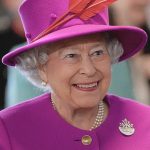
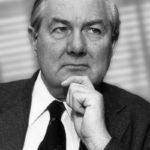
  • James Callaghan – 1977 Statement on Meeting with the French President

    James Callaghan – 1977 Statement on Meeting with the French President

    The statement made by James Callaghan, the then Prime Minister, in the House of Commons on 13 December 1977.

    With your permission, Mr. Speaker, I will make a statement about the talks I have had yesterday and today with the President of the French Republic, M. Valery Giscard d’Estaing.

    The objective of these annual meetings is to develop the habit of regular but informal consultation between British and French Ministers so that this becomes the most natural way of exchanging views on matters of long-term importance to both countries. On this occasion, I was glad to be able to welcome the President to Chequers together with the French Prime Minister, M. Barre, and their colleagues the Ministers of Foreign Affairs and of Defence. On the British side, my right hon. Friends the Chancellor of the Exchequer, the Foreign and Commonwealth Secretary, the Secretary of State for Defence, the Secretary of State for Trade, and the Minister of State for Industry took part in our discussions The talks took place in a friendly atmosphere and revealed a broad similarity of approach to the main issues of the day.

    As I reported to the House on 7th December, current questions affecting the European Community were fully discussed at last week’s meeting of the European Council. At Chequers, the President and I discussed the longer-term development of the Community. We found that our views were similar. We discussed the important and pressing question of the Community’s fisheries policy, on which the Commission’s proposals will provide the basis for a further meeting of the Fisheries Council next month.

    We resumed our discussions on the world economic situation and were in agreement that it is essential for the OECD and the Community to achieve their growth targets next year if unemployment is not to rise still higher. Our own fight against inflation, which is making good progress, needs the help of more expansionary policies in the strongest economies. We discussed the problems arising from the surpluses accumulated by the OPEC countries and by Japan.

    In a thorough review of our bilateral relations, we agreed to establish a Committee for Industrial Co-operation, drawn from senior officials of the two countries, which will identify new areas of industrial co-operation between us. These will include offshore oil technology, technology that is peripheral to the computer industry, the paper industry and the machine tool industry, among others. We welcomed the contacts already established between British Leyland and Renault on possible co-operation between these companies which, while leaving the initiative to them, we support and encourage.

    We discussed a proposal for a 2,000 megawatt cross-Channel electricity cable link. We noted that the generating authorities in our two countries are in negotiation towards an agreement and expressed our support for this. We reviewed prospects for co-operation in the supply of defence equipment, and welcomed the significant progress that is being made. We exchanged views on possible new projects in the field of civil aviation. We agreed that quick decisions were needed on the various options which had opened up and that these matters should be decided on the basis of the commercial and market factors involved.

    We agreed that there will be annual meetings in future between senior officials of our countries who are concerned with economic management. In a wider framework, we agreed to encourage the Franco-British Council to organise annual meetings, such as we already have with the Federal Republic of Germany and other countries, between leading British and French politicians, industrialists, trade unionists and others to discuss matters of common concern.

    We had a very thorough and useful exchange of views on the international situation, devoting particular attention to the prospects for a Middle East settlement and to Africa, on which our thinking was very close. We agreed to deepen consultation between us on African problems.

    This latest meeting has confirmed once again the value of these exchanges as a positive and constructive basis on which to build Franco-British friendship.

    Mrs. Thatcher

    May I put three points to the Prime Minister? First, does the Prime Minister agree that in these days we are not short of Summits, of committees of co-operation or of Summit statements, particularly about the need for extra growth, and that they are all phrased in the same terms? The only thing that we are short of is results from the Summits. It is ironic that this statement on the need for industrial growth comes on a day when industrial production is once again down. Does the right hon. Gentleman think that any practical proposals for growth have ever emerged from these Summit meetings?

    Secondly, in view of our need fox greater agricultural production, did the Prime Minister discuss with the President the need to devalue the green currencies? Thirdly, did he tell the President that it is his intention to increase his commitment to defence expenditure in accordance with our own commitment to our other allies?

    The Prime Minister

    It is true, I think, that there are far more international meetings than there ever have been and that sometimes the results are not commensurate with the effort which has been put in. Nevertheless, there are problems here of interdependence which have not been solved and cannot be solved by any one country. I know that I speak for the President of France, as I speak for myself, when I say that this exchange of views is of very great value, and I do not think that the right hon. Lady is doing justice to these exchanges by the approach that she takes.

    Certainly the matters of the cross-Channel electricity link, the supply of defence equipment, and the examination of new fields for co-operation in the industrial areas are of value. What happens, as the right hon. Lady may discover one day, is that one can supply a political impetus. When issues are being discussed by officials—no doubt very well—or by industries, it sometimes needs Heads of Government and appropriate Ministers to get together in order to give the real push. That is the value of it, not that any great results come out of any one meeting. I should like to cut down on the number of meetings that I attend in this way, but I do not think that it would be of value to this country if we were to cut off these Summits. Therefore, I do not agree with the right hon. Lady about that.

    We did not discuss the question whether we should devalue the green pound. All the green currencies in Europe are capable of adjustment and it is for Governments to decide when they do so. Our Government have not decided not to devalue. It would be a question how we measure the relative importance of the consumer and the return to farmers in this sphere.

    We did not discuss our contributions in the area of defence, at least not in financial terms. We discussed possible projects on which we could work together in the sphere both of a possible replacement for some existing helicopters and, indeed, of some other armaments.

    Mr. Conlan

    Did my right hon. Friend take the opportunity of discussing the problems associated with the Concorde landing rights, and did he give the opportunity to the French Government to associate with the British Government to ensure that there will be more co-ordination than there has been in the past to ensure that Concorde can land in a greater number of places than is seemingly possible at the moment?

    The Prime Minister

    We discussed this briefly, but the problem of the landing rights at Singapore is basically a matter, I think, with which we ourselves have to deal, and I did not invite the French President to assist on that matter. However, there is co-operation whenever we need to work together.

    Mr. Cyril Smith

    Did the Prime Minister have any discussion on the problems of the British textile industry, particularly in relation to any objections that France or any other Common Market Member may have to an extension of the temporary employment subsidy? If he did have such discussions, what form did they take and can he give us any indication whether the Government will agree to any such extension?

    The Prime Minister

    We discussed this matter briefly, particularly in relation to the negotiations that the Community has been carrying on. I did not raise with the French President the question of the temporary employment subsidy, nor he with me. Obviously this has to be the subject of an early decision, but I cannot imagine any circumstances in which either it will not continue or there will not be a replacement of it when the present scheme runs out—unless, of course, we have the dire misfortune of the return of a Conservative Government, in which case all these schemes will be washed out and unemployment will rise to 3 million.

    Mr. Amery

    Did the Prime Minister discuss with the President how we could exploit the 12-year lead we have over United States technology in supersonic civil flight?

    The Prime Minister

    We touched on this matter, but naturally we did not reach any conclusions about it. This is a matter which will come increasingly under discussion. I express only the personal view to the right hon. Gentleman that he should not expect it to be Government policy at this stage. I do not think another Anglo-French project could possibly succeed in view of the resources that would be required; it would have to be on a broader scale. But this is not a matter on which the Government have reached a conclusion.

    Mr. Ward

    I welcome what my right hon. Friend has said about the need for an electricity link with France. Will he say whether the French raised the question of a gas pipeline to take advantage of Britain’s lead in this area?

    The Prime Minister

    No, Sir, we did not discuss that, but we discussed the differences that arise in our economies because of the great good fortune that this country has with its massive reserves of coal and the oil discoveries that have been made, as well as, of course, the natural gas. I think that the French Government wish that they were in the same position. They, of course, are having to go nuclear much earlier than we are because of their shortage.

    Mr. Peter Walker

    Is the Prime Minister aware that all the areas of industrial collaboration that he identified are areas in which collaboration probably should be on a wider scale than merely an Anglo-French basis? For example, West Germany has a considerable interest. What action is the right hon. Gentleman taking about that?

    The Prime Minister

    Particularly in relation to defence, we covered this aspect of the matter, and the European Programme Group, which the right hon. Gentleman may know about, is considering possible defence collaboration in the manufacture and development of particular projects on an Anglo-French-German basis. However, these were only bilateral talks between us.

    On the other hand, I think that the President of France feels—and, certainly, I feel—that we share a number of problems in various areas. These are becoming increasingly known to us, and, though obviously they are also linked with Germany, perhaps we have a closer link with France. This is particularly true of textiles, for example. It is true also, I think in shipbuilding, where we have problems, in steel, and in the attitude towards the Japanese surplus. All of these are very important issues where I think an Anglo-French initiative can be and should be built—but not to the exclusion of any of our partners.

    Mr. Heffer

    In discussing the question of our oil and coal reserves, did my right hon. Friend stress the essential unity of the United Kingdom, particularly in view of the fact that the President of France entertained the so-called President of the Quebec Province of Canada and appeared to support independence? In view of the attitude being developed by the Scottish nationalists in relation to Scotland, this could have a significance for this country.

    The Prime Minister

    I discussed the question of devolution with the President and told him that I thought the best way to preserve the independence and unity of the United Kingdom was for the devolution Bill to go through in the form that, broadly, it is in now—and I believe that this would take a lot of poison out of the propaganda that is being used, in Scotland in particular.

    Mr. Gwynfor Evans

    Did the Prime Minister discuss with the President of France the Philistine and even barbarous policy followed by the French Government towards the culture and language of Brittany, which is now leading to the destruction of an ancient language?

    The Prime Minister

    No, Sir.

    Mr. James Johnson

    In view of what the Prime Minister said about M. Giscard d’Estaing and fishing policy, is he aware that in the eyes of our fishing industry the French are a bête noire? Did they discuss the tough and patriotic line taken by the Secretary of State for Agriculture, Fisheries and Food? If so, did M. Giscard d’Estaing say anything about the 50-mile exclusive limit?

    The Prime Minister

    I think that it would be true to say that there would not be normal relations with France unless there was some friction between fishermen off the South-West coast and French fishermen, who claim ancient and historic rights to fish there. My right hon. Friend the Foreign Secretary pointed out—and I supported him in this—that because of the need to preserve our fishing stocks there is more identity of interest between the French and ourselves, if we choose to exercise it, than on the surface there might seem to be. We hoped that the French would join us in defending these coastal rights that we have put forward.

    Mr. Henderson

    Did the Prime Minister find any movement in the French view towards the position that our fishermen have taken, namely that we must have exclusive control over territorial limits if we are to have conservation in the future? Did the French President indicate that when he visits Edinburgh he intends to say “Vive l’Ecosse libre”?

    The Prime Minister

    I cannot compete in this linguistic exercise. I cannot say that the French President made any alteration in the French approach to this problem. It is an important issue to him because of unemployment among French fishermen and he has his interests to look after. The question is whether we can identify a joint interest here in the preservation of our coastal areas. I think that we can.

    Mr. Marten

    As a great believer in Franco-United Kingdom co-operation rather than British-French co-operation, may I ask whether the accord which seems to have stemmed from this meeting extended to a joint belief that no extra powers should be given to the directly-elected Assembly, if there is one? Do France and Britain see eye to eye on that point?

    The Prime Minister

    I do not think that I want to go any further than the phrase that I used—namely that we found that our views were similar.

    Mr. Skinner

    In view of the Leader of the Opposition’s scathing remarks about this summitry—I am sure that the Prime Minister knows that I am a sceptic about these matters—does my right hon. Friend think that the Leader of the Opposition’s worldwide summitry has tended to establish her as more of an international statesman, taking into account what she has had to say this afternoon and that she has travelled to Australia, Yugoslavia, Italy, China and a score of other places? On the specific matter of direct elections, is the Prime Minister saying that both he and Giscard d’Estaing are agreed on the phrase that he used, namely that to delay for another year does not really matter?

    The Prime Minister

    No, Sir, not on that point. I am sure that the French President would much prefer us to come to a conclusion so that elections could be held in 1978.

    As for world travel, it is not for me to comment on anyone else’s travels, by any means of locomotion. But I am bound to say, having read the debate yesterday, that it seems to me that we have a new test to apply to international trade, namely that all trade with Communist countries is bad unless the Leader of the Opposition has visited them.

    Mr. Forman

    In reviewing the intractable problems of the world economic situation with the French President, was there any meeting of minds between Her Majesty’s Government and the French Government on the vital importance of Britain and France using their influence jointly in gatherings such as GATT and elsewhere to increase the trade potential for our exports to developing countries and also to improve the access for their exports to our countries?

    The Prime Minister

    That is a very important and interesting question. I cannot say that we spent time on it in the discussions yesterday, but it is certainly a matter that our officials could take up and I shall be glad to bring it to their attention.

    Mr. Faulds

    Did my right hon. Friend discuss the Middle East with the French President, more particularly in view of the fact that the French Government make a more realistic appraisal of their interests in that part of the world—an example which we might well follow?

    The Prime Minister

    Yes. We discussed this subject and we each put forward our own views about it. As to whose position is more realistic I would not care to say, except that I am glad to be able to report that I keep in constant contact with the leaders both of the Arab countries and of Israel. I had a telephone conversation yesterday with Mr. Begin—

    Mr. James Lamond

    Reverse charge?

    The Prime Minister

    It really would take a Scot to think of that. I am also keeping in close communication with the Arab leaders on these matters and shall continue to do so.

    Several Hon. Members rose—

    Mr. Speaker

    Order. Another long statement is to follow. I shall take two more speakers from each side. Mr. Ian Lloyd.

    Mr. Ian Lloyd

    Since this important conference concentrated on the question of industrial growth, may I ask the Prime Minister whether he and the President had before them the interesting report by the Economic and Social Committee of the Commission on the subject of industrial growth? Did he or the President refer to the criteria set out in that report, and did the Prime Minister explain to the President why not one of those criteria was satisfied by the Polish shipbuilding deal?

    The Prime Minister

    The House gave its answer on the last part of that question very forcefully last night. The speeches led me to the conclusion that the Opposition were a little unwise to raise the question.

    As for industrial co-operation, we discussed what bilateral approaches could be made between British and French industry, except in the defence sector at which, as I said, we looked in a wider context. Although we had at the back of our minds the document referred to by the hon. Gentleman, we did not discuss that paper in particular.

    Mr. Hayman

    In view of the grave problems of the civil aircraft industry in France and here, can my right hon. Friend tell the House when the urgent decisions on new projects, to which he has referred, are likely to be made?

    The Prime Minister

    Both the President and I will ask our respective industries to work hard at this subject and to reach a conclusion as quickly as possible. I know that that answer is not very definite. We had in mind that the industry should be able to evaluate the position by late spring, and that both Governments could then reach a conclusion. I repeat, however, that this issue must be approached on a commercial basis.

    Mr. Michael McNair-Wilson

    In an earlier reply the Prime Minister seemed to rule out the possibility of any future versions of Concorde. Will he tell us what discussions he had about the existing Concorde production line and whether there is any prospect of further aircraft being ordered?

    The Prime Minister

    We did not discuss that matter, but I cannot hold out any hope that there will be any extension of the existing line. There are no orders for further numbers of Concorde.

    Mr. John Garrett

    Did my right hon. Friend discuss with the French President the superior rate of economic growth in France, which has obtained for some years past, and the extent to which that has been due to interventionist national planning and public ownership of the financial institutions? Did my right hon. Friend feel that we had anything to learn from the French experience?

    The Prime Minister

    I think that both of us have something to learn from each other. But in the eyes of the major parties in France there is clearly not the same ideological objection to public enterprise as exists in the mind of the Conservative Party here. Therefore, the French have been able to approach the issue on a less dogmatic basis than seems possible here. There is certainly a great deal of intervention by the French Government in their industry, as is well known.

    The French will not have such fast economic growth next year as they would like. We hope that our rate of growth will be much faster as a result of the fact that we have now overcome inflation. Indeed, our rate of growth next year might even approach that of the French.

  • James Callaghan – 1977 Speech on Pay of Nationalised Industry Board Members

    James Callaghan – 1977 Speech on Pay of Nationalised Industry Board Members

    The speech made by James Callaghan, the then Prime Minister, in the House of Commons on 15 December 1977.

    The Government have given careful consideration to the difficult question of the pay of nationalised industry board chairmen and members.

    The recommendations of the Review Body on Top Salaries for salary levels at 1st January 1975, on which the Government deferred a decision in the wider national interest, were for increases of the order of 30 per cent. on average, and considerably more for some individuals. Substantial absolute sums were involved. Inevitably, therefore, the salaries of this group are at present significantly out of line with their counterparts elsewhere.

    But, in deciding how far they can go, the Government must have regard to the measures which are still being taken in the national interest to control inflation and which continue to demand very considerable restraint from all sections of the community. The Government therefore have to consider not only what scope there is within the current pay guidelines, but also how the absolute sums involved relate to what the community as a whole is being asked to bear.

    The Government have concluded that at the present time a general increase of 5 per cent. with effect from 1st January 1978 is the most that can be allowed but that up to 10 per cent. should be paid to the less-well-paid members of the group tapered so as to ensure that the lower percentage applies at salaries above £13,000 a year.

    The Government recognise that this will still leave nationalised industry board members significantly out of line with their counterparts elsewhere. They will wish to look again at the way forward when the Review Body on Top Salaries makes its recommendations for April 1978.

  • James Callaghan – 1977 Parliamentary Answer on the House of Lords

    James Callaghan – 1977 Parliamentary Answer on the House of Lords

    The Parliamentary Answer given by James Callaghan, the then Prime Minister, in the House of Commons on 27 January 1977.

    [Mr. Gwilym Roberts asked the Prime Minister what progress he has made in his consideration of the position of the House of Lords.]

    The Prime Minister

    The Government are continuing to keep the position of the House of Lords under review.

    Mr. Roberts

    Does my right hon. Friend agree that the removal of the House of Lords in anything like its existing form is a necessary advance towards democracy? Does he accept that this matter must be tackled by the next Labour Government if not by this one?

    The Prime Minister

    I certainly agree that the House of Lords is not the epitome of the democratic system, but I think that we had better undertake one constitutional change at a time.

    Mr. David Steel

    Does the Prime Minister recall that one of his predecessors said that the reform of the House of Lords would brook no delay? As that was Mr. Asquith in 1910, does he agree that there has been quite a lot of brooking since then? As long as the House of Lords goes unreformed, will the Prime Minister give it some constructive work to do and get it started on the Bill for European elections?

    The Prime Minister

    I am happy to give their Lordships some constructive work to do. It might turn their idle hands from the mischief they have done to the Aircraft and Shipbuilding Industries Bill. The Liberal Party has had many opportunities since the date mentioned by the right hon. Gentleman to tackle this particular problem. If he can promise me the full support of his party on this matter without wavering or quavering, I might be tempted to look in his direction.

    Mr. Michael Stewart

    In the course of the Government’s review of this subject will the Prime Minister study a valuable Fabian pamphlet on it written some years ago by my right hon. Friend the Secretary of State for Energy?

    The Prime Minister

    I always study the writings of my right hon. Friend with the greatest care.

    Mr. Fletcher-Cooke

    Is it the policy of the Government to go for a one-chamber system of government, or is it merely the policy of the Labour Party?

    The Prime Minister

    Yesterday morning the National Executive decided that it should go on record as being in favour of the abolition of the House of Lords. I cannot see why anybody should defend it in its present form. But, as I have said, a number of issues have to be settled and a number of hurdles have to be jumped before that legislation actually appears.

    Mr. Kinnock

    Does my right hon. Friend agree that we could more profitably advance democracy by spending this year abolishing the House of Lords and reforming the House of Commons than multiplying bureaucracy in the form of devolution?

    The Prime Minister

    My hon. Friend was not a Member of this House when I had some experience of this matter. I should want a full guarantee of his total support and that of a great many others before I embarked on it again.

  • Queen Elizabeth II – 1977 Queen’s Speech

    queenelizabethii

    Below is the text of the speech made by HM Queen Elizabeth II in the House of Lords on 3 November 1977.

    My Lords and Members of the House of Commons:

    My husband and I look back with delight and gratitude on the events which marked My Silver Jubilee at home and overseas, and the visits which we made to many parts of the United Kingdom and the Commonwealth. I look forward to paying a State Visit to the Federal Republic of Germany next May and to opening the Commonwealth Games in Edmonton in August.

    In pursuit of peace and collective security, the United Kingdom remains committed to the aims of detente, disarmament and the prevention of the spread of nuclear weapons. My Government reaffirm their policies in international relations and defence, and will contribute fully to the work of the United Nations, the Commonwealth and the North Atlantic Alliance.

    While working for policies which fully reflect the interests of the United Kingdom, My Government will play a full and co-operative part in the activities, the development and the enlargement of the European Economic Community.

    They will continue to contribute modern and effective forces to the North Atlantic Treaty Organisation, and to play their full part in the current Alliance studies of East/West relations and of the Alliance’s defence programmes. They are participating constructively in the important meeting in Belgrade which is being held as part of the follow-up to the Final Act of the Conference on Security and Co-operation in Europe; they will abide by the provisions of the Final Act, and continue to seek fulfilment of all its provisions by other signatories. They remain committed to the pursuit of detente in their relations with the Soviet Union and the countries of Eastern Europe.

    My Government will continue to take part in international efforts to combat recession and promote a more stable world economic order, and a fairer distribution, within an expanding world economy, of the world’s wealth between rich and poor nations; they will maintain their special efforts to help the poorest countries and the poorest people.

    They will work for a just and lasting peace in the Middle East, and the further improvement of relations between the United Kingdom and all the countries in the area. They will continue to co-operate with all concerned in the search for a lasting settlement in Cyprus, where they welcome the resumption of inter-communal talks.

    Efforts will be maintained to achieve a negotiated settlement in Rhodesia, on the basis of My Government’s proposals published in September this year, which are designed to provide a secure future for people of all races. My Government will be ready during the current Session to introduce legislation to enable Rhodesia to proceed to independence on this basis.

    Members of the House of Commons: Estimates for the public service will be laid before you.

    My Lords and Members of the House of Commons: The strengthening of the country’s financial position and balance of payments opens the prospect for a continuing improvement in the economy and the maintenance of financial stability. My Government’s main objectives are the speediest possible return to full employment and a sustained growth of output. In order to achieve these objectives they will give the highest priority to further reductions in the rate of inflation.

    My Government will continue to take action to reduce high unemployment through manpower measures and to promote industrial training.

    They will ensure that the benefits of North Sea oil are used to achieve a lasting improvement in our industrial performance and therefore to provide more jobs, higher real incomes and improved public services.

    My Ministers will continue to work in close co-operation with the Trades Union Congress and the Confederation of British Industry.

    Internationally My Government will continue to urge that the stronger economies should take the lead in promoting a substantial growth in the world and that adequate official finance should be made available on appropriate terms to countries with continuing deficits in the balance of payments.

    My Government remain firmly committed to establishing directly elected Assemblies for Scotland and Wales. Separate Bills will be introduced for this purpose.

    In Northern Ireland My Government will maintain their aims of establishing a devolved Government acceptable to both parts of the community and eradicating terrorism by the prosecution through the courts of those responsible for violence and by continuing to develop the effectiveness of the Royal Ulster Constabulary, supported by My Armed Forces. My Government attach special importance to co-operation on matters of security with the Government of the Republic of Ireland. They will continue to seek measures to strengthen the economy of Northern Ireland and improve its social environment.

    Legislation providing for the election of United Kingdom Members of the European Assembly will be re-introduced.

    Further consultations will be held on industrial democracy, with a view to producing proposals which should command general support, and My Ministers will continue directly to encourage the development of industrial democracy in the nationalised industries.

    There will be a review of the legislation and institutions governing competition policy, to see that this makes its maximum contribution to improving industrial efficiency.

    My Ministers are considering further measures to assist small firms.

    They will also hold consultations about encouraging profit-sharing through the tax system.

    Legislation will be brought forward to amend company law.

    A Bill will be introduced to provide public funds to finance payments to redundant shipbuilding workers in the public sector.

    Legislation will be introduced providing for changes in the structure of the electricity industry and other matters affecting the industry.

    Continued encouragement will be given to the efficient production, processing and distribution of food with the aim of meeting a greater proportion of our national needs from United Kingdom agriculture. My Ministers will seek improvements in the operation of the common agricultural policy.

    My Government will continue to seek major reform of the common fisheries policy. They will aim to secure conditions which will meet the needs of the British fishing industry, conserve fishing stocks, and ensure adequate supplies to the consumer.

    A Bill will be laid before you to increase the borrowing powers of the Civil Aviation Authority and British Airways, to provide for a levy to finance aviation security and to amend the civil aviation Acts.

    Legislation will be introduced for the further development of transport policy to meet economic and social needs, including those of rural areas.

    Legislation will be brought before you to provide assistance for first-time home buyers.

    A Bill will be introduced to renew and revive the inner urban areas.

    Legislation will be introduced on the composition and certain functions of the General Medical Council.

    In addition to My Government’s full programme of constitutional and other reforms for the present Session, they remain committed to bringing forward at the earliest opportunity a number of further highly desirable measures of reform. These measures include improvements in safety and discipline at sea and other aspects of merchant shipping, and the right of Post Office staff to take industrial action.

    Legislative proposals will be brought forward for the reform of Section 2 of the Official Secrets Act 1911.

    Following the Report of the Committee on the Future of Broadcasting, My Government will bring forward proposals on the constitution, structure and organisation of broadcasting in the United Kingdom.

    An increase in the limit on public funds for the National Film Finance Corporation will be proposed before the present limit expires.

    Measures will he brought before you to reform public sector housing subsidies in Scotland; to improve criminal procedure and reform the criminal justice system in Scotland ; and to extend the powers of Scottish local authorities in relation to their direct labour organisations.

    Further progress will be made with My Government’s programme of law reform.

    Other measures will be laid before you.

    My Lords and Members of the House of Commons: I pray that the blessing of Almighty God may rest upon your counsels.

  • Enoch Powell – 1977 Contribution to the Scotland Bill

    Enoch Powell, referring to the comments made by Tam Dalyell, coined the phrase “The West Lothian Question”. The comments were made on 14th November 1977.

    Mr. J. Enoch Powell (Down, South)

    I was deeply moved, in the speech of the right hon. Member for Cambridgeshire (Mr. Pym), to hear him enunciate the principle that should apply to this Bill – namely, that a constitutional change of this importance should not be passed through a deeply divided House of Commons and that, if these changes are to be made, they should be made with as near full-hearted consent – the phrase was not originally mine – as can be achieved. I take it as a sign of grace in the right hon. Gentleman, who was the Chief Whip in 1972, when an even greater constitutional change than is proposed in this Bill was carried through by a majority of only eight, that he now speaks for so many in saying that that is not the atmosphere and not the way in which such changes should be made.

    There is inevitably a certain repetitiveness in this debate after those which took place a year ago. We recall that the Bill of last year, containing a Scottish Bill Mark I, received a substantial majority on Second Reading, but that three months later it foundered on what was in form a procedural motion but was well understood by the House to be a verdict on the Bill itself.

    What was the reason for that apparently striking change between a majority for the principle and then, after a number of sittings in Committee, the dismissal of the same principle, the dismissal of the Bill itself? It was, I believe – I think that this will be supported by a number of hon. Members who lived through those days of debate – because the House had come to see that there were deep, unresolved, and perhaps unresolvable, questions which the Government had not answered and had shown no indication of being able to answer. That is where we are again this afternoon.

    This afternoon the Secretary of State for Scotland showed himself unable to explain what would be the function of Scottish Members in this House. But behind there looms the much larger question not of the function of Scottish Members in this House in regard to Scottish affairs, but of the whole functioning of this House, when 71 of its Members come from a part of the United Kingdom where the responsibility for a great range of legislation, and consequently of policy, is borne by elected representatives elsewhere.

    This is the question with which, by an iteration for which he should be praised rather than blamed, the hon. Member for West Lothian (Mr. Dalyell) has identified himself. It is not the fault of the hon. Gentleman that the Government cannot answer the question. Nor does it answer his question to say that if he goes on asking it he will not be allowed to vote. Nor does it solve the question, or resolve the dilemma, to tell the House that the measure is to be whipped through on a three-line Whip, or to whisper outside the Chamber about votes on matters of confidence.

    The fact that the question has never been answered is the evidence that we are in this legislation attempting to do something which runs contrary to a principle established by common sense, by experience and by endless debate over decades, namely, that it is not possible within a unitary parliamentary State to devolve widespread legislative authority to an elective Assembly in one part of that State unless the State itself is to be resolved into a federation. The question as to the position of Scottish Members after such a change as this Bill proposes, the question whether they are all to vote or none is to vote, or half of them are to vote, is not a conundrum or a trick question. It is a theorem which illustrates an underlying principle which time and again we are seeking ways to affront. I repeat that experience – painful experience, experience attended with tragic results – has shown that there is no means of circumventing the logic of the question which the hon. Member for West Lothian has so insistently posed.

    I expect that the right hon. Gentleman the Lord President of the Council, if he does me the honour to notice my remarks when he replies to the debate –

    Mr. Millan

    My hon. Friend the Minister of State, Privy Council Office, will be replying.

    Mr. Powell

    Well, if I am not to have that honour, then there will be others who will deploy the same argument. At all events, the Lord President has frequently thrown back the precedent, as he would fain claim it to be, of the government of Northern Ireland between 1922 and 1972. He understands, of course, perfectly well what is the answer to his question, but it is well that it should be understood generally and that there should be no suggestion that there is any way out, or any resolution, offered by the experience of Northern Ireland.

    There is in the first place, as has often been observed, the entire difference of scale. It is one thing for 71 Members, or half that number – especially in Parliaments where majorities may be narrow – to hold the balance on great issues of policy. It is quite a different thing, during decades in which such narrow majorities have been unusual, for a very small number of Members to have been tolerated in this House and for the adherence of the majority of them to one of the great parties to have been overlooked, not without criticism, by those who belonged to other political parties.

    But I will not rest upon the matter of scale, though in itself the de minimis rule applies – Northern Ireland has been de minimis in this matter over the last 50 or 60 years. But that does not go to the heart of it. Does anyone who knows anything about the story of the 1920s really imagine that Home Rule was forced upon the people of Northern Ireland, as forced it was, in order to strengthen the United Kingdom; that it was done in order to tighten the ties between that Province and Great Britain? On the contrary, it was done in order to achieve by two steps, since one step proved for the time being to be impracticable, what people already then knew was the true meaning of Home Rule – the separation of the island of Ireland from the United Kingdom. It was only the fact that the motivation of the majority in the Province was not nationalist, that their overwhelming desire was so to use the institutions they had been given that the union would not be disturbed or threatened, which during all that period prevented the inherent consequences of devolved legislation in a unitary State, even upon that tiny scale, from becoming evident.

    But, of course, it is something quite different which is proposed in the Bill, and the Government themselves recognise that it is something different. The Government recognise it in the Bill itself by the crass contradiction between Clause 1 of the Bill – with its bland assertion, which flies in the face of experience and of common sense – and Clause 81, which appeals to the popular will as expressed by referendum, not in the United Kingdom but in Scotland. Why, Mr. Speaker? If this is a constitutional reform, a reform which, as the Government assert, will leave the United Kingdom intact, but undoubtedly a constitutional reform which will put one part of the United Kingdom in an entirely new and – dare I say? – privileged position, then, if this is a United Kingdom Bill, if it is a measure which recognises and sustains the union, to whom, if not to this House, to whom beyond this House, ought that issue to be submitted? Not to the people of one part of the United Kingdom but to the people of the United Kingdom as a whole.

    There is only one set of circumstances, there is only one context, in which it is right and logical to go to a part of the people of the United Kingdom and say “Do you agree with this or not?” Those are the circumstances in which such a question was put in 1973 to the people of Northern Ireland, namely, when the question is: “Do you want in or out?”

    The reason why this referendum is to be limited to the people of Scotland is that the Government recognise – it is an implicit admission – that what is at stake in this Bill is the separation of Scotland from the rest of the United Kingdom, on which, of course, it should be the people of Scotland, and ultimately the people of Scotland only, who should have a voice.

    This is a Bill by which the whole Kingdom is affected, by which every hon. Member of this House is affected, by which every constituent of every hon. Member of this House is affected. There is a list set out in Part I of Schedule 10 of the subjects on which the Scottish Assembly will be empowered to legislate. Hon. Members might do worse than spend part of the time between now and 11 pm reading Part I of Schedule 10 of the Bill. As they do so, hon. Members representing constituencies in England should say to themselves “On all these questions it is even chances that the decisions in the future as to the law which is to apply to my constituents will be taken by the deciding vote of Scottish Members of the House of Commons, Members who in that context are irresponsible; that is, who have no corresponding responsibility upon that subject to their own constituents.”

    On housing, planning, health and all the rest, the law for England is to be made by an assembly in which often enough the decision will be in the hands of Members representing Scottish constituencies, by the majority within the 71. What would the Government not have given in the last three years for the difference between the minority and the majority among 71 Members of the House? Occasionally they have been eased round a difficult corner by a very much lesser margin than would be available from 71 Members.

    Mr. Raison

    Would not the right hon. Gentleman also stress that it is not only the law of England that will be so affected but the law of Wales and the law of Northern Ireland, and that Members representing constituencies in Wales and Northern Ireland should also bear these facts in mind?

    Mr. Powell

    That is certainly true. I did not mention the Welsh in this context, because we are to come to them tomorrow, and I confess that I thought I might be engaging in de minimis if I associated little Northern Ireland with England in the injustice which we shall jointly suffer, and which our constituents will jointly suffer under a constitution of this type.

    The Lord President of the Council and Leader of the House of Commons (Mr. Michael Foot)

    I want to get quite clear from the right hon. Gentleman how he seeks to remedy the injustice. I do not want to misunderstand his amendment in any way. The amendment is “That this House declines to give the Scotland Bill a second reading so long as Northern Ireland, an integral part of the United Kingdom, remains deprived of any devolved or local administration above the level of district councils.” If we were at some future date to be able to get, say, a devolution for Northern Ireland on the same scale as is proposed in this Bill for Scotland, would that overcome the right hon. Gentleman’s other constitutional objections to the Bill?

    Mr. Powell

    I cannot really believe that the right hon. Gentleman has read our amendment so myopically, or that he is unaware that whereas in Scotland they have regional administration and district administration, we in Northern Ireland have democratic control over only the most minimal subjects. In our amendment we are concerned with what those in Scotland already possess, with local administration of the general policies and laws which are decided for the kingdom as a whole. Let us by all means devolve, and devolve to democratic assemblies, the administration of the laws which are made in this House and of the policies which are framed in this House. That we can do without incurring the curse which this Bill incurs. But if we go beyond that, there arises again the West Lothian question, to tell us “In that event you must resolve the Union into a federation unless you are to end up in inextricable contradictions and injustices in the House of Commons, which is the essence of our Parliamentary Union.”

    Mr. Foot

    Will the right hon. Gentleman apply his mind to this question? Did not the West Lothian question – I perfectly agree with him that he was entitled to call it that – apply during that period earlier when we did have the devolved constitutional situation in Northern Ireland? Is he advocating the restoration of a position in which the West Lothian question would still be applied to Northern Ireland?

    Mr. Powell

    In answer to that, perhaps I might read words from the policy statement of my own party, which it arrived at three years ago in what was called the Portrush Declaration: “we do not believe that devolution itself would be appropriate. A British federal system would serve the dual purpose of maintaining the Union and ensuring the democratic rights of the entire Ulster people.” From the beginning to the end of this question, from the days of Isaac Butt in the 1860s right the way through to the present, the theorem has been understood, by those who had the patience to understand it and were not blinded by what they thought were contemporary political necessities, that one cannot in a unitary State devolve legislative power to the representatives of a part of that State unless one resolves the State itself into a federation.

    Of course, if there be found some way, after all these years, some way which has escaped 100 years of British politicians, or if there is to be a British federation, a federation of the United Kingdom, we in Northern Ireland shall claim – I use words which we reiterate – the same rights as are enjoyed by any other part of the kingdom. But our supreme interest is in the maintenance of the unity of the United Kingdom. We do not claim to be a nation; we claim to be a province of this nation. So we of all who come to this House have a vested interest, perhaps greater than any, in the preservation of the parliamentary Union. It is because we believe that the parliamentary Union would inevitably be eroded and then dissolved if such a measure as this were to be forced into operation that my hon. Friends and I, as we did last Session, will vote against this measure at every stage until it is destroyed.

    Mr. Norman Buchan (Renfrewshire, West)

    I have no intention of following the argument of the right hon. Member for Down, South (Mr. Powell) relating to Ireland. However, I accept that the West Lothian question, if that is what it is to be called, is a central weakness of the proposals before us. I am not at all sure that it is a central weakness which is soluble merely by the application of logic. I do not think that it can be answered only in these terms. It can be seen and answered only within the context of not only these proposals but the reasons for these proposals and, above all, the background of these proposals.

    The truth is that if we were to examine any constitution we would find it full of flaws. I shudder to think of what the right hon. Member for Down, South would make of the British constitution if we were to try to write it out in full legislative form and analyse it clause by clause. I can think of no constitution that would be more shot through with flaws – as the right hon. Gentleman claims this is, on one particular and obvious point. Would any of us have devised a British constitution in which we would have failed to take action on the sovereignty of the elected Parliament and then said “By the way, we shall have a chamber at the end of the corridor which can delay and overturn these measures”? What nonsense. What denunciations we would have received from the right hon. Member for Down, South.

    Therefore, we have to look at this in the perspective of the weakness of all constitutions. We have to say, given a constitution which will have flaws, can that constitution operate because the will of the people is such that it should operate? One thing that we have to devise here is precisely the kind of solution which will command the support of the general will behind it. That is the only reason that this place works, and it is the only reason that the proposed Assembly and the new structures, both of this place and in the Assembly, will work – if there is the general will to make it work.

    It is no use saying that Northern Ireland was exceptional because of the de minimis argument. I accept this, but what this is saying is that there was a flaw in the situation which was tolerated and which worked. It worked for half a century, however badly, because it was a de minimis situation. That, at least, was deserting logic. That was at least dealing with the practicalities of the situation – that there was a general acceptance that it should work for a period until a flaw developed. If I were sure that the Assembly proposals would work comfortably for half a century, during that process I think that we could find the necessary change and, above all, the modus vivendi which would allow it to operate.

    There was a deep political reason – not the logical reason – for its failing in Northern Ireland. It was a political reason. It was the presence of partition. It was that which caused the breakdown in Northern Ireland, and not the illogicality of the constitution.

    Mr. Powell

    The hon. Member is entirely right in saying that, apart from the de minimis argument, it worked only because of the determination of those concerned, under constant threat as they were, not to use the powers which they had in any fashion which would differentiate them from the rest of the United Kingdom. The hon. Member has the point.

  • Queen Elizabeth II – 1977 Jubilee Speech to Parliament

    queenelizabethii

    My Lords and Members of the House of Commons,

    I am deeply grateful for your Loyal Addresses and for the kind and generous words in which the Lord Chancellor and Mr. Speaker have expressed them.

    Thank you also for what you have said about my family and the service they have given over the years. You will understand that for me personally their support has been invaluable.

    It is appropriate that I should come to Westminster at the start of the Jubilee celebrations in the United Kingdom. Here, in a meeting of Sovereign and Parliament, the essence of Constitutional Monarchy is reflected.

    It is a form of Government in which those who represent the main elements of the community can come together to reconcile conflicting interests and to strive for the hopes and aims we all share. It has adapted itself to the changes in our own society and in international relationships, yet it has remained true to its essential role. It has provided the fabric of good order in society and has been the guardian of the liberties of individual citizens.

    These 25 years have seen much change for Britain. By virtue of tolerance and understanding, the Empire has evolved into a Commonwealth of 36 Independent Nations spanning the five Continents. No longer an Imperial Power, we have been coming to terms with what this means for ourselves and for our relations with the rest of the world.

    We have forged new links with other countries and in joining the European Economic Communities we have taken what is perhaps one of the most significant decisions during my reign.

    At home there are greater opportunities for all sorts and conditions of men and women. Developments in science, technology and in medicine have improved the quality and comfort of life and, of course, there has also been television!

    We in Government and Parliament have to accept the challenges which this progress imposes on us. And they are considerable.

    The problems of progress, the complexities of modern administration, the feeling that Metropolitan Government is too remote from the lives of ordinary men and women, these among other things have helped to revive an awareness of historic national identities in these Islands. They provide the background for the continuing and keen discussion of proposals for devolution to Scotland and Wales within the United Kingdom.

    I number Kings and Queens of England and of Scotland, and Princes of Wales among my ancestors and so I can readily understand these aspirations.

    But I cannot forget that I was crowned Queen of the United Kingdom of Great Britain and Northern Ireland.

    Perhaps this Jubilee is a time to remind ourselves of the benefits which union has conferred, at home and in our international dealings, on the inhabitants of all parts of this United Kingdom.

    A Jubilee is also a time to look forward! We should certainly do this with determination and I believe we can also do so with hope. We have so many advantages, the basic stability of our institutions, our traditions of public service and concern for others, our family life and, above all, the freedom which you and your predecessors in Parliament have, through the ages, so fearlessly upheld.

    My Lords, Members of the House of Commons. For me the 25th anniversary of my Accession is a moving occasion. It is also, I hope, for all of us a joyous one. May it also be a time in which we can all draw closer together.

    Thank you again! I begin these celebrations much encouraged by your good wishes and expressions of loyalty.