Tag: 1975

  • John Stonehouse – 1975 Parliamentary Question on the Number of Staff in the Cabinet Office and Downing Street

    John Stonehouse – 1975 Parliamentary Question on the Number of Staff in the Cabinet Office and Downing Street

    The parliamentary question asked by John Stonehouse, the Labour MP for Walsall North, on 24 November 1975.

    Mr. Stonehouse asked the Prime Minister what is the current total number of public servants in the Cabinet Office and his secretariat, respectively; what were the totals in 1964; and what is the percentage increase or decrease between the two dates.

    The Prime Minister The total number of public servants in the Cabinet Office is currently 681 compared with 356 at the same point in 1964. This represents a net increase in staff of 91 per cent., due largely to additional functions and services. The number of staff at 10 Downing Street is currently 68, including three who are employed part-time, compared with 45 in 1964, an increase on a full-time basis of 48 per cent.

  • John Stonehouse – 1975 Parliamentary Question on Brixton Prison

    John Stonehouse – 1975 Parliamentary Question on Brixton Prison

    The parliamentary question asked by John Stonehouse, the then Labour MP for Walsall North, in the House of Commons on 11 November 1975.

    Mr. Stonehouse asked the Secretary of State for the Home Department if he will publish in the Official Report a schedule of deaths of prisoners in the 12 months to 31st October 1975 in Brixton Prison identifying prisoners by age only and specifying the cause of death in each case.

    Dr. Summerskill Five prisoners at Her Majesty’s Prison Brixton died in the 12 months to 31st October 1975. The particulars of four are given below. The fifth death occurred on 28th October last and an inquest has not yet been held.

    CAUSES OF DEATH, AND AGES OF DEATH OF PRISONERS WHO DIED AT HM PRISON BRIXTON, 1ST NOVEMBER 1974—31ST OCTOBER 1975

    Age | Cause

    23 | Natural causes—acute pneumonia and myocarditis.
    27 | Natural causes—status epilepticus.
    39 | Suicide—hanging.
    51 | Suicide—acute narcotic poisoning.

    Mr. Stonehouse asked the Secretary of State for the Home Department whether he has caused any internal inquiry into any death of a prisoner at Brixton Prison during the 12 months to 31st October 1975; and with what result.

    Dr. Summerskill No; all five deaths which have occurred in this period were however reported to the coroner.

    Mr. Stonehouse asked the Secretary of State for the Home Department how many foreign subjects were held in Brixton Prison on 1st September and 1st October, respectively; and for what alleged offences.

    Dr. Summerskill I regret that only an estimate of the number of foreign subjects held in Brixton prison is available. On 1st September and 1st October about 300 prisoners of foreign nationality were held there, of whom about 230 also held British citizenship. More detailed information, and information about alleged offences, could be obtained only by extensive inquiry and at disproportionate cost.

  • John Stonehouse – 1975 Speech on Industry and Trade Unions

    John Stonehouse – 1975 Speech on Industry and Trade Unions

    The speech made by John Stonehouse, the then Labour MP for Walsall North, in the House of Commons on 20 November 1975.

    I do not know any-thing about the Maidstone plant. I am happy to concede the point as the hon. Gentleman, who represents the area, is so well informed about the Maidstone situation.

    We have also had a depressing situation at British Leyland which has resulted in the company having to be bailed out at enormous expense. On the news today there was the announcement that 2,000 workers producing Jaguars, cars which sell extremely well abroad and which are in great demand, have been laid off because of yet another dispute. It does not seem that the lessons are being learnt. I wonder when the Government will speak out frankly on this issue which has been so undermining the performance of British industry.

    Last week we had yet another illustration of the deplorable effect of strikes—namely, the dispute at the Daily Express. Of course we do not read very much about that sort of dispute in the newspapers, because there is an undertaking in the newspaper industry not to refer overmuch to the overmanning problems and the restrictive practices that they have to suffer. We only hear about such matters indirectly.

    I understand that 96 maintenance engineers at the Daily Express were dismissed, many of them being superfluous to requirements. Their reply was not only to put a pistol to the head of their employer in the way that Mr. Riccardo was putting a pistol at the Prime Minister’s head, but to bring out all the engineers of all the other newspapers, who also put their employers against the wall with machine guns at their heads. It was that sort of threat that made the employers collapse. Yet another victory was secured for a minority within a minority.

    That sort of action is not trade unionism: it is a Mafia tactic, a protection-racket tactic. There is too much of that sort of action in British industry and someone some day must say something about it. I believe that the trade unions have developed too much power and that they abuse their power. They do not act in the best long-term interests of their members. Further, they do not act in the best interests of the community. Very often they act irresponsibly.

    Faced with that situation, what action do the Government take? Instead of dealing with the problem of the growth of trade union feudalism within our industrial economy, a feudalism which is partly, if not mainly, responsible for our depressing experience in productivity compared with other industrial States, they announce that they will reintroduce legislation to remove the remaining unsatisfactory features of the Industrial Relations Act 1971. They will waste parliamentary time going through all that again when they could have had a Bill enacted last Session with only one serious point excluded from it from the Government’s point of view. What was that point? It was the provision that sought to establish a closed shop for journalists. When we are faced with the immense problem of trade union feudalism, why is it that we have the Government wasting time on a proposal to reintroduce legislation for that purpose?

    We also have proposals for industrial democracy, with which I agree. However, I hope that that does not mean syndicalism. In many areas in which industrial democracy is applied I believe that there is an attempt by those concerned not to run a viable industry, but to hold others to ransom.

    Regrettably, there are signs of that happening within the Post Office, an industry which I knew quite well a few years ago. At that time we came up against many overmanning techniques by the trade unions. Even today restrictive practices are still preventing the implementation of new ideas and the use of new machinery. I believe that industrial democracy must mean a greater sense of responsibility on the part of workers and those who participate rather than the impression being given that through this technique they will be able to hold on to restrictive practices which are clearly anathema to the progressive improvement of Britain’s economy.

    Reference is made in the Gracious Speech to the Post Office banking system. It is important that the Ministers responsible should come clean about the real cost of Giro. During the period when I was the Minister responsible it was my job to take over the Giro proposals which had already been agreed by my colleagues. It was my task to implement the new service. I did so at the time with some misgivings, and I look back with some dismay on what was done at that time and since. Giro has already cost the taxpayer over £30 million. It is a wasteful system. Even today it is wasting money, because it under-estimates the real cost of the service. In particular, it depends so much on the postal services and there is no accurate costing of the postal factor involved. That disguises the true cost of the Giro service.

    In introducing the Gracious Speech, the Government have taken on more than they can handle during the next year. I believe that the devolution proposals will need a great deal more consideration than even the Government have imagined. I hope that they will turn their attention away from shibboleths and diversions to tackle at least two of the most serious problems that need to be dealt with if we are to get out of our crisis.

  • Selwyn Lloyd – 1975 Comments on the Personal Statement Being Made by John Stonehouse

    Selwyn Lloyd – 1975 Comments on the Personal Statement Being Made by John Stonehouse

    The comments made by Selwyn Lloyd, the then Speaker of the House of Commons, in the House on 20 October 1975 in advance of the personal statement being made by John Stonehouse.

    Before I call upon the right hon. Member for Walsall, North (Mr. Stonehouse) to make a personal statement I want to make one or two matters clear.

    Responsibility for the decision to allow the right hon. Member to make a statement is mine. If the House wishes to introduce a new Standing Order dealing with personal statements I am sure that any occupant of the Chair would be grateful. I certainly have not found this an easy matter to decide. The right hon. Gentleman’s affairs and absence have frequently been referred to in the House. A Select Committee was set up and has reported. I am of the opinion that in those circumstances I should allow the right hon. Member to make a statement about his absence.

    As to the precise contents of the statement, the task of the Chair in this case has been to ensure that nothing should be said in it concerning matters which are sub judice and that it does not involve attacks upon other Members.

    The convention of this House is that a personal statement should be listened to in silence.

  • John Stonehouse – 1975 Personal Statement Made in the House of Commons Following his Disappearance

    John Stonehouse – 1975 Personal Statement Made in the House of Commons Following his Disappearance

    The statement made by John Stonehouse, the then Labour MP for Walsall North, in the House of Commons on 20 October 1975.

    I think I should first explain that the fact that I am speaking from the benches on the Opposition side of the House has no party political significance whatsoever. I am standing here because this is the place that I occupied for most of my time in the House in the last nearly 19 years, and indeed it was from this bench that I made a personal statement when I returned from Rhodesia some 16 years ago on 13th March 1959.

    Mr. Speaker Order. The rules are very, very strict. The right hon. Gentleman must say only what has been passed by me.

    Mr. Stonehouse I simply wanted to say that as there were some inquiries as to why I was at this bench, in particular from some hon. Members who were already sitting here, I felt that I should explain why I chose to speak from this side of the House.

    I am grateful to you, Mr. Speaker, for your agreement to my request to make a statement. It is not easy for me; nor is it easy for the House. The events surrounding my disappearance last November, and since, have created tremendous Press publicity, and everyone’s consideration of my experience has been coloured and influenced by that media treatment. There have been incredible allegations made against me—

    Mr. Speaker Order. The hon. Gentleman must be very careful. He is not now reading from the text which has been agreed with me.

    Mr. Stonehouse I have made a few textual changes.

    Mr. Speaker Let there be no misunderstanding about this. The right hon. Member is entitled to say only what I have passed.

    Mr. Stonehouse In particular—you will see this in the text, Mr. Speaker—I deny the allegation that I was an agent for the CIA. I deny the allegations that I was a spy for the Czechs. I can only regret that the original stories were printed. The purpose of this statement is to explain, as best I can within the traditions of the House, why I was absent from the House for such a lengthy period.

    The explanation for the extraordinary and bizarre conduct in the second half of last year is found in the progressions towards the complete mental breakdown which I suffered. This breakdown was analysed by an eminent psychiatrist in Australia and was described by him as psychiatric suicide. It took the form of the repudiation of the life of Stonehouse because that life had become absolutely intolerable to him. A new parallel personality took over—separate and apart from the original man, who was resented and despised by the parallel personality for the ugly humbug and sham of the recent years of his public life. The parallel personality was uncluttered by the awesome tensions and stresses suffered by the original man, and he felt, as an ordinary person, a tremendous relief in not carrying the load of anguish which had burdened the public figure.

    The collapse and destruction of the original man came about because his idealism in his political life had been utterly frustrated and finally destroyed by the pattern of events, beyond his control, which had finally overwhelmed him. Those events which caused the death of an idealist are too complex to describe in detail here, but in the interests of clarity as well as brevity I refer to them as follows.

    Uganda was a country in which I worked for two years in the development of the co-operative movement. I was active also in developing political progress and became, for instance, a character witness for one of the accused in the Jomo Kenyatta Mau Mau trial in Kenya.

    Later, as a back-bench Member of Parliament, I campaigned vigorously for African independence and became vice-chairman of the Movement for Colonial Freedom. Much of my back-bench activities at that time—conducted, incidentally, from this bench—were concerned with advancing this cause. I believed in it sincerely and passionately. But those ideals were shattered in the late 1960s and the 1970s as Uganda and some other countries I had helped towards independence moved from democracy to military dictatorship and despair.

    The co-operative movement in Britain had been a great ideal for me from an early age. Co-operation was almost a religion for me. It was not only a way to run a business; it was a way of life from which selfishness, greed and exploitation were completely excluded. I became a director and later President of the London Co-operative Society, the largest retail co-operative society in the world, in active pursuit of those ideals. I did not do it for money. The honorarium was £20 per year.

    But I was pursued by the Communists in that position during that period. I was bitterly attacked, and at that time—

    Mr. Speaker Order. The right hon. Gentleman must say only what I have passed.

    Mr. Stonehouse That time was a most traumatic one for me and wounded my soul deeply. It had become cruelly clear that my co-operative ideals were too ambitious, for, in truth, they could not be achieved, given human motivations. I felt as though my religion had been exposed as a pagan rite.

    Bangladesh is a country which I helped to create, and, with my hon. Friend the Member for Mitcham and Morden (Mr. Douglas-Mann), I was one of the first in the House to take up the cause of self-determination for East Pakistan following the terrible events of the military crack-down in March 1971, when 10 million people had to flee for their lives to the safety of India. I became deeply involved as a result of first-hand experience in Bengal during the struggle for freedom. I sponsored several early-day motions concerned with Bangladesh, including one which attracted over 100 signatories, calling for the recognition of an independent and sovereign Bangladesh. That motion, in July 1971, was most significant in the progression of events towards the independence which finally came in December of that year.

    Bangladesh made me a citizen in recognition of my identification with the cause. I was enthused at that time with hope, but the hopes turned to tears as the conditions in that country deteriorated. Another of my ideals had collapsed.

    After the Labour defeat of 1970, I became active in export businesses, a field in which I had been successful as a Minister and one in which I felt I could make a contribution in assisting British exports. I had hoped to establish personal financial security after a few years and then to return to full-time political activity. My enterprises were successful.

    However, early in 1972, I was approached by Bengalis residing in this country who wanted me to assist the establishment of a bank to cement relationships between Britain and Bangladesh. This involved me in very great problems, which could have ruined my career and public standing, and I was left a broken man as a result of the nervous tension I suffered throughout that period. That experience contributed heavily to my breakdown.

    In 1974, with the collapse of many secondary banks and the problems of the British economy, the strains became even worse. There seemed no escape from the awesome pressures which were squeezing the will to live from the original man. Everything he had lived for and worked for seemed to be damned.

    In this House itself, I felt a big weight bearing down on me. It was physically painful for me to be in the Chamber because it was such a reminder of my lost ideals. I was suffocated with the anguish of it all. The original man had become a burden to himself, to his family and to his friends. He could no longer take the strain and had to go. Hence, the emergence of the parallel personality, the disappearance and the long absence during the period of recovery.

    That recovery took time, and in the early stages the psychiatrist in Australia advised that I should not return to England until I had recovered, as a premature return would inevitably do further harm to my health. At the time of the disappearance, no criminal charges were laid or anticipated; they did not come till four months later.

    In view of the facts, I hope that the House will agree that the right hon. Member for Walsall, North had no intention of removing himself from the processes of justice as established by Parliament.

    I am not allowed by your ruling, Mr. Speaker, to refer to what you consider to be controversial subjects, and of course I accept your judgment; but I remind you, Mr. Speaker, that one man’s meat—

    Mr. Speaker Order. The right hon. Gentleman is again departing from the text.

    Mr. Stonehouse Yes, Mr. Speaker. I am simply explaining that I accept your judgment entirely, but a personal statement is a personal statement, and I must advise the House that half of my original statement was deleted by you. However, I fully appreciate your position, and I am deeply indebted to you for your sympathy, understanding and forbearance in the difficult circumstances which I have involuntarily created for you and the House during these past 11 months. I am very grateful to those hon. Members who have extended understanding in my turmoil—especially to my hon. Friends the Members for Mitcham and Morden and for East Kilbride (Dr. Miller), the right hon. Member for Down, South (Mr. Powell), and the hon. Members for Chippenham (Mr. Awdry) and for Horncastle (Mr. Tapsell). I express thanks also to the right hon. Member for Worcester (Mr. Walker) and the then Foreign Secretary who both helped me through a terrible crisis in 1973. I thank the Clerks at the Table and their assistants, who have been exceptionally helpful in recent months.

  • Queen Elizabeth II – 1975 Christmas Broadcast

    Queen Elizabeth II – 1975 Christmas Broadcast

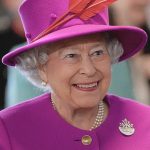
    The Christmas Broadcast made by HM Queen Elizabeth II on 25 December 1975.

    Every year I have this special opportunity of wishing you a happy Christmas. I like to think I am speaking to each child who can see or hear me, each woman, each man in every country of the Commonwealth.

    Christmas is a festival which brings us together in small groups, a family group if we are lucky. Today we are not just nameless people in a crowd. We meet as friends who are glad to be together and who care about each other’s happiness.

    Nowadays this is a precious experience. So much of the time we feel that our lives are dominated by great impersonal forces beyond our control, the scale of things and organisations seems to get bigger and more inhuman.

    We are horrified by brutal and senseless violence, and above all the whole fabric of our lives is threatened by inflation, the frightening sickness of the world today.

    Then Christmas comes, and once again we are reminded that people matter, and it is our relationship with one another that is most important.

    For most of us – I wish it could be for everyone – this is a holiday, and I think it’s worth reminding ourselves why. We are celebrating a birthday – the birthday of a child born nearly 2,000 years ago, who grew up and lived for only about 30 years.

    That one person, by his example and by his revelation of the good which is in us all, has made an enormous difference to the lives of people who have come to understand his teaching. His simple message of love has been turning the world upside down ever since. He showed that what people are and what they do, does matter and does make all the difference.

    He commanded us to love our neighbours as we love ourselves, but what exactly is meant by ‘loving ourselves’? I believe it means trying to make the most of the abilities we have been given, it means caring for our talents.

    It is a matter of making the best of ourselves, not just doing the best for ourselves.

    We are all different, but each of us has his own best to offer. The responsibility for the way we live life with all its challenges, sadness and joy is ours alone. If we do this well, it will also be good for our neighbours.

    If you throw a stone into a pool, the ripples go on spreading outwards. A big stone can cause waves, but even the smallest pebble changes the whole pattern of the water. Our daily actions are like those ripples, each one makes a difference, even the smallest.

    It does matter therefore what each individual does each day. Kindness, sympathy, resolution, and courteous behaviour are infectious. Acts of courage and self-sacrifice, like those of the people who refuse to be terrorised by kidnappers or hijackers, or who defuse bombs, are an inspiration to others.

    And the combined effect can be enormous. If enough grains of sand are dropped into one side of a pair of scales they will, in the end, tip it against a lump of lead.

    We may feel powerless alone but the joint efforts of individuals can defeat the evils of our time. Together they can create a stable, free and considerate society.

    Like those grains of sand, they can tip the balance. So take heart from the Christmas message and be happy.

    God bless you all.

  • Peter Bottomley – 1975 Maiden Speech in the House of Commons

    Peter Bottomley – 1975 Maiden Speech in the House of Commons

    The maiden speech made by Peter Bottomley, the then Conservative MP for Woolwich West, in the House of Commons on 21 July 1975.

    I am sorry that I cannot say I have come here having defeated someone who put forward at the Woolwich, West by-election a policy such as we see in the third amendment on the Order Paper today, However, I prefer to leave most of the comments of the hon. Member for Liverpool, Walton (Mr. Heffer) for others to answer, because I wish to start on a note of agreement among everyone.

    I wish to say to the Prime Minister, in whose private office my predecessor worked, to Bill Hamling’s close friends, to his family and to all hon. Members on both sides of the House, as well as to all those on both sides of the political fence in West Woolwich, that I regard it as a great privilege to follow in this place someone who was so well loved and respected both in the House and in the country.

    I hope that in my first speech I shall not have to compete with someone who 10½years ago was interrupted a dozen times—or by a dozen people in the same interruption—having brought it upon himself, perhaps, by referring to you, Mr. Speaker, in a previous capacity. However, having won a record election, and having voted twice for the Government on my first day here—I suppose that I must regard that as a mark of distinction, if not of incompetence—and having discovered myself in the same Lobby with the hon. Member for Bolsover (Mr. Skinner) on my second day, I cannot imagine that anything that will happen in the remainder of this Parliament will greatly surprise me.

    I represent a very sensible place, sensible not only because the electorate elected me but sensible also because they had Bill Hamling as their Member before me. It is an area where people take their political duties seriously. They have a high turn-out at local government elections. They are generally well served by their council, of either political complexion. Incidentally, I think that it is likely to change again fairly soon.

    Woolwich, West is an area where most people are desperately concerned, as they showed by their behaviour last month, about the future of our country. They are worried about their children’s education. They are concerned about our Armed Services, because it is a place where the military and the Military Academy hold a high place in their hearts and in their employment. I believe that most of my constituents are concerned also that the lesson of the referendum and the lesson of their by-election are taken more to heart beyond the confines of Westminster than has been the case so far.

    On another occasion I hope to be able to raise such matters as the question of the Rochester Way and the future of Colfe’s Grammar School, but today I shall direct myself to the White Paper “The Attack on Inflation”. The White Paper modestly does not acknowledge the influence of the Government party during 3½ years in opposition and 17 months in Government. Neither does it acknowledge that it was the Labour Party which pulled the trigger of inflation several times over and the trigger of unemployment. One cannot entirely blame the Government for that, since it was the Liberal voters who gave them the gun when they could not make a firm choice between our two major political parties in February last year.

    Over the past five years—I am broadening the time span deliberately—we have seen a redistribution of incomes and of spending, partly from those who save to put something by for their old age to those who spend as they go, and I cannot believe that anyone would regard that as desirable. We have seen a redistribution of income and spending from individuals to local authorities and to the central Government. This has reached a point now when, deliberately or otherwise, families are discouraged, or in some cases virtually forbidden, from spending the marginal increase in pounds in their pocket on things which matter most to them.

    In housing, for example, we see that people cannot make the small jump from £5 a week on rent to £7 in order to get a better home for themselves, and certainly not to £17 or £25 for a private mortgage. In education, people cannot move from paying a small cost—or nothing, because it comes through local authority expenditure—to £15 a week for a private school. Moreover, we see that our direct grant schools are likely soon to suffer even more. Anyone who is really interested in the use of resources and who believes in Samuel Brittan’s theories of participation without politics ought to realise that, instead of getting rid of our direct grant secondary schools, we should be working towards direct grant primary schools, upon which most people’s initial concern for their children’s education centres and which set the foundations of all education. Much the same applies also to medicine.

    Over the past five years—this topic was not mentioned by the hon. Member for Walton, and neither was it touched on by the Chancellor of the Exchequer—there has been a redistribution of income from families with children to households with all income earners, whether just one adult or three or four. I have not been able to gather information from the Central Statistical Office, and neither do I have such information as the hon. Gentleman had in terms of the proportion of gross national product going to people earning wages and salaries, but, according to my coarse arithmetic, £2,500 million a year has been redistributed away from people with children and has been given to people at work without family responsibilities.

    It is difficult to be precise about these figures because the Government do not have them, so one is working to some extent in the dark, and I acknowledge the help of the valuable work done by my hon. Friend the Member for Kensington (Sir B. Rhys Williams), who managed to get some figures out of the Secretary of State for Prices and Consumer Protection.

    Paragraphs 33 and 34 of the White Paper talk of family budgets and food subsidies, but they do nothing to acknowledge that transfer of £2,500 million. There are hon. Members on the Government side who share my concern for people with children, but we have not yet heard that concern expressed in the debate, partly because the debate so far has been taken up by hon. Members like me who are almost strangers here themselves or by those who put down amendments which ignore the influence of five years’ inflation on families with children.

    The £6 flat-limit increase will again redistribute more resources away from families with children. It was said during my election campaign that I was in favour of motherhood and against inflation. Indeed I am. I am concerned also about industrial relations and conditions at work. But it must be emphasised that half our population—14 million children and 13.5 million parents—are, apparently, totally ignored by the House most of the time, and I think it suitable, therefore, to concentrate most of my speech on them.

    The Government cannot find time for a proper debate on the Finer proposals for one-parent families, whose circumstances are even worse than those of two-parent families, which are bad enough. They cannot find time for a proper debate, and they also tell us that they cannot find the money to implement more of the Finer proposals. Yet the White Paper implies that the public sector will find £1,500 million for up to £6 increases for 5 million people, and the way they seem to be approaching the matter is that that £1,500 million will be balanced by £4,500 million in the private sector, making £6,000 million in all—over £.100 for every man, woman and child in the country. This will inevitably have its repercussions in terms of unemployment and price increases. Yet the Government tell us that we cannot instead have that £100 a year for an interim family allowance for the first child. Would it not be better to introduce a £2 a week interim allowance and hold back on adults, in view of the way in which our society has been treating families and children over the past five years?

    I wish to put to the authors of the White Paper a few short questions, and I am willing to wait until tomorrow evening for the answers. During their discussions with the TUC—apparently the principal body to be consulted—how far did the Government consider representations about the position of the family? Under this Government, there has been a massive transfer of resources from children to adults—or, as it was well put a week or so ago in the debate on the Child Benefit Bill, from the butcher to the betting shop, vividly illustrating that if it is not in the mother’s purse one cannot be sure where the money is spent. Again, according to my coarse arithmetic we have a Government prepared to allow this same redistribution to continue under their White Paper proposals.

    These are important issues, especially when we have a Government who apparently cannot contemplate even a six-month limited pay freeze for people at work but who are prepared to announce a 24-month pay freeze for mothers at home. During the Report stage of the Child Benefit Bill we were told that it was impossible to do anything more for familly allowances, or to bring family allowances and child tax allowances together before April 1977, and we could not be sure that it would happen even then. Certainly we were not told whether the total benefit would be higher or would be the same as the existing value of benefits.

    Thus, 7 million mothers are told that there is no more for them for 24 months —I am referring here to the period April 1975 to April 1977—yet in the first three months of this period there has been a 10 per cent. price increase. They are 10 per cent. worse off already.

    The monthly price increases have dropped from 4 per cent. to 2 per cent. and we are told that they are to come down to 1 per cent., but even supposing that over the next 21 months they rise by only 1 per cent. a month, and adding on the 10 per cent. by which these people are already worse off, the result is that they are 31 per cent. worse off. But this is the only pay freeze, the only total income restraint that the Government are willing to put forward—a 30 per cent. reduction for those who have children. This is a 30 per cent. reduction while we wait for the child tax credit scheme or the child endowment scheme, apparently delayed by high alumina cement in Newcastle.

    If the House of Commons allows the Government to get away with this, we shall not be doing our job, not always the job of governing but of controlling the Government—although it is a great pleasure to be sent here to arrange the income tax of other people. If the Government care about families, they ought not to listen only to the political voice of organised labour, which is considered by many not to be the voice of the people, but rather the result of an inexpert ventriloquist manipulating ever more reluctant dummies. I speak as a dummy myself who, as a member of a trade union, has not attended any debate in four years, although I go to my branch meetings regularly, where the subject has been the social contract or the referendum. Yet we are all aware that the view of the people is supposed to come, according to Labour Members, from the leaders of the trade union movement. That view is also held by many commentators in the newspapers too.

    I have two leading trade union leaders living in Eltham, which shows what a good area I represent. Whenever a trade union leader says that he will not allow a drop in his members’ living standards —and we know that our living standards have to come down—if attention is paid to him it must mean that others must suffer an even greater drop, and they include workers without a job—and there are more and more of those—and pensioners who do not have a union, and the 14 million children who have no votes in parliamentary elections or in electing delegates to the TUC.

    To change the subject slightly, I should like to refer to the £6 limit. I want to know whether the Government have considered not just having a £6 overall limit for 12 months but whether they are willing to consider paying some attention to what has happened to any particular group of workers over the past 17 months. It seems particularly relevant to what people get over the next 12 months to know whether they have had 30 per cent. or 10 per cent. over the last 17 months.

    I want to put forward one or two simple suggestions to accompany the White Paper. If the Government are in touch with the economic facts of life and if they wish to undo the damage that has been done by politicians through the ages, I hope that their publicity machine—and that includes Ministers as well as the people they hire to put advertisements and editorials in the newspapers—will start talking openly about the unemployment and inflationary implications of their present proposals and the unemployment and inflationary consequences of their previous proposals. We could then see what has been the effect of the last 17 months and judge what will be the effect of the next 12 months, or the effect of the four years before the Government came in if hon. Members want to take a longer period.

    I hope that both in office and in Opposition right hon. Gentlemen on the Government side will explain the economic facts of life to their most Marxist and flat-earth supporters. By this I mean that if the terms of trade move against us or if the price of oil moves against us, no amount of price increases or pay increases will compensate for our becoming worse off. The present round of inflation was set off by external price increases. If as politicians we face the economic facts of life, we shall avoid trying to pour water uphill when we are in Opposition and accepting that it will dribble down our necks when we are in Government, and we shall find that we have a more sophisticated electorate who will take politicians more seriously.

    It is important that we all accept that unions have a proper job to do in representing people at work, not in providing management and not in providing politicians. If that happened, we should have to have another set of unions, one to represent people at work and another lot to provide politicians to represent the people in the House of Commons. When my constituents want to put forward their political views and ideas, they do so through me and I do not see why two of them should be privileged in being represented also through the TUC, or why the unions should be able to influence the Government when they move away from dealing with the terms and conditions of employment into subjects such as the level of defence spending and other issues about which my constituents in Eltham feel very strongly.

    It is even more important for Government supporters and certainly for members of the Government themselves to repeat the frequently forgotten first law of economics—that whether one is dealing in fantasies or goods and services, one cannot consume or benefit by anything until it has been produced. In the last year we have been paying ourselves increases 20 times greater than the increase in production, and that makes one wonder whether universal education for two generations has had the desired effect on this country, certainly on this country’s politicians.

    I should like to touch on three subjects to which I hope to be able to return but which are now relevant to the White Paper. The first is that we must look more and more at the value we are getting for our resources. A small example is that of education in primary schools. All primary schools in London have the same staff-pupil ratio and the same resources, but in some schools the standards are so good that if a child’s name is not put down at the age of three he will not be able to get a place, while at other schools a child can simply walk in at the age of five. In education debates hon. Members do not talk about the education system becoming more responsive to the expressed wishes of parents, and they do not ask why some teachers manage to get better results with limited resources. When there are cash limits, we need to look at the value obtained as well as at the level of money allocated.

    The second topic is housing. When local authorities are restricted in the amount they can lend on mortgage or to the improving of homes, is it not perfectly obvious to everyone that this is a chance to provide massive opportunities for the sale of council homes so that people can, if they wish, pay out of their own pockets and thereby leave more money in the local authority’s pocket or the Government’s pocket, so that they may buy their own home and not find when they retire, as they do under the present system, that they are condemned to pay the same rent in retirement as when they were in work, although left with only 20 per cent. or 40 per cent. of their working income, which means that they probably have to live on supplementary benefit? This seems a good opportunity both to combat inflation and to make people better off.

    Thirdly, the Government should make a gesture by declaring a 5 per cent. cutback in the amount of office space used by the Government, 5 per cent. a year for the next five years. This would completely change the investment outlook of those who look after investment funds and insurance funds. The consequential adjustment of investment decisions combined with a belated recognition of the value of profits would lead to more investment in manufacturing industry, which is what this country needs.

    Last of all I come to a problem which faces the politically uncommitted—I have met many of them over the last months —which is shared by many Christians, people who want to take a responsible interest in politics and who feel that they cannot opt out of an imperfect system, but who find it impossible to identify wholly with one set of political prejudices, beliefs or principles. We can all unite in the belief that we have to defend community life from the totalitarian view, which provides repression for every expression of the human spirit. Fascism was defeated in part because of a debate held 35 years ago. Marxism has equal dangers—Eastern Europe is a bleak proof of that. Out of power it attempts every ruse and every act of social violence to poison the unity and freedom of our community life.

    I have found in a previous debate some comfort during this battle against inflation and those who directly or indirectly support it. It comes from reading the words of a previous Labour leader. Instead of quoting, I shall merely refer to them. Hon. Members will find the reference in column 1094 of Hansard for 7th May 1940.
  • Dennis Skinner – 1975 Speech on European Referendum Bill

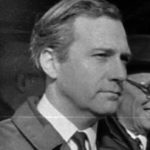
    Below is the text of the speech made by Dennis Skinner, the Labour MP for Bolsover, in the House of Commons on 23 April 1975.

    I have not taken part in the referendum debate or, on a more general note, in the Common Market debate for some time. The arguments have been made over and over again. They have changed a little.
    I wish to say a few words as a result of having listened to my hon. Friend the Member for Renfrewshire, West (Mr. Buchan) speak about the way in which the European Movement is organising its funds. It is able to do what it is doing in sending letters to various bodies, particularly big business, because, as the Prime Minister has said, this is a unique situation. But we are attempting to conduct it along the lines of the normal general or local election techniques, and, haphazard though it may be, the people will expect, and they have every right to expect, that all the devices and methods used in a General Election will be used in this campaign. Already we are witnessing, as evidenced by the letter to which my hon. Friend referred, the way in which corruption and bribery can take place on a pretty grand scale.

    One could argue that for some time people have been flown to Brussels and Strasbourg to try to win favours and influence people. One could equally argue that that is not in an election situation and to that extent it matters little. However, my impression is that, because the procedures laid down are not clear or as fundamentally as clear as in a General Election, this kind of practice will take place even after the Bill becomes law.

    Therefore, the kind of capers in which the last Prime Minister indulged when, in halcyon days, he trotted round the marginal seats will pale by comparison with the way in which the media—and I refer to television, apart from the large national daily and weekly newspapers, which are at one on this issue—will combine to ensure that, if there is any chance of the people looking as if they will take Britain out of the Common Market, every means is used to convince them that what they are doing is wrong.

    That is why I support the amendment, though not in the most forthright fashion, as I usually do—not that I am enamoured by the prospect of using taxpayers’ money for this purpose but because the campaign is so obviously unequal.

    Some of the damage might be repaired if the amount granted to both sides were to be raised. However, no matter how much the taxpayer granted to the anti-Common Market side we could never match either in financial terms or in any other terms the amount of brainwashing and propaganda which are now taking place and which will continue to take place throughout the referendum campaign.

    Mr. Kenneth Clarke (Rushcliffe) Will the hon. Gentleman deal with a suspicion that I have about the real reason why he is using such strong language? It seems that the anti-Europeans, who forced the device of the referendum on the country, now fear that they will be defeated by it and thereby hoist by their own petard. The more hard core of them are now preparing excuses for failure and are using words such as “corruption” and “bribery” and accusing the media of brainwashing the public and are laying the foundations or preparing the way for another unconstitutional device.

    Mr. Skinner I shall for my own perhaps eccentric and personal reasons continue to hold my views, whatever the result. They are not necessarily the reasons held by others on these benches. What concerns me is the point I am leading up to. In the course of the past couple of days I have had brought to my attention a letter which is somewhat dissimilar to that which was referred to by my hon. Friend the Member for Renfrewshire, West but which provides clear evidence of the way in which the Commission will try to influence, bribe and corrupt not only the British people who will cast their votes but those within the media who have the opportunity, power and influence to get their message across to an even greater degree.
    The letter is headed Diplomatic and Commonwealth Writers Association of Britain”. It has been sent to members only, but some kind person from the Gallery sent it to me. The letter says: The Commission of the European Communities. A very attractive offer of a visit—all expenses paid—to the EEC in Brussels has been made by our friend and colleague, Michael Lake. It is open to all full members of the Diplomatic and Commonwealth Writers Association. The facility begins with Lunch on Wednesday, May 21, 1975. I would guess that by that time the Bill will have become law.

    I know a little about illegal practice, not necessarily corruption. I have looked at the Representation of the People Act on many occasions, long before I came to Parliament. I know what it is like to be riding in a vehicle that has a PSV licence and to be hounded by the police and by the Opposition over a period of many months because of a very slight misdemeanour of which I was eventually proved to be innocent. I know what it is like.

    In this referendum it is not a question of riding in a vehicle that has a PSV licence and taking part in a local election campaign. This is a matter which, according to some of my right hon. and hon. Friends and certainly according to hon. Members opposite, will settle the destiny of Britain, today’s children and future generations for ever and a day. There is some difference of view about that matter, but I will not go into that now.

    The lunch which is to take place at 20 Kensington Palace Gardens—the Communities’ headquarters—will result in the party that takes part in this event being flown to Brussels followed by a discussion and a return on Friday, 23rd May. That is the kind of forum that is set for the people who will be writing all these glorious articles about why the British people should stay inside the Common Market. It is no different from the one that was organised by that company of which we used to hear so much, Clarkson’s, before it went bankrupt. It had all the writers that it could get hold of flown out to its holiday resorts in order that they could come back and write their articles in the nation’s Press and try to brainwash—

    The Chairman Does the hon. Member mind if I deal with my point of order first? I hope the hon. Member from Bolsover (Mr. Skinner) will now relate his argument more to the question of the amount of money to be given in aid.

    Mr. Skinner You are a very kind man, Mr. Thomas—

    The Chairman Mr. Renton, on a point of order.

    Mr. Renton Thank you, Mr. Thomas. My point of order was the same as yours.

    Mr. Skinner I have been listening to what has taken place in this debate, Mr. Thomas, before you came into the Chair, and I am answering many of the points which have been made in the debate. What I was saying in the analogy that I was drawing recently was that this is a device by which the British Press managed to get their point of view across. I have no doubt that unless what is happening is brought to the attention not only of the House of Commons—that matters little—but of the British people generally, it will continue unabated and at a pace which we have never experienced before. This referendum campaign is so unique, and people will think that they have got the licence and the opportunity to do what they like. Coupled with the kind of references made by my hon. Friend the Member for Renfrewshire, West to the granting of tax relief—[Interruption.] Well, the Chancellor of the Exchequer has answered my hon. Friend, but I have the impression that the answer my hon. Friend read tonight, and which he showed to me earlier, is not as conclusive as some of us would like. Indeed, many of the Chancellor’s answers on these tax matters cannot be accepted because he is not the man who in the end will deal with the points that have been raised.

    Mr. Ridley Why is the hon. Member complaining about one-sidedness in this matter? After all, the Trades Union C. Congress went to very great expense in inviting Mr. Shelepin here—

    The Chairman Order. References to Mr. Shelepin are a long way from the point.

    Mr. Skinner I do not wish to comment on the hon. Gentleman’s intervention except to say that there has been some talk of us doing our best not to get involved in personalities in this campaign but to concentrate on the policies which divide us. I believe that that is what we must attempt to do. These irrelevancies and red herrings which have been thrown about are not matters with which we should concern ourselves.

    I wish to stress that in view of the sum of the disclosures we have heard, we are bordering very close to what could be described as standing four square against Sections 99 and 100 of the Representation of the People Act. Section 100 states, in respect of treating—and this refers to the letter which I read earlier— A person shall be guilty of treating if he corruptly, by himself or by any other person, either before, during or after an election”— and we must assume that this relates to the campaign— directly or indirectly gives or provides, or pays wholly or in part the expense of giving or providing, any meat, drink, entertainment or provision to or for any person—

    (a) for the purpose of corruptly influencing that person or any other person to vote or refrain from voting; or
    (b)on account of that person …”—

    The Chairman Order. I was hoping that the hon. Gentleman had finished reading that. He must relate the argument more directly to the amount of aid to be given.

    Mr. Skinner On one side of the argument there is evidence to suggest that money is being used to try to influence people’s votes in the referendum. I am describing the way in which, as set out in the Representation of the People Act, such infringements can result in corrupt practices being proved. In respect of treating, this is conclusive. Therefore, it directly relates to the question of how much money should be allocated by the taxpayer to see that it is a fair fight.

    Mr. Robin Corbett (Hemel Hempstead) Perhaps I may assist my hon. Friend on the matter of the letter inviting journalists and writers to Brussels. The European Commission may be wasting its money and ours. My hon. Friend will recall the well-known doggerel: You cannot hope to bribe or twist, Thank God, the British journalist. But seeing what he will do unbribed, There’s no occasion to.

    Mr. Skinner My hon. Friend makes a better job of the argument than I do. I was just concluding paragraph (b), which says—

    The Chairman Order. The hon. Gentleman need not continue to read it, because we are dealing not with how money is spent but with how much is to be contributed. The amendments are in clear language. Therefore, I hope that the hon. Gentleman will confine his argument to the contribution that shall be made.

    Mr. Skinner The people who sent out the letter to which I have referred may well consider that the £125,000 apiece is enough, on the basis that they have plenty more. With respect, that is relevant to this argument. Therefore, we must ensure, whatever happens throughout the rest of this week and when the Bill becomes law, that the referendum is fought along the lines of General Elections or local government elections. Otherwise, many people will feel considerable doubt about whether it was a fair and balanced fight, in which each side had an opportunity to express its views through the media and elsewhere.

    We believe that already one side has tremendous amounts of money at its disposal, even to the extent of having money from the taxpayer through the various grants made by my right hon. Friend the Secretary of State for Industry, and possibly in tax relief. We believe that the balance is tilted to one side and that the only reparation we can make is to ensure that we obtain more money for our side, to reduce the present vast gap.

  • Queen Elizabeth II – 1975 Queen’s Speech

    queenelizabethii

    Below is the text of the speech made by HM Queen Elizabeth II in the House of Lords on 19 November 1975.

    My Lords and Members of the House of Commons,

    My husband and I look forward with great pleasure to visiting Finland; and also to our visit to the United States of America to celebrate the two-hundredth anniversary of American independence. I am confident that the long-standing friendship and co-operation between our peoples will continue to flourish. We shall also visit Canada where I shall open the Olympic Games.

    My Government will maintain their firm support for the United Nations and the principles of its Charter, and for the Commonwealth with its tradition of concern for the equitable distribution of the world’s resources and the promotion of mutual international understanding and co-operation. They will vigorously pursue their initiative for better order in world trade in commodities which they launched at the recent meeting of Commonwealth Heads of Government, and which has made an important contribution to subsequent international discussion. They recognise the special needs of the poorest developing countries, and will in particular seek to assist rural development and food production.

    My Government will play their full part in the European Economic Community, devoting particular attention to the achievement of a common approach to the world’s political and economic problems.

    My Government will also maintain their full support of international efforts to restore economic activity, and to reduce inflation and imbalances of payments. They intend to ratify the Organisation for Economic Co-operation and Development Financial Support Fund Agreement.

    My Government will continue to work for international agreement on general disarmament and on preventing the spread of nuclear weapons. They will sustain their support for the North Atlantic Alliance as an instrument of detente as well as defence, fostering the fullest possible co-operation amongst its members, not least in the procurement of defence equipment. They will continue to play their full part in the negotiations on force reductions in Central Europe.

    My Ministers will continue also to place great value on further détente between East and West, including the strengthening of economic links, and on full implementation of the Final Act of the Conference on Security and Co-operation in Europe.

    My Ministers will continue to support the search for a comprehensive peace settlement in the Middle East, and to develop our ties with the countries of the area. They will continue to co-operate in seeking a lasting settlement in Cyprus.

    My Government will maintain their efforts to bring about a just and peaceful constitutional settlement in Rhodesia.

    My Government will actively protect the interests of the fishing industry, and will play their full part in international conservation measures and in the development of the Common Fisheries Policy. They are seeking renewed arrangements for British fishing with the Government of Iceland to replace those which have just expired.

    My Government will continue to strive for a constitutional solution to the problems of Northern Ireland. They will maintain determined efforts to eliminate terrorism, and attach particular importance to dealing through the courts with all those responsible for violence. A Bill to promote equality of opportunity in employment between people of different religious beliefs will be reintroduced, and legislative provision will be made to assist industrial development by enlarging the role of the Northern Ireland Finance Corporation.

    Members of the House of Commons,

    Estimates for the public service will be laid before you.

    My Lords and Members of the House of Commons,

    My Government will continue to give the highest priority to the attack on inflation and unemployment. Success for the wide range of anti-inflation measures introduced in July is essential for the future health of our economy and our society. In particular, success in these measures is required for the achievement of a satisfactory level of productive investment and to assist in the reduction of the present unacceptable level of unemployment. It is also a necessary condition for the fulfilment of many of My Government’s other economic and social objectives. The present price controls will continue to be vigorously enforced, and the programme of price display and unit pricing will be accelerated. A programme of price stabilisation of more essential goods will be introduced once cost increases decline. My Ministers will continue to work closely with the Trades Union Congress, the Confederation of British Industry and with the British people as a whole on a continuing programme to control domestic inflation and to prevent its resurgence.

    The National Enterprise Board and the Scottish and Welsh Development Agencies will be major instruments in My Government’s policy of industrial regeneration. My Government will also embark on a series of Planning Agreements with large companies in selected key sectors of industry, as an important step towards the identification and achievement of agreed national objectives. The Bill to bring the aircraft and shipbuilding industries into public ownership will be reintroduced early in the Session.

    Following their review of civil aviation, My Government will present proposals to implement the necessary policy changes.

    My Government will reintroduce legislation to remove the remaining unsatisfactory features of the Industrial Relations Act 1971.

    My Ministers will continue to encourage the development of industrial democracy in both public and private sectors. Both sides of industry will have full opportunity to express their views to the inquiry, which my Government have announced their intention to establish, to consider how industrial democracy in the private sector can best be extended.

    A Bill will be introduced to ensure comprehensive employment safeguards for dockworkers.

    My Government will play their full part in the development and improvement of the Common Agricultural Policy and will continue to encourage the maximum economic production of food at home in the interests of producers and consumers.

    Legislation will be introduced to meet the United Kingdom’s obligations under the Agreement on an International Energy Programme; to control energy supplies during any shortage; and to implement energy conservation policies.

    My Government will continue to seek to secure the orderly development of the United Kingdom’s off-shore oil and gas resources in the interests of the nation. They intend to invite applications for further licences for the exploration and development of offshore oil and gas.

    My Government will bring forward legislative proposals for the establishment of Scottish and Welsh Assemblies to exercise wide governmental responsibilities within the framework of the United Kingdom.

    Proposals will be put forward for a major review of the practice and procedure of Parliament.

    An opportunity will be provided to decide on a permanent system for the sound broadcasting of the proceedings of Parliament.

    My Ministers will pursue vigorously their programmes of social reform by legislative and other means, within available resources. They will take energetic action to encourage the provision of more houses in both public and private sectors; and following from a comprehensive review they will bring forward recommendations for future housing finance policy. Legislation will be brought forward to enable housing to be transferred from New Town Development Corporations and the New Towns Commission to elected local authorities. Legislation for the abolition of the agricultural tied cottage system in England and Wales will be laid before you.

    In furtherance of My Government’s comprehensive policy for development land, legislation will be introduced for a development land tax.

    Legislation will be introduced in the course of the session to phase out private practice from National Health Service hospitals. Consultations will continue on My Government’s proposals to strengthen and extend existing powers to regulate nursing homes and hospitals outside the National Health Service. Pensions and other social security benefits will be increased to protect the living standards of the most vulnerable members of the community.

    In education, My Government will seek to consolidate the improvements they have made to the statutory school system. Within available resources, they will give priority to children with special needs and to the vocational preparation of young people aged 16 to 19. A Bill will be introduced to require local education authorities in England and Wales who have not already done so to make plans for the abolition of selection in secondary education, and to deal with certain other matters.

    Legislation will be laid before you to extend and improve Post Office banking services, and to reform the Trustee Savings Banks and enable them to offer a wider range of personal banking services, including personal loans to depositors.

    A Bill will be introduced to strengthen the law on racial discrimination. Proposals will be prepared to amend the Official Secrets Acts and to liberalise the practice relating to official information.

    A Bill will be introduced to provide an effective independent element in the procedure for handling complaints by members of the public against the police.

    My Government will give early consideration to the report, when received, of the Law Commission on the law of conspiracy in England and Wales, with a view to preparing legislation for the comprehensive reform of this branch of the law.

    Legislation will be introduced to replace the Prevention of Terrorism (Temporary Provisions) Act 1974.

    My Government will persevere with efforts to improve the law and the administration of justice, and will pay continued attention to the need to reduce the number of persons in prison, especially those awaiting trial or sentence.

    Proposals will be placed before you to provide a Public Lending Right for authors.

    Measures will be introduced relating to Scotland, including reforms in the law on crofting and on liquor licensing, and proposals for improving public access to freshwater fishing. A Bill will be introduced to establish a Development Board for Rural Wales.

    Other measures will be laid before you.

    My Lords and Members of the House of Commons,

    I pray that the blessing of Almighty God may rest upon your counsels.