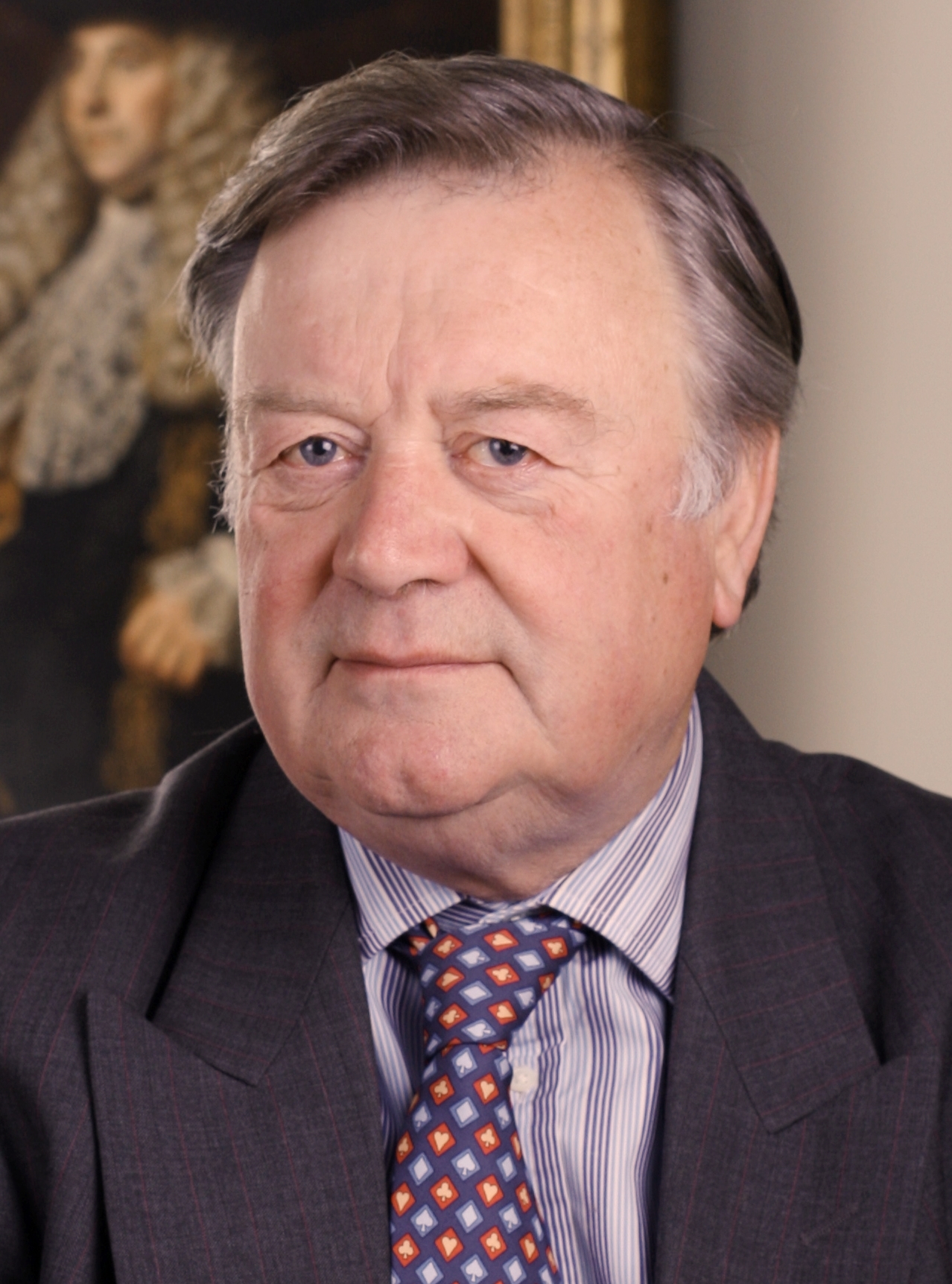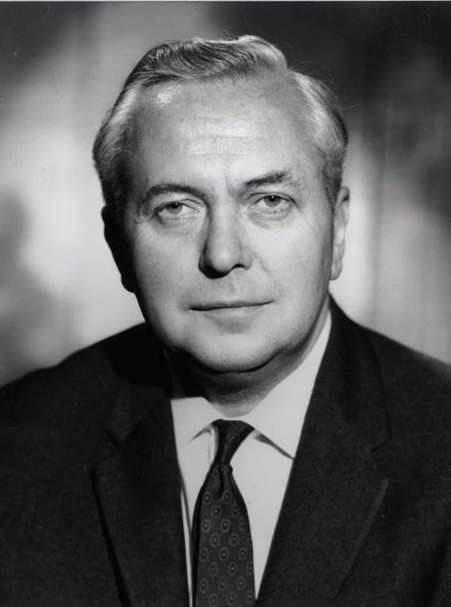
Below is the text of the speech made by Harold Wilson, the then Leader of the Opposition, to the Labour Party conference in October 1970.
Last year this Conference met in the spirit of pride and confidence. Pride in five years’ achievements in transforming our society. Confidence in the more rapid advance which lay before us once crippling economic deficit had given place to economic strength. This year our task is to resist those who seek to halt and to reverse those achievements, who seek to turn back.
18 June should not be seen simply in terms of a rejection of one set of men, of one Party, of the replacement of one Government by another. It was the rejection of a system of society based on a set of values of which our people are proud, but which our opponents discounted as they preached their philosophy of greed. All that is yours, they said, all that you dream of achieving will still be yours, but you won’t have to pay for it. The taxes on what you earn will be cut. There will no longer be a problem of rising prices. Their cynical conclusion was that enough of the electorate would be prepared to place at risk all the Labour Government have achieved for the better and fairer education of our children, for dignity and civilised standards in old age or sickness; all we have done to help the casualties of modern industrial society, to create a fairer and more equal society, in return for the lure held out by the Tories, the lure of increased spending power.
Their cynicism was vindicated not so much by those who voted but by those who did not trouble to vote.
Now our task, above all others, in the months ahead is to overcome that cynicism by making clear the values in which we believe, by convincing our people that only by our Socialist policies can those ideals be achieved.
It means exposing the emptiness of those Tory promises as time reveals that emptiness; it means a determined fight for our principles as others proclaim the doctrines of selfishness and sectional advantage.
It means fighting to preserve the concept of the national community, caring for all, and willing to share, against those who have recklessly embarked on a course of dividing our people, of promoting conflict and exalting personal advantage.
How we are to do that must be, the keynote of this Conference, the task of this Movement, starting now.
First we must expose what has happened in the three months since the General Election. Contrary to the promises they held out of immediate action to change the direction of our Government and our society, we have had – as even the Conservative press are beginning to bear witness – a period in which Government, action, decision, have been at a discount.
This is not to say that in the first heady days no decisions were taken. There was, indeed, that short burst of ‘instant’ ideological arrogance. Three decisions within three days before the Cabinet had even met.
Sir Alec Foster-Dulles searching for Communists on the Indian Ocean bed and concluding that the threat must be met by shipping arms to Apartheid South Africa. The Governess of the Board of Education reversing the trend of a generation of educational thought and advance by giving encouragement and fresh hope to reactionary Tory education authorities in their fight to maintain the 11-plus. The decision to put council houses on the market and diminish the stock of immediately-needed accommodation for the overcrowded and the unhoused.
And very soon thereafter the decision to abolish the Land Commission: values created by the community no longer to accrue to the community: values created by the community were now to enrich the speculative developer.
Instant decision when it was a question of pandering to Tory prejudice.
Indecision, procrastination when problems had to be faced up to.
That was why after that first week they pulled the blankets over their heads and hoped the problems would go away. The only recorded case in zoology of hibernation in the summer.
This from a Government whose Leader’s final clarion election call was: ‘Britain is in danger of falling asleep.’
From a Leader who two days before polling day outlined a policy to be ‘pursued immediately.’ Immediately. An instant economic policy to be carried out at one stroke.
Now, a hundred days on, even the Tory press has had to admit what everyone else knows, and most people are saying, that Britain has no government. There’s been nothing like it since the Hans Andersen story when the populace turned out to see the whole imperial establishment parade through the streets – only this time it is the clothes that have no Emperor.
Though no words of mine could rival the for-once attributable briefing by a Downing Street spokesman recorded in the Financial Times a few weeks ago: ‘The Government is in the back seat but it is watching the driving mirror to see what others are doing.’
By mid-August Conservative papers were appealing for reassurance that a government existed. Even the Daily Sketch ran a panic headline: ‘Reassure us, Ted.’
And even now, he hasn’t. For what they have discovered is that the mess they are in is the promises they made, promises they cannot keep, promises they knew they would
not be able to keep when they made them.
It is right that what they then promised must be set on the record. Kept on the record, for now we face a massive nation-wide brainwashing operation aimed at persuading you that what you heard them say is not what they now want you to think they said.
They were going to act. The emphasis in that last pre-election week was on immediate action, at a stroke to reduce the rise in prices, increase production and reduce unemployment. They are his words. It’s in the book.
A Better Tomorrow. On TV last week he was asked by Mr. Burnett after three months, ‘When is tomorrow?’ ‘Well,’ he said, ‘we are working towards it all the time.’ We are working towards tomorrow all the time. Watchman, what of the night -and how long will it be?
That wasn’t the pre-election mood.
Sir Alec Douglas-Home, I quote: ‘In the first month of a new Conservative Government, taxation will be reduced. That would do more than anything to release energies.’ He can be dismissed from the case. Economics were never his strong suit.
But what of his Leader, the present Prime Minister? Last week was not his first interview with Mr. Burnett. Before the election Mr. Heath gave a firm pledge to him – to the electorate – that they would abolish S.E.T. and they would cut direct taxation in the first budget. Now, apparently, no budget till April: no sense of urgency, still less emergency there. That’s not what they said in that last week of the election. Already immediate action ruled out.
But now they are hedging even about their budget policy when finally they are forced to introduce one. S.E.T. not to be abolished. Reduced maybe – but not yet. Mr. Robert Carr was put up last month to say that the present Government unfortunately could not ‘make progress with expansion and the reduction of taxation to which the Government is pledged, till we have got this present cost inflation spiral under control.’ Mr. Barber was reported as confirming this. But what his Leader said on 16 June was that cutting taxes, and especially S.E.T., was the immediate way to ‘break into the price/wage spiral by acting directly on prices and costs,’ to give us a ‘breathing-space’ while long-term policies were being worked out.
I am not in fact today going to embark on a considered attack on the Conservative Government’s economic policy, because I don’t know what it is – any more than they do.
A government whose leader pledged himself in the Manifesto to deal ‘honestly and openly with the House of Commons, with the Press and with the public’ relies not on open straight talk, but on closed, anonymous hints behind cupped hands.
Mr. Heath and Mr. Barber will not deny that the message they are putting out on taxes is this:
No immediate action. No abolition of S.E.T. in the first budget;
In fact no decreases in taxation until they’ve made those sweeping cuts in public expenditure, the mighty promise of which always set those Tory audiences ablaze;
Cuts in expenditure or not, they can’t cut taxes until they’ve broken the wage-spiral.
The whole public discussion of Tory economic strategy has now been reduced to a plaintive barnyard soliloquy by the unfortunate Secretary of State for Employment and Productivity about which came first, the hen or the egg. And the price of both is going up under the Tories.
But they are not even pretending now that they have a policy for prices, at any rate for stopping them rising. True, the repeated assertion that they had is precisely what won the election. Morning, noon and night. I recall that moving appeal the Conservative Leader made to the housewives of Leicester.
Someone had given him a shopping list. Bread, how dear that was. And, oh dear, it’s going up again. Milk – what price does he now think that will be when the better tomorrow dawns? He revealed the most intimate secrets of his larder, jam, sausages, the lot. He wept that the housewives were telling him that they had to go for the cheaper cuts of meat, buying standard eggs instead of large ones.
Oh yes, and he mourned that the dinner money at school takes more out of her purse. Strangely I haven’t yet read that school meals have become cheaper under the Tories. But let me put this question to Mr. Heath. (Cap’n, art thou sleeping there below?). Since I know he would not wish his speech to the Leicester housewives to be dismissed as vulgarian vote-getting, will he just reassure them now by giving a pledge, for what that is now worth, that the review of public expenditure they have announced will not involve an increase in the price of school meals?
But it was not only in Leicester. To make assurance doubly sure, there was his firm pledge of immediate action on all prices, private sector and public sector, issued with a blaze of publicity, by coincidence just two days before polling-day. In view of the organised attempt to bury this effusion – well, it is being said, after all, Mr. Heath didn’t actually write it, it was written for him – I feel it right that so superb a passage of English prose should not be allowed incontinently to be swept into oblivion. In other words I’m going to read it.
But there is a very real alternative which ought to be pursued immediately. That alternative is to break into the price/wage spiral by acting directly to reduce prices. This can be done by reducing those taxes which bear directly on prices and costs such as the Selective Employment Tax, and by taking a fain grip on public sector prices and charges, such as coal, steel, gas, electricity charges and postal charges. This would at a stroke, reduce the rise in prices, increase production and reduce unemployment. It would have an immediate effect on moderating the wage/price spiral which would far outweight any effects of a higher pressure in demand for labour.
‘Immediate,’ ‘at a stroke.’ He went on: ‘In this way we can obtain a breathing space which must be well used to put our industrial relations on a sound footing … to cut direct taxation and to encourage savings…’ And so forth.
In other words, this was to be done at once.
And in case any one had missed the point he concluded with the choice which in his view the country was facing: whether to continue with a Labour Government, or (I quote) ‘Whether it would prefer immediate and determined action to avert such a crisis.’ Well, we haven’t had it. The crisis. Or the action.
One action he was going to take was to hold prices down artificially in the public sector. We warned him at the time that that would mean Treasury subsidies, and they would mean not lower taxes but very much higher taxes. The Treasury soon told him.
So we had a short period in which Ministers fell over themselves to raise charges in the public sector, even when it wasn’t necessary. One was in the field of public transport. In the election, of course, we had had his doleful forecast, in due course, if Labour were returned, of a minimum fare of a shilling for short journeys on bus or tube. A shilling minimum. It may be a surprise to him, but this took effect on 16th August, just two months after he came into office: the shilling minimum fare was imposed. By the Tory Greater London Council.
Labour had refused to approve it and sent it for impartial enquiry by the Prices and Incomes Board.
The Tory Government, in an unaccustomed fit of exertion, approved it.
For good measure, when it came to half-price fares, the Conservative Government further approved a new break-through in the higher Conservative duodecimal mathematics, based on the inflationary principle that half of one shilling is sevenpence.
But the Tories said, public sector prices would be scrutinised with vigilance. Not though, to protect the consumer.
When Mr. Heath saw Mr. Victor Feather we got the real threat: publicly-owned industries would be starved of finance, and subject to rigid price control, not to protect the consumer but as a sanction to enforce a wage policy selectively directed against public employees.
Before Parliament adjourned they told us of their Policy for the private sector. There was to be no further use of the Prices and Incomes Board to deal with excessive price demands; the early warning system for price increases was to go.
Then we got this pearl from Mr. Robert Carr: ‘We believe that where there is competition that is the most effective means of safeguarding the consumer, and the less it is interfered with the better.’
So you must thank all the gods of competition, and Mr. Carr, their earthly spokesman, for the safeguards you are privileged to enjoy against price rises by private enterprise which led first the oil companies, then the tobacco industry, the bakers, the cement industry, to put up their prices.
But you should be so lucky. The safeguards didn’t stop there. A fortnight ago the country was electrified by an announcement that the early warning system, and the agreed system of price-control for the brewing industry, were to be abrogated. This was announced by Farmer Prior who, although he can claim a higher degree of sophistication per live-hundredweight than most of his colleagues, decided that he could not improve on the words of Mr. Carr. ‘Where there is competition that is the .most effective means of safeguarding the consumer, and the less it is interfered with the better.’
I cannot tell you how thirsty dockers in my constituency, tears dropping into their tankards, blessed the name of Prior: nor of their mortification the next day when they read in their Daily Telegraph the headline: ‘4d.-a-pint beer rise forecast,’ for in beer as in bread, the mills of competition grind slowly. But they were happy to read in the City page of their Daily Mail the following Tuesday, with what joy the news had been received in the brewery-shares section of the Stock Exchange.
For even this period of inert government has enabled me to acquit the Conservatives of a charge I have sometimes heard, that they lack care and compassion. I was reluctant to believe this because we had that election broadcast of theirs, when Mr. Chataway said: ‘I care – and Ted cares too.’
They lost no time in showing that care when approached by the bankrupt brewers. Indeed I must in fairness to them, record another case, the deep concern shown by the Minister of Housing and Local Government when he overruled the report, made by the inspector after a public inquiry, and decided a planning case on behalf of a major brewery company not 20 miles from here.
Not content with falling over themselves to allow private enterprise to raise its prices, the next step was to encourage them to do it.
The Chancellor of the Exchequer, whose appointment is the only thing Mr. Heath has ever done to suggest that he has a sense of humour, will not be disposed to dispute the source of the message which one paper after another simultaneously felt moved to announce a fortnight ago.
The headline in the Guardian: ‘Tories to let prices go free.’ In the Daily Telegraph: ‘Price rises to rebuild working capital in order.’ ‘Companies may raise prices with tacit Government blessing.’
The Times: ‘The shortage of company liquidity is acknowledged; and it is argued that the solution lies in raising prices where this is necessary for maintaining profits, investments and working capital.’
‘The solution lies in raising prices.’
Three months to the day after that dramatic promise of immediate and direct action to break the price/wage spiral, the Government had decided that they had so little to offer their industrial friends in fulfilment of their promises to reduce taxation on industry – on top of all the other pledges to reduce taxation – that their only solution to deal with the problem of the squeeze on liquidity, the problem of cash flow in industry, was to encourage industrialists to get on with it, to put up prices and get more money for themselves.
So now we know. A Government elected precisely because of its pledges to tackle rising prices insists now that in private enterprise prices are not high enough.
A Government elected after accusing its Labour predecessor of planning to hold down wages, has embarked now on deliberate action to hold wages down, starting with the weakest and lowest paid. And this at a time of free-for-all in prices.
The Government’s strategy has now emerged.
It is a strategy first of distraction. To distract the country from the Government’s failure by putting all the blame for their economic difficulties, not on their own irresponsible election promises, but on the trade unions and their members. And in shifting the blame, to use the whole power of Government in enforcing a policy of selective interference with wages, to the point where the costly and bitter disputes they were elected to avoid are not only to be allowed to happen, but actively provoked.
It is a strategy, second, of ostentatious indifference to the modernisation of industry, and the needs of the development areas, by discarding priority industrial and regional projects.
It is a strategy, third, of re-shaping public expenditure on principles which pre-date the welfare state, and by methods which must inevitably destroy the welfare state as we know it today.
First, the policy of a deliberate show-down with organised labour. The Government standing aside when their intervention is necessary to avert or end a dispute, in the private sector; the Government acting as provocateur in wage negotiations in the public sector.
In the private sector, denying conciliation where conciliation is needed. Deciding that fifty years of conciliation are to be set aside. That the Secretary of State’s job was to be that of a querulous referee who conceives it as his function to stand on the touch-line selectively throwing his bottles at just one set of players.
This and his discriminatory wages policy against the public sector, miners, nurses, railwaymen, probation officers, teachers, manual workers in Government employment. Ministers who have talked of anarchy are hell-bent on intensifying anarchy. Those who have talked of disputes are dedicated to provoking them.
There is one clear and definite message on which this Conference has already shown its determination.
The Tories are not going to be allowed to divide one section of our national community from another. To resist the Tories is one thing, and determination to resist is unequivocal. But we all recognise the clear responsibility on this Movement: I mean this Movement, industrial and political. For when doctrinaire Tory measures have been beaten back we shall have the responsibility of showing to the country that, together, we are capable of working out an effective approach for dealing with problems that confront, not this country alone, but every modern industrial society. A policy for full employment based on stability of values and the protection of those within our community least able to help themselves.
This eluded us before because in 1964 we came to office in the middle of urgent and immediate problems which never gave us the time and the opportunity to work out the necessary approach. Now we have the time and together we must use it to find a way. It is not a question of formal declarations or treaties. It is a question rather of expressing our common purpose.
That cannot be made explicit until, between us, we can set out a climate in which that purpose can alone operate. And it is to define and fashion that climate as well as to agree on our mutual responsibilities, that the future work and co-operation of this Movement must be directed.
And putting back the clock in industrial relations is matched by the second part of the strategy, a reversion to the law of ruthless profit-seeking in industry, regardless of national or regional priorities.
The law of the market, which recognises only profit, however earned, the balance-sheet to be paramount, ignoring the economic or social claims of employment, of export, of the development of Britain’s productive resources.
If the policies they have decided to follow had been adopted by us, the Upper Clyde would not have been saved.
Cammell Laird’s – now busy with new orders – would have closed; there would have been no British-owned computer industry, and the last section of the indigenous British motor-car industry would before long have passed into American ownership.
We are told that investment grants are to go, investment allowances are to take their place – rewarding those that have profits to show, denying new industries and firms, however enterprising, who need a start.
This is not economic policy. It is economic abdication. The assertion of Government, of community responsibility, whether for the strength of our economy or the welfare of our people, is to give place to a new concentration of power, where the take-over bidder, the financial entrepreneur holds sway, regardless of what is produced, regardless of the decay of proud regions, the welfare of their workers, the opportunities for their children.
And the third element in their strategy is the re-shaping of Government social expenditure, not on new priorities, but on the old priorities; on which until this year, all parties had turned their backs.
If a phrase was coined that I regret it was ‘Yesterday’s Men.’ Why did we have to use that flattery? Yesterday is modernity compared with those who now seek their inspiration in the golden days before World War One – golden for some. Selsdon Man, gagged and muted throughout the election, has now become Selsdon Minister. Remember how we warned that these men would take us back – in the social services back to pre-Beveridge; back in housing to pre-Wheatley; back in health to pre-Bevan. When I warned that they would seek to introduce the concept of first-and second-class status within the Health Service – the test being ability to pay – I was indignantly contradicted by Mr. Heath.
I warn them that if they lay their hands on all that has been built up by the British people, by this Movement, then whatever their mask of cold indifference and doctrinaire arrogance, the fight we shall put up by day and by night against their legislation will make even the battles they had to fight to get the Rent Act through seem mild by comparison.
We all of us in this Party, in this Movement, have the right to make that warning explicit. We are proud of the achievements of the first post-war Labour Government in creating in those years of unparalleled difficulty, the Welfare State, the Health Service, that great advance in education, and low rent housing.
We are proud of the record of countless members of local authorities over a generation, bringing to the legislation passed by Parliament the warmth, humanity and compassion of people nurtured in socialism and social ideals.
We are proud of our record over the past six years, when once again we did not allow crippling economic difficulties to daunt us, of the years in which we almost doubled the provision for our social services, health, housing, education and the attack on poverty.
It is because of what the Labour Government achieved that over this past year – indeed this was one of the great themes of the last Conference – all of us recognised and stressed that more and more must be done for the forgotten members of our society. The mentally handicapped, including very particularly the mentally handicapped children. The problem of shelter and care in old age, the creation of a real equality of opportunity in education, not only at 11 but at 18. So much had been done, so much more still remained to do. For the first time we had been able to create an economic base on which we could build.
I warn this Conference, as earlier I sought to warn the country, what irresponsible Tory financial promises must mean for our great national social services, and the essential local services dependent upon national provision. They are failing to get even a fraction of the expenditure cuts they had said would be so easy. That is why I must warn at once about the danger of Tory action this autumn to cut back the real value of Government provision for all the wide range of local social services.
The biennial Rate Support Grant has to be determined before the end of the year and secure Parliamentary approval. Of small importance that the record provision made in 1968 was attacked by Mr. Heath as being too small, when he thought there were votes in such an attack – that implied pledge goes the way of all the rest.
Now we shall have the Conservative Government blindly swinging their axe. The more severely they cut down necessary provision, then the more will local authorities, at a time when so many are Conservative-led, be tempted to cut and slash essential services to avoid still further loading the rates over and above what will be forced upon them by declared Conservative policies.
And it is as these Councils balance essentially inadequate central finance with their desire to keep rates as low as possible that the temptation will be upon them, a temptation they are not the men to resist, to economise and pare on all those items of local government expenditure which are the characteristic of a civilised society – what they no doubt will call the frills – what we consider the means to a better and fairer Britain.
The irresponsible promises of the Tories have brought upon them, and upon Britain, the problems I have described.
And this applies with equal force to the policies for Southern Africa. Recall how this began. Sir Alec told the press his firm decision, our embargo on arms for South Africa would be revoked. But when he was confronted by us in Parliament it was a different story. All he was doing was consulting the Commonwealth. There has been no decision. There would be no decision before Parliament resumed in the autumn.
But then there was the strange case of Mr. Heath. He refused to publish the message he had sent to the Commonwealth, of which, for greater accuracy, I had obtained a copy. However, the Prime Minister of Canada published his own reply in which he referred to Mr. Heath’s message as a ‘decision.’ Nothing like dealing honestly and directly with Parliament, the press and the public, not to mention the Commonwealth.
We warned him over the Springbok tour, over his policies for South Africa and Rhodesia. We warned him that his policies would endanger any hopes of a rational policy on equal community relations, regardless of race or colour. Those warnings were contemptuously ignored.
It is my clear duty this morning, not to repeat them, but to reinforce them by saying what the policy of the next Government will be.
It is important that, in default of the present Government, someone must assert that, in these matters, Britain stands and always will stand on the side of the eternal decencies.
If the Conservatives, for whatever reason – be it an unwillingness to reverse the instant, ideological government of Sir Alec Douglas-Home, be it the pressures of the Monday Club, the Powellites – if they decide to spurn the Commonwealth, indeed to risk its very existence, by a decision to sell arms to South Africa, then whatever contracts they may sign will be repudiated by an incoming Labour Government at the next Election. Any shipments arising from them will be embargoed. And let me warn them about any manoeuvrings designed to tie our hands. We have seen before how they were able to turn a commercial agreement into an enforceable international treaty. If for ideological reasons they clothe these indefensible contracts with the enforceability of a treaty, then let them know that a Labour Government will accept no treaty which is in conflict with the decision of the United Nations, our membership of which, our commitment to whose decisions, were themselves enshrined in a treaty which we have regarded and always will regard as binding on the individual decisions of Government. I hope that this will help Mr. Heath, despite himself, to be able to attend a full meeting of the Commonwealth in Singapore next January. But should he ignore these warnings, I want to make this appeal to our Commonwealth friends.
I know how you feel on this issue. You feel as we do.
You know that this is a matter not of a few millions on the balance sheet.
That recognising this and knowing how the heart of Britain really beats on this question, that you do not leave the Commonwealth, which I believe to be one of the greatest forces not only for international co-operation but for international decision in the years ahead. Bite on the Tory bit and realise that there will again be a Britain with a different conception of Commonwealth leadership.
Rhodesia too.
I recall the equivocation of the Tory leadership over the years since U.D.I. Not that there were even votes in it, but the Tory leadership had to move very close to appeasement of a racialist regime in order to keep within their ranks the racialist extremists who never fail to assert their power when they recognise that they are faced with a leadership lacking in moral fibre on these fundamental matters of principle.
Again the future of the Commonwealth is at stake, a derisory consideration perhaps, when with a Parliamentary majority of thirty, they are facing the hard-liners of the Monday Club.
They have said, it is on the record, that there will be no agreement on a legal independence except on the basis of the five principles which we laid down. All Parties in this country are committed to them: History will not forgive, nor shall we tolerate a settlement based on the racialist principles of the police-state, now near-fascist regime in Rhodesia.
But, Mr. Chairman, the overseas issue which will dominate the life and work of this parliament, will be the decision that has to be taken about Britain’s application to join the European Economic Community. A decision which has to be taken when the Brussels negotiations reach a point where Parliament and the country can measure and assess the advantages and the costs.
This is not the time for decision.
Last year at Conference I pointed out that Britain’s application had been made, approved by Parliament, approved by Conference, three years ago. Few, if any, were proposing a reversal of that decision. The question was, what terms for entry.
The main change since last year has been the physical opening of the negotiations, though there have also been changes and developments within the Community itself which will have an important bearing on the terms of Britain’s entry. It is too early to judge what the terms will be.
I have not changed my view, although I respect the view of many here who think differently, that providing we can get the right terms, entry will be advantageous for Britain. A country which depends as much as Britain for our exports to world markets must face the fact that the three principal markets into which we trade are for one reason and another being more and more rigged and systematised and certainly not to our advantage.
The North American market, in which these past two years has seen such great success for British exports, is becoming more and more subject to a fever of protectionism against which it was our duty to warn successive Presidents. I have small doubt that these warnings have been repeated by those who now have the responsibility.
The Commonwealth. Some of us on entering office had high hopes that we could reverse the downward trend in trade within the Commonwealth, and at Commonwealth Conference after Conference I sought to establish meetings of trade Ministers and by other means to get agreement on means to increase Commonwealth trade.
But we have to face the fact here that some of our biggest Commonwealth trading partners are more and more integrating their economies with those of their neighbours, Australia with Japan and the countries of South-East Asia; Canada more and more with her neighbour, and also with the Caribbean and South America; we have had disappointments in Commonwealth countries in Africa and a growing number of these have been making their own arrangements with the European Common Market.
And that third great area, the vast European market, is the subject of tight and cohesive trading rules which are made by others, with no British participation. The problem here is not only the rules of that increasingly integrated community. There is a problem, too, of the growth of the large multi-national company or trust whose interests and loyalties transcend national boundaries, and who make their own rules. The European Corporation is becoming a reality even if so many of the Europe-wide companies, in motors, in computers, in electronics, are in fact American dominated and controlled.
It is to face this challenge that we have seen the growth of the huge mergers in British industry with economic and industrial and social consequences which we have not yet fully learned how to meet – another great question on the agenda of our future work.
If the terms which emerge from the negotiations are such as to impose a crippling and unacceptable burden on our balance of payments and our social structure, I should be the first to say that these terms must be rejected. But we have to recognise that the right terms would give us a greater power of participation in the decisions which will increasingly dominate world industry.
Last year I said that Britain’s growing strength meant that if the terms were right we need not fear the sharper competition which entry would mean; that we could indeed benefit from the new opportunities British industry would have.
But equally, I said that if the terms were wrong, we had by our own efforts, our own restraint, our own self-discipline, created for ourselves the strength to stand on our own feet outside the Community.
I believe that is still true, though we shall watch anxiously how far the irresponsible men now in power in this country fritter away that strength by pursuing false economic objectives and by their policy of dividing – where we did so much to unite – our nation.
Unlike the situation eight years ago, had it been a Labour Government which secured entry into the Common Market in the present negotiations, it would not have been out of crippling weakness but out of confident strength. That strength must not now be dissipated.
But if our warnings about this fall on deaf ears there is one argument we will not accept – we heard it before – that, whatever the terms, we have to go in because we are too weak to stay out.
Between 1964 and 1970 the Labour Government brought Britain through to a position of economic strength. But the political effects of the very measures we had to use have denied to us – for a time – the opportunity to follow through. The opportunity to use that strength we had created, to intensify and accelerate the creation of a better and fairer Britain.
For how often have all of us said that economic strength is not an end in itself. It is a means, but a necessary means, to the realisation of everything this Movement stands for. That was the message seven years ago at Scarborough. The message that Socialism must be used to harness, control, humanise, civilise the speed of the new technological revolution. The Scarborough programme for modernising and reorganising industry, and providing for those who suffered through change, was becoming a reality under the Labour Government, forced through against those who, while not resisting change, demanded that the direction and force of that change should be dictated by private interests, for private ends.
If the Labour Government had not been pushing the Scarborough programme through, this country by now would have slipped out of the mainstream of technological and economic advance with all the harmful and social consequences this neglect and abdication would have involved. But if Scarborough was right and necessary for its time, we must recognise that time has moved forward and that Britain must move forward with it. There are new problems now, and tomorrow will bring other problems of whose scope and nature we can only be partly aware. The Socialism of the Labour Party possesses the only approach to match and conquer those problems. We must begin planning now within this Party to create the apparatus which will make that approach a reality.
For our experience of the Scarborough programme has taught us this. First, that the sheer implications of economic and social change imposed by the speed of modern science and industrial technique are such that their planning and control need to be not less wide than we attempted, but wider. That the planning cannot be related to the arbitrary lifetime of a single Parliament only. That we have to have our vision of the Britain of the nineteen-eighties and ’nineties to be able to plan the measures of the ’seventies.
And the second lesson is this. The very facts I have just mentioned about the aggregation of power in vast national and international economic groupings underline the need for a continued assertion of the protection of the increasingly helpless individual against the demands of increasingly ruthless and remote economic, power.
Man has to work, in order to consume. He is not a free being simply because society gives him more alternative ways of spending the money he earns, if he becomes less free in how he earns it. Man does not live by the monthly index of retail sales alone.
But, and this is the third challenge to modern society, to industrial frustrations are added a wider dimension, going far beyond the dictates of the production-line. The dimension of man in his environment. And here I do not mean only the social costs of technical advance, the pollution of the air and water, and the countryside.
The problem of the environment is psychological as well as physical. You can pollute a man’s soul, a child’s dreams, just as you can poison the water and the air around him, if every decision affecting his future is taken by more and more remote, less and less accountable beings. And if technological advance dictates that more and more decisions are taken, whether in public or private enterprise, at stages further and further from the point where the work is done, then a modern conception of Government means a greater, not a smaller, degree of concern and protection for the man and woman at the point where the work is done.
Government’s task, Parliament’s task, is not only to ensure the accountability of economic decisions: it is to ensure that those affected by these decisions are first consulted and then safeguarded. Three months have dramatised the essential difference between a Labour Government and its successors. The Labour Government insisted that if the coal, industry had to suffer from technological change, the men affected must be given protection and economic security. As a matter of course we brought a Bill before Parliament last June to continue that protection. After three months of vacillation and hesitancy, and despite the urgent insistence of all of us, that Bill has not yet been reintroduced, nor solid assurances given that in the form we laid down, it will be.
When a shipyard was in danger of closure under the Tories, the Tory Minister’s message was: ‘You’re out on your own.’ Palmer’s Yard closed this weekend. But the challenge goes far beyond the loss of work and security. Those who seek to deal with the problems of modern industry by repression and appeals to law and order fail to get at the underlying frustration. Frustration for the individual.
When we hear learned and self-righteous individuals who have forgotten even what it was to be young, condemning modern youth, they fail to understand the frustration of young, people lost or trapped in the blind alleys of modern industrial society. Or students who, questioning the basis of the system of industrial recruitment or the big brother dossiers, will fight any attempt to transform a free university into an adjunct of industrialism. It is frightened men, and men out of touch, who seek to fight the student frustration by repression alone, without understanding.
It’s a frightened and unthinking act, not a confident act, that is inspired by the belief that you can deal with our student problem by sending a sick student out of the country. Law, yes. Order, yes, but these are complements to, not a substitute for attacking the conditions which give rise to the problem. The break-out in advanced but uncaring societies of black power, as men condemned for generations to helotry on no basis other than the colour of their skin, turn to violence – and are exploited by others who can turn violence to their own ends.
There are other frustrations too. The frustrations of working men and women on the factory floor, who see vast changes taking place around them but are scarcely able to influence the forces which dictate the course of their lives. The frustration of office workers and technicians who feel that big power-blocs are elbowing them aside, so that they must cling on to their living standards by their fingertips.
It is for Labour to reunite these sections of the community. It is for us to strengthen the power of the community and make it relevant to the needs of the new decade.
The worker is hostile to the student, grumbling that his income tax goes to pay for their demonstrations. The rumbling against immigrants goes on, wherever social conditions create tensions. We must condemn violent demonstrations. We must condemn with all the vehemence in our power the manifestations of Powellism. It is not so much that the Powellites have exploited fear and hatred, or even that they have created fear and hatred in order to exploit them. They were exploiting a vacuum. They were taking up a cause – however venomous that cause – because there were so many who, due to the conditions in which they worked, the conditions in which they lived, felt that they had no one to give them a lead, no one with whom they could identify. But we must not make the mistake of discarding as beneath our notice the human beings involved in these confrontations. Ugly emotions are the outcome of false hostilities created by social conditions it is our duty to transform.
We must convince all these groups – factory workers, office workers, technicians, immigrants, students, that their interests are not in conflict but in common, and can be served only by their combining together to support Labour’s implementation of Socialist policies.
In the explanations offered last June we became familiar with the word ‘volatility.’ It wasn’t volatility in the sense of something flashy and insubstantial. It was closer to cynicism, in the case of tens of thousands of our fellow citizens, sullenness, a feeling that political battles had nothing for them. A Parliamentary colleague has told me of a block of old and substantial municipal flats in his constituency, where the total poll was thirty per cent. You’re all the same, he was told, whoever’s in power – and they might have meant in Parliament, they might have meant in the Council – they haven’t fixed my drain, or got rid of the damp.
The task of our Socialism is to make Parliament a reality to people who feel that nobody cares. This of itself is a condemnation of a new Government which is resolved – if irresolute on all else – to narrow the area of Parliamentary concern, whether in an economic system which leaves the vital decisions to the irresponsible and the unaccountable, or in social affairs where matters of social concern are to become primarily matters of personal provision, regardless of the power to provide.
It is for us in this Movement to challenge that negativism, and to provide the answer to it. To show that man need not be a dwarf in the shadow of his own means of livelihood. To prove that Parliament and local democracy can be made relevant to people’s lives – working lives, family lives – through a Socialism which connects their lives with the mechanisms which dominate them and the decisions which determine them.
The Conservatives say that ‘You’re out on your own.’ That Government must contract and withdraw, only holding the ring while the giant corporations make decisions in their own interests. They call this individualism. But it is the death of individualism.
The individual identity, the rights of a man and his family can only be restored and enhanced if individuals join together to control the apparatus they have created.
This is Socialism. This is why, if Socialism had never been thought of before, it would now have to be invented. This is why the Socialism of the Labour Party is more relevant and more needed now than ever before.
We are now at the start of a Parliament – a Parliament in which the electorate have decided that we are to carry out the role of Opposition.
We shall do our job, and do it vigorously. But while we must always be a party of protest, the last six years have proved that we are now also a party of Government.
We must begin preparing now for the day when the people of Britain decide that they want to take the Government of the country back into their own hands.
This Conference is that beginning.