Tag: 1969

  • Barbara Castle – 1969 Statement on BOAC Pilots Strike

    Barbara Castle – 1969 Statement on BOAC Pilots Strike

    The statement made by Barbara Castle, the Secretary of State for Employment and Productivity, in the House of Commons on 31 March 1969.

    As hon. Members will recall, following the dispute last year between B.A.L.P.A. and B.O.A.C., I appointed Professor Wood as independent chairman to assist the parties in their negotiations over pay and related matters. Agreement was reached in August on the principle of an hourly rated system to replace the existing annual salary structure, thus relating pay directly to work-load. Discussions on the details of pay and conditions have continued under Professor Wood’s chairmanship since then, but last Friday Professor Wood reported to me that the parties had failed to reach agreement on the detailed application of the principles agreed.

    Further discussions between the parties took place on Saturday but no solution was reached. I therefore asked both the Corporation and B.A.L.P.A. to meet me yesterday to discuss the position. In view of the parties’ inability to agree on the salaries which the new structure would produce and the productivity which could flow from it, I urged on the parties the need for an independent assessment. The constitution of the National Joint Council for Civil Air Transport provides for arbitration, and in my talks yesterday the possibility of arbitration was considered by both sides. The Corporation was prepared to agree to arbitration but B.A.L.P.A. insisted on interim increases in pay, rising on 1st April, 1969, to £7,000 per annum for senior captains from the present rate of £5,880 as a prior condition of arbitration. This condition was not acceptable to the Corporation. I regret to say therefore that it was not possible to find a basis for calling off the strike, which began at midnight last night.

    The National Joint Council is meeting today to consider the matter, and I understand that its deliberations were still proceeding a short time ago. I am, of course, ready to give whatever further help I can. As discussions on the N.J.C. are still continuing, it would, however, be inappropriate for me to say anything further at this stage.

  • Barbara Castle – 1969 Statement on Ford Motor Company Strike Resolution

    Barbara Castle – 1969 Statement on Ford Motor Company Strike Resolution

    The statement made by Barbara Castle, the then Secretary of State for Employment and Productivity, in the House of Commons on 19 March 1969.

    With permission, Mr. Speaker, I should like to make a statement on the Ford dispute.

    I am glad to be able to tell the House that the Ford strike is now over.

    When I last reported to the House, on 12th March, talks had broken down at my Department following the rejection by the trade union side of the Ford N.J.N.C. of the company’s proposals for a resumption of work and their insistence on a prior commitment by the company that the pay increases in the package deal would be improved. In an effort to resolve this deadlock, I invited company representatives, Mr. Jones of the Transport and General Workers Union and Mr. Scanlon of the A.E.F.—the two major unions in dispute with the company—and Mr. Cannon of the E.E.T.U., one of the unions which had supported the February package deal, to discuss the situation with me last weekend.

    As a result of these discussions, joint talks were resumed on 15th March, and on Saturday night the following formula was agreed for recommendation to the full trade union side of the N.J.N.C. the following day:

    1. Normal working will be resumed on the basis of the increased rates in the agreement which commenced on 1st March, 1969.
    2. Additional holiday benefit and lay-off benefit and their qualifying clauses shall be held in abeyance pending re-negotiation but alternatives have been agreed in principle which will ensure continuity of production and payments not less than those proposed in the agreement referred to above.
    3. The company has agreed that it withdraws its requirement of 21 days’ strike notice.

    At the outset of the discussions on Sunday, 16th March, however, a difference arose between the company on the one side and Mr. Scanlon and Mr. Jones on the other on a central point in the alternative arrangements for financing the layoff benefit and holiday bonus which it was believed had been agreed in principle: the unions insisting that the holiday bonus of £25 which the firm had offered should be paid in full to all employees irrespective of whether they had engaged in unconstitutional industrial action or whether the payments by the company into the fund, which were themselves dependent on freedom from unconstitutional action, were sufficient for the purpose.

    After two days of intensive discussions on this and related points, an outline holiday bonus and lay-off benefit scheme to replace the corresponding provisions of the February package deal was agreed. The scheme is in two parts: first, the company has undertaken to set up a fund on a company-wide basis into which it will pay 4s. per employee per week in order to finance lay-off benefit. In any week in which unconstitutional action takes place in any plant, no payment will be made into the fund in respect of any employee in that plant. This sum of 4s. per employee per week should in all normal circumstances be more than sufficient to meet the outgoings and the surplus will be available to improve the benefits in the second part of the scheme.

    Under this, a second fund will be created on a plant basis for the payment of a holiday bonus. This will be financed by weekly contributions by the company of 10s. per employee, which, in the same way, will not be payable in the event of any unconstitutional action in the plant. Subject to a guaranteed minimum of £15, the size of the holiday bonus payable to employees will, therefore, vary according to the extent to which plants have been affected by, and individual employees have taken part in, unconstitutional industrial action.

    This outline scheme and the basis for a resumption of work agreed on 15th March were accepted yesterday by the executive of the A.E.F., the trade union side of the N.J.N.C. and by a Transport and General Workers Union delegate conference. The unions agreed to recommend a return to work today, with the exception of the Transport and General Workers Union, which, by resolution of the union’s delegate conference, recommended a full return tomorrow in order to allow union officials to explain the settlement at meetings of strikers today.

    I understand that production in Ford plants has restarted this morning. The House will be relieved that this protracted and damaging dispute, which has resulted in a loss of between £30 and £40 million of production, half of it for export, and nearly £3½ million loss of wages for Ford employees, is at an end, and I hope that there will be a speedy and complete return to work.

  • Barbara Castle – 1969 Statement on Ford Motor Company Strike

    Barbara Castle – 1969 Statement on Ford Motor Company Strike

    The statement made by Barbara Castle, the Secretary of State for Employment and Productivity, in the House of Commons on 10 March 1969.

    With permission, Mr. Speaker, I should like to make a statement on the strike at Ford Motor Company plants.

    Following an application from the unions for a pay increase and growing pressure for the provision of a guaranteed week to insulate its workers against layoffs resulting from strike action elsewhere, the company, in November last, entered into negotiations with the trade union side of the National Joint Negotiating Committee through a working party consisting of representatives of the company and the six unions covering the great majority of their employees.

    After a series of meetings and an interim report to the N.J.N.C., the company put forward on 10th February an improved “package deal” offer which the trade union representatives agreed to recommend unanimously to the full trade union side of the Ford N.J.N.C. On 11th February the trade union side accepted the offer by majority decision.

    The following are the main features of the package deal: increases in rates averaging about 8 per cent.; measures to facilitate productivity improvements; lay-off and short-time payments on condition that the employee has not engaged during the previous six months in action in breach of the procedure agreed by the National Joint Negotiating Committee; a £20 holiday bonus, provided that the same condition is fulfilled during the previous 12 months; improvements in the disputes procedure, and an accelerated joint procedure for dealing with appeals against disqualification from lay-off payment and holiday bonus; equal pay for women employees, subject to acceptance of the same conditions as for male employees.

    These terms, subject to certain reservations in respect of equal pay, were to come into operation on 1st March.

    On 18th February, the A.E.U. Executive Council rejected the deal and demanded renegotiation. A few days later, the full trade union side of the N.J.N.C. decided to request the company to suspend the package deal pending reexamination. Nevertheless, when the company and the unions met in the N.J.N.C. on 25th February, the trade union side, by majority decision, confirmed their acceptance of the deal and requested the company to implement it from 1st March.

    The company therefore asked my Department for an urgent reply to the request that it had already made for Government approval under the prices and incomes policy for implementation of the deal. This was granted on an assessment of the productivity savings flowing from the deal as a whole and subject to review after six months.

    On 25th February, however, the A.E.U. had called an official strike of their members in Ford plants, a number of which were already affected by unofficial strikes. Similar decisions followed from the T. & G.W.U., the Patternmakers and the National Union of Vehicle Builders. Although about 7,000 employees have remained at work, vehicle production in the company’s plants is virtually at a standstill, with serious loss of exports.

    On 27th February, the company obtained an interim injunction against the A.E.F. and the T.G.W.U. restraining them from taking further action in pursuance of the strike.

    On the same day, a meeting of representatives of the unions on the N.J.N.C. took place at Croydon, under the chairmanship of Lord Cooper, immediately following the T.U.C. conference of union executives. Following this meeting, an approach was made to the company requesting withdrawal of legal action, renegotiation on the basis of dropping conditional lay-off benefit and holiday bonus and consideration of alternative productivity proposals, in return for all of which, the unions in dispute with the company would instruct their members to return to work.

    The company replied by offering to withdraw legal action, provided that there was a return to work on the following Monday, and the package deal was recognised as being in operation until replaced by an agreement negotiated in accordance with the N.J.N.C. procedure. There was no response from the union side. On 6th March the interim injunction was discharged by the High Court.

    On the following day, last Friday, at the T.U.C.’s invitation, representatives of the unions on the N.J.N.C. were called together, and this was followed immediately by a joint meeting of the two sides of the N.J.N.C. As, however, no basis for a resumption of work was found at this meeting, officers of my Department held exploratory talks with the two sides on Saturday, and further talks are taking place this afternoon.

  • Barbara Castle – 1969 Statement on Vauxhall Motors Strike

    Barbara Castle – 1969 Statement on Vauxhall Motors Strike

    The statement made by Barbara Castle, the Secretary of State for Employment and Productivity, in the House of Commons on 7 March 1969.

    Production at the Vauxhall plants at Ellesmere Port and Luton has been seriously affected by shortage of components caused by a strike of 10 platers employed at the Ellesmere Port factory. The strike, which began on 26th February, has resulted in 11,000 employees being laid off, 6,000 at the Ellesmere Port plant and 5,000 at Luton and further lay-offs are threatened.

    The men are claiming an additional payment because of the conditions in which their work is done. The company maintains that it has an understanding with the union side of the joint negotiating committee that claims of this nature will be considered only in the general review of the company’s whole pay structure for manual workers, at present under discussion in that committee, and that, therefore, it is unable to deal with this particular claim in isolation. The company has, however, expressed its willingness to consider this matter at a meeting of the joint negotiating committee on Tuesday next.

    Officials of the Amalgamated Union of Engineering and Foundry Workers, to which the strikers belong, have made several attempts to secure a return to work, but these have so far been unsuccessful. I understand that after the failure of the latest of these attempts yesterday, the company has stated that it now considers the men on strike as having terminated their employment with the company.

    I am deeply disturbed that a stoppage this nature should have resulted in such widespread stoppage of production and loss of employment. Officers of my Department have already been in touch with the union and the company and they are seeking urgent consultations with both sides to see what further steps can be taken.

  • Queen Elizabeth II – 1969 Queen’s Speech

    queenelizabethii

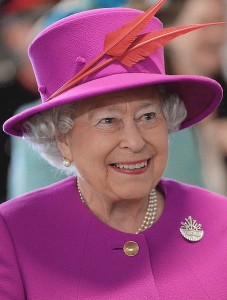
    Below is the text of the speech made by Queen Elizabeth II in the House of Lords on 28 October 1969.

    My Lords and Members of the House of Commons:

    My Husband and I look forward to our visits to New Zealand and Australia, and to attending the Cook Bicentenary Celebrations in both countries.

    With the coming 25th Anniversary year of the United Nations, My Government reaffirm their support for the efforts to ensure peace and to assist the advancement of less developed countries. They will pursue their work through the United Nations for a just and lasting peace in the Middle East, and towards an international agreement on tariff preferences for the developing countries.

    My Ministers will continue to play an active part in the North Atlantic Alliance as the foundation of our security and thereon to build better understanding between East and West.

    My Government will maintain their application to become full Members of the European Communities and desire an early commencement of negotiations. They will take a full part in promoting other measures contributing to European unity.

    My Government will strive for further progress on nuclear and nonnuclear arms control and disarmament. They will be particularly concerned with chemical and biological weapons, and will follow up with vigour the proposals they have put forward for a complete ban on biological methods of warfare.

    My Ministers will remain ready to assist in any way they can to bring peace to Nigeria and Vietnam.

    My Government will continue working for an eventual return to constitutional rule in Rhodesia, in accordance with the principles approved by Parliament. They will steadfastly pursue their policy of economic sanctions and of maintaining isolation of the illegal régime until the conditions for an honourable settlement exist.

    My Ministers will continue their efforts to ensure justice and to promote peace and harmony between all communities in Northern Ireland. They will bring forward proposals to facilitate the reorganisation of the Royal Ulster Constabulary and to establish a local defence force for security duties in Northern Ireland.

    Members of the House of Commons:

    Estimates for the public services will be laid before you.

    My Lords and Members of the House of Commons:

    My Government will press forward their policies for attaining a substantial and continuing balance of payments surplus in order to meet our international obligations and rebuild our reserves, achieve a more rapid rate of economic growth, and safeguard employment. To this end they will continue to develop policies for promoting the efficiency and competitiveness of industry.

    My Government will continue to work with other Governments to improve the international monetary system.

    A statement will be presented to you of My Government’s future plans for public expenditure.

    My Government will continue to foster the fullest use of resources in all regions and will lay before you measures to provide for assistance to industry in intermediate areas.

    Legislation will be introduced to secure the safety, health and welfare of persons on offshore drilling installations.

    Bills will be brought before you to promote improved industrial relations and to provide for equal pay for men and women. Provision will also be made for certain reforms relating to industrial safety and health.

    Legislation will be introduced to rationalise the work of the Monopolies Commission and the National Board for Prices and Incomes, and to combine them in a new body.

    Proposals will be submitted to you for controlling the development of labour-only sub-contracting in the construction industry.

    Bills will be introduced to amend the Merchant Shipping Acts and to make provision for the safety of fishermen.

    Proposals will be brought before you to give effect to certain recommendations of the Committee of Inquiry into Civil Air Transport.

    A Bill will be introduced to assist the film industry.

    Legislation for the reorganisation of the ports will be presented to you.

    Bills will be introduced to reorganise the electricity supply and gas industries and to enable the Gas Council to search for, refine and market petroleum.

    Proposals will be brought before you to establish the nuclear fuel business of the United Kingdom Atomic Energy Authority as a separate Government-controlled company.

    A Bill will be introduced to continue the Government’s powers under the Coal Industry Act 1967 to help the coal industry.

    My Government will continue to encourage the selective expansion of home agriculture. Legislation will be introduced to implement the Government’s proposals on the marketing of eggs; to rationalise the grants payable to assist fixed capital investment in agriculture; to reorganise smallholdings; and to modernise the law relating to sales of fertilisers and feedingstuffs.

    A Bill will be introduced requiring local education authorities to prepare plans for reorganising secondary education on comprehensive lines.

    A Bill will be brought before you for establishing a more effective system of control over dangerous drugs.

    A Bill will be brought before you to introduce new schemes of national superannuation and social insurance and to protect occupational pension rights on change of employment.

    Legislation will be introduced arising out of the recommendations of the Seebohm Committee on Local Authority and Allied Personal Social Services; and fresh proposals will be made about the future administration of the National Health Service.

    Proposals will be put forward for the reorganisation of local government in England, Scotland and Wales.

    Legislation will be introduced to continue in modified form powers to limit increases in house rents.

    A Bill will be introduced to modernise the law relating to the construction of highways in Scotland.

    Legislation will be brought in to reform certain features of the feudal system of land tenure in Scotland and the Scottish law of heritable conveyancing, and to improve the organisation of the Sheriff Courts in Scotland.

    My Government will carry forward their comprehensive programmes of law reform.

    A Bill will be laid before you to make better arrangements for the recovery of civil debts and to enable the Courts to avoid causing hardship when making orders for possession of mortgaged property.

    Legislation will be introduced to enlarge the powers of the Courts with regard to financial provision for parties to marriages which have broken down.

    Other measures will be laid before you.

    My Lords and Members of the House of Commons:

    I pray that the blessing of Almighty God may rest upon your counsels.