Tag: 1963

  • Queen Elizabeth II – 1963 Christmas Broadcast

    Queen Elizabeth II – 1963 Christmas Broadcast

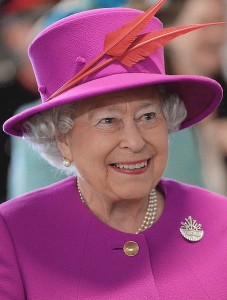
    The Christmas Broadcast made by HM Queen Elizabeth II on 25 December 1963.

    Since my last message of Christmas greetings to you all, the world has witnessed many great events and sweeping changes, but they are already part of the long record of history.

    Now, as ever, the important time for mankind is the future; the coming years are full of hope and promise and their course can still be shaped by our will and action.

    The message of Christmas remains the same; but humanity can only progress if we are all truly ambitious for what is good and honourable. We know the reward is peace on earth, goodwill toward men, but we cannot win it without determination and concerted effort.

    One such concerted effort has been the campaign to free the world from hunger. I am very happy to know that the people of the Commonwealth have responded so generously to this campaign.

    Much has been achieved but there is still much to do and on this day of reunions and festivities in the glow of Christmas, let us remember the many undernourished people, young and old, scattered throughout the world.

    All my family joins me in sending every one of you best wishes for Christmas and may God’s blessing be with you in the coming year.

  • Merlyn Rees – 1963 Maiden Speech in the House of Commons

    Below is the text of the maiden speech made by Merlyn Rees, the then Labour MP for Leeds South, on 17 July 1963.

    It is as well for me at this personal moment to realise that I can depend upon the traditional tolerance and indulgence of hon. Members on both sides of the House. For I am faced not only with the normal problems which confront a new Member, but with the additional one arising from the fact that I am here in place of one of the most distinguished and honoured former colleagues of hon. Members, the former Leader of my own party and a man whom the whole nation mourned just six months ago.

    I learned during the recent by-election of the very high regard in which Hugh Gaitskell was held in South Leeds. I know only too well, at this moment, the very high regard in which he was held in this House. Comparisons are odious at the best of times, and, bearing in mind the comparison which many hon. Members must be making now and will be making in the next few minutes, I can only ask for even more of that tolerance and indulgence for which hon. Members are noted.

    I am one of the Welshmen of the great dispersion of the 1920s and the 1930s, but although, as a consequence, I have spent the greater part of my life in an outer London suburb, to which I owe a great deal, my roots are firmly embedded in the mining valleys of South Wales where many of my family still live and where I was nurtured. Many of the values and virtues and general outlook on life which I have come to associate with my native Wales I have already recognised in that part of the West Riding which I represent in this House. The West Riding has long been noted for the independence of mind and of character of its people. In its fertile soil has long flourished every major development in the field of higher education.

    In the City of Leeds there is not only a world-famous university. There are four teacher training colleges, a college of technology, a college of commerce and many forms of adult education. This fact has encouraged me to speak in this debate, and for the first time in this House.

    I think that now there is general agreement on the need for an expansion of higher education. The arguments that remain are on amount and on the direction in which to go. This has not always been so, and I feel that the reason for the change is the very apparent need for higher education as a form of capital investment. This is a very powerful argument which I believe in strongly and to which I shall return in a moment.

    I wish to point out, however, that there is an equally powerful argument for higher education, whether it is useful or not. The arts and the social sciences are equally important as the natural sciences and technology. I think that I am using both sides of the argument when I say that we shall not get the teachers we need in all parts of the education system unless we greatly increase the facilities for higher education. Based on my own practical experience, I can say that unless we can radically reduce the size of classes, a great deal of the very valuable educational reforms which will get on to the Statute Book will be vitiated.

    One of the odd things about the teaching profession is that the further one gets away from the actual point of teaching, the higher becomes one’s status and the higher is the salary. And yet, to me, the sole reason for the whole operation is to teach students. During the war I served in the Royal Air Force where the whole reason to be there at that time was to keep aeroplanes in the air. As a mark of this, pilots received flying pay. I am wondering whether there is a case for introducing “teaching pay” into the salary arrangements. I offer this suggestion to the Minister with some diffidence, although the diffidence is lessened because I am given to understand that now he has some concern with teachers’ salary arrangements.

    I said earlier that everyone is agreed on the need for expansion of higher education. I feel strongly about the problems that remain, but I will not go into them now. Perhaps, in the spirit of the occasion, I may ask a question of the right hon. Gentleman which is related to the needs of my constituency. In South Leeds there is a high school, one of the old municipal secondary schools set up under the Act of 1902. It has a powerful sixth form which will grow. There is also a comprehensive school which has a quickly generating sixth form which will grow very rapidly. There are secondary modern schools which run advanced courses and some have sixth-form classes as well. May the children in my constituency who are at school now, and who will be at school in the next decade, be assured that when the time comes for them to move into higher education there will be sufficient places for them?

    This growth of sixth forms is, in my view, one measure of the reservoir of ability which exists in this country. Another measure of it is the great expansion of courses which is taking place in the field of technical education. I do not mean just the C.A.T.S but also in technical colleges. I am not concerned only with degree courses, diploma courses and courses leading to professional examinations but also with the very valuable management courses which are held up and down the country. It would, I think, be a great pity if the current concern with the need to set up a top-level Harvard-type business college should lead us to overlook the valuable work being done for middle and lower management which is being extended to include quite remarkable courses for developing shop stewards; because this, too, is management.

    This reservoir is seen in adult education to which my constituents owe a great deal and to which, over the years, they have given much. For it was in my part of Leeds that the W.E.A. flowered early. There are far more people capable of advanced education. I am encouraged in this view by the success of the emergency training scheme for teachers which was set up after the war, and also the organisation of further education and training schemes which, as many hon. Members will remember, enabled ex-Service men to obtain a university education when otherwise they would not have been able to do so. The House may be interested to know that there are five hon. Members who attained a university education under this scheme. It so happens that all five that I know are on this side of the House. One of them is my hon. Friend the Member for East Ham, North (Mr. Prentice). There is also my hon. Friend the Member for Colne Valley (Mr. Duffy). A third is myself.

    This expansion of higher education will raise many problems both educational and administrative. I venture to suggest that it will also raise social problems. For we cannot put this increased number of young people through the forcing house of a mental discipline and expect them to emerge the same people. They change socially as well as academically.

    During past debates on foreign affairs I have sat in another part of this House and heard hon. Members on both sides say that one of the great hopes for Soviet Russia was the fact that the Russians spend large sums on technical education, and that this would breed a new sort of middle class which would reject the old order. I shall not take that argument further; the analogy is by no means complete, but there is sufficient of it to cause concern to many of us, to whatever political party we may belong. They look at life completely differently and there can be no complacency on the part of anyone. It is a political challenge, and it is developing into a social challenge in general

    The whole of this experiment in the expansion of higher education is a challenge. Our response to it will decide whether we are to remain one of the leading Powers in the world. Our response to it will also determine whether the people of this country in general and the people of the North in particular—I include among those my constituents—are going to enjoy a significantly higher material standard of life in the years to come.

    I have little patience with the argument that there is something noble about poverty. I know too much about it in whatever degree to believe this. I believe passionately that there is a case for using science and technology to raise the standard of living of the people of this country. If, concurrently, we not only think of that, but think also of the arts and social sciences, we shall be taking a step towards making eventually a better country. The key to it all is an expansion of higher education.

  • Queen Elizabeth II – 1963 Queen’s Speech

    queenelizabethii

    Below is the text of the speech made on behalf of HM Queen Elizabeth II in the House of Lords on 24 October 1963. The speech was actually delivered by the Lord High Chancellor due to HM Queen’s pregnancy.

    My Lords and Members of the House of Commons:

    It was a great joy to My Husband and to Me to visit Australia and New Zealand again and to see the splendid progress made since our previous visit 10 years ago. On my outward journey I was able to spend a short time in Fiji.

    My Husband and I were glad to welcome the King and Queen of the Belgians, the King and Queen of the Hellenes, and the President of India on their visits to this country.

    My Government have maintained their support for the United Nations and its Agencies and have worked for the achievement of the aims expressed in the United Nations Charter. In the pursuit of general and complete disarmament they have been encouraged by the Treaty banning nuclear tests in the atmosphere, in outer space and under water which has now entered into force. They hope that this agreement will be followed by others helping to reduce international tension.

    My Government have continued to play an active part in the international organisations of which the United Kingdom is a member. My Armed Forces, and the regional defence organisations to which the United Kingdom belongs, have helped to maintain peace and stability in many parts of the world. My Government were quick to respond to India’s request for assistance to help to meet Chinese attacks.

    My Government deeply regretted the interruption of the negotiations for the accession of the United Kingdom to the Treaties of Paris and Rome. They have continued to work for a wider European unity. They have proposed that the work of the Western European Union and the Council of Europe should be further developed, and have continued their efforts to strengthen the European Free Trade Association.

    My Government joined with the Government of the Federation of Rhodesia and Nyasaland, the Governments of Southern and Northern Rhodesia and observers from the Government of Nyasaland in a Conference on the dissolution of the Federation. There was full agreement that arrangements should be made for the orderly and speedy transfer of Federal responsibilities to the territorial Governments. The necessary enabling legislation has been passed. A date has been announced for the proposed independence of Nyasaland.

    My Government welcomed the achievement of independence by North Borneo (now named Sabah), Sarawak and Singapore when they joined the States of the Federation of Malaya in Malaysia. My Government particularly welcomed the Report by the Secretary-General of the United Nations confirming that popular support for Malaysia existed in Sabah and Sarawak.

    Agreements have been reached on constitutional advance in the Bahamas, British Honduras and the Gambia, and My Government have outlined the form which they consider the new Swaziland Constitution should take. Dates for the proposed independence of Kenya, Malta and Zanzibar have been announced. Aden has acceded to the Federation of South Arabia.

    My Government have continued to work through the General Agreement on Tariffs and Trade for the freer flow of international trade with particular regard for the needs of the developing countries. The power of the Commonwealth Development Corporation to invest in some Commonwealth countries has been extended.

    A Treaty of Commerce Establishment and Navigation between the United Kingdom and Japan has entered in force.

    Members of the House of Commons:

    I thank you for the provision which you have made for the public services.

    My Lords and Members of the House of Commons:

    Through their fiscal, monetary and other economic policies, My Government have laid the foundations for a faster rate of economic expansion and growth in real incomes. They have participated in the work of the National Economic Development Council and have welcomed the important contribution of the National Incomes Commission to this objective. A wide range of special measures has been taken to stimulate employment in Scotland, North-East England and in the development districts in other parts of the country. Steps have been taken to increase considerably the facilities for the retraining in building and engineering of workers displaced by industrial change.

    The strength of sterling has been maintained and My Government have continued to play a leading part in the growing international co-operation on monetary affairs.

    An Act has been passed enabling hereditary peerages to be disclaimed and admitting hereditary peeresses and all Scottish peers to the House of Lords.

    My Government have announced their intention to adapt the agricultural support system to present needs within the principles of the Agriculture Acts of 1947 and 1957. They are engaged in consultations on measures to secure greater stability in the market for cereals and fatstock. Several forms of new or improved assistance to agriculture have been provided. My Government have taken steps to secure freedom to extend United Kingdom fishing limits.

    A further large expansion of the teacher training colleges has been undertaken. Support for advanced study and scientific research in the universities is increasing substantially with the growth of Exchequer grants through the University Grants Committee, and has been further increased by extra assistance from the Research Councils. An Act has been passed to provide means of determining teachers’ salaries in England and Wales until 1965.

    Plans for the development of the health and welfare services of local authorities in England and Wales have been laid before you. Measures have been enacted to promote the welfare of children and to secure the health, safety and welfare of persons employed in shops and offices.

    Acts have been passed to reorganise local government in Greater London and to provide for the comprehensive management of the water resources of England and Wales.

    Legislation has prescribed minimum periods of notice for the termination of employment and has required employers to provide written statements of terms of employment.

    The period for which the Independent Television Authority provide television services has been extended to 1976 and the powers and duties of the Authority have been amended.

    Legislation has been passed improving the law relating to criminal justice in Scotland, revising the arrangements for paying grants to Scottish local authorities and amending the law relating to education in Scotland.

    A Consumer Council has been established, the Weights and Measures legislation has been modernised and extended, and an Act has been passed to regulate the soliciting of deposits from the public.

    An Act has been passed increasing substantially the penalties for provoking disorder in public places or at public meetings.

    War pensions and the pensions of retired public servants have been increased, pensions and other benefits under the National Insurance and Industrial Injuries Schemes have been raised and national assistance scales have been improved.

    My Lords and Members of the House of Commons:

    I pray that the blessing of Almighty God may attend you.