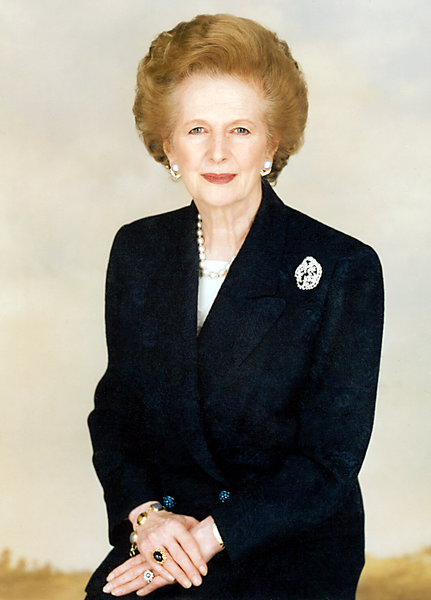
Below is the text of the maiden speech in the House of Commons of Margaret Thatcher, made on 5th February 1960.
I beg to move, That the Bill be now read a Second time.
This is a maiden speech, but I know that the constituency of Finchley which I have the honour to represent would not wish me to do other than come straight to the point and address myself to the matter before the House.
I cannot do better than begin by stating the objects of the Bill in the words used by Mr. Arthur Henderson when he introduced the Bill which became the Local Authorities (Admission of the Press to Meetings) Act, 1908, which was also a Private Member’s Measure. He specified the object and purpose as that of guarding the rights of members of the public by enabling the fullest information to be obtained for them in regard to the actions of their representatives upon local authorities.
It is appropriate at this stage to mention that the public does not have a right of admission, either at common law or by statute, to the meetings of local authorities. Members of the public are compelled, therefore, to rely upon the local Press for information on what their elected representatives are doing. The original Measure was brought as a result of a case in which the representatives of a particular paper were excluded from a particular meeting.
The public has the right, in the first instance, to know what its elected representatives are doing. That right extends in a number of directions. I do not know whether hon. Members generally appreciate the total amount of money spent by local authorities. In England and Wales, local authorities spend £1,400 million a year and, in Scotland, just over £200 million a year. Those sums are not insignificant, even in terms of national budgets. Less than half is raised by ratepayers’ money and the rest by taxpayers’ money, and the first purpose in admitting the Press is that we may know how those moneys are being spent. In the second place, I quote from the Report of the Franks Committee: Publicity is the greatest and most effective check against any arbitrary action. That is one of the fundamental rights of the subject. Further, publicity stimulates the interest of local persons in local government. That is also very important. But if there is a case for publicity, there is also a case for a certain amount of private conference when personal matters are being discussed and when questions are in a preliminary stage. It is in trying to find a point of balance between these two aspects—the public right of knowledge and the necessity on occasion for private conference—that the difficulty arises.
An attempt was made by the 1908 Act to meet this difficulty, and I now turn to the history of the Measure which I am about to present. Provision was made by the 1908 Act for Press representatives to attend meetings of local councils and meetings of education committees in so far as they had delegated powers, and, also a number of other bodies which have now ceased to exist because successive Parliaments have substituted new bodies to carry out the powers which the 1908 Act formerly permitted the Press to publicise.
Long before the events of the past summer, there was a very good case for amending the 1908 Act. The first good case arose when the Local Government Act, 1929, abolished boards of guardians, to whose meetings the Act admitted the Press. Boards of Guardians were responsible for the administration of hospitals and many other matters. The first attempt to bring the law of 1908 up-to-date came in 1930, when the right hon. Member for South Shields (Mr. Ede) introduced a Private Member’s Measure, which I am happy and relieved to learn received a Second Reading. It did not get any further because of a rather precipitate change of Government, which I do not think even the most optimistic hon. Member opposite would believe was imminent at the moment. The case for the Bill then was that boards of guardians no longer existed and the Act needed amending, firstly, by reference to its past performance, and secondly, by reference to the new legislation of 1929.
Then came another major local government Measure, the Local Government Act, 1933. That Act has very considerable significance, because in Section 85 local authorities were empowered to appoint any committees they chose. As a result, many authorities began to go into committee of the full council, not merely for the purpose which is in the spirit of the 1908 Act—that is to say, in order to discuss something which was truly of a confidential nature—but in order merely to exclude the Press, without addressing their minds to whether such exclusion was justified by reference to the matter to be discussed. That began to provide the first major legal loophole in the Act. Where previously local authorities had to deliberate in open council, with the exception of circumstances arising from the business which justified the exclusion of the Press, after that Act they were enabled to resolve themselves into committee merely as a matter of administrative convenience.
Two more Private Members’ Measures attempted to bring the 1908 Act up-todate—one introduced in 1949 by the hon. Member for Westbury (Sir R. Grimston), and the other introduced in 1950 by the hon. Member for Solihull (Mr. M. Lindsay). In the meantime, the need was becoming even greater, because in 1944 came the Education Act, which removed from the sharp light of publicity education committees which had been within purview of the 1908 Act. So we find that the purpose of this Act which governs the position now is no longer effective, because its provisions have become greatly out-dated. This is one of the major grounds for attempting now to bring the 1908 Act up-to-date and make its purpose effective by means of a new Act.
I now turn to the Bill before the House and will try to deduce its general principle from the Clauses there set down. There are six points I should like to make. The first point is, on what occasions in local authority work will this Bill entitle the Press to be present? I use the word “entitled” because there are many authorities which already practise the admission of the Press to a far greater extent than the Bill would necessitate their doing if it became law. This is meant to establish a minimum legislative code of practice for the local authorities. Therefore, the first question is to which meetings of local authorities would the Press be entitled to be admitted by virtue of the Bill. I would refer hon. Members to Clause 2 (2), which contains the major point with reference to committees, and I will try to put the point in fairly simple language —rather simpler than the complicated drafting we find here.
May I point out that committees of local authorities whose only power is to recommend a course of action to the council—a course of action which must be taken by the council and which cannot be taken by the committee without reference back—are not included at all in the Bill? Therefore, any committee of a local authority whose only task is to recommend a course of action to the council is not within the purview of the Bill.
I am well aware that a number of committees of local authorities have two different kinds of power—power to recommend and power to discharge the function of the local authority itself because that local authority has specifically delegated that task to the committee. Where the committee has both of these functions, it comes within the realm of the Bill if, and only if, a substantial Dart of its functions consists in discharging delegated powers. Where a committee only has the odd delegated power referred to it, it will not come within the Bill. Where local authorities have made a practice, as some have, of delegating their own functions to committees, these committees have substantial delegated powers, and therefore come within this Clause.
The Press will be admitted to the main council meetings of local authorities and to those meetings which effectively discharge the functions of the council; that is the committees with substantial delegated powers, but others are not included. I know that some authorities include them, and I would like to see more authorities include them, because I think it would be in the interests of local government, but they are not entitled to be included under this Bill.
Having got the Press in to these meetings, or having entitled them to be in, there must inevitably be occasions, such as personal circumstances coming under discussion, matters preliminary to legal proceedings, matters with regard to the acquisition of land, or such matters which would inevitably come up, when the Press were entitled to be present, unless some effective provision was made to exclude the Press on these occasions.
My second point, therefore, is: having got the Press in, upon what grounds is a local authority entitled to exclude it? There must inevitably be some occasions. We have had great difficulty in drafting the Clause to fit all cases. I had hoped to draw up a schedule of circumstances in which local authorities would be entitled to exclude the Press. That was not possible, and we have had to go back to a kind of omnibus Clause. I refer hon. Members to Clause 1 (2), which is the operative Clause for this purpose. I suggest most earnestly that when the Press is excluded it must be because of some particular reason arising from the proceedings of the local authority at the time, and there must be very good reason for the exclusion. The real reason for excluding the Press is that publicity of the matter to be discussed would be prejudicial to the public interest.
There are two prongs to this Clause. Publicity would be prejudicial for two main groups of reasons. The first group is where the matters under discussion are of a confidential nature. They may relate to personal circumstances of individual electors. They may relate to a confidential communication from a Government Department asking local authorities for their opinion on a subject which the Minister would not like to be discussed in open session until he is a good deal further on and has received the views of local authorities.
There is another group of subjects which perhaps could not be strictly termed confidential but where it would be clearly prejudicial to the public interest to discuss them in open session. They may relate to staff matters, to legal proceedings, to contracts, the discussion of which tender to accept and other such matters. On this prong the Press has to be excluded for a special reason which would need to be stated in the resolution for exclusion. Where the matter is confidential it would not need to be specified further in the resolution for exclusion. Where it was for a special reason, that reason would need to be specified in broad general terms in the resolution for exclusion. This subsection is effective and wide enough in its drafting to cover all occasions upon which a local authority could possibly have good grounds for going into private session. Those are the two main operative Clauses of the Bill.
My third point relates to documents. I understand that there is a very wide variation in practice between the number of documents which different local authorities give to the Press. I do not know how many hon. Members have tried to obtain information about a local authority of which they are not a member but happen to be a ratepayer. One sometimes goes to a council meeting without any idea of what is to be discussed. One sits there for about 15 minutes and all one hears is numbers being counted up to about twenty and starting all over again. Unless the Press, which is to report to the public, has some idea from the documents before it what is to be discussed, the business of allowing the Press in becomes wholly abortive. Therefore, Clause 1 (3, b) makes provision for a limited number of documents to be supplied to the Press at its request in advance of the meeting. It specifies that the agenda must be supplied to the Press if it so requests and is prepared to pay for it.
Agendas vary very much. Some are couched in terms which do not betray for one moment the subject which is to be discussed. One sees such items as “To discuss the proposal of Mr. Smith” and, “To receive the recommendation of Mr. Jones”. As distinct from the supporting accompanying documents, the agenda itself is usually a comparatively brief document. I have, therefore, thought fit to put into the subsection a provision that the agenda shall be supplied to the Press together with such further statement or particulars as are necessary to convey to an outside person the nature of the subject to be discussed. Therefore, the Press must have some idea from the documents what is the true subject to be discussed at meetings to which its representatives are entitled to be admitted.
If the whole agenda was supplied, it might include some things which would be likely to be taken when the Press was excluded. I understand that the practice in many councils is to have Part I and Part II, to take subjects in public session first, and then have a resolution and go into camera for the next group of subjects which come up in private. The corporation, acting through its proper officer, to whom it would have to give instructions, is entitled to exclude from the agenda matters which are likely to be taken in camera so that no confidential matters will leak out by that process. Another provision in the Clause is that the corporation may, if it thinks fit—not must—include supporting committee reports or documents, but it would have to exercise its mind to include them. The Press would not be able to demand such documents as of right.
Fourthly, I have been approached and asked about the question of qualified privilege for local councillors and people who serve on local authorities. I have been approached by people who suggest that the privilege should be made absolute. I could not possibly accede to that, as I think that absolute privilege should be given very rarely indeed. However, there is a consequential provision in the Bill which means that where qualified privilege at present exists for statements made by people serving on local authorities that qualified privilege shall not cease to exist merely because the Press is present. That retains the present position and removes one of the reasons why people can object to the Press being present, because unless there were a consequential provision it might serve to remove the qualified privilege.
Fifthly, I understand from various sources that my proposals are under some criticism because they contain no sanctions or penalties upon local authorities. I should therefore like to state briefly what I am advised the position is when any statute is breached. There are general sanctions available at law for this purpose. Where a public right is infringed, as it would be in the event of the Bill becoming law and local authorities wrongfully excluding the Press, any person can apply to either the Attorney-General or the Solicitor-General for what is known as a relator action. He must state on the application the grounds and enclose counsel’s opinion that there is a good cause of action, that is to say, that it is probable that the council wrongfully excluded under particular circumstances. The person must supply also—I have no doubt that this is very important—a solicitor’s certificate to the effect that the person to take action and to go to the courts is a person who is likely to be able to meet the costs, because the Attorney-General will not foot the bill. He only lends his name to the action.
When that is done, the courts can adjudicate on whether that exclusion was legal or illegal. In the event of the litigant getting a declaration that the exclusion was illegal, he would get costs, and the district auditor already has power to surcharge those costs upon the members of the local authority whose misconduct was responsible for the illegal action occurring. I submit that those sanctions that are available by the ordinary law are sufficient to enable this Measure to be enforced.
My sixth point relates to the Schedule. I shall not go through the Schedule in any great detail, except to point out that a considerable number of the bodies referred to in it are the successors in title to those mentioned in the 1908 Act—the divisional executives established under the Education Act, the regional hospital boards and so on. Hon. Members will note that some committees of authorities are specifically excluded—those whose functions consist solely of determining matters of a confidential nature.
For example, committees of regional hospitals boards are specifically excluded. Committees of executive councils are specifically excluded, which means that any disciplinary matter relating to doctors, nurses, and so on, would not come before the public eye because the committee discharging the function does not come within this Measure.
I hope it is evident from what I have said that we are trying very hard to put into the form of legislation a code of practice that will safeguard the rights of the public. There was, last summer, one instance of the letter of the 1908 Act being contravened, and in a number of instances certainly the spirit of that Act was contravened. It is not, therefore, only a matter of bringing the 1908 Act up to date; because of the abuse of the law, there is a case for safeguarding the rights of the citizen. I hope that hon. Members will think fit to give this Bill a Second Reading, and to consider that the paramount function of this distinguished House is to safeguard civil liberties rather than to think that administrative convenience should take first place in law.
Finally, Mr. Speaker, I should like to acknowledge the help given to me by my right hon. Friend and his Department which, I understand, has been as great as any Government Department could give to a private Member. I want also to acknowledge the help of those who have been good enough to subscribe their names to the Bill, and I should like to thank the House for its very kind indulgence to a new Member.