Tag: 1943

  • Oliver Lyttelton – 1943 Speech on War Production Plans

    Below is the text of the speech made by Oliver Lyttelton, the then Minister of Production, in the House of Commons on 19 January 1943.

    I should like to take this, which’ is the earliest, opportunity of making a short statement to the House about our war production plans for 1943, and particularly about certain developments taking place, which might otherwise lead to misunderstanding in industry and elsewhere. Nineteen forty-three will be a peak year in our war production; and the total labour force employed in the munitions industries during the year will considerably exceed the numbers employed in 1942. In order to obtain the additional labour force required and at the same time to satisfy the requirements of the Forces, there will have to be, by means of concentration or otherwise, further withdrawals of labour from the less essential industries and further mobilisation of women into industry, both for munitions work and as replacements for those transferred from the less essential industries. At the same time transfers of labour within the munition industries themselves must take place. In 1943 our plans demand that the increased emphasis should be placed on the manufacture of ships, of aircraft, of anti-U-boat devices, of tanks, and of certain specialised types of Army equipment. There are other types of equipment where the production ​ and the stocks which we have accumulated are already very great. In these cases we can afford, and it is necessary, to plan reductions in our programmes. In this way we shall achieve the requisite increase in output of weapons of all classes needed for maximum impact on the enemy during 1943.

    Managers and workers who are affected by the changes in programmes which I have just described must realise that, notwithstanding any temporary dislocation that may occur, these changes are part of an ordered plan. If men and women find themselves being transferred to new work they will understand that it is because the new work is even more vitally important than that upon which they were previously engaged. If there is some temporary dislocation to management or to labour, the great and insistent demand for man and woman-power will quickly reabsorb them into new activities.

    I would appeal to Members of this House, whose influence can be of so much importance in their constituencies, as well as to the managements of all companies, to give every assistance to my right hon. Friend the Minister of Labour and National Service in his difficult task, by explaining to their workpeople why the changes are necessary. If they are understood, doubt and uncertainty will not occur. In conclusion, I would emphasise that the number affected by these changes will, by comparison with the total number engaged, be small; for, as I have said, the coming year will be a peak year in our war production, and the total numbers employed as a whole will be much greater than in 1942. In short, while our plans necessitate certain changes in the production lines, the total volume of output must mount steadily. I am confident of our ability to achieve these objectives.

    Mr. Stokes

    Will the right hon. Gentleman take an early opportunity of informing the House more precisely as to the Government’s intentions with regard to the production of tanks, and particularly tank engines, and has he anything to tell the House about his visit to the United States?

    Mr. Lyttelton

    I will certainly take an early opportunity if one is offered to me.

    Sir H. Williams

    As it is proposed that we should discuss this matter in Secret ​ Session on the next two Sitting Days, and as the Minister has appealed to us to explain to our constituents what it is all about, shall we not be put into a very difficult position if we do not abandon the plan for a Secret Session? The vagueness of the Minister’s statement passes comprehension. If it is to be explained in Secret Session, Members will be in an impossible position.

    Mr. Lyttelton

    The reason I made this statement is so that the information should be made public.

    Mr. Bellenger

    Will the right hon. Gentleman elucidate further the question of whether these plans contemplate substantial transference of labour from one locality to another, or whether the reorganisation will take place only in the existing factories?

    Mr. Lyttelton

    There will be a certain transference from one part of the country to another; but the object, naturally, is to reduce that to a minimum. The transference to which I am referring is from one side of munitions production to another.

    Mr. James Griffiths

    As I gather that the proposals the Minister has outlined involve fairly substantial transfers of labour from one industry to another, might I ask whether that policy has been considered by the trade unions?

    Mr. Lyttelton

    Yes, Sir.

    Mr. Griffiths

    And agreed?

    Mr. Lyttelton

    The Government, I think, must be the judges of what types of munitions are to be made; but the fullest consultation has taken place regarding these transfers, and every effort will be made to effect them with the least possible dislocation.

    Mr. Simmonds

    Would my right hon. Friend repeat the assurance which he gave to the House before Christmas, that in the case of vital war industries the Minister of National Service would not remove men and women from the industries where the Supply Departments concerned stated that the production in those units was essential? [HON. MEMBERS: “Answer.”] This is a very vital point. Will my right hon. Friend confirm the assurance that he gave the House in previous circumstances, before Christmas, that the Minister of National Service will not remove from essential ​ war work men and women for transfer unless the Supply Department interested in the production of the undertaking concerned has been consulted and has confirmed the view that the change is in the national interest?

    Mr. Lyttelton

    Certainly, I can give that general assurance.

    Sir Irving Albery

    Is my right hon. Friend aware that the workers readily make any sacrifice which is called for, provided that there is a proper measure of equality in the sacrifice, but that there are at present considerable grievances about transfer, in respect both of pay and of hours, and will he have that matter looked into?

    Mr. Lyttelton

    We have that particular point very much in mind. I am afraid there will occasionally be inequalities.

    Mr. Kirkwood

    The Minister asked Members of Parliament to use their influence in their constituencies, because, as he forecast, there was bound to be trouble when he started to shift men and women from one district to another. Is he aware that the Minister of Labour is introducing the opposite policy, of saying—and saying to me in particular time and again—”Do not interfere at all; leave it to the trade union movement.” But I have settled disputes which the trade union movement have failed to check. What is the policy of the Government? Is it to allow themselves to be saddled with a dictatorship by the Minister of Labour, who is trying to push his cause? [Interruption.] I know what I am up against, and I am prepared to face even the Minister of Labour. This is a very serious business—very serious for me, because I have been a member of my trade union for 50 years, although not a paid trade union agitator. Is the policy of the Government the policy that the Minister of Labour tries to lay down, that Members of Parliament who are members of trade unions should not use their influence to get things put right? Is the Minister still in favour of our using the House of Commons, which I hope is still the most important body in this country? I will use it to fight for my class.

    Mr. Lyttelton

    On this matter I take a very simple view. The policy of the Government is to make the right weapons and at the same time to transfer labour with ​ as little disturbance as possible from one district to another. The statement which I have just read to the House was agreed upon with the Minister of Labour. It is a perfectly simple matter, and I asked Members of the House to explain in the country that, owing to the existence of stocks and so forth, some quite drastic changes in our production lines were about to take place.
  • Dennis Herbert – 1943 Resignation Statement

    Below is the text of the speech made by Sir Dennis Herbert, the then Conservative MP for Watford, in the House of Commons on 19 January 1943.

    Mr. Speaker, with your permission and the assent of the House, I have a brief statement to make. As the Chairman of Ways and Means and Chairman of Committees, and being an officer of the House elected by the House, it is to the House that I should submit, as I now do, my resignation of that post. I should like first of all to dispose of one, fortunately mistaken, idea which has got into the Press in some quarters, namely, that I am doing this on the ground of ill-health. It is true that I had a bad illness not long ago, but if the House will pardon this personal matter, I am glad to be able to say that my doctor tells me that there is no reason of that kind why I should not continue in the exacting post which I have held, and I hope I may have a further useful time yet in the future.

    But there may be various reasons, some good, some less good, why I should take this course. One reason if good and sufficient is all that is required, and that one reason I venture to give—the one which has weighed with me. The history of the House of Commons has been one of constant change over the centuries. At this time of world upheaval and, we hope, of subsequent reconstruction, there must be big changes in the near future in the methods and procedure of the House, and in those changes, if I am not mistaken, two matters will be particularly affected—one the procedure in Committees of the Whole House, including the Committees of Supply and of Ways and Means, and the other in the arrangements regarding Private Bill legislation, which, as the House will recollect, is practically in the management of the Chairman of ​ Ways and Means. Those changes must take time, and, fit as I may feel at the present time, I should not be justified, and the House would not feel justified, in feeling confident that I should be equally fit to go on with that work until those changes are completed. It is highly undesirable that when changes of that kind are in progress one of the persons principally concerned should suddenly become unable or inefficient to carry on that work. Under those circumstances the House, I feel, would be very well advised to find as a Chairman a Member who can, with greater confidence than in my case, be regarded as likely to see all those changes completed. I am happy to say that the Prime Minister permits me to say that the course I am adopting has his approval.

    There remains one duty for me to do, and that is to express my gratitude to the House for their kindness to me during the whole of the time I have held this office. It has been particularly pleasing to me that among some of my best friends in the House are some of those to whom I have been most deaf, most blind, or whose eloquent speeches I have been obliged to torpedo at their first start. It shows the general good nature and good will which have always been a distinguishing feature of this House, and I am grateful. Mr. Speaker, if I may say so with respect, I could not have served under anyone more pleasing to serve under than yourself, and I must mention, too, my right hon. and gallant Friend the Deputy-Chairman (Colonel Clifton Brown), who, as I think the House will agree, has justified most thoroughly the choice which was made when our late good friend Captain Bourne left us. Mr. Speaker, I thank the House, and I am grateful to them for having listened to me.

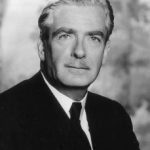
  • Anthony Eden – 1943 Speech on David Lloyd George’s 80th Birthday

    Anthony Eden – 1943 Speech on David Lloyd George’s 80th Birthday

    Below is the text of the speech made by Anthony Eden, the then Conservative Leader of the House, in the House of Commons on 19 January 1943.

    The House will feel that we cannot this day pass to our ordinary Business without taking note of an event which marks for this House a historic and an intimately personal occasion. On behalf of every hon. Member of this House I offer to my right hon. Friend the Member for Carnarvon Boroughs (Mr. Lloyd George) our congratulations and our heartfelt wishes on his 80th birthday. This is no time to attempt a detailed review of his services. They are world wide, and they were rendered to mankind. To-day we salute him not only as the dominant statesman of his generation, not only as the man who led this country through a period of storm and stress like unto that through which we now strive, but, more than all these things, we salute him as a great House of Commons man. For over half-a-century he has been a champion in our midst. Neither his courage nor his resilience has ever failed him. He has needed both, because he has given hard blows and taken them. To-day we regard him with pride and with affection, and we, each one of us, hope that he will be spared for many years to teach us wisdom, to guide us and, if need be, to drive us along the path that we should tread.

    Hon. Members

    Hear, hear.

    Mr. Lloyd George

    I thank the right hon. Gentleman for his observations and for his felicitations. I thank him all the more because I was not given any notice ​ of his intention. It is very kind of him to have made these observations, and I thank him for them. I also thank my fellow Members of the House of Commons for the reception which they have afforded me to-day. Among all my recollections of the last 80 years there is none of which I am prouder than the fact that I have for 53 years been a Member of this honoured and this great Assembly. I thank the House of Commons and the right hon. Gentleman too.

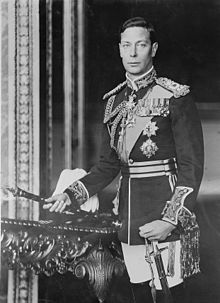
  • King George VI – 1943 King’s Speech

    kinggeorge6

    Below is the text of the speech made by King George VI in the House of Lords on 24 November 1943.

    My Lords and Members of the House of Commons,

    In the fourth year of war the Forces of the United Nations assumed the offensive in all theatres of war. The enemy has been cast out of Africa; freedom has been brought to Sicily, Sardinia and Corsica; and in Italy my Forces and those of my American Ally are now engaging the enemy on the mainland of Europe. On his eastern front the enemy has given ground before the massive and unrelenting advance of the Russian Armies, whose magnificent achievements we have watched with ever-deepening admiration. The captive peoples of Europe are everywhere preparing to throw off the yoke of the oppressor; and we shall continue to afford them such help and encouragement as lies in our power. On the frontier of India and in the Pacific, Japanese aggression has been halted, and the Forces of the United Nations are now moving to the offensive. At sea my Navies and those of our Allies continue to maintain their mastery over the enemy, and important successes have been won in the struggle against the enemy’s U-boats. The Air Forces of the United Nations have maintained their ascendancy in all theatres of war, and have increased the weight of their blows at the enemy’s heart.

    The mounting scale of our offensive is the fruit of the devoted and untiring efforts of my peoples throughout the Commonwealth and Empire; and in the coming year we shall, with God’s help, be able to bring to bear upon the enemy a still greater weight of attack. With the growing help of our great American Ally, and together with the other United Nations, we shall go forward with confidence in our cause until we have delivered the peoples of the world from the fear of the aggressor.

    My Government, taking counsel with my Allies and building upon the foundations laid at the recent Conference in Moscow, will devote continuous attention to the study of plans for the future settlement of Europe.

    Members of the House of Commons,

    You will be asked to make further financial provision for the conduct of the war and for the other necessary services.

    My Lords and Members of the House of Commons,

    My Government will continue to concentrate their powers and energies upon the prosecution of the war; and, until final victory is won, that will be their primary task. You will be invited to pass such further legislation as may be necessary to provide for the needs of the war and to meet abnormal conditions arising from the war.

    At the same time my Ministers are resolved that, so far as the future can be foreseen, they shall be ready to meet the different tasks that await them when victory has been won. They have undertaken a special review of the problems which are likely to arise as hostilities in Europe come to an end and of the adjustments which will have to be made when we turn to prosecute with fresh vigour the war against Japan; and in the months to come my Ministers will complete their provisional plans for the period of transition through which we must pass before the troubled times of war give place to settled conditions of peace. It will be the primary aim of my Government to ensure that in this period food, homes and employment are provided for my people, that good progress is made with the rebuilding of our damaged cities, and that in industry, mining and agriculture a smooth transition is made from war to peace. For some of these purposes fresh powers will be needed; and, as the preparations proceed, proposals for the necessary legislation will be laid before you. You will, in the immediate future, be asked to make provision for the training and employment of disabled persons, and to amend the law regarding the reinstatement in their civil employment of persons discharged from the Armed Forces.

    In certain fields it is already possible to look beyond the transitional period and to frame proposals for social reforms designed to confer lasting benefits on my people.

    A measure embodying my Government’s proposals for the reconstruction of the national system of education in England and Wales will be laid before you. An Advisory Council is now preparing reports which are expected to form the basis for educational developments in Scotland.

    My Ministers will present to you their views and proposals regarding an enlarged and unified system of social insurance, a comprehensive health service and a new scheme of workmen’s compensation; and they will decide, in the light of your discussions, what specific proposals for legislation on these matters can be brought forward at this stage.

    You will be invited to pass legislation conferring special powers for the redevelopment of areas which, by reason of enemy action, overcrowding or otherwise, need to be replanned as a whole.

    My Government will lay before you the results of their examination of the Reports which have been made recommending the assumption of further powers to control and direct the use of the land of Great Britain.

    It is the desire of my Government that full consideration should be given to various proposals which have been put forward for changes in the existing franchise law, and you will be invited to give your early attention to this question.

    My Ministers will maintain and develop the measures for promoting the health and well-being of my people which, by God’s providence, have been so successful during the past four years of war.

    I pray that the Almighty may give His blessing to your counsels.