Tag: 1940

  • Victor Cazalet – 1940 Speech on Internees

    Victor Cazalet – 1940 Speech on Internees

    The speech made by Victor Cazalet, the then Conservative MP for Chippenham, in the House of Commons on 22 August 1940.

    I hope that neither false sentiment nor false emotion will govern anything I say. Rather I am animated, if I may say so, by a sense of decency and of due regard to the fair name of both my country and the Government that I support to-day. A few weeks ago there was a debate here on this subject. I do not say as a consequence of that debate, but following it, the Home Secretary made a statement which appeared to me, I admit, to be pretty satisfactory. A few days later a White Paper was issued, and I regret to say that the more I and some of my friends studied that White Paper the less satisfactory it appeared to be. It does not matter whether there are 18 or 80 categories in a White Paper if those categories do not apply to the people who are interned. The real point is, how many people are being released, and are going to be released, under the particular categories. We have had some information about that to-day, in answer to a Question; and I hope the Home Secretary will give us further information. I should be the first to admit that since that last debate some progress has been made; but the question remains whether enough progress has been made, and whether the speed at which the existing machinery can work, even given the maximum of good will, is satisfactory.

    One cannot help asking oneself who is responsible. It may be said that that has nothing to do with the matter; but what is Parliament for if it is not to ask these questions? No ordinary excuse, such as that there is a war on and that officials are overworked, is sufficient to explain what has happened. I do not know whether the Home Secretary will agree, but I think that Members of Parliament have been extremely reticent in exposing cases of hardship which have come to all of us, and which, I regret to say, are coming to me every day, even now. One of the most serious aspects of this affair is not so much what is happening at home, because we can, and will, put that right, but the effect that this has had on our reputation abroad. It has been interpreted as an anti-Jewish campaign. Although I know that nothing is further from the mind of the Government than that, there are facts which lead to that interpretation. The Jews are, for political reasons, not being allowed to organise themselves to fight in Palestine. That may be right or wrong; I am not arguing about it. Jews who are refugees in this country have been interned. Perhaps some of those same Jews whom I myself saw in Dachau camp some years ago, who have been fighting our battle for years, are interned here, and have not been allowed to fight for their adopted country. I know that the propaganda which has been put out is untrue: I repeat that there is nothing further from the mind of the Government than to do anything which would lend colour to this misguided or mischievous propaganda.

    We all know that what has been done has not been done deliberately, with a desire to be cruel, in order to propitiate the sadistic instincts of officials. Exactly the opposite is the case. Officials have been more than sympathetic. Those at the War Office I have found always helpful; and the Home Office officials, like the Home Secretary and the Under-Secretary, are only too anxious to help when we represent our case to them. Why is it that something has not happened? I am afraid it is because of sheer incompetence and mismanagement. I have no desire to ask for punishment, but I desire to see that similar things may not happen in the future. Also, what may start as incompetence and mismanagement may, if not corrected, very soon become cruelty. I admit that there has been exaggeration. I myself have taken very few cases to the Home Office, because it is so difficult to check the facts. Of course, there has been exaggeration, but I would say, in extenuation of some of the exaggeration of which perhaps hon. Members of this House have been guilty: how can you expect that there will not be exaggeration when it has taken over three weeks to get a letter from one party to another—[An HON. MEMBER: “Longer than that.”]—a month in one case that I know of; when the “Oxford Book of English Verse” has been decreed an unsuitable book for a refugee; when names have been lost; when people have disappeared? It is obvious that when those things occur you are bound to get an atmosphere in which exaggeration of statements will take place. I know that the Minister is the first to admit that mistakes have been made, and I know that neither he nor his Department is responsible. But I do not think that that is quite enough. Horrible tragedies, unnecessary and undeserved, lie at the door of somebody; and I want the Minister, if he will, to say that he realises that these mistakes which he has admitted have in certain cases resulted in appalling and most regrettable tragedies. We have, unwittingly I know, added to the sum total of misery caused by this war, and by doing so we have not in any way added to the efficiency of our war effort.

    So much for the past; what of the future? Personally—and here I believe that I represent the views of the majority of Members—I have confidence in the two committees which are concerned with these people. But there are one or two points which I do not think come within the terms of reference of either of these committees. I asked a Question to-day about the financial condition of the wives of internees. I have had one or two very distressing cases brought to me. In one case the husband has paid for over three years into the Unemployment Insurance Fund. You would expect that when he is unable to earn any money his wife would be able to receive something by right, not by charity, of what her husband has contributed to that scheme in the past. But apparently the fact that he is not eligible for a job—and the only reason he is not eligible is because he is interned by the Government—means that his wife is not allowed, under the Regulations, to draw any unemployment benefit. I do not think that anybody, in any part of the House, will challenge those facts, or deny that this is a great injustice. I believe that there is a fund—the Prevention and Relief of Distress Fund—to which the wives and families of those internees can apply. I would ask the Minister please not to circulate to the Employment Exchanges, but to all the internment camps, this information, so that the refugees may inform their wives, many of whom are at their last gasp to-day, how to get relief quickly and legitimately.

    The second question I ask is, Has every individual, who is of suitable age and physique, and against whom there is nothing from the point of view of security, been offered the chance of going into the Pioneer Corps? I believe that is absolutely essential. In asking the question, I must admit that I was perhaps guilty, because I did not realise the fact that there was quite a number of young refugees in this country enjoying positions and jobs, which would be denied to our own people because they were being called up, which they were holding merely because they were refugees. It is impossible that such a situation should continue, and I would be the first to admit it. Therefore I suggest, as a solution, that these young men should be offered the alternative of joining the Pioneer Corps, or, of course, being continued in internment. That offer should be made to men under the age of 35 or 40, and I would like all over a certain age, of suitable physique, to be offered the chance of going into an industrial corps from which the Minister of Labour could, if they were suitable, allocate them to various factories. I believe that if we got these two things it would certainly go a long way towards solving a very large number of hardships to-clay.

    What about the position in Canada and Australia? It is clear that there are bound to be difficulties which require great tact, both on our side and on the side of the Dominions, to see that unnecessary hardship is not done. A number of refugees have gone out there in Category B. Those were the cases in the course of being examined by a new tribunal in this country, and many no doubt would have been placed in Category C. If they are in Category C, no doubt the Dominions will allow them that liberty and freedom that they would have enjoyed in this country, but how can the Dominions know whether they ought to be in Category B or C? If they are in Category B or A arrangements have to be made and accommodation provided for their internment, and it is in the interests of the Dominions, as it is in the interests of the refugees themselves, that this question should be decided as speedily as possible.

    I know that the Under-Secretary has visited various of these camps, and I believe that conditions in the great majority of them have improved enormously, and that in future Lord Lytton’s Committee, which is now responsible, will see that the conditions in these camps are now kept up to the maximum efficiency that is possible. But I have received disturbing letters about Prees Heath and Sutton Park Camps, saying that men of 65 and 67 are still living under canvas. I do not know whether that is true or not, but if the Under-Secretary has visited these camps and is satisfied, either that the conditions are good, or that they are to be speedily changed, I accept the position at once. But it is only right in a Debate of this kind, when we all receive these letters, that an answer should be given.

    There must be individual cases which are not to-day, and will never be, covered by any particular category in any White Paper. I want no refugee to be refused the right of being released simply because he does not come under any particular category. I want there to be an individual committee, or whatever body it may be, who will examine the request of an individual on its merits. We all know, in the individual cases which have been brought to our notice, how hard it is to put them in any particular category. There is always some exceptional case. Perhaps the parents had been rather careless at the birth of one or more of their children and had not registered them in the right country, and for this the individual is now suffering. There are certain categories of artists whose technical work, and, indeed, whose whole life work may be ruined unless they are given certain opportunities. You cannot put them into any particular category, but they must be examined on their own individual merits. I am content to abide by the statement made by a Noble Duke in another place when he said that the Government will be able, as time goes on, to secure the release of all those whose release would not involve any danger to the country. That satisfies me, (1), if that is the policy of the Government, and (2) if there is a correct interpretation of “as time goes on.” Personally, I believe that categories would be an entirely satisfactory way of dealing with this problem, and I accept it for the time being. Let us get the categories working, and get out as many people as possible, but, as time goes on, surely, there must be another criteria. Innocence, loyalty, honesty—these must be the deciding factors.

    If a man is guilty, if there is the slightest suspicion that he has been guilty or is likely to become guilty, of in any way endangering the security and safety of the State, of course, he must be interned, but if his honesty, patriotism and loyalty are beyond doubt, then, I say, let such a man out. Give him his liberty to join with us in fighting for that freedom for which he might have been fighting for many years already. I ask the Minister to recognise that speed is of the essence of the whole problem. I know that he has problems and difficulties and confusion arising in the thousands of cases that are involved, and that there are tens of thousands of letters addressed to his Department, but I also know, as we all do, of the tragedies, sufferings and hardships which this control causes. I know also that the Government as a whole desire to do the right thing in this matter, and that they are just as appalled as any of us are at certain individual Cases that come to our notice. Frankly, I shall not feel happy, either as an Englishman or as a supporter of this Government, until this bespattered page of our history has been cleaned up and rewritten.
  • Victor Cazalet – 1940 Speech on Palestine and Jewish Ghettos in Poland

    Victor Cazalet – 1940 Speech on Palestine and Jewish Ghettos in Poland

    The speech made by Victor Cazalet, the then Conservative MP for Chippenham, in the House of Commons on 6 March 1940.

    No one realises more than I do the extreme difficulty of speaking after my right hon. Friend the Secretary of State for the Colonies. Although I disagree profoundly with the Government’s policy in Palestine, I recognise that this afternoon my right hon. Friend has made a brilliant defence of that policy, and that the overwhelming majority of hon. Members in my party are behind him. I do not pretend to view this subject with a completely open mind; nor did I come here with a completely open mind to listen to the Debate. I know some of the facts. My right hon. Friend made the speech which I had thought he would make—calm, endeavouring not to raise any unnecessary opposition, dispassionate in all his remarks, but I knew that to almost every argument which he made there was another side.

    I will give the House two examples of that. My right hon. Friend said that the peace in Palestine to-day is due, not solely to the war, but very largely to the publication of the White Paper some months ago. Of course, one can always purchase peace by making concessions to one’s opponents. But what an invitation that is to the Jews to follow the example of the Arabs and to make trouble in order to wring concessions from the Government. I am certain they will not do that. I should, in my humble way, use every endeavour I could to prevent them from doing it. The idea appears to be that although there is peace now, the Arabs may at some future time make a fuss and revolt; and therefore, they must be given concessions. We were then told about the Arabs in Iraq, the Mohammedans in Africa, India and elsewhere. I would remind the House that there are 16,000,000 Jews distributed throughout the world. Surely, in these critical days, their views and opinions should also be considered. My right hon. Friend said that there is plenty of good land in the maritime area for the Jews to buy. He knows very well that it is in that area where the Jews have spent most money that they have attracted the greatest number of Arabs. If the Jews are to buy land there, and indeed they only buy it there, being excluded from 95 per cent. of the rest of the territory, it will put a monopoly price on a very limited amount of land and so make it practically impossible for the Jews to buy any land in that area.

    I am opposed to the Government on this issue. I am pro-Government as they were three years ago, when they adopted the Royal Commission’s Report on partition. I am afraid I have not been able to change my views on Palestine quite as quickly as the Government have changed theirs. Some months ago, I appealed to the Government in vain not to proceed with the proposals of the White Paper because I considered that they were dishonourable and broke the promises and pledges which the same Government had given to the Jews three years ago. In listening to my right hon. Friend, it struck me as rather odd how often he referred to these commissions, and in particular the deference which he paid to the Royal Commission’s views on land. I wish that he had paid a little more deference to their views on other matters in regard to Palestine.

    A few months ago we had a hope that the League of Nations might intervene and prevent the Government from committing what I and others consider to be this crime against Jewry. The Permanent Mandates Commission has met and produced a report, and I think it would not be an overstatement to say that the Mandates Commission’s report is not entirely satisfactory towards the Government. It is of no use decrying the Mandates Commission in this case simply because it happens to recommend something against the Government’s policy. My right hon. Friend has given reasons why the Council has not yet been consulted. I agree with him in one aspect of this matter. I think it is very unlikely that any member of the Council, if asked to-day to give its opinion, would raise its voice in opposition to a policy which is officially favoured by Great Britain and presumably supported by Germany. It would have been much more honest if, from the beginning, the Government had said to the House that, in their opinion, the Mandate had failed, and they proposed something quite different. I would have disagreed with that, but I would have understood it. What I have never been able to forgive is the attempt to make this policy square with the Mandate. When the full White Paper policy is in execution—a permanent minority for the Jews, no more immigration, land sales to be confined within a narrow area—what will be left of the Mandate? The ghost of Lord Balfour ought to haunt those on the Treasury Bench when they try to square their policy with the Mandate.

    Something else has happened during the last few months. War has broken out. I think that for several months the war gave some hopes about what might happen in Palestine. The war has influenced all our lives and policies. Surely, it should have had some effect on the policy in Palestine. After all, the Government in certain very important ways have changed their character. The right hon. Gentleman the First Lord of the Admiralty is no insignificant member of the Government. He was strongly opposed to this policy. When he entered the Government, surely some concession ought to have been made to his views. The Opposition have been invited to co-operate with the Government, and they have loyally co-operated on most issues. Unity is our motto. It has been accepted loyally by the great bulk of the people of this country, and nowhere with greater surprise or with more welcome than in Palestine itself. Now this bomb has been thrown into our midst, spreading dissension and bitterness.

    The legal question has been dealt with. The question of the amount of land avail able has been dealt with. I want to state to the House one or two simple facts—facts, I admit, from the Jewish point of view—because I do not think that my right hon. Friend, although he paid a tribute to the Jews in Palestine, and expressed sympathy with them, understands how they feel about this policy. The question which the ordinary man-in-the-street is asking himself at the present time is why it should be necessary at this moment to introduce in Palestine this one item of the proposals of the White Paper. Does anyone really think it will help to win the war when it will raise bitter feelings on the part of Jews throughout the world? This must be the crucial test of everything that the Government do at this time—will it help us to win the war? That is the only thing which matters. My right hon. Friend has admitted that there is comparative peace in Palestine. In a few months, in a few weeks, war may develop in the Near East, and then we shall want the services of Jewish men—

    Mr. MacLaren (Burslem) And Arabs.

    Major Cazalet —Jewish men, scientists, factories. Already Iraq, Turkey, Egypt and Syria are utilising the brains, talents and resources of the Jews in Palestine. Are the Government really afraid of an Arab revolt? I believe that to-day the Arabs are just as united in their loyalty as are the Jews. I am far less afraid than is my right hon. Friend of Arab dissension. Whom does he fear? From where is the revolt to come? Is the army of the Hedjaz to march up, is Iraq to invade Palestine? I thought we had thousands of troops from the Antipodes in Palestine. There are tens of thousands of troops in Syria, should they be wanted. The Government have always insisted, rightly, that there never will be lasting peace in Palestine except through co-operation of the Jews with the Arabs. It is perfectly correct. I maintain that that co-operation can only be carried into effect successfully along economic lines. Economic prosperity depends on land purchases by the Jews. In areas where the Jews have bought land the Arabs work willingly, peacefully, and happily, with better wages and conditions than they have ever enjoyed. In some periods of the year at the height of the citrus season there are 10,000 Arabs working contentedly for the Jews. So it is a political question. I object to this decision because it will frustrate the only real hope of obtaining permanent co-operation between Jews and Arabs, and because it will deny the Jews the right to invest their money in purchases of land as they have done in the past. By this Measure you are handing back a vast number of Arab tenants and cultivators of the soil to the Arab moneylenders. Up to date they have been able to sell a portion of the land, and for that money they have been able to go in for intensive cultivation. You are condemning two-thirds of Palestine to bankruptcy. The right hon. Gentleman asked whether we had not heard of the £5,500,000 loan, but that is for the whole of the Empire, and what proportion will go to Palestine? We know the Jews have spent £5,000,000 a year in Palestine.

    This is the third partition of Palestine. We had the first in 1922, and the second was suggested by the Government on the report of the Royal Commission. Now we have this miserable third partition of Palestine. I know although lip service is paid to the Jews by almost everybody in this country that the Jews have not many friends. One knows so well people who start a conversation by saying, “Of course, I have a great many Jews, intimate friends who I admire and like very much, but—”No one knows better their thoughts and failings better than I, but, perhaps, if we had been persecuted for generations, we might have possessed, if we do not already possess, some of their less desirable characteristics. Perhaps we should not have survived the persecution. One of the most potential factors in giving to the Jews some of their less agreeable characteristics is that for centuries he has had to dwell in towns and ghettoes and has been denied the right of land ownership. Now, for the first time, in Palestine, he has land freedom and space, he can dig the soil and can create something constructive by the sweat of his brow. If you have not seen a Jewish farmer and compared him, as I have, with the type cringing in the ghettoes of Poland, you cannot understand what the possession of land and working on the soil, either in a communal farm or a farm in his own possession, means to him.

    What magnificent work they have done; and have the Arabs really suffered? Have the Jews farmed well? Well, I have never tasted better cheese or drunk better milk than off a Jewish farm. Are they not in Palestine contributing something of real worth to the national need? And now you deny them further expansion. Do not be deluded. The right hon. Gentleman explained how many thousands of acres there were, but what are the facts? The Jews have been told by the First Lord of the Admiralty that they were in Palestine by right, but the Jews under this scheme are there by right in less than 5 per cent. of the territory. They are tolerated only in 20 per cent., and are excluded altogether from another 65 per cent. What a mockery of the National Home. After all, who are these people? Are they likely to conspire with our enemies? No, Sir, these are the men who in the first days of the war were ready to offer a fighting division to go anywhere the British Government asked. So far that offer, no doubt for good reasons, has not been accepted. These are the men and women who have pledged themselves unreservedly—pledged their lives and possessions—in the service of the Government until victory is won. These men will still fight for England, but you have played on their loyalty and strained their patriotism almost to breaking point. You have played them off against the Arabs because you knew that in the last resort they would not let you down. They have no one else to turn to, better for them the ghettoes of Poland than the martyrdom of Lublin in Poland. After all, for what are we fighting if it is not for the preservation of individual liberty and of the right of small peoples to live their lives and cultivate and develop their own culture in their own land? The Jews have been at war for six years, and they have suffered up to date more casualties than the Allies. Their war is our war, and our war is theirs, and yet to-day, they have to suffer this supreme indignity in their hour of need.

    I apologise for perhaps expressing very strong views, but I feel, and believe, that these Regulations should be withdrawn, for a variety of reasons. I think they are almost certainly illegal, that they are unjust in themselves, and, in spite of what the right hon. Gentleman said, that they are unnecessary. I have every reason to suppose that there would not have been very much land purchase, and that the money is not, and will not, be forthcoming in the next few years. I believe these Regulations are dishonourable in peace and wicked and contemptible in war. They divide opinion at home and lend support to that body of opinion in the United States of America and elsewhere which wishes to think wrongfully I believe, that we are prepared to make terms with the enemy. They inflict a deep moral wrong on the Jewish race. Holding these views, is it any wonder that I am distressed and feel bitterly on the matter? Is there any wonder that I am prejudiced on behalf of those who are prepared to fight to the bitter end on our side in this war?

    Even if I were the only Member of my party who raised his voice against these proposals, and if necessary vote against them, I should do so. If I did not I should be ashamed of myself ever afterwards. I have been a most loyal back-bencher for 16 years, and perhaps I may be permitted this digression from the path of duty to-night. I realise, of course, that some of those on the Front Bench do not like these Regulations. There has been a good deal of mental shuffling to accommodate their consciences to these Regulations. I expect in their heart of hearts they desire, as we do, to see fair play to both Jews and Arabs, but, knowing as I do the extent of the bitterness of the blow which millions of Jews are feeling to-day, can I do anything else than raise my voice and beg the Government, futilely, I know, to withdraw even at this late hour these Regulations so that honourably once again Jews, Arabs and Christians in Palestine and elsewhere can unite whole-heartedly to destroy and defeat the King’s enemy?

  • Victor Cazalet – 1940 Comments on Welcoming Refugees

    Victor Cazalet – 1940 Comments on Welcoming Refugees

    The comments made by Victor Cazalet, the then Conservative MP for Chippenham, in the House of Commons on 10 July 1940.

    propose in a very few minutes to initiate a discussion on the subject of refugees and their treatment in this country during the past few months. For some years I have been interested in this question, but any humble or slight contribution which I may have made to this problem is only a tithe of the really great work which the hon. Lady the Member for the English Universities (Miss Rathbone) has done for refugees. All refugees in this country, and indeed many refugees in other countries as well, owe her a deep debt of gratitude, and I am glad to have an opportunity to pay tribute to her work to-day. I know enough about the subject to realise something of the hardships, miseries, and sufferings which a great many of these people have endured during the past four years. It has been the historical policy of this country for many centuries to give asylum to refugees, and I do not believe that England has lost by this policy.

  • King George VI – 1940 King’s Speech

    kinggeorge6

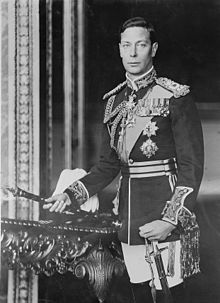
    Below is the text of the speech made by King George VI in the House of Lords on 21 November 1940.

    My Lords and Members of the House of Commons,

    My peoples and My Allies are united in their resolve to continue the fight against the aggressor nations until freedom is made secure. Then only can the nations, released from oppression and violence, again work together on a basis of ordered liberty and social justice.

    I am confident that victory is assured, not only by the prowess of the Armed Forces of My Empire and of those of My Allies, but also by the devotion of the Civil Defence Forces and the tenacity and industry of My peoples. These are now enduring, where they live and labour, the perils as well as the hardships of war.

    The staunchness of the men of the Merchant and Fishing Fleets has added lustre to the ancient traditions of the sea.

    The resistance of My people has won the admiration of other friendly Powers. The relations of My Government with that of the United States of America could not be more cordial, and I learn, with the utmost satisfaction, of the ever-increasing volume of munitions of war which is arriving from that country. It is good to know in these fateful times how widely shared are the ideals of ordered freedom, of justice and security.

    Members of the House of Commons,

    You will be asked to make further financial provision for the conduct of the war.

    My Lords and Members of the House of Commons,

    Measures will be submitted to you for compensating those whose home or business property has, at any time since the outbreak of hostilities, been destroyed or damaged by enemy attack, and for extending insurance against the risk of such damage to all forms of movable property which are not at present protected.

    Further proposals for legislation will also be made to improve the conditions of those who may now or in the future require assistance from public funds.

    Apart from these and such other measures as may be required for the effective prosecution of the war, My Government will take every possible step to sustain the health and well-being of My people in their ordeal.

    I pray that the Almighty may give His blessing to your counsels.

  • Winston Churchill – 1940 Fight them on the Beaches Speech

    winstonchurchill

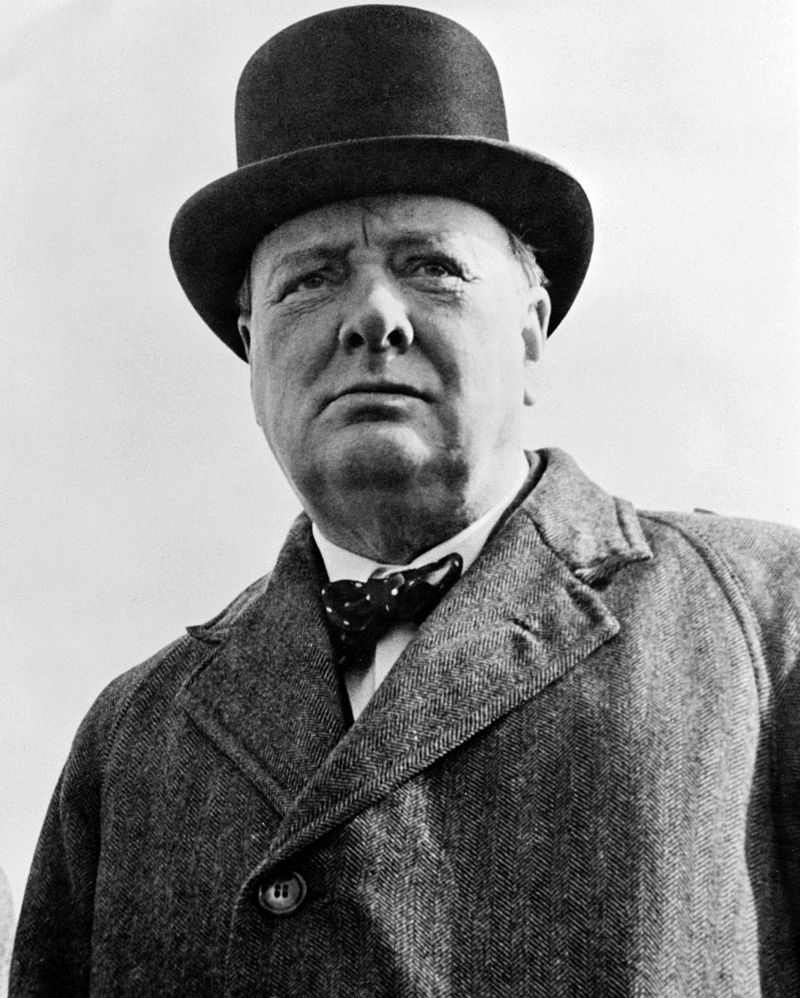
    Below is the text of the speech made by the then Prime Minister, Winston Churchill, in the House of Commons on 4th June 1940.

    From the moment that the French defenses at Sedan and on the Meuse were broken at the end of the second week of May, only a rapid retreat to Amiens and the south could have saved the British and French Armies who had entered Belgium at the appeal of the Belgian King; but this strategic fact was not immediately realized. The French High Command hoped they would be able to close the gap, and the Armies of the north were under their orders. Moreover, a retirement of this kind would have involved almost certainly the destruction of the fine Belgian Army of over 20 divisions and the abandonment of the whole of Belgium. Therefore, when the force and scope of the German penetration were realized and when a new French Generalissimo, General Weygand, assumed command in place of General Gamelin, an effort was made by the French and British Armies in Belgium to keep on holding the right hand of the Belgians and to give their own right hand to a newly created French Army which was to have advanced across the Somme in great strength to grasp it.

    However, the German eruption swept like a sharp scythe around the right and rear of the Armies of the north. Eight or nine armored divisions, each of about four hundred armored vehicles of different kinds, but carefully assorted to be complementary and divisible into small self-contained units, cut off all communications between us and the main French Armies. It severed our own communications for food and ammunition, which ran first to Amiens and afterwards through Abbeville, and it shore its way up the coast to Boulogne and Calais, and almost to Dunkirk. Behind this armored and mechanized onslaught came a number of German divisions in lorries, and behind them again there plodded comparatively slowly the dull brute mass of the ordinary German Army and German people, always so ready to be led to the trampling down in other lands of liberties and comforts which they have never known in their own.

    I have said this armored scythe-stroke almost reached Dunkirk-almost but not quite. Boulogne and Calais were the scenes of desperate fighting. The Guards defended Boulogne for a while and were then withdrawn by orders from this country. The Rifle Brigade, the 60th Rifles, and the Queen Victoria’s Rifles, with a battalion of British tanks and 1,000 Frenchmen, in all about four thousand strong, defended Calais to the last. The British Brigadier was given an hour to surrender. He spurned the offer, and four days of intense street fighting passed before silence reigned over Calais, which marked the end of a memorable resistance. Only 30 unwounded survivors were brought off by the Navy, and we do not know the fate of their comrades. Their sacrifice, however, was not in vain. At least two armored divisions, which otherwise would have been turned against the British Expeditionary Force, had to be sent to overcome them. They have added another page to the glories of the light divisions, and the time gained enabled the Graveline water lines to be flooded and to be held by the French troops.

    Thus it was that the port of Dunkirk was kept open. When it was found impossible for the Armies of the north to reopen their communications to Amiens with the main French Armies, only one choice remained. It seemed, indeed, forlorn. The Belgian, British and French Armies were almost surrounded. Their sole line of retreat was to a single port and to its neighboring beaches. They were pressed on every side by heavy attacks and far outnumbered in the air.

    When, a week ago today, I asked the House to fix this afternoon as the occasion for a statement, I feared it would be my hard lot to announce the greatest military disaster in our long history. I thought-and some good judges agreed with me-that perhaps 20,000 or 30,000 men might be re-embarked. But it certainly seemed that the whole of the French First Army and the whole of the British Expeditionary Force north of the Amiens-Abbeville gap would be broken up in the open field or else would have to capitulate for lack of food and ammunition. These were the hard and heavy tidings for which I called upon the House and the nation to prepare themselves a week ago. The whole root and core and brain of the British Army, on which and around which we were to build, and are to build, the great British Armies in the later years of the war, seemed about to perish upon the field or to be led into an ignominious and starving captivity.

    That was the prospect a week ago. But another blow which might well have proved final was yet to fall upon us. The King of the Belgians had called upon us to come to his aid. Had not this Ruler and his Government severed themselves from the Allies, who rescued their country from extinction in the late war, and had they not sought refuge in what was proved to be a fatal neutrality, the French and British Armies might well at the outset have saved not only Belgium but perhaps even Poland. Yet at the last moment, when Belgium was already invaded, King Leopold called upon us to come to his aid, and even at the last moment we came. He and his brave, efficient Army, nearly half a million strong, guarded our left flank and thus kept open our only line of retreat to the sea. Suddenly, without prior consultation, with the least possible notice, without the advice of his Ministers and upon his own personal act, he sent a plenipotentiary to the German Command, surrendered his Army, and exposed our whole flank and means of retreat.

    I asked the House a week ago to suspend its judgment because the facts were not clear, but I do not feel that any reason now exists why we should not form our own opinions upon this pitiful episode. The surrender of the Belgian Army compelled the British at the shortest notice to cover a flank to the sea more than 30 miles in length. Otherwise all would have been cut off, and all would have shared the fate to which King Leopold had condemned the finest Army his country had ever formed. So in doing this and in exposing this flank, as anyone who followed the operations on the map will see, contact was lost between the British and two out of the three corps forming the First French Army, who were still farther from the coast than we were, and it seemed impossible that any large number of Allied troops could reach the coast.

    The enemy attacked on all sides with great strength and fierceness, and their main power, the power of their far more numerous Air Force, was thrown into the battle or else concentrated upon Dunkirk and the beaches. Pressing in upon the narrow exit, both from the east and from the west, the enemy began to fire with cannon upon the beaches by which alone the shipping could approach or depart. They sowed magnetic mines in the channels and seas; they sent repeated waves of hostile aircraft, sometimes more than a hundred strong in one formation, to cast their bombs upon the single pier that remained, and upon the sand dunes upon which the troops had their eyes for shelter. Their U-boats, one of which was sunk, and their motor launches took their toll of the vast traffic which now began. For four or five days an intense struggle reigned. All their armored divisions-or what Was left of them-together with great masses of infantry and artillery, hurled themselves in vain upon the ever-narrowing, ever-contracting appendix within which the British and French Armies fought.

    Meanwhile, the Royal Navy, with the willing help of countless merchant seamen, strained every nerve to embark the British and Allied troops; 220 light warships and 650 other vessels were engaged. They had to operate upon the difficult coast, often in adverse weather, under an almost ceaseless hail of bombs and an increasing concentration of artillery fire. Nor were the seas, as I have said, themselves free from mines and torpedoes. It was in conditions such as these that our men carried on, with little or no rest, for days and nights on end, making trip after trip across the dangerous waters, bringing with them always men whom they had rescued. The numbers they have brought back are the measure of their devotion and their courage. The hospital ships, which brought off many thousands of British and French wounded, being so plainly marked were a special target for Nazi bombs; but the men and women on board them never faltered in their duty.

    Meanwhile, the Royal Air Force, which had already been intervening in the battle, so far as its range would allow, from home bases, now used part of its main metropolitan fighter strength, and struck at the German bombers and at the fighters which in large numbers protected them. This struggle was protracted and fierce. Suddenly the scene has cleared, the crash and thunder has for the moment-but only for the moment-died away. A miracle of deliverance, achieved by valor, by perseverance, by perfect discipline, by faultless service, by resource, by skill, by unconquerable fidelity, is manifest to us all. The enemy was hurled back by the retreating British and French troops. He was so roughly handled that he did not hurry their departure seriously. The Royal Air Force engaged the main strength of the German Air Force, and inflicted upon them losses of at least four to one; and the Navy, using nearly 1,000 ships of all kinds, carried over 335,000 men, French and British, out of the jaws of death and shame, to their native land and to the tasks which lie immediately ahead. We must be very careful not to assign to this deliverance the attributes of a victory. Wars are not won by evacuations. But there was a victory inside this deliverance, which should be noted. It was gained by the Air Force. Many of our soldiers coming back have not seen the Air Force at work; they saw only the bombers which escaped its protective attack. They underrate its achievements. I have heard much talk of this; that is why I go out of my way to say this. I will tell you about it.

    This was a great trial of strength between the British and German Air Forces. Can you conceive a greater objective for the Germans in the air than to make evacuation from these beaches impossible, and to sink all these ships which were displayed, almost to the extent of thousands? Could there have been an objective of greater military importance and significance for the whole purpose of the war than this? They tried hard, and they were beaten back; they were frustrated in their task. We got the Army away; and they have paid fourfold for any losses which they have inflicted. Very large formations of German aeroplanes-and we know that they are a very brave race-have turned on several occasions from the attack of one-quarter of their number of the Royal Air Force, and have dispersed in different directions. Twelve aeroplanes have been hunted by two. One aeroplane was driven into the water and cast away by the mere charge of a British aeroplane, which had no more ammunition. All of our types-the Hurricane, the Spitfire and the new Defiant-and all our pilots have been vindicated as superior to what they have at present to face.

    When we consider how much greater would be our advantage in defending the air above this Island against an overseas attack, I must say that I find in these facts a sure basis upon which practical and reassuring thoughts may rest. I will pay my tribute to these young airmen. The great French Army was very largely, for the time being, cast back and disturbed by the onrush of a few thousands of armored vehicles. May it not also be that the cause of civilization itself will be defended by the skill and devotion of a few thousand airmen? There never has been, I suppose, in all the world, in all the history of war, such an opportunity for youth. The Knights of the Round Table, the Crusaders, all fall back into the past-not only distant but prosaic; these young men, going forth every morn to guard their native land and all that we stand for, holding in their hands these instruments of colossal and shattering power, of whom it may be said that

    Every morn brought forth a noble chance

    And every chance brought forth a noble knight,

    deserve our gratitude, as do all the brave men who, in so many ways and on so many occasions, are ready, and continue ready to give life and all for their native land.

    I return to the Army. In the long series of very fierce battles, now on this front, now on that, fighting on three fronts at once, battles fought by two or three divisions against an equal or somewhat larger number of the enemy, and fought fiercely on some of the old grounds that so many of us knew so well-in these battles our losses in men have exceeded 30,000 killed, wounded and missing. I take occasion to express the sympathy of the House to all who have suffered bereavement or who are still anxious. The President of the Board of Trade is not here today. His son has been killed, and many in the House have felt the pangs of affliction in the sharpest form. But I will say this about the missing: We have had a large number of wounded come home safely to this country, but I would say about the missing that there may be very many reported missing who will come back home, some day, in one way or another. In the confusion of this fight it is inevitable that many have been left in positions where honor required no further resistance from them.

    Against this loss of over 30,000 men, we can set a far heavier loss certainly inflicted upon the enemy. But our losses in material are enormous. We have perhaps lost one-third of the men we lost in the opening days of the battle of 21st March, 1918, but we have lost nearly as many guns – nearly one thousand-and all our transport, all the armored vehicles that were with the Army in the north. This loss will impose a further delay on the expansion of our military strength. That expansion had not been proceeding as far as we had hoped. The best of all we had to give had gone to the British Expeditionary Force, and although they had not the numbers of tanks and some articles of equipment which were desirable, they were a very well and finely equipped Army. They had the first-fruits of all that our industry had to give, and that is gone. And now here is this further delay. How long it will be, how long it will last, depends upon the exertions which we make in this Island. An effort the like of which has never been seen in our records is now being made. Work is proceeding everywhere, night and day, Sundays and week days. Capital and Labor have cast aside their interests, rights, and customs and put them into the common stock. Already the flow of munitions has leaped forward. There is no reason why we should not in a few months overtake the sudden and serious loss that has come upon us, without retarding the development of our general program.

    Nevertheless, our thankfulness at the escape of our Army and so many men, whose loved ones have passed through an agonizing week, must not blind us to the fact that what has happened in France and Belgium is a colossal military disaster. The French Army has been weakened, the Belgian Army has been lost, a large part of those fortified lines upon which so much faith had been reposed is gone, many valuable mining districts and factories have passed into the enemy’s possession, the whole of the Channel ports are in his hands, with all the tragic consequences that follow from that, and we must expect another blow to be struck almost immediately at us or at France. We are told that Herr Hitler has a plan for invading the British Isles. This has often been thought of before. When Napoleon lay at Boulogne for a year with his flat-bottomed boats and his Grand Army, he was told by someone. “There are bitter weeds in England.” There are certainly a great many more of them since the British Expeditionary Force returned.

    The whole question of home defense against invasion is, of course, powerfully affected by the fact that we have for the time being in this Island incomparably more powerful military forces than we have ever had at any moment in this war or the last. But this will not continue. We shall not be content with a defensive war. We have our duty to our Ally. We have to reconstitute and build up the British Expeditionary Force once again, under its gallant Commander-in-Chief, Lord Gort. All this is in train; but in the interval we must put our defenses in this Island into such a high state of organization that the fewest possible numbers will be required to give effective security and that the largest possible potential of offensive effort may be realized. On this we are now engaged. It will be very convenient, if it be the desire of the House, to enter upon this subject in a secret Session. Not that the government would necessarily be able to reveal in very great detail military secrets, but we like to have our discussions free, without the restraint imposed by the fact that they will be read the next day by the enemy; and the Government would benefit by views freely expressed in all parts of the House by Members with their knowledge of so many different parts of the country. I understand that some request is to be made upon this subject, which will be readily acceded to by His Majesty’s Government.

    We have found it necessary to take measures of increasing stringency, not only against enemy aliens and suspicious characters of other nationalities, but also against British subjects who may become a danger or a nuisance should the war be transported to the United Kingdom. I know there are a great many people affected by the orders which we have made who are the passionate enemies of Nazi Germany. I am very sorry for them, but we cannot, at the present time and under the present stress, draw all the distinctions which we should like to do. If parachute landings were attempted and fierce fighting attendant upon them followed, these unfortunate people would be far better out of the way, for their own sakes as well as for ours. There is, however, another class, for which I feel not the slightest sympathy. Parliament has given us the powers to put down Fifth Column activities with a strong hand, and we shall use those powers subject to the supervision and correction of the House, without the slightest hesitation until we are satisfied, and more than satisfied, that this malignancy in our midst has been effectively stamped out.

    Turning once again, and this time more generally, to the question of invasion, I would observe that there has never been a period in all these long centuries of which we boast when an absolute guarantee against invasion, still less against serious raids, could have been given to our people. In the days of Napoleon the same wind which would have carried his transports across the Channel might have driven away the blockading fleet. There was always the chance, and it is that chance which has excited and befooled the imaginations of many Continental tyrants. Many are the tales that are told. We are assured that novel methods will be adopted, and when we see the originality of malice, the ingenuity of aggression, which our enemy displays, we may certainly prepare ourselves for every kind of novel stratagem and every kind of brutal and treacherous maneuver. I think that no idea is so outlandish that it should not be considered and viewed with a searching, but at the same time, I hope, with a steady eye. We must never forget the solid assurances of sea power and those which belong to air power if it can be locally exercised.

    I have, myself, full confidence that if all do their duty, if nothing is neglected, and if the best arrangements are made, as they are being made, we shall prove ourselves once again able to defend our Island home, to ride out the storm of war, and to outlive the menace of tyranny, if necessary for years, if necessary alone. At any rate, that is what we are going to try to do. That is the resolve of His Majesty’s Government-every man of them. That is the will of Parliament and the nation. The British Empire and the French Republic, linked together in their cause and in their need, will defend to the death their native soil, aiding each other like good comrades to the utmost of their strength. Even though large tracts of Europe and many old and famous States have fallen or may fall into the grip of the Gestapo and all the odious apparatus of Nazi rule, we shall not flag or fail. We shall go on to the end, we shall fight in France, we shall fight on the seas and oceans, we shall fight with growing confidence and growing strength in the air, we shall defend our Island, whatever the cost may be, we shall fight on the beaches, we shall fight on the landing grounds, we shall fight in the fields and in the streets, we shall fight in the hills; we shall never surrender, and even if, which I do not for a moment believe, this Island or a large part of it were subjugated and starving, then our Empire beyond the seas, armed and guarded by the British Fleet, would carry on the struggle, until, in God’s good time, the New World, with all its power and might, steps forth to the rescue and the liberation of the old.