
Tag: 1932

  • George Daggar – 1932 Speech on Unemployment

    George Daggar – 1932 Speech on Unemployment

    The speech made by George Daggar, the Labour MP for Abertillery, in the House of Commons on 23 March 1932.

    I think every Member of this House will agree with me when I say that there is no more important question at the present time claiming our consideration than the problem of unemployment. If any justification for a discussion of this question is necessary it is to be found in the speech of the Lord President of the Council, delivered by him on the 15th of this month, at Ilford, in the course of which he used these words: This present House of Commons will give the Government authority for anything they want to do, provided it is designed to help the finances, trade, industry and employment in our country. I admit that we shall be judged when the time comes by what we have been able to do for the employment of our people. That is far and away the gravest and most serious question we have to face. The Minister of Labour in a speech delivered at Nottingham on Saturday last made this statement: I believe that we are justified in entertaining feelings of restrained optimism as to the future.

    Those of us who occupy these benches entertain feelings of unrestrained pessimism as to the future. The Labour Minister also stated that the figures on the unemployment register were at their peak in September last when they reached 2,825,000. We heard a good deal of criticism of the Labour party when they were in office in regard to the total of the unemployed, but the Minister of Labour has the honour of being a member of a Government under whose administration the greatest number of unemployed persons we have ever known are on the register. I want to be quite frank with the Government, and I wish to say that I do not expect them to solve the problem of unemployment. The object of this discussion is to emphasise again certain aspects of the unemployment problem. The Lord President of the Council, in the speech to which I have referred, said that unemployment statistics were very misleading unless they were read with comprehension. I take it that that is an observation which can be made in connection with the use of any figures, but I submit that there are two figures which, with or without comprehension, will never be mistaken either by the single man or the married man who has a wife and two children to maintain, and those are the figures of reduction made by this Government in unemployment insurance benefit, in the case of the single man from 17s. a week to 15s. 3d., and in the case of the married man from 30s. to 27s. 3d. a week. We are told by representatives of the Government that there are more persons in employment since the National Government was formed, but is that statement correct? It depends, in the words of the Lord President of the Council, whether the figures are read with the necessary degree of comprehension. For instance, if we take October, November or December of last year and compare the number of unemployed during any of those three months with the number of unemployed registered in January of this year, we find that there was an increase in January compared with October of 70,700; compared with November, an increase of 145,200; and compared with December, an increase of 227,300.

    Even assuming that there are more men in employment at the present time, what earthly consolation is that to the man who has been unemployed for years? According to the official figures, on 25th January of this year, if we exclude persons normally in casual employment, there were upon the register 2,131,298. According to the statement which accompanies those figures there were 128,834 more than a month before, and 255,968 more than a year before. If we include the persons who are normally in casual employment, we have a total figure of registered unemployed of 2,728,411, which, again, is 218,490 more than a month before, and 135,761 more than a year before. If regard is had to the increase as compared with a month before, we find that the increase of 218,490 is the largest monthly increase ever recorded in this country. I am aware that, according to the same source of information, on 22nd February the number of persons on the unemployment register, including those normally in casual employment, was 2,112,927, which was, as was pointed out in the Gazette, 27,238 fewer than a month before, but we must bear in mind the other fact that it means 83,515 more than a year before.

    We on these benches are very much concerned about the effort which has been made by the Government to guarantee regular employment for those who happen to be in employment at the present time, and the provision it is proposed to make for the persons who are idle. Quite recently a detailed statement was issued by the National Federation of Building Trade Operatives, according to which schemes have been held up or abandoned by local authorities in the interest of economy to the value of something like £50,000,000, which is 25 per cent. of the normal annual value of building trade work, which is estimated to be within the region of £240,000,000. Had those schemes been allowed to operate, they would have provided 12 weeks’ employment for every man in the trade concerned; in other words, it would have provided 12 weeks’ employment for 858,170 persons who are trained for this particular kind of work. I am aware that the reliability of those figures has been questioned, but I submit that they have never been corrected, and, until they are corrected by the critics, they stand as being a reliable statement as to the position in the building industry.

    What a contrast with what is now proposed in Germany, where there are schemes under consideration which will provide employment for something like 1,000,000 men! I know the argument which is adduced by those opposed to these schemes being carried out: it is that the money cannot be found. I cannot understand why £1,000,000 a week for unemployment benefit is regarded as a burden, while £1,000,000 a day in interest on the War Debt has never been described in this House as a burden. I am comparatively a new Member of the House, and I am amazed at the different language which is used when an effort is made to reduce the unemployment expenditure, and when it is a question of subsidising or giving grants to industry. Whereas unemployment benefit is always referred to as a “dole which demoralises the recipients,” doles to industry are “a means of resuscitation.” It is always “doles” to the unemployed and “financial assistance” to industry. The recent proposal to grant a subsidy of £6,000,000 does not even carry that degree of honesty, because it is simply referred to as a quota. Many new Members must be amazed at the language selected when industry is to be subsidised. The word “murder” gives one an unpleasant thrill, but substitute the word “homicide,” and we are left undisturbed. I am not impressed by the contention that the money cannot be found. Money can be found in this country. If it is possible to find money to destroy life, it is to the discredit of this country that money cannot be found to maintain and sustain life. In any case I prefer the German method of providing employment for the unemployed. The Lord President of the Council, in the speech to which I have already referred, said: It is quite true that there generally is an improvement in trade in the last quarter of a year, but we have to remember that the improvement in the last quarter of last year was not shown in the last quarter of the preceding year. Let us hope that the check that has at last come may form the springing-off ground for those better times so long overdue. The Minister of Labour also stated in the speech to which I have also referred: There is some hope that the corner has been turned. I am pleased to know that there now appears to be some unity among Members of the Government, and that every week-end they have commenced to sing the same song. No word in the speech of the right hon. Gentleman was more frequently used than the word “hope.” I submit that our people, particularly the miners, have been living on hope since 1920, that they have experienced considerable disappointment in endeavouring to live upon faith, and that at the present moment many of our people are being supported by charity. I represent a mining constituency. The Division, for local government purposes, is administered by three local authorities. At the top end of my Division, in 1920, there were from 4,000 to 5,000 miners employed, and now there is working only one pit, which employs 220 miners. In the Abertillery area there have been five pits closed. In the Abercarn area we have one pit working. So that at the present time, as far as one company’s interests are concerned, we have got only four pits working in the whole Division, where, in 1920, there were over 18,000 miners. The Secretary for Mines was in my Division last week, and there was only one pit of the Ebbw Vale Company, and that at the extreme end of the Division, which made it possible for him to see the working of a colliery.

    Whenever questions of a commercial or financial character are discussed in this House letters received by Members are referred to, especially if they contain additional orders due to the tariff policy of the Government. I want to read a few extracts from a letter which was recently sent by the education committee of the Abertillery Urban District Council to the Prime Minister—why to the Prime Minister, I hope I shall not be asked to explain. The letter states: Parents are not in a position to provide sufficient food, clothing and boots for their children in attendance at schools of the authority. It is true to say that the position has been somewhat relieved by the introduction of provision of meals to necessitous school children, but much difficulty is experienced in obtaining funds for the provision of suitable clothing and foot-wear. The urban district council have opened a special fund in order that boots might be distributed amongst scholars, but the moneys available are not nearly sufficient to meet the need … It is most pitiful to see some of these little ones attempting to reach school with no soles to their boots, and very poorly clad. That is typical of the conditions in my Division. I have a letter here from the British Legion. I hope I shall not be expected to give the name of the place from whence it came, except to say that it is from my Division. It reads as follows: The joint sections of the above organisation have requested me to make an appeal for assistance to relieve the excessive distress existing amongst the unemployed in. … Owing to the reduction in unemployment benefit, the means test and the chief collieries being closed for the past eight weeks, I can assure you that the distress in this area can truly be regarded as excessive. Although other areas in distress have received wide publicity through the Press and other organisations, this is the first appeal to be made from this district. Any donations, such as cash, new and worn clothing, boots, or any other necessary commodity you can send us will be deeply appreciated, and distributed after the most careful investigation to the most necessitous cases. That is an appeal for clothing for children who are in their present position largely because of the great distress that exists in the Division. That is not an exception. I have also a letter from Merthyr Tydvil, which was printed in the Press. At Merthyr Tydvil there is an insurable population of 20,000, of whom 3,000 are compelled to appeal to the public assistance committee. The letter is signed by the mayor of the town and also by the rector and the rural dean and by a Free Church minister. It says that it is pitiful in the extreme to watch children going to school with their bare feet protruding through their boots.

    I have referred to my own constituency because it is typical, not, only of the district of South Wales, but of many of the mining areas in Great Britain, and we want to know, and are entitled to know, what the Government are doing in order to attract new industries of which we have heard a great deal in this House during recent discussions. What are the Government doing, or what are they proposing to do, in order to attract new industries to these districts in South Wales, which cannot by any stretch of imagination be described otherwise than as derelict? We have been told by the Parliamentary Secretary to the Board of Trade that 21 factories are in course of erection, and that statement has been corroborated by the Lord President of the Council, who stated during his speech that: One of the interesting results already of our departure from the Free Trade policy has been a certain influx of foreign manufacturing business. That tendency has been rather exaggerated in the Press, but it is a real movement and I would remind you that we in England have owed a good deal in the past to some of these importations of new manufactures. He went on to point out that these industries which it was proposed to set up in this country were to be set up without the aid of British capital, and he was pleased with the fact that the building of these factories is largely dependent upon capital from foreign countries. Ha continued: We brought weaving, a typical British industry to-day, from the Flemings. It was the French Huguenots who taught us how to make silk; and so it is to-day that we find the toymaker from Nuremburg, the clock makers from the Black Country, the perfumery and toilet accessories made in Paris are coming over to be made in this country, and also the finest kinds of ladies’ stockings from Saxony. Those are industries that will be valuable to us because they will not only provide work to meet the demands of our own customers at home, but they will broaden our equipment for competitive orders coming from abroad, and increasing, I hope, our exports and trade. It is very remarkable that an almost identical speech was delivered in February, 1927, by the same right hon. Gentleman. He then stated that the newer industries were flourishing, and that there were more men and women in employment at that time than there were before the War. The only difference between the speech of 1927 and the speech of 1932 is that in 1927 he stated that the increase in population had beaten us. Here is another instance of complete harmony between the members of the present Government. The Parliamentary Secretary to the Board of Trade and the right hon. Gentleman the Lord President of the Council are singing the same song at week-ends, but does either of them believe that the mere making of toys, or clocks, or ladies’ silk stockings, or perfumes or face paints, will have any substantial or material effect in reducing the amount of unemployment in this country?

    There is a phase of the question of attracting new industries to this country to which, perhaps, I might be permitted to refer. I should like to know whether the Government have considered whether it is more economical to attract new industries into those areas where houses are already in existence for housing the people, or whether it is preferable to leave those in charge of such industries to plant them where they may desire? The question is whether it is not more economical to attract these industries to the areas to which I have referred, or to allow them to be established at places like Slough or Dagenham. I wonder if the Parliamentary Secretary could do a sum for me? If the policy for which he is at present responsible is capable of making possible the erection of 21 factories in so short a time, how long will it be before the whole of this country is covered with similar factories when the complete tariff policy of the Government commences to operate? The Minister of Agriculture has undertaken his task at the proper time. Had he been a little slower, there would, according to the Parliamentary Secretary to the Board of Trade, be no land on which to grow wheat in this country, because, at the rate at which these factories are going up, they will soon cover the whole country.

    I have been associated recently with a movement in South Wales the object of which is to attract, if possible, some of these industries into the distressed areas, and the following particulars may be of some importance, as bearing upon the question whether it is not more economical to do as I have suggested, and as has been suggested in this movement, namely, to attract those industries into South Wales. I attended a conference at which 10 local authorities in South Wales were represented, and, in the course of the discussion, my hon. Friend the Member for Ebbw Vale (Mr. A. Bevan) quoted the case of a town of 14,000 inhabitants, and pointed out that the actual cost of building a town to house a population of that size would be between £2,000,000 and £2,500,000, or, roughly, a charge of 150 per head of the population, men, women and children. If it were assumed that all the industries in the localities represented at that conference were becoming extinguished, and the communities were to be moved elsewhere, the cost of re-housing them would be somewhere in the neighbourhood of £25,000,000. That would be the first cost; and, if other items were taken into consideration, the figures became staggering. With these facts in mind. I would ask the Government to consider whether it is not better to attract these new industries into existing areas, instead of allowing places like Dagenham and Slough to be over-populated, as will be the case within a very short time.

    I want now to refer to the effect of the French and German quotas upon the employment of miners in Great Britain. I do so with the specific object of ascertaining from the Government whether any importance is to be attached to their declaration that tariffs can be used as a lever. It is true that the 15 per cent. French surtax has been removed from the coal that leaves this country for France, and the Government have prided themselves on that achievement. But what did they do? They did not use the tariff as a lever to compel France to reduce or lift her surtax, but simply arranged an interview between the British coalowners and the French Government. That is all that they did, and even the lifting of the 15 per cent. surtax has not made possible the employment of one miner in South Wales or in any other district in Great Britain. We are told that there is no connection between the Abnormal Importations (Customs Duties) Act and what France and Germany have done with regard to the surtax and the quota. Is that true? I find that the first information made public in this country as to what France intended to do was on the 15th November, and yet, before the 15th November, this Government had introduced a Measure imposing a tariff upon certain articles coming from France into this country. On the 15th November we had the first public news that France intended to reduce her quota of British coal, and on the 20th November the Abnormal Importations (Customs Duties) Act commenced to operate; and to assume that there is no connection or relationship between the attitude of France and the tariff policy of this Government is a reflection upon the intelligence of the French people, because they knew that immediately a Tory Government was in a position to legislate in this country tariffs were the only policy that such a Government would have, other than the policies of the Labour party or of the Liberal party.

    In my opinion the Government have done nothing to affect the French quota. Mr. W. A. Lee, the Secretary of the Mining Association of Great Britain, stated, after his return from France, when the French Government had decided to reduce the Surtax, that: The additional quantities of coal from Continental coalfields thus allowed to enter France have resulted in the reduction of the general quota, first to 80 per cent, then to 72 per cent., and, finally, to 64 per cent. In effect this has been discrimination against Great Britain and in favour of Germany. It has been contrary to the interests of the French mines and the French mine owners have, in fact, complained that 500,000 tons in excess of the quota have been imported from Continental countries. 4.30 p.m.

    Mr. Lee went on to say that the actual amount is very much more, and also that the British delegation informed the French authorities that they would have to take the matter up again with the British Government immediately upon their return. I desire to know whether it is the intention of the Government to arrange another interview for the representatives of the British coalowners, in order to see if it is not possible to increase the quota of British coal? With reference to the German quota, it has created a very serious situation for the miners. I find that British coal exports to Germany have been reduced from 5,386,000 tons in 1929 to 3,733,000 tons in 1931, a reduction of 1,653,000 tons in two years. Before the War we were sending into Germany something like 9,000,000 tons a year. It is estimated that the reduction in the German quota will put something like another 8,000 of our miners out of work and, in my opinion, that is evidence that tariffs are not an effective instrument and that you cannot hope to secure reciprocity by acts of retaliation. That is borne out by a German, Herr Bennhold, who spoke for the Prussian Administration of Mines quite recently. He said that the real cause of the coal crisis was the depression in German industry and that it was quite understandable that there should be a desire to preserve the limited home market by excluding British coal imports. He also lamented that Great Britain’s depreciated currency and new tariff policy were not favourable for an international agreement and said that for some time to come the German coal industry would have to rely upon its own fighting powers. For the Government to assume that there is no relationship between the actions of the French and German coal importers and the tariff policy of the Government is a reflection upon the intelligence of those people, who did not anticipate a change in our fiscal system immediately upon the formation of the National Government. I found this information in the Press on Monday: Germany has secured the Brazilian Central Railway contract for 75,000 tons. It is understood that there is some disagreement as to an amount of money that is due to the Welsh coalowners, and as a result there was no desire on their part to make a bid for this contract. We are also informed in the Press that the Board of Trade and the Foreign Office have had the facts placed before them and that representations are being made to the Brazilian Government in the hope of a settlement being reached on the matter. I am hoping that the Parliamentary Secretary will give us some indication in order that our people may have real hope, and not the false hope that they have experienced recently in statements that there are more in employment and that we are about to turn the corner. That cannot be borne out by statistics even if you use them with comprehension. You cannot convince either the British or the South Wales miner. In 12 months, from February, 1931, to February, 1932, unemployed miners have increased in Great Britain by 54,390, and in South Wales and Monmouthshire during the same period there has been an increase, according to official figures given in answer to questions in the House, of 17,536. Again, I shall be told that Labour was in office during part of that time, but, even if you compare December, 1931, with February, 1932, the increase in the number of unemployed miners in Great Britain has been 37,500, and in South Wales 20,280. It is no consolation to tell us that there are more people in employment when there has been that substantial increase in the number of unemployed miners. I have endeavoured to secure some hope from the last statement made in the House by the Parliamentary Secretary to the Ministry of Labour. He said: I venture to think that the goal that I have indicated, namely a constructive attempt to find other occupations for the unemployed men and women in this country until such time as they are able to be reabsorbed in industry by the revival which we believe will follow the passage of the Tariff Act and an agreement at Ottawa, is well worth many and varied efforts.”—[OFFICIAL REPORT, 3rd March, 1932; col. 1412, Vol. 262.] The Tariff Act has not been in operation for any considerable length of time, but surely the effect of the Abnormal Importations Act should be an indication as to whether it is possible to absorb some of our unemployed. What do we find in connection with that piece of legislation? According to figures submitted by the Minister of Labour on 25th January, 1932, in 12 industries which are directly or indirectly affected by that piece of legislation there were no fewer than 334,413 unemployed.

    Earlier in my speech I referred to a statement made by the Lord President of the Council. I deliberately did that because I attach more importance to the statements of the night hon. Gentleman, who is a loyal, sincere Conservative, than I do to the unreliable statements of the one-time Socialist who is now Prime Minister. I hope I shall not be asked why it was that the education authorities in my division wrote to the Prime Minister, but in any case they did not write him in anticipation of being promised anything in the form of a humane administration of existing regulations or of new legislation, and they might before writing that letter be informed of this statement, which is to be found in the last speech that the right hon. Gentleman delivered in the House. This is what he promised, if it is a promise: The Government has approached its work in a spirit of realism. It has examined the whole facts. Observation has to be made over the whole field.

    I am not committing the Government but the Government has decided to produce legislation. I have shown that it is the mandate that we are carrying out. He completed his speech by saying: I have really very little to say. That is typical of the right hon. Gentleman. He will probably be known in history as the man who could say a lot and mean nothing and take a tremendous lot of the time of the House in saying it. I do not expect this Government to cure unemployment. No Government can. It is a characteristic of all Governments that they legislate after the facts, and this Government more than any, because they believe in perpetuating a system under which all our people cannot be employed. I am asking them to leave alone the authorities who are humanely administering the so-called means test. No more incorrect language has ever been used than to refer to it as the means test. It would be much more correct, much more honest and much more honourable if the letter “s” was dropped and it was referred to as the “mean test.” You can only deal with the unemployed by one of three methods. You can either starve them, or sustain them, or shoot them. You have not the courage to do two of those things, and you have not up to now had the decency to sustain them during their period of unemployment.
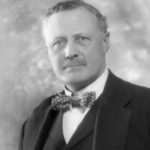
  • Geoffrey Mander – 1932 Speech on Industrial Councils

    Geoffrey Mander – 1932 Speech on Industrial Councils

    The speech made by Geoffrey Mander, the then Liberal MP for Wolverhampton East, in the House of Commons on 23 March 1932.

    I beg to move, That leave be given to bring in a Bill to encourage the formation of industrial councils and to legalise voluntary agreements when so desired. Already this Session I have introduced two Measures on industrial subjects, and I fully realise that they are controversial, but the one I am bringing forward to-day comes, I think, under the heading of non-controversial, because it has the support of Members belonging to every party in the House. A Bill of the same nature was introduced in 1924, when the Second Reading was carried, on a Friday, by an overwhelming majority. On that occasion the whole of the Conservative party voted for it, the whole of the Liberal party and nearly the whole of the Labour party. That shows the volume of support which the Measure can command in this House. There are in the country at the present time about 37 joint industrial councils, and, including other bodies of a similar nature, there are about 47. They have been doing a great deal of excellent work of a voluntary kind, where the two sides of industry are equally represented—employers and employed—through their respective organisations. In spite of their good work they have been hampered by the fact that the decisions arrived at are purely voluntary and have no legal force, and in fact need not he carried out if anyone does not choose to recognise them. Unfortunately, there have been a certain number of cases where the few employers have defied the decision of the whole trade, have undercut wages, and produced a most unsatisfactory position. Such a state of things is very bad, not only for the good employer, but for the workers.

    This Bill attempts, in a very moderate and limited way, to prevent occurrences of that kind. It provides for the formation, on a voluntary basis, of joint industrial councils with equal representation of the two sides. The Measure suggests the discussion of a number of industrial questions described in the Schedule, and the most important Clause authorises the Minister in proper cases to make statutory the decisions arrived at by the joint industrial council. First of all, there is to be an agreement of the two sides and an application to the Minister. If the Minister issues an Order, it can be annulled by a Resolution of this House or the other House. The limited powers under the Bill are amply safeguarded, and nothing of a dangerous nature is ever likely to be put forward. I think it is very relevant to point out that powers of this kind are jointly asked for by many industrial councils themselves. Let me give the example from my constituency of the lock, latch and key industries where the joint industrial council, with the unanimous approval of both sides, asked for powers of this kind. This Measure is purely permissive, and it need not be made use of unless it is desired. You must have agreement on both sides, you must have the consent of the Minister, and the agreement must have the consent of both Houses of Parliament. I hope hon. Members will feel, when this Bill has been printed, and when they have studied it, that it is non-controversial, and we are simply doing something to help those who are trying to help themselves in industry along the lines of conciliation and peace.

    Question put, and agreed to.

    Bill ordered to be brought in by Mr. Mander, Sir Percy Harris, Mr. Granville, Mr. David Grenfell, Mr. Lovat-Fraser, Mr. Macmillan, and Sir Cooper Rawson.

  • William Davison – 1932 Speech on the Creation of a National Lottery

    William Davison – 1932 Speech on the Creation of a National Lottery

    The speech made by William Davison, the Conservative MP for Kensington South, in the House of Commons on 22 March 1932.

    I beg to move, That leave be given to bring in a Bill to authorise the raising of money by means of lotteries for charitable, scientific, and artistic purposes, or any public improvement or other public object. I hope that the House will allow the Bill to be printed so that hon. Members may see its provisions in black and white. When I introduced a similar Bill last year, I confined its scope to the provision of funds for hospitals on the same lines as the Irish Free State lottery. In view, however, of representations that were made to me, I have drawn the present Bill on somewhat wider and simpler lines, though British hospitals will still be within its scope and can take advantage of it should they desire to do so. It is interesting to note that of the 180 Members who voted against the Bill which I introduced last year, 130 have since lost their seats. I would not say that they lost their seats solely because they voted against the Bill, but I do say that they represent a type of mind which is not acceptable to the majority of their fellow citizens.

    This is a very short Bill. Clause 1 provides that, nothwithstanding anything to the contrary in any Act of Parliament or any rule of law, it shall be lawful for the governing body or trustees of any charity or any trustees or other body of persons appointed solely or mainly for the purpose of raising money for philanthropic, scientific or artistic purposes, or for the initiation and assistance in carrying out any public improvement or other public objects, to hold, with the approval of the Secretary of State and subject to the provisions contained in this Bill, a lottery in order to raise money for such charity, purpose or object. Clause 2 provides that no lottery shall be held under this Bill except in pursuance of a scheme sanctioned by the Secretary of State, and for the charity or object named in such scheme and subject to the terms and conditions of the scheme. Clause 3 sets up certain conditions and regulations but does not preclude the Secretary of State from making others if he thinks fit. The Bill will not apply to Northern Ireland. Such are, shortly, the provisions of the Bill as drafted, but if it is thought that the scope of the Bill is too wide, or that it should be confined to hospitals, as the last Bill was, or that the number of lotteries in any one year should be fixed, that can easily be arranged in the Committee stage.

    As the House is aware, there is nothing inherently vicious or demoralising in the holding of a lottery. Such lotteries were held in this country over a period of many years. Queen Elizabeth was the first patron of State lotteries—of a great lottery which was held in this country for the repair of the havens of the realm and other public works. Members of the House often see the statue, close by here, of George Washington. He was a strong supporter of lotteries under public control, and in 1769 he helped to pass a law against ate holding of a lottery without special authority, as my Bill now proposes to do. The penal legislation under which the Home Office now acts was passed so long ago as 1834—nearly 100 years ago. It is under that law that they now search travellers arriving at Holyhead, open private letters, even the letters from a solicitor to his client, as was pointed out in the House a few days ago by an hon. Member. That legislation was not passed with any idea of stopping a vicious or immoral practice, but in order to protect the State lotteries from unfair competition by private lotteries and lotteries organised abroad.

    May I remind the House that at the present time we have the totalisator as a national institution, formally approved by Parliament? We have the telegraph and telephone services deriving a large part of their income from transmitting betting news. There is scarcely a church or chapel bazaar in the country which does not have its little raffle. Newspapers of all parties are continually promoting thinly disguised lotteries, and as Socialist Members opposite are aware, the “Daily Herald” has recently held a lottery on behalf of hospitals, offering to pay £20,000 for 6d. I have referred to the “Daily Herald” as representing Socialist opinion, but I would remind my Conservative friends that last year, at the annual meeting of the Women’s Organisation of the National Union of Conservative Associations in this country, a resolution was passed unanimously—without any opposition—condemning the present law respecting lotteries and sweepstakes, and urging that lotteries should be legalised under proper control, exactly as my Bill proposes.

    Mr. MACQUISTEN They are women. Marriage is a lottery.

    Sir W. DAVISON Hon. Members should also bear in mind that the British Museum was started by means of a lottery; and that old Westminster Bridge was erected out of the proceeds of a lottery. New bridges are still needed. As we know, there is urgent need for a new bridge at Charing Cross. Why should it not be possible now to erect a bridge across the river by means of a lottery? If a bridge were erected at Charing Cross it would save Waterloo Bridge as a national monument, and prevent its demolition, which we should all be glad for. The new Cunarder was started with Government approval and assistance, and there is no reason why, under proper conditions, we should not have funds provided by means of a lottery to enable this great ship to be proceeded with. In Germany, Spain, Czechoslovakia, Austria, Switzerland, Poland, Italy and elsewhere State lotteries are regularly held. In Madrid a great university building is being put up by means of a lottery. By the Irish sweepstake just concluded the Irish hospitals are the recipients of £841,000. From previous lotteries they have received more than £2,000,000. In all, they have received practically £3,000,000. How much sickness and suffering in this country might have been saved had that money been available to us? A recent visitor to Dublin saw the sweepstake revolving drum which brought £841,000 for the Irish hospitals. When he arrived back at Euston he saw another drum—a hospital student beating a drum in the streets, with a procession behind him collecting money for a great London hospital. Which of the two methods is the more dignified? A correspondent wrote to me yesterday stating: We are letting our brothers and sisters suffer through a lot of old Mother Hub-bards and pedants out of touch with the realities of every day life. A hospital appeal recently stated that a thousand surgical cases were waiting for beds owing to a lack of funds. The funds could be provided by a lottery under this Bill. Hon. Members should bear in mind that of the £3,000,000 raised for hospitals in Ireland more than £2,000,000 came from this country. Let me say at once that no one must imagine that if lotteries were established in this country they would maintain hospitals entirely. Of course they would not; but at any rate they would provide funds for urgently-needed equipment and urgently-needed beds. More than 7,000,000 tickets were sold in the Irish Sweepstake, and it is estimated that 5,000,000 tickets were purchased by citizens of Great Britain. At any rate, British citizens won 800 of the first 1,120 prizes, about 71 per cent. I ask the House why these millions of British citizens should be made into criminals by an absurd and out-of-date law, and why the time of the police should be occupied in chasing people who sell Irish sweepstake tickets rather than looking after the bag snatchers and those who smash shop windows? Why should our magistrates be reduced to every kind of pretext in order not to convict the people brought before them in connection with this lottery? The “Times” of last Tuesday contained 10 columns of the names of 1,100 criminals who had won prizes in the Irish sweepstake, and there were similar lists in other papers. In conclusion, may I quote a sentence from an article last week in the “Morning Post,” of whose Lobby correspondent we all took leave last night with much regret. The “Morning Post” is not a paper which is likely to recommend anything demoralising or vicious. The sentence is: The State finds itself unable to check what it condemns. To conclude that the public is depraved is to bring an indictment against a nation, which is absurd. The only other conclusion is that the law, which is so much in conflict with public opinion, is in need of amendment. It is with the object of altering the present absurd law that I ask leave to bring in my Bill.

    Mr. HOPKIN MORRIS I ask the House to reject this Motion, and I hope that hon. Members will not be unduly influenced by the illustration given by my hon. Friend of the 130 Members of the last House who lost their seats. He has talked of the anomalous state of the betting law. I fully agree with what he has said about that law; I agree that a far-reaching inquiry is necessary into the operation of these laws and their codification. It may be that the laws are in urgent necessity of modification and alteration, and there is a wide field for inquiry; but this Motion, if passed by the House, instead of providing for an inquiry, would prejudge that inquiry. During the War a proposal was put forward to set up lotteries, and, indeed, a Bill was introduced into the other House and into this House to legalise lotteries in order to provide money for the Red Cross Society. There could have been no more laudable object. That Bill was preceded by an inquiry. The majority of Members who conducted that inquiry started by being in favour of a lottery for that specific purpose, but by the time they had concluded their investigations they had come unanimously to the conclusion that they ought not to recommend the setting up of a lottery. They heard evidence from different classes of the community. They took evidence from my right hon. Friend the present Secretary of State for the Dominions, who told them that when he went to Derby to consult his constituents they asked him about the best investments they could make, and he was alarmed to think that in the future they would be asking him about the best lottery in which to take tickets. In spite of the fact that the Committee’s recommendation was against the adoption of the lottery system, Lord Lansdowne introduced a Bill in the House of Lords, but he said a very remarkable thing in justification for the introduction of the Bill. He said that he supported the Bill because War conditions were abnormal, but that if they were living in peace time, he should oppose it. That was his view. If there was a need for inquiry in those abnormal times, surely there is a need for inquiry now. I do not this afternoon raise the moral issue—not that I brush it aside by any means—but I am basing my case now upon the rights and the obligations of the State. The first obligation of the State in all circumstances is to preserve itself. There are numerous Acts of Parliament dealing with this subject. The Act of 1541, which put a stop to this practice, mentioned in its preamble that the young men in the country, instead of making themselves proficient in archery —the mode of defence of the realm at that time—were spending their time in betting and gambling. The preamble of the Act of 1698 stated that they had to put a stop to lotteries because, in the language of the preamble, it was detrimental to the “good trade, welfare and peace of His Majesty’s Kingdom.”

    That was the experience at that time. It was purely a practical reason which prompted the State to put an end to the practice. Act after Act was passed between 1541 and 1823 to stop private lotteries, but the Acts could not be effectively enforced because the State lottery was still lawful. In 1823, however, an Act was passed as a result of a Select Committee which reported—it is a very important finding—that The foundation of the lottery system is so radically vicious that your Committee feel convinced that under no system of regulations which can be devised will it be possible for Parliament to adopt it as an efficient source of revenue, and at the same time divest it of all the evils of which it has hitherto proved so baneful a source. That was the view of the Select Committee. I come to the safeguards. What safeguards are you going to put up? The one exception upon the Statute Book today is the Act of 1846 providing for lotteries to be set up for the Art Union, but even there these lotteries cannot be set up without first of all obtaining a Royal Charter. These are far greater safeguards than are proposed in my hon. Friend’s proposed Bill. Having obtained the Royal Charter they have still further regulations authorised by the Privy Council for safeguards, as far as safeguards can go. Notwithstanding that, you cannot restrict the area; you cannot enforce the law with regard to other lotteries once you have permitted it in one field. That has been the experience. It was the experience in 1823, when they had to abolish State lotteries because they could not enforce the law. [An HON. MEMBER: “It is very difficult now!”] It is very difficult in the case of the Irish Sweepstake. What will the difficulty be when you have lotteries in this country? That difficulty is illustrated by my hon. Friend’s Motion. Last year he asked leave to introduce a Measure merely setting up lotteries for hospitals. This afternoon, as a result of representations, he has asked to be allowed to widen the scope of the Bill. That is a situation where you will never be able to enforce the law. Parliament, I have no doubt, took action in 1823 largely because sweepstakes by then had been set up even for the sale of land. Can anything be conceived that can go further to undermine the social structure than legal sweepstakes?

    Now it is said, “Look at the object!” It is to support charitable institutions and hospitals. I agree at once, and every Member here will agree, that the object is a worthy one, but are you going to support this worthy object by questionable means? I am not going to give my own opinion in support of that. I will take the opinion of the hospitals themselves. In London and the provinces last year the sum raised for voluntary hospitals by bequests, subscriptions, savings associations and paying patients was between £13,000,000 and £14,000,000. That was last year—a year of acute depression in the country. Of that sum, between 50 and 60 per cent. came from voluntary contributions. What is the amount of sweepstakes which would be required to assure an income equivalent to that amount?

    Sir W. DAVISON That is not suggested.

    Mr. MORRIS Take the figures of a very competent hospital accountant. He says it will require three sweepstakes a year each yielding £10,000,000—in all £30,000,000 a year. If you take the figures of the Irish Sweepstake and assume—it is a great assumption—that there would be treble the number of subscribers to an English sweepstake that there are now to the Irish Sweepstake, it is computed that that would yield £15,000,000, leaving a deficiency of £15,000,000 in the sum necessary to be raised. I am not giving my own figures, but the figures of the hospitals themselves. I go further. I have here the testimony of the Chairman of the Royal City of Dublin Hospital itself. He said: that annual subscribers are withdrawing their gifts, on the ground that they are no longer needed. That paying patients—generally working class men and women—are objecting to pay anything for their treatment and ‘keep,’ and that considerable loss has ensued. That business firms whose employés used to pay a penny or twopence a week to the hospital, now refuse to pay anything. Loss from this source is 50 per cent. of income. That people are not leaving money by wills and bequests. That reduction has already taken place, and there is no comparison between the position of the hospitals in this country and those in Ireland. The Irish Sweepstake is a success from the Irish point of view, because Ireland is a small country, and they are drawing English money, but if the hospitals of this country rely upon the same position, the amount of Irish money which they will draw will be negligible. That is why the house-governor of Charing Cross Hospital, Mr. Philip Inman, stated last May: Speaking for myself and this hospital, we will have neither part nor lot in any such schemes. And our reasons are not simply moral ones, though they weigh very considerably. Looking from simply a business standpoint, we believe that the gains would be outweighed by the losses. What does that great expert Sir Arthur Stanley say? This is the testimony of hospitals, the very institutions it is intended to support. This is a case for not prejudicing the issue, for not coming down on one side or the other. It is clearly a case where there should be an inquiry first. This is a great new departure in policy. It is true that man very often over-rates two things—his own capabilities and his own good luck. As my hon. Friend the Secretary for Mines said last year in a very powerful speech, you cannot put these charitable institutions, depending as they do upon the moral good will of men, upon a basis of chance, and you certainly dare not do so without a proper inquiry first. On those grounds, I ask the House to reject the Motion.

    Question put, That leave be given to bring in a Bill to authorise the raising of money by means of lotteries for charitable, scientific, and artistic purposes, or any public improvement or other public object.

    The House divided: Ayes, 176; Noes, 123.

  • Oliver Locker-Lampson – 1932 Speech on Goods Made by Forced Labour

    Oliver Locker-Lampson – 1932 Speech on Goods Made by Forced Labour

    The speech made by Oliver Locker-Lampson, the then Conservative MP for Birmingham Handsworth, in the House of Commons on 15 March 1932.

    I beg to move,

    “That leave be given to bring in a Bill to prohibit the importation of goods made by foreign forced labour.”

    It is the fate of hon. Members who have been for some time in this House to find how difficult it is to catch those two most elusive elements—the eye of the Speaker and the ear of the House. I have suffered as a victim in this pursuit for many years, and I therefore welcome the opportunity of the Ten Minutes Rule under which a Member may ask leave to bring in a Private Bill and speak for a matter of 10 minutes only after Question time. The Bill which I wish to ask leave to bring in is to prohibit the importation of goods made by foreign forced labour.

    I do not wish to approach the issue in a controversial spirit. It seems to be a question, not merely of politics nor of state craft, but of ethics, as well as of economics, and also a question of honour as well as of trade. I should like to bring in the Bill and see it carried and voted for by every Member of the House. Briefly the position is that at the moment goods are being imported from Russia at debauched prices for four major reasons. First of all, the Russian State itself is the trader unlike any other State in the world, secondly, the Russian State has expropriated property in Russia and is therefore free of any capital commitments, thirdly, the laws against sweating in Russia are very indifferent and lastly the Russian State is allowed to use political prisoners in order to make its goods and to carry them. Therefore you have four exclusive causes operating for cheapness in goods coming from Russia which do not operate in any way in England or in any country under the Union Jack. I may be told at the outset that I am not correct when I say that goods are made by forced labour in Russia. On the last occasion upon which this issue was discussed in this House Mr. Taylor, who was then a Member of the House, got up and categorically denied that fact. I am not required to-day to prove it, for in an admirable book since produced by the Noble Lady the Member for Perth and Kinross (Duchess of Atholl), on page 173, will be found Mr. Stalin’s own speech at the Economic Conference, delivered in June of last year, in which he says that:

    “He could offer very little hope of relief for the worker, and admits that the peasant can no longer be recruited voluntarily for industry.”

    Therefore, I am not required to prove my case in that respect. I would, however, point out that none of the causes referred to operate in England. We have not in this country expropriated property. [Interruption.] The hon. Member must wait until he has a chance of doing so. We have not any form of convict labour except in our prisons, and we look upon convict labour so badly there, that we do not allow the goods made by convicts in our prisons to come into competition with goods made outside. Lastly, we have in this country laws against sweating. It may be that our laws against sweating are insufficient and that a lot may have to be done in that respect. I would say to the hon. Member who laughed when I mentioned sweating, that he and those who sit with him on the Labour benches are the chief champions, according to themselves, of anti-sweating laws, and are always telling us that trade unions will have nothing to do with sweating. Moreover, they are always claiming for themselves the privilege of caring most for the worker and desiring to make conditions better than they are. I would ask them, therefore, to remember those professions and put them into operation to-day by voting against the sweating of Russian labourers.

    Why are the Government treating Russia better than England? Why should British traders be penalised in order to allow in goods which are not only stolen but sweated out of the life’s blood of poor prisoners and convicts? Our fight for freedom is a great and traditional one. We entered the Great War mainly to win what we all believed was a fight for liberty. For generations we have fought slavery. It was voices in this House of Commons that sounded the death knell of slavery years before the United States of America put a stop to it. It was our citizens, 300,000 of them, over 100 years ago, who went without sugar three years rather than buy sugar grown under slave conditions in the West Indies. Who were those people who refused to buy sugar grown under slave conditions? We would call them Socialists to-day.

    I would invite the Socialists to remember that fact, and I would ask every Socialist whether he can accommodate his conscience to not voting for this Bill. It is an odd fact that there is, so far as I know, no Socialist voice raised at any time against the introduction of these tainted goods into this country, and yet the Labour party is loudest in its professions of great international ideals. Moreover, Socialists are always preaching the solidarity of the workers of the world. I would like them to remember that fact to-day and to ask themselves whether they like Russian peasants to go starving in order that Englishmen may be full. I would like them to look into their own hearts and see whether or not they can go on perpetuating conditions which are a traffic in human flesh and blood.

    I shall be expected before I sit down to offer a remedy. I may be told that it is impossible for our Government to place an embargo upon these Russian goods. I am aware that it is very difficult for the present Government to withdraw recognition from Russia, but there are two ways in which His Majesty’s Government could act. They are faced with a Government, the Soviet Government, which preaches the brotherhood of man with bombs, bullets and imprisonments. I would suggest two courses. I would invite His Majesty’s Government to ask the League of Nations to take action in Russia. I ask them to invite the League of Nations, which likes to interfere in the affairs of other countries, to interfere in Russia. They interfered in the case of Liberia, where there is slavery. Liberia is a member of the League of Nations, it is true, whereas Russia is not, but I would point out that America, which the League of Nations first approached, is not a member of the League of Nations. If the League of Nations could take action in respect of a small country like Liberia, why should they not take action in respect of Russia? Why should they not send a commission to investigate on the spot? If there is nothing wrong in labour conditions in Russia, why should the Soviet Government object to a commission of investigation? Lastly, I would suggest that the House should carry this Bill and refuse any longer to sell our birthright as freemen for a mess of Bolshevist pottage.

  • Thomas Moore – 1932 Speech on the Slaughter of Animals

    Thomas Moore – 1932 Speech on the Slaughter of Animals

    The speech made by Thomas Moore, the then Scottish Unionist MP for Ayr, in the House of Commons on 1 March 1932.

    I beg to move,

    “That leave be given to bring in a Bill to provide for the humane and scientific slaughter of animals; and for purposes connected therewith.”
    The title of the Bill which I am asking the leave of the House to introduce today is not unfamiliar to me or to many of my older colleagues—[HON. MEMBERS: “Agreed!”] I am sorry that I cannot accept the suggestion of hon. Members, although it is very kind of them. There are one or two important announcements in connection with the Bill which I wish to make, and which, I hope, will facilitate its further passage upstairs to Committee. I apologise for taking up the time of the House under the Ten Minutes Rule, but there are one or two points which have guided me in making this selection. It is not with any view to getting publicity for the Bill or for myself. The Bill does not need publicity. It has received it all over the country. There are three points. The first is that there are over 200 new Members in the House of Commons who know little or nothing, possibly, of the slaughter of animals. The second is, that there will be no opportunity for a Second Reading Debate, and therefore I wish to put before Members the reasons why I should like, not only to get the First Reading of the Bill, but an undertaking that I shall get the Second Reading at a later date without discussion, so that the Bill can go upstairs to Committee, where we shall be able to thrash out any minor points which may arise. I will not even take up my full 10 minutes, so hon. Members need not get upset.

    I introduced a. Bill about four years ago, but on account of the fact that we had some doubts as to whether England was a sufficiently progressive country to try out the experiment, we limited its application to Scotland. The Bill in due course passed into law, and it has been working for three years to the satisfaction of those who kill, and to the even greater satisfaction of those who eat. In view of that success, I introduced the Bill last year. It received its Second Reading, after a full and exhaustive Debate lasting an entire day, without a Division. It went upstairs and got halfway through Committee when the unfortunate national crisis arose, so that the animals as well as the rest of us had to suffer from the crisis. After that all our efforts were brought to nought, and so to-day I am presenting the Bill again. I hope that after all the knowledge and experience gained upstairs in Committee and discussions with Members of the House of Commons, I shall have no difficulty in inducing my hon. Friends to give me what I want.

    For the benefit of new Members, I will briefly explain what we desire to do. We want to ensure that all animals killed for human food are slaughtered by a mechanical instrument and also that all animals killed in knackers’ yards are slaughtered by the same mechanical instrument instead of by the present barbarous and inhumane method known as the pole-axe. At the present time 500 local authorities out of 1,500 have voluntarily adopted the Ministry of Health model by-law making the mechanical killer compulsory. Thousands of practical butchers have voluntarily adopted the same method. The Bill is supported by leading scientists, many of whose names I mentioned last year, including such eminent men as Lord Moynihan and Sir Bernard Spilsbury, by the veterinary profession headed by that distinguished official Professor Hobday, by all the women’s organisations, and by all humane and progressive butchers. I have in my office to-day some thousands of signatures to a petition launched by the Council of Societies for Animals which expresses the desire of the world and his wife to have this system adopted and to have the recalcitrant local authorities and butchers brought into line with those who are more progressive. The Bill is promoted by that great society, the Royal Society for the Prevention of Cruelty to Animals, and that fact should be a sufficient guarantee that it is good in its intentions.

    When the Bill was promoted last year every newspaper in the country, headed by the “Times,” had leading articles advocating that this long overdue reform should take place. Not only were hon. Members affected by their assurances, but they were also affected in their pockets by the Bill of last year. Last year a very considerable tax was put upon hon. Members, because their mail bags were very heavy. Therefore, in these days of national economy it would be well, even on that ground, that the Bill should be passed without delay. The Bill is a national one. It cuts across no party interests. There are no party issues involved. No Members of the Cabinet need fear a twinge of conscience about supporting the Bill. No one need fear being suspected of the paternity of the child. One of the most important reasons for my speech and one which my agricultural friends will welcome as a concession, relates to pigs. Pigs were included in the last Bill, and during the Second Reading and Committee Debates attacks were made upon that provision. Therefore, I have decided, in order to facilitate the passage of the Bill, to withdraw pigs from its scope. I do that because many of my hon. Friends fear that the agricultural industry or the pig-breeding industry might be hurt. I also do it because we are making experiments with a system of electric stupefaction which may revolutionise the whole of the pig-killing process.

    I desire to introduce the Bill line by line similar to the Scottish Act, which has been working successfully for three years. Last year it was stated that there are 16,000,000 animals involved in this question of slaughter annually. Owing to the attitude of the local authorities and butchers who have adopted humane methods of slaughter 4,000,000 animals have been relieved from suffering under the old system, but there are 12,000,000 animals which are still affected annually. By our action in this House we can show that we are determined finally to remove that stigma from our national conscience. The present Minister of Agriculture was Secretary of State for Scotland when the Scottish Bill was introduced. He gave us wonderful support then, and he can back up everything that I have said. I believe the present Secretary of State for Scotland would be prepared to do the same thing, because he has seen the Act working in Scotland and knows of its success. I believe the present Minister of Health would be delighted also to speak in favour of the Bill, knowing how well his model by-laws have worked. I leave the matter in the hands of my hon. colleagues, who will see that justice is done to suffering animals.

    Question put, and agreed to.

    Bill ordered to be brought in by Lieut.-Colonel Moore, Mr. Buchan, Countess of Iveagh, Mr. Lansbury, Mr. Macpherson, Sir Rennell Rodd, Miss Lloyd George, Sir Hugh O’Neill, Sir Stafford Cripps, Sir Ernest Graham-Little, Sir William Davison, and Sir Robert Gower.

  • Geoffrey Mander – 1932 Speech on the Disarmament Conference

    Geoffrey Mander – 1932 Speech on the Disarmament Conference

    The speech made by Geoffrey Mander, the then Liberal MP for Wolverhampton East, in the House of Commons on 17 February 1932.

    I desire to call attention to a matter of which I have given notice to my right hon. Friend the Secretary of State for Foreign Affairs, one in which a great amount of interest is taken in this country, and not in this country alone. I raise it in no spirit of hostility, but in order to give the Government an opportunity of making clear to the public exactly what the position is. The question concerns the appointment of Lord Cecil as a member of the British delegation to the Disarmament Conference. It has come as a great surprise and a shock to many people in this country to discover that he has not found it possible to accept the invitation extended to him.

    I venture to say that on this matter Lord Cecil occupies an almost unique position in the country. In very wide circles, in all three parties, Conservative, Liberal and Labour, he is regarded as the leader of the peace and disarmament movement in the country. More than that, for years past he has represented successive Governments on the Preparatory Commission of the Disarmament Conference. He has worked right through the technique and the details for a number of years past, and from that point of view is as well fitted as any living individual to be there to assist, to advise and to conduct negotiations. He knows the whole technique, he knows the personalities of the different individuals with whom one comes into contact there, and he knows exactly how far one could go in this, that, or the other direction. It is difficult enough to hope for the success of a Disarmament Conference when one finds the machinery of the League of Nations functions rather feebly in the case of open aggression, when there may be a tendency arising in the world once more to regard treaties as only scraps of paper. In those circumstances, I am sure it would be the desire of everybody in the House and the country to see the British delegation as strong as it is possible to make it.

    What are the facts so far as they are known to the public? We know that Lord Cecil has been invited to be a member of the Delegation, and that he has not been able to accept, and the reason given by the Lord President of the Council in this House the other day, as I understood it, was that Lord Cecil felt that he would be of more assistance outside the Conference. If a person is not in accord with the policy of a certain group, he naturally would not feel very useful inside that group. It rather makes one wonder and ask questions to get information as to what exactly is going on inside. It is clear from the statements made at the Geneva Disarmament Conference, both by the right hon. Gentleman the Foreign Secretary and by Lord Cecil, that there is a certain divergence of view. The statement of the Foreign Secretary, if he will permit me to say so, seemed to me to be in a great many respects a most admirable statement. All I would say about it is that I hope that it does not represent the last word on what the Government might be prepared to do, after negotiation with other Powers. Lord Cecil in his statement did go a good deal further. I do not know that in the long run there would necessarily be any complete divergence of view. I hope not. I hope that in due course it may be possible—and I trust that the Foreign Secretary will be able to make some indication of this kind tonight—that, although Lord Cecil is not able at the moment to join the Delegation, he is not without hope that at some later stage of the proceedings he may be brought in to the great satisfaction of all people in this country who are keen on this movement and on the promotion of the interests of the Conference.

    There is only one other word I would say, that is that if it became known—and there is a chance of this in the minds of people in this country—that Lord Cecil was unable to serve the country in this capacity because he was out of sympathy or in disagreement with the policy of the Government, I feel, in all seriousness, that it would do as much as anything to damage the prestige of this Government as a truly national Government.

  • John McGovern – 1932 Speech on Rent Controls for Shops and Homes

    John McGovern – 1932 Speech on Rent Controls for Shops and Homes

    The speech made by John McGovern, the then Labour MP for Glasgow Shettleston, in the House of Commons on 10 February 1932.

    I beg to move,

    “That leave be given to bring in a Bill to provide for the reduction and control of rents of houses and shops.”

    A similar Bill to this was introduced by my former colleague, Mr. Campbell Stephen, the late Member for Camlachie, on the 2nd December, 1930, and later received a Second Reading in this House, and I am asking the House again to endorse a Bill of that description. I may say at the outset that I am rather disappointed that the Government have not seen fit to bring in such a Bill themselves, seeing that they profess to believe in sacrifices being made equally by all sections of the population. I can assure the Government that, if they bring in a Bill embodying the principles of the Bill that I am proposing, I will not ask the House to proceed further with my Bill.

    In asking that there should be control of these houses and a reduction of rents, the reduction I have in mind is a reduction to what was in operation previous to the Act of 1920, which gave power to make certain increases. The powers of the Act of 1920 were given because of the fact that an increase had taken place in the cost of building materials and labour, and also in the cost of the materials and labour involved in the repair of these properties, but the reason for that has practically disappeared. I have before me a chart from the National Federation of Building Trades Employers, in which they show that the pre-War costs of house-building were almost similar to those of to-day. A very considerable drop has taken place, and I suggest that that is a reason why these reductions and control should take place.

    There are probably hundreds of thousands of houses in this country which have been decontrolled, and people are compelled to pay the high prices charged by the house-owners. I think that these houses ought again to be brought under control, because of the fact that we have, in tenements and houses next door to one another, such disparities in charges as 20s. per month for a controlled house and 30s. per month for a decontrolled single-apartment house. I suggest that, as the reason for these increases has passed away, sacrifices ought now to be made by the landlords of this country. During this period wages have fallen to the ex-extent of almost £900,000,000 per year, every section has been asked to make its sacrifice, and we find the same rates prevailing in 1932 as were operating in 1920. I would remind the House that millions of people are being asked to bear burdens which have become almost intolerable and unbearable. With the reductions in unemployment benefit and in wages and salaries, and the application of the means test, it is not justifiable to expect that these people should pay the same rates as were paid in 1920.

    I also ask that small shops in working-class areas should be brought under control, and that some reduction should take place in regard to them, because many of these shopkeepers, with the reduced purchasing power of the people in their areas, are also quite unable to bear this burden, and we find them day after day being summoned to the Courts because they are unable to pay their way. On the other hand, hundreds of thousands of people in this country are being summoned to the Courts, and many are being evicted, because they cannot pay the rents that are being demanded. I ask the House again to endorse this proposal of control and reduction, in the interests of equal sacrifice by all classes.

    May I remind the House, in regard to cuts, that the much despised German Government brought in in the Reichstag two cuts in the rents of working-class houses? When they asked for reductions in wages and in unemployment benefit, they jointly applied a reduction in working-class rents. Surely we are not entitled to expect at this time of day that an unemployed man with a, wife and one child who is in receipt of 21s. 3d. should be compelled to pay to a landlord in some cases eleven shillings to twelve shillings out of that miserable pittance. The House would be doing well and would be passing one of the most important Measures that have been undertaken if it gave a First Reading to this Bill and gave it a quick passage through its further stages to ease the burden of millions of human beings who, I am sure, would endorse the action of Members as being one of a very humane character.