Tag: 1922

  • Augustine Hailwood – 1922 Speech on Internal Currency

    Augustine Hailwood – 1922 Speech on Internal Currency

    The speech made by Augustine Hailwood, the then Unionist Party MP for Manchester Ardwick, in the House of Commons on 24 May 1922.

    I beg to move,

    “That, in the opinion of this House, strikes, lock-outs, unemployment, distress, speculations, profiteering, bankruptcies, and stagnation of trade are caused by the fluctuating purchasing power of the Internal Currency being based on an article of no value like gold; that these evils, and their consequent cost to the State, can be almost eliminated by basing the Internal Currency on a commodity of constant, real and stable value like wheat, such Internal Currency to have a day-to-day exchange rate with our present External Currency based on gold for the purpose of foreign trade; and that the Government be asked to take steps to inquire into the best means of establishing such a currency at an early date.”

    I do so with a feeling that I am asking the House to agree to a very big revolution in our monetary system, a revolution which will have far-reaching consequences in many aspects of political and social life. Yet I am convinced that this revolution will be brought about so gradually and in such a way that hardly anyone will notice that anything has happened. I am constrained to feel confident that the general body of the people would be only too glad to accept it. I wish to stabilise the currency of this country. I direct the attention of hon. Members particularly to the internal currency, as distinct from the external currency, which may be used for export and import trade. I believe that there are great benefits to be derived from stabilising our internal currency. I believe that nearly the whole of our industrial trouble arises from the fluctuating purchasing power of our internal currency, and that if we can stabilise that currency a lot of our trouble would vanish. It is within the memory of all of us how a rapid rise of prices, during or after the War, was the cause of innumerable strikes, when men were striving to keep their wages level with the ever increasing cost of living. We have only to look around to-day to see the appalling spectacle of 1½ million or 1¾ million or two millions of unemployed. I attribute the whole of this trouble to the fluctuating purchasing power of our internal currency.

    This is a question which I find most people are somewhat frightened to discuss. It is looked upon as though it were a question of high finance, which must not be thought about for a moment except by those whose business it is to deal in high finance—as though it was something altogether outside the realm of ordinary individuals. I intend to speak in simple and direct language on this question, because it is the only language I know. I hope to show that this is a, question in which all of us ought to be deeply interested. From time to time we spend millions of money on various schemes to relieve unemployment, and we try all kinds of panaceas for settling wage disputes, when the essence of the whole thing is that the value of money has altered, and all the machinery is set in motion in order to bring about a levelling up of the purchasing power of the workmen’s weekly wage.

    I want to base our internal currency on wheat. I move this Resolution because I believe that wheat is of constant and stable value as distinct from any other article. It is the most valuable of all articles that have a price. It is by the providence of Almighty God that He has always made the most valuable article the cheapest. The most valuable thing we know is fresh air. A man could live for about seven minutes if be were deprived entirely of air. The next thing is water. A man might live for seven days without water. But he could not live without food for more than seven weeks. Bread forms the most important article of the lot. It is described as the staff of life, but it is something more. It has a stable and definite value, in so much that in a country like this there is a definite quantity consumed, no matter bow prosperous or how poor the people may be. If we refer to other articles, whether clothing, or hats, or jewellery, we find that the quantity consumed or purchased varies to a great extent with the affluence of the people who make the purchases. No such condition ever enters into the brain of those people who purchase bread. They purchase a definite amount to satisfy their requirements, and whether they be in work or out of work, whether they be enjoying high wages or low wages, practically the same amount of bread is consumed. Therefore ‘bread has a definite value to the community with which no other article can compare.

    I want to show how definite is the relationship between bread and wages. Let us go back to the period before the War, when wages were in the neighbourhood of 30s. a week. In this country bread was then about 5d. for the 4-lb. loaf. If we take the period when wages reached their highest point, somewhere in the neighbourhood of £4 10s., we find that the price of bread was 1s. 3d. Bread trebled in price along with wages. To-day we can state roughly that wages are in the neighbourhood of £3, and the price of bread is 10d. If you divide 30s. by 5d., or £4 10s. by 1s. 3d., or £3 by 10d., you find that in each case you get 72 as the resultant figure. That is to say, it takes 72 4-lb. loaves to furnish an average week’s wage for the community. In other words the real wage of the community remains fairly constant. Yet we have to go through all these interminable strikes and lock-outs and unemployment in order to adjust wages to this level, simply because the purchasing power of the currency has been fluctuating in the meantime. All of us are familiar with the Board of Trade index figure of the cost of living and we know the efforts that are made to put wages on a parity with the index figure. The hon. Member for the Stretford Division of Lancashire (Sir T. Robinson) was the first to introduce a sliding scale and to apply it to the workpeople under the Bradford dyers. That example was rapidly followed in branches of the cotton trade—bleaching, dying and finishing. In fact, most branches of the cotton trade have their wages regulated on the index figure of the cost of living. We all remember the railway strike in connection with which a settlement was reached on the basis, that the wages should be regulated by the Board of Trade index figure of the cost of living. I might mention many other trades which have established this custom of arriving at settlements with their workpeople.

    The Board of Trade figure forms a very good index as to how wages should be regulated. I do not wish it to be inferred from anything I say that I wish either to press down wages or to raise wages. I am trying to look at the matter from an economic point of view, and these are considerations with which we must grapple. The difficulty in connection with the Board of Trade index figure is that it is several months behind the wheat market, and it is this period of several months which causes all the trouble in the matter of unemployment. I believe we have very little control over wages. We may have our well-organised trade unions, we may have our trade boards, we may have our Ministry of Labour, but all these have very little effect on the course of wages. Wages keep constant from one week to another, except that between one generation and another, as inventions are brought out, we find differences. We have coal, then steam engines, electricity, gas, up-to-date machinery, the better equipment of factories, better organisation, and so on, and all these things tend to the betterment of the conditions of the people, as between one generation and another. No one will contend for a single moment that people in the time of our fathers or grandfathers were as comfortable, or worked under such conditions, or enjoyed such wages as they do to-day. But no one would be stupid enough to contend that when wages rose from their pre-War level, in the neighbourhood of 30s. to their highest point which was £4 10s., that the working people were therefore three times better off. No one would be stupid enough today to say that the working people of this country, though their wages are twice what they were in pre-War times, are twice as well off. The real wage has remained constant throughout the whole period.

    We cannot spur ourselves to the effort of bringing about brighter days better than by dwelling for a few moments on the miserable conditions of the past and present. I do not believe, as some people do, that we should fold our arms and say all this is due to the War, and in time everything will become right. There must be a cause for all this trouble in our land, and it behoves us to turn our attention to finding out that cause. It is quite a common thing among certain sections of the community to curse our present industrial system and to plead for a Socialistic era when Capitalism will be abolished. Although I am no Socialist, yet, if one stops to think, one must feel that there is a great deal in our present system of which we should feel ashamed. I believe our present system is right, generally speaking, but that in certain respects there is something radically wrong which should be adjusted in order that the difficulties under which we are groaning may be put right. Nor is it sufficient to say that it is because we have come through a war that we have all these troubles. I remember processions of unemployed long before the War. We had our periods of trade depression long before the War; in fact, when the Employment Exchanges were established, about 1910, we had a big percentage of unemployed, and the establishment of the Exchanges was one of the steps towards eradicating that evil. If this evil existed before the War, and if the Employment Exchanges and other attempted remedies have failed, I think it is time we set about getting at the root cause and endeavouring to eliminate it.

    It is often said that the rise in wages caused the increase in the price of food. I wish to refute that entirely. The cost of food commenced to advance before any -movement in wages took place. Immediately after the murder at Sarajevo, several weeks before the War, the flour market began to rise, and it continued to rise, and eventually other things followed suit, and it was some time after before there was any movement to increase wages. In fact, employers of labour in the early days of the War, took rather the opposite course by dismissing numbers of their staffs and reducing expenses, thinking there would be no trade. We are all familiar with the ever-recurring strikes we witnessed in the course of the War in order that the people of the, country might wring from their employers something like an approximate wage compared with the ever-increasing cost of food. Like the swing of the pendulum, it is quite possible that the movement in this direction went too far. However, we know that at first the employers resisted these demands and strikes took place, but after a time the employers became so compliant that they granted demands for increased wages almost without any question, until the cost of production reached such heights that there was no market to purchase the goods. During all this period we had no such thing as -unemployment. The index figure of the cost of living was steadily rising. The wheat market was steadily rising. There was no unemployment, but we had strikes by means of which people endeavoured to keep wages up to the level of the cost of living.

    I should like to point out another aspect of this question, namely, the terrible amount of valuable time wasted during the War in negotiating on, and trying to fix up, these wage disputes. People had to travel to London to attend Industrial Courts, and Conciliation Boards called together by the Ministry of Labour and the Board of Trade, and that must have entailed enormous expense both to the employers and to the employees. All this waste of time and money should be eliminated. The cost of wheat rose from 6s. 10d. a cental of 100 lbs. in 1914 to 16s. 3d. in June, 1917. After that, the Government stepped in and controlled the wheat and flour prices. It is very difficult to trace the progress of the wheat market until we come to June, 1921, when control may be regarded as having ceased. We do know that flour rose to the price of 86s. per sack, or something like 3¼ times its pre-War price. The index cost of living at the Armistice in November, 1918, was 120, but eventually it rose to 170 in October, 1920, and to 191, the highest point, in November, 1920. I want to impress this date particularly on the memory of hon. Members in this House—November, 1920—because it was the highest point in our cost of living, but it is memorable for something else. We passed an Unemployment Insurance Act in November, 1920, and we put 11,000,000 of people under the Act, as against something like 4,250,000 previously. We did this because it was foreshadowed that we were likely to have a very bad time in the industrial world, and that we were likely to have a very bad period of unemployment. Unemployment really commenced at that point. Just as the index cost of living had got to its highest figure, so unemployment on a big scale commenced from that particular date. The index cost of living fell from that time, and unemployment rose. In May, June, and July of 1920 the percentage of unemployed in this country was something like 2·6 or 2·7; in September it was 3·8; in November it was 3·7, but in December, immediately after the. Unemployment Act was passed, our unemployment rose to 5·8 per cent., and in January, 1921, it was 8·1 per cent. In February it was 9·5 per cent., in. March 11·3, and after that we entered on the period of the coal dispute, and I will leave out the figures for the intervening period and turn to September, when it had risen to 12·2 per cent., as compared with 11·3 in March. In October it was 12·8, in November 15·7, in December 16·2; in January, 1922, it was 16·2 again, and then it ceased to rise.

    Now let us turn to wheat for something like the same period. In June, 1921, the cental of wheat on the Liverpool market cost 17s. 1d.; in August it had dropped to 14s. 7d., in September to 13s. 8d., in October to 10s. 7d., and in November to 10s. 2d. November, 1921, was the lowest point we have yet touched with regard to wheat since the War. As I pointed out earlier in my remarks, the cost of living figure is several months after the wheat market, and I will explain that as I go along. It takes at least two months before a fall in the price of wheat is really reflected in the index cost of living, and, as hon. Members know, the index cost of living forms the basis of wages in a good many industries. The index cost of living may not be published until the middle of the month, and an alteration in wages does not take place until the following month; consequently, there is another month gone before the figures reflected in the index cost of living affect wages. Again, it takes one, two, three, or four months to manufacture goods or a certain piece of machinery, and it is all these months more before the lower price of wages can be incorporated into a manufactured article that we are trying to sell. November, 1921, is just as interesting as November, 1920, insomuch as we touched the lowest point in wheat at that period, and after that it commenced to rise. Now it has fallen again, but even to-day it is higher than it was in November, 1921, so that we can regard November, 1921, as the steadying up of the heavy slump in wheat prices, and we might say that it corresponds with the increase of unemployment, because since the turn of the year the figures of unemployment have commenced to fall while the wheat market is tending to rise, and if we could eliminate the discrepancy of these few months between the price of manufactured articles and the price of imported wheat by altering our currency, I believe we should have solved the whole of this trouble. The cost of living figures commenced to decline after November, 1920, their highest point having been 191, and they have steadily fallen, except during the coal dispute, to January of this year, when the figure was 92, and to May, when it was 81, so that we can regard the index cost of living as having steadied up a few months after the steadying up of the wheat price, but, as I say, it takes two months before an alteration in the cost of wheat is reflected in foodstuffs, and another month before the cost of living is reflected in reduced wages, and the sliding scale Board of Trade index figure three months after the fall in wages.

    When a merchant buys a cargo of wheat, he is buying nothing more nor less than a cargo of labour. Wheat comes from all the ends of the earth to such a port as Liverpool. We have wheat from Canada, from Australia, from Argentina, from Austria, from Hungary, and, in normal times, of course, from Russia, and we also have the home-produced wheat, so that really we get a test there of the price of labour from all parts of the earth in competition one with the other—the real test of what labour is worth at the moment—and it stands to sense that if a manufacturer or a shipper is trying to ship goods, and his costs are based on costs very much higher Which obtained for several months previously, he cannot sell his goods, and after all we import wheat into this country, we import foodstuffs, and we export manufactured goods, and the one eventually has to pay for the other. To my mind, it is because of this disparity between the two that we have this question of unemployment in our midst, and if we could so arrange that these two were always at a parity, I believe that trade would be far more regular and far steadier than it is to-day. We have various causes put forward as to why shippers cannot sell their goods, but I am quite convinced that the real reason is because to-day they are not of the right price, or, at any rate, they have not been in the months which have preceded. We are somewhat near the right price for selling. I was talking the other day to a merchant who told me he was nearly concluding very big transactions in the Eastern market, because his prices were very near the line of prices at which people could buy. I believe there is no such thing as the state of trade being in such a way that there is no market. I believe there is a market at all times at a price, and I believe that we ought to strive to have our goods constantly at the price at which we can export them.

    The slump in wheat was arrested last November at 10s. 2d., and the cost of wheat now is 12s. 6d. If we compare the present cost with the pre-War cost, we shall find that to-day it is 81·7 higher than it was before the War, and that the index figure of the cost of living is a little over 81, so that the increase to-day in the price of wheat almost exactly corresponds with the index figure of the cost of living, and we must bear in mind that, perhaps, rent and some other things have not risen with the cost of living. But with these considerations, we might say the one thing exactly balances the other to-day, so that wheat does really form a true index eventually of the cost of living, only, as I say, it is two or three months in advance of the Board of Trade figures, and that is where all the trouble lies.
    I may be criticised for wishing to alter the standard of our internal currency from gold to wheat, and no doubt a good many people do not know that gold has not always been the standard of our currency; in fact, I suppose that, prior to 1871, we were the only country in the world that had a gold standard, and it was not until after the Franco-German War, when the French peasants brought out the gold they had hoarded—and although the French Government did not pay it direct to Germany, but bought bills of exchange with the currency, and liquidated their debt to Germany—that Germany established her currency on a gold basis. Then France, and other nations in quick succession, followed, by establishing a gold basis. There is no doubt about it that when we were the only nation on the earth with a gold currency, we made very very rapid advance in our industrial life, and our trade boomed right up to 1871. It is very questionable, after gold became common in other countries, whether the advantages to be derived from the gold standard continued as they had done before, but I do not wish tonight to enter upon that question, because, after all, it really affects the external currency rather than the internal currency. The whole of my remarks have been directed to showing that it is the internal currency which is at fault, and I contend that we ought to arrange to have the internal currency based on wheat, and to leave the external currency based on gold as to-day, and to have a day-to-day rate of exchange between the two.

    To some people it may seem somewhat appalling that we should establish another exchange in this way; but, so far as the ordinary people of this country are concerned, the people who draw wages and the people who do trade within the country, they would not know anything had happened. The currency would remain just as it is, and the people who conduct an export or an import trade are the only people who would have to take into account this day-to-day exchange. I think it quite possible to establish, we will say, the Treasury notes on wheat, and to leave the Bank of England notes based on gold, and to have a day-to-day exchange between the two, according to the rise or fall in the price of wheat as compared with gold. In this way we should stabilise the internal currency, and there is no reason on earth why the Government cannot substitute one article as well as another as a backing for their Treasury notes. As a matter of fact, of course, there is not the full value of gold in the Bank of England or at the Treasury against these notes. Before the War we had something like 52½ per cent. of gold against the notes that were issued by the Bank of England, and we know the tremendous rush when war was in the air to abstract this gold from the Bank of England. We know that it fell something like 14 points in the course of a week, and in the next few days it fell still further. Then our stock of gold was rapidly melting, and if it had not been for the Government taking the drastic step of declaring a succession of bank holidays, and issuing a big number of postal orders until we provided currency notes, it is quite certain there would have been no gold left in the Bank of England.

    Fortunately for us, America in those days was a debtor country rather than a creditor country, or she would have abstracted the gold very quickly. Being a debtor, she was unable to do so. We successfully brought in currency notes, and no one ever doubted for a single moment the stability of those notes. No workman, when he is paid his wages in notes, has any doubt that a note is worth what it is stated to be worth on the face of the note. The only thing he knows is that all through the War he was able to buy less with those notes—that the purchasing power became smaller and smaller. But so far as confidence was concerned, no one for a single moment had any doubt about the stability of the Government, and of it being able to back up our Treasury notes. So that it is not a question of credit. It is not a question of confidence in the Government. It is question, after all, of what is behind the notes with regard to their real purchasing power. And it is just as easy if the Government at one time have gold behind the notes and at another time no gold, and nothing practically but credit. If they can do this, it is just as easy for them to put a definite article of value, like wheat behind the note and to say, “This note issued represents so many pounds of wheat.” Sup posing this change were made when wheat was in the neighbourhood of 10s. a cental, it would be possible to issue a Treasury note to say that this should always represent a cental of wheat, and then a rental of wheat could always be purchased by a Treasury note and 1s. could always buy 10 lbs. of wheat. Did we care to introduce the decimal system, such as is recommended by Mr. Harry Allcock, of the Decimal Association, and divide 1s. into 10 instead of 12 pennies, and incorporate the two at the same time by making a pound of wheat represent one penny, it would simplify a lot of calculations throughout the land, it would simplify the arithmetic in our schools, and another step forward would be taken. This is, of course, apart altogether from the policy which I am advocating, and it need not be incorporated unless any Committee which inquired into the matter decided that it should be done at the same time. How is it that a Treasury note at one time buys a certain quantity of food and at another time buys something quite different?

    I have here a golden sovereign in my hand. I suppose that before the War no one doubted for a single moment that it represented a sovereign, and contained something like a sovereign’s worth of gold. If it had been legal to sell a sovereign it could have been sold for 19s. 6d. However, there is the sovereign, and it represents the labour employed in the mines in getting the gold out and other expenses of bringing it here and minting it. In other words, it represents right up to the hilt what it would cost to produce. If the Government had issued a Treasury Note or Treasury Notes corresponding to it, those Treasury Notes would have paid labour just as much as the sovereign did. How is it that things go wrong afterwards? While we offered a Treasury Note in 1913—supposing we had had them—and we could have got a man to get the gold out of the mine and this sovereign could have been exchanged for that Treasury Note, no one would contend that in November, 1920, when the cost of living reached such a high figure that the man would have worked to get the same amount of gold out of the ground for his Treasury Note! The reason is that gold may be produced at one time and may represent a coinage of five, six, eight or ten years later. Conditions may have wholly changed. Wheat is never hoarded during the whole length of that time, and wheat represents the immediate cost of labour at the time it is grown.

    Suppose one hundred men produced wheat enough to fill a ship, and the cargo of wheat is bought for a certain amount of money in a certain year, say, in Liverpool. The following year there is something different in the harvest. If there is only half a shipload of wheat, these men have worked just as much as before, and you have to pay just as much for that half shipload as you have for a shipload. There has been the same amount of labour put into the matter in the half shipload as the year previous for the shipload. In other words, wheat always represents the labour that it has taken to produce it. Harvests may vary from one time to another, and in one part of the globe and another, but they have always got to be paid for, and the people who produce the wheat have to be paid for their labour irrespective of the quantity of wheat which may be produced. That is why it is wheat is a more stable article than gold. Gold, really, is of no value except its exchange value in the purchasing of commodities. Wheat is an article of real value. I think I have made out my case sufficiently well to impress its cogency upon hon. Members who have done me the honour of listening. At the end of my Resolution I ask that the Government should inquire further into this matter, in order to find the means of stabilising our currency by basing it on wheat. I quite see that this question will have to be inquired into by bankers, wheat brokers, millers, representatives of labour, and so on, in order that we should thoroughly understand the new system before it comes into operation. I have, I think, made out a case for inquiry.

    There is another aspect which I want’ to put particularly before the Committee, and that has relation to our National Debt. To a great extent our National Debt was borrowed at a time when the cost of living was very high, when wages were very high, and when the currency was inflated more than it is to-day. Time goes on, and if the wheat market should come down to its pre.-War level, supposing wages fall to their pre-War level, we shall have a far more difficult job to pay off the National Debt than we have to-day. Say the Government borrowed money at 4½ per cent, or 5 per cent. and wages were in the neighbourhood of £4 10s., that would mean that a man would have to work a week in order to pay the interest on £100 of National War Loan. If wages fell back to 30s., to pre-War level, it would mean that a man would have to work three weeks in order to pay the same interest on the War Loan. I do not wish in any way to repudiate the National Debt, and I do not wish, and I would never advocate it, of reducing the interest on the National Debt. A bargain is a bargain. A contract a contract. They must be honoured. But if our currency had been based on wheat we could continue to pay the interest on the National Debt, and as the wheat market fell it would become easier and easier to pay that interest. The Government would gain on the transaction.

    There is no reason why, if this policy he adopted, the Government should not refloat the National Debt when the new currency is established and refloat it on a new basis of paying off the National Debt with the new money so borrowed. The owners of bonds would be guaranteed their 4½ and 5 per cent. interest, as the case might be, and it would have a real stable value. They would always be able to purchase with that money the same quantity of foodstuffs or clothing, because all these things come into line. Again, let us look at the position of the Government in regard to taxation and the salaries that they have to pay to the Civil Service, the postal workers, and so on. The Government always manages to be several days behind the fair—if not several months! We know that when we have got through the boom, postal and telegraph rates, and so on, were put up at a time when the Government should have reduced those rates. We know the discussion we had last week with regard to the 5 per cent. off teachers’ salaries. We know that civil servants’ wages or salaries did not rise anything like as rapidly as labour outside. The labourer was the first man who was able to get his wages moving because he was on an hourly contract, he could move his labour and could take advantage of the rising market. There is no other Government that civil servants could be employed by and consequently they had to agitate, and it was not until after the War that they got anything like recognition, and for some years to come they will enjoy these higher salaries.

    But if the Government base the currency on wheat as the wheat market fell so their costs would fall at the same time. Our exporters and manufacturers, although their costs would remain in terms of the internal currency just the same, they would pay the same wages and the same prices for raw material by the very fall in the exchange value of the internal currency on external, and they would be able to quote a lower price for shipment abroad, and automatically their costs would be reduced. To-day they have to call in the colliery proprietor, the trade union leaders and the various individuals from whom they buy raw material, and try to barter down the present-day prices in order to be able to export. Under this scheme their costs would be reduced while paying exactly the same for everything, and I believe it would tend to the abolition of strikes and to doing away with profiteering, because, after all, that is a sort of adventitious gain which comes through the difference in the value of money. It will do away with bankruptcy and heavy losses in business, because if this came about through the slump people cannot sell their goods, and I believe it would make us a far better country.

    Just as we were the first to start a currency based on gold, I believe that if we based it on wheat we should make rapid strides because of the contentment of our people, and because our manufacturers would be able to quote more quickly up-to-date prices. Hon. and learned Members of this House who have had anything to do with deeds connected with land must have noticed from time to time how tithes are based on the cost of wheat, and how payments of certain kinds for land are based on the average cost of wheat for that year’s harvest. Consequently this is no new thing, because people of old knew what real values were, and we have now departed from that, and this has brought on a lot of industrial trouble. I believe that this change could be effected with great benefit to the community, and for these reasons I commend it with great confidence to the House.
  • George Banton – 1922 Speech on Old Age Pensions

    George Banton – 1922 Speech on Old Age Pensions

    The speech made by George Banton, the then Labour MP for Leicester East, in the House of Commons on 4 April 1922.

    I hope that the House will allow me the indulgence which is usually accorded to a Member who addresses it for the first time. I take the opportunity of speaking upon this particular Resolution, because I have within the past few weeks had some experience in dealing with old people employed in a large concern with which I am connected. These old people number between 20 and 30, and range in age from 84 down to 70 years. The firm were anxious to give these old veterans of labour a rest, and they were willing to make their latter years as comfortable as possible. They investigated the cases, and they were willing to be generous, but they found that the standard of life at which these men had been living would be diminished seriously if the allowance given to them did not exceed £1 per week. They would have been willing to grant more than 10s., but it was argued that every shilling granted above the 10s. would be subsidising the Government. They did not feel disposed to take the money of that particular firm to subsidise the Government. They were put in this dilemma—to maintain these old men at an economic loss, or reduce their standard of living, which was a necessity they did not wish to face, or let them go to the guardians, and by going to the guardians they, as ratepayers, would have had to bear the cost, and it would have been a greater cost to the community than if they had been allowed the old age pension without these restrictions which are at present imposed. The question is whether it is possible for the Labour Benches to indicate some means by which they could economise so as to recompense in some way for the extra amount that would be called for.

    If hon. Members who talk upon this subject were acquainted with some of the great number of people who cannot maintain themselves upon the meagre allowance granted to them, and who have therefore to call upon the Poor Law for aid, they would realise that if these people were kept from the Poor Law a great economy to the State would result. That is one consideration, quite apart from any humanitarian feeling. It is said that all Members of the House are sympathetic towards the claims of the poor. We do not claim to have the monopoly of sympathy, but on public bodies I have heard of sympathy so many times that I am rather chary of giving credence to what is expressed. We want to extend our sympathies to those who need it most. Our old people need it most. The seconder of the Amendment reminded us that there were injunctions laid down that we should clothe the naked and feed the hungry, but that there was no injunction that we should grant old age pensions. One of the earliest injunctions laid upon mankind was that we should honour our fathers and our mothers. The State would show appreciation of that very old injunction by conceding the request of the Labour party, and allowing the old age pension to all, irrespective of their incomes. It has been suggested that that would not be wise, because millionaires might participate. I should not be surprised if millionaires, composed as they are to-day, did participate. They are of that particular kind which will take what is available from whatever source it comes, and they would most likely go for their 10s. a week, or they might make arrangements to have the money forwarded quarterly by the Chancellor of the Exchequer. At any rate, I would not penalise the needy old people because of the few millionaires.

    It is also suggested that we might make changes in the law more beneficial than this proposal to the poor. I have just been returned by an electorate which is not small, and I have made much of a point regarding the old people employed by the best employers of labour. There are many good employers of labour who are willing and anxious to help their old workpeople, but they do not feel justified in subsidising the Government. We are often charged with fighting for class legislation. We repudiate that charge. We find that in the granting of pensions there is class legislation at present in operation. When I read the list of pensions that this House has granted, I find there are some people participating in the generosity of the public to the extent of many thousands a year, but I have never read that there have been any inquiry into any recipient’s income, or any investigation as to whether the income would maintain them. The pensions seem to be granted “for services rendered.” I submit that the old people for whom I am pleading have rendered services to the State.

    Mr. JAMESON

    Why!

    Mr. BANTON

    They have rendered services to the State. An old writer has told us that there are; the soldiers of the ploughshare as well as soldiers of the sword. These poor old people have served their country. I notice that one hon. Member opposite shakes his head. I do not desire to raise any class antipathy, but I would appeal to the kindly sympathies of the House to realise that in the lower walks of life there are men and women who have served the State to the best of their ability.

    Mr. HAILWOOD

    On a point of Order. May I ask whether—

    Mr. DEPUTY-SPEAKER (Sir E. Cornwall)

    It is usual when a new Member makes his first speech, to allow him to do so without interruption.

    Mr. BANTON

    I appeal to the best that is in the House. I do not wish to arouse the worst. I claim that hon. Members should extend their sympathy to many of the best of our people. There are thousands and tens of thousands in the ranks of the middle class whom this comparatively small dole would enable to end their last years in decent comfort. A poor woman came to me within the past fortnight. She was 74 years of age, and had been at work. In ignorance of the law she had been drawing 12s. to 14s. a week in addition to the 10s. a week from the State. The State discovered what she had done, and sent notice to her of the crime she had committed. The threat was held over her of punishment and she feared coming before the magistrates. On her behalf I interposed with the pensions officer, and here I may say that the officials in the Pensions Department I have always found sympathetic. But there the law stood. This woman received a demand made for the restoration of over £17. Her pension has been stopped, and the old lady is now in the workhouse. That is only one case that has come under my observation in the past few days. If hon. Members were only made more directly acquainted with the poverty of many of the most deserving of our people I am sure there would not be so much difficulty about changing the law. At the beginning of my speech I referred to 20 men. They are at work to-day. There are out of work strong, able-bodied men who are walking the streets. From the economic point of view it would be far more desirable to let the old men take their well-earned rest and to allow the strong and able-bodied to take their places. From the point of view of political economy it would mean a great saving to the public purse. I support the Resolution and I hope the House will realise that the old people deserve better treatment. We do not want to wait until the dreamed-of time when everything will be flourishing.

  • Tom Myers – 1922 Speech on Old Age Pensions

    Tom Myers – 1922 Speech on Old Age Pensions

    The speech made by Tom Myers, the then Labour MP for Spen Valley, on 4 April 1922.

    I beg to move

    “That, in the opinion of this House, the recommendation of the departmental committee on old age pensions in favour of the repeal of the provisions in the Old Age Pensions Acts as to calculation of means should be adopted and the Old Age Pensions Acts amended accordingly, thereby enabling applicants for and recipients of the old age pension to derive the full benefit of their thrift and personal provision for old age, and to receive assistance from friends, employers, and organisations, without reduction of or disqualification for the full pension.”

    In submitting to the House this Motion on behalf of the party with whom I am associated in this House, I would ask permission to make one personal reference, and one only. From the date of the inception of the Old Age Pensions Act to becoming a Member of this House, I served continuously as a member of an old age pensions committee. Perhaps what is more to the point, I was a member of a small sub-committee which was entrusted with the responsibility of adjudicating upon the appeals that were made by old age pensioners against the decision of the Committee. From that experience one could justify every syllable of the proposal before us. Fortunately we are strengthened in our attitude by the Report of the Departmental Committee, which has gone into the whole question of old age pensions. We upon this side of the House, and particularly the party with whom I am associated, have long held the view that an advance in the amount given for old age pensions, and a reduction in the age at which these pensions are made available, could both be justified having regard to existing circumstances.

    The proposal, however, which we make on this occasion does not make any suggestion in the direction either of reducing the age or increasing the amount. What we do most emphatically say is that the method of administration of the present Act of Parliament and the hardship it imposes upon many a recipient of the old age pension is of such a nature that some very drastic alteration is essential. In a word, we would make the birth certificate of the applicant for an old age pension the sole test upon which the decision is made. Anyone who comes and presents evidence of the fact that he is of the stipulated age to receive an old age pension, that, I say, should be and could be, the sole test imposed. The evils of the existing system are legion. The first one is the irritation which is caused to a large number of old age pensioners. Most old people look forward for a considerable period to the time when they will be entitled to their pension, which will go to relieve their family, frequently, from a responsibility which they have voluntarily undertaken. No sooner is their application presented, and they are looking forward to its being honoured, than they have a visit from a strange individual. This individual enters the household of these old people—I believe he looks upon this duty as a very unpleasant one, but he has to carry out the law—with a view of ascertaining what are the means of income of these would-be pensioners. But the annoyance and irritation, and even worse, that is caused to many of these old people is well known to those who have been entrusted with the responsibility of administering the Act.

    Questions are directed to these old people to ascertain their income and they cover a wide field. I could give instances where the old people have been primed before the visit of the official so that they may prevent disclosures being made as to their income. Any system or any method which drives old people to that expedient in order to protect their livelihood stands condemned from that point of view alone. Questions are asked about any extra meal they may be given by some friend. I have also heard of instances where inquiries have been made from the old people as to how many fowls they had, what their upkeep cost, and what was the egg-producing capacity per week, and then an average was struck between the cost of the upkeep and the market value of the produce, the amount being put down as part of the income of the old people. Then inquiries are made as to what they made out of their allotments, what they are receiving from friends, what voluntary assistance they get from relatives—these and similar inquiries are made by officials who have the backing of the law. Here and there are people who have at least some small accumulation. Even then the thing is inequitable, for it is very difficult to defend a system which permits cases like this. One person, say, has £400 in the bank, and there is 5 per cent interest calculated, or £20 per year, to be included in the income. Another person has £100, the interest on which is £5, but in this case he draws upon his little capital to augment the £5, so as to keep body and soul together. Every penny of that which is taken from the capital is included as income against that person. This is not so in the other case. This is one of the factors in the interpretation of the Act which cannot be justified.

    But the principal objection to the administration of this Act is the penalty which it imposes upon thrift. We have had during this past fortnight voluminous correspondence and communications from all sorts of voluntary organisations in the country—those organisations that we have been taught in days gone by to support and to be associated with—trade unions, friendly societies, and the like, where life-long contributions have been made by men and women in the hope and belief that at the back-end of their days they would reap the advantage of those contributions of a lifetime. But when the old age pensioner goes round he is informed that if he has a few shillings per week superannuation allowance from a trade union, or a few shillings a week from a friendly society, or some allowance from a benevolent employer after long service at a factory or from a colliery company—if such a person happens to have free coal allocated after a long life at the colliery, or a free house—all those considerations are at once seized upon by the Pensions Department and a penalty is imposed upon the Old Age Pension arising therefrom. These are factors which are objectionable to all self-respecting people, and they are having the effect of stopping those avenues of generosity which in the past have been so much in evidence.

    There is another point. Is an old age pension a test of poverty, or is it a reward for service? Do we grant it because people at the age of 70 are poor, or because they have rendered service to the community? The present administration of the law makes an old age pension a poverty test. The Report of the Departmental Committee is very definite upon this point. It says:

    “The existence of the means limit really introduces the old pauper taint and brands the Old Age Pension as a compassionate grant.”

    That ought not to be so, and we say very emphatically that if the birth certificate was made the claim for an old age pension being granted, great economies would be effected. If the birth certificate were made the test we could dispense with the Old Age Pension Committee, and all that would be necessary would be merely to check the age of the applicant, and we could effect all those economies which now involve so much expense by the employment of an army of officials, who at present do little more than impose a sort of inquisition upon these poor old people.

    With regard to our Motion, the principal argument which will probably be urged against it will be that there is no money to be had, and the country cannot afford it. We heard that story in the past, when old age pensions were advocated in the first instance. We heard it then at the street corner, and it was only when the pressure of public opinion made the claims as the old people irresistible that old age pensions were granted. There is just as strong a feeling to-day for the removal of those limitations as there was in the old days for the institution of the principle of old age pensions. We shall be told by the Government that there is any amount of sympathy for this proposal, but that there is no money to back it. We cannot accept sympathy without something practical behind it. Sympathy is useless unless backed by something of a substantial character.

    I am not going to accept any argument advanced from the point of view that we cannot find the money while we are able to point to avenues of expenditure of a much less desirable kind. If we seek such avenues of expenditure they are legion. While we are expending large sums upon the fighting forces which are very largely futile and all of them wicked, while we are expending the national substance on wicked and futile objects and upon our fighting forces, I decline to listen to any argument which is supported only by the statement that no money can be found for this purpose. We have to look at this question from the point of view of every old person in the country, whether they have a little accumulation of wealth or none at all, because when they reach the age of 70 they have made a definite contribution towards the well-being of the State. Even if they are wealthy people who can meet the test we are entitled to assume that people who do not want the old age pension will not apply for it.

    On the Old Age Pension Committees we have plenty of experience in regard to men waiting until they were 72, 73, and even 76 years of age before applying for an old age pension. We are entitled to assume that that state of things will prevail even if our proposal is put into effect. I appeal to the House, having regard to the tremendous volume of opinion in the country in favour of this proposal, to take a broad view and declare an old age pension to be a reward for service to the State, and not a poverty test. Let us encourage those who have served their country well to believe that the country is going to stand by them in their old age.

  • Austen Chamberlain – 1922 Speech on the Coalition Government

    Austen Chamberlain – 1922 Speech on the Coalition Government

    The speech made by Austen Chamberlain, the then MP for Birmingham West, in the House of Commons on 5 April 1922.

    If I rise thus early in the Debate, it is because I am anxious that this Resolution having been moved, there should not be given by myself or by any friend or supporter of this Government any occasion for anyone to believe that there was not time for the House to give a decision upon it. Whether the House is being occupied as usefully as it might be, whether the discussion is as edifying as it should be, these may be matters upon which opinion may be divided, but since my hon. Friend the Member for Twickenham (Sir W. Joynson-Hicks) has moved this Motion, by all means let the House divide. A fortnight ago my hon. Friend was the envied of all observers. He had achieved the ambition of the private Member. He had drawn the “gros lot” in the Parliamentary lottery. He had secured first place for a Motion.

    Mr. J. JONES

    Now he is an also-ran.

    Mr. CHAMBERLAIN

    There was a moment of hesitation in his manner. You, Mr. Speaker, called upon him to name the subject which he wished to bring before the House. Any careful observer, as I am of my hon. Friend’s Parliamentary proceedings, could see that he had been taken by surprise. My hon. Friend is not one of those earnest seekers after reform who bring down to the House every day an attaché case full of recipes for a new and better world, nor had he taken the precaution, which I believe is sometimes taken by Members, of procuring from the Whips one of those anodyne Resolutions which soothe the House, even to the point of a count, and give wearied legislators an occasional rest from their labours. No, Sir, you named the hon. Member, and for a moment he stood in hesitation. Then he had a happy thought—to call attention to the position of the Government, and to move a Resolution. My hon. Friend, remembering he was a leader of a party in this House—

    Sir W. JOYNSON-HICKS

    No, no!

    HON. MEMBERS

    Prospective!

    Mr. CHAMBERLAIN

    More than that, actual. He remembered he was the leader—

    Mr. J. JONES

    And the party.

    Mr. CHAMBERLAIN

    and the only leader of our party in the House, since the whole of my 10 colleagues, myself included, have departed from the true faith, and are no longer worthy of support. Accordingly, he gave notice that he would call attention to the position of the Government, and that he would move a Resolution.

    Mr. J. JONES

    He would move anything.

    Mr. CHAMBERLAIN

    Who could say what might and what might not happen from this great determination. The Government might be shaken to its foundations, it might be overthrown, and a new Government might be needed—and a new Prime Minister too! He hoped that one of the small pebbles he had picked up from the brook would slay Goliath, hence forth the path would be clear—

    Mr. J. JONES

    For the London General Omnibus Company. [HON. MEMBERS: “Order!”]

    Mr. CHAMBERLAIN

    —and the highest authority in the land would have no difficulty in determining to what quarter to entrust the formation of a really great and principled Ministry. My hon. Friend must, indeed, have been happy, and none of his old comrades in this House will grudge him the enjoyment of those sweet hours. Then a new dilemma arose. He had not merely to call attention to the position of the Government, but he had undertaken to move a Resolution. What was the Resolution to be? He had not thought about it. He did not know, and 11 days passed before the Resolution could be framed. But I do not doubt that the new Cabinet was in constant and daily session. For 10 or 11 days it was framing—

    Mr. GWYNNE

    How many days did you take to frame the Genoa Resolution? [HON. MEMBERS: “Order, order!”]

    Mr. CHAMBERLAIN

    —was framing the Resolution which was to be the foundation of honest government.

    Mr. DEVLIN

    Say something about this leader, the hon. Member for Alder-shot (Viscount Wolmer).

    Mr. CHAMBERLAIN

    There must be a leader, primus inter pares, if no more, and if I diverged and examined the difference between all the prospective leaders, well, I should prevent that Division which I am anxious to secure. I am a little surprised that it took so long for this new Cabinet to frame their Resolution, for, after all, their task was a simple one. They were not cunning politicians, crafty tacticians, seeking a platform on which they could gain votes. They were not old Parliamentary hands trying to devise a Resolution which would secure support from discordant elements within this House. No, Sir. They were honest, simple citizens—

    Mr. J. JONES

    More simple than honest.

    Mr. CHAMBERLAIN

    —acting under a profound sense of responsibility, an impelling consideration to duty, determined to put before this House and the country a clear, specific definition of principles, which challenged everyone who did not agree with them, in what ever quarter of the House he might sit, on which, if their Motion succeeded, they would form their Government and conduct the business of the country. What was required was not confused criticism of other people’s acts, which is so easy, so simple—we all give any amount of it; what was wanted was a clear statement of their own views, showing exactly where they differed from the present Government, wherein their present leaders had failed, and differentiating sharply between them and those sections of the House from which, I suppose, they are still even further divided, than from those whom they took to be their leaders. What was wanted was a new Athanasian Creed, outside of which there was no political salvation. Their course was perfectly clear. They stood for perfect unity of thought in the councils of the nation, for purity of principle, in which we have been sadly and deplorably deficient—

    Mr. GIDEON MURRAY

    Hear hear!

    Mr. CHAMBERLAIN

    I cannot say how I rejoice when I find that I correctly interpret the opinions and arguments of my critics. I think that particular critic has had a note of warning from the Unionist Association in his own constituency, but my hon. Friend need not think that I attach the less importance to his opinions on that account; I only remark that they have a less representative character. These Gentlemen, a little restive even under my anticipatory criticism, were above all to avoid all entangling alliances, such as I have unfortunately fallen into with the Prime Minister. They were to have a splendid isolation indeed. We could all draw that Resolution. With a little thought, say an hour’s reflection, we could have found a Resolution for them that would have challenged everybody who did not agree with them. The only trouble is that they would not have agreed about it themselves. But, alas! a serpent crept into their paradise.

    Mr. THOMAS

    Who was it?

    Mr. CHAMBERLAIN

    Ah! That I do not know, but look at their Resolution. They stand for purity of political faith. There is to be no alloy. There is to be no corrupt co-operation—not even a chance meeting in the Division Lobby, unless underlain by a real unity of conviction. But what is the Resolution they have drawn? Is there a single principle in it? Is there any definition of their faith? No, Sir. This new Cabinet, after sitting for ten days in constant and anxious consideration, produces a Resolution for which every critic of the Government can vote because it condemns the Government for which every supporter of every alternative Government can vote, because all that it demands is an alternative Government. Was there ever a greater sham? My hon. Friend who moved the Resolution and who thinks my course devious, my hon. Friend the Member for Canterbury (Mr. R. McNeill), who thinks I have no regard for principle—what are they doing? Asserting their own principles? Not a bit. Currying the favour, seeking the support, bidding for the vote—

    Mr. GWYNNE

    Not of murderers!

    Mr. CHAMBERLAIN

    Of anyone whom they can get.

    Mr. J. JONES

    Give them socks!

    Mr. CHAMBERLAIN

    These critics of the Coalition that exists make their first step in condemnation of the Coalition by a Motion deliberately drawn to get into their Lobby the maximum of support from those with whom they have not one thing in common, except dislike of the Prime Minister and contempt for myself. I congratulate them on their first effort to break our party and to establish a new Coalition.

    Lieut.-Colonel ARCHER-SHEE

    The Labour party often vote for you.

    Mr. CHAMBERLAIN

    The Resolution does not help me to an understanding of their principles. No mention is made of their principles, lest principle should interfere with practice. I turn, therefore, to their speeches. I thought I had got a little light—it was not very much—from the speech which I see my hon. Friend addressed to his constituents in Twickenham last night. I read it in the “Morning Post.” It is remarkable, incidentally, that the first observation which the “Morning Post” thought it well to report was that someone in a high position should go to the great manufacturing centres, and tell the workmen that they would have to work harder, and produce more goods.

    “Someone in a high position.”

    To whom did my hon. Friend look for counsel that would really be listened to?

    “Someone in a high position like the Prime Minister.”

    He could not keep the Prime Minister out the moment he wanted to do business. When my hon. Friend forms his Government, I shall be on that bench, but I can clearly see that my right hon. Friend the Prime Minister will be holding some high office and employed in all the most difficult and the most thankless jobs. But really that was not what interested me most, because I was in search of principles. Here is my hon. Friend’s declaration:

    “Though the Die-hards might have their political future at stake, though they might die politically, yet the principles for which 1hey stood would never perish. They were built on a belief in God, King and Empire. Such principles could never die.”

    That was good enough for Twickenham. He did not repeat it in this House to-night, and he did not for obvious reasons. How is he going to define it? How is he going to indicate it to the Whips? Is he going to say to the Whips—I believe there are Whips in that party—”Go down there below the Bar and say, ‘In this Lobby for God, King and Empire,’ and in that Lobby for” What? Oh, what a difference there is between a peroration at Twickenham and the Floor of the House of Commons! No, Sir, he did not repeat that. I have sought to divine what was the crucial issue on which the Government had gone wrong, and, above all, the crucial issue which made my hon. Friend resolve to challenge on the Floor of this House, in the presence of opponents, for whom he has provided a merry holiday—

    Sir W. JOYNSON-HICKS

    You have helped towards it.

    Mr. CHAMBERLAIN

    but the action of every one of the Unionist Members of the Cabinet, from my right hon. Friend the veteran leader of our party, the Lord President, downwards. I am not sure that I have got it right, but I gather that Canadian store cattle have something to do with it. “God, King, and Empire” have disappeared, and Canadian store cattle have taken their place.

    My hon. Friend, I think, committed himself in a moment of surprise, when he was overwhelmed by his unexpected success in the Ballot, into raising a subject and moving a Motion which, in calmer moments, he would have reserved for discussion elsewhere. My hon. Friend has differed from the great bulk of his party before. He has challenged Divisions in this House, or he and his friends have. No hard words have been said; no irrevocable division has been made, and we have looked forward to re-uniting, as has often happened before, the moment a particular subject of difference has disappeared. He has now chosen to make the present difference of opinion between a small fraction of the Unionist party in this House and the great bulk of the Unionist party in this House a subject for public and formal discussion in the presence of those who, whatever be the differences between my hon. Friends and me, are the opponents of us both. He seeks to magnify those differences, while I seek to minimise them.

    Lord HUGH CECIL

    Hear, hear!

    Mr. CHAMBERLAIN

    I knew that would appeal to my Noble Friend, who calls himself a Conservative, but who is anarchistic if he is anything. When my Noble Friend goes into the Lobby with his avowed political opponents he is happy, because he knows that nobody agrees with him. He votes with his political opponents for reasons which are alien to them. He separates from his political friends for reasons which only he himself can understand. The only thing which could distress my Noble Friend is that he should find himself in agreement with anyone, above all with members of the party to which he professes to belong. He is constantly astonishing and surprising us. He always delights us, but he never influences us. But the ironical cheer of the Noble Lord for the moment turned me from my argument. My observation was this; as the man selected by all the members of the party to be their Leader in this House, I have done my best to minimise the differences, and to promote union. I wonder if my hon. Friend really is sensible of what he is doing, and whether he considers he is serving the party to which we belong, and the causes which that party is bound to serve, by such action as he has taken to-night in this Motion.

    Sir W. JOYNSON-HICKS

    Perhaps the right hon. Gentleman will allow me for a moment. I think he is a little unfair. I do not like to mention private conferences, but my right hon. Friend will allow me to say, I am sure, to tell the House that my friends who have been supporting and working with me in this matter had a private conference with the leaders of the party some few weeks ago—with my right hon. Friend himself—and they allowed us to put our case before them, I hope with fairness and courtesy to them. They received us. What happened it is not for me to say; but it is a little unfair to us to say that we have not taken any other course than that of coming before the House.

    Mr. CHAMBERLAIN

    I have not suggested that my hon. Friend did not take any other course. The meeting, it was agreed, should be private, and it became public by an indiscretion which was regretted by those who met us, and by myself. I am not going to refer to what took place. What I was saying was that. I wondered whether he really considered what would be the effect upon the party to which he belonged, and upon the cause which that party is bound to serve, by the action which he has taken and the Motion he has laid before us. My hon. Friend the Member for Canterbury (Mr. E. McNeill) seconded. He and the mover sit in what, I suppose, are under any circumstances safe Conservative seats—at any rate, they were, and I hope they are still. Have they given a thought to the position of their colleagues elsewhere?

    Mr. N. MACLEAN

    Vote catching—selfish!

    Mr. CHAMBERLAIN

    Have they given the slightest thought to opinion elsewhere within our own party? Have they considered what is the opinion of Unionists in St. Rollox, Glasgow? Have they considered the effect on Conservative opinion in Liverpool, or Manchester, or Bristol, or in any of the great industrial centres? My hon. Friends who moved and seconded this Resolution are going counter to the great mass of opinion in the Unionist party throughout the country. They are living in little coteries in their own constituencies and in their own circles in London and they do not realise what is the movement of the world. For the sake of narrow party spirit and old party jealously, they are wrecking the great causes for which we are working. They have been unable either in the country or on the Floor of this House to-night to state the principles of our party to which we have been unfaithful. They have deliberately refrained from putting forward such principles in the Motion as a challenge to the House. What did my hon. Friend the Member for Canterbury say I He talked about how in the old days—I do not quite understand what happened—but he said a Minister resigned because he did something—I am not sure what. In those days what did a Minister do? He would come out if he resigned. A very remarkable observation! I am bound to say it is all the more remarkable because of the kind of speech that resigning Ministers have lately shown us. What are these luckless ex-Ministers to do? They have no alternative principles. What does that mean?

    Mr. R. McNEILL

    I did not say anything of the sort.

    Mr. CHAMBERLAIN

    I beg your pardon, I took it down. “They had no alternative set of principles.” What does that mean? That resignations from the Government have not been on the question of principle—that there is no division on the question of principle. My hon. Friends who were responsible for this Motion have either been unable, or what is worse, they have deliberately refrained from stating, either in speech or Resolution, the principles of Unionist policy to which they allege that I and all my Unionist colleagues have been untrue. There are only two explanations. Either they are unable to find such principles, and we stand justified, or they have deliberately refrained from doing so in order to get a bigger vote in the Lobby, in order to swell the small section of our own party which has split away from us, by a large section of men with whom they have nothing in common. In either case, I say, they stand condemned.

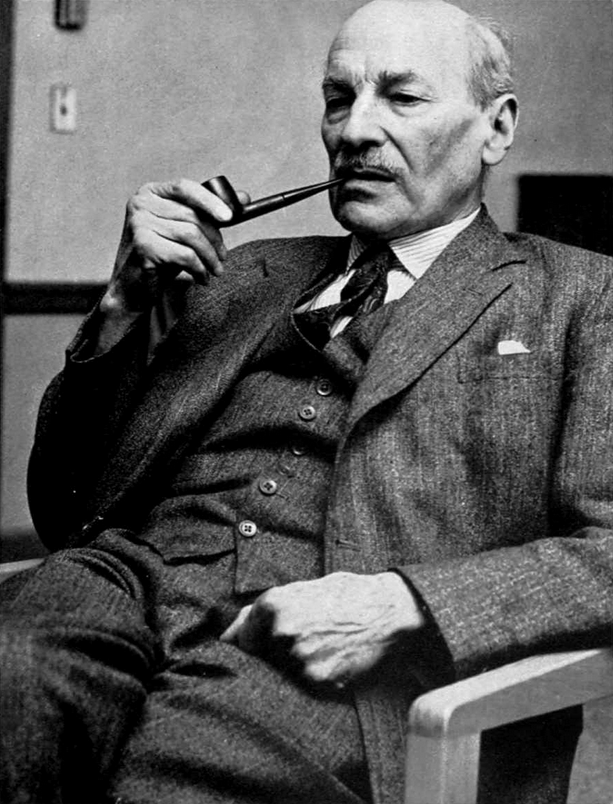
  • Clement Attlee – 1922 Maiden Speech in the House of Commons

    Clement_Attlee

    Below is the text of the maiden speech made in the House of Commons by Clement Attlee on 23 November 1922.

    I want to call the attention of the House to one or two matters, which I think are matters of omission, in connection with the speech to which we have just listened. I did not notice that there was any mention of economy. We have had a great deal of talk about economy up and down this country, and we have had a great deal of talk about waste. But there is one particular waste that is never mentioned, and that is the waste of the man-power of this nation. When I throw my mind back to the War period, I remember how we were told that every man in this country was valuable, how we were told that every man was wanted either in munitions or in the trenches—men of every character, men of every capability. I heard of men who usually would not be considered sufficiently good to do any work, but who were sent to us in the trenches, because they were said to be serviceable for fighting. At that time— I think the only time in 500 years of English history—we were practically without any unemployment at all. In the district from which I come, the borough of Stepney, we always have unemployment. You may have a Free Trade system, or such a system as we have at the present time under the Safeguarding of Industries Act, which practically amounts to high Protection; but you will still have unemployment in East London. In East London we stand at the gate of England. Wealth flows through our borough up to London, but precious little stays there. We always have unemployment. The only time when unemployment was practically non-existent was the time of the War; and, despite all the rationing, despite all the food substitutes, on the whole the living conditions of our people were actually better during the War period.

    I am speaking of waste from the point of view of the waste that is going on to-day of our man-power and woman-power, and of the children who are going to be the men and women of the future. In my district every day men are coming to me whom I have known years ago, and I see how they have fallen off through unemployment. You see men who were fit to be sergeant-majors in the Army —fine, upstanding men—reduced to dragging along the streets with their hands out for anything they can get. That is an enormous waste. It is not only waste, but absolute folly. We are told, and I believe it, that there is sympathy on the other side with the unemployed. I do not suppose that anyone on the benches opposite is going to get up and say that he is prepared to put the unemployed men, and their wives and families, into a lethal chamber and kill them. I think that everyone on all sides is agreed that they are to be kept alive, and the only question we have to face is whether they are going to be kept alive in fine and fit condition, or upon a dole which means that they are going steadily downhill.

    The true wealth of this country is its citizens, and the finest of them, the very cells that build up our community, are the families that have a certain standard of life. Such a man, with his wife and family, with their home, represent, after all, the basis of our society, which is based upon the family. If that man falls out of work, if he comes down to a miserable wage, it means that his home is broken up, and his whole standard of life goes down and down. What you are doing with our industrial machine is allowing the spare parts to be absolutely wasted and rusted. I daresay there are hon. Members opposite who have motor cars. Perhaps they keep spare parts for them, and I expect that they look after and care for them, or their chauffeur does. The Stepney wheel is cared for as much as that which is on the car. I represent, so to speak, the Stepney wheel, the wheel which is temporarily unemployed, but which you will require in the future. My claim is that we have got to see that that reserve of labour is kept fit. When we were in the Army during the War we did not have our rations docked because we went into the supports or reserves. Our rations were the same whether we were in the front line or in the supports.

    That is the first item of waste. The second great item is the loss of the services of these 1,300,000 men who are unemployed to-day. These men are capable of productive work, and there is productive work that wants doing. In my borough, which is a borough of 250,000 inhabitants, we had a very close inspection of the houses. We endeavoured to get our housing conditions bettered, and we were told that over two-thirds of our houses were not repairable in any true sense of the word. Under such powers as we had we insisted that every landlord should put his house in repair, but those houses are so utterly worn out that they cannot be repaired, but must be replaced. At the present time the country is supporting out of public funds, either national funds or local funds or funds provided by the contributions of employers and employed—I care not which you say it is; it is all coming out of the productive powers of the nation—some 100,000 men in the building trade who are not allowed to build, who are actually being paid not to build. We are almost following the bad example of the London County Council, who got out a housing scheme and then paid the contractors a sum of money in respect of every house which they did not build. We are keeping these people, though not in a state of efficiency, when we have this urgent need of housing.

    The hon. Member for the Sutton Division of Plymouth (Viscountess Astor) quite properly stressed that point of housing and the intimate way in which housing is bound up with morality. We know it very well down our way. We know, too, the results of the census, which showed that in the London area alone there are 600,000 persons who are living in one-room tenements. You are not going to get an A1 nation under those conditions: you are not going to get a moral nation under those conditions; you are not going to get a sober nation under those conditions. I quite realise why the hon. Member for Dundee made the speech that he did, because, with his heart bound up with the temperance question, he knows, as we do, that we have to deal with these causes. You may produce a case here and there of abuse of the dole: you may produce an occasional man who marches with the unemployed and has a bad record; but every Member of this House who has been in a contested election and has come into personal contact with the unemployed knows that the great mass of unemployed men are those same men who saved us during the War. They are the same men who stood side by side in the trenches. They are the heroes of 1914 and 1918, though they may be pointed out as the Bolshevists of to-day.

    Why was it that in the War we were able to find employment for everyone? It was simply that the Government controlled the purchasing power of the nation. They said what things should be produced; they said, “We must have munitions of war. We must have rifles; we must have machine-guns; we must have shells; we must have ammunition; we must have uniforms; we must have saddles.” They took, by means of taxation and by methods of loan, control of the purchasing power of the nation, and directed that purchasing power into making those things that were necessary for winning the War. To-day the distribution of purchasing power in this nation is enormously unequal. I recall a speech by the present Prime Minister, in which he said that one of the greatest reforms in our national life would be a better distribution of wealth among the individuals composing this nation. I entirely agree with him. While the purchasing power of this nation is concentrated in the hands of a few, there will be production of luxuries and not of necessaries. It was found necessary during the War for the Government to take hold of the purchasing power—which, after all, determines what goods shall be made—and deliberately to say that certain things were essential because we were at war, and that those things and no others should be made. They said to those who were running industry that their factories must be turned away from producing luxuries and must produce those sheer necessities. That is what we are demanding shall be done in time of peace. It is possible for the Government, by methods of taxation and by other methods, to take hold of that purchasing power, and to say that, exactly as they told manufacturers and workers that they must turn out shells and munitions of all sorts to support the fighting men, so they must turn out houses and necessities for those who are making this country a country of peace.

    As the nation was organised for war and death, so it can be organised for peace and life if we have the will for it. That is why we reject all these facile assumptions that you can wait until trade is a little better. You cannot wait. The waste is going on all the time. You have only to look at the state of the children in our streets to see how that waste is going on; and if, as I hope may never happen, we should have another war in 20 years’ time, and if the Government should begin, as they did, by calling up for various years, when you come to these last three years and look at the classes of 1920, 1921 and 1922, you will not be surprised to find that a very large proportion of them are C.3. But it will be too late for yon then to complain; it will have been by your policy of tranquillity that these classes have been produced. I am not, however, concerned with producing men for war; I am concerned with producing citizens for life. I stand for no more war, and for development in peace; and I say that you are to-day in this country ruining future generations as you have ruined the present generation. It is not the fact that character is formed by unmerited suffering and privation. It simply means what I have seen for 17 years in the borough of Stepney—the boy or the man getting unemployed and sinking, sinking, sinking right down to the unemployable. We do want an economy campaign, but it must be a true economy campaign—economy in mankind, economy in flesh and blood, economy in the true wealth of the State and of the community, namely, its citizens. That can only be brought about by deliberately taking hold of the purchasing power of the nation, by directing the energies of the nation into the production of necessities for life, and not merely into the production of luxuries or necessities for profit.

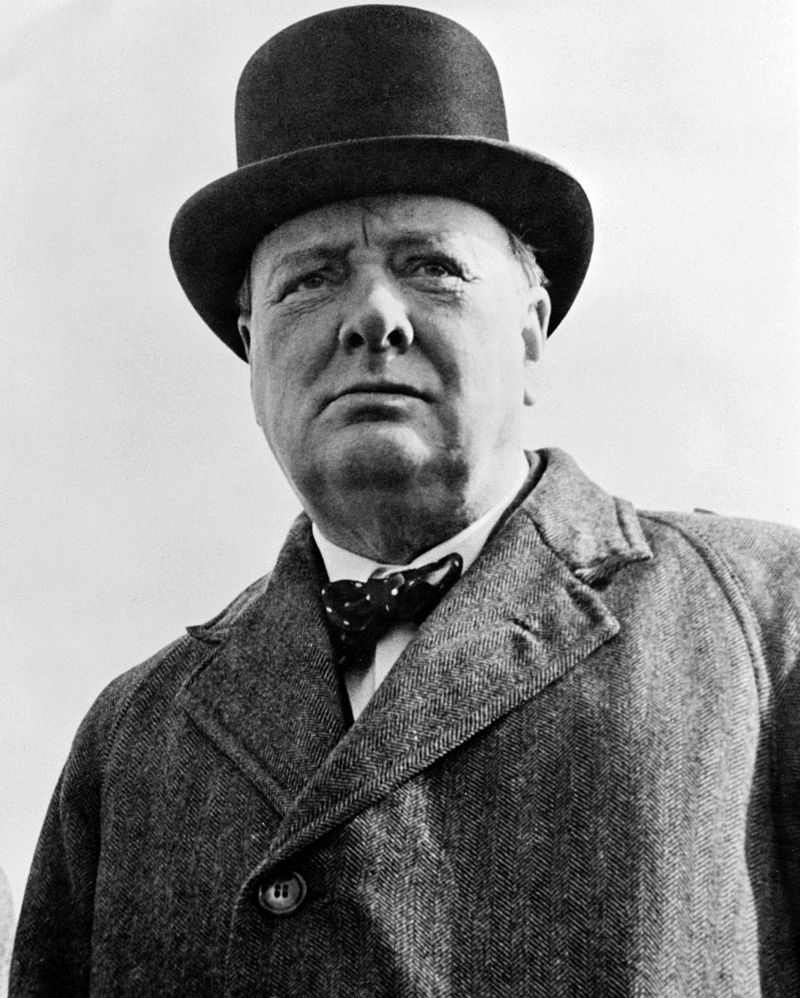
  • Winston Churchill – 1922 Speech on the Ireland Situation

    winstonchurchill

    Below is the text of the speech made in the House of Commons by Winston Churchill, then the Secretary of State for the Colonies, on 16th February 1922.

    The SECRETARY of STATE for the COLONIES (Mr. Churchill) I beg to move, “That the Bill be now read a Second time.”

    I feel that I am entitled to ask the indulgence of the House because I have had to make so many inroads on their attention and upon their patience on Irish matters during the course of the present week, but I have felt that on the whole it is a good thing to keep the House most closely in touch with every move and change in the Irish situation and to publish the full picture of Ireland which is presented both by the Northern and Southern Governments before the House and the country from day to day. It is my duty to ask the approval of the House for this Bill. It gives effect to the Treaty which both Houses of Parliament have already approved by such large majorities. It clothes the Provisional Government with lawful power and enables them to hold an election under favourable conditions at the earliest moment. The importance and urgency of this Bill are plain. Take, for instance, the object of clothing the Irish Provisional Government with law. Is it not fatal to peace, social order and good Government to have power wielded by men who have no legal authority? Every day it continues is a reproach to the administration of the Empire. Every day tends to bring into contempt those solemn forms of procedure on the observance of which in every country the structure of civilised society depends. Only three days ago I spoke about some criminals, murderous criminals, who had been caught by the Irish Provisional Government in Southern Ireland, accused of murdering and robbing a British officer, and I said that I presumed that they would be handed over to be dealt with with the full rigour of the law. I was interrupted by an hon. Friend on these Benches with the remarks: “There is no law,” and “What law?” It is perfectly true, but is it reasonable to make such interruptions and not support the Bill which alone can clothe with law the acts of the Irish Government? A Provisional Government, unsanctified by law, yet recognised by the Crown, by His Majesty’s Ministers, is an anomaly, unprecedented in the history of the British Empire. Its continuance one day longer than is necessary is derogatory to Parliament, to the Nation, and to the Crown. We must legalise and regularise our action. Contempt of law is one of the great evils manifesting themselves in many parts of the world at the present time, and it is disastrous for the Imperial Parliament to connive at or countenance such a situation in Ireland for one day longer than is absolutely necessary.

    Mr. RONALD McNEILL It is your own creation.

    Mr. CHURCHILL Yes, with the full approval of both Houses of Parliament. Moreover, what chance does such a situation give to the Irish Executive who, at the request of the King’s representative in Ireland—made, of course, on the advice of His Majesty’s Government—have assumed the very great burden and responsibility of directing Irish affairs? How can you expect such a Government to enforce a respect for its decisions when such decisions are absolutely unsanctioned by law? How can you wonder that such Ministers are set at defiance by the more turbulent elements amongst their followers and that the prisoners captured from the Northern Border have to be released, not by powerful authoritative action, but by processes of expostulation and persuasion? I am asked questions every day about the non-payment of rents in Ireland, about the spread of lawlessness, and even anarchy, in different parts of the country, about crimes of violence against persons and property increasingly committed among a population hitherto singularly free from common crime as opposed to political crime. I am asked these questions every day, and I ask in my turn: “How can you expect these tendencies to be arrested except by a Government entitled to display the insignia of lawful power and to proceed by methods which have the sanction of antiquity and prescription?” I notice that this succession of unanswerable truisms excites no challenge.

    The Bill, in addition, will enable an election to be held in Ireland at an early date under favourable circumstances, or under the least unfavourable circumstances which are possible. What are the objects to be sought at this election? I am going to tell some of those objects to the House. The first of these objects is a National decision upon the Treaty by the Irish people. I am asked every day by my hon. Friends below the Gangway questions about the Irish Republican Army. I will explain the view of the Irish Government on that point. It is very important we should understand the different points of view. Whether we agree with them, or sympathise with them, or recognise them, is quite another matter, but it is important we should understand them. This is the view of the Irish Government, the Irish signatories of the Treaty. Their view is that the Irish Republic was set up by the Irish people at the elections which took place during the Conference, and that this Irish Republic can only be converted into an Irish Free State by the decision of the Irish people. That is not our view. We do not recognise the Irish Republic. We have never recognised it, and never will recognise it. I am explaining their view and they say that they were elected by the Irish people on a certain basis, and that only the Irish people can release them. They are determined to stand by the Treaty and to use their utmost influence with the Irish people to procure their adhesion to the Treaty, and that will, from the Irish point of view, be the act which will disestablish finally the Republic. Take Mr. Griffith’s position. Mr. Griffith has not joined this Government. He has been chosen as the President of the Dail. He is also, in Irish eyes, the President of the non-recognised Irish Republic, and if the Irish people accept his advice and guidance, and ratify the Treaty and endorse the Treaty which he has signed, he will be able to disestablish the Irish Republic and to lay aside these functions. These matters do not affect us in our procedure in any way; but is it not a desirable thing that upon the authority of the Irish people recorded at an election, the Republican idea should be definitely, finally and completely put aside?

    The second object of the election is to secure an adequate constituent assembly. You certainly have not got that now. To try to make a constitution for the Irish Free State with the present truncated body, almost half of whose Members have definitely seceded from the Southern Irish Parliament, would be an impossible task, and were such a constitution made it would not command any definite or lasting assent among the Irish people. The third object—and I commend this to the serious consideration of the House, of British Members as well as of Ulster Members—is to secure afresh a normal, and if I may say so, a sensible Parliament in Ireland. How was this present Parliament made? The men who were elected to it were chosen, not because of any fitness for conducting business—[An HON. MEMBER: “Just the same as this Parliament.”]—they were chosen because they were the men thought to be most obnoxious to the British power at a time when passions were at their fiercest. This Parliament was made out of men who hated this country most in Ireland. It is obvious that if any progress is to be made, we must get, or there ought to be—for after all, it is not for us finally to decide—a Parliament which represents the hope of the future rather than the hate of the past.

    Lastly, it is a bad thing for any body of Ministers to continue in a position of power without being supported in that position by a national mandate. [Interruption.] If that interruption is intended to have any application to this bench, it is singularly inapplicable, considering that the mere rumour that Ministers were inclined to seek a renewal of their mandate was greeted with the most violent and most panic-stricken protest. Irish Ministers must know where they stand with the Irish nation. Some people think that they have waited too long already in choosing the time of their election. The sooner that election comes in Ireland the better. I am anxious to deal with every aspect. I shall be asked: “Supposing Mr. de Valera and his friends win this election in Ireland, what is to happen then?” If I do not deal with this now, I shall be blamed for leaving, it out. Let me say, I do not think that there is any advantage in speculating upon these ugly hypotheses. It is perfectly clear that the repudiation by Ireland of the Treaty would free all parties from their engagements, and that the position of Great Britain, standing on the Treaty, ready to carry out the Treaty, if others could be found, on behalf of the Irish nation, to do their part, that that position would be one of great moral as well as of undoubted material strength. The position of Southern Ireland, on the other hand, would be one of the greatest weakness and division—absolutely isolated from the sympathy of the world, bitterly divided in herself. The position of Northern Ireland would be also quite unaffected. I do not think it is prudent or necessary at this stage to assume for a moment such a result, and all the information we are able to obtain leads us to feel that any such treatment would not only be unnecessary but incorrect. But it Would be a pity for us to go threatening and blustering at this stage and to give the impression that the Irish people are being made to vote under duress or at the point of the bayonet. All such language and suggestions would be very unhelpful at the present time, and if such language were indulged in, the fact that it could be stated that the votes had been given under duress would tend to impair the authority of the decision at a subsequent date. That is what I have to say on a perfectly fair point which may be made as to who would win the Irish election.

    There is another suggestion which is made and with which I must deal. There are those who think that the present Irish Government may be overturned by a coup d’état and that a red Soviet Republic may be set up. We do not think that is at all likely, but if it were it is quite clear that a Soviet Republic in Ireland would ruin the Irish cause for 100 years, but would not in any respect impair the foundations of the British Empire or the security of Ulster. No people in the world are really less likely to turn Bolshevik than the Irish. Their strong sense of personal possession, their respect for the position of women, their love of country and their religious convictions constitute them in a peculiar sense the most sure and unyielding opponents of the withering and levelling doctrines of Russia. What we know of the characters and personalities at the head of the Provisional Government in Ireland leads us also to believe that they are not the men who would tamely sit still and suffer the fate of a Kerensky. Therefore I do not think this second evil alternative is one which we need allow to embarrass us or obstruct our thoughts and decisions at the present time. But this Irish Government, this Irish Ministry, ought not to be left in the position in which even the most necessary measures which they take for their own defence or for the enforcement of authority, or even for the maintenance of law and the suppression of brigandage or mutiny, are devoid of formal sanction.

    If you want to see Ireland degenerate into a meaningless welter of lawless chaos and confusion, delay this Bill. If you wish to see increasingly serious bloodshed all along the borders of Ulster, delay this Bill. If you want this House to have on its hands, as it now has, the responsibility for peace and order in Southern Ireland, without the means of enforcing it, if you want to impose those same evil conditions upon the Irish Provisional Government, delay this Bill. If you want to enable dangerous and extreme men, working out schemes of hatred in subterranean secrecy, to undermine and overturn a Government which is faithfully doing its best to keep its word with us and enabling us to keep our word with it, delay this Bill. If you want to proclaim to all the world, week after week, that the British Empire can get on just as well without law as with it, then you will delay this Bill. But if you wish to give a fair chance to a policy to which Parliament has pledged itself, and to Irish Ministers to whom you are bound in good faith, so long as they act faithfully with you, to give fair play and a fair chance, if you wish to see Ireland brought back from the confusion of tyranny to a reign of law, if you wish to give logical and coherent effect to the policy and experiment to which we are committed, you will not impede, even for a single unnecessary week, the passage of this Bill.

    Surveying the whole situation since we met in the winter and approved of the Irish Treaty, I ask myself this question: Ought we to regret what we then did? [HON. MEMBERS: “Yes,” and “No!”] In endeavouring to examine this matter with candour I do not feel that that question is one which we ought to leave on one side. Ought we to regret having made the settlement and signed the Treaty? I am looking at it, not from an Irish point of view which I am not specially concerned as a British Member; I am looking at it from a British point of view. I think we are better off in every respect in this Irish matter than we were six months ago. Contrast the position which we are now in and the position in which we were six months ago. Contrast the difficulties of my right hon. Friend the Chief Secretary, the impossible position in which he was, with the position in which the Government now stands. I know I have differences in this matter with hon. Gentlemen below the Gangway. They will see that I am endeavouring to deal with the subject in a reasonable manner worthy of its gravity, and in a spirit of mutual respect, even with those with whom, no doubt, there are naturally large and legitimate differences.

    Contrast the positions. It appears to me as if the tables were turned. Ireland, not Britain, is on her trial before the nations of the world. Six months ago it was we who had to justify ourselves against every form of attack. Now it is the Irish people who, as they tell us, after 700 years of oppression, have at last an opportunity to show the kind of government that they can give to their country and the position which they can occupy amongst the nations of the world. An enormous improvement in the situation, as I see it, has been effected in the last six months. Take the position of Ulster. The position of Ulster is one of great and unshakable strength, not only material strength, but moral strength. There was a time when, as is well known, I and others with whom I was then associated thought that Ulster was not securing her own position, but was barring the way to the rest of Ireland to obtain what they wanted. Those days are done. Ulster, by a sacrifice and by an effort, has definitely stood out of the path of the rest of Ireland, and claims only those liberties and securities which are her own, and standing on her own rights, supported as she is and as she will be by the whole force and power, if necessary, of the British Empire, I am entitled to say that she is in a position of great moral and material strength at the present time.

    The position of the Imperial Government has also become greatly improved. It is very desirable that the great affairs of the British Empire should be increasingly detached from the terrible curse of this long internal Irish quarrel, and that the august Imperial authorities should stand on a more impartial plane. I think we have nothing to regret in the course we took last December, as far as the Imperial Government, or as far as Ulster is concerned, with one exception with which I shall deal later. But the position of Ireland is one which deserves a much greater measure of sympathy. The position of Southern Ireland is one of great difficulty and danger. The trials and responsibilities of the new Government are most serious. I have explained the weakness of their present position. I have explained how urgent it is that we should come with this Bill and clothe them with greater authority and strength. We see the efforts they are making. We cannot tell how far they will be successful. All the world is looking on at their performance. They are the people at the present time, not Ulster, not Great Britain, whose difficulties and whose task deserve sympathy and support.

    Take the case of the signatories of the Treaty, the men who put their names to that document in Downing Street in December. They go back to their own comrades or colleagues in Ireland, with whom they were working. They are practically put on their trial for having betrayed the Irish Republic. These men who, whatever you may think of them, at any rate from their own country’s point of view were the most vigorous and effective fighting men, were absolutely put on their trial and condemned by the more talkative section, largely composed of people whom the British Government all through regarded as perfectly harmless, and some of whom we gave the strictest instructions, should not be arrested, and when on some occasions they were arrested by mistake, they were let loose again, as you return under-sized fish to the water. These men, I say, standing by the Treaty against this kind of unfair attack, as long as they stand by the Treaty and we have confidence in them, deserve our help and deserve to be given the means of making good.

    The situation on the frontier of Northern Ireland has, I think, been a little improved by the agreement of both Governments to the establishment of a border Commission to make sure that there is no hostile attack on a large scale being organised on the one side or the other. It has also been improved, I think, by the agreement of both Governments to an impartial Commission of Inquiry into the Clones affair; and it has been, I think, generally improved by the control which has been enforced. I hope that the releases of the kidnapped men will continue. Twenty-six have already been released, and I hope the releases will continue in the next few days until that matter is completely cleared out of the way. The position in Belfast is terrible. Things are being done there of a most awful character, and I know the efforts that are being made by the Northern Government to calm things there, and to control the people and the furious and inhuman passions that are alive amongst certain sections of the population, Catholic and Protestant. I do trust that in the near future, whatever may have occurred since their last meeting, there will be some form of parley between the heads of the two Governments, or representatives of the two Governments. I would point out that the Southern Government has definitely, formally, asked for such a meeting. I do trust it may be possible to bring it about in the course of the next few days or weeks. It is most desirable, from every point of view, to arrive at some method of calming the terrible vendettas and the counter-vendettas which are rife in the streets and in the alleys of Belfast.

    I come to the difficult part of what I have to say to the House. I come to the question of the Boundary Commission. There is an Amendment on the Paper, which definitely challenges the whole policy and position of the Government upon the Treaty in this particular respect. I have no doubt that we shall be asked in the course of the discussion to give an assurance, on this side or on that side, of what was meant, what we thought, or what was intended. It may be very proper that legal authority should inform the House what they consider is the interpretation of the Treaty. It may be perfectly right and proper for Ministers to state to the House what they meant and intended when they signed the Treaty, but, as the House will see, nothing that can be said now can possibly affect the Treaty. The Treaty, in Article 12, prescribes what is going to be done, what is going to happen, and we have no power, except by tearing up the Treaty, to alter what is prescribed in that Article. No declaration that may be made now will have the power to alter that Article. When the time comes it will have to be interpreted in the manner prescribed in the Treaty. By that interpretation we shall be bound. Those who signed the Treaty will be absolutely bound, and those who have voted for the Treaty will also be bound to accept that interpretation.

    I think it much better—and I am going to put everything quite plainly and bluntly before the House—that we should know exactly where we are. I know that will be the feeling of my hon. Friends who have the special interests of Ulster in their charge. Of course, all this trouble in regard to the boundaries surrounds the boundaries of Fermanagh and Tyrone. I remember on the eve of the Great War we were gathered together at a Cabinet meeting in Downing Street, and for a long time, an hour or an hour and a half, after the failure of the Buckingham Palace Conference, we discussed the boundaries of Fermanagh and Tyrone. Both of the great political parties were at each other’s throats. The air was full of talk of civil war. Every effort was made to settle the matter and bring them together. The differences had been narrowed down, not merely to the counties of Fermanagh and Tyrone, but to parishes and groups of parishes inside the areas of Fermanagh and Tyrone, and yet, even when the differences had been so narrowed down, the problem appeared to be as insuperable as ever, and neither side would agree to roach any conclusion.

    Mr. R. McNEILL We knew what you were at.

    Mr. CHURCHILL I am where I was. Then came the great War. Every institution, almost, in the, world was strained. Great Empires have been overturned. The whole map of Europe has been changed. The position of countries has been violently altered. The modes of thought of men, the whole outlook on affairs, the grouping of parties, all have encountered violent and tremendous changes in the deluge of the world, but as the deluge subsides and the waters fall short we see the dreary steeples of Fermanagh and Tyrone emerging once again. The integrity of their quarrel is one of the few institutions that has been unaltered in the cataclysm which has swept the world. That says a lot for the persistency with which Irish men on the one side or the other are able to pursue their controversies. It says a great deal for the power which Ireland has, both Nationalist and Orange, to lay their hands upon the vital strings of British life and politics, and to hold, dominate, and convulse, year after year, generation after generation, the politics of this powerful country.

    I am going to speak plainly, and if I say anything which my hon. Friends below the Gangway who represent Ulster do not approve of, do not let them think that I am expecting them to agree. I am trying to show them the outlook upon the subject which we have at the present time, and to put them in a position to do what they think is their duty, without any chance of misunderstanding or misconception. I was speaking just now of the great strength of the Ulster position at the present time, morally and materially. In that position there is, it seems to me, only one weak point and it is this: Certain of these districts in Fermanagh and Tyrone, even in the county boundary, may be districts in which—I am not pre-judging—the majority of the inhabitants will prefer to join the Irish Free State. If that be true, and to the extent to which that is true, one feels that the tremendous arguments which protect the freedom of Protestant Ulster have, in those districts, lost their application and have, possibly, an opposite application. There is also one weak point in the position of His Majesty’s Government in respect to Ulster and in the position of the Ministers who signed the Treaty in respect to Ulster. I am not concealing it for a moment. I am locating it, defining it and exposing it. This is the weak point: The Boundary Commission to be set up under Article 12 affects the existing frontiers of the Ulster Government and may conceivably affect them prejudicially. It is far better to face facts and not to gloss them over. To that extent, Ulster may have a ground of complaint against the Government. What is the answer which the Government will make? I cannot do better than quote the words of my right hon. Friend the Member for Central Glasgow (Mr. Bonar Law), the late Leader of the House. That right hon. Gentleman, whose re-appearance in the winter Session gave so much pleasure to the House, in speaking on this subject, in his cool, judicial, and fair-minded way, said: Very likely the Government felt that if they did not conclude the negotiations right away they might not conclude them at all. If so, I think that that is a defence which ought to be seriously taken into account.”—[OFFICIAL REPORT, 15th December, 1921; cols. 203–4, Vol. 149.] I think to-day also it ought seriously to be taken into account. We were bound, we considered ourselves bound, to try to reach a settlement. Had we waited to refer the details of that settlement at the last moment to the Northern Government it is quite evident by what occurred in the Dail, and by the violent opposition encountered there, that no settlement would have been achieved at all. Therefore, we agreed to the Boundary Commission. We agreed to it with, no doubt, a feeling that the argumentative position of this country in regard to some of those districts in Fermanagh and Tyrone was not as strong as in regard to what is characteristically the Protestant part. We agreed, knowing well that outside the limits of those counties there are also Protestant districts of great importance and considerable population and dimensions which it seemed to us must be taken into account and consideration in the general question of rectifying the boundaries which is entrusted to the Boundary Commission. There is no doubt whatever that we felt the difficulty in this matter. If we are accused to-day of having brought the settlement to a conclusion without having referred it, as we should have liked to do in this matter, at the last moment to the Northern Government—

    Sir W. DAVISON You promised to do it.

    Mr. CHURCHILL I will deal with that point in a moment, and I think we shall not have any difference on the subject. If we are reproached for that, let the House consider what would have been the position of this country as a whole, not the position of the Government, but of the country, sore pressed at the present time with burdens, with threats, with menaces in every quarter of the world, if we had had to break off the Conference, destroy the negotiations, and embark upon what was literally the re-conquest of Ireland, at enormous expense in money and in men, to embark upon bloodshed, upon a far larger scale than anything that had ever occurred and to appeal to the country for support, when the only difference which could be disclosed would not be the question of allegiance to the Crown, or of common citizenship in the British Empire; not the question of the exclusion or the right of Ulster to contract out—it would not have been any of those questions which did in former times, and might in future almost justify men in their wrath in drawing the sword, but simply the question of the right of option of certain Catholic districts in Fermanagh and Tyrone and, of course, certain Protestant districts in Donegal, Cavan and Monaghan and elsewhere. We may be censured, but we must be judged in relation to the whole situation and in regard to our efforts to cope with it.

    There is really no need for anger on the point. If we have done wrong, action should be taken by the House without anger being shown. If our supporters in the House feel convinced that we have done wrong in the Boundaries Clause, into which we have entered, and from which, having pledged ourselves to it, it is altogether out of our power to recede, if they think it impossible on general grounds to endorse our action, then they should do their duty as we have endeavoured to do ours. This is no time for any Government to ask favours. This is no question on which this Government stands in need of asking a favour. The issues are far too serious. The days in which we live are far too difficult. The burden of affairs is far too onerous for any Government to wish to hold office except on public grounds and for public causes. The question should therefore be dealt with quite impersonally, quite dispassionately, with mutual respect, and without heat or recrimination on either side. But before any Member, wherever he may sit, takes the momentous step of voting for an Amendment which, if carried, will destroy the Treaty and the Administration pledged to the Treaty, let him ponder carefully and long upon the responsibilities to be assumed and upon the alternatives which are involved, upon the consequences which would surely follow. Let him, as Mr. Gladstone said 40 years ago at this box, think well, think wisely, think not for the moment but for the years that are to come.

    If I am not trespassing on the time of the House, I will conclude the full scope of the argument which I am endeavouring to submit. If the House in its wisdom decides that we are not to take that step, if it decides, as we think it will, to stand by the Treaty at all costs, then let us see what the future course of events is likely to be. I am going to try to make a forecast and give a time-table of the next few months for the information of this House and, of course, I make it, as they say, with all reserve, and with a prophetic sense which has been frequently corrected by contact with ultimate realities—but not so frequently as is commonly supposed. The first thing to do is to pass this Bill through both Houses of Parliament, which we may hope will be achieved in the course of the next month. Do you want more margin than that?

    The PRIME MINISTER (Mr. Lloyd George) No.

    Mr. CHURCHILL The next thing will be the holding of the Irish election, which I might provisionally fix for March or April. The next thing is that the Irish Free State Parliament should assemble and, acting as a Constituent Assembly, should make the Constitution. Let us hope that that will be in progress in May or June. Then there is the final confirmatory legislation of the Imperial Parliament, which, we may say, will take place in June or July, if the time-table were observed. I must read on this point the actual words of what we have agreed with our co-signatories of the Treaty in this respect. The question is from what gate, according to the Treaty, does the Ulster option month begin to run. Does it run from the passing of this Bill or from the passing of the final confirmatory Act. There were differences of opinion on this point: There is a doubt as to whether on the strict reading and interpretation of the Treaty the month in which North East Ulster must exercise its option does not run from the date of the passing of this Bill. The Irish Ministers hold quite definitely that it should. On the other hand the Attorney-General holds a different view as to the correct interpretation. The Irish Ministers, however, recognising that as a matter of fairness, apart from strict interpretation, much could be said as to the advisability of allowing North East Ulster to consider the Constitution of the Irish Free State before exercising her option, they are willing not to insist on their construction and to allow the month to run as from the date of the Act of the British Parliament recognising the constitution framed by the Provisional Parliament. These are the exact words agreed to with the co-signatories of the Treaty. We have not in any way departed from our reading of the Treaty, nor they from theirs, but they have waived their point on the ground of what they think reasonable and fair in respect to the exercise of the option.

    Lord ROBERT CECIL Will it be confirmed by this Bill?

    Mr. CHURCHILL It does not require any special legislation. It is a question of the interpretation in good faith of the Treaty by the parties. We are convinced that the words of the Treaty justify the reading of which the Attorney-General has approved, but there will be no quarrel about it because, apart from questions of law altogether, the other signatories to the Treaty agree as a matter of reason and fair play, and so it comes to this—

    Sir W. DAVISON What is the opinion of the Ulster Government on the matter?

    Mr. CHURCHILL It is a question of the interpretation of the Treaty, and of extending the option, and extending it in such a form that Ulster can see what form of constitution it is and what kind of Government it is that they are invited to decide as to whether they will accept it or not. I should like to know what would have been said if we had been told that under the Treaty the option was to run from the passing of this Bill, and that Ulster had to take a decision of the kind without even seeing the kind of Government or the form of constitution with which she was invited to associate herself. There are enough real grievances now without our going out of the way to look for imaginary grievances.

    Mr. R. McNEILL Will it be open to the Northern Government in Ireland to pass their address within a month after the passing of this Act, because their object will be to pass it at the earliest possible moment?

    Mr. CHURCHILL No. The constitutional time for presenting the Address under the Treaty will be within a month of the passing of the final confirmatory legislation promulgating the constitution of the Irish Free State. Meanwhile Ulster is wholly unaffected by this legislation. If the House will follow this time table they will see that it cannot be until the end of July or the beginning of August at the very earliest that the Boundaries Commission could commence its complicated labours.

    Therefore it cannot be until September or October at the earliest, and it may possibly be a much more remote date, if the constitution of the Irish Free State takes longer in the making than the 2 months, which is certainly a possibility, or if the Boundaries Commission takes longer than 2 or 3 months, before this decision upon the boundaries can possibly be arrived at.

    Sir F. BANBURY They will all be dead by then.

    Mr. CHURCHILL That is just what I was expecting to hear—that we shall all be dead by then.

    Sir F. BANBURY No, but they will all be dead in Ireland. They will have killed each other.

    Mr. CHURCHILL Then our task will be greatly simplified. But it will be said—it is said, and I quite understand the feeling—”are we to be kept in this uncertainty all these months? Things will be getting worse all the time.” Even if that were so, we should have to face it. There is no way of avoiding it. If it is true that things are going to get continually worse we have got to stand up to that fact.

    Mr. M’GUFFIN You have not stood up.

    Mr. CHURCHILL We shall have to face what will come. It is inevitable. But why should you assume that things will get worse during all this time, provided, of course, that we all try to make them better, and that no one, who has any influence or responsibility, tries to make them worse? I do not think that things are bound to get worse. I think, on the contrary, that they are going to get better. In order to form a reasonable opinion about the next few months it is necessary to study the real interests of both parties in North Ireland and South Ireland. Let us begin with the North. There was the Craig-Collins interview of 3 weeks or a month ago, and its great decision, which was taken between the heads of the two Governments by agreement. So far as the boundaries question is concerned it is evident that the discussion which then took place was premature, and that it was not possible to arrive at a clear understanding upon that subject. When both parties to that agreement began to address their own supporters they found that the discrepancies between their views and the gaps between their claims were so large that that part of the agreement has undoubtedly at present completely broken down. But as to other parts of the agreement I do not agree, nor does the Prime Minister of North Ireland, that that has been the case. The removal of the boycott in Southern Ireland has been, on the whole, effective to a very large extent, and I know that great efforts have been made by the Prime Minister of Northern Ireland to mitigate the lot of the Catholic workers who were discharged during the late trouble, and who are now out of work.

    Mr. DEVLIN What were the efforts?

    Mr. CHURCHILL I will not deal with that. I know that efforts are being made by Sir James Craig, and he has approached me on the subject, to see what assistance the British Government can render, and that these efforts will continue to be made in a loyal and faithful spirit I am confident. Then there is the most important question of an alteration in the form of the Council of Ireland. The Council of Ireland cannot be altered except by mutual consent, but anything can be done by the mutual consent of the two Irish Governments. This House, I am certain, would hasten to ratify and give effect to anything in the nature of a settlement or agreement reached between the two Governments. I have just received a letter from Sir James Craig on this subject. It is dated 15th February. The Prime Minister says: The Government of Northern Ireland has been carefully considering the subject of the continuance under the new Free State Act of the Council of Ireland and has come to the conclusion that it would be advisable for many reasons to substitute some other means of dealing with those services entrusted to the Council by the Government of Ireland Act, 1920. It will be within your recollection that in the agreement I reached with Mr. Collins, a change was hinted at to which he was by no means averse. It appears to me the position of the Council under Article 12 of the Treaty would be both unworkable and likely to lead to continuous irritation between the two Governments. We have had experience already of the Ministers for Labour in Northern and Southern Ireland respectively meeting together to settle matters in dispute as regards the railways, which is one of the powers relegated to this Council. The short experience has shown fruitful results, and I feel strongly that in all matters under the purview of the Council the Executive of each Government could better deal with the subject as a separate Government consulting the other on terms of equality than by an ad hoc Committee, the majority of the members of which have no executive authority. I will not trouble the House with the rest of the letter, which is not relevant. What I am anxious to show is that the agreements which were reached between Sir James Craig and Mr. Collins at their meeting have not lapsed as a whole. There has been a breakdown on one point, but the rest of those agreements stand, and the project of endeavouring to reach a settlement of the outstanding difficulties is by no means cast aside and finally abandoned. Is it not in the interests of the North to see what sort of Parliament and Government will emerge from the elections in the South? May not that Parliament and Government be in a far stronger position and be of a far more reasonable complexion than the present Dail Eireann? Is it not better to discuss passionate questions like the boundary question after the election than when everyone is preparing for it, and when the supporters of the Treaty are constantly exposed to the bitter reproaches of Mr. De Valera and his extreme Republican sect, and when a renegade Englishman like Mr. Erskine Childers is doing his best to poison the relations between the Irish people and their chosen leaders? Will it not be very much better to take up the difficult question of the boundary after the Irish elections have been held than before? After the election let us see what comes of it and let us then make up our mind what is best to do. Let us now see what is the interest of Southern Ireland in this matter. What is their heart’s desire more than anything else? [HON. MEMBERS: “A Republic.”] Not at all; that is a delusion, and my hon. Friends are absolutely at sea when they say so. A Republic is an idea most foreign to the Irish mind, associated with the butcheries of Cromwell in their minds and foreign to all the native genius of the Irish race, which is essentially monarchical.

    Major C. LOWTHER Why have they an Irish Republican Army if it is so foreign to them?

    Mr. CHURCHILL Because they have been fighting for position against this country. I say really what the Southern Irish most desire and what Irishmen all over the world most desire is not hostility against this country, but the unity of their own. They can never attain that unity by force. That they are at last compelled to recognise and admit. They can never attain it by harshness or by hostile action towards Ulster. Take the boundary question as an example. There is no one who can predict what the Commission will decide. Let me take an extreme and absurd supposition. Let us assume that the Commission, going far beyond what any reasonable man would expect, and far beyond what those who signed the Treaty meant, were to reduce Ulster to its pre-ponderatingly Orange areas. I am taking that extreme and absurd supposition. Suppose that were to happen, would not that be a fatal and permanent obstacle to the unity and co-operation of Ireland?

    Let us just see what would happen. The Protestant North would be violently and finally sundered from the rest of Ireland, there would be no mitigating or modifying element or influence, and common interests between the two would be reduced to a nullity. The resentment of Ulster would be enduring, and her practically homogeneous population would, for generations, aim not, as Southern Irishmen hope, at bringing Ireland as a whole into harmony with the British Empire, but would rivet herself by every conceivable means on to England and Scotland, so that in the course of time Ulster would effectively become a part of Great Britain and not a part of Ireland. I am addressing this argument not only to this House; I am endeavouring to lay down the true way along which the permanent interests of the Southern Irish Parliament and Government lie. What would Great Britain do in such an absurd and extreme contingency as that which I have indicated? She is bound by the Treaty; but, in my opinion, if we saw Ulster maltreated and mutilated by the Boundary Commission so that she was no longer an Irish economic entity, we should be bound to reconsider her whole economic and financial position. [HON. MEMBERS: “Oh, oh!”]

    Now I hope my argument will be carefully considered; although I say it myself, it is worthy of consideration. Not only should we defend 1280 every inch of Ulster soil under the Treaty as if it were Kent, but we should be bound to take special measures to secure that Ulster was not ruined by her loyalty to us. It is evident that our position, if we only study it and reflect upon it, is one of tremendous strength, and that with patience and with care we may easily succeed in bringing about a result acceptable to all. If I were an Irish Nationalist I should dread more than anything else such a development as I have indicated, against which I could do absolutely nothing, nothing by force against the British Empire, nothing by persuasion against the inflexible will of the Northern Protestants, nothing by appeal to the judgment of the world, for the world, be assured, will always uphold the Treaty and Ulster’s right to self-determination under the Treaty. If I were an Irish Nationalist, I would far rather go to the other extreme. I would far rather say: Take more Catholics, not less; make a more even balance in your Assembly; agree with us in friendship for common purposes; keep all your own rights, but share ours too, and instead of cutting this partition line deeper and deeper across the soil of Ireland, instead of painting the map on either side of this line in ever more vivid contrasts of orange and green, let us try to blend a little more and modify those contrasts and divisions.

    Pursuing that line of thought, if that line of thought is found to have validity, it is clear the boundary line would cease to have the same bitter significance in proportion as North and South are associated for important common purposes in some higher organisation than their existing Parliaments. Nothing in the agreement between Sir James Craig and Mr. Collins was more important than the improved arrangements for a Council of Ireland, on the subject of which I have read a letter to the House. Since then we have had a bad set-back, but we are, I think, repairing and restoring the situation. We must have time, we must have patience, we must have this Bill. Ulster must have British comfort and protection. Ireland must have her Treaty, her election and her constitution. There will be other and better opportunities of dealing with the difficult boundary question, and if the House will take the advice of the Government, we strongly deprecate any attempt to reach a final conclusion upon that subject now.

    Let me, before I sit down, leave Ireland and the Irish point of view and Irish interests, and say to the House what is the function of the Imperial Parliament. That, after all, is our point of view. That is our first and proper care in this House. Our interest is very clear, and it should be everywhere recognised and proclaimed what our interest is. The Imperial interest, taking a long view, seeks both the unity of Ireland and the unity of the British. Empire, or if you prefer it, Commonwealth of Nations. We can help Ireland to the one if Ireland helps us to the other, and we may be willing to help Ireland to the one in proportion as she helps us to the other. We ought to use our great power and our great unmeasured strength to that end, and in this method of policy, and we shall be justified in so doing at every step by our interest, by our honour, by our good faith and by fair play. From an Imperial point of view we are bound to endeavour to act in an impartial manner; but though we are impartial we cannot be indifferent. Naturally, our hearts warm towards those in the North who are helping, and have helped so long, to keep the old flag flying, and who share our loyalty and our sentiments, and address us in terms of common kinship and not in those of forced aversion.

    Ulster has a great part to play in these next few months, an immense part, and the opportunity perhaps of rendering service to the British Empire of inestimable value, and of long lasting consequences in history, and I am very glad indeed to think that at this juncture there should be a man like Sir James Craig as Premier of the Northern Government and that Ulster will be represented in this House and in the House of Lords by representatives who are fully alive to the Imperial aspect of this great question, and are not likely ever to lose sight of that. I end in the way I began, upon the Treaty to which we now ask the House to give statutory effect, and the Bill which we ask the House to read a second time. For generations we have been wandering and floundering in the Irish bog, but at last we think that in this Treaty we have set our feet upon a pathway, which has already become a causeway—narrow, but firm and far-reaching. Let us 1282 march along this causeway with determination and circumspection, without losing heart and without losing faith. If Britain continues to march forward along that path, the day may come—it may be distant, but it may not be so distant as we expect—when, turning round, Britain will find at her side Ireland united, a nation, and a friend.