STORY
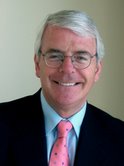
In a powerful speech delivered at Salisbury Cathedral for the 2025 Edward Heath Lecture, former Prime Minister Sir John Major launched a stinging attack on Donald Trump’s foreign policy while urging Britain to face economic reality by rejoining the EU Single Market and Customs Union.
Speaking with a frankness unshackled by party loyalty, Sir John condemned what he described as a dangerous shift in the United States’s global stance, criticising President Trump for turning away from long-held Western alliances and instead courting autocrats like Vladimir Putin. “It was as though America had her arms around Putin’s shoulders, and her hands at Zelensky’s throat,” he remarked, accusing Trump of undermining NATO and pursuing deals that aid aggressors at the expense of global stability. “This is not America as I have known her. This is not democracy as I understand it.”
Sir John warned that Trump’s unpredictable style of leadership—while superficially effective—was eroding international norms and emboldening hostile regimes. Comparing modern geopolitics to Kipling’s “Law of the Jungle”, he said Trump’s rhetoric risked legitimising land grabs and coups by authoritarian powers. “If President Trump threatens to seize Canada, why should not Putin seize Ukraine?” he asked.
Turning to Britain’s domestic challenges, Sir John painted a bleak picture of the UK’s economic performance post-Brexit. He lamented stagnant growth, weak productivity and rising debt, arguing that the only “freedom” delivered by Brexit was “the freedom to be poorer”. He warned that Britain had walked away from the largest free trade area in the world and was now suffering the consequences in reduced investment, lower trade growth and a diminished global influence.
In his most explicit policy suggestion to date, Sir John called for the UK to rejoin the EU’s Single Market and Customs Union, describing it as a necessary step to halt economic decline and restore Britain’s international standing. “If we think small, we will be small,” he said, urging politicians to put pragmatism before ideology. While stopping short of advocating full EU membership, he argued that closer European ties were vital if Britain was to compete in a world dominated by American and Chinese superpower rivalry.
His remarks echoed the spirit of Edward Heath, the Prime Minister who led the UK into the European Economic Community in 1973, and who Sir John said had prioritised country over party and policy over popularity. Drawing on that legacy, he concluded with a rallying cry for leadership rooted in honesty, reason and long-term vision: “Each one of us – from my generation down – needs to understand where the world is now… that is the reality. It is work in progress. And, for all our sakes, that endeavour must not fail.”