Category: Wales

  • Rebecca Evans – 2022 Statement on the Welsh Consultation on a Fairer Council Tax

    Rebecca Evans – 2022 Statement on the Welsh Consultation on a Fairer Council Tax

    The statement made by Rebecca Evans, the Welsh Minister for Finance and Local Government, in the Welsh Parliament on 16 December 2022.

    I am pleased to publish today a summary of responses to the Welsh Government’s Phase 1 consultation on A Fairer Council Tax. The consultation outlined an ambitious programme of reforms as the starting point on our journey towards meeting the Programme for Government and Cooperation Agreement commitment to deliver a fairer and more progressive council tax for Wales.

    We know that council tax helps to fund essential public services, like schools and social care, from which we all receive huge benefits. Council tax is also a key policy lever for ensuring important financial contributions from households are fairly distributed. I am committed to reforming the system so that it reflects our current and future economic circumstances, funds services that benefit everyone, builds in regular updates to keep the tax fair in the future, and remains a local tax that connects people with communities.

    The consultation sought early views from individuals, organisations and key stakeholders on three broad areas of reform including: a proposed property revaluation and rebanding exercise with regular updates in the future; a review of council tax discounts, disregards, exemptions and premiums; and a review of our national Council Tax Reduction Scheme. The consultation was clear that reforms would not seek to increase the total amount of council tax raised overall from council taxpayers.

    The consultation ran from 12 July to 4 October 2022 and received over 1,000 responses, reflecting a wide spectrum of views and interests. I am grateful to everyone who participated.

    I have carefully considered the consultation responses and we will now reflect on the information provided in response to the consultation alongside detailed evidence about the operation of the council tax system and our ambitions for the reform of council tax.  These considerations will inform the next steps we take to make council tax fairer. Where we intend to make future changes, I am committed to outlining these in detail in a Phase 2 consultation later in 2023.

    The summary of consultation responses is available here.

    This important reform agenda is part of our Cooperation Agreement with Plaid Cymru. I will continue to work closely with the Designated Member, Cefin Campbell, as well as with key stakeholders including local government, property valuation and socioeconomic specialists, and a range of organisations that represent the people of Wales. I am also committed to continuing to engage with citizens about the purpose and delivery of a fairer system.

    It remains my ambition to achieve meaningful reform over the course of this Senedd term, as Wales continues to face unprecedented challenges and a cost-of-living crisis. The benefits of a more progressive system are well-documented and we must continue our work to reduce wealth inequalities and disparities across Wales.

    I will keep Members informed of developments as the work progresses.

  • Eluned Morgan – 2022 Statement on Community Care Capacity Building

    Eluned Morgan – 2022 Statement on Community Care Capacity Building

    The statement made by Eluned Morgan, the Welsh Minister for Health and Social Services, on 16 December 2022.

    Our health service is facing unprecedented demand this winter. Some people are staying in hospital longer than they need to and this, in turn, has a severe knock-on effect for planned care and creates delays for the ambulance service. Most importantly, every unnecessary extra day in hospital has a detrimental effect on peoples’ own recovery and longer-term outcomes.

    Earlier this year we knew that the coming winter would be very challenging, and that is why NHS organisations and local authorities have been working together for many months to develop extra community capacity to help people get care closer to home this Winter. We have been jointly chairing a Care Action Group of senior NHS and local government leaders to drive progress. As a result of this joint endeavour across health and social care, a minimum of 508 extra community beds and home care packages will be available, and this will have a positive impact on releasing hospital beds in every part of Wales.

    Step Down beds, and community packages of care arranged through micro care and more extensive use of Direct Payments, will support people to return to their communities when they no longer need treatment in hospital but may require more time, support, and care. An extra 508 beds and community care packages have been confirmed by local health boards and local authorities so far, with more currently being developed. The additional capacity is being funded from the Welsh Government’s Regional Integration Fund and local authorities and health boards’ own resources.

    Alongside this, prevention of poor health and wellbeing is a top priority, which will also help to reduce demand on our acute services. The NHS and local authorities continue to help individuals and communities to access information, advice and support locally, as early as possible to prevent their needs escalating. For example, community connector schemes and social prescribing programmes are helping people to access the many resources in their community to help them stay well at home.

    There are many ways to get the right care, in the right place, first time. From pharmacists to minor injury units and mental health helplines to online consultations, there are many ways to access the NHS in Wales. So, it’s easier to get care, help and advice with new or existing conditions, even without leaving your home or workplace.

    Our commitment in the draft Budget to allocate an additional £70m to ensure social care workers in Wales will receive the Real Living Wage demonstrates Welsh Government’s commitment to the care system, and we will build on this to develop stronger community health and social care services.

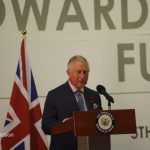
  • King Charles III – 2022 Speech at Conferral of City Status to Wrexham

    King Charles III – 2022 Speech at Conferral of City Status to Wrexham

    The speech made by King Charles III in Wrexham on 9 December 2022.

    Boneddigion a boneddigesau,

    Mr Mayor, Leader of the Council, Chief Executive, Ladies and Gentlemen,

    My wife and I are absolutely delighted to be with you in Wrexham today to celebrate your becoming a city.

    As you know, city status was granted to eight different communities in order to celebrate my late mother’s Platinum Jubilee. As we now mark this historic occasion, we also look back, with mingled sadness and pride, at that extraordinary reign, during which, as you know, my mother’s great love for Wales was always apparent.

    It is thoroughly fitting that we should celebrate the creation of Wales’s newest city in the setting of this magnificent church, which truly deserves its designation as one of the Seven Wonders of Wales. Of course, as no fewer than six of the seven Wonders are in North East Wales, we cannot help but think that whoever wrote that famous anonymous rhyme – Pistyll Rhaeadr and Wrexham steeple, Snowdon’s mountain without its people, Overton yew trees, St. Winifred’s Well, Llangollen’s Bridge and Gresford’s bells – must have been from this part of the world!

    A little earlier today, I had the opportunity to see one of the other wonders of Wrexham, namely the football club, which is busy putting Wrexham on the map as never before. And, of course, this comes after the Welsh national team has brought unprecedented international ecognition to Wales through qualifying for the World Cup.

    The motto of Welsh football – Gor-au Chwar-ae, Cyd Chwar-ae – sums up the spirit of community, and of joint endeavour, which is so important to Wales, and which, over the years, I have come to know and value more than I can possibly say.

    So, Ladies and Gentlemen, as you celebrate your new-found status for this very special part of the world, nothing could give me greater pleasure than to say llongyfarchiadau and to wish you every possible success for the future.

  • Nia Griffith – 2022 Speech on BCB International Being Ignored for Government Contracts

    Nia Griffith – 2022 Speech on BCB International Being Ignored for Government Contracts

    The speech made by Nia Griffith, the Labour MP for Llanelli, in the House of Commons on 6 December 2022.

    My hon. Friends have set out very clearly the shocking scandal of the PPE contracts. They have also mentioned people who were working hard on the frontline, putting themselves in danger to help others; and, of course, all those who lost loved ones. I will concentrate on the damage that the VIP lanes have done to loyal, reputable companies—the backbone of British business—who offered to be generous and go the extra mile to help, rather than looking for chances to rip the taxpayer off.

    BCB International, a company that operates in my constituency and in Cardiff, is a long-established manufacturer and supplier of life-saving equipment, including medical equipment. Its primary customers in the UK are the Ministry of Defence, the Ministry of Justice and many police forces, and it exports approximately 40% of its turnover. It makes, for instance, very good fuel for camping gas stoves called FireDragon. It was registered, it was known to the MOD and the MOJ, it had a good reputation, and it was ready to go. In March 2020, it was engaged in the production of its high-quality hand sanitiser, Dr Browne’s, in Llanelli. It employed up to 100 staff, and worked 24/7. The 80% alcohol sanitiser passed all the appropriate tests, and was well liked and used by the NHS in Wales, as well as by a number of police forces and other public bodies.

    Owing to the PPE shortages, the UK Government made a commitment early in the pandemic to “back British business”, and their “UK Make” programme, headed by Lord Deighton, was tasked to unleash the potential of UK industry to scale up domestic PPE manufacturing. In May 2020, Lord Deighton said:

    “As countries around the world face unprecedented demand for PPE, British industry is stepping forward to make sure vital pieces of equipment reach our workers on the frontline.

    My role is to increase our homegrown PPE supplies, both now and in the future, by investing in the potential of UK manufacturing.”

    However, I understand that the “UK Make” policy was withdrawn in September 2020.

    In May 2020, following the Government initiatives, BCB invested £700,000 in new hand sanitiser production equipment. It also bought in high-quality FFP3 face masks from Europe, set up gown production, and made oxygen bottle bags. It supplied all those, successfully and on time, to the Welsh NHS, to Welsh and English police forces and to the MOD.

    From March 2020, the company regularly tried to sell its British PPE products to the Department of Health and Social Care, and it has provided a brief overview of just some of the names that it was in contact with. I do not have time to read them out now, but the company tells me that although it made these contacts and sent many other emails, it was never contacted back. That is an utter disgrace, and today we have seen why that was the case. There was no need for it to be the case. Good, loyal companies that did everything they possibly could and turned their workforces to working for the country were completely ignored.

    As has been mentioned, it was not like that in Wales, and companies have spoken very highly of the Welsh procurement procedure. It is no wonder that the Auditor General for Wales has said:

    “In contrast the position described by the NAO in England, we saw no evidence of a priority being given to potential suppliers depending on who referred them.”

    Those are extremely strong words, from an auditor referring to what was happening in England. The Welsh Government put in place good arrangements overall. That is such a contrast, and this is what is so damaging to all the good businesses in this country who want to play by the rules.

  • David Davies – 2022 Comments on Opening of Tŷ William Morgan

    David Davies – 2022 Comments on Opening of Tŷ William Morgan

    The comments made by David Davies, the Secretary of State for Wales, on 5 December 2022.

    Tŷ William Morgan is central to the UK Government’s ambitious plans to create a dynamic and flexible civil service which is equipped for the future.

    Its position in the heart of Cardiff also demonstrates the UK Government’s commitment to Wales. It is already providing a modern working environment to attract and retain high-calibre staff who will be able to grow and develop their careers here in Wales.

    Being able to work with colleagues from right across government under one roof is proving hugely beneficial and it is fantastic to be able to open Tŷ William Morgan officially.

  • Julie Morgan – 2022 Statement on the Review into the Death of Logan Mwangi

    Julie Morgan – 2022 Statement on the Review into the Death of Logan Mwangi

    The statement made by Julie Morgan, the Welsh Deputy Minister for Social Services, on 29 November 2022.

    Diolch, Llywydd. The death of any child is a cause of great sadness and I want to start by expressing my own deep sorrow at Logan Mwangi’s death, and to take this opportunity to offer my sincere condolences to Mr Ben Mwangi and Logan’s wider family for their awful loss.

    The publication last week of the child practice review following the murder of Logan has, I am sure, been an extremely difficult time for Logan’s father and family, especially as it has brought to public attention further details regarding the events that resulted in Logan’s life being taken at such an early age. My heart goes out to him and to everyone affected by Logan’s death.

    I have read the report very carefully and I understand and accept the learning themes and recommendations made. At this stage, it would not be appropriate for me to respond in precise detail to all of the recommendations made, as further conversations are necessary with service providers. However, I am wholly committed to doing everything in my power to protect children and to pursue through the courts those who inflict such dreadful pain and misery on the most vulnerable in our society, and I will keep Members informed as work progresses.

    The purpose of the child practice review is not that of investigation, but to consider our services and help us to learn what we can to improve what we can do to protect children. I am grateful to the review panel for ensuring that they considered areas of learning that have been identified in other reviews throughout Wales and England while conducting this child practice review. It is right that we continue to consider the learning from other such tragic incidents in formulating the approach that is required to make improvements to ensure the protection of children in Wales.

    It is, however, a sad and recurring fact that such reviews share, in many cases, similar themes, particularly regarding challenges in sharing knowledge and information across agencies, issues regarding systems and processes, and concerns about leadership and culture. We would all wish for a world where such events as these could never happen and that this would be the last case of its kind. That we cannot always identify individuals who could act like those convicted of Logan’s murder would suggest that it won’t be. However, that must not prevent us from doing everything in our power to reduce the risk as much as we can and provide the help that children in Logan’s position need and deserve.

    The review clearly demonstrates that there is scope for practice improvement. Our focus must be to concentrate on the four key learning themes identified within the review that must be considered with the same care and urgency as the 10 local and five national recommendations identified. The learning themes identified are described in the report as being systematic and not isolated instances of individual error or poor practice. It is clear to see from the review that the recommendations are not allocated to one single agency. Child protection requires a multi-agency approach and, as such, all actions required to address these learning themes and implement the recommendations must be taken forward together, based on shared responsibility.

    The National Health Service (Wales) Act 2006 and the Social Services and Well-being (Wales) Act 2014 set out the statutory duties for local authorities and local health boards in Wales. While these agencies, of course, must always adhere to such legislation, I will be looking to strengthen the ways in which agencies in Wales work more closely together to deliver our essential services. We all have a responsibility to implement the learning identified within this child practice review and to work together to carry out the actions required to effect change in the systems in which our professionals work and to support them in delivering their work. I expect all relevant agencies to consider the child practice review in full, to take immediate steps to consider how each theme and recommendation applies to them, and to identify how the learning themes and recommendations can be acted upon within the areas for which they are responsible. I will be contacting the senior leaders of agencies who have a responsibility in taking forward the recommendations of the review to ascertain their intended course of action in terms of their response to the child practice review.

    Welsh Government has a key strategic role in protecting children, especially the most vulnerable, and I fully accept my role as a Minister in that. In the light of this review and following the report of the Independent Inquiry into Child Sexual Abuse and work already under way in relation to our children’s services transformation programme and elsewhere, I will be accelerating work on a national practice framework to help inform decision making in children’s services. The framework will be a key foundation for how we work in Wales to ensure the best outcomes for our most vulnerable children. It’ll help us achieve greater commonality and more seamless working at local, regional and national level so that we can support children to remain with their families, and provide them with the support they need as we transition to fitting services around people, not people around services.

    Care Inspectorate Wales have agreed to undertake a rapid review of structures and processes in place to inform decisions about how a child is added to or removed from a child protection register, and I will act on their findings, as necessary. I am aware of the calls for an independent inquiry into children’s services in Wales. Having now read the child practice review, I remain convinced that the time is now for action and not for further review. The findings and recommendations of the child practice review have been generated with consideration of other reviews in England and Wales, and it must be our priority to do what we can now and not wait for another report to tell us what we know already that we have to do.

    To improve the multi-agency approach that I have outlined today, I want to remind Members that we are in the final stages of developing the single unified safeguarding review, which has been developed jointly with stakeholders across Wales. The single unified safeguarding review has been developed to reduce the need for multiple reviews against a same single incident, enabling the swifter completion of reviews, such as child and adult practice reviews, to identify and implement all learning more quickly and on a pan-Wales basis. The draft statutory guidance to support the single unified safeguarding review will be subject to a public consultation exercise, which is planned for early in the new year.

    Whilst it’s not routine practice to respond to child practice reviews, I and my Cabinet colleagues felt that it was entirely appropriate to recognise the publication of this review, and I’d like to take this opportunity to personally apologise to Mr Ben Mwangi and his family for the failings that contributed to the tragic loss of Logan’s young life. Diolch.


  • Jane Hutt – November 2022 Update on Ukraine

    Jane Hutt – November 2022 Update on Ukraine

    The statement made by Jane Hutt, the Welsh Minister for Social Justice, in the Welsh Parliament on 22 November 2022.

    Diolch yn fawr, Llywydd. Thank you for giving me the opportunity to provide an update to Members about our ongoing work to support people from Ukraine seeking sanctuary in Wales.

    When I last updated you in October, Wales had welcomed just under 6,000 Ukrainians under the Homes for Ukraine scheme, including under our supersponsor route. Arrivals have continued at a slow but steady pace, and just over 6,100 Ukrainians sponsored by the Welsh Government and Welsh households had arrived in Wales by 15 November. There have been additional arrivals under the Ukraine family scheme, but we are not given that data by the UK Government.

    More than 8,450 visas have now been granted to people from Ukraine who have sponsors in Wales, so we can expect the number of arrivals to continue to grow. We are mindful that events in Ukraine can have a direct impact on the number of Ukrainians who may arrive in Wales, and although we have seen a small number of individuals seeking to return to Wales after a period back in Ukraine, we are not seeing a significant change at present.

    I was very disappointed not to see any clarity in the autumn statement about the financial future of the Ukraine schemes. We have repeatedly called for funding parity between the Homes for Ukraine scheme and the Ukraine family scheme and the Ukraine extension scheme. We urgently need confirmation of year 2 and 3 funding to support the delivery of public services, as well as continued and uplifted host ‘thank you’ payments. The latter would ensure hosting arrangements can continue despite cost-of-living impacts.

    Without certainty around future funding, Welsh Government, local government and Welsh hosts are all facing difficult choices about the support we can provide to Ukrainians seeking sanctuary. We hope the UK Government will provide this clarity quickly. In response to my letters to UK Ministers about these issues, I am pleased to say that I heard from the new lead Minister for Homes for Ukraine, Felicity Buchan MP, last week. Despite this uncertainty about the finances, a meeting has been convened for Thursday with the Scottish Government Minister, Neil Gray MSP, and myself, regarding our financial position.

    We remain focused on supporting people into longer term accommodation, so that they can have more settled lives. Over 700 Ukrainians being supported via the supersponsor route have now moved on from initial accommodation, over 500 of these within Wales, either with hosts, in the private rented sector or in other transitional and longer term housing. However, the wider pressures on housing across Wales mean that we cannot support people into longer term accommodation as quickly as we would like. We will therefore, continue to urge potential hosts to come forward and register an interest at gov.wales/offerhome. Hosting provides swift, flexible and cost-effective accommodation that enables people to regain some independence and to integrate with local communities. We know that some individuals and families have come forward to offer their homes and are still waiting to become hosts. I’m very grateful for their generosity. We are working closely with local authorities and Housing Justice Cymru to help support the matching process. But we still have nowhere near enough hosts to accommodate all who need support. We would also urge those thinking about hosting to visit Housing Justice Cymru’s website and join an introduction to hosting seminar to find out more.

    I’d like to focus the rest of this statement on an important commemoration that we discussed in this Chamber in May. This November marks the start of the ninetieth anniversary of the Holodomor in Ukraine. This was the man-made famine that caused millions to die and was bravely exposed to the world, in part, by Welsh journalist Gareth Jones. The debate in May was an important reflection on those events and we committed to commemorating the event in Wales.

    On the fourth Saturday in each November, Holodomor is commemorated internationally. We will be organising an event at Alexandra Gardens in Cardiff, alongside so many other important memorials to peace. The event will include participation by me, the First Minister and Counsel General, local government, religious leaders, and the deputy ambassador of Ukraine to the United Kingdom. Ukrainians will be invited to attend and we will lay wreaths to remember those who suffered during previous actions perpetrated by a government in Moscow. After the commemoration, we will promote Holodomor remembrance on our social media channels to try to raise awareness further. Last week, we also wrote to hosts across Wales to ensure they knew about Holodomor and encouraged them to discuss plans with their guests.

    Putin’s current atrocities in Ukraine are part of a longer term pattern of aggression against the people of Ukraine stretching back many decades, and marking Holodomor in this way shines a light on this. Gareth Jones, the journalist from Wales, writing about the man-made famine instigated by Stalin made clear that the affected Ukrainians did not seek pity and he remarked upon their fortitude. I think we can all see those characteristics on show in Ukraine again today. And whilst we honour the resilience and courage of the Ukrainian people in the face of Putin’s aggression, we also reaffirm our commitment to help Ukrainians here in Wales to record their knowledge of war crimes committed in more recent times.

    Through the founding of Donetsk and the reporting of Gareth Jones, as well as the more-than 500 Ukrainians who called Wales home before this conflict, our countries had several threads that connected us. Now, we are home to probably more than 7,000 Ukrainians and those many threads between our peoples bind us together more strongly than ever. I know all Members will join me in expressing Welsh solidarity with all Ukrainians on the anniversary of Holodomor.

  • Hannah Blythyn – 2022 Statement on Supporting Armed Forces and Veterans Communities in Wales

    Hannah Blythyn – 2022 Statement on Supporting Armed Forces and Veterans Communities in Wales

    The statement made by Hannah Blythyn, the Deputy Minister for Social Partnership in Wales, on 21 November 2022.

    Following the recent Remembrance period during which the country paid tribute to our Service People, Veterans and their families, I am pleased to inform Senedd Members of two significant and positive developments that will help support delivery of the Armed Forces Covenant across Wales.

    The Office for National Statistics and Office for Veterans Affairs launched a UK-wide Veterans Survey on 10 November.  The survey aims to learn more about the lives of the UK Armed Forces community, veterans and their families.  The questions in the survey ask about access to services and circumstances since leaving the Armed Forces.  It also asks about lifestyle, health and well-being.  The Welsh Government has been fully involved in the development of the survey, alongside our counterparts from across the Devolved nations.  The anonymous data from the survey will enable the Welsh Government, UK Government departments, public bodies and charities to further fine tune our plans for meeting the needs of Veterans into the future.

    Early indications are of a significant response to the survey, including from Wales. The survey is anticipated to close in February 2023 and Senedd Members can help in extending its reach.  The survey can be found at: Veterans’ Survey – Office for National Statistics (ons.gov.uk)

    I am also pleased to inform Senedd Members that the Armed Forces Covenant Duty will come into force on 22 November 2022.  As I updated Members of the Senedd in October 2021, the duty will have implications for public bodies working in health, housing and education.  Bodies will be expected to pay due regard to the Covenant when developing, delivering and reviewing policies and decisions relating to the Armed Forces community and to help improve their access to public services.  We have worked with the UK Government to develop the Statutory Guidance to accompany this duty, which can be found at: Armed Forces Covenant Duty Statutory Guidance – GOV.UK (www.gov.uk).

  • Dawn Bowden – 2022 Statement on Delivering the Culture, Heritage and Sport Actions in the Anti-Racist Wales Action Plan

    Dawn Bowden – 2022 Statement on Delivering the Culture, Heritage and Sport Actions in the Anti-Racist Wales Action Plan

    The statement made by Dawn Bowden, the Welsh Deputy Minister for Arts and Sport, and Chief Whip, on 22 November 2022.

    I am pleased to announce grant awards of £4.5m over the next three years to support the delivery of the culture, heritage and sport goals and actions in our Anti-Racist Wales Action Plan, and our related Programme for Government and Co-operation Agreement commitments. I am grateful for the support and contribution from the Plaid Cymru Designated Member as we take forward this important work.

    To eradicate institutional and systematic racism we must collectively and collaboratively work together to bring about change.

    I have awarded just over £1.67m to our cultural and sport arm’s length bodies and more than £2.8m to 22 local, regional, national or independently run culture, heritage and sport organisations across Wales. This builds on the investment I made last financial year of almost £350,000 to begin the preparatory work with organisations including the National Library for Wales, the Archives and Records Council Wales and Race Council Cymru.

    All the projects receiving funding have a focus on co-production, demonstrating our commitment to placing lived experience at the center of policy, service development and delivery.

    Our national and local museums, galleries, libraries, theatres, and sporting venues need to be inclusive of Black, Asian and Minority Ethnic people and places. Our culture, heritage and sports services must be culturally competent and reflective of the history and contribution made by Black, Asian and Minority Ethnic people to Welsh society.

    Amgueddfa Cymru – National Museum Wales, the Arts Council of Wales, the National Library of Wales, the Royal Commission on the Ancient and Historic Monuments of Wales and Sport Wales will use the funding to build on existing and new programmes of activity, accelerating their work on anti-racism at a national level.

    Funding for Sport Wales will focus on the development and delivery of anti-racist training over a three-year period. The funding for the National Library of Wales will support several projects, including The Communities of Wales, which tells stories through the lens of people who moved to Wales. And the funding for Amgueddfa Cyrmru will enable more cultural programmes and events to be co-designed with community-based organisations, individuals and artists.

    Funding for the Arts Council of Wales will enable the appointment of more Black, Asian and Minority Ethnic creative practitioners and funding for the Royal Commission on the Ancient and Historic Monuments of Wales will develop the Places We Remember project, which records the heritage of Welsh Asian communities in Wales.

    The 22 other organisations to be supported are:

    • Aneurin Bevan University Health Board
    • Archives and Records Council Wales
    • Association of Independent Museums
    • Beyond the Border Wales
    • Butetown Arts and Culture Association
    • Chartered Institute of Library and Information Professionals
    • EatSleep Media
    • GEM Cymru (Group for Education in Museums)
    • Glamorgan Archives
    • Gôl Centre
    • Dr Marian Gwyn
    • Hijinx
    • KIRAN Cymru
    • Makers Guild of Wales
    • Monlife Heritage
    • North Wales Regional Equality Network
    • Race Council Cymru
    • Show Racism the Red Card Wales
    • Tennis Wales
    • Theatr Genedlaethol Cymru
    • Tŷ Pawb and Wrexham County Borough Council Community Cohesion team
    • Women Connect First

    Last week, I visited two projects – Monlife Heritage and Tŷ Pawb – to hear how they will use the new funding and the difference it will make.

  • Rebecca Evans – 2022 Welsh Government Response to the UK Autumn Statement

    Rebecca Evans – 2022 Welsh Government Response to the UK Autumn Statement

    The statement made by Rebecca Evans, the Welsh Minister for Finance and Local Government, on 17 November 2022.

    The Chancellor of the Exchequer today presented his Autumn Statement against the backdrop of inflation at a 40-year high and the ongoing cost-of-living and cost-of-energy crisis for people, public services and businesses.

    The Office for Budget Responsibility (OBR) has confirmed the UK economy is in the early phase of a recession that will likely be lengthy and which will result in real and significant costs for people across the UK. The rate of unemployment is expected to increase substantially. People’s household disposable incomes are expected to fall by more than 7% over next two years – the biggest fall on record – to levels last seen in 2013.

    Ahead of the Autumn Statement, I called on the Chancellor to invest in people and public services. This was partially reflected today, with additional funding over the next two years but it does little to address the immense challenges created by rising inflation.

    Our overall settlement over the three-year spending review period (2022-23 to 2024-25) is still worth less in real terms than it was at the time of the Spending Review last year. We will receive an additional £1.2bn over the next two years (2023-24 and 2024-25) but our overall budget in 2024-25 will be no higher in real terms than in the current year and our capital budget will be 8.1% lower.

    As the London School of Economics, OECD and others have stated, additional capital investment is vital to improve productivity and growth, yet there was little of substance in the Chancellor’s statement to support our energy security and decarbonisation.

    The tax measures announced today do mean that those on higher incomes, and more able to afford it, are being asked to contribute more to help fill the hole created by the UK Government’s mismanagement of public finances. However, everyone is being asked to pay more.

    I am concerned about the UK Government’s stealth tax increases on workers with its decision to freeze income tax thresholds, particularly the personal allowance. As more workers are drawn into higher tax bands, a greater proportion of their pay will immediately be lost. People in Wales are likely to be disproportionately affected by this measure.

    The UK Government has listened to my suggestion to increase the windfall tax on the energy sector, however it could have done more to close loopholes that enable oil and gas companies to offset their tax liability if they invest profits in the UK. There was also scope for the UK Government to expand this tax to cover the banking sector.

    Targeting support to the most vulnerable is an absolute necessity and it was essential that the Chancellor responded to our call to raise pensions and benefits in line with inflation. There was nothing in the statement about additional measures which could have made a practical difference to the cost-of-living crisis, such as help for those on pre-payment meters, support for credit unions and further action to prevent people becoming homeless.

    While the Chancellor’s Statement provided further details of the energy price guarantee for homes, from April next year the average household can still expect to see a further increase of £500 in its annual energy bill and there was no clarity for businesses about what tariffs they will be paying next year.

    Inflation has eroded the Welsh Government’s budget to worrying levels and local authorities and NHS organisations are reporting significant shortfalls in funding as a result of inflation, pay pressures and rising energy costs. The Chancellor’s statement today fails to address this significant funding gap.

    To make up this shortfall and secure the short-term future of the vital public services on which we all rely, we needed to see our budget increase in line with inflation. This has not happened.

    As a Welsh Government, we will continue to work to prioritise our budgets to shield the most vulnerable and maintain our commitment to create a stronger, fairer and greener Wales as we prepare our draft Budget 2023-24.

    We will carefully consider the detail of today’s statement as we work towards publication of the draft Budget next month.