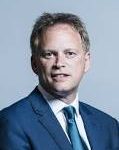
The letter sent by Grant Shapps, the Secretary of State for Transport, to Sadiq Khan, the Mayor of London, on 31 August 2022.
Category: Transportation
-
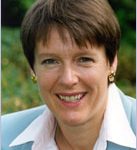
Caroline Spelman – 1998 Speech on Road Tolling
The speech made by Caroline Spelman, the then Conservative MP for Meriden, in the House of Commons on 30 January 1998.
I was aware that a range of charges was being considered and I would be interested to know whether there are plans for other such schemes. If there are, I should like to make a plea on behalf of the retailers in the heart of the city of Birmingham who are concerned about the prospect of road pricing as they feel that it might deter retail customers.
Perhaps it would be useful to consider toll-free times and zones. There is no doubt that the heaviest congestion on the west midlands motorway network occurs around commuter times. Shoppers can arrange to travel to the city centre during off-peak times. I should be most concerned for the overall economy of the region if shoppers were deterred from supporting retailers in the city centre because they were penalised by the road-pricing system.
Where road-pricing systems operate on the continent, particularly in France, the local communities benefit from toll-free zones. The peage system on French motorways that pass close by major cities is often suspended at certain times. Local people have to put up with so much pollution, noise, nuisance and congestion that it would be hard for them to bear most of the burden of the cost.
I invite the Minister to tell us about some of the studies that the Government might be carrying out in relation to best practice elsewhere in Europe. The city of Zurich in Switzerland has managed to stabilise traffic growth, so it would be interesting to take a lesson from that major European city. I should also draw the Minister’s attention to the success of the Umweltkarte in Freiberg in south Germany that has limited the access of heavy goods vehicles to city centres by introducing a scheme to encourage synchronised deliveries. Instead of several lorries travelling to the city centre each day, one lorry distributes to a variety of outlets. If that is too complicated, it is often possible to have a depot outside the city from which short-distance distribution facilities are arranged. That reduces the number of large heavy goods vehicles and their attendant pollution in city centres.
I should like to commend what the hon. Member for Ceredigion (Mr. Dafis) said about pollution. Although the subject is outside the remit of the Minister’s Department, let me draw her attention to the health aspects relating to the composition of vehicle fuel.
We should re-examine the effects of pollution on health and the development of cleaner fuel. In that respect, British legislation has mirrored that in the United States. The removal of lead from petrol under the previous Conservative Government was a major success and represents an important contribution to the nation’s health, but vehicle fuel still contains components that are detrimental to health. In the United States, progress has been made in the reformulation of gasoline—particularly the removal of benzene, which scientists tell us is just as carcinogenic as lead. Perhaps there is a case for taking another look at the health aspects of fuel composition as part of the general objective of the Bill.
The hon. Member for Cambridge (Mrs. Campbell) advocated the use of bicycles. I recall from my days in that city that the greatest danger to health was being run over by one. She drew attention to the pollution in Parker street in Cambridge city centre. I recollect that that is also largely due to the variety of fuel used by the public transport fleet—notably buses—as diesel fuel has a high level of particulates. Perhaps as one of the more general objectives of the Bill and our efforts to improve the nation’s health, we should look again at the composition of fuel.
Finally, to return my point about land use in relation to transport, let me make a strong plea for the on-going study on the allocation of additional homes to different parts of Britain. Last Friday, I visited a wire rope manufacturer, Webster and Horsall, at Hay Mills in Birmingham. When the company was looking for more staff, it advertised for recruits who could walk to work. The factory’s shift pattern and the availability of public transport meant that people coming from Chelmsley Wood in my constituency had to take at least two buses, and spent at least an hour and a half getting to work. That led to reduced reliability and many staff resorted to bringing their cars to work.
As part of the Government’s strategy to provide new homes, I urge them to consider urban regeneration, not just for the sake of the urban economy but to benefit the country overall by relieving congestion on our arterial and commuter roads.
-

Eric Pickles – 2002 Speech to Conservative Spring Forum
The speech made by Eric Pickles to Conservative Spring Forum on 24 March 2002.
Stephen Byers is a misunderstood man.
Some think that stands for whatever is perceived to be fashionable in left wing politics, that he has betrayed his Marxist past. This is to misunderstand the man completely. I have known him a good many years and I can say he is utterly consistent in his devotion to Marxism.
Of course it is not Karl Marx his principles are based on. It is Groucho Marx.
Specifically Groucho’s attitude to ethics: ‘These are my principles. If you don’t like them I’ve got some others.’
That is why Mr Byers can move from 80’s rabble-rouser, to 90’s smoothy-moderniser, from millennium-man advocate of the third way, to pronouncing the death of the third way, with the ease and the speed that the Department of Transport change their press officers.
As Secretary of State, if your idea of long term planning is to survive the censure motion after next, it is little wonder that the Government’s transport policy is so directionless.I was recently asked what enthusiasm I had for the Government’s ten-year transport plan. I replied that I was so enthusiastic I was seriously thinking of ways I could enter year three onwards for the Whitbread prize for fiction.
Labour had the opportunity to consolidate the gains made from the privatisation of Railtrack under the Conservatives. We reversed the long-standing decline in passenger numbers, investment poured in and our railways had a better safety record. Instead Byers blew it with a botched renationalisation. That will cost the travelling public dear.
Remember a third of the promised railway investment is meant to come from private sector funding. It is frankly ridiculous for the Government to argue that that the private sector investment has not been affected following their decision to confiscate a company from its legal owners.
Any lingering doubts remaining over future relations between private finance and Government were dispelled by the letter to the Chancellor written by over twenty top fund managers saying that Labour’s handling of Railtrack has damaged relations between the Government and the City, increased the cost to the taxpayer of public private partnerships and discouraged people from saving.
In other words on every length of road, stretch of track, new hospital or school building – anything that needs private finance there will be a Byers premium. We will all pay more to get less
Anybody who cares about our Railways will tell you what we need to do to make life better: get Railtrack out of administration, stop dithering over the approval of rail franchise renewal, because if you don’t there will be no new trains after 2004. Do that and we can deal with the number one problem facing our railways a lack of capacity to meet any significant increase in demand.
Transport is full of acronyms: SPV’s, Infroco’s, NATS and, of course, PPP. Rarely does the acronym meet the reality. This is true with the PPP for the Tube. Forget Public-Private Partnership, in London PPP stands for Poor Prospects for Passengers.
Poor prospects of seeing a new train in ten years. There are only 12 new trains in service on Tube by 2008.
Poor prospects for projects due to start ten years into the thirty year project, with the Government offering no stability for funding.
Poor prospects for the taxpayer: despite promises we still don’t know whether the PPP is value for money, and we still don’t know when things go wrong who will pick up the tab.Poor prospects for overcrowding: the PPP will make no significant improvement.
If over Easter you decide to visit London and decide to join Londoners on a sweaty, smelly overstuffed tube carriage, ten years from now were you to repeat the journey chances are it will be the same. Chances are it is likely to be the same carriage; the only difference will be the carriage will be ten years older.
We will inherit a terrible mess on the London Underground. To make life better we will seek to develop a series of quality contracts with Transport for London on: punctuality, reliability, cleanliness and safety (personal and public). We will ensure a no strike agreement operates on the tube. The closing down of the network has no place in the resolving of industrial and sometimes petty disputes in modern Britain.
We are now rapidly approaching an important milestone to judge this Labour Government, laid down by no less a person than the gentle and serene Deputy Prime Minister.
After the 1997 general election, John Prescott said, ‘I will have failed if in five years time there are not … far fewer journeys by car. It’s a tall order but I urge you to hold me to it.’
Since 1997 traffic on all roads has consistently increased. Estimated traffic levels rose by 3% between the fourth quarter of 2000 and the same quarter of 2001 alone – according to official DTLR figures.
We will be looking for volunteers to break this news to Mr Prescott. A fast car and an ability to duck will be an asset
Labour and their “me too” lackeys the Liberal Democrats see the car driver as the enemy. Someone to be despised pilloried and above all taxed.
Fuel tax is still the highest in Europe. At the last count the average UK retail price of diesel was over 20 pence per litre more expensive than any other EU country. It is worth re-emphasising that the pre-tax price of both fuels was among the cheapest in Europe, but the total amount of tax per litre was the highest of these countries
New taxes are introduced on company cars, but ministerial cars are of course exempt. Nothing must disturb the air conditioned splendour of the New Labour elite, free from the care of the day to day bustle the rest of us face.
Recently in a debate, I asked a Minister when was the last time he travelled on the tube during peak time and whether he enjoyed it? The question was so unexpected in its impertinence that I got the shocked response that he ” could not remember.” That would be a sad admission from any Minister, but from the Minister of Transport it was shameful.
Much needed relief roads lie abandoned. Motorways that would take traffic away from chocked towns are neglected. The number of miles of motorway opened each year has significantly declined under the Labour Government. In 1997, the last year Conservatives were in government, Britain’s motorway network increased by 42.3 miles. In 2001, it increased by a paltry 6.1 miles.
Talk to any of New Labour’s advocates of congestion charging after a few polite pleasantries about inter-model shift from car to public transport and they go onto the real agenda. For the truth is this: if there was even a modest shift away from the car towards buses or trains, our public transport system could not cope. There is not sufficient capacity.
No, what Labour’s transport gurus want is a reduction of journeys, principally by people on low incomes. According to them poor people can’t have cars.
To make life better on our roads there needs to be a bigger dose of reality and recognition that the car and the lorry are a help, and not a hindrance, to an integrated transport policy. Indeed they are vital to many people in rural areas, many elderly, disabled and parents with young children.
Over the coming months we will look at getting the best out of our road space. At getting the best out of better lane management, better repair management, better use of technology. We will look at innovative ways of providing public transport with some of the flexibility that private transport has.
We understand that people will not leave their car at home until personal safety is improve on buses and trains, pupils will not return to school transport until better supervision and safety provided.
Above all we understand that we have to integrate our transport policy into the way people live their life, rather than how some cloistered transport boffin thinks they should. Our policy will be firmly grounded in reality, with a determination to repair the damage inflicted by Byers and to make our transport system better.
-

Andy Burnham – 2022 Comments on Manchester Buses Coming Under Public Control
The comments made by Andy Burnham, the Mayor of Manchester, on 17 August 2022.
The introduction of lower, simpler fares across our bus network signifies the biggest shake-up of our bus system in close to 40 years and comes at a critical time.
Hundreds of thousands of households across Greater Manchester are deeply worried about money, with fears of even higher bills just around the corner.
As the most used form of public transport, with around 2.5million trips every week across the city-region, introducing lower fares for bus passengers is the best way we can help the most people with the cost of travel right now.
Coupled with the extension of Our Pass, which provides free travel for 16 – 18-year-olds, we are taking steps to make an immediate and tangible difference to people’s lives by putting money back into their pockets.
While this is the right thing to do, we cannot at this point guarantee that this new fare structure will be permanent. It will be reviewed annually. But the more that people use the buses, the more likely it is that we will be able to sustain it.
-

Tim Collins – 2003 Speech to Conservative Party Conference
The speech made by Tim Collins, the then Shadow Secretary of State for Transport, at the Conservative Party conference held in Blackpool on 6 October 2003.
Someone told me a story the other day. A man arrives at the pearly gates, and sees a clock above his name.
He asks the angel what it signifies. This, he is told, is a clock whose second hand moves forward every time he tells an untruth.
The man spots another clock, where the second hand has not moved at all. “Whose is that?” he asks. The angel says, “That belongs to Mother Theresa, who never told a fib in her life.”
So the man asks, “Where’s Tony Blair’s clock?” “Oh that”, says the angel – “Gabriel has it with him and uses it as a portable fan.”
Our Prime Minister has a problem with telling the truth. But we are quite happy to tell the truth about him and his Government.
On transport they have been a miserable failure.
Tax paid by the motorist up by an extra £13 billion a year – up yet again last week – yet we have had the smallest road-building programme since the Second World War.
Motorway congestion up by 50 to 250% – while the CBI estimates congestion costs to business rising to over £20 billion a year.
And train punctuality sharply worse since 1997.
Transport Secretary Alistair Darling came up with a clever scheme to reduce the number of trains running late. Run fewer trains!
After all if a train never sets off, it can’t arrive late. But even on his plans, train punctuality won’t return to 1997 levels, even after billions more, until 2010 at the earliest.
Even worse there is the national scandal of the West Coast Main Line. After billions and billions of pounds of spending, and after months of disruption for engineering work – all designed to enable trains to run faster and to shorten journey times between the North West and London, we have just had the new autumn timetable published. The good news is that there is a 40 minute difference between the old time and the new time for getting from Oxenholme in my Cumbrian constituency to London. The bad news is that this is an extra 40 minutes – meaning that journeys which took three and a half hours ten years ago will be taking four and a half hours in year 7 of this Labour Government. Your money, ladies and gentlemen, is going straight down the plughole – and we all have every reason to be furious about it.
Listen to people talking about transport and you soon hear frustration, disappointment and anger.
The train boss who told me of growing bureaucracy from a Strategic Rail Authority set up just to supervise the rail industry, not to run a single station or train, yet shortly due to employ more people in central London than British Rail did when it ran the lot.
The signalling engineer who told me that moving one signal box a few feet costs tens of thousands just on the contract.
The residents of small villages – near Rugby and Cliffe, Gatwick and Stansted – with homes and lives blighted by Labour’s plans to destroy historic churches and wildlife sanctuaries in the pursuit of new and bigger airports everywhere – and I challenge Alistair Darling to do as I have done and visit these areas himself.
I think of the pensioner who told me he was left gasping for breath, frail and fearful of a fall because at one station he had to climb steep steps in deep darkness and when he asked a member of staff for help was told “we don’t do that anymore”.
Or the disabled person, coping with courage all her life, brought to tears because Gordon Brown’s petrol taxes mean she can no longer afford to drive.
Think of these people and you will realise – enough is enough. And how dare Labour claim they care about the vulnerable, when this is what they do to the vulnerable?
Conservatives believe in freedom, in a smaller state, in the unlimited potential of individuals and private enterprise.
That’s why the motorist will always be hated by the Left, and championed by the Conservatives. It’s about freedom.
Ten years ago Mr Blair used to tell a story. While canvassing he met a man washing his Mondeo, who said he’d never dream of voting Labour. Mr Blair spent years wooing Mondeo Man. What he never said was that in office he’d try to ensure the only thing you could afford to do with a Mondeo is wash it.
When will they learn? Driving is not a sin. For millions of pensioners, people with disabilities and rural residents it is the only thing which makes life bearable.
British motorists get the worst deal in the industrialised world.
Just 14p in the £ of taxes raised from drivers is spent on roads in Britain. It’s by far the lowest ratio in any G7 country.
The result? A road system which one Midlands company boss told me is unfair to call Third World – because at least in the Third World many roads are getting better.
The Lib Dems just offer the same as Labour but with added spite. Even more congestion charging. Even higher motoring taxes. Even less road-building. Not so much an alternative to socialism as an alternative to sanity.
The Left’s prejudice and intolerance have a sinister consequence.
Under the Conservatives, the numbers killed on our roads halved – from 6,800 in 1979 to a still far too high 3,500 in 1997. Year after year the numbers fell. But no longer.
In each of Labour’s first five years over 3,400 people have died on the roads – effectively the same number they inherited.
What has changed? Cars still get safer. Medical science still gets better. Yet 1200 more people lose their lives each year now than would if 1980s trends had continued.
However unintentionally, Government policy is largely to blame.
They stopped building new, safer roads – in 2001, not one inch of tarmac was added to the national road network.
And they have used speed cameras to replace, not supplement, traffic patrols. Under Labour, police officers on traffic duties have been cut by nearly 10%. As Chief Superintendent Mike McAndrew, former head of traffic policing for the Met, has said “speed on its own is not the real killer – it’s dangerous driving.” Without enough traffic patrols, he says, “people who drive dangerously, recklessly and carelessly don’t get caught”.
So under Labour the numbers caught for driving without a licence or proper insurance have fallen by 10%. The numbers caught for driving with a defective car have fallen by 30%.
Yet the number of speeding tickets issued to people who have
correctly registered their car has shot up by 250%.
So generally safe, generally responsible drivers are pursued ruthlessly for every mistake they make – while the really dangerous and irresponsible drivers, those without a licence, without insurance, without a safe car are let off time and time again.
Enough is enough. And so my first announcement today is that we will tell the police and the courts to concentrate not on easy catches but on the really dangerous drivers.
We will boost the numbers of traffic patrols. Improve driver education. And increase significantly penalties for those driving without a licence or without insurance, including permanent confiscation of their cars and when appropriate longer jail terms. Our Fair Deal for the Motorist starts with basic commonsense.
Greater safety also comes from new roads. We’ll cut both the costs and the time of building roads, starting by scrapping time-wasting Multi-Modal Studies.
Unlike Labour, we don’t aim to obliterate every last blade of grass in southern England. Our approach will ease overheating in the South – a sensible regional policy, respect for the Green Belt and, at last, firm and fair immigration and asylum rules to cut the numbers moving here from abroad.
And of course we’ll keep the presumption, placed into law by the last Conservative Government, against major road developments in National Parks or Areas of Natural Beauty.
But we also know sensibly planned, sensibly built roads enhance the environment for villages and small towns, cut pollution and congestion, and reduce the number of accidents.
Most serious crashes occur not on motorways, but on small roads.
International experience shows that higher and more rigorously observed limits on motorways, combined with lower limits on small roads, strongly help to reduce road casualties.
That’s why we will on entering office immediately start a swift and comprehensive review of speed limits. It’s likely to mean raising the motorway limit to 80 mph while providing lower limits – of 20 mph or below – near schools or in small communities.
A more rational attitude towards risk across transport is needed.
In the eighteen months since the last time anyone was killed on a crashing train in Britain, over 5,000 have died in road accidents.
It is much safer to travel by rail than by road. Yet very often the opposite impression is given. This distortion has got to stop.
Because of it, we spend far more public money on rail safety than on road safety, putting a small chance of saving a few lives ahead of much better prospects of saving far more.
Because of it, we saw a 3 month shutdown of London’s Central Line after an incident with no serious injuries – even though that caused tens of thousands to travel at far greater risk on the roads.
And because of it, we saw a collapse of rail performance after Hatfield, causing many to switch to riskier road journeys.
In the same way thousands of speed bumps were constructed, often thoughtlessly – when the London Ambulance Service say more die because ambulances are slowed than are saved by the bumps.
So a narrow obsession with health and safety is endangering lives, not saving them. And we have yet another way of taking money from taxpayers and giving it to the legal profession.
I don’t know about you but my view is that the lawyers get quite enough of all our money as it is.
So my second announcement today is that Conservatives will concentrate on the big risks, not the small ones. When the next rail incident occurs, we will not rush to feed the frenzy of dangerous speculation encouraging people to switch to the roads.
We’ll revise Government guidance which arm-twists councils into unwise speed bump schemes. Some make sense; many do not.
And in office we will spend public money available for transport safety not to get headlines but to save the largest number of lives.
Bus services need to be reliable, speedy and above all accessible, especially for pensioners. So we’ll aim to build on today’s half-priced bus pass to boost mobility for all, not just those near a bus route – because retirement should be a pleasure, not a sentence.
We’ll be creative about transport solutions in the big cities – we’ll explore entirely private sector means to build London’s Crossrail, and welcome the thinking by Birmingham Conservatives about a privately funded new Tube. I look forward to further talks when next June Conservatives there sweep Labour out and take charge of England’s second city.
Money spent on our railways must be better spent.
So my third announcement is a radical slimming for the bloated Strategic Rail Authority. We doubt it makes sense to have three different public sector bodies – all created by Labour – supervising the rail network. And we’ll give longer franchises and more freedom to train companies, in return for much better service.
We must also end Labour’s non-stop milking of the motorist.
In London, Steve Norris is campaigning vigorously against Ken Livingstone’s Congestion Charge – not least because instead of the promised millions for public transport it is so off beam that it actually means less money for public transport. And we will resist Labour’s plan for the greatest stealth tax of all: charging 50p a mile for using roads we’ve already paid for many times over.
In fact, here’s a thought. For years the British taxpayer has paid for new roads in Ireland, Greece, and Spain – and now in Iraq and Afghanistan. How about using British taxes on British roads?
My final announcement concerns the purpose of the Department for Transport. The next Conservative Government will focus it on a goal which today astonishingly is not even an aspiration – reducing the time it takes to make a journey.
We’ll address the frustration of millions – that it takes longer and longer to get home from work, get goods to market or visit friends.
As technology advances, we expect many things to get better year by year. It shows the poverty of ambition of the Left that their aim on transport is just to manage decline into ever greater misery.
There are no easy overnight solutions. But we can do better than the Left because we will at least try.
Our policies will help traffic flow, not force it to grind to a halt. And we’ll aim to make journeys easier for all, not just for some.
Under the Conservatives, the right to travel will not be confined to those with two Jags, huge egos and the sort of staggering hypocrisy which it takes years of socialist belief to create.
I’m not saying this lot get things wrong – but they do sometimes remind me of the dyslexic devil-worshipper who sold his soul to Santa.
Conference, let’s take pride in fundamental Conservative values.
Never has loyalty to our nation-state been more evident in every age group, or more necessary in a changing world. Never has the need to get rid of petty interfering bureaucrats been greater.
And never has it been more popular to believe in lower taxes – especially lower council taxes for pensioners.
So let us for goodness’ sake take off the sackcloth and ashes.
I for one am proud that Conservative Governments won the Cold War, revived our economy, and gave power and wealth and home ownership to millions who only dreamed of it before.
And I’m proud to point out that today’s prosperity wasn’t built by Tony Blair but by Margaret Thatcher.
With renewed self-confidence we can take on and take apart a Prime Minister who calls himself “battered”. Not half as battered, Tony, mate, as you are going to be.
But let’s start with the Lib Dems. Their leader said that it was quite wrong to call his party Left wing – and then his Conference debated turning Britain into a People’s Republic, called for voting rights for convicted prisoners, voted to abolish all effective immigration controls and said most burglars should not go to jail.
Charlie, the only place those ideas aren’t leftwing is in Fidel Castro’s Cuba. The Loony Left rides again.
Lib Dem Menzies Campbell says he wants to turn our head of state into a bicycling monarch. We have not forgotten that wonderful Golden Jubilee, nor that we have seen a magnificent half century of public service for which all of us should be profoundly grateful.
A bicycling monarchy, Mr Campbell? Let me echo Norman Tebbit – on your bike.
Mr Blair has done so much harm to this nation. Ripped up its constitution, ramped up its taxes, bankrupted its farmers and fishermen, persecuted its motorists and let its violent crime soar.
Worse, he has lied and lied and lied again. But none of this constitutes the most serious charge against him.
Signing this country up to any European constitution, against his solemn word, is a grave matter. Committing Britain in principle to the current version of that constitution, which represents the end of national liberty, is shameful. But doing so without seeking the consent of the British people in a referendum is an absolute, utter and wholly unforgivable disgrace.
Mr Blair arrogantly takes a third term for granted.
Some Labour rebels want to see the back of him tomorrow. Good luck to them, I say – but we all know they won’t succeed.
The Liberal Democrats have already conceded that they cannot deny him a further term in office.
Only this Conservative Party can eject Tony Blair from Number Ten within the next two years.
But we’ve got two obstacles to overcome to do that.
First, there are some in this party who need rapidly to relearn the virtues of loyalty. Let us remind them – Iain Duncan-Smith was elected overwhelmingly, is daily exposing Tony Blair’s deceit and dishonesty and deserves the undivided support of this entire party.
So let the message go forth to every Conservative, however eminent, senior or self-important – if you can’t say anything positive about your party, kindly don’t say anything at all.
Second, we need to raise our sights. Some say our aim should simply be to cut Mr Blair’s majority and prepare to win the Election after next.
Conference, we can’t wait that long. Those relying on failing public services, those paying skyrocketing taxes, those seeing years of striving to give their children a good education ruined by the corruption of the exam system, those held up as transport grinds to a halt – all these people can’t wait.
Above all, Britain can’t wait. Another New Labour term could end all that makes Britain what it is.
That is why our job is not just to oppose this Government, but to replace this Government.
If we go forward now with energy, and fire, and passion – if we demonstrate commitment and clarity and courage – if we pledge ourselves anew to fight for liberty, for democracy, and for Britain – then we will do more than deserve to win – we are going to win.”
-
Mick Whelan – 2022 Letter to Grant Shapps on Rail Strikes
The letter sent by Mick Whelan, the General Secretary of ASLEF, to Grant Shapps, the Secretary of State for Transport, on 10 August 2022.
Dear Secretary of State,
Public comments regarding ASLEF members at Avanti West Coast
I’m writing in regard to comments that you have made about Avanti West Coast’s failure to run its promised timetable. The company has blamed its failure on a lack of staff caused by “unofficial strike action by ASLEF members.” You have gone on to repeat this claim and blame “unofficial strikes” for the disruption.
It’s of great interest to us that you go on to mention that “archaic rules from 1919 mean working on rest days is voluntary,” and “outdated rules mean the rail industry relies on goodwill of drivers volunteering to work overtime to ensure services run 7days a week.”
I must confess, that your comments have caused a great deal of confusion, which I do hope you might be able to allay. Firstly, why are you repeating an unfounded lie that ASLEF has organised unofficial strike action? There are only two explanations. One, that you have been duped by the company who are covering themselves for gross mismanagement, or alternatively that you are knowingly repeating a lie.
Secondly, we’d love to know what these archaic rules from 1919 are, because collectively, we are flummoxed.
Thirdly, we believe that for train drivers to safely transport thousands of people, they must have rest days in which they are allowed to rest. The clue is in the name. Do you believe that train drivers should be forced to work on allotted rest days?
Lastly, I am pleased to inform you that we do agree with one of the points you make in your otherwise confused comments. That is that it’s absurd that “the rail industry relies on goodwill of drivers volunteering to work overtime to ensure services run 7days a week.” That is why it has been ASLEF policy for decades to bring Sundays into the working week. It’s something our negotiators try to achieve, and have achieved, in many companies. I regret to inform you that it’s not ASLEF or 103 year old rules preventing this from happening. It’s the companies you have handed contracts to over the last couple of years. They’ve made the calculation that operating a railway on overtime, is cheaper than employing enough train drivers to run timetabled services, even if that means services are unreliable. I’m starting to have concerns that perhaps these companies are prioritising profit over quality of service.
It shouldn’t be surprising that we have policy in favour of Sunday in the working week. You see, this would mean more high quality green jobs, and as the train drivers’ union, we think that’s a very good idea.
It is pretty clear that Avanti West Coast has had to cancel huge amounts of trains and is providing an abysmal service due to complete mismanagement, including not employing enough drivers, yet has decided to blame the insufficient number of drivers it does employ. The same drivers you thanked profusely in letters to me, and in public, during the pandemic. It is nothing short of a disgrace that a secretary of state for transport should parrot these lies.
These unfounded comments risk the welfare of our members and increase the risk of abuse. I therefore ask that you publicly correct your previous statements and check that any statements you make about our members in the future are, in fact, true.
Yours sincerely,
MICK WHELAN
General Secretary
-
Mick Lynch – 2022 Comments on the Carmont Tragedy
The comments made by Mick Lynch, the General Secretary of the RMT, on 12 August 2022.
We are extremely concerned that Network Rail is dragging its feet dangerously on key safety recommendations following the Carmont Rail Tragedy.
In fact, instead of focusing on improving rail safety, it is proposing to make matters even worse by cutting thousands of safety critical jobs across the network.
Our railways do not need safety cuts which will make it more likely tragedies like Carmont will happen again.
Network Rail needs to act on safety recommendations and swiftly reverse its safety critical jobs cull.
-
Mick Lynch – 2022 Comments on Strikes on the Tube and Overground
The comments made by Mick Lynch, the General Secretary of the RMT, on 18 August 2022.
Tube bosses are having secret negotiations with the government about slashing jobs and undermining working conditions and pensions all in the name of removing subsidies.
This government-led assault on staff will be disastrous as no other comparable urban transport system in the world operates without financial support from central government to ensure good and reliable services.
The government needs to stop trying to get services on the cheap by slashing jobs and wages and invest in what should be a world class transport network.
-
Mick Lynch – 2022 Comments on Fire and Re-Hire Proposals
The comments made by Mick Lynch, the General Secretary of the RMT, on 19 August 2022.
Despite his denials Mr Shapps has clearly been dictating how the train companies should conduct negotiations with RMT and now he’s ordering them to fire and re-hire workers.
The minister also appears to be increasingly desperate and out-of-touch making wild claims about train services between London and Manchester without having a clue what is actually happening.
Instead of threatening to cut thousands of safety-critical jobs, introducing driver-only trains, closing ticket offices, bailing out the private rail companies as well as bringing in more anti-union laws the government and the employers should enter meaningful negotiations with RMT.
-
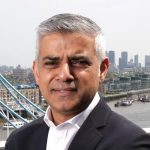
Sadiq Khan – 2022 Statement on London Underground Strikes
The statement made by Sadiq Khan, the Mayor of London, on 19 August 2022.
I am extremely frustrated by the strike action today on London Underground. This will have a serious impact on London’s businesses and commuters, at a time when we’re working to get more passengers back on to the network and boost the capital’s economic recovery.
TfL have done everything they can to avoid this disruption going ahead and I’ve urged the unions to call off this action and to work with TfL to lobby the Government for a long-term funding deal that is fair to Londoners and our heroic transport workers.
I encourage Londoners to listen to TfL’s latest travel advice and avoid travelling on the Underground, and only travel if essential on the rest of the network.