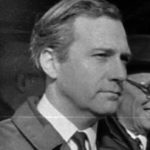
Category: Trade Unions

  • John Stonehouse – 1969 Statement on the Post Office Dispute

    John Stonehouse – 1969 Statement on the Post Office Dispute

    The statement made by John Stonehouse, the then Postmaster General, in the House of Commons on 30 January 1969.

    The Postmaster-General (Mr. John Stonehouse) As the House knows, the strike of overseas telegraphists, which began on 20th January, has been extended by the Union of Post Office Workers to a ban on overtime by all its members at the beginning of this week and to a complete withdrawal of labour in the major cities throughout the course of today.

    The effect on the telecommunications services has been very much as I predicted. In the overseas services the non-operation of the telegraph message and manually operated telex services has led to some congestion in the automatic services. But this has not caused serious dislocation. The ban on overtime has not worsened the position in the overseas services significantly, and the effect on the inland services has been slight.

    The effect of today’s strike is more considerable. The number of staff reporting for duty in the telephone service has varied from a very few in some places to nearly 100 per cent. elsewhere, in all the 19 affected towns a skeleton service is being maintained in most switch rooms and a service of better quality in some. The 999 service has been maintained in operation throughout. The inland telegram service is virtually closed. In the 18 provincial towns affected by the strike a skeleton service is being given. Outside the 19 affected areas the inland telephone operator and telegram services are functioning with little disturbance.

    Today, the overseas automatic telex and telephone services are working normally and the overseas operator telephone service is handling reasonably successfully all the traffic which it has given to it, mainly from the Metropolis.

    In the cities where postal workers are on strike today there will be a massive backlog of mail by tomorrow.

    To give priority to really urgent mail, I have, therefore, decided that from start of business tomorrow the inland second-class letter service, that is, the 4d. service, will be suspended, and also the inland printed paper service for packets between 1½ and 2 lb. In addition, regional directors are authorised to refuse at their discretion to accept local parcels, and large batches of first-class, that is, 5d. mail, newspapers and periodicals.

    I am giving regional directors similar discretion to maintain or reopen services internal to their regions, or with neighbouring regions by arrangement, as circumstances permit.

    Information about local restrictions and services will be made available in the towns concerned.

    For the time being, I am not imposing any restriction on the overseas services.

    I hope that these measures will be successful in keeping the urgent mail flowing reasonably well. Second-class mail already in the pipeline will in some cases, unfortunately, be subject to heavy delay.

    On the actual negotiations, I have nothing to add to the statement which I made in the House on Monday evening. I repeat what I have told the House before, that I greatly regret this escalation of the dispute and the great inconvenience which it is causing to our customers.

    Mr. Bryan Is the right hon. Gentleman aware that his statement about the suspension of the second-class mail will be received with utter dismay, and that many will regard it as a continuation of his effort to force more and more people into the first-class stream?

    Secondly, does he realise that his statement shows clearly that the situation will change not only from day to day, but from place to place? Will he, therefore, give an assurance that detailed announcements of the immediate local situation will be released daily in the various areas?

    Thirdly, has the Postmaster-General been able to do anything about the promise which he made in the debate last Monday, that he would look into the possibility of special arrangements for medicines and pharmaceuticals?

    Fourthly, on the question of the dispute and the negotiations themselves, does the right hon. Gentleman recall that, in the Post Office debate on Monday night, he described two new proposals which he had made to the union that afternoon? Has he received an official reply to those proposals?

    Mr. Stonehouse I do not agree that the public will treat my statement with dismay. They recognise that this is a very serious strike indeed, and that it is the responsibility of the Post Office to maintain priority for really urgent mail. I have made the decision to encourage our customers not to use the mail services for lower priority mail.

    On the second point, I shall arrange that in each of the provincial towns as well as in London there will be statements made about the position. If any relaxation can be made as regards mail or parcels which can be accepted, a daily report will be provided.

    On the third point, I have arranged that urgent medical supplies, with the proper label affixed, will be accepted for delivery.

    Regrettably, the union has advised us that it cannot accept referring the dispute to another form of arbitration which we proposed to it on Monday. We very much regret that the union has not responded to this reasonable proposal.

    Mr. Dobson I heard the latter part of my right hon. Friend’s statement with some astonishment—[HON. MEMBERS: “Hear, hear.”]—shared, I believe, by many of my hon. Friends, that no conciliatory measures were proposed by the Government at this stage. Is he aware that, when the negotiations broke down in the early part of Monday evening, the union officials left knowing, and telling the Government officials present, that they could not accept the proposals which were being offered to them of alternative arbitration proceedings?

    Will my right hon. Friend now take it from me—I warn him carefully of this—that there is a possibility of still further escalation and still further delays, which this union, with all its proud traditions, does not want to see? It wants to have a return to properly negotiated productivity bargaining at the local level, which is all that it is asking of my right hon. Friend.

    Mr. Stonehouse The Government have made very reasonable proposals to the union. They have offered a 5 per cent. pay award from last July and an additional 2 per cent. which would come into operation as soon as an agreed productivity arrangement could be made effective. This is in line with the other arrangements which have been made for the other grades which the union represents.

    Furthermore, we have agreed that the 2 per cent. part of the package will be subjected to a post hoc revaluation in the light of experience, so that if it is, in fact, worth more, the union will get more. I think that this is a very fair proposal. It would have been most unwise to have responded to the sort of threats we have had during this week. I think that the Government’s position on this strike has been very clear and has been right.

    Mr. Bessell Is it correct, as the union has said, that it has offered to accept the 5 per cent. increase backdated to the beginning of July and to negotiate the 2 per cent.? If that is the case, is it not a grave dereliction of duty by the Postmaster-General not to have accepted that offer?

    Mr. Stonehouse I have been constantly pressed in the House about the inadequate overseas telegraph service. I want that service to be improved. It can be improved if productivity measures are introduced. It is essential, under the Government’s prices and incomes criteria, that wage increases should be allowed when associated with genuine, copper-bottomed productivity increases.

    The Government have, therefore, insisted that the package, including productivity improvements, must be accepted by the union. This will help us to improve the service, which I have recognised to need improvement, and where obvious productivity improvements can be brought into effect.

    Mr. Tomney Will the Postmaster-General now state categorically and with as much honesty as he is capable of—[HON. MEMBERS: “Withdraw.”]—whether in private he has admitted to the Union of Post Office Workers that the settlement is just and that only the Cabinet is preventing a settlement? If 14½ per cent. is good enough for the tally workers on the dockside, what is wrong with this just claim for the Post Office workers?

    Mr. Stonehouse I have no need to repeat the statement which I made in the House on Monday night. I fully endorse the Government’s line of negotiation with the union and I have publicly and privately asked the union to accept the suggestions which we have made.

    Mr. Stratton Mills Will the right hon. Gentleman consider accepting second-class mail after the arrears of mail arising from today’s stoppage have been cleared, rather than, as he appears to be doing, refusing to accept it for the complete duration of the overtime ban?

    Mr. Stonehouse Of course, I will consider what relaxation we can have, but I am concerned that we should deal with the tremendous backlog of mail which is being caused not only by today’s stoppage, but by the ban on overtime which we have experienced since the beginning of this week. We want to clear the urgent mail and then, if we can clear the congestion, we shall certainly consider accepting more mail.

    Mr. Orme Is the Postmaster-General aware that the response of the Post Office workers to today’s strike call is an indication of the injustice they feel about the manner in which the Government are treating them? Why should two classes of workers be created by the prices and incomes policy? How does he expect to get away with imposing upon them a productivity deal to which they are not genuinely a party and which is a negation of collective bargaining?

    Mr. Stonehouse There must be agreement and agreement implies that each side has a point of view. The Government’s point of view, which is reasonable, is that the 2 per cent. is the appropriate figure, but we have offered to have this reviewed in the light of experience. I do not think that anything could be fairer than that and it certainly corresponds with the agreements which we have reached with the rest of the grades for which I am responsible.

    Sir R. Cary Is the Postmaster-General aware that almost the entire switchboard staff of the Palace of Westminster reported for duty this morning? Will he convey our thanks to them?

    Mr. Stonehouse I am sure that the observations made in this Chamber will be made known to those concerned.

    Mr. George Jeger If everyone who now sends his mail by 4d. mail sticks on a 5d. stamp, how will that reduce the number of letters and the amount of overtime required to deal with them?

    Mr. Stonehouse That is a perfectly appropriate question and it helps me to make this point. We want members of 1536the public and business houses in particular who use second-class mail for circularising less important material to hold it back until the strike is over, or until the congestion has been reduced, so that the Post Office can give priority to customers who choose the first-class mail as being appropriate to the material they post.

    I believe that the action which I have announced today will encourage at least the big posters to hold back their mail until the Post Office has dealt with the congestion.

    Mr. Sharples Can the right hon. Gentleman be a little clearer about the 4d. mail already in the pipeline? Is it to be insisted that this mail is to be virtually held back by the Post Office and, if so, why was this information not included in the expensive advertisements which have appeared in the Press?

    Mr. Stonehouse We shall not deliberately hold back the mail; we do not believe in doing that. We will deal with the 5d. mail as a priority because we believe that we owe that to the customers, but we will deal with the 4d. mail in the pipeline as soon as we can.

    Mr. John Mendelson Will the Postmaster-General tell the House, as he has not yet done in all these exchanges, why the Government are refusing to give him authority to apply to this group of workpeople the procedure which was applied to the railwaymen—that they should agree to an interim increase and then, in private negotiations over the next three or four months, deal with the problems of productivity? Is not this refusal a sign of the rigidity of the incomes policy leading to dangerous madness and dislocation? Why can he not apply that procedure and then reach agreement in three or four months’ time?

    Mr. Stonehouse I am sure that my right hon. Friend the First Secretary will take note of the wider policy question which has just been raised. However, in these negotiations we have offered the union an arbitration procedure and we have not even insisted on the Civil Service arbitration procedure if the union does not want to have that. This could be set up very quickly and it could no doubt produce an interim report which would certainly help to bring the dispute to an end.

    Mr. Bryan Why is the right hon. Gentleman to discontinue the 4d. mail, the second-class mail, in country areas where local post is quite unaffected, or should he unaffected, by the strikes in the big towns?

    Mr. Stonehouse As I have said, if it is possible to accept local 4d. mail regional directors will have the authority to do so. However, much of the 4d. mail posted in country areas is destined for delivery in the major towns which have been seriously affected by today’s stoppage and which will be increasingly affected by the ban on extra hours which we have been experiencing this week. Furthermore, we face a stoppage on Sunday which will add to the congestion.

    Mr. Raphael Tuck Does the Postmaster-General appreciate that the overseas telegraph operators are alleging that the 2 per cent. offered has not been properly costed but has been only estimated? Is he aware that if he will only agree to the 5 per cent. which all other Post Office workers have received, the union representatives will get round the table and have this figure properly costed and will agree to the result? Why is the Ministerial committee being so thickheaded as to stop this, something for which the right hon. Gentleman has to “carry the can”?

    Mr. Stonehouse I have already made clear that we accept the point made by the union that the 2 per cent. is an estimated amount. Therefore, we have conceded that during the course of time there will be a post hoc revaluation. If, in the light of experience, it is worth more than 2 per cent.—if it is worth 3 per cent.—the union will receive it. We believe that, for productivity reasons, this must be tied to the 5 per cent.

    Sir D. Walker-Smith Will the right hon. Gentleman identify the powers under which, by executive action, he suspends an important part of the postal services of the community and say whether he is acting subject to any—and, if so, what—Parliamentary control? Will he also define more precisely his reference to the large packets of 5d. mail, which are also subject to the threat of interference, and say what notice, if any, people posting such mail will receive of such interference?

    Mr. Stonehouse I am advised that in this exceptional position, it is perfectly legal for these temporary restrictions to be imposed. There is no weight limit on first-class mail. There is a size limit. We are accepting first-class mail up to any weight within a particular size.

    Several Hon. Members rose—

    Mr. Speaker Order. We must move on.

    Mr. Heath May I ask the Postmaster-General to tell us the power under which he is acting and on which he has received legal advice?

    Mr. Stonehouse I will, of course, consider whether a further statement can be made about this—[HON. MEMBERS: “Answer the question.”]—I will—but I am advised that I am fully entitled to impose temporary restrictions in the light of the exceptional circumstances with which we have to deal. This is an operational restriction. It is not a complete ban on mails. If it were a complete ban on mails, it could, possibly, be construed as being out with my powers; but it is not a complete ban and, therefore, I am advised that it is acceptable.

    Mr. Heath Has the Postmaster-General come to the House and made this announcement without checking for himself that he has the authority and without being able to tell the House what that authority is? This is just not good enough.

    Mr. Stonehouse I have no reason to believe that the powers that I am exercising in running this service are in any way illegal.


  • John Stonehouse – 1969 Speech on the Strike of Overseas Telegraphists

    John Stonehouse – 1969 Speech on the Strike of Overseas Telegraphists

    The speech made by John Stonehouse, the then Postmaster General, in the House of Commons on 20 January 1969.

    I very much regret that a strike of overseas telegraphists has started as a result of a dispute over pay and productivity.

    In accordance with an agreement between the Treasury and the Staff Side of the National Whitley Council, civil servants who had not had a pay increase since 1st January, 1966 were granted a pay increase of 5 per cent. from 1st July, 1968, pending a full revision of their salary scales in the light of pay research.

    The Union of Post Office Workers opted out of this agreement. It chose instead to negotiate separately with the Post Office pay claims in respect of the various grades which it represents. It wanted to take account of increased productivity in various spheres of work, and agreements were, in fact, negotiated on this basis for telephonists and postmen.

    In the case of overseas telegraph operators, I have made an offer of 5 per cent from 1st July, 1968—equivalent to the central Civil Service pay increase—plus a further 2 per cent. from an early date conditional upon their accepting changes in practice which will increase productivity.

    The union refused to accept this offer and counter-claimed a 5 per cent. increase backdated to 1st July, 1968, deferring until next July any discussion on productivity measures. In effect, the union is now seeking to opt back into the Civil Service central pay agreement for O.T.O.s, having secured substantial advantages for the telephonists and postmen by opting out.

    The union’s proposal has great disadvantages, because it would mean deferring important improvements in efficiency which we know can be made and substantial improvements in service in a part of the system where service improvement is badly needed. I accordingly rejected the union’s proposal and maintained the offer of 5 per cent. plus 2 per cent., making a total of 7 per cent.

    I have had to close down the overseas telegraph message service and the manually operated telex services. The automatic telex services to the principal countries of Europe, New Zealand and parts of the United States and Canada, and the overseas telephone services will continue to operate, but these services are already fully loaded during normal business hours and any substantial increase in use will cause severe delay.

    I deplore the damage to the commercial life of the country, and particularly to the export drive, which will result from the strike, and I appeal once again to the union to agree to a reference to arbitration, which is the agreed method of resolving disputes of this kind.

    Mr. Carr While thanking the right hon. Gentleman for the full account of the position as it is at the moment, may I ask him to tell the House, in view of the very serious effect of this matter on our foreign trade, what positive steps he proposes to take?

    Secondly, will he consider, in conjunction with his right hon. Friend the First Secretary, in the light of this experience, whether the proposals that she has just made in her White Paper would in due course help in a situation of this kind?

    Mr. Stonehouse I agree with the right hon. Gentleman about the serious effects of this strike. This is all the more reason why I hope that the union will take note of the appeal which I have made to it during the last few days and which I have repeated today, namely, that it should allow this dispute to go to arbitration, which is the agreed procedure. I shall, of course, consult with my right hon. Friend the First Secretary about any further steps which we can take.

    Mr. Mendelson In view of the sense of grievance under which this group of officers is working, which is similar to the feeling which was held by many railway-men when there was a railway dispute earlier, would my right hon. Friend consider finding a solution along the same lines as was found on that occasion; namely, that he should call the two sides together and offer to agree to an interim increase, and that the final increase be left in abeyance until such time as agreement is reached?

    Mr. Stonehouse There is an agreed procedure for proceeding to arbitration in the event of a dispute. As the union has been asking to be treated as civil servants, subject to the central pay increase, I believe that it should accept the agreed procedure.

    However, we are very willing indeed to grant immediately the pay increase which it has requested, namely, 5 per cent. from last July plus 2 per cent. for agreed productivity measures which would help to improve the service and substantially improve the conditions of service of these employees.

    Mr. Bessell Is the right hon. Gentleman aware that this strike is likely to cost the country millions, if not tens of millions, of pounds? In these circumstances, should not he accept the offer of the union of 5 per cent. now and negotiate the question of a productivity agreement later, particularly as this is a matter of genuine national emergency?

    Mr. Stonehouse I am sure that the hon. Gentleman would not expect me to say anything today which might worsen the situation and make an agreement less likely. I will, of course, bear in mind what he has said.

    I believe that the offer which the Post Office has made to this group of employees—it is in line with agreements that have already been reached with their fellow employees, the postmen and telephonists—is one which, in all wisdom, should be accepted.

    Mr. Kitson Would the right hon. Gentleman consider, in the present difficult situation, the possibility of reducing charges during the reduced rate period for international telephone calls?

    Mr. Stonehouse I do not believe that that would be a helpful suggestion. As I said, there is spare capacity at off-peak times. I believe that it would be in the best interest of the members of the business community for them to take advantage of that spare capacity. I do not think that it would be in the general interest to reduce rates.

    Sir Clive Bossom As this is a most vital service, especially to small exporters, would it be possible for the Armed Services to handle the most urgent traffic and also the most urgent compassionate cases?

    Mr. Stonehouse I do not believe that the hon. Gentleman’s second suggestion would be particularly helpful. I am considering ways in which particularly small exporters can be assisted because, as the hon. Gentleman says, they will be particularly affected as a result of this strike.

    Mr. Kenneth Lewis Would my right hon. Friend endeavour to persuade Government Departments to limit their use of the overseas service so that industry may maximise its use?

    Mr. Stonehouse I will certainly consider that suggestion.

  • John Stonehouse – 1975 Speech on Industry and Trade Unions

    John Stonehouse – 1975 Speech on Industry and Trade Unions

    The speech made by John Stonehouse, the then Labour MP for Walsall North, in the House of Commons on 20 November 1975.

    I do not know any-thing about the Maidstone plant. I am happy to concede the point as the hon. Gentleman, who represents the area, is so well informed about the Maidstone situation.

    We have also had a depressing situation at British Leyland which has resulted in the company having to be bailed out at enormous expense. On the news today there was the announcement that 2,000 workers producing Jaguars, cars which sell extremely well abroad and which are in great demand, have been laid off because of yet another dispute. It does not seem that the lessons are being learnt. I wonder when the Government will speak out frankly on this issue which has been so undermining the performance of British industry.

    Last week we had yet another illustration of the deplorable effect of strikes—namely, the dispute at the Daily Express. Of course we do not read very much about that sort of dispute in the newspapers, because there is an undertaking in the newspaper industry not to refer overmuch to the overmanning problems and the restrictive practices that they have to suffer. We only hear about such matters indirectly.

    I understand that 96 maintenance engineers at the Daily Express were dismissed, many of them being superfluous to requirements. Their reply was not only to put a pistol to the head of their employer in the way that Mr. Riccardo was putting a pistol at the Prime Minister’s head, but to bring out all the engineers of all the other newspapers, who also put their employers against the wall with machine guns at their heads. It was that sort of threat that made the employers collapse. Yet another victory was secured for a minority within a minority.

    That sort of action is not trade unionism: it is a Mafia tactic, a protection-racket tactic. There is too much of that sort of action in British industry and someone some day must say something about it. I believe that the trade unions have developed too much power and that they abuse their power. They do not act in the best long-term interests of their members. Further, they do not act in the best interests of the community. Very often they act irresponsibly.

    Faced with that situation, what action do the Government take? Instead of dealing with the problem of the growth of trade union feudalism within our industrial economy, a feudalism which is partly, if not mainly, responsible for our depressing experience in productivity compared with other industrial States, they announce that they will reintroduce legislation to remove the remaining unsatisfactory features of the Industrial Relations Act 1971. They will waste parliamentary time going through all that again when they could have had a Bill enacted last Session with only one serious point excluded from it from the Government’s point of view. What was that point? It was the provision that sought to establish a closed shop for journalists. When we are faced with the immense problem of trade union feudalism, why is it that we have the Government wasting time on a proposal to reintroduce legislation for that purpose?

    We also have proposals for industrial democracy, with which I agree. However, I hope that that does not mean syndicalism. In many areas in which industrial democracy is applied I believe that there is an attempt by those concerned not to run a viable industry, but to hold others to ransom.

    Regrettably, there are signs of that happening within the Post Office, an industry which I knew quite well a few years ago. At that time we came up against many overmanning techniques by the trade unions. Even today restrictive practices are still preventing the implementation of new ideas and the use of new machinery. I believe that industrial democracy must mean a greater sense of responsibility on the part of workers and those who participate rather than the impression being given that through this technique they will be able to hold on to restrictive practices which are clearly anathema to the progressive improvement of Britain’s economy.

    Reference is made in the Gracious Speech to the Post Office banking system. It is important that the Ministers responsible should come clean about the real cost of Giro. During the period when I was the Minister responsible it was my job to take over the Giro proposals which had already been agreed by my colleagues. It was my task to implement the new service. I did so at the time with some misgivings, and I look back with some dismay on what was done at that time and since. Giro has already cost the taxpayer over £30 million. It is a wasteful system. Even today it is wasting money, because it under-estimates the real cost of the service. In particular, it depends so much on the postal services and there is no accurate costing of the postal factor involved. That disguises the true cost of the Giro service.

    In introducing the Gracious Speech, the Government have taken on more than they can handle during the next year. I believe that the devolution proposals will need a great deal more consideration than even the Government have imagined. I hope that they will turn their attention away from shibboleths and diversions to tackle at least two of the most serious problems that need to be dealt with if we are to get out of our crisis.

  • Gordon Brown – 2001 Speech at the TGWU Conference

    Gordon Brown – 2001 Speech at the TGWU Conference

    The speech made by Gordon Brown, the then Chancellor of the Exchequer, on 5 July 2001.

    I am delighted to be here today to address this conference.

    And as we thank you we give you this promise too: as a Government we will work every hour, every day, everywhere we can be, to justify the faith you and the British people have placed in us.

    And after four years of Government under Tony Blair’s excellent leadership, I believe that we are more determined than ever to implement in Government our values of justice and fairness.

    Since the time I went to school and grew up beside a mining community – since the first factory closure I remember being announced in my home town – and for a whole generation our lives have been dominated by unemployment: long term unemployment, youth unemployment, the fear of unemployment, the poverty and insecurity caused by unemployment.

    I remember when I first became an MP a young couple coming to see me, both in tears, who having lost their jobs, knew they would lose their homes too.

    I remember too the tragedy of the miners in my constituency, steel workers, dockyard workers, transport workers TGWU workers redundant in their forties who feared they would never work again.

    So I want communities where young children getting up and going to school each morning see a whole community going to work.

    And 20 years ago, 10 years ago, even 5 years ago young people tried as hard as now to find work – they were applying for jobs, they were training for jobs. Don’t tell me these generations of young people didn’t have talent or potential, couldn’t learn or hold down a job. What they needed was a government on their side.

    But for years in opposition we could do nothing about it. All we could do was protest. Together we marched for jobs, we rallied for the right to work, we petitioned for full employment. All of us, trade unionists, Labour party members, Labour MPs. But out of government we could not create jobs.

    So the day we came into Government we acted – with a windfall tax to pay for our New Deal.

    And I say it was right that five billions be transferred from the richest utility companies in our land to create jobs in the poorest and most deserving communities of our country.

    And every time a young person denied a job under the previous Government gets a job under this one we should be proud of the New Deal – that this is what can happen when we work together.

    And we took action too, to secure the essential precondition for full employment – economic stability not boom and bust.

    Remember all those who said we could never manage the economy.

    But it is because we rejected short-termist free for alls, the take-what-you-can, irresponsibility – and it is because we put faith in our values of economic responsibility – building from solid foundations, looking to the long term – that with Bank of England independence, tough decisions on inflation, new fiscal rules, hard public spending controls, we today in our country have had economic stability not boom and bust, the lowest inflation in Europe, long term interest rates and mortgage rates for homeowners lower than for thirty five years.

    And when we are told that low inflation, low interest rates and low borrowing are nothing to do with the decisions of this Government and are just a matter of good luck, let us ask them: if it was so easy to keep interest rates and inflation low, why did their policies give us 15 per cent interest rates, 11 per cent inflation, a £50 billion deficit and why did they repeatedly plunge Britain into boom and bust?

    It was not by lucky chance but by difficult choices that we now have a more stable economy. And it won’t be by a lucky chance but by hard choices in this Parliament – on extending competition, enterprise incentives – including our capital gains tax reforms – and reform – that we will build upon that stability a deeper and wider prosperity.

    Now I understand the concerns people have today in the high technology sectors because of the American downturn – and as a Government we will help people, on their side to cope with change – and I understand also the worries people have about the exchange rate and we will continue to do more to recognise the vital contribution of modern manufacturing to exports, innovation, and our great regions.

    But we know too that what manufacturers fear most is a return to the old boom and bust.

    So there will be no return to the short-term lurches in spending policy or tax policy that would put long-term stability and public services at risk.

    No inflationary or irresponsible pay rises, which put youth or other jobs at risk.

    No relaxing our fiscal disciplines as some would like.

    No change but consistency in our European policy – in principle in favour of the euro, in practice the five tests that have to be met.

    And no change in the drive that Bill, you and I are all engaged in – with more competition not less, more innovation not less, more investment not less, and more not less small business development – to make Britain the most enterprising, productive and therefore prosperous economy over the next decade.

    Our stability is for a purpose and I can report to you today that the full total of jobs we have together created since 1997 is 1 million 250 thousand jobs, more people in work today than at any time in the history of our country.

    Unemployment among men the lowest since 1979.

    Unemployment among women the lowest since 1976.

    Youth unemployment now the lowest since 1975.

    Long term unemployment now the lowest since the early 1970s. Unemployment among single parents and the disabled lower than ever.

    But as long as there is unemployment we will not be complacent.

    With 300 million a year we are extending the New Deal so that every one of the long term unemployed and their partners in all parts of the country can have new opportunities. And as we offer special coaching help for others hard to employ we will not hesitate to take additional measures, including greater sanctions, in those few instances where they are needed, to get people back to work and achieve full employment in this country.

    Unemployment in Scotland, Wales, Northern Ireland, the North, South West, and Midlands, the lowest for more than twenty years.

    But that is not good enough. With an additional 500 million pounds allocated to Regional Development Agencies in every area of Britain and our request for jobs plans for the regions, our aim is full employment not just in one region but in every region of the country.

    Unemployment among the over 50s is now falling and is at its lowest on record – half a million more over 50s in jobs since 1997. But we want to do more to end what has been a scandal in too many areas: age discrimination against the over 50s, hence we have a guaranteed minimum income of nearly 190 a week for the over 50s returning to full-time work after being unemployed for more than 6 months.

    And for men and women with disabilities who suffered most in the 80s and 90s and those able to do some work who for too long were denied their right to work, we are establishing new rights as well as new opportunities.

    So it is the right policy to offer regular interviews on a three yearly cycle as we invest £130m in a New Deal service for the disabled, offer a guaranteed minimum family income to disabled men and women of £246 a week for full time work; and invest in the advice, help, training and support that ensures there is work for those who can work as well as security for those who can’t. A Britain where now no one is excluded from opportunity.

    And because we believe a fair society is essential to a productive economy, just as there are new responsibilities at work, we are ensuring new rights:

    new rights of recognition for trades unionists;
    the right to four weeks paid holiday;
    and because never again do we want mothers or fathers refused time off to see their sick child through a hospital operation, the right to time off when a family member is ill. This is what a good family policy is all about, backed up by the first ever National Childcare Strategy.

    My belief is in equal opportunity for all.

    Yes the minimum wage was a start as was the Equal Pay Act and I salute all those in this Union and other Unions who had the courage to take pioneering action to establish the right to equal pay.

    But after 30 years of equal pay legislation it is now the right time to go further in ending discrimination to speed up procedures and ensure new rights for women so that no one will have – as in the past – to wait years for their right to equal pay to be realised.

    And for part-time workers the right to the same treatment as full-time workers – same hourly rate of pay, same access to company pension rights, same rights to annual leave and maternity leave.

    And because in no part of our society should there ever be discrimination – and in particular never racism tolerated – we will continue to remove barriers of prejudice, discrimination and racism.

    And we will extend women’s rights. Maternity pay which is 62 pounds will be increased in successive stages to 100 pounds a week – as big a rise in two years as in the previous forty. And from 2003, the statutory obligation to maternity pay will be raised from 18 weeks to 26 weeks. And we will introduce two weeks paid paternity leave, set at the same level of 100 pounds.

    And we will support every trades union as you work with employers for access to learning direct in every workplace and to advance training so that together – employees, employers and government – we can create the best trained workforce in the world.

    Under the previous Government more was spent on debt interest than on our schools. Next year we will spend £10 billion more on schools than on debt interest.

    The reason that we can invest in health and education is that we have managed to transfer resources from paying the bills of past failure to investing in future success.

    £9 billion cut from the typical costs of debt and unemployment before; £9 billion more each year for the NHS and education now.

    That is what we mean by putting schools and hospitals first.

    The reason I am concerned not just about nursery education and standards in the schools but higher staying on rates and wider access to college and university, is that I remember my school classes of the 1960s when it was for only a fraction of young people that a university place was available.

    It was a scandal of wasted potential.

    And I see today that there are still thousands of young people who have the ability and should have the chances that I – and others – were able to enjoy.

    It was a scandal of wasted potential then and it is still a scandal now.

    It is time to ensure that not just a minority have access to higher education but for the first time a majority by opening up recruitment and widening access so that our colleges and universities can draw on the widest possible pool of talent.

    And let us be clear about the choice in this Parliament on our great public services.

    It is between investment matched by reform under us and cuts leading to the run down of public services under the Opposition.

    Our choice is not to cut but to invest more.

    That is why in the Budget we announced a long-term assessment of the technological, demographic and medical trends over the next two decades that will affect the health service. This review, led by Derek Wanless will report to me in time for the start of the next spending review.

    Let me be clear about my commitment to the public services. Every opportunity I have had – the best schooling, the best of health care when ill, for many of us the best chances at university – every opportunity I have enjoyed owes its origin to the decisions of past Labour Governments, decisions we made as a party to open up opportunity, to create a welfare state that takes the shame out of need and to fund a National Health Service open to all.

    So under this Government the NHS will remain a National Health Service – a public service free at the point of use with decisions on care always made by doctors and nurses on the basis of clinical need.

    And we will never tolerate replacing the NHS by privatised medicine where poverty bars the hospital entrance, where they check your wallet before they check your pulse.

    And because we believe in nothing less than the vision of 1945 – an NHS free to everyone on the basis of their need not on the basis of their wealth – we will raise health service spending from 54 billion last year to 59 this year to 64 next year to 69 by 2003-04, an annual average increase over those years of 6.5% above inflation – the largest, sustained growth in NHS spending in the history of the health service.

    And let me say: it is because as Tony Blair said yesterday, we have expanded and reformed the private finance initiative – and will continue to implement the ten year NHS plan – that it has been possible to design and start 68 new hospital projects worth 7.6 billions since we came to power.

    In the public services we are employing more, investing more, and – in partnership with the private sector – building more. And will continue to do so.

    But let us also be clear: just as schools exist for school children the NHS exists for patients; public services exist not for the public servant but for the public who are served.

    And our aim must be that every classroom has the best teacher, every school the best staff, every operating theatre the best doctors and nurses, every hospital the best NHS staff.

    Our aim is that every public service has the best public servants.

    And those of us who believe passionately in the public services must modernise and reform so that public services can best serve the public.

    Those of us who believe in the public services must learn from both the public and the private sectors and revitalise our public services from the inside.

    And – as Bill Morris has said this week – we should aim for higher productivity in our public services, backing management as well as employee training. And can I tell you that we are supporting the National College of School Leadership and the Leadership Centre for the NHS, devoted to doing more to improving within the public services the quality of public service management.

    And we will invest in transport.

    For years this union has rightly told us of the social and economic importance of investing in transport.

    And you have led the campaigns for free concessionary travel for the elderly.

    And because of your and others representations we are now, over the next ten years, investing 180 billions in public transport – on our roads and in rail.

    It is the biggest public investment programme in transport history.

    Hundreds of new roads, 60 billions invested in rail and of course the proposals for investing in the London Underground which Steve Byers is going to be announcing today, proposals that I believe are the best ones for London and Britain.

    Under the previous Government the average public investment in London Underground was just 395m a year. In the next 15 years the average public investment will not be £395m but rise as high as 900m a year – investing at nearly three times the old rate – the biggest single investment in the underground in its history. More investment by the public sector in the next 15 years than we saw in the last hundred years

    And when billions of your money are being invested you would want us to ensure not only best value for money but the best possible public service.

    So to construct the new infrastructure that will increase the underground’s capacity to 1.3 billion travellers each year, the construction and engineering companies – like many of you work for – these private sector contractors will simply continue to do the work as they always have in digging the tunnels, building the infrastructure and replacing the track. But now for the first time they will have to take responsibility for what they deliver. So they will have to pay for the overruns, the delays, the faults in the construction and the mistakes that lead to extra maintenance.

    So that we do not have another Jubilee Line fiasco – 2 years late, massive overruns – which if repeated in the new Underground investment programme would cost us two billion pounds.

    And while the private sector directs its skills and expertise in risk and project management towards maintaining and improving the infrastructure, the public sector in the underground – and public sector staff – will operate the track, run and provide signalling, run trains and stations on every line, set service levels, set the standards and ensure safety, and be in charge of an integrated tube network from 5.00am to 1.00am.

    At all times safety paramount with the London Underground and the safety inspector the final decision-maker on what needs to be done.

    And we will do nothing unless we have the approval of the health and safety executive on the highest of safety standards.

    Our choice is clear. Not a return to the old ways, not the short-termism of the past, but an approach that makes sure that the billions we invest provide the best service for the public.

    Because of the work done by the TGWU, the retired members association whose conference I visited many years in the eighties and nineties, and in particular Jack Jones – the champion of justice for pensioners – we can now aim for the end of pensioner poverty in our generation.

    And let me promise today that in addition to free TV licenses for the over 75s, raising the basic state pension by £5 – and £8 for couples – this year, we plan to pay the winter allowance at 200 pounds this year and our new pension credit – introduced from 2003, for most rising higher than an inflation link or an earnings link – will reward rather than penalise modest occupational pensions and savings to ensure my aim: that every pensioner enjoys a share in the rising prosperity of our country.

    And as stage by stage we do more year on year to improve care of the elderly, so we must recognise we must do more to tackle child poverty which is, in my view, a scar on the soul of Britain.

    It was a matter of shame for Britain that when we came into power one child born in every three was being born poor and, having taken one million children out of poverty in our first term, our ambition, in what I believe is the best anti-vandalism, anti crime, anti delinquency, anti deprivation policy, is to take the next one million children out of poverty. And I urge you all to support our nationwide crusade so that no child is left behind.

    Why we can’t be cynical

    So let us affirm our commitment to full employment, ending child and pensioner poverty, and the best public services and action to end poverty.

    Let us reaffirm that giving every child the best start in life, every adult a job, every pensioner dignity in retirement, everyone decent public services are great causes worth working for, campaigning for and fighting for.

    And let us affirm that there are great causes not only at home but all across the world that are worth fighting for, campaigning for and voting for.

    We reject the idea that there are no great causes when there are one billion people in this world trapped in avoidable poverty, millions weighed down by the unnecessary burden of debt.

    On Saturday I go to the G7 meeting and then in September to the Children’s Summit, in October to meet the IMF and the World Bank – a campaign which Nelson Mandela and others are leading so that instead of one child in every seven in Africa dying before the age of five, calling on the pharmaceutical companies and all governments to join us in widening access to life saving drugs and health care and eradicating avoidable infant deaths.

    Instead of 120 million children denied education our objective is clear: every child in primary education.

    Instead of 1 billion condemned to poverty, our aim is to halve poverty by 2015.

    So let us answer the cynics by our actions, showing that when governments intervene to tackle injustice they are not violating rights, they are righting wrongs.

    And when I visit Asia and see children dying avoidable deaths in poorer countries, when I see in South Africa young men and women wanting to know that the right to vote will mean the right to work too, when I see in all continents needless, avoidable, remediable suffering and pain that is the result of a poverty that we can eradicate and an injustice we must fight, I know – as the founders of this union knew one hundred years ago – that we as a union and as a party exist not for ourselves but for a larger and noble purpose: that we are all men and women who feel, however distantly, the pain of others; who believe in something bigger than ourselves; who in Robert Kennedy’s words, see suffering and seek to heal it, see pain and seek to end it, see injustice and seek to overcome it, see prejudice and seek to triumph over it.

    Let us answer the cynics and tell the people that it is when politics fail and governments walk away that children are malnourished, that men and women go without jobs, that pensioners die in poverty, that public squalor exists alongside private affluence and potential is left unrealised.

    It is when politics succeeds and governments engage that all can begin to have opportunity and no one is left out; that all our people have the chance to make the most of themselves and no one and no area is excluded; and that justice can triumph.

    If by our actions we can lift one child out of poverty, give one young person a chance of training and a job, give one more person suffering from pain the chance of the treatment they deserve, give one more classroom the books and computers it needs, secure for one more pensioner a greater measure of dignity and decency in retirement, then we can be proud to have done something, not just for ourselves, but for our community and our country.

    But if we can help millions we can in Tom Paine’s words make the world anew. So let us be the generation that abolished child and pensioner poverty, built modern public services, created full employment, tackled world debt and poverty and took the next steps to prosperity for all – causes worth fighting for.

    Our task, our challenge, our manifesto commitment, a programme of change for a generation and working together this can be our achievement.

  • Alan Chambers – 2022 Comments in Support of Striking Nurses

    Alan Chambers – 2022 Comments in Support of Striking Nurses

    The comments made by Alan Chambers, the Ulster Unionist Health Spokesperson, on 15 December 2022.

    I was happy to stand in support of an official Royal College of Nurses picket line at Bangor Community Hospital this morning.

    During my time there I witnessed overwhelming public support for their action. Many gifts of food and beverages were being handed to them by generous members of the public.

    None of the staff were happy that they had been forced into taking such drastic action at this time. Rather than enduring the freezing conditions on the picket line they would all rather have been in their place of work providing the high level of care for their patients that we are so aware and grateful for.

    Listening to their stories it was obvious that this strike is not just about pay but also about the conditions that they have to deal with on a daily basis. They have major concerns over patient safety in hospital emergency departments, they feel no one is listening to them and strike action is their weapon of last resort.

    Retention of the current workforce should be a major obligation on local trusts. The welfare of staff, especially our valued overseas recruits, should be paramount rather than an attitude of just get on with it.

    Ward ratio of nurses to patients is also higher than is fair to nurses who carry the responsibility if things go wrong in the daily care of patients. These are all issues that are causing concern on top of cost of living pressures.

    There is an acceptance that many of these issues can’t be fixed in the short term but NHS staff want to see a political road map created that will plot a way forward. It is a matter of huge frustration that reform of the NHS will remain stalled while the Assembly is in cold storage with no Executive in place. The nurses want to see political leadership provided as soon as possible.

    Former Health Minister Robin Swann MLA was putting many elements of that road map in place but was denied the opportunity to finish the job by the collapse of the Executive and a lack of political support from some quarters in relation to much needed reform of how NHS services are delivered.

  • Colm Gildernew – 2022 Comments on Decision of Nurses to Strike

    Colm Gildernew – 2022 Comments on Decision of Nurses to Strike

    The comments made by Colm Gildernew, the MLA for Fermanagh and South Tyrone, on 9 November 2022.

    Nurses shouldn’t have been forced onto the streets to take strike action.

    They should have fair pay and conditions for the amazing work that they do, particularly as the cost of living continues to rise.

    Without fair pay and safe working conditions, it becomes much tougher to retain skilled health and social workers. That needs to be addressed.

    I am writing to the British Chancellor telling him to get on with delivering a fair pay award for our nurses now. They shouldn’t have to wait.

  • Anne-Marie Trevelyan – 2022 Statement on the Transport Strikes Bill

    Anne-Marie Trevelyan – 2022 Statement on the Transport Strikes Bill

    The statement made by Anne-Marie Trevelyan, the Secretary of State for Transport, in the House of Commons on 20 October 2022.

    The Government are today introducing the Transport Strikes (Minimum Service Levels) Bill. This meets the Prime Minister’s commitment to introduce this Bill within her first 30 days of Parliament sitting and delivers on a commitment in the 2019 Conservative party manifesto.

    The Bill paves the way for the introduction of minimum levels of service on transport services, like those already seen in other countries, including France and Spain. The Bill will ensure that specified transport services—which could include, for example, rail, tubes and buses—will not completely shut down when unions impose strikes. This Bill will balance the right to strike with ensuring commuters can get to their place of work and people can continue to make vital journeys to access education and healthcare during strikes.

    The Bill sets out the legal framework for establishing minimum service levels. It will allow relevant employers and trade unions to negotiate and reach agreement between themselves on minimum service levels referred to as minimum service agreements (MSAs), provide for circumstances in which the MSA can be changed and include enforcement arrangements to ensure parties follow due process in their negotiations.

    The Bill also provides for an independent determination process should employers and unions fail to reach agreement on an appropriate minimum service level after three months, whereby if an agreement has not been reached the Central Arbitration Committee will determine the minimum service level.

    The Bill also includes a power for the Secretary of State to set interim minimum service levels by regulations which will apply where neither an MSA has been agreed nor an independent determination reached. These regulations will also be consulted upon and will need to be agreed by both Houses of Parliament before they are made. Under the Bill there will also have to be a minimum three-month gap between these regulations being made and their coming into force.

    The specific details of how minimum service levels would apply to transport services will be set out in secondary legislation following appropriate consultation. A minimum service level would only be applied to an individual transport service once that secondary legislation has been agreed by Parliament.

    The provisions of the Bill extend and apply to England, Wales and Scotland. The Bill’s provisions relate to the reserved matter of employment rights and duties and industrial relations, and the subject matter of the Trade Union and Labour Relations (Consolidation) Act 1992, and do not engage the legislative consent process.

  • David Shaw – 1988 Speech on Strike of Seamen

    David Shaw – 1988 Speech on Strike of Seamen

    The speech made by David Shaw, the then Conservative MP for Dover, in the House of Commons on 30 March 1988.

    As I understand it, the new clause is about whether it is safe to have an industrial dispute on board ship. The seamen to whom I have spoken believe that it is safe and I hope that when my hon. Friend the Minister replies he will say whether the Government believe that that is the case. It is noteworthy that this new clause is amending an Act that has been in existence under both Conservative and Labour Governments.

    I believe that the Floor of the House is the wrong place to raise an industrial dispute between a company and—

    Mr. Robert Hughes Will the hon. Gentleman clarify what he said at the beginning of his speech about it being safe to have an industrial dispute on board ship? As the law stood and as our new clause has made clear, an industrial dispute can take place only when the vessel is safely moored at a berth.

    Mr. Shaw I accept that, but the key issue is not whether it is safe for the men and for the officers, but for any passengers who may or may not be on board or anyone in the port area involved with that ship. I trust that my hon. Friend the Minister will comment upon that. I believe that that is the important question and I have no doubt that the public share my concern.

    I do not believe that the Floor of the House is the right place to raise an industrial dispute that has severely affected my constituency in the past three months. I believe that such a course of action could inflame the dispute and make matters worse rather than improve the situation. When the hon. Member for Aberdeen, North (Mr. Hughes) spoke about the industrial dispute, I trust that he was not seeking to make matters worse because that would be the greatest tragedy of the dispute.

    The seamen have put a strong case to me with regard to safety. I was sorry that the hon. Member for Aberdeen, North did not say much about safety. I believe that there are important issues concerning the safety of the crew, passengers and all those involved in putting ships to sea.

    Mr. Robert Hughes rose—

    Mr. Shaw I did not seek to intervene in the hon. Gentleman’s speech, and I should like to continue.

    I fervently hope that an agreement is reached in the dispute. I have no vested interest in an agreement not being reached, unlike some other hon. Members. My interest in representing my constituency is that such an agreement should be reached as soon as possible and that it will not only be of benefit to the seamen and to officers, but of benefit to the public, the passengers and the company. Surely that must be good for everyone.

    Such an agreement must be safe for the seamen and for the passengers. It must also be fair. A number of seamen have said that an agreement with the officers may be unfair in relation to their agreement. Any agreement reached must be fair to the seamen and to the officers—both agreements should stand side by side.

    During the speech of the hon. Member for Aberdeen, North I was extremely upset. He said that he wanted to be fair to the company, but I do not believe that anything he said was fair to the company. I hold no brief for the company, but I hold a brief for the constituency of Dover.

    Dr. Godman Declare your interest.

    Mr. Shaw I have only a constituency interest.

    I have a brief that requires everyone to be given a fair hearing, so that it is in the interests of the seamen to go to sea and of the company to run the ships. If either side is given an unfair advantage over the other, the other will withdraw from the negotiations, which is not satisfactory.

    The hon. Member for Aberdeen, North gave profit figures of more than £100 million. He should look at the company results of Townsend Thoresen and Sealink. The turnover of each of those companies is only slightly more than £100 million, but their profits are considerably less. In the meetings that I have had with seamen they have not suggested that profits were so high.

    The hon. Member for Aberdeen, North talked about the problems of the Channel tunnel being deferred until 1993. The Channel tunnel company has just raised £5 billion. The company and the seamen must be able to compete in 1993 against a project for which I hold no brief, which I do not like and which I have been against since 1973. Many Opposition Members voted for the Channel tunnel, which was appalling enough. Not only will it come into being in 1993 but there is a real risk that duty-free sales will be lost. We in Dover must face these facts.

    It is no good saying that we can wait until 1 January 1990, or until 1 July. In Dover, the local authority, the shipping companies and the seamen have to plan today for the future. We cannot delay.

    Without balanced argument and discussion on both sides, the company will be forced into a political debate, rather than a discussion based on common sense. People should have the opportunity to get together; all parties in Dover need to get together. The company needs to be able to survive and trade successfully and the seamen and officers should be able to work in reasonable conditions and reasonable safety. Speeches that bash any side in the dispute will get us nowhere.

  • Mick Whelan – 2022 Letter to Grant Shapps on Rail Strikes

    Mick Whelan – 2022 Letter to Grant Shapps on Rail Strikes

    The letter sent by Mick Whelan, the General Secretary of ASLEF, to Grant Shapps, the Secretary of State for Transport, on 10 August 2022.

    Dear Secretary of State,

    Public comments regarding ASLEF members at Avanti West Coast

    I’m writing in regard to comments that you have made about Avanti West Coast’s failure to run its promised timetable. The company has blamed its failure on a lack of staff caused by “unofficial strike action by ASLEF members.” You have gone on to repeat this claim and blame “unofficial strikes” for the disruption.

    It’s of great interest to us that you go on to mention that “archaic rules from 1919 mean working on rest days is voluntary,” and “outdated rules mean the rail industry relies on goodwill of drivers volunteering to work overtime to ensure services run 7days a week.”

    I must confess, that your comments have caused a great deal of confusion, which I do hope you might be able to allay. Firstly, why are you repeating an unfounded lie that ASLEF has organised unofficial strike action? There are only two explanations. One, that you have been duped by the company who are covering themselves for gross mismanagement, or alternatively that you are knowingly repeating a lie.

    Secondly, we’d love to know what these archaic rules from 1919 are, because collectively, we are flummoxed.

    Thirdly, we believe that for train drivers to safely transport thousands of people, they must have rest days in which they are allowed to rest. The clue is in the name. Do you believe that train drivers should be forced to work on allotted rest days?

    Lastly, I am pleased to inform you that we do agree with one of the points you make in your otherwise confused comments. That is that it’s absurd that “the rail industry relies on goodwill of drivers volunteering to work overtime to ensure services run 7days a week.” That is why it has been ASLEF policy for decades to bring Sundays into the working week. It’s something our negotiators try to achieve, and have achieved, in many companies. I regret to inform you that it’s not ASLEF or 103 year old rules preventing this from happening. It’s the companies you have handed contracts to over the last couple of years. They’ve made the calculation that operating a railway on overtime, is cheaper than employing enough train drivers to run timetabled services, even if that means services are unreliable. I’m starting to have concerns that perhaps these companies are prioritising profit over quality of service.

    It shouldn’t be surprising that we have policy in favour of Sunday in the working week. You see, this would mean more high quality green jobs, and as the train drivers’ union, we think that’s a very good idea.

    It is pretty clear that Avanti West Coast has had to cancel huge amounts of trains and is providing an abysmal service due to complete mismanagement, including not employing enough drivers, yet has decided to blame the insufficient number of drivers it does employ. The same drivers you thanked profusely in letters to me, and in public, during the pandemic. It is nothing short of a disgrace that a secretary of state for transport should parrot these lies.

    These unfounded comments risk the welfare of our members and increase the risk of abuse. I therefore ask that you publicly correct your previous statements and check that any statements you make about our members in the future are, in fact, true.

    Yours sincerely,

    MICK WHELAN

    General Secretary


  • Mick Lynch – 2022 Comments on Strikes on the Tube and Overground

    Mick Lynch – 2022 Comments on Strikes on the Tube and Overground

    The comments made by Mick Lynch, the General Secretary of the RMT, on 18 August 2022.

    Tube bosses are having secret negotiations with the government about slashing jobs and undermining working conditions and pensions all in the name of removing subsidies.

    This government-led assault on staff will be disastrous as no other comparable urban transport system in the world operates without financial support from central government to ensure good and reliable services.

    The government needs to stop trying to get services on the cheap by slashing jobs and wages and invest in what should be a world class transport network.