Category: Scotland

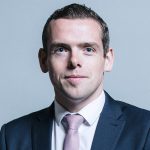
  • Douglas Ross – 2023 Speech at Conservative Party Conference

    Douglas Ross – 2023 Speech at Conservative Party Conference

    The speech made by Douglas Ross, the leader of the Scottish Conservatives, in Manchester on 1 October 2023.

    Thank you, Conference.

    It is fantastic to speak to this gathering of the Conservative AND Unionist Party.

    We in this hall are all Unionists by definition.

    It is in our party’s DNA.

    To be a Conservative is to be a Unionist.

    Unlike our opponents, Conservatives don’t apologise for being British, we embrace it.

    We celebrate our common history and heritage and look forward to the shared future that Scotland, England, Wales and Northern Ireland will continue to build together.

    Conference, I know that Rishi Sunak and this UK Conservative and Unionist Government are taking the long-term decisions to build a brighter future for Scotland and the whole of the United Kingdom.

    I was with our Prime Minister in Aberdeenshire in the summer – when he announced over 100 new oil and gas licences in the North Sea.

    And gave the go-ahead to a new carbon capture cluster facility in Peterhead.

    These announcements will strengthen energy security for the whole of the UK.

    But they will also secure tens of thousands of skilled Scottish jobs.

    Jobs that Labour and the SNP would put on the scrapheap as soon as possible to appease green extremists like Just Stop Oil.

    Well, the last thing that Scotland needs is a Miliband millstone round our neck.

    This Conservative and Unionist Party will never abandon North Sea workers, like Keir Starmer would.

    We are now the only party you can trust to stand up for Scotland’s oil.

    And these announcements are just one part of what the Conservatives are delivering for Scotland.

    From freeports to spaceports, roads to ferries, supercomputers to agriculture technology.

    We are investing in projects that will drive growth across our whole country, secure and create Scottish jobs and businesses and strengthen the essential contribution Scotland makes to our United Kingdom.

    Well conference, it has been a pretty interesting year in Scottish politics.

    I have more than a few things to update you on since we last met.

    In fact, I am struggling on where to begin….

    Well Nicola Sturgeon is gone.

    Can I repeat that for those at the back – Nicola Sturgeon is gone.

    For years we were told that she was unstoppable.

    That she could, apparently, do no wrong.

    How many times did the media proclaim that Scotland was on the cusp of independence under her leadership?

    Or that she would wipe out the Tories.

    Well, I can proudly say that her career lies in tatters, and we – conference – are still here.

    It was our party – the Scottish Conservative and Unionist Party – that was the constant thorn in her side.

    We stopped the SNP from winning a majority in election after election.

    We fought her dangerous gender reform bill – which, let’s not forget conference, was backed at each stage by Labour.

    And we stood up to Nicola Sturgeon’s plans for a second independence referendum every step of the way.

    Now, since she left, the SNP have been having some difficulties.

    A police investigation into party finances.

    The luxury campervan seized.

    And Humza Yousaf as leader.

    The best the SNP now have to offer is a poor Nicola Sturgeon tribute act.

    But we cannot be complacent.

    His government are already spending millions of pounds of taxpayers’ money on promoting independence.

    And Humza Yousaf is treating next year’s election as a proxy referendum.

    Nicola Sturgeon may have quit but the SNP haven’t gone away.

    They are down but far from out.

    They are just as dangerous to the future of our country as they have ever been.

    We still need to fight for every vote, to win as many seats as possible.

    Because next year we can deal a fatal blow to the campaign for independence.

    We can ensure the nationalists fall short again and put Humza Yousaf’s Government on notice.

    And in so many seats only the Scottish Conservatives can beat the SNP.

    Conference, this Conservative UK Government delivers for Scotland.

    And on energy, financial services, food & drink, tourism and so much more Scotland delivers for the whole of the UK.

    If we remove the SNP, if we can kick them out of power in every part of our nation, Scotland can finally move on from the independence neverendum

    And we can build a stronger, more prosperous United Kingdom together.

    Now to speak more on strengthening our country, let’s welcome to the stage the man who puts Scotland at the heart of the UK Government.

    The scourge of SNP globetrotting.

    The binman for the Greens’ recycling scheme.

    The defender of women’s rights.

    My friend, our Scottish Secretary, Alister Jack.

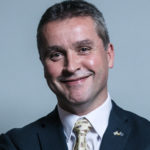
  • Angus MacNeil – 2023 Confirmation of Expulsion from the SNP

    Angus MacNeil – 2023 Confirmation of Expulsion from the SNP

    The statement made by Angus MacNeil on Twitter on 11 August 2023.

    The Summer of Member Expulsion, has indeed come to pass. As I have been expelled as a rank & file SNP member by a “member conduct committee.” 🦘

    I didn’t leave the SNP – the SNP have left me. I wish they were as bothered about 🏴󠁧󠁢󠁳󠁣󠁴󠁿 independence as they are about me! 🤷🙄

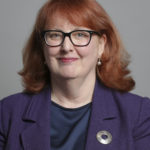
  • Deidre Brock – 2023 Parliamentary Question on the Devolution Settlement

    Deidre Brock – 2023 Parliamentary Question on the Devolution Settlement

    The parliamentary question asked by Deidre Brock, the SNP MP for Edinburgh North and Leith, in the House of Commons on 29 March 2023.

    Deidre Brock (Edinburgh North and Leith) (SNP)

    1. What recent assessment he has made of the adequacy of the operation of the devolution settlement. (904292)

    Drew Hendry (Inverness, Nairn, Badenoch and Strathspey) (SNP)

    6. What recent assessment he has made of the adequacy of the operation of the devolution settlement. (904297)

    Chris Law (Dundee West) (SNP)

    7. What recent assessment he has made of the adequacy of the operation of the devolution settlement. (904298)

    The Secretary of State for Scotland (Mr Alister Jack)

    I take this opportunity to congratulate Humza Yousaf on becoming Scotland’s new First Minister. I look forward to working with him. I heard him say that he wanted to put the independence drive into “fifth gear”; I would gently remind him that most Scots actually want him to put it into reverse and to work with the United Kingdom to tackle the issues that really matter to them, such as cost of living pressures and growing our economy.

    The devolution settlement gives Scotland the best of both worlds. Scotland benefits from the wide influence and economic strength of the UK, while also enjoying considerable devolved powers in vital areas such as health, education and justice to tailor policies to meet the needs of people in Scotland.

    Deidre Brock

    In his response to the hon. Member for Blaydon (Liz Twist) on 22 February, the Secretary of State claimed that the Scottish Government had not asked for an exemption from the UK Internal Market Act 2020 for the Scottish deposit return scheme. The Scottish Government have since published the timeline to show that that is incorrect and that the proposal has been under detailed discussion within the resources and waste common framework since last October, with the final detailed case for exclusion presented on 13 February. In the light of that, will he correct the record and apologise for inadvertently misleading Parliament?

    Mr Jack

    This is an important point and has had a lot of airtime in the media in Scotland. I can say to the hon. Lady that, while officials and civil servants spoke to one another over a period of time, the official request to Ministers came in the inter-ministerial group meeting, which the Under-Secretary of State for Scotland, my hon. Friend the Member for Berwickshire, Roxburgh and Selkirk (John Lamont) was at, on 6 March. That is all minuted. It is a fact, it is on the record and there is no question. The UK Government have published it. The official request was on 6 March. I would also say that the Scottish Government proceeded with a deposit return scheme that small businesses, consumers and others are very concerned about. Even the chief executive of Tesco, the UK’s largest retailer, said yesterday that it is not the right scheme and it is not fit for purpose. They are concerned about it and they are right to be concerned about it. The Scottish Government asked for their UKIM exemption after they put their scheme together. If I were building a house, I would get planning permission and then build my house, not do it the other way around.

    Drew Hendry

    The Secretary of State knows that the process for gaining an exemption to the United Kingdom Internal Market Act is through developing the appropriate common framework. He also stated that there had been no request by letter from the Scottish Government, yet the Deputy First Minister wrote to the UK Government on 31 January and even received a positive reply on 10 February. Is the problem here that the Secretary of State just has a very selective memory, or is it that he is so busy preparing for his seat in the House of Lords that his office does not bother keeping him in the loop any more?

    Mr Jack

    Let us be absolutely clear about this: the letter the hon. Gentleman refers to was a letter to the Chancellor about value added tax treatment of the deposit return scheme. The letter mentioned that an exemption request would be coming forward, but the official request was made on 6 March—there is no question about that—and the detailed arguments were laid out on 6 March at the ministerial meeting.

    Chris Law

    It is not going too well for the Secretary of State, is it? Environmental charities across these islands have written to him, calling on him not to block the Scottish deposit return scheme. We know there are successful schemes across many other countries, and the British Soft Drinks Association, whose members include Coca-Cola and Irn-Bru maker A.G. Barr, called for it to go ahead as planned. What on earth is the future Baron von Jack thinking of when he ignores those calls and threatens to block the scheme—particularly when his own Government and other UK nations will follow Scotland’s lead and introduce their own scheme from 2025?

    Mr Jack

    I am not sure that there has been much joined-up thinking on the questions here. Again, I have suggested that the deposit return scheme should be paused. I think a UK-wide solution is right; I think recycling is absolutely right. But I agree with the chief executive of Tesco, Britain’s largest retailer, when he says that this is not the right scheme—it will be inflationary. As I have said before at this Dispatch Box, 12 bottles of Scottish water currently cost £1.59 in Aldi, but under the scheme, that would become £3.99 or even higher if a price is put on top. Although £2.40 of that could be reclaimed, the consumer will also pay an extra cost that is put on by the producer—producers have been clear about that.

    We met Coca-Cola, which said that 2p on a can and 5p on a bottle would be passed on to the consumer and could not be reclaimed. There are higher figures from other companies, including one small brewer that said it would have to add £1.40 to a bottle of beer on top of the 20 pence. The scheme is inflationary and very bad for the consumer’s shopping basket. That is why I think we need to pause it and get a scheme that works for the whole United Kingdom.

    Madam Deputy Speaker (Dame Eleanor Laing)

    I call David Mundell.

    David Mundell (Dumfriesshire, Clydesdale and Tweeddale) (Con)

    What a pleasure it is to see you in the Chair for Scottish questions, Madam Deputy Speaker.

    I add my congratulations to Humza Yousaf on becoming First Minister of Scotland, and I recognise the inclusive and historic nature of his appointment. Does my right hon. Friend agree that, based on the experience of our constituents, Mr Yousaf will have to up his game considerably in his new role? As Transport Minister, he came to Dumfries in 2016 to hold a transport summit, and seven years later, precisely zero of the commitments given that day have been delivered.

    Mr Jack

    Not only did Humza Yousaf fail in the transport brief but, as we know from his opponent, who took almost half the vote—48%—he also failed in his other briefs of justice and health.

    Bob Blackman (Harrow East) (Con)

    I join others in congratulating the new First Minister. The Barnett formula by which money is devolved to Scotland has existed for more than 40 years. Has the Secretary of State received any representations from the Scottish Government about reviewing that formula?

    Mr Jack

    At the moment, we are in discussions with the Scottish Government about a review of the fiscal framework. That review has been in train for some time, and the conclusions will be coming shortly.

    Robin Millar (Aberconwy) (Con)

    I, too, congratulate Mr Yousaf on his appointment as First Minister of Scotland. Does the Secretary of State agree that the effectiveness of devolution arrangements was demonstrated in the use of the Scotland Act 1998—section 35 in particular—to block the Gender Recognition Reform (Scotland) Bill, specifically because it impacted on the effective operation of UK law across the UK?

    Mr Jack

    Yes. I have heard the new First Minister say that it was anti-devolution to block a Bill that had been passed by the Scottish Parliament, but section 35 exists for that very reason. When a Bill is passed by the Scottish Parliament—if it did not pass it, we could not block it—that has adverse effects on GB-wide legislation, section 35 exists to stop the Bill going for Royal Assent so that those adverse effects can be dealt with.

    Madam Deputy Speaker (Dame Eleanor Laing)

    I call the shadow Secretary of State.

    Ian Murray (Edinburgh South) (Lab)

    It is great to see you back in the Chair, Madam Deputy Speaker. Welcome back, particularly to Scottish questions.

    There has been a seismic victory—an historic victory—this week: the Scotland football team beat Spain at Hampden last night, so we all send our congratulations to them. May I echo the Secretary of State’s congratulations to Humza Yousaf, the new First Minister of Scotland? The Secretary of State rightly challenged Mr Yousaf to engage reverse gear on independence, but I think he may already have crashed that car. The new First Minister of course inherits a divided party and the SNP’s dreadful record on public services, but he does not inherit Nicola Sturgeon’s mandate—at the Holyrood election, the ballot paper said

    “Nicola Sturgeon for First Minister”,

    not “Humza Yousaf”. Does the Secretary of State agree with me and with Humza Yousaf himself, who rightly called for a UK general election after there was twice a change in Prime Minister last year? Does the Secretary of State agree that a new First Minister with no mandate means that there should now be not only a general election, but a Scottish election?

    Mr Jack

    There is a precedent for political parties voting in new leaders who then assume office: Henry McLeish replaced Donald Dewar, Jack McConnell replaced Henry McLeish, Gordon Brown replaced Tony Blair, and even Nicola Sturgeon replaced her at-the-time great friend and mentor—her words, not mine—Alex Salmond. It would be hypocritical of me to say otherwise, because last year, of course, I defended the change of Prime Ministers, and it is hypocritical that Humza Yousaf suggested then that we should have an election and there is now deafening silence.

    Ian Murray

    That answer shows that both the Conservative party and the SNP are democracy deniers. In January—[Interruption.] In January, Madam Deputy Speaker—[Interruption.] They don’t like it up ’em! In January, the UK Government announced that they had signed a memorandum of understanding with BioNTech and Moderna to conduct trials of vaccines that can attack cancer cells. Such innovative treatments could be a lifeline for those with terminal cancers, such as David Williamson from Glasgow, who contacted me and others to plead to be accepted on to those trials. However, David lives in Scotland, and as it stands the trials are due to take place in England only. He has written to both the UK and Scottish Health Secretaries but has failed to receive a response. David does not want to die knowing that there could be a treatment that could help him. Does the Secretary of State agree that potentially life-saving treatments should be available throughout the UK? Will he work to resolve this matter urgently for David and thousands of others?

    Mr Jack

    This is a very serious issue and my sympathies are with David and his family. I know that he has written to the Secretary of State for Health and Social Care. I am a great believer in our NHS being reciprocal across the United Kingdom and will organisation a meeting for the hon. Gentleman with the Secretary of State for Health and Social Care at the earliest opportunity.

    Madam Deputy Speaker (Dame Eleanor Laing)

    I call the SNP spokesperson, Dr Philippa Whitford.

    Dr Philippa Whitford (Central Ayrshire) (SNP)

    I, too, welcome you to the Chair for Scottish questions, Madam Deputy Speaker, and join Labour’s shadow Secretary of State in celebrating Scotland’s win. It is just a pity that people could not watch it on Scottish terrestrial television.

    The devolved Governments have led on many innovative policies, such as the carrier bag charge in Wales and the smoking ban and minimum unit pricing of alcohol in Scotland, with the UK Government following years later, if at all. The attacks on the latter policy at the time show that, had it existed then, the United Kingdom Internal Market Act 2020 would inevitably have been used to block minimum unit pricing, which has recently been credited with a 13% drop in alcohol-related deaths in Scotland. Even the EU single market allows policy divergence to improve public health and the environment, so why are there no such derogations in the internal market Act?

    Mr Jack

    Let me pick up the hon. Lady’s first point, because we do not want the grievance factory to say, as I have seen on social media today, that the English Government blocked people in Scotland watching the game against Spain last night in which we were so victorious—[Interruption.] I said “on social media”. The Scottish Football Association sold the rights to the football match. It was the Scottish FA’s decision.

    On the hon. Lady’s second point, there are opportunities for derogations and exemptions within the UK internal market. We did it in the case of plastic cutlery because the same proposal was coming forward in the rest of the UK six months after it was introduced by the Scottish Government. The schemes worked together and a derogation for six months worked. But derogations do not work when there are different schemes in different parts of the United Kingdom, some of which include glass and some of which do not, and when producers have to sign up to different schemes that have a huge cost implication. We do not think that is the right way forward.

    Dr Whitford

    It is funny how differences in the different nations worked fine before Brexit. One has to wonder why the UK market does not seem able to cope right now. Is the Secretary of State planning to hold back the devolved Governments repeatedly to avoid making his Government look bad? Or is he just going to seek every single chance to attack devolution and enforce Westminster rule?

    Mr Jack

    I quoted earlier the chief executive of Tesco, the largest retailer in the United Kingdom. In the paper yesterday he made the very good point that there is one drinks industry across the United Kingdom and we should have one solution to the recycling problem.

  • Humza Yousaf – 2023 Speech After Becoming SNP Leader and First Minister

    Humza Yousaf – 2023 Speech After Becoming SNP Leader and First Minister

    The speech made by Humza Yousaf, the new leader of the SNP, on 27 March 2023.

    Can I thank the National Secretary for overseeing the ballot and our team at Headquarters for their efforts throughout this process.

    It is hard to find the words to describe just how honoured I am to be entrusted by the membership of the SNP to be our Party’s next leader, and to be on the cusp of being our country’s next First Minister.

    Can I begin by paying tribute to my colleagues, Kate and Ash.

    During almost 20 hustings it probably felt like we saw more of each other than we did our respective partners. You both have put in an incredible shift, and I know you will continue to work hard as part of Team SNP.

    I am not just humbled, of that I most certainly am, I also feel like the luckiest man in the world to be standing here as Leader of the SNP, a party I joined almost 20 years ago and that I love so dearly.

    Friends, the late John Smith got it absolutely right when he said, “The opportunity to serve our country, is all we ask”.

    To serve my country as First Minister will be the greatest privilege and honour of my life, should Parliament decide to elect me as Scotland’s next First Minister tomorrow.

    And just as I will lead the SNP in the interests of all party members, not just those who voted for me, so I will lead Scotland in the interests of all our citizens whatever your political allegiance.

    If elected as your First Minister after tomorrow’s vote in Parliament, know that I will be a First Minister for all of Scotland, that I will work every minute of every day to earn and re-earn your respect and your trust.

    I will do that by treating you, the people of Scotland with respect.

    There will be no empty promises, no easy soundbites when the issues in front of us are difficult and complex, because government is not easy and I won’t pretend it is.

    My immediate priority will be to continue to protect every Scot as far as we can from the harm inflicted by the cost of living crisis, to recover and reform our NHS and other vital public services, to support our wellbeing economy and to improve the life chances of people across our country.

    I will move quickly to develop plans to extend childcare, improve rural housing, support small business, and boost innovation.

    I will bring forward reforms of the criminal justice system and work with local government to empower our local authorities.

    And as First Minister I will not shy away from the tough challenges, those that require the difficult decisions, but where there is that challenge, I will use it to find opportunity.

    My government will seize the economic and social opportunities of the journey to Net Zero, a country as energy rich as Scotland should not have people living in fuel poverty.

    The Government I lead will renew and redouble our efforts to lift people out of poverty, to make work fair and make our economy work for people, and to ensure as we become a more prosperous country we also become a fairer country.

    And while I have had my fair share of battles with the UK Government over the years, and there may well be some more to come. I will work with them, and with other devolved nations constructively where I can in the best interests of our nation.

    I am a proud Scot, and equally a proud European too, and Scotland is a European nation.

    We want to return to the European Union and play our part in building a continent based on human rights, peace, prosperity and social justice

    To the people of Scotland, the SNP has earned your trust by governing well, by ensuring that our priorities are your priorities.

    As a Party, and a Government, we are at our best when we are radical and bold and the challenges we face today require nothing less of us.

    That is what I promise the people of Scotland if Parliament puts its trust in me tomorrow.

    Joining the SNP, for me, was an act of hope and also statement of intent.

    I was determined then, as I am now, as the 14th leader of this great party, that we will deliver independence for Scotland – together as a team.

    Leadership elections by their nature can be bruising, however, in the SNP we are a family.

    Over the last five weeks we may have been competitors or supporters of different candidates, but from today – we are no longer team Humza, Ash or Kate, we are one team, and we will be the team, we will be the generation that delivers independence for Scotland.

    Where there are divisions to heal we must do so and do so quickly because we have a job to do and as a Party we are at our strongest when we are united, and what unites is our shared goal of delivering independence for our nation.

    To those in Scotland who don’t yet share the passion I do for independence, I will aim to earn your trust by continuing to govern well, and earn your respect as First Minister by focussing on the priorities that matter to us all, and in doing so using our devolved powers to absolute maximum effect to tackle the challenges of the day.

    For those of us who do believe in independence, we will only win by making the case on the doorsteps.

    My solemn commitment to you is that I will kickstart our grassroots, civic-led movement and ensure our drive for independence is in 5th gear.

    The people of Scotland need independence now more than ever before, and we will be the generation that delivers it.

    Before concluding, I want to take this opportunity to thank some very special people. I wouldn’t be standing here today if it wasn’t for the support, encouragement and hard work of a number of people.

    First of all, there is my amazing wife Nadia.

    She is not just my rock, she is my compass who helps guide me through the most difficult of times. There is no way I would be here if it was not for your love, your support and the advice you give me, thank you for believing in me and always being there for me. I love you more than I can ever find words.

    To my girls, you are my everything, and while this job at times will be all-consuming, know that the most important job in my life is being your dad. To Maya and Amal, you will always come first.

    To my mum, dad and sisters, thank you for your unwavering support throughout my life, for picking me up when I have been down, and for telling me to keep going when at times I had my doubts.

    I would also like to thank my phenomenal campaign team, who have worked day and night over the last few weeks to support me, you have all sacrificed time with your families and friends because, like me, you believe in our vision of a progressive, socially just Scotland. I will not let you down.

    A special mention to Neil Gray. He is quite simply the best corner man I could have asked for. During the rollercoaster of emotion that is any leadership contest, you have been by my side every step of the way and I would not have made it over the finish line without your support.

    And to Shona Robison, your wise counsel has been indispensable during this contest.

    To our now former Leader Nicola Sturgeon and her Deputy in government John Swinney.

    Thank you for your dedicated service to this party, this country and all its people. You have left me strong foundations to build on.

    And thanks, too, to my colleagues in both parliaments, across local government and activists around the country who have been so supportive and encouraging. I will ensure I harness the talent across the Party and the country as I build the team that will take Scotland forward and deliver our nation’s independence.

    From our brilliant MPs, ably led by Stephen Flynn and Mhairi Black in Westminster to our leaders in Local Government, as well as he exceptional group of MSPs in the Scottish Parliament, our Party has enormous talent right throughout its ranks.

    Our parliamentarians, our councillors, our activists and our members all have a vital part to play on our journey to independence, as do our friends across the independence movement.

    To have your confidence as I take on the role of SNP Leader means so much.

    My final thanks is to my grandparents, who unfortunately are no longer alive to see this day. I am forever thankful that my grandparents made the trip from the Punjab to Scotland over 60 years ago.

    As immigrants to this country, who knew barely a word of English, they could not have imagined their grandson would one day be on the cusp of being the next First Minister of Scotland.

    As Muhammad Yousaf worked in the Singer Sewing Machine Factory in Clydebank, and as Rehmat Ali Bhutta stamped tickets on the Glasgow Corporation Buses, they couldn’t have imagined, in their wildest dreams, that two generations later their grandson would one day be Scotland’s First Minister.

    We should all take pride in the fact that today we have sent a clear message, that your colour of skin, your faith, is not a barrier to leading the country we all call home.

    From the Punjab to our Parliament, this is a journey over generations that reminds us that we should celebrate migrants who contribute so much to our country.

    It is what drives my commitment to equality that will underpin my actions as First Minister.

    Thank you for the honour of choosing me to be your nominee to become Scotland’s 6th First Minister. I will dedicate every waking moment to serving you, the people of Scotland.

    Thank you.

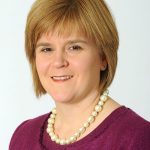
  • Nicola Sturgeon – 2023 Resignation Statement

    Nicola Sturgeon – 2023 Resignation Statement

    The statement made by Nicola Sturgeon, the First Minister of Scotland and the Leader of the SNP, on 15 February 2023.

    Being First Minister of Scotland is in my – admittedly biased – opinion the best job in the world.

    It is a privilege beyond measure – one that has sustained and inspired me, in good times and through the toughest hours of my toughest days.

    I am proud to stand here as the first female, and longest serving, incumbent of this great office.

    And I am proud of what has been achieved in the years I’ve been in Bute House.

    However, since my first moments in the job, I have believed that part of serving well would be to know – almost instinctively – when the time is right to make way for someone else.

    And when that time comes, to have the courage to do so – even if, to many across the country, and in my party, it might feel too soon.

    In my head and my heart I know that time is now;

    That it is right for me, for my party, and for the country;

    And so today, I am announcing my intention to step down as First Minister and leader of my party.

    I have asked the National Secretary of the SNP to begin the process of electing a new party leader, and I will remain in office until my successor is in place.

    I know there will be some across the country who feel upset by this decision, and by the fact I am taking it now.

    Of course, to balance that, there will others who – how should I put this – will cope with the news just fine!

    Such is the beauty of democracy.

    But to those who do feel shocked, disappointed, perhaps even a bit angry with me, please know that, while hard – and be in no doubt, this is really hard for me – my decision comes from a place of duty and of love.

    Tough love perhaps – but love nevertheless, for my party and above all for the country.

    Let me set out – as best I can – my reasons.

    First, though I know it will be tempting, unavoidable perhaps, to see it as such, this decision is not simply a reaction to short term pressures.

    Of course, there are difficult issues confronting the government just now. But when is that ever not the case.

    I have spent almost three decades in front line politics – a decade and a half on the top or second top rung of government.

    When it comes to navigating choppy waters, resolving seemingly intractable issues, or soldiering on when walking away would be the simpler option, I have plenty experience to draw on.

    So if this was just a question of my ability – or my resilience – to get through the latest period of pressure, I would not be standing here today.

    But it is not.

    This decision comes from a deeper and longer term assessment.

    I know it might seem sudden but I have been wrestling with it – albeit with oscillating levels of intensity – for some weeks.

    Essentially, I have been trying to answer two questions.

    Is carrying on right for me?

    And – more importantly – is me carrying on right for the country, for my party and for the independence cause I have devoted my life to?

    I understand why some will automatically answer ‘yes’ to that second question.

    But in truth, I’ve been having to work harder in recent times to convince myself that the answer to either of them – when examined deeply – is ‘yes’.

    And I’ve reached the conclusion that it’s not.

    The questions are inextricably linked but let me take them in turn.

    I’ve been First Minister for over 8 years; and I was Deputy First Minister for the best part of 8 years before that.

    As I said earlier, these jobs are a privilege.

    But they are also – rightly – hard.

    And, especially in the case of First Minister, relentlessly so.

    Now to be clear, I am not expecting violins – but the fact is, I am a human being as well as a politician.

    When I entered government in 2007, my niece and youngest nephew were babies, just months old.

    As I step down, they are about to celebrate their 17th birthdays.

    Exactly the age to be horrified at the thought of your devoted auntie suddenly having more time for you.

    My point is this.

    Giving absolutely everything of yourself to this job is the only way to do it. The country deserves nothing less.

    But in truth that can only be done, by anyone, for so long. For me, it is now in danger of becoming too long.

    A First Minister is never off duty.

    Particularly in this day and age, there is virtually no privacy.

    Ordinary stuff that most people take for granted, like going for a coffee with friends or even for a walk on your own becomes very difficult.

    And the nature and form of modern political discourse means there is a much greater intensity – dare I say it, brutality – to life as a politician than in years gone by.

    All in all – and for a long time without it being apparent – it takes its toll, on you and on those around you.

    And if that is true in the best of times, it has been more so in recent years.

    Leading this country through the Covid pandemic is, by far, the toughest thing I’ve done.

    It may well be the toughest thing I ever do. I certainly hope so.

    Now, by no stretch of the imagination – to be clear – was my job the hardest in the country during that time.

    But the weight of responsibility was immense.

    And it’s only very recently, I think, that I’ve started to comprehend, let alone process, the physical and mental impact of it.

    So, what I am saying is this.

    If the only question was, can I battle on for another few months, then the answer is yes. Of course I can.

    But if the question is can I give this job everything it demands and deserves for another year, let alone for the remainder of this parliamentary term – give it every ounce of energy that it needs, in the way that I have strived to do every day for the past 8 years – the answer, honestly, is different.

    And as that is my conclusion – hard though it has been for me to reach it – then given the nature and scale of the challenges the country faces, I have a duty to say so now.

    I feel that duty, first and foremost, to our country – to ensure that it does have the energy of leadership it needs, not just today, but through the years that remain of this parliamentary term.

    And, right now in a very particular sense, I feel that duty to my party too.

    We are at a critical moment.

    The blocking of a referendum as the accepted, constitutional route to independence is a democratic outrage.

    But it puts the onus on us to decide how Scottish democracy will be protected and to ensure that the will of the Scottish people prevails.

    My preference of using the next Westminster election as a de facto referendum is well known.

    I’ve never pretended it is perfect – no second best option ever is – nor that there are no alternatives.

    That is why I have always been clear that the decision must be taken by the SNP collectively, not by me alone.

    But I know my party well enough to understand that my view as leader would carry enormous, probably decisive, weight when our conference meets next month.

    And I cannot – in good conscience – ask the party to choose an option based on my judgment whilst not being convinced that I would be there as leader to see it through.

    By making my decision clear now, I free the SNP to choose the path it believes to be the right one, without worrying about what it means for perceptions of my leadership, and in the knowledge that someone else will lead, successfully, along whatever path is chosen.

    There are two further reflections that have weighed in my decision – these, I suppose, are more about our political culture and the nature and impact of the dominance and longevity that comes from success in politics.

    The first, I hope my party will take heart from.

    One of the difficulties of coming to terms with this decision is that I am confident I can and would lead the SNP to further electoral success.

    Even in a time of challenge, we remain by far the most trusted party in Scotland.

    And while for every person in Scotland who ‘loves’ me, there is another who might not be quite so enthusiastic, the fact is we remain firmly on course to win the next election – while our opponents remain adrift.

    But the longer any leader is in office, the more opinions about them become fixed and hard to change. And that matters.

    Individual polls come and go, but I am firmly of the view that there is now majority support for independence.

    But that support needs to be solidified – and it needs to grow further if our independent Scotland is to have the best possible foundation.

    To achieve that we must reach across the divide in Scottish politics.

    And my judgment now is that a new leader would be better able to to this.

    Someone about whom the mind of almost everyone in the country is not already made up, for better or worse.

    Someone who is not subject to quite the same polarised opinions, fair or unfair, as I now am.

    The good news – as the country will now get to see more clearly perhaps – is that the SNP is full of talented individuals more than up to that task.

    My second reflection is related – and I think there is ample evidence of this in our current debates.

    I feel more each day just now that the fixed opinions people increasingly have about me – as I say, some fair, others little more than caricature – are becoming a barrier to reasoned debate.

    Statements and decisions that should not be controversial become so when it’s me making or taking them.

    Issues that are controversial end up almost irrationally so – and for the same reason.

    Too often I see issues presented and as a result viewed – not on their own merits – but through the prism of what I think and what people think about me.

    It has always been my belief that no one individual should be dominant in any system for too long.

    But while it’s easy to hold that view in the abstract as a leader, it is harder to live by it.

    With this decision, I am trying to do so.

    Indeed, if all parties were to take this opportunity to try to to de-polarise public debate just a bit;

    To focus more on issues than on personalities;

    And to reset the tone and tenor of our discourse;

    Then this decision – right for me and, I believe for my party and the country – might also prove to be good for our politics.

    I live in hope.

    Now, a couple of final points before I take a few questions.

    While I am stepping down from leadership, I am not planning to leave politics. There are many issues I care deeply about and hope to champion in future.

    One of these is The Promise – the national mission, so close to my heart, to improve the life chances of care experienced young people and ensure that they grow up nurtured and loved.

    My commitment to these young people will be lifelong.

    And, obviously, there is independence.

    Winning independence is cause I have dedicated a lifetime to. It is a cause I believe in with every fibre of my being.

    And it is a cause I am convinced is being won.

    I intend to be there – as it is won – every step of the way.

    Yesterday I attended the funeral of a dear friend and long standing independence activist, a wonderful man by the name of Allan Angus.

    It was actually during that service that I went from being 99% certain about this decision to 100% certain – though I know Allan would not be at all happy to have played any part in my departure.

    But his funeral reminded me that the cause of independence is so much bigger than any one individual; that all of us who believe in it contribute in different ways, at different stages of our lives.

    Since I was 16, I have contributed as an activist, a campaigner and a leader.

    And so now, as we look to what I firmly believe is the final stage in Scotland’s journey to independence – albeit a hard one – I hope to use all the experience and perspective I have gathered over these years to help get us there.

    Lastly, there will be time in the days to come for me – and others – to reflect on what has been achieved during my time as First Minister. I am sure there will be plenty of commentary on my mistakes too.

    I will have more to say before I demit office, but allow me some brief reflections now.

    Scotland is a changed country since 2014 – and in so many ways it is changed for the better.

    Young people from deprived backgrounds have never had a better chance of going to university than now.

    Our investment to double early learning and childcare is transforming opportunities for the youngest children. It is also enabling more women to return to work.

    The baby box is enshrining our aspiration that every child should have an equal start in life.

    Scotland is fairer today than it was in 2014. We have a more progressive approach to taxation and a new social security system, with the Scottish Child Payment at its heart.

    As the Institute for Fiscal Studies confirmed last week, the poorest families with children in Scotland are now £2000 better off as a result of our policies.

    For many – in this cost of living crisis – that will be the difference between food on the table and a warm home, or not.

    There are stronger protections for victims of domestic abuse, and Parliament will soon consider legislation to improve access to justice for victims of rape and sexual offences.

    To be clear, I will be the strongest possible backbench advocate for these reforms.

    We have also shown over these past few years what can be done with the full powers of a nation – creating new institutions that are part of the transition to becoming independent.

    New tax and social security agencies, a network of trade hubs across the world, and a state owned investment bank ready to help the country reap the industrial benefits of our vast renewable resources.

    There is so much that I am proud of.

    But there is always so much more to be done. I look forward to watching with pride as my successor picks up the baton.

    There will also be time in the days to come for me to say thank you to a very long list of people, without whom I wouldn’t have lasted a single day in this job, let alone 8 years.

    I won’t do so today – I might inadvertently forget someone or, perhaps more likely, start to cry.

    But there are a couple of exceptions.

    Firstly, my husband and family. Few people understand the price families of politicians pay for the jobs we choose to do. Mine have been my rock throughout.

    And, of course, the SNP.

    Since I was 16 years old, you have been my extended family. Thank you for the honour of being your leader.

    And I don’t know about you, but it seems to me that 8 emphatic election victories in 8 years ain’t a bad record together.

    Finally – and above all – the people of this beautiful, talented, diverse, at times disputatious, but always wonderful country.

    We faced the toughest of times together.

    I did everything I could to guide us through that time, often from my very familiar podium in St Andrews House.

    And in return I was sustained through that period by a wave of support from you that I will remember and value for the rest of my life.

    So to the people of Scotland – to all of the people of Scotland – whether you voted for me or not – please know that being your First Minister has been the privilege of my life.

    Nothing – absolutely nothing – I do in future will ever come close.

    Thank you from the bottom of my heart.

  • Kirsten Oswald – 2023 Comments on the Resignation Announcement of Nicola Sturgeon

    Kirsten Oswald – 2023 Comments on the Resignation Announcement of Nicola Sturgeon

    The comments made by Kirsten Oswald, the SNP MP for East Renfrewshire, on Twitter on 15 February 2023.

    Nicola Sturgeon has been an outstanding leader for our country. We’ve been so fortunate to have someone with her talents at the helm. I am so sorry she is standing down.

  • Stewart McDonald – 2023 Comments on the Resignation Announcement of Nicola Sturgeon

    Stewart McDonald – 2023 Comments on the Resignation Announcement of Nicola Sturgeon

    The comments made by Stewart McDonald, the SNP MP for Glasgow South, on Twitter on 15 February 2023.

    Nicola Sturgeon is the finest public servant of the devolution age. Her public service, personal resilience and commitment to Scotland is unmatched, and she has served our party unlike anyone else. She will be an enormous loss as First Minister and SNP leader. Thank you!

  • Gavin Newlands – 2023 Parliamentary Question on Exports from Devolved Nations to the EU

    Gavin Newlands – 2023 Parliamentary Question on Exports from Devolved Nations to the EU

    The parliamentary question asked by Gavin Newlands, the SNP MP for Paisley and Renfrewshire North, in the House of Commons on 9 February 2023.

    Gavin Newlands (Paisley and Renfrewshire North) (SNP)

    What steps her Department is taking to help increase exports from the devolved nations to the EU.

    The Minister of State, Department for Business and Trade (Nigel Huddleston)

    We are supporting businesses in all parts of the United Kingdom through our export support service, including our innovative Export Academy, which helps build market export capability among small and medium-sized enterprises across the UK. We have also established trade and investment offices in Edinburgh, Cardiff and Belfast, increasing the visibility of the Department’s services in the nations, and channelling the benefits of our new export and investment strategies to the entire UK. I am sure the hon. Member is aware of those benefits in his own constituency, with businesses such as Lynkeos Technology winning a £100,000 contract last year in Germany with the assistance of the Department.

    Gavin Newlands

    I like the hon. Member, but that answer was nonsense, quite frankly. The Institute of Directors found in a recent survey that almost half—47%—of businesses are still finding trade after Brexit a challenge, with just a third envisaging any opportunities at all from Brexit. That report also found that 45% of SMEs are exporting less to the European Union post Brexit, with Scottish exports having already slumped by £2.2 billion because of Brexit. Does the Minister agree that Brexit is an act of state-sanctioned economic vandalism?

    Nigel Huddleston

    I am sorry that the hon. Gentleman is saying this is nonsense. I am sure that those businesses in his constituency and across Scotland who get support from the Department do not share that attitude. As well as focusing on the EU, which is and will continue to be an important trading partner of the UK, we are looking to the entire world, hence focusing on so many other countries. I hope he will be a little more “glass half full” in the future.

    David Mundell (Dumfriesshire, Clydesdale and Tweeddale) (Con)

    Is the Minister aware that the Scottish Government are planning to bring forward draconian restrictions on the advertising of whisky and other drinks in Scotland? Not only will that cost jobs in Scotland but it will make it much more difficult for the industry to export to the EU and elsewhere.

    Nigel Huddleston

    My right hon. Friend makes an important point. Such measures could have a considerable negative impact on so many Scottish businesses. That is precisely why we are seeking opportunities to support them, for example with trade deals, and trying to ensure that we reduce tariffs and are able to export more overseas. While we are backing our businesses right across the UK, I hope that in future we can get support from the Opposition, who might at some point come and join us and support one of the trade deals we are negotiating.

    Mr Speaker

    I call the SNP spokesperson.

    Richard Thomson (Gordon) (SNP)

    Unfortunately for the Minister, and unfortunately for Scotland, the latest data from His Majesty’s Revenue and Customs shows that between July and September last year, exports from Scotland to the European Union slumped by 5%. Will the Minister explain for an expectant nation exactly how that is in any way strengthening the case for the Union?

    Nigel Huddleston

    The hon. Gentleman will be well aware that, as we recover from a global pandemic, certain sectors and certain industries are suffering more than others. That is precisely why we have an export strategy and why the Secretary of State has articulated a five-point strategy for growth. We will continue to work positively with all sectors to grow our export opportunities. UK exports to the EU for the 12-month period to September 2022 were up by 25% in current prices.

    Richard Thomson

    It is not just the SNP who are saying what a disaster Brexit has been. With the director of the Institute for Fiscal Studies saying that Brexit is clearly an “economic own goal”, and even a former Brexit Secretary saying that there have been no economic benefits from Brexit, is it not surely time for voters in Scotland to be given the choice between continued British economic decline or a prosperous, independent European future?

    Nigel Huddleston

    I know the hon. Member and some people are tempted to continue to fight the battles of the past, but this Government will be laser-focused on the future and future opportunities. We have the comprehensive and progressive agreement for trans-Pacific partnership and so many other opportunities around the world, and I think it would be good for all of us in this place to talk the British economy up, rather than talk it down.

  • Patrick Grady – 2023 Parliamentary Question on the 1998 Scotland Act and the Constitution

    Patrick Grady – 2023 Parliamentary Question on the 1998 Scotland Act and the Constitution

    The parliamentary question asked by Patrick Grady, the SNP MP for Glasgow North, in the House of Commons on 2 February 2023.

    Patrick Grady (Glasgow North) (SNP)

    What recent discussions he has had with Cabinet colleagues on the potential impact of the use of section 35 of the Scotland Act 1998 on the constitution.

    The Parliamentary Secretary, Cabinet Office (Alex Burghart)

    Alas, I am a mere junior Minister and I rarely get to talk to my illustrious Cabinet colleagues, but I can assure the hon. Gentleman that the Government used section 35 very carefully and very reluctantly, in order to preserve the balance of powers between our countries.

    Patrick Grady

    If the Government were so determined to resolve their dispute with the Scottish Government, they would publish the amendments that they say would make the Gender Recognition Reform (Scotland) Bill acceptable to them. Is not the reality that the Tories are prepared to veto and undermine the elected Scottish Parliament because they never really wanted devolution in the first place?

    Alex Burghart

    As the hon. Gentleman knows, section 35 of the Scotland Act is part of our constitution. He will also know that it is now for the Scottish Government to bring forward a Bill that addresses the adverse effects set out in the statement of reasons. Once again, the nationalists do not wish to take responsibility.

  • Neale Hanvey – 2023 Speech on Scottish Self-Determination

    Neale Hanvey – 2023 Speech on Scottish Self-Determination

    The speech made by Neale Hanvey, the SNP MP for Kirkcaldy and Cowdenbeath, in the House of Commons on 1 February 2023.

    I beg to move,

    That leave be given to bring in a Bill to amend the Scotland Act 1998 to transfer to the power to legislate for a Scottish independence referendum to the Scottish Parliament; to provide that that power may only be exercised where the Scottish public has demonstrated its support for the holding of such a referendum; to provide that no such referendum may be held sooner than seven years after the previous such referendum; and for connected purposes.

    The question of whether the ancient nation of Scotland should be an independent country once more continues to be the subject of much debate, indicating that the matter is far from settled. Of course, it is entirely proper for any country to review such matters. Scotland will only become independent as and when the majority of the people of Scotland choose that path, yet that requires a democratic mechanism that is constitutional and satisfies international legal precedent. The Bill seeks to standardise and codify such a requirement in line with the motion passed by this House that endorsed the principles of the 1989 claim of right, which acknowledged the sovereign right of the Scottish people to determine the form of government best suited to their needs.

    The Bill is explicit on the necessary conditions to bring that mechanism into play: first, that the power to legislate for a referendum requires a democratic mandate from the Scottish public. Since 2014, that criterion has been met in successive general elections to the Scottish Parliament, most recently in 2021, when a majority of MSPs were elected on a manifesto commitment to deliver an independence referendum. In addition, a majority of the votes cast on the d’Hondt regional list were won by parties that support independence—the SNP, the Scottish Green party and the Alba party. Secondly, the Bill states that no such referendum may be held sooner than seven years after any previous such referendum. In terms of established UK precedent, that would bring Scotland into line with the provisions for a border poll in Northern Ireland regarding the constitutional future of the island of Ireland. As Robert McCorquodale, professor of international law and human rights, sets out, that would be in keeping with the UK’s international legal obligations, applicable to all states, including to peoples within states worldwide, to seek to exercise their right to self-determination.

    It is necessary to put the Bill into its political and historical context. In 1707, a majority of Scottish parliamentarians may have been persuaded, but the people were never consulted. The Acts of Union 1707 between England and Scotland created the kingdom of Great Britain, establishing a single political entity yet preserving the territorial, legal and institutional integrity of each partner country. The UK’s constitution is not codified in a single document, so the question of whether the Acts of Union can unilaterally be dissolved by one party is not clear. However, the accepted position hitherto is that the Union is a voluntary association of equal partners and Scotland has an unquestioned right of self-determination. That is a right underpinned by Scots common law which rests not on the Magna Carta, but on the claim of right which continues to assert that it is the people who are sovereign in Scotland.

    The Scotland Act of 1998 established the Scottish Parliament, which has the power to legislate on agreed devolved matters within Scotland, while the UK Parliament retains legislative competency on matters reserved to Westminster. It is generally understood that for a country to gain independence a legal process, such as a vote in a referendum, is required. Such a process was established in 2012 through the Edinburgh agreement which was signed by First Minister Alex Salmond and Prime Minister David Cameron. The Edinburgh agreement established a clear process whereby a Scottish general election that returned a Government with a mandate for an independence referendum would enable that Government to petition for authority under section 30 of the Scotland Act to respect the democratic force of that vote in a referendum. While respect for that established process has since been affirmed by the UK Government, in absence of any legal constitutional consensus the matter of Scottish independence has reached a political impasse to the detriment of Scotland’s democratic process.

    The Bill seeks to remedy that by setting out the process by which the democratic wishes of the people of Scotland can be respected and enacted. This would preserve their inalienable human rights as a distinct people of the ancient nation of Scotland in accordance with the constitutional tradition of Scotland, the UN charter and extant international law.

    Scotland’s distinct constitutional tradition is best expressed by Lord Cooper, in the case of MacCormick v. Lord Advocate:

    “The principle of the unlimited sovereignty of Parliament is a distinctively English principle which has no counterpart in Scottish constitutional law.”

    In the pleadings of the hon. and learned Member for Edinburgh South West (Joanna Cherry) in her prorogation case to the UK Supreme Court, it was noted that the 1707 parliamentary Union between England and Scotland may have created a new state, but it did not create one nation.

    The UK Government enthusiastically claim that they seek to preserve democracy the world over, yet they have moved to block Scotland’s consistently expressed democratic aspirations at each and every turn. Surely it is now time to move to eliminate accusations and counter-accusations of brinkmanship and set out a clear pathway consistent with the precedent across these islands where constitutional friction exists.

    Can Government Members imagine the circumstances where, having entered the common market and ratified every subsequent treaty leading to the European Union, the EU Parliament moved to block or interfere with their Brexit vote, or set a limit on when and if such a vote should be held? The notion is ludicrous, because democracy is not a single event, but an evolving and continuous process. That is how civilised people behave and how fundamental rights of freedom of thought and expression are peacefully demonstrated.

    As a member of the EU, the UK Government possessed and exercised a veto, yet they claimed their sovereignty was impeded by membership. Scotland has no such equivalent mechanism available to our people and remains subject to the wiles of our larger neighbour, as exemplified by Brexit. How does that constitute access to meaningful political process, as claimed in the recent UK Supreme Court judgment?

    Prime Minister Winston Churchill’s signing of the 1941 Atlantic charter brought into being the principle of self-determination of peoples, as now enshrined in the United Nations charter. Margaret Thatcher in her memoirs said of Scotland:

    “As a nation, they have an undoubted right to national self-determination”.

    John Major, when Prime Minister, said of Scotland that

    “no nation could be held irrevocably in a Union against its will”.

    None of these senior Conservative politicians sought to constrain the democratic right to self-determination.

    In the aftermath of the 2014 referendum, the all-party Smith Commission agreement was signed by all of Scotland’s main political parties and it stated:

    “It is agreed that nothing in this report prevents Scotland becoming an independent country in the future should the people of Scotland so choose.”

    The effect of this Bill should be uncontroversial for every Member. It merely establishes in law an equivalent mechanism to the principle, already conceded by the UK Government in relation to a border poll in Northern Ireland, that no such referendum may be held sooner than seven years after any previously mandated referendum.

    In 1889 in this place, the equality of UK partner countries was asserted by one William Ewart Gladstone MP, saying

    “I am to suppose a case in which Scotland unanimously, or by a clearly preponderating voice, were to make the demand on the United Parliament to be treated, not only on the same principle, but in the same manner as Ireland, I could not deny the title of Scotland to urge such a claim.” —[Official Report, 9 April 1889; Vol. 335, c. 101-102.]

    That begs the question: why would the UK Government deny democracy to Scotland but not to Northern Ireland? Could the clue lie in the words of former Prime Minister John Major from 1993’s Downing Street declaration that the UK has

    “no selfish strategic or economic interest in Northern Ireland”?

    In the case of Scotland, the opposite is true. With unconstrained access to our vast resources, energy is transmitted south to millions at no cost.

    The decision on Scotland’s future ultimately and rightly must rest in the hands of the people of Scotland. In the constitutional tradition of popular sovereignty in our great country, it is the people who remain sovereign. This Bill is neutral in its effect. It favours neither one side nor the other, but seeks to codify the Scottish people’s right to choose their own constitutional future. To return to 1889, Dr Gavin Clark, MP for Caithness, said on the matter:

    “Everybody, even old Tories on the other side, must admit that some change is necessary. Then what is the remedy to be?”—[Official Report, 9 April 1889; Vol. 335, c. 71.]

    If democracy matters at all, every Member in this House should support the remedy contained in this Bill regardless of their view on Scottish independence. I commend it to the House.

    Question put and agreed to.

    Ordered,

    That Neale Hanvey, Kenny MacAskill, Joanna Cherry, Angus Brendan MacNeil, Douglas Chapman and Margaret Ferrier present the Bill.

    Neale Hanvey accordingly presented the Bill.

    Bill read the First time; to be read a Second time on Friday 24 March, and to be printed (Bill 241).

    UK Infrastructure Bank Bill [Lords] (Programme) (No.2)

    Ordered,

    That the Order of 1 November 2022 (UK Infrastructure Bank Bill: Programme) be varied as follows:

    (1) Paragraphs (4) and (5) of the Order shall be omitted.

    (2) Proceedings on Consideration shall (so far as not previously concluded) be brought to a conclusion three hours before the moment of interruption on the day on which those proceedings are commenced.

    (3) Proceedings on Third Reading shall (so far as not previously concluded) be brought to a conclusion two hours before the moment of interruption on that day.—(Scott Mann.)