Category: Royal Family

  • Pola Uddin – 2022 Tribute to HM Queen Elizabeth II (Baroness Uddin)

    Pola Uddin – 2022 Tribute to HM Queen Elizabeth II (Baroness Uddin)

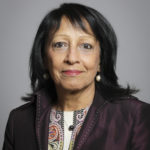
    The tribute made by Pola Uddin, Baroness Uddin, in the House of Lords on 9 September 2022.

    My Lords, Inna Lillahi wa inna ilayhi raji’un: to God we belong, and unto God we shall be returned. As a Muslim, these are the first sentiments that we utter on hearing news of deaths. So it was that I learned of Her Majesty’s death and shared the same words with my friends and family.

    I stand in deepest sorrow and share all the condolences to His Majesty King Charles III and Her Majesty’s beloved family—our sincerest sorrow and deepest sympathy. Being respectful of all the eloquent contributions before me, I speak as her Peer, a woman, a mother and grandmother, in expressing my deepest gratitude for her lifelong service to our nation and the Commonwealth—indeed, the longest serving woman leader of any nation. Her presence will have inspired umpteen generations of younger women and emerging leaders in their communities and countries. We cannot overestimate the impact on the young of Her Majesty’s encounter, with natural ease, with Paddington Bear, or of her bus ride on a Peppa Pig bus booked to Buckingham Palace. I can share with noble Lords the endearment with which Her Majesty is held by the generation of my seven year-old granddaughter, Imaan, who wants to meet Her Majesty the Queen on the next red bus ride.

    On a very personal note, I had the honour of receiving Her Majesty the Queen for the first time as deputy leader of Tower Hamlets Council during her visit to a London hospital. I had just given birth and left a breastfed baby behind. The royal visit was a little delayed and, as I got a call, I stepped out of this huge building with a heavy wooden door and shielded myself behind the entrance. As I was there for a few minutes, the door was flung open, exposing me with a little telephone to my ear. I was petrified. Her Majesty opened the door and said, “Who are you?”. I curtsied and said, “Your Majesty, I am the deputy leader of the council, here to welcome you, to receive you, and I am really sorry. I had to step out because I have a screaming baby and a distressed husband.” She asked me how many children I had: was this the first? I said, “No, Your Majesty, this is my fifth.” She said, “For God’s sake, tell him to get a bottle and feed him.” Remarkably, a few years later, in the Royal Gallery, when I was introduced as the first Muslim woman appointed by her to this House, she asked me if we had met before. I dared to explain where I had met her and she asked where the babies were. I said, “Unfortunately, still with the same man.”

    The smile that I saw everywhere yesterday on television was exactly the smile that was so endearing and so loving. It was almost as though you knew her, although those moments were so little, so unimportant, in the greater scheme of things.

    I am thankful for this opportunity to express my humblest gratitude for Her Majesty’s life of service and dedication to all her people. As a mother, I feel confident that Her Majesty’s teaching and indelible wisdom will be imprinted in the footprints of His Majesty King Charles III: duty to our whole country as defender of all people, of all faiths. Long may he reign, and may Almighty God bless our Queen, eternal guardian of peace beside her beloved rock.

  • Michael Howard – 2022 Tribute to HM Queen Elizabeth II (Baron Howard of Lympne)

    Michael Howard – 2022 Tribute to HM Queen Elizabeth II (Baron Howard of Lympne)

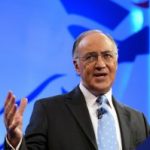
    The tribute made by Michael Howard, Baron Howard of Lympne, in the House of Lords on 9 September 2011.

    My Lords, at this stage in your Lordships’ proceedings, it is not easy to say very much that is new. However, I want to echo in particular the words of the right reverend Prelate who led our prayers and the noble and learned Lord, Lord Judge, in suggesting that our mourning for the longest-reigning monarch in our history should be infused with a spirit of gratitude. For it is we, the people of the United Kingdom and the Commonwealth, who are the beneficiaries of that sense of duty, devotion to service and dedication to the well-being of her subjects about which so many have spoken. She applied those principles in practice in a way that provided inspiration and leadership without ever trespassing for a second into the realm of party politics. In the words of my noble friend Lord Forsyth, she never put a foot wrong.

    Much is said these days about soft power: the way in which a country can influence events without necessarily relying on military or even economic clout. It is impossible to exaggerate the extent to which Her Majesty influenced across the world a positive perception of the United Kingdom. She was soft power personified.

    Much has been said about the way she put people at ease, and I had the privilege, with my wife, of spending a night at Windsor Castle when I was leader of the Opposition. I was amazed to find in the library the trouble that had been taken to assemble a collection of objects which related to my constituency, Folkestone and Hythe—objects I had known nothing at all about and which were quite remarkable.

    Perhaps the most telling example of the way she could put people at ease occurred when a friend of mine who had been subject to much trauma was invited to lunch at the palace, sat next to the Queen and, in the middle of the lunch, froze. The Queen sent for the corgis and, together, they fed the corgis, and my friend unfroze and was able to continue the conversation.

    Much has been said about the way Her Majesty was regarded with such enormous respect and admiration far beyond our shores. I finish with one reminiscence. I was in a Caribbean country when a new governor-general had just been appointed, and the local newspaper published an article giving advice to the new governor-general. It said: “You will have many difficult decisions to make, and we suggest that when you are confronted with those decisions, you ask yourself one question: what would Her Majesty do?”

    My Lords, we have lost a great monarch, a great friend and, as she described herself, a servant—our country’s greatest and most faithful servant.

  • Jim Wallace – 2022 Tribute to HM Queen Elizabeth II (Baron Wallace of Tankerness)

    Jim Wallace – 2022 Tribute to HM Queen Elizabeth II (Baron Wallace of Tankerness)

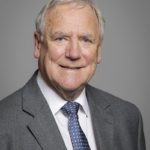
    The tribute made by Jim Wallace, Baron Wallace of Tankerness, in the House of Lords on 9 September 2022.

    My Lords, I was born two and a half years after Her late Majesty Queen Elizabeth ascended the Throne. Until yesterday, in common with the majority of people in this country, I had known only one monarch. For so many of us, the Queen alone represented what we think of as and understand by the concept of monarchy. She was “the Queen”. Her reign was one of exemplary, selfless and faithful service, sustained by a profound Christian faith—a life of service inspired by following the way of Jesus, the Servant King.

    However, it was not a slavish adherence to duty. Many people have commented on the late Queen’s pertinent comments on visits, her informed observations and the real interest she showed in people and communities. She engaged with these people and their communities on visits for 70 years and more, and invariably left them feeling much better for having met her. It is testimony to the gracious manner in which she fulfilled her role as our Queen.

    Comments have been made today and in many of the commentaries over the past 24 hours about the dramatic changes that have taken place in our country, across the world and in society since the Queen ascended the Throne in 1952—things that almost certainly would have been unimaginable in that year. I recall reading somewhere that, at the age of 50, she was the first head of state ever to send what we now call an email. The Scottish Parliament was probably only a twinkle in the eye of some political activists, but the noble Lord, Lord McConnell, recalled her visit to the Scottish Parliament’s Sitting in Aberdeen on the occasion of her Golden Jubilee in 2002. She gave so much encouragement to those of us who had been in there from the beginning and had taken some brickbats from the press for what we were doing. I also recall that, when she opened the new Scottish Parliament on 1 July 1999, she referred to the

    “pragmatic balance between continuity and change”.

    Truly it was her ability to achieve and maintain that pragmatic balance over seven decades, not least in political and constitutional relationships, that was one of the key hallmarks of her reign.

    I first met the Queen in Kirkwall in 1987 when she unveiled a new stained glass window in St Magnus Cathedral on the 850th anniversary of the cathedral’s foundation. When I last met her, less than three weeks ago, she referred to that visit. As a former Moderator of the General Assembly of the Church of Scotland, a church in which she always showed a keen interest, I had been asked to preach the sermon at the Sunday morning worship in Crathie church. The Queen graciously invited me to spend two nights at Balmoral Castle on her beloved Deeside—but no barbeques. It was a privilege to have had such quality time talking to her. Her mind was sharp. She had a keen interest in what was going on. I experienced the warmth of her personality, which so many people have talked about. She so readily put me at my ease.

    It was also a privilege to engage with close members of her family over those two days, who also did so much to make me feel welcome. It is them—the family to whom the Queen was a mother, grandmother, great-grandmother, aunt and mother-in-law—I have particularly been thinking about over the past 24 hours. As we give thanks for the life of the Queen—a remarkable life of humble leadership and service—I know that we will want to keep in our thoughts and prayers her close family, especially His Majesty King Charles, for whom her death is so very real and personal. May they know the comfort that Jesus promised to those who mourn.

  • David Craig – 2022 Tribute to HM Queen Elizabeth II (Baron Craig of Radley)

    David Craig – 2022 Tribute to HM Queen Elizabeth II (Baron Craig of Radley)

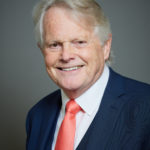
    The tribute made by David Craig, Baron Craig of Radley, in the House of Lords on 9 September 2022.

    My Lords, I, too, share the deep sorrow and grief felt throughout the nation, the Commonwealth and overseas for the passing of Her Majesty. Her devotion, commitment and strength of purpose were not only most remarkable but sustained so magisterially throughout her long reign. I offer my condolences to His Majesty King Charles III and all the Royal Family.

    I was 22 years old and on my flying training course when Her Majesty ascended the throne aged 25. It has always been a mark of her greatness that she assumed her role and responsibilities at so youthful an age and in such full measure. While attending the state visit of her parents to South Africa in 1947, she made on her 21st birthday the vow, already repeated today, that

    “my whole life, whether it be long or short, shall be devoted to your service”.

    It was an admirable and most impressive pledge for a 21 year-old young lady.

    Indeed, it was my privilege to meet her for the first time as soon as two months after she made that vow—still a princess and attending one of her early royal solo events. The occasion was the centenary celebrations at my school, Radley. The Archbishop of Canterbury had preached in chapel. The warden and others had made speeches of welcome and thanks. The school prefects, of which I was one, entertained the princess, less than four years our senior in age, to tea in our study. No masters were present; we had her all to ourselves. We plied her with meringues and biscuits and presented her with a box of chocolates; Radley’s archive still holds the receipt, making clear that this sweet offering cost all 15 of us not only 16 shillings and eight pence but a whole week of our sugar ration. Also in that archive is a copy of part of her handwritten letter to a friend, describing her day at Radley. She wrote:

    “The tea with the prefects was very enjoyable, and certainly a great change from some of the rather dull teas one has on official occasions. This one couldn’t have been more fun.”

    She was well known for her sense of fun, as well as for her sense of duty and responsibility.

    Of course, during my time in the senior ranks of the Armed Forces, and even later, I had the privilege of meeting Her Majesty on numerous occasions. In 1991, when I was Chief of the Defence Staff, she asked me personally to Buckingham Palace to brief her on the ongoing operations in the first Gulf War. She was, as always, deeply interested in the performance of her Armed Forces.

    It is the greatest of blessings to have known such a charming and charismatic person. May she rest in peace and in our memories for ever.

  • Arminka Helić – 2022 Tribute to HM Queen Elizabeth II (Baroness Helić)

    Arminka Helić – 2022 Tribute to HM Queen Elizabeth II (Baroness Helić)

    The tribute made by Arminka Helić (Baroness Helić) in the House of Lords on 9 September 2022.

    My Lords, I share something with the noble Baroness, Lady Smith of Newnham: I never had the honour of meeting Her Majesty, although I did have the honour of being in her presence.

    I did not grow up in Britain, or indeed in a monarchy. Queen Elizabeth was not the daily background to my childhood and identity, as I know she was for so many people in this House, in this nation and across the Commonwealth. In school, I was taught about the former kingdom of Yugoslavia and its royal family, who had abandoned the country at a time of great difficulty in the Second World War and whose supporters had been on the wrong side of history. Yet, as I studied the language and literature of this country at university, and then sought refuge here, the virtues and principles of Her late Majesty the Queen showed me a different idea of monarchy.

    The values Elizabeth II embodied, to which noble Lords have paid tribute so eloquently, were the values I have come to associate with this United Kingdom which is now my home. The sense of service which she so defined, and defined her, and which she chose to emphasise as the fundamental principle of her reign, is an example and inspiration to all of us in public life. The Queen was a reminder that, across periods of huge change in politics, society and technology, there are values that persist. Through times of uncertainty or division, she was a unifying force. You could look to her for continuity and an idea of how to act and how to serve.

    Her leadership was respected and admired across the world. As one former refugee from Iran now serving in the United Nations told me this morning, it does not matter where you are from: she was a point of light for us all. For the people of this nation, the Commonwealth and the world, the Queen represents an ideal of decency and quiet duty which offers hope and reassurance.

    For those like me who came to this country as refugees and immigrants, the Queen brought us together. In our admiration and love for her, we became British. She was a lighthouse, guiding us through the darkness and showing us by her actions how we might place duty and humility at the heart of our lives. So she will remain.

    My thoughts now are with her family and His Majesty the King. Our pain can be only a shadow of what they feel—those who knew her best and loved her first as a mother and a grandmother. I offer His Majesty King Charles III my loyalty and support, and pray for his long reign.

  • Waheed Alli – 2022 Tribute to HM Queen Elizabeth II (Baron Alli)

    Waheed Alli – 2022 Tribute to HM Queen Elizabeth II (Baron Alli)

    The tribute made by Waheed Alli, Baron Alli, in the House of Lords on 9 September 2022.

    My Lords, I have not spoken in your Lordships’ House for many years but I felt compelled to do so today, and I am glad I did. I wish to associate myself with much of what has been said about Her late Majesty and everything she embodied. I also echo the sentiments of the noble Lord, Lord Butler, and pay tribute to the opening speeches by the Front Benches and many others today. It makes you proud to be a Member of this House as you listen to the tributes, the contributions that almost everybody in this House has made to public life and the interaction they have had with Her Majesty the Queen.

    Her Majesty’s life set us all an example. My time in this House—it has been long—has been focused on equality, as many noble Lords will know. The notion of equality and monarchy can be difficult to reconcile in the abstract. The most fitting tribute I can pay to the late Queen is that she made that reconciliation look easy. She was a great equaliser; she equalised in almost every room into which she stepped. Her sense of duty should humble us all.

    I have always been enamoured by the motto of the BBC:

    “Nation shall speak peace unto nation”.

    Her Majesty was the personification of this, and I mourn her passing. I celebrate her life, with all of you, and I wish long life to His Majesty the King.


  • Julie Smith – 2022 Tribute to HM Queen Elizabeth II (Baroness Smith of Newnham)

    Julie Smith – 2022 Tribute to HM Queen Elizabeth II (Baroness Smith of Newnham)

    The tribute made by Julie Smith, Baroness Smith of Newnham, in the House of Lords on 9 September 2022.

    My Lords, I rise to speak from perhaps a unique perspective in your Lordships’ House. Almost all the very powerful and moving tributes to Her late Majesty we have heard today have been from noble Lords who met Her Majesty, but I never met Her Majesty in person. I thought yesterday, “I don’t think I will rise to speak in tribute to Her late Majesty; what can I say?” But the more I thought about it, the more I thought, “Surely my perspective is somewhat more similar to the many millions of loyal subjects across the United Kingdom and other countries who have our sovereign as their head of state”. As my noble friend Lady Benjamin said, she dreamed of meeting the Queen when she was a child in Trinidad, and she never thought that that would happen. But in her case, like so many of your Lordships, she had the opportunity to meet Her late Majesty Queen Elizabeth II.

    Exactly eight years ago, the second Friday of September 2014, I received an email to say that Her Majesty the Queen had agreed my title. The missive had been sent thanks to Her Majesty the Queen, and my friends and relatives all said, “That’s wonderful; you’re going to be in the House of Lords. Does that mean you’re going to meet the Queen?” There was an immediate assumption that if the monarch opens Parliament, and if we see people who get MBEs, CBEs, DBEs and KBEs going to the palace to receive them from the Queen, then surely if you get a peerage—what higher honour could there be?—you receive it from the sovereign. So, I had to explain a little bit of the British constitution and how, although the Queen makes her Letters Patent in order for us to be here, in practice we do not kiss the ring or have any other direct interaction with Her Majesty the Queen.

    Like many children of the 1970s, and like the noble Lord, Lord Ahmad, I remember the Silver Jubilee—and I too remember Virginia Wade winning Wimbledon. I come from Liverpool and, like many children, I went to a street party. My mother paid five pence every week for a collection so that I could go, and I got one of the commemorative coins, just like every child. In the 1970s, when this country still believed in deference, you expected young children to look to Her Majesty the Queen, and people across the Commonwealth would look to the Royal Family. Fast forward 45 years and the world has changed fundamentally.

    As we heard from my noble friend Lord Wallace of Saltaire, who was present at the last Coronation, the country has become so much more diverse—we have heard from many noble Lords of different faiths—and the Queen has overseen that growing diversity. But the country itself has, in many ways, become much less deferential and much less interested—one might think—in pageantry. However, my youngest godson, who is three, and his brother like nothing more than singing what they call “The Queen’s song”; to them, that is what the national anthem is. That might be strange. I do not know how many three, four or five year-olds like to sing their national anthem—this is not a country like the United States, where you are expected to do so—but for those children, and for anybody under the age of 70, our national anthem has been wrapped up with the identity of Her Majesty the Queen. All of us are going to have to think about what it means to have King Charles III, and we are all going to have to get used to thinking about His Majesty the King.

    One of the things that has been so tremendous this week is the outpouring of grief in the country. This is a personal moment for the Royal Family—like other noble Lords, I send my most sincere condolences to His Majesty the King, the Queen Consort and the rest of the Royal Family—but it is also a time of heartfelt grief in this country and other countries where Her Majesty the Queen was head of state. She has been the most wonderful role model, both for those of you who met her and for those of us who never met her in person. We can only hope and pray that, whereas Her late Majesty had a very short apprenticeship to be our Queen, her son, who has had a 70-year apprenticeship from the best teacher he could have had, will find the faith and fortitude to be as wonderful a monarch of our country as his late mother. I wish him well. God save the King—and thank you, Ma’am.

  • Susan Williams – 2022 Tribute to HM Queen Elizabeth II (Baroness Williams of Trafford)

    Susan Williams – 2022 Tribute to HM Queen Elizabeth II (Baroness Williams of Trafford)

    The tribute made by Susan Williams, Baroness Williams of Trafford, in the House of Lords on 9 September 2022.

    My Lords, it is an honour to contribute to these speeches recognising the value that Her Majesty the Queen gave this country. There are over half a million nurses in the UK and she met many of them. She had been patron of the Royal College of Nursing since 1953 and will be sorely missed. Her interest was great. She met many Florence Nightingale Foundation scholars—I am president of that foundation—and many of those scholars lead our NHS trusts and community services. She worked with the Queen’s Nursing Institute and always had a deep interest in nursing. She met so many nurses from so many different countries, backgrounds and faiths, and they all valued the discussions she had with them.

    As I got more senior, I met the Queen on several occasions, but what she wanted senior nurses to do was to introduce her to the people who were working on the floor or in the community—and, obviously, sometimes to patients. At the end of the pandemic, she said she recognised that nurses had played a very important part in our pandemic response. Of course, over the years she visited palliative care centres and children’s centres, and after the Manchester bomb, she spoke to a variety of nurses and patients. She also had quite an interest, as I have, in homelessness and how healthcare was delivered there. That issue has now been taken up by His Royal Highness Prince William. I also remind noble Lords how brilliant she was with people in distress: she coped with somebody breaking into her bedroom and kept them calm. That is quite a challenge.

    I join other members of my profession in remembering a role model who took the rough with the smooth. The Queen was interested in all her people’s welfare and was fair and polite to everybody she came into contact with. I will just say that, although she did not know it was me, exactly 49 years ago I was a second-year student at the Westminster Hospital at a time when, on the whole, her staff and friends were admitted to the Westminster Hospital if they were not well. I was working in theatre and, in theatre, if you had been on night duty, you had to go down in the morning and collect the blood from the basement and bring it up to the theatres. You had to do that separately, so you did not muddle blood for different theatres. There were only two lifts: one for emergencies and the other for ordinary behaviour.

    We were told at 6 am that nobody was to use the routine lift until 7 am, but I had the blood to collect, so I had several journeys down eight sets of stairs, because theatre was at the top and blood was in the basement. At 7.02 am, I was on my last trip and I thought, “Great, I can get into the lift.” So I pressed for the lift in the basement, it opened and there was our matron, whose name I can remember, with the Queen, who had overrun visiting a member of her staff. I stood with two bags of blood in each hand, curtsied, stood back and out of the lift they got. She just smiled at me—so many noble Lords have mentioned that smile. I spent the next 72 hours expecting to be called for by the matron. That did not happen and I am pretty convinced it was because the Queen probably laughed once she walked away from me.

    I join others in sending my condolences to His Majesty King Charles III, his sons and his wife, the Queen Consort, Camilla, who I trust will support and comfort him throughout his reign in the way the Queen was supported by Prince Philip.

  • Michael Gove – 2011 Speech to the National College for School Leadership

    Michael Gove – 2011 Speech to the National College for School Leadership

    The speech made by Michael Gove, the then Secretary of State for Education, in Birmingham on 16 June 2011.

    Thank you Tony for that kind introduction.

    The last time we met was in New York when we were discussing school reform and, in particular, teacher performance.

    I remember arguing that teachers had nothing to fear from lesson observation – not only was learning from other professionals the best way to improve, confident performers should relish the opportunity to show what they can do.

    After all, I argued, other inspirational professionals are used to being watched while they work – great footballers, I said, like Wayne Rooney and Ryan Giggs, don’t object to people paying them attention when they do their thing….

    Perhaps, in hindsight, I could have chosen a happier parallel – but Tony you are one professional who always performs with effortless grace – thank you.

    And thinking of outstanding performances which are a joy to watch, Steve, can I thank you for a brilliant and inspiring speech…

    You incarnate the virtues of great leadership.

    Clarity of vision.

    Generosity of spirit.

    Energy in action.

    And, above all, clear moral purpose.

    Together with Vanni, Toby and the rest of the leadership team at the National College you have responded to every challenge we’ve given you with the enthusiasm, optimism and ambition of great public servants.

    I am in your debt.

    I mentioned that you bring a clear sense of moral purpose to everything you do, Steve.

    Throughout your career you have aspired to give children and young people new opportunities, richer futures, a sense of limitless possibility.

    And it’s about moral purpose that I want to speak today.

    Knowledge is power

    The moral purpose that animates the work we all do. Ministers, officials, school leaders, teachers.

    What unites us is a belief that lives can be transformed by what goes on in schools. The precious moments spent in the classroom, the interactions between professionals and students, the process of teaching and learning – can shape futures like nothing else.

    Just last week I was talking to one young man at the secondary school nearest to my home, Burlington Danes in London’s White City Estate. A teenager who had been persistently in trouble, going in the wrong direction and who saw in the environment around him no incentive to work hard, no penalty for indiscipline, no encouragement to learn. Until that school was taken in a new direction by a new leader, the amazing Sally Coates.

    She made sure every moment every child spent in her school was worthwhile – focussed on learning – with a clear expectation that every child could surpass their family’s expectations. That young man is now on course to study engineering at Cambridge and his life has been transformed immeasurably for the better.

    And what Sally has done in Burlington Danes, so many of you are doing across the country. Changing schools for the better, spreading opportunity more widely.

    I am uniquely fortunate to be Secretary of State at a time when we have the best generation of teachers ever in our schools and the best generation of heads leading them.

    People like Dana Ross-Wawrzynski at Altrincham Grammar Schools for Girls, who not only runs one of the most impressive schools in the country, but is also creating a trust in East Manchester that is already rapidly boosting the performance of a number of other local schools.

    Or Ray Ruszczynski at Chellaston Academy, a superb National Leader of Education, working in a collaborative group with Landau Forte Academy and West Park School, as well as providing a wide range of support to Sinfin School.

    Or Dame Sue John who has turned Lampton Academy into an inspiring example of how a school can succeed in a tough area, while also spearheading the London Challenge initiative which has so helped improve education in our capital.

    Heroes and heroines whose vocation is teaching – the noblest calling I know.

    All of us in this hall share something, I suspect. All of us, I am sure, were inspired by a teacher or teachers who kindled a love of knowledge, a restless curiosity, and a passion for our subject when we were young.

    And all of us, I believe, want to excite the next generation – as we were excited – by the adventure of learning.

    Introducing the next generation to the best that has been thought and written is a moral enterprise of which we can all be proud. Giving every child an equal share in the inheritance of achievement which great minds have passed on to us is a great progressive cause. Shakespeare’s dramas, Milton’s verse, Newton’s breakthroughs, Curie’s discoveries, Leibniz’s genius, Turing’s innovation, Beethoven’s music, Turner’s painting, Macmillan’s choreography, Zuckerberg’s brilliance – all the rich achievements of human ingenuity belong to every child – and it should be our enduring mission to spread that inheritance as widely as possible.

    Because it is only through learning – the acquisition of intellectual capital – that individuals have the power to shape their own lives. In a world which globalisation is flattening, in which unskilled jobs are disappearing from our shores, in which education determines income and good qualifications are the best form of unemployment insurance, we have to ensure every child has a stock of intellectual capital which enables them to flourish.

    Making opportunity more equal

    But there is one area where the sense of moral purpose which guides us as leaders in education must impel us to do more.

    As a nation, we still do not do enough to extend the liberating power of a great education to the poorest.

    As Barack Obama has persuasively argued, education reform is the civil rights battle of our time.

    In Britain, as in the USA, access to a quality education has never mattered more but access to a quality education is rationed for the poor, the vulnerable and those from minority communities.

    Each year there are 600,000 students passing through our state schools. 80,000 of them – the poorest – are those eligible for free school meals.

    Of those 80,000, in the last year for which we have figures, just 40 made it to Oxford or Cambridge. Fewer from the whole of the population on benefits than made it from Eton. Or Westminster. Or St Paul’s School for Girls.

    We know that we are not playing fair by all when, in the last year for which we have figures, just one child from all the state schools in the whole London Borough of Greenwich makes it to Oxford.

    My moral purpose in Government is to break the lock which prevents children from our poorest families making it into our best universities and walking into the best jobs.

    That is why this Government is spending two and a half billion pounds on a pupil premium to ensure that every child eligible for free school meals has two thousand pounds more spent on their education every year.

    That is why this Government is investing in more hours of free nursery education for all three and four year olds and 15 hours of free nursery education for all disadvantaged two-year-olds.

    And that is why this Government is investing in an Education Endowment Fund which will, like Barack Obama’s Race to the Top Fund, provide additional money for those teachers who develop innovative approaches to tackling disadvantage.

    Because the scandal which haunts my conscience is the plight of those students from the poorest backgrounds, in the poorest neighbourhoods, in our poorest-performing schools who need us to act if their right to a decent future is to be guaranteed.

    We still have one of the most segregated schools systems in the world, with the gap between the best and the worst wider than in almost any other developed nation.

    In the highest-performing education nations, such as Singapore, around 80% of students taking O-levels get at least an equivalent of a C pass in their maths and English.

    And we should remember that Singapore has only been independent for around fifty years, it has no natural resources, is surrounded by more powerful nations, is a multi-ethnic society and its students sit exams in English – even though their first language will be Malay, Tamil or Chinese.

    Here just over half of students get a C pass in GCSE maths and English. And the half which fail are drawn overwhelmingly from poorer backgrounds and are educated in poorer-performing schools.

    So, at the heart of our comprehensive reform programme for education is a determination to learn from, and emulate, those countries which are both high performers and succeed in generating a much higher level of equity across the school system.

    Thanks to the pioneering work of thinkers such as Michael Fullan, Michael Barber and Fenton Whelan, and the data gathered by the OECD through its regular surveys of educational performance, we can identify the common features of high-performing systems.

    The best people need to be recruited into the classroom.

    They then need to be liberated in schools set free from bureaucratic control.

    Given structures which encourage collaboration and the sharing of the benefits innovation brings.

    Held to account in an intelligent fashion so we can all identify the best practice we can draw on.

    And led in a way which encourages us all to hold fast to the moral purpose of making opportunity more equal.

    I want to say a little about each.

    We’re getting more superb teachers

    We’ve moved quickly to get more high-performing graduates into teaching by funding the doubling of Teach First over the course of this parliament and expanding the fantastic Future Leaders and Teaching Leaders programmes which, with the support of the National College, provide superb professional development for the future leaders of some of our toughest schools.

    Shortly we’ll be publishing our strategy for Initial Teacher Training. This will further emphasise our commitment to boosting the status of the profession by toughening up the recruitment process and ensuring that all new teachers have a real depth of knowledge in their subject.

    We’ll be making sure this covers the whole spectrum by, for example, providing additional funding for more placements in special schools, so as to give more teachers specialist knowledge in teaching children with special needs.

    We will also explore how excellent schools can be more involved in both initial training and the provision of professional development. Contrary to what some have said this is not about excluding higher education from teacher training. There are many excellent centres of ITT and losing their experience is not on my agenda.

    But I am keen that we make better use of headteachers’ and teachers’ experience. That’s why I, like Steve, am so excited about the development of Teaching Schools.

    I believe Teaching Schools have the potential to generate higher standards than ever before. Over 1,000 expressions of interest and 300 applications is a very positive sign of your enthusiasm. The first 100 Teaching Schools will be designated next month but the partnerships being developed between schools and with higher education are already having a powerful and positive impact on the system.

    We’re empowering school leaders to innovate

    Putting our best schools in charge of professional development is, though, just one way in which we’re handing you control of the education system.

    We’ve reduced central Government prescription for all schools to make your lives easier and give you the space to focus on what really matters.

    The hundreds of pages of forms you had to fill in to complete the FMSIS process. Gone.

    The vast Ofsted self-evaluation form that took weeks to fill in. Gone.

    Performance Management guidance has been cut by three quarters and capability procedures simplified so you can deal with inadequate staff quickly and effectively.

    Behaviour and bullying guidance has been cut from 600 pages to 50 so as to give you complete clarity over your powers and duties.

    Over the next few months we will be publishing shortened guidance in a whole host of other areas. In total, departmental guidance will be more than halved.

    And, I hope you’ve noticed we’ve stopped the endless stream of emails that use to emanate from the Department.

    Beyond these changes we’ve implemented for the benefit of all schools, we’ve also given every school the opportunity to take complete control of its budget, curriculum and staffing by applying for academy status.

    When I spoke to you last year there were 203 academies. Now there are 704 and a further 814 schools have applied. By the end of the year more than a third of secondaries will be academies. This is a much faster rate of conversion than I, or I think anyone else, had anticipated and testament, I believe, to school leaders’ desire for genuine autonomy.

    Many of you who have converted in the past year have already used your freedoms to great effect. For example:

    Premier Academy in Milton Keynes has extended payscales – so that good teachers can choose to remain in the classroom rather than move into management to increase their salaries.

    And, like other schools such as Wakefield City Academy, they have used resources previously held by their Local Authority to employ a dedicated pastoral support worker on-site to ensure that children with social and educational needs get complete continuity of care.

    Others are following some of the larger sponsor groups like ARK and Haberdashers in extending their school day and the academic year.

    Yet others like the Kunskapsskolan schools in Richmond are developing exciting new curriculum models.

    And many converter academies have found they are able to buy services for a significantly lower cost than those provided by their local authority.

    For instance Broadclyst Academy Primary School has cut the costs of their payroll system in half and has ploughed the money back into teaching. Watford Grammar School for Girls and Hartismere Academy have found procuring small improvements to be significantly cheaper and quicker.

    This is creating a new relationship between schools and Local Authorities. As we know, in some areas LAs have been genuine drivers of innovation and improvement: they have seen their role as champions of excellence; identifying struggling heads and governors; brokering peer-to-peer support; and forging partnerships with local universities or major employers to drive up standards.

    But in other areas this has not been the case. And this is now beginning to change, as LAs react to schools’ new powers by improving the quality of their offer to ensure academies buy back services and engage with local initiatives. As one academy head explained recently to the Guardian:

    Under the old regime, nothing had ever been done about some things that weren’t good enough, whereas now, there’s an awful lot of activity at our Local Authority to make sure services are good enough so that we will buy them in.

    And some healthy competition isn’t just improving Local Authorities. A study just published by academics at the London School of Economics, looking at academies opened by the last government, shows not only that they have improved significantly faster than other schools, but also that other schools in their locality have seen results improve.

    We’re embedding a culture of collaboration

    But competition isn’t the main driver of improvement in the system. What we’re seeing, as Steve put it, is collaboration driving improvement but with a competitive edge. Indeed I would go as far to argue that genuine collaboration is harder without that competitive edge to inspire the need to improve.

    So I’m hugely encouraged by the renewed focus on partnership between schools I’m seeing at the moment. I’ve already mentioned how impressed I am with some of the alliances put together by aspirant Teaching Schools. But that’s just one area of activity.

    For instance, all of the new converter academies have, between them, agreed to support over 700 other schools and we’ve begun the doubling of the National and Local Leader of Education programmes to support fellow heads.

    I am particularly pleased to see that a number of these softer collaborative relationships are evolving into hard federations.

    I have always thought that many of the best academy chains are those that have grown out of a single outstanding school with a visionary leadership team. Just look at what Dan Moynihan has done at Harris; or Sir Kevin Satchwell at Thomas Telford; or Sir Peter Simpson at Brooke Weston; or our new Schools’ Commissioner Elizabeth Sidwell at Haberdashers.

    What these leaders share is that were given a rare opportunity as headteachers of CTCs to use their longstanding autonomy to develop a powerful educational model that could then be readily applied to new schools when the last Government launched their academy programme.

    Now, with our offer of academy freedoms to all outstanding schools and leaders we have created the opportunity on a much larger scale for great leaders to expand their vision across a group of schools.

    The process of allowing outstanding schools to convert has created a new generation of academy sponsors dedicated to turning round under-performing schools.

    For example, Morley High School, led by NLE John Townsley, converted in January and will start sponsoring Farnley Park School in Leeds next year. And Sandy Hill Academy in Cornwall – one of the very first converters – is now in the process of taking on Trevebyn Primary.

    I hope many more of you will take advantage of this opportunity over the coming years.

    A proper national framework of accountability

    Of course in this new educational landscape – where far more schools have significant autonomy and improvement is driven not by Government but by great schools working with others – proper accountability becomes even more important than ever.

    That’s why we’re currently overhauling the Ofsted framework to focus on the four core responsibilities of schools – teaching and learning; leadership; attainment; behaviour and safety – as opposed to the twenty-seven different categories in the existing framework.

    I am particularly keen that under the new framework Ofsted inspectors are able engage properly with schools, as opposed to focusing too strongly on data alone. I want them to be able to view more lessons; talk to more teachers and hear what students and parents have to say. And I want inspectors to engage not just during inspections but subsequently so that schools feel they have some guidance as well as a judgement.

    We also need to change the way we use data in our pursuit of accountability. As Professor Alison Wolf’s review on vocational education has made clear, the introduction of large numbers of vocational equivalents to the GCSE performance tables in 2004 has led to widespread gaming of qualifications. The 4,000 per cent rise in the number of such qualifications taken in just six years is testament to this.

    She has proposed measures to combat this issue which we are now implementing – including much tighter criteria for courses that wish to be considered equivalent to GCSE. But this particular problem is symptomatic of a wider issue. As long as most data is hidden from the public and the profession governments can manipulate what they do choose to release so as to mislead.

    That is why we’ve already begun a major transparency revolution. We’ve started the process of publishing all the information the Department collects – including an additional 14 million lines of exam data this year. In future this will include more data on how schools are improving the results of the disadvantaged – both those in receipt of the pupil premium and those with low prior attainment.

    I don’t expect, of course, that many parents will personally search through all this new material, but we are already seeing third parties finding new ways to present this data. Moreover educational researchers will have an unprecedented opportunity to investigate what’s really going on in the system.

    It also means that any new performance measures Government does seek to highlight – such as the English Baccalaureate – will only have an impact insofar as they resonate with parents. Initial surveys suggest this measure does have real resonance. Which is unsurprising as it simply seeks to replicate the sort of academic core that is expected in almost every developed country in the world: for children on both academic and vocational routes post-16.

    A moral commitment to helping those most in need

    Crucial to a proper framework of accountability is a set of clear expectations for schools. As the OECD say: “PISA results suggest that the countries that improved the most, or that are among the top performers, are those that establish clear, ambitious policy goals.”

    In last year’s White Paper we took a tougher line on underperformance than ever before by raising the floor standard for secondary schools to 35 per cent of pupils achieving five GCSEs at A*-C including English and maths. We wanted these standards to be as fair as possible, so schools which show pupils making superb progress from a low basis are exempted.

    But that still left 216 secondary schools below this floor. We have taken action, in partnership with many of you in this room, to ensure their performance is turned round.

    In the next school year at least 88 schools, and counting, will be placed in the hands of new academy sponsors with a mission to end a culture of poor performance. That is more under-performing schools converted to academies than the last Government ever managed in a single year and more than they managed in their first eight years combined.

    So I’m hugely encouraged by our progress. But I don’t believe, and I hope you don’t either, that 35 per cent of kids getting five decent GCSEs should be the limit of our ambition.

    To compete with the best in the world, we have to raise our expectations not just once but continuously. In Poland, Australia, Canada and New Zealand more and more students are graduating from school and going on to university. In Singapore more than 80 per cent of young people taking O-levels now achieve 5 passes – the equivalent of C grades in GCSE. In South Korea an incredible 97 per cent of students graduate from high school.

    So if we are to aspire to a world-class education system then we need to raise our sights beyond 35 per cent. And in doing so we cannot allow ourselves to have lower expectations for more disadvantaged parts of country. Of course I accept that schools in such communities face harder challenges but I also know that these challenges can be met. Deprivation need not be destiny.

    Look at Perry Beeches in Birmingham. 25 per cent of children are on Free School Meals and 41 per cent have special needs. Yet in three years they have moved from 21 per cent five A*-C GCSEs including English and Maths to 74 per cent.

    Or Paddington Academy – which jumped from 34 per cent to 63 per cent five A*-C with English and maths in just one year. At Paddington 51 per cent of children are on Free School Meals and 65 per cent are identified has having some kind of special need.

    Or Woodside High School in Haringey, a school Steve spoke eloquently about in his speech, where almost no children at all achieved 5 A* to C with English and maths 5 years ago and where over 50% will hit that benchmark this year. Again this is a school where 55% of children are on free school meals and 38% have identified special needs.

    Now that we know this level of achievement is possible in schools like these, and in many others similar to them, we must surely make it our expectation for all schools. To do any less, I believe, would be a betrayal of our young people.

    So next year the floor will rise to 40 per cent and my aspiration is that by 2015 we will be able to raise it to 50 per cent. There is no reason – if we work together – that by the end of this parliament every young person in the country can’t be educated in a school where at least half of students reach this basic academic standard.

    I realise that in stating this aspiration some will criticise too strong a focus on testing. Let me be clear: I do not think the only responsibility a school has is to help students pass exams. An outstanding school will look after the pastoral needs of its pupils; will provide a wide range of extra-curricular activities, and play a role as a broader part of its community. But it must also endow each child with the basic entitlement of intellectual capital any citizen needs to make their way in the world. A GCSE floor standard is about providing a basic minimum expectation to young people that their school will equip them for further education and employment.

    Primary

    And we must also have a similar level of expectation for primary schools. The last Government’s academies programme was never extended to primaries, even though it was Andrew Adonis’s clear ambition.

    And after an initial focus on primary schools in its first five years, the last Government lost momentum. So in the White Paper I also introduced a meaningful floor standard for primaries for the first time: that 60 per cent of pupils should achieve Level 4 in English and maths at Key Stage 2 or make an average level of progress.

    Of course primary test scores are more volatile than those in secondaries due to the smaller size of schools, so one has to treat data with additional care. However, analysis of this new floor standard reveals that there are more than 200 schools that have been under the floor for five years or more. Indeed more than half of these have been under the floor for at least ten years.

    A further 500 or so schools have been under the floor for three of the past four years.

    These schools have let down repeated cohorts of children. Again I appreciate that it is harder to reach this standard in some parts of the country than others. But again we know that it is possible:

    Look at Berrymede Junior School in Acton where 58 per cent of children are on Free School Meals and 31 per cent have a special need. Here over 80 per cent of pupils have achieved Level 4 in English and maths in each of the last three years.

    Or Woodberry Down in Hackney with 51 per cent on Free School Meals and 34 per cent with special needs where 80 per cent reached Level 4 in English and maths last year.

    Or Cuckoo Hall Academy in Edmonton with 37 per cent on Free School Meals and 34 per cent with special needs where an incredible 95 per cent of pupils achieved the Level 4 benchmark last year.

    Or dozens of others in similar circumstances. Given that we know it can be done and it is done, we surely must make it our minimum expectation for all primary schools that they will not consistently fall below a 60 per cent floor.

    So, as an urgent priority, we will start work on turning around the 200 schools that have most consistently underperformed by finding new academy sponsors for them so that most can reopen from September 2012. We want to work closely with the schools involved and their local authorities to make this happen.

    The Education Bill currently working its way through Parliament will give the Department the power to intervene to turn around underperforming schools where authorities are recalcitrant or try to stand in the way of improvement. But wherever possible we want to find solutions that everyone can agree on – as we have done with the vast majority of the secondary schools that will become academies next year.

    Beyond this we want to support Local Authorities in turning round the 500 schools who have fallen below the floor in at least three of the past four years. Several months ago I asked Local Authorities to draw up plans showing how they intended to improve their weaker schools. These have now been submitted and some of them are very impressive showing clear leadership and engagement with the problems of long-term underperformance.

    In his speech Steve mentioned Wigan’s plans to commission groups of schools to run improvement activity across the authority and he underlined how schools across Manchester are working together to embed the success of the Greater Manchester Challenge. In Devon and Suffolk the Local Authorities have worked to help schools become academies while maintaining a strong network between the schools.

    But there will be other local authorities that need some support – financial and logistic – from the centre. So, over the coming months, we will identify areas – either whole authorities or parts of larger authorities – that have a significant number of underperforming schools. We will help these communities dramatically transform primary education in their area.

    Conclusion

    And there is an urgent need for us all to act.

    We have just suffered the worst financial crisis since 1929.

    Our economy is weighed down by a huge debt burden.

    Europe has major problems with debt and the euro.

    Meanwhile there is a rapid and historic shift of political and economic power to Asia and a series of scientific and technological changes that are transforming our culture, economy and global politics.

    If we do not have a school system that is adapting to and preparing for these challenges then we will betray a generation.

    Our school system needs to have innovation embedded in its way of working. That is what our reforms provide – the opportunity for our school system to adapt rapidly to technological change such as the amazing revolution of iTunesU, whereby Harvard and Oxbridge publish their most valuable content free, extending the scope of knowledge available to all children.

    Only by learning from other nations, and by giving school leaders the freedom to shape their own futures, liberated from outdated bureaucratic structures, can we ensure we benefit from the other, increasingly rapid changes technological innovation will bring.

    And while globalisation brings many benefits to our citizens, it also bears particularly heavily on the poor and the young.

    Across the Western world countries are struggling with youth unemployment at the moment.

    And for all those of us who feel that the moral purpose of our work is to find a fulfilling outlet for the talents of our young people, there is a special tragedy in seeing young lives unfulfilled.

    There are things Government can do to ameliorate this in the short term. And we are acting, not least through my colleague Iain Duncan Smith’s work programme.

    But if we are to grasp this issue properly then we must deal with the root causes of the problem.

    And that is our shared responsibility.

    For those root causes can be found in the first years of a child’s life.

    We know that a child who struggles at Key Stage One will struggle to do well in their Key Stage Two tests. And we know those children with the greatest difficulties are drawn overwhelmingly from our poorest neighbourhoods.

    And we know that those same children who don’t have Level 4 English and maths when they leave primary school are much less likely to achieve five good GCSEs than their more fortunate peers.

    And we know that the same young person who doesn’t get the equivalent of five good GCSEs is much more likely to be NEET at 16 or 17 and much less likely to be in secure employment thereafter.

    We are fortunate to be in the most fulfilling employment anyone can have. To be engaged in the education of the next generation is to be given a chance to liberate thousands from the narrow horizons which have limited mankind’s vision for centuries.

    But if we are to make good that promise then we need to recognise that we will all have to work harder than ever before – work to attract even better people into teaching, work to innovate more determinedly, work to identify talent more zealously, work to collaborate more intensively, work to raise aspirations, standards, hopes…

    But in this work lies the promise of a reward greater than is given to any other profession – the knowledge that we have guaranteed the life of the next generation will be better than our own.

  • David Wolfson (Baron Wolfson of Tredegar) – 2022 Tribute to HM Queen Elizabeth II

    David Wolfson (Baron Wolfson of Tredegar) – 2022 Tribute to HM Queen Elizabeth II

    The tribute made by David Wolfson, Baron Wolfson of Tredegar, in the House of Lords on 9 September 2022.

    My Lords, I begin, in accordance with the custom of my religious tradition, with an acknowledgement that, as mortal humans, we submit to God’s decree and from his judgment, whether that be for life or for death, there is no appeal: “Baruch dayan ha’emet”—“Blessed be the Judge of truth.”

    As I say that blessing, I am taken to the last time I met Her Majesty. I recited a different and special blessing, the blessing our rabbis prescribed to be said when meeting royalty: “Baruch shenatan michvodo lebasar vadam”—“Blessed is He who has shared His glory with mortals of flesh and blood”. The idea in that blessing is not the divine right of kings; it is not the absolutist notion that, because monarchs derive their power from God, they cannot be held accountable for their actions. The blessing embodies a totally different idea, but it is a powerful one. It is the idea, as the Talmud puts it, that “royalty on earth is to reflect royalty in heaven”; that to be royal requires the highest standards and impeccable behaviour. It is an idea, I suggest, that Her late Majesty exemplified throughout her long reign.

    Noble Lords might be familiar with the Hebrew word “mitzvah”. “Well done for doing this or that,” you might hear somebody say, and they will add, “You’ve done a mitzvah”—you have done a good deed. But a mitzvah is not a good deed which you do because you are in the mood or because the urge takes you; it is not something you do only and if you feel like it. The Hebrew root of the word mitzvah, its basic etymology, is the word “tzav”, which means “commandment”, “order” or “duty”. You do a mitzvah not just because it is a good deed and not just because you feel like doing it; you do a mitzvah because it is your duty. Her late Majesty spent her whole life doing the right thing and not just because she felt like it or because the mood took her. She spent her 96 years doing the right thing, day in, day out, out of a sense of duty. It was a life, if I may respectfully say, of mitzvah, of acting out of a profound sense of personal duty and under the solemn oath to God which she took at her Coronation.

    In Hebrew, every letter also has a numerical value and you can add up the values of individual letters to get the value of a word. In one of those coincidences which perhaps are not, the numerical value of the Hebrew word tzav, the root of the word mitzvah, is 96: 96 years of tzav, of duty, and also of mitzvah, of doing the right thing because that is your duty.

    Tomorrow is Shabbat and, as we have heard from my noble friend Lord Polak, in synagogues up and down the country we will say the prayer for the Royal Family, as we do each and every week. We recite that prayer immediately after the reading of the Torah, the five books of the Pentateuch, from Genesis to Deuteronomy, which we read in weekly instalments throughout the year. We are well into Deuteronomy at the moment, so the current annual cycle is nearly complete, but on the day we finish Deuteronomy, we do something odd but important. We return to the Holy Ark the scroll with which we completed Deuteronomy but we immediately take out a new scroll and start reading again from the first chapter of Genesis. So, on that day, the death of Moses, the faithful leader who had guided the people over so many decades, is immediately followed, a matter of moments later, by a new start—indeed, a new creation—in the first chapter of Genesis.

    So tomorrow, for the first time in my life, we will not pray in synagogue for Prince Charles but for King Charles. I started yesterday as a Queen’s Counsel and I finished it as a King’s Counsel. We have closed one book, a long and good book which we have had with us for so many years, and we are about to open another. As we all pray that God save our King, I will also pray that he too may enjoy a reign of mitzvah, of doing the right thing, for that, now, is his duty. Baruch dayan ha’emet, yehi zichra baruch. “Blessed be the judge of truth”, and may her late Majesty’s cherished memory be a blessing for all of us.