Category: Royal Family

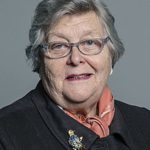
  • Deborah Bull – 2022 Tribute to HM Queen Elizabeth II (Baroness Bull)

    Deborah Bull – 2022 Tribute to HM Queen Elizabeth II (Baroness Bull)

    The tribute made by Deborah Bull, Baroness Bull, in the House of Lords on 10 September 2022.

    My Lords, it is a privilege to speak today and to add to the tributes we have heard so far the gratitude and respect of the many arts and cultural organisations across the country that benefited from the support and patronage of Her late Majesty the Queen over the 70 years of her reign. As the noble Earl just reminded us, it is easier to picture the Queen and Prince Philip at the races than at the theatre. It is hard to deny that they would likely have felt much more at home in a hippodrome intended for horses than one designed for performance. To my great surprise, I once found myself discussing choreography with the Duke of Edinburgh, but it was in the context of his having agreed to create a dressage display for a charity event. In characteristically colourful language, he shared his frustration at the complexities of combining movement with music, and I secretly enjoyed his grudging realisation that there might be more to this whole dancing business than he had previously imagined.

    And yet, her Majesty’s interest in the arts was real and it stretched back across her life. An Arts Council report from 1946 includes a photograph of the Queen attending a concert in Kings Lynn with her mother and paternal grandmother, suggesting, perhaps, that it was they who helped instil her interest in the arts. As Sovereign, she opened and reopened countless galleries, museums and theatres, cutting ribbons and unveiling plaques. She attended no fewer than 35 Royal Variety Performances. The first, in 1953, included the Tiller Girls and Vera Lynn at the Palladium; the last, in 2012, was at the Royal Albert Hall. She was a patron, over many decades, of arts organisations around the country, including orchestras, brass bands and choirs as well as major institutions such as the National, the Royal Shakespeare Company and the Royal Opera House, where I had the great privilege to meet her.

    Many of those visits were, of course, formal occasions—occasions on which she was obliged to perform her own role and to dress in costumes and jewellery that rivalled those we wore on the stage. She would come backstage to meet the performers after curtain down and, before the days of mobile phones, we would fervently hope that the official photographers would catch the moment of regal handshake and preserve it for posterity. Perhaps she enjoyed those ceremonial visits—she was far too discreet to let on if not—but they were also part of the life of duty about which we have heard so much over recent days. Yet we also know that, away from the formal schedules, she would occasionally attend performances for sheer pleasure, making unofficial visits to “Billy Elliot” to celebrate her 80th birthday in 2006, and to “War Horse” in 2009. I recall one such private visit to the Royal Ballet, when Her Royal Highness Princess Margaret, the company’s long-standing president, decided she liked one ballet so much that she would come back to see it again, and this time, she would bring her sister too.

    So, while her love of the arts may have been lower profile than her passion for horses, her support was steadfast and enduring, and the fact that it was passed on through the generations of her family is another of her many legacies. His Majesty the King is an extraordinary supporter of the arts, across music, dance, visual arts and theatre, and has been patron of some 400 organisations. He is particularly committed to opening up opportunities for young people, encouraging them to fulfil their individual creative potential through participating in art.

    Over history, monarchs have always inspired artistic creations, and our late Queen was no exception. Her Coronation included a new composition from William Walton, “Orb and Sceptre”, played alongside a march he had composed for her father’s Coronation. It inspired Benjamin Britten’s opera, “Gloriana”, and a new ballet from Sir Frederick Ashton, “Homage to the Queen”, a ballet I had the opportunity to dance some 40 years later. Surely, no sovereign before her inspired such a diverse range of fictional representations in theatre, on stage, on screen and in literature. Perhaps this is as good a measure as any of the changing times over which she reigned. When she ascended the Throne, the Lord Chamberlain still had the power to refuse a licence to a play that might offend, a power that would remain in place until 1968. While one sometimes has occasion to wonder what the 1950s censor might have made of all this, the creative and sometimes whimsical imaginations of writers from Sue Townsend to Peter Morgan and Alan Bennett have given us a different kind of legacy for an exceptional life exceptionally lived. And as other noble Lords have recalled, Her Majesty had her own sense of performance, deployed to memorable effect at the London 2012 Olympics and, more recently, in that unforgettable and heart-warming two-hander with a virtual bear.

    Over the coming days, some theatres and arts venues may close their doors, observe moments of silence or dim their lights. They will do so as a mark of gratitude and respect not just for someone whose patronage was so valued, but whose dedication to duty was the living embodiment of that well-known theatrical adage, “the show must go on”. To some, that may sound too trite for such a solemn occasion, but it is a phrase that came to my mind this week as we witnessed Her Majesty summon the strength, even in the fading moments of her life, to carry out her last constitutional duty: a defining moment of both continuity and change that was echoed today as the Council of Accession met and the proclamation of the new King rang out. The curtain falls; the curtain rises. Thank you, Ma’am, and to King Charles III, we wish every success.

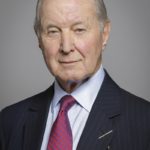
  • Charles Chetwynd-Talbot – 2022 Tribute to HM Queen Elizabeth II (Earl of Shrewsbury)

    Charles Chetwynd-Talbot – 2022 Tribute to HM Queen Elizabeth II (Earl of Shrewsbury)

    The tribute made by Charles Chetwynd-Talbot, Earl of Shrewsbury, in the House of Lords on 10 September 2022.

    My Lords, I cannot describe adequately the sadness which I and my family feel at the passing of Her late Majesty the Queen. It is a great privilege and honour to have been given the task of opening the batting, so to speak, for my party in your Lordships’ tributes today, and to be able to give my personal tribute and that of all of us who are involved in the world of horses, in recognition and celebration of this most special and remarkable lady. I ask that your Lordships indulge me while I recount briefly Her Majesty’s passion for the horse and all matters equine. As the Racing Post recently wrote:

    “The realm of the horse has lost its best friend.”

    I have conducted a lifelong love affair with the horse. Being involved with horses, especially racehorses, was my principal goal, indeed my constant dream, all through my childhood days and beyond. At the age of 17, I went to work as a student for a great teacher of riders, Bertie Hill, a former three times Olympic three-day event rider who had ridden for Her Majesty. Bertie was based at Great Rapscott in Devon, a stone’s throw from the Castle Hill Estate and my noble friend Lord Arran. The Queen had two very special horses with Bertie—Chicago and Great Ovation—and I helped to look after them. That was my first job with horses.

    At the forefront, though, was her love of horseracing. She was incredibly knowledgeable as an owner, a breeder and an expert on form and bloodlines. Indeed, her racing adviser, John Warren, is quoted thus:

    “If the Queen wasn’t the Queen, she would have made a wonderful trainer. She has such an affinity with her horses and is so perceptive.”

    The Queen’s first winner on the flat was Astrakhan at Hurst Park in 1950. The horse was a wedding present from the Aga Khan. Her best colt was undoubtedly Aureole, who very nearly won the Derby for her in 1953.

    Over the years, she bred and owned so many top-class racehorses. To name a few: Dunfermline, Highclere, Height of Fashion and, more recently, Estimate, Carlton House, Dartmouth and Tactical. A raft of the very best jockeys had the honour of riding for her: Sir Gordon Richards, Lester Piggott, Willie Carson, Ryan Moore, John Reid and many more. Once asked what it was like to ride for Her Majesty, Willie Carson said, “To put on the royal colours makes one feel six inches taller.” That was a rare feat in Willie’s case. Her trainers were the greats of their profession: Sir Cecil Boyd-Rochfort, Major Dick Hern, Peter Cazalet and, these days, John and Thady Gosden, Sir Michael Stoute, Andrew Balding, Michael Bell, William Haggas and more.

    National Hunt racing, which is my particular love, is a beneficiary of her horseracing enthusiasm as well, as the Queen has horses with Nicky Henderson and Charlie Longsdon. In the showing world, her favourite show was the Royal Windsor Horse Show, which, like her beloved Royal Ascot, she never missed. The inaugural Royal Windsor Show was held in 1943 to support the war effort financially. Her late Majesty enjoyed many successes there, among her most recent being Wyevale Harry, Balmoral Leia, Walton Highwayman and the Cleveland bay, Hampton Court Ivory.

    The Queen was a highly accomplished horsewoman who learned to ride at the age of four on a Shetland pony called Peggy, a birthday present from her grandfather. She continued to ride to the age of 96. She encouraged and helped so many young riders, and indeed produced a daughter and a granddaughter of world-class ability and achievement. Her late Majesty was patron of many of the best agricultural shows and breed societies throughout the Kingdom, including the Welsh Pony and Cob Society and the Royal Welsh Show. She supported many rare equine breeds and bred top-class highland and fell ponies. One of the last photographs I saw of her was choreographed by her stud groom, Terry Pendry. It had Her Majesty standing between a fell and a highland, holding their halter ropes with the most wonderful of magical, radiant smiles spread across her face. She was with her equine friends, to whom she had given so much throughout her life and who had repaid her with total loyalty.

    Her late Majesty was the pinnacle of the horse world, and she has her place in equine history as one of the very greatest stalwarts. Thank you, Ma’am, for all you have done. May you rest in peace. God save the King.

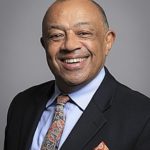
  • Paul Boateng – 2022 Tribute to HM Queen Elizabeth II

    Paul Boateng – 2022 Tribute to HM Queen Elizabeth II

    The tribute made by Paul Boateng, Baron Boateng, in the House of Lords on 10 September 2022.

    My Lords, having heard the moving contributions of colleagues yesterday—and I think particularly of the contribution of the Leader of the House, my noble friend Lady Smith of Basildon and the noble and learned Lord, Lord Judge—my wife Janet and I very much wanted to go down to Buckingham Palace and, like so many others throughout our land, pay a floral tribute to Her late Majesty. The mood and what was said and the make-up of the crowd outside Buckingham Palace said everything that ever needs to be said about Her late Majesty.

    There was a sense of loss and emptiness, and of people somehow feeling that something that was stable, certain and ever-present in their lives was no longer there—something that was of value to them. Then there was also a sense of gratitude for a life well-lived, one of service and dedication to duty, and there was a sense of gratitude to her and to her family, for whom we must feel particularly at this time, in their personal loss. We have lost a sovereign; they have lost a mother, a grandmother and a great-grandmother. But there was also a sense of gratitude for the joyfulness of her reign and for the grace and beauty that she always brought to her duty. As for the make-up of the crowd, it was international—the embodiment of so many nations. I reckon that all the continents of the world were present there, with everyone feeling that she belonged to them. Yes, she was our Queen, but she was actually, genuinely, the Queen of the world.

    I thought particularly, in terms of my own life, of Queen and Commonwealth. I was brought up in the Commonwealth. In the course of her long reign, the Queen made two visits to Ghana, in 1961 and 1999. In 1961, I was a little boy in the dust waving a flag on the side of the road; in 1999, I was one of her Ministers. But it is really the 1961 visit to Ghana about which I just want to say a few words. It was a problematic visit in many ways. There were many, including those on all sides in this House, who said that she should not go, that her life would be in danger and that Ghana was not a place that she should go to or be in. She went regardless. She went because the Commonwealth mattered to her, Ghana mattered to her and Britain’s place in the world mattered to her. She knew that not going would be seen as a snub, would undermine the Commonwealth and would be contrary to Britain’s interest.

    She displayed that courage, perseverance and determination that was so characteristic of her. It is said—and there is no reason to disbelieve it—that she said to her Prime Minister:

    “How silly I should look if I was scared to visit Ghana and then Khrushchev went and had a good reception … I am not a film star. I am the head of the Commonwealth — and I am paid to face any risks that may be involved. Nor do I say this lightly. Do not forget that I have three children.”

    That was her courage.

    She went, and it was an outstanding success. As it happens, my father was Minister of the Interior and worked with Duncan Sandys, of the other place and of this House, to make sure that it was a success in terms of security, because that was their responsibility. It was a success that she herself had brought about. It was a triumph. That, for me, says it all about her political acuity, her courage and her commitment and dedication to the Commonwealth.

    The messages have been flooding in. I am a former chair of the English-Speaking Union and I chair the International Council of the Duke of Edinburgh’s International Award Association. We all have several WhatsApp groups these days, and there have been messages from all over the world of appreciation, respect, gratitude and love. She was loved. She was loved here in this House, in the country and around the world.

    We bumped into a small group outside Buckingham Palace on that visit yesterday. They were called Christians in Entertainment and happened to be laying flowers at the same time. They had come out because of Her Majesty’s support for charities in the entertainment world and the Royal Variety shows, which we all remember and which she graced on so many occasions. Suddenly, as they were there and laying flowers, they began to pray. They prayed, and all those around us and them joined in that prayer. It was a prayer of gratitude to our God for our late Queen. God bless our late Majesty, and God save the King, as he becomes Head of the Commonwealth, for which she gave all her life’s service.

  • Philippa Stroud – 2022 Tribute to HM Queen Elizabeth II (Baroness Stroud)

    Philippa Stroud – 2022 Tribute to HM Queen Elizabeth II (Baroness Stroud)

    The tribute made by Philippa Stroud, Baroness Stroud, in the House of Lords on 9 September 2022.

    My Lords, I did not have the privilege of knowing Her Majesty personally so I have no stories of cushions or tea sets, but the most precious possession I have is the letter of summons to this House, which reads:

    “I give you a seat, a place and a voice”

    in the Parliaments of this land. Therefore, it is a real privilege to be able to give my tribute to Her Majesty too.

    When the Queen was 21 years old, as I am sure many have said today in this House, she delivered a speech that bore the mark of her maturity—that maturity which guided her life. Her words speak louder than anything we can say:

    “If we all go forward together with an unwavering faith, a high courage, and a quiet heart, we shall be able to make of this ancient commonwealth, which we all love so dearly, an even grander thing—more free, more prosperous, more happy and a more powerful influence for good in the world—than it has been in the greatest days of our forefathers. To accomplish that we must give nothing less than the whole of ourselves. There is a motto which has been borne by many of my ancestors—a noble motto, ‘I serve’.”

    And she declared

    “before you all that my whole life whether it be long or short shall be devoted to your service.”

    Today, we think of that unwavering faith, that high courage, that quiet heart, and that beauty which today shines from the ashes. We all feel the baton being passed to the next generation. As it passes, my prayer is that her legacy will be that we walk with that same courage, that same humility, integrity and grace.

    The Queen has been a gift to our nation, binding us together. The second Elizabethan era has been a time when culture and society have changed beyond recognition. In the shaking and polarisation, she has been a constant that has unified us. She has shown leadership through service. A role model, she has shown the same ethos that guides the lives of heroes across society: duty, service and responsibility. They may feel outmoded, but these virtues are the root of our prosperity.

    It is no small thing to have a Head of State who sees their role as being one who serves. Institutional trust, so fundamental to the flourishing of society, relies on leaders of character being held in high honour by the people. Her unique constitutional position could have been a burden, but she walked with unflappable grace and courage for the common good. From the Cold War through to Covid, she led with courage in crisis after crisis. She consistently lifted our vision higher; with public discourse so often concerned with the next crisis or scandal, she sought to stand above the fray.

    As the flame passes on to us, we must remember the core foundational principles that made her such a remarkable woman. She believed that the British nation could be a light among the nations and contribute positively in the world. She consciously and publicly modelled her life on the example of Jesus and saw the future through the lens of hope. May the words she delivered as we began the first Easter of the pandemic—words which reflected her core, driving convictions—carry us in the next season:

    “As dark as death can be—particularly for those suffering with grief—light and life are greater.”

    Today is a day to remember and celebrate the legacy of a woman who has given us so much. Seventy-three years after the speech given at 21 years old, Elizabeth II readied herself for another landmark moment. It was the outset of the pandemic and she set out a vision for how we should approach the coming season of crisis and change. While lockdown may be over, her words still ring true today:

    “I hope in the years to come everyone will be able to take pride in how they responded to this challenge. And those who come after us will say that the Britons of this generation were as strong as any. That the attributes of self-discipline, of quiet good-humoured resolve and of fellow-feeling still characterise this country. The pride in who we are is not a part of our past, it defines our present and our future.”

    May that be so.

  • Jitesh Gadhia – 2022 Tribute to HM Queen Elizabeth II (Baron Gadhia)

    Jitesh Gadhia – 2022 Tribute to HM Queen Elizabeth II (Baron Gadhia)

    The tribute made by Jitesh Gadhia, Baron Gadhia, in the House of Lords on 9 September 2022.

    My Lords, as we gather on this sombre and sad occasion, a huge void is felt not only by the Royal Family and our whole nation but by the entire world. It is difficult to think of a public figure who has ever had such a global impact. We often speak about the United Kingdom’s soft power and of global Britain, but so much of this was embodied in, and personified by, Her late Majesty the Queen.

    The worldwide outpouring of affection is reflective of a lifetime devoted to service and duty, a theme we have heard again and again, and deservedly so. Her Majesty was a constant and unifying figure, rising above the political fray and forces of division, providing a source of stability over seven decades of incredible change. As someone who arrived in this country 50 years ago in traumatic circumstances, during the expulsion of the Asian community from Uganda, I have not experienced anything other than the second Elizabethan age. For all the change and challenges during her long reign, it has also been a remarkable period of progress and human advancement, a period of improving community cohesion and greater diversity, as barriers to those from any and all backgrounds have come down.

    What could be more emblematic of the social mobility of the second Elizabethan age than for someone of Indian origin, displaced from Uganda, to have the opportunity in a single generation to be appointed to this House, taking an oath of allegiance to Her late Majesty? That moment, six years ago this month, was the greatest honour of my life, even more so being a child of the Commonwealth, which occupied such a special status for the Queen. Indeed, as a child of the Commonwealth, I feel like a child of Her late Majesty.

    The last occasion on which I was honoured to meet the Queen was during a reception that she graciously hosted at Buckingham Palace to mark the UK-India year of culture. On that occasion, she kindly placed an item on display from her own personal possessions: a wedding gift from Mahatma Gandhi. It was a piece of cloth, woven from yarn spun by Gandhi himself, including the words “Jai Hind”.

    It was palpable how connected she felt to India and the wider subcontinent, which makes up almost 75% of the 2.5 billion people across the Commonwealth. These sentiments are mirrored in reverse, exemplified by the day of state mourning that has been declared by the Government of India for this coming Sunday, and the three days of mourning declared by Bangladesh. The Indian Prime Minister, Narendra Modi, has lauded the Queen for her dignity and decency in public life, and the Bangladeshi Prime Minister, Sheikh Hasina, has described her as a true guardian.

    As chair of the British Asian Trust, founded by His Majesty King Charles III some 15 years ago, I know that our new monarch shares the same priorities as his mother for the Commonwealth, and maintains a deep and abiding connectivity with all the countries of south Asia, also including Pakistan, Sri Lanka and Nepal. Yes, King Charles has enormous shoes to fill, but he also possesses the strength of character and sense of purpose to pick up the baton from his mother, as our constitutional monarchy requires, and to continue the same dedication to public service and duty without missing a beat. Tonight’s broadcast from His Majesty confirms this commitment and determination. In that mission, and in their grief, we offer our new King, the Queen Consort, and the Royal Family our full and loyal support.

  • David Hope – 2022 Tribute to HM Queen Elizabeth II (Baron Hope of Craighead)

    David Hope – 2022 Tribute to HM Queen Elizabeth II (Baron Hope of Craighead)

    The tribute made by David Hope, Baron Hope of Craighead, in the House of Lords on 9 September 2022.

    My Lords, much has been rightly made of Her Majesty’s deep religious conviction. At the other end of the huge breadth of her character are her corgis and wonderful sense of humour. I draw from my own experience of her commitment to the Church of Scotland and her love of ponies, particularly the highland pony.

    When she was at Balmoral, Crathie was her parish church and she worshipped there every Sunday. When she was at Holyrood, in Edinburgh, she worshipped at the parish church of Canongate Kirk. It was not just the routine of worship that inspired her feelings about the Church of Scotland; it was a deep interest in what the Church of Scotland was all about.

    That was brought to my attention when I served for two years, at her request, as the Lord High Commissioner to the General Assembly of the Church of Scotland. My function was to represent Her Majesty at the beginning and end of a week when the Church met to discuss its affairs, and to attend the assembly every day for prayers as the week went on. I had the huge privilege of living in Holyrood Palace, effectively with the status of one below the Queen. I was known as “Your Grace” and, as soon as I went outside the door, the full national anthem was played—and no doubt there were some archers there as well.

    It was a very demanding week, but even more demanding was the request, two or three weeks later, to report to Her Majesty in an audience of half an hour what the Church had been discussing in its General Assembly. It was a formidable undertaking, but it was suggested to me that the atmosphere would be lightened a bit if I could offer Her Majesty a present. But this raised the question: what present can you possibly give a Queen that she has never received before? Among the many charities she supported is the Highland Pony Society, of which she was patron. We have seen on many occasions her love of ponies as well as horses—particularly the Highland pony, which she bred at Balmoral with great success. My wife, who has ponies, suggested that we might make a cushion on which we would embroider the portrait of a pony—and that is what we did.

    The next question is: how do you present the Queen with a cushion? I asked one of the people masterminding the audience how to do this. I asked him, “Will you hand the cushion to Her Majesty for me?” He said, “No, not at all, you must take it in yourself”. So I walked into the audience clutching a cushion under my arm, took the three steps forward, bowed and—I am afraid to say—blurted out, “Your Majesty, I have a present for you”. It was remarkable to see a lovely smile spread across her face, particularly when she saw what was on the cushion. “Ah, I must take this to Balmoral”, she said. So I felt that I had scored some success there.

    However, the second year, I had to do the same again—give her a full report on what the Church had been doing—and we wondered what we should present this time. My wife said, “Well, last time it was a cushion with the pony facing one way, and it is always known that horses become very uneasy if they are on their own. Why don’t we give her a cushion with a horse facing the other way?” So that is what we did. For the second time, I went into the audience, stepped forward three times, bowed with the cushion and handed it forward. Again, a wonderful smile spread across her face. I suspect that we spent rather more time talking about ponies than we did about the Church of Scotland—but that is another matter. This time, she thanked me for it. Later on, it was reported to me that, at the end of the day’s business, she went into lunch clutching the cushion and said to everybody around the luncheon table, “Look what I’ve got”. It was typical of her that she entered into the fun of it. From the very beginning of the presentation of the cushion, there was this huge sense of fun and enjoyment that we had this little private engagement together about ponies and cushions.

    I look back with enormous gratitude to these flashes of her sense of humour and her generous nature—which not many people are given at all, although some of us in this House have encountered it many times. I owe a particular thanks to her for appointing me to that office and for the way in which she received me when it was my turn to report on my duties. Of course we mourn her loss deeply, and we wish His Majesty King Charles III every success in the demanding life that he will now lead. I conclude my speech with the same words that have been mentioned earlier, His Majesty’s own words: “Simply, thank you”.

  • Alexander Scrymgeour – 2022 Tribute to HM Queen Elizabeth II (12th Earl of Dundee)

    Alexander Scrymgeour – 2022 Tribute to HM Queen Elizabeth II (12th Earl of Dundee)

    The tribute made by Alexander Scrymgeour, the 12th Earl of Dundee, in the House of Lords on 9 September 2022.

    My Lords, I pay tribute as Her Majesty’s hereditary banner-bearer for Scotland. Along with your Lordships, I send condolences to the Royal Family.

    As has been said, the Queen’s passing yesterday is already noted everywhere to have caused shock, uncertainty and even fear. Yet the corollary of that is the healing strength of what she achieved.

    Whether here in the United Kingdom, in the Commonwealth or elsewhere abroad, there are her priorities for how things should be.

    These may perhaps be summarised by her comments in London in 1969, at the 20th anniversary of Europe’s human rights institution, of which the United Kingdom remains a key member:

    “The Council of Europe provides us with a means to dismantle the barriers to communication, understanding and common effort between the European peoples. For the sake of future generations and for the peace and prosperity of our continent, we should grasp this opportunity with both hands.”

    The Queen’s humour, warm personality, astuteness and concern for others are well known across the world. The noble Baroness, Lady Finlay, referred to her corgis and love of animals—an attribute shared with St Francis. Certainly at all times, her wishes were to encourage the prescriptions of harmony within the famous prayer of St Francis.

    I join your Lordships in recognising the enormous benefits that her long reign brought to all of us, both nationally and internationally, with huge thanks; and with appreciation for her remarkable legacy that will endure.

  • Michael Farmer – 2022 Tribute to HM Queen Elizabeth II (Baron Farmer)

    Michael Farmer – 2022 Tribute to HM Queen Elizabeth II (Baron Farmer)

    The tribute made by Michael Farmer, Baron Farmer, in the House of Lords on 9 September 2022.

    My Lords, the noble and learned Lord, Lord Judge, is getting up and walking out, but I want to pick up on a point that he made in his speech earlier on, which struck a note with me. It was the point about constitutional monarchy, as we have heard from time to time during the speeches today, and how apt this place in particular is to make tributes to Her Majesty. This place, the House of Lords, is where Her Majesty sits on the Throne at the State Opening and calls in the Commons so that they can hear the Queen’s Speech. Here is the place where the constitutional monarchy is on display at its most effective, if you like, at the beginning of every parliamentary year. It struck me very much what the noble and learned Lord, Lord Judge, said, and it is certainly, for me, an honour and a privilege to be able to stand here and say what a wonderful Queen we have had.

    I want to start at the end, in a way, where many other Peers have started, with the photo, this week, leaning forwards and slightly stooped to shake the other Liz’s hand: a little old lady in a cardigan. The new Prime Minister’s dark suit was the epitome of power dressing and her height was accentuated in the foreground of the shot. Yet, despite the optics—and without any disrespect to our Prime Minister—I think, when we looked at the picture, we all knew where the real power lay in that handshake. I actually passed the photograph around our office and said, “Where is the real power?” And it was obvious.

    Soft power, which we have heard about today, was a phrase that could have been coined for the Queen—the ability to co-opt rather than coerce. She would say herself that it came primarily not from her constitutional position but from her utter dependence on God, his son Jesus Christ and the Holy Spirit, who so clearly worked through her. Interestingly, I hear that President Biden has today ordered all American flags worldwide to be flown at half-mast until after the funeral. What a display of power—for one British individual to have the American flag flying at half-mast for such a length of time.

    The Queen was a unique expression of God’s grace. In the final words of her last Christmas message, she described Jesus as

    “a man whose teachings have been handed down from generation to generation, and have been the bedrock of my faith.”

    Throughout her reign, in her Christmas messages in particular, she referred to him as her rock. In his Letter to the Galatians, St Paul lists the fruit of the Holy Spirit—a list of the essence of the character of God—as love, joy, peace, goodness, kindness, gentleness, patience, faithfulness and self-control.

    Let us think of those words. We have mentioned love today: love for her family, the people she served and the nation. We have heard anecdotes in every single speech in which she was so thoughtful and caring to those around her. As for joy, we have heard about her sense of humour—its infectiousness, her smile and her zest for life. As for peace, we have heard also of her work, her shaking that hand in Ireland. We have heard about the peaceful overtures we have seen her make publicly in her family difficulties.

    Then we have the kindness, goodness and gentleness that pervaded her. I will come back to faithfulness. As for patience and self-control, I often remember sitting in the middle of these Benches at State Opening, when the Table was removed. We were all waiting patiently; the Queen had come in and was sitting on the Throne as Black Rod had gone down to bang on the door. We were all looking at the Queen, as she looked over our heads down the Corridor, and you could hear shambling, laughing and casual chatting slowly ambling up towards us. As I looked at her, I thought “There is patience but also self-control.” There was a steeliness in her eyes which I think she was controlling.

    With all humility, coming back to faithfulness, I have made a recommendation that she should have the designation “Elizabeth the Faithful”. We have had Kings in the past, and there have been many Kings of other countries, who have had an adjective following their name to define them. This would be an epigram of her constancy, faithfulness and outworked sense of duty to God and man since she made those promises when she was so young, to make the uniqueness of her reign stand out in the sweep of history to come for future generations and in future centuries.

    Coming back to the present, I mentioned Biden earlier. Apparently Vladimir Putin has acknowledged:

    “For many decades Elizabeth II rightfully enjoyed her subjects’ love and respect as well as authority on the world stage.”

    Even those who rule in a contrary spirit recognise and respect the miracle that she was to us. Light has a habit of overcoming darkness. She is a miracle of the modern age.

    I should like to finish by talking about prayer. Noble Lords pray here at the start of every day. You could say we pray by rote, but we pray for our monarch—that God will direct and bless them, and give them wisdom, happiness and health. One must not forget all the congregations and church assemblies, in the villages and towns, that pray for the monarch. In all sorts of gatherings there are people praying for the monarch.

    I say to all who have been praying over the years that your prayers have been answered. Do believe in the power of prayer; it is heard and it does work. Look at the Queen’s life, which I have just described as a miracle. Where can the strength have come from to do what she did?

    I finish with the encouragement to carry on praying and to pray that our new King has a long and glorious life of service. As I say without any doubt, God hears and answers these prayers. We all know it would please her for us to say that we will now lift up those prayers for our gracious monarch King Charles III. May he be blessed bountifully in his reign. We will continue to be faithful in doing that.

  • Lynda Chalker – 2022 Tribute to HM Queen Elizabeth II (Baroness Chalker of Wallasey)

    Lynda Chalker – 2022 Tribute to HM Queen Elizabeth II (Baroness Chalker of Wallasey)

    The tribute made by Lynda Chalker, Baroness Chalker of Wallasey, in the House of Lords on 9 September 2022.

    My Lords, I rise to add my very personal thanks to our beloved late Queen Elizabeth II. Her love of this nation, all its people and all its societies, particularly in the voluntary sector—about which noble Lords have spoken already tonight—was profound. No one could ever count what she has contributed to the growth of voluntary activity in the United Kingdom. We are, in fact, much envied by many countries abroad for that. When the right reverend Prelate the Bishop of Southwark spoke about the volunteering that has to go on, I kept thinking of all those little incidents that the Queen monitored, made note of and often referred to in other circumstances in order to encourage more people to be involved in volunteering and in service. So, if there is one thing that I thank her for above all else, it is her encouragement for people to be involved with their communities.

    It was a very special privilege for me to spend numerous moments with Her Majesty during my 18 years as a Minister in three successive government departments, and indeed since that time. But it was in the Foreign Office, and then when I took on development matters as well, that I began to see her more frequently, because so many of the things in which I was involved were loves of hers and of the late Duke of Edinburgh. It was not just development; it was also the Commonwealth. Many references have been made to the Commonwealth, but there is the sheer fact that, in addition to the 56 member nations of the Commonwealth today, there is a queue of countries wishing to join the Commonwealth. We should be working hard to develop it, and I am certain that His Majesty King Charles III will want that to be a feature of our government going forward.

    Among my many contacts with Her Majesty were two particular incidents on the island of Dominica, which was looked after by Dame Eugenia Charles as Prime Minister. There is probably hardly anybody here who will remember her, but she was a very determined elderly lady. I was to be the Minister in attendance when the Queen went to meet her. Dame Eugenia was absolutely certain that the tea service she had in her cupboard, which, she pointed out to me, only she could clean—I had a slightly raised eyebrow when I looked at it, but never mind—should be used when the Queen came for tea. All went well until the tea came in. Her Majesty was offered a cup of tea, but she decided that she did not want one at that moment. Too many cups of tea on tours are something that Ministers often regret; I am sure Her Majesty regretted it many other times too. I was left to make a diplomatic bridge between the Prime Minister of Dominica, who wanted to use the tea set, and the Queen, who had not given her the tea set. Such is the life in the Foreign Office sometimes.

    On that very same Caribbean visit, on another island, I nearly fell down a hole outside a church into which we were going. I was following Her Majesty and a piece of plywood had been put down which was not a perfect fit. Needless to say, my ankle caught the edge of it. I did not go down the hole as I was saved by a policeman, as ever, but the thing that hit me really hard was that the first thing that was said to me by Her Majesty, when I got into the church in the row behind her, was, “I have sent for some ice for that ankle”. I did not even know that she knew I had nearly gone down the hole. The kindness and the thoughtfulness came up so many times in my experiences of her.

    I always remember being very encouraged by her. On one occasion, when things were not going very well in the then ODA, she said, “What is the main purpose of what you are seeking to do?” Without going into the politics of this in any way, I told her and she said, “Well, why don’t you try—?” She came up with a thoroughly practical suggestion, and if there is one other thing I remember about Her Majesty, it is what a practical lady she was in so many ways. I hope that that practical nature will be continued by His Majesty King Charles III, who I know so well as the Prince of Wales I am not sure how I am going to address him in the future; I think I am going to make mistakes, and I have been forgiven by the Queen so I hope I shall be forgiven by Prince Charles—as he was. You see how easy it is to make the mistake!

    King Charles III, we wish you a magnificent reign, we hope you will continue your mother’s best and most tremendous contributions to this country and we, as ordinary citizens, will do our best to make sure: long live King Charles III.

  • Jeffrey Sterling – 2022 Tribute to HM Queen Elizabeth II (Baron Sterling of Plaistow)

    Jeffrey Sterling – 2022 Tribute to HM Queen Elizabeth II (Baron Sterling of Plaistow)

    The tribute made by Jeffrey Sterling, Baron Sterling of Plaistow, in the House of Lords on 9 September 2022.

    My Lords, several months ago I rang and had a chat to Helen Cross, personal private secretary to the Queen. I reminded her that more than 10 years ago, we had done something of a similar nature, and I wanted to know whether the Queen would be in favour. We have all the monarch’s palaces, and many people there, such as the gardeners, the sous chefs and the chambermaids, who have hardly even met members of the Royal Family, but certainly have not been involved in a major gathering to do something they might really enjoy. Last time, we did exactly the same: she went to the Queen and the Queen was very much in favour. They had a ballot among all the people working for the palaces—the lot—but not at a high level. These were the people doing the down-to-earth jobs.

    Yesterday was the day they came on board to visit “Gloriana”, the Queen’s row barge, at Chelsea. We had a great turnout, and the Queen’s royal bargemaster and all her watermen rode her. They all had a turn inside it. We got together and exchanged views. I met somebody from Scotland, who was very much involved in the shooting and birdlife up there, who said he had never been to London before. Then I spoke to the gardener, who was explaining how the earth is very different for planting in Kensington from what it might be in London. It was a wonderful get-together.

    One of the two seniors who accompanied them came over to me and said, “Would you mind if we leave early?” I said, “No,”—I realised there had been some news coming out—and he said, “We’ve really got to get back, because there will be a lot of communication.” But I cannot help thinking how, when all those people went home, they said, “Wonderful!”—they were grateful. I thank them all on our behalf for coming, and what did they go back to? To find that the person that they loved had died. I have to say it was quite extraordinary.

    But then, on our own front, we had to decide regarding “Gloriana”, the Queen’s row barge: obviously, with what has transpired, there were various things we had to do. For argument’s sake, you have to get the flags down, you have to put black satin over it, and this morning, very early, at 6 o’clock, we got the whole thing together to go down the river, accompanied by the police, in order to get her back in readiness for the rest of what will transpire.

    I personally have had the honour and the pleasure of running the Silver Jubilee, the Golden Jubilee, most of the Diamond Jubilee and for the most recent one I was a senior adviser, but we took part in many areas as to what was transpiring. I have to say that the reaction was quite extraordinary, and the most important part of all of them were the street parties—how people actually got together. If I think of anything that really mattered, it was that. Something that might amuse noble Lords was the occasion when Robin Janvrin, the noble Lord, Lord Janvrin, said to me when we were coming up to that major concert in the Palace, which noble Lords might remember—this was in the Golden Jubilee—and he said, “I think you had better come along and have an audience with the Queen, to put her in the picture as to how it is going and where we are doing it. I suggest you come after 9 o’clock, because that is when they are going through the red boxes, et cetera, so if you could be there just before 10, then perhaps we could do it.”

    So, I arrived at that time, I came in, bowed—everything was in that form—and I thought we were set to talk about it when the Queen got up and said, “No, no; I want you to come over to the windows.” I looked out of the windows and of course they had JCBs and everything digging up the gardens, taking so much soil out I cannot tell you what was going on in the gardens, and she was so upset, she was saying, “They’re ruining the gardens.” I said, “I think they will probably get them back in a reasonable state afterwards,” but it was just a great pleasure and an honour to be in that position. I also had the pleasure at P&O and Cunard when she came many times through her life for naming of some of the great ships.

    Perhaps most important, as far as I am concerned, which my noble friend has already referred to, was Motability, which I co-founded with the late Lord Goodman. The Queen became, very early on, the chief patron. I know she has been president of umpteen charities, but for some reason—all noble Lords have spoken about how she was as a person—she really did get heavily involved and extremely interested in anything to do with the disabled and, of course, the veterans. At that time, it was an idea: we had only one car. Forty-five years afterwards, we had 6 million cars out, and there are 700,000-odd on the roads as we speak today, and I am sure that her involvement lifted our standing to those millions of families and their friends and the disabled, of course, to put them on the road to freedom. I have always felt, and we all felt, that this was something that was absolutely special.

    Coming on to the last couple of points, one of the pleasures of our King is classical music—which is very much a part of my life—and he loves opera, ballet and all those areas. So I am quite sure that quite a lot of what will be happening will include that in a very major way, which gives me huge personal pleasure.

    To finish, I will suggest the best tribute for all of us to give in memory of this wonderful person with this huge sense of duty. The oath we take here is to serve; that is what the Queen did all her life. I think the greatest long-term legacy we can give in her memory is for we parliamentarians to regain the trust of the people of this country. God save the King.