Category: Royal Family

  • Iain Duncan Smith – 2022 Tribute to HM Queen Elizabeth II

    Iain Duncan Smith – 2022 Tribute to HM Queen Elizabeth II

    The tribute made by Iain Duncan Smith, the Conservative MP for Chingford and Woodford Green, in the House of Commons on 9 September 2022.

    So much has already been said and I do not intend to repeat it much, but I do want to say that it is a sad day for all of us. It is tragic news, bringing to an end a remarkable career spanning 70 years, endless Prime Ministers and endless Leaders of the Opposition, too.

    For those 70 years, Her Majesty carried out her duties with charm, humility—not often mentioned, but real humility—and also endless humour. She was quite remarkable in a way. She learned that from someone whom we have not mentioned today, her father, who in his own way was someone who never expected to be the monarch and who suffered a very significant problem, a speech impediment, yet showed her that it was possible to rise above the challenge and to deliver one’s service to one’s country at an incredible time. There is no question but that she learned that service and duty at the knees of her father as he overcame his own difficulties and put his country and their service first. That is something that is quite often forgotten.

    A couple of things come to mind. So often, we have taken Her Majesty for granted. We expect her to be there. In the same way, whenever anything good or bad happens in our country, the crowds gather at Buckingham Palace. Whether she was there or not, they gathered; it was almost as though they could touch the railings and draw from them some sort of succour, support or mystical help. There they were again, last night, in pouring rain outside Buckingham Palace.

    In all of that, we often forgot that she was also a human being with her own family issues and problems. I remember particularly that period when two of her sons faced marriage break-ups that were widely reported in the newspapers and the media, with everybody speculating in public about all that was going on. I wonder how many in this House could ever have borne something like that—such a tragedy for their mother—in such a public domain. Then, to top it all, Windsor Castle burned down, a place she loved deeply and felt responsible for. In a way, nobody seemed to take her into consideration until, approaching a speech—with a cold, interestingly—she said that that year had been her annus horribilis. I think that the public stopped. We all paused and realised that we had forgotten that we actually owed her as much duty and service as she had shown us without complaint. I thought that that was a remarkable moment, when the country came back from where it was to recognise that duty and service.

    The other moment was when Diana, Princess of Wales, tragically died in that terrible car accident. Again, everybody gathered outside Buckingham Palace and demanded that the Queen should come. It got more and more shrill, with the newspapers banging on about how she had to come back. But there she was in Balmoral, trying to do what almost any grandmother would want to do—to put her arms around her grandchildren, comfort them and protect them from what she knew was going to descend upon them. Finally, when she came down, I came to the realisation that, actually, it was not that the British public were angry that she was not there; it was that they needed her there to be able to show their own emotion, because she was the focus for all of that. When she came, everybody cheered and applauded—she was there, and they could now grieve properly, because she was the focus for that grief.

    Of course, we all have anecdotes. When I ceased being leader of the Conservative party—it happens quite a lot, so I think the Queen was pretty used to it—she kindly asked me to take leave of her officially. I thought that was pretty kind—nobody else wanted me to, so it was decent of her to do that. When I came to the palace, and I was ushered into her small personal sitting room, I was struck by two or three things. One was the two-bar electric fire, which had around it a very strange piece of cardboard in the shape of flames and coloured with yellow and red crayons—I suspect by some somebody in the palace. It surrounded the fire, and I thought that was peculiarly dangerous; notwithstanding that, I am sure it had a purpose. The other thing was the Tupperware radio sitting next to her. I had not seen one since my parents smashed their last one. She very sweetly asked me how I was, being clearly sympathetic about what had happened. I just shrugged and said, “Well, ma’am, nobody died and I’m still here,” whereupon she roared with laughter. The funny thing was that she then paused and looked at me, not sure whether I had actually made a joke. I laughed too, and then she laughed again—whether at me or with me, I could not figure out. That was something to relish.

    The other anecdote I want to share with the House is slightly different. I was in a Privy Council meeting, and for some reason we were offered drinks at the end. It did not happen very often, so I took full advantage and ordered a whisky. The Queen came round to talk to us, and when she came to me, I, like everybody else, was as nervous as anything, but I stumbled through. Then I said, “I’ve just been reading some stuff about one of Churchill’s speeches”—I had suddenly recalled something he had said in 1941. President Roosevelt had sent a note over with the person he had just defeated in his third election, and Churchill said that, in it, he had written in his own hand a verse from Longfellow. Now, remember that in 1941 we did not know whether we would survive. Churchill had read the verse out, and I started to speak it. As I did, she started speaking it as well. I just want to share it with the House:

    “sail on, O Ship of State!

    Sail on, O Union, strong and great!

    Humanity with all its fears,

    With all the hopes of future years,

    Is hanging breathless on thy fate!”

    She said it perfectly. She then smiled slightly, and I detected a little dampness in her eye. Then she moved on. It suddenly struck me that that was exactly her. She was the ship of state. We looked to her for everything good, and in difficult times. She loved the Union with a passion, and she loved Scotland, I think, probably most of all. That is who she was—she was that ship of state, and somehow too often we took her for granted, but she never complained, and she always gave us service.

    Now, for that union of hearts, if the House will indulge me, I want to quote WH Auden with a few changes:

    “Stop all the clocks, cut off the telephone,

    Prevent the dog from barking with a juicy bone,

    Silence the pianos and with muffled drums

    Bring out the coffin, let the mourners come.”

    She was our North, our South, our East and West,

    Our working week and our Sunday rest,

    Our noon, our midnight, our talk, our song.

    We thought that love would last forever: we were wrong.

    May God bless her and keep her, and hold her in our hands, and may we bless the royal family. God save the King.


  • Ed Davey – 2022 Tribute to HM Queen Elizabeth II

    Ed Davey – 2022 Tribute to HM Queen Elizabeth II

    The tribute made by Ed Davey, the Leader of the Liberal Democrats, on 9 September 2022.

    It is a real pleasure to follow the right hon. Member for Maidenhead (Mrs May), and I congratulate her on her lovely, heartwarming speech.

    The Liberal Democrats join Members on both sides of the House in expressing our deepest condolences on the passing of Her Majesty the Queen. We are mourning a profound loss. The Queen was a formidable monarch who faithfully served our country all her life, and she was loved the world over. She represented not only duty and courage but warmth and compassion, and she was a living reminder of our collective past, of the greatest generation and their sacrifices for our freedom.

    For many people, myself included, Her Majesty was an ever-fixed mark in our lives. As the world changed around us and politicians came and went, she was our nation’s constant. In challenging times, she was always a source of calm and comfort. She tied our nations together, embodying an unwavering pride in our country. She showed us that patriotism is not defined by political allegiance and reminded us of the many things that bind us all together, even when it does not always feel that way.

    We saw this so vividly during the platinum jubilee celebrations in June. I am proud to represent the oldest royal borough in England, Kingston upon Thames, and our jubilee street parties certainly lived up to that status. It was truly wonderful to see such an outpouring of affection by people across Kingston from all walks of life. Schoolchildren baked jubilee cakes, neighbours shared bunting and choirs sang hymns of praise. It was incredibly fitting that, after so long kept apart by covid, it was a celebration of Her Majesty’s reign that brought our communities back together so joyfully, just as the whole country is united today, so sadly, in grief.

    The deep mourning across the country now, just like the celebration of her jubilee a few months ago, comes not from a sense of duty but from genuine and heartfelt affection, love and admiration for Her Majesty. It is not because we were her subjects but because she was truly our Queen. What she meant to us is perhaps best summed up by a phrase on so many people’s lips over the past 24 hours: “I cannot imagine our country without her.”

    For almost everyone in our country, she had been there our whole life, at times of national grief and national jubilation. She had never not been there for us, so it is hard to accept that she is gone and hard to see how we go on without her, but we will. Our great United Kingdom has a great future because the Queen’s spirit of strength, grace and resolve lives on in her people.

    One of the greatest privileges of being a Member of this House was having the chance to meet Her Majesty, such as when she visited Kingston on the occasion of her golden jubilee or when I was deeply privileged to sit next to her at lunch at Windsor Castle. I was initially confused by a silver cylinder beside her place setting. I wondered to myself what treasures it might hold. I had my suspicions when, as dessert was served, her beloved corgis were let in and nestled themselves around her feet. The Queen lifted up the lid of the cylinder, plucked out some digestive biscuits, and began sneaking them to her grateful dogs. Whenever I met her, I was struck by her warmth, her wisdom and her humour, and I am looking forward to hearing similar stories from hon. and right hon. Members from across the House as they give glimpses of the wonderful person beneath the crown.

    Her Majesty will be remembered with honour as a monarch who guided our country out of the shadow of a terrible war, who helmed us calmly through troubled waters and brought us safely into a new millennium. She will be remembered so fondly as the monarch who leapt from a helicopter with James Bond and who showed Paddington where she kept her marmalade sandwiches. For the royal family, she will be remembered simply as a beloved mother, grandmother and great-grandmother. Our thoughts, prayers and condolences are with them all as they bear this terrible loss.

    After a lifetime of dedicated and tireless service to our country and our Commonwealth, Her Majesty has gone to her eternal rest. May God rest her soul and may God save the King.

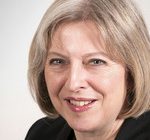
  • Theresa May – 2022 Tribute to HM Queen Elizabeth II

    Theresa May – 2022 Tribute to HM Queen Elizabeth II

    The tribute made by Theresa May, the former Prime Minister, in the House of Commons on 9 September 2022.

    It is with great sadness that I rise to pay tribute to Her late Majesty Queen Elizabeth II, on my own behalf and on behalf of my Maidenhead constituents.

    Yesterday was a day that we all knew would come some time, but that in our heart of hearts we hoped never would. But as we mourn a beloved monarch, we must always remember that she was a mother, a grandmother and a great-grandmother, and my thoughts and prayers are with King Charles III and the whole of the royal family. I also remember the close members of her royal household.

    Queen Elizabeth II was quite simply the most remarkable person I have ever met. I am sometimes asked who, among all the world leaders I met, was the most impressive. I have no hesitation in saying that of all the Heads of State and Government, the most impressive person I met was Her late Majesty Queen Elizabeth II. She gave a lifetime of service, as she promised to do when she was 21. Her selfless devotion to duty was an inspiration and example to us all. She was respected and loved, not just here in the United Kingdom and in her other realms in the Commonwealth, but across the world. That love, respect and admiration was born not out of her position, but because of the person she was: a woman of dignity and grace, of compassion and warmth, of mischief and joy, of wisdom and experience, and of a deep understanding of her people.

    Like so many, until last evening I had never known another monarch. She was a constant throughout our lives, always there for us, uniting us at times of difficulty—and, as others have said, most recently during covid, when she gave us hope that we would once more come together. Her passing marks a generational change, not just because of the length of her service, but because of what she lived through. When we marked the 75th anniversary of the D-day landings in 2019, she was with the world leaders not just as Queen, but as someone who had worn uniform during the second world war—an experience that, quite apart from anything else, had taught her how to strip an engine.

    The Queen was always interested in people. When she walked into a room, the faces of those present were lit up, and her magnificent smile would calm nerves and put people at ease. As I said on her platinum jubilee, I saw that at the Commonwealth Heads of Government meeting in 2018, when there was a reception at Windsor before a lunch. The leaders were gathered and talking among themselves, and I knew that Her Majesty was going to join the reception, but they did not. The minute she walked into the room, the sense of love and respect was palpable, and they all turned and wanted to speak to her. They loved her and she loved the Commonwealth, and the Commonwealth today is a significant part of her legacy.

    I also saw that quality on other occasions, including on what was one of the last—if not the last—appearances she made in public, when she came to open Thames Hospice in my Maidenhead constituency in July. The moment she walked through the door, the atmosphere in the room changed; you felt the love and respect of the people there for her. As she spoke to staff and patients, she exuded a warmth and humanity that put people at ease. She was Queen, but she embodied us. Across the nations of the world and for so many people, meeting Queen Elizabeth simply made their day, and for many will be the memory of their life.

    Of course, for those of us who had the honour to serve as one of her Prime Ministers, those meetings were more frequent, with the weekly audiences. These were not meetings with a high and mighty monarch, but a conversation with a woman of experience, knowledge and immense wisdom. They were also the one meeting I went to that I knew would not be briefed out to the media. [Laughter.] What made those audiences so special was the understanding the Queen had of issues, which came from the work she put into her red boxes, combined with her years of experience. She knew many of the world leaders—in some cases, she had known their fathers—and she was a wise and adroit judge of people.

    The conversations at the audiences were special, but so were weekends at Balmoral, where the Queen wanted all her guests to enjoy themselves. She was a thoughtful hostess. She would take an interest in which books were put in your room and she did not always expect to be the centre of attention; she was quite happy sometimes to sit, playing her form of patience, while others were mingling around her, chatting to each other. My husband tells of the time he had a dream: he dreamt that he was sitting in the back of a Range Rover, being driven around the Balmoral estate; and the driver was Her Majesty the Queen and the passenger seat was occupied by his wife, the Prime Minister. And then he woke up and realised it was reality!

    Her Majesty loved the countryside. She was down to earth and a woman of common sense. I remember one picnic at Balmoral that was taking place in one of the bothies on the estate. The hampers came from the castle, and we all mucked in to put the food and drink out on the table. I picked up some cheese, put it on a plate and was transferring it to the table. The cheese fell on the floor. I had a split-second decision to make: I picked up the cheese, put it on a plate and put the plate on the table. I turned round to see that my every move had been watched very carefully by Her Majesty the Queen. I looked at her, she looked at me and she just smiled. And the cheese remained on the table. [Laughter.]

    This is indeed a sad day, but it is also a day of celebration for a life well spent in the service of others. There have been many words of tribute and superlatives used to describe Her late Majesty Queen Elizabeth II, but these are not hype; they are entirely justified. She was our longest-serving monarch. She was respected around the world. She united our nation in times of trouble. She joined in our celebrations with joy and a mischievous smile. She gave an example to us all of faith, of service, of duty, of dignity and of decency. She was remarkable, and I doubt we will ever see her like again. May she rest in peace and rise in glory.

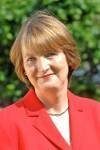
  • Harriet Harman – 2022 Tribute to HM Queen Elizabeth II

    Harriet Harman – 2022 Tribute to HM Queen Elizabeth II

    The tribute made by Harriet Harman, the Mother of the House of Commons, in the House on 9 September 2022.

    Thank you, Mr Speaker. What an excellent speech from the right hon. Member for Uxbridge and South Ruislip (Boris Johnson), which I am sure will have resonated in every Member of this House and, indeed, everyone in this country. It was a brilliant speech.

    I am grateful for the opportunity to pay my tribute to the Queen, on my own behalf but also on behalf of my constituents, particularly those who, coming from Commonwealth countries in Africa and the Caribbean, held the Queen in such high regard.

    We are a constitutional monarchy, and for we MPs, the Queen was ever present in the interwoven relationship between the monarch and her Parliament. She underpinned our democratic system for over 70 years—underpinning it but never intervening in it. She was always salient but never meddled. She avoided controversy not by staying in the background—far from it; she performed her role to the utmost—but by respecting the boundaries. She carried out her duties and gave us her full commitment for us to carry out ours. When many denigrated, she always respected and supported Parliament. We should be very grateful for that.

    Between her Ministers—not just Prime Ministers—there was regular contact. After Labour won the election in 1997, I went up to the Palace, where she appointed me, like the other new Secretaries of State, to the Privy Council and bestowed on me the seals of office. They are actual seals, which are given to you and you take back to your Department to be locked in a safe. When, just a year later, I was sacked and the seals were taken out of the safe and back to Buckingham Palace, my diary was empty and my phone stopped ringing, my office was astonished to get a call from the Palace. No one else wanted to have anything to do with me, but the Queen wanted to see me. I was invited to take tea with the Queen, for her to thank me for my service as Secretary of State.

    My point is that the relationship between our Queen and Parliament, and our Queen and Government, was never just on paper, but was always active and always encouraging. She radiated British values of duty, patriotism, internationalism, charity and service. But while she embodied British values, she never intervened in politics, and that is constitutional alchemy—nothing less.

    It is evident that everyone, even those who do not agree with the hereditary principle of the monarchy, cannot but marvel at her personal qualities; and I want to marvel at how she could do all this flawlessly, not just over so many decades, but as a woman starting her reign in what was emphatically then a man’s world. We have to remember what attitudes were at the time. The order of the day was that men were in charge and women were subservient. The man was head of the household, and the role of a woman was to get married, have his children and support him. In the 1950s, when she was crowned, I was a child, and I remember my mother warning me that people thought men knew more than women; that men’s views were valuable, while women’s were to be disregarded.

    It was in that atmosphere that she stepped up, as a 25-year-old married woman with two children, to take her place at the head of this nation and play a huge role on the world stage. What determination and courage that must have taken. The Prime Ministers she dealt with were mostly men, and mostly twice her age. Things were very different then; huge change has taken place during her reign. Things were very different when, six years ago, she threw open Buckingham Palace for us to celebrate the 70th anniversary of the BBC’s “Woman’s Hour”, and to celebrate how much women had achieved.

    As Sir Tony Blair said, she was the matriarch of this nation: a matriarch for us on the world stage, and a matriarch too at home, in her own family. As well as being our monarch, she was the mother of four children and had many grandchildren and great-grandchildren, and it is to her family that I extend my deepest sympathies for their loss and condolences for their grief, which we all share.

  • Boris Johnson – 2022 Tribute to HM Queen Elizabeth II

    Boris Johnson – 2022 Tribute to HM Queen Elizabeth II

    The tribute made by Boris Johnson, the former Prime Minister, in the House of Commons on 9 September 2022.

    I hope the House will not mind if I begin with a personal confession. A few months ago, the BBC came to see me to talk about Her Majesty the Queen. We sat down and the cameras started rolling, and they requested that I should talk about her in the past tense. I am afraid that I simply choked up and could not go on. I am really not easily moved to tears, but I was so overcome with sadness that I had to ask them to go away.

    I know that, today, there are countless people in this country and around the world who have experienced the same sudden access of unexpected emotion, and I think millions of us are trying to understand why we are feeling this deep, personal and almost familial sense of loss. Perhaps it is partly that she has always been there: a changeless human reference point in British life; the person who—all the surveys say—appears most often in our dreams; so unvarying in her pole-star radiance that we have perhaps been lulled into thinking that she might be in some way eternal.

    But I think our shock is keener today because we are coming to understand, in her death, the full magnitude of what she did for us all. Think what we asked of that 25-year-old woman all those years ago: to be the person so globally trusted that her image should be on every unit of our currency, every postage stamp; the person in whose name all justice is dispensed in this country, every law passed, to whom every Minister of the Crown swears allegiance; and for whom every member of our armed services is pledged, if necessary, to lay down their lives.

    Think what we asked of her in that moment: not just to be the living embodiment, in her DNA, of the history, continuity and unity of this country, but to be the figurehead of our entire system—the keystone in the vast arch of the British state, a role that only she could fulfil because, in the brilliant and durable bargain of the constitutional monarchy, only she could be trusted to be above any party political or commercial interest and to incarnate, impartially, the very concept and essence of the nation.

    Think what we asked of her, and think what she gave. She showed the world not just how to reign over a people; she showed the world how to give, how to love and how to serve. As we look back at that vast arc of service, its sheer duration is almost impossible to take in. She was the last living person in British public life to have served in uniform in the second world war. She was the first female member of the royal family in a thousand years to serve full time in the armed forces.

    That impulse to do her duty carried her right through into her 10th decade to the very moment in Balmoral—as my right hon. Friend said—only three days ago, when she saw off her 14th Prime Minister and welcomed her 15th. I can tell you, in that audience she was as radiant and as knowledgeable and as fascinated by politics as ever I can remember, and as wise in her advice as anyone I know, if not wiser. Over that extraordinary span of public service, with her naturally retentive and inquiring mind, I think—and doubtless many of the 15 would agree—that she became the greatest statesman and diplomat of all.

    She knew instinctively how to cheer up the nation, how to lead a celebration. I remember her innocent joy more than 10 years ago, after the opening ceremony of the London Olympics, when I told her that the leader of a friendly middle eastern country seemed actually to believe that she had jumped out of a helicopter in a pink dress and parachuted into the stadium. [Laughter.] I remember her equal pleasure on being told, just a few weeks ago, that she had been a smash hit in her performance with Paddington Bear.

    Perhaps more importantly, she knew how to keep us going when times were toughest. In 1940, when this country and this democracy faced the real possibility of extinction, she gave a broadcast, aged only 14, that was intended to reassure the children of Britain. She said then:

    “We know, every one of us, that in the end all will be well”.

    She was right. And she was right again in the darkest days of the covid pandemic when she came on our screens and told us that we would meet again—and we did.

    I know I speak for other ex-Prime Ministers when I say that she helped to comfort and guide us as well as the nation. She had the patience and the sense of history to see that troubles come and go, and that disasters are seldom as bad as they seem. It was that indomitability, that humour, that work ethic and that sense of history that, together, made her Elizabeth the Great.

    When I call her that, I should add one final quality, of course: her humility—her single-bar-electric-fire, Tupperware-using refusal to be grand. I can tell the House, as a direct eyewitness, that unlike us politicians, with our outriders and our armour-plated convoys, she drove herself in her own car, with no detectives and no bodyguard, bouncing at alarming speed over the Scottish landscape, to the total amazement of the ramblers and tourists we encountered.

    It is that indomitable spirit with which she created the modern constitutional monarchy—an institution so strong, so happy and so well understood, not just in this country but in the Commonwealth and around the world, that the succession has already seamlessly taken place. I believe she would regard it as her own highest achievement that her son, Charles III, will clearly and amply follow her own extraordinary standards of duty and service. The fact that today we can say with such confidence, “God save the King” is a tribute to him but, above all, to Elizabeth the Great, who worked so hard for the good of her country not just now but for generations to come. That is why we mourn her so deeply, and it is in the depths of our grief that we understand why we loved her so much.


  • Ian Blackford – 2022 Tribute to HM Queen Elizabeth II

    Ian Blackford – 2022 Tribute to HM Queen Elizabeth II

    The tribute made by Ian Blackford, the leader of the SNP at Westminster, on 9 September 2022.

    It is of course with great sadness that we unite to offer our prayers, focus our sorrow and gather our collective thoughts on the passing of Her Majesty the Queen. On behalf of the Scottish National party, I offer my condolences as we hold the Queen and her family in our thoughts and prayers at this difficult time. The grief and mourning that reverberates around the Chamber and across the world will be all the more acute for the King and members of the royal family. Only they can understand their deep, personal loss of a close family member. People across society who have similarly lost loved ones will understand the pain that they must feel, as we ensure our heartfelt condolences are with them today.

    Over the coming days, people up and down these islands will seek to come to terms, in their own private way, with the loss of one of the true constants in all our lives. In that regard, my thoughts are also with the Prime Minister, who is just days into her term in office, and having to come to terms with the enormousness of the loss of the Head of State, and show the leadership that is now required in her position. We cannot help but dwell on the late Queen, who, right to the end, fulfilled her duties by appointing the new Prime Minister.

    Many will feel this as a deeply personal loss, for the Queen’s continuous and abiding presence, and the leadership that she has shown over seven decades, will be the enduring marker of her remarkable tenure as our Head of State. Her Majesty the Queen was Head of State for longer than most of us have been alive, and the majority of us have never known public life without the Queen at the helm. For many, she has been a steady hand guiding the ship, and a perpetual symbol of stability. Fifteen Prime Ministers and five First Ministers of Scotland have benefited from her institutional knowledge and, of course, her wise counsel. As the figurehead of the Commonwealth, she was a unifying force, recognised the world over. She visited at least 117 countries, and was committed to celebrating diverse values and cultures around the globe. That was all born out of a duty to serve.

    During the Queen’s reign, the world changed immeasurably. Through the good times and the bad times, through war and peace, through boom and bust, through advances in technology and communication and the dawn of the internet age, to many she was a guiding light, ever present, and she bore witness to the evolution of these islands into the modern era. She was a thread of continuity running through the fabric of the Commonwealth, at once tying societies to our shared histories and making new histories.

    Like many others in the Chamber, I was fortunate enough to meet the Queen on a number of occasions and was always struck by the strength, the intellect, the modesty, the humility and often the humour with which she approached her royal duties. While I always met her in a professional context as monarch, I am struck by just how many people across Scotland, and indeed across the United Kingdom, had a first-hand encounter with the Queen. Whether they had been invited to her Holyrood garden parties or had the pleasure to meet her in the many hundreds of events, walkabouts or official openings, including that at our Scottish Parliament, or whether she had taken them wholly by surprise with chance encounters in the countryside or villages near Balmoral, people the length and breadth of Scotland have their own tales of their individual meetings with the Queen. She was a monarch who reigned with compassion and integrity, and established a deep connection with the public.

    The affection the Queen had for Scotland and that Scotland had for the Queen cannot be underestimated. On the Queen’s first visit to Scotland following her coronation, the Moderator of the General Assembly of the Church of Scotland said to her:

    “Today you and I are Scotland, greeting with all that we have to offer of love and duty our gracious young Queen.”

    We can today look back on those words and say that for as long as Her Majesty reigned, both she and Scotland held true to those values of love and duty for one another. Speaking when she reconvened our Scottish Parliament in 1999, Her Majesty set out the obligation on Members to

    “set lasting standards; of vision and purpose, of debate and discussion, not just for our own generation but for future generations”.

    It is clear that Members across the Scottish Parliament, and I trust in this place, from all walks of political life have moved forward with that sense of vision and purpose in mind.

    There is a deeply held sense of responsibility across political parties to govern for the betterment of future generations, in our case to uphold the values of the Scottish Parliament which are inscribed on the ceremonial mace—wisdom, justice, compassion and integrity—the values that set the aspirations for a modern Scotland, the values that were so often embodied by Her Majesty herself. In what was, sadly, her final ever address to the Scottish Parliament, her love of Scotland and its people was clear when she said:

    “It is the people that make a place and there are few places where this is truer than it is in Scotland”.

    The relationship between Scotland and the Queen was one of shared admiration. Indeed, while she was everyone’s Queen, for many in Scotland she was Elizabeth Queen of Scots. Her Majesty’s roots in Scotland run deep. She was descended from the royal house of Stewart on both sides of her family and, of course, her mother was from Glamis in Angus. It is clear that these family ties gave way to a great and enduring affection. Scotland was a place that was truly held dear to her not only in an official capacity but in a private capacity as well.

    It is well known that Balmoral, with its beautiful and atmospheric scenery, was the Queen’s favourite home. Balmoral was a place where she was able to enjoy freedom, peace and the ability to indulge her love of the great outdoors, whether that was walking with her dogs, riding with horses, hosting picnics and barbecues, or from behind the wheel of her Land Rover. It is clear that Balmoral has been a place of peace and sanctuary for her throughout her whole life, and perhaps particularly so following the death of her husband, life companion and love, His Royal Highness Prince Philip Duke of Edinburgh. It is therefore perhaps fitting that she has met her final peace at Balmoral, a place where she found such enjoyment and comfort. As someone of demonstrably strong faith, she will now have enduring peace with herself and, of course, to be reunited with Prince Philip.

    Her Majesty’s was a life of grace and wisdom defined by its service to the public and by the lives that she touched. Her legacy and her enduring presence will live on. God bless the Queen; may she rest in peace. God bless the King.

  • Peter Bottomley – 2022 Tribute to HM Queen Elizabeth II

    Peter Bottomley – 2022 Tribute to HM Queen Elizabeth II

    The tribute given by Peter Bottomley, the Father of the House, on 9 September 2022.

    My constituents will wish me briefly to record their love and respect for, and gratitude to, Her late Majesty. We can give continuing life to her values and virtues, kindness, aspiration, perseverance and pride. We thank her; we miss her; and we should say what she would wish: God save the King.

  • Keir Starmer – 2022 Tribute to HM Queen Elizabeth II

    Keir Starmer – 2022 Tribute to HM Queen Elizabeth II

    The tribute made by Keir Starmer, the Leader of the Opposition, in the House of Commons on 9 September 2022.

    Today, our country, our people, this House, are united in mourning. Queen Elizabeth II was this great country’s greatest monarch, and for the vast majority of us, it feels impossible to imagine a Britain without her. All our thoughts are with her beloved family—our royal family—at this moment of profound grief. This is a deep and private loss for them, yet it is one we all share, because Queen Elizabeth created a special personal relationship with us all. That relationship was built on the attributes that defined her reign: her total commitment to service and duty, and her deep devotion to the country, the Commonwealth and the people she loved. In return for that, we loved her, and it is because of that great shared love that we grieve today.

    For the 70 glorious years of her reign, our Queen was at the heart of this nation’s life. She did not simply reign over us; she lived alongside us, she shared in our hopes and our fears, our joy and our pain, our good times and our bad. Our Queen played a crucial role as the thread between the history we cherish and the present we own; a reminder that our generational battle against the evil of fascism, or the emergence of a new Britain out of the rubble of the second world war, do not belong only to the past, but are the inheritance of each and every one of us; a reminder that the creativity, the hard work, the enterprise that has always defined this nation is as abundant now as it ever was; a reminder that the prospect of a better future still burns brightly.

    Never was this link more important than when our country was plunged into lockdown at the start of the pandemic. The Queen’s simple message—that we would see family again, that we would see friends again, that we would be together again—gave people strength and courage when they needed it most. But it was not simply the message that allowed a shaken nation to draw upon those reserves; it was the fact that she was the messenger. Covid closed the front doors of every home in the country. It made our lives smaller and more remote, but she was able to reach beyond that, to reassure us and to steel us. At the time we were most alone, at a time when we had been driven apart, she held the nation close in a way no one else could have done. For that, we say “Thank you”.

    On the occasion of the Queen’s silver jubilee in 1977, Philip Larkin wrote of her reign:

    “In times when nothing stood

    But worsened, or grew strange,

    There was one constant good:

    She did not change.”

    It feels like we are once again in a moment in our history where, as Larkin put it, things are growing strange. Where everything is spinning, a nation requires a still point. When times are difficult, it requires comfort. And when direction is hard to find, it requires leadership. The loss of our Queen robs this country of its stillest point, its greatest comfort, at precisely the time we need those things most.

    But our Queen’s commitment to us—her life of public service—was underpinned by one crucial understanding: that the country she came to symbolise is bigger than any one individual or any one institution. It is the sum total of all our history and all our endeavours, and it will endure. The late Queen would have wanted us to redouble our efforts, to turn our collar up and face the storm, to carry on. Most of all, she would want us to remember that it is in these moments that we must pull together.

    This House is a place where ideas and ideals are debated. Of course that leads to passionate disagreement. Of course temperatures can run high. But we all do it in pursuit of something greater. We do it because we believe we can make this great country and its people greater still. At this moment of uncertainty, where our country feels caught between a past it cannot relive and a future yet to be revealed, we must always remember one of the great lessons of our Queen’s reign: that we are always better when we rise above the petty, the trivial and the day-to-day to focus on the things that really matter—the things that unite us—rather than those which divide us. Our Elizabethan age may now be over, but her legacy will live on forever. And as the children of that era, it falls upon us to take that legacy forward; to show the same love of country, the love of one another, as she did; to show empathy and compassion, as she did; and to get Britain through this dark night and bring it into the dawn, as she did.

    We join together today not just to say goodbye to our Queen, to share in our mourning, but to say something else important: “God save the King.” Because as one era ends, so another begins. King Charles III has been a devoted servant of this country his entire life. He has been a powerful voice for fairness and understood the importance of the environment long before many others. As he ascends to his new role, with the Queen Consort by his side, the whole House—indeed, the whole country—will join today to wish him a long, happy and successful reign.

    The emotions that we see across the nation today are echoed across the Commonwealth, to which our Queen was so committed; in the Church, to which our Queen was so devoted; and in the armed forces, which she led and her family served. Around the world, people will be united in mourning for her passing, and united in celebrating her life. We have already seen beautiful tributes flow from across the world. It would be impossible to capture them all here, but each one is a reminder of the esteem in which she was held, of what she achieved on behalf of her country and of the shared values that we treasure. The reason our loss feels so profound is not just because she stood at the head of our country for 70 years, but because in spirit she stood among us. As we move forward, as we forge a new path, as we build towards a better future, she will always be with us. For all she gave us, and all that she will continue to give us, we say thank you. May our Queen rest in peace. God save the King.

  • Liz Truss – 2022 Tribute to HM Queen Elizabeth II

    Liz Truss – 2022 Tribute to HM Queen Elizabeth II

    The tribute made by Liz Truss, the Prime Minister, in the House of Commons on 9 September 2022.

    In the hours since last night’s shocking news, we have witnessed the most heartfelt outpouring of grief at the loss of Her late Majesty the Queen. Crowds have gathered. Flags have been lowered to half-mast. Tributes have been sent from every continent around the world. On the death of her father, King George VI, Winston Churchill said the news had,

    “stilled the clatter and traffic of twentieth-century life in many lands”.

    Now, 70 years later, in the tumult of the 21st century, life has paused again.

    Her late Majesty Queen Elizabeth II was one of the greatest leaders the world has ever known. She was the rock on which modern Britain was built. She came to the throne aged just 25, in a country that was emerging from the shadow of war; she bequeaths a modern, dynamic nation that has grown and flourished under her reign. The United Kingdom is the great country it is today because of her. The Commonwealth is the family of nations it is today because of her. She was devoted to the Union of England, Scotland, Wales and Northern Ireland. She served 15 countries as Head of State, and she loved them all.

    Her words of wisdom gave us strength in the most testing times. During the darkest moments of the pandemic, she gave us hope that we would meet again. She knew this generation of Britons would be as strong as any. As we meet today, we remember the pledge she made on her 21st birthday to dedicate her life to service. The whole House will agree: never has such a promise been so completely fulfilled.

    Her devotion to duty remains an example to us all. She carried out thousands of engagements, she took a red box every day, she gave her assent to countless pieces of legislation and she was at the heart of our national life for seven decades. As the Supreme Governor of the Church of England, she drew on her deep faith. She was the nation’s greatest diplomat. Her visits to post-apartheid South Africa and to the Republic of Ireland showed a unique ability to transcend difference and heal division. In total, she visited well over 100 countries. She met more people than any other monarch in our history.

    She gave counsel to Prime Ministers and Ministers across Government. I have personally greatly valued her wise advice. Only last October, I witnessed first hand how she charmed the world’s leading investors at Windsor Castle. She was always so proud of Britain, and always embodied the spirit of our great country. She remained determined to carry out her duties even at the age of 96. It was just three days ago, at Balmoral, that she invited me to form a Government and become her 15th Prime Minister. Again, she generously shared with me her deep experience of government, even in those last days.

    Everyone who met her will remember the moment. They will speak of it for the rest of their lives. Even for those who never met her, Her late Majesty’s image is an icon for what Britain stands for as a nation, on our coins, on our stamps, and in portraits around the world. Her legacy will endure through the countless people she met, the global history she witnessed, and the lives that she touched. She was loved and admired by people across the United Kingdom and across the world.

    One of the reasons for that affection was her sheer humanity. She reinvited monarchy for the modern age. She was a champion of freedom and democracy around the world. She was dignified but not distant. She was willing to have fun, whether on a mission with 007, or having tea with Paddington Bear. She brought the monarchy into people’s lives and into people’s homes.

    During her first televised Christmas message in 1957, she said:

    “Today we need a special kind of courage…so that we can show the world that we are not afraid of the future.”

    We need that courage now. In an instant yesterday, our lives changed forever. Today, we show the world that we do not fear what lies ahead. We send our deepest sympathy to all members of the royal family. We pay tribute to our late Queen, and we offer loyal service to our new King.

    His Majesty King Charles III bears an awesome responsibility that he now carries for all of us. I was grateful to speak to His Majesty last night and offer my condolences. Even as he mourns, his sense of duty and service is clear. He has already made a profound contribution through his work on conservation and education, and his tireless diplomacy. We owe him our loyalty and devotion.

    The British people, the Commonwealth and all of us in this House will support him as he takes our country forward to a new era of hope and progress: our new Carolean age. The Crown endures, our nation endures, and in that spirit, I say God save the King. [Hon. Members: “God save the King.”]

  • Lindsay Hoyle – 2022 Tribute to HM Queen Elizabeth II

    Lindsay Hoyle – 2022 Tribute to HM Queen Elizabeth II

    The tribute made by Lindsay Hoyle, the Speaker of the House of Commons, on 9 September 2022.

    Before I call the Prime Minister, it is with the greatest sadness that I rise to say a few words in tribute to Her late Majesty Queen Elizabeth.

    Almost all of us in the House have experienced no other monarch on this country’s throne but Her late Majesty. Indeed, only a score or so Members in this House will have already been born, let alone be able to recall a time, when she was not the Queen. She is wedded in our minds with the Crown and all it stands for.

    After her accession in February 1952, she first came to the Palace of Westminster to open a Session of Parliament in November 1952, when Winston Churchill was the Prime Minister and Speaker William Morrison was in the Chair—almost 70 years ago. Fifty-seven complete Sessions of Parliament have passed since then and, as she was here to open all but three of them, as parliamentarians we have celebrated with her the silver, golden and diamond jubilees and, of course, marked her platinum jubilee this year in which the lampstandards were unveiled in New Palace Yard.

    In this place, her reign saw 10 different Speakers occupy the Chair. During her reign, there were 18 general elections, and I am sure that the Prime Minister will remind us of how many of her predecessors she welcomed too, and always, I am sure, with quiet wisdom. As the longest serving monarch this country has known, she will have been assured of a notable entry in our history books even were it not for the magnificence with which she undertook the role as Queen. And what a magnificent service that entailed: not just as Head of the Nation, but Head of the Commonwealth, Head of the Armed forces and Supreme Governor of the Church of England.

    Over her reign, she saw unprecedented social, cultural and technological change. Through it all, she was the most conscientious, the most dutiful of monarchs. While she understood the inescapable nature of duty, which sometimes must have weighed upon her heavily, she also delighted in carrying it out, for she was the most devoted monarch. As well as Queen, she was a wife, a mother, a grandmother and a great-grandmother—roles she carried out with the same sense of vocation as well as human kindness as that of Queen. Her life was not without unhappiness and troubles, but our memories of her will be filled with that image of gently smiling dedication that showed throughout her life. Indeed, while this is a time of very considerable sadness, those memories of a noble, gracious lady who devoted her life to her family, the United Kingdom and those nations around the world which she served as Queen, will bring us some consolation and joy.

    My deepest sympathies are with His Majesty the King and other members of the royal family to whom I commend all our sincere condolences and support at this very, very sad time.

    We are meeting today for tributes to Her late Majesty Queen Elizabeth. I would like to inform the House that we will sit today until approximately 10 pm for tributes. At approximately 6 pm the House will be suspended while His Majesty the King makes his broadcast to the nation. Members present will be able to watch that broadcast on screens in the Chamber. We will then resume our proceedings to continue tributes.

    The House will then sit again tomorrow at 1 pm. The first business will be oath-taking by a small number of senior Members. Members to be invited to take the oath tomorrow are being contacted by my office. All other Members will have an opportunity to take the oath when the House returns. After oath-taking tomorrow, tributes will be continued. The House is expected to sit until approximately 10 pm. The House is not expected to sit on Sunday.