Category: Royal Family

  • Janet Royall – 2022 Tribute to HM Queen Elizabeth II (Baroness Royall of Blaisdon)

    Janet Royall – 2022 Tribute to HM Queen Elizabeth II (Baroness Royall of Blaisdon)

    The tribute made by Janet Royall, Baroness Royall of Blaisdon, in the House of Lords on 10 September 2022.

    My Lords, I guess I am about two-thirds of the way between the most reverend Primate’s granddaughter and the right reverend Prelate’s mother, but I too wept. It was such a moment to hear that our wonderful Queen had died. The right reverend Prelate mentioned peace and reconciliation. Our country and our world are in great need of those now, and I have no doubt that they will be firmly on the agenda of our new King.

    I am proud to join in this celebration of the life of Her Majesty the Queen—an inspirational life, a life truly well lived and a life for which we are grateful. She was a remarkable woman, and the tributes made in your Lordships’ House both yesterday and today have also been remarkable. The tributes we have seen in the media have been quite exceptional, and I hope that continues with our new King.

    It is impossible to say anything new, but repetition does not detract from the fact that Queen Elizabeth was an extraordinary woman whose dedication to our country and its people was second to none. Hers was a life of service and steadfastness, leadership and love, dignity and integrity—a reassuring constant in a turbulent world. It is difficult to comprehend the breadth of the economic, social, political and technological changes that took place during the second Elizabethan age. She was the continuity Queen who embodied our nation. Hers was a life to be celebrated throughout the world.

    I was in Mumbai when news of the Queen’s death was announced. So many people came up to me late that evening and the following morning to give their condolences on the loss for our country and to express their sadness and respect. I did not know these people but clearly, I look like a Brit and therefore was somebody who should be concerned, as I was.

    I was privileged to be Lord President of the Council, Chancellor of the Duchy of Lancaster and Captain of the Gentlemen-at-Arms, and in those tasks I met the Queen quite often. I was certainly not the first woman captain, but it seemed to give the Queen pleasure to introduce a female captain—although together we lamented the fact that the women captains did not have the gorgeous uniforms of the men. We talked about that quite often.

    Much has been said about the Queen’s sense of humour. Once, when I was lunching at Windsor Castle with the Queen and Duke of Edinburgh, there was a conversation about the intrusion of mobile phones. We lamented the fact that people did not turn them off at mealtimes. Suddenly there was a loud ring beneath the table. Yes, it came from my handbag. I was mortified; they thought it was hilarious.

    Last year my college, Somerville, was privileged to receive a wonderful visit from the King, the then Prince of Wales. Delving into our history in preparation for the visit, I learned that the Queen visited Somerville in 1968, when we were a women’s college. We have a glorious photo of the beautiful young Queen and the heads of all five women’s colleges. Happily for me, all the heads had studied at Somerville. I have no doubt that that point was proudly made to the Queen. On that visit the Queen signed a birthday book given to the college by Ruskin. It was also signed by her grandmother, Queen Mary, and latterly by her son, King Charles.

    In our fragile world, we are embarking on a new era. The Queen will be greatly missed, but I know that the King, supported by the Queen Consort and his family, will also give extraordinary service to the country and the Commonwealth as we meet the great challenges of our time. Through all the work the King has done as the Prince of Wales, he is more aware of those challenges than many in our world.

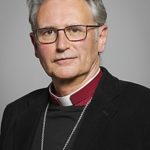
  • Christopher Cocksworth – 2022 Tribute to HM Queen Elizabeth II (Bishop of Coventry)

    Christopher Cocksworth – 2022 Tribute to HM Queen Elizabeth II (Bishop of Coventry)

    The tribute made by Christopher Cocksworth, Bishop of Coventry, in the House of Lords on 10 September 2022.

    My Lords, it is a great honour to follow the noble Lord, Lord Triesman. I will offer some words of tribute on behalf of the people of Coventry and Warwickshire, especially to express our great thanks for the Queen’s part in the renewal of Coventry after its wartime destruction and its discovery of a new identity, aspiring to be a city of peace and reconciliation.

    A few days after the worst of the bombing of Coventry, the Queen’s father stood in the ruins of the cathedral and wept. In 1956 the young Queen laid the foundation stone of the new cathedral—a new cathedral for a new Queen, in an ancient city now being rebuilt for a modern age, in a nation finding its place on the international stage in a new Europe and a new world. In 1962, 60 years ago this year, the Queen—herself a consecrated monarch, of course—returned to Coventry for the consecration of the new cathedral. There was hope in the air, and Coventry became a national symbol of the traumas of war, with all its suffering still evident in the ruins, and the possibilities of peace built on reconciliation rising from the ashes of the past into the simple grandeur of the new cathedral. What better person than Queen Elizabeth to lay the foundation stone of a new future and to see a building, a people, a nation consecrated to serve the ways of peace?

    Serving the cause of reconciliation for which Coventry Cathedral and its city have become known was remarkably demonstrated through the Queen’s service to the nation and the world, as we have heard in many ways. The Queen helped the nation to celebrate its past and carry forward its great traditions and noblest values while, at the same time, reaching out to the future, accepting its challenges, welcoming its opportunities and easing its coming. Whether steering the nation from imperial power to shaper and sharer in a Commonwealth of Nations, or facing head-on the harm that peoples have inflicted on themselves in families, in communities and between nations, and showing them how we may live better together, the Queen well used the strength of her character and the powers of her office to create new conditions for co-operation.

    Among the many examples on the world stage, I pay particular tribute to the Queen’s part in Coventry’s and the country’s reconciliation with Dresden, that symbol of the brutality of war and its challenge to face our own past. Her visit in 1992 with one of my predecessors was a brave act and not without cost to her. It exposed emotions that were still raw in that city, but I know from my own many visits and close relationships that it was deeply healing, transformative even, on the long road to reconciliation.

    As we have heard powerfully from the noble Baroness, Lady Coussins, and the noble Lord, Lord Alderdice, the Queen’s words and gestures—the way she used the combination of her status and credibility of character to serve the good of the future—were breathtaking in their effect during her state visit to the Republic of Ireland in 2011 and then Belfast in 2012. Again, we saw something, as we have heard, of the risk and cost that walking the road of reconciliation involves. There are many other examples, of course, in her long years of service, as indeed there are in the untiring, unstinting work of her son, our King, in his now former life.

    As has been acknowledged, the Queen’s own foundation, the rock on which she built her life, is well known. The cause for which she felt and knew that she was consecrated—God’s kingdom, peace, justice and mercy—served her well. We know that it will also serve our King well. It makes me wonder whether all our foundations and all the causes to which we give ourselves will be as secure and enduring as hers.

    The most reverend Primate the Archbishop of York referred to his granddaughter crying when she heard the news. I cannot resist saying the same about my mother. She is 93 and frail. She wept for the Queen and, I think, all that great generation that is passing. She said, “She was always there”—we all feel that—but she also said something that got it for me: “The Queen had such a beautiful face. It was her smile.” That has been referred to already. I was blessed by that smile in the encounters I had with Her Majesty our late Queen. Genuine life-giving smiles can restore relationships that once looked irreparably damaged. Our world is a better place because of the smile of that gracious lady.

  • David Triesman – 2022 Tribute to HM Queen Elizabeth II (Baron Triesman)

    David Triesman – 2022 Tribute to HM Queen Elizabeth II (Baron Triesman)

    The tribute made by David Triesman, Baron Triesman, in the House of Lords on 10 September 2022.

    My Lords, it is a real privilege to take part in this debate and to follow the noble and right reverend Lord, Lord Sentamu, and his inspiring words, and also the noble Lord, Lord Cormack, not least because I so strongly share his feelings about the first couple of short speeches by King Charles and the sentiments that they involved.

    I do not think it would be to any purpose to repeat the many things that have been said about Her late Majesty’s graciousness, kindness and ability to respond to people in such a personal way—a pleasure which I enjoyed on a number of occasions. Those things have been said. It may well be that what we should remember are her comments when she described her first speeches as having been “green” but that none the less she was delighted to have made the commitments that she made and to have seen them through. I sometimes think that the best one can expect of one’s children is that after their long experience, we hope, of you as a parent they will say that they thought you a good parent and that you have contributed in a significant way to their lives. That is certainly the way I think with affection and humility about the late Queen.

    A number of us have inevitably reached for anecdotes because they are not just expressions of the good luck and good chance of having met Her Majesty—in my case, a number of times—but illustrate things about her which, if you had not gone through those experiences, you would not necessarily know. When I first went as a Lord in Waiting, I had the great good luck of her inviting me to have lunch, and we sat, just the two of us, at a small table. She said, “I always have a light lunch”—I think I am allowed to say something about what she said—“I have ordered a ham salad but I thought you would not want a ham salad, so I have ordered a smoked salmon salad for you”. I thought how nice and good to have thought that, as it was absolutely true that, for various religious reasons, I would not have been able to eat a ham salad. It was a most enjoyable discussion and a very enjoyable lunch.

    The noble Lord, Lord Jay—we do not sit on the same Benches, but I think of him as a very good friend, as many people in the Foreign Office become very close to the Diplomatic Service—was in Buckingham Palace at the time. As noble Lords probably saw yesterday, he is a very tall man and, wearing a hat with plumes which stuck up about another two feet, he looked like a basketball player on day release. He was introducing ambassadors, as he described. Her Majesty commented on the fact that there were more ambassadors arriving in London than she had ever seen in the course of her reign and that many of them were from countries she had had to look up. Bosnia-Herzegovina was one that day, and there were one or two others. It created in me a very strange memory. My father gave me stamp album—it did not have many stamps in it—when I was a small child, and I would looked through it and see all these countries, such as Bosnia-Herzegovina, and wonder where on earth they were. There were all sorts of places. I kept that stamp album because it was such a strange moment in history. Her Majesty very graciously said that her grandfather had collected stamps and had some wonderful albums. She asked whether I would like to see them and said that perhaps they would compare with my stamp album. I thought that was extremely unlikely, but I was delighted to take up her offer.

    That was not the first time I met her. The first time was in the context of a football match. I have to say that I never thought of Her Majesty as being a very keen football person. There are no horses involved in the game and, try as we might to devise it, we could never find a way of involving horses in football. I had been told that she had a wonderful sense of humour and that she was at the match. She was indeed very gracious and, at the end, when I asked whether she thought anybody had played particularly well, she said, “The band of the Scots Guards”. I thought that was probably a pretty accurate reflection.

    Funnily enough, the Scots Guards come into another memory I have, of when President Lula of Brazil made his state visit. At the state banquet, one of the things that Her Majesty liked was to have the pipes of the Scots Guards walk round the outside of the banquet table playing, as only they can. This playing “as only they can” gave a profound shock to President Lula, who thought it was either a declaration of war or something which he had never come across before. He said, “Do you always do this?”, and before I could answer Her Majesty said, “Of course we always do it”.

    I have those memories and I couple them with affectionate memories of His Royal Highness Prince Philip, who was also so important on so many of those occasions and who also deserves great credit.

    It has been said in this House that, during the course of her long reign, a huge number of things changed. I want to focus briefly on one of them. The invention of atomic weapons took place earlier, and the first explosion of atomic weapons took place during the war. But when thinking about those 70-plus years it struck me that, in that time, we have created circumstances among humanity where we have a capability we did not have, and which was not really thought of when Her Majesty was in the forces, to destroy ourselves completely and wipe out everything we know about human existence. We have the capability not only to obliterate the whole of the past but to obliterate what would have been the accomplishments of the future. I think Her Majesty had a strong sense of the value of the accomplishments of the future as well as of the traditions of the past, and she was well able to talk about them and make you feel them. That is something that I feel at the moment.

    At the heart of it was a love of peace and democracy. She espoused both of those, though not in the sense that she would not wish to stand up to ruthless dictators who would try to interrupt peace or destroy democracy; quite the contrary, she would certainly always have wanted to do that, but in the cause of peace and democracy. I treasure having lived through a period in which a monarch felt so strongly about those things.

    Yesterday, the noble Lord, Lord Polak, said a little about Jewish tradition at the end of a person’s life, and with great respect to those who are going to shelter my faith under their umbrella—although it does not always seem to me to happen, but none the less I am very keen that they should—I want to do one other thing which is also from Jewish tradition. Many noble Lords may well know it: we wish the family and the people closest to the person who has died long life. It is not just because we wish for them a long life—though we do, of course—but because it is in the lives of the people who survive that memories survive to the greatest extent. We carry the memories. God bless the King. May he have long life and cherish those memories.

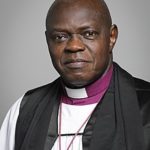
  • John Sentamu – 2022 Tribute to HM Queen Elizabeth II (Baron Sentamu)

    John Sentamu – 2022 Tribute to HM Queen Elizabeth II (Baron Sentamu)

    The tribute made by John Sentamu, the former Archbishop of York, in the House of Lords on 10 September 2022.

    My Lords, I was three years old when, in a little village in Uganda called Masooli, we all gathered round a very small transistor radio and listened to the broadcast from the abbey of the Coronation of Queen Elizabeth. From then on in every school in Uganda on Empire Day we sang “God save the Queen”. We continue to do it; some still do it now. I stand here as somebody who is quite surprised that this little boy out in Uganda would today be part of the Accession Council and the confirmation of King Charles III. I have mixed emotions.

    I want first to echo the words of the most reverend Primate the Archbishop of York, because on Thursday, as soon as we heard the news that Her Majesty had died, I put on Twitter this message:

    “Today Churches Celebrate the Birthday of the Blessed Virgin Mary. The Death of Her Majesty Queen Elizabeth II on this day is a great shock & Mary’s Magnificat should be our response: MY SOUL DOTH MAGNIFY THE LORD: & MY SPIRIT HATH REJOICED IN GOD MY SAVIOUR; REGARDED & MAGNIFIED HER”.

    I have stood, on a number of occasions, near Her Majesty Queen Elizabeth as she sang the Magnificat. She did not need the words; she knew them. In a real sense, that was her song too. She sang it from the heart because it expressed who she was. Her true greatness was her deep humility in knowing that the Lord in many ways “regarded” her “lowliness” and, by divine providence, made her Queen. For her, being Queen was an act of nobody but God.

    Humbleness was, for her, born out of having Jesus Christ at the centre of her living, her thinking and all her goals, her rejoicing and even in moments of sadness. She knew the holy scriptures well and sang many hymns without needing to look at the words. She really imbibed the whole tradition. Therefore, it was also comforting to hear our new King say the same thing about the services that shaped him.

    When in her presence, you were the person who mattered when you spoke to her. She never looked around. It was as if you were the only person in the room, and until that conversation ended her eyes were fixed on you and your smile.

    Forgive this testimony. I had an audience with her to ask for her permission to step down from my role after an extra year. Her response was, “The decision is yours and yours alone—not me, not anyone else. Give me the date and so it shall be.” I took that to be a command. There was a matter that was causing me great heartache. I told her, and I asked for her prayers. I knelt down and put my hands together. She put hers outside mine. There was this deep moment of silence. I think it lasted about two to three minutes. It was ended by Her Majesty saying, “Amen.” I got up and, friends, whatever burdens I had come with were lifted. It was as if I was with my grandmother, who had a similar effect on me. If you want to know more, you have to wait until my autobiography is published next year. You will get a bit more story because permission has been given to me to write some of those words down.

    Her hospitality was amazing. I stayed at Sandringham and at Windsor. I will tell your Lordships a bit about Windsor. At Windsor on her birthday, after dinner she and Prince Philip guided us to the library. They had already arranged with the archivist the section on Uganda. The books were opened and copies were made so that we could take some of this material with us. The thing that most surprised me was to see writing dictated by King Muteesa I requesting Queen Victoria to send missionaries to Uganda, and subsequently a request that Uganda became a protectorate. Those documents are there. I was speechless, really. We ended up in the restored chapel at Windsor. Again, there were silent prayers. I cannot remember how long.

    The death of Queen Elizabeth has left all of us with mixed emotions. I want to end with the experience of our eight year-old granddaughter, Abigail. When she saw the news that the Queen had died she cried, uncontrollably and inconsolably. When she calmed down, she said, “I will never see a queen in my lifetime”. She then said, “Long live the King”. Queen Elizabeth rests in glory. Long live King Charles III.

  • Patrick Cormack – 2022 Tribute to HM Queen Elizabeth II (Lord Cormack)

    Patrick Cormack – 2022 Tribute to HM Queen Elizabeth II (Lord Cormack)

    The tribute made by Patrick Cormack, Lord Cormack, in the House of Lords on 10 September 2022.

    My Lords, it is always a great pleasure to follow the noble Baroness, Lady Andrews. When she was talking of her role as a receiver of distinguished foreign visitors, I immediately thought of one of the most unforgettable Members of your Lordships’ House who often did a similar job and told hilarious stories about the encounters that she had. That was, of course, Baroness Trumpington, of whom we all have such affectionate memories.

    It has been an extraordinary period since Thursday lunchtime, when that difficult news came through. We all knew from the first moment that we had to expect the worst. I must say that I felt a great privilege in being a Member of your Lordships’ House yesterday. There were some very moving and splendid speeches, as there have been today. I have never, in my nearly 12 years in your Lordships’ House, nor in my 52 years in Parliament, heard better Front-Bench speeches than I heard yesterday in this House. However, the most moving moment for me was when we assembled informally in your Lordships’ Chamber to listen to the first words of our new King, who spoke with a quiet, moving dignity, suffused with deep affection for a wonderful mother.

    Not being privileged to be a member of the Privy Council, I had to watch this morning’s Proclamation on television, as did most of us. The King spoke again and he used a few words that I want to dwell on for a moment:

    “Even as we grieve, we give thanks.”

    That is very important indeed. We are mourning the departure of a Christian monarch who believed in the afterlife. We are mourning the departure of one of the most remarkable women who ever lived, but who died in really wonderful circumstances, in the place that she loved, surrounded by people whom she loved, having just accomplished constitutional duties with panache and good humour, in instituting her last Prime Minister.

    We have a lot to be thankful for. Having such a respectable bevvy of Bishops on the Benches, I appeal to them. Of course, what happens in 10 days’ time will be a great state funeral, but can it not also be designated on the service sheet as a service of thanksgiving, since that is what we will be doing? We will be not just mourning but giving thanks for someone who has done her duty better than anyone I can think of.

    We have been talking of personal memories. I cannot pretend that I knew Her Majesty, but I had the very great good fortune to meet her on a number of occasions. Two stick in my memory. The first was in 2002. I was the treasurer of the CPA, the senior Opposition position in the CPA. We decided that we would have a conference of Commonwealth parliamentarians. We had an immediate affirmative answer from the Palace that Her Majesty and Prince Philip would be delighted to come, and they came. We met in Lancaster House.

    I had two duties. One was to take round Prince Philip while the chairman took round the Queen. Then we all four gathered. I had the job of making a presentation to Her Majesty of a wonderful paper knife, crafted by perhaps our finest female silversmith. The knife had the mace at the end of it. She wielded it and said, “By Jove, that’s got a very good feeling.” Before the end of the day, I had a letter from her office saying that she was already using it and much enjoying it.

    We were talking to her about the Commonwealth. As has been mentioned many times—particularly movingly today by the noble Lords, Lord Robertson and Lord Boateng—in a sense she lived for the Commonwealth. From going round with the two of them and talking to Commonwealth parliamentarians, I saw that there was not a country that they had not been to. They knew the intimate history of many of the people who were there and they both manifested a love for this greatest of international organisations.

    My other memory is a very personal one. On 20 April 2010, I was at a farewell party at Windsor Castle for the Surveyor of the Queen’s Pictures. The Queen was there, mingling with us. Of course, the next day she was due to be 84. I said what I thought were some appropriate words and also said, “My grandson is six tomorrow and is very thrilled that he shares your birthday.” “Please give him my warmest wishes”, she said. Edward thought this was an extraordinary leg-pull when I rang him up and told him, but it was just typical of her ability to relate not only to significant Commonwealth parliamentarians but to a little boy whom she certainly never met. She cared about her family, as has been said so often.

    How do we best thank her and how do we best encourage our new King? We do it, as was touched on last night in a very interesting and powerful speech by the right reverend Prelate the Bishop of Worcester, by trying to demonstrate the sort of unity for which she always stood. We have a particular responsibility in your Lordships’ House, where party politics is not as acerbic as it is in the other place. She was a person who brought others together. It is clearly the manifest desire of our new King to do the same. We must play our part in doing that.

    I end on a note that I never thought I would end on this year, in emphatic agreement with Boris Johnson. He said, in some very remarkable words the other day, that he thought she should go down in history as Elizabeth the Great. I endorse that and I hope that, in due course, that will come to pass. God save the King.

  • Kay Andrews – 2022 Tribute to HM Queen Elizabeth II (Baroness Andrews)

    Kay Andrews – 2022 Tribute to HM Queen Elizabeth II (Baroness Andrews)

    The tribute made by Kay Andrews, Baroness Andrews, in the House of Lords on 10 September 2022.

    My Lords, it has never been a greater privilege to be a part of this House and listen to some extraordinary speeches; they will last as long as this House does, I think. With humility, I want to share some of my own experiences.

    Last night, when we heard that extraordinarily magisterial and immensely moving speech from the new King, King Charles III, he made us remember some different aspects of our late Queen. He spoke of

    “a promise of destiny kept”

    and renewed that same promise of lifelong service. Of course, one of those promises that the Queen made was the one she made to the people of Aberfan, after the disaster in 1966 when 116 children and 28 adults died, that she would return. It was one of the defining moments of her reign and was not without controversy. For those of us who come from those valleys, it marked an extraordinary relationship. At that terrible time, the people of Aberfan were immensely and uniquely comforted by her. She was deeply affected; she sat quietly with them, sometimes quite silently.

    One of the bereaved families said, “She was with us from the beginning”, and she more than kept her promise to return. She went back four times, once to open the new school. She understood and paid tribute to the dignity and the indomitable spirit that characterises the people of that village and the surrounding valleys, and that rare gift exemplified so much of what made her so special to everyone she met. She understood grief. She had been brought up never to show her emotions, but she knew what people felt, and people knew that she knew. She knew that silence is more eloquent than words and she taught us that there is a unique value in silence.

    She also had a terrific zest for life. I experienced that because I am a member of the trade union of previous Baronesses in Waiting. She treated us with enormous respect and helped us understand the role. The humility in being present to greet a distinguished overseas Head of State who is expecting to meet the Queen and finds himself instead meeting an overenthusiastic and completely unknown Baroness is something you never quite forget. It teaches you a life lesson about expectations.

    Her Majesty honoured her promises and the sweep of history in so many other ways. One of the charities with which she had the longest association was the Charterhouse, the great medieval charity in the City so well known to Members of this House—there are many of its previous governors in this House. The Charterhouse has stood for 400 years as a symbol of philanthropy, one of the four buildings in London that Elizabeth I would recognise. There have been royal governors for 400 years. Elizabeth I made her base there after the death of Mary. For 400 years, Thomas Sutton’s will has been honoured in the community of elderly men and women who live out their final days there. I am privileged to be a governor and to have that duty of care now.

    The late Queen’s first visit was in 1958, after the restoration following the Blitz. Her final visit, some 60 years later in 2017, was to open our new museum, which revealed the Charterhouse in its full 700-year history. Like every governor, she would have had three brothers in her care. She caused some confusion occasionally by referring to them. Yesterday, our brothers honoured her and the love they feel for her when they tolled the Charterhouse bell 96 times for their royal governor, who joined hands over the centuries with that other great Elizabeth, 400 years ago. I have an image of those two Elizabeths sitting in the great chamber at the Charterhouse, conspiring together about how to get the best from their councillors.

    She also honoured her people in other ways. During her 60th Jubilee, in 2012, the first excursion that she made was to Burnley, on a freezing day. She travelled up the canal on the “Pride of Sefton”, with Prince Philip and the then Prince Charles, to see the transformation of Burnley mill into a new centre of technical education. It was one of many such projects to which our present King was committed for so long and with such success, and it enabled us at the Prince’s Regeneration Trust and English Heritage to bring back to life and to repurpose significant historic buildings which could bring new life to communities such as Burnley. The mill was put to work again, for another generation to learn how to master the future.

    That day, in that mill, on the threshold of its new life, the Queen spoke of her immense pride in all that her son had achieved, not just in the restoration of our physical heritage but in empowering so many young people, through the Prince’s Trust, to find the confidence and success to make their own place in history.

    It is no wonder that we have all felt so completely overwhelmed by hearing the accounts of people we have met, or those people I saw at Victoria Station this morning armed with bunches of flowers and on their way to Buckingham Palace. We are unmoored by the death of a Queen for whom duty was her signature on a page of history, as well as her love. We now have a new King who shares her values and who will, as he said last night, bring loyalty and love, warmth and empathy in connection. We are extremely lucky to have lived in her reign, and we will be lucky to live in his.

    God save the King.

  • John Alderdice – 2022 Tribute to HM Queen Elizabeth II (Baron Alderdice)

    John Alderdice – 2022 Tribute to HM Queen Elizabeth II (Baron Alderdice)

    The tribute made by John Alderdice, Baron Alderdice, in the House of Lords on 10 September 2022.

    My Lords, it is a truism of politics generally—and, no doubt, of your Lordships’ House—that it is easier to make a long speech than a short one. In respect of Her late Majesty, all of us could speak at length with enthusiasm, passion and not a little sadness about our experiences of her, both closely and at a distance. I will restrict myself to two comments about not the personal relationship with her but what she achieved and represented. One is about international relations, which are an important matter for me. The other is about the Irish peace process, to which the noble Baroness, Lady Coussins, just referred.

    When Her Majesty came to the Throne, after two World Wars, there was a huge focus on creating an international rules-based order. There was a particular focus on the United Nations. For a long time, that was and continued to be an inspiring hope—perhaps until relatively recent times—because the United Nations Security Council is and was to be the pinnacle of international law. Now we find that two of its permanent members are, by any account, guilty of crimes against humanity. Were that to be the case of any of the members of our Supreme Court, we would lose faith in that jurisdiction.

    Others of Her Majesty’s Ministers focused a great deal on getting us into the European project or, more latterly, getting us out of it. But she had a different focus during all those years. She was supportive of what her Governments were doing, of course, but it was the Commonwealth that was her particular passion, as the noble Lords, Lord Boateng and Lord Robertson of Port Ellen, and the noble Baroness, Lady Coussins, rightly said. It is my conviction that, had it not been for her passionate commitment and that of the rest of the Royal Family, we probably would not have a Commonwealth today. Instead, we have an important network of relationships that some countries that were not even members of the British Empire have applied to join.

    Yesterday, I got off a plane to hear of Her Majesty’s death after a visit to Singapore at the invitation of the Singaporean Government. I have often found myself being critical of them. It seemed to me that they were not living up to some of the principles I felt were important. I came back, however, with a different set of feelings. They understand China in a way that we do not. They have a fellow feeling with India that we cannot have. They understand Asia and the West. If we are not to fall into a terrible war with China and others in the East, we desperately need that depth of understanding. It is an understanding that Her late Majesty the Queen had very deeply.

    I speak of the Irish peace process. In her Golden Jubilee year, 2002, Her Majesty visited not just the Parliament here but the Senedd in Wales and the Parliament in Scotland. I was advised by the Northern Ireland Office, however, that she would not be visiting the Northern Ireland Assembly of which I was Speaker because the Northern Ireland Office felt that it would cause difficulties. I said, “I see. You’re wanting to create a constitutional crisis.” “Oh no,” they said, “We’re trying to avoid trouble.” I said, “Well, how do you think unionists will respond if Her Majesty can go to every other Parliament but not to Stormont?” They said, “But it won’t go well.” I replied, “Just back off for a little while and give me a chance to talk to those involved.”

    I talked to Dr Paisley, who was very wroth because he was convinced that it would not be possible. I talked to others. Eventually, I talked to Alex Maskey, the then Chief Whip of Sinn Féin. I said, “Alex, you know, I want to be able to invite the Irish President here but I cannot invite her if Her Majesty cannot come.” “Ah,” he said, “We’ll have a chat about it.” So the ard chomhairle of Sinn Féin got together. You can imagine them speaking in Dublin about Her Majesty’s visit to Belfast. They came back to me, and the answer was clear: “We will deal with it with a dignified detachment. We won’t be able to be there but we won’t create trouble.”

    On the morning of Her Majesty’s visit, Gerry Kelly was interviewed on the BBC. My first response was a sinking heart. What would Gerry say? He was asked whether he would meet her. He said, “Well, if she’s going to hand the place over, I’d be very happy to meet with her, but I don’t expect that’s what she’s coming for. So we will deal with it with a dignified detachment.” Of course, that is what happened; they dealt with it appropriately.

    We went on to have the remarkable visit to Dublin and the meeting with Mary McAleese. Then, in 2012, we had the visit to Belfast where Her Majesty shook hands with Martin McGuinness. In 2002, it was dignified detachment. In 2012, it was dignified engagement. None of that would have happened had she not, by her whole life, person and example, demonstrated dignity in relations and respect for and mutual recognition of those with whom she and her country disagreed. She was a remarkable person. She has given those of us in my part of the United Kingdom a remarkable legacy, but we are fortunate because King Charles III is also part of her legacy. God save the King.

  • Jean Coussins – 2022 Tribute to HM Queen Elizabeth II (Baroness Coussins)

    Jean Coussins – 2022 Tribute to HM Queen Elizabeth II (Baroness Coussins)

    The tribute made by Jean Coussins, Baroness Coussins, in the House of Lords on 10 September 2022.

    My Lords, both today and yesterday, many noble Lords have spoken about how Queen Elizabeth embodied the values and identity of our country. However, she also embodied an international mindset and global understanding, which focused, of course, on the Commonwealth to which she was so devoted but went much further still than that.

    One example of this was Her Majesty’s understanding of the importance and significance of being able to communicate in languages other than English, which often reflected so positively on the reputation of Her Majesty and the admiration in which she was held, as well as on the reputation and role of the United Kingdom. In 2014, she addressed a French state banquet in French, a language in which she was fluent.

    Perhaps the most unexpected yet hugely significant example came in 2011, when Her Majesty was the first British monarch to visit Ireland in 100 years. At the state dinner in Dublin Castle, she began her speech to her hosts in Irish Gaelic, astonishing the assembled audience, from President Mary McAleese down, into spontaneous applause. At the time, commentators and politicians remarked on the incredibly astute judgment and sensitivity shown by the Queen in this gesture; it was said to contribute enormously to the future of relationships all round.

    Other noble Lords have referred to Her Majesty’s consummate skill in diplomacy and soft power. Her ability to use foreign languages so judiciously was a classic example of this, for which we should all be grateful and endeavour to emulate.

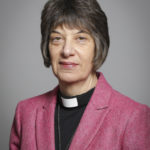
  • Sarah Mullally – 2022 Tribute to HM Queen Elizabeth II (Lord Bishop of London)

    Sarah Mullally – 2022 Tribute to HM Queen Elizabeth II (Lord Bishop of London)

    The tribute made by Sarah Mullally, the Lord Bishop of London, in the House of Lords on 10 September 2022.

    My Lords, I share with this House, our country and many across the world the profound sadness at the death of the late Her Majesty Queen Elizabeth. In June this year, we gathered at St Paul’s Cathedral for the national service to celebrate her Platinum Jubilee. In that service, words were read from the letter to the Philippians:

    “Let your gentleness be known to everyone”.

    The writer goes on to say that

    “whatever is true, whatever is honourable, whatever is just, whatever is pure, whatever is pleasing, whatever is commendable, if there is any excellence, if there is anything worthy of praise, think about these things … and the God of peace will be with you.”

    We have heard from many that Her Majesty the Queen, in the 70 years of her reign, lived a life of integrity and service to others, but she also lived a life as a model of gentleness. In Her Majesty, we found someone who carried lightly her own importance, a genuine humility and gentleness, while fully knowing what her role in the Church and the state was. We have heard from my most reverend friend the Archbishop about how, as Bishops, we pay homage. As the Bishop of London, I paid it not virtually but in person. There, kneeling, with your hands enfolded by Her Majesty the Queen’s hands, you pray. My memory of that occasion was of gentleness: not of the power of state or of her role, but of gentleness. That is the image and feeling that remains with me. Having prayed with the Queen, I often reflected that there was no need for an oath of obedience.

    Many of us simply have not known life without Her Majesty the Queen. She has been our nation’s unerring heartbeat. I give thanks that she is now with the God of all peace. My prayers are with the Royal Family and His Majesty King Charles. God save the King.

  • Fiona Shackleton – 2022 Tribute to HM Queen Elizabeth II (Baroness Shackleton of Belgravia)

    Fiona Shackleton – 2022 Tribute to HM Queen Elizabeth II (Baroness Shackleton of Belgravia)

    The tribute made by Fiona Sara Shackleton, Baroness Shackleton of Belgravia, in the House of Lords on 10 September 2022.

    My Lords, having read and listened to the many and various tributes to our beloved Queen and her exemplary life and selfless service to this country, the Commonwealth and the realms, it is impossible to do her justice. I should like, with humility, to pay a small tribute to her private family life. As any working parent knows, striking the work/life balance is almost impossible, but despite performing the most demanding job in the whole world for seven decades as a working mother, a working grandmother and a working great-grandmother, she juggled until the day she died. I am in no doubt that her family and the line of succession was of paramount importance to her.

    I should like to share three vignettes of her humanity. This is the first. My brothers, three years younger than me, attended the same gym class as Prince Andrew and, as a consequence, were invited to Buckingham Palace to his birthday parties. On returning home, my mother, cross-examining the boys, said, “What was Andrew’s mummy like?”, to which one of them responded, “Mummy, she was just like any other mummy”, and then, referring to her brooch, “but she wears a much bigger badge.”

    Secondly, sitting next to one of her nephews at a dinner, he told me that during his parents’ separation and divorce, the Queen and her family had been like a port in a storm when life had been very difficult for them. This sentiment was echoed by many of her grandchildren, who, over the Jubilee, spoke movingly of her extreme kindness to them.

    Thirdly and lastly, I had the privilege on two occasions to meet the Queen on my own, save for the presence of a private secretary. The meetings concerned family matters, and I was left in absolutely no doubt that she loved and cared passionately about all concerned. She was totally fair and non-judgmental, and did all in her power to ameliorate and solve the very difficult problems they were suffering from. She was loyal to her family to the end, and I can think of no better way of showing our immense gratitude to her than supporting her children, her grandchildren and great-grandchildren at this sad time and in future.

    She passed the baton on, and for her, there was no question of changing any rules mid-term. To make sense of her sacrifices and her passing, and to reward her unstinting service to all of us, we can do no better than to wholeheartedly support our monarch, His Majesty King Charles III, and his family, as she would have wished and prayed for.