Category: Parliament

  • Caroline Lucas – 2022 Speech on the Sue Gray Report

    Caroline Lucas – 2022 Speech on the Sue Gray Report

    The speech made by Caroline Lucas, the Green Party MP for Brighton Pavilion, in the House of Commons on 31 January 2022.

    The shocking incompetence of the Met police has meant that we have a report that has been gutted, but frankly, we did not need Sue Gray to tell us about the level of dishonour and deception that has infected not only Downing Street but so many Tory Members. It has been excruciating to watch so many Tory MPs and Ministers willing to defend the indefensible and calculating what is in their own party political interests rather than what is right for our country, complicit in the same decaying system where the pursuit of power trumps integrity. The Prime Minister is certainly a bad apple, but the whole tree is rotten and the whole country wants reform. Could we not make a start with a major overhaul of the ministerial code, given that its founding assumption—that it could be policed by the Prime Minister of the day, because they would be a person of honesty and integrity—has been so widely, comprehensively and utterly discredited?

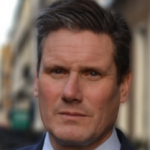
  • Keir Starmer – 2022 Speech on the Sue Gray Report

    Keir Starmer – 2022 Speech on the Sue Gray Report

    The speech made by Keir Starmer, the Leader of the Opposition, in the House of Commons on 31 January 2022.

    I would like to thank Sue Gray for the diligence and professionalism with which she has carried out her work. It is no fault of hers that she has only been able to produce an update today, not the full report.

    The Prime Minister repeatedly assured the House that the guidance was followed and the rules were followed. But we now know that 12 cases have reached the threshold of criminal investigation, which I remind the House means that there is evidence of serious and flagrant breaches of lockdown, including the party on 20 May 2020, which we know the Prime Minister attended, and the party on 13 November 2020 in the Prime Minister’s flat. There can be no doubt that the Prime Minister himself is now subject to criminal investigation.

    The Prime Minister must keep his promise to publish Sue Gray’s report in full when it is available. But it is already clear that the report discloses the most damning conclusion possible. Over the last two years, the British public have been asked to make the most heart-wrenching sacrifices—a collective trauma endured by all, enjoyed by none. Funerals have been missed, dying relatives have been unvisited. Every family has been marred by what we have been through. And revelations about the Prime Minister’s behaviour have forced us all to rethink and relive those darkest moments. Many have been overcome by rage, by grief and even by guilt. Guilt that because they stuck to the law, they did not see their parents one last time. Guilt that because they did not bend the rules, their children went months without seeing friends. Guilt that because they did as they were asked, they did not go and visit lonely relatives.

    But people should not feel guilty. They should feel pride in themselves and their country, because by abiding by those rules they have saved the lives of people they will probably never meet. They have shown the deep public spirit and the love and respect for others that has always characterised this nation at its best.

    Our national story about covid is one of a people who stood up when they were tested, but that will be forever tainted by the behaviour of this Conservative Prime Minister. By routinely breaking the rules he set, the Prime Minister took us all for fools. He held people’s sacrifice in contempt. He showed himself unfit for office.

    The Prime Minister’s desperate denials since he was exposed have only made matters worse. Rather than come clean, every step of the way, he has insulted the public’s intelligence. Now he has finally fallen back on his usual excuse: it is everybody’s fault but his. They go; he stays. Even now, he is hiding behind a police investigation into criminality in his home and his office.

    The Prime Minister gleefully treats what should be a mark of shame as a welcome shield, but the British public are not fools. They never believed a word of it. They think that the Prime Minister should do the decent thing and resign. Of course, he will not, because he is a man without shame. Just as he has done throughout the life, he has damaged everyone and everything around him along the way. His colleagues have spent weeks defending the indefensible, touring the TV studios, parroting his absurd denials, degrading themselves and their offices, fraying the bond of trust between the Government—[Interruption.]

    Mr Speaker

    Order. The hon. Member for South Ribble (Katherine Fletcher) is my neighbour. I expect better from my neighbours.

    Keir Starmer

    They have spent weeks fraying the bond of trust between the Government and the public, eroding our democracy and the rule of law.

    Margaret Thatcher once said:

    “The first duty of Government is to uphold the law. If it tries to bob and weave and duck around that duty when its inconvenient…then so will the governed”.

    To govern this country is an honour, not a birthright. It is an act of service to the British people, not the keys to a court to parade to friends. It requires honesty, integrity and moral authority. I cannot tell hon. Members how many times people have said to me that this Prime Minister’s lack of integrity is somehow “priced in”—that his behaviour and character do not matter. I have never accepted that and I never will.

    Whatever people’s politics, whatever party they vote for, honesty and decency matter. Our great democracy depends on them. Cherishing and nurturing British democracy is what it means to be patriotic. There are Conservative Members who know that, and they know that the Prime Minister is incapable of it. The question that they must now ask themselves is what they are going to do about it.

    Conservative Members can heap their reputation, the reputation of their party, and the reputation of this country on the bonfire that is the Prime Minister’s leadership, or they can spare the country a Prime Minister totally unworthy of his responsibilities. It is their duty to do so. They know better than anyone how unsuitable he is for high office. Many of them knew in their hearts that we would inevitably come to this one day and they know that, as night follows day, continuing his leadership will mean further misconduct, cover-up and deceit. Only they can end this farce. The eyes of the country are upon them. They will be judged by the decisions they take now.

  • Boris Johnson – 2022 Statement on the Sue Gray Report

    Boris Johnson – 2022 Statement on the Sue Gray Report

    The statement made by Boris Johnson, the Prime Minister, in the House of Commons on 31 January 2022.

    With permission, Mr Speaker, I would like to make a statement. First, I express my deepest gratitude to Sue Gray and all the people who have contributed to this report, which I have placed in the Library of this House and which the Government have published in full today for everyone to read.

    I will address the report’s findings in this statement, but first I want to say sorry. I am sorry for the things we simply did not get right and sorry for the way this matter has been handled. It is no use saying that this or that was within the rules, and it is no use saying that people were working hard—this pandemic was hard for everyone. We asked people across this country to make the most extraordinary sacrifices—not to meet loved ones, not to visit relatives before they died—and I understand the anger that people feel.

    But it is not enough to say sorry. This is a moment when we must look at ourselves in the mirror, and we must learn. While the Metropolitan police must yet complete their investigation, and that means there are no details of specific events in Sue Gray’s report, I of course accept Sue Gray’s general findings in full, and above all her recommendation that we must learn from these events and act now.

    With respect to the events under police investigation, she says:

    “No conclusions should be drawn, or inferences made from this other than it is now for the police to consider the relevant material in relation to those incidents.”

    More broadly, she finds:

    “There is significant learning to be drawn from these events which must be addressed immediately across Government. This does not need to wait for the police investigations to be concluded.”

    That is why we are making changes now to the way Downing Street and the Cabinet Office run, so that we can get on with the job—the job that I was elected to do, and the job that this Government were elected to do.

    First, it is time to sort out what Sue Gray rightly calls the “fragmented and complicated” leadership structures of Downing Street, which she says

    “have not evolved sufficiently to meet the demands”

    of the expansion of No. 10. We will do that, including by creating an Office of the Prime Minister, with a permanent secretary to lead No. 10.

    Secondly, it is clear from Sue Gray’s report that it is time not just to review the civil service and special adviser codes of conduct, wherever necessary, to ensure that they take account of Sue Gray’s recommendations, but to make sure that those codes are properly enforced. Thirdly, I will be saying more in the coming days about the steps we will take to improve the No. 10 operation and the work of the Cabinet Office, to strengthen Cabinet Government, and to improve the vital connection between No. 10 and Parliament.

    Mr Speaker, I get it and I will fix it. I want to say to say to the people of this country: I know what the issue is. [Hon. Members: “No!”] Yes. [Hon. Members: “You!”] It is whether this Government can be trusted to deliver. And I say yes, we can be trusted—yes, we can be trusted to deliver. We said that we would get Brexit done, and we did. We are setting up freeports around the whole United Kingdom. I have been to one of them today that is creating tens of thousands of new jobs. We said we would get this country through covid, and we did. We delivered the fastest vaccine roll-out in Europe and the fastest booster programme of any major economy, so that we have been able to restore people’s freedoms faster than any comparable economy. At the same time, we have been cutting crime by 14%, building 40 new hospitals and rolling out gigabit broadband, and delivering all the promises of our 2019 agenda, so that we have the fastest economic growth of the G7. We have shown that we have done things that people thought were impossible, and that we can deliver for the British people. [Interruption.] I remind those on the Opposition Benches that the reason we are coming out of covid so fast is partly because we doubled the speed of the booster roll-out.

    I can tell the House and this country that we are going to bring the same energy and commitment to getting on with the job, to delivering for the British people, and to our mission to unite and level up across this country. I commend this statement to the House.

  • Bob Blackman – 2022 Speech on Holocaust Memorial Day

    Bob Blackman – 2022 Speech on Holocaust Memorial Day

    The speech made by Bob Blackman, the Conservative MP for Harrow East, in the House of Commons on 27 January 2022.

    It is a pleasure to follow the hon. Member for Enfield North (Feryal Clark), who remembered another genocide that took place in the world.

    It is fair to say that antisemitism is nothing new. We only have to look back to Shakespeare to see that antisemitism was rife during that period in our history. It has been prevalent in societies across the world for centuries and it is still prevalent today. I recalled earlier the attack on shopkeepers in Stamford Hill only yesterday. What makes the holocaust different is that it shows the ultimate destination of antisemitism: a systematic attempt to wipe out the Jewish race and anyone of Jewish religion—not just people who were openly Jewish, but anyone who had Judaism in their genealogy. I speak as someone in that position. I would not be here today if I had been alive in Germany in those times. That demonstrates the way in which people’s backgrounds were traced to see whether any relative or any person of Jewish blood was present. It was systematic, deliberate and intentional.

    I was at school with many Jewish children. No one spoke about the holocaust. Half of my class were Jewish, but no one ever spoke about the holocaust during those days. It was ignored, perhaps to be airbrushed from history forever, because it was such a tragedy. The relatives—fathers and mothers—of many of my friends had come from eastern Europe as refugees, but they never spoke about the holocaust either. When we were at school, we never got the opportunity to learn about its horrors and what people went through at that time.

    I remember my first visit to Yad Vashem. It was not the Yad Vashem we see today; it was a much smaller, more intimate formation in its early days, going back to 1992. It was a pivotal moment for me on my first visit to Israel, seeing Jerusalem, seeing Yad Vashem and seeing first-hand what had gone on during the holocaust. It had the first ever recordings of survivors—people who had sadly passed away, but who had recorded their testimony in advance—plus early photographs and other details of what had gone on in Germany and eastern Europe in particular during the holocaust.

    That made Yad Vashem more intimate, in many ways, than it is now. It is a much bigger operation now, with much more testimony and evidence of what happened, but when I heard the names of the children who had been murdered by the Nazis being recited, one name after another, it brought home to me how people could commit such systematic murder of children—wipe them off the face of the planet—and what a terrible experience it was.

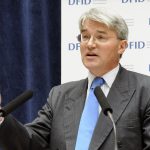
    Andrew Gwynne (Denton and Reddish) (Lab)

    I have had the privilege of visiting Yad Vashem four or five times now, and I remember on one particular occasion going into the cave the hon. Gentleman describes, where the recordings of children’s names and ages just continue. By coincidence, there was a run of names, two boys and a girl, the same age that my two boys and my daughter were at that time. I broke down in tears, because that is where it really hits home: “This could be you. There but for the grace of God go we all. If politics turns nasty and turns against you, this is the end result.” That is why Yad Vashem and all holocaust memorials are so important.

    Bob Blackman

    I thank the hon. Gentleman. I freely admit—I am not ashamed to say it—that I cried. I cried for humanity, I cried for the people who had been lost and I cried for our whole being and how we could ever have allowed such a thing to happen.

    I declare my interest as co-chairman of the all-party parliamentary group on holocaust memorial. I look forward to the holocaust memorial and learning centre’s being built, so we can have our own facility where we can commemorate the lives of those who were lost, and commemorate those who survived. When I was first elected to the House in 2010, the first all-party group I joined was the APPG on combating antisemitism. It is right that, across the House and on both sides of the political divide, we stand against antisemitism.

    I have visited Auschwitz-Birkenau, and I believe I share the view of most students who have seen Auschwitz for only one day that it would be better if people could stay a little longer, just to appreciate even further the terrible crimes that were committed. The problem with that, of course, is funding, and the fact that lengthening the amount of time spent away might reduce the numbers who could go on such visits.

    The problem I see with the programme of Auschwitz-Birkenau visits is that students learn about what went on there and think that that was it. We must remember that it was not just Auschwitz-Birkenau: there was a network of death camps and forced labour camps right across eastern Europe and Germany, where Jews and others were forced into slave labour and then systematically exterminated.

    I have often wondered how a civilised nation such as Germany could get into a position to commit such inhumane acts. When we talk about 6 million Jews being killed, it is a number; it is hard to personalise that down to individual circumstances. It is hard to visualise the horror of the attempt to wipe out the Jewish race. We should remember that it did not take place over one or two years. It was a deliberate, long-term attempt by the Nazis to eliminate the Jewish race.

    We should also remember that the roots of the holocaust go back to the end of the great war. Germany was subjected to severe reparations. That led to incredible poverty in Germany, which then gave rise to the Nazis, who could say, “It’s the Jews’ fault you haven’t got any money. Let’s take it out on the Jews. If we take Jews out of their position, we can spread the wealth.” It was a deliberate policy of the Nazi party to spread this hatred and it should never, ever be allowed to be repeated. There needs to be a greater understanding and appreciation that, from the early 1930s onwards, this systematic approach led to the Shoah. We have to remember that.

    We must also remember that antisemitism was rife in this country at that time, and we should not think that it was not going on elsewhere either. That thought process and the demeaning of Jewish people was going on, and that is one reason why few people were allowed to escape from Germany and come here. Had they been allowed to do so, many people who lost their lives in the camps would have survived.

    I would like to take this opportunity to pay tribute once again to pay tribute to Karen Pollock and her brilliant team at the Holocaust Educational Trust, who do such wonderful work to educate people—young and old—about the horrors of the holocaust. Not everyone can go to Auschwitz-Birkenau and witness the crimes that took place. We talk, as other Members have, about the shoes, the spectacles and the clothing at Auschwitz-Birkenau, but the memory that I have above all else is walking across the park with the lakes. There is an eerie silence. There is no wildlife. No birds tweet, no animals cry and the reason why the wildlife know is that that is where the Nazis emptied the ashes from the crematorium. The wildlife know what happened there and so should we.

    One aspect of the Holocaust Educational Trust’s work that has become more important is the outreach programme. Last year, more than 600 schools partnered with the trust to enhance educational provision. That is important because it allows holocaust survivors to give their first-hand testimony, lead workshops and ensure that young people understand what happened and learn lessons.

    One of the most famous survivors was Gena Turgel, who lived in Stanmore in my constituency. In many ways, she was a pioneer of holocaust education, as she was going into schools and colleges way before any of the current structures were set up. She was born in Krakow and had eight brothers and sisters. She was only 16 when her home city was bombed on 1 September 1939.

    Here is the part of Gena Turgel’s story that I think is most pertinent. Her family had relatives in Chicago and they planned to leave for the United States, but they made their decision too late, as the Nazis had already invaded and closed all the entry and exit points, so her family had to move to just outside Krakow. In autumn 1941, she moved into the ghetto, and then moved after some of her family were shot by the SS in the ghetto. She was then forced into a labour camp, and in 1945 to Auschwitz-Birkenau, where she was sent with her mother on the death march from Auschwitz, leaving behind her sister, who they never saw again. They then arrived in a further labour camp, were forced on to trucks, and travelled under terrible conditions to Bergen-Belsen, where they arrived in February 1945. On 15 April 1945, the British Army liberated Bergen-Belsen and among the liberators was Norman Turgel, who became Gena’s husband. Gena passed away in 2018, but her record is in a book called, “I Light a Candle”, so her legacy lives on.

    Hermann Hirschberger was born in 1926 in Germany. He lived with his mother, father and older brother. He attended a local non-Jewish school, but when the Nazis said that Jewish children could not go to school any more, he was forced not to go. He was beaten up going from home to school and back again by people who were his friends when he was in school, because the Nazis had said that Jews were not allowed to exist. At 9 pm on 9 November 1938, the synagogues were burnt and businesses, homes and shops were smashed. Windows were smashed and homes and buildings were burnt to the ground. This is known as Kristallnacht, the night of broken glass.

    After that, Hermann’s parents realised that they had to escape, but they could not—they were not allowed to. However, Hermann was one of the first to come on the Kindertransport to this country, where he built his family. He never saw his parents again. Hermann and his brother had a long journey to get to the UK. They were taken to a hostel in Margate, where Hermann had his bar mitzvah, and remained there for about a year. They regularly wrote to their parents. Two days after war broke out, their parents wrote to say that they had received their permits—they would be allowed to leave. However, once war broke out, they were not allowed to leave. They were sent to a camp in the Pyrenees and eventually murdered in Auschwitz- Birkenau.

    In this country, Hermann and his brother were separated and then reunited. Hermann went on to marry and live in my constituency. He regularly spoke to schools about his life and what happened to Jewish people when they came to this country as refugees—by the way, it was not a happy experience for those people. We should own up to that and honour that memory.

    Of course, we honour Hermann’s memory, because sadly he died on 1 January 2020. I had the privilege of meeting him on many occasions and hearing about his experiences both in this country and before he arrived. The reality is that, as time goes on, survivors are, sadly, no longer with us, so it is important that we capture their testimony and every other aspect on video, in audio and in writing.

    I have had the unfortunate opportunity to witness at first hand the plight of the Rohingya and see what still happens in this world. We have a duty to ensure that people who have perpetrated murder are brought to justice and suffer for the war crimes that they have committed, and that we help and assist refugees.

    The theme this year is “One Day” when we put aside all our differences to remember what happened not only in the holocaust and in persecution by the Nazis but in the genocides that have followed. We hope that one day there will no longer be any genocide. Today, we learn about the past and empathise with others, but we must take action for a better future.

    I end with a quote by Iby Knill, a survivor of the holocaust, who said about the camps:

    “You didn’t think about yesterday, and tomorrow may not happen, it was only today that you had to cope with and you got through it as best you could.”

  • Chris Bryant – 2022 Comments on Pen Farthing and Boris Johnson

    Chris Bryant – 2022 Comments on Pen Farthing and Boris Johnson

    The comments made by Chris Bryant, the Labour MP for Rhondda, in the House of Commons on 26 January 2022.

    On a point of order, Mr Speaker. As you will know, during the evacuation from Afghanistan many hon. Members were concerned about constituents who had loved ones stuck in Afghanistan. One issue that arose was how it came to be that Pen Farthing and Nowzad were allowed to evacuate animals while there were still people stuck in Afghanistan.

    The Prime Minister said on 26 August that he had “no influence” on that particular case and nor would it be right. On 7 December, he was asked “Did you intervene to get Pen Farthing’s animals out?” He said, “No, that is complete nonsense.” And the Downing Street spokesperson said, “Neither the Prime Minister nor Mrs Johnson was involved.“ Yet today, as I think you are aware, Mr Speaker, the Foreign Affairs Committee has published a letter from Lord Goldsmith’s office saying,

    “the PM has just authorised their staff and animals to be evacuated”.

    How can I get to the bottom of who is telling the truth?

  • Lord Agnew – 2022 Resignation Statement in the House of Lords over Coronavirus Fraud

    Lord Agnew – 2022 Resignation Statement in the House of Lords over Coronavirus Fraud

    The statement made by Lord Agnew, the Minister of State at the Cabinet Office and Treasury, in the House of Lords on 24 January 2022.

    I thank the noble Lord for his important question. I am here to defend the Government’s record in the deployment of counter-fraud measures over the last two years or so. However, I will only be able to do that in part. The assertion made by the Economic Secretary to the Treasury in the Commons debate last week that the priority was speed of distribution of funds is absolutely correct, but what has followed has been nothing less than desperately inadequate. Given the time available, I will focus on one or two emblematic failures, but these issues run far wider.

    The oversight by both BEIS and the British Business Bank of the panel lenders of the BBLS has been nothing less than woeful. They have been assisted by the Treasury, which appears to have no knowledge of, or little interest in, the consequences of fraud to our economy or society. Much store has been given to the extra money allocated to HMRC, but it took a year to happen, and this department was already the most competent and well-funded in that discipline; whereas at the beginning of Covid, BEIS had the grand total of two counter-fraud officials on its staff, neither of whom were experienced in the subject. They refused to engage constructively with the counter-fraud function that sits in the Cabinet Office, has considerable expertise and reports directly to me.

    Schoolboy errors were made: for example, allowing more than 1,000 companies to receive bounce-back loans which were not even trading when Covid struck. They simply failed to understand that company formation agents hold in stock companies with earlier creation dates. I have been arguing with Treasury and BEIS officials for nearly two years to get them to lift their game; I have been mostly unsuccessful.

    We move now to a new and dangerous phase: banks’ ability to claim on the 100% state guarantee for non-payment. We do this without implementing a standard bar of quality assurance on what we expect as counter-fraud measures; we know that we have serious discrepancies. For example, three out of the seven main lenders account for 87% of loans paid out to companies already dissolved. Why is the ratio so skewed? Two of the seven account for 81% of cases where loans were paid out to companies incorporated post-Covid, as I referred to a moment ago. One of the seven accounts for 38% of the duplicate BBL application checks that were not carried out after the requirement was enforced. Bizarrely, it took six weeks to get the duplicate check into place, during which time 900,000 loans, or 60% in total, were paid out, bearing in mind that some £47 billion has been paid out.

    If only BEIS and the British Business Bank would wake up, there is still time to demand data and action on duplicate loans. Why will they not do it? Despite pressing BEIS and the BBB for over a year, there is still no single dashboard of management data to scrutinise lender performance. It is inexcusable. We have already paid out nearly £1 billion to banks claiming the state guarantee. The percentage of losses estimated to be from fraud rather than credit failure is 26%; I accept this is only an early approximation, but it is a very worrying one. I will place in Hansard a copy of my letter to the chairman of the British Business Bank, sent on 16 December, addressing some of these points. I have still not received an answer.

    I have at least four differences of opinion with Treasury officials: first, on urgent improvements in lender performance data, I simply want the bar to be set at what the best of the panel banks can deliver—to repeat, there is not even a common definition of fraud to trigger the payment of the guarantee; secondly, far greater challenge of lender banks when we uncover inconsistency in data; thirdly, educating Treasury officials as to why reliance on audits is far too reactive and generally happening well after the horse has bolted; fourthly, a failure by Treasury or BEIS officials to understand the complete disjunction between the level of criminality—probably hundreds of thousands of pounds—and enforcement capability. For example, NATIS, a specialist agency, can handle around 200 cases a year; local police forces might double that.

    Noble Lords can see that it is my deeply held conviction that the current state of affairs is not acceptable. Given that I am the Minister for counter-fraud, it feels somewhat dishonest to stay on in that role if I am incapable of doing it properly, let alone of defending our track record. It is for this reason that I have, sadly, decided to tender my resignation as a Minister across the Treasury and Cabinet Office with immediate effect. I would be grateful if my noble friend would pass this letter to the Prime Minister at his earliest convenience. It is worth saying that none of this relates to far more dramatic political events being played out across Westminster. This is not an attack on the Prime Minister, and I am sorry for the inconvenience it will cause. Indeed, I think any Prime Minister should be able to reasonably expect that the levers of government are actually connected to delivering services for our citizens.

    I hope that, as a virtually unknown Minister beyond this place, giving up my career might prompt others more important than me to get behind this and sort it out. It matters for all the obvious reasons, but there is a penny of income tax waiting to be claimed here if we just woke up. Total fraud loss across government is estimated at £29 billion a year. Of course, not all can be stopped, but a combination of arrogance, indolence and ignorance freezes the government machine. Action taken today will give this Government a sporting chance of cutting income tax before a likely May 2024 election. If my removal helps that to happen, it will have been worth it.

    It leaves me only to thank the noble Lord, Lord Tunnicliffe, for his courteous but attentive role as shadow Minister of my portfolio, and to thank noble friends, many of whom I know will carry on their scrutiny of this important area. Thank you, and goodbye.

  • Daniel Kawczynski – 2022 Personal Statement Apologising for his Conduct

    Daniel Kawczynski – 2022 Personal Statement Apologising for his Conduct

    The statement made by Daniel Kawczynski, the Conservative MP for Shrewsbury and Atcham, in the House of Commons on 19 January 2022.

    With permission, Madam Deputy Speaker, I will make a personal statement to the House.

    Last week, the Committee on Standards published a report on my conduct following a complaint from Sir Stephen Irwin, the chair of the independent expert panel, that I had not abided by a determination of the IEP that I apologise unequivocally to the House for my behaviour in bullying members of House of Commons staff. I sincerely apologise for my conduct, which led to this investigation. I acknowledge that in speaking to journalists and the radio, I undermined the sincerity of the apology that I gave the House on 14 June 2021. I am sorry that my conduct will have had a further harmful effect on the complainants, and that it may have diminished public confidence in the process. I will be sending a written apology to the Parliamentary Commissioner for Standards, the chair of the independent expert panel, and the original complainants.

    I am conscious that my conduct may have merited suspension from the service of the House for a longer period, and appreciate the Committee’s consideration of the difficulties that I was experiencing in my personal life at the time and the mental health issues that I explained to it. I accept that speaking out in the way I did to the media had a detrimental effect on the House’s conduct policy by undermining the integrity of the complaints process, and I deeply regret my actions. I am committed to learning from the mistakes I have made, and to working on my personal development, especially in my communication with others in every interaction that I have. I hope that others will learn from my experience, and I should be happy to share what I have learnt with others.

    The House has rightly worked hard to change its culture so that everyone who comes on to the estate, or has any dealings with Parliament, feels safe from bullying or harassment. I want to do everything I can to assist in that, and I regret that my actions fell short.

  • Keir Starmer – 2022 Comments on the Defection of Christian Wakeford to the Labour Party

    Keir Starmer – 2022 Comments on the Defection of Christian Wakeford to the Labour Party

    The comments made by Keir Starmer, the Leader of the Opposition, on 19 January 2022.

    The policies of the Conservative government are doing nothing to help the people of Bury South and indeed are only making the struggles they face on a daily basis worse.

  • House of Lords Commissioners for Standards – 2022 Statement on Michelle Mone

    House of Lords Commissioners for Standards – 2022 Statement on Michelle Mone

    The statement issued by the House of Lords Commissioners for Standards on 18 January 2022.

    Michelle Mone is under formal investigation for alleged involvement in procuring contracts for PPE Medpro leading to potential breaches of the following paragraphs of the House of Lords Code of Conduct: 9 (a), (b), (c), (d); 12 (a), (b); 16.