Category: Parliament

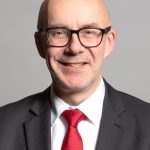
  • Ed Davey – 2022 Loyal Address Speech

    Ed Davey – 2022 Loyal Address Speech

    The speech made by Ed Davey, the Leader of the Liberal Democrats, in the House of Commons on 10 May 2022.

    It has always been a great pleasure to follow the right hon. Member for Maidenhead (Mrs May), especially since the current Prime Minister entered office. I agree with a lot of what she said, especially about the need to move ahead quickly with new legislation for people with mental health issues, and I thank her for what she said about social housing.

    I would like to pay tribute to Her Majesty the Queen. She was missed today very much; on behalf of the Liberal Democrats, I would like to send her our very best wishes. We all look forward to celebrating the incredible milestone of the Queen’s platinum jubilee next month. As an MP serving the Royal Borough of Kingston upon Thames, I know that there will be street parties galore across my constituency, demonstrating our patriotic and affectionate support for Her Majesty.

    I would also like to pay tribute to three others whose absence we feel very acutely today: James Brokenshire, David Amess and Jack Dromey, parliamentary colleagues who, sadly, have left us in the past 12 months. All three were MPs who commanded respect across the House for their seriousness of purpose and their collegiate way of working. They are all missed in every corner of this House.

    I must compliment the hon. Members for Beverley and Holderness (Graham Stuart) and for Brecon and Radnorshire (Fay Jones) on their speeches. The hon. Member for Beverley and Holderness was a well-respected Chair of the Select Committee on Education when he described the reforms of the then Education Secretary as “ill-conceived” and “incoherent”; he will be relieved to hear that his speech was neither of those things. In my opinion, he is neither an old duffer nor a young thruster but, far more valuable than either of those, a Member with an independent mind—a Whips Office dream. His mention of a royal commission to deal with political wrongdoing has given me an interesting idea that I think we should take up with Ministers.

    We are all servants of the Crown, but the hon. Member for Brecon and Radnorshire has taken that further than most, having worked for the Prince of Wales as a researcher. I am not sure whether she was consulted by His Royal Highness about today’s Gracious Speech, but her speech was an interesting insight into the complex relationships between Conservative MPs, and I thank her for it.

    This should have been a cost of living Queen’s Speech. Families and pensioners across the United Kingdom are facing the biggest squeeze on household budgets and living standards at any time during Her Majesty’s whole long reign, going back to the 1950s, yet the Government’s programme offered nothing. There was a hint in the Prime Minister’s speech—I do not know whether Members caught it. He said that he and the Chancellor would bring forward some measures in the next few days. Yet the press are reporting that the Treasury is saying that it has no idea what the Prime Minister was referring to. It would be wonderful if, at least, a Minister from the Front Bench could enlighten the House because our constituents need some help and there is none in the Queen’s Speech.

    Inflation is at 7% and rising. It is at its highest rate for 30 years and predicted to enter double digits by the end of this year. We have all heard, from many constituents, heart-rending stories about the sacrifices that they are making just to try to make ends meet because of inflation. We hear of parents going without meals to ensure that there is enough food for their children, and pensioners huddled in only one room to keep their heating bills down. Families who have already seen energy bills soar by £700 are now being told to expect another £800 rise in the autumn. People desperately need more help from the Government, but what have they received instead? Tax rises, broken election promises on pension rises, and wages rising far more slowly than inflation.

    The Government’s unfair tax rises could not possibly have come at a worse time. The increased national insurance contributions, coupled with the freezing of income tax thresholds—which they would like us to forget—are hitting the low-paid very hard. What everyone really needs is an emergency tax cut, which is why the Liberal Democrats want an immediate cut in VAT. That would help everyone: it would help small businesses and high streets and it would cut inflation. By failing to cut VAT and by choosing to make the cost of living emergency worse, the Government have confirmed people’s deep fear that they are a Government who just do not care.

    Sammy Wilson (East Antrim) (DUP)

    Given the reported increase in Treasury receipts owing to inflation and to increased VAT receipts, does the right hon. Member think it would be appropriate for the Government to take that action? Does he also recognise that the VAT reduction could not apply in Northern Ireland and people in Northern Ireland could not benefit from that because of the Northern Ireland protocol?

    Ed Davey

    I hope that the Government will find a way of working with politicians in Northern Ireland to help people who are struggling, but the right hon. Member is absolutely right about the VAT point. The Chancellor is getting £9 billion more in VAT receipts than the Budget prediction of £38 billion, yet the Government say that they cannot afford a VAT cut. That is clearly nonsense.

    At the local elections last week, people across the country rose up to say “Enough is enough.” From Stockport to Somerset, Cumbria to Cambridgeshire, Harrogate to Harpenden, voters chose Liberal Democrats to be their local champions and to fight for a fair deal for them and their communities, and for Liberal Democrats, the fair deal must start with real action to tackle soaring energy bills and rising food prices. That does not just mean a VAT cut; we want to increase and extend the warm home discount to help more than 7 million people with their heating bills, and we want to increase the winter fuel payment to help pensioners betrayed by the Conservatives when they broke their election promise on the pensions triple lock.

    Liberal Democrats want to help families and pensioners in rural areas who heat their homes with heating oil or liquefied petroleum gas and are not protected by the energy price cap. We would pay for that with a windfall tax on the super-profits of the oil and gas companies. Only last week, we learnt that BP and Shell are now raking in £1 billion in profit between them every single week from the same soaring gas and petrol prices that are making families suffer so much. Surely even this Government can see that, in the present economic crisis, we need to cut taxes for families by asking these corporate giants to pay a bit more.

    The Government are failing so many groups. For instance, there is nothing to back British farmers, who are at once some of the hardest-hit victims of the cost of living crisis and crucial to solving the problem of food inflation for the rest of us. Instead of backing our farmers and our rural communities, the Government are adding to their pain. They are selling them down the river with trade deals that allow low-welfare foreign imports to undercut responsible British farmers, and cutting the payments on which they rely, which is costing some of them up to half their entire income. Quite simply, that risks driving many small farmers out of business altogether. In the south-west alone, farmers will lose almost £1 billion by the end of 2027 as a result of these Conservative policies.

    This Government’s programme fails not only to help people with the cost of living emergency but to address the crisis in our NHS and care services. Take our ambulance services: many are in crisis, resources have been slashed and the paramedics and handlers are not being given support that they need. In the south-west, if you are a stroke victim, you now have to wait almost two hours for an ambulance. That is a terrifying statistic. The average wait for an ambulance is now almost two hours, and not just for stroke victims. In Devon, an 88-year-old man, Derek Painter, lay in “excruciating pain” after he fell on the stairs. He waited seven hours for an ambulance. That is just horrific. Thousands of people are watching loved ones in agony and distress; some have even watched loved ones die. This is heart-breaking and it cannot go on. Can Ministers—and the Prime Minister—look these families in the eye in such distressing circumstances and tell them that they have got a grip on this health crisis?

    It does not stop at the ambulance crisis. Over many years now, this Government have allowed our NHS to spiral out of control. Local health services are at breaking point following the Conservative Government’s broken promise to recruit more GPs. People are struggling to get appointments and GPs are under more pressure than ever. And then there is the ticking timebomb of NHS dentistry—or lack of it—forcing people to shell out hundreds, if not thousands, of pounds for private work because they cannot get to see an NHS dentist. There was nothing in the Queen’s Speech to tackle these health crises and nothing for the social care crisis either. Last year, the Government promised to reform social care but all we got instead was an unfair tax hike. More than 1 million people are missing out on the care they need right now, and still the Government are doing nothing to help.

    Nor are the Government doing anything to support the millions of unpaid family carers who are making big sacrifices to look after their families and loved ones. They were already facing serious financial hardship before the cost of living crisis struck; they are now being pushed to breaking point. They were again forgotten in the Queen’s Speech. I have told Ministers, including the Prime Minister, on countless occasions about the everyday struggles that carers face. The amazing Kingston Carers Network in my constituency tells me that its members, like carers across the country, are desperate for a rise in the carers allowance and for respite services to give them a break. Even the Government’s promise of a week of unpaid leave for carers—surely the very least the Government can do—was missing from the Gracious Speech. It is just not good enough. Without these unpaid carers, these family carers, our health and social care systems would crumble. The Government ignore them at their peril.

    Nor can the Government afford to ignore the growing public anger about raw sewage being dumped into our rivers and seas. I see it in the Hogsmill river in my constituency—Kingston’s blue jewel and one of only 210 chalk streams in the world. Sewage pollution is killing these rivers and chalk streams. It threatens the habitats of countless wild animals and spoils the beauty of our precious local environment. I know other Members across the country are also seeing sewage being poured into their local rivers and streams, and into the seas along our coasts, whether in Eastbourne or East Devon. Liberal Democrats have proposed tough new laws to end the dumping of raw sewage and a new sewage tax on water companies. Our constituents will not forget the Government’s failure to listen and include such measures in the Queen’s Speech today.

    Jeremy Corbyn (Islington North) (Ind)

    I am pleased that the right hon. Gentleman has raised the issue of sewage pollution in our rivers. Does he not think the solution is to take all our water companies back into public ownership and stop pouring millions of pounds of our water costs into the profits of the private sector, often in overseas locations?

    Ed Davey

    I disagree with the right hon. Gentleman. I want a sewage tax. I want punitive laws and regulations on these companies, which have been getting away with it. That is how we get much quicker progress. We cannot wait any longer; we need clean rivers and seas.

    Finally, this Queen’s Speech comes not only at a challenging time for the UK domestically, but at a dark moment for us and our allies as Putin’s brutal invasion of Ukraine continues. I am proud of how both sides of the House have stood united in our resolve to support President Zelensky and the brave Ukrainians. They are fighting for the same fundamental values that we treasure so deeply: liberty and democracy. But we need to do more and send clear, strong signals. In that regard, one thing was conspicuous by its absence from the Queen’s Speech: the decision to reverse this Government’s cut to our armed forces. The cut of 10,000 troops is a deeply misguided policy at this perilous moment. Our national security must be a priority. I urge the Government to reverse the decision immediately and demonstrate to our NATO allies Britain’s determination to stand up to aggression now and in the future.

  • Theresa May – 2022 Loyal Address Speech

    Theresa May – 2022 Loyal Address Speech

    The speech made by Theresa May, the Conservative MP for Maidenhead, in the House of Commons on 10 May 2022.

    I refer Members to my entry in the Register of Members’ Financial Interests.

    It is indeed a privilege to speak in the debate on the Humble Address in Her Majesty’s platinum jubilee year. As others have already said, everybody across the House, including me, wishes Her Majesty all the very best and thanks her for her unstinting service and exemplary devotion to duty.

    I would also like, as others have, to recognise the passing of three excellent Members of the House: Sir David Amess, James Brokenshire and Jack Dromey. They all came into the House to make a difference and improve people’s lives, and they worked unstintingly to do just that.

    I congratulate my hon. Friends the Members for Beverley and Holderness (Graham Stuart) and for Brecon and Radnorshire (Fay Jones) on their excellent speeches in proposing and seconding the Humble Address.

    I want to speak about a few of the elements of the Government’s programme that I very much welcome. The modern slavery Bill will cement the Government’s commitment to enhance the provisions on supply chains. I understand that the first element will be an extension of the requirements on supply chains to public procurement, to Government Departments. That is important. In 2019, as Prime Minister, I committed the Government to use our power of public procurement to ensure that we were cleaning up supply chains and cracking down on modern slavery. I genuinely believe that dealing with supply chains is one of the key ways we can ensure that we eradicate modern slavery. Business has a huge role to play here and so do Government. Section 54 of the Modern Slavery Act 2015 was important, but of course it does not actually require action other than putting something in reporting accounts, which might be to say that nothing has been done about modern slavery. It is therefore excellent that the Government are now moving this forward and will enhance the legislation. I think it could be transformative.

    I welcome the social housing regulation Bill. One of the clear messages that came from residents and survivors of the terrible tragedy that was the fire at Grenfell Tower was the concern that for not just months but years the voice of residents in social housing had not been heard and had not been listened to by those in authority who had a responsibility to respond. That, we discovered from consultation across the country, was not unique to Grenfell Tower. Sadly, there were too many occasions where those responsible for social housing were simply not listening to the points their tenants were raising. It is important that we enhance the ability of tenants to have raise their voices and enhance the regulation regime. We must also ensure we do something that is so important: raise the value of social housing for people, so that stigma is not attached to social housing and being in social housing. We are all one community. The type of housing we live in should be irrelevant to how we are treated.

    The renters reform Bill is also important. I note that the briefing says it will provide 4.4 million households with more secure and higher quality homes. Renting is the only option for more and more people. For some it is the flexible option that they actively want, but it is not easy if people then live with the feeling that they could be evicted through no fault of their own. Dealing with no-fault evictions is a commitment that has been made previously—I seem to remember my Government made it—and I sincerely hope it will now be enacted through the Bill.

    On housing, it is important for the Government to recognise the many concerns that were expressed by the public, and by Members across the House, about elements of the Government’s planning White Paper. I understand that the Secretary of State for Levelling Up, Housing and Communities and Minister for Intergovernmental Relations, my right hon. Friend the Member for Surrey Heath (Michael Gove), has heard those messages and is looking carefully at what should be in the planning Bill. We need more homes and we need to ensure that they are in the right place. We also need to ensure that their designs are in keeping with the community and the neighbourhood in which they are set.

    I believe that the Housing Secretary is interested in street votes, so that if somebody in a street wants to extend their house by two floors there could be a vote in the street and the street would decide whether that was a sensible thing to do. I simply say to my right hon. Friend the Prime Minister and others on the Treasury Front Bench that the Government need to be very careful about the potential unintended consequences of such a move. I can well imagine a situation in which somebody persuades their neighbours in a street to agree to the sort of development that might enhance the value of their houses but which actually has a negative impact on the wider community and wider neighbourhood.

    On planning—this ties in with issues relating to the energy Bill—I urge the Government to take the opportunity to move ahead on building regulations to ensure that we embrace now the standards that will be required for us to reach net zero. New homes are still being built with gas boilers. They will be retrofitted in a few years’ time, so would it not make more sense for the regulations to ensure we make the moves now for net zero? However, I welcome the energy Bill. There is much in there that will help us to move to net zero, and that is excellent.

    I also welcome the national security Bill, which I expect will enhance our ability to deal with threats from hostile states. That is very important—it is increasingly necessary—and it is very timely.

    On Northern Ireland, there is reference in the Queen’s Speech to the legacy Bill. It is important, as I have said in the House, that we reach a point where there is the ability to try to draw a line under the past, but that must be done sensitively, in recognition of the sensitivities of all communities.

    Jim Shannon (Strangford) (DUP)

    Will the right hon. Lady give way?

    Mrs May

    I will.

    Mr Speaker

    I call Jim Shannon—welcome back.

    Jim Shannon

    I think an explanation is needed: I was at the Nigerian embassy getting my pass so that I can go to Nigeria at the end of May.

    It is really important for my constituents, for those who have lost loved ones—I could name the Ballydugan Four, Stuart Montgomery and my cousin—that people were murdered by the IRA but nobody was ever made accountable. I want justice; my relatives want justice; my constituents want justice. Does the right hon. Lady agree?

    Mrs May

    We welcome the hon. Gentleman back to his place. That is why it is important that these issues are addressed sensitively. They have been looked at consistently by some of my colleagues in relation to veterans who may find themselves being caught before justice, but it is important that people who lost loved ones during the troubles—the majority of those losses will have been at the hands of terrorists—can feel an understanding of, and are able to know, what happened. That is one of the things driving the Government’s intentions in relation to that Bill. Such people will want to feel some sense of closure, which they have not been able to have for so many years.

    I note that there was no reference to what has been referred to in the papers as a Bill in relation to—I am going to use this phrase—the Northern Ireland protocol and possibly to varying the terms of the treaty unilaterally. I say to my right hon. Friend the Prime Minister—he will not be surprised to hear this—that I do not feel that that would be the right move for the Government. The Government need to consider not just some immediate issues, but the wider sense of what such a move would say about the United Kingdom and its willingness to abide by treaties that it has signed.

    Sir Jeffrey M. Donaldson (Lagan Valley) (DUP)

    I say to the former Prime Minister, with the great respect in which I hold her, that surely what is more important here is the Good Friday/Belfast agreement and the need to protect the political institutions. I stood in the election last week, and not a single Unionist Member who supports the protocol was returned to the Assembly. There is no consensus for that. It needs to be dealt with: it is harming our economy, driving up the cost of living and undermining political stability in Northern Ireland, and it threatens the Good Friday agreement.

    Mrs May

    I put a deal before the House that met the requirements of the Good Friday agreement and enabled us not to have a border down the Irish sea or between Northern Ireland and the Republic of Ireland. Sadly, the Democratic Unionist party and others across the House chose to reject that, but it was an opportunity to have what the right hon. Gentleman wanted.

    I say to my right hon. Friend the Prime Minister that I am deeply disappointed that we see only draft legislation on a new mental health Act. The process for a new mental health Act was started in 2017. I said in the previous Queen’s Speech debate that I feared that we might not see a new Act until 2023. I now fear that we might not see a new Act until 2024, and given the proximity of a potential general election, that we may not see a new Act in this Parliament at all. Those suffering from mental health issues deserve better from the Government, and I encourage action on introducing a new mental health Act.

    I am also disappointed that we do not have an employment Bill, particularly to put through the policy of ensuring that tips that are left for waiters actually get paid to those individuals. It was a popular policy and I hope that the Government will think again about putting that through.

    The final issue about which I am disappointed is that we do not see a commitment to an independent public advocate, which was a 2017 manifesto commitment. I recognise that my right hon. Friend did not put it in the 2019 manifesto, but it was one of the key recommendations in the report that I commissioned from Bishop James Jones. Thirty-three years on from the Hillsborough disaster, it is time that we took action to provide much greater support for families who lose loved ones in public disasters—and there have been other disasters since Hillsborough. It would be a very fitting legacy for those who, sadly, have lost their lives at Hillsborough and in other disasters for that support to be provided through an independent public advocate. May I say to those on the Front Bench that the Government do not need to do any work, because the hon. Member for Garston and Halewood (Maria Eagle) has a Bill that is written, which I am sure she aims to reintroduce to this House and which could be supported?

    Underlying the Government’s programme is the desire to level up the economy and encourage high-wage, high-skill jobs. Having a country that works for everyone is about levelling up opportunity across the country, but the economic background against which the Government are working does not make delivering those aspirations easy. The cost of living crisis is making life difficult for many across the country; we have rising inflation; we need to restore public finances; the number of people who are economically inactive in this country is rising; we have seen a hit to sterling; and forecast growth is well below trend. All those things make for a very challenging environment.

    At a time like this, the Conservative principles of sound public finances and competent economic management are needed more than ever. As we level up across the country, we should ensure that we are not a Government who work just for certain parts of the country, but a Government who truly work for everyone.

  • Lindsay Hoyle – 2022 Statement at Beginning of New Parliamentary Session

    Lindsay Hoyle – 2022 Statement at Beginning of New Parliamentary Session

    The statement made by Lindsay Hoyle, the Speaker of the House of Commons, in the House on 10 May 2022.

    The House has directed the Speaker to make a statement at the beginning of each Session about the duties and responsibilities of hon. Members. I begin by reminding hon. Members of their duty to observe the code of conduct agreed by the House and to behave with civility and fairness in all their dealings. The behaviour code applies to Members as it applies to others who visit or work in Parliament, and it provides clear guidance. Unacceptable behaviour will be dealt with seriously, independently and with effective sanctions.

    The House asserts its privilege of freedom of speech. That privilege is enjoyed by Members of Parliament only in their work in this House; as private individuals, we are equal under the law with those whom we represent. It is there to ensure that our constituents can be represented by us without fear or favour. It is an obligation upon us all to exercise that privilege responsibly.

    The Speaker does not have the power to police the accuracy of Members’ contributions. Therefore, it is incumbent on Members to be accurate in what they say in this House, but if a Member is inaccurate by mistake, they should correct that mistake as soon as possible. Members must be mindful of the impact of what they say, not only on other Members but on others who follow our proceedings, and Members should be heard courteously, whatever their views.

    In this place we are honourable Members and the language we use about each other should reflect that. If a Member falls short of the standards expected of us all, there are ways of dealing with that, but not by accusations made as sideswipes during questions or debates. If we fail to treat each other with respect in debate, that diminishes our work, but it also risks raising the temperature of discussions outside this place—particularly on social media—which already too often descend into online abuse against hon. Members.

    I also wish to give some advice about seeking to speak in the Chamber. The Deputy Speakers and I take into account a number of factors when determining who to call during business that is not balloted, and one factor we consider carefully is how often a Member speaks —Jim Shannon is not with us. [Laughter.] In other words, if you have spoken much more than a colleague then, other things being equal, that colleague is more likely to be called—or certainly more likely to be called earlier—in the next debate for which you both apply.

    I know it can be frustrating not to be called in a debate or to be called very late; prioritising the debates, question times, urgent questions and statements in which you seek to participate is one way of trying to avoid that happening. Now that we have started a new Session, everybody’s scores start, after the reset button, at zero. I should make it clear that different principles apply to Front Benchers from the three largest parties, who are nominated to speak on behalf of their parties. Staff in my office are happy to offer further advice.

    Finally, I want all Members and everyone in the parliamentary community to be able to go about their work safely, both online and here in Westminster. The security of this building and those who work here depends on us all. We have a duty to be vigilant and to assist those whose job it is to maintain this place as a safe place to work. Before moving to the first business of the new Session, I would like to express my very best wishes to all hon. Members and to all those who work in this House.

  • Queen Elizabeth II – 2022 Queen’s Speech

    Queen Elizabeth II – 2022 Queen’s Speech

    The speech made by Prince Charles, on behalf of Queen Elizabeth II, in the House of Lords on 10 May 2022.

    My Lords and members of the House of Commons.

    My Government’s priority is to grow and strengthen the economy and help ease the cost of living for families. My Government will level up opportunity in all parts of the country and support more people into work. My Ministers will continue to support the police to make the streets safer, and fund the National Health Service to reduce the COVID backlogs. In these challenging times, my Government will play a leading role in defending democracy and freedom across the world, including continuing to support the people of Ukraine.

    My Government will drive economic growth to improve living standards and fund sustainable investment in public services. This will be underpinned by a responsible approach to the public finances, reducing debt while reforming and cutting taxes. My Ministers will support the Bank of England to return inflation to its target.

    A Bill will be brought forward to drive local growth, empowering local leaders to regenerate their areas, and ensuring everyone can share in the United Kingdom’s success. The planning system will be reformed to give residents more involvement in local development [Levelling Up and Regeneration Bill].

    My Government will improve transport across the United Kingdom, delivering safer, cleaner services and enabling more innovations. Legislation will be introduced to modernise rail services and improve reliability for passengers [Transport Bill].

    My Ministers will bring forward an Energy Bill to deliver the transition to cheaper, cleaner, and more secure energy. This will build on the success of the COP26 Summit in Glasgow last year [Energy Security Bill]. Draft legislation to promote competition, strengthen consumer rights and protect households and businesses will be published. Measures will also be published to create new competition rules for digital markets and the largest digital firms [Draft Digital Markets, Competition and Consumer Bill].

    My Government will establish the UK Infrastructure Bank in legislation, with objectives to support economic growth and the delivery of net zero [UK Infrastructure Bank Bill].

    Reforms to education will help every child fulfil their potential wherever they live, raising standards and improving the quality of schools and higher education [Schools Bill, Higher Education Bill]. My Ministers will publish draft legislation to reform the Mental Health Act [Draft Mental Health Act Reform Bill].

    My Government will continue to seize the opportunities of the United Kingdom’s departure from the European Union, to support economic growth. Regulations on businesses will be repealed and reformed. A bill will enable law inherited from the European Union to be more easily amended [Brexit Freedoms Bill]. Public sector procurement will be simplified to provide new opportunities for small businesses [Procurement Bill].

    New legislation will strengthen the United Kingdom’s financial services industry, ensuring that it continues to act in the interest of all people and communities [Financial Services and Markets Bill]. The United Kingdom’s data protection regime will be reformed [Data Reform Bill].

    My Government will continue to champion international trade, delivering jobs across the country and growing the economy. Legislation will be introduced to enable the implementation of the United Kingdom’s first new Free Trade Agreements since leaving the European Union [Trade (Australia and New Zealand) Bill].

    My Ministers will encourage agricultural and scientific innovation at home. Legislation will unlock the potential of new technologies to promote sustainable and efficient farming and food production [Genetic Technology (Precision Breeding) Bill].

    My Government will protect the integrity of the United Kingdom’s borders and ensure the safety of its people. My Ministers will take action to prevent dangerous and illegal Channel crossings and tackle the criminal gangs who profit from facilitating them. Legislation will be introduced to ensure the police have the powers to make the streets safer [Public Order Bill].

    A bill will be brought forward to further strengthen powers to tackle illicit finance, reduce economic crime and help businesses grow [Economic Crime and Corporate Transparency Bill]. Measures will be introduced to support the security services and help them protect the United Kingdom [National Security Bill].

    My Government will lead the way in championing security around the world. It will continue to invest in our gallant Armed Forces. My Ministers will work closely with international partners to maintain a united NATO and address the most pressing global security challenges.

    The continued success and integrity of the whole of the United Kingdom is of paramount importance to my Government, including the internal economic bonds between all of its parts. My Government will prioritise support for the Belfast (Good Friday) Agreement and its institutions, including through legislation to address the legacy of the past [Northern Ireland Troubles (Legacy and Reconciliation) Bill].

    My Government will ensure the constitution is defended. My Ministers will restore the balance of power between the legislature and the courts by introducing a Bill of Rights [Bill of Rights]. Legislation will prevent public bodies engaging in boycotts that undermine community cohesion [Boycotts, Divestment and Sanctions Bill].

    My Government will introduce legislation to improve the regulation of social housing to strengthen the rights of tenants and ensure better quality, safer homes [Social Housing Regulation Bill]. Legislation will also be introduced to ban conversion therapy [Conversion Therapy Bill]. Proposals will be published to establish an independent regulator of English football.

    In this year of my Platinum Jubilee, I look forward to the celebrations taking place across the United Kingdom and throughout the Commonwealth, and to the Commonwealth Games in Birmingham this summer.

    MEMBERS OF THE HOUSE OF COMMONS

    Estimates for the public services will be laid before you.

    MY LORDS AND MEMBERS OF THE HOUSE OF COMMONS

    Other measures will be laid before you.

    I pray that the blessing of Almighty God may rest upon your counsels.

  • Neil Parish – 2022 Personal Statement on Allegations of Watching Pornography

    Neil Parish – 2022 Personal Statement on Allegations of Watching Pornography

    The statement made by Neil Parish, the Conservative MP for Tiverton and Honiton, on 29 April 2022.

    Following recent allegations regarding an MP’s use of their mobile phone in Parliament, I have referred myself to the Parliamentary Commissioner for Standards in the House of Commons.

    I will be cooperating fully with any investigation, and whilst it is ongoing I will continue to perform my duties as MP for Tiverton and Honiton.

    I will not be making further comments at this stage.

  • Queen Elizabeth II – 2022 Queen’s Speech

    Queen Elizabeth II – 2022 Queen’s Speech

    The speech made by HM Queen Elizabeth II in the House of Lords on 28 April 2022.

    My Lords and Members of the House of Commons

    My Government has acted to address the unprecedented issues the United Kingdom has faced, from the global pandemic to the Russian invasion of Ukraine. As the nation has recovered from COVID-19, my Ministers have taken action to build a strong and prosperous United Kingdom. My Government has continued to address the impact of the pandemic on business and the NHS and to level up opportunities, jobs and growth across the country. My Ministers also worked with international partners to protect and promote freedom and democracy across the globe.

    My Ministers continued to implement the Integrated Review of Security, Defence, Development and Foreign Policy. My Government invested further in our gallant Armed Forces, spending more money last year than in any of the past thirty years. It has also worked with international partners to support the people of Ukraine and respond to the crisis. Legislation was passed to tackle economic crime and ensure transparency in property ownership. My Ministers also ensured that punitive sanctions were imposed on individuals and organisations undermining the territorial integrity of Ukraine.

    My Government has taken forward a programme of modernisation for the Armed Forces and reinforced the United Kingdom’s commitment to NATO. My Ministers honoured and strengthened the Armed Forces Covenant, placing it in law. Measures were introduced to provide relief from National Insurance contributions for employers of veterans.

    My Government took action to protect the health of the nation. The vaccination programme delivered over 140 million doses and additional funding was provided to support the NHS. Legislation was passed to empower the NHS to innovate and reduce bureaucracy. As a result, patients will receive more tailored care, closer to home. My Ministers set out proposals to secure the long term funding of adult social care.

    Building on the success of the vaccination programme and new ways of funding research and innovation, my Ministers oversaw the fastest ever increase in public funding for research and development. This will support pioneering new treatments against diseases such as cancer and secure jobs and investment across the country.

    My Government introduced measures to increase the safety and security of its citizens.

    Legislation strengthened police powers to tackle crime and disorder, increased sentences for the most serious and violent offenders and ensured the timely administration of justice. Measures were passed to establish an immigration system that strengthens the United Kingdom’s borders and deters criminals who facilitate dangerous and illegal journeys.

    My Government introduced legislation that will ensure internet safety for all, especially for children, while harnessing the benefits of a free, open and secure internet. Legislation was passed to better protect digital infrastructure.

    My Government invested in new green industries to create jobs, while protecting the environment. The United Kingdom hosted the COP26 Summit in Glasgow. Legislation was passed that will set binding environmental targets.

    My Government strengthened economic ties across the union. My Ministers invested in improvements to national infrastructure and brought forward measures to strengthen connectivity by rail. Measures to extend mobile coverage and gigabit capable broadband were introduced.

    Legislation was passed to encourage investment and competition across the United Kingdom and drive economic growth. Legislation established a new approach to the recognition of professional qualifications, supporting international trade. My Government has created new freeports, which will drive regeneration by bringing investment, trade and jobs. My Ministers delivered legislation to increase the National Insurance starting thresholds, benefitting almost thirty million people.

    My Government took action to address lost learning during the pandemic and ensure every child has a high quality education. Legislation was passed to support a lifetime skills guarantee to enable flexible access to high quality education and training throughout people’s lives.

    My Government helped more people to achieve home ownership. The practice of charging ground rents was ended for most new leasehold properties. My Ministers delivered legislation to ensure that the tragedies of the past are never repeated by establishing in law a new Building Safety Regulator.

    My Government reduced bureaucracy for the voluntary sector, enabling charities to focus on their core work. Legislation was passed to ensure that more dormant assets can be released, so funds can help those in need.

    My Government strengthened and renewed democracy and the constitution. Legislation was passed to ensure the integrity of elections and restore the balance of power between the executive, legislature and the courts. Measures were brought forward to protect the freedom of speech in higher education. My Ministers promoted the strength and integrity of the union. Laws were passed to strengthen the devolved Government in Northern Ireland.

    The United Kingdom hosted the G7 Summit and supported the global effort to secure a robust economic recovery from the pandemic. My Government has committed £1.4 billion of aid to the international effort to tackle the pandemic. My Ministers deepened trade ties around the world, beginning negotiations on trade deals with India and Canada, and negotiations to accede to the Comprehensive and Progressive Agreement for Trans-Pacific Partnership.

    My Government continued to provide aid where it had the greatest impact on alleviating human suffering, promoting global prosperity, and upholding human rights and democracy. While holding the Presidency of the G7, my Ministers led a global effort to get forty million more girls across the world into school and twenty million more girls reading by 2026. The United Kingdom has supported countries globally to provide clean and reliable infrastructure through British Investment Partnerships, helping countries to build back after the challenges in recent years.

    Members of the House of Commons

    I thank you for the provisions which you have made for the work and dignity of the Crown and for the public services.

    My Lords and Members of the House of Commons

    I pray that the blessing of Almighty God may rest upon your counsels.

  • Lindsay Hoyle – 2022 Statement on Government Leaking Football Governance News to Media

    Lindsay Hoyle – 2022 Statement on Government Leaking Football Governance News to Media

    The statement made by Lindsay Hoyle, the Speaker of the House of Commons, in the House on 25 April 2022.

    Before I call the Minister to make a statement on the Government’s response to the fan-led review of football governance, I must put on record my disappointment that the Government have apparently already trailed their response extensively to the media. It seems to me that we have a courteous Minister, but somehow Downing Street seems to ignore him and decides to put everything that the House should hear first out to the media. It is not satisfactory. It is discourteous, not only to the House but to the hon. Member for Chatham and Aylesford (Tracey Crouch), who has put in so much work in this area. It is very disappointing that anybody could believe that she should be cut out. When she catches my eye, she will be given more time to put her case about all the hard work that she has done.

    This might just be a lesson for the Government to stop being discourteous. Think about the people who get elected—those on both sides of the House. I do not blame the Minister, as I know that Downing Street loves getting these messages out on a Sunday night, but why has it not recognised that even the Prime Minister is a Member of this House? It might be good for us all to hear things first. As I say, the hon. Member for Chatham and Aylesford would not normally be given extra time, but I reassure her and the House that more time will be given to her.

  • Lindsay Hoyle – 2022 Statement on Misogynistic Allegations in the Mail on Sunday

    Lindsay Hoyle – 2022 Statement on Misogynistic Allegations in the Mail on Sunday

    The statement made by Lindsay Hoyle, the Speaker of the House of Commons, in the House on 25 April 2022.

    Before we start today’s business, I want to say something about the article in The Mail on Sunday yesterday about the right hon. Member for Ashton-under-Lyne (Angela Rayner). I said to the House last week, in response to a point of order about a different article, that I took the issue of media freedom very seriously. It is one of the building blocks of our democracy. However, I share the view expressed by a wide range of Members—including, I believe, the Prime Minister—that yesterday’s article, which reported unsubstantiated claims, was misogynistic and offensive. That is what we believe.

    I express my sympathy to the right hon. Member for Ashton-under-Lyne for being subjected to this type of comment, which, in being demeaning and offensive to women in Parliament, can only deter women who might be considering standing for election, to the detriment of us all. That is why I am arranging a meeting with the chair of the press lobby and the editor of The Mail on Sunday to discuss this issue affecting our parliamentary community. I am also arranging a separate meeting—I believe we now have a time this evening—with the right hon. Member for Ashton-under-Lyne.

  • Dave Doogan – 2022 Speech on Referring Boris Johnson to the Committee of Privileges

    Dave Doogan – 2022 Speech on Referring Boris Johnson to the Committee of Privileges

    The speech made by Dave Doogan, the SNP MP for Angus, in the House of Commons on 21 April 2022.

    I say at the outset that apologies are one thing, but apologies that are made in the wholesale absence of any evidence of repentance are not worth a button. I am pleased to stand and speak for the many Angus constituents—almost 100 now—who have written to articulate their outrage at this debacle of accountability at the feet of this Prime Minister. He was always a questionable choice to lead the Conservative party because he would inevitably have become—indeed, he immediately became—Prime Minister under the politics of that time. He was the indiscreet, verbose showman that the Conservatives seemingly required to unlock the Brexit impasse in this place. It was always going to be a high-risk strategy, and the chickens have now come home to roost. If the Tories claim to have got Brexit done—which in itself is a questionable assertion that rests uncomfortably with the truth—why are they so reluctant to dispose of their one-trick-pony leader?

    I say this in all candour: with this train crash of a Prime Minister, it was always going to be a question of when, not if. If the reputational capital and parliamentary respect that the Prime Minister is furiously feeding off to keep himself on political life support is a function of a zero-sum game, that which he is gorging upon is coming at a direct and equal cost to all Conservative Members, because they have the ability to stand up for what is right and remove him. More seriously, it is also coming at a cost to the public’s faith in political leadership, such as it is, except, I am pleased to say, in Scotland, where Scottish Tory voters—including in my Angus constituency—needed to take only one look at this Prime Minister for Tory seats in Scotland to fall by 55% at the 2019 election. Only two Scottish Tory MPs were present for this debate today. They are not in their place now, and the Scottish Tory leader never showed up at all.

    The Prime Minister’s vacuous claim that he must stay in office to help with the cost of living crisis and the crisis in Ukraine is a grotesque contortion of reality and history. In reality, the UK Government under this Prime Minister are adding to the cost of living crisis with tax increases heaped upon soaring fuel and food prices. In France they are in the final throes of a presidential election while supporting Ukraine. Politics is not displaced by conflict; quite the opposite, in fact. In historical terms, the UK and other nations wasted no time in changing leaders ahead of or during two world wars, so this charade is little more than a disgraced Prime Minister desperately seeking to attach himself to a convenient cause to distract from his now trademark injudicious character.

    I know that Conservative Members get this. We heard earlier from the hon. Member for Hazel Grove (Mr Wragg), who is no longer in his place. His excellent speech highlighted the risks to the parliamentary and democratic reputation if the Prime Minister does not take responsibility. Similarly, the right hon. Member for Forest of Dean (Mr Harper) made his position on the Prime Minister clear earlier this week. The public have not forgotten the nature and letter of the rules or the immeasurable constraints on their lives and freedoms during lockdown. As other hon. and right hon. Members have said, it is inconceivable that there was any grey area over these parties and bring-your-own-booze-ups.

    The Prime Minister’s refusal to go is beyond acceptable. These views are shared by constituents up and down these isles, not just in Angus. My constituent Nicola Livingstone has pointed out:

    “The Prime Minister’s refusal to go and the Conservative party’s acquiescence undermine the rule of law and any trust in political institutions. The Conservative party’s tawdry self-preservation is an insult to the nation and to the behaviours we expect from our leaders. It will be profoundly damaging to our faith in Government at a time when it is already dangerously low.”

    I deeply regret that the Government have weakly withdrawn their amendment. I look forward to ensuring that we can put on record our position on this matter in the voting Lobby today.

  • Tommy Sheppard – 2022 Speech on Referring Boris Johnson to the Committee of Privileges

    Tommy Sheppard – 2022 Speech on Referring Boris Johnson to the Committee of Privileges

    The speech made by Tommy Sheppard, the SNP MP for Edinburgh East, in the House of Commons on 21 April 2022.

    We are all human. We are all fallible. We all make mistakes, but how we deal with those mistakes is a measure of our integrity and character. The British people have overwhelmingly judged the Prime Minister to have dealt with his mistakes disastrously. They overwhelmingly believe him to be a liar, and they have lost trust and confidence in him. That is a problem not just for this Government but for the British political system, and I caution some Conservative colleagues to be less cavalier in trying to dismiss those public concerns.

    The narrative coming from the Government seems to be that these breaches were just a consequence of living with the regulations. They were bound to happen, part of normal life, and they were happening in all sorts of places. “They have paid the fine; let’s move on—nothing to see here.” That will not wash. First, the overwhelming majority of people in this country did not breach the rules. They accepted the mandation put on their behaviour, often at great cost and personal consequence. I have hundreds of emails from constituents; I wanted to read some out, but there is not time. People were unable to be present when their children were born or when their parents were buried. They know, and are angry about, what was happening in No. 10 Downing Street while that was being done to them.

    The other reason why that will not wash is that many people have paid for their actions with much greater consequences than this Prime Minister. Many people have written to me asking why he has only been given a 50 quid fine while others are being fined up to £10,000 for breaches of the rules. Many in public office have already lost their jobs because of their transgressions, and they are right to sit back and wonder why the holder of this one office should be immune from that consequence.

    These people are suggesting that they did not really know that the rules were being broken at the time. That really does beggar belief. We heard from the hon. Member for Wycombe (Mr Baker) earlier. We know that he and his colleagues within the parliamentary Conservative party were waging a fierce and vicious argument about the consequences of these restrictions. The idea that people sitting in Government offices drinking and socialising after hours did not think that they were in breach of the rules that they themselves were making is risible and we should dismiss it.

    I think there is a simpler explanation for all of this. I genuinely believe that we have a Prime Minister whose conceit of himself is so great, and whose sense of entitlement so profound, that he genuinely did not think that the rules applied to him. That is why, when exposed—when found out at the end of last year—he did not come to the House and offer contrition; he did not come and say sorry. He came and he dissembled, and he misled, and he tried to do everything to cover up the breaches that had happened. That, to my mind, more than the attendance at a party, is what he stands charged with today. It is not the fact; it is what he tried to do to conceal his actions. That, in my view, is unforgivable.

    Janet Daby (Lewisham East) (Lab)

    The hon. Member is making an excellent speech, and I agree with everything he is saying. More than 170,000 people have died from covid in the United Kingdom. That means that it has affected so many friends and so many families, and there has been a devastating sense of remorse for people’s loss. If the Prime Minister were really showing his own great remorse for breaking rules that he had set, surely his actions would speak louder than his words and he would resign. Does the hon. Member agree?

    Tommy Sheppard

    I could not agree more. I think that the Prime Minister would have resigned if he had any integrity. I consider it remarkable that rather than his giving an apology and any demonstration of contrition when these events came to light, it was not until he was dragged kicking and screaming into the light of truth by the criminal justice system and the forces of law enforcement that we actually received the apology that we heard this week, and that is not enough.

    I want to spend one minute talking about the situation in Scotland. The hon. Member for Moray (Douglas Ross) leads the Scottish Conservatives. At the start of this year in the Scottish Parliament, he and his colleagues took, I believe, the right decision—they called on the Prime Minister to go—but somehow, miraculously, they have now been whipped into line by Central Office and changed their minds on that question. In commenting on that, I can do no better than quote Professor Adam Tomkins, a very senior Conservative and, until recently, a Conservative Member of the Scottish Parliament. He says that the hon. Member and his colleagues

    “have now reduced themselves—and made their former position of principle look not only empty but risible—by insisting that the prime minister is now somehow fit for office and that being fined by the police makes no difference… The Scottish Conservatives are in terminal decline, again. And, this time, it is their own fault.”

    That comes from within the Conservative party in Scotland itself.

    I know that many people throughout Britain will look with horror at the way in which this Government have traduced public service and denigrated many of the democratic institutions in their country, but people in Scotland look at it too and see it as further evidence of a British state that is in decline and does not represent their interests. They are increasingly attracted by the opportunity to create a new country, an independent country with a different constitution.

    Let me end by saying that I will vote for the motion, and I caution Conservative Members to do so as well. They are right—there is no room for personal attacks in this place or in politics—but let them understand this: actions do have consequences, and what goes around will come around. If the parliamentary Conservative party tries to sweep this under the carpet and tries to acquiesce in the actions of this Prime Minister any further, it will pay a very heavy political price.