Category: Parliament

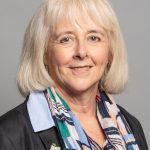
  • Debbie Wilcox – 2022 Tribute to HM Queen Elizabeth II (Baroness Wilcox of Newport)

    Debbie Wilcox – 2022 Tribute to HM Queen Elizabeth II (Baroness Wilcox of Newport)

    The tribute made by Debbie Wilcox, Baroness Wilcox of Newport, in the House of Lords on 10 September 2022.

    During her long reign, Her late Majesty demonstrated hard work, tireless commitment, loyalty, dignity and respect for duty and became the longest-serving monarch in British history. The changes that she saw over that time are quite astounding. In my part of the United Kingdom—Wales—the heavy industry that I grew up with in the mining areas has given way to financial and other services. Indeed, the United Kingdom itself is very different. Power is dispersed to other Parliaments in the four nations of the UK. Movement to and from the Commonwealth, the European Union and beyond has fashioned a more diverse and multicultural people in our society. Throughout her long life, the late Queen was an example of the importance of public duty. She clearly valued community, public service and loyalty to others.

    I echo the comments of the First Minister of Wales, who said yesterday:

    “It is with great sadness that”

    people in Wales mourn

    “the death of Her Majesty Queen Elizabeth II”

    and

    “her long and exceptional life, as our longest reigning monarch”.

    Perhaps the most significant and long-lasting connection between Wales and the late Queen grew out of her empathy following the Aberfan disaster, as noted by my noble friends. That Friday in October 1966, as a young schoolgirl in Pontygwaith Primary School in the Rhondda, I stood in the playground after lunchtime and, along with my friends and under the instruction of our headmaster Mr Lewis, I closed my eyes, put my hands together and prayed for the children of Aberfan. I had never heard of the place before that day, as it was several valleys to the west, but I have never forgotten it since. The late Queen continued to make visits to the village over the decades and, indeed, visited it more than any other member of the Royal Family.

    The first time I saw her in person was at Buckingham Palace in the summer of 2009. I was struck by her luminescence; she simply shone. The next time I saw her in person was in your Lordships’ House in December 2019 when attending my first State Opening, and the moment of seeing her again in person was extraordinary, especially as I was now one of her trusty and beloved servants, a phrase and understanding that will live with me for the rest of my life.

    Yesterday was the day His Majesty conferred the title of Prince of Wales—Tywysog Cymru—on his eldest son. God bless the Prince of Wales. Yesterday evening, I joined the Bishop of Monmouth and the leader of Newport City Council at the city’s St Woolos’ Cathedral to take part in a service of thanksgiving for the life of our late Queen. It was a moment of extreme poignancy to sing for the first time in public—and we are good singers in Wales—“God save the King”, and I am glad that it took place in my home city and the place from where I proudly take my title. Tomorrow, I shall join the leader of the council and others to take part in the official proclamation ceremony at Newport Civic Centre and will then return to London on Monday to hear the King’s Address to both Houses of Parliament.

    On the death of his father, Wales’s finest poet, Dylan Thomas, wrote:

    “Grave men, near death, who see with blinding sight

    Blind eyes could blaze like meteors and be gay,

    Rage, rage against the dying of the light.”

    God bless you, ma’am, and may you rest in peace. Er côf annwyl. God save the King.

  • Dominic Hubbard – 2022 Tribute to HM Queen Elizabeth II (6th Baron Addington)

    Dominic Hubbard – 2022 Tribute to HM Queen Elizabeth II (6th Baron Addington)

    The tribute made by Dominic Hubbard, 6th Baron Addington, in the House of Lords on 10 September 2022.

    Thinking about the reign of Her Majesty Queen Elizabeth II, I have been struck by several factors. First, like most people alive today, I have only ever known a Queen. When you say, “God save the King”, it seems like something from a historical play, and we will have a great deal of getting used to it. This has become apparent, listening to these tributes, by the number of noble Lords who have made the mistake—I will probably make it myself—of referring to the Queen in the present tense rather than the past. There is a very strong feeling of a permanency that has been removed.

    Secondly, the greatest achievement of Her Majesty Queen Elizabeth’s reign is probably soft power. My noble friend Lord Alderdice has already mentioned her tremendous achievement in Ireland by making the settlement work there. I hope it is also worthwhile for me to join those who have commented on the Commonwealth. When an empire becomes a commonwealth, it is a considerable achievement. Empires do not usually come about because a nation has been invited to rule people; there are usually marching feet and weapons involved. The fact that we have transformed the Empire into the Commonwealth, and that it has grown and prospered, is a magnificent achievement. The fact that it was achieved by people who were not involved in that Empire is remarkable. This was all done under the leadership of Her late Majesty Queen Elizabeth II. It will probably be regarded as her greatest achievement: the United Kingdom’s soft power, its projection and its cultural values have become things that we will all remember.

    There is also the personal touch. As has already been mentioned, the Queen was “the Queen”; there was no other worldwide. The best example of that that I can find is from many years ago. I went through a friend’s record collection and found a BB King album on which he talks about meeting the Queen and giving her advice about what you do when you have too many parties to go to. I feel that the advice could probably have been going the other way. Nevertheless, everybody knew who the Queen was, and His Majesty King Charles III has a great opportunity and burden to carry on that work. I wish him every success.

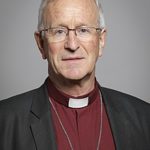
  • Nick Baines – 2022 Tribute to HM Queen Elizabeth II (Lord Bishop of Leeds)

    Nick Baines – 2022 Tribute to HM Queen Elizabeth II (Lord Bishop of Leeds)

    The tribute made by Nick Baines, the Lord Bishop of Leeds, in the House of Lords on 10 September 2022.

    My Lords, when training to be a professional linguist, I was trained to drill down to as few words as possible, so forgive my lack of eloquence now. When I think of Her late Majesty the Queen, I drill down to one word: grace. She exercised grace in her responsibilities at every level, and it was rooted in her avowed and admitted need of the grace of God; it was where her discipline of accountability came from.

    It is only by sitting here when the Queen was delivering her gracious Speech one year that I realised that we inhabit the constitution here. We do our business, as the judiciary, the Executive and the legislature, in the name of Her Majesty, but she reads the gracious Speech in the name of God as she looks up and sees the barons of the Magna Carta around this Chamber. It is that accountability that must lie at the heart of her legacy, if our words are not to be merely sentimental, nostalgic or empty. I trust that, in the reign of King Charles, this accountability, rooted in his already stated need of the grace of God, will characterise our common life. Long live the King.

  • David Alton – 2022 Tribute to HM Queen Elizabeth II (Baron Alton of Liverpool)

    David Alton – 2022 Tribute to HM Queen Elizabeth II (Baron Alton of Liverpool)

    The tribute made by David Alton, Baron Alton of Liverpool, in the House of Lords on 10 September 2022.

    My Lords, in 1947, the young Princess Elizabeth, celebrating her 21st birthday and on a tour of South Africa, made a speech which would give definition to her 70 years as monarch, setting out her belief that she was called to service. In 2007, there were echoes of that speech during a Roscoe Lecture which I had invited Prince Charles, now King Charles III, to deliver in Liverpool and at which we presented him with an honorary fellowship of Liverpool John Moore’s University. His reference in his lecture to TS Eliot’s “cycles of heaven” seems particularly apposite today. His mother’s promise six decades earlier had been that she would dedicate

    “my whole life … to your service”,

    and this became her lodestar, guiding her unstinting belief in the centrality of public service to the principle of duty, and it shaped her self-evident goodness.

    In his first, warm and well-received message to the nation last night, King Charles reiterated those very same words, understanding that his mother has redefined how in a parliamentary democracy a constitutional monarchy must be steeped in selflessness, stoicism and politically detached public service, all of which Queen Elizabeth exemplified. Never partisan, her wise, generous and shrewd presence and leadership by example have been at the heart of our parliamentary democracy and, therefore, of our politics throughout my life.

    I first saw the Queen when I was a child at primary school in the 1950s and she came to our town to perform a civic duty to open the town’s new council offices. We lined the pavements, waved our flags and cheered. Years later, I would welcome her to my Liverpool constituency, and here and in another place for more than 40 years have sat through all the Queen’s Speeches of that time, and all of us here have participated in the debates that have led to many of the 3,500 Acts of Parliament to which she gave Royal Assent.

    Underlining how much has changed during those years and how rapidly things now change, it is worth noting that a baby born at the beginning of this week in which the Queen died will have already lived under the reign of a Head of State and the leadership of a premier who were different from those in those posts at the end of the same week. That such a transition could take place in an orderly and peaceful way tells us a great deal about the strength of constitutional monarchy, about the stewardship of Queen Elizabeth and about the ground rules for good governance which she has bequeathed to King Charles, and all this in an age and time of uncertainty and in a disordered world.

    Democracies, in an age of authoritarian regimes, populists, ideologues and dictators, are fragile affairs. Buffeted in the headwinds of pandemic, war, consequential economic instability and political extremism, our democracies are vulnerable to enemies, old and new. It is salutary to observe how, in the face of such extraordinary, monumental challenges, which sometimes seem even existential, a constitutional monarchy has provided continuity, cohesion, courage, stability and strength.

    Her late Majesty’s abiding belief in seeking the best was never seen more vividly than during her historic and reconciling visit to Ireland in 2011, and which has been referred to. It was a watershed, bridge-building moment in British-Irish relations, which have been mired in so much bitterness, violence and bad and tainted history. She insisted that we must

    “bow to the past, but not be bound by it”—

    a view which would have been echoed by my late mother, born in County Mayo and whose first language was Irish.

    This refusal to be bound by the past was not a new discovery. In that 1947 Cape Town speech, the young Princess said that we could no longer simply see the world through the eyes of William Pitt. She insisted that we must embrace all people,

    “whatever race they come from, and whatever language they speak.”

    This was not unlike her belief in an evolving monarchy, and she said that

    “an unwavering faith, a high courage, and a quiet heart”

    would make the Commonwealth,

    “which we all love so dearly, an even grander thing.”

    It was true then; it is true now.

    From his mother, King Charles has inherited this extraordinary network of nations. The Commonwealth is almost a third of the world’s population, comprising 2.4 billion people living in some 56 countries—an amazing legacy. But whether at home or abroad, the watchword has been public service and duty, the vocation to which she knew she was called when she emphatically declared:

    “There is a motto which has been borne by many of my ancestors – a noble motto, ‘I serve’.”

    As the most reverend Primate the Archbishop of York reminded us, the Queen has often said that her belief in public service was inspired by her faith. Yesterday, as I signed a book of condolence in Liverpool, both our cathedrals were united as places of real mourning and prayer. In 1947, she called on God to help her to make good her vow. Down the decades, in each of her Christmas Day broadcasts, she would remind the country of the centrality of her faith and of her profound respect for people of other faiths and traditions. The central message was mutual respect and service for the common good.

    To conclude, at the outset of the Covid pandemic, she pointed the British people to the future and said:

    “I hope in the years to come everyone will be able to take pride in how they responded to this challenge, and those who come after us will say the Britons of this generation were as strong as any, that the attributes of self-discipline, of quiet, good-humoured resolve, and of fellow feeling still characterise this country. The pride in who we are is not a part of our past, it defines our present and our future.”

    These characteristics and attributes, which she hoped might identify the British people—good humour, resolve, self-discipline and fellow feeling—are most certainly qualities that can be ascribed to a much-loved and remarkable Queen who promised, as a 21-year-old, to serve her country throughout all her days and who unfailingly kept her word in doing so. Thank God for the Queen and her life of service, and long live the King.

  • Sayeeda Warsi – 2022 Tribute to HM Queen Elizabeth II (Baroness Warsi)

    Sayeeda Warsi – 2022 Tribute to HM Queen Elizabeth II (Baroness Warsi)

    The tribute made by Sayeeda Warsi, Baroness Warsi, in the House of Lords on 10 September 2022.

    My Lords, it is an honour to follow the noble Lord, Lord Harris—I had had an indication that I was apparently due to speak before him.

    There is a great tradition in Muslim communities of a 40-day period of mourning at the passing of a close family member. That period is spent, among other things, reminiscing, remembering and recounting stories of the deceased; it is part of the grieving process. So today I wish to recount a few short stories of Her late Majesty.

    In 1977, at the age of six in a small town in Yorkshire, I celebrated the Silver Jubilee. The school had decided that the way we were going to do that was to dress up as Liquorice Allsorts—I have still not worked out why. So there I was, dressed in a box with pink and black stripes, marching around the town. For six year-old me, the Queen was a distant, magical, almost mythical figure, removed from my life in that Yorkshire town. Years later, in 2010, then in my late 30s, I joined the Cabinet and attended my first meeting of the Privy Council. This was my journey, but it was also one of many journeys that played out during Her late Majesty’s reign and an example of what was possible during it and how this country had changed.

    On Thursday evening, as the sad news of the Queen’s passing came through, my daughter called me. As with Her Majesty, she is the first woman in our family to serve in uniform, and she reminded me that we both had had the privilege of working for Her Majesty—she had been our boss. For that, we will both always be grateful. In time and for future generations, Her late Majesty will become a historical figure, but, for us, she will for ever remain someone whom we had the honour of serving.

    I want finally to mention pets. I never grew up with pets in our working class, mill-working parents’ home. They had enough mouths to feed with their children. It left me with a lifelong fear of animals. So when I was invited to a small lunch at Windsor Castle and found myself in the company of the Queen and her corgis, I am not sure who struck fear in me most. My face must have reflected my racing heartbeat and my sweating palms. In the way that many noble Lords have reflected on today, in that very human and warm way, the Queen sensed my anxiety, smiled, engaged me in conversation and put me at ease. She also left me in no doubt that, although I was her invited lunch guest, the corgis came first.

    Yesterday at Friday prayers, mosques up and down the country held prayers and paid their respects to our departed monarch. She was a friend of Muslim communities, both here in the United Kingdom and across the world. The tributes that have poured in are testament to that. So in line with Islamic tradition, I say this. Verily we belong to God and verily to him do we return. May her journey hereon be one of ease and her eternal final destination be one of peace. Long live the King.

  • Toby Harris – 2022 Tribute to HM Queen Elizabeth II (Baron Harris of Haringey)

    Toby Harris – 2022 Tribute to HM Queen Elizabeth II (Baron Harris of Haringey)

    The tribute made by Toby Harris, Baron Harris of Haringey, in the House of Lords on 10 September 2022.

    There have been many fine tributes and I am sure that there will be many more from all corners of the House. That reflects the way in which we have all been touched by the life of Her Majesty the late Queen. We have all suffered a loss but, until Thursday evening, I had not appreciated how much of a loss was felt around the world. I happened to be in Rotterdam at an international conference and I noted the number of delegates from all corners of the world who came up to express their condolences, in a way that reflected the fact that they recognised that, for someone from this country, this was a personal loss, like that of a family member. But, as they spoke, they also talked about their own sense of loss, because the Queen touched all of their lives, all around the world.

    Continuity and permanence were part of what it was all about—the noble Baroness mentioned the words of President Macron. So what do we all remember about Her late Majesty? First, there are those acts of unsung kindness, such as the daffodils delivered, without any publicity, to hospital staff rooms during Covid.

    Above all, I think that we most remember that mischievous twinkle. Theresa May has probably stolen the market with her anecdote about the cheese, but I too have a cheese anecdote, although it happened not to me but to a senior police officer, who found himself sitting next to the Queen at a small dinner at Sandringham. As is often the case, towards the end of the meal, a very large Stilton slowly circulated around the guests. In it was a spoon, with which you were supposed to dig in and that was your portion. So he dug in, but he could not detach the Stilton from the spoon. He tried more and more forcefully, until it flew off, and he decided that he would give up and pass the Stilton on. It reached the Queen and, looking him firmly in the eye, she dug the spoon in and then demonstrated that, when you pressed a little button on the side of it, the Stilton dropped out. That twinkle remained with him for ever.

    We have all had our experiences and I think that we should limit ourselves to two anecdotes a speech at most. My personal anecdote is about when I was a council leader and, at the request of the children, the Queen came to a primary school in my borough. She had visited around 30 years before, when the school was reopened after it had been bombed in the Second World War. But it then suffered a fire and, when work on it was completed, the children wrote to the palace. I am very touched that she decided to visit. I was just a bystander, watching the way in which she arrived, engaged and so on. Of course, the children made presentations: first they gave a bunch of flowers, then there was a concert and then the Queen was presented with a papier-mâché crown, the best description of which would be of the exuberance with which it had clearly been put together. The twinkle with which the Queen received it, thanked the children and then spent far longer than her attendants had expected talking to and playing with the children was remarkable.

    Several people have asked how we will, or should, remember Her Majesty Queen Elizabeth. A number of noble Lords have talked about “Elizabeth the Great” or “Elizabeth the Good”. There are other suggestions and one I particularly like is “Elizabeth the Dutiful”. But for me and, I suspect, for many other people, it will be as the Queen with the mischievous twinkle—not just for us but particularly for the children.

  • John Shipley – 2022 Tribute to HM Queen Elizabeth II (Baron Shipley)

    John Shipley – 2022 Tribute to HM Queen Elizabeth II (Baron Shipley)

    The tribute made by John Shipley, Baron Shipley, in the House of Lords on 10 September 2022.

    My Lords, like many, I remember watching the Queen’s Coronation in 1953 on a small black and white television. As we have heard, the world today is very different from the world of that post-war period. But, although it has changed dramatically, the values of our society have remained constant, as our new King reminded us last night. The Queen promoted those values through her absolute commitment to parliamentary government, through her dedication and sense of service, through her loyalty and through her resilience.

    Among her many achievements, two stand out for me. First, she was our Head of State, with a clear constitutional role. She was an extremely successful Head of State, understanding the requirements and limitations of the role. But, in truth, she was something more: she was the head of our nation. She reflected us—our country, our people and our society—and she knew when to provide support, such as in the recent pandemic. She had the gift of being able to bring people together—witness her visits to Germany and Ireland and the symbolic importance that those visits had.

    Secondly, when she sensed a need for change, she made it happen—for example, in managing our transition from Empire to the Commonwealth, whose current strength owes so much to her leadership, as we have heard. She became the most widely travelled Head of State in the world, which I feel is a tribute to her resolution to build the Commonwealth.

    Her Majesty visited my home city of Newcastle upon Tyne on many occasions to undertake official engagements. I remember her opening Eldon Square shopping centre on her Silver Jubilee in 1977 and distributing the royal Maundy money in St Nicholas Cathedral in 1990. She opened several of Tyneside’s major infrastructure projects, such as the Metro and the A1 western bypass. She also opened our new city library and the Great North Museum. In Gateshead in recent years, she opened the Gateshead Millennium Bridge and Sage Gateshead. I was present at many of these visits and several things stood out: her genuine interest in what she was seeing, her desire to learn from those she was meeting and, when she did walkabouts in the city centre, the happiness with which she was greeted by the thousands of people who had made the journey to welcome her. I remember their cheering, the flags and the flowers, which always made for a memorable occasion.

    When her father died, the Queen promised to devote her life to the service of our country, but, as the King pointed out last night, it was her personal commitment that defined her life. It was not just a promise; it was 70 years of personal commitment. So we express our profound sorrow on Her Majesty the Queen’s death. We thank her for her lifetime of service and achievement. To our new King, we express our loyalty and support.

  • Michael Berkeley – 2022 Tribute to HM Queen Elizabeth II (Baron Berkeley of Knighton)

    Michael Berkeley – 2022 Tribute to HM Queen Elizabeth II (Baron Berkeley of Knighton)

    The tribute made by Michael Berkeley, Baron Berkeley of Knighton, in the House of Lords on 10 September 2022.

    My Lords, I will talk about music, but will concentrate largely on animals, which were so loved by our late Queen, as we have already heard from all around your Lordships’ House. It is a great honour and privilege to be able to pay tribute to such a much-loved monarch.

    I was fortunate to serve on the committee for the Queen’s Medal for Music and repeatedly saw how the Queen embraced nervous recipients and talked at length, putting them at ease and making them feel comfortable. They were all charmed. On one occasion, sitting next to Her Majesty during a fiendishly difficult piano piece with fistfuls of notes, we remarked how three hands would really be useful. The soloist departed, came back to take a bow and stumbled as she came on to the stage. There followed the observation: “Three feet would be good too.”

    From three feet, to four: the royal corgis, of which we have heard much—they would expect nothing less—were always put to dutiful use. We have heard examples of it. It is quite a clever use of these animals. I make no excuse for repeating a story some noble Lords will already have heard. On my BBC Radio 3 programme, “Private Passions” and in his book, the war surgeon David Nott recalled how, returning from Syria and in a state of terrible post-traumatic stress, he was placed next to the Queen at a lunch at Buckingham Palace.

    Her Majesty said, “Tell me about things in Aleppo now.” David was in such a completely paralysed state that he found himself unable to speak. Sensing his hurt, the insightful monarch summoned a footman to fetch the biscuit tin. She passed the tin to David, who, momentarily, in his confusion, thought this was a royal command to eat one of the dog biscuits. He then realised that he was being invited to feed the aforementioned quadrupeds. As, now distracted, he did so, the Queen touched his hand, saying, “Now, that’s better, isn’t it?” Her Majesty had, through her insight, rescued and relaxed him and set free his tongue.

    The Queen had a much-loved red Labrador called Sandringham Sydney. As chairman of the Royal Ballet governors, I had to write an annual report to our royal patron. I could not resist naughtily adding a handwritten postscript:

    “On another matter, arguably of less national importance, I have a red descendant of Sandringham Sydney who has produced puppies and my brother-in-law is so besotted with his puppy that he dreamed he put him down for Eton.”

    I had two letters back. One rather formally acknowledged the Royal Ballet report, but the other was clearly revelling in the concept of putting a dog down for Eton. I loved the idea that my missive was replied to with two compartmentalised communications—the formal and the humorously canine. From then on, whenever I met Her Majesty, the problems of preserving and continuing that red colour through the work of the Sandringham kennelman would be a welcome byway from the usual niceties of retrograde inversion and music that perhaps were a little difficult to comprehend on occasion.

    Let us move on to another favoured creature. It is a great sadness to me personally that my brother-in-law, Michael Bond, did not live to see Paddington Bear—his creation—charm the nation and Her Majesty. Was not that sequence a wonderful example of the great sense of fun that Her Majesty had? Her sense of mischief and delight in the absurd, which she bequeathed to her children, underlined her ability to connect with people and laugh at the unforeseen.

    Finally, has not the Queen somehow continued her benevolent influence, as parliamentarians here and in the other place have, in my humble opinion, risen above themselves to make such eloquent and moving tributes? So too did our new King, Charles III, passionately. Long live the King.

  • Eric Pickles – 2022 Tribute to HM Queen Elizabeth II (Lord Pickles)

    Eric Pickles – 2022 Tribute to HM Queen Elizabeth II (Lord Pickles)

    The tribute made by Eric Pickles, Lord Pickles, in the House of Lords on 10 September 2022.

    My Lords, as a schoolboy, I read The Queens and the Hive by Dame Edith Sitwell. The book describes the court of Queen Elizabeth I. There is a description of her Privy Council, towards the end of her reign, facing fear and confusion over what a change of sovereign would mean. Even the oldest counsellor on the Privy Council had known only one monarch. The Privy Council of Good Queen Bess was much smaller than the one I joined in 2010, but I can sympathise with the dilemma. I have just celebrated my 70th birthday but on the day I was born, the Queen was already on the Throne. She is the only monarch I have ever known; my grandparents’ generation would live through six different sovereigns.

    The late Queen was born into a turbulent world. Britain was recovering from the First World War, the Russian civil war was barely over, European royal families were dropping like ninepins and revolution was everywhere. We know that this story ends happily, but it was not preordained. Our country could easily have slipped into becoming a republic. It did not because of the way the monarchy adapted to the modern world. Admittedly, the modern monarchy was built on her grandfather’s good sense and her father’s example of public service, but the modern monarchy is now built around her late Majesty’s sense of duty and service; it is in her image.

    Her late Majesty led by example and was keen to push good causes along. I have had personal experience of this latter point. In 2005 she became the patron of the Holocaust Memorial Day Trust and stayed for a full 10 years. His Majesty King Charles III replaced her as patron when he was the Prince of Wales. He has proved to be equally enthusiastic and generous with his time. I should declare I am the vice-president of the Holocaust Memorial Day Trust.

    Her late Majesty learned about the horrors of the Nazis as a teenager. She had a deep appreciation of the importance of survivors. In 2015, 70 years after the liberation of Auschwitz, she reminded us:

    “Many refugees and survivors of the camps and ghettoes found a home in the United Kingdom and have given us their energy and commitment.”

    To the surprise of many at a Holocaust memorial event in 2005 at St James’s Palace, she broke with royal protocol to mingle with survivors. We have a description of what happened from a friend of many in this Chamber, the late Rabbi Lord Sacks:

    “One of her attendants said that he had never known her to linger so long after her scheduled departure. She gave each survivor—it was a large group—her focused, unhurried attention. She stood with each until they had finished telling their personal story.”

    At this reception, the Roma and Sinti were included for the first time; two Romany survivors were presented to Her Majesty.

    In 2015, Her late Majesty visited Bergen-Belsen, where 50,000 prisoners were murdered by violence and neglect. She was accompanied by her beloved husband the Duke of Edinburgh. They walked together among the mounds of the mass graves. There was no pomp or ceremony of any kind. The BBC movingly described them as

    “just a couple from the wartime generation taking their time to reflect and to pay their respects.”

    On the visit, the royal pair met one of the liberators of the camp, the former pilot Captain Eric Brown. The Queen asked him what sorts of scenes greeted the British troops when he arrived. He said:

    “I told her this was just a field of corpses … She was listening very carefully. I would say she was quite affected by the atmosphere here.”

    For many survivors, the Queen and the Royal Family are synonymous with the welcome they received in the UK. Let one of them speak for them all. Joan Salter MBE said:

    “I came to the UK as a child survivor of the Holocaust in 1947 and I remember the excitement surrounding the Queen’s coronation. For someone who came from so much upheaval and trauma, the Queen has been an important symbol of wisdom and stability for me.”

    Many of us could say the same thing.

    Our late Queen now rests in the arms of the Almighty. She may do so with the certainty that her legacy of duty and service is safe and secure. God save the King.

  • Donald Anderson – 2022 Tribute to HM Queen Elizabeth II (Baron Anderson of Swansea)

    Donald Anderson – 2022 Tribute to HM Queen Elizabeth II (Baron Anderson of Swansea)

    The tribute made by Donald Anderson, Baron Anderson of Swansea, in the House of Lords on 10 September 2022.

    My Lords, la reine est morte, vive le roi. We have had such a wealth of personal stories illustrating the humility of Her Majesty, her warmth and her faith. My own immediate memory, alas, is of shame to me. I was sitting next but one to her at a Commonwealth conference in Westminster Hall when, alas, my mobile phone went off and I was the subject of a well-deserved regal stare, which stayed with me for a very long time.

    Historians will see the last week as the end of an era, the like of which we shall not see again. The new King faces formidable tasks. He will have little difficulty in improving on the record of Charles I and Charles II, but he will have extreme difficulty in following in the footsteps of his beloved and late mother, in spite of his unprecedentedly long apprenticeship. For a person with strong and controversial views, many of which I share, he will have difficulty in not airing them in public but will seek inspiration from the discretion of his late mother and her serene sense of duty. Where she did have strong views, the only ones she could express in public related to horses, family and her corgi dogs.

    One feature which has been mentioned, particularly by the noble Lord, Lord Alderdice, was that the late Queen was a great reconciler. If we think back to the 2011 visit of Her Majesty to Dublin, no politician could have achieved what she did at Croke Park and in Dublin Castle when she put a veil over all the troubles of the past and paved the way for a much warmer relationship with our cousins in the Republic of Ireland. History will certainly see her as one of the greatest monarchs—possibly the greatest, as the noble Lord, Lord Cormack, said, suggesting that perhaps she should be named “Elizabeth the Great”. As a Welshman, I much prefer the precedent of Hywel Dda—Hywel the Good. Perhaps, given her many superlative moral qualities, “Elizabeth the Good” might be a far better title for her. She was part of the glue keeping together the Commonwealth and our union, both of which are suffering the possibility of great turbulence in the future.

    I recall that in 1986 I was at Lancaster House when the Commonwealth was in danger of dividing over apartheid and South Africa. It was her own role which helped to heal that. She was so sure-footed in allowing her views on South Africa and apartheid to be aired not publicly but through intermediaries, who made clear her own concerns about the future of the Commonwealth.

    The Crown is a symbol of our unity as a United Kingdom. It is conceivable that over the next decade or so there will be unprecedented strains on the position of Scotland— and possibly of Wales—within the union, and of course also in the Commonwealth. Ireland may indeed be reunited as an island over that period, and it will require great skill by the new monarch to navigate a path to meet these many challenges.

    I notice my noble and learned friend Lord Morris of Aberavon is here and know of the role he played at the investiture in 1967 in Caernarfon Castle. As a Welshman who also attended, I recognise the role which the late Queen played in the life of the Principality. I rejoice that we have a new Prince of Wales and hope that he will follow well in the footsteps of his predecessor, the current King. The late Queen won the hearts of the people of Wales with the human sympathy she showed in the tragedy of Aberfan, as my noble friend Lady Andrews said so well.

    At a time of great solemnity, perhaps I might introduce a moment of levity which illustrates at the same time the depth of love for the Queen in my own native Swansea. It happened during a royal celebration—it was probably the Golden Jubilee—when there were many street parties with flags and bunting all around. One good lady on a council estate had painted her house red, white and blue. I stood alongside her on the pavement, looking at her house, and she said to me gravely, “Mr Anderson, we may not pay our rent but we are loyal.” That perhaps summed up part of the view in those parts.

    We recognise that we owe a great deal of gratitude to the late Queen for her life of service, including her service to Wales. She will live for ever in our memories as a pillar of faith. Her belief in God allowed her to view all the events of the day in the perspective of eternity. What an example, which we trust King Charles will now follow. We will stand alongside him as he faces many challenges. May God’s blessing be upon him. Long live the King.