Category: Parliament

  • Allan Dorans – 2022 Speech on Standards

    Allan Dorans – 2022 Speech on Standards

    The speech made by Allan Dorans, the SNP MP for Ayr, Carrick and Cumnock, in the House of Commons on 18 October 2022.

    Good evening, Madam Deputy Speaker. I declare an interest in this matter as a member of both the Committee on Standards and the Committee on Privileges, appointed by this House in May 2021. I regard it as a privilege to serve on those Committees.

    I start by agreeing with my friend the hon. Member for Warrington South (Andy Carter) about the lay members. The Committee on Standards consists of 14 members, seven of whom are MPs and seven of whom are lay members appointed by the House of Commons Commission following an extensive and comprehensive open recruitment process. All seven lay members have extensive knowledge and experience of public life at a senior level and bring a fresh non-political and unbiased perspective to the work of the Committee. I commend and thank them for their commitment and contribution not only to the report we are debating tonight but to the other work undertaken by the Committee on Standards. The lay members are invaluable in enabling the Committee to reach decisions that more accurately reflect the mood, consideration, interpretation and judgment of the country as a whole, rather than the narrow conclusions that might be reached by elected Members, with conflicting pressures and interests of their own in their Westminster role and in this echo chamber in which we operate.

    The Committee’s recommendations followed our code of conduct review that started in 2020. The Committee took an extensive range of written and oral evidence and commissioned a survey of Members to draw up balanced and informed recommendations, and we were greatly assisted by independent advice from Sir Ernest Ryder, former Lord Justice of Appeal and Senior President of Tribunals for the United Kingdom. Sir Ernest carried out a review of fairness and natural justice in the House’s standards system, and the Committee published his review in March 2022.

    Sir Ernest concluded that the inquisitorial process for code of conduct cases is fair and compliant with article 6 of the European convention on human rights—the right to a fair trial. Two of Sir Ernest’s principal recommendations were to create a single code of procedure, to be approved by the House, and to introduce a formal appeal system. The motions before the House today would implement those two central recommendations.

    The Committee recommended that the Independent Expert Panel, which was established by the House in June 2020 to hear appeals and determine serious sanctions in bullying, harassment or sexual misconduct cases, should be the appeal body. If today’s motions are agreed, there will be an additional step in the process of investigating and adjudicating on breaches. The independent Parliamentary Commissioner for Standards will continue to investigate allegations of breaches of the code. If the commissioner’s opinion is that the MP has breached the code and it cannot be rectified using her own powers, she will refer the case to the Committee for a decision; this is what already happens.

    Once the Committee has published its report, the MP will then have 10 working days to lodge an appeal, if they wish to do so. The grounds are in line with the appeals grounds in Independent Complaints and Grievance Scheme cases. The Independent Expert Panel would then publish the final outcome unless, in the case of a successful appeal, a case is remitted back to the Committee or Commissioner for fresh investigation or decision.

    The Committee published its proposed procedural protocol in July 2022, which brings together material from the Commissioner’s information note, the current chapter 4 of the guide to the rules, and parts of the Committee’s own internal guidance into a single document that we hope is accessible and easy to understand. The protocol also sets out the new process for appeals.

    I welcome the Government bringing forward today’s motions and I hope that the new protocol and appeals process will give hon. Members and the public confidence in the integrity and fairness of our standards system. I also sincerely hope that the Government will bring forward motions before too long to allow the House to debate and decide on the proposed new code of conduct and guide to the rules, and the important changes that the Committee is suggesting.

    The SNP and I support the reform of practices to ensure that hon. Members of this Parliament have a fair process when allegations have been made against them. We also welcome the motion and proposals to ensure that standards in this House are strengthened, and we look forward to engaging on the proposed reforms. We also welcome the Government bringing forward the motions to implement the Committee’s recommendations on appeals and to approve the proposed new procedural protocol.

    In addition, we recommend that consideration be given to training and awareness among hon. Members to provide them with information on the proposed changes. An incredible amount of work has been undertaken by the Committee on Standards regarding the motions being brought before the House today. I also lend my support and that of the SNP to the amendments tabled by the hon. Member for North East Fife (Wendy Chamberlain).

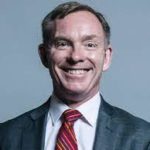
  • Chris Bryant – 2022 Speech on Standards

    Chris Bryant – 2022 Speech on Standards

    The speech made by Chris Bryant, the Labour MP for Rhondda, in the House of Commons on 18 October 2022.

    I start by being slightly pernickety, which is to say that I am not a right hon. Gentleman. I do not know whether the Lord President of the Council can do anything about that, but I note that she referred to me as such, for which I am grateful.

    On a serious point, historically, we will probably be considered the standards Parliament, because standards have been such a prominent part of the politics of this whole Parliament. As a colleague of 649 of my closest friends, I feel quite painfully the fact that, in this Parliament, 16 Members have already been suspended for a day or more, or have withdrawn from the House before any investigation was completed. That puts this Parliament as having suspended more people than any Parliament in many decades. That, I suspect, is partly because we have put in place the ICGS, which is dealing with work that would previously have been swept under the carpet. Even in my own time in the House, these issues would have simply been dealt with by the Whips and somebody would have been either quietly paid off or told not to complain. I am really glad that that culture is changing, that people feel able to complain when they feel bullied or sexually harassed and that behaviours that were thought to be acceptable 15 or 20 years ago are no longer considered so in the House. We may have more of this before the end of this Parliament, and we just need to bear cognisance of that. Even if we look only at the code of conduct cases, we have ended up suspending more in this Parliament than for a very long time.

    I had some very wealthy relatives. When I was young, they taught me that if a person ever inherited money, it was because it had been held in trust. As Members of Parliament, we inherit our seats—not normally hereditary seats, but in some cases they are—and we inherit the reputation of the House that came from previous generations. It is important for us to hold that in trust and pass it on to the next generation of Members of Parliament burnished rather than tarnished. We will have to do a job of work throughout the rest of this Parliament to be able to do that effectively.

    The system, I believe, also has to be fair to Members of Parliament. It is phenomenally complex and sometimes, in addition, complicated. An individual Member will be subject to rules of their own party, the ICGS rules, the code of conduct, the Electoral Commission, and the law of the land, and sometimes it is difficult for them to have all those things in their mind. That is why it is so important that the system for Members of Parliament is completely fair, embodies natural justice, and makes sure that the individual complainant—if there is a complainant—and the Member themselves are given an opportunity to put their case and for it to be heard fully. The court of public opinion is not often a fair place. It often jumps to conclusions and decides things far too rapidly. My worry is that, sometimes, our processes happen far too slowly, and that is not justice for either the complainant or the Member, especially as politics has a shelf life—we have elections, for example—and sometimes cases keep going for years, which is not fair on anybody’s mental health either.

    Ever since I joined the Committee, I have always wanted us to have some formal process of appeal. I have argued that the system that we have had heretofore provides a sort of form of appeal: if the Commissioner finds against the Member, the Member is allowed a very full opportunity to make their case to the Committee in oral or written evidence. To be honest, it is better that we have a much clearer definition of the roles of the Commissioner and the Committee. That is what Sir Ernest Ryder has provided us with. He gave us a clean bill of health on how we have been operating in the past. He was quite clear in saying that there is not only one way of having a fair trial or hearing; there are many different ways. It might be an inquisitorial system such as we have, but it might be a confrontational system, or an adversarial system, as we have in a court of law. Of course, Committees of the House of Commons are not a court of law; they are fundamentally different. If we went down an adversarial route, the costs would increase dramatically and the length of proceedings would be very different. We have also always had a fundamental principle in the House that a Member speaks for themselves; if they cannot, then I would argue they have slightly lost the plot.

    Andy Carter (Warrington South) (Con)

    I want to put on record my thanks to the lay members on the Committee. It is a unique Select Committee in Parliament and lay members—members of the public who are selected—play an important part. I am sure the hon. Gentleman will agree with me that the Committee is much stronger for having lay members sitting there alongside parliamentarians.

    Chris Bryant

    Indeed; that was the next point I was going to make. The hon. Gentleman is very good at doing that in Committee, incidentally, and persuading me of the view that I already hold, but that may just mean that we proceed very much on a consensual basis in the Committee and there is no partisan divide at all. Nor is there a divide between the lay members and the Member members.

    There was a point at which people were arguing that MPs should not be involved at all in any of these processes, but I think that is wrong in relation to code of conduct cases. We often end up having a discussion about what casework really involves, or what an all-party parliamentary group does, and I think we make better decisions thereby. However, I do not think we could do that without the lay members and without their having a vote. The balance between the two, the seven lay members and the seven Members, is a good one, and it is sometimes a genuinely fascinating debate, with people offering different perspectives.

    On the motions before the House, first, I hope that introducing a procedural protocol that lays out all the processes and what a Member can expect if they have to go through an investigation that ends up going all the way to the Committee will be helpful to all Members. We have laid all that out.

    There has been some criticism in the past about whether the Parliamentary Commissioner for Standards, who is an adviser to the Committee, should be present when the Committee is considering a memorandum and producing a report on an individual Member. We have decided that from now on—and we are already operating this—the Commissioner will not be present. If we have questions for the Commissioner, we will send them in writing and receive answers in writing, and that will also be available to the Member under consideration.

    Secondly, as the Leader of the House has already said, we are introducing an appeal through the Independent Expert Panel. That is a formalised process, and some people may find that that process is stricter than the previous system, because Members cannot appeal just to have a regurgitation of the facts or the argument; there are clear reasons why someone might be able to proceed to appeal, and the appellate body, the IEP, might decide, “I’m sorry, that doesn’t really count. You just want to rehearse the arguments all over again.” Members may find that this is a stricter process, but it closely parallels the situation in many tribunal systems and Sir Ernest Ryder, who had responsibility for the tribunals system in England and Wales, has helped us to get to that position.

    There is one other thing that the Leader of the House did not mention, but which I am grateful that the Government have included in the motions. Let us say that the Commissioner recommends that a Member has breached the rules and the Committee decides that there has been a breach of the rules and wants to impose a sanction. We will publish our report, in the way we have done, with the Member concerned getting an embargoed copy an hour before it is published. They will then have a period of time in which to decide whether to appeal. If they do, that goes to the Independent Expert Panel. However, at the end of that process, if the IEP upholds the Committee’s decision and the sanction, the motion should be put to the House forthwith—that is to say, without debate and without amendment, exactly like any other recommendation from the Independent Expert Panel in relation to independent complaints and grievance scheme issues. That makes for perfect clarity and simplicity.

    I am grateful, in a way, that the Government have corrected our homework in two regards. The first is in relation to Members’ being allowed to inform their own staff. I think the Government have made that perfectly sensible amendment, which was a sin of omission of ours rather than a sin of commission. The Leader of the House referred to the issue of members of the Committee recusing themselves, which is mentioned in the report and has been raised by some Members. If a member of the Committee has attended only one of the sessions at which an individual case is considered, should they be able to take part in the final decisions? There is nothing in Standing Orders that allows a Committee to prevent a member from taking part; in the end, it is a matter for the member’s own conscience. Broadly speaking, in most of our minds, someone who had not attended the individual Member’s oral evidence would not be able to give them a fair hearing. It is not in the motion—we are relaxed about that—but I wanted to give the House an indication of where we are going on that issue.

    I thank both Sir Ernest Ryder and Sir Stephen Irwin. I feel a bit surrounded by knights of the realm sometimes, but it is good to have a new knight of the realm on the Committee—the hon. Member for Broxbourne (Sir Charles Walker), who joined us today. I am grateful to the hon. Member for North East Fife (Wendy Chamberlain); her measure is perfectly sensible. The trouble with conventions and gentlemen’s agreements is that if there is no longer a gentleman on the other side of the agreement, it is no longer an agreement, so it makes perfect sense to put that on the face of the Bill.

    The Leader of the House referred to some other issues. Obviously, I would have preferred it if we were dealing with the whole of our report. She referred to how she wants to achieve consensus. We on the Committee think that we have done so, we are open to discussion, but there are some issues I want to raise.

    First, we want to ban the provision of paid parliamentary advice, including providing or agreeing to

    “provide services as a Parliamentary strategist, adviser or consultant”.

    That is self-evident. I think everybody supports it and I would like to make that the rule—it is not yet the rule.

    We also think that Members who have second jobs, especially if they are ongoing, should have a contract saying what they and cannot do, because sometimes people will put in a contract, “You will provide contacts with Government on our behalf.” Well, Members cannot do that as that is, expressly, paid lobbying. We think they should be able to provide a contract; the Government disagree.

    We want to clarify the serious wrong exemption, which Owen Paterson tried very aggressively and assertively to use as his excuse last year. It just did not wash, but it needs to be clearer for Members.

    We want to clarify the paid lobbying rules, which would help out hon. Members a bit, because they are not clear in some areas. At the moment we draw a distinction between a Member “initiating” or “participating” in an approach to or a meeting with a Minister or an official. That is a completely false distinction and we need to get rid of it.

    The one big difference I have with the Leader of the House is in relation to the registration of ministerial interests. I know the previous Leader of the House used the line about the constitutional principle of the separation of powers a lot. That is complete and utter baloney. It is nonsense. That phrase has carried on from the previous Leader of the House but one, now I think about it. We do not have a separation of powers. By definition, Ministers are Members of this House. My anxiety is that ministerial offices quite often get the rules about the House wrong, and sometimes Ministers or Members leave staff to do the registration when it is the responsibility of Members. I hope we can get to a better place on that.

    It is a fundamental principle that a member of public should be able to look online for a Member—whether they are Minister now, were a Minister a month or six months ago, or have not been a Minister at all this year—and see all the facts about their registrable financial interests, so as to be able to judge whether that Member was acting “without fear or favour”, or was acting with some other consideration in mind. It is, in a sense, even more important for a Minister than it is for others. If two Members, one an ordinary Member of Parliament and one a Minister, go to an air show, with the hospitality, the accommodation and so on paid for by an arms company—it might come to £3,500—it is probably more important for us to know that the Minister was given that hospitality, because it is the Minister who might be making decisions on procurement from that company. Transparency and equality between all Members is really important, and all the information needs to be searchable and findable. We need to do more work on that.

    The Government need an adviser on the ministerial code, and I hope that that will come as soon possible. I am very fond of Lord Geidt, who is a magnificent man. I think he felt crushed by the events of the last of years. If we are to hold in trust the reputation of Parliament and of the whole of politics, we must get someone in place as soon as possible.

    Like the hon. Member for Warrington South (Andy Carter), I thank the lay members of the Committee. I shall mention only two fully by name, because they have just left: Jane Burgess and Arun Midha have served out their time, and we are recruiting new lay members at the moment. We are one down, and we will need another three next year. Paul, Rita, Mehmuda, Vicky, Michael and Tammy do a magnificent job, and I am enormously grateful to all of them.

  • Wendy Chamberlain – 2022 Speech on Standards

    Wendy Chamberlain – 2022 Speech on Standards

    The speech made by Wendy Chamberlain, the Liberal Democrat MP for North East Fife, in the House of Commons on 18 October 2022.

    I rise today to speak in favour of the two amendments on the Order Paper in my name. I will confine my comments to those amendment, but first I want to echo the expressions of thanks to the Standards Committee and its Chair, the hon. Member for Rhondda (Chris Bryant), for their work. I also offer my thanks to the right hon. Member for Staffordshire Moorlands (Karen Bradley), the Chair of the Procedure Committee, who met me earlier this year in relation to this issue. I am grateful to her and her Clerks for giving me their time.

    As has been highlighted by both the Leader of the House and the shadow Leader of the House, my amendments make a straightforward change to what happens when the House votes on a motion to sanction a Member for their conduct. At the moment, a Member in that situation can vote on their own censure. Some of us might think that would never actually happen after an independent investigation has found a Member not only responsible for breaking the code of conduct but responsible for such an egregious breach that their privileges as a Member of this place should be curtailed as a result. We would like to think that there would be a sober reflection and making of amends in that situation but, sadly, we know that is not always the case.

    It is less than a year since the censure of the former Member for North Shropshire. In those two votes, the former Member voted against his own suspension. As a result, I secured a Standing Order No. 24 emergency debate on standards, as an opportunity for the House to begin repairing the potential damage that affects us all in this place when such things happen.

    It might be the former police officer in me—I have mentioned being a former police officer a few times today, as I spoke in the debate on the Public Order Bill—but it infuriates me that a Member can vote on their own suspension. It puzzles me, too. Surely, with the million rules and conventions in this place about what we can and cannot do, it should not have been allowed.

    I had a look and spoke to the Clerks, who are much appreciated by all of us as a fount of knowledge. I found that, yes, there is a convention that, although Members can speak at the start of a debate on their conduct, the expectation is that they should subsequently withdraw, with the implication being that they should not return for the vote. There is a further convention that a Member can lodge a motion objecting to another Member’s participation in a vote in which they have a financial interest in the outcome, but I think you would agree, Madam Deputy Speaker, that this is cumbersome and basically impossible with the rate of business and the number of MPs that we now have in this House.

    Importantly, they are both currently conventions, not rules. Simply put, conventions last only as long as people choose to adhere to them. When people do not, it reflects on all of us. The Conservative party potentially had the most mud stuck to them as a result of what happened last year, but this is House business and it reflects on all of us to ensure that we uphold standards in this place.

    My two amendments amend the Standing Orders to make these two conventions a rule. Members will not be able to vote on sanctions relating to proven breaches of the code of conduct by themselves. It is worth noting that the vast majority of cases considered by the Standards Commissioner are either not upheld or are rectified without further action, but there are always MPs under investigation, and I suspect there always will be. Although it has nothing to do with those individuals, it is important that we as a House are seen to be acting accordingly.

    Where cases are more serious and there is a report to the Standards Committee, and where all the appropriate procedures, including those set down in the motion itself, have been followed and the recommendations reach the Floor of the House, we must ensure that due process is done and, most importantly, seen to be done.

    Ironically, it was during Parliament Week last year that we saw the situation that the shadow Leader of the House mentioned, and it is almost Parliament Week again. When I talk to my constituents, they ask me about working here, fairness and transparency, and I genuinely think this is the best job I have ever had. It is an enormous privilege, and I think the vast majority of Members agree and want to act accordingly.

    I want to be able to tell my constituents, and I feel very encouraged that I will be able to do so, that we have taken a long, good look at ourselves and that the vast majority of us who want to maintain those high standards and hold the respect of the people we serve did something to make things better.

    I am keen that this is not seen to be a party political issue, and the hon. Members for Batley and Spen (Kim Leadbeater), for Brighton, Pavilion (Caroline Lucas), for Rutland and Melton (Alicia Kearns) and for Lancaster and Fleetwood (Cat Smith), and the right hon. Member for Dumfriesshire, Clydesdale and Tweeddale (David Mundell), all put their names to the amendments. For that reason, I hope very much that I will not need to press them to a vote. If there is an objection, I intend to do so this evening.

  • Thangam Debbonaire – 2022 Speech on Standards

    Thangam Debbonaire – 2022 Speech on Standards

    The speech made by Thangam Debbonaire, the Shadow Leader of the House of Commons, in the House on 18 October 2022.

    I thank the Leader of the House for tabling the motions. I also thank my hon. Friend the Member for Rhondda (Chris Bryant) and his Committee for all the hard work that they have put into their inquiries and reports on standards over many months. I really would have liked to see all that work recognised in the motion today. After months of calling on the Leader of the House and her predecessors to implement the Standards Committee’s full recommendations, I am sure that the right hon. Lady will have imagined my initial excitement when I heard the words “Members’ code of conduct” during her recent business statement, but sadly that turned to some disappointment when I found that it did not include all the Committee’s work to strengthen standards in Parliament. I understand what the right hon. Lady has said, but I will come back to that shortly.

    Let me now turn to the substance of our debate: the appeals process. Let me first place on the record my thanks and welcome for the work that Sir Ernest Ryder has done on the House’s current system for the Standards Committee. It has been helpful to have a well-respected external figure investigating whether or not our existing standards needed to be improved or strengthened. I know that the Committee made good use of Sir Ernest’s extensive experience when considering the important issues of fairness, natural justice and the right of appeal, and I note that he gave thoughtful and considered support to our standards system overall. I picked out the issues of fairness, natural justice and the right of appeal because I seem to remember those words being used in a debate on 3 or 4 November 2021 which, I am afraid, did not show the House in a good light. That is partly why we are here today.

    Sir Ernest proposed that there should be a right of appeal against both the findings of the Standards Committee and any sanctions that it imposed or recommended. It seems wholly sensible that such an appeal should be to an independent body with judicial expertise, and that leads us inevitably to the Independent Expert Panel. I am assured that its chair, the right hon. Sir Stephen Irwin, has said that the panel should be able to take on this role, and that it should be able to manage the workload without expanding the current panel size of eight. I am grateful to him for that confirmation. I assure the Leader of the House that she has my support on the motions, and that they will be supported by the Opposition.

    However, let me turn to the slightly wider but related issue of standards in general and, in particular, standards and ethics in parliamentary and governmental life. It was the well-respected former Cabinet Secretary Lord O’Donnell who said recently, “It’s always best to look at reasons why your predecessor fell and fix that.” Unfortunately, however—and I say this with disappointment and sadness, because it affects all of us in this place—everything we have heard from the current Prime Minister, not just during her leadership campaign but in the context of her lack of action since taking office, suggests so far that we are in for more of the same when it comes to trashing standards. I wanted to believe that that was not so, but the Prime Minister even refused to say that she would appoint an independent ethics adviser after the previous two had resigned—admittedly, under the previous Prime Minister—in despair.

    I am glad that the Leader of the House has said that the Government are committed to appointing one, but I want to see some urgency. It would be reassuring for the House and for the country if the Prime Minister could commit to appointing that much-needed ethics advisor.

    On parliamentary standards specifically, there should have been a lot more in the motion—namely, the rest of the recommendations, in my view. I thank the Leader of the House for her update, and she has been extremely co-operative with me and my office on this, but again we need some urgency to repair the damage that has been done by some—not all—on the Government side to the public’s view of how we conduct ourselves in this place and the surrounding neighbourhood.

    In response to my questioning on this at business questions last Thursday, the Leader of the House said:

    “It is not that we are not doing them”.—[Official Report, 13 October 2022; Vol. 720, c. 260.]

    I absolutely believe her, but does this mean that the Government will bring forward a motion to cover all the Standards Committee’s recommendations? I get that sense from what she has said, and I would like to know that that is the general direction of travel, but if not, why not? Can she tell us which ones the Government like and which ones they do not? I would be grateful if she could give us a much more specific timeframe for when they will be brought forward.

    I welcome the assurances that the Leader of the House has given, but when it comes to parliamentary standards and the Tories, I think she probably understands why the public are feeling a lack of trust. Unfortunately, it is the party that refused to fix a loophole that let one Member off the hook for a particular misdemeanour. It is the party that was prepared to change the rules retrospectively seemingly to support cash for access but not to stop sexual harassment.

    I do not kid myself that there was ever a golden age when the public saw us all as completely trustworthy and the holders of the highest standards, even though I believe that most of us in this House absolutely are. However, the public need to—and at times have been able to—trust the system of standards enforcement and sanctions around our general principles. As my hon. Friend the Member for Rhondda once told me, there have been rules on how MPs should behave honourably since 1695. Since that time, the rules have only ever gone in one direction, which is to be strengthened—that is, until some Conservative Members unfortunately sought to drag them backwards during the Owen Patterson affair, which showed all too clearly that we have, in Conservative Members, some people who seem to be willing to change the rules retrospectively if they or their mates get caught.

    Until we see a motion on the Order Paper covering all the Standards Committee’s recommendations—or some form of them—we can only assume or guess that the Government have apprehensions about bringing them forward. Banning MPs from doing paid consultancy work and increasing the transparency of Members’ interests are measures that Labour has long been calling for, and I believe that there is cross-party support for them. I have referred to the Owen Paterson affair with good reason, because that was the place where some of those concerns grew really strong.

    We will of course support the amendments tabled by the hon. Member for North East Fife (Wendy Chamberlain). It seems a great pity that they needed to be put into writing, but evidently they did—

    Wendy Chamberlain (North East Fife) (LD) indicated assent.

    Thangam Debbonaire

    I see that the hon. Member is nodding. I support the amendment and the motions, but I want to put on the record that if we were in government and I were at the other Dispatch Box, I would want to enact the Standards Committee’s recommendations as soon as possible.

    In that vein, can I urge the Leader of the House to bring forward a further motion to do the work that she has referred to? She will find that she has support from this side for any co-operative and collaborative work that she wishes to do, and even for any critical or difficult work. We stand ready to work with her. This is not a matter that should be party political, although I have made some party political points because unfortunately it has been shown to be so in the past year. I will support the motions and the amendments, and I commend the report and the inquiries of the Standards Committee to all right hon. and hon. Members.

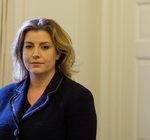
  • Penny Mordaunt – 2022 Statement on Standards

    Penny Mordaunt – 2022 Statement on Standards

    The statement made by Penny Mordaunt, the Leader of the House of Commons, in the House on 18 October 2022.

    The House is being asked to consider the creation of an appeals process for non-Independent Complaints and Grievance Scheme cases to be heard by the Independent Expert Panel. The motion would introduce the formal appeals process that Sir Ernest Ryder recommended and proposes that the panel would hear appeals against the decisions and sanctions of the Committee on Standards. The motion also puts to the House the new procedural protocol, which would sit alongside the new appeals process.

    I am grateful to the Committee on Standards for its work reviewing the code of conduct for Members and the overall operation of the standards system in the House of Commons. Since becoming Leader of the House, I have had some discussions with the Chair of the Committee, the hon. Member for Rhondda (Chris Bryant), who I look forward to hearing from today. I assure him and the House that the Government have carefully considered his Committee’s recommendations, alongside the procedural protocol and covering report.

    I am sure that the whole House agrees that Members of Parliament must uphold the highest standards in public life and that the procedures we have in place must be fair, robust and command the respect and confidence both of Members and the wider public. I believe that today’s motion takes a positive step in the right direction.

    There are other issues that are not covered in the motions today, and I plan to seek consensus on a wider package and to come back to the House in due course, but it is good to make progress on the issues as we can.

    Before coming to the substance of today’s motion, I wish to briefly cover some areas in relation to the wider proposed package of changes from the Committee on Standards that we are not debating today. Let me be clear: I am very conscious that there is further progress to be made and the House should have the opportunity to consider the additional recommendations proposed by the Committee. I reassure the House and the Committee that we are seeking to identify solutions that can command cross-party support on those outstanding issues.

    Specifically, the Committee made recommendations on measures to improve the transparency and timeliness of ministerial declarations. The Government are clear in their views that the rules regulating Members’ interests and ministerial interests are necessarily distinct, reflecting the underlying constitutional principle of the separation of powers. There are differences between the role of an MP and that of a Minister and, reflecting that, the rules differ on what interests are permitted and how potential conflicts of interest are managed. There are clear rules regarding the registration of interests and the receipt of gifts in the ministerial code and Ministers should, and do, take their responsibilities very seriously. Nevertheless, I recognise the concerns of the Committee. Since being appointed Leader of the House, I have raised those concerns and have instructed officials to bring forward proposals for an improved system.

    I can confirm to the House that revised guidance on ministerial transparency data will be published in the coming weeks. We will also publish it on gov.uk for the first time. The guidance has been updated to more closely reflect modern working practices and Ministers’ obligations under the ministerial code.

    It is important that the Government conduct ourselves openly. I will continue to work with the Cabinet Office and across Government to ensure that we are fulfilling our obligations. In doing so, I keep very much in mind the challenge set for me by the Chair of the Committee on Standards: that a Member who attends an event such as the BAFTAs should report in a particular way, so a Minister who attends the same event should report in a similar way and their interests should be transparent to the public. I hope that the House and the Committee will support these changes; I will happily engage with the Committee should they not have the desired effect. [Interruption.] For the benefit of Hansard, the Chair of the Committee chuckled knowingly.

    The House will be aware that an appeals process is already in place within some aspects of the parliamentary standards system. Those who are subject to investigation under the Independent Complaints and Grievance Scheme have the right of appeal to the Independent Expert Panel, which is chaired by the former High Court judge Sir Stephen Irwin. The ICGS and the IEP have been an essential part of achieving positive culture change in the House and demonstrating its rigorous judicial process, its transparency of operation and the right to appeal.

    The Government have therefore welcomed Sir Ernest Ryder’s report and his timely review of the Commons standards system and its compatibility with the principles of fairness and natural justice. As we set out in a letter to the Committee on Standards, the Government supported the majority of the proposals, including the introduction of a formal appeals process. We note that the Committee has accepted all the recommendations, with a few minor modifications. I welcome the proposal that appeals be heard by an independent body with judicial expertise. We also welcome Sir Ernest’s consideration of the grounds for appeal and the acceptance that the Independent Expert Panel is the appropriate body to hear appeals.

    We propose two main amendments to the procedural protocol. First, we propose to amend paragraph 118 to allow MPs to inform their own staff in the event that they are subject to investigation by the Parliamentary Commissioner for Standards. Secondly, we propose to leave out paragraph 62 on Members recusing themselves if not present for all but a “small proportion” of evidence sessions. These amendments reflect the Government’s position, as set out in our response to the Committee; I hope that the House and the Committee will support them. The other proposed amendments are purely technical changes to ensure that the protocol works with the current version of the rules and guide.

    I wish to speak briefly about amendments (a) and (b) in the name of the hon. Member for North East Fife (Wendy Chamberlain) and others. The amendments stipulate that

    “no Member shall be eligible to participate in any division on such a motion where it relates to their own conduct.”

    That stipulation would apply both to conduct motions related to breaches of the code of conduct and to motions related to the ICGS. This is, of course, a matter for the House to consider. I note that the Committee on Standards chose not to pursue the issue in detail as part of the inquiry.

    I am aware that the Chair of the Procedure Committee, my right hon. Friend the Member for Staffordshire Moorlands (Karen Bradley), has raised the issue of Members being permitted to vote on their own suspension. My predecessor wrote in response to her that there would be benefit in the Committee’s looking into whether such changes are needed. If necessary, they could be put to the House for consideration. Hon. Members will be aware that there is a convention that Members should not participate in such votes. In our parliamentary democracy, conventions guide how we work in this place, and codification of these norms should be carefully considered; I would therefore welcome it if the matter were considered by the appropriate Committee. Subject to its approval, the Government would be happy to bring the matter back to the Floor of the House for approval in due course.

    If there is no objection from the Chair of the Committee on Standards or from other hon. Members present, I would certainly be content to support these amendments.

    Chris Bryant (Rhondda) (Lab)

    I see no reason why we should not simply put what is already a convention into, as it were, the statutes of the House—the Standing Orders. I support the motion and, looking around the Chamber and seeing other members of the Committee who are present, I think that they will as well. I think it would save us all a bit of time if we just got on with it and agreed to the amendments.

    Penny Mordaunt

    I thank the right hon. Gentleman for that helpful intervention.

    Karen Bradley (Staffordshire Moorlands) (Con)

    May I add my view, as Chair of the Procedure Committee? I feel that the amendments are absolutely fine, and we should be happy to see them passed tonight.

    Penny Mordaunt

    I thank my right hon. Friend for her support for the amendments. We are hopefully saving ourselves some time, and efficiency is always great to see. It is important to point out, however, that if Members did object and wanted the Committee to look at this, they could oppose the amendments, which are obviously subject, potentially, to a vote tonight.

    We support the work being undertaken to introduce measures to empower the standards system in Parliament, and I am committed to continuing conversations both within Government and with parliamentary colleagues to continue to introduce improvements proposed by the Committee on a cross-party basis. I assure the House that my door is always open and I am always willing to discuss these matters with all Members. I hope that the House will approve the proposed changes, and I commend them to the House.

  • Brendan Clarke-Smith – 2022 Speech on an Early General Election

    Brendan Clarke-Smith – 2022 Speech on an Early General Election

    The speech made by Brendan Clarke-Smith, the Parliamentary Secretary at the Cabinet Office, in Westminster Hall, Houses of Parliament on 17 October 2022.

    As always, it is an absolute pleasure to serve under your chairmanship, Mr Mundell. I thank the hon. Member for Newcastle upon Tyne North (Catherine McKinnell) for bringing this debate before us.

    The nation and the world face the challenges not just of Vladimir Putin’s war in Ukraine, but of recovering from the covid-19 pandemic. Putin’s war has caused a global economic crisis, with interest rates rising around the world. I am sure that nobody in this country would like a general election more than Vladimir Putin.

    Families and businesses are feeling the impact across the country, from the cost of their supermarket shop to their energy bills, as hon. Members have mentioned. In these tough times, therefore, the Government are taking decisive action to get Britain moving.

    Owen Thompson

    I am sorry to intervene so early, but will the Minister tell us how Vladimir Putin caused mortgage rates to shoot up to such an extent?

    Brendan Clarke-Smith

    We need to look at interest rates around the world, the strength of the US dollar and inflation rates around Europe. Curbing inflation is important to us, and I will come on to that and what the Chancellor is talking about today.

    Families were facing bills of up to £6,000 this winter. Tesco, which has been mentioned a lot today, says, “Every little helps”, but we think we can do better than that, because a little is not enough for many families around the country. That is why we took such decisive action with our comprehensive package, so that families would not face that. It has substantially reduced the expected peak inflation that we might have been looking at. We have supported the families who needed it the most, have been dealing with the tax burden and have cut the national insurance contributions of 28 million people as a result.

    Global economic conditions are worsening, so we have had to adjust our programme. That is the sign of a pragmatic Government. We are still going for growth, but need to change how we approach it. The Government are committed to investment zones, speeding up road projects, standing up to Russia and increasing our energy supplies so that we are never in this situation again. We are making it easier for businesses to take advantage of Brexit freedoms, so that they may do things more easily, leading to lower costs, lower prices and of course higher wages. The Government are on the side of hard-working people who do the right thing, and it is for them that we are delivering.

    We are putting our great country on to the path of long-term success. We are taking on the anti-growth coalition, from Labour and the Lib Dems to the protestors stopping people going to work by grinding roads and rail to a halt, as we have seen outside today. The Government’s focus is on bringing economic and political stability to the country. That will lower interest rates and restore confidence in sterling. We cannot afford any drift to delay that mission. Therefore, the last thing that we need now is a general election.

    The Government have several priorities for the remainder of this Parliament. We will use the power of free enterprise and free markets to level up the country and spread opportunity. We will drive reform and rebuild our economy to unleash our country’s full potential. We will cut onerous EU regulations that smother business and investment.

    A mandate is one of the reasons we are in Westminster Hall today. The Conservative party was elected with a majority in 2019. Recently, we have been through a process of electing a leader of our party who is committed to delivering that Conservative programme in government. We face significant global events that have changed our economic circumstances. We cannot ignore the impact of covid or Putin’s deplorable war in Ukraine, which has created much of the economic hardship that has pushed up the price of energy, not just for us but for the world. The Government acted immediately to provide energy support for families who needed it the most by laying out a plan for economic growth.

    The UK, as mentioned by the hon. Member for Midlothian (Owen Thompson), is a parliamentary democracy and does not have a presidential system. Prime Ministers hold their position by virtue of their ability to command the confidence of the House of Commons. Consequently, a change in the leader of the governing party does not trigger a general election.

    The fact that a change in the leader of the governing party does not necessitate an election is well established. There is precedent among both Labour and Conservative Prime Ministers in the past. Indeed, five of the last seven Prime Ministers, including my right hon. Friends the Members for Uxbridge and South Ruislip (Boris Johnson) and for Maidenhead (Mrs May), Gordon Brown and John Major, began their tenure in office without the need for a general election.

    In many cases the next election followed several years after a Prime Minister had been in office. In the post-war era, that has become very common. Gordon Brown was in office for three years before the 2010 election, and John Major for two between 1990 and 1992. Jim Callaghan held office in the 1970s without holding an election, just as Douglas-Home held office for a year without one in the 1960s. Prior to that, Harold Macmillan was Prime Minister for two years before calling an election in 1959. Famously, Winston Churchill’s wartime Administration were in office for five years, in exceptional circumstances, without an election taking place. I could go on. Chamberlain, Lloyd George, Asquith and Balfour are all relevant examples. My point is that Prime Ministers hold their position by virtue of their ability to command the confidence of the House of Commons. There is no requirement for an incoming Prime Minister to call an election immediately on assuming office.

    Catherine West

    The Minister is very generous in giving way. He is making an important point that general elections are not always necessary. Does he agree, however, that one of the problems besetting the majority party is that before the 2019 general election, Mr Farage’s party tipped into the Tory party, and that that has resulted in it splitting in two?

    Brendan Clarke-Smith

    The hon. Member makes a good point. Of course, all political parties will at times have disagreements. One of the things that makes me such a proud Conservative is the broad church of our operation, and I believe that it is that broad church that allows many of my colleagues with differing views to come together with shared values. That is why Conservatives, who have been elected and given a mandate, can change leadership but still have a Conservative Government delivering Conservative policies.

    Earlier this year, delivering on a Conservative manifesto promise, Parliament passed legislation repealing the Fixed-term Parliaments Act 2011. It was a flawed piece of legislation, which ran counter to the core constitutional principles of our country, and I believe that it had a damaging effect on the functioning of parliamentary democracy. The Dissolution and Calling of Parliament Act 2022 returned us to tried and tested constitutional arrangements for dissolving Parliament and calling elections. It received broad agreement across the House, and I do not believe that a single Labour MP voted against its Second or Third Reading. By repealing the 2011 Act and it opaque provisions, it reaffirmed the convention that the Government hold office by virtue of their ability to command confidence in the House of Commons.

    Members are in a privileged position to put views to the Prime Minister and senior colleagues, and I encourage them to do so. We have debates, such as this one, and other appropriate forums. The Government are entitled to assume that they have the confidence of the House unless and until it is shown to be otherwise. That can be demonstrated unambiguously only by means of a formal confidence vote. Thus, the Government, under the new Prime Minister, continue to command the confidence of the Commons.

    The Prime Minister can call a general election at any time of her choosing by requesting the Dissolution of Parliament from the sovereign, which, if accepted, leads to a general election. As a result, the decision of when the next election will take place rests with the Prime Minister.

    On the appointment of the Chancellor, who is currently giving his statement on the Floor of the House, the Prime Minister asked my right hon. Friend the Member for South West Surrey (Jeremy Hunt) to assume the role. As the Prime Minister has said, he is one of the most experienced and widely respected Government Ministers and parliamentarians. The Prime Minster has asked the Chancellor to deliver the medium-term fiscal plan, and he is giving a statement to the House as I speak. That will explain the support that the Government are giving.

    The hon. Members for Pontypridd (Alex Davies-Jones) and for Newport West (Ruth Jones) mentioned the cost of living. That is very important to us; we want to get this right. We want to bring in the energy price guarantee. We have already given £400 to every household, with £1,200 going to the most vulnerable, and £150 back on council tax, along with other support. We want to help the most vulnerable in society and we want the right targeted packages. Of course, to do that, we need to have sustainable public finances and to show fiscal responsibility. The Chancellor of the Exchequer will talk about that today. We want to bring our debts down; we want to ensure that inflation is low; we want to ensure that interests rates are sensible. We do not set interest rates—the Bank of England does—but we want people to be able to afford their mortgages.

    After I had bought my first house, the financial crisis happened—that was a difficult period for homeowners. We want to help people to get through this; we are a nation of homeowners. We want to protect people, including the most vulnerable, and, of course, we want people to be able to pay their energy bills and for their food shopping.

    Fleur Anderson

    I thank the Minister for the history lesson. I think the people who signed the petition thought that we needed a new Government not because of the change of leader, but because of the policies of the new leader—that is why so many people are signing it. Mortgages are going up by an average of £500 across the country, but that figure will be a lot higher in my constituency. Those homeowners are the ones signing the petition. They are saying, “We’ve had enough of these policies. There hasn’t been any fiscal restraint; it has been really damaging. We need a change of policies.”

    The current Prime Minister lost her credibility because her Budget has been thrown out—a new one is coming—so she may need to be replaced. How many changes of Conservative party leader does the Minister think there needs to be before a general election is called?

    Brendan Clarke-Smith

    People want stability and certainty, and that is also what the markets wanted, which is why we have acted decisively. The Prime Minister has been clear and has acted pragmatically. She has appreciated when things have not worked and has changed tack as a result. That is a sign of a strong Government, and I fully support the Prime Minister in those efforts.

    The hon. Member for Midlothian said that he also wanted another independence referendum for Scotland. I would argue that Scotland has already had a referendum and that people made a choice. They want the same stability; they want to know what the future holds for them. They made their choice and they see it as being part of that stability. They worry about their interest rates and their houses, and about inflation. We want to govern for the whole Union.

    Owen Thompson

    I find this slightly perplexing. A lot of the Minister’s argument has been about the strong decisions of the Government in changing their mind, and about the ability of the Prime Minister to change her mind and take a different direction. He then makes exactly the opposite argument when it comes to Scotland and deciding the constitutional future of our nation. How can the Prime Minister and the UK Government change their mind in a matter of weeks, but the people of Scotland—despite every promise that was made eight years ago during the 2014 referendum campaign—are not allowed to make a different decision?

    Brendan Clarke-Smith

    I bring the hon. Gentleman back to the point that we are in an ever-changing world: nobody expected the covid-19 pandemic or what Vladimir Putin has done in Ukraine. I take the point that circumstances change, but people want stability—they want to be able to support their families and pay their bills—and we believe that supporting the devolved Governments, working together and protecting our Union is the best way to ensure that.

    Alex Davies-Jones

    The Minister is, of course, a Minister for the Union. As the shadow Minister, my hon. Friend the Member for Putney (Fleur Anderson), quite rightly said, neither of the First Ministers of Scotland and Wales have received a phone call or any contact from the Prime Minister since she has been in post. If the Prime Minister and the Government are so committed to the Union, when exactly will she be in in touch with the First Ministers, and why has it taken so long?

    Brendan Clarke-Smith

    Over the summer, Members will have heard the Prime Minister speaking with great passion about protecting the Union. The £18 billion of annual funding for the Welsh Government is the largest annual amount in real terms since devolution began, so those were not just words but actions. I can also point to the £121 million in levelling-up funding for 10 projects, the £790 million of investment across four Welsh cities, the £115 million for the Swansea Bay city deal, and the £500 million for the Cardiff city deal. I am sure that the Prime Minister will, in due course, contact those elected leaders to see how we can work closely together.

    The hon. Member for Putney (Fleur Anderson) mentioned the ethics adviser. I understand that the Prime Minister is considering that matter and will provide an update in due course.

    We are in extraordinarily tough times—there is a global economic crisis—and we must remember where this country was heading only a month ago. Families and businesses were fearing unaffordable energy bills higher than £6,000. Inaction would have been unthinkable and the human cost unforgivable. Businesses would have gone bust and jobs would have been lost, and that is why we took the decision to protect people and businesses from the worst energy crisis this winter.

    We were elected in 2019 on a pro-growth, pro-aspiration and pro-enterprise agenda, to be on the side of hard-working people and all those who make our country great, and that is what we will continue to do. Today we have moved to cut national insurance, putting £330 in taxpayers’ pockets, and we are delivering a clear plan to get Britain growing through bold supply-side reform. Growth requires stability, and that is what we are offering. We need to move forward and deliver for the British people. A general election risks sending us back to square one by letting the anti-growth coalition into power. We will do whatever it takes to get through the storm and emerge a stronger and better nation.

    David Mundell (in the Chair)

    I call Catherine McKinnell to wind up the debate. You have approximately one hour and forty minutes.

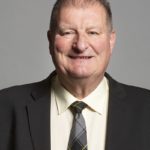
  • Fleur Anderson – 2022 Speech on an Early General Election

    Fleur Anderson – 2022 Speech on an Early General Election

    The speech made by Fleur Anderson, the Labour MP for Putney, in Westminster Hall, the House of Commons, on 17 October 2022.

    It is a pleasure to serve under your chairship in this momentous debate, Mr Mundell. I thank the Chair of the Petitions Committee, my hon. Friend the Member for Newcastle upon Tyne North (Catherine McKinnell), for fast-tracking this debate and putting the case for a general election so well. She speaks for so many people across this country.

    I also offer a huge thank you and congratulations to the more than 633,000 members of the public who have supported the e-petition that secured today’s debate. Over 500,000 people have signed it in the past two weeks alone, and at the moment, over 1,000 are signing it every hour. I believe that today’s debate is being watched by an unusual number of people for a Westminster Hall debate. A staggering number of people have signed the petition since 28 July, and I have had confirmation that it is the first e-petition calling for a general election to be debated in this House. I was proud to see that over 1,100 of my constituents in Putney have signed it; I think all of us here today, and many other Members, can say that an unusual number of their constituents have signed this petition. It really is very significant.

    I congratulate Darrin Charlesworth on launching the petition back in July. Back then, he said that

    “The chaos engulfing the UK government is unprecedented. Over 40 ministers resigned leaving departments without leadership during cost of living, energy and climate crises. War rages in Ukraine; the Northern Ireland Protocol has further damaged our relationship with Europe; recession looms; the UK itself may cease to exist as Scotland seeks independence. This is the greatest set of challenges we have seen in our lifetimes. Let the people decide who leads us through this turmoil.”

    That is how the petitioner, and the thousands of people who signed the petition, felt back in July. But look at what has happened since. We have had a Prime Minister voted in by the very few. She has launched a new economic strategy with no mandate, prioritising VAT-free shopping for tourists, of all things, and tax cuts for the super-rich. She has tanked the pound, causing the Bank of England to have to step in. She jeopardised pensions and sent mortgage costs soaring, before U-turning on the 45p rate of tax and then on corporation tax. She ditched her Chancellor after 38 days. This morning she ditched the two-year energy price cap, the income tax cut, the freeze on alcohol duties, VAT-free shopping for tourists—fair enough—and the dividend and freelance reforms. Who knows what else is changing as we speak, because the Chancellor of the Exchequer is giving a statement in the main Chamber. I am sure that, as my hon. Friend the Member for Newcastle upon Tyne North said, many more Members would be present if that were not happening right now.

    My hon. Friend the Member for Newcastle upon Tyne North reiterated that there is no mandate and that people have lost patience with the Government. No one wants to sign the petition and ask for a general election unless it is absolutely essential, and we seem to have no other option. She also said that the polls show that the number of people who want a general election is even higher than the number of people who have signed the petition. The damage being done by not raising benefits, and the damage being done to child poverty levels, surely should be uppermost in our minds.

    My hon. Friend the Member for Pontypridd (Alex Davies-Jones) outlined the incompetence that we have seen in the last few months and put it into the context of 12 years of Tory rule, local government underfunding and the failure to stimulate growth, which is the biggest threat to families’ financial security.

    My hon. Friend the Member for Newport West (Ruth Jones) said that she is stopped in the street by people who are worried and afraid. She is not alone; I, too, am often stopped in the street. Just this morning, I went to visit a food bank in my constituency, and so many people told me about their fear. That is why they are talking about calling a general election. We are in unprecedented times.

    My hon. Friend the Member for Hornsey and Wood Green (Catherine West) gave a whole list of reasons why we need a general election, and she started by calling out the failed philosophy of trickle-down economics, which has been laid bare over the last few weeks. The loss of trust of businesses and unions alike, and the issues of benefits, mortgages, food banks and energy provision—the list goes on. There are many reasons why people have signed the petition and are calling for a general election.

    I often say that debates in the House are timely, but this is certainly a timely debate—more than most. The petition is highly significant, and I hope that the Minister’s response will reflect that significance, rather than brushing the issue aside and saying that it would be too disruptive to have a general election at this time. People who have signed the petition feel that the disruptive thing to do is to stick with what we have now. We in this House are entrusted with making decisions on behalf of everyone in the country only on the basis of a democratic mandate from those who have elected us to be here.

    A pact has arisen with the British people from hundreds of years of history: parties share in their manifestos what they will do, and they are elected on the basis of their manifestos. From the party with the biggest number of elected Members, the Prime Minister is chosen to deliver the manifesto mandate. We are very close to losing the trust of the nation, because that mandate is being broken with every statement and every press conference. It is not just a matter of communication, and it is not just because the new leader was chosen without a clear majority of even her own MPs supporting her. This is a loss of faith with the policies of the Conservative Government, because they are not the ones that were in the manifesto. There is a loss of faith that these policies are in the best interest of people across the country, rather than in the best interest of only the Conservative party.

    The markets lost faith in Conservative policies—the pound tanked and mortgage prices soared—but the petition shows that the people have lost faith as well. No one voted for the biggest raft of tax cuts since 1972. No one voted for £45 billion of tax cuts with no fiscal strategy. No one voted for bankers’ bonuses. No one voted for trickle-down economics, with no evidence that it will actually trickle down. No one voted for U-turns on banning no-fault evictions. No one voted for the economy to be plunged into chaos. No one voted to ditch the green homes grant after just a few weeks. No one voting for lifting the moratorium on fracking. No one voted to scrap crucial environmental protection laws, to attack nature or even to turn on the Royal Society for the Protection of Birds, the National Trust, the Wildlife Trusts and the Ramblers.

    No one voted to reduce workers’ rights. No one voted to pull out of the European convention on human rights. No one voted for Brexit chaos to continue. No one voted to jeopardise the trade deal with India or to shelve a trade deal with the US. No one voted to trash our institutions or to bury reports from the Office for Budget Responsibility. No one voted for soaring mortgages and the follow-on that will inevitably result in rent costs increasing at the same time as a cost of living crisis.

    No one voted to damage further our international reputation, and no one voted to damage our Union. The fact that the Prime Minister has not even called the First Ministers of Scotland or Wales yet is a scandal. Our Union is precious. It is shocking that the Prime Minister has not even telephoned the two First Ministers. Perhaps the Minister will confirm when those phone calls will take place.

    What next? A general election may be a short-term disruption, but the damage to our economy, people’s lives and the Union could be far longer reaching. This Prime Minister is no different from her predecessor, and so it is no wonder that people’s patience has run out. She seems to now be interested only in saving her skin at all costs. The public will not forgive and they will not forget. This is a Tory crisis, made in Downing Street but paid for by working people up and down my constituency and those of every Member present and all other Members.

    It is important to put this petition in the context of the last three years. These problems did not start in July, when the petition started, or in September. There have been three years of scandal, sleaze and sloppy governance. Will the Minister confirm when the new ethics adviser will be appointed? We need to win back the trust of the British people. How can we do that if there is no ethics adviser even in place?

    Since the last election—not even three years ago—we have had two Prime Ministers, five Chancellors, a slew of scandals, endless errors, and a pile of broken promises. The Conservatives have lost the right to govern. As the petition says loud and clear, the public have lost patience. A change of Chancellor is not enough. The Tories have tried a change in Prime Minister, and it is worse than ever. We do not need, as has been rumoured, a trumped up coronation of a new Tory leader either. We need a change in Government. As the chairman of Tesco said yesterday, there is just one team on the pitch now: Labour has a plan for growth, while the Conservatives do not.

    Labour’s approach will be based on working together, with businesses, workers and public bodies all pulling together in a national endeavour to rebuild Britain and seize the opportunities of the future. Labour’s plan to buy, make and sell more in Britain is all about using all the tools at the Government’s disposal to support businesses in this country, bringing jobs back to Britain, sorting out the Government’s supply chain chaos, and last but not least, cleaning up the Tories’ Brexit mess, taking action on the climate and nature emergencies, and getting our economy firing on all cylinders.

    If there is a general election and the people choose Labour’s plan for growth over the Conservative anti-growth coalition, we will invest in people, skills and our public services. We will rebalance the books based on fairness and tackling the climate emergency, not on the backs of working people and not by rewarding bankers. No wonder the people who signed this petition want that vision of stability over the current chaos, even if that means calling for a general election. For the good of the nation, we need a general election. Labour is election ready. We are ready for Government. Only Labour offers the leadership and ideas that Britain needs to secure the economy and get us out of this Tory-created mess.

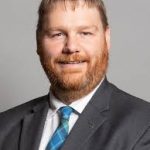
  • Owen Thompson – 2022 Speech on an Early General Election

    Owen Thompson – 2022 Speech on an Early General Election

    The speech made by Owen Thompson, the SNP MP for Midlothian, in Westminster Hall, the House of Commons on 17 October 2022.

    It is a pleasure to serve under you in the Chair, Mr Mundell. It is a bit of a challenge to prepare for a debate like this, because we are living through the most unprecedented series of political earthquakes, with the ground constantly shifting beneath our feet. It is almost as though we are living in a time when the longevity of a Prime Minister or Chancellor of the Exchequer is measured in hours rather than months or years, so please forgive me if I keep an eye on my phone to ensure that Ministers and policies remain the same as they were when I rose to speak. It is good to see this Minister in his place. He is certainly not hiding under any desks, as it may have been suggested that others were.

    This short-lived Government have pivoted so many times already—there have been so many U-turns—that we have absolutely no idea what direction we are travelling in, but we are lurching speedily towards a cliff edge. In effect, all the promises and pledges so firmly given by the Prime Minister during the long and tedious leadership campaign and reinforced several times over the last couple of weeks have been abandoned. We have been left wondering whether the notorious mini-Budget was a mere mirage to our collective consciences. The tax cut for the wealthiest, the basic rate cut, the dividend tax cut and the corporation tax cut are all gone—along with the former Chancellor himself. The only positive bit, I guess, was the two-year energy cap, which provided some much-needed certainty to struggling households, but it is also gone; even it is not there now. So what next? Who knows? The Prime Minister might even have gone by the time I finish speaking and sit down, although who would take the poisoned chalice is another matter.

    Even for an Opposition Member, it is at times almost too painful to watch this embarrassing farce of a Government limping on. It feels like a particularly shambolic episode of “The Apprentice”, and at this stage I do not think I would be surprised if Lord Sugar suddenly appeared and fired the lot of them. It is certainly beyond any parody that could be imagined in “The Thick of It”. I am sure that a few of us could imagine, or begin to imagine, what might be coming out of the mouth of Malcolm Tucker if he were having to deal with such a situation.

    We know that it has gone too far when we can no longer tell the satire from the ridiculous reality, but the gross economic incompetence of it all has deadly serious consequences for millions of people across the UK. There are people who are working 40 hours or more a week and are still unable to make ends meet. Established businesses are at risk of going under because they cannot afford to pay soaring energy bills. Families are going hungry or are afraid of losing their homes.

    I held a cost of living event in Gorebridge in my constituency just on Friday past. I had invited the Prime Minister to attend so that she might be able to answer constituents’ concerns directly. However, despite watching out for her, I regret to inform the House that she did not attend—a bit like earlier today. I was hearing harrowing stories from many people struggling simply to make ends meet. They did not know where to turn. We have a fantastic sense of community in Midlothian and we had a great range of partners in attendance, so we were able to point people to some of the right places. But what can people do when the Government fail so spectacularly the people they are meant to serve?

    I therefore completely understand where the petition has come from and why it has gathered such a high number of signatures. It is now 633,000 and continuing to rise—I am watching the petition clock up signatures as I stand here. That number includes more than 1,000 people in my own constituency of Midlothian. People are absolutely scunnered by what they have witnessed. At a time of crisis, they want a competent Government of their own choosing, not a Prime Minister chosen by a few.

    In response to the petition, the Government argued that the UK’s is not a presidential system. I am glad that they finally acknowledge that, because the Prime Minister and her predecessor—whose paw prints are all over the mess that we are in—do not seem to have much truck with collective decision making. They blatantly disregard evidence and seem reluctant to inform Cabinet colleagues of their latest back-of-a-fag-packet policy. For some time, there has been an unhealthy trend in the UK towards more personality-based politics—something that perhaps needs to be reflected on in calmer times.

    Of course, having a Government we did not vote for is not something new for those of us in Scotland; it is the normal state over the last number of years. I am very grateful that we at least have a clear exit route in front of us to escape from this bourach: we have a modern, proportional parliamentary system working well at Holyrood already and a Scottish Government ready with an alternative plan for our future should the people choose it. Independence for Scotland is not a threat to the rest of the UK or the social bonds that we cherish. It is an opportunity for a more equal partnership, whereby Scotland could demonstrate to the rest of these isles the genuine alternative to the status quo.

    We could protect the fabric of our communities, look after vulnerable citizens and protect our landscapes and nature. We could build a new, greener industrial base, becoming the renewable powerhouse of Europe and rejoining our European partners in free trade and travel across the continent. We could value everyone, no matter where they come from, and create a fairer, wealthier and more equal society. That will create sustainable, shared prosperity far better than any trickle-down economics—relying on scraps from a rich man’s table—ever could.

    In Scotland, we have a cast-iron mandate for a referendum on our future, yet this discredited Government and—disappointingly, I have to say—the official Opposition still seem to block all democratic paths to achieve it. Choice is the key issue here, and that is something that seems to have been forgotten in the corridors of power in this place. The right to self-determination is a fundamental and inalienable right of all people. It is enshrined in international law, the UN charter and the international covenant on civil and political rights. The UK Government support that principle for other countries, but not, it seems, for Scotland. For this chaotic and unpopular Government to continue to say no to a referendum is more like the actions of a dictatorship than those of a democracy, and I hope the next Prime Minister will reconsider that position, whoever they are and whenever they come along.

    While I agree with the growing call for a general election, it is not a long-term solution for our broken system. I urge all democrats, whether or not they support independence, to get behind Scotland’s right to choose. Democracy is not a one-time event—the Prime Minister has been able to change her mind on her policies in the space of a matter of days, so why should the people of Scotland not be able to change their mind after eight years of broken promises? The ground has shifted many times. All the big claims from Better Together have been spectacularly wrong: staying in the UK did not keep us in the European Union, it did not protect energy prices, and it most certainly did not keep the economy on a steady course. The future of Scots’ mortgages and pensions has never been more uncertain than it is today. When circumstances change, the people have a right to change their mind, as the current Prime Minister demonstrates again and again with U-turn after U-turn.

    Whatever the party of government chooses to do next, we have to remember that the crisis we face did not begin with the current Prime Minister—the one who was Prime Minister at the time of writing, at least—and it will not end when she goes, if indeed she is still in post. We have had 12 years of Conservative mismanagement. We have energy policies that are unfit for purpose, and austerity policies bringing public services to their knees. We have no solution to the continued chaos from Brexit, which has been a disaster for our businesses, public sector, education and research, holidaymakers, travel and cultural life. Sadly, Labour has no answer to that point. Another general election might put a plaster on some of those wounds, but it will not heal the UK’s chronic problems. Independence for Scotland is an idea whose time has come, and it cannot come soon enough.

  • Catherine West – 2022 Speech on an Early General Election

    Catherine West – 2022 Speech on an Early General Election

    The speech made by Catherine West, the Labour MP for Hornsey and Wood Green, in Westminster Hall, the House of Commons, on 17 October 2022.

    Thank you for calling me to speak, Mr Mundell. It is a pleasure to contribute to this debate under your chairmanship.

    This is a Tory crisis, made in Downing Street but paid for by working people, as my hon. Friend the Member for Newport West (Ruth Jones) has said. Changing the Chancellor over the weekend or making a partial U-turn does not undo the damage that has been done by the Prime Minister and the Conservative party, who selfishly used the whole summer for their infighting, rather than focusing on the needs of working families, such as their energy bills. Now look where they have landed us; they have undermined our institutions and trashed our standing on the world stage, damaging the country’s credibility as a place to invest. They need to get on with reversing this Budget in order to reassure the markets. However, the statement that is being delivered in the main Chamber as we speak here in Westminster Hall does not give me much cause for pleasure, because I believe that it will lead to more hardship for working people. Basically, it is balancing the books on the backs of working people, who have played no role in crashing the economy.

    The problem is the philosophy of trickle-down economics, which the Prime Minister seemed to promote when she was first elected to the post by Tory party members. However, the confusing thing—for members of the public, the markets and for us as MPs—is that the new Chancellor appears to have turned all that on its head.

    The Conservatives crashed the economy for unfunded tax cuts for the wealthiest, causing mortgages to skyrocket and making people worried sick about their pensions. When the Prime Minister was asked to come to Parliament to explain, somehow she sent someone else and was not even able to turn up to apologise for what she had done to wreck our standing in the world and to wreck the economy.

    I would be very happy with a general election. I hope that some fresh faces might improve the situation somewhat. The important thing is that, as a representative from Tesco said yesterday on the BBC, the Labour party has a plan. It has the confidence of large groups such as Tesco and others. When Tesco, or another large company like it, agrees with the trade unions that the Government have wrecked the economy, we know it is time for some fresh faces.

    We are ready. We have been watching for 12 years. We have been watching as child poverty has skyrocketed. We have been watching as the promise of levelling up—which was a good Tory pledge and a good idea—has utterly failed. We will see that as the Chancellor now announces the cutting back of capital and revenue spend in the poorest corners of the UK.

    With the Office for Budget Responsibility not having laid out its view, it is difficult for us to say exactly, in pounds and pennies, what Labour would do. However, we have enough of an outline; we have something that is much more convincing than what the Government will take to the general election. It may not come today and it may not come tomorrow, but we all know that the general election is not far off.

    Let us talk briefly about the mortgage situation. We will need a plan for people’s mortgages. The eye-watering mortgage increases will cause homeowners across the country sleepless nights. In the area I represent, where there are very expensive mortgages because the cost of housing is so high in London, those who can buy their own homes are very stretched indeed. One mum told me that she had sleepless nights, saying, “How am I going to come up with £800 as of next spring? I don’t know where that’s going to come from.” Her job is quite well paid, but it does not pay another £800 a month. Those are the sorts of conversations that families are having up and down the country. Mortgage increases will lead to more families breaking up, too. It is a fact that the more financial worries people have, the more that families tend to break up under their weight.

    Another thing that is very much on our minds as Labour MPs is the question of benefits, and what will happen to the poorest in our society. The events that we are most often invited to attend in our constituencies are food bank openings. I have been involved in both local and national politics since 2001, and I have never gone to so many food banks. Bounds Green food bank tells me that it used to open at 10 in the morning and close at 1 pm, but it now closes at 11 am, because in one hour all the food is gone, and there are fewer and fewer people who are able to donate. This crisis is doubly unfair on those who need to use food banks.

    Working parents, disabled people and the poorest pensioners must have the knowledge that, when we get in, our Government will ensure that they can pay for the cost of living. In fact, once we get in, and there are fresh faces and fresh energy, I believe that the economy will improve a bit—just on the basis that we have more energy and some ideas. In a democracy, any Government tend to run out of ideas. After 12 years, this is a genuine fact: the Government have run out of ideas. We saw that in the summer, when Tory candidates said some nonsensical things and were completely out of touch with what the average person is deeply worried about.

    I have another couple of points to make. I am very worried about the treatment of the civil service during the last month. It was not just the fact that the Office for Budget Responsibility was not permitted to give an outline to MPs, journalists, markets and citizens; pushing out the head of the civil service and the Treasury on day one sent a very bad message to all those parties. Over the years, civil servants in our system have held up a non-partisan approach to what the right thing is for the country. That is not to say that there cannot be conflicts or debates between a politician and a civil servant, but sacking the most senior civil servant in the Treasury was one of the most troubling things I have seen since being in this House.

    The OBR was not allowed to make its statement, institutions such as think-tanks and the Institute for Fiscal Studies were publicly trashed over the summer, and very negative language was used about the Governor of the Bank of England, when his job is to provide financial stability for the country. Time and again during the leadership election there were subliminal and quite outspoken criticisms of the Governor. The scene was being set for trashing the institutions that basically, through a gentleman’s agreement, hold together our standing domestically and internationally. That was completely detonated when the current incumbent in Downing Street—I assume she is still there—got into power. The judgment of that individual has come into our sight.

    Something else has been really bothering me in the last couple of weeks. As we have a couple of minutes up our sleeve, may I be indulged, Mr Mundell, in mentioning that I read in The Guardian that when the Prime Minister moved into Downing Street she moved out of the former Prime Minister’s office—Mr Johnson’s office—and allowed her assistant, Mr Mark Fullbrook, to move into it? Mr Fullbrook is based in Mr Johnson’s office, and apparently the current Prime Minister uses the Cabinet room for her discussions. Fair enough, but it worries me deeply that this individual has a very questionable record on two counts. First, there is a question over who he has advised in a Libyan set-up, and whether he has advised correct people there. Secondly, there is the question of his advice in a gubernatorial race in the USA. Money came into his company so that he could work on somebody else’s campaign, and the FBI has been looking at whether the funding has been correctly transferred from one party to another.

    To have somebody who is being investigated by the FBI sitting in Mr Johnson’s former office chills me to the bone, but that is the sort of Government who have finally got into power in this country. Regardless of how many days this Government have left, we urgently need an independent ethics adviser to be appointed. Other Members may be able to clarify this, but my understanding is that the Prime Minister said that that was not urgent, and not particularly necessary. I think it is urgent, but only a new Government can clean up the mess that this Government have got themselves into.

    I will talk briefly about constituents who have written to me about the cost of living crisis. They are not necessarily going to food banks currently, but they are finding life very difficult indeed. They have told me how much food in the supermarket has gone up by—real basics, such as milk, butter and chicken. People should be able to put those basics on the table to feed their families. Energy costs and the cost of petrol to go into someone’s car have been soaring; yet what we have been discussing in the House of Commons often does not reflect the pain that many people are going through. We want to see workers getting decent pay, being respected, and having their rights at work respected—not a Government who seek to roll back further the rights of trade unions, or of people who want to protest against what the Government are doing. We are seeing increasing authoritarianism, which seems to go hand in hand with the financial mistakes that the Government have made.

    We want the question of the national grid and energy shortages to be addressed with some sincerity and honesty. Last week and the week before, when National Grid warned that there would be blackouts, no one really believed the Government when they said, “We’ll be fine”. We have been told that before and then we have had a crisis. It is deeply distressing to see the lack of honesty. We need the Government to be honest and say, “There could well be blackouts, and if there are, this is what you do: one, two, three.” They should not let people live in fear that that will happen without the correct advice on what to do if it does.

    On clean power, which links to the national grid question, the next Labour Government will launch an urgent mission for a fossil fuel-free electricity system by 2030, making the UK a clean energy superpower that will export clean power to the rest of the world. Gas futures price projections show that that would save UK households £93 billion over the rest of this decade, or an average saving of £475 per household every year until 2030. This world-leading commitment would support the creation of more than 200,000 direct jobs and 260,000 to 300,000 indirect jobs.

    That kind of vision, plan and investment in skills and the future, with a proper plan for our regions, is giving the likes of the Tesco boss who said that Labour had a plan confidence that we do. The UK would be the first major economy to make that world-leading commitment, alongside smaller European countries such as Austria, Portugal, Denmark and the Netherlands. It complements Labour’s plans to increase energy efficiency, including through our warm homes plan to insulate 19 million cold, draughty homes over a decade.

    A number of Members have been on local councils. When I was a borough leader in 2010 we had a very good programme for giving away boilers to the private rented sector, and a plan to retrofit draughty Victorian properties. After 2010, it was disappointing to see Mr Osborne decide to trash all spending to councils, including for all the important green programmes to insulate homes. We would have had 30% more warm homes in my constituency if that small amount of funding had been allowed to continue. I am sure that if that had been replicated across the UK, we would spend so much less as a nation on fuel and energy.

    Martin Lewis has made his most recent projection of what our fuel bills will look like next year. I am pleased that we will not be opposing the energy price guarantee legislation this evening, but for goodness’ sake, get the money off the companies. Do not put it on to debt, because that will make the markets go crazy again. The Government must listen to the Opposition and accept that we have sometimes come up with some good ideas.

    Thank you for your patience, Mr Mundell, as I have been on a circuitous route around the question of a general election. I have laid out some of our good ideas. We will have an energy policy for the future. We will have a plan for working people. We will have a vision for no more food banks, for the building of more affordable homes for our residents, and for enhancing our role in the world. I hope we will look at eliminating our huge trade deficit, which is another area that worries many of us on the Labour Benches. I hope that with some fresh faces and energy through the upcoming general election, which I am sure will come, we will end up with a wonderful team of committed Labour Cabinet members and a Labour team that will restore us as the best country in the world.

  • Ruth Jones – 2022 Speech on an Early General Election

    Ruth Jones – 2022 Speech on an Early General Election

    The speech made by Ruth Jones, the Labour MP for Newport West, in Westminster Hall, the House of Commons on 17 October 2022.

    It is a pleasure to serve under your chairmanship this afternoon, Mr Mundell. I am grateful for the opportunity to speak in today’s important debate on e-petition 619781. I pay tribute to my hon. Friend the Member for Newcastle upon Tyne North (Catherine McKinnell) for speaking so well and giving voice to so many concerns felt by me and an increasing number of my Newport West constituents.

    The state of our nation is far from strong, and it is important that we recognise that the challenges and obstacles faced by the people of our United Kingdom have been caused by the Conservative party and our Prime Minister. This is a Tory crisis, made in Downing Street, and being paid for by working people in Newport West and across the country. This 12-year-old Conservative Government have crashed the economy through enormous unfunded tax cuts; they have left people worried as they face higher mortgages and soaring costs, and have done nothing to show they understand how serious the situation is.

    On Friday, the right hon. Member for Spelthorne (Kwasi Kwarteng) was fired by the Prime Minister, who is his ideological bedfellow. They were in lockstep over every key element of Government policy announced since 6 September 2022. We do not simply need a change of Chancellor; we need a change of Government and a general election.

    Of course, Government Members, if they were here, would say that His Majesty’s Opposition have to call for an election—it is what we do; that is our job—but we are beyond simply saying it for the sake of it. Indeed, The Sunday Times editorial yesterday called for a change of Prime Minister and a general election, and I quite agree. I feel sure that the Leader of the Opposition, my right hon. and learned Friend the Member for Holborn and St Pancras (Keir Starmer), stands ready to lead.

    Our nation is in peril. Our people, from Scotland to Wales and from England to Northern Ireland, are having to decide between heating and eating. Now, with rising mortgages, people across the nation face losing their homes. We are in a disgraceful situation, and not one word from any Minister in this Government reassures me that they understand the challenge before them. They also do not understand the scale of the change required, or the fact that if we do not stabilise the markets through sensible policy decisions we will push our people not just to the edge, but over the cliff.

    I was not elected to this place by the people of Newport West to stand by and let this reckless, out of touch and inward looking Tory Government get away with destroying the lives of tens of millions of people. That is the situation we are in, and, as my hon. Friend the Member for Newcastle upon Tyne North made clear, that is why we need a general election. The petition we are considering today has more than half a million signatures; indeed, as my hon. Friend said, there are 630,000 signatures and the number is still increasing. As parliamentarians, we have a responsibility to give voice to people’s fears, worries, concerns and demands.

    I asked one of my constituents, Amanda Bayliss, who lives in Caerleon, for a quote for this debate and she said:

    “Dear Ruth, I am appalled and devastated by the actions of this current government. I’m genuinely worried and afraid for my future and that of my children and grandchildren.”

    She went on to say that this

    “government must be stopped at all costs before there is nothing left of this country, and we reach a point of no return.”

    It is not just Amanda in Caerleon; across Newport West, I am accosted by people in the supermarket or on the street, and yesterday even in church, who say, “For goodness’ sake, Ruth, get rid of this Government”. I have to tell them that I do not have the power to do so.

    This petition shows the strength of feeling across the United Kingdom. Our United Kingdom is living through a moment of profound change. It needs a Government who can deliver an economy that works for everyone, delivering the jobs and growth of the future. In recent days, we have been reminded of how working people have been left counting the cost of 12 years of Tory Government. The Conservative party’s failure to grow the economy has resulted in stagnant wages and broken public services.

    The Labour party has a serious plan for growth and wants to see all our nations and regions benefit from and contribute to the growth and jobs of the future as we deliver net zero. The Chancellor of the Exchequer, the right hon. Member for South West Surrey (Jeremy Hunt), is now the de facto Prime Minister, without a single vote being cast by a single person.

    We know now that the Prime Minister believes in the failed trickle-down ideology of the past, which has locked Britain out of growth and which will never deliver for working people. My party will deliver for working people, as it is already doing in Wales; Labour, under First Minister Mark Drakeford, is delivering for the people of Newport West and for people across Wales.

    Here and in Wales, the Tories are the party of vested interest and their time to go has come. That is why we need a general election, and when it comes Labour will deliver the fairer, greener future that this country deserves.