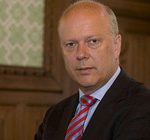
Category: Parliament

  • Michael Gove – 2020 Statement on Historic Records Transfer

    Michael Gove – 2020 Statement on Historic Records Transfer

    Below is the text of the statement made by Michael Gove, the Chancellor of the Duchy of Lancaster, in the House of Commons on 6 July 2020.

    The Constitutional Reform and Governance Act 2010 amended the Public Records Act 1958 and introduced a 20-year rule for the transfer of historic government records to the National Archives. This replaced the 30-year rule in force since 1967. The Act made provision to phase in this change over 10 years, beginning in 2013. The transitional arrangements require the Cabinet Office to transfer records of 1997 and 1998 by the end of this year. The Cabinet Office’s historic records include those of the Prime Minister’s Office. This statement provides an update on the impact of covid-19 on our work in this area.

    Since 2015, the Cabinet Office has made two transfers a year, in July and December. The July opening is discretionary and reflects the Cabinet Office’s commitment to opening as much as possible as early as possible.

    Measures to contain covid-19 have inevitably had an impact on work in this area. It will not, therefore, be possible to transfer records in July this year. Whilst work has continued as normal in many areas across the Department, archival work requires physical access to hard copy files to complete the review and preparation of documents for transfer.

    In addition, the National Archives building in Kew closed to the public and staff on 17 March 2020 and at present is unable to facilitate the transfer of new records.

    I remain fully committed to meeting our obligations under public records legislation. The Department is undertaking an assessment of the wider impact of the covid-19 restrictions on work in this area. We will work with the National Archives and the advisory council on national records and archives and will provide a further update to the House in due course.

  • Pete Wishart – 2020 Speech on Parliament Appointing the Prime Minister

    Pete Wishart – 2020 Speech on Parliament Appointing the Prime Minister

    Below is the text of the speech made by Pete Wishart, the SNP MP for Perth and North Perthshire, in the House of Commons on 1 July 2020.

    I beg to move,

    That leave be given to bring in a Bill to make provision for the House of Commons to nominate the Prime Minister and approve appointments to the Cabinet; to establish the office of Acting Prime Minister; and for connected purposes.

    This is the third time I have attempted to bring this Bill before the House. The first time it had to be to be withdrawn because of a general election and the second time because of the covid lockdown. I was trying today to ensure that no other disaster befell me, so that I could be here in my place to deliver this Bill.

    One of the most curious things about the whole concept of parliamentary sovereignty is the fact that this House is not the least bit sovereign in the nomination of a Prime Minister. Shrouded in semi-mysticism and quasi-convention, this House plays absolutely no part in the process of deciding or determining the nomination of a Prime Minister, save serving solely as a mere spectator. My Bill puts that right by ensuring that the nomination of a Prime Minister and his or her Cabinet is a matter for the House and that we, as representatives of the people of this country, have a role to play in handing over the keys to the most powerful offices in this land.

    First, what this Bill does not do: it does not in the least alter the role of Her Majesty the Queen in the proceedings. The appointment of a Prime Minister will still be exclusively the job of Her Majesty the Queen as part of her prerogative powers. The Bill strengthens the constitutional convention of keeping the monarch out of politics, by ensuring that she appoints a Prime Minister having had that nominee agreed by this House.

    Through this Bill, I seek in effect to bring this House into the 21st century and replicate the conditions that we find in most other, properly functioning representative democracies right around the world, and even in properly functioning representative democracies in the rest of the United Kingdom. In the Scottish Parliament, the First Minister and her Cabinet must be approved by the Scottish Parliament and MSPs. The same is true in the Welsh and Northern Irish Assemblies; even the London Assembly works on that basis.

    The process allows confirmation from Parliament and even allows alternatives to emerge to see whether he or she might have the confidence of the House. The Bill would end the current situation, where a Prime Minister of this country can be decided by a few thousand members of the Conservative party. It would end the practice of the House’s having a Prime Minister foisted upon it without so much as a by-your-leave, where the Conservative Association of, say, Tunbridge Wells has more of a say than a directly elected Member of Parliament in determining who the Prime Minister is. [Hon. Members: “Hear, hear!”] I hear the “Hear, hears” from Conservative Members, who obviously enjoy that particular privilege.

    Let us take a cursory look at how we had the good fortune to get our current Prime Minister. He was appointed by Her Majesty as a result of winning the Conservative leadership contest triggered by the resignation of the right hon. Member for Maidenhead (Mrs May), who was first appointed Prime Minister on 31 July 2016 as a result of the resignation of David Cameron as Prime Minister in July 2016. Since 2015, the UK has had two Prime Ministers appointed outside of a general election, determined exclusively by the membership of the Conservative of the United Kingdom. Looking at the current incumbent, we can only surmise the efficacy and good sense inherent in the current arrangements. This House must never again have an unelected Prime Minister forced upon it. A Prime Minister must be able to demonstrate that she or he has the confidence of this House at the inception of his or her premiership. My Bill would ensure that happens.

    My Bill would also help to deal with some of the issues that might unexpectedly arise in the course of a parliamentary term—for example, a Prime Minister losing a referendum on the European Union and having to resign. The current Prime Minister actually wiped away his own majority by banishing from the ranks of the Conservative party those who disagreed with his hard Brexit. His Government were left in a minority, yet he was still able to control the Order Paper of the House of Commons, though lacking the ability to pass any meaningful legislation.

    Then what did the Prime Minister do? He illegally prorogued Parliament to prevent the Brexit purgatory being effectively scrutinised and unnecessarily drew the Queen into illegal political proceedings—something that my Bill would address and rectify. Quite frankly, there is no way the current Prime Minister would have been approved by the House, as he would not have been able to demonstrate that confidence in the last Session of Parliament, and had this procedure been available to us last year, we could only speculate as to whether the United Kingdom would be in a better place now.

    The provisions in the Bill would be triggered by any of the following: any general election under the terms of the Fixed-term Parliaments Act 2011; the Queen accepting the Prime Minister’s resignation; the office of Prime Minister becoming vacant for reasons other than resignation—namely death; and the Prime Minister ceasing to be a Member of the House of Commons as a result of a recall or crime, which of course we could never imagine happening with the current incumbent.

    Let us look specifically at one of these examples, because it is quite timely and relevant. All of us are rightly relieved to see the Prime Minister back in such rude health, press-upping his way to his disastrous Brexit. Looking at this epitome of a butcher’s dog, I find it hard to believe that it was touch and go for him only a few short weeks ago. Thank goodness he pulled through. With the Prime Minister’s incapacitation, however, we got the equivalent of government by headless chicken. Without the Prime Minister’s customary decisiveness and head for detail, we had no idea who was running the country.

    It seemed that the Foreign Secretary was in charge, by dint of his being the First Secretary, but he executed these responsibilities with all the guile of Emu without the assistance of Rod Hull. His only qualification for that role seemed to be that Dominic Cummings could not think of anybody else. He might not have been doing the job had we had a Deputy Prime Minister, but of course we no longer have one—that unpaid, powerless position whose holder sometimes deputises for the Prime Minister seems to have gone the same way as Nick Clegg. My Bill would create the office of acting Prime Minister to ensure that someone was accountable for the operation of government until the stricken Prime Minister recovered or another was found.

    My Bill would do much more than that, however, by seeking to ensure that the whole apparatus of government be a matter for this House and that the activities of wider government and all its advisory functions and capacity come under the responsibility of Parliament. Right now, there seems to be an initiative to reinvent the civil service in the guise of a hard Brexit organisation. A politicisation of the civil servants is being undertaken the likes of which we have never encountered in this country before. A state apparatus is being assembled in the guise of Dominic Cummings, who now effectively runs Whitehall, and we in this House have no right of scrutiny or ability to properly consider all this activity. The extraordinary sight of a Government adviser making a press statement to the country from the Downing Street rose garden could be the metaphor for how the country is now being governed.

    My Bill would codify certain aspects of the ministerial code to ensure that the whole of Government was accountable to this House. Ministers would have a duty to Parliament and be held accountable for the policies, decisions and actions of their Departments and agencies. It would uphold the political impartiality of the civil service and ensure that civil servants are not required to act in any way that would conflict with the civil service code as set out the Constitutional Reform and Governance Act 2010.

    My little Bill is simple in scope, but it is ambitious in what it wants to achieve. Our unwritten constitution, designed by convention, needs updating and refreshing, and that should start with the appointment of a Prime Minister and his or her Cabinet. We must never again have a Prime Minister nominated without the consent of this House. We must start to exert control and authority. This is a sensible and practical Bill to bring this House into the 21st century, and I commend it to the House.

  • Steve Reed – 2020 Comments on Labour Referring Robert Jenrick to Parliamentary Commissioner

    Steve Reed – 2020 Comments on Labour Referring Robert Jenrick to Parliamentary Commissioner

    Below is the text of the comments made by Steve Reed, the Shadow Communities and Local Government Secretary, said in a statement on 26 June 2020.

    The Prime Minister can’t just sweep this issue under the carpet. There are still so many unanswered questions about Robert Jenrick’s unlawful attempt to help Richard Desmond dodge £150m in tax days before he made a generous donation to the Conservative Party.

    The Prime Minister has yet again shown woefully poor judgment by not referring clear breaches of the Ministerial Code to the Cabinet Secretary and he must now come clean himself about his own involvement in this case.

    The Government must publish all the remaining secret documents in this case to show the public what Mr Jenrick and the Prime Minister were really up to and prove that this is not the start of a new era of Tory sleaze.

  • Pete Wishart – 2020 Speech on Independent Complaints

    Pete Wishart – 2020 Speech on Independent Complaints

    Below is the text of the speech made by Pete Wishart, the SNP MP for Perth and North Perthshire, in the House of Commons on 23 June 2020.

    It is a real pleasure to speak in this debate. I have had the great privilege of having served in all the various ICGS working groups since their inception, and it is particularly good to be here today to say a few remarks on behalf of the House of Commons Commission on what hopefully will be the conclusion and the implementation of all the recommendations that have been made to the ICGS.

    As I look around the Chamber today, I can see several colleagues who have served on the various incarnations of the working group, and I pay tribute to them for their contribution and dedication. In particular, I pay tribute to the right hon. Member for South Northamptonshire (Andrea Leadsom), whose vision, leadership and guidance at the inception of all this helped to guide us through this process, so I thank her for her contribution today.

    Today, we are here to bring the ICGS in line with the third recommendation of Dame Laura Cox. It is worth briefly reminding ourselves of what Dame Laura Cox actually said about this House in her most damning report and the litany of issues that she uncovered. She talked of an

    “excessively hierarchical, ‘command and control’ and deferential culture, which has no place in any organisation in the 21st century.”

    That is what Dame Laura said.

    It is two years since Dame Laura Cox presented her report to the House. It was in October 2018 that the Commission overwhelmingly agreed to all three of her recommendations. We have heard that the first two have been implemented. One was, of course, the behaviour code, which has been put in place. The second was looking at historical cases, and today we are considering the third recommendation. Let us just remind ourselves what that is. It is to put in place the mechanism whereby complaints of bullying, harassment or sexual harassment brought by House staff against Members of Parliament would be an entirely independent process in which Members of Parliament will play no part. For this to happen, the Commission set up a working group to put together how we should respond to this and to bring this House in line with that recommendation. That was met with the Commission’s unanimous agreement to establish the independent expert panel to replace the Committee on Standards in considering cases brought under the ICGS.

    At our last meeting of the Commission, we confirmed our support for the implementation of the independent expert panel, and we asked for this matter to be brought before the House. The new panel will determine sanction in cases where the Parliamentary Commissioner for Standards does not have the power to invoke sanctions. As we have heard, this could include the suspension or expulsion of a Member of Parliament. These serious cases will be referred to the panel and will be considered ​by a sub-panel of three independent experts, supported by specialist advice. When decided and concluded, a Member of the House of Commons Commission, probably me, will move a motion to allow the House to implement the sanction determined by the IEP. Lastly, Madam Deputy Speaker, you will know that the Commission agreed that the House would be asked to consider whether there should be a time-limited debate in these circumstances, and that is where we are today, with the motions in the name of the Leader of the House.

    The motions accurately reflect the considerations of the House of Commons Commission, and its members are pretty much in line and in step with what Dame Laura Cox expects in the implementation of her third recommendation. That is, of course, until we get to paragraph D(1) in motion 5, where the Leader of the House makes that provision for the debate. If it is helpful to the House, what the Commission decided in our consideration of this issue was that we would let the House decide whether it wanted a debate. I think the expectation was that a couple of motions would be brought by the Leader of the House, which would give us flexibility in our options. Instead, we have this one determination of the Leader of the House, which is that we are now invited to a yes or no. I do not think that I am giving away any secrets, Madam Deputy Speaker, when I say that the Commission was almost split down the middle when we were considering this matter, and that was why we felt it was appropriate that the House should decide and determine this.

    My view as a Member of the House who has been involved in the ICGS for the past two and a half years is that what the Leader of the House suggests in paragraph D(1) breaks practically every principle and the whole spirit of the third Cox recommendation. It is little wonder that there is profound disappointment among House staff today. Such are the concerns that Dame Laura herself has felt the need to respond to some of the representations from staff. She notes the fears that a debate could result in a complainant’s confidentiality being compromised and speaks of

    “the chilling effect that this will undoubtedly have on complainants reporting cases of harassment or bullying”.

    There are real concerns that MPs will debate the findings of an independent judgment on one of their colleagues while protected by privilege, with staff having no equivalent platform. That cannot be right.

    The Leader of the House seeks to assure us with motion 6, but we cannot escape the overwhelming conclusion that Members and complainants could be identified inadvertently in a debate. Colleagues and friends of somebody who has been complained against will feel the temptation to get up there and defend them.

    Mr Carmichael

    The hon. Gentleman is drilling down into an important part of the issue, which is about procedural fairness. It goes to the point raised by the right hon. Member for Gainsborough (Sir Edward Leigh). Once we got into a debate, it is inevitable that we would get into the merits of the issue; how, procedurally, could we expect not to?

    Pete Wishart

    I think that concern has been expressed by the House staff after looking at the motions presented by the Leader of the House today.​

    As was mentioned by the Leader of the House and shadow Leader of the House, the House should make the ultimate determination about the expulsion or suspension of a Member of Parliament. That is right, but it should not be done through a debate. That is why I will be supporting the amendment tabled by the hon. Member for Rhondda (Chris Bryant), and I really hope that the rest of the House will too.

    It is disappointing that this little issue has presented itself after we have come all this way with full agreement, full consensus and the involvement of the House staff, and are just at the point of doing this. I say to the House: stick with the principles of Laura Cox and support the amendment this evening.

  • Jacob Rees-Mogg – 2020 Speech on Independent Complaints

    Jacob Rees-Mogg – 2020 Speech on Independent Complaints

    Below is the text of the speech made by Jacob Rees-Mogg, the Leader of the House of Commons, on 23 June 2020.

    This is a dreadful position for us to be in as a House. The behaviour of a small number of Members of Parliament over years and decades has disgraced and shamed our parliamentary democracy, of which I, and many hon. Members, are so proud. Our ancient right that we should look after our own affairs is to be sacrificed, because the importance of restoring the trust of the British people in our system makes that the right thing to do. How we treat each other matters at all times in all places, but particularly in Parliament. It matters wherever people work together, for everyone should be able to perform their roles in an atmosphere of courtesy and respect, and it most certainly matters in the Palace of Westminster.

    There are about 13,000 passholders with access to the parliamentary estate. In recent years, we have been trying hard to create the kind of culture that prioritises having a safe working place where people are afforded respect and which enables them to speak out and be confident that they will be listened to. My predecessors, particularly my right hon. Friend the Member for South Northamptonshire (Andrea Leadsom), made an enormous contribution to that effort by achieving cross-party agreement for the establishment of an Independent Complaints and Grievance Scheme. That we had to do so is an indication of how far some in this institution had failed and had not lived up to the standards required of them.

    The ICGS has already been approached by a large number of people, receiving 201 calls and emails in the first quarter of this year alone from those who feel that they have faced bullying, harassment or sexual harassment. However, there are some complaints that have not yet come forward because of the concerns of the complainants that Members continue to play a role in the sanctions process. This is where we have the greatest challenge in restoring trust: not just between us and voters, but between us and those who work in this place.

    The approach I am putting forward today is motivated by supporting those who need to make complaints and allows for the restoration, I hope, of our reputation. Since becoming Leader of the House, I have spoken to a number of complainants and potential complainants about the progress made so far. Every conversation I have had has left me profoundly moved and, in some cases, shocked and appalled by some of the things that have happened to people in this House, some of which seem to me to reach the threshold of criminal activity. This place, which ought to be the epitome of good behaviour, has been besmirched by that. I am therefore determined to do more to continue the momentum for sustained culture change that was begun in the previous Parliament.

    I, of all people, cannot pretend that I like abandoning some of the ancient responsibilities and rights of Parliament, but it is our fault that we have to do this and so it is right to change. There is a problem of the power dynamic which can occur wherever those in a position of influence assume that they are able to act without consequences, so it is right that we seek to change the culture in order to challenge that assumption. In Westminster, we have introduced a behavioural code; established the “Valuing Everyone” training; replaced the Respect and Valuing Others policy with the ICGS; and extended the scheme to include historic allegations of some former members of the parliamentary community. The latter two steps ​were the result of Dame Laura Cox’s recommendations made in her report on the treatment of House staff. Her third recommendation, however, remains outstanding: that Members of Parliament should no longer be able to determine the sanctions imposed.

    It is no coincidence that that outstanding recommendation is by some distance the most constitutionally challenging and the most significant, too. Under our current arrangements, the Parliamentary Commissioner for Standards has the power to determine cases and impose sanctions up to a certain level of severity. Until now, more serious cases, including suspension and expulsion from the House, have been for the Committee on Standards to determine. In February, the House of Commons Commission agreed its preferred option of those presented by the staff team on a means of changing that: that there be an independent chair and seven expert panel members, none of whom will be MPs. The panel should be empowered to determine ICGS cases, decide on sanctions, and hear appeals by either party against the Parliamentary Commissioner for Standards’ conclusions. That proposal has been the subject of consultation over recent months and Dame Laura Cox herself was among those who supported that approach.

    While I am taking steps to strengthen it further, I am supportive of the House of Commons Commission’s proposed solution overall. Placing decisions of this kind in the hands of an independent expert panel is a fundamental break with the past that reflects our continuing efforts to make Parliament a better place to work.

    Alberto Costa (South Leicestershire) (Con)

    I wholeheartedly welcome the momentum for having a system that is fair and transparent. The Leader of the House referred to the constitutional significance of the creation of this new independent body. Is he aware of an independent body in any part of the UK with such sweeping disciplinary powers over its members that is not justiciable? My concern is that if an accusation is made against Members, they will not have any recourse to a court of law, whereas if an accusation of bullying against a member of House staff or Members’ staff is upheld by the panel, they would have recourse to a court of law or an employment tribunal.

    Mr Rees-Mogg

    The question of parliamentary privilege applying to the ICGS is one that will have to be determined by a court, and it is not entirely clear whether they would be covered by the article 9 rights. The reason we have to have a final vote in this House is that there is no court outside Parliament that can question the proceedings in Parliament. That is at the heart of the constitutional dilemma that we have been facing. It is also why we are making this fundamental break with the past.

    In allowing an independent body to take such action we are making a really important constitutional change. We are doing this—and we are right to do this—because of the way that some Members have behaved, and we have to stop that happening in the future. As Leader of the House, I am ashamed when people come to see me and tell me what they have suffered; I am appalled at the stories they tell me and shocked sometimes that they have not been to the police about them when they are so awful. That is why we have to have this change, which hits at the heart of our constitution. The House knows that I have an admiration and affection for our constitution that does not seek to change it lightly.​
    Let me come to the panel and the level of member that we expect. The panel’s members must bring significant expertise to the process, and we will expect it to be led by somebody who has a standing equivalent to that of a High Court judge. It must also include knowledge of human resources, employment law, bullying and harassment cases and sexual harassment cases. In a serious case, three of the independent experts would consider the sanction in the light of the report and recommendation of the Parliamentary Commissioner for Standards. A further three would act as an appeal panel if necessary.

    In cases considered by the panel that propose sanctions requiring action by the House, the panel would report directly to the House. At that stage, a motion would be moved by a member of the House of Commons Commission to implement the sanction, and it is at this stage where we find ourselves on the horns of a dilemma. On the one hand, it is constitutionally proper that a decision of this magnitude—the expulsion or suspension of a Member—can only be taken by the House as a whole. It is removing, in effect, albeit temporarily, the democratic representation of tens of thousands of people, and we can only take away that democratic representation by a motion of this House. It does not seem right that a decision that could overturn the result of an election in a constituency could be taken by unelected individuals.

    Sir Edward Leigh (Gainsborough) (Con)

    All bullying is horrible and goes against traditional good manners; we all accept that. I hope that the Leader of the House will emphasise the point that he just made: the fundamental difference between Members of Parliament and all other staff members is that we are elected by the people. We are responsible to the people, and the people must have the final say on whether we come here in the first place, when we leave and how we leave. That is very important. However distinguished an independent panel, only the people have the final say.

    Mr Rees-Mogg

    My right hon. Friend makes a crucial point: we are elected by the people, and we are answerable to them. That is why I support the principle that only the House of Commons holds the authority to make the decision to suspend or expel.

    Justin Madders (Ellesmere Port and Neston) (Lab)

    The Leader of the House is making an excellent speech. To pick up on the previous intervention, we may be democratically elected, but we are also employers, and we have a duty of care to the people we employ. Does he agree that that is equally important?

    Mr Rees-Mogg

    It is of fundamental importance, and I say again that I have had people come to see me who have been treated in a way that makes my skin crawl. You cannot believe that senior people would have behaved to people subordinate to them in such a way in any workplace, let alone in the House of Commons, which ought to be a model of good behaviour. That is why we have to have the counterbalancing bit, but we cannot give MPs an opportunity to delve into the personal details of a case and try it effectively a second time. The other place offers a cautionary tale in this regard.

    Having listened carefully to views expressed to me in recent days, I am proposing that we establish a convention that the Commission member moving the motion will ​do so formally. This means the expectation will be that there will be no detailed debate, while maintaining the constitutional right to debate. In addition, I am asking the House explicitly to restrict what it is permissible to refer to during any further proceedings on severe ICGS cases in the Chamber.

    To that end, motion 6, in my name, emulates the sub judice resolution, which the House carefully and successfully observes to avoid prejudicing any current criminal proceedings and which is enforced from the Chair. The motion sets out that the names of any complainants may not be referred to. The details of any investigations or specific matters considered by a sub-panel of the independent experts panel, in any motion, debate or question brought to the House, may not be referred to. Furthermore, the findings and determination of sanctions of a sub-panel may not be brought into question. The motion will ensure that any debate that does occur, which is something of a misnomer in this instance, is merely a short, factual exposition of the process, not the circumstances involved.

    Jim Shannon (Strangford) (DUP)

    I seek some clarification because I have been looking through the amendments that have been tabled, and the right hon. Member for South Northamptonshire (Andrea Leadsom) has tabled what I believe is an excellent amendment, which would address this issue. Is the intention to bring that forward?

    Madam Deputy Speaker (Dame Rosie Winterton)

    Order. That amendment has not been selected.

    Mr Rees-Mogg

    Thank you, Madam Deputy Speaker. I turn to amendment (a), tabled by the hon. Member for Rhondda (Chris Bryant) , who has been very helpful in this process and in the discussions I have had with him. I understand that some Members remain sceptical about the approach that I have set out and whether it is the right one, and this amendment seeks to remove entirely any possibility for debate in these circumstances. I am not entirely unsympathetic to this view, because our priority is to restore confidence in the ability of the House to achieve the standards that are reasonably expected of us and to ensure that people making complaints, some of whom, as I have said, have been treated in the most appalling way, feel that the system will not add greater pain to that which they have already suffered.

    However, it is my view that it would be wrong for the Government to have tabled a motion that denied the House the opportunity to consider a matter of this gravity. It should be for the House, not for Ministers, to decide that they wish to curtail the ability of Members to conduct debate. The House can set its procedures as it wishes, but it would not be constitutionally right for the Executive to seek to limit free speech in this House.

    I believe that this curtailment can be avoided and have set out how we can meet our constitutional requirements, while reassuring those wishing to access the ICGS who have not yet done so that they will have their confidential information preserved and protected. But if the House agrees to this amendment, it will willingly and knowingly have taken this approach, and in those circumstances, motion 6 will not be moved.

    While the amendments tabled today differ in terms of the means, I think we are all entirely united in the ends, signalling our collective determination to make a break ​with the past. Above all, this is a matter for the House, which this House must get right to show that we are genuinely committed to change.

    Mr Alistair Carmichael (Orkney and Shetland) (LD)

    The Leader of the House has taken us very deftly through the constitutional and procedural aspects, but there is a further test that I think the House needs to apply: whether the outcome of the decisions that we make will make it more or less likely that the people whom he has met and whose complaints he has heard will have confidence in the system to see it through to a conclusion. I suggest gently that that is why the amendment tabled by the hon. Member for Rhondda (Chris Bryant) is a sensible one.

    Mr Rees-Mogg

    The right hon. Gentleman makes an important point. I believe that the proposal that the Government have put before the House balances the constitutional needs and the protection of the individual complainants, but I make no criticism of those who have come to a different conclusion. I absolutely share his concern not only that we must ensure that people are not discouraged, but that we must all—in our own way, when we can and when it comes to us—encourage people to use these systems, because they are there to protect people who are vulnerable. That is very important.

    Meg Hillier (Hackney South and Shoreditch) (Lab/Co-op)

    The tone of this debate is in the right direction, but I really do have concerns about a bully pulpit being used in this Chamber. Even if people are not named, there will be gossip and innuendo about who is being referred to. I hate to refer to this, Madam Deputy Speaker, but a predecessor of Mr Speaker, in a published book, named Members of this House. If people of position and power do that, what confidence will people have if we still have an open debate in this Chamber, even if people cannot be named?

    Mr Rees-Mogg

    The hon. Lady makes a very fair point. I think the answer is that not having a debate in this Chamber at the end of the process, subject to very strict rules, does not mean that people may not write books saying things that they should not say or that they may not use other opportunities within parliamentary privilege. It is the question of constraining what can be done within parliamentary privilege that is essential, which is why I believe that something that is controlled and clearly set out in the rules is, on balance, preferable to trying to prevent this House from debating. However, I understand that others come to a different conclusion on what is a serious level of constitutional change because of past behaviour that has besmirched the name of this House and of politics and politicians generally.

    Taken together, the provisions have the effect of acting decisively to uphold the spirit of our efforts towards culture change, while respecting the traditions and requirements of our parliamentary democracy. They aim to build the confidence of complainants by ensuring that these matters will be treated with the sensitivity and professionalism that they deserve. We simply have to give people who feel that they have been abused the confidence that they need to come forward. Adopting Dame Laura Cox’s recommendation by establishing the independent panel of experts will help us to do that. I commend the motions to the House.

  • Judith Cummins – 2020 Speech on Automatic Electoral Registration

    Judith Cummins – 2020 Speech on Automatic Electoral Registration

    Below is the text of the speech made by Judith Cummins, the Labour MP for Bradford South, in the House of Commons on 16 June 2020.

    I beg to move,

    That leave be given to bring in a Bill to impose certain duties upon Her Majesty’s Government to ensure the accuracy, completeness and utility of electoral registers; to make provision for the sharing of data for the purposes of electoral registration; and for connected purposes.

    This Bill has a very simple aim: to ensure that everyone who is entitled to vote in this country is able to do so. It does that by moving away from the current system of electoral registration—one that is complicated, fragmentary and, crucially, incomplete—to a new system where individuals are automatically added to the register using the data the Government already hold. In the current context, as we face a global pandemic that is disrupting every aspect of our lives and society, this is more important than ever. The problems the upcoming boundary review is likely to face as a result of this crisis make it abundantly clear that we urgently need a new approach to electoral registration.

    I begin by paying tribute to my hon. Friend the Member for Cardiff Central (Jo Stevens), who introduced a similar Bill in 2017, and Baroness McDonagh, who did so in the other place. I also pay tribute to my hon. Friend the Member for Mitcham and Morden (Siobhain McDonagh), who introduced a Bill on automatic electoral registration in 2016.

    I will shortly speak about how an automatic electoral registration system could work—indeed, how it does work in many countries around the world—but first I would like to say something about the problems with the current registration system and why the pandemic makes this proposal more relevant than ever.

    The right to vote is an essential and fundamental democratic right. Under the current system of individual electoral registration, individuals are solely responsible for registering and ensuring their details are up to date, yet research by the Electoral Commission in 2019 showed that more than 9.4 million people eligible to vote in the UK were either incorrectly registered or not registered at all. It also found that these missing voters were far more likely to be from lower-income backgrounds and black and minority ethnic communities or to be young people or renters. In many cases, these are groups that feel increasingly marginalised and disenfranchised from and through the political process. Indeed, a survey of poll workers at recent elections found that the most common problem they encountered was having to turn people away who wrongly believed they were registered. Not only are they then denied their right to vote, but they are not counted for the critically important purpose of determining constituency boundaries.

    Hon. Members will be keenly aware, given the recent Second Reading of the Parliamentary Constituencies Bill, of the importance of the electoral register in determining new boundaries. Operating with an incomplete register risks cementing unfairness into the system for at least eight years. The current crisis makes the situation even more stark. As the Minister acknowledged in the Second Reading debate, the Government now face a very challenging situation. Under legislation, the upcoming ​2021 boundary review will be based on this year’s electoral register. Given the cancellation of local elections, the logistical difficulties in the usual door-to-door collection of data and all that that entails, and the significant pressures that local authorities are facing, it is clear that that is not going to be possible. The Government have said that they will consider using a register from a different year, but if we had an automatic registration system that continually updated the electoral roll using digital data from across Government, we would be in a much better place to deal with this situation.

    We cannot know what the crises of the future will be, but we can prepare by building a robust registration system that is fit for the 21st century. Individual electoral registration is failing and it is time to seriously consider the alternatives. I believe my Bill improves the resilience and reliability of the electoral system, as well as making it fairer and ensuring that every single person eligible to vote is able to do so. Automatic electoral registration is common sense and current circumstances have shown that it is long overdue. Its fundamental principle is that the state should do all it can to ensure the electoral roll is as comprehensive and accurate as possible.

    My Bill would place a duty on the Secretary of State to ensure that all electoral registers in the UK are accurate and complete. It requires public bodies, including Her Majesty’s Revenue and Customs, the Driver and Vehicle Licensing Agency, the NHS, the Passport Office and local authorities to work together and share information for the purposes of registering voters. It proposes taking data sets from across government and public services, and using them to collect information for the electoral register. For example, someone could be automatically added to the electoral register when they are issued with a national insurance number or when they update their passport, pay tax or claim benefits. A new integrated digital system would ensure that the register is continually updated to be as accurate and as up to date as possible. I believe that this is one of the great strengths of the system and one the Government surely welcome given their consistent focus on ensuring accuracy and reducing fraud. Finally, the Bill would require institutions such as universities to collect the relevant information and register students living in halls of residence.

    Taken together, I believe these measures represent a straightforward and cost-effective way to modernise our electoral registration system. We would, of course, need safeguards to protect privacy and to ensure the security of the data collected. No one should be added to the open register without their explicit consent, for example.

    Automatic registration has received support from a wide range of relevant organisations. The former Political and Constitutional Reform Committee backed automatic voter registration in a 2014 report on voter engagement, while the Electoral Reform Society suggests allowing citizens to register to vote whenever they come into contact with the Government. A report by the Democracy Forum found that implementing a form of automatic registration would lead to considerable improvements in the completeness and accuracy of the register. It outlined various options for exactly how that could be done. The Electoral Commission has carried out extensive feasibility work on automatic electoral registration. It found that digital data sharing, including more automated forms of registration, could be implemented by building ​on the existing IER—individual electoral registration—infrastructure, and that the reforms were feasible from a technical and operational perspective.

    If we look around the world, we find that Britain is actually something of an exception; almost all democratic systems use some form of automatic or automated registration processes. Australia and Canada have both recently implemented schemes of this nature.

    A few months ago, none of us here could have imagined the situation that we are now facing. The coronavirus pandemic is making us look again at many aspects of our society and our politics. I firmly believe that the current crisis shows the importance of reforming and modernising our electoral registration system to make it resilient for the challenges of the future that we cannot imagine now, and to guarantee everyone the right to vote and be counted. I commend the Bill to the House.

  • Chloe Smith – 2020 Speech on Electoral Reform

    Chloe Smith – 2020 Speech on Electoral Reform

    Below is the text of the speech made by Chloe Smith, the Minister of State at the Cabinet Office, in the House of Commons on 8 June 2020.

    It is a pleasure to serve under your chairmanship, Madam Deputy Speaker, and to welcome the hon. Member for North East Fife (Wendy Chamberlain) to her place as her party’s spokesperson on these issues. I look forward to working with her in that role, and as such, I thank her for raising these important issues in this Adjournment debate. I will take the time available to me to address as many of the issues she raised as I can. She clearly spent most of her time focusing on the method of counting votes in the first-past-the-post system, so that is what I will focus on in my remarks.

    If I may, I will just set the scene with a few additional things that we are also focusing on in this Parliament that we think are important in stewarding our electoral system and our democracy. I certainly think that how people cast their vote goes to the heart of our democracy, and it is from that that the Government made an absolute priority in our manifesto, and through much of the action I take when I have the privilege to speak from this Dispatch Box, of protecting and upholding our democracy and our elections by means of electoral integrity. We are taking forward a programme of work that seeks to make our elections secure but also fit for the modern age. Importantly, one of those points is the need to bring our electoral laws up to date for the digital age, which I think the hon. Lady and I both agree is a necessary move. I want to help citizens to make informed decisions by increasing transparency in online political campaigning, and with that I also seek to make sure that rules on campaign donations and spending are effective.

    I really look forward to working with the hon. Lady on the forthcoming policy of putting imprints on digital electoral material, which I think will help to strengthen trust and will help people to be informed about who is behind a campaign, so that they can choose and decide. She will be aware of my intention to introduce further measures to reduce fraud in elections, including by introducing identification requirements to vote and by tackling postal vote harvesting and potential proxy fraud.

    The hon. Lady already mentioned updated and equal parliamentary boundaries, so I will not dwell on that—we will have plenty of time to do that in Committee sessions in the next while—but it is linked to tonight’s subject matter. It is important, because every voter needs to know that their vote carries equal weight, no matter where it is cast in the UK. I start at this point, because it came up in the debate last week on Second Reading. There is simply a difference of view here. She would say that, for example, an STV system or a PR system would be better than a fixed-term—[Interruption.] I have too many acronyms with F, T and P in them; I meant to say first past the post. She will support one; I will support the other. However, that said, it is possible for us both to agree that, whichever system is used, voters’ voices ought to have the greatest possible equality within that ​system. From the perspective of first past the post I argue that, within that system, we should ensure that every vote has a chance for its voice to carry equal weight wherever it is cast.

    Let me turn more specifically to the first-past-the-post electoral system. I understand the points raised by the hon. Member for North East Fife. She gave a good run down of the principal arguments that are often given against the first-past-the-post system, and I suspect that underlines the point for other hon. Members—we are kept company tonight by a few, including, no less, the hon. Member for Strangford (Jim Shannon) who attends every Adjournment debate. As he, and others, will know, this debate is not perhaps new, so I will run through some of the principal arguments in favour of first past the post, to balance the discussion.

    For me, the first point is always the constituency link. There is something important to be said about the politics of place, and it is harder to achieve that in some designs for a proportional representation system. The politics of place are important. For example, the hon. Member for North East Fife speaks for Fife; I speak for Norwich. The hon. Member for Strangford speaks for Strangford, and my hon. Friend the Member for Walsall North (Eddie Hughes) speaks for parts of Walsall. All those places have different needs that can be well represented by a Member who speaks when grounded in those communities.

    Christine Jardine (Edinburgh West) (LD)

    As a Scottish MP, like the hon. Member for North East Fife (Wendy Chamberlain), I have experience of both systems. We both share constituencies with MSPs who are connected to the constituency. We have a separate top-up list. I do not think it fair always to depict proportional representation as removing the connection with the constituency. Sometimes, it is just as strong.

    Chloe Smith

    The hon. Lady is right. From the facts I cannot argue with that point, and I would not seek to. My point about the politics of place is part of a set of points that, in my view, fit together. My second point, which I think gives voters a better result than the one just described is—

    Wera Hobhouse

    Will the Minister give way?

    Chloe Smith

    If the hon. Lady will allow me to make my second point, I will be happy to give way. The second important feature is accountability, which with first past the post is linked to place. It can be achieved in other ways, but with first past the post we all get the kind of accountability that comes when an MP walks down the street and looks into the eyes of their constituents. It is important to seek a system that has that in its design, so that there is not some relatively difficult to understand method of apportioning the number of votes, but instead a clear method of who came first—the clue is in the name. That gives citizens, voters, a clear method of holding somebody to account. MPs can be thrown out as easily as they were voted in, and they are given the accountability to conduct that job, and to do so strictly by reporting to a place, and to people who use the same public services as they do in their constituencies. All of that links the politics of place with accountability.

    ​Wera Hobhouse

    There are, of course, proportional systems that do both—they are proportional and they have clear links between a particular Member of Parliament and a place. Is the Minister not defending the indefensible simply because it delivers electoral success to a particular party, or the two big parties, rather than creating a better democracy? Are we not in this place to create a better democracy?

    Chloe Smith

    We are indeed in this place to improve our democracy. That is why I took the time when opening my remarks to set out some of the ways I am doing that. I am sorry to make a partisan point, but when the hon. Lady’s party was in government—it got there under a version of this system—it tried to improve the voting system, and the British people said no. That was to be my third point against making the move from the first-past-the-post system to what, in that case, was the alternative vote system. That was put fairly and squarely to people in a referendum and they declined it; they said, no, they did not want to make that change. It would not be fair to ask people that again in such short order, because it is rather an important principle that when you have a referendum you respect its results.

    Jim Shannon rose—

    Chloe Smith

    I give way to the hon. Gentleman, having named him several times.

    Jim Shannon

    I thank the Minister. We were elected as the Members of Parliament for our constituencies in this House under first past the post. I know I have said this, I am sure the Minister has said it, and probably every other Member here has said it. As a member of the Democratic Unionist party, the fact of the matter is that I am everybody’s MP. Does she agree that everybody is the MP for their constituency, as everybody else is here, whether people agree with our political views or not?

    Chloe Smith

    Yes, that is a very wise summary to put into this debate. It puts me back in mind of some important principles that the hon. Member for North East Fife struck in her remarks. She was keen to see that people should not be left feeling disenfranchised in a certain constituency. She was keen to see a reduction in the adversarial nature that sometimes can creep into—dare I say?—all sorts of politics, but she identified it in our politics in this country. She was keen to explore how a Member of Parliament could represent everyone in their constituency, which I think connects to the point that the hon. Member for Strangford just made.

    I feel very strongly on these matters as well. It has always been a point of some passion for me, actually, that I think we can do those things within the first-past-the-post system. That goes back to my point about the politics of place and the fact that we are accountable to that particular community and that particular group of people—a relatively small group of people, in fact, on some international comparisons. We have to strive to represent all of them. It is our duty to do so, however difficult that may sometimes seem when there are opposing views, naturally, within a body of people, and only one of us. We have to do that and we have to use our judgment to do it. That is, in my view, the very rewarding job that we seek to do. If we can do it right, that can, I hope, deliver some satisfaction to our constituents as well, with the ability to say no to us if they would rather it was not us in our place.

    Christine Jardine

    One of the acknowledged problems we have in modern democracy is the lack of engagement, particularly of young people. One of the things many of us hear on the doorstep is, “Why would I bother? My vote doesn’t count.” The beauty of proportional representation is that every vote counts, in the sense that people sometimes feel in a seat where there is a large majority for one party that there is no point in them voting as it will not count and they will not be represented. Would the hon. Lady accept that point—that PR gives everyone’s vote some weight?

    Chloe Smith

    I do understand that point. I personally would use a similar argument to apply to one’s vote getting rather lost in a national system that did not give accountability directly to a representative.

    Allow me to pause in responding to the arguments about the voting system and turn to a couple of the other points that the hon. Member for North East Fife made. I will cover three manifesto commitments. First, in the Conservative manifesto, which was chosen and has been given the privilege of being turned into action, we committed to retain the first-past-the-post system. That concludes that section of my remarks.

    Turning to votes at 16, and if I may, combining this with the points made by the hon. Member for Edinburgh West (Christine Jardine) about how very many young people want to be involved in politics, I am passionately in favour of young people being involved in politics. However, I do think there are many ways to do that—there is not only the question of the voting age; there are lots of ways to engage people in politics. As I have mentioned, the manifesto commitment from this Government was to retain the franchise at 18 years old. That is because of an argument of consistency within the other services and aspects of public citizenship. A person below the age of 18 is treated as a minor, for example, in both the foster care system and the criminal justice system. They cannot attend jury service, buy alcohol or be sent into action in the armed forces, and they cannot own property, gamble and so on. There is a wide range of life decisions for which Parliament has judged that 18 is the right age across the nation.

    Layla Moran

    Surely there is an inconsistency, however, in the way that 16-year-olds are treated across the four nations. Can the Minister not see the inconsistency in that position?

    Chloe Smith

    I understand and recognise the argument, but this Parliament represents the UK parliamentary voting franchise, and it is that that I am speaking about. As it happens, I also fully support the ability of the devolved Administrations to make decisions within their remits for themselves.

    I have one moment to finish off on the commission on the constitution, democracy and rights. As the hon. Member for North East Fife (Wendy Chamberlain) mentioned, it is there in the Queen’s Speech, it was there in our manifesto and we think it is very important to do so. I will be pleased to bring forward further details for the hon. Lady and for you, Madam Deputy Speaker, but at this point I think we adjourn.

  • Wendy Chamberlain – 2020 Speech on Electoral Reform

    Wendy Chamberlain – 2020 Speech on Electoral Reform

    Below is the text of the speech made by Wendy Chamberlain, the Liberal Democrat MP for North East Fife, in the House of Commons on 8 June 2020.

    It seems that debates on potential electoral reform are a bit like buses: wait a long time for a chance to discuss it, and then, with the Parliamentary Constituencies Bill last week, two opportunities come along at once. I welcome the opportunity to engage with the Minister on this topic, as I indicated on Second Reading of the Bill last week. I believe that this is the first debate on positive reform to our electoral system in this Chamber since 2016. As we reflect on last year’s general election and the challenges that the UK faces in relation to the covid-19 pandemic, I believe that revisiting this topic and the impact that the current first-past-the-post system has on democracy is valid.

    During that Second Reading debate last week, I mentioned a statistic: for every one vote it took to elect an SNP MP at the last election, it took 33 votes to elect a Green one. The Green party polled over 800,000 votes and ended up with only one Member of Parliament: the hon. Member for Brighton, Pavilion (Caroline Lucas). The Brexit Party, polling over 600,000 votes, got no MP at all. Its biggest impact as a party was in standing down in seats, effectively preventing those who wish to vote for it in those seats from being able to do so.

    I do not want to drown Members in statistics—I know that the Government have been in trouble with the Office for National Statistics recently—but I do want to highlight the following. The Government have an 80-seat majority in this House, but they did not receive the majority of votes—far from it, in fact. They got 43.6% of the votes, but due to first past the post, they now hold 56% of the seats. I do not know what is more remarkable: the fact that the Government have a majority in Parliament, despite not having a majority of votes from this country, or the fact that we have grown so used to this disproportionality that we rarely comment on how remarkable it is.

    If Government Members—were they here—to say, “Well, at least the largest party in the Commons is the one with the most votes,” I would agree. After all, in 1951 and 1974, the party with the most votes did not end up with the most seats. The electoral maths is very clear. First past the post does not do a good job at all of representing voters’ preferences or the will of the people, as some like to call it.

    One of the arguments in support of first past the post is—to quote a previous Conservative general election slogan—that it provides strong and stable governance. The last 10 years have demonstrated that this is far from the case. We have a broken system. It is unfair, unrepresentative, and undermines the legitimacy of our democracy and, indeed, the UK itself. We often take pride in the fact that this Parliament is the mother of Parliaments, but we should not let our pride in our heritage blind us to the areas in which it needs improvements. We should not uphold tradition at all costs, particularly when it prevents us from making the progressive changes that will have a positive impact on people’s lives, or prevents Members from properly representing their constituents. Every election that we ​hold under first past the post runs the risk that we end up with a Government who did not win a majority of votes, impacting on the legitimacy of our whole democratic process. This is a scenario that should worry anyone and which we should be acting pre-emptively to avoid.

    Although I take pride in our heritage, the reality is that the vast majority of democratic countries have chosen not to follow our system. Exactly the scenario that I have been talking about—the party with the most votes not becoming the Government—happened in New Zealand in 1978 and again in 1981, and it set that country on the road to changing first past the post in 1997. It was abandoned in Ireland, Australia, Malta, South Africa and Cyprus. Across Europe, 40 out of 43 countries carry out elections using some form of proportional representation.

    The Scottish and Welsh Parliaments, and the Northern Ireland Assembly, use forms of proportional representation in their elections to those bodies. When we have the chance to start from scratch, first past the post is never anyone’s first choice. Surely now, following two divisive referendums in the past decade—again resulting in winner takes all—and with the challenges facing us going forward, we require a different kind of politics from the adversarial two-party politics that is the natural result of first past the post. Last week, the Prime Minister criticised the Leader of the Opposition for not working in a constructive way, but this is exactly the way in which our system forces politicians to operate—across the Dispatch Box, two sword lengths apart.

    As the Scottish National party’s vote is concentrated in the 59 Scottish seats, the situation that first past the post creates there is even more serious. In December, 45% of the vote for the SNP equated to 80% of the seats. The adversarial nature of things becomes even more stark when two parties each claim to be the voice of their people, and I am pleased that the SNP is in agreement with me that we need a more proportional system and we need it to be found soon.

    As we seek to recover from the impact of covid-19, other challenges—most crucially, our response to the climate emergency—remain. Such challenges will not be solved by one side or way of thinking. They require co-operation, mutual trust, welcoming a diversity of thinking, and an ability to set aside our differences and work together for the common good.

    Some commentators have observed that states with the perceived best response to coronavirus so far are those with women leaders. The underlying factor is that these are countries with proportional systems and a focus on pluralistic decision making, such as New Zealand and Germany. Every single country with more than 40% of female representatives in its legislature has a proportional system. The current system is inhibiting the progress that both the Government and the official Opposition say they want to make.

    It is not only our governance that is weakened by first past the post. Our voting system results in the permanent disenfranchisement of millions of voters, creating persistent minorities, and a real and legitimate sense of anger alongside the harm to the regions and the devolved nations. How depressing is it that, for a great number of people in this country, being represented here in this place by someone they actually voted for feels like a treat?​
    In last week’s debate, many MPs spoke about how much they love their constituencies and the pride that they take in representing them. I have personally enjoyed the tradition of the maiden speech, referring to my constituency and its attractions as well as acknowledging the work of my predecessor. But as Members of Parliament, we do not actually represent our constituencies; we represent the people in it. In my constituency of North East Fife, the majority of people did not vote for me in December. Tactical voting probably played a part in the result, but my job now is to represent everyone in my constituency, and we must acknowledge that many feel unrepresented as a result of our system.

    Surely we should all like to be elected on the basis of a positive voter choice, as opposed to being the least worst option on the ballot paper, as is often the case. Surely the proliferation of tactical voting websites and electoral pacts at the last general election suggests there is something fundamentally wrong with the way we elect people to this place. We talk about the collapse of Labour’s red wall without critically asking whether it is right for any party to believe it has the right to any seat or its electorate. We do however comment on the extra attention that these seats and their new Conservative representatives expect to get from the Government. That suggests that, as previously safe Labour seats, where the same party had won every election, people’s votes there were worth very little and the parties could therefore ignore them. Only when a seat becomes marginal does it seem to matter.

    As I pointed out last week, it is strange that the Conservative manifesto recognised that votes mattering equally is a “cornerstone of democracy”, yet is blind to the huge disparities in our current system. It was pointed out to me by the right hon. Member for Basingstoke (Mrs Miller) that she has more than 20,000 more electors in her constituency than I have in mine, but this unfairness is because our system is based on defining boundaries and areas for a single Member to represent under first past the post. Some of the criteria being set out in relation to boundary changes undermine the arguments for single-Member constituencies by diluting the identified community links that many argue are the main benefit of first past the post and risking further disenfranchisement in an already broken system.

    One other promise in the Conservative manifesto was to have a constitution, democracy and rights commission in the first year of the Government. Will the Minister update us on the plans for that commission, including its scope and potential membership? Fair votes are just one spoke on the wheel of reforming our broken politics and there is lots more to be done; I have not touched on the House of Lords or the fact that England needs to follow the reforms of the other devolved nations, including Wales, where, from last week, 16 and 17-year-olds are now eligible to vote. I find it strange that only in England are 16 and 17-year-olds felt to be incapable of exercising their democratic rights.

    Layla Moran (Oxford West and Abingdon) (LD)

    My hon. Friend is giving an incredibly powerful speech, at an important time in our democracy. I used to be a teacher and I can say from experience that 16 and 17-year-olds are just as capable of understanding the complexities of the political landscape as anyone else and quite often ask very insightful questions. From her ​experience as a Scottish MP, does she agree that it is time England followed suit and gave 16 and 17-year-olds the vote?

    Wendy Chamberlain

    I thank my hon. Friend for her intervention and entirely agree with her. As I say, only one of our four nations seems to feel that its young people do not have that insight, and we should absolutely be giving them that opportunity.

    Countries around the world are moving forward beyond fair votes, with democratic innovations such as citizens’ assemblies or participatory budgeting programmes. We need to look at participatory democracy better empowering local communities and groups. We have seen multiple marches and demonstrations in the past few years, including, most recently, this weekend. People protest when they feel they have no other option in terms of making their voices heard to demand change. It is tempting to be comfortable with the current system—after all, every Member here has benefited from first past the post—and I understand the reverence in which Members hold this place, but we best revere it when we acknowledge that its practices are letting down the very people who elected us to represent them. We should not let warm feelings get in the way of cold, hard reality.

    Wera Hobhouse (Bath) (LD)

    Does my hon. Friend agree that we are creating a very divisive politics in this country, where we are persistently looking for argument, rather than consensus, and that that completely overshadows our political culture and we need to change it?

    Wendy Chamberlain

    Again, I entirely agree with what my hon. Friend says; this has created our two-party politics and divisiveness, and, as a result, there is not the opportunity to work in consensus.

    Jim Shannon (Strangford) (DUP)

    In my political career, I have been a councillor on Ards Borough Council, elected under a proportional representation system; I was also in the Northern Ireland Assembly, to which I was again elected under a PR system; and I was fortunate to have the opportunity to come here in 2010, under a straight first-past-the-post system. I understand the benefits of both systems, and why in Northern Ireland we needed an Assembly that could bring the parties together. There is a reason for using the proportional system where it is used, but does the hon. Lady agree that the first-past-the-post system sits here as well?

    Wendy Chamberlain

    I cannot agree that first past the post has a place, because I believe that we can use other ways and methodologies to represent constituencies, such as the single transferrable vote, which would give us the same result but would be more representative of the way people voted. I thank the hon. Gentleman for his intervention.

    We should not let warm feelings get in the way of cold hard reality. I urge Members and the Government to reflect on whether there is an unfairness here. Will a change benefit people’s lives across the UK and the devolved nations? Indeed, would what we are talking about actually work better across the four nations, when three of our four nations, as the hon. Member for Strangford (Jim Shannon) said, actually have some ​form of proportional representation in how they elect Members to their Parliaments and Assemblies? I believe there is only one answer. Now really is time that we should consider electoral reform.

  • Jacob Rees-Mogg – 2020 Speech on the Parliamentary Constituencies Bill

    Jacob Rees-Mogg – 2020 Speech on the Parliamentary Constituencies Bill

    Below is the text of the speech made by Jacob Rees-Mogg, the Leader of the House of Commons, on 2 June 2020.

    May I begin by thanking all hon. and right hon. Members who have contributed, particularly the Minister of State, Cabinet Office, my hon. Friend the Member for Norwich North (Chloe Smith), for opening the debate? It is a pleasure to wind up. I also apologise to the hon. Member for Lancaster and Fleetwood (Cat Smith) for missing part of her speech because I had to go out for other Government business.

    This is a key Bill, which will update and equalise parliamentary boundaries, and ensure that every vote counts the same on the basis of 650 constituencies. I am pleased that there has been widespread support from across the House for key elements of the Bill, including from the Opposition, although that does not mean that they are not opposed to some elements of it. There was also support for improvements of the review process, such as changing the times of public hearing and consultation periods.

    I am particularly grateful for the support from my hon. Friend the Member for Worthing West (Sir Peter Bottomley), the Father of the House, who said that it was very hard for the House to be judge in its own interest, which is a fundamental point. I am also grateful to my hon. Friend the Member for Moray (Douglas Ross), who thanked local election staff and agreed with our proposal for eight-yearly reviews.

    My hon. Friend the Member for Dartford (Gareth Johnson) emphasised the equality of votes and thought that the 5% leeway was plenty. My right hon. Friend the Member for Elmet and Rothwell (Alec Shelbrooke) reminded us all of the enormous personal affection that we have for our constituencies. It is always true of boundary changes that, however much we recognise that the general principle is right, when a village or street is suggested to be excised from our constituency, we always find it disagreeable. That is one of the key reasons that the Boundary Commission has to be so independent.

    I am grateful to my hon. Friend and constituency neighbour, the Member for Weston-super-Mare (John Penrose), who told us that we should all be hedgehogs. I am not sure that I am that prickly, but his point that fairness is at the heart of this matter is a fundamental one. My hon. Friend the Member for West Bromwich West (Shaun Bailey) quoted the Chartists, and I thought I saw Opposition Members blush. Perhaps my spectacles need cleaning, but I thought that they must have blushed at that point because the Chartists, of course, were all in favour of equalising electorates.

    My hon. Friend the Member for Newbury (Laura Farris) rather splendidly warned that she might be abolishing herself, which I hope turns out not to be the case, and ​made a spirited defence of the Bill on that basis, as did my right hon. Friend the Member for Bexleyheath and Crayford (Sir David Evennett), who I am glad to say gave his wholehearted support to the measures.

    My hon. Friend the Member for Cleethorpes (Martin Vickers), I am sorry to say, rather dangerously made points that I made when I was a Back Bencher and the legislation was going through the first time in 2010-11, but which are not necessarily Government policy nowadays. I am afraid that I have repented the errors of my ways, but sadly he has not yet repented his, although I hope that that will come.

    My hon. Friend the Member for Dudley North (Marco Longhi) spoke about the importance of communities, and that is a general point. My hon. Friend the Member for Romford (Andrew Rosindell) spoke about smaller units and, of course, there being a seat for Gibraltar, which he has said in the House once or twice before. The Boundary Commission has the power to look at smaller units. That is something people can raise as it goes through its processes and is an important safeguard.

    My hon. Friend the Member for Montgomeryshire (Craig Williams) said that his seat has existed since 1542. I am very jealous, because mine has only existed since 2010, and I like seats with a long continuity and history. He made a very fair point about large rural seats, which I am aware of.

    My right hon. Friend the Member for Basingstoke (Mrs Miller) made the point so clearly that she summed up the debate in her opening sentence, when she said that her seat has 83,000 voters within it, and the seat of the Member who spoke before her, the hon. Member for North East Fife (Wendy Chamberlain), has 61,000. There is an obvious unfairness in that, which is being put right.

    My hon. Friend the Member for North East Derbyshire (Lee Rowley), who is slightly subject to speaking as if he were on “Just a Minute”, managed to make the key point about variations being too big, which is being addressed by the Bill.

    I am very grateful for all the points that have been made in support of the Bill, but I am sorry about the reasoned amendment put down by the Opposition. I ought to point out to the hon. Member for City of Chester (Christian Matheson), who said that he was going to support the Bill by voting for the reasoned amendment, that that is not how reasoned amendments work. Reasoned amendments are only orderly and selectable if they are fatal to the passage of the Bill, so anybody who votes for the amendment is voting against the whole Bill and cannot cover the nakedness of what they are doing by saying that they are supporting the Bill. [Interruption.] I am not going to give way, partly because I gave way so many times earlier on in the day, but also because time is short.

    The changes should give people confidence. I must confess that the hon. Members for Aberavon (Stephen Kinnock) and for Dulwich and West Norwood (Helen Hayes) really did get it wrong on the matter of automaticity. In the 1832 Reform Bill, every single constituency that was being changed was listed in an annex to the Bill, if I remember rightly, and that was decided by Parliament—it decided what the size of each constituency would be. We have increasingly handed that over to make it more independent because of the fundamental point that ​nobody should be a judge in his own cause, and we should not be a judge in our own cause. We should allow it to be done by an independent body.

    The hon. Member Dulwich and West Norwood said that the Government make legislation. No, they do not—Parliament makes the legislation, which is then implemented. It is implemented in such a way that there is no ability for the Government to alter the recommendations of the Boundary Commission and they have a duty to present it to the Privy Council for its approval by the sovereign. Automaticity means what it says. It is automatic, without the Executive having the ability to stop it, the House of Commons having the ability to stop it or, even worse, the House of Lords having the ability to stop it undemocratically because they do not like the results and are worried about what might happen. Automaticity improves impartiality and the fairness and independence of this proposal. Although Parliament will not play a role in making the order, nor will Her Majesty’s Government.

    Another key point made in the debate was on the Union. We heard from a number of Members about the impact of the tolerance level and equalisation on parts of the Union. The Bill does not change the tolerance level, which was put in place by Parliament in 2011. We must bear in mind that it is plus or minus 5%, so it is effectively a total of 10%. It is about 7,000 voters, if we take the total swathe from the central point. That means that the independent boundary commissioners will give a fair review, and it is worth noting that the two specific protected seats which are very small are Scottish seats. I am very glad that one of them is Na h-Eileanan an Iar, because I think the hon. Member for Na h-Eileanan an Iar (Angus Brendan MacNeil) is a national treasure, and it would be a great pity if he did not maintain his seat. That is being done to benefit the Union.

    David Linden

    Will the Leader of the House give way?

    Mr Rees-Mogg

    It is too late, I am sorry to say.

    That is to the benefit of the Union, and it is fair that every vote across our United Kingdom should have the same weight. That is the fundamental point. That underpins everything that is being done. Eight years is the right amount of time. It means that communities can be reasonably stable. It means that communities can carry on. It means that MPs can build up that association with their communities, so I urge Members to support the Bill and reject the amendment.

  • Helen Hayes – 2020 Speech on the Parliamentary Constituencies Bill

    Helen Hayes – 2020 Speech on the Parliamentary Constituencies Bill

    Below is the text of the speech made by Helen Hayes, the Labour MP for Dulwich and West Norwood, in the House of Commons on 2 June 2020.

    I would like to thank all the hon. Members who have contributed to this important debate this afternoon. My particular thanks go to my hon. Friends the Members for Aberavon (Stephen Kinnock), for Chesterfield (Mr Perkins), for Jarrow (Kate Osborne), for Bradford South (Judith Cummins), for Luton South (Rachel Hopkins), for City of Chester (Christian Matheson), for Pontypridd (Alex Davies-Jones), for Liverpool, Riverside (Kim Johnson) and for Newport West (Ruth Jones) for their speeches, which demonstrated their depth of commitment both to democratic representation and to the communities they serve, and raised important issues about the detail of this Bill.

    Several Members, including my hon. Friends the Members for City of Chester and for Pontypridd, the right hon. Member for Lagan Valley (Sir Jeffrey M. Donaldson) and the hon. Member for Montgomeryshire (Craig Williams), raised important points about the impact of this legislation on representation in Scotland, Wales and Northern Ireland. Strong devolved representation within the nations is critical to the integrity of our United Kingdom. A Bill that reduces the number of parliamentary constituencies in the devolved nations while increasing the number of English seats risks putting further strain on the integrity of the Union. I hope that the Leader of the House will address that point directly when he responds to the debate.

    Members from all parties agree that the periodic review of constituency boundaries is a vital part of our representative democracy, and that this review is long overdue. It is our constituencies that give shape and meaning to our democratic process, and they ensure that the concerns of each part of our diverse United Kingdom are given voice and representation. For that reason, it is crucial that long-held community ties form the basis of constituency boundaries, bringing together communities that share common interests and needs. That point was made well by a number of hon. Members who spoke of the risk of villages being split or severed from the towns that they rely on. These things matter to our communities. It is therefore extremely disappointing that the Government have again refused to compromise on the issue of the 5% electoral tolerance. What response can the Leader of the House provide to the apolitical academic experts who have highlighted the restrictive and damaging impact that the 5% quota will have on constituency boundaries? Just a slight widening of the electoral quota to 7.5%, as supported by the hon. Member for Montgomeryshire, will vastly improve the geographic and community coherence of new boundaries and as a result ensure better representation for communities.

    When the Government introduced the Parliamentary Voting System and Constituencies Bill in 2010, a pre-legislative inquiry heard evidence from several witnesses that the proposed number of 600 constituencies chosen by the Government was not based on clear evidence. The Hansard Society told the Committee that the number had been

    “plucked from thin air—600 simply being a neat number.”​

    The Government have now made a U-turn on that arbitrary number but, as my hon. Friend the Member for Lancaster and Fleetwood (Cat Smith) mentioned, the 2013 review based on 600 constituencies cost the taxpayer in the region of £700 million, and the 2018 review is likely to have a cost of upwards of £8 million. Does the Leader of the House accept that the Government’s political indecision has been a waste of taxpayers’ money? Will he clarify for the record how much the 2018 boundary review cost?

    Many Members have raised the issue of the alarming removal of parliamentary oversight from the process. Parliament has an important role to play as an emergency backstop to prevent power grabs by the Executive, but the Tories are attempting to remove that backstop, thereby threatening serious unforeseen consequences for the future of our democratic process. Such a move is of deep concern for the integrity of our parliamentary democracy. In response to concerns, the Government assert that removing Parliament from the process will ensure that the boundary commissions’ reports will be implemented without interference from either Government or Parliament, but that is not strictly true. The Government make the legislation that instructs the boundary review process, and Ministers have already taken political advantage of the process by creating a loophole in the Bill. Without parliamentary oversight, the handbrake that previously prevented the Tories from removing 50 MPs on an entirely arbitrary basis no longer exists. If passed, the new legislation will allow the Tories to force through reductions to the number of MPs without any backstop in place to prevent it.

    We are talking about a Government found by the highest court in this land to have unlawfully shut down Parliament, suspending democratic accountability and attempting to gag democratic opposition. This is not hyperbole or idle speculation; it happened just last year. In such a context, there can be no guarantee that Ministers will not take advantage of the silencing of Parliament in favour of strengthening their own Executive power. Will the Leader of the House take this opportunity to confirm that the Government will not simply use the loophole to force through a reduction in the number of constituencies, or any other changes that are not included in the Bill, further down the line?

    My final point is about the electoral registration dataset on which this review will be based. We are currently facing exceptional circumstances. I welcome the Minister’s acknowledgement that the 2020 electoral register will be heavily affected by the current coronavirus crisis, but this is still the enumeration date set out on the face of the Bill. We cannot expect local councils to do the proactive outreach work that is needed to maintain an up-to-date and fully accurate register while providing an emergency response to a global pandemic. The costs of fighting coronavirus have taken an immense financial toll on councils, and they now face a £10 billion funding gap, which the Government are unwilling to fill. Can the Leader of the House confirm that the Government will accept an amendment to the enumeration date to December 2019? This pragmatic change—in the context of a review for which we have waited 20 years, taking place in unprecedented circumstances—will avoid the new constituency boundaries being based on an incomplete and potentially unrepresentative register.​

    The Labour party supports the democratic principle of the boundary review, but the Government must consider the implications of the restrictive 5% tolerance along with the 1 December 2020 enumeration date. We remain deeply concerned about the removal of parliamentary oversight from a process that has always had this scrutiny. I encourage Members from across the House to support the reasoned amendment and to reject the continued centralisation of power in the hands of the Executive at the expense of Parliament.