Category: Northern Ireland

  • Jim Shannon – 2022 Speech on the Contribution to the UK Made by International Students

    Jim Shannon – 2022 Speech on the Contribution to the UK Made by International Students

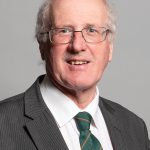
    The speech made by Jim Shannon, the DUP MP for Strangford, in Westminster Hall on 2 November 2022.

    It is a pleasure to follow the hon. Member for Sheffield Central (Paul Blomfield), who genuinely brings knowledge to these debates, not just because he represents a university town but because he knows his subject. I want to put that on the record and thank him for it. It is also nice to see the Minister in his place. We have had a long friendship in this House, and it is not before time that he has been elevated to Minister. I am pleased to see him as a Minister for a subject in which he has a deep interest. I look forward to hearing what he has to say.

    I congratulate the hon. Member for Stirling (Alyn Smith) on bringing the debate forward. For the record—I am sure he knew I would say this, but I have to say it—I disagree intensely with him on one matter that he referred to. He said that we should do away with the Northern Ireland Protocol Bill. No, no—we should get the Northern Ireland Protocol Bill put through this House. Then we can be equal to everybody else in the United Kingdom—those in Wales, Scotland and the rest of the UK mainland. It is not a matter of either/or. I want to speak about international students, the subject of the debate, but I also want to say very clearly that Northern Ireland MPs are anxious to see the Northern Ireland Protocol Bill go through as it is. Then we can all have the same level of representation and the same Britishness that we all love to have.

    I am proud to hail from Northern Ireland. Queen’s University Belfast and the University of Ulster, as well as our other higher education institutions, are world class and attract a large number of international students. Northern Ireland has a sterling reputation for providing a high-class education. The result of that is a highly skilled education system, which others wish to feed from. Since the peace process and the cessation of troubles, we have seen a dramatic increase in international students coming to our shores, an unsurprising number of whom wish to stay on. We have many students who come to Northern Ireland, get good jobs, and stay there. How could they not, with all that we have to offer?

    The latest statistics show that of the 66,245 students enrolled in Northern Ireland’s higher education institutions in 2021, 74% were from Northern Ireland, 5% from GB, 3% from the Republic of Ireland, 1% from EU countries and 17% from non-EU countries. They also suggest that international students from outside the EU are worth about £102,000 each to the UK economy for the duration of their study. That is not something we can ignore. There is a financial impact, and we want to continue to gain from it. Non-EU students typically pay much higher tuition fees than local, EU or UK students: they can pay between £15,000 and £30,000 a year for courses in Northern Ireland. We have a thriving higher education sector, which we wish to see retained and built upon.

    Analysis suggests that international students delivered a net benefit of almost £26 billion to the UK in 2018-19. As the hon. Member for Sheffield Central referred to, this is a market that should clearly be encouraged, especially at our two local universities, Queen’s University Belfast and Ulster University. International students account for about £49 million of those universities’ income through fees and grants—a substantial amount of money for us in Northern Ireland—showing the importance of us having education at that level in Northern Ireland. The accounts of Queen’s University Belfast show that international students generated some £43.8 million in fees and grants in 2019-20, while Ulster University received just under £5.1 million in overseas student fees in the same period.

    When we have education debates in this place and are talking about universities, I often refer to the partnerships that Queen’s University Belfast in particular has with big business, finding cures for illnesses across the world such as diabetes, heart disease and cancer. Those partnerships are incredible, and international students are part of making them happen. There have been a great many success stories over the past few years, and Queen’s University plays a critical part in those, as do other universities across the United Kingdom.

    The students in Northern Ireland come from 135 different countries and are certainly a welcome addition. I am very pleased to see them coming, and I would like to build on that for us back home. I believe more should be done to encourage others like them to see the potential of study in Northern Ireland, with low rent, low-cost food—the past couple of months might not suggest that, but the costs are low compared with some places—and friendly locals with a warm and welcoming culture. I believe we are missing a trick by not promoting that more robustly. I think that, as other hon. Members have rightly said, we could do that for the whole United Kingdom.

    Northern Ireland boasts world-class research facilities at Queen’s University and Ulster University, with both universities ranking in the top 10 across the UK for bioscience research. I referred to some of their research on cures for the ailments that plague us, not just in this United Kingdom but across the world. Their researchers are recognised as being at the forefront of technology, health data analytics, statistics, modelling, simulation and the use of artificial intelligence, which I know the Government here are keen to promote as well. Those are the good things that universities do, quite apart from their cultural value. The hon. Member for Stirling referred to the fact that when students come here, they bring much to this great United Kingdom culturally, individually, socially and emotionally. That is something we should cherish and try to build upon.

    Northern Ireland has several unique advantages for medical research and clinical trials, with a small population of just under 2 million, an integrated health and social care system, and the electronic care record, which makes it possible to access digital health from cradle to grave. We have such a technological advantage in Northern Ireland, given our universities and the research they are involved with to try to find cures. We have much to offer, and now it is on us to promote that effectively.

    I know the Minister always seeks to give us answers, so let me ask him whether, in the short time he has been in post, he has had any discussions with his colleagues in the Department for Levelling Up, Housing and Communities to secure funds to promote our UK-wide education system globally. If he has not had those discussions yet, I know he will. We have a great education system in Northern Ireland. I want to see it grow and thrive, and I believe this debate gives us an opportunity to help it do just that.

  • Steve Baker – 2022 Speech on Derry Addiction Centre

    Steve Baker – 2022 Speech on Derry Addiction Centre

    The speech made by Steve Baker, the Minister of State at the Northern Ireland Office, in Westminster Hall on 2 November 2022.

    It is a real pleasure to reply to this debate, Mr Gray, and I am genuinely very pleased that the hon. Member for Foyle (Colum Eastwood) has secured it; in this, we can make common cause. I am also pleased to see the former Secretary of State, my right hon. Friend the Member for Skipton and Ripon (Julian Smith), in the Chamber today. I pay tribute to all the work he did to get the New Decade, New Approach agreement in place.

    The Government welcome this opportunity to make it clear that we are committed to supporting the Derry/Londonderry addiction centre and providing it with £1 million from unique circumstances funding under the New Decade, New Approach agreement. The hon. Gentleman particularly mentioned Northlands. I will come back to that, but I know it is a very valued service, and it seems to me a very sensible approach to use Northlands to deliver what is required.

    Health is, of course, a devolved matter in Northern Ireland. The issue of a lack of clarity came up, but we are absolutely clear that health is a devolved matter, and we would like it to be governed, and governed well, in Northern Ireland. It is therefore for the relevant Northern Ireland Executive Department—in this case, the Department of Health—to formulate its proposals on how to use the allocated £1 million of unique circumstances funding to support those experiencing addition in Northern Ireland.

    Before I go any further, I want to say that I am personally very committed to this issue, as I know the hon. Member for Foyle and other Members present are. A few years ago, I had the opportunity to participate in an inner-city challenge with the Centre for Social Justice, which saw me spend three days and two nights in rehab with some very serious ex-offenders, including people convicted of murder. It felt like a much longer time. I went through with them, in their counselling sessions, what it means for them to be addicted and how they had come to be in the circumstances they were in. I was particularly moved by the service user’s account that the hon. Gentleman shared.

    Given the social problems that our country faces—indeed, that all countries face—with drugs, we need to get alongside people where they are and lift them up. It is too easy for people to see the tremendous consequences of addictions on our society and rush to condemn, but people in the grip of an addiction need treatment and sympathy. That is one of the things I saw when I was with those people in that centre. Indeed, I have stayed in touch with one of them, and I was in touch with him last night when preparing for this debate. He has completely rebuilt his life, become a good father and got into work. It is an amazing thing to see.

    In thanking the staff of Northlands, and all staff across the UK who deal with addictions, including in Wycombe, I particularly want to acknowledge the point that the hon. Member for Foyle made about the countless people who are grateful. That needs to be understood by everyone. Genuinely, countless people are affected by addictions, because the consequences that spread out as people suffer under addictions are enormous and almost impossible to see. Those consequences spread and spread, generationally as well as geographically, so it is really important that we understand addictions and deal with them. As such, I am personally committed that this money needs to get into Northlands and to deliver against NDNA.

    I stress that the Government stand ready to provide the funding once we have received and approved the Northern Ireland Executive Department of Health’s proposals for the Derry/Londonderry addiction centre. As I said earlier, Northlands seems a particularly sensible way to proceed. The Northern Ireland Office continues to engage with counterparts in the Executive to make that happen.

    We do not have an Executive, and we are moving towards declaring an election, as is our legal duty. We fervently hope that a functioning Executive will be in place as soon as possible. Our officials have been advised by the Northern Ireland Department of Health that, at this stage, it is too early to state what impact, if any, the absence of an Executive will have on the delivery of its proposals. However, NIO officials will keep that aspect under review with the Department of Health.

    The hon. Member for Foyle asked four specific questions. First, what happens if we do not have an Executive? We will have a response plan, and we will take the steps necessary to ensure that public services continue. However, as he knows, we do not wish for direct rule any more than he does; we wish to have a functioning, stable and high-quality devolved Government. We have to proceed with great caution. I know that he will not expect me today to pre-empt announcements that we will make in due course.

    Secondly, the hon. Gentleman asked whether we are still committed. I think I have made it absolutely clear that, personally and as a Government, we are absolutely committed. Thirdly, he raised the impact of instability, which is very real and very much felt in people’s lives. I absolutely appreciate the strength of feeling and the real concern of Unionists, in particular my friends in the Democratic Unionist party. I am a proud Unionist and a proud Brexiteer, and I very much regret that we have the problems we have with the protocol, which are keenly felt by the DUP.

    Let me take this moment to put it on the record that everyone needs to understand that we will be challenged to deliver a devolved Government until the issue of the Northern Ireland protocol is resolved. That, I am afraid, puts things firmly in the hands of the European Union. Until it is willing to negotiate on the basis of regard for the legitimate interests of Unionism—a point I have tried to make clearly, but respectfully so—we will not be able to satisfy the DUP or many Conservative MPs that we have made progress. If we cannot satisfy the DUP, it clearly has the power and the opportunity to prevent a devolved Government from being formed. I wish to be respectful about that, just as I have been respectful—I think famously—to the EU and Ireland about their legitimate interests.

    The hon. Gentleman asked about the impact of instability specifically in relation to the addiction centre. Here we see the impact of political instability, which causes real harm to real lives, not just for those who are addicted, but for their family and the many people who suffer the consequences of addiction.

    Fourthly, the hon. Gentleman asked what we will do. We will of course proceed to govern as best we can in the absence of devolved institutions, within the bounds of not wishing to institute direct rule. We will announce our response plan in due course. I hope that we will be able to satisfy the hon. Gentleman. As he has raised the issue, I will certainly make it my priority to investigate what is happening with the centre.

    This debate is an excellent example of democracy working. We have so many things before us at this time, but this debate secured by the hon. Member for Foyle on behalf of those he represents has raised the matter up my priority list. Working with my officials, I will try to ensure that we drive it forward.

    I have a few words to say about addiction, which is a complex and multifaceted issue that affects the whole of our society. It takes a terrible toll on family and friends. It is therefore vital that people in Northern Ireland and indeed across the UK are able to access the right addiction and support services at the right time. As I said, it is a devolved matter, but the Government are committed to providing the additional funding. That commitment reflects the Government’s strong desire to see improved health outcomes for everyone across Northern Ireland.

    The Government’s commitments under the New Decade, New Approach agreement include making £40 million available for a range of projects focused on addressing Northern Ireland’s unique circumstances. The unique circumstances projects are aimed at supporting community and reconciliation initiatives to remove barriers, to bring the people of Northern Ireland together, and to build a safer and more secure society in Northern Ireland.

    One of the projects identified was the Derry/Londonderry addiction centre. The Government are steadfastly committed to providing £1 million in funding as a non-Barnett addition to the Northern Ireland Executive’s block grant. We of course continue to urge all those involved to form an Executive to deliver the proposals but, as I said, I appreciate why that has not proven possible so far. Funding for unique circumstances projects is an important component of the New Decade, New Approach agreement, and the Government remain focused on ensuring the investment of this funding for the benefit of the local community.

    It may help to say a little more about the context of New Decade, New Approach. The agreement was reached between the UK Government, the Irish Government and Northern Ireland parties in January 2020, and it enabled the restoration of the Northern Ireland Executive after a three-year hiatus. Again, I pay tribute to the former Secretary of State, my right hon. Friend the Member for Skipton and Ripon, for his leading role in that work. The agreement contains commitments for the UK Government, the Irish Government and the Northern Ireland Executive to fulfil. This Government have delivered over half of their commitments under the New Decade, New Approach agreement and we will continue to implement the remainder of the agreement to support a stronger, more prosperous and inclusive Northern Ireland in which everyone can participate and thrive.

    The agreement was accompanied by a £2 billion financial package, consisting of £1 billion of additional funding and a £1 billion Barnett-based investment guarantee. It is the largest deal from a Northern Ireland talks process to restore the Northern Ireland Executive. The UK Government have now honoured the £1 billion Barnett-based investment guarantee, as set out in NDNA. The investment guarantee was that the Executive would get a capital department expenditure limit Barnett consequential of at least £1 billion over a five-year period, from 2021 to 2024-25. That has been honoured as, based on the spending review 2021 settlement, the Northern Ireland Executive will receive over £1 billion by 2024-25 in additional CDEL Barnett consequentials.

    We expect that £769 million from the £1 billion financial package in the agreement will have been spent by the end of the current financial year. The release of funding has been tied to the delivery of reform and transformation of Northern Ireland’s public services, which I will now discuss in a little more detail.

    The agreement reflected the unique challenges faced by Northern Ireland. The aims of the financial package were to provide immediate support to the health service and to address budget pressures, to enable investment to transform public services, to turbocharge infrastructure delivery in Northern Ireland, and to address Northern Ireland’s unique circumstances. The Government’s substantial package played a vital role in supporting the incoming Northern Ireland Executive and in promoting economic growth. Of course, we are deeply disappointed at the continuing lack of a fully functioning Executive, but we will continue to press forward to serve the people of Northern Ireland.

    The £769 million spent so far has been used to bring to an end the nurses’ pay dispute in January 2020, with £200 million used over three years to deliver pay parity with nursing counterparts in England and Wales; to provide a one-off funding settlement to the Northern Ireland Executive of £350 million in 2021-22 to relieve budgetary pressures and deliver effective public services in Northern Ireland; and to drive the transformation of public services by providing £142 million to support the Northern Ireland Executive in its transformation programme. The Executive have so far directed the transformation funding towards improving health outcomes. The NDNA transformation projects are embedded in the Northern Ireland Department of Health’s rebuild framework, “Building Better, Delivering Together,” which progresses health and social care system rebuilding work in Northern Ireland.

    The funding has supported the Northern Ireland Executive in delivering a fleet of low-carbon buses for Belfast and the north-west, with £50 million invested in low-carbon transport. Government funding under NDNA means that 100 zero-emission buses have been produced by Wrightbus in Northern Ireland. The funding also led to the opening of the Northern Ireland graduate medical school in Derry/Londonderry to students in September 2021. So far, we have invested £11.5 million, with another £48.5 million to be invested, to deliver a brand-new facility and investment for the north-west of Northern Ireland. The training of more doctors will also help address the shortage of medical professionals in Northern Ireland in the long term.

    Turning to the unique circumstances money, the Government have committed £140 million to address Northern Ireland’s unique history. That consists of £100 million for legacy implementation and £40 million for those unique circumstances. The £40 million in Government funding has been reserved for the themes set out on page 53 of NDNA, in annex A.

    The funding is to be deployed in areas including mental health, which I am sure will matter to everyone here; tackling paramilitarism; and tackling deprivation and improving opportunity—of course, one of the major factors leading to deprivation is addiction. The funding is also to be deployed on a culture and community fund; support for marking the 2021 centenary and related projects; support for languages and broadcasting; support for the armed forces and veterans; a fund to promote the competitiveness of Northern Ireland’s economy; additional funding to support the Derry/Londonderry addiction centre; and the UK contribution to the international fund for Ireland.

    As I run through those commitments, I think the whole House will appreciate the extraordinary work led by the former Secretary of State, my right hon. Friend the Member for Skipton and Ripon, with all the relevant parties, to deliver so much for Northern Ireland. What we now need to do is press forward.

    The five parties reached the NDNA agreement, leading to the restoration of the Northern Ireland Executive in January 2020. The funding allocations were later agreed by the previous Secretary of State with the First Minister and Deputy First Minister. Good progress continues to be made, and funding has been approved across a range of projects, including on tackling paramilitarism, support for veterans, the Veterans Commissioner, NIO centenary projects, and so on.

    On tackling paramilitarism, the Government’s funding has helped to support the Executive’s Communities in Transition project, which is designed to support and empower those communities that have been most impacted by paramilitarism, criminality and ongoing coercive control. Many Members present will appreciate the interaction between drugs and paramilitarism; I do not wish to get into that in great detail, but the two subjects are closely related. By tackling paramilitarism and criminality, we will help to deal with the problem of addictions.

    The Government’s commitment to veterans under the agreement resulted in the appointment of Mr Danny Kinahan as the first Northern Ireland Veterans Commissioner in September 2020. As with the release of all Government funding, we undertake robust assessments and business case approvals before funding is provided.

    Despite the absence of a Northern Ireland Executive, the Government continue to deliver on their NDNA funding commitments. That includes releasing the remaining £276 million of funding, including £103 million to drive public service transformation; £48.5 million to help fund the graduate medical school at the Magee campus in Derry/Londonderry; £100 million to address the unique history of Northern Ireland, including legacy; and £24.5 million of the £40 million reserved for the 13 themes referred to on page 53 of NDNA, in annex A.

    The Government’s financial package was accompanied by stringent financial conditions to deliver a greater level of accountability for public spending, and to ensure that the Northern Ireland Executive build sustainable public services for people in Northern Ireland. Members will know that that is extremely important at the moment. It included the creation of the independent Northern Ireland Fiscal Council in 2021. That body is an important component in delivering greater accountability for public spending, and it is already playing a valuable role in Northern Ireland.

    Earlier this year, Parliament passed the Northern Ireland (Ministers, Elections and Petitions of Concern) Act 2022 to implement the institutional reforms agreed in NDNA. These reforms have included enabling Northern Ireland Executive Ministers to continue in office for a defined period to allow time for Executive formation—although I lament that in this case that has not worked—reforming the petition of concern mechanism used in the Northern Ireland Assembly, and updating the ministerial code of conduct with regard to the expectations and behaviour of Ministers.

    The Government’s priority continues to be a return to a fully functioning and stable devolved Government as soon as possible, and to ensure the necessary delivery of public services for the people of Northern Ireland. We regret that the parties failed to elect a Speaker and form an Executive before the 28 October deadline. In line with his legal obligation, my right hon. Friend the Secretary of State will soon confirm the date of the next Northern Ireland Assembly election, as required by law. Following that election, and regardless of the result, the Northern Ireland parties really do need to come together to restore the devolved institutions and lead the people of Northern Ireland through the challenging times ahead. I think we all appreciate the significance of that to people in Northern Ireland; the hon. Member for Foyle made very clear the real impact on people of not having an Executive to deliver.

    The significance of NDNA in this context cannot be forgotten. The agreement shows how collaborative working and compromise can create the right conditions for stability—

    James Gray (in the Chair)

    Order. I am sorry to stop the hon. Gentleman, but I must now suspend the sitting until half-past 2 this afternoon.

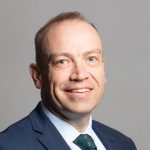
  • Colum Eastwood – 2022 Speech on Derry Addiction Centre

    Colum Eastwood – 2022 Speech on Derry Addiction Centre

    The speech made by Colum Eastwood, the SDLP MP for Foyle, in Westminster Hall on 2 November 2022.

    I beg to move,

    That this House has considered delivering on New Decade, New Approach commitments to a Derry addiction centre.

    It is a pleasure to serve under your chairmanship, Mr Gray. I will begin with a quote from a service user of the Northlands addiction centre in Derry, which has served the people of our city for almost 50 years. It reads:

    “My mother on one side of me, crying her heart out, my elder sister on the other side with a Kleenex in one hand and her head in another. I didn’t know how I felt. I didn’t know how to feel. I was numb. No tears, no emotions, just nothingness. All I could do was stare at a spot on the carpet and try not to look up and see the hurt and pain in my mum’s face.

    That was over two years ago, and thankfully, I haven’t had to lift a drink since I came in here. Today though, I can feel, I can cry, and I can see what my mother and my sister meant all that time ago. I can see for myself the hurt and the pain and the despair my drinking was causing to my family and myself. Today, the difference is, I can do something about it. I am learning about myself and this horrible disease every day of the week, and for today anyway I didn’t drink, and for me as an alcoholic, that’s a miracle. The treatment in Northlands along with the help of AA since then has given me my life back; it’s given me a life!”

    That is just one of many thousands of stories from people in the city of Derry and right across Northern Ireland who have been affected by the disease of alcoholism and drug addiction, and who have been helped by the wonderful volunteers and staff at the Northlands centre in Derry.

    Jim Shannon (Strangford) (DUP)

    I commend the hon. Gentleman for bringing this issue forward. I talked to him at the airport on Monday, and today as well. Unfortunately, what he is referring to in his constituency is replicated across Northern Ireland and in my own constituency, where there are addiction and drug issues, and where young people are committing suicide. I know that is replicated in the hon. Gentleman’s constituency, so I commend him for securing the debate.

    My understanding is that the Department of Health is holding the money up. Does the hon. Gentleman feel that, through this debate and through the Minister, we might be able to ensure that the money that was promised can be allocated to the maiden city, and to the hon. Gentleman’s constituents, to make things better for them? There seems to be a wee hold-up.

    Colum Eastwood

    The hon. Gentleman is absolutely right to say that the impact of the disease of addiction is felt keenly right across our constituencies. Of course, it is important to say that the Northlands centre, which is referred to in the New Decade, New Approach agreement, serves people from right across Northern Ireland. Every single constituency is affected by it.

    Now that I see the former Secretary of State, the right hon. Member for Skipton and Ripon (Julian Smith), in the Chamber, I might say a word about how we got to this point. For three long years, we did not have an Executive—it feels a bit like we are approaching that period again. During the long hours of torturous negotiation, there was a lot of publicity around a couple of issues, but some of us were focused on a lot more. We wanted to see an Executive back, but an Executive that actually worked on issues that matter to people.

    Late one Friday night, the right hon. Gentleman and I had a long discussion about what it would take to get us back into the Executive if we had a successful negotiation. People will understand that, for me, one of those things was the expansion of the Magee university campus. Another was the Northlands centre, which, after many decades of work, has a strong proposal for a world-class addiction centre in Derry. True to his word, as always, the former Secretary of State got that commitment into the New Decade, New Approach agreement. I was very grateful for it, as were the people of Derry.

    However, as we know in Northern Ireland, words on a page are not enough. What we need is money in a bank account and proper commitment. To be fair, we had that commitment from the previous Government in the form of New Decade, New Approach, and I have had support from the current Government. We now really need an Executive in Stormont to deliver that. Unfortunately, even when we had an Executive—and we had a Minister up until last Friday—we still could not get the money out.

    There are a number of things that I would like this Government to commit to now. What we need is an understanding of what happens if we do not have an Executive. I think all of us in the Chamber want to see an Executive as soon as possible. I would love to see all parties commit to get into government urgently—to get round the table and do the job that we were all elected to do. However, I want the Minister to answer a number of questions for me in the event that that does not happen.

    Are the British Government still committed to delivering on the Derry addiction centre aspect of NDNA? We hear an awful lot about all the commitments, but this is a very important commitment for many people. What is the impact of the political instability on this particular proposal, and how will this Government act if we do not have a functioning Executive? As much as we all will it and want it, if we do not get to the point of having a functioning Executive, will those people who rely on this world-class service, and those who do not even know that they are going to rely on it, be able to access it?

    Mhairi Black (Paisley and Renfrewshire South) (SNP)

    Last year and the year before, on average almost every day in Northern Ireland somebody died because of the way that they misused alcohol. Does the hon. Member agree that if that number of deaths were caused by any other issue, Government would absolutely be on top of it and we would have the Executive up and running and functioning? Does he agree that there is no excuse for the lack of clarity from Government?

    Colum Eastwood

    The hon. Member is absolutely right; one person every single week dies from alcohol-related disease in Northern Ireland. If we add in drug-related deaths, we are talking about 10 deaths a week. Imagine the outcry if that was happening in full public view; we would be rushing to deal with the issue at every level of Government. Frankly, there is no excuse any more for anybody to stand in the way of this commitment.

    New Decade, New Approach was an international agreement, signed off by two Governments and supported by five political parties. Some of us actually went into government on the basis of this and other commitments. Everybody in the Chamber knows about the cost of living crisis and the time it takes to access the health service. We should all know about the impact of drug addiction and alcoholism in our communities. We should be rushing to get this money out the door and spent.

    Northlands has a very proud record. I want to put on record just how grateful the people of our city, and the people of Northern Ireland, are to all the staff and volunteers at Northlands, as well as all the people who put their money in the boxes to support that wonderful service. Over the past five years alone there have been 1,186 weeks of treatment for hundreds of people attending the six-week residential programme at Northlands, and 12,886 non-residential counselling slots have been used. On average, over 35% of people for whom the data is available in that period are in recovery, with an average of under 10% in relapse management.

    Julian Smith (Skipton and Ripon) (Con)

    Will the hon. Member talk a little more about the team behind Northlands? I recall from my time as Secretary of State that it is not a commercial or money-making enterprise; it is local people who understand the specific issues with addictions in Derry and are passionate about those priorities. They are deeply impressive, and I think it would be useful for the Minister to hear a bit more about the people behind Northlands.

    Colum Eastwood

    I am grateful for the right hon. Member’s intervention and I want to put on record my gratitude to him for getting the commitment in writing in the agreement. He went to meet the people behind the Northlands centre—people like Denis Bradley and many others, who over many years gave of their time, expertise and love for the people of our city and the people who have been struggling with this disease. The House would not believe the number of people who are very grateful for the work they have done.

    It is also important to say that in our city and in other parts of Northern Ireland, we are faced with another problem: the grip of paramilitarism. Paramilitaries use drug addiction and abuse to coercively control communities in a way that needs to be tackled. In my view, the best way to tackle it—because we have tried everything else—is to deal with the root cause, which is addiction. Organisations such as the Northlands centre do that in a way that needs huge support. What better way to do that than to get this money into that organisation’s bank account and to get this project delivered?

    Before I finish, I ask again: will the Government continue to be committed to funding this service? What will happen if we do not see an Executive formed as a matter of urgency? Will this Government step in if we do not get a Health Minister at Stormont? I hope that we do, and I assume the Minister is going to talk about the need for an Executive. He has no bigger supporter in that call than me, but if we do not get an Executive, what are this Government going to do? Of course, it was this Government who committed to getting this money to Northlands and getting the project up and running. I am grateful to the Minister for being here, but I will be even more grateful if we can get this money spent, as has been committed to.

  • Bernadette Devlin – 1969 Maiden Speech in the House of Commons

    Bernadette Devlin – 1969 Maiden Speech in the House of Commons

    The maiden speech made by Bernadette Devlin, the then Unity MP for Mid Ulster, in the House of Commons on 22 April 1969.

    I understand that in making my maiden speech on the day of my arrival in Parliament and in making it on a controversial issue I flaunt the unwritten traditions of the House, but I think that the situation of my people merits the flaunting of such traditions.

    I remind the hon. Member for Londonderry (Mr. Chichester-Clark) that I, too, was in the Bogside area on the night that he was there. As the hon. Gentleman rightly said, there never was born an Englishman who understands the Irish people. Thus a man who is alien to the ordinary working Irish people cannot understand them, and I therefore respectfully suggest that the hon. Gentleman has no understanding of my people, because Catholics and Protestants are the ordinary people, the oppressed people from whom I come and whom I represent. I stand here as the youngest woman in Parliament, in the same tradition as the first woman ever to be elected to this Parliament, Constance Markievicz, who was elected on behalf of the Irish people.

    This debate comes much too late for the people of Ireland, since it concerns itself particularly with the action in Derry last weekend. I will do my best to dwell on the action in Derry last weekend. However, it is impossible to consider the activity of one weekend in a city such as Derry without considering the reasons why these things happen.

    The hon. Member for Londonderry said that he stood in Bogside. I wonder whether he could name the streets through which he walked in the Bogside so that we might establish just how well acquainted he became with the area. I had never hoped to see the day when I might agree with someone who represents the bigoted and sectarian Unionist Party, which uses a deliberate policy of dividing the people in order to keep the ruling minority in power and to keep the oppressed people of Ulster oppressed. I never thought that I should see the day when I should agree with any phrase uttered by the representative of such a party, but the hon. Gentleman summed up the situation “to a t”. He referred to stark, human misery. That is what I saw in Bogside. It has not been there just for one night. It has been there for 50 years—and that same stark human misery is to be found in the Protestant Fountain area, which the hon. Gentleman would claim to represent.

    These are the people the hon. Gentleman would claim do want to join society. Because they are equally poverty-stricken they are equally excluded from the society which the Unionist Party represents—the society of landlords who, by ancient charter of Charles II, still hold the rights of the ordinary people of Northern Ireland over such things as fishing and as paying the most ridiculous and exorbitant rents, although families have lived for generations on their land. But this is the ruling minority of landlords who, for generations, have claimed to represent one section of the people and, in order to maintain their claim, divide the people into two sections and stand up in this House and say that there are those who do not wish to join the society.

    The people in my country who do not wish to join the society which is represented by the hon. Member for Londonderry are by far the majority. There is no place in society for us, the ordinary “peasants” of Northern Ireland. There is no place for us in the society of landlords because we are the “have-nots” and they are the “haves”.

    We came to the situation in Derry when the people had had enough. Since 5th October, it has been the unashamed and deliberate policy of the Unionist Government to try to force an image on the civil rights movement that it was nothing more than a Catholic uprising. The people in the movement have struggled desperately to overcome that image, but it is impossible when the ruling minority are the Government and control not only political matters but the so-called impartial forces of law and order. It is impossible then for us to state quite fairly where we stand.

    How can we say that we are a nonsectarian movement and are for the rights of both Catholics and Protestants when, clearly, we are beaten into the Catholic areas? Never have we been beaten into the Protestant areas. When the students marched from Belfast to Derry, there was a predominant number of Protestants. The number of non-Catholics was greater than the number of Catholics. Nevertheless, we were still beaten into the Catholic area because it was in the interests of the minority and the Unionist Party to establish that we were nothing more than a Catholic uprising—just as it is in the interest of the hon. Member for Londonderry to come up with all this tripe about the I.R.A.

    I assure the hon. Member that his was quite an interesting interpretation of the facts, but I should like to put an equally interesting interpretation. There is a fine gentleman known among ordinary Irish people as the Squire of Ahoghill. He happens to be the Prime Minister, Captain Terence O’Neill. He is the “white liberal” of Northern Ireland. He is the man who went on television and said to his people, “There are a lot of nasty people going around and if you are not careful you will all end up in the I.R.A. What kind of Ulster do you want? Come with me and I will give you an Ulster you can be proud to live in”.

    Captain O’Neill listed a number of reforms which came nowhere near satisfying the needs of the people. Had he even had the courage of his convictions—had he even convictions—to carry out the so-called reforms he promised, we might have got somewhere. But none of his so-called reforms was carried out. He suggested a points system for the allocation of houses until such time that the Tory Party could see its way to introducing a crash housing programme. He suggested that a points system should be introduced, but he did nothing to force the majority of Unionist-controlled councils to introduce it. He thought that his suggestion would be quite sufficient to make everyone doff their caps, touch their forelocks and say, “Yes, Captain O’Neill. We will introduce it.” But the local councils of Northern Ireland do not work like that.

    We come to the question of what can be done about incidents like that in Derry at the weekend. Captain O’Neill has thought of a bright idea—that tomorrow we shall be given one man, one vote. Does he think that, from 5th October until today, events have not driven it into the minds of the people that there are two ideals which are incompatible—the ideal of social justice and the ideal and existence of the Unionist Party? Both cannot exist in the same society. This has been proved time and again throughout Northern Ireland by the actions of the Unionist Party.

    In the General Election, Captain O’Neill had the big idea of dividing and conquering. Captain O’Neill, the “liberal” Unionist, said, “Do not vote for Protestant Unionists because they are nasty Fascist people”. When the election was over, he had no qualms about taking the number of so-called “Fascist” Unionist votes and the “liberal” Unionist votes together, adding them up and saying, “Look how many people voted Unionist”.

    We, the people of Ulster, are no longer to be fooled, because there are always those of us who can see no difference between the Paisleyite faction and the O’Neill faction, except that the unfortunate Paisleyite faction do not have hyphenated surnames. So we are faced with the situation that Captain O’Neill may, in the morning, say, “You now have one man, one vote”. What will it mean to the people? Why do the people ask for one man, one vote, with each vote of equal value to the next?

    The Unionist policy has always been to divide the people who are dependent upon them. The question of voting is tied up mainly with the question of housing, and this is something which the House has failed to understand. The people of Northern Ireland want votes not for the sake of voting but for the sake of being able to exercise democratic rights over the controlling powers of their own areas. The present system operates in such a way that Unionist-controlled councils and even Nationalist-controlled councils discriminate against those in their areas who are in the minority. The policy of segregated housing is to be clearly seen in the smallest villages of Ulster. The people of Ulster want the right to vote and for each vote to be of equal value so that, when it comes to the question of building more houses, we do not have the situation which we already have in Derry and in Dungannon.

    In Dungannon, the Catholic ward already has too many houses in it. There is no room to build any more in that ward. It would appear logical that houses should be built, therefore, in what is traditionally known as the Protestant ward or, euphemistically, the “Nationalist” or “Unionist” ward, where there is space. But this would give rise to the nasty situation of building new houses in the Unionist or Protestant ward and thus letting in a lot of Fenians who might outvote the others.

    I wish to make it clear that in an area such as Omagh the same corruption is carried on because Protestants need houses and the only place for them is in a Catholic area. The one point that these two forms of activity have in common is that whether they are green or orange, both are Tory. The people of Northern Ireland have been forced into this situation.

    I was in the Bogside on the same evening as the hon. Member for Londonderry. I assure you, Mr. Speaker—and I make no apology for the fact—that I was not strutting around with my hands behind my back examining the area and saying “tut-tut” every time a policeman had his head scratched. I was going around building barricades because I knew that it was not safe for the police to come in.

    I saw with my own eyes 1,000 policemen come in military formation into an oppressed, and socially and economically depressed area—in formation of six abreast, joining up to form 12 abreast like wild Indians, screaming their heads off to terrorise the inhabitants of that area so that they could beat them off the streets and into their houses.

    I also accept that policemen are human and that if someone throws a stone at a man and injures him, whether he be in uniform or out of uniform, if he is human he is likely to lift another stone and, either in self-defence or in sheer anger, to hurl it back. Therefore when people on either side lose control, this kind of fighting breaks out.

    An unfortunate policeman with whom I came into contact did not know who was in charge in a particular area. I wanted to get children out of the area and I asked the policeman who was in charge. He said, “I don’t know who is running this lot.” I well understand this kind of situation at individual level, but when a police force are acting under orders—presumably from the top, and the top invariably is the Unionist Party—and form themselves into military formation with the deliberate intention of terrorising the inhabitants of an area, I can have no sympathy for them as a body. So I organised the civilians in that area to make sure that they wasted not one solitary stone in anger. [Laughter.]

    Hon. Members may find this amusing and in the comfortable surroundings of this honourable House it may seem amusing, but at two o’clock in the morning on the Bogside there was something horrifying about the fact that someone such as I, who believes in non-violence, had to settle for the least violent method, which was to build barricades and to say to the police, “We can threaten you.”

    The hon. Member for Londonderry said that the situation has got out of hand under the “so-called civil rights people”. The one thing which saved Derry from possibly going up in flames was the fact that they had John Hume, Member of Parliament for Foyle, Eamonn McCann, and Ivan Cooper, Member of Parliament for Mid-Derry, there. They went to the Bogside and said, “Fair enough; the police have occupied your area, not in the interests of law and order but for revenge, not by the police themselves but because the Unionist Party have lost a few square yards of Derry and people have put up a sign on the wall saying ‘Free Derry’”. The Unionist Party was wounded because nothing can be morally or spiritually free under a Unionist Government. They were determined that there should be no second Free Derry. That is why the police invaded that area. The people had the confidence of those living in that area to cause a mass evacuation and to leave it to the police alone, and then to say, “We are marching back in and you have two hours to get out”. The police got out.

    The situation with which we are faced in Northern Ireland is one in which I feel I can no longer say to the people “Don’t worry about it. Westminster is looking after you”. Westminster cannot condone the existence of this situation. It has on its benches Members of that party who by deliberate policy keep down the ordinary people. The fact that I sit on the Labour benches and am likely to make myself unpopular with everyone on these benches—[HON. MEMBERS: “No.”] Any Socialist Government worth its guts would have got rid of them long ago.

    There is no denying that the problem and the reason for this situation in Northern Ireland is social and economic, because the people of Northern Ireland are being oppressed not only by a Tory Government, a misruling Tory Government and an absolutely corrupt, bigoted and self-interested Tory Government, but by a Tory Government of whom even the Tories in this House ought to be ashamed and from which they should dissociate themselves.

    Therefore I ask that in the interests of the ordinary people there should be no tinkering with the kind of capitalist methods used by both the Northern Ireland Unionist Party and Mr. Jack Lynch’s Fianna Fail Party. It was with no amusement but with a great deal of horror that I heard the somewhat peculiar statement by the right hon. Member for Belper (Mr. George Brown) about an O’Neill-Lynch United Party. This brings home to me that hon. Members of this House do not understand what is going on. Of all the possible solutions of our problem the least popular would be an agreement between the two arch-Tories of Ireland.

    I should like in conclusion to take a brief look at the future. This is where the question of British troops arises. The question before this House, in view of the apathy, neglect and lack of understanding which this House has shown to these people in Ulster which it claims to represent, is how in the shortest space it can make up for 50 years of neglect, apathy and lack of understanding. Short of producing miracles such as factories overnight in Derry and homes overnight in practically every area in the North of Ireland, what can we do? If British troops are sent in I should not like to be either the mother or sister of an unfortunate soldier stationed there. The hon. Member for Antrim, North (Mr. Henry Clark) may talk till Domesday about “Our boys in khaki”, but it has to be recognised that the one point in common among Ulstermen is that they are not very fond of Englishmen who tell them what to do.

    Possibly the most extreme solution, since there can be no justice while there is a Unionist Party, because while there is a Unionist Party they will by their gerrymandering control Northern Ireland and be the Government of Northern Ireland, is to consider the possibility of abolishing Stormont and ruling from Westminster. Then we should have the ironical situation in which the people who once shouted “Home rule is Rome rule” were screaming their heads off for home rule, so dare anyone take Stormont away? They would have to ship every Government Member out of the country for his own safety—because only the “rank” defends, such as the Prime Minister and the Minister of Agriculture.

    Another solution which the Government may decide to adopt is to do nothing but serve notice on the Unionist Government that they will impose economic sanctions on them if true reforms are not carried out. The interesting point is that the Unionist Government cannot carry out reforms. If they introduce the human rights Bill and outlaw sectarianism and discrimination, what will the party which is based on, and survives on, discrimination do? By introducing the human rights Bill, it signs its own death warrant. Therefore, the Government can impose economic sanctions but the Unionist Party will not yield. I assure you, Mr. Speaker, that one cannot impose economic sanctions on the dead.

  • Dennis Rogan – 2022 Speech on British Passports for Irish who have Lived in Northern Ireland (Lord Rogan)

    Dennis Rogan – 2022 Speech on British Passports for Irish who have Lived in Northern Ireland (Lord Rogan)

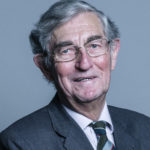
    The speech made by Dennis Rogan, Lord Rogan, in the House of Lords on 26 October 2022.

    My Lords, I too welcome the Minister to his place this evening. I am sure that we all wish him well in his new role.

    It is a pleasure to speak in this debate, which I congratulate my friend the noble Lord, Lord Hay, on securing. Your Lordships will be well aware of his long-held and understandably strong views on the matter before us tonight, which he has again outlined with the customary clarity we have come to expect from him. While we may be concentrating on his dilemma this evening, the anomaly applies equally to many more persons in a similar situation. My noble friend has been a passionate campaigner on the right of people living in Northern Ireland, but born in the Republic of Ireland, to hold a United Kingdom passport. This is an incredibly personal matter for him, and understandably so.

    As the House will be aware, the noble Lord, Lord Hay, was first elected to Londonderry City Council more than four decades ago and, in 1993, served as the mayor. He was elected to the Northern Ireland Assembly in 1998 in the wake of the Belfast agreement, and held the senior position of Speaker from 2007 to 2014. He is also a prominent member of both the Orange Order and the Apprentice Boys of Derry. I am proud to have marched with Willy Hay on many occasions down the years.

    In short, and despite the occasional political differences he and I may have had, there are few Northern Ireland citizens more committed to their British identity than the noble Lord, Lord Hay. As such, it should be described not as an anomaly but as an abomination that he is not allowed or entitled to a British passport as of right.

    The noble Lord mentioned the Good Friday agreement, as did the noble Lord, Lord Browne. Despite being on opposite sides of the debate in 1998, I am sure the noble Lords would agree that the Belfast agreement was a huge game-changer with regard to national identity. Under the provisions of that agreement, Northern Ireland residents can apply for an Irish passport, and many, from both political traditions, have chosen to do so. In contrast, people resident in Northern Ireland but born in the Republic of Ireland are not automatically entitled to a UK passport, even if, as in the case the noble Lord, they have lived there for many decades, paid their taxes there and, in his case, made a significant contribution to the public life of Northern Ireland.

    Speaking in another place last week, the Northern Ireland Office Minister Steve Baker proudly described himself as “defiantly and ferociously pro-union”. However, he proceeded to describe his holding of a United Kingdom passport as

    “an administrative thing, not a definition of who I am”.

    He added:

    “I gently make that point to illustrate that perhaps not all of us feel exactly the same way about our passport”.—[Official Report, Commons, 18/10/22; col. 242WH.]

    Mr Baker has not been in post for very long and, with the ministerial shuffles currently going on, he might not stay in place much longer. However, I respectfully suggest to your Lordships that this Minister’s understanding of the unionist mindset in Northern Ireland remains very much in the remedial stage.

    It will shock this House to learn that, despite his fresh-faced youthfulness and boundless energy, my friend the noble Lord, Lord Hay, was born in fact in 1950. However, that makes him one of an estimated 40,000 people born in the Republic of Ireland after 1949 and resident in Northern Ireland who are currently expected to apply for naturalisation before being entitled to a UK passport. That application currently comes at a cost of £1,330 and the process includes a requirement to pass the Life in the UK test and attend a citizenship ceremony. For people such as my noble friend, who have lived in the Province for many decades, it is nothing short of demeaning that this should be the case.

    I commend the work of the Northern Ireland Affairs Committee in another place which last year conducted an inquiry into the barriers to UK citizenship for Northern Ireland residents. The committee concluded that a bespoke solution was required for Irish citizens to gain UK citizenship, reflecting

    “personal ties, relationships, geopolitical realities and movement of people”

    between the United Kingdom and the Republic of Ireland. It also recommended that the current £1,330 application fee should be abolished, describing it as

    “at worst indefensible, and at best unreasonable and excessive.”

    I recognise the UK Government’s desire to better control our borders in a post-Brexit world, and I support this approach in principle. However, Northern Ireland is different, not least because of the 300-mile land border with our friends in the Republic, incorporating more than 280 crossing points. The issue we are debating today has nothing to do with Brexit. This is a matter which has been around for many years and which successive United Kingdom Governments have failed to deal with, hence the reason why my friend the noble Lord, Lord Hay, has rightly felt compelled to continue his high-profile campaign, not just for himself but on behalf of the many others in his position.

    The United Kingdom is a welcoming country and I would argue, without fear of contradiction, that Northern Ireland is its most welcoming component part. Like the noble Lord, Lord Hay, I am a committed unionist, and unlike many UK government Ministers down the years I am proud to describe myself as a persuader for the union. I want as many people as possible living in Northern Ireland to support the British identity in Northern Ireland and to embrace it collectively. It is something to be cherished, of that there is no doubt, but also something which should be shared.

    My friend the noble Lord, Lord Hay, is every bit as British as I am. He is every bit as British as everybody in this Room tonight. He and others like him should have that identity recognised in the same way as my British identity is recognised, and noble Lords’ British identity is recognised, by having the automatic right to hold a British passport. I commend my noble friend for bringing forward this important debate and I hope the Minister will finally signal a change of approach on behalf of His Majesty’s Government in his closing remarks. The noble Lord, Lord Hay, has my full support in what he is seeking to achieve.

  • Wallace Browne – 2022 Speech on British Passports for Irish who have Lived in Northern Ireland (Lord Browne of Belmont)

    Wallace Browne – 2022 Speech on British Passports for Irish who have Lived in Northern Ireland (Lord Browne of Belmont)

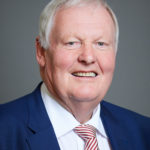
    The speech made by Wallace Browne, Lord Browne of Belmont, in the House of Lords on 26 October 2022.

    My Lords, I am pleased to welcome the Minister to his post, and I know that he will bring a wealth of experience and knowledge to this House. I congratulate my noble friend Lord Hay of Ballyore on securing this short, but nevertheless important, debate. This issue, I know, is incredibly personal for him, but, more importantly, for the many thousands of others living in Northern Ireland.

    It is wrong that many Irish-born citizens, who have been living, working and paying their taxes in Northern Ireland and in the United Kingdom for years, have so many hurdles to go through before they can officially be recognised as British. They may have identified as British for years, or even for decades; but a costly, overly bureaucratic and uniquely discriminatory process has meant that, in the eyes of the law, they are technically not yet fully recognised as British citizens. Many of these people feel very strongly that holding a British passport should come naturally to them, as they have been law-abiding, taxpaying residents of this United Kingdom. As it stands, they feel, understandably, that they are being blocked in respect of this.

    This process is set in stark contrast to the simple and easy way of applying for an Irish passport for those born and living in Northern Ireland, whereby some who have never been to, or lived in, the Republic of Ireland can quickly apply for and receive Irish passports. Indeed, all they have to do is simply go along to their local post office, ask for an Irish passport application, fill it out and attach a relatively small fee of 80 euros; and the passport, when determined, will be delivered to the home by the post in a relatively short period of time. This is all under the terms of the Belfast agreement.

    Yet, those born a few miles across the border who are resident in the UK must pay £1,300 to register their citizenship, and then apply for a British passport. In terms of UK citizenship, it is clear that the people in this situation are still somewhat disadvantaged. Certain financial and bureaucratic barriers still exist that make it difficult for Irish-born residents of the United Kingdom to attain British citizenship or a British passport.

    It is false to claim that changing this would have any impact whatever on the Belfast agreement. Indeed, for true parity of esteem to exist, those Irish-born citizens who live and work in Northern Ireland should be able to avail of a British passport in the same way as Northern Irish-born British citizens can avail of an Irish passport. It is a curious situation that we presently have two groups: those who were born in the Irish Republic and live in Northern Ireland, who cannot easily obtain British passports; and those who were born in, have relatives in or live in Northern Ireland, who can easily and cheaply obtain Irish passports.

    Last year, the chief commissioner of the Northern Ireland Human Rights Commission called on the Government to fix this anomaly. He said categorically that,

    “the Belfast agreement presented no impediment to slightly changing the law, if the UK Government decided to exercise its discretion to do it.”

    If certain criteria were set, surely this could be resolved with relative ease.

    I, too, welcome the findings in the report published by the Northern Ireland Affairs Committee in the other place last year. I concur with the recommendations made in the report that the fees and the current unwieldly process should be abolished. Does the Minister agree with the findings, and will he commit to look at this further?

    The Government should take the opportunity presented today to look seriously at a different approach to this unique situation, which has created an unfair process. The issue has been overlooked for too long. As has been alluded to, this unique situation, which has been outlined today by my noble friend Lord Hay, goes directly against the grain of the Belfast agreement. Routes to British citizenship for those who have spent the vast majority of their lives contributing to British life or communities, and the tax base in the United Kingdom, should not be fraught with difficulty and uncertainty.

    It is right and proper that this issue should be addressed as a matter of urgency. It is wrong that successive Governments have failed so far to deal with this issue. I trust that today’s debate will help move us towards righting this wrong.

  • Willie Hay – 2022 Speech on British Passports for Irish who have Lived in Northern Ireland (Baron Hay of Ballyore)

    Willie Hay – 2022 Speech on British Passports for Irish who have Lived in Northern Ireland (Baron Hay of Ballyore)

    The speech made by Willie Hay, Baron Hay of Ballyore, in the House of Lords on 26 October 2022.

    To ask His Majesty’s Government what plans they have, if any, to grant an automatic right to a British Passport to people born in the Republic of Ireland who have lived in Northern Ireland for 50 years or more.

    My Lords, I welcome the Minister to the Dispatch Box and I wish him well in his new role. I am grateful to have the opportunity to hold this debate in your Lordships’ House. This is a very personal issue to me and to many out there who believe that this is a serious anomaly that needs to be addressed.

    I will give a brief history of how we got here. When the Irish Republic—previously known as the Irish Free State—left the Commonwealth in 1949, the British Government at the time allowed those who had been born in the Republic and had moved to Northern Ireland or elsewhere in the United Kingdom prior to that date to retain their British citizenship. That all changed after 1949: for people born in the Republic of Ireland after 1949, that right was taken away from them. Since 1949, many individuals who have lived here in the United Kingdom for many years, voted in UK elections and paid their taxes have found themselves disadvantaged by a bureaucratic and lengthy process.

    Indeed, instead of an application fee of £100, there is a large fee to apply for citizenship of around £1,300. These costs put many people off. There is also a requirement for Irish citizens who have been resident here in the UK for many years then to pass a Life in the UK Test. This is a discriminatory process for those who have been living and working in Northern Ireland, in the United Kingdom, for years, who find when they go to apply for British citizenship that they have many hurdles to clear that simply do not exist for others. They look around and see that many with no prior connection to the United Kingdom or Ireland find the process of applying for a British passport much quicker and far less hassle. Those Irish-born citizens who have lived, worked and voted in Northern Ireland and paid their taxes for many years—for many decades in some cases—have every right to British citizenship, to be an equal part of this United Kingdom and to hold a British passport. I question the very logic of this process. It impacts many thousands of people, and I question the hurdles that have been introduced.

    One point worth noting is that last February, the Court of Appeal found that similar fees of £1,000 for children to register as British citizens were unlawful and must be reconsidered by the Home Office. The current application process can be an increasingly long and frustrating one for many. It is especially challenging for those from lower-income backgrounds.

    The process of British citizenship applications can take six months, but usually it takes much longer. It has several steps and can be a major hurdle to people who genuinely want to apply for British citizenship. As part of the process, applicants are required to pay £350 simply for the privilege of a decisions report, where somebody will tell them whether they can apply and whether they qualify for British citizenship. That will cost £350, whether it is a “yes” or a “no” answer. In many instances, another frustration exists whereby even if registered as a British citizen and successful, this does not automatically entitle an individual to a British passport; it entitles them only to apply for a British passport.

    This is an insensitive situation for those who have paid taxes and national insurance contributions here for many years. Present census figures indicate that it affects approximately 40,000 people living in Northern Ireland, and this number is growing year on year. This is a huge number of people who cannot avail themselves of a British passport without navigating a long and winding process. It is quite clear that barriers exist in their route to citizenship.

    Of course, this is against the backdrop of a process that has been simplified in respect of Irish passport applications for people living in Northern Ireland. The Irish Government reviewed the whole process of application in 2011 and came up with a simple way of applying for an Irish passport for those living on the island of Ireland. If you apply for an Irish passport, the application is around €80 in total. Anyone born or living in Northern Ireland, or anyone who has a parent or grandparent living on the island of Ireland, is automatically entitled to apply for Irish citizenship. They have thrown the net so wide. Applicants do not need to have been born on the island of Ireland if their father, mother or a grandparent was born there; they are entitled to an Irish passport and Irish citizenship. It is a simple and quick process. When you apply for an Irish passport, you can trace the whole process, and online applications are completed in approximately 20 working days. This is a sharp contrast to the long and costly process that some Irish-born people living in Northern Ireland face when applying for British citizenship.

    There are ways to remove the financial and bureaucratic barriers in relation to this, if the will exists from government and the Home Office. There is a solution; a modest change in current practice could affect that group of 40,000 people. This is a sensitive matter that affects many and requires only a slight adjustment to be resolved. If an individual born in the Irish Republic after 1949 can prove that they have been living in Northern Ireland for between five and 10 years, have been working, voting and paying taxes and national insurance contributions, and are genuinely a part of that community, surely there ought to be a practical, sensible, streamlined way forward in this process.

    I welcome the report published by the Northern Ireland Affairs Committee in the other place last year and concur with its recommendations that these fees and this cumbersome process should be abolished. That committee has unionist, Conservative, Labour, Alliance and SDLP members, so there is unanimity in trying to resolve this issue not only in this House— I hope—but in the other.

    The great irony is that when we hear people in the media and Members of this House and the other House talk about the Belfast agreement, they often say “parity of esteem”: two communities working together and recognising whether someone is Irish, British or both. The extraordinary situation I have outlined today goes directly against the grain of the Belfast agreement. Let us not forget that the agreement is held up because it recognises the birthright of people living in Northern Ireland to identify themselves and be accepted as Irish, British or both. We are talking about people living in Northern Ireland for 30, 40 or 50 years, who were born five miles across the border in the Republic but have lived in Northern Ireland for virtually all their lives. To date, there has been a reluctance by government to act in relation to this. I welcome the opportunity to have this debate and trust that noble Lords will concur that this is an unfair process that could be remedied with minimal change.

    A number of Members in the other place agree with the recommendations that the lengthy process required and the payment of associated fees should be waived in the applications of long-term residents of Northern Ireland who were born in the Republic of Ireland and wish to access their British identity by holding a British passport. Other representations have been made to the Home Office in respect of this issue, which goes back as far as 2004 or 2005, when it was raised in the House of Commons by my colleague Gregory Campbell. For whatever reason, the Government have refused to address it.

    There should be real parity of esteem for people living in Northern Ireland who were born in the Republic. That is not the case. For many decades, the Government have failed to consider the history of the personal ties of thousands of people in this unique situation. This issue unites all backgrounds and traditions in Northern Ireland. That does not happen often, but on this issue, it is the case. I hope today’s debate will move us some way towards finally bringing a resolution.

    Does the Minister agree that this issue must be addressed? Will he commit seriously to doing so? It directly affects a large number of taxpaying residents in our United Kingdom. It is so bad in Northern Ireland at the minute that the number of people applying for British passports has dropped by 30%, while the number applying for Irish passports has gone up by 27%.

  • Gerry Kelly – 2022 Comments on Loyalist Paramilitaries

    Gerry Kelly – 2022 Comments on Loyalist Paramilitaries

    The comments made by Gerry Kelly, Sinn Fein’s policing spokesperson in Northern Ireland, on 28 October 2022.

    Threats issued to Irish government ministers by loyalist paramilitary gangs under the cover of the Loyalist Communities Council are outrageous.

    Threatening further loyalist violence to the public at large with reference to the ceasefires of 1994 in the words ‘dire consequences for the progress made from 1994 onwards’ is a dangerous and despicable development.

    This is just the latest threat to our democratic process by these loyalist gangs who are intent on dragging society backwards.

    They must desist from these reckless threats and disband now.

    It is a matter of disgrace that almost 25 years after the signing of the Good Friday Agreement, that loyalist paramilitary gangs are still involved in murder, intimidation, extortion and threats.

    There is an onus on political leaders to call out this intimidation and the continued existence of armed criminal gangs in our society.

  • Colm Gildernew – 2022 Comments on Tackling Child Waiting Lists

    Colm Gildernew – 2022 Comments on Tackling Child Waiting Lists

    The comments made by Colm Gildernew, the MLA for Fermanagh and South Tyrone, on 27 October 2022.

    Fresh figures released by the Department of Health today on the number of children waiting to see a consultant are staggering and reinforce the immediate need to fix the health service.

    It’s totally unacceptable and deeply concerning that children are waiting four years to see a consultant.

    We need an Executive formed today and parties working together to deliver a three-year budget and invest the extra £1 billion needed to start to cut chronic waiting lists.

    I echo the call from the Royal College of Physicians today for more investment in the health service and for parties to get back around the Executive table.

    The DUP has an opportunity to form a government and get on with the job people elected us to do and that’s to live up to their commitment to make health a priority.

  • Pat Sheehan – 2022 Speech on Restoring Northern Ireland Executive

    Pat Sheehan – 2022 Speech on Restoring Northern Ireland Executive

    The speech made by Pat Sheehan, Sinn Fein’s Chief Whip, on 25 October 2022.

    We need an Executive formed now to immediately support workers, families and businesses who are struggling with crippling bills and all those people who are suffering on chronic health waiting lists.

    The clock is ticking. We have three days to form a government. The DUP is continuing to block an Executive in the full knowledge that they are punishing ordinary people who are struggling to heat their homes this winter. The DUP is engaged in reckless political vandalism.

    Chaos and dysfunction from the Tories in London, supported by the DUP, has compounded people’s suffering. Mortgages are up, public services are under threat and the economy is in tatters. People and businesses need local ministers that are accountable and acting in their interest.

    Sinn Féin is ready to form an Executive today to deal with the cost-of-living crisis and to invest an extra £1 billion to start fixing our health service.

    The DUP should join with the rest of us in the Assembly, get back to work, elect ministers and get around the Executive table so that parties can work together to support people who need our help now.