Category: Northern Ireland

  • Stephen Doughty – 2022 Speech on the Northern Ireland Protocol

    Stephen Doughty – 2022 Speech on the Northern Ireland Protocol

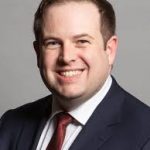
    The speech made by Stephen Doughty, the Labour MP for Cardiff South and Penarth, in the House of Commons on 17 May 2022.

    We are grateful for advance sight of the statement from the Foreign Secretary, and I apologise on behalf of the shadow Foreign Secretary, who is unfortunately self-isolating due to covid.

    It is over two and a half years since the Government negotiated and signed the withdrawal agreement. That deal included the Northern Ireland protocol, which required, by its design, some trade barriers and checks in the Irish sea. That was clear from the outset and it was a choice by this Prime Minister and by the Government, yet now, barely two years later, the Government are trying to convince people that their flagship achievement was not a negotiating triumph, but a deal so flawed that they cannot abide by it. Either they did not understand their own agreement, they were not up front about the reality of it, or they intended to break it all along. The Prime Minister negotiated this deal, signed it and ran an election campaign on it. He must take responsibility for it and make it work.

    The situation in Northern Ireland is incredibly serious. Power sharing has broken down, Stormont is not functioning and political tensions have risen, while people in communities across Northern Ireland face rising bills as the cost of living crisis deepens. The operation of the protocol has created new tensions that do need to be addressed by listening to all sides, as well as to business and to consumers, and both the UK Government and the EU need to show willing and good faith. This is not a time for political posturing or high-stakes brinkmanship.

    Everyone recognises that the situation in Northern Ireland is unique, and we want checks to be reduced to their absolute necessary minimum and for them to properly reflect trade-related risks. It cannot be right, for example, that goods leaving Great Britain that have no realistic prospect of leaving Northern Ireland, such as supermarket sandwiches, face excessive burdens, and the EU needs to understand that practical reality. Unnecessary barriers will only hamper business, inhibit trade and undermine confidence and consent.

    The Good Friday agreement was one of the proudest achievements of the last Labour Government. It is absolutely essential that it is protected. That is why we need calm heads and responsible leadership. We need a UK Government capable of the hard diplomatic graft to find solutions and an EU willing to show flexibility. The right response to these challenges cannot simply be to breach our commitments. It is deeply troubling for the Foreign Secretary to be proposing a Bill to apparently break the treaty that the Government themselves signed just two years ago. That will not resolve issues in Northern Ireland in the long term; rather, it will undermine trust and make a breakthrough more difficult. It would drive a downward spiral in our relationship with the EU that will have damaging consequences for British businesses and consumers. It is Cornish fisherman, County Down farmers and Scotch whisky makers who will lose out, holding back the economy while growth forecasts are already being revised down.

    But this goes beyond matters of trade. Britain should be a country that keeps its word. The rest of the world is looking at us and wondering whether we are a country that they want to do business with. When we seek to negotiate new deals abroad, do the Government want to make other countries question whether we will keep our end of the bargain? There are wide-ranging and damaging repercussions, undermining our ability to hold others to account for their own commitments, when we should be pulling together in support of Ukraine, for example, not fuelling divisions with our European allies.

    The right approach is for the Government and the EU to work together to find practical solutions to these problems, and to brief the media less and to negotiate more. There is no long-term unilateral solution, and only a solution that works for all sides and delivers for the people and businesses of Northern Ireland will have durability and provide the political stability that businesses crave and the public deserve. We believe that should begin with a veterinary agreement that would eliminate the vast majority of checks on produce going from Great Britain to Northern Ireland. New Zealand has an equivalence agreement, and it should not be beyond the Government and the EU to negotiate one that reflects the unique circumstances in Northern Ireland.

    We would also negotiate with the EU for more flexibility on VAT in Northern Ireland, to fully align Northern Ireland VAT rules with those of Great Britain. We would use that to take VAT off Northern Ireland energy bills, funded by a one-off windfall tax on oil and gas producer profits, to help ease the cost of living crisis.

    If the Government are determined to plough on with the Bill that the Foreign Secretary has proposed, will they agree to prelegislative scrutiny by the Foreign Affairs Committee, and will they set out clearly to the House why this does not break international law?

    Labour wants to make Brexit work and for Britain to flourish outside the EU. We want the Government to take responsibility for the deal they signed, to negotiate in good faith and to find practical solutions, not take reckless steps to prolong uncertainty in Northern Ireland and damage Britain’s reputation. We want the EU to show the necessary flexibility, to minimise all barriers, and to work with the UK Government and listen to all sides in Northern Ireland. That is the right approach, that is the responsible approach, and it is what is in the long-term interests of the people of Northern Ireland, and indeed of the whole of the United Kingdom.

  • Liz Truss – 2022 Statement on the Northern Ireland Protocol

    Liz Truss – 2022 Statement on the Northern Ireland Protocol

    The statement made by Liz Truss, the Foreign Secretary, in the House of Commons on 17 May 2022.

    With permission, Mr Speaker, I would like to update the House on the Northern Ireland protocol and to lay out the next steps. Our first priority is to uphold the Belfast/Good Friday agreement in all its dimensions. That agreement put in place a new arrangement for the governance of Northern Ireland and these islands composed of three interlocking strands: a power-sharing Government at Stormont on the basis of consent and parity of esteem for all communities; intensified north-south co-operation on the island of Ireland; and enhanced arrangements for east-west co-operation. So much of the progress we have seen in Northern Ireland rests on this agreement, and for the agreement to continue to operate successfully, all three strands must function successfully. These arrangements are the foundation on which the modern, thriving Northern Ireland is built. It commands the support of parties across this House, and we will continue to work with all communities in Northern Ireland to protect it.

    As a Government, we want to see a First Minister and Deputy First Minister in place, and we want to work with them to make further progress. The basis for successful power sharing remains strong, as my right hon. Friend the Prime Minister laid out yesterday. However, the Belfast/Good Friday agreement is under strain, and, regrettably, the Northern Ireland Executive has not been fully functioning since early February. This is because the Northern Ireland protocol does not have the support necessary in one part of the community in Northern Ireland. I also note that all Northern Ireland’s political parties agree on the need for changes to the protocol.

    The practical problems are clear to see. As the House will know, the protocol has not yet been implemented in full, due to the operation of grace periods and easements. However, EU customs procedures for moving goods within the UK have already meant that companies are facing significant costs and paperwork. Some businesses have stopped this trade altogether. These challenges have been sharpened by the post-covid economic recovery. Rules on taxation mean that citizens in Northern Ireland are unable to benefit fully from the same advantages as the rest of the UK, such as the reduction in VAT on solar panels. Sanitary and phytosanitary rules mean that producers face onerous restrictions, including veterinary certification, in order to sell foodstuffs in shops in Northern Ireland.

    These practical problems have contributed to the sense that the east-west relationship has been undermined. Without resolving these and other issues, we will not be able to re-establish the Executive and preserve the hard-won progress sustained by the Belfast/Good Friday agreement. We need to restore the balance in the agreement.

    Our preference is to reach a negotiated outcome with the EU; we have worked tirelessly to that end and will continue to do so. I have had six months of negotiations with Vice-President Maroš Šefčovič, which follow a year of discussions undertaken by my predecessor. The UK has proposed what we believe to be a comprehensive and reasonable solution to deliver on the objectives of the protocol. This includes a trusted trader scheme to provide the EU with real-time commercial data, giving it confidence that goods intended for Northern Ireland are not entering the EU single market. We are already sharing over 1 million rows of goods movement data with the EU every week.

    Our proposed solution would meet both our and the EU’s original objectives for the protocol. It would address the frictions in east-west trade while protecting the EU single market and the Belfast/Good Friday agreement. The challenge is that this solution requires a change in the protocol itself, as its current drafting prevents it from being implemented, but the EU’s mandate does not allow the protocol to be changed. That is why its current proposals are unable to address the fundamental concerns. In fact, it is our assessment that they would go backward from the situation we have today with the standstill.

    As the Prime Minister said, our shared objective must be to find a solution that can command the broadest possible cross-community support for years to come and protect the Belfast/Good Friday agreement in all its dimensions. That is why I am announcing our intention to introduce legislation in the coming weeks to make changes in the protocol.

    Our preference remains a negotiated solution with the EU. In parallel with the legislation being introduced, we remain open to further talks if we can achieve the same outcome through a negotiated settlement. I have invited Vice-President Šefčovič to a meeting of the Withdrawal Agreement Joint Committee in London to discuss that as soon as possible.

    However, to respond to the very grave and serious situation in Northern Ireland, we are clear that there is a necessity to act to ensure that the institutions can be restored as soon as possible. The Government are clear that proceeding with the Bill is consistent with our obligations in international law and in support of our prior obligations in the Belfast/Good Friday agreement. Before any changes are made, we will consult businesses and people in Northern Ireland as our proposals are put forward.

    I want to be clear to the House that this is not about scrapping the protocol; our aim is to deliver on the protocol’s objectives. We will cement the provisions in the protocol that are working, including the common travel area, the single electricity market and north-south co-operation, while fixing those elements that are not, such as the movement of goods, goods regulation, VAT, subsidy control and governance.

    The Bill will put in place the necessary measures to lessen the burden on east-west trade and to ensure that the people of Northern Ireland are able to access the same benefits as the people of Great Britain. It will ensure that goods moving and staying within the UK are freed of unnecessary bureaucracy through our new green channel.

    That respects Northern Ireland’s place in the UK’s customs territory and protects the UK internal market. At the same time, it ensures that goods destined for the EU undergo the full checks and controls applied under EU law. That will be underpinned by the data-sharing arrangements that I have already set out. It will allow both east-west trade and the EU single market to be protected while removing customs paperwork for goods remaining in the United Kingdom.

    The Bill will remove regulatory barriers to goods made to UK standards being sold in Northern Ireland. Businesses will be able to choose between meeting UK or EU standards in a new dual regulatory regime. It will provide the Government with the ability to decide on tax and spend policies across the whole United Kingdom. It will address issues related to governance, bringing the protocol in line with international norms. At the same time, it will take new measures to protect the EU single market by implementing robust penalties for those who seek to abuse the new system, and it will continue to ensure that there is no hard border on the island of Ireland.

    I will publish more detail on these solutions in the coming weeks, and let me be crystal clear that, even as we do so, we will continue to engage with the EU. The Bill will contain an explicit power to give effect to a new, revised protocol if we can reach an accommodation that meets our goal of protecting the Belfast/Good Friday agreement. We remain open to a negotiated solution, but the urgency of the situation means we cannot afford to delay any longer. The UK has clear responsibilities as the sovereign Government of Northern Ireland to ensure parity of esteem and the protection of economic rights. We are clear that the EU will not be negatively impacted in any way, just as we have ensured the protection of the EU single market since the existence of the protocol.

    We must restore the primacy of the Belfast/Good Friday agreement in all of its dimensions as the basis for the restoration of the Executive, and we will do so through technical measures designed to achieve the stated objectives of the protocol, tailored to the reality of Northern Ireland. We will do so in a way that fundamentally respects both Unions—that of the United Kingdom and that of the EU—and we will live up to our commitments to all communities of Northern Ireland. As co-signatory and co-guarantor of the Good Friday/Belfast agreement, we will take the necessary decisions to preserve peace and stability. I commend this statement to the House.

  • John Brady – 2022 Comments on Raising the Irish Protocol with the US Administration

    John Brady – 2022 Comments on Raising the Irish Protocol with the US Administration

    The comments made by John Brady, the Sinn Fein spokesperson on Foreign Affairs and Defence, on 16 May 2022.

    I am travelling to the United States this week for a series of meetings in Washington and New York. I will be using this opportunity to brief members of the US administration and the representatives of the Republican party on developments around the British government’s actions on the Irish Protocol.

    The support for the Good Friday Agreement (GFA) in the US cuts across party lines, and there is zero tolerance for the antics of the British government, who are threatening to tear up an international agreement. The Biden administration has been very strong in their support for the GFA.

    I will also be meeting with representative of the Irish emigrant community and will be raising the issue of the undocumented with the administration.

    During my visit to the headquarters of the United Nations in New York, I will be meeting with the members of the Irish Permanent Mission to the UN. I will also be attending a public session of the UN Security Council, on conflict and food security- an issue I raised with Minister Coveney last week.

    I will also be participating in a debate at UN on the Future Agenda for Global Diaspora Engagement: paving the way to achieving Objective 19 through regularisation and further inclusion, which will focus on the issue of the undocumented Irish emigrants in the US.

    It is my intention to use the opportunity of this visit to brief law makers in the US on the situation in Ireland in respect of the Irish Protocol, and the importance of their continued support. I will also be raising the issue of undocumented Irish emigrants in the US.

  • Colm Gildernew – 2022 Comments on Bank Closures in Northern Ireland

    Colm Gildernew – 2022 Comments on Bank Closures in Northern Ireland

    The comments made by Colm Gildernew, the Sinn Féin MLA for Fermanagh and South Tyrone, on 16 May 2022.

    These latest closures are a hammer blow to rural communities which will be deprived of banking services and I would urge Dankse Bank to listen to customers and maintain services.

    It is Sinn Féin’s view that there should be no bank branch closures and planned closures should be paused to evaluate customer behaviour post-pandemic.

    While the trend is towards increasing digital banking, for some customers this is not convenient or possible and for rural communities, important services are disappearing.

    Sinn Féin would like to see a future banking forum so that policy makers, banks and other stakeholders can discuss issues including banking in a digital age and how banks and other service providers can best respond to serve customers and communities that rely on their services.

  • Boris Johnson – 2022 Article in the Belfast Telegraph on the Way Forward in Northern Ireland

    Boris Johnson – 2022 Article in the Belfast Telegraph on the Way Forward in Northern Ireland

    The article written by Boris Johnson, the Prime Minister, and issued as a press notice by Downing Street on 16 May 2022.

    I am visiting Northern Ireland today at a time of considerable political change. The Assembly elections brought forth a new generation of voters and representatives who are confident and optimistic about the future.

    The Northern Ireland of today does not see itself as a post-conflict society but one that is maturing into a story of sustained success. One in ten of the population were not born here. Local people have thrown open their doors to those fleeing Ukraine. A sizeable portion of the electorate were not even born in 1998. They are at ease with change, and at ease with each other.

    The Northern Ireland of today is a place that has rediscovered the manufacturing verve that once made it the biggest shipyard in the world. Harland & Wolff is cutting steel again. Belfast is host to some of the world’s most innovative companies in biotechnology and the creative industries, and the No1 international investment location for US cyber security firms.

    This means Northern Ireland contributes a huge amount to the rest of the UK. When the pandemic hit, it was a County Antrim diagnostic company, Randox, that was at the forefront of the UK’s Covid testing regime. Today, I will visit Thales, the high tech company which has played a vital role in the defence of Ukraine.

    But there is more to be done to level up this place with the rest of the UK. If NI’s productivity grew to match the UK average by 2030, its goods exports could be around double the level recorded in 2020. The Government will do its part with record investment, funding and the new City Deals. But I know from my time as Mayor of London that there is no substitute for strong local leadership. I will tell party leaders today that this progress will be stalled without a functioning Assembly and Executive.

    Restating our commitments

    In a time of change, against the backdrop of European war and a cost of living crisis, I also want to use my visit today to affirm some core principles about the UK Government’s approach to Northern Ireland.

    Thirty-two years ago, the then Secretary of State for Northern Ireland made a speech which many see as playing an important role in the initiation of the peace process.

    Peter Brooke argued that Britain had “no selfish strategic or economic interest” in Northern Ireland. Not no strategic or economic interest – but no selfish strategic or economic interest.

    It was a concept that became a pillar of the peace process – the basis of “rigorous impartiality” and “the principle of consent”, from the Downing Street Declaration of 1993 to the Belfast Good Friday Agreement itself.

    Times have changed, at home and overseas. But our commitment to these principles is as strong as ever.

    Equally I want to be clear that this Government is not neutral on the Union.

    Indeed I was heartened to hear that Sir Keir Starmer made clear in a recent interview here that the Labour Party under his leadership would campaign for the Union, should there ever be a border poll.

    There should be nothing controversial or surprising about that.

    The Government’s commitment to the Union is above politics.

    It was proved – with no politics attached – during the pandemic, with one of the fastest vaccine roll-outs in the world. It was proved – with no politics attached – by the remarkable furlough scheme that kept so many businesses and families afloat.

    It is partly because of the Belfast Good Friday Agreement that the benefits that accrue from being part of the fifth largest economy in the world need not be a source of controversy, or eternal debate in political life.

    They just exist, like Samson and Goliath on the Belfast skyline. They are the structural facts of economic life here, welded even more tightly by the rapid evolution of a high-skilled and high-tech economy.

    Embracing change

    But nor is there some perfect constitutional clockwork version of how the Union should be. Northern Ireland has always been a place in its own right, in which governance has been contested, broken, re-imagined and carefully nurtured.

    Those arrangements continue to evolve. And far better, I think, is the Northern Ireland of today in which people look any way they want (north-south, east-west, or both) – depending on their identity, and their family, and their economic interests.

    In today’s debates about Brexit and the Protocol, let us embrace that hybridity. Let us make it work.

    We stand above all else for the 1998 Agreement. Its three strands. Its commitment to harmonious relations across all these islands.

    We do so, first and foremost, as co-signatories and as co-guarantors. And as partners of the Irish Government.

    And we do so, next, with a commitment to work with the democratically elected parties in Northern Ireland, whom I see will today.

    That means abiding by the rules that have previously been agreed, including those around the title of First Minister.

    So I want to repeat my congratulations to Sinn Fein as the largest party. Respect for the rights and aspirations of all communities are an essential part of the Belfast Good Friday Agreement.

    And I think it is testimony to the path that Sinn Fein have taken from 1998 that Michelle O’Neill is now awarded the position of First Minister. I have no doubt we will work together well.

    But it is equally clear that the balance on which the Northern Ireland institutions have been built has not been fundamentally transformed by these elections.

    The unionist and nationalist blocs are largely matched, as they have been at every election since 1998, with the unionist electorate remaining slightly larger. Unionist parties performed well in the recent election, affirming overwhelming support for power-sharing on the basis of consent.

    The most significant development in recent years has been the growth of a third grouping in Northern Ireland, represented by the Alliance Party – to whom I also pay tribute. They are an important voice in the new Northern Ireland but also, let’s be clear, a party which stuck to its principles in a darker and more difficult past.

    Taken together, what the election results tell me is that the basis for successful power-sharing and stability is actually enhanced. Whichever way you cut it, there is a large majority for making Northern Ireland work.

    And every single party and MLA has heard the same message from their constituents.

    Focus on everyday issues. Schools. Hospitals. Cost of Living.

    So it is time for all of the local parties to get back to Stormont. Elect a Speaker. Create an Executive. Get back to work.

    Unique responsibilities on the British government

    But the 1998 Agreement bestows other commitments on the British Government that go beyond its position as a co-guarantor.

    One of those is to take difficult decisions: to assume a burden of responsibility, and indeed unpopularity, when consensus cannot be reached.

    That is why we will deliver on three pre-existing commitments in the coming weeks.

    We will take forward the Language and Culture Package agreed as part of the New Decade New Approach agreement, thereby addressing an issue that has prevented the formation of the Executive in the past.

    We will intervene to ensure that women and girls have access to abortion services in Northern Ireland that are their legal right, following the failure of the Executive to deliver this.

    And this week we will introduce into Parliament new measures to deal with the legacy of the past. These are different from those in our Command Paper last year. We have listened to many people in recent months and reflected on what we heard. Dealing with the past will still require difficult decisions but there will be no blanket amnesty. Immunity will only be available to those who co-operate and prosecutions could follow for those who do not.

    Addressing the issues with the Protocol

    In the international agreement that sits alongside the Belfast Agreement, as the sovereign government of Northern Ireland the UK also assumes specific responsibilities that go beyond its role as co-guarantor.

    To protect the “economic rights” of the people of Northern Ireland. And to ensure “just and equal treatment for the identity, ethos and aspirations of both communities”.

    We must admit that those commitments have sometimes been difficult to navigate through Brexit.

    We insisted throughout that there would be no scenario in which a hard border would be allowed to emerge. And we have delivered that 100%, as we said we would, protecting in full the rights that were enshrined in 1998.

    We told the Irish Government that we would take special measures within the UK’s internal economy to protect their place in the EU single market. And we have done that.

    We committed to maintain the Common Travel Area and associated rights. It is another commitment that British Government has kept, even throughout the pandemic when so many restrictions were enforced.

    Seeking changes to the Protocol

    It is because of these complexities that the Protocol exists. It is why the Protocol was agreed in good faith. And it is why those who want to scrap the Protocol, rather than seeking changes, are focusing on the wrong thing.

    But there is no disguising the fact that the delicate balance created in 1998 has been upset. One part of the political community in Northern Ireland feels like its aspirations and identity are threatened by the working of the Protocol.

    And the Protocol involves other responsibilities which also need to be lived up to by all sides, including the commitment to protect the Belfast Good Friday Agreement in all its dimensions.

    We cannot allow the impression that one strand is deemed more important than others; or that EU custom codes – designed for vast container ships coming from Shanghai to Rotterdam, not supermarket lorries from Liverpool to Belfast – somehow trump everything else.

    We must remember that all parties to the Protocol made a commitment to be willing to revisit, adapt and change these arrangements over time – and to protect the internal market of the UK.

    In the absence of change, the prior commitments made by the British Government – to protect all three strands of the Belfast Good Friday Agreement, to protect economic rights and parity of esteem – are coming into sharper focus.

    Every unionist representative campaigned against the Protocol, as currently constituted. More importantly, every party, across the divide, seeks mitigations and change. None support a zealous zero risk approach to its implementation. None wants to see grace periods terminated, as the EU insist they must be in return for limited mitigations elsewhere. Some feel that their economic rights as members of the United Kingdom are threatened, which the 1998 Agreement is supposed to protect.

    The simple reason for this is that the East-West dimension – by far and away the principal artery in Northern Ireland’s economic life – is taking too much of the strain.

    Strand 3 of the Agreement, which promised the “harmonious and mutually beneficial development of the totality of the relationship among the people of these islands”, is not functioning as it must. And Strands 1 and 2 – of equal importance and mutually dependent – are now being negatively impacted too.

    Many things have changed since the Protocol was agreed. It was designed in the absence of a Trade and Cooperation Agreement and when it was unclear one would be agreed. It has not been adapted to reflect the realities of the TCA.

    It was designed before a global pandemic and a European war which has created a cost of living crisis on a scale not seen for half a century.

    For there even to be a question about the fast availability of medicines or medical testing in Northern Ireland (between two constituent parts of the same National Health Service) is incompatible with the post-Covid era.

    For the Chancellor of the Exchequer to say in his Spring Statement that people in Northern Ireland could not be granted the same benefits in terms of tax and VAT as those in the rest of the same country is a serious issue. It means that our ability to assist with post-Covid recovery and – moreover, the long-term economic development of Northern Ireland – is restricted.

    We have been told by the EU that it is impossible to make the changes to the Protocol text to actually solve these problems in negotiations – because there is no mandate to do so.

    We will always keep the door wide open to genuine dialogue. And we will continue to protect the single market – as it has been protected throughout the existence of the Protocol so far – and the open border with the Republic of Ireland which will always be of paramount importance.

    There is without question a sensible landing spot in which everyone’s interests are protected. Our shared objective must be to the create the broadest possible cross-community support for a reformed Protocol in 2024.

    I hope the EU’s position changes. If it does not, there will be a necessity to act. The Government has a responsibility to provide assurance that the consumers, citizens and businesses of Northern Ireland are protected in the long-term. We will set out a more detailed assessment and next steps to Parliament in the coming days, once I return from discussions with the local parties.

    In doing our part, we expect all elected representatives to get back to work and deliver for the people of Northern Ireland.


  • Declan Kearney – 2022 Statement on the Northern Ireland Assembly Elections

    Declan Kearney – 2022 Statement on the Northern Ireland Assembly Elections

    The statement made by Declan Kearney, the Sinn Féin National Chairperson, on 14 May 2022.

    The 5 May election has indeed proved to be the most important of a generation. It was a watershed.

    Brexit changed everything, and now the political and societal landscape has changed again.

    There can now be a First Minister for all – for the first time in 101 years.

    And there is now the potential for proper power sharing to be established.

    However, that positive democratic agenda is now being directly threatened with a refusal by the DUP to allow the power sharing and the north/south political institutions to be restored.

    The most serious and profound political crisis of the post-GFA era is currently unfolding in plain sight.

    The entire basis of power sharing is being imperilled by the tactics of both the DUP and the Tory government; and in particular, a toxic alliance between the Tory Foreign Secretary, the Economic Research Group (ERG) and the DUP.

    International treaties and international law in the form of the Protocol and GFA are under direct attack.

    A wrecker’s charter is being used to dismantle the GFA by stealth, alongside the use of a phoneywar against the EU, ostensibly to dismantle the Protocol.

    But the fact is that the Tories’ objective is all about shoring up its electoral coalition in England; while the DUP’s objective is to try to reassert itself as the dominant force within political unionism, and stem the hemorrhage of its political power and influence in the north.

    The current Tory administration has no investment in, or attachment to the Irish peace process. The Tory fat cats in Whitehall don’t care about anyone in the north.

    This current leadership of the DUP is unable and unwilling to adapt to the changed political landscape.

    The Tories and the DUP are outliers in terms of respect for international treaties and all forms of democratic conventions, principles and values.

    The Tories and DUP must not be allowed to drag us all into their race to the bottom.

    This is a defining moment.

    The EU, and the US administration, must hold firm on the GFA, and the primacy of international treaties and international law.

    There should be no renegotiation of either the Protocol or GFA.

    It is time for the Irish government to step firmly up to the mark, and adopt an unequivocal position against the destructive behaviour of both the DUP and the Tories.

    The united voice of wider civic society across the north must also be heard loudly.

  • Lou McDonald – 2022 Comments on the Irish Protocol

    Lou McDonald – 2022 Comments on the Irish Protocol

    The comments made by Lou McDonald, the President of Sinn Fein, on 12 May 2022.

    The Irish Protocol gives the north access to both the EU and British markets; representing a market of more than 500 million people. It protects the Good Friday Agreement and prevents a hard border on the island of Ireland.

    It presents massive opportunities for the north, and does nothing to undermine the constitutional provisions of the Good Friday Agreement.

    Whilst there are practical issues related to the operation of the Protocol to be addressed, joint solutions to these issues must be found through dialogue between the British government and the EU, not unilateral action.

    The EU has offered solutions, and this message has been echoed again today by the Vice President of the European Commission, Maroš Šefčovič. I welcome his statement.

    On the other hand, the British government is engaged in threats to breach international rule of law.

    If the British government follows through on these threats to unilaterally denounce and disapply the Protocol, this would terminate the Withdrawal Agreement Treaty between the British government and the EU.

    Walking away from international obligations would represent an appalling attack on the international rule of law. Any such action, and the threat to do so, must be firmly condemned by the international community.

    The British government says that it wants to act responsibly and respect the Good Friday Agreement, yet their objectives are incompatible with the Good Friday Agreement. Unilateral action will deepen political instability and economic uncertainty.

    It amounts to an anti-Good Friday Agreement agenda disingenuously wrapped up in pro-Good Friday Agreement rhetoric.

    This strategy is actively supported by the DUP, who refuse to enter government in the north, despite the fact that the political institutions are not a party to the Withdrawal Agreement. It is denying democracy and punishing the public and this reckless boycott must end.

  • Linda Dillon – 2022 Comments on Murder of Sean Brown

    Linda Dillon – 2022 Comments on Murder of Sean Brown

    The comments made by Linda Dillon, the Mid Ulster MLA for Sinn Fein, on 13 May 2022.

    Today, the PSNI has made an undisclosed settlement to the family of Bellaghy Wolfe Tones GAA chairman Sean Brown for failures in the original police investigation.

    Sean Brown was abducted and murdered by a Loyalist death squad 25 years ago while locking up the GAA club.

    There has always been concerns of collusion between the RUC and Loyalist death squads.

    Former Police Ombudsman Nuala O’Loan said as far back as 2004 that the police investigation hade been ‘incomplete and inadequate’ and she said that ‘no earnest effort was made to identify those who had carried out the murder’.

    The Brown family has been critical of the police handling of Sean Brown’s murder and this settlement today is the clearest indication that there were serious failures.

    This has added additional trauma to a family that has already suffered so much.

    Sinn Féin will continue to support the Brown family in their campaign for truth and justice.

  • Brandon Lewis – 2022 Statement on the Northern Ireland Assembly Election

    Brandon Lewis – 2022 Statement on the Northern Ireland Assembly Election

    The statement made by Brandon Lewis, the Secretary of State for Northern Ireland, in the House of Commons on 11 May 2022.

    Last Thursday, the people of Northern Ireland went to the polls to choose their elected representatives. The results of that election were confirmed on Sunday 8 May 2022.

    I want to offer my congratulations to all those who were elected and encourage the parties to form an Executive as soon as possible. The people of Northern Ireland deserve a stable and accountable devolved Government that delivers on the issues that matter most to them.

    Earlier this year, the Northern Ireland (Ministers, Elections and Petitions of Concern) Act passed through Parliament. That legislation provides for a period of up to 24 weeks after an election for Northern Ireland’s political representatives to restore the devolved institutions. During this time, Northern Ireland Ministers in post before the election who were re-elected can remain as Ministers to support the delivery of public services.

    I met with the leaders of the five largest parties in Northern Ireland on Monday 9 May and urged them to restore a fully functioning Executive and Assembly at the earliest possible moment, starting with the nomination of an Assembly Speaker. An Executive will only be formed if Sinn Fein nominates a First Minister and if the DUP nominates a deputy First Minister. The two roles are joint and equal, with neither office holder able to exercise functions or make decisions without the other.

    The Northern Ireland protocol remains a barrier to stability in Northern Ireland and the Government will do whatever it takes to protect the Belfast (Good Friday) agreement in all its dimensions. We are clear that the protocol does not have the support of many in the Unionist community and is not working for many people and businesses in Northern Ireland. We have to address the outstanding issues and we want to do that by agreement with the EU, but as we have always made clear we will not shy away from taking unilateral action if necessary.

    Furthermore, while Unionism is set to remain the largest designation in the Northern Ireland Assembly with 37 seats, followed by Nationalism on 35 seats, parties which designate as neither will now constitute 20% of the Assembly. This is a significant development in Northern Irish politics and its implications are the subject of growing discussion and debate.

    Together, we must move forward towards a brighter future. That means a strong, functioning Executive delivering for all the people of Northern Ireland. My priority is to provide the space for an agreement to be reached.

  • John O’Dowd – 2022 Comments on the Restoration of the Northern Ireland Executive

    John O’Dowd – 2022 Comments on the Restoration of the Northern Ireland Executive

    The comments made by John O’Dowd, the Sinn Fein MLA for Upper Bann, on 12 May 2022.

    Businesses and workers need clarity and certainty at this time, not more political stunts and game-playing by the DUP and the Tory government.

    The responsibility for finding solutions to the Protocol lies with Boris Johnson and the EU, that dialogue must continue, but we cannot allow society and businesses to be held to ransom.

    Sinn Féin is committed to forming an Executive immediately; to support workers and families with the cost-of-living crisis; to invest an extra £1bn in health and to support businesses in taking advantage of the opportunities presented by the protocol.

    The DUP’s refusal to form an Executive is punishing businesses and workers and getting in the way of progress.

    They should join the rest of us, to get help out the door, and form the Executive.