Category: Maiden Speech

  • Stanley Clinton-Davis – 1970 Maiden Speech in the House of Commons

    Stanley Clinton-Davis – 1970 Maiden Speech in the House of Commons

    The maiden speech made by Stanley Clinton-Davis, the then Labour MP for Hackney Central, in the House of Commons on 6 July 1970.

    I understand that it is the custom of the House for a speaker succeeding a maiden speaker to proffer his congratulations. It would be a little presumptuous if I were to do so, because I am about to embark on the same ordeal as that of the hon. and gallant Gentleman the Member for Lichfield and Tamworth (Major-General d’Avigdor-Goldsmid). I do nevertheless congratulate him, but I will leave the felicitations to someone more experienced than I am.

    I should like, first, to pay a tribute to my predecessor, Mr. Herbert Butler, who was a distinguished citizen of Hackney for many years before entering this House in 1945. He served as a Member of Parliament for 25 years. He was in his earlier political life the agent for the late Mr. Herbert Morrison in the early ‘twenties. Throughout his political life he has worked assiduously for the benefit of the people in my constituency. He did not seek the limelight, but what was above all important was that he was always accessible. He always held his weekly surgery, and I know that I shall be able to look to him as a very good friend for guidance in the many difficulties which will undoubtedly beset me here.

    My constituency is situated in the East End of London. It is part of the London Borough of Hackney. My hon. Friends the Members for Shoreditch and Finsbury (Mr. Ronald Brown) and Bethnal Green (Mr. Hilton) have part of the London Borough of Hackney within their constituencies, but my hon. and learned Friend the Member for Stoke Newington and Hackney, North (Mr. Weitzman) and I share the major part of it.

    It is often imagined that the London Borough of Hackney has a firm connection with the hackney carriage. Nothing could be further from the truth, although up to 1968 there were no fewer than six taxi drivers on the borough council, and today there are two.

    I believe that the London Borough of Hackney has become renowned in the world of local government for the new and hold conceptions that it has introduced over the years. Perhaps the most notable example was the Lea Valley Regional Park, an idea which was formulated many years ago by Herbert Morrison but which was acted upon by a present alderman, when mayor, Alderman Sherman. We are now looking forward to the time when that regional park will bring a great deal of joy to many thousands of Londoners. It was my privilege to be chairman of the welfare committee when we introduced the idea, new among local authorities, of Continental holidays for disabled persons. I am very glad that the Conservative Council there has continued with that plan.

    We have always looked outward, and have been keen on twinning with other cities and boroughs in the world. Perhaps the most notable of our twinning arrangements is that with the very great and beautiful city of Haifa. In 1969 I was mayor of the borough, and I was privileged to be invited to Haifa and see that wonderful city and meet its leading citizens. I was able also to have discussions, and to hear for myself the views of many people, ordinary people and the leading citizens, about some of the great problems which beset Israel at that time, and still do.

    I formed an imperishable memory of those views; that there was an overwhelming desire for an enduring peace. The people there desired to live as good neighbours with the Arab States surrounding them. They wanted above all to ensure that Arabs living within Israel enjoyed full democratic rights. They yearned to be able to exploit their technical skills in order to make fertile the deserts of the Middle East. All this is being frustrated by the present difficult situation. It was their desire to ensure that ordinary people throughout the Middle East could participate in the wealth that exists there but is at present denied to them.

    But they made it clear that certain things were not negotiable, and I was able to see for myself how reasonable those views were. For example, it is impossible to conceive that Israel could concede once again the Golan Heights, because from those heights for a period of about 20 years the kibbutzim below were shelled daily, and many lives were lost. That is not negotiable. Equally, it is not negotiable that they should concede the small tract of land some 10 miles from the shore where Natanya stands by the conceding of which Israel could, at one fell swoop in a successful attack be split in half. It is impossible to conceive that to be negotiable either From 1967, for the first time for many years at least, there was freedom of worship in Jerusalem: that is something which is not negotiable either.

    I for one deplore the mischief making of the Soviet Union in that part of the world. I deplore it, because it endangers a great democratic socialist State, and a State whose existence in the Middle East is fundamental to peace. I believe, and I always have believed, that Israel represents an oasis of democracy in a desert of totalitarianism, and I hope that the Government will not deny Israel the support which I believe she will need.

    I want to pass from that subject to the point made by my right hon. Friend the Member for Fulham (Mr. M. Stewart) and others, of the tremendous importance of race relations in the world generally and in our country in particular. The reconciliation of races is above all important, and we have a job to do in Britain because the eyes of the world are upon us, and the way in which we deal with that will have far-reaching effects not only upon our internal policies but on our foreign policies, too. This was stressed by The Times only the other only the other day, when it stated: The most urgent task is to switch attention away from immigration and on to race relations. While I welcome the continuation of the previous Government’s urban aid policies, I hope that the promised new legislation will not undermine the security of Commonwealth immigrants who are here. I hope that they will not feel that they, too, are on probation, so to speak, because of this new system of probation for new arrivals that is to be introduced. I hope that that scheme will not encourage certain people within the community to undertake a policy of harassment of those who are lawfully here in the hope of being able to drive them back under the style of voluntary repatriation. I welcome the assurance given by the Prime Minister the other day in respect of those who are already here. That assurance is in stark contrast to the talk we had heard during the General Election and at other times of “internecine violence” and “alien wedges”. Such talk is negative and dangerous in a sensitive field, and does immense harm to race relations.

    I was reminded of the debate in this House in 1905 on the Aliens Bill, when every blight on society was laid at the door of the then immigrant community seeking asylum here from the most terrible persecution. Smallpox, scarlet fever, and even miner’s worm—precious few of those immigrants were miners—were ascribed to them. They were declared to be a public charge on the country. They were alleged to be increasing the disease and crime in our society. It was alleged that they were depriving Englishmen of the employment to which they were entitled. It was alleged that they overcrowded cities, created insanitary habits and were responsible for a deterioration of the national standard of life. They were described in the most appalling terms—as “refuse”, for example. The proponents of the tough line in those days doubted the statistics which belied their arguments. They made suggestions that the figures were “cooked” in that debate 65 years ago. Sixty-five years ago people in this House were saying “I wonder.” We had the “Wolverhampton Wonderers” then; and they all claimed that they were not racialists.

    I want to stress the positive side of race relations. I believe that in my constituency we have a great example to offer to the country. It is so much more rewarding to talk about these things than to emphasise the alleged hopelessness and undesirability of the present situation. We have a long tradition in Hackney of racial tolerance. It is an area in which the fascists, both pre- and post-war, sought to merchandise their filthy wares, and they were met head on and routed. Today we have a cosmopolitan population considerably higher in numbers and proportion than in Wolverhampton, yet the atmosphere is far better.

    I give credit both to the Conservatives and to our party on the Hackney Council because both have taken positive steps to avoid racial antagonisms and to give encouragement to the Hackney Community Relations Council, which does enormously valuable work. The community relations council has a magazine entitled Harmony, embodying the task of the programme of reconciliation which it seeks to undertake. It has forged a strong link with the local police force, because there are antagonisms which very often develop between immigrants and the police. In that regard it has had the whole-hearted support of the local commander, Commander Brown.

    The community relations council has promoted seminars and meetings on all issues affecting community relations in the broadest sense—immigrants and housing, education in a multi-racial society, and even equality for women—all issues affecting the dignity of all people. Its meetings are very well attended, and they have been provocative meetings. It is all to the good that provocative views should be expressed. The community relations council has promoted play groups and is operating a legal advice service. It has never been afraid of tackling problems wherever they arise and tackling difficulties which exist in a multi-racial community.

    One of the difficulties has been noisy parties. I am referring not to the parties in this House but to music and dancing which sometimes leads to antagonisms and to an explosive situation. The community relations council has been concerned to conciliate in that respect, in the field of employment, and also to take an active part in dealing with landlord and tenant difficulties, where there is so often exploitation of tenants who are ignorant of their rights under the law. This is something to which the Minister of Housing and Local Government referred the other day.

    The community relations council enjoys the good will of most sections of our community—the churches, synagogues, the Council for Christians and Jews, the Salvation Army, which has very deep roots in Hackney, and the Rotary Club, which has embarked upon a study of the work of immigrants within the professional and industrial life of the borough. This all provides a useful example of how to deal with the problem of reconciliation of people of different races. The choice before us, both nationally and internationally, is between chaos and community, as Martin Luther King said.

    I should like to see us making ourselves absolutely committed to racial equality. I want to see us making it absolutely clear that equivocation and procrastination in the quest for racial justice are not to be tolerated. Today, unhappily, bigotry and prejudice are rife in our country. Edmund Burke once said that when evil men combine, good men must unite. I hope that we shall unite to show that all bigotry and prejudice are evil, and that above all bigotry and prejudice that reject a man because of the colour of his skin or because of his religion are the most despicable expressions of man’s inhumanity to man.

  • Ashley Dalton – 2023 Speech on the Budget and Maiden Speech in the House of Commons

    Ashley Dalton – 2023 Speech on the Budget and Maiden Speech in the House of Commons

    The maiden speech made by Ashley Dalton, the Labour MP for West Lancashire, in the House of Commons on 16 March 2023.

    Thank you, Mr Speaker, for the opportunity to make my maiden speech in this debate. It is a particular honour to be called to do so by a fellow Lancastrian and my constituency neighbour.

    I take my place as my predecessor, Rosie Cooper, leaves frontline politics. A servant to West Lancashire for over 17 years, Rosie conducted herself with the utmost dignity and respect throughout her tenure as a Member of Parliament. Despite facing some of the most heinous and challenging circumstances anyone in this place could face, Rosie displayed great resilience and continued to serve West Lancashire with grace and diligence.

    Everyone in this place entered politics to make a difference. As Rosie leaves to take up a new role in the NHS, which I know is so important to her and her politics, she can genuinely say she made a difference. Through the British Sign Language Act 2022, which was brought about by her private Member’s Bill, Rosie secured equitable recognition for people who use BSL as their primary language—a group of people that in the most recent census was 22,000-strong. I know that they and many others are truly thankful for her hard work and unwavering commitment.

    You will know, Mr Speaker, that on the way into my constituency you pass a road sign that reads simply “In West Lancashire we’ve got it all”, and it is no exaggeration. With a Roman market town, villages recorded in the Domesday book, the growers and farming communities of the Lancashire plain, and a 1960s new town, West Lancashire truly does have it all.

    Look back at the gingerbread women of Ormskirk—women in the 1700s who knew their own worth, and with a recipe so successful it is still used today, took their place in Ormskirk’s economy; and look forward to the innovators and community builders of the future being moulded by the thriving Edge Hill University. West Lancashire’s story is one of making your mark.

    For me, West Lancashire’s best asset is its people. The people of West Lancashire represent what it means to be British. They are hard-working, innovative and, most of all, ambitious. But all too often, their ambition is frustrated by a lack of opportunity. I hear stories from my constituents in Skelmersdale—Skem—that they feel trapped and confined by their circumstances. It is a great sadness that for many people in Skelmersdale, their ambition for their children is that they leave Skem—that they get out to get on. Opportunities that exist in Manchester or Liverpool are opportunities that should be accessible to folk in West Lancashire, but they simply are not. West Lancashire is brimming with potential but is literally being left behind.

    During the by-election, while I was out campaigning, Sandra stopped me in the street to talk about what is important to her. She probably recognised me from the hundreds of leaflets that she had had through her door. Sandra was really proud of her grown-up children working hard to provide for their own families, but she told me that they were each working two or three jobs and were barely able to just get by. As proud as she is of her children, Sandra told me that getting by should not be this hard. When the best that hard work can deliver is just getting by, something has gone wrong.

    Yet, like the gingerbread women of the 1700s, West Lancashire still dares to succeed. There are people like Paula and Maureen, who started the Sewing Rooms in Skelmersdale, a social enterprise to tackle social exclusion and train and employ women in the textiles industry. In the face of a global pandemic, they made masks. When faced with a cost of living crisis, they developed, made, and sold thermal cooking bags that use little to no energy to cook hot food. On the back of that success, they have won the contract to design and make the kit for the Great Britain gymnastics team at the Special Olympics world games in Berlin this year. There are people like 19-year-old Rossi Forrest, who sold me my Christmas tree last year from the new nursery and garden centre in Bickerstaffe that he started from scratch. And people like Jo, who sells pyjamas and underwear on historic Ormskirk market, and whose thermal vests and long johns kept me warm during a long—very long—winter by-election.

    Across West Lancashire, people are working hard and daring to succeed. But in the face of a cost of living crisis and a stagnating economy, it is too often an uphill struggle. It should not be this hard. This Budget was an opportunity for the Government to show that they believe in West Lancashire as much as I do. Instead, it is another sticking plaster on 13 years of economic failure, with small businesses and sole traders once again expected to fend for themselves. The people of West Lancashire are ambitious, but their ambition is not being matched by government. While wages are down, mortgage repayments are up. Whilst living standards are down, the tax burden is up. When my constituents need an economy that is moving, we are at a standstill. This is not a Budget for Sandra. It is not a Budget for Paula and Maureen. It is not a Budget for Rossi, and it is not a Budget for Jo, either.

    Politics is often spoken about in abstract terms, as though it is something that happens to someone else, somewhere else, separate from our communities. When I stand to speak, 100 years since the first women were elected to this place and nearly 300 years since the gingerbread women of Ormskirk made their mark, I speak with the voices of Sandra, Rossi and Jo, and all the other people of West Lancashire, because the politics in here must meet the ambition of the communities out there. What we choose to do shows where our priorities lie. Our priorities are born out of what we stand for. On the Labour Benches we stand for meeting the ambition of the people of West Lancashire and beyond, not for getting by but for getting on.

  • Robert Key – 1983 Maiden Speech in the House of Commons

    Robert Key – 1983 Maiden Speech in the House of Commons

    The maiden speech made by Robert Key, the then Conservative MP for Salisbury, in the House of Commons on 30 June 1983.

    In the year 1275, Salisbury first sent Members to Parliament. Thus, 708 years on, it is with some humility that I address the House for the first time.

    It is not irrelevant that in this debate on high technology wideband cablecasting we should glance back in time for a moment. Those first Members of Parliament were, like us, concerned with communication between people. As a former schoolmaster, I might even be allowed to indulge my belief that the written word has lost some of its beauty and authority in the age of electronic communication.

    During the recent general election, I dare say that many prospective hon. Members, like me, were occasionally assassinated in the press. In just a couple of sentences of election fever my personal history was rewritten on the back page of The Times. My origins were removed from Wiltshire to the home counties, by some journalistic miracle my profession changed from teacher to chartered accountant, and I was remarried to someone called Fiona. It was perhaps not surprising that the same newspaper claimed in its first list of new Members of Parliament that I had “no biography available”. I know not why, but, as I learnt subsequently, the South China Morning Post carried a more accurate account of the goings on in Salisbury than The Times.

    So it is with relief that I can now rely on the unerring accuracy of Hansard and my local newspapers to report my efforts on behalf of the electors of Salisbury. I thank them for their confidence, and, even though I received an absolute majority of the votes cast, I consider it my duty and a privilege to represent also the interests of the minorities who did not vote for me, or who chose, sadly, not to vote for anyone.

    To my 1,100 or so active workers who on polling day turned the wheels of democracy on my behalf, I express my heartfelt thanks. I salute my immediate predecessor, Sir Michael Hamilton. A man of the greatest courtesy and sensibility, he will be hard to follow and he is much missed by his many friends here and in Salisbury.

    The people of Salisbury have always been stouthearted and forward-looking. They have always understood the meaning of good communications, and taken advantage of it. The Romans focused a network of roads on Old Sarum, but the Norman bishops moved away and founded the city of New Sarum on the valley trade routes. Grateful, of course, for its episcopal innovators, Salisbury also has a long tradition of disagreement with its bishops, usually over local taxation, but more recently over the defence of the realm. But I would not wish on our current gentle pastor the fate of his predecessor, who in 1450 was pursued by a mob and murdered on Salisbury plain. Nor would I wish on the gentle vet who is our mayor the fate of his predecessor, John Halle, who was committed to the Tower of London for using violent language.

    That we know such facts is a tribute to the accuracy of language and records. In Salisbury, education and the enriching of our cultural life are taken very seriously indeed. Our citizens may be employed in agriculture, engineering—much of it based on high technology—and the commercial and professional services on which they depend, or in tourism, transport, the armed services, defence establishments and our over-criticised, often under-valued Civil Service, but what they all have in common is the will and the skill to seize on new technology and use it sensibly.

    Salisbury is not particularly well served by local radio or television—it is peripheral to many stations. There must be many towns and cities in a similar position—dwarfed numerically by larger neighbours, but founts of unique benefit to the life of wider regions.

    In supporting the introduction of cable systems, I should like to draw to the attention of the House paragraph 58 of the White Paper, which deals with franchise areas. The Government must be held to their proposal to give the cable authority the duty to take into account natural community groupings. Cable operators should do more than cream profits from limited services in densely populated areas. They should assume wider responsibilities in developing all the opportunities offered by inter-active systems, both geographically and in the variety of services offered. Local business and industry should benefit, but so should our schools, colleges, theatres, concert halls and sports facilities and last, but by no means least, our families in their homes.

    In a recent survey, 71 per cent. of people said that they wanted more choice on television and 59 per cent. wanted channels for local news and local features. The demand is there and should be met. The White Paper strikes the right balance between over-regulation, which would kill the project, and a free-for-all, which would damage the high quality of much of the existing BBC and ITV output.

    British television, both technically and artistically, enjoys an unrivalled international reputation for creativity and we are poised to capture a world lead in a new generation of direct broadcasting by satellite and interactive wideband cable systems. We must not miss our chance. Whatever else my constituents may or may not wish me to say on their behalf, they did not send me to this place to impede progress. Nor will I.

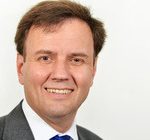
  • Greg Hands – 2005 Maiden Speech in the House of Commons

    Greg Hands – 2005 Maiden Speech in the House of Commons

    The maiden speech made by Greg Hands, the then Conservative MP for Hammersmith and Fulham, in the House of Commons on 26 May 2005.

    I want to speak about the threat to our local hospital in Hammersmith and Fulham: the Charing Cross. First, however, I congratulate my hon. Friends who have made their maiden speeches during this debate: my hon. Friends the Members for Broxbourne (Mr. Walker), for Welwyn Hatfield (Grant Shapps) and for The Wrekin (Mark Pritchard). I am also known as something of a polyglot, so I shall try to offer my congratulations to the hon. Members for Na h-Eileanan an Iar (Mr. MacNeil) and for Taunton (Jeremy Browne).

    I want to say a few words about my predecessor as Member of Parliament for Hammersmith and Fulham, Iain Coleman. It would be fair to say that Mr. Coleman made most of his impact in the constituency. In fact, his surgeries became something of a legend locally as he seemed to spend his entire time in an almost perpetual surgery at all times and for all hours—except during Arsenal games. Mr. Coleman has not been well for a year and I am sure that hon. Members on both sides of the House will join me in wishing him a full recovery and a return to politics as soon as possible. His predecessor as MP for the Fulham part of the constituency was Matthew Carrington, who was a popular, respected and effective MP for 10 years. He was enormously supportive and helpful in my efforts to win back the seat on 5 May.

    It was rather more difficult to find out about the previous Conservative MP for Hammersmith, as distinct from Fulham, because I am the first Conservative MP for Hammersmith since 1964. Probably the most famous previous Hammersmith MP was one William Bull. Mr. Bull represented the area for 37 years between 1892 and 1929. He had the unusual and tragic misfortune to lose his wife to pneumonia after she had been out canvassing for him. For someone who died of pneumonia, Mrs. Bull is ironically commemorated with a sundial in Ravenscourt park in my constituency.

    Mr. Bull won his first election by only 19 votes. While he was an MP he became a senior partner of his law firm. That is an impressive sounding achievement, until one discovers that the firm was called Bull and Bull. He was a man ahead of his time as he was in favour of votes for women and the Channel tunnel, although these days I expect that the latter is more controversial than the former. Most bizarrely, my predecessor was ordered out of the House by Mr. Speaker’s predecessor for calling the then Prime Minister a traitor—which these days is perhaps more in tune with east London than west London politics.

    In truth, the constituency of Hammersmith and Fulham is more famous for its elections than its MPs. I cite the East Fulham by-election of 1933, the battles of Barons Court of the 1960s and the Fulham by-election of 1986. All those have the common characteristic of being won by the Labour party. However, I believe that one of the most significant Hammersmith and Fulham election results was the one just a couple of weeks ago on 5 May. The recorded swing of almost 7.5 per cent. was one of the highest in the UK. The seat was the Conservatives’ No. 1 inner-city target, and a new 5,000 majority has been created. Together with the impressive results achieved in London by my hon. Friends the Members for Enfield, Southgate (Mr. Burrowes), for Wimbledon (Stephen Hammond), for Putney (Justine Greening), for Bexleyheath and Crayford (Mr. Evennett), for Croydon, Central (Mr. Pelling), for Hornchurch (James Brokenshire) and for Ilford, North (Mr. Scott), my result shows that we as a party are making great progress in London again.

    The Labour party barely got started in the campaign. It was barely seen, barely heard and had little positive to say about its eight years in government. Meanwhile, the Lib Dems ran a candidate from Tunbridge Wells under the slogan, “Give Peace a Chance.” Perhaps they were more the surreal alternative.

    Hammersmith and Fulham is one of the smallest constituencies in Britain, but it is none the less one of the most diverse. It is also one of the closest to Parliament. As my hon. Friend the Member for Welwyn Hatfield mentioned, it is quite possible to get back to Hammersmith and Fulham from the House at the end of each evening. In fact, I am probably one of the few Members with a direct door-to-door bus route from just outside Big Ben to just outside his house. That sounds fantastic, until one considers that given traffic in London, it can take up to two hours to complete the journey.

    Prior to 5 May, some newspapers made great play of the fact that no premiership football ground was located in a Conservative seat. Some claimed that that showed that the Conservative party was not represented in the inner cities. All that has now changed, for I represent a constituency in which not just one, but two premiership clubs are located: Fulham and Chelsea. Notwithstanding the heroic events in Istanbul last night, I was delighted to see the streets of my constituency decked out in blue last Sunday to welcome their new champion. I refer of course to Chelsea football club, but “blue is the colour” is surely the future there politically as well, even if I say that as a Fulham fan.

    Hammersmith and Fulham is also distinctive for having more tube users than any other borough in Britain and the greatest number of single women compared with single men in the United Kingdom. It is also the home of the Olympia exhibition centre and part of Earls Court. Its largest employer is the BBC, and it is the home of what is reputed to be Europe’s busiest road interchange at Hammersmith Broadway. It is also the London home to dozens of hon. Members, which can make canvassing in certain streets straightforward. Many hon. Members from both major parties have cut their teeth in local Hammersmith and Fulham politics.

    The election in Hammersmith and Fulham was all about the dreaded congestion charge extension, the fact that eight out of nine muggers in my constituency go unpunished, the fact that a quarter of the borough’s secondary schools are on special measures, the appalling state of the District line and high council tax.

    Perhaps the greatest concern, however, and why I wanted to speak in the debate, is the threat to the Charing Cross hospital. On the very day that the election was supposed to be called—a good day to bury bad news, one might say—on 4 April 2005, an announcement was made at a meeting with the chief executive of the NHS hospitals trust that the world famous Charing Cross hospital would either be demolished or possibly have its specialised services moved to the Hammersmith hospital on the Wormwood Scrubs site. That would be a crazy move, and it is one that I have been elected in part to prevent.

    Charing Cross is a marvellous facility—the centrepiece of a three star-rated hospital trust. It is a global leader in cancer care, vascular surgery, neurosurgery, plastic surgery and much else. It is the trauma centre for the whole of west London and is ideally situated just off the A4 for any major incident at Heathrow. Most of all, it is also a local hospital, serving the needs not only of Hammersmith and Fulham, but of other parts of west London, and is easily accessible by tube, bus or car, which Hammersmith hospital is not.

    The proposal suits nobody other than the management of the trust, who are in turn driven only by meeting Government targets, which have led to huge deficits in both the local primary care trust and the hospitals trust. In classic new Labour fashion, spin doctors were deployed to deny the initial press reports in The Observer that the Charing Cross site would be sold off. Interestingly, however, there was no denial of the plans to move all or most of the specialised services to the Hammersmith site. I expect that more will be heard on the topic in the House, and I look forward to winning the battle with the Government to leave Charing Cross services on their current site.

    In conclusion, many people have asked me and others why the Conservatives did so well in Hammersmith and Fulham and elsewhere in London. The answer is that people in London are overtaxed and face declining public services. I predict major changes in the control of London boroughs in next May’s election.

    I am delighted to become the first Conservative MP for Hammersmith since 1964 and the first-ever Conservative MP for the combined seat of Hammersmith and Fulham.

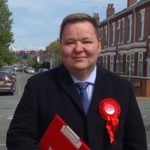
  • Andrew Western – 2023 Maiden Speech and Speech on Holocaust Memorial Day

    Andrew Western – 2023 Maiden Speech and Speech on Holocaust Memorial Day

    The maiden speech made by Andrew Western, the Labour MP for Stretford and Urmston, in the House of Commons on 26 January 2023.

    It is truly an honour to make my maiden speech in the House in such an emotive and important debate. We must always remember the horrors of the holocaust, and do all we can to inform and educate ourselves and future generations about the dangers that exist when the judgment of decision makers is clouded by bigotry, hatred, racism and intolerance.

    Given the matter before the House, I feel compelled to begin my comments about my constituency by first highlighting the rich diversity that we so cherish in Stretford and Urmston, and indeed in Partington, Carrington and Old Trafford. I am therefore pleased to share with colleagues that my constituency is home not just to those whose heritage can be traced back several generations locally, but, among others, to a large Irish diaspora, a considerable Muslim community, one of Greater Manchester’s largest Sikh populations, a Traveller settlement, many Jewish and Hindu residents, and a longstanding and sizeable African-Caribbean community.

    In 1997, the new constituency of Stretford and Urmston elected its first MP, and we were represented until 2010 by Beverley Hughes, now Baroness Hughes of Stretford. Like me, Baroness Hughes was leader of Trafford Council before being elected to this place, and until earlier this month she also served local residents as the deputy mayor of Greater Manchester. Hers is a formidable record of public service, and she remains fondly remembered by many of my constituents to this day.

    Bev’s retirement in 2010 saw my great friend and predecessor, Kate Green, elected. Kate was a much loved and admired MP, whose warmth, diligence and compassion quickly won her the support of local residents. You will know better than I do, Mr Speaker, that Kate was a respected and unusually thoughtful parliamentarian, thorough in her consideration of matters before this House, and compelling in the arguments she made to advance the many causes she supported. I am left in no doubt that I have huge shoes to fill.

    It would be unforgivable for me not to refer in this speech to Stretford and Urmston’s unique status as the birthplace of what is surely the greatest social advance in the history of our country: our precious NHS. It was at Park Hospital, now Trafford General Hospital, that the late, great Nye Bevan officially opened the first NHS hospital on 5 July 1948. I look forward to celebrating the 75th birthday of the NHS this year, and I can only concur with Bevan’s words that day, that that was

    “the most civilised step any country has ever taken.”

    Another key element of my constituency’s history is our industrial heritage, given the economic significance of Trafford Park. As the world’s first industrial estate, Trafford Park’s place is history is assured. Yes, it is home to some of the most well-known businesses in the world—Ford, Kellogg’s, Westinghouse—but it is especially fitting in this debate that I share with colleagues that Trafford Park was also key to defeating fascism, with production almost entirely turned over to the war effort from the end of the 1930s. Indeed, it was at Trafford Park that the engines for both the Spitfire and the Lancaster bomber were manufactured—truly national service indeed.

    Turning from Stretford and Urmston’s economic and industrial heritage to our cultural and sporting identity, I should note that we are also home to the Trafford Centre, one of the country’s largest indoor shopping and leisure destinations, and the provider of many jobs to our local economy. For those who seek a rather more cultured afternoon, the Imperial War Museum North offers an intellectual and educational experience that is second to none. A short walk away can be found the sporting Mecca that is Old Trafford, home to my beloved Lancashire county cricket club. It is a venue of international repute, and the site in 1993 of cricket’s ball of the century, with Mike Gatting bamboozled by Shane Warne.

    On the subject of sport, and as a lifelong Manchester City fan, I have to admit to being sorely tempted today to use the protective veil of parliamentary privilege to assert that there is in fact only one sport in Old Trafford, and they play it with a cricket ball. But whatever my own footballing allegiances, it would be remiss of me not to acknowledge the global standing of Manchester United as a hugely successful sporting institution, even if they are still below City in the league.

    A more recent addition to the constituency has been ITV, which moved production to Stretford and Urmston in 2013. With it came perhaps Manchester’s most famous global export, the cobbles of “Coronation Street”—the longest-running soap in the world. If soap opera has taught us anything, it is that from Weatherfield to Walford, Erinsborough to Emmerdale, and, yes, from Summer Bay to Stretford and Urmston, it is people and communities, not assets and institutions, who truly bind neighbourhoods together. People, that is, like notable former Stretford and Urmston residents Emmeline Pankhurst, L. S. Lowry, the philanthropists John and Enriqueta Rylands, “The One Hundred and One Dalmatians” author Dodie Smith, and the aviator John Alcock, born in Stretford, who piloted the first trans-Atlantic flight in 1919. All have helped to shape my constituency in some way, as have the friendly, hard-working and socially conscious people who are resident there now. I am humbled to be their voice in this place and hope to use my time here focusing on work to better support people out of poverty and to root out inequality.

    Anybody seriously attempting to do either of those things must first recognise two simple facts: one, that a safe and secure home is the most fundamental element in unlocking anybody’s potential; and two, that while we as politicians speak the language of addressing unfairness, we are not yet routinely bold enough to challenge that most dangerous of inequalities that is so detrimental to our economy and our future, and that underpins our broken housing market—I speak of the generational inequality that is so entrenched in wealth and privilege up and down the land. I hope to say much more on that in future, Mr Speaker, but time and tradition prevent me from doing so today. I shall simply say that our housing crisis is, at its source, a crisis of basic supply and demand, the answer to which, however much we tinker at the edges, can only ever be to build, build, build. And why? Because:

    “Housing is the first of the social services. It is also one of the keys to increased productivity. Work, family life, health, and education are all undermined by crowded houses.”

    Those are not my words, but those of Winston Churchill’s Conservative party in its 1951 manifesto. Given that Churchill’s grandson, Winston Churchill MP, represented both Stretford and Urmston’s predecessor constituencies before 1997, those are words it feels fitting to associate myself with today.

    So, that is me and that is my constituency, at least a little of it. I want to be an MP for everyone in Stretford and Urmston, but I want to be an MP fighting for a better future for Stretford and Urmston too. It is the honour of my life to serve such wonderful people in such a wonderful place that I am so privileged to call my home. I will give it my all, Mr Speaker, and I hope I will not let them down.

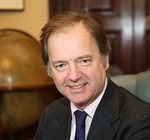
  • Hugo Swire – 2023 Speech on the Australia/New Zealand Trade Bill and Maiden Speech in the House of Lords (Baron Swire)

    Hugo Swire – 2023 Speech on the Australia/New Zealand Trade Bill and Maiden Speech in the House of Lords (Baron Swire)

    The maiden speech made by Hugo Swire, Baron Swire, in the House of Lords on 9 January 2023.

    My Lords, over the recent Christmas Recess, I spent some time—not all the time—reading some maiden speeches made by those coming into this place. It strikes me that there is an accepted formula in being uncontroversial while paying tribute to the friendliness, efficiency and tolerance exhibited by all the staff in this place, from the Lord Speaker and his office to Black Rod and her office, the clerks, the Vote Office and the doorkeepers, who are of course the people who run this place. I had thought that the kindness exhibited to me was exceptional but, clearly, it is a common experience; none the less, I wish to add my gratitude to them.

    Having spent almost two decades in the other place, I am acutely aware that nothing must be more irksome to your Lordships than somebody coming here from there and thinking that they know everything. This place is different and all the better for it. I am therefore hugely indebted to my noble friend Lord Lindsay for helping me to avoid the many potholes and pitfalls. I am also indebted to my noble friends Lord Strathclyde and Lord Marland, of Odstock, who were kind enough to be my supporters and guided me what looked to be so effortlessly into place—no mean achievement as I am not very good at these things. I think I am the only living former Guards officer who went the wrong way in the Changing of the Guard on the forecourt of Buckingham Palace some 40 years ago, to the consternation and delight of hundreds of Japanese tourists.

    It was never really my intention to make my maiden speech so soon, having come into this House only recently. I am still reminded of my maiden speech in the other place in July 2001, which, while perfectly workable, is never likely to be studied or quoted from. I remember on that occasion having to follow on, in a not ideal fashion, from the then new Member of Parliament for Henley, one Boris Johnson. While no such threat confronts me this afternoon, following on from not one but two former high commissioners to Australia, a PUS at the Foreign Office and the Government’s main trade negotiator presents challenges to me in themselves.

    Having thought about this, I feel that I can no longer continue with my role as a Trappist monk, since there are so many issues before us that I wish to share my views on and hopefully contribute something useful to. Having served as a Minister of State at the Northern Ireland Office, I maintain a deep appreciation and understanding for Northern Ireland and the problems that it has confronted, and which confront it at the moment, not least with the protocol. I very much welcome the recent noise coming from Dublin, given the utterances from Leo Varadkar the new Taoiseach—obviously, he was Taoiseach before and is Taoiseach once more—which will hopefully go some way towards resolving what has become a stalemate.

    Also, having spent almost four years as a Minister of State in the Foreign and Commonwealth Office, with responsibility for the Commonwealth as an institution but also with responsibility for Asia as part of my portfolio, I wanted to take part in this debate, since this trade deal is of great interest to me. In that role, I had the opportunity of visiting both Australia and New Zealand, and I am very grateful to my noble friend Lord Goodlad for his kind remarks about that.

    As we have heard, the devil of these trade agreements is in the detail, and I have no doubt that there will be plenty of conflicting views about this one. It is of course right that we should debate it thoroughly and scrutinise it in detail, but for my part I very much welcome this trade deal. I am not quite 74, which is what my introductory biography in this place said—that was amazing, and there was a certain amount of squinting at me on my first day. However, I am old enough to remember the sense of abandonment that our cousins in Australia and New Zealand felt when the United Kingdom joined the EEC in 1973. Their consensus was that this represented imperial preference in reverse and threatened particularly their exports of beef and lamb. Therefore, it is somewhat ironic that one of the criticisms levelled at this deal is that it will disadvantage our own agriculture sector, particularly in beef and lamb, although this ignores the fact that Australia and New Zealand’s main export markets are now heavily weighted towards Asia. The sense of betrayal at the time was understandable, so I am pleased that half a century later, we can put this to rest and look forwards, not back. Australia and New Zealand are, and have always been, more than just allies and friends. We have so much in common, and no one should underestimate the importance of the Five Eyes agreement and the AUKUS partnership, not least at a time of rising belligerence and influence in the region from China.

    I also applaud this Bill because it is the first post-Brexit trade deal to have been negotiated from scratch and, moreover, it is with two fellow members of the Commonwealth. I should at this point draw your Lordships’ attention to the register of interests and my role as deputy chairman of the Commonwealth Enterprise and Investment Council, a not-for-profit organisation revitalised and chaired so dynamically by my noble friend Lord Marland, which promotes intra-Commonwealth trade.

    For too long, we have behaved as if the Commonwealth is an embarrassment and not an asset. During my time in government, it sometimes felt as if I was pushing water uphill whenever there was anything to do relating to the Commonwealth. Here I pay tribute to my noble friend Lord Howell of Guildford and the now retired Lord Luce, who at times appeared to be the only two parliamentarians keeping the Commonwealth flame alive. I intend to join them and all those who feel similarly in promoting the Commonwealth, which provides a unique and ready market for British business.

    In a recent, not uncontroversial Netflix documentary, which some of us may just have seen—and others may not admit to having seen—one of the contributors labelled the Commonwealth “Empire 2.0”. Either this was deliberate mischief-making, or it displayed astonishing ignorance; perhaps it was both. What it was not was in any way an accurate description of what today’s Commonwealth is: a voluntary grouping of now 56 countries, some of which, not least the two most recent countries to join, namely, Togo and Gabon, owe nothing in their history to the United Kingdom, having fallen historically within the francophone sphere of influence. Of course, your Lordships will remember that the last Commonwealth Heads of Government Meeting in June was held in Rwanda, another country with nothing to do with the British Empire or colonialism historically.

    This afternoon, we heard a call for the Government to come up with a comprehensive trade strategy, which I would welcome. If the Government do that, I would remind them that the modern Commonwealth is one such opportunity—a Commonwealth that has a population of 2.5 billion people, 60% of whom, critically, are under the age of 30. It represents a third of the world’s population—a billion middle-class consumers. The combined GDP of Commonwealth countries is estimated to reach $19.5 trillion in 2027, almost doubling in 10 years from $10.4 trillion in 2017. It also represents 40% of the global workforce and half of the top 20 global emerging cities. I am sure we will hear from other speakers about the Commonwealth advantage, whereby it is cheaper for one company in a Commonwealth country to trade with another company in another Commonwealth country, with a saving of 21%, based on a common language and legal system.

    The opportunities for trade with Australia, New Zealand and the wider Commonwealth are clear. I welcome this trade agreement, which will increase the United Kingdom’s chances of joining the trans-pacific partnership, which is the bigger goal. I hope that the new Minister, my noble friend Lord Johnson of Lainston, will take this opportunity to reaffirm this Government’s commitment to the Commonwealth and everything it represents, and that we can rely on him to be a passionate advocate for it.

  • Samantha Dixon – 2023 Maiden Speech in the House of Commons

    Samantha Dixon – 2023 Maiden Speech in the House of Commons

    The maiden speech made by Samantha Dixon, the Labour MP for the City of Chester, in the House of Commons on 9 January 2023.

    Thank you, Mr Speaker. I am genuinely delighted to be speaking in this important debate.

    As a former leader of Cheshire West and Chester Council, I am proud to have a strong record of putting the principles of social value at the heart of public spending. These values look for benefits to society, the economy and the environment. When they are aligned with good fiscal management, local people get more for their money.

    The Northgate development in Chester is a central regeneration project in the heart of Chester city centre. The council on which I have served since 2011 was the main driver for this exciting project. Indeed, I was proud to see the new public market open in November, with nearly half a million customers already through the door. In delivering this project, we have squeezed every last penny of value from every pound spent not just to deliver the project itself, but to deliver 435 weeks of apprenticeship opportunities, 13 education events, 12 work placements, 43 training weeks, 64 employment activities and more than £22 million-worth of expenditure in the local economy.

    On top of that, construction workers raised money for local homelessness charities; there were donations to the local food banks; Chester football club—a fan-owned, community club—had its car park upgraded; and many students from local schools and colleges gained valuable industry insight from being involved in a live and local construction project. Even the sandstone excavated from the drainage tunnel ended up being recycled in the rhinoceros enclosure at Chester zoo. This is how we do business in Chester. Social value is highly important and an opportunity to make, buy and sell more in Britain. Chester has shown that that makes a difference to local communities and can be done in the right way. These communities are at the heart of Chester’s identity and I am now honoured to represent them as their Member of Parliament.

    Chester has a long and complex history that attracts visitors and businesses to the city and makes it a fascinating and beautiful place to live. Chester was founded by the Romans in AD79, due to its strategic advantage given our geographic location on the border with Wales and on the banks of the River Dee. An integral historical feature which Cestrians use to this day is the city’s walls. Many places in Britain are walled but only Chester has a complete circuit. They are about 2 miles long and have over millennia been constantly altered, repaired and sometimes attacked. Indeed, as my hon. Friend the Member for Weaver Vale (Mike Amesbury) mentioned recently, “The only red wall in Chester is the Roman wall.”

    As an aside, a breach of the walls by parliamentarians during the siege of Chester in 1645 has been commemorated in Lego by our local blogger and champion of all things Cestrian, Tony Chester. His magnificent Lego display of Chester through the ages will soon be a key feature in the previously mentioned newly opened market.

    These days, our city is a thriving and vibrant place characterised by excellent hard-working retailers, traders, restaurateurs, publicans, and visitor attractions such as Chester zoo and the Deva Roman Experience, who are all committed to the future of our city. I am determined to help Chester to weather the current economic storm and make our city a top retail and tourism destination. This commitment is one of five I have made to the people of Chester that I intend to keep now I am here as their elected representative.

    I want to restore frequent, reliable buses and trains to keep our city connected to the wider country, and I want to return to neighbourhood policing with more officers on the beat in our communities. Most of all, I want to stand up for our city and end the cost living crisis which is badly hitting many people living in Chester.

    The River Dee, the reason why our city is where it is, has been well used over centuries, whether for industry, recreation or sport. Indeed, the river hosts the oldest rowing regatta in the world, celebrating its 290th anniversary this year. It is a busy and important part of our city and the reason I will be working so hard to end the practice of dumping raw sewage into it, as is currently permitted.

    In other sporting news, Chester has had a football club since 1885. Currently playing in the national league north, the club has always fulfilled an important role in our community. Since 2010, the club has been a supporter-owned co-operative with elected directors, hundreds of volunteers and thousands of members. Chester FC is currently enjoying some success under a talented young manager, Calum McIntyre. The club motto is “Our city. Our community. Our club”, and that is being realised through a set of principles and values based on a mission to create a successful team and bring wellbeing and cohesion to our city, and to do it without ever going into debt. The club reflects and is a prime example of the importance of social value; I wish the club continued success.

    I first visited the Houses of Parliament when I was a sixth-former at Christleton High School. The visit was hosted by Peter Morrison, the first member of Parliament for the City of Chester I can remember. His successor was Gyles Brandreth, whose candidacy, I recall, was announced on red nose day prior to the 1992 general election. His spell as the city’s MP was characterised by his good humour, something which continues today as he serves as chancellor of the University of Chester.

    In 1997, the people of Chester elected the city’s first ever woman Member of Parliament, Christine Russell. She served our city well for 13 years and continues to do so in many roles across the constituency. She remains a good friend and mentor to me. Her successor, Stephen Mosley, served the city for five years and contributed much to parliamentary life through his role on the Science and Technology Committee. My predecessor, Christian Matheson, was also widely acknowledged throughout the constituency for his hard work on behalf of many residents and stakeholders. I am honoured to follow in all of their footsteps.

    Chester, as beautiful, unique and historic as it is, has always masked significant levels of inequality. A commitment to improve the lives of others has been a thread throughout the years and the work of my predecessors.

    Our city has a popular and thriving university that sees students from across the globe choosing to come to study in Chester. Our university trains many of the nurses, midwives and healthcare professionals who serve our community so well in association with our local health trusts. Along with our excellent schools and their hard-working teachers, and our superb police officers and firefighters, as well as the first-rate officers of the council, Chester is served by many fine public servants.

    As we reach the tail end of winter, the struggles that our communities are facing are not easing. The current economic climate makes it more important than ever to create a transparent procurement system; one with social value and public interest at its heart and which will support suppliers who act ethically and create high-quality jobs.

    Chester was a pioneer for social value in that, 21 years ago, our city became the very first Fairtrade city in the country. I am proud that in our city we live and breathe the principles of social value. Most importantly, I am honoured to have been elected to serve the people of Chester, and I will work hard for them every day. I have lived in Chester for nearly all of my life. It is where my home is and where my heart is. I want the very best for my city, and I promise that this Chester woman will be a determined and dedicated public servant for those who voted for me and for those who did not. I will be an MP for all the people of Chester. I look forward to serving them here in this place.

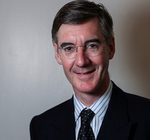
  • Jacob Rees-Mogg – 2010 Maiden Speech in the House of Commons

    Jacob Rees-Mogg – 2010 Maiden Speech in the House of Commons

    The maiden speech made by Jacob Rees-Mogg, the Conservative MP for North East Somerset, in the House of Commons on 7 June 2010.

    It is a great pleasure to follow my hon. Friend the Member for West Suffolk (Matthew Hancock) in making a maiden speech in this debate. He made a fantastic maiden speech and we all now know to be very careful where we blow our noses in his constituency.

    It is a great honour for my family for me to be elected for North East Somerset. My father—or my noble kinsman, Lord Rees-Mogg, as I am now meant to call him—told me that between him, myself and my sister, we have tried seven times with one victory. I fear that if we were a football team, people would be calling for the manager to be removed.

    It is also an enormous honour for me to be elected for North East Somerset, which is where I was brought up and where my family have lived for generations. As everybody knows, Somerset is God’s own county, and North East Somerset is God’s own part of God’s own county.

    I inherit the seat from two very distinguished gentlemen, one of whom is my hon. Friend the Member for Bath (Mr Foster). I am very glad he is now my hon. Friend, because I discovered when canvassing that a lot of people who were unaware of boundary changes were still intending to vote for him. When they discovered they could no longer do so, they turned out to be lifelong Conservatives, so I welcome him to the Peelite coalition that we now have.

    The main part of my constituency was the old Wansdyke seat, which I have inherited from Mr Dan Norris, a most distinguished Labour Member, and a Parliamentary Private Secretary to the right hon. Member for South Shields (David Miliband). He is probably sorely missed at the moment during the Labour leadership election. He was the model of an assiduous constituency MP. He worked tirelessly both as an Avon county councillor and as an MP and I indeed have large shoes to fill.

    North East Somerset, which, as I said, is God’s own part of God’s own county, has a great place in British history. I am not going to go back at any great length to Bladud, the father of King Lear, who in 683 BC founded Bath—he found some pigs with skin disease in north-east Somerset, and washed them in the waters—because he is a rather peripheral figure.

    Alfred the Great is more substantial. Alfred the Great, we must remember, in 878 AD, had just Somerset left, with the Danes all around, as they had begun to take over all of Wessex and already had much of the rest of England. Alfred, however, brought together the people of Somerset, Wiltshire and parts of Hampshire and they crossed over from the Somerset levels through north-east Somerset to Edington, near Chippenham, and there they fought the great battle on which our freedoms depend. They put paid to Danish occupation. Alfred was a great law giver—a man we should think about in this debate particularly, because he did not want to innovate laws; he wanted to codify laws. He wanted to tell people what ancient rights they had and how they ought to have their liberties. He was able to expel the Danes and his grandson became the first King of England on borders we would recognise to this day.

    Moving on a little later, the next great figure from North East Somerset is Alphege, Archbishop of Canterbury, born in Weston, a village bordering north-east Somerset and Bath. He is really the first tax martyr. He was called upon to pay the Danegeld, and he took £48,000 to the Danes, then at Greenwich, and handed it over. They said, “Mr Alphege, we would like some more, and if you don’t give us more, we are going to hold on to you as a hostage.” And Alphege replied: “I will not give you more; I will not put higher taxes on my people; I will not have them suffer this imposition.” So they threw ox bones at Alphege until he died. I hope that people will not find it necessary to throw ox bones at me, but as another representative from North East Somerset, I will stand constantly for low taxation.

    The final figure I am going to mention in this great pantheon of wonderful figures from God’s own part of God’s own county is John Locke. Brought up in Belluton—this really is a sop to the Whig coalition that we now have—this philosopher of the Whigs was in many ways the founder of the constitution that we now have, one that has as its essence the fact that power comes from the people up to the legislature, which is there to supervise the Executive. Members will all know that the argument at the time was about the divine right of kings and some may now think that we have another form of divine right of the Executive. Locke made it clear that the duty of the legislature was to check and to stop the Executive exceeding the powers, the rights and the authority that it had from time immemorial.

    Let us take these three great Somerset men: Alfred the Great, the first Eurosceptic, who got rid of the Danes and made England independent; Alphege, the low-tax martyr; and John Locke, standing up for the legislature and the people against the Executive. For however long I represent North East Somerset, I will take these three as my great heroes and hope to model my political words on their thoughts.

  • Jo Johnson – 2010 Maiden Speech in the House of Commons

    Jo Johnson – 2010 Maiden Speech in the House of Commons

    The maiden speech made by Jo Johnson, the then Conservative MP for Orpington, in the House of Commons on 8 June 2010.

    Thank you, Mr Deputy Speaker, for calling me this evening. The six hours that I have been waiting have truly passed in a flash, such has been the quality of previous maiden speakers, including just now the hon. Member for Newcastle upon Tyne Central (Chi Onwurah). I should particularly like to associate myself with the remarks made by my hon. Friend the Member for Grantham and Stamford (Nick Boles), who is sadly no longer in the Chamber, about the equalities agenda and gay rights.

    At the outset, I should make a declaration, as we do a lot of that at the start of Parliaments. Anyone hoping that I will enliven proceedings in the manner of one of my elder brothers, the former Member for Henley, is likely to be disappointed. Private Eye, in the issue on newsstands at the moment, has helped me to set expectations appropriately low. It quotes an unnamed Oxford contemporary, in the first of a series that it is doing on new Members, and that friendly Oxford contemporary of mine says:

    “He could not be more different to Boris. It’s as though the humour gene by-passed Jo altogether and he inherited only the ambition gene.”

    It is an absolutely fair comment, but I do not really apologise for the humour-ectomy, nor, indeed, for any hint of ambition that the House might detect, because these are serious times and politicians need to be ambitious when the country is in such a mess. History will not forgive us if we flannel around in the House over the next five years and fail to pick the economy up off the floor, where it is at present.

    Orpington, the constituency that I am fortunate enough now to represent, has not troubled the House with a maiden speech for 40 years. I am tempted to give Members a double helping, but time will not allow it. That lengthy interlude has arisen because my distinguished predecessor, John Horam, began his parliamentary career not in the idyllic glades of northern Kent, but in the gritty Gateshead West area of Newcastle.

    John Horam has the distinction, as many Members will know, of being the only Member to have served in all three parties. He was originally of course a Labour MP in Gateshead, but, disillusioned with Labour’s leftward drift, he dallied with the Social Democratic party in the early ’80s before eventually donning Conservative colours and becoming the MP for Orpington in 1992. By the time he came to give his maiden speech that year, he was of course no maiden, but as a liberal Conservative long before the genre became fashionable, he was at least ahead of his time.

    That John’s political journey—his odyssey, in some ways—culminated in Orpington of all places is entirely appropriate. After all, it was in Downe, one of the constituency’s most picturesque villages, that the father of evolutionary biology propounded the earth-shaking theory of natural selection—the most important scientific breakthrough of the past 150 years. It is no surprise to me at all that the people of Orpington inspired Charles Darwin to come up with the concept of the survival of the fittest: meet them and one sees the very best that evolution has done with homo sapiens over the millennia.

    Orpington is famous for much more than the man who debunked creationism. I shall not dwell too long on the “Buff Orpington” chicken, admired by poultry breeders for its gentle contours, colourful plumage and succulent breast meat; suffice it to say that they are easy layers, go broody very often and make great mothers. Would it be too much to expect the local Tesco superstore to stock it and support the breeders of that fine bird? I shall keep the House informed of my progress, but my office called Tesco this morning, and it does not currently stock that chicken.

    If Orpington’s contribution to science is beyond question, its place in the footnotes, if perhaps not the chapter headings, of British political history is no less assured. In 1954, for example, the constituency almost snuffed out the career of a young Mrs Thatcher. Having fought unwinnable seats in neighbouring Dartford, she sought the nomination for Orpington. In The Croft Tearoom in St Mary Cray, one of the more hard-on-its-luck areas of the constituency, can be found a fine photograph of the young Mrs Thatcher buying her daily milk from a horse and cart in an attempt to impress her local credentials on selectors. She was unsuccessful. Bitterly disappointed at how leading local Tories reckoned her candidacy incompatible with her role as a mother of twins, she wrote to central office to say that she was abandoning all thought of Parliament for many years. Needless to say, British politics would have been very different had she not relented.

    I shall not dwell on counterfactuals, but one thing is certain: Orpington would not have gone on to become the totemic seat for the Liberals that it did in 1962 had Mrs Thatcher become our MP. The man who defeated her for the nomination resigned unexpectedly, triggering a famous by-election. A good Balliol man by the name of Eric Lubbock, representing the Liberals, scored an historic victory by overturning a very substantial Conservative majority and chalking up a Liberal gain in an area far away from his party’s traditional heartlands in the west country and the Celtic fringe. The birth of Orpington man sparked a revival that marked the end of the Macmillan era and made Orpington a permanent fixture in Liberal folklore.

    I come back to the present and the subject of this debate. The scale of the Conservative victory on 6 May, with its 60% share of the vote, was a resounding endorsement of the Conservative party’s economic programme. The priority now is to achieve an accelerated reduction of the £156 billion deficit and it is one that I wholeheartedly support, as I support the creative and compassionate ways that I know the Government will use to go about that difficult task. The £6 billion of cuts already announced is barely a start in the process. I look forward to the emergency Budget on 22 June and the public consultations on the role of the state, which will follow.

    As one who recently spent four years working in one of the fastest growing parts of Asia, with a ringside seat on the emerging economy that is India, I am fully aware of the challenges that globalisation presents to the British economy. I would like to use the time that I have in Parliament to help this country and Orpington constituency meet those challenges.

  • Chi Onwurah – 2010 Maiden Speech in the House of Commons

    Chi Onwurah – 2010 Maiden Speech in the House of Commons

    The maiden speech made by Chi Onwurah, the Labour MP for Newcastle upon Tyne Central, in the House of Commons on 8 June 2010.

    Thank you, Mr Deputy Speaker, for giving me the honour to follow so many excellent maiden speeches.

    I would like to start by paying tribute to my predecessor. To be able to say on the doorsteps of Newcastle upon Tyne Central that I was the new Jim Cousins was a huge asset. Perhaps one in five constituents knew him personally, and had a tale to tell about how he had helped them. As a constituency MP, he could not be bettered. He was also a champion of Newcastle and the north-east, and his long service on the Treasury Committee was of great benefit to his country and his city. His role in saving Northern Rock will be long remembered.

    In the boundary review, Newcastle Central gained the wards of Elswick and Benwell and Scotswood from the old Tyne Bridge constituency. I want to thank David Clelland for his dedication to his constituents in those historic areas of my city.

    The Romans chose Newcastle as the lowest bridging point of the Tyne, and later built Hadrian’s wall, which runs through the constituency. In the centuries that followed, we guarded England from the attacks of Scottish raiders. How times change! But as a port, we were ever open for trade. Newcastle played a huge part in the major industries—wool, salt, shipbuilding, coal and engineering. We were at the leading edge of the first industrial revolution.

    If history is merely the story of great men, I need mention only some of Newcastle’s favoured sons to prove our place: Earl Grey, who has found such favour on the Government Benches; Armstrong, the great industrialist and founder of Newcastle university; and my own hero and fellow engineer, Stephenson, who built the railways.

    But I believe that it is the contribution of those whose names are not recorded that it is most important to remember. It was the unnamed, ordinary men and women of Newcastle who built the ships that enabled this small island to wield global influence. My own grandfather worked in the shipyards of the Tyne. The men and women of Newcastle built the trade union and Labour movements, to which we owe so many of our working and voting rights. They built the co-operative and the Fairtrade movements, which combined the best of international idealism and local realism. Closer to home, they fought to protect the unique environment that is the heart, or rather the lung, of Newcastle.

    Newcastle’s town moor is justly famous—a vast expanse of open moorland, kept in common and grazed by herds of cows. In London, cows in the centre of the city are considered installation art. In Newcastle, our councillors debate the future of our city within spitting distance of cowpats, an arrangement that I recommend to the House as ensuring a grass-roots sense of perspective.

    With this history and community, it is no wonder that I felt a huge sense of privilege growing up in Newcastle. Yes, we were a one-parent family on a poor working-class estate, North Kenton, but good local schools, great public services, great housing and the health service meant that I could fulfil my ambition of becoming an engineer. But just as I was deciding to enter engineering, the country was deciding to leave it behind. We were going to become a service economy. I believe in a strong service sector, but time has shown that an exclusive focus on services left our country weaker. Certainly, I had to spend much of my career abroad. Still, I saw first hand the devastation brought about by the loss of the great northern industries of mining, shipbuilding and steel—whole communities robbed of a purpose. Let us be clear, that loss was not just a north-east loss; it was the country’s loss. Although we remain the sixth largest manufacturing economy in the world, building and making things is no longer a part of our culture. That has to change.

    I know that I should not touch upon controversial subjects, which is why I am so glad that what I am going to say is entirely uncontroversial. During the election, all parties were in agreement that the economy needs to be rebalanced in favour of manufacturing. Newcastle, with our great universities, specialising in medicine, design and engineering, our industrial heritage and strategic assets, has an essential role to play. We can help the UK to meet two of the great challenges that face us—securing sustainable energy resources and supporting an ageing population. These sectors need to be part of the new economy. We need to build up our science and manufacturing base and foster the spirit of innovation that led George Stephenson to invent the steam engine and make his fortune.

    I know from my own experience that building a business takes vision, courage, blood, sweat and tears. But manufacturing is particularly difficult. It needs long-term investment. I recently visited BAE Systems and Metalspinners, two engineering firms in my constituency. I saw 60-tonne pressing and cutting machines that cost millions of pounds and are expected to last for decades. We must continue to help these companies invest. They need a strong public sector. They need apprenticeships, good transport links, a strong regional development agency and tax allowances for manufacturing and innovation.

    We are a small country and it is no longer our ships that set the boundaries of the world. But even as a small country, we can set the direction of the new industrial revolution if we equip ourselves to grasp those opportunities, and I will fight to make sure that the Government do just that. My career in Parliament will be dedicated to ensuring that Newcastle upon Tyne Central is an economically and culturally vibrant contributor to the UK and the world.