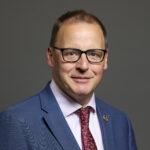
Category: Maiden Speech

  • Luke Myer – 2024 Maiden Speech on Planning, the Green Belt and Rural Affairs

    Luke Myer – 2024 Maiden Speech on Planning, the Green Belt and Rural Affairs

    The maiden speech made by Luke Myer, the Labour MP for Middlesbrough South and East Cleveland, in the House of Commons on 19 July 2024.

    Having listened carefully to the debate on His Majesty’s Gracious Speech, I am grateful for this opportunity to make my first speech in this Chamber. It is a privilege and an honour to represent the communities of Middlesbrough South and East Cleveland, where I was born and raised. Much of this debate has sought to pit rural and suburban against each other, but as a representative of both, I know that we can deliver for both, and that is precisely what I expect this Government to do.

    Distinguished predecessors have represented my seat. In maiden speeches, politicians often say that they stand on the shoulders of giants, but rarely is it so true as in my case. My predecessor, Sir Simon Clarke, was a giant not only in physical terms but within his party, particularly in his admirable zeal for planning reform—an issue on which he campaigned and stood up to his own party. It is fitting that today’s debate places such emphasis on those reforms. This Government are committed to building the homes and infrastructure that this country needs. Measures such as the planning and infrastructure Bill will start to create the jobs and growth that we need. I will push for Teesside to be at the heart of that work.

    If the House will permit me, I would like to pay tribute to two other predecessors from my party. First, Tom Blenkinsop, who some in the House will remember, not only served his party and constituency but served his country in the Royal Military Police. Dr Ashok Kumar, who was mentioned by my hon. Friend the Member for Stockton North (Chris McDonald) in his maiden speech, was my MP growing up. He was a tenacious constituency MP, whose model I hope to follow. Ashok once said that our constituency is a microcosm of British society. He was right. It is not particularly left or right wing, but it is full of decent people who want the best for their families.

    Our identity is complex. Officially, we are in the north-east, but we are also proudly in Yorkshire, as part of the historic North Riding. We have been called Cleveland and Langbaurgh, and today we are told that we are in the Tees Valley. Whatever we call it, our home is an incredible place. My constituency sits between wildly different landscapes at each point of the compass. To the north, we find the beach, where the North sea fret washes out over the seafront at places like Skinningrove. To the south, we leave the beautiful market town of Guisborough and meet the vast, wild purple of the North York moors. To the east are the rolling fields of East Cleveland—rural North Yorkshire at its best. There are proud villages and towns from Loftus to Lingdale, Skelton to Stanghow, and Brotton, where I grew up. I am proud to be our constituency’s first MP from the villages, and I hope to serve them well.

    To the west, we find suburban south Middlesbrough, home to many working families and, in Marton, to the birthplace of one of this country’s greatest explorers, Captain James Cook. If we venture further, those communities give way to the towering chimneys and snaking pipes of industrial Teesside, once the beating heart of Britain’s economy—the “infant Hercules” as Gladstone called it. It is home to a 300-year economic relay race from one major industry to another: first fishing and agriculture, then coal, then iron and steel, and then chemicals. The saying on Teesside is, “We built the world.” Steel forged in Teesside furnaces found its way into the Sydney Harbour bridge and spanned the Victoria falls. When Churchill’s war Cabinet met in their underground bunker not far from here or when the ball hit the net at Wembley, it all happened under structures of Teesside steel.

    Today, we are perfectly positioned for the green jobs of the future. We already produce around half the country’s hydrogen. With the right industrial strategy, we can create jobs in hydrogen, carbon capture and storage, and clean power—wind, nuclear and solar—and in our port. If our engineering capabilities are harnessed, we can lead the world again. Legislation such as the Great British Energy Bill, the Crown Estate Bill and the planning and infrastructure Bill can deliver that.

    Teesside is more than just a place; it is the people. Like steel, Teesside is an alloy—a meld of the different communities that shaped us, from the miners and the Methodists to the labourers who came from Ireland, ironworkers from Wales, sailors from Japan, Jewish refugees from the pogroms of Europe, trade unionists, chemical workers, and so on. These are the small and disparate atoms that Teesside took on and blended into our culture, strengthening it into something solid and secure, bonded together with values of fairness, respect and a collective responsibility to look out for the community. We see that today in so many local community organisations, from the Guisborough Bridge Association and East Cleveland Good Neighbours to the eco-shops we see in Marton, Coulby Newham and other places.

    We know what it is like to experience economic hardship; we now have levels of poverty and destitution that have not been seen in decades. When times get tough, it is easy to fall into the habits of division and blame. It is much harder to take that common pain and channel it into a common purpose, but that is what Teessiders do best. It was there in times of economic shock, whether from globalisation or the global pandemic. It was there in the floods and the food banks. The instinct, the base code of the people of Teesside, is to come together and look out for those in need—community in the face of adversity. That is our spirit, embedded like ironstone deep in our culture—the unbowed and unbroken spirit of the infant Hercules. That is what we are about. And with the powers set out in these Bills, the devolution to take back control of services and the investment in the jobs of tomorrow, we can once again drive prosperity on Teesside and prosperity across Britain, rebuilding our communities and rebuilding our country.

  • Harriet Cross – 2024 Maiden Speech on Planning, the Green Belt and Rural Affairs

    Harriet Cross – 2024 Maiden Speech on Planning, the Green Belt and Rural Affairs

    The maiden speech made by Harriet Cross, the Conservative MP for Gordon and Buchan, in the House of Commons on 19 July 2024.

    Thank you for calling me to speak, Mr Deputy Speaker. It is an honour to follow the hon. Member for Cramlington and Killingworth (Emma Foody)—she is clearly very proud of her roots and of what she has achieved in the area. It is lovely to follow another girl from the north-east—although in my case it is the north-east of Scotland.

    It is an incredible honour to be elected to this place to serve the great people of Gordon and Buchan. Having moved homes many times in my lifetime—more than I can remember—from Yorkshire to Ireland to Scotland and many times in between, I have seen my fair share of houses, but I can definitely say that this one will take the most getting used to. As Members are all aware, you are not a true Scottish MP if you do not proclaim that your constituency is the most beautiful, so: from the beaches of Balmedie and Newburgh through the fertile farmland of Formartine, Garioch, Huntly and Turriff, to the heights of the Correen hills and the Bennachie range, Gordon and Buchan has it all. I can tell Members in all seriousness that it really is the most beautiful constituency, and not just in Scotland but in the whole of the UK.

    Those of us who are blessed to live north of the Watford gap know that there is a direct correlation between how far north you get and being approachable and determined, having a dry sense of humour and being great company. As such, I am also delighted to say that I am the Conservative Member with the most northerly constituency.

    First, I must reflect on my predecessors, beginning with the most recent Conservative Members from the two former constituencies that have now been combined to make Gordon and Buchan: Colin Clark in Gordon and David Duguid in Banff and Buchan. Both Colin and David were embedded in our rural communities. They are unwavering champions for our region, in particular being loud, constructive and prominent voices for our farmers, fishermen and distilleries, and for the energy sector. I also want to take the opportunity to wish David Duguid and his family all the very best in his ongoing recovery.

    It would be wrong of me not to mention Malcolm Bruce, now Baron Bruce of Bennachie, who served Gordon for 22 years up until 2015. It is a show of the mark that he left on the area that his name was mentioned to me on the doorsteps many times during this election campaign, always very fondly. Finally, the former SNP Member for Gordon and my immediate predecessor, Richard Thomson, has long served the people of Gordon and Buchan and of Aberdeenshire, both in this place and on Aberdeenshire council as both leader and opposition leader. While he and I will not pretend that we see eye to eye on the means, we both agree that we want the very best for our special corner of Aberdeenshire, now and in the future.

    Much was achieved for Gordon and Buchan and the north-east of Scotland in the last Parliament. I wish to draw attention to the north-east investment zone, an £80 million investment in our region made as part of the last Conservative Government’s levelling-up agenda. It is a real investment in our area’s growth, development and potential—an investment in our future. The north-east shines with energy in every way. Indeed, the energy sector is what first brought my family to Inverurie, the largest town in Gordon and Buchan, 50 years ago this year. My grandfather, having been medically discharged from the Navy, never lost his love of service or the sea, so he channelled that love into creating in Aberdeen the International Association for Safety and Survival Training, whose courses are still used today by each and every offshore worker in our oil and gas sector. I am sure that if he were still here today he could give me some sound advice on surviving in this place.

    The energy sector powers Aberdeenshire, from direct jobs and high-skilled employment to the associated services and hospitality sectors that rely on it. To the people of Gordon and Buchan and the north-east of Scotland, the debate on the future of the oil and gas sector is not really about energy security, markets or net zero; it is about our jobs and our livelihoods. It is about knowing that we have secure employment for the years to come and that our children will not have to move away to start their career, or that the bottom will not fall out of our local economy. I cannot imagine that any hon. Member would sit here and allow their constituency’s key employment sector to be run down or conceded, and I will not do that either.

    Our rural communities are the beating heart of Gordon and Buchan. Indeed, three quarters of the land in the constituency is classed as agricultural, a fifth is forestry and only 2% is thought of as built up. If someone drops a pin on a map, it is more likely to land in a field or forest than on a house. Before being elected, I worked as a rural surveyor, meeting farmers across Aberdeenshire, many of whom I am now proud to call my constituents. As intimidating as it might be being on the Opposition side looking across at the Government Benches, that is nothing compared with sitting at a farmhouse table trying to tell farming clients that no, their farm is not worth three times what they think it is worth or that their worse-for-wear heifer will not get top figures at next week’s sale.

    I am delighted that my first contribution in the House is in this rural affairs debate. I know, and my constituents know, that rural living is unique, rewarding and, in my opinion, far superior to urban life. We also know that it is not all about green fields, welly boots and labradors, idyllic as that might sound. The reality is locals waiting in villages such as Fyvie, Auchleven and New Deer for the only bus of the day, which never arrives. It is the only healthcare facilities for many miles closing down. It is children having to move away to build their career. It is poor-quality, unsuitable roads. Or it is the lack of housing, or houses without gas, poor broadband and no phone coverage.

    We in the UK quite rightly hold our rural landscapes up in lights: our green and pleasant lands, which bring ecological benefits as well as much-needed tourism to remote areas. But rural communities are not there solely to be an escape or plaything for others; they are where my constituents make their homes and livelihoods, and where they grow up and grow old. We need tailored policies for our rural communities that help industries such as farming and food and drink producers, and the numerous small and medium-sized enterprises across Gordon and Buchan that bring so much not just to the immediate area but to the region and to the UK as a whole. Yes, we are less densely populated and yes, understandably, we have less choice in services and on where to find work, but we have no less aspiration.

    I am proud to have been sent here by the people of Gordon and Buchan to represent them, to fight for them, and always to keep their interests at the top of the agenda.

  • Emma Foody – 2024 Maiden Speech on Planning, the Green Belt and Rural Affairs

    Emma Foody – 2024 Maiden Speech on Planning, the Green Belt and Rural Affairs

    The maiden speech made by Emma Foody, the Labour MP for Cramlington and Killingworth, in the House of Commons on 19 July 2024.

    I thank the hon. Member for Beaconsfield (Joy Morrissey), who spoke passionately about her communities. It has been wonderful to hear so many Members make their maiden speech today and over the preceding days, speaking with great pride about their constituency. I stand here today representing my home constituency of Cramlington and Killingworth, and I speak with similar pride. It is the place that generations of my family have hailed from, worked in and loved, and it is a great honour to represent it here today.

    My home, and where I grew up, is a little place called Wideopen. It was once represented by Margaret Bondfield, a giant of our Labour movement. She was a shop worker and trade unionist who was the first ever woman in the Cabinet. As a former shop worker, and a trade unionist and Co-operative Member, it is pleasure for me to see in the Gracious Speech provision for the protections that shop workers deserve and need in order to make our high streets stronger.

    Cramlington and Killingworth constituency was newly formed at this election. Dominated by our two new towns, the seat is made up of a further 25 villages and settlements—every single one a community in its own right. Although I do not propose to list each and every one of them now, I will fight for the support and success of them all. Our area and our communities are places of industry, innovation and creativity. Whether through coalmines, factories or the arts, my community has contributed a lot that has put it on the map.

    There is a certain mention today for George Stephenson, the father of the British railways. Although the Rocket might be in Shildon, he learned his trade and started his inventions in my constituency, where my ancestors worked alongside him to build our railroads. Colleagues may recall that in “Whatever Happened to the Likely Lads?”—a favourite of yours, I am sure, Mr Deputy Speaker—Bob and Thelma’s new starter home on a nice new estate was in Killingworth. We also have notable public art in the shape of a giant spoon, a herd of concrete hippos, and a Lady of the North in Northumberlandia.

    Members my age may recall the absolutely iconic BBC children’s TV programme “Geordie Racer”. Spuggy and Wordy got up to hi-jinks at Seaton Delaval hall, our stunning National Trust property. I am sorry that those familiar with the programme will now have the theme tune in their head all day. More recently, those who watched the popular detective show “Vera” may have noticed the stunning coastline and cliffs; all too often, a body is found at the bottom of them. Those cliffs and beaches, along the coastline of south-east Northumberland, including Seaton Sluice and Old Hartley, are second to none, and they are ours. The crime rate is much lower than ITV would have us believe.

    As is tradition, I will pay tribute to the previous MPs, but as mine is a newly created constituency, I pay tribute not to one but to four current and previous Members of this House. I will start with my predecessor but one, Ronnie Campbell, who was the MP for Blyth Valley for over 30 years and a great friend to many in this place. Locally, we still feel his loss. Ian Levy was elected as the first ever Conservative for Blyth Valley in 2019. I know that he cares deeply for our area, and that he will want it to prosper and our communities to thrive.

    My right hon. Friend the Member for Tynemouth (Sir Alan Campbell), of course, is also our Chief Whip. It says here in my speech that he has shown me great kindness and generosity, which I can only assume was a late Whips Office edit. In all seriousness, he has been a great support to me.

    Finally, I pay tribute to my hon. Friends the Members for Newcastle upon Tyne North (Catherine McKinnell) and for Newcastle upon Tyne East and Wallsend (Mary Glindon), who are both phenomenal advocates for the north-east, and from whose constituencies we took a variety of towns, settlements and villages. When I first got involved in politics, I was warned that it could be a boys’ club. Well, those people underestimate the girls of Sacred Heart high school, which all three of us attended. There, we were told in no uncertain terms that places like this are meant for people like us. To serve alongside my hon. Friends is a tremendous privilege.

    I am proud to be in this place today, and to be able to speak on behalf of my communities on this most Gracious Speech—a wide-ranging set of commitments and actions that I know will deliver, not only for my community but across the country, and not just in housing and, crucially, leasehold reform but for our economy, our energy security and policing. I am particularly proud of the measures to support our national health service. As a former 999 call taker at the North East Ambulance Service, I know how my former colleagues work tirelessly to serve people, often in the most challenging and desperate of circumstances. It is an honour to be here and to have their back in this place. I believe passionately in the measures in this most Gracious Address, which we fought so hard to earn the country’s support for, and I cannot wait to get to work.

  • Scott Arthur – 2024 Maiden Speech on Planning, the Green Belt and Rural Affairs

    Scott Arthur – 2024 Maiden Speech on Planning, the Green Belt and Rural Affairs

    The maiden speech made by Scott Arthur, the Labour MP for Edinburgh South West, in the House of Commons on 19 July 2024.

    I am obliged to you, Mr Deputy Speaker, for giving me the opportunity to make my maiden speech. I would like to start by thanking the hon. Member for Brigg and Immingham (Martin Vickers) for a fantastic speech, but I fear that he has made my job only a little more difficult. I have to say that it is a delight to give my maiden speech in a debate led by our fantastic Deputy Prime Minister.

    It is an honour and a privilege to stand before this House as the representative for Edinburgh South West. I am deeply grateful to my constituents for placing their trust in me and also to my church for praying for me, although I know that they prayed more after I won the election than before it. I am committed to serving them all with dedication and integrity.

    Before I address the subject matter of the King’s Speech, I would like to pay tribute to my immediate predecessor, Joanna Cherry KC, who represented the constituency for nine years. I had many dealings with her office in my role as a councillor, and I always found her team to be utterly professional. I wish them all well. Joanna Cherry herself was a formidable parliamentarian. Members will recall that, during the Brexit crisis, she worked hard to ensure that Government decision making remained transparent and subject to parliamentary scrutiny. We all owe her a huge debt for that. I must also say that, although I disagree with her on many issues, I am happy to stand in complete solidarity with her in the face of the threats that she has faced. It pains me that, since coming here, so many others have spoken about threats and intimidation as well. This is an issue that we must take seriously. I must, however, tell the House that the campaign for Edinburgh South West between Joanna Cherry and myself was conducted entirely on the issues that matter to local people there, which is perhaps why I am so proud to be here to address the House today.

    I must also pay tribute to my predecessor’s predecessor. Alistair Darling was one of the greatest public servants of my lifetime. He sat here from 1987 to 2015. Like me, he was a councillor in Edinburgh, and convener of the city’s transport committee before he went on to serve as MP for Edinburgh South West. The similarities may end there. Indeed, we must all hope that I am never called on, as he was, to save the Bank of England. I know that Alistair is still much missed and I am proud to follow in his footsteps—indeed, without his help I doubt that I would have been elected as a councillor in 2017.

    Before I address myself to the debate, I would like to take the opportunity to pay tribute to my constituency, its institutions and its people. At this point, Members may need a map. Edinburgh South West is the best part of the greatest city in the world. It stretches from the west end of Princes Street to the East Cairn hill, some 18 km to the south-west. Along its length, the constituency moves from dense urban communities—places such as Gorgie, the home of Hearts football club, Dalry, Parkhead, Wester Hailes, Sighthill and Oxgangs—to suburban settlements such as Colinton, Craiglockhart, Swanston and Baberton Mains, and to the semi-rural Water of Leith villages of Currie, Juniper Green and Balerno.

    Of all those, Oxgangs is perhaps the place I know and love most. Many people there struggle in temporary and overcrowded accommodation; that is why it has been so important today to hear about the Deputy Prime Minister’s ambition to build affordable homes. In Edinburgh, we have worked with the whole city and set aside land for 37,000 new homes. The land is there and the planning is there, but the barrier to building those new homes is the lack of funding from the Scottish Government. I hope that they can now follow what we are doing here, and show more ambition on affordable housing in Scotland.

    When it comes to natural beauty, the Pentland hills and the Water of Leith dominate my constituency, and the habitats along the Union canal should not be forgotten. But of course it is the people who make my constituency so special, such as those who volunteer at the Water of Leith Conservation Trust or who converted a disused railway tunnel into Scotland’s largest historical mural—the Colinton tunnel; please google it later. I must also mention Tiphereth, a unique charity that delivers residential and day services for people with learning difficulties. It really is unique.

    The Edinburgh campus of Heriot-Watt University is perhaps the biggest employer in my constituency. It supported and developed me every day from when I started working there in 1996 until I was elected to this place. I shall miss my civil engineering colleagues and the many students it welcomes to Scotland from around the world. I hope to use some of my time here to support higher education, particularly the wellbeing of students. Mental health support in Scotland is failing its young people and acting as a barrier to many of them reaching their full potential. I will work with anyone and everyone to address that and the many other challenges facing students across the UK.

    Other large employers in my constituency include Lothian Buses, a bus company owned by the people of Edinburgh that defines the city just as much as the castle. I should stress that the castle is not in my constituency. If some Members question municipal ownership of public transport, or the importance of collaborative working between trade unions and management, they should speak to some of the 2 million passengers that Lothian Buses carries every week without any subsidy. Big businesses are also important in my constituency, but it is the small ones that define it. They are at the heart of many of the neighbourhoods. Many have high hopes that the UK and Scottish Governments will now work together to support them more.

    I am also proud to say that there are two infantry barracks in my constituency: Dreghorn and Redford. Both are valued by local residents as real assets, and they never caused me a problem as a councillor. The proposal in the King’s Speech for an armed forces commissioner will be supported by many in my constituency, particularly if it helps improve the living quarters for our service personnel and supports spouses at the point of relationship breakdown, particularly when domestic abuse has been an issue.

    Elections are a reminder that we are all equal in this country, but it pained me that many constituents felt that they were less equal than others during the election campaign. That is why local groups in my constituency such as Soul Food Oxgangs, Best Bib n Tucker and Whale Arts must be mentioned in my speech, as they all work hard to ensure that people feel included and valued. That is our job too, of course—indeed, all of us here have a duty to keep on listening to voters now that the election is over. The first-past-the-post system means that I was elected on just 40.9% of the vote—I still cannot believe it, to be honest—and I know that some of those voters still want to be reassured that they did the right thing. I am here only because I promised to work with other parties where possible, and to listen to everybody in my constituency, no matter their sex, gender, background, faith, age or birthplace. I will keep listening to people, even if they voted for my opponents or did not vote at all.

    We know, of course, that the people who need our help most did not vote for us. Among them are the 3,000 children in my constituency who are living in poverty. That number has grown across the whole UK since Labour last sat on the Government Benches, and that should shame us all. I know the costed measures in the King’s Speech are our best chance of changing those lives.

    Measures such as GB Energy, building more homes, a new deal for working people and our plans for sustainable economic growth will not just get our country back on track and help us to meet our climate targets, but give parents hope again of a better future for their children. The child poverty taskforce is an opportunity to maximise the benefits of those policies by integrating their delivery. That is the change our country needs and voted for, and we must now work together across this Chamber to deliver it.

  • Sam Rushworth – 2024 Maiden Speech on Planning, the Green Belt and Rural Affairs

    Sam Rushworth – 2024 Maiden Speech on Planning, the Green Belt and Rural Affairs

    The maiden speech made by Sam Rushworth, the Labour MP for Bishop Auckland, in the House of Commons on 19 July 2024.

    Thank you, Mr Deputy Speaker, for allowing me this opportunity to make my maiden speech during the King’s Speech debate. I thank my hon. Friend the Member for Southgate and Wood Green (Bambos Charalambous) for his excellent contribution, as well as the hon. Member for North Shropshire (Helen Morgan). Like her, I represent a rural constituency, and I recognise many of the issues she raised in my own community.

    I also want to thank my predecessor, Dehenna Davison, for her service. In her maiden speech, she described Bishop Auckland as England’s “most beautiful constituency,” and on that point we agree. She is a formidable campaigner who did important work to raise awareness of migraines, lobular cancer and the danger of one-punch assaults. Although she already has the accolade of being the first ever Conservative MP for Bishop Auckland, I hope that, in decades to come, her legacy will be even more impressive as the only ever Conservative MP for Bishop Auckland.

    If the House will indulge me for a moment, I would like to say a little about the place I call home, the people who live there and what makes them so special. Getting my priorities in order, I will start by talking about football. I had been looking forward to singing “one general election and one European cup” this summer, but that was not to be. I am gutted that our England team did not quite make it, but football did come home in 1909, when West Auckland became the first football team to win the world cup. That is true, and you can look it up.

    Another important footballing moment came in 1958, when Bishop Auckland’s amateur football club famously provided players to help Manchester United fulfil their fixtures following the Munich air disaster.

    I was really touched when I met Barry, who volunteers at the local Bishops football museum. I listened to his passion as he shared how a gentleman with dementia came in and recognised himself in an old black and white photograph. They developed a friendship as he used football memorabilia to help that gentleman reminisce and reconnect with his past. I am similarly grateful to others in my constituency who give up their time to run sports clubs, whether it is football, rugby, cricket or boxing, providing opportunities for young people to exercise, connect and enjoy themselves.

    Secondly, I have to mention railways. It was in Shildon, in the south-east of my constituency, where Stephenson invented the Rocket locomotive, making Stockton to Darlington the world’s first commercial railway line 200 years ago next year. It is inspiring to see the commitment of local volunteers who work together to preserve this heritage, caring for parts of the line and organising bicentenary events. Likewise, it was inspiring to see those who worked to save the Shildon Railway Institute, which was set up by working people nearly two centuries ago, with a library and school rooms to upskill the local workforce for the new industrial age.

    Thirdly, we are blessed with fabulous arts and culture in Bishop Auckland, which is the home of Stanley Jefferson, of Laurel and Hardy fame. It is also believed to be where Elgar first played the anthem “Land of Hope and Glory.” And how grateful I am to the volunteers who give their time to enable participation in the arts: Daisy Arts, Jack Drum, the Teesdale operatic society, the Weardale Warblers and “Kynren,” England’s most spectacular outdoor theatre production. The work they do is not only developing talent but building the character and confidence of the rising generation.

    Fourthly, we have magnificent countryside. Under the new boundaries, the constituency brings together two Durham dales—Weardale and Teesdale—around the market town of Barnard Castle, which is not only a handy place to test your eyesight but is also an idyllic place to stroll along the river with your family on a sunny Easter bank holiday, surrounded as it is by hill sheep farms and moorlands that are home to rare wildflowers and endangered ground nesting birds. I am full of admiration for those who work on the land and put in the graft to keep this place so lovely and to provide us with food. Without wishing to disappoint the right hon. Member for North West Essex (Kemi Badenoch), when I recently met local farmers they were delighted to see that Labour is bringing in planning reforms and lifting the ban on onshore wind.

    Finally, Bishop Auckland has a long connection with the Church. Auckland castle served for centuries as home to the Prince Bishops, while the seventh-century Escomb Saxon church is one of the oldest in England and stands as a monument to the devotion of the men and women who built it more than a millennium ago. What I find equally inspiring is the work done by churches in our community today, such as Woodhouse Close church and community centre and Shildon Alive, which recently received the King’s award for voluntary service.

    What makes Bishop Auckland so special to me are the people I live among. People who have stood together in hard times, people who take pride in their neighbourhoods and people who serve without thought for themselves.

    If I might make a slightly more political point as I draw to a close, we have just accepted the decline of northern heartlands like Bishop Auckland for too long. I live in the town centre, where one in three shops is boarded up. Our local businesses are excited to see the powers that this Government will devolve to local authorities to compulsorily purchase some of those buildings. We will hand them over to businesses and we will get our town centres booming again.

    Finally, I am proud to be a Member of the most representative Parliament in our history, with the highest percentage of women, minorities and state-educated Members. There are also, on all Benches, some exceedingly talented people. It is already clear to me that while I will be bold in speaking up for my constituents, there will always be someone more gifted in oratory or more learned. However, I hope that if I can excel in anything, it will be in showing kindness and respect to my fellow Members, to the incredible staff who have done so much to make me feel welcome in this rather strange place, and to my constituents who I hope will always know, whatever our disagreements, that I love and care about them.

  • John Cooper – 2024 Maiden Speech on Foreign Affairs and Defence

    John Cooper – 2024 Maiden Speech on Foreign Affairs and Defence

    The maiden speech made by John Cooper, the Conservative MP for Dumfries and Galloway, in the House of Commons on 18 July 2024.

    I congratulate the hon. Member for Inverclyde and Renfrewshire West (Martin McCluskey) on his excellent maiden speech, which is difficult to follow. I gently say that it is marred only by the fact that he did not reference two of his most famous constituents: William Kidd, the pirate, and my mother, who was born in Houston.

    Thank you, Mr Deputy Speaker, for allowing me to take part in this important debate at the dawn of this new Parliament. I also thank my colleagues for their wise counsel and help as I take my first steps here in the cockpit of democracy.

    Defence is the No. 1 task of any Government, as we have heard, and I am proud that my constituency, Dumfries and Galloway, has many fine young men and women currently in our armed forces, and many gallant veterans who have served on air, sea and land. Of course, like every constituency, Dumfries and Galloway has many people working in the UK’s world-class defence industry, which deserves our support.

    I worry about using the expression “punching above our weight” in relation to our armed forces. A British major general who served with distinction in Afghanistan, and who knows a lot more about conflict and boxing than I do, told me, “That’s a recipe for getting knocked out as soon as the bell rings.”

    I pay tribute to my predecessor, Alister Jack. I make it clear that, although such praise is customary on these occasions, I offer tribute not out of duty but out of genuine respect and admiration. As a special adviser, I had a front-row seat for Alister’s tour-de-force performance as Secretary of State for Scotland. Under his leadership, the Scotland Office, small but perfectly formed—not unlike myself—was a bantamweight bazooka, bang on target for the people of Scotland on issues including equality, the independence debate and the benighted A75 and A77 roads that are so crucial to Dumfries and Galloway. I hope I can apply the lessons learned at the feet of the master for the betterment of Dumfries and Galloway. I got the finest start possible there and I want to make sure others get the same chances.

    Only through marrying the talent and aspiration that abound in the south-west of Scotland with opportunities can we defeat that blight on all rural areas: depopulation. We need the three J’s: jobs, jobs, jobs. We have much work to do to make ours a go-to destination, not a go-through destination. Blessed with a balmy climate, we are home to some of the country’s finest dairy herds. Our unspoiled landscape is a tourism dream. The terrain, for instance around Newton Stewart and Minnigaff, is ideal for cycling. The Merrick, Cairnsmore of Fleet and the Galloway hills are a delight for hikers. Stroll on the beach at Killantringan—I will help Hansard with the spelling later—on the rugged Rhins peninsula, and you will probably have the golden strand all to yourself, and you will see our Northern Irish friends in this great Union just 14 miles distant.

    Dumfries itself, astride the mighty Nith, is rightly lauded as the “Queen of the South”. Erudite Wigtown is Scotland’s national book town, and there I picked up a copy of “If”, arguably the finest work by Rudyard Kipling. His lines,

    “If you can meet with Triumph and Disaster

    And treat those two impostors just the same”,

    resonate now on the Government Benches, where Labour Members are having a moment in the sun, but also on the Opposition Benches, where the blue flame of Conservativism gutters in the storm, burns low, but does not go out.

    Many suppose “If” to be about Kipling’s son, John, who was tragically killed serving with the Irish Guards in the great war. In fact, it was inspired by Leander Starr Jameson, who grew up in my home town of Stranraer, after his father took editorship of the Wigtownshire Free Press. That venerable newspaper is still in circulation, and I got my first and last journalism jobs there, as a trainee reporter and latterly as editor. Jameson led a daring raid against the South African Republic in 1896.

    Perhaps there is something in the pristine waters of south-west Scotland that instils a resilience and self-reliance in its people, for John Paul Jones, father of the United States navy, was also a native Gallovidian. Jones unfortunately went pirate on us in the American revolution. Locked in mortal combat with the Royal Navy off Flamborough Head in 1779, he is reputed to have said:

    “Surrender? I have not yet begun to fight!”

    I am proud, then, to have been elected to represent the redoubtable people of Dumfries and Galloway, inheritors of Jameson’s alacrity and Jones’s never-say-die attitude, both vital in today’s febrile times. In conclusion, Bonnie Gallowa’ has a storied past and, I am determined, a bright future. I shall endeavour, as Kipling didn’t quite put it, to keep the heid.

  • Martin McCluskey – 2024 Maiden Speech on Foreign Affairs and Defence

    Martin McCluskey – 2024 Maiden Speech on Foreign Affairs and Defence

    The maiden speech made by Martin McCluskey, the Labour MP for Inverclyde and Renfrewshire West, in the House of Commons on 18 July 2024.

    Thank you, Mr Deputy Speaker, for the opportunity speak in this debate and to follow the hon. Member for North Herefordshire (Ellie Chowns), who spoke with such passion, and the many other hon. Members who have spoken this afternoon.

    Like many in this Chamber, I am a Member for a new constituency. Inverclyde and Renfrewshire West stretches along the Clyde coast and takes in the coastal communities of Inverkip, Wemyss Bay, Gourock, Greenock and Port Glasgow, before moving inland to the villages of Kilmacolm, Quarrier’s, Bridge of Weir, and Houston, as well as Crosslee and Craigends. My constituency has a proud history of looking outward around the world, from producing the ships that contributed to our maritime defence to providing the base for the free French navy during world war two. More recently, it has continued with the idea of giving people refuge by contributing to the Ukrainian refugee and resettlement programme.

    It is also—people will not be surprised to hear me say this—a beautiful part of the world. I know it is a bit of a tradition for Members to say that their constituency is the most beautiful in the country, and I do not intend to disappoint this afternoon, so Inverclyde and Renfrewshire West is the most beautiful constituency in the country. But it is not the beauty of our surroundings that I am most proud of; it is the resilience, the kindness and the determination of our people.

    I have the privilege of representing the place where I was born and raised, and where I continue to live. I see every day what people achieve together for the benefit of the community. In Gourock, which I also have the pleasure of representing on Inverclyde council, the “Bowl and a Blether” group at St John’s church grew out of the cost of living crisis, but is now a regular event where people from all walks of life can come together for a chat and a warm meal. In Port Glasgow, Parklea Branching Out provides opportunities for people to develop their skills and talents through horticulture. It has gone from strength to strength since it opened in 1997, and earlier this year I had the pleasure of seeing how it was investing to expand its work. In Greenock, the Inverclyde Shed has redeveloped an old industrial building to create a space for people, in its words, to meet, make, grow and share. In Bridge of Weir just last weekend, I visited the Bridge community centre. It was set up with the simple purpose of providing a post office for the village, but now provides a shop and a community space right on the high street.

    Our people bring our communities to life. They look out for each other, and they rarely ask for anything in return. The Prime Minister has spoken about a Government of service, and it is the people of my constituency who I look to as the best example of what service really means.

    In the last Parliament, these wonderful people and places were represented by two Members: Ronnie Cowan for Inverclyde and Gavin Newlands for Paisley and Renfrewshire North, which covered the villages of Bridge of Weir and Houston. Both of them served their constituents with distinction. I want to pay particular tribute to Ronnie Cowan, who was my opponent in three elections. He will be remembered fondly in Inverclyde for his important campaigning in the last Parliament to improve treatment and support for people affected by drug addiction—a problem that emerges from the hopelessness that so many people feel today.

    That hopelessness has its roots in decisions made decades ago that still scar many of our communities. Today, we live with the consequences of the loss of much of our shipbuilding industry and the failure to find a sustainable replacement for those jobs. In his maiden speech in 1983, one of my predecessors, Norman Godman, described shipbuilding and engineering as

    “the economic backbone of Greenock and Port Glasgow.”—[Official Report, 24 June 1983; Vol. 44, c. 283.]

    But today, only about 7% of those at work in my constituency are employed in a manufacturing business. That issue was raised by another of my predecessors, Iain McKenzie, who led a debate on manufacturing in this place almost a decade ago. It is therefore disappointing that under the last Government we did not see the progress that was called for.

    The measures announced yesterday will begin the work of changing that. GB Energy and the Government’s plans for a national wealth fund are as important for reducing our dependence on foreign energy reserves as they are for providing opportunities here at home. I welcome the ambition of the Government’s plans. They are putting the brakes on the approach that says that decline is inevitable. For my constituency, Government working in partnership with energy companies, with shipyards and with advanced manufacturers, including in the defence sector, can bring prosperity back to the Clyde. I was encouraged to hear the Secretary of State laying out how defence and the defence industries will be central to the Government’s agenda for growth.

    Industries such as shipbuilding did not just provide people with a source of employment and income. They gave them strong relationships, dignity, pride and a sense that the future offered promise and opportunity rather than decline and despair. As a boy, I learned this from my grandfather, who was the union treasurer at Scotts shipyard in Greenock. Work and the trade union movement provided him with a route out of poverty, the ability to provide for his family and the chance to ensure that his children and grandchildren could see their living standards increase, generation after generation. That is what good work does for people and for communities, and that is why investing in the jobs of the future must go hand in hand with ensuring people’s rights at work. The new deal for working people will provide the certainty of well-paid work, underpinned by strong rights and protections.

    Across Inverclyde and Renfrewshire West, there are already examples of manufacturing businesses, trading internationally, that are offering high-quality, unionised jobs. Bridge of Weir Leather, which produces the leather for these Benches, is a family-run business that trades around the world from my constituency. James Walker Devol, an engineering firm with a decades-long history in Inverclyde, produces advanced plastics for the oil and gas industry and the renewables sector from its factory in Gourock.

    The Chancellor has set out her ambition for sustainable growth that includes every part of the country. She knows what every Labour Chancellor and every Labour Government have understood, which is that economic growth in every part of Britain and a strong economy allow us to pay for the services that our communities so desperately need.

    I spoke earlier about my family, and about my grandparents’ ambition that their children should do better than they did. I close by saying something about the people who taught me the values that led me here, and about those who encouraged me to put those values in the service of my community through politics.

    My grandmother was born in 1914, and in the early 1930s she made her first trip to London to enter domestic service for the man who then owned Tottenham Hotspur football club. She sent the money she made back home to help her mother raise 12 children in a two-room flat on Rue End Street in Greenock. Within two generations, her grandson has found his own way to London to sit in the House of Commons.

    Like all new Members, I did not achieve this alone. My family and community taught me the values that led me into public service. Unfortunately, neither of my parents lived long enough to see this, but they gave me the start in life that I want to see for every child. And I was lucky to know two Members of this House who demonstrated to me the best of what public service has to offer.

    The first was the former Member for Glasgow East, Margaret Curran, who has had a lifelong commitment to public service and taught me the cut and thrust of Scottish politics—for anyone who has not realised, there is a lot of cut and thrust in Scottish politics. The second was the former Member for Inverclyde, David Cairns, who I know was loved by many in this House. David was a model MP who worked hard for all his constituents and who built his reputation on delivering for people in our community. As a gay man in politics 20 years ago, he showed me that who you love should not be a barrier to holding elected office. It is often said that, “You can’t be what you can’t see.” If not for David Cairns and the model he set, I know I would not be standing here today with my soon-to-be husband watching from the Gallery above.

    In everything I do in this place, I will work to live up to their example and to the values of the people and community that raised me.

  • Ellie Chowns – 2024 Maiden Speech on Foreign Affairs and Defence

    Ellie Chowns – 2024 Maiden Speech on Foreign Affairs and Defence

    The maiden speech made by Ellie Chowns, the Green MP for North Herefordshire, in the House of Commons on 18 July 2024.

    I am grateful to be called to make my maiden speech in this debate. I congratulate the hon. Member for Midlothian (Kirsty McNeill) on her passionate advocacy for children and young people. I congratulate all new Members, especially those who have made their maiden speeches today. There have been some really excellent contributions. I would like to warmly thank all the staff of the House, who have made us feel so welcome here and helped us all to find our feet.

    I am particularly pleased to be called to speak in this debate, which focuses on foreign affairs and defence, having spent my own career working in the field of international development and having served in the European Parliament. These are issues that are very close to my heart and I will be following them with a close eye during the period of this Parliament.

    I would like to focus my remarks today on North Herefordshire, my constituency. It has been my home for over 20 years, and it is an incredible honour and privilege to be standing here today as the first woman MP from the county of Herefordshire. I would like to thank the voters of North Herefordshire for putting their faith and trust in me. During my campaign, I promised to work my socks off to represent and serve the people of my constituency. Having arrived here in this House, I was delighted to discover that the House of Commons gift shop stocks socks in a delightfully fitting shade of green, so I have no fear of running short while I work them off in this place. I reiterate my pledge to my constituents to do everything in my power to repay the trust they have put in me, and to represent and serve them well.

    Before I go further, I would like to honour the tradition of paying tribute to my predecessor, Sir Bill Wiggin, who served as the MP for North Herefordshire for 23 years. I would like to recognise his long years of service and his contribution to local improvements, such as the installation of the lift at Leominster station; local improvements were referred to by another Member earlier. That sort of improvement makes such a difference in people’s day-to-day lives and is key to being a good constituency MP. Our party politics may be very different, but as a former shadow Minister for Environment, Food and Rural Affairs, he proudly championed North Herefordshire and its farmers. Indeed, Sir Bill is famously fond of Hereford cattle and featured them prominently in his literature and on his parliamentary letterhead. I wish him all the best as he enjoys spending more time on his farm and with his family, and I want to thank him for his long service in this House.

    North Herefordshire is one of the largest constituencies in England. It is an hour’s drive east to west, from the Malvern hills to the Welsh border, and an hour’s drive north to south, from Shropshire nearly all the way down to Ross, the birthplace of British tourism. I am clearly going to be competing with others in inviting Members to visit our delightful constituencies to sample their touristic delights.

    North Herefordshire is rightly famed for its bustling market towns, Leominster and Ledbury, Bromyard and Kington; for its distinctive black and white villages; and for its people and its produce. It includes two of the UK’s 46 national landscapes, the Malvern hills and the Wye valley, so its landscape is indeed gloriously green! Running along the southern boundary of the constituency is the stunning River Wye, about which I shall have more to say shortly.

    Farming is of course central to life in North Herefordshire, and our county is famous for both its cattle and its apples. Since my predecessor made it his business to promote the cattle, I will take this opportunity to talk up our Herefordshire apples, which—although hon. Members from Somerset may wish to debate this—undoubtedly produce the finest cider in the country. Indeed, it is one of my ambitions while in this House to introduce some of my county’s most famed beverage into the aforementioned House of Commons gift shop.

    However, it is not just the landscape and the produce that make North Herefordshire special; it is the people. One of the immense privileges of becoming involved in politics has been the opportunity to get to know the multitude of local institutions, charities, community groups and thriving businesses that make up our community. The people of North Herefordshire are creative, innovative, entrepreneurial, and deeply caring. It is impossible to mention all who deserve it, but perhaps I can give the House a flavour by highlighting some of them. I think of the creativity of the recent Ledbury poetry festival; the innovation exemplified by Wye Valley Brewery’s approach to energy efficiency; the entrepreneurialism of award-winning local food businesses such as Peter Cooks Bread and my sons’ favourite place to eat, The Beefy Boys, home of officially the best burger in the UK; and the care exemplified by St Michael’s Hospice, by ECHO, a local charity that is very close to my heart, and by innumerable other local charities and community groups. The people of North Herefordshire are what make the place so wonderful, and they are why I am here.

    In my election campaign I focused on three issues in particular—renewing our economy, repairing our NHS and restoring our rivers—and I want to say a few words about each of those topics here. First, renewing our economy is urgent. The cost of living crisis has hit many people very hard indeed. Fuel poverty is a real issue in my constituency, where the combination of relatively low wages and particularly hard-to-heat housing stock makes home insulation an urgent priority. I will be pressing the new Government hard to take the urgent action that we need to ensure that every home is an affordable home and a warm home.

    For too long, the previous Government neglected the opportunities offered by the green economic transformation, and I very much hope that this new Government will not make the same mistake. The King’s Speech indicated some welcome steps in the right direction, but we need to do more to renew and rebuild our economy on a sustainable basis, one that is compatible with the challenge of climate change that so many Members have said they recognise.

    As will already be clear to the House, a key area of interest for me is housing. The Green policy—the right home in the right place at the right price—will be the guiding principle for my colleagues and me as we scrutinise the new Government’s proposals on planning. The country desperately needs new homes, especially new social housing, and it is vital that those homes are accompanied by the right infrastructure so that health, education and transport services are not put under yet more strain. It is also crucial to ensure that new houses are built to the highest possible energy efficiency standards. It is so much cheaper to do that now than to have to retrofit them further down the line. Given that we enjoy an average of eight hours of glorious sunshine each day in my constituency, I hope the House will forgive me in advance for repeatedly making the case for every single new building in North Herefordshire, and indeed the country, to be fitted with solar panels, ready to harness that sunshine. It is extraordinary that we still build houses without solar panels on top of them. So I assure colleagues, and my constituents, that I will work my socks off in the House to bring forward the policies that will deliver sustainable prosperity by renewing our economy.

    Another issue that is of great concern to my constituents is the urgent need to repair our NHS and nurse it back to health, along with the urgent need to invest in the local public services on which we all rely. Far too often, on the doorsteps and in the village halls of my constituency, I have heard stories of people who have been waiting far too long for the urgent treatment that they need, and far too often I have heard concerns expressed about the potholes that are perhaps the most visible symptom of under-investment in local government. We need real change. We need an end to the way in which our local NHS and Herefordshire council have been starved of cash. We need funding to match the level of local need. We need a return to multi-year funding settlements for local government, for both revenue and capital funding, to allow councils to plan long-term for the infrastructure and services that are needed. We need more investment in preventive healthcare services. We need to show our wonderful public-spirited NHS staff how much we value them—not just with warm words and applause, but with training bursaries and salaries that keep pace with inflation.

    And this Parliament really must address social care. For too long it has been a political hot potato that no one wants to touch, and I confess that I was somewhat disappointed to see no mention of this crucial topic in the King’s Speech. I believe that mechanisms such as a citizens’ assembly on social care could really help us move forward in this vital area with cross-party agreement, and I look forward to working with colleagues on this and other measures to help repair our NHS and public services.

    Finally, let me turn to a topic that is very close to my heart and to those of my constituents: the need to restore our rivers to good health. I have already extolled the virtues of the beautiful River Wye, which forms the southern boundary of my constituency. It is an integral part of the landscape and was voted the nation’s favourite river in 2010, but the ecological health of this much-loved river and its tributaries— including the Lugg, the Arrow and the Frome—is under threat, particularly due to phosphate pollution. Last year, Natural England officially downgraded its condition to “unfavourable – declining”.

    The Lugg catchment has been subjected to a planning moratorium since 2019 due to excess phosphate levels. There is good understanding of the causes of the problem in my constituency—primarily agricultural run-off—with the recent major expansion of the industrial poultry industry clearly playing a key role. For too long our rivers have, unfortunately, been effectively treated as free sewers, and this cannot continue. Businesses cannot free-ride on the natural world, and companies must not profit from pollution.

    Local campaigners have done an excellent job of highlighting the condition of the river, and there is now a great deal of good will among all players. What we need now is a supportive Government who will take the action needed to enforce pollution rules and invest in genuine solutions, because we know that restoring the river, and all our rivers across the country, goes hand in hand with renewing our economy. Indeed, sectors such as tourism and the construction industry depend on it.

    Farmers have a key role to play in this restoration and, indeed, in nature restoration across the whole country. I live on a farm, and I am particularly inspired by the fact that so many farmers are leading the transition towards more nature-friendly farming. I will be a voice for those farmers in this House and call for the investment that farmers need to ensure that we can grow more good, healthy and affordable food in the UK in a way that generates and protects good jobs, and that protects nature and the health of the soil and the water on which all life ultimately depends.

    In closing, I would like to say that I believe in the politics of co-operation. I believe we can do more if we work together, rather than against each other. I believe we can do more if we focus on our areas of common ground, rather than our disagreements, and I know that people in my constituency and across the country want to see a better sort of politics. That is why I am a passionate supporter of a fair voting system in which everyone’s vote counts equally. I pledge to my constituents, and to all other Members of this House, that I will work with you to find common ground. I look forward to working my socks off together with you to renew our economy, to repair our NHS and to restore our rivers. In doing so, I hope that together we can create real change and rebuild trust in politics.


  • Jim Allister – 2024 Maiden Speech on Foreign Affairs and Defence

    Jim Allister – 2024 Maiden Speech on Foreign Affairs and Defence

    The maiden speech made by Jim Allister, the Traditional Unionist Voice MP for North Antrim, in the House of Commons on 18 July 2024.

    The other new Members who have spoken today have set a very high bar with their maiden speeches, and I commend them on their delivery and the very cogent construction of their speeches.

    I come to this place representing the constituency of North Antrim. Therefore, my first privilege is to thank the electors of North Antrim for placing their confidence in me—and, of course, I commend their wisdom. The North Antrim constituency is a magnificent blend of urban and rural. We have the county town of Ballymena; we have other main towns, such as Ballymoney and Ballycastle; and we have a great patchwork of villages and small towns, including Bushmills, whose famous products some in this House may be familiar with. Others in that patchwork of villages have excelled in national competitions—Britain in Bloom and all of that—such as Broughshane, Ahoghill and Cullybackey.

    It is a wonderful place to represent; it is also a place of fantastic scenery, because we have the world-famous north coast. The crowning glory of that, of course, is the Giant’s Causeway, as well as Carrick-a-Rede bridge and all those magnificent places. We also have iconic inland tourist attractions such as the Dark Hedges, so I say to Members of this House, “If you’ve never been to North Antrim, it’s time to put that right. What’s been keeping you?”

    What was keeping me from representing North Antrim in this House was a 54-year dynasty of family and party. From June 1970, North Antrim was represented in this House by Ian Paisley, father and son. Today, I want to pay tribute to my predecessor for the considerable work that he did for his constituents in North Antrim, but it is a new era—it is a new start—and I am here with a very distinctive and particular message in regard to the future of Northern Ireland. There was not much in the King’s Speech about Northern Ireland, apart from a couple of fleeting references. It was a disappointment to me that there was nothing to address the disenfranchising of the people of Northern Ireland.

    Let me explain. Those Members who come from England, Scotland or Wales come to this House as a Parliament that, in tandem with devolved institutions—if they have them—can collectively legislate for all the laws that govern their constituents. Sadly, we cannot say that about my constituents or any constituent in Northern Ireland, because in 300 areas of law, sovereignty over making those laws has been surrendered to a foreign Parliament. We are now subject to the last Government’s protocol and Windsor framework arrangements—subject to laws governing our trade, our agrifood industry, much of our economy and much of our environment that this House cannot make and that Stormont cannot make. Those laws are made in a foreign Parliament and then, colony-like, are imposed on Northern Ireland.

    The Labour movement has a very proud history of opposition to colonialism, but this Government inherit a position whereby they are presiding over a colonial situation of a foreign jurisdiction administering laws, and decreeing and legislating laws, in part of this kingdom. That is something that this Government need to address, and I am not talking about trifling incidental laws. I am talking about many laws that cut to the very heart of what it means to be a United Kingdom and to be a part of that United Kingdom. I refer to just one, but Members will find the 300 listed, if they are interested, in annex 2 to the protocol that was foisted upon us.

    I refer to only one, which is the subjection of Northern Ireland to the EU’s customs code. What that means in practice is that when Great Britain sends goods—and it is our main source of supply—to our manufacturing industries in Northern Ireland, it is sending them, according to the EU customs code, from a foreign country, because Northern Ireland is decreed to be EU territory. That is an unbearable constitutional and economic affront, and that is something I say to this Government. The Secretary of State talked today about democracy, and the Foreign Secretary will go around the world advancing the cause of democracy, yet in Northern Ireland we have a situation where there are laws governing so many vital aspects that we cannot make and cannot change. That has to change, and it has to be changed by this House.

    That is the fundamental message that I bring from my constituents, and that is why I am here—because my constituents will not, cannot, should not put up with it, just as the constituents of any Member of this House would not put up with it.

  • Carla Denyer – 2024 Maiden Speech on Foreign Affairs and Defence

    Carla Denyer – 2024 Maiden Speech on Foreign Affairs and Defence

    The maiden speech made by Carla Denyer, the Green MP for Bristol Central, in the House of Commons on 18 July 2024.

    I am most grateful to you, Mr Deputy Speaker, for calling me to speak in today’s debate.

    Good afternoon, colleagues. My name is Carla Denyer. My pronouns are she/her, and I am very much looking forward to getting to know you all. I congratulate the hon. Members for Ealing Southall (Deirdre Costigan), for Doncaster East and the Isle of Axholme (Lee Pitcher), and for Kensington and Bayswater (Joe Powell) on their interesting maiden speeches. I also want to take a moment to honour the hon. Member for Oxford West and Abingdon (Layla Moran) for her very compelling speech about the route to peace in Gaza and Israel.

    I look forward to working with all the newly elected MPs, and, in fact, everybody in this place, in pursuit of a better future for our constituents. I will return to the shape of that future shortly, but first I want to look back for a moment and to thank the people of Bristol Central for making history and electing me as the first Green MP for the city and also, as far as I am aware, the first bisexual MP for the constituency. We are, as a city, rightly proud of our firsts. In 1371—do not worry, I will not be doing every year—the town of Bristol was the first in England to be given the status of a county. In 1739, John Wesley founded the very first Methodist chapel, The New Room, in what is now the very heart of my constituency.

    In 2015, the city became the first in the UK to be given the European Green Capital award. In 2016, the city elected Marvin Rees, and thus became the first major European city to elect a mayor of black African heritage. And what is widely agreed to be Banksy’s first large stencil mural—The Mild Mild West—was painted in 1999, in Stokes Croft in my constituency. In fact, it is on a wall just around the corner from where I first met a member of the Green party—a meeting that rather changed the course of my life.

    Unfortunately, the history of Bristol cannot, and must not, be disentangled from the UK’s shameful and immoral history of colonialism and slavery. A 1499 voyage, led by merchant William Weston of Bristol, was the first expedition commanded by an Englishman to North America. And rich Bristol merchants financed more than 2,000 slaving voyages between 1698 and 1807. Those ships carried over 500,000 enslaved Africans from Africa to slave labour in the Americas.

    A blue plaque on the Seven Stars Inn on Thomas Lane in the city centre marks how Thomas Clarkson, an anti-slavery activist, together with the Seven Stars’ landlord, collected testimonies from sailors in 1787 that were used as evidence here in Parliament. These statements played a role in the passing of the 1807 Slave Trade Act, which eventually led to the historic end of the transatlantic trade in enslaved Africans. Bristol Central’s hugely successful M Shed museum highlights the anti-slavery movement, alongside its exhibition about modern public protests, including the Bristol bus boycott, and it holds the infamous, now-toppled Colston statue. The exhibition points to the abolition campaign as the start of a British tradition of society campaigning for change. Today, the city that I have proudly called home for 15 years, and part of which I am now immensely proud to represent here in Parliament, is beginning to take responsibility for its history, and continuing to lead the way when it comes to demanding change.

    Like most of the other esteemed Members making their maiden speeches, I got the Library note advising me that my remarks should not be politically contentious or critical. I admit to having struggled a little with how to define that, given that I am here first and foremost to demand and create change on behalf of my constituents. In 1943, a slightly different-shaped version of Bristol Central elected its first woman MP. I can applaud that landmark moment, though not Lady Apsley’s reported radical right-wing conservatism, imperialist, racist and antisemitic views, or the fact that she apparently considered women first and foremost as wives and mothers. She made her maiden speech to the Commons from her wheelchair and, it is widely reported, defied convention by making a passionate appeal for the better treatment of disabled people. That is one thing on which I can agree with her, though I do not think that championing disabled rights should ever be considered controversial. I hope that in this Parliament it never will be.

    Nor do I think that a voting system that makes every vote count is an especially controversial proposition, so I agree strongly with another of my predecessors: Stephen Williams, the first Liberal Democrat ever to represent what was then Bristol West. He used his maiden speech to call for, as he put it, radical electoral reform and for first past the post to be swept away and replaced with a system of fair votes. Now is a good moment to recognise the contribution to Parliament made by my immediate predecessor, Thangam Debbonaire, including as shadow Leader of the House. I pay tribute to her work on behalf of Bristolians, particularly in support of the city’s amazing creative industries as shadow Secretary of State for Culture, Media and Sport, and her groundbreaking move to hold what is believed to have been the first-ever constituency surgery for people on the autistic spectrum. Thank you, Thangam, for your service to the city.

    What unites all these threads is the idea of speaking up for what we believe in regardless of whether others might find it contentious, or whether we are swimming against the popular tide. As an MP, I am determined to fully honour Bristol Central’s history of doing exactly that: using my voice as a force for good, for real change and for real hope, to create a brighter future for my constituents and for us all—the kind of future that the King’s Speech represents an opportunity to build. That bright future depends on the Government taking bold action to tackle inequality and poverty through measures such as lifting the two-child benefit cap, a mass council-house building programme, and giving councils the power to keep private rents under control. Private rents in Bristol have increased by 52% over the last decade, while wages have not even increased by a quarter. This is an untenable situation, but one that around half my constituents find themselves in as private renters.

    The bright future that I talked about depends on defending and restoring our public services, from hospitals to dentists, schools and youth services, and it means looking to restore the UK’s reputation on the world stage. This is a reputation that has been sorely damaged by Brexit. I know that I speak for the majority of Bristol Central when I say that we must be open and active in our efforts to rebuild stronger links with Europe and work eventually towards a future where the UK can rejoin the EU. It is a reputation too that has been compromised by our Government’s refusal to clearly condemn the Israeli Government’s disproportionate response to the horrific terrorist attacks of 7 October, and in particular by the UK’s continuing arms sales for use against Palestinians, in persistent breach of international law. I am clear that that must stop, and I am clear too that demanding it should not be controversial.

    Finally, it is a reputation that has been seriously eroded in relation to climate action. As a councillor I was responsible for proposing the UK’s first climate emergency motion in autumn 2018—another first for Bristol. I know what the climate science requires that we get done in the lifetime of this Parliament, as this critical decade for the climate marches on. The brighter future we all want for our constituents and our country demands that we urgently secure a liveable future. Our warming planet has just passed another milestone. For the first time, global temperatures were above the crucial 1.5°C limit for an entire year. I hope this House will agree that that is one first that we all have a responsibility to try to ensure is also a last.

    The last Government sought to break the climate consensus, to weaponise culture wars and to spread lies and misinformation about what a net zero future will be like. This Government must reverse the damage and have the courage to show genuine climate leadership at this critical time in our planet’s history. I will stand with the Government if they do that, but I will not be afraid to speak up where I think they might need to go a little faster. We have heard in the King’s Speech a commitment to a cleaner energy transition and public ownership of public transport, and I hope more will be forthcoming across the weeks and months ahead of us.

    I stand ready to work across party lines to help to secure the ambitious changes we need for our climate and our natural world and to make the UK a fairer place. In fact I have already begun that cross-party work, so I say a big thank you to the hon. Members of other parties and none who have signed my amendment to the Loyal Address already, and well done to those MPs whose amendments and motions I have in turn supported. The challenges that we face together, and that our constituents face daily, are too important for us to fall victim to political tribalism. As Bristol Central’s many firsts illustrate, all our choices today will become part of history. As a Green MP, I feel that responsibility on my shoulders. I will do everything I can to carry it responsibly and repay the enormous trust put in me by the people of Bristol Central.