Category: Maiden Speech

  • Bradley Thomas – 2024 Maiden Speech on the Economy, Welfare and Public Services

    Bradley Thomas – 2024 Maiden Speech on the Economy, Welfare and Public Services

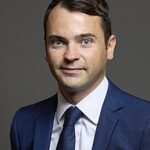
    The maiden speech made by Bradley Thomas, the Conservative MP for Bromsgrove, in the House of Commons on 22 July 2024.

    Thank you, Madam Deputy Speaker, for allowing me to make my maiden speech here in the mother of Parliaments, a global beacon of representative democracy. I congratulate the hon. Member for Peckham (Miatta Fahnbulleh) on her election and on making her inaugural contribution in this House.

    I am humbled to serve the people of Bromsgrove and the villages in my home county. I have some esteemed and worthy predecessors, most recently Sir Sajid Javid. He was the first ethnic minority Member of Parliament to become a Secretary of State, and went on to hold not one but two of the great offices of state, serving as Home Secretary and Chancellor of the Exchequer. Sir Sajid is a man whose north star is his integrity, and he has devoted much of his time to supporting and championing good and noble causes, including, as many in this House know, suicide prevention.

    Bromsgrove constituency is, for the unfamiliar, in Worcestershire. Bromsgrove town, its namesake, is proud of its history and traditions, which include a historic court leet centred around the parade on fair day, held on the closest Saturday to midsummer and in celebration of the 1199 charter granted to the town by King John. This heritage goes further, and Bromsgrove’s proud sons and daughters include the poet and scholar A. E. Housman and his sister Clemence, who I could not fail to mention here in this House, given the role that she played in the suffrage movement.

    My constituency, however, is much broader than just one town. There are many more villages and hamlets and, being 79% rural, Bromsgrove epitomises the very best of Worcestershire. There are rolling hills and thriving villages where the community spirit is strong, including Clent, Dodford, Stoke Prior, Belbroughton, Romsley, Finstall, Barnt Green, Cofton Hackett, Tardebigge and Alvechurch. There are other communities on the fringe of the constituency whose identities are rooted proudly in Worcestershire, including Hagley, Rubery, Wythall, Major’s Green—and there is even a touch of glamour in Hollywood. I commit myself to representing them all. Our villages are home to rural enterprises, and to farmers who we all rely on three times a day and who are guardians of our countryside, often working in isolated or harsh conditions, both physically and in a competitive marketplace.

    It would be easy to be lulled into thinking that Bromsgrove is somewhere quiet and without ambition, but hon. Members must not be fooled. The Sunday Times recently highlighted how South Bromsgrove high school is a powerhouse of aspiration and entrepreneurship, producing young high achievers who have gone on to found leading companies in their sectors, including Gymshark and AYBL. It is in no small part down to the attractiveness of rural Worcestershire that Bromsgrove is a fertile place for aspiration and ambition to bloom. As a Conservative, I believe in respecting the tradition and heritage that anchor our institutions and values, as society evolves to meet the needs of the present day and into the future.

    Prior to my election to Parliament, I spent many years as a councillor in Worcestershire, including as leader of Wychavon district council, where I championed the importance of design codes and the role of beautiful design in delivering quality communities that inspire a sense of pride, nod to our past and catalyse the economic and social investment that allow our towns and villages to flourish. We must do this by shifting our collective focus away from beautiful design being seen as a cost, and towards seeing it as an investment that pays dividends in the form of thriving communities and vibrant places where aspiration can bloom. This is critical across Bromsgrove, a place that is 89% green belt and is the rural buffer between Worcestershire and the urban sprawl of Birmingham, to ensure that we protect our green open spaces and do not build identikit monotony all over the countryside, instead focusing on delivering quality homes, with appropriate landscaping and a mix of textures and colours, with genuine local support first.

    Over the coming years, we must never forget that the single biggest driver of our economic success is a thriving free market—an environment where businesses are incentivised to invest, creating the prosperity that will underpin our national success. The Government must exercise restraint as they seek to create new bureaucracies, which increase the size of the state under the veil of public service reform, and they should be cautious as additional spending, funded through taxation or borrowing without serious structural reform of public service delivery, will fail every stakeholder who interacts with public services.

    In my constituency, Bromsgrove school, founded in 1553, employs over 600 local people and contributes £43 million to the GDP of the UK. While every Member of this House would surely agree that education is the foundation of prosperity, the Government’s proposal to impose VAT on these schools is not only an ill-conceived affront to the children and families who currently exercise choice in education provision but an attack on the wider education system that will undoubtedly do little to enhance the quality of state education and will instead level down education standards across the board. I say that as someone who was proudly educated in excellent state schools.

    We must also show determination in delivering vocational skills in agriculture, manufacturing, technology, engineering and trades, which will bolster our prosperity, raising our baseline level of industrial resilience in a world where our adversaries want to blunt our competitive edge. Food and energy security are two of the most significant and interlinked contemporary challenges that we face. The Government must remain pragmatic in their efforts to deliver on both, ensuring that in everything they do, they do not worship at the altar of ideological purity and inadvertently sacrifice our own long-term economic success in the process. In the words of A. E. Housman,

    “The house of delusions is cheap to build, but draughty to live in, and ready at any instant to fall.”

    I look forward to playing an active role in this House, delivering on behalf of my constituents and in the long-term national interest of our country.


  • Miatta Fahnbulleh – 2024 Maiden Speech on the Economy, Welfare and Public Services

    Miatta Fahnbulleh – 2024 Maiden Speech on the Economy, Welfare and Public Services

    The maiden speech made by Miatta Fahnbulleh, the Labour MP for Peckham, in the House of Commons on 22 July 2024.

    Thank you, Madam Deputy Speaker. May I start by commending my hon. Friends for their impassioned maiden speeches? I am so proud to be sitting on these Benches with them.

    I am incredibly honoured to be speaking for the first time in this House as the Member of Parliament for Peckham, a new constituency that spans from the oak trees of Nunhead cemetery to the spires of St Giles’ church, the African food shops of Peckham, the bustle of Rye Lane, the market stalls of Faraday’s East Street, the vibrant mosques of Old Kent Road and the Latin quarter of North Walworth. Ours is a community of communities that represents the very best of multicultural Britain—people of different colours, cultures, faiths and backgrounds united in our openness and acceptance of each other. We take pride in our diversity and the magic it brings to Peckham, and in our warmth and generosity of spirit.

    Whoever you are and wherever you have come from, you will find your place in Peckham. For me, this is what makes representing the constituency so special, because it was among friends and the Sierra Leonean community in Peckham that my family found refuge when we fled from west Africa when I was a child. It was in this community that I learned the values of compassion and solidarity that have shaped my politics, and it was in this community that I first understood just how much the economy is failing people. I learned that you can work hard every day and still live in poverty, that our kids can be talented but still be deprived a shot, and that you can have billionaires living in the same borough as families that cannot feed their kids. It is in Peckham that I found my resolve that this must change. That is why I became an economist, why I have spent the last 15 years developing and campaigning for ideas to bring this change about, and why I am standing here today.

    As I begin my journey in this House, I take inspiration from my formidable predecessor Harriet Harman, our inaugural Mother of the House. Harriet set the highest bar possible for what it means to be a great MP, having given 42 incredible years of service in working for the people of Camberwell and Peckham. In knocking on doors across Peckham, I heard story after story about how Harriet helped her constituents and touched countless lives. At a time when trust in our politicians is so frayed, the warmth, love and trust that she commands in our community speaks volumes. But more than that, she combined tireless work in her constituency with making a huge impact on our politics nationally—whether through enduring policies like the minimum wage, the winter fuel payment and the Equality Act 2010, which went to the heart of the inequality she saw in our community, or through the trail she blazed for women in politics by breaking ceilings and carving a path for others to follow. Today, the 190 Labour women MPs in this House are standing on her shoulders. On a personal note, I will always be grateful for her kindness, wisdom and grace, and for showing me what it means to be fearless in defence of your constituents, loyal but independent of mind, and tenacious about the change that is needed.

    The need for change has never been so great. Today, as we debate the economy and all the uncertainties it brings, there is one thing I know for certain: people in Peckham are struggling. Their pay packets have flatlined for too long, with their safety net cut to shreds. Over a third of them cannot afford day-to-day essentials, and too many of our children now live in poverty. But it is not just about the money in your pocket; it is the fact that something as basic as a decent and affordable roof over your head is now out of reach for so many. Our schools, youth services, hospitals and care system are at breaking point, and children in my schools tell me that they only feel safe at home or at school—nowhere in between.

    People in Peckham need change—not words or the promise of change that never comes, but real, tangible change that they can feel in their communities and see in their lives. They need change that will end the sense of being ground down, end the constant survival mode that so many people find themselves in, and rekindle the hope that has been beaten out. The weight of responsibility to deliver this now sits with me and all my hon. Friends on this side of the House. While the task feels insurmountable, what gives me hope is that those on our side have always grasped for big ideas to change the country when we have needed to do so. The NHS, social housing from the rubble of war, and the minimum wage—we have always been the party of big ideas. We have done it before at moments of crisis, and now we must do it again. As we find solutions to the challenges in front of us, I, as a proud Labour and Co-operative MP, hope that we will draw inspiration from the deep traditions of our movement—the enduring force of co-operation, putting power back in local hands, creating businesses run by local people for local people, trusting communities like Peckham to decide their own future, and giving them ownership and a stake in their economy—so that we can deliver the change for which my constituents and constituents across the country have given us a mandate.

    If you will allow me, Madam Deputy Speaker, my final words are to my constituents. To the people lying awake at night and worrying about bills, the traders fighting for the survival of the businesses they have built, the families that cannot afford a home to lay down their roots, the people who cannot get the care they need and the kids who do not feel safe in our community, I want you to know this. I have listened to every conversation we have had. I have heard your worries, your anger, your frustration and your hopes, and I make one promise to you: in everything I do in this House, I will keep you in my mind’s eye. I will be your loudest voice, your fiercest defender and your proudest champion. I will fight every day to deliver the change that you deserve. I will serve you.

  • Andrew Lewin – 2024 Maiden Speech on the Economy, Welfare and Public Services

    Andrew Lewin – 2024 Maiden Speech on the Economy, Welfare and Public Services

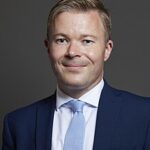
    The maiden speech made by Andrew Lewin, the Labour MP for Welwyn Hatfield, in the House of Commons on 22 July 2024.

    Thank you, Madam Deputy Speaker, for allowing me to make my maiden speech in this debate. It is a privilege to follow the first female Chancellor in history, and to follow two inspiring maiden speeches from the Labour Benches by my hon. Friends the Members for Queen’s Park and Maida Vale (Georgia Gould) and for Finchley and Golders Green (Sarah Sackman). It is an honour to sit alongside them on the Government Benches, and their communities are both very lucky to have them.

    As hon. Members can imagine, I have given careful thought to my remarks today, but it is safe to say that this is not the most anticipated maiden speech ever associated with Welwyn Hatfield. The reason for that is that, on 20 November 1558, Elizabeth I gave her inaugural address as Queen from Hatfield House in my constituency. Irrespective of how the next few minutes go, I think her place in history is safe.

    I am especially grateful to be called in this debate on the economy. My constituency is anchored by two new towns that flourished under a previous Labour Government. Hatfield and Welwyn Garden City were incorporated as new towns together under a single development corporation on 20 May 1948. The growth of Hatfield and Welwyn Garden City played an important role in the rebuilding and reimagining of life in our part of the country after the horrors of the second world war. I believe that if we are to succeed in growing our economy, we have to rediscover the ambition and the vision that was embodied by those who designed and carefully planned our two great towns.

    My predecessor as the MP for Welwyn Hatfield was the right hon. Grant Shapps, who served our community for 19 years and will be well known to all Members of this House. In fact, he will probably be familiar to anyone who was watching a morning television news programme at any point over the last five years. Before I talk about Grant’s legacy, however, I want to start with a message of reassurance to the Labour Whips and my colleagues: I have no desire to hold quite so many Cabinet positions as he did, and certainly not in such a short period of time.

    I want to reflect solemnly on the personal and professional commitment that Grant Shapps made to the people of Ukraine. After the Russian invasion in 2022, he opened his family home to provide sanctuary to three generations of a Ukrainian family, innocent people whose lives were turned upside down by Putin’s unprovoked act of aggression. In the last Parliament, more than 200,000 Ukrainians were welcomed to our country under the Ukraine family scheme and the Ukraine sponsorship scheme, an initiative that I believe showed our country at its best, open and welcoming in an hour of grave need.

    We serve in this House of Commons at a time when our wider political discourse can often be angry and divisive. Of course we will disagree in the House, and passionately so—our constituents rightly expect us always to stand up for our community and our values, and I will certainly try to do just that—but I think we can too easily forget what unites us. Where we agree, let us have the confidence to say so. My predecessor was right to champion the people of Ukraine, and the cause of freedom and democracy. I commend him for it, and wish him well in whatever comes next.

    Welwyn Hatfield is a constituency rich in history. Welwyn Village and Woolmer Green were both Roman settlements, and Welwyn is one of the few places in the country believed to have been occupied continuously for 2,000 years. Nearly 400 years after Hatfield was home to Queen Elizabeth I, local people made an important contribution to the defeat of Nazi tyranny. The Royal Air Force’s Mosquito fighter-bomber was developed at the de Havilland airfield and aircraft factory in Hatfield. Welwyn Garden City also has a unique place in history as the creation of Ebenezer Howard, the father of the garden city movement. His immaculately planned and tree-lined streets, such as Parkway in Welwyn Garden City, are still true to his vision from nearly 100 years ago.

    Despite our wonderful history, what has struck me when I have walked around our towns and villages is the impression of too many projects on hold, and potential going unfulfilled. Take the iconic Shredded Wheat silos, designed by Louis de Soissons in 1926 and a defining feature of Welwyn Garden City for decades. The site has lain virtually dormant since the factory closed in 2008. In central Hatfield, it is a similar story. Queensway House consists of 66 units that were once all social housing. In November 2019, after a ballot of residents, a majority decided that it was time to demolish and rebuild, but nearly five years later Queensway House is still standing, and it looms over the centre of Hatfield as a symbol of the inertia that has captured our politics for too long. I am determined that that must change. The centre of Hatfield is one part of our community that most urgently needs investment in good-quality housing and social infrastructure, and I will be a champion for it in this House.

    Welwyn Hatfield is a growing and increasingly diverse community. In just the last few months I have attended the world street food festival in Welwyn Garden City, the first ever Diwali celebration in White Lion Square in Hatfield, and the ever popular Welwyn festival on Singlers Marsh. We are home to prominent national businesses, including Tesco and Ocado in Hatfield, and to the thriving University of Hertfordshire. The university will soon be opening its state-of-the-art Spectra building for the study of physics, engineering and computer science—and yes, Mr Vice-Chancellor, as this will appear in Hansard, please consider that to be my formal bid for an invitation to its opening!

    I believe that a new Parliament is a time for ambition and optimism. Welwyn Hatfield blossomed when Attlee’s Labour Government put housing and carefully planned communities at the centre of its agenda for change. Nearly 80 years later, we have another majority Labour Government with a mandate for national renewal. This is a moment of opportunity, and each of us on these Benches has a responsibility to play our part in realising it. For as long as I serve in this House of Commons, I will always do my utmost to champion Welwyn Hatfield, to respect our history, and to be an agent for change.

  • Sarah Sackman – 2024 Maiden Speech on the Economy, Welfare and Public Services

    Sarah Sackman – 2024 Maiden Speech on the Economy, Welfare and Public Services

    The maiden speech made by Sarah Sackman, the Labour MP for Finchley and Golders Green, in the House of Commons on 22 July 2024.

    Thank you, Madam Deputy Speaker. It is a pleasure to follow the right hon. and learned Member for Fareham and Waterlooville (Suella Braverman). Like other Members, I am somewhat surprised by her rewriting of recent economic history. She had 14 years to fix the problems of child poverty, and did precious little to do that. I listened today to the Chancellor of the Exchequer lay out this Government’s plans to restore economic stability and growth to this country—that is what will lift millions of children out of poverty in the long term.

    It is a privilege to stand here today representing the place where I was born and raised, Finchley and Golders Green. I would like to start by paying tribute to my predecessor, Mike Freer. Although we disagreed on many things, Mike was dedicated to our area, both as a Member of Parliament and as leader of Barnet council. I admire his commitment to public service and, in particular, his role in securing equal marriage legislation for same sex couples—a legacy that he can take enormous pride in. But the circumstances under which Mike decided not to stand for re-election are appalling. We should have been able to face each other on the basis of our ideas, but Mike’s life and office were threatened by those who believe in the bullet, not the ballot box. It is a stark reminder of the fragility of our democracy both at home and abroad.

    I want to use my time in this place to stand up for the democratic values and processes that I believe in. Witnessing the dignified and smooth transition of power last week in all parts of this House is something we can take pride in. We must ensure that we work together to defend the safety of public servants. I wish Mike and his husband Angelo all the best in their future.

    I also pay tribute to the much missed Dr Rudi Vis, who holds a special place in the heart of my local community, not least as the first Labour Member to represent this special patch of north London. In over a century, I am only the second person from my party to be sent to this place by the people of Finchley and Golders Green. I am also only the second woman. Some Members may remember the first. When Mrs Thatcher entered this place, she was made to wait two whole years to make her maiden speech, but in our era of breakneck news cycles, and with so much work that I want to do, having to wait just two weeks has felt like a very long time. Having delayed long enough, Mrs Thatcher did not waste a second when she rose to her feet, breaking convention by making her maiden speech on a private Member’s Bill that she introduced.

    “This is a maiden speech”,

    she said, her sonorous tones echoing through this hallowed place—

    “but I know that the constituency of Finchley…would not wish me to do other than come straight to the point”.—[Official Report, 5 February 1960; Vol. 616, c. 1350.]

    The people of Finchley and Golders Green rightly remain as demanding of their elected officials today, so I, too, will come straight to the point. Like Mrs Thatcher, I am a patriot and I want our communities and our country to prosper and be an influence on the global stage. But unlike her, I fundamentally believe that there is such a thing as society. Society is not an abstract idea to be buried in sociological essays. We can see it in the rich tapestry of communities that come together across Finchley and Golders Green. I may be the first female, Jewish, Gibraltarian MP from this constituency, but I would not be here without the support of my neighbours and my community: the Cypriot community, the Somali Bravanese, the Kosovan, the Japanese, the Irish and Hindu communities, the lawyers and the Uber drivers, the charity workers and the campaigners, the Spurs fans and the fans of some other north London team. Whereas in recent times some politicians have chosen to use “north Londoner” as an insult, my constituents and I wear it as a badge of pride. It symbolises a place that celebrates diversity, hard work and looking out for your neighbour.

    Our diversity comes as no surprise to anyone familiar with the history of our area. Where else can boast the parish where Archbishop Desmond Tutu honed his ministry in the terrible years of exile during apartheid in South Africa, and the childhood home of the late and great Rabbi Jonathan Sacks, a man who taught us that a good society is one that offers all its members equal access to hope? It was in East Finchley that George Michael first tinkled on the ivories and Amy Winehouse first took the stage.

    Finchley and Golders Green has a quiet radicalism baked into its history. Take Hampstead Garden Suburb, where I grew up, a project driven by the extraordinary Henrietta Barnett in the early 20th century. One of the first garden cities, it was a groundbreaking development. She also set up Toynbee Hall in London’s east end, where I began my legal career as a volunteer at the Free Legal Advice Centre. I saw there just how important the law could be for tenants facing eviction and women suffering unequal pay. Now I want to take those values of access to justice and a commitment to the rule of law into my new role as Solicitor General.

    When, in 1907, we witnessed the opening of Golders Green underground station, adverts at the time dubbed our area a “place of delightful prospects”. I can vouch that never a truer word has been spoken, but this place of delightful prospects has suffered in recent years. My community has witnessed rising levels of antisemitism and Islamophobia. These are a scourge on our society and as long as I am in office I will tirelessly call them out and work to eradicate them.

    Our community today is increasingly becoming a place of busy food banks and empty mansions. Inequality is writ large, stunting people’s health and potential. Many across Finchley and Golders Green are struggling with the spiralling cost of living. This has to change not just in my constituency, but across the whole country. Our NHS is broken, the prisons are full, the police cannot respond when they are called out and our teachers are not supported to deliver. We need to get Britain back on track, and the Bills set out in the King’s Speech are exactly what we need to take the brakes off the economy and restore and rebuild our public services.

    My constituents are raring to go. Whether it is the Brent Cross Town development, one of the largest regeneration developments in Europe, or our brilliant high street businesses and local entrepreneurs, all we need to get growing is a Government who are on our side. Well, we have that Government now. So, to quote my famous predecessor, let’s get straight to the point and let’s get on with the change that Britain truly needs.

  • Georgia Gould – 2024 Maiden Speech on the Economy, Welfare and Public Services

    Georgia Gould – 2024 Maiden Speech on the Economy, Welfare and Public Services

    The maiden speech made by Georgia Gould, the Labour MP for Queen’s Park and Maida Vale, in the House of Commons on 22 July 2024.

    I am pleased to speak in a debate with so many strong female representatives, including the hon. Member for West Worcestershire (Dame Harriett Baldwin), and I am really honoured to speak in a debate led by the first female Chancellor of the Exchequer, who has shown today what a force for change she is. I have found it incredibly moving to hear MPs across the House talk with such love and dedication about the places they represent. It has given this Parliament a deep grounding in the stories of people from every part of the UK.

    I feel deeply the trust put in me by the people of Queen’s Park and Maida Vale. In speaking here, I stand on the shoulders of some extraordinary women who have represented the different parts of Queen’s Park and Maida Vale. My hon. Friend the Member for Brent East (Dawn Butler) is someone who breaks through glass ceilings and lifts others up behind her. Nothing ever dims her spirit and her passion for tackling injustice. You need only walk down Harlesden High Street with her to see how she inspires people by her example—and sometimes her music.

    My hon. Friend the Member for Hampstead and Highgate (Tulip Siddiq) is a formidable campaigner who was in the Chamber the day she was due to give birth because she needed to give her constituents a voice. She did not stop campaigning until her constituent Nazanin Zaghari-Ratcliffe was safely home with her family. Those who know her will quickly learn that she never, ever gives up. She is always a voice for the people she cares about.

    Karen Buck gave an extraordinary 27 years of service to the residents of Westminster North. I was at a school in my constituency last week where the head said that Karen was the fourth emergency service, always at the end of a phone ready to help. I remember going to an elderly people’s lunch where the residents said, “You can be our MP—you are very nice. Just make sure that Karen comes to our residents’ meeting in July.”

    The wonderful team at the House Library sent me Karen’s maiden speech. It was no surprise to me that it was a passionate call to action on the housing conditions of her constituents. That passion has not dimmed for a second; it could be heard in every line of her 37 interventions on the Renters (Reform) Bill over 25 years later. She has shown that somebody with community running through their veins can move mountains. I will work every day to live up to the women who came before me—that includes you, Madam Deputy Speaker, and your sister Baroness McDonagh, who have both showed such amazing, dedicated service and never give up fighting for constituents and the people of this country.

    Queen’s Park and Maida Vale is a place that means a huge amount to me. My great-grandfather came over to the UK when he was a teenager, fleeing the poverty and pogroms of Lithuania, and worked his way up to open a shop on Kilburn High Road. My family have lived and worked in the area ever since. Growing up in the heart of London, I attended Horfield primary school and saw how many children were cut out of the opportunities on their doorstep; that has driven me ever since. The need that we see now is greater than ever. My inbox and my surgeries are full of people facing the homelessness crisis and skipping meals to feed their family—all in walking distance of the Chamber.

    Queen’s Park and Maida Vale is a place with huge need, but also with huge heart. It has welcomed not just my family but families from so many different backgrounds. We are home to the Bangladesh Caterers Association; the Lauderdale Road synagogue; the UK Albanian Muslim Community and Cultural Centre; Harlesden, which is the unofficial capital of reggae and the starting point for so many iconic artists and producers; Kilburn, a centre of creativity with a claim to be the birthplace of cinema; and the amazing, diverse community of Church Street.

    We are a community that is rich in spirit and dynamism. In 1879, Queen’s Park was chosen to host the royal agricultural show, the Victorian equivalent of the Olympics. It was a very British affair—it rained most of the time—but ordinary people campaigned to preserve the open space, and it is still a thriving park today. Down the road, Walterton and Elgin Community Homes is a shining example of community leadership. We also have the country’s only urban parish council.

    Queen’s Park is the birthplace of the pride of west London, Queens Park Rangers football club. I can tell the House that being a QPR fan is almost as good as this Chamber for getting to know the communities of the UK; it means spending rainy days in Cardiff, Preston, Southend and Tranmere, embracing again and again the triumph of hope over experience.

    I have always been an optimist. Despite 14 tough years in local government, including seven as Camden council leader, I have never lost hope, because every day I can see the power of communities. I was elected as a councillor in 2010, and at events, when people used to say to me, “What do you do?”, I would proudly say to them, “I am a councillor.” They would say, “That is so wonderful; you do such wonderful work as a therapist.” I would have to say, “No, not that kind of counsellor. I am a Labour party councillor.” They would either swiftly go and get a drink or talk to me about dog mess.

    Street cleaning and rubbish collection are essential services that councils deliver—my hon. Friend the Member for Birmingham Erdington (Mrs Hamilton) once introduced me as the person who makes sure that Keir Starmer’s bins are collected—but we often forget how much more local government is. I see that every day, watching the work of Brent and Westminster, two brilliant Labour councils in my constituency.

    Councils are lifelines for communities. They provide care for the children and adults who most need support. They are leaders of place, bringing services and people together to make change. I have seen local government staff go above and beyond time and again, fuelled by love and dedication, because there was no one else there, whether they were working with communities to deliver food during covid or supporting Afghan evacuees. When things have been hard, they have held together our communities, finding unity in difference.

    The Gracious Speech sets out bold new proposals in the English devolution Bill to unlock the energy and creativity of communities. It sets out Bills to fulfil Karen Buck’s long-held campaign to end no-fault evictions and reform the leasehold system. The proposals will support the people of Queen’s Park and Maida Vale who come out every day to build their community—the youth workers, the community gardeners and those running the North Paddington food bank, who wish it did not have to exist. These are people putting hope into action because they believe that things can change. I know that as I sit in the Chamber, I will have their voices and stories with me, but I will also have the stories that I have heard from hon. Members from across the UK. We all have that in common: the privilege and the responsibility of bringing the voices of our community to this place. We may debate and disagree, but I hope to always listen and learn, and remember that we are being entrusted to weave those stories, hopes and ambitions together for a national vision for this country—one that governs for all and leaves no one behind.

  • Peter Prinsley – 2024 Maiden Speech on Planning, the Green Belt and Rural Affairs

    Peter Prinsley – 2024 Maiden Speech on Planning, the Green Belt and Rural Affairs

    The maiden speech made by Peter Prinsley, the Labour MP for Bury St Edmunds and Stowmarket, in the House of Commons on 19 July 2024.

    I am a surgeon from East Anglia, and it is an honour beyond my imagining to have been elected to Parliament to serve the people of Bury St Edmunds and Stowmarket in the most beautiful county of Suffolk. I thank its voters for putting their faith in me and in Labour, and for giving us the chance to change Britain. I am the first ever Labour Member of Parliament for Bury St Edmunds and Stowmarket, which has been a Conservative seat for nigh on 150 years.

    I must thank my predecessor, Jo Churchill, most sincerely for her long service to her constituents. I am the first ear, nose and throat surgeon ever elected to Parliament. I am not, however, the first member of my family to be an MP. I recall my uncle, George Jeger, from when I was a small boy in the 1960s—he was the Member for Goole, in the East Riding of Yorkshire.

    I thank my teachers at Guisborough grammar school in Cleveland. As a descendant of Jewish refugees, what a pleasure it was to hear my hon. Friend the Member for Middlesbrough South and East Cleveland (Luke Myer) deliver his maiden speech. I went to medical school in Sheffield, and I thank the many surgeons who trained me in the NHS. I thank the thousands of patients whom I have treated during my career, and who put their faith in me and are my lasting inspiration. Indeed, one of the first people I met as I walked into Parliament was one of my patients, Paul from Great Yarmouth, who works here in this place to keep us all safe. I thank my family and in particular my wife, Marian, the former sheriff of Norwich, who has been my greatest supporter and who first encouraged me in politics.

    My constituency of Bury St Edmunds and Stowmarket is a wonderful part of the world, with a rich tradition of agriculture and food production. We are home to Greene King and, according to the records in the House of Commons Library, one of my distinguished predecessors urged the House bars to stock the delicious beer created from Suffolk barley. I see that the present Greene King brew in the Strangers’ Bar is called Level Head—something we are all going to need in the years to come as we begin to rebuild Britain. We are also home to Silver Spoon, and the enormous Suffolk sugar beet production is key to the local economy. In Stowmarket, we have a brilliant food museum to showcase that most essential of national services, farming.

    I was delighted to see our new Government’s proposals to sort out our buses. Let us think of them as the crucial services they are and support them. There are villages in my constituency that have two buses a day during the school term and no buses at all in the school holidays. How does anyone without a car get to the GP surgery or to the pharmacy in the nearby town?

    Very few surgeons are ever elected to Parliament and I will bring my experience of 42 years as an NHS doctor to this place to do something to help mend a service that my right hon. Friend the Secretary of State for Health and Social Care has described as broken. Many of our hospitals are indeed in poor repair and we have seen very little progress on the 40 new hospitals famously promised by the last Government. In Bury St Edmunds, we urgently need to confirm the capital funding to progress the replacement of the West Suffolk hospital which, like my own James Paget university hospital in Great Yarmouth and our sister hospital in King’s Lynn, is supported by thousands of scaffolding poles and is literally falling down. Last week, it was reported that bird droppings had fallen through the roof on to sterile surgical instruments. My predecessor was a strong advocate for the replacement of our hospital, and I will aim to continue her work.

    Our brilliant new Government have much to do. Let us use our huge mandate wisely. Let us look after the staff who look after us, end the outrage of food banks for the nurses in many of our hospitals, and sort out the pay and conditions of all who work in our most precious of public services. Let us make the biggest employer in the land the very best employer in the land.

    There are things to do to sort out social care and to end the financial lottery at the end of life, which many families fear. The answers are political, and we can do this. Our hospitals are full of patients with a non-medical condition called bed block, because they cannot be discharged safely in many cases. I cannot begin to tell the House how many of my operating lists have been cancelled because of that problem. Whole surgical teams are waiting around for hours and operating theatres are lying empty. If we solve the problem of social care, we will not need to build ever bigger hospitals.

    But I am optimistic for our NHS. Britain leads the world in scientific advances. Right in my own region of East Anglia we have world-beating biomedical science and leading universities.

    Recently, we celebrated 75 years of the NHS. My father—who, if he were alive and here today, would be astonished—was an RAF medic who joined the RAF in 1948. My son is an A&E doctor right here in London. My sister is a nurse. My family has served the NHS continuously since it began.

    When the great Nye Bevan invented the NHS, a painful hip was treated with a walking stick, and a cataract with a thick pair of glasses. Now the miracles of joint replacement and cataract surgery are no longer regarded as the surgical miracles they are, but as an entitlement. Nye would have been amazed.

    I am sure we will see in our own time scientific and medical advances beyond our imagination. Already we are at last seeing effective treatments for dementia and neurological disorders, and genetic cures for haemophilia and other inherited problems. We will also have cancer vaccines and other marvels that we cannot yet imagine.

    I urge all my honourable colleagues in this brand-new Parliament to do whatever we can to support research and innovation with all our heart and all our soul, for as the great poet Seamus Heaney wrote,

    “once in a lifetime

    The longed-for tidal wave

    Of justice can rise up,

    And hope and history rhyme.”

    I commend this King’s Speech to the House.

  • Lewis Cocking – 2024 Maiden Speech on Planning, the Green Belt and Rural Affairs

    Lewis Cocking – 2024 Maiden Speech on Planning, the Green Belt and Rural Affairs

    The maiden speech made by Lewis Cocking, the Conservative MP for Broxbourne, in the House of Commons on 19 July 2024.

    I congratulate all Members who have made their maiden speeches today. I am a geographer by background, so it is an absolute privilege to sit here and learn about all the different parts of our lovely United Kingdom.

    It is truly the greatest honour of my life to stand here as the Member of Parliament for Broxbourne. I am under no illusion about the responsibility of representing the place where I was raised, where my family lives and that I call home. I am hugely grateful to the residents of Broxbourne, who put their faith in me and elected one of their own. They will be keeping me on my toes—not least my nan, who will not hesitate to badger me if she thinks I need to get things sorted.

    We are straight-talkers in Broxbourne, and chief among us was my predecessor, Sir Charles Walker. He certainly was not afraid to speak his mind in this Chamber. More than a decade ago, I was lucky enough to do some work experience in Sir Charles’s office here in Parliament. I simply would not be here today without the opportunities and wisdom that he offered over the years. Sir Charles had a number of triumphs in Broxbourne, and I was grateful to join him and our community in our efforts to save Cheshunt urgent care centre in 2011 and to stop the energy-from-waste facility in Hoddesdon in 2017.

    I joined Sir Charles on many occasions out on the doorstep. The December 2019 general election campaign in particular sticks in the mind. Despite the darkness and the cold, the ever-enthusiastic Sir Charles ploughed on. On one occasion, it was just the two of us, and all of a sudden, Charles slipped and fell. I gasped and said, “Charles, please don’t injure yourself when you’re just with me, or they’ll be saying I did it to get the seat.”

    Sir Charles served Broxbourne for 19 years, and although I knew him well, it is only in the short time since my election that I have come to understand just how much of an impact he had on this House. As Chair of the Procedure Committee and, later, the Administration Committee, Sir Charles championed the institution of Parliament and the individuals who make it. That has been made clear to me from the reactions of House staff when they discover that I represent Broxbourne. I will do my utmost to follow him in taking my responsibilities of scrutiny and representation seriously.

    As I have said, Broxbourne is my home and the place I love. The constituency is characterised by its closeness to both London and the countryside, with the Lee Valley regional park on our doorstep. In 2012, Broxbourne became an Olympic borough: we hosted the canoe events at our world-class Lee Valley white water rafting centre, and we have a gold post box in Cheshunt thanks to our very own Laura Kenny’s success in the cycling. There are a number of Team GB athletes with connections to Broxbourne heading to the summer Olympics, and I wish them all the best.

    The area has many small independent businesses, particularly around our towns of Waltham Cross, Cheshunt and Hoddesdon. They are the backbone of Broxbourne’s local economy, and I will do all I can to support entrepreneurship at every level. I am also proud of the international investment coming to the constituency over the next few years. I am pleased to say that Hollywood is coming to Broxbourne: a £700 million project is well under way to build a film studio complex, which will have the capacity to produce four blockbusters at the same time.

    At this election, the constituency of Broxbourne took on the villages of Stanstead Abbotts, St Margarets, Hertford Heath, Great Amwell and Brickendon. These villages are all known for their tight-knit communities and natural beauty, which brings me on to the topic of this debate. While preparing for this speech, I noticed that both of the former MPs for Broxbourne referred to the unspoiled green belt that we are lucky to have in our area. Broxbourne has a local plan and has built hundreds of new homes—too many in a short space of time, some of my constituents would argue, and too many in total. I tend to agree. As many Members who are councillors will have seen if they have sat on a planning committee, developers use outline planning permission to promise the world. I have seen houses in outline that look absolutely amazing: the development has schools, new roads, a local centre and healthcare facilities. However, once outline planning permission has been granted, the developers come forward for full planning permission, and nine times out of 10 the application looks incredibly different, with bad design and no infrastructure. And developers wonder why residents get up in arms!

    We need to better link the NHS to new developments. On several occasions, getting local NHS providers to tell us what they need, or even getting them around the table so that we can plan new services for my constituents, has been a real struggle. I have a real issue in Goffs Oak and the wider west Cheshunt area, which has seen a lot of new housing but no new healthcare facilities. It is obvious to everyone living there that those facilities are desperately needed.

    We must ensure that developments are acceptable—not development anywhere, but appropriate development in the right places. Infrastructure must come first, with new schools, GP surgeries and section 106 moneys up front, or as close to day one as possible. Above all else, we must ensure that local people have a say over development in their area, so I hope the Government will listen to local people. On this and other issues, I assure my constituents that I will be their voice in this place, and I hope I can begin to repay their trust as my hard work starts now.

  • Elsie Blundell – 2024 Maiden Speech on Planning, the Green Belt and Rural Affairs

    Elsie Blundell – 2024 Maiden Speech on Planning, the Green Belt and Rural Affairs

    The maiden speech made by Elsie Blundell, the Labour MP for Heywood and Middleton North, in the House of Commons on 19 July 2024.

    Thank you, Mr Deputy Speaker, for allowing me to make my maiden speech during this debate. I am so proud to represent Heywood and Middleton North. It is a new constituency, comprising part of Rochdale and most of the former Heywood and Middleton seat, both in Greater Manchester.

    People from my constituency have long shaped our parliamentary democracy. Heywood is the birthplace of Peter Heywood, famous for apprehending Guy Fawkes in the cellar beneath Parliament in 1605. Middleton, too, has a famous son in Sam Bamford, the radical social reformer who led a contingent of weavers from Middleton into Manchester in 1819. Their peaceful protest for political representation ended in massacre at St Peter’s Field.

    Spotland, in the Rochdale part of my constituency, is home to a stone road widely known as Cotton Famine Road. It is a monument to the cotton workers who lived there in the 1860s, and who bravely sided with the Union cause during the American civil war. It was a selfless act, especially as the Union side at that time was preventing goods from leaving Confederate ports. This resulted in a shortage of cotton supplies—a cotton famine—and caused unemployment, poverty and hardship across Lancashire, but support for President Lincoln and his pledge to end the slave trade held firm.

    The workers’ campaign was supported by Rochdale statesman and radical John Bright, of whom a sculpture can be found in the Lower Waiting Hall of Westminster Palace. Bright was a lifelong campaigner against slavery and is especially well known for his role in abolishing the corn laws, alongside another great parliamentarian, Richard Cobden, who—with apologies to my hon. Friend the Member for Rochdale (Paul Waugh)—I will claim as a predecessor, as large parts of what was his constituency now fall under Heywood and Middleton North boundaries.

    The history of the area I represent, then, is strongly linked to many political and social reforms in this country and around the world, and to ideals and values that we hold close to this day: that there is no place for violence in our politics; that the circumstances a person is born into must not prevent them from participating in our democracy; and that—as those cotton workers knew in the 1860s—we should be compassionate to all people regardless of race, class or any other distinction.

    Alongside Heywood, Middleton and Spotland, I have the privilege of representing the former mill town of Castleton, with its proud history of manufacturing and engineering, and the fantastic villages of Bamford and Norden.

    My constituency was also home to renowned architect Edgar Wood, who is widely recognised as the most advanced English architect of his time. More recently, Heywood was the birthplace of Ian Simpson—one half of SimpsonHaugh & Partners—whose buildings, such as Beetham Tower and One Blackfriars, compel people to look up to the skylines in both Manchester and London.

    To this day, it is the people of Heywood and Middleton North who continue to make the place great, and I would like to use this speech to pay tribute to some of them. They include retail workers such as Robert and Brenda Bell from Heywood, who are also proud trade unionists, for whom the employment rights Bill, set out in the King’s Speech, will create extra rights to work flexibly and make parental leave, sick pay and protection from unfair dismissal day-one rights. This Government will also ban zero-hours contracts and fire and rehire.

    Then there are the many volunteers, including the Pullen family, who run the 1st Heywood Scouts Group; Howard Bowden and Simon Bennett, who do excellent work through the Friends of Jubilee Park group and St Edmund’s church; and Pete Knowles and his group of volunteers at Stoney Hill community wildlife area, who protect and promote our beautiful meadows and woodlands and make sure that children in a relatively urban area can access nature too. People like these make my constituency great, and I will do everything that I can to support them.

    I would like to pay tribute to my predecessors. Chris Clarkson has represented the people of Heywood and Middleton for the past four and a half years. I know that many Members of this House valued his good humour and enjoyed working alongside him, including on the Science, Innovation and Technology Committee.

    Liz McInnes was the MP for Heywood and Middleton between 2014 and 2019, and served in two shadow ministerial roles. Liz worked incredibly hard in both of those positions and was a fierce advocate for her constituents on many issues, including the NHS, in which she had previously worked.

    For the past seven years, I have enjoyed a career in transport planning. I am incredibly pleased by the measures set out in the King’s Speech to accelerate infrastructure delivery and to improve our transport network. Unfortunately, many people in my constituency do not have access to the opportunities and jobs they need, as Heywood and Middleton—despite their location in the great, modern city region of Greater Manchester—are two of the largest towns in the north-west of England not to be served by a rail station or Metrolink tram stop. As one former shadow Chancellor, Ed Balls, argued in a recent paper, there has been too little transport investment in low-productivity areas such as mine. We need to improve transport connectivity throughout city regions like Greater Manchester because good transport infrastructure allows for more frequent interaction between people and creates larger pools of workers for businesses.

    Earlier this month, we received promising news from the Greater Manchester combined authority of a re-commitment to the linking of Middleton into Greater Manchester’s Metrolink network and of progress on plans for Heywood’s tram-train connection. In future, that will form part of the city region’s integrated transport network, which Greater Manchester must carry on delivering at pace, to boost productivity, pay, jobs and living standards in Heywood and Middleton North.

    Finally, when it comes to devolution for our city region the job is well under way, but we must be mindful of the fact that it is not yet finished. I look forward to supporting our new Government, because I know that, through the English devolution Bill and other measures, they will put power back into the hands of working people and money back into their pockets. They will strive to ensure that powerful forces are not able to disenfranchise those people again. Throughout history, my constituents have had too much experience of that.

    I thank right hon. and hon. Members for their attention, and I thank you, Mr Deputy Speaker, for allowing me to make my first contribution.

  • Joe Morris – 2024 Maiden Speech on Planning, the Green Belt and Rural Affairs

    Joe Morris – 2024 Maiden Speech on Planning, the Green Belt and Rural Affairs

    The maiden speech made by Joe Morris, the Labour MP for Hexham, in the House of Commons on 19 July 2024.

    Thank you, Mr Deputy Speaker, and I thank the hon. Member for Bognor Regis and Littlehampton (Alison Griffiths). As the representative of the largest constituency in England, I share her concern for rural communities; I share a dedication to them, and I am the product of one of them.

    First of all, I would like to thank the people of the Hexham constituency for placing their faith in me this July and sending me as their representative to this place. For many, it was their first time voting for my party, and I stand here as the first ever Labour MP for the constituency. It is an honour that I will never forget. I will work as hard as I can to repay that faith in the days, months and years ahead.

    I also want to pay tribute to my predecessor, Guy Opperman. Having contested an election against him, I know that despite the fact that we disagree on many things, he is an incredibly decent man. I was pleased to get to know him a bit during the campaign. I know that a high bar has been set for me as a constituency MP. He is considered on all sides of the House to be an honourable man and a good public servant. It will be hard to match his legacy.

    I would like to depart a little bit from tradition and pay tribute to some of my predecessors as Labour candidates in the constituency, who for over 100 years had the often thankless task of fighting to give the people of Hexham a Labour alternative to vote for. Until July, Ian McMinn had come the closest we ever got to winning the constituency, and his daughter Kirsty proposed me as the youth officer at my first ever Labour party meeting.

    I would also like to welcome the areas that were added to the constituency, including the residents of Callerton and Throckley, who had been fantastically represented by my hon. Friend the Member for Newcastle upon Tyne North (Catherine McKinnell) for many years. I hope to continue giving that same service to Kenton Bank Foot, Throckley, Newburn, Callerton, Woolsington and Walbottle. Longhorsley ward was previously represented by both my hon. Friend the Member for Blyth and Ashington (Ian Lavery) and the former Member for Berwick-upon-Tweed, both of whom also served communities in Hepscott, Morpeth’s Stobhill estate and Felton in their way and were great servants to those communities.

    I would not be here today if it were not for the education that I received at Queen Elizabeth high school, Hexham middle school and the Sele first school in Hexham, from teachers like Alison Higgs, Robin Hodnett, Leanne Clarkson and Tony Webster. I know that a great state education has the ability to change lives and to lift and change entire areas. I want every child in the constituency to have access to the kind of education that I was lucky enough to get.

    Hexham constituency is named for the town of Hexham, which boasts a wonderful abbey that has welcomed worshippers and visitors for over 1,300 years. In that time, it suffered raids, including from the forces of William Wallace. We also have one of the first ever purpose-built jails in England, and a farmers’ mart that is at the heart of our rural economy.

    But the constituency that I represent is much more than just one town. We extend from the Cumbrian border, where my hon. Friend the Member for Carlisle (Ms Minns) and I each represent half of the village of Gilsland, through the Tyne valley and across to Callerton and Throckley in Newcastle. In the north, we border Scotland, taking in Kielder forest, where, rather aptly for England’s largest constituency by area, we have England’s largest forest. We are home to the largest man-made lake in northern Europe, almost 580 square miles of internationally renowned dark sky, and the Northumberland national park. We then go to our southern border, where the Allen valleys take in some of the most stunning scenery in England. We take in the Tyne valley line, Wylam, Prudhoe, Stocksfield, Riding Mill, Hexham, Haydon Bridge and Haltwhistle. We take in Ponteland and Darras Hall, and areas as diverse as Slaley and Slaggyford.

    We have the UNESCO world heritage site of Hadrian’s wall running through the constituency. I am in the unfortunate position, though, of being the first ever MP for Hexham not to be able to take visitors to see the iconic Sycamore gap, which we so sadly lost to future generations last year. But the wall remains, as does the beauty that draws thousands of tourists to the constituency throughout the year, supporting the local economy in towns like Haltwhistle—the centre of Britain—Bellingham, Kielder, Wark, Byrness and Otterburn. I hope to see hon. Members from across the House walking the awe-inspiring Hadrian’s wall, enjoying the wonders of our dark skies, gazing at the beautiful Tyne valley from the train and taking in the joys of community life at events like Ovingham’s goose fair and the Northumberland county show.

    With that being said, it will be no surprise to many hon. Members, or to the Secretary of State for Environment, Food and Rural Affairs, who I was delighted to welcome to the constituency during the election campaign, that my constituency conjures images of the agricultural sector. We have a fantastic farming community. It has been my privilege to engage with those in it, and to get to know them over the election campaign. I know that the farming community represents the beating heart of our constituency’s identity. I look forward to working with the Secretary of State, his Ministers and friends across the House to improve outcomes for UK farmers and consumers, and to address the challenges that they face.

    As well as the agriculture sector, we have a large manufacturing base in the constituency. We have sites like Egger in Hexham, which has a firm focus on the sustainability of the wood-based material manufacturing sector, and Essity in Prudhoe, which produces more than 800 million toilet rolls a year. When we do our shopping, the odds are that we are elbowing someone out of the way for some of Prudhoe’s finest produce. I have worked in the steel sector, and I know how important it is for the country to make things, and how important well-paid, highly skilled jobs are to communities like ours.

    Alongside our large manufacturing base, my constituency has a thriving small and craft brewery scene. I was delighted to take a break from the campaign trail to attend the Corbridge beer festival, which is all about raising money for good causes and charities.

    Although there is a lot of beauty in the constituency, there are huge challenges as well. We have a great local health service, but every single week, I see the need for long-term solutions to the social care crisis. Elderly residents in isolated rural communities are doubly disadvantaged, as they are hit by the rural cost of living premium and by poor public transport, and they are reliant on carers who are themselves struggling to make ends meet.

    We also face an acute transport challenge. I think I am the third Member to cite George Stephenson in their maiden speech today; he was born in Wylam. The constituency’s buses are too infrequent, and its trains are too regularly cancelled. I will continue my predecessor’s campaign to reopen Gilsland train station, and I look forward to working with friends across the House, and with my good friend Kim McGuinness, our Mayor of the North-East, to improve transport for our rural communities.

    My constituency also faces a dramatic housing shortage, with too many elderly people being unable to downsize into more appropriate homes in communities they know, and with young people being forced to move away from where they grew up. For towns like Barrasford and Humshaugh, as well as for larger towns such as Ponteland, this is a generational challenge. It is a huge concern for parents and grandparents, and it came up time and again on the doorstep during the general election.

    Crime and antisocial behaviour also impact communities—from west Newcastle and the towns and villages, to the smallest and most isolated communities. I look forward to working with Susan Dungworth, our police and crime commissioner, on these matters. The cross-departmental rural crime strategy is so important. I have spoken to sheep farmers out in West Woodburn who have been struck by the attempted robbery of their quad bike.

    The north-east is famous for its rivers, and the Tyne is one of the most important rivers in the country’s history. It was the very artery of our industry. Wherever I went, constituents demanded that we clean up our rivers, and I am pleased to see that the Government have already got to work on delivering on that promise. I look forward to supporting that work as much as I can.

    At every door I knocked on during the election campaign, I got the message for change. I know it is incredibly important to get on with that change by supporting the King’s Speech, so that we become the confident, outward-looking nation that we so evidently can be. I am conscious that we cannot work miracles in this place, and as the first ever Labour MP for my constituency, I know that I was not sent to this place with an expectation of overnight success. I was sent here to get on with working with colleagues across the House to deliver genuine outcomes and genuine change for my constituents. I look forward to continuing that service.

  • Alison Griffiths – 2024 Maiden Speech on Planning, the Green Belt and Rural Affairs

    Alison Griffiths – 2024 Maiden Speech on Planning, the Green Belt and Rural Affairs

    The maiden speech made by Alison Griffiths, the Conservative MP for Bognor Regis and Littlehampton, in the House of Commons on 19 July 2024.

    Thank you, Mr Deputy Speaker. It is a pleasure to follow so many excellent maiden speeches today—I have been taking notes.

    It is a great honour to deliver my maiden speech as the Member of Parliament for Bognor Regis and Littlehampton. First, let me thank my wonderful association, my campaign team and all of those—they are too numerous to mention—who have helped me on my journey to this place. Let me also thank everyone I shall work with in the future in serving the people of Littlehampton and Bognor Regis.

    Allow me to introduce my wonderful constituency. Bognor Regis has the accolade of having the most sunshine hours in Britain. William Blake, who lived down the road in Felpham, encapsulated this when he wrote:

    “Heaven opens here on all sides her golden Gates”.

    Residents can easily see that Blake’s reference to

    “England’s green and pleasant land”

    was surely inspired by his life there.

    On the other side of the River Arun, Littlehampton is renowned for its rich nautical heritage. The harbour is central to the town’s identity, and the presence of the RNLI lifeboat station underscores the importance of maritime safety. Rustington adds further to our rich tapestry. Now home to Blind Veterans UK, Rustington is a model of community cohesion and local enterprise. Its thriving high street, supported by local businesses, is a testament to what can be achieved when we invest in our towns and villages.

    Bognor Regis and Littlehampton is a mosaic of vibrant villages and communities, from Aldwick and Rose Green to the rural charm of Yapton and the scenic settings of Middleton-on-Sea and Elmer. The industrious spirit of Wick and the agricultural heritage of Ford add to our picturesque patchwork. The beauty of Climping and the residential tranquillity of Felpham play a vital role in my constituency’s identity.

    My predecessor, Nick Gibb, served Bognor Regis and Littlehampton for 27 years with great distinction. His dedication to public service and to our constituents has set a particularly high standard, as many have told me, and in this place and in government, his reforms to education have improved the lives of an entire generation, providing our children with the opportunities they need to succeed.

    Today I stand before the House to discuss an issue of utmost importance to my constituents: opposition to inappropriate development, and the preservation of our green spaces. These areas are not just stretches of land; they are the lungs of our communities. They play a crucial role in combating climate change by acting as carbon sinks and promoting biodiversity, by contributing to our national food security, and by providing essential green spaces for recreation, wildlife habitats and natural flood defences.

    In Bognor Regis and Littlehampton, the floodplains and green spaces are the very foundations of our local economic ecosystem. Our constituency has already taken more than its fair share of development and has felt the adverse impacts as a consequence: increased frequent flooding; exacerbated sewage discharges, into the very sea upon which our tourist industry depends; our best beaches closed for swimming; and the destruction of natural habitats.

    One of my goals is to secure the right community infrastructure to support the growing population in the homes that have already been built. It is not enough to build new homes. We must also invest in the necessary infrastructure—such as schools, healthcare, wastewater treatment and transport links—to provide a high quality of life for all our constituents. I oppose Government plans for top-down mandatory housing targets. Such targets disregard local constraints, imposing unrealistic demands on our communities. Instead, I advocate for a more localised approach to planning, where decisions are made with meaningful input from local residents and authorities.

    I am deeply honoured to represent the people of Bognor Regis and Littlehampton in this House. I am humbled by the trust and confidence that the people of our community have placed in me, and I pledge to serve them with integrity and dedication. Let us all together rise to meet the soaring challenges ahead. On that note, I invoke the words of William Blake one last time:

    “Great things are done when men and mountains meet”.