Category: Loyal Address Speeches

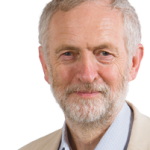
  • Tim Farron – 2022 Loyal Address Speech

    Tim Farron – 2022 Loyal Address Speech

    The speech made by Tim Farron, the Liberal Democrat MP for Westmorland and Lonsdale, in the House of Commons on 10 May 2022.

    This really does feel like a Queen’s Speech from a Government who have run out of ideas and are not capable of dealing with the very serious times in which they find themselves. It is an awful lot of press releases and no plan. We desperately need a plan.

    I heard reference in the Queen’s Speech to Bills that might be introduced to deal with the cost of living crisis. We do not need parliamentary Bills to drive down people’s household bills. We need action that could be taken today. The Government could decide to use one of the rare Brexit benefits and reduce VAT today. They could decide in the next day or three to do what we have been calling on them to do for some time—bring about the windfall tax on the energy companies that have made profits that are unearned, unnecessary and unexpected, and give that money to people who desperately need it. They could give it to people across my constituency in Cumbria and across the rest of the country who literally cannot afford to put food on the table and pay their rent, their mortgage and their bills. No amount of smart-alec culture war ruses will pay anybody’s children’s food bills. This is what we are seeing from a Government who have lost touch with any idea they ever had of what it is to be serious about governing at a serious time.

    As you might imagine, Mr Deputy Speaker, I want to talk specifically about rural communities and particularly issues of agriculture and housing. There is nothing for us in this Queen’s Speech—nothing that remembers the rural communities of this country, particularly in England, which have so very obviously been neglected and taken for granted by this Government.

    Let us look at farming. I make a plea to all hon. Members in the House who do not represent rural constituencies that rural communities should matter to them, for two principal reasons. First, if they eat, they should be grateful to the farmers who live in my constituency—and indeed yours, Mr Deputy Speaker—and who put the food on our table. No country serious about its own security would be in any way reckless about its lack of food security.

    We should also care because our farmers are on the frontline of tackling climate change and providing environmental restoration. Some 70% of England’s land mass is farmed, so if we care about tackling climate change and the biodiversity crisis, the reality is that the greenest thing that any Government can do is keep Britain’s farmers farming. They are the only people who will make even the greatest plans come to fruition, because the greatest plans in the world will remain just plans in a drawer without farmers to introduce them.

    The Government are making a disastrous mess of the transition from the old farm payment system to the new system. If I had been asked a few years ago to list potential advantages of the UK leaving the European Union, I would have given a very small list, but being outside the common agricultural policy would have been on that list. Yet again, here is a potential benefit that the Government have grasped and are miserably failing on, as they botch the transition from the old basic payment scheme to the new environmental land management schemes.

    In my constituency, every single farmer has lost at least 5% of their basic payments and will lose at least 20% this year. All of the hundreds of farms that I represent are in that position. This year, 13 of the farms that I represent—a tiny proportion, little more than 1%—will be getting anything from the new sustainable farming incentive. The Government’s botched transition to the new scheme is costing farmers thousands of pounds a year, with nothing to replace it. So what will happen? Farmers will either go bust or go backwards. We will lose hundreds and hundreds of small to medium-sized family farms right across our country, many of them tenanted, costing us in biodiversity and food production. If they do not go bust, they will go backwards and give up on doing any environmental work whatever; they will just get more stock, because that is the only way that they can keep food on their own table.

    The Government are making not just accidental mistakes with farm transition, but deliberate ones. Parts of the landscape recovery and local nature recovery schemes give a clear incentive for landowners—and, indeed, investment companies that want to become landowners—to get huge tracts of land, evict tenant farmers and get massive cheques from the Government for doing nothing and letting the valleys go to seed. These are outrageous, state-sponsored lakeland clearances; we must not stand for them. There is nothing in this Queen’s Speech that gives any clue that the Government understand the damage that they are about to do.

    There is nothing for the uplands. Our upland communities in the Lake district, in the dales and in places such as Cornwall and Devon, Northumberland and North Yorkshire have enormous cultural significance, yet nothing in the farm payment scheme recognises that. The tourism economy of the Lake district and Cumbria is worth £3.5 billion a year under normal circumstances, yet there is nothing to compensate the people who create the backdrop that makes so many people come to visit our beautiful part of the world. That is why I am calling for a cultural landscape payment as part of the new farm payment system: to make sure that we value and reward our upland farmers.

    It is absolutely ridiculous that we have a farm payment scheme—a Government agricultural policy—that has a strategic aim of reducing our capacity to feed ourselves and actively taking land out of food production. That is not only stupid when we are trying to protect ourselves in a grave international situation, but immoral, because it means that we will now be fishing in markets where developing countries are seeking their grain and their commodities. We are pushing up the prices for the poorest people in the world because we have a wrong-headed farm payment system that is taking land out of food production. That is stupid and immoral.

    Let me now say something about housing, and the impact of the last two years on the housing crisis in rural communities. This has become a catastrophe. We have too few houses that are lived in permanently, and communities are dying as a consequence. During the pandemic, 80% of house sales in my community have gone to the second-home market, and at the same time there has been a 32% increase in the number of properties that have gone into the holiday-let market. In Devon, this has meant a 70% reduction in the long-term private rented sector.

    What do those two developments mean? First, there is excessive second-home ownership. No one wants to be beastly about second-home owners—we want to be generous and welcoming to people who wish to spend their time in our communities; it is nothing personal—but the fact is that this has a massive impact on the communities that I am privileged to serve in Cumbria. It means that communities are hollowed out of full-time occupation, so they lose the school, they lose the post office, they lose the pub—they lose community itself. Secondly, there is the huge and very speedy transition from long-term lets to vast numbers of holiday lets. What does that mean? It means that people who have lived in an area for years are expelled —evicted through the section 21 notices that the Government said they would abolish and have not. That was not in the Queen’s Speech, and it should have been.

    These people who are being ejected from their communities are people in work and with children at local schools. They have nowhere else to go in a place like the lakes or the dales, so they have to leave altogether, uprooting their kids and leaving their work. That is outrageous. The impact on our communities is devastating, and the Government are doing pretty much nothing about it.

    One proposal in the Queen’s Speech has been floated—for the Government to borrow something of the Welsh Government’s proposals to double council tax on second homes. I thought “great” when I first read about that, but now I have seen the detail, and it is rubbish. What will happen is that council tax will be doubled for a second-home owner who never goes to their home. That is a tiny minority of second-home owners. The proposal takes no account of the fact that, for instance, 90% of second homes bought in my constituency are bought for investment and then let out for 70 days a year. What does that mean? It means that this not a second home; the owner is a small business, and this is a holiday let. It means that the small business will pay no council tax and no business rates either, and that people in Kendal, Penrith, Appleby and Ambleside who are going to food banks are subsidising wealthy people with second, third and fourth homes. The Government, who know that for sure, having undoubtedly listened to their own Back Benchers representing rural communities. have chosen to do nothing meaningful to tackle the outrage.

    Let me finally say something about planning. If we want to tackle the second-home crisis, the holiday-let crisis and the affordable-housing crisis, we should change planning law to make second homes and holiday lets different categories of planning use so that national parks and councils can just put a lid on it. That would be the easiest and most straightforward thing to do. Why have the Government not chosen to do it? We talk about building more houses, but the problem in areas such as mine is that while those who build houses will sell them, we are building for demand and not for need, and it is time to build for need.

    Earlier today, I was talking to some of my local councillors—Jenny Boak, Pete Endsor and Sue Sanderson, who represent Grange & Cartmel. Just outside Cartmel, in Haggs Lane, 39 properties are to be built, only eight of them affordable. Why? Because the Government do not give planning authorities the power to say to developers, “Get knotted unless you are going to build for local people and families and make those places affordable.” So I am angry, not just on behalf of my community but on behalf of communities across rural areas of our great country, that there is so little, if anything at all, for us in this Queen’s Speech.

    It seems to me, looking at it from the inside in Cumbria, that this Conservative Government are doing to rural communities in this decade what a Conservative Government did to urban communities in the north in the 1980s. The difference is that Margaret Thatcher had a plan—I will give her due for that—while this Government, shambolically, through neglect and through taking rural communities for granted, are devastating those communities. They will not be excused for that, and they will not get away with it. We have seen the results of last week’s elections in Cumbria and Somerset, and I hope we will soon see the result of an election in Devon. We will see that rural Britain will not be taken for granted.

  • Paul Maynard – 2022 Loyal Address Speech

    Paul Maynard – 2022 Loyal Address Speech

    The speech made by Paul Maynard, the Conservative MP for Blackpool North and Cleveleys, in the House of Commons on 10 May 2022.

    It is a pleasure to speak in this debate and to follow the hon. Member for Harrow West (Gareth Thomas). He always speaks with great insight and I always find him worth listening to. I am sure he would agree that, after local elections, whichever party is represented, when a councillor loses their seat, we should have some sympathy. Whether in Harrow, or anywhere else in the country, those councillors were all engaged in public service, just as we are, and they will be disappointed that they have ceased to serve the public. Whether in Harrow, where Labour lost seats, or in other parts of the country where the Conservative party lost seats, we should think of those diligent public servants who have lost their chance to serve.

    It is also a pleasure to follow my hon. Friend the Member for Waveney (Peter Aldous), a fellow coastal MP. There is nothing he said in his analysis of the needs of his constituents with which I would disagree one scintilla, and he has saved me from making many points.

    It has taken me 12 years to work out that the best time to speak in a debate on the Queen’s Speech is on the day of the speech itself. I get 10 minutes, not just the three we normally get on the day after the speech, or the day after that, so I will make the most of them. I normally do not like the day of the Queen’s Speech debate. For me it is a matinee pantomime of “yah boo sucks” and, in my view, often, those early debates, when we are all crammed in the Chamber, show the House at its worst. Today, it seems a little different. It might have been the slightly low-wattage contribution from the Leader of the Opposition. Perhaps it is more likely to be down to the seriousness of the times with which we are confronted, whether in Ukraine or domestically in our constituencies, as the people we represent face a cost of living crisis and a challenge to their financial security day in, day out, at every moment.

    I often hear a cry from politicians, the media and constituents that what the Government are doing is not enough. At the moment I am not quite sure what “enough” would look like. The Government cannot craft a solution whereby global costs rise but no one feels the consequences in the UK. But that does not mean that nothing can or should be done. The inflationary pressures that we currently face are largely external: the rising cost of foreign oil and gas; the disruption to global supply chains caused by covid, which lingers on and reoccurs in China thanks to its zero-covid strategy. We cannot change China’s approach to covid—only harsh economic realty will do that. What does matter, however, is the speed and agility of our domestic response here in the UK, and I say candidly to all Conservative MPs gathered here this evening—all one of them—[Interruption.] I mean the Back Benchers, not those on the Front Bench. I say to them that we have to stop campaigning like it is 2016, and start governing like it is 2022. None of my constituents who live in eight of the 10 poorest neighbourhoods in the country give one fig about what box I crossed in a referendum six years ago. They want to know what I, and the Government I am supporting, are doing to tackle the cost of living crisis at the moment.

    Some argue that the answer is to increase public spending left, right and centre, and to put more money into the economy, but in my view that would have an inflationary impact. At the risk of sounding unfashionably Thatcherite to what is at times rather a left-ish Government, I argue that we have to drive inflation out by controlling the money supply, not fuel it by responding to the front pages of tabloid newspapers. That is not inconsistent with protecting the most vulnerable in our society. Nothing will have a worse impact on my constituents than rampaging inflation. It harms the most vulnerable in society; it harms the poorest the most. That is why inflation is our biggest enemy, as many have said today.

    I therefore welcome a number of the proposed Bills, particularly the financial services Bill, which is a chance to tackle some of the small print of the cost of living crisis. In particular, I welcome the provisions on access to cash—an issue that I have not shut up about in this place for the past two years. I will scrutinise the detail, and if I am not satisfied, amendments will be tabled. I also want much faster action on the regulation of buy now, pay later products—an issue on which I and the hon. Member for Walthamstow (Stella Creasy) have campaigned for many years. I know the Government’s consultation closed on 6 January, and they are cogitating and contemplating what to do next, but things are changing rapidly in that sector and we hear ever more common stories of people using buy now, pay later products to pay for groceries. This is no longer about buying discretionary items or clothing during lockdown; this is about people using buy now, pay later products for the essentials—for energy or for food. The importance of getting regulation in place is massive, and it must happen now.

    I very much welcome the pilots that the Government are introducing for no-interest loans, which are being undertaken on behalf of the Government by Fair4All and Toynbee Hall. That must move so much more urgently. The idea has been floating around the Government for years, and it cannot be just a curiosity for policy wonks. It has to be an urgent priority for the Government to help move people away from loan sharks who charge extortionate interest rates. No-interest loans must be the way forward. I also hope to see interim provisions in the financial services Bill to improve the regulation of funeral plan providers. We have seen the collapse of Safe Hands, and I am sure many hon. Members have been contacted by constituents who now face great uncertainty over how the funerals of their loved ones will be paid for. The Government have to step in, but I am not hearing much from them.

    Having learned the delights of amending legislation for the first time in the previous parliamentary Session, by trying to amend the Building Safety Bill, I now have a taste for it. I am looking forward to having a go with the financial services Bill, as well as the Online Safety Bill, which I am getting a bit nervous about because no one seems able to define “harm”. Let me help them by offering one definition of harm, which is physical harm.

    In the few minutes I have left I want to speak about a campaign by a young man called Zach Eagling, who has epilepsy, as do I. At times, rather unpleasant and cruel people seem to think it is a good idea to send over social media flashing images that are designed to trigger epileptic fits in those with epilepsy. To me, that is a form of online harm—who could disagree? The Joint Committee on the Draft Online Safety Bill agreed and argued that such a clause should go in, as did the Law Commission, but as of yet there is no such a clause. If we are struggling to define “harm”, let us start with physical harm, because that can be quantified. It could be fatal to force an epileptic fit, which could occur in any circumstance, and the outcome cannot be guaranteed.

    I would have loved to have seen other Bills in the Queen’s Speech, including private Members’ Bills that I have promoted in recent years. Why was abolition of the House of Lords not in the Queen’s speech, for heaven’s sake? The compulsory introduction of the optional preferential vote—a tentative step towards proportional representation—was also not in the Queen’s speech. Whatever came over the Government? My favourite —once again, this is aimed at the Front-Bench—is an annual review of ministerial competence undertaken by an outside body to assist the Prime Minister in making decisions on who should be appointed to Government. I am sure that the Under-Secretary of State for Environment, Food and Rural Affairs, my hon. Friend the Member for Bury St Edmunds (Jo Churchill), who is on the Front Bench, would pass with flying colours, but it is incumbent on the Government in a cost of living crisis, when our constituents are under such immense pressure, to do their best to have the very best people working on these intractable and difficult problems.

    It is not simply a matter of finding a switch, as I think the hon. Member for Bristol South (Karin Smyth) mentioned. We can pull all the switches we like, but there are some fundamentals in our society that must also change. That is what the Conservative party should be doing: not looking back to 2016 but looking forward to a brighter Conservative future.

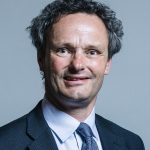
  • Peter Aldous – 2022 Loyal Address Speech

    Peter Aldous – 2022 Loyal Address Speech

    The speech made by Peter Aldous, the Conservative MP for Waveney, in the House of Commons on 10 May 2022.

    I will try my best, Mr Deputy Speaker. It is a pleasure to follow the hon. Member for Newport East (Jessica Morden). I congratulate my hon. Friend the Member for Southend West (Anna Firth) on her maiden speech and the hon. Member for East Dunbartonshire (Amy Callaghan).

    I also pay tribute to my predecessor as MP for Waveney, Bob Blizzard, who sadly passed away at the end of last week. He was a formidable political opponent, he held passionate beliefs and he was a staunch advocate for Waveney. My condolences are with his family and friends at this sad time.

    This Queen’s Speech was delivered against one of the most challenging backdrops in the past century: the war in Europe, following quickly on from the covid-19 pandemic, has exacerbated the challenges that people and businesses were already facing. Soaring energy and food prices, rising interest rates, and slowing economic growth are putting enormous pressure on budgets for families and businesses. The programme for government for the next Session cannot, on its own, address all the challenges that we will face over the next two years, but there must be a clear statement of intent and a decisive direction of travel.

    There is a need to focus on the issues that matter to people on a daily basis, such as the cost of living, the ability to pay one’s bills without spiralling into debt, and the opportunity to have a well-paid and secure job with good prospects of career progression. We do not know what lies ahead in these increasingly uncertain times, so it is important that the Government are flexible. Where there is a need to bring in measures to address a particular pressing need, they must do so without delay.

    I shall briefly highlight four issues, two of which are specifically covered in proposed Bills and two of which are not. First and foremost, on the need to address the cost of living crisis, the Government have brought in some measures to help to support families and businesses, but more targeted assistance is required to enable people to get through the coming year, which many are facing with fear and trepidation with the expectation of inflation at 10% and Ofgem’s increase in the energy cap looming in the autumn.

    In Suffolk, 135,000 people already live in poverty. A survey in the Lowestoft Journal showed that 41% of people are in debt, and Citizens Advice, local councils and local charities are already working in overdrive to assist, advise and support people. Poverty among pensioners needs a particular focus due to prevailing high inflation, with the state pension and defined benefit and defined contribution private pensions all exposed. There may well be a need for review and reform, and I urge the Government not to hold back in introducing such measures.

    Secondly, it is vital that people around the UK have the opportunity to secure a good job with good prospects for career advancement and the opportunity to realise their full potential. The schools Bill and the levelling up and regeneration Bill should help to secure that ambition. For a long time, Suffolk has received a poor education funding settlement and we must use this opportunity to address that inequality.

    There must also be a focus on improving early years and special educational needs education. Although the Skills and Post-16 Education Act 2022, which was passed in the last Session, provides the framework for improving the further education sector, that sector remains poorly funded given the vital role that it plays in preparing people for the workplace, helping to improve the UK’s overall economic performance and eliminating the productivity gap. There may well be a need for fiscal support to encourage businesses to invest in people and skills. Last week, the Learning and Work Institute recommended that smaller businesses should be able to deduct 230% of the cost of accredited training from their tax liability.

    Turning to the long-awaited levelling up and regeneration Bill, I acknowledge the enormous amount of work that the Secretary of State for Levelling Up, Housing and Communities and the Under-Secretary of State for Levelling Up, Housing and Communities, my hon. Friend the Member for Harborough (Neil O’Brien), have carried out in the relatively short period since their appointment in September to lay the groundwork in the White Paper that was published at the beginning of February. I urge them not to forget coastal communities. All around the UK, including in Waveney and Lowestoft, they are in many respects the forgotten powerhouse of the UK economy. They have a vital role to play in powering the nation as we embrace renewable energy; feeding the nation through sustainable and responsible stewardship of our fisheries; promoting global trade through our network of ports, large and small; and providing holidays at home rather than abroad.

    Thirdly, on energy, the Energy Act 2013 was good legislation that played an important role in promoting renewable energy, particularly offshore wind, in which the UK is now a world leader. There is a temptation to leave well alone a regulatory framework that has worked well, but we have new challenges that must be tackled, particularly if we are to meet the 2050 net zero target. It is therefore right to build on the foundations that were laid nine years ago.

    I briefly highlight some of the challenges that we need to address. We must promote and incentivise further investment on the UK continental shelf to add to last year’s North sea transition deal so as to ensure that that unique UK asset continues to play a lead role in powering the nation, generating rewarding and well-paid jobs, and ensuring a smooth transition to a net zero energy supply. A windfall tax would jeopardise that work, but there is a need for the major oil and gas companies to do more, following the good work of many innovative and smaller businesses. With regard to offshore wind, we need a framework that builds on the success of the last decade and that promotes investment in interconnectors and battery storage to absorb surplus wind, as well as facilitating the development of a modern onshore transmission network.

    Nuclear power is very much part of the Government’s energy strategy. The Nuclear Energy (Financing) Act 2022, which was passed in the last Session, provides the framework for Sizewell C to proceed if the development consent order is issued. That enormous national infrastructure project, located close to my constituency, can play a vital role in levelling up and regenerating local economies; providing jobs during construction; and leaving a legacy of skills that bring lasting benefits to places such as Lowestoft and Waveney. EDF is committed to that strategy, but it is vital that the national Government provide the framework to ensure that it delivers those benefits by working with local businesses, colleges, charities and councils.

    Hydrogen is the new kid on the block that presents boundless opportunities. Even at this stage, however, we do not quite know what precise direction it will take or the full scale of what it can deliver. Although the UK hydrogen strategy was published only last August, there is an urgent need for a route map if it is to realise its full potential. Community energy has an important role to play and we must remove the regulatory obstacles that prevent local communities from promoting their own projects.

    An area of energy policy where we have not succeeded in recent years is the promotion of energy saving by retrofitting our homes and business premises. The green deal did not work and the green homes grant scheme was too low in ambition and lacked the capacity to have a significant impact. In the short term, to address the challenge of fuel poverty, we should look at extending the warm home discount, the home upgrade grant and the energy company obligation.

    The Government must also produce a scheme that will deliver meaningful and significant enhancement of our whole building stock. That will probably require fiscal incentives, and local government will have an important role to play in overseeing and ensuring workforce planning, training and delivery. We need to revamp the strategy for the roll out of smart meters, which, I am afraid, has stalled.

    The fourth and final issue that I will raise is the NHS. Although no Bill directly addresses our health service, and one might argue that there is no need for one as we only recently finished debating the Health and Care Act 2022, which has just received Royal Assent, this subject is of critical importance and concern to our constituents. People are worried that they cannot see their doctor; the Government need to work with GPs to address that concern.

    NHS dentistry is the No. 1 item in my inbox. There are dental deserts all around the country, and urgent attention is required if these are not to merge into one area of Sahara proportions. There is a backlog of operations, many of them time-critical, that needs to be significantly and immediately reduced. My right hon. Friend the Secretary of State is very much aware of these challenges, and regardless of whether or not there is specific legislation, they must be given the highest priority and attention.

    In conclusion, there is a great deal to do and there are a great many challenges to confront, the like of which we have not seen during our lifetimes. We can get through this crisis, and the Government do need to have in mind the need to bring together a nation that has been divided first by Brexit and then by covid.

  • Ben Bradley – 2022 Loyal Address Speech

    Ben Bradley – 2022 Loyal Address Speech

    The speech made by Ben Bradley, the Conservative MP for Mansfield, in the House of Commons on 10 April 2022.

    It is a pleasure to take part in today’s debate on the Queen’s Speech. There is a lot to welcome in the conversation and in the announcements we have heard today. The right hon. Member for Islington North (Jeremy Corbyn) very nearly said something I agreed with about schools at one stage in his speech, and I was about to stand up and say how I agreed with him, but as the sentence went on he ruined it and I did not agree any more. However, I did enjoy and agree with part of it, which I will come back to.

    I would like to welcome some elements in the Queen’s Speech. It is worth first identifying what the Queen’s Speech is, because we have talked a lot in the Chamber today about the need for short-term intervention, but the Queen’s Speech lays out the legislative agenda, which by its very nature is not short term. Legislation inevitably takes time: in this place, it takes a year or more to get any serious piece of legislation done. We all recognise and accept the need for short-term support and help for the most vulnerable. We all see it in our own constituencies—my own is one of the poorest and most disadvantaged in the country on many indicators.

    We all see the hardship and we all recognise the need for support. The Chancellor has said so overtly, and the Chief Secretary to the Treasury has been on the media round today making clear that that will happen and that more support will come. The Queen’s Speech, however, is about the long term and the legislative agenda, and as I said there is a lot to welcome, not least on the economy and levelling up, which I will focus on in more detail later in my speech.

    Starting with something that is perhaps relatively small in the grand scheme of levelling up and cost of living, I am pleased to see football governance included. Our clubs are not just businesses but the heart of our communities in many places, and I welcome the opportunity to look in more detail at sustainable support for them. I also welcome the opportunity to crack down further on the mass disruption and criminal damage that has often been allowed to masquerade as legitimate protest in recent years. That is not right or acceptable.

    I hugely welcome the schools Bill and the opportunity to do more on school standards. This is where I nearly agreed with the right hon. Member for Islington North, who has gone now. He obviously did not want to hear how we agreed, because that would only be damaging to his reputation, I am sure, or to mine—one way or the other. He talked about the need for more autonomy within schools, for a broader curriculum, and for the opportunity to prioritise and promote cultural capital as opposed to just exams in our schools system. On that, I totally agree with him. I would like Nottinghamshire County Council, which I lead, to take forward the schools White Paper as an early adopter. That would be an opportunity to drive the move to give our schools more autonomy, a clearer structure of accountability and more empowerment of teachers, schools and trusts to be able to do their own thing—what they think is best for their children. We would retain more teachers if we empowered them to do that. There is opportunity for that in the schools Bill, and I hope that Nottinghamshire will be an early adopter of some of the new provisions.

    I want to urge caution on a couple of things, not least the Online Safety Bill. The Bill is well-intentioned, in that we all understand why we want to seek to protect people online and why things that are illegal in the real world should also be illegal online. However, I am also concerned about the risk of allowing big tech companies to police our language and our speech. We see the debate and controversies that rage about Twitter and Elon Musk. It is a really difficult topic and a really difficult thing to get right. I urge the Government not to go too far in restrictions or in allowing anybody, frankly, to choose to police the language that we are allowed to use, because that can only end badly.

    Earlier in the year I welcomed the Chancellor’s commitment to move towards a lower-tax, small-state kind of economy where we can promote growth and allow the private sector to flourish and create jobs to support our constituents. He talked about a small state, and I would like the Government to consider putting that into practice in other legislation too. Not least, there are things like the obesity strategy where we are starting to talk about which adverts can be placed where, in which shops. That is madness and not something that the Government should be involved in. I hope that they might reconsider some of these things.

    I want to focus the majority of my comments on the economy and on levelling up. I was pleased to see the phrase “economic growth” repeated over and again. One of the most successful political campaigns of my brief career has been the long-term economic plan that we all remember and all heard about over and again. We used the same kind of language in those days and it proved to be very popular. My right hon. Friend the Member for Newark (Robert Jenrick) talked about the importance of growth in being able to fund our public services so as to give residents in our communities better life chances. Some of the Bills that will be brought forward in this Session are absolutely vital to that, not least the levelling-up Bill, which will be a key driver of that growth.

    Private sector growth, not Government spending, is at the heart of better opportunities for areas like the east midlands, where I come from, which have historically been at the bottom of all the charts for both public and private sector growth but where we have huge opportunities to get more of both. We already have projects in train that will allow us to free up the private sector to invest in our region to create the better-paid, better-quality jobs that are in short supply there. That is not about high spending; it is about promoting and creating an environment for business to flourish in our region. It is about delivery. We have talked for a long time about the funding that is going into the most disadvantaged areas. As I said, the east midlands is lowest on all the charts of what money, private and public, goes into these places. My own constituency of Mansfield is at the bottom end of that regional scale.

    However, we have really positive things in the pipeline that will come forward in future. We have seen capital investment such as the towns fund and the levelling-up fund. We have seen huge funding announcements. A few weeks ago, at Prime Minister’s questions, I asked the Prime Minister about delivery and outcomes, because we can only talk for so long about how much money we have secured for an area without residents being able to point to a thing that is new. A lot of what we will achieve, and a lot of what is most important in levelling up, is not visible. It is long-term things like skills, education and schools, where we will not be able to point to a shiny achievement within the life of one Parliament. But some of it is short-term: buildings and regeneration of town centres. Some of it is things that we have announced hundreds of millions of pounds for, getting on for two years ago now, that are bogged down in process, and often bogged down in Whitehall.

    If we are going to get to a position where residents believe us when we talk about the big things that we are doing around skills and education, and how that is going to benefit them in future, we need to show them the delivery of those short-term things about high-street regeneration—the towns fund and the money that we have promised. It is all in the pipeline.

    Karin Smyth

    I feel slightly disappointed for the hon. Gentleman’s constituents. I can point to things in my Bristol South constituency that were delivered by the last Labour Government—every single school rebuilt, a brand new hospital, and the investment that came there that those people deserved after the years under the previous Tory Government. That is what we delivered for them on the ground. His Government have had 12 years and he still cannot point to anything in his constituency.

    Ben Bradley

    I understand the point the hon. Lady is making, but she is not quite right given that the Labour Government had 13 years and there was a great amount of time for the delivery of a number of those projects. I was eight years old when the ’97 Labour Government came to power. Labour had a fair old while to deliver on some of those things. My constituency has been represented by the Conservatives for only five years in its entire history, and that has always been me. We have been working on a number of projects. This Government, this Prime Minister and this levelling-up agenda have been around for a very brief period of time.

    We have already talked about the hundreds of millions of pounds of investment that have been secured for my own constituency. We can talk about the towns fund, additional support and investment in skills, capital investment for our college that we have not seen before, and new capital investment in our hospitals. All that is in train. Some of is visible; some of it is not yet visible. We need to be able to point to those things not just in my constituency but across the country in some of the seats that we won only a matter of two years ago where new, talented Conservative MPs are making the case for that investment. We need to see outcomes across the board. It is no good standing up and saying that we have made promises of money because at some stage residents will say, “Where is that new town centre building, where is that new project, where is my shiny new town centre?”

    Lilian Greenwood (Nottingham South) (Lab)

    I well understand the concerns of people in Nottingham and Nottinghamshire, as the hon. Gentleman does, but are not many of those people saying to him, right now, “Why aren’t the Government doing something to put more money in my pocket?” I am sure he is hearing from his constituents, as I am from mine, that they are worried sick about paying their bills. At the moment, when they are really struggling, what he is talking about is not doing anything to help those families, or anything to help our high streets in Nottinghamshire either.

    Ben Bradley

    The hon. Lady is right that constituents are worried—they are in my constituency and I am sure they are in hers. They also recognise that the Government cannot flick a switch and fix everything, nor should anybody suggest that they can. We have the £22 billion package of intervention that we have already brought forward and a commitment to more in the pipeline and coming over the course of summer and into the autumn. The Chancellor has already made that commitment. Very few residents in my constituency come to me expecting the Government to have a magic bullet, and it is slightly false that so many Opposition Members seem to suggest that there is one when there is not.

    The levelling-up Bill is hugely important for our region —more so, perhaps, than for many—because it contains the mechanism for us to bring forward a devolution deal for the east midlands, Nottinghamshire, Nottingham, Derbyshire and Derby. That is the delivery mechanism for many of the things that we have talked about. The hon. Member for Wirral South (Alison McGovern), who is no longer in her place, talked about brownfield funding—the ability to bring forward sites and to have more clout over what we do with that funding. That is part of our devolution negotiations. She raised other examples, and I sat here thinking that we can do that if we bring forward this devolution arrangement and track on with the negotiation.

    The only thing that will slow down the course of that negotiation, which should be done by the end of the year, is the legislation, which will take longer. I call on the Government to prioritise that and bring it forward to let us get those levers and that additional funding. The west midlands, our partner that we often look to enviously, has had billions and billions of pounds of additional investment since it got its deal just six or seven years ago. We want that, and we can bring it forward quickly if the Government commit to bringing forward the legislation in a timely way in the spring. If it is May rather than March, we will probably have to wait 12 months before we can actually deliver on the outcomes that we want to see.

    I urge the Government to crack on and prioritise the devolution element of the levelling-up Bill and agenda, which is massively important to get these outcomes for my constituents. We need not just promises but outcomes to show residents who, in many cases, are in seats that used to be represented by Labour and who voted for this Prime Minister and this Conservative Government to deliver for them. They will need to see those outcomes. The mechanisms to deliver that are in today’s Queen’s Speech, so I urge the Government to bring them forward as quickly as possible.

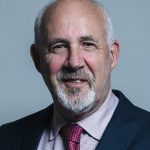
  • Jeremy Corbyn – 2022 Loyal Address Speech

    Jeremy Corbyn – 2022 Loyal Address Speech

    The speech made by Jeremy Corbyn, the Independent MP for Islington North, in the House of Commons on 10 May 2022.

    I will try to keep within the 10-minute limit that you have requested, Madam Deputy Speaker.

    The day of the state opening of Parliament is quite surreal. We have all the pomp, the gold coaches and the ancient Rolls-Royces out on the streets, and a Prime Minister who comes into the Chamber and tells us that he has got right all the big calls on covid and all the big calls on finance and then disappears. The reality is that we as a country have 4.2 million children living in poverty. Some 1.3 million babies—very, very small children— are being brought up in households in desperate poverty, often with not enough to eat and a heavy reliance on food banks and food co-ops merely to survive.

    Dealing with poverty and related issues requires wage rises, and, as the right hon. Member for Newark (Robert Jenrick) pointed out, a rapid increase in universal credit. It requires recognising the desperate state of poverty within Britain. It became very obvious during the covid pandemic that there is a whole generation of people who came together in mutual aid groups that now recognise that poverty and food hunger are unacceptable in our society and that the work that has been done on the right to food and so much else must be acknowledged and taken up. There is nothing in the speech that says anything that gives hope to those people living in desperate poverty at the present time.

    Many Members have spoken about the problems of energy costs. Some 6.3 million people in this country are living in fuel poverty, which is a nice sociological term, but what it really means is that those people cannot afford to put on the electricity, cannot afford to buy the gas, and cannot afford to heat their homes. If they are lucky, they can heat one room of that home, or they just go cold.

    I would have thought that quite a few Members who campaigned in the local elections last week came across houses with no lights on, even when it was getting dark. There was a reason for that: people in those houses could not afford to charge the key meter or to put the lights on in their homes. That is the reality of poverty in this country. That poverty, again, leads not just to unpleasant living, but to hypothermia and really serious problems for people just trying to survive. Why have this Government not done what the French have done and introduced an energy price cap? Why have they not taken the hit of the increased energy prices as a public good in order to protect people? Why are they not promoting public ownership of energy, rather than having the energy companies making massive profits during this period of crisis? We must look at all of those issues.

    Some 83% of adults say that they are noticing, or suffering from, a considerable increase in the cost of living, which means not just food poverty, but an inability to buy clothes and so much else as well. Those issues were not addressed in the speech.

    I was interested in the very thoughtful speech made by the right hon. Member for Newark just now, which addressed many of the housing issues we face in this country. The homeless people who were very obviously on the streets of this country when the covid pandemic started were housed, because there was Government intervention and sufficient funding given to local authorities to ensure that they were housed.

    Some local authorities leased hotels, some bought new places and a large number—I do not think all, but a large number—of rough-sleeping homeless people were housed during the pandemic. If we can do it during a pandemic, we can do it at any time. We can carry on doing it. It is simply immoral that anyone should be forced to sleep on the streets of this country at any time. However, that means addressing the issues of housing costs and housing stress.

    I represent an inner-city constituency with a large number of council properties, a considerable number of housing association places, a small and declining number of owner-occupiers and a fast-growing private rented sector. By and large, the council properties are well managed and well run and have reasonable rents, and to live in a council property gives people a considerable sense of security.

    I do not think housing associations are particularly well managed. I do not think by and large that they are good at doing repairs or good at management, and they are profoundly undemocratic in their behaviour and their frequent refusals to listen to tenants or allow what tenants want to have any bearing. We must hardwire into any housing legislation a sense of democracy in how housing associations manage their properties, and force them to listen to their tenants.

    It is in the private rented sector, however, that the worst problems occur. About 30% to 33% of my constituents live in the private rented sector, and the rent levels are horrendous. They are more than three times the level of council rents, and the local housing allowance is insufficient to help people who are mostly moving into the private rented sector. Those on universal credit moving into the private rented sector because of the insufficiency of council housing must either supplement the rent themselves or move away from their community, their schools, their families, their support networks and all the rest.

    We must understand that if we are going to have such a huge proportion of our population living in the private rented sector, they need certainty of an affordable rent, certainty of long-term tenancies, certainty that they will not be peremptorily evicted from that property and certainty that repairs will be done when they need them. Many local authorities, my own included, are innovative and creative in building some degree of protection and regulation in their communities, but it is this House that should build those protections and regulations within the private rented sector.

    There are a whole lot of things that ought to be in the Queen’s Speech. If the Government are proposing deregulation of the economy at the very time when we need an investment in the economy, if they are not doing anything about job protection, fire and rehire or the insufficiency of wages for many people, the gaping chasm of inequality in Britain will get worse. There is regional inequality, there is national inequality, there is social inequality and there is class inequality, and it is getting worse. This Parliament must address those issues.

    As my hon. Friend the Member for Hemsworth (Jon Trickett) said, social inequality is dealt with either by raising wages, raising public expenditure and so on, or by repressing the protests and the anger and trying to control people who want to demonstrate against it. The whole agenda of a law and order society, rather than dealing with the social divisions in society, is not an appealing prospect.

    The world is in an environmental crisis. COP25 said so, COP26 said so—although there was a lot of greenwash surrounding it—and there is a massive environmental disaster around the corner. The global refugee crisis of 70 million people around the world comes from wars, human rights abuses and oppressive societies, but it also comes from the environmental disaster we face. We cannot just close our doors on refugees.

    I absolutely and totally condemn the Russian invasion of Ukraine and I hold out my heart and my hand to the Ukrainian refugees who have come to this country, albeit with great difficulty and no thanks to Home Office processes and procedures. We should hold out the same hand and the same welcome to refugees from other conflicts and wars in Yemen, Syria, Libya, Palestine, Ethiopia, Eritrea and other places, and recognise that if we want good human rights for ourselves, those human rights should apply to others.

    That should also apply to people’s human right to express dissent around the world. The number of real journalists, very brave people, who have stood up against oligarchs and dictators and have paid the ultimate price as a result by being murdered should be recognised. Our Home Secretary should think carefully of the responsibility on her shoulders to decide whether somebody who has bravely reported on human rights abuses and military activities around the world, Julian Assange, should be removed from this country. I think he is a whistleblower and journalist who should be protected, not removed.

    My last point is that we should be building a world fit for the next generation. We are bringing up a generation of children in this country who are overstressed and over-tested in school; who are streamed almost out of sight in secondary school and are victims of the competitive culture between secondary schools; who are charged in college and heavily indebted in university; and who then, because their wage levels are so low, cannot afford any decent or permanent place to live.

    What message are we giving to the next generation? They will not have it as good as the current generation; they will have to pay the debts for the future. We should be investing, nurturing, cultivating and including all those young people. We should joy in their creativity, their art, their music, their science, their learning. They are the future. But what are we doing? Consigning them to stress and, in many cases, so much poverty. We can do things differently and very much better than we are. Sadly, the speech given today offers no hope whatsoever for any of the issues I have drawn attention to.

  • Robert Jenrick – 2022 Loyal Address Speech

    Robert Jenrick – 2022 Loyal Address Speech

    The speech made by Robert Jenrick, the Conservative MP for Newark, in the House of Commons on 10 May 2022.

    It is a pleasure to follow the hon. Member for Wirral South (Alison McGovern). I agree with her last point in that I hope that this Session is the one in which we can finally right that particular wrong and pass a measure to enable victims of great scandals and tragedies to have the legal representation they require. My experiences of working with survivors of the Grenfell tragedy lead me to believe that individuals and their families need all the support possible to help guide them through that difficult period ahead.

    I pay tribute to the hon. Member for East Dunbartonshire (Amy Callaghan) and welcome her back to the House. We all admire the courage that she has shown in the struggles that she has had in recent months and welcome her back to her place.

    Today, the country is in a particularly perilous position. During the debate, we have heard about the constitutional issues that we face. We have heard about the geopolitical issues, with the war not so far away in Europe, and the work we are doing to support our brave allies in Ukraine, and to help them to win and Vladimir Putin to lose. However, here at home, we see a challenging economic situation—perhaps the most challenging in my lifetime.

    First, the hit to household incomes this year and next will be the greatest since records began—perhaps the greatest for 100 years. There may be a recession later this year. I do not think that that is certain, but only a fool would bet against it, given the economic indicators. There is a real risk of the start of a new inflationary era, which should concern us all. Of course, it should concern the poorest in society the most.

    Secondly, economic growth is stagnant. That should worry us the most in the long term. The economy needs to generate the good jobs and tax receipts to help people into good careers and fulfilling lives and to pay for public services. In an era when public services will only cost more with an ageing population, and given the urgent need to invest in our transition to net zero and the desire shared across the House to invest in levelling up and greater productivity, we will need those tax receipts more than ever. Yet they are not forthcoming. If the Bank of England and the Office for Budget Responsibility forecasts are to be believed—they have been wrong in the recent past—we will experience several years of anaemic economic growth. We have to come together to tackle that.

    Thirdly, there are a number of major issues on which the House should come together to tackle failure. Energy policy is clearly one. This year, we are reaping the whirlwind of decades of poor energy planning. There has been a failure to invest in renewables as fast as we could have done, and in nuclear power and other conventional sources of energy. That is placing an intolerable burden on individuals and families.

    The other issue that comes to my mind is housing and the repeated failure of Governments to build more homes of all types and tenures, from social housing to those homes that aspirational young people want to buy to get on the ladder. We need to do more on those fronts.

    In that respect, I welcome the Queen’s Speech because on several counts it outlines Bills that may answer the challenges. A series of Bills looks at longer-term economic growth, from online competition to reduce the impact of big tech and its stranglehold on our online platforms, to gene editing to help our farmers and agriculture sector compete, to improvements in financial services, when the City of London’s position is by no means secure and needs to improve if we are to continue to hold our strong position in the international community, to transport and to education. However, more needs to happen.

    The Queen’s Speech is not a fiscal event, as many Members across the House have said in one way or another, but we must recognise that we have to intervene and take further steps, first, to support the poorest and most vulnerable in society. I think it is inevitable that we will uprate universal credit. That will doubtless happen at the next fiscal event as usual, but there is a strong case for doing it on a one-off, exceptional basis as soon as possible to help those poor and vulnerable families get some extra money and to alleviate some of the pain for the months ahead.

    Secondly, it is clear that taxes on working people are too high. The tax burden is at its highest level for more than 40 years and we will have to work to bring it down. I appreciate the Chancellor’s position that a tax cut will occur in 2023 or 2024, before the end of this Parliament, but that does not seem soon enough to me and my constituents. We need a more competitive tax system. That means work now, when household incomes of any level are under strain, rather than in a year or two, when, potentially, inflation will start to ease and the need for tax cuts will be somewhat diminished. I hope to see those two changes, among others, in the months ahead.

    Let me look to the longer term and speak about three Bills in the Queen’s Speech of which I have some experience, having been responsible for them until recently. First, I was very pleased to see the Bill to reform the regulation of social housing. It originated under my right hon. Friend the Member for Maidenhead (Mrs May) when she was Prime Minister, from the experience of speaking to social housing tenants in the immediate aftermath of the Grenfell tragedy. As she said in her contribution earlier today, it was clear that too many of those individuals feel ignored and disrespected by the providers of their social housing. Some of those providers, particularly the largest housing associations, have a poor record of listening to their tenants and responding with good-quality housing and good-quality consumer service. This Bill will go some way to changing that by putting in place better regulation and a better, more consumer-focused regulator to respond to those complaints and concerns, and I strongly welcome its inclusion in the Queen’s Speech.

    Secondly, a Bill will be introduced to complete the journey towards leasehold reform. In the previous Queen’s Speech, I started the first half of this two-stage legislation, which I hope will enable any leaseholder in this country to easily enfranchise their property. Leasehold is a product of our history. It is a feudal system that has little place in today’s society. We are the only major developed economy in the world to continue with that system and it does now need to come to an end. I hope that this will be an ambitious Bill that not only enables people to enfranchise their property and to purchase a share of freehold, if that is what they want, but leads to the end of leasehold. I hope that we as a House can set an end date for that system, from which point we can move wholeheartedly towards commonhold, a better system that is used and enjoyed by citizens and homeowners in every other major developed country.

    Thirdly, I am pleased to see the levelling up and regeneration Bill included in the Queen’s Speech. There are two elements of this that matter to me. The first is devolution: enabling more devolution deals to be done with cities and counties across the country, those deals to be done faster, and greater power and responsibility to be handed to local communities.

    Reflecting on my period as Secretary of State for Housing, Communities and Local Government during the pandemic, I am very clear that the one area of our state that performed consistently well during that crisis was local government. Almost every other Government Department or area of state has, at best, a mixed record; there are triumphs and failures. Within local government, it is mostly a story of success. It is also a story of thrift and value for money.

    As Secretary of State, I gave £9 billion to all the local councils in England to help to get them through that period—to look after the homeless, to dispense grants to our local businesses, to look after the most vulnerable, to do local contact tracing and many other responsibilities. That is a fraction of the funding that we gave to other areas of the state. If I have one regret it is that I did not win the battle within Government for contact tracing to be done exclusively by local government rather than the expensive system that was ultimately created of track and trace. The record of local government is good and we should build on it with further devolution.

    Matt Western rose—

    Robert Jenrick

    I am conscious of time, but I will give way briefly to the hon. Gentleman.

    Matt Western

    I just want to applaud the right hon. Gentleman for what he said about the terrific work of local government throughout the pandemic and about the action that it took. However, the Government did promise to do everything necessary to support local authorities financially through that time, “whatever it takes”. Unfortunately, local authorities such as Warwick District Council and Warwickshire County Council, in my area, are really struggling now because they did not receive that support.

    Robert Jenrick

    I hear the point that the hon. Gentleman makes. I would dispute that. Today is probably not the right moment to do so because time does not allow. The point I was making is that, whereas there is waste in the record of most other areas of government in their response to covid, I do not think that that is the case with local government. Local government carried out those crucial services quickly, in a way that worked for local communities, providing good value for money. That should lead us to do more devolution wherever we can.

    The second half of that Bill will be about housing and planning, a subject which I know well, and I have scars on my back to prove it. As there is limited time today, I simply say that it is a matter of the greatest importance to this country that we build more homes. Successive Governments have failed to do that. There is always an excuse: we do not want to build on green fields; we do not want to spoil the look and feel of a local community; we do not want to over-develop an area. We have to get those homes built because we are letting down hundreds of thousands of our fellow citizens. People are homeless today because we are failing to build those houses.

    Young people’s rightful aspiration to get on the housing ladder is being neglected because we are not building those homes. If I had to guess, I would say that the number of homes that we built in the first year of this Administration under the Prime Minister and myself—almost 250,000—will be the high watermark of the number of homes built in this country for several years to come, and that the Government will miss their 300,000 homes a year manifesto pledge by a country mile. The only way in which we will get back to 250,000 homes a year and exceed it is if we together, on a cross-party basis, agree that that is not good enough and that we need to build more and find ways of doing so. Otherwise, we will consign hundreds of thousands of our constituents to a life, at best, in secure rented accommodation and, at worst, in very insecure rented accommodation or life on the streets. That is not good enough. That is not the society in which I want to live. I hope that Members on both sides of the House, of all political persuasions, will approach that planning Bill with that frame of mind.

  • John Redwood – 2022 Loyal Address Speech

    John Redwood – 2022 Loyal Address Speech

    The speech made by John Redwood, the Conservative MP for Wokingham, in the House of Commons on 10 May 2022.

    I have declared my business interests in the Register of Members’ Financial Interests.

    I welcome much of what is in the Gracious Speech. I welcome the emphasis on growth, because we need growth to deliver on many of the other ambitions for levelling up and for better public services. I think the Government are right about the need to revisit rules and laws to promote better transport, to deal with difficulties in housing and planning, and to pursue a course of greater self-sufficiency in energy. However, I want to concentrate mainly on the economic conditions that they will need over the next two years in order to make a success of this legislative programme.

    Legislation takes us only a little way. What we are trying to do through legislation is create conditions in which business can flourish, people can train and acquire better skills so they can secure better-paid jobs, and investments can be made. We will not level up all the mighty cities and towns of this country that are below average with public spending; we need to level them up with ambition and private investment. We need to see people going on their own personal journeys to develop their own businesses, to reach a point at which they can afford their own houses, and to secure enough training and qualifications to be able to obtain decent, high-quality jobs. That is how the successful parts of the country have managed to give many more people higher incomes and better living standards. Those are the parts of the country that worked to attract the people with the energy and the talent, or have given the people who are already there more support. We need to think about how we can provide such support and encouragement more widely around the country.

    Michael Fabricant (Lichfield) (Con)

    My right hon. Friend is echoing the words of the Mayor of the West Midlands, Andy Street, who has said that it cannot be Governments who create wealth; we merely have to provide the opportunity for businesses and individuals to create that wealth.

    John Redwood

    I am glad that all three of us agree on this matter, and we can proceed on that basis.

    So what do the Government need to do? My first recommendation to my right hon. Friend the Chancellor is that he needs to have a new framework for the conduct of our economic policy. We are still running on Maastricht-lite. We still think that the way in which to control the economy is to control the debt and the deficit. I have news for the Chancellor: if we get growth and inflation right, the debt and the deficit will come closer to taking care of themselves. If we get the growth right, we will have much less of a problem with the debt and the deficit.

    In the last year, when the United Kingdom led the growth tables for the advanced world, an unremarkable thing happened. It seemed very remarkable to the Treasury, but it seemed unremarkable to me. The deficit came tumbling down. According to one set of figures—and they still keep changing—it came in at £90 billion below the Office for Budget Responsibility and Treasury forecast, because with more growth comes more activity, more incomes and more spending, so the Treasury can collect more VAT and income tax. It was mainly extra revenues that came in, because we had that faster growth.

    In my view, the debt and the deficit matter but should be subsidiary. The two main aims of economic policy should be a 2% inflation target, embedded as a Government target as well as a control mechanism on the Bank of England, and a complementary 2% growth target—not that exacting in the context of 20th-century experience in the United Kingdom, but fairly challenging in the context of the current century’s experience because of the disfiguring effect of the big banking crash and great recession in the middle of its first two decades.

    Let me deal first with inflation. Once it gets out of control, it is extremely damaging to everything. It ends up causing shortages on the shelves, lack of supply, businesses crashing, and people being thrown out of jobs. We do not want to get into the accelerating double-figure inflation that some countries have suffered all too much. Anyone who wants to see what happens with the playbook should look at what is happening in Turkey at the moment, and at what has happened, on a grotesque scale, in Venezuela, where the generous state kept printing and kept borrowing and ended up destroying more than half its national income and much of the potential of the oil industry, which used to pay for everything because it was nationalised and incompetently run.

    Those extreme versions need to be ruled out, and of course the amount of money created needs to be controlled; you need to keep an eye on when you can afford to borrow in the public sector and how much. However, that is a second-order issue in comparison with promoting growth and inflation targets as the main aims. The inflation target cannot simply be delivered by a central bank. Unfortunately, the Bank of England made a policy error, to which I drew attention beforehand last year. I think that it went on printing money for longer than it should have, and that its policy was too loose for too long. I was fully behind its huge injection of money and ultra-low interest rates in the previous year because of the huge shock administered to the economy, but it now looks as though it made a mistake, which it has subsequently corrected. It should not overdo it, though. It is no longer printing any money in excess, it has put up interest rates on three separate occasions, and money growth is now much more constrained in our country; but the Government must also put their shoulder to the wheel to curb various types of inflation.

    At present one of the inflationary factors hitting, in particular, the budgets of those in the lower income areas is the huge price inflation in energy and food. That is caused by supply shortages. We were already pretty short of energy in western Europe because of the policies being pursued and because of the lack of natural resources on the continent, where there is not any, or much, oil and gas outside the Netherlands. We were already very short of basic energy. Then, of course, the dreadful invasion of Ukraine came along and caused so much damage—most directly to the people there who have such dreadful shocks from it, but there has been a wider economic shock for the rest of us. As a result of policy, Russian oil and gas are being gradually withdrawn from our supply systems, so we have exacerbated the shortage, for understandable and good political reasons, to try to help Ukraine in its battle against the Russian invasion.

    As for food, we see a shortage arising as markets are heralding the sad likelihood that there will not be a lot of crop coming out of Ukraine this year and that a big source of edible oils and of grains will not be producing and exporting in the way that the world market needs, so we see great price pressures there.

    So there is a need to engage Government, and I am pleased to see that the Government are working towards energy self-sufficiency and more food production. Those are crucial as a response to what has just happened and as security for the future. If we want to keep inflation down in the future, the one thing we can rely on is producing more of our own energy and growing more of our own food, which will give us more control over the pricing, particularly with something like gas, which of course is traded on the world market only to the extent that there is either pipeline capacity or liquefied natural gas capacity, so a lot of the gas cannot be traded internationally. American gas cannot be sent to Europe in huge quantities because there is no pipeline, and there is a limited amount of LNG capacity. America has much lower gas prices—and nothing like the cost of living problem that we have with energy—as a result of producing a lot of its own gas and therefore having a domestic market that clears at a lower price than the current very spiked world gas prices. I trust that the Government will pursue greater national self-sufficiency in key areas, including not only basic energy and food—we can grow a lot more of our temperate food—but crucial technologies, which the Government are becoming increasingly sensitive about.

    I trust that when the Government turn their mind to the detail of their energy legislation, they will use it to facilitate the production of more domestic oil and gas. I think there is more general agreement today, after the debates of recent months, on the proposition that we ought to re-enter the North sea and that, instead of overseeing a pretty rapid rundown in its output, we should go through a transitional period, maybe this decade, and get more oil and gas out of the North sea. That surely makes more sense. It makes green sense because the CO2 output created by burning our own gas is considerably less than that of the elaborate process of carrying it halfway round the world and having it compressed and decompressed so that it can travel as LNG. It is about half the CO2 generated.

    More importantly from the point of view of levelling up and growth in our public finances, we would be paying the tax to ourselves. All gas and oil attracts massive taxation from the countries that have the good fortune to produce it. If we buy gas from Qatar—or when we were buying oil from Russia—we pay them a huge amount of tax, which is revenue that we could pay to ourselves if we developed more of our own production. Our own Treasury could then either spend it or give it back to us in some other form, such as a rebate or grant.

    There is a more sensitive issue about onshore gas, and people are often rather opposed to that idea. I suggest that no landowner or council should be made to have onshore gas production if they do not want to. That would be a democratic decision over permissions and it would be a decision of those who have the land or property nearby as a result. I think that some areas would have it—suitably protected and environmentally tailored, as it could be. We already have some onshore oil and gas. Wych Farm, for example, is in a very beautiful part of the world and it produces oil quite happily onshore. The Government need to put into law a framework where landowners and communities that agree to participate in onshore oil and gas development should receive a participation in the royalty of some sorts, or free gas to consumers, or whatever.

    Jeremy Corbyn

    I am interested in what the right hon. Gentleman is saying. I assume he is talking about fracking when he talks about onshore gas production, and suggesting that we leave it to individual landowners and local authorities, but the polluting effects of fracking do not stop at the borders of somebody’s land or at a local authority border. Fracking pollutes the aquifers and it can and does create earth tremors that go well beyond all that. It is surely a matter of national policy that we do not pursue this short-sighted avenue of trying to get gas, and that we look at better methods of conservation and more sustainable methods of generating our energy.

    John Redwood

    I do not know whether the right hon. Gentleman has a gas boiler, but I expect that most people in this House have gas boilers at home, as I and most of my constituents do. That gas needs to come from somewhere. I will not go into the details of the techniques needed for reservoir management, because that obviously depends on the structure, the flow rates and the nature of the stratum in which you find the gas, but a range of techniques can be used if gas or oil is shy in coming out of a reservoir that has been developed over many years.

    Of course, like the right hon. Gentleman, I want this to be regulated. There must be no pollution of watercourses. Fortunately gas strata and water are often well divided in the United Kingdom—rather more so than in the US, where there has been a gas revolution onshore without polluting the water supplies or causing great environmental health problems. Of course that needs to be properly regulated—it is strictly regulated at the moment—and we need to review those regulations to ensure that the No. 1 priority of public safety is guaranteed and that the No. 2 priority, the desired effect of getting some gas out, assuming public safety is guaranteed, is also taken care of. I would have thought that the right hon. Gentleman would like the idea of a big new source of oil or gas tax revenue that stayed in the United Kingdom rather than being paid to Qatar or Saudi Arabia.

    Dame Andrea Leadsom

    My right hon. Friend and I have talked a lot about community support for onshore projects. Would he agree that another such area could be deep geothermal, which the Business, Energy and Industrial Strategy Committee is looking into at the moment? It could offer fantastic potential for sourcing new forms of renewable heating.

    John Redwood

    I would love to hear about that. Unfortunately I was in this debate so I was unable to get to that particular Committee, but I will catch up with my right hon. Friend elsewhere to discuss that because I know you wish me to move on, Madam Deputy Speaker.

    One last point, if I may, is about housing and planning in my own constituency of Wokingham. We are very generous and we accept a large number of new people joining our communities, as they would like to do. We accept well over 1,000 new houses being constructed in the constituency every year, but I do not think we should want to keep all of that to ourselves. The kind of housing that attracts people who can provide leadership and better jobs and who can set up businesses needs to be spread more broadly. The planning rules need to be revised so that we can use the planning system to reinforce the wish to level up, with some of the really important private sector housing investment going to the places that really need it, rather than having an awful lot in places that have done pretty well already and are finding that the pressure on public services, roads, transport, railways and so forth is just too much and that the infrastructure is not catching up.

    This was a good Queen’s Speech. It needs economic success and a policy based on going for growth. It also needs a policy that deals with supply-side shortages and a policy based around lower taxes, because we need to give something back now to start to lift the cost of living crunch.

  • Jon Trickett – 2022 Loyal Address Speech

    Jon Trickett – 2022 Loyal Address Speech

    The speech made by Jon Trickett, the Labour MP for Hemsworth, in the House of Commons on 10 May 2022.

    I have been listening carefully to this debate. Speaking from the point of view of one of the villages at the heart of England, in Yorkshire, it is occasionally very difficult to recognise the descriptions of England and Britain that have emerged this afternoon.

    Before I develop my argument, I want to refer to the fact that, for medical reasons, it has been more than five months since I have been able to speak in the House. I had a bad accident in the new year, and two of my closest relations fell seriously and critically ill; one was on life support for nine days. I was able to see at first hand the miracles that are performed hourly, or even minute by minute, by nurses and doctors in the intensive care unit at Pinderfields Hospital in Wakefield. My sense of gratitude will never diminish—what I saw was quite incredible. The same goes for the paediatric unit at Leeds General Infirmary, which has been looking after a young member of our family. I hope that the House will not mind if I mention my own surgeon, Mr Venkatesh at Chapel Allerton Hospital in Leeds, who managed to get me up and walking faster than I imagined possible.

    There were times in hospital when it felt as if I were running a casework surgery, because when people discovered that I was a Member of Parliament and I was laid up, they took advantage and formed a queue to lobby me about all kinds of things. What was most frequently raised with me was the state of the NHS; the staff, the clinicians, the orderlies, the cleaners and the patients all came up to me and spoke to me about the NHS.

    The Prime Minister was saying earlier that he is putting record amounts of money into the national health service, so I just want to give him this message—not from me, but from the clinicians and all the people who spoke to me in the intense moments when I was trying to recover from the anaesthetic. They said, “The money isn’t getting to us. Our incomes are low and are being held back.” They said that the scourge of restructuring was going on all the time, preventing them from getting on with the level of care that they wanted to provide. They also said that they were fed up with outsourcing. They asked me to tell the House of Commons that those are their views; I capture them in all honesty. I happen to agree with them, but that is beside the point.

    I move on to the question of levelling up. One might ask why, after 12 years of Tory Government, it is suddenly necessary for the Government to say that we need to level up. In referring to my constituency, I will illustrate a series of national problems. There are two aspects that I want to raise, the first of which is inequality of income. The average income in my constituency is £250 a week less than is earned in wages in the Prime Minister’s constituency. That is a staggering difference: £12,500 a year per person working in a full-time occupation. How can that level of inequality be justified? I am sure that many Labour Members and others have similar problems in their constituency. How has that come about after 12 years of a Tory Government? I will suggest later what might be done about that, but first I will mention a second point about my constituency that raises a wider question.

    The right hon. Member for Haltemprice and Howden (Mr Davis), who is no longer in his place, mentioned social mobility. Well, look: the British are told, “If you work hard, play by the rules and have even a minimum of talent, you should be able to get on in life.” That is the promise of social mobility, but the truth is that the Government established a Social Mobility Commission—and what happened? The board members all resigned because they said that social mobility had come to an end in Britain.

    There are 533 seats in England, and mine is the 529th least socially mobile constituency in the whole of England. I speak not only for my constituency, but for all the seats across the north of England, the south-west and elsewhere where social mobility has come to an end. It breaks my heart to think of a child born today in one of those hospitals in my constituency that I experienced—born into a family in deprivation or poverty and facing not only a shorter life than people in more prosperous areas, but a life in which they will die in poverty. It breaks my heart to think that that is where we are.

    “Levelling up” is a spurious rhetorical device that the Government have developed to try to cover up the failures of the past 12 years in office. We have a society that is now profoundly unequal, in which the billionaires are floating on a sea of riches while millions of people are living in poverty, including children and families in work. When inequality and the lack of social mobility are put together, what do we have? We have a class structure, the old British disease: ossified, unchanging and built on a system that enriches a few and leaves so many millions behind.

    What does the Government’s programme offer? I say that it offers more of the poison that created the situation that we are now in, but pretends that it is a solution. What created the situation was Tory economic policies, austerity, neoliberal economics and market triumphalism. All those things are at the root of the problems that face communities such as mine and those across the north of England and elsewhere. What the Queen’s Speech pretends is that the state can take an active role in levelling up, offering social mobility and a route out of poverty for people in constituencies such as mine—but that is not what is being offered, is it? What we are being offered is more marketisation, more cuts and more austerity, with planning laws swept away to deliver more marketisation and then deregulation—all the defects that have created the problems that have left so many communities behind. That is what is on offer in this Queen’s Speech.

    I am sure that in the quiet of their own homes, Ministers’ consciences may tell them that we have a problem. The key workers in the NHS and elsewhere who kept this country going through the pandemic have been abandoned on low pay, with pay rises that are wholly unacceptable, while price rises are accelerating.

    If we calculate how much money we need to level up my constituency with the Prime Minister’s, the amount is astonishing. Paying people in my area the same as people in the Prime Minister’s would require a fifth of £1 billion a year; getting halfway there would cost us a staggering £100 million a year. What do the Government offer? They offer a Chancellor who never hesitates to boast about how he is a “small state” kind of guy, when what is required is active intervention in the market to begin to change the levels of deprivation and poverty and the difficulties that are the source of so many problems such as the breakdown of cohesion and the anger that we see in politics today. It would cost £200 million a year to pay people in my constituency what people earn down in the Prime Minister’s.

    There is only one answer to this, and that is a Marshall aid plan on the scale of what was provided after the end of the second world war. That is what is needed if we are to begin to tackle the underlying problem; anything else is merely rhetoric designed to persuade people to give the Tories one more chance. Before anyone jumps up to say that we cannot pay for it—although I see that no one is doing so—let me point out that this is one of the richest countries in the world. But where is that wealth? It is not in areas across the north, or indeed elsewhere. It is in the hands of a very small group of people and a tiny group of corporations. It is time to introduce a wealth tax.

    Why is it, by the way, that money earned from wealth or property is taxed less than money earned from work? Why do we privilege wealth and capital over labour? Why is our fiscal system designed like that? We could raise more money to begin to create that Marshall aid plan. All these things are possible, but first the House must face the truth: this is a profoundly divided society, a restless and angry society which wants change.

    In a society where divisions are running so deep, it is not surprising that the levels of consent and consensus which a democratic country requires in order to be governed are breaking down. Dissent is emerging because of the lack of social justice, which I have tried to explain from the viewpoint of my constituents. What is the Government’s response? Is it to try to create a more socially just society? No, it is not; it is to try to crack down on that dissent. In the last parliamentary Session we passed some horrendously authoritarian legislation, and now, in today’s Queen’s Speech, more is being proposed.

    Let me end by saying this. Authoritarianism will never resolve the problems of a breakdown in consent in a society about which people feel profoundly uneasy because of the way in which it treats them.

  • Andrea Leadsom – 2022 Loyal Address Speech

    Andrea Leadsom – 2022 Loyal Address Speech

    The speech made by Andrea Leadsom, the Conservative MP for South Northamptonshire, in the House of Commons on 10 May 2022.

    It is a great pleasure to follow the right hon. Member for Lagan Valley (Sir Jeffrey M. Donaldson), who spoke very powerfully of his commitment to the Union, which I very much share.

    I would like to start by paying huge tribute to Her Majesty the Queen and wishing her a very speedy recovery. I regret very much that she was not able to attend the other place in person. I pay tribute to the speech that was given on her behalf. It was very positive and very optimistic, and I am delighted to support the Government in implementing it. Why is that? We, as the Conservative party and the Government, truly believe in opportunities. Opportunities and a hand up ran through the Queen’s Speech today in full measure. I was delighted to see that. There is a lot in it that will enable people right across our country to make their lives better and their opportunities greater. I want to touch on a couple of specific measures announced today, starting with the levelling up Bill.

    I want to focus, rather selfishly, on my own wonderful constituency of South Northamptonshire. We are often seen as a lovely midlands area in the middle of England. We are quite mixed. We have the fabulous Silverstone circuit. We have motorsport valley and hi-tech engineering. We have some fabulous rugby, cricket and football teams. It is a wonderful place to work and live. However, we also have quite a few problems. One, which is also one of our assets, is that I am fortunate to represent 92 villages and parishes, but sadly they have very few bus links. In my constituency, wonderful as it is, for many young people levelling up would mean being able to get the bus to work or school. I therefore hope that, in the measures the Government take to level up, many more bus routes will be made available so that young people and, yes, people who do not necessarily reach for a car as their first thought, will be able to get around on the bus. I urge the Government to do everything in that regard.

    Secondly, on planning, South Northamptonshire is in the middle of England, between the M1 and the M40. The A43 runs through it. We are the rat run of choice for every HGV, whenever there is congestion on the M1 or the M40. As a result of being logistics central for HGVs passing through, they now want to park themselves in South Northamptonshire. We are under massive threat from huge warehousing applications, which are completely inappropriate for the area. There are plenty of logistics and warehousing dotted around, but I implore the Government to ensure that local communities will be able to resist inappropriate warehousing development that would literally concrete over the beautiful areas of Northampton, Towcester and Brackley. We are very much under threat.

    The third plea I would like to make on behalf of my constituency relates to demographic growth. Again, because we are a lovely area, people want to move here. They are most welcome. We are absolutely open for newcomers from all over the place, but with new housing, newcomers, new pupils, new jobs needed and so on, we never, ever receive our fair share of funding for anything, whether for the hospital, GPs or school places. I understand that there is a lag, but I urge the Government to consider places where the population is growing very quickly so that they, too, can get some of the funding that is desperately needed.

    I wanted to make those pleas for South Northamptonshire, but, of course, levelling up is about the whole country and there is a huge opportunity right across the United Kingdom. There is the energy security Bill, which is an absolutely brilliant Government initiative to ensure not only that our energy is cleaner and greener in future, but that we can make our fortune in the world, using our strengths in energy and innovation in the renewables space, the nuclear space and the technology space.

    Jim Shannon

    I agree with the right hon. Lady and reiterate Northern Ireland’s position on hydrogen, one of the new energy systems that we can all use to our benefit. I am very pleased to hear her mention the commitment to levelling up all the United Kingdom. Northern Ireland has to be part of that.

    Dame Andrea Leadsom

    I completely agree and will come to that issue shortly. The hon. Gentleman’s comments about the prospects for hydrogen power in Northern Ireland are music to my ears. That is a good example of some of the measures that the Government are putting in place to ensure that we can green up and grow our energy security and energy accessibility, as well as having more green growth and jobs.

    I spent 25 years in the financial services sector before coming to Parliament. That sector was always considered the jewel in the crown of the UK economy. Those jobs, however, were specifically in areas such as the City, Edinburgh, Bournemouth and Birmingham. They were not widespread across the country, tended to be a bit specialised and were not for everyone. However, there are jobs for everyone in the green technology sector. There are new apprenticeships for young people in installing electric car infrastructure and solar panels. There are jobs for people coming from the industrial clusters in the north and in Scotland who might want to retrain to work on offshore wind stations or in carbon capture usage and storage. There are lots of opportunities, including for the brilliant scientists and universities across the United Kingdom that are developing new technologies in the green space.

    I believe that, for jobs and growth, the green space could be even bigger than financial services in the years to come. If I was a betting person, which I am not, I would bet that by 2030 more people will be employed in the UK across the green technology sector than in financial services today. I hope that the Government remain absolutely committed to that agenda.

    Paul Girvan (South Antrim) (DUP)

    The right hon. Lady mentions the green economy and everything associated with it. I do not necessarily want to green Northern Ireland, by the way; I am talking politically about that agenda. I want to mention the technology relating to passive housing. We should drive that forward and lead the world in developing passive housing, reducing the need for carbon burning in our properties to keep them warm. We have the technology available to do that. Why do we not use building regulations to impose that on new development? Every year, 100,000 houses have to be built. Let us see whether we can drive that agenda forward and reduce our carbon footprint dramatically.

    Dame Andrea Leadsom

    The hon. Gentleman is absolutely right. Legislation is already in place to put new requirements on house builders to reduce the carbon footprint of new homes. Those will tighten up as time goes by. As he and his hon. Friend the Member for Strangford (Jim Shannon) have pointed out, there are so many different green initiatives. I hope that that becomes the way that we make our living in the world, through jobs at home and exports overseas.

    The pledges to the Union are the third area that I will highlight from the Queen’s Speech. For me, as a proud Conservative and Unionist party member, keeping the Union together is what it is all about. There is no doubt in my mind that the Union of England, Scotland, Wales and Northern Ireland is so precious to all of us. It would be a grave mistake—in fact, I simply cannot understand why separatists want to do this—to break apart our Union. It makes no sense to me. This is a fabulous place, where we have centuries of shared history, shared family, shared culture, shared language, a shared currency and shared institutions.

    Patricia Gibson (North Ayrshire and Arran) (SNP)

    A whole range of Bills in the Queen’s Speech fly in the face of the Standing Orders, including No. 9B, in the Scottish Parliament and the Sewel convention, which requires legislative consent from the Scottish Parliament for this range of Bills. Does the right hon. Lady think that riding roughshod over the Scottish Parliament and imposing these Bills against its wishes will strengthen or weaken the Union?

    Dame Andrea Leadsom

    I say to the hon. Lady that, as a separatist, she wants nothing more than to see the UK Government setting out any sort of possibility whatever that she can argue against with some sort of fake grievance. I want to appeal to the fabulous people of the United Kingdom: let us stick together.

    I have some ideas. I think that we should share rights to one another’s health systems because, in Wales, there are serious problems with healthcare. I would like nothing more than to see Welsh citizens able to access the healthcare systems of England, Scotland or Northern Ireland whenever they want to, and vice versa. I would also love to see school exchanges right across the UK so that children, as they are growing up, can develop a better sense of the unity of the United Kingdom. I would love to see consideration given to more freeports around the United Kingdom and, particularly, to a freeport that could encompass the whole of Northern Ireland. It is one part of the UK that really needs and deserves a huge boost to jobs, growth and opportunity, so I would love to see a freeport that gives beneficial tax status and makes sure that Northern Ireland is integrally joined to and feels part of the United Kingdom.

    Jim Shannon

    The right hon. Lady is most gracious in giving way again. She is putting forward a good argument on behalf of the United Kingdom of Great Britain and Northern Ireland. I agree that we are always better together. To make that happen, however, the Northern Ireland protocol has to be addressed. Will she commit in this Chamber to ensuring that the Northern Ireland protocol is done away with and that we in Northern Ireland have the same rights as everyone else in this House?

    Dame Andrea Leadsom

    I share the hon. Gentleman’s concern about the Northern Ireland protocol. I am absolutely determined that there should be no barriers to internal trade or any other form of union between all the component parts of the United Kingdom.

    John Redwood

    Given how the EU always wants everything in Northern Ireland to be aligned with the Republic of Ireland, does my right hon. Friend think that it might be a good idea to add to that freeport the same corporation tax rate as the Republic has, because that seems to me to be the one thing that it is actually getting right?

    Dame Andrea Leadsom

    My right hon. Friend makes a very good point, which emphasises my view that Northern Ireland could be considered as a freeport to have a beneficial corporation tax rate and other regimes to encourage more jobs and growth and more spread of business right across the United Kingdom. I agree with him.

    I will finish, Madam Deputy Speaker, by—[Interruption.] There are two Madam Deputy Speakers here, how wonderful! I will finish by talking about what I think is the greatest levelling-up policy, which is—this will not come as a surprise to anyone in the Chamber—the best start for life. When we human beings are born, we do not have any cognition. We do not know that someone is our mum. We do not know that we are wet, cold, tired, hungry or bored. We do not know anything—[Interruption.] The hon. Member for Birmingham, Yardley (Jess Phillips) says, “Of course we know it is our mum”, but we do not actually. A baby does not know that someone is their mum. They know that that person is an important creature to them, but they do not know that that is their mum, and it is very important to make that distinction.

    Babies adapt to the environment in which they find themselves, so if we want to level up, it is critical that in everything we do we provide support for families of all shapes and sizes to give their babies the best start for life. There may be those who do not understand about sleeping, crying or weaning, who may have relationship difficulties with their partner because of the stresses of a new baby in the household, or who may not know what a baby’s stage of development should be and may therefore miss an important problem with their tiny baby that could be easily resolved if tackled straightaway. I know that there is a shared desire across the House for much, much better support. Nothing could be more important for levelling up than giving every baby the best start for life.

  • Jeffrey Donaldson – 2022 Loyal Address Speech

    Jeffrey Donaldson – 2022 Loyal Address Speech

    The speech made by Jeffrey Donaldson, the DUP MP for Lagan Valley, in the House of Commons on 10 May 2022.

    It is a pleasure to follow the right hon. Member for Haltemprice and Howden (Mr Davis), and I thank him for the support he has given us over the years in the Northern Ireland in particular.

    Can I add my voice in paying tribute to Her Majesty the Queen in this her platinum jubilee year, on behalf of my right hon. and hon. Friends and the people of Northern Ireland and in particular on behalf of the residents of Royal Hillsborough in my constituency? We look forward to Her Majesty being able to travel to Northern Ireland again in the near future to stay with us in Hillsborough and meet again the very proud citizens of that village, who have recently been accorded royal status.

    Much has been said already, about the focus on the health of our citizens and on the cost of living crisis in particular, which is important for the Government going forward. Recently, in the Assembly elections, the local political parties in Northern Ireland were very much focused on these issues. As I campaigned across Northern Ireland, I met many people who are concerned about their ability to pay their bills or about how long they are going to be waiting on our health waiting lists. Sadly, we have the longest waiting lists in the United Kingdom, even though we pay more per capita into the health service than any other part of the United Kingdom. I think that flags up the need for reform of our healthcare system in Northern Ireland, alongside much-needed investment in that system.

    We as a party are committed to that, and we are also committed to ensuring that measures the Government bring forward here at Westminster are applied to all parts of the United Kingdom in supporting hard-pressed families and working families during this cost of living crisis. I hope any measures introduced by the Government, and any spending commitments that apply to them, are applied across the United Kingdom, and of course that the Barnett consequentials are made available to the Northern Ireland Executive.

    It is a matter of regret that, at this moment in time, we have a political crisis in Northern Ireland. That political crisis is born out of the reality that while the Government talk about taking back control of our borders, our money and our laws through Brexit, in Northern Ireland—our part of the United Kingdom—we have not yet completed that journey. As my right hon. Friend the Member for East Antrim (Sammy Wilson) reminded us, I have now been elected to a Northern Ireland Assembly that is the legislature for Northern Ireland dealing with those devolved matters that are not principally a matter for this House. Yet many of the regulations that apply to trade in Northern Ireland and to business in Northern Ireland are enacted by the European Parliament and the European Commission, and not a single citizen of Northern Ireland and not a single elected representative in Northern Ireland has any say in how those regulations are drawn up, so we have not entirely taken back control of our laws.

    John Redwood

    Is it not a disgrace that we can want to cut VAT in the United Kingdom, but we are not allowed to cut it in Northern Ireland? In what sense is the EU honouring our internal market and our constitutional arrangements?

    Sir Jeffrey M. Donaldson

    Of course, the right hon. Member is correct: the EU is not doing so. I have listened to some Members of Congress, for example, lecture us on the need to abide by the protocol and to implement the protocol, yet this is a nation founded on a campaign of “No taxation without representation”. What do we have in Northern Ireland? We have tax laws—on VAT, for example—that apply to Northern Ireland, but we have no representation in how those laws are enacted. That is not the essence of democracy.

    That is important because, in this Queen’s Speech, the Government state the measures they intend to take—for example, to help small businesses, to reduce regulations and to alter the way business is regulated—and one of the benefits of leaving the European Union is that we have more control over how we regulate our businesses. That will not apply to Northern Ireland, however, because we are regulated by the European Union for the manufacture of goods, for example, and we have to comply with EU standards, which means divergence from our main market—Great Britain.

    We purchase four times more goods from Great Britain than we do from the European Union in its entirety, and we sell far more goods to Great Britain than we do to the whole of the European Union as well. Yet we find that the Irish sea border, this trade border within our own country, is harming our economy, damaging the ability of our businesses to expand and invest, and costing them more. I recently heard from one company, a small manufacturing business in Newtownabbey in the constituency of my hon. Friend the Member for South Antrim (Paul Girvan). It told me that in the first year of the operation of the Northern Ireland protocol, the additional costs of bringing component parts from Great Britain, transportation costs, delays in getting the goods in, additional paperwork and customs fees amounted to more than £100,000 for that small business alone. That is costing it jobs and means it cannot invest in the expansion of its business. This is harming business in Northern Ireland, and peace and prosperity go hand in hand.

    A stable Northern Ireland does not just depend on the absence of violence; it depends on the growth of our economy, on creating jobs for our young people, and on giving them hope for the future. The protocol is harming our ability to do that because it is harming our access to our biggest market, in Great Britain.

    Matt Western (Warwick and Leamington) (Lab)

    I absolutely hear the passion and anger in the right hon. Gentleman’s voice, and it must be so frustrating for the community in Northern Ireland. I was interested to hear Marks and Spencer being quoted about the additional on-costs that it faces when selling its products in Northern Ireland, relative to the mainland. This is not supposed to be a difficult question, but what was it that the Prime Minister promised when he addressed the right hon. Gentleman’s party back in autumn 2019? Did he make clear the reality behind what he would do when negotiating with the EU?

    Sir Jeffrey M. Donaldson

    I can answer the hon. Gentleman clearly: the Prime Minister came to our party conference and told us that there would be an Irish sea border “over his dead body”. That is what he told us, and unfortunately the protocol created an Irish sea border and it is harming our economy. I am only asking the Prime Minister to honour the commitments that he made to us. I am not asking him to do anything more than that.

    The hon. Gentleman referred to supermarkets. Let me point out the absurdity of what the protocol means. Sainsbury’s is one of the biggest supermarket chains in Northern Ireland. It has no supermarkets in the Republic of Ireland. Yet when Sainsbury’s moves goods—even its own-brand products—from Great Britain to Northern Ireland, for sale in Sainsbury’s supermarkets in my part of the United Kingdom, it has to complete customs declarations and pay fees. There is a delay in moving those goods which, as Members will know, can be vital for food products, and it costs the supermarket more. That is driving up the cost of food in Northern Ireland. For example, it is estimated that the additional cost of chilled food products is 18% as a result of the protocol, compared with the same products in Great Britain.

    As we heard earlier, the Road Haulage Association has said that the cost of bringing goods from Great Britain to Northern Ireland went up by 27% as a direct result of the protocol in the first year of its operation. There can be no other impact of that additional cost than driving up the cost for the consumer when purchasing products in our supermarkets and shops. That is the reality, and when people say it is nonsense to link the cost of living to the protocol, the evidence is stark and clear. Yes, there is a cost of living crisis in Great Britain, but it is exacerbated in Northern Ireland and enhanced by the presence of the protocol and the Irish sea border.

    That is why I have had to take the reluctant decision, as leader of the Democratic Unionist party, not to nominate Ministers to the Executive until this issue has been addressed. We are being asked to implement a protocol. Do not forget that Ministers in Northern Ireland oversee the ports. We are the people who are required to implement and oversee that, and it is simply not fair that as Unionists we are asked to engage in an act of self-harm against our own people in Northern Ireland, with the implementation—the imposition—of a protocol that we do not accept, do not support, and do not believe is necessary to protect the integrity of the UK internal market, or that of the EU single market.

    Mr David Davis

    The right hon. Gentleman may remember that the reason why I resigned as Brexit Secretary goes back to a previous Prime Minister promising “full alignment”—that was the phrase—between the north and the south. It seemed to me that, as an outcome, Northern Ireland would have no more legislative power than a colony, because it would have no ability to correct the sorts of problems that he is now talking about. Is his argument that, for as long as that stands, that will make Northern Ireland not more but less stable?

    Sir Jeffrey M. Donaldson

    That is absolutely the case. We were told by the European Union, including the Irish Government—a co-guarantor of the Belfast agreement—that the protocol was necessary to protect the Good Friday agreement and the political institutions created under it. It has had the opposite effect. There is no North South Ministerial Council operating at this time; the Executive are not fully functioning; the Assembly is unable to carry out its full functions; and east-west relations between the United Kingdom and the Republic of Ireland are at an all-time low since as far back as I can remember. Can we not see the harm that the protocol is doing to the relationships at the heart of the agreement?

    It goes further. The Court of Appeal in Belfast has ruled that the protocol changes Northern Ireland’s constitutional status and overrides article 6 of the Acts of Union, which is a fundamental building block of our relationship with the rest of the United Kingdom. The Union is not just a political union but an economic union, and article 6 confers on the people of Northern Ireland—as it previously did on the people of the whole of the island when it was all part of the United Kingdom—the right to trade freely with the rest of our own nation. It says that there shall be no barriers to trade within the United Kingdom, and yet we now have an Irish sea border and barriers to trade. Article 6 has been breached and overridden by the protocol without the consent of the people of Northern Ireland to such constitutional change. That is contrary to the commitment in article 1 of the Belfast agreement, which says that there shall be no change to the constitutional status of Northern Ireland without the consent of the people of Northern Ireland.

    The Prime Minister is therefore right to have highlighted in the Queen’s Speech the need to prioritise support for the agreement and its institutions, including support through legislation, but the legislation referred to is only to do with the legacy of the past. As the House will be aware, the Democratic Unionist party has grave concerns about the Government’s initial proposals, because they deny innocent victims the right to justice, and we think that is wrong. I do not believe that peace is built on the basis of injustice. We await with interest the Government’s revised proposals.

    Sadly, there is no reference in the Queen’s Speech to legislation on the need to address the very real difficulties created by the protocol. We are looking for that commitment from the Government. The Prime Minister’s first duty as Minister for the Union is to protect the integrity of the United Kingdom. Indeed, the Queen’s Speech states:

    “The continued success and integrity of the whole of the United Kingdom is of paramount importance to Her Majesty’s Government, including the internal economic bonds between all of its parts.”

    The Prime Minister is the Prime Minister of the United Kingdom of Great Britain and Northern Ireland, and those last three words—“and Northern Ireland”—are the most important for me in my constitutional status. We are an integral part of the United Kingdom, and when the Government say that it is of paramount importance to protect the internal economic bonds between all of its parts, that must include Northern Ireland. That means addressing the protocol, because it is incompatible with the two commitments of upholding and protecting the internal economic bonds between all parts of the United Kingdom and prioritising support for the Belfast/Good Friday agreement and the political institutions being undermined by it.

    Not a single Unionist elected to the Assembly supports the protocol, and yet the Good Friday agreement is premised on the basis that the institutions will operate through consensus. There is no consensus for the protocol. The Unionist community does not consent to the protocol. I will not allow my Ministers to be put in a position where they have to impose on their own people checks and regulations over which they have no control and no say, and which have been created by a foreign entity, the European Union.

    In conclusion—and in response to the hon. Member for Rochdale (Tony Lloyd)—I want to be clear that my party is absolutely committed to the future of the political institutions. We want them to work and to deliver for everyone in Northern Ireland. My party is committed to the operation of those institutions. We are committed to our participation in those institutions, but it has to be on the basis of fairness, it has to be on the basis of a consensus, and it has to be on the basis that we address the problems in front of us that have flowed from the imposition of the Northern Ireland protocol.

    Last Thursday, I stood for election in my constituency of Lagan Valley. I have had the honour of representing this beautiful constituency in the House for the past 25 years. I believe in Northern Ireland, I believe in the future and I believe I can play a role in strengthening the political institutions. That is why, in response to the points that have been made, I am prepared to commit the remainder of my political career to going back to those institutions and working with my colleagues to make them work. I am prepared to leave this House, which I have been a Member of for 25 years and I would dearly love to continue being a part of, because I want to invest in the future of our people. I want to work for our people. I want to deliver good government. But I have to say to you, Madam Deputy Speaker, that I will not leave this House until the protocol issue is resolved. I will not leave this House until I can be sure that our political institutions in Northern Ireland have a stable foundation. In conclusion, I say to the Government that the words in the Queen’s Speech are there, but they have to be matched by actions.

    The Democratic Unionist party re-entered the Executive at the beginning of 2020 on the basis of an agreement called New Decade, New Approach. At the heart of that agreement for us is the commitment by the UK Government, given by the then Secretary of State, to protect Northern Ireland’s place within the UK internal market. Some two and a half years later, that commitment has not been honoured. Yet in the Queen’s Speech today, two other elements of the New Decade, New Approach agreement have been referred to by the Secretary of State for Northern Ireland: the legacy of our past and legislation linked thereto; and we are told by the Secretary of State that he will introduce a Bill on language and culture. Well, I have to say to the Secretary of State that if he proceeds to introduce that legislation without the Government moving to deal with the protocol, they will be in serious breach of their obligations under New Decade, New Approach. They will be moving in a one-sided fashion, in an unbalanced way. That is not the way to build consensus. It is not the way, in the words of the Queen’s Speech, to “prioritise support for the Belfast…Agreement and its institutions”.

    What the Government do must be balanced. It must take account of the concerns of the Unionist community as well as the concerns of others. Currently, the legislation coming forward reflects the concerns of others, but it does not reflect the concerns of the Members in this House who represent the Unionist community or the wider community. I reiterate my commitment to lead my party into the political institutions. I will do so as soon as the Government take decisive action to deal with the protocol and remove the Irish sea border.