Category: International Development

  • Lyn Brown – 2022 Question on Climate Change and Support for Somali

    Lyn Brown – 2022 Question on Climate Change and Support for Somali

    The question asked by Lyn Brown, the Labour MP for West Ham, in the House of Commons on 8 November 2022.

  • Tam Dhesi – 2022 Question on the Food Situation in Somali

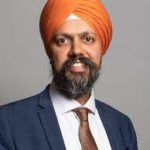
    Tam Dhesi – 2022 Question on the Food Situation in Somali

    The question asked by Tam Dhesi, the Labour MP for Slough, in the House of Commons on 8 November 2022.

  • Alyn Smith – 2022 Question to Andrew Mitchell on 0.7% of GDP on Foreign Aid

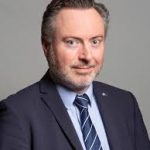
    Alyn Smith – 2022 Question to Andrew Mitchell on 0.7% of GDP on Foreign Aid

    The question asked by Alyn Smith, the SNP MP for Stirling, in the House of Commons on 8 November 2022.

  • Kate Osamor – 2022 Question on Situation on Flood Relief in Nigeria

    Kate Osamor – 2022 Question on Situation on Flood Relief in Nigeria

    The question asked by Kate Osamor, the Labour MP for Edmonton, in the House of Commons on 8 November 2022.

    What steps he is taking to support flood relief efforts in Nigeria.

    The Minister for Development (Mr Andrew Mitchell)

    Nigeria is one of the world’s most vulnerable countries to climate change, and it is experiencing the worst floods in a decade. The UK is providing support through the multi-donor Start fund, which has allocated £580,000 so far this rainy season. That funding is supporting 26,288 people affected by flooding. We will continue to help Nigeria make progress towards long-term climate change adaptation and resilience.

    Kate Osamor

    I welcome the Minister to his place. The floods in Nigeria have already left more than 1 million people displaced, 200,000 homes destroyed and, sadly, 600 people dead. In the wake of those floods, cholera cases are skyrocketing in some areas, due to a lack of access to clean water. Will the Minister assure me that the Government will be focusing aid to help ensure access to water and sanitation, and prevent the death toll from rising further?

    Mr Mitchell

    I thank the hon. Lady for her comments and her question. Over the past five years, Britain has provided £425 million of humanitarian support, which has specifically reached more than 2 million people in north-east Nigeria, including individuals affected by the flooding. I give her a commitment that, working with Nigerian agencies, we will seek to strengthen flood risk management. Prior to COP26 we supported Nigeria’s national adaptation work to help cope with climate change.

  • Tariq Ahmad – 2022 Statement on New Support for Cholera Outbreak in Syria [Lord Ahmad]

    Tariq Ahmad – 2022 Statement on New Support for Cholera Outbreak in Syria [Lord Ahmad]

    The statement made by Tariq Ahmad, Lord Ahmad, on 28 October 2022.

    We are deeply concerned by the cholera outbreak across Syria, the first in more than ten years. With humanitarian needs the highest they have ever been, there is a significant risk that malnutrition, lack of access to clean water and chronic conditions, will see the situation deteriorate even further.

    This funding to UNICEF will provide vital lifesaving assistance to those in affected areas. The UK has not forgotten Syria and we will continue to work with international partners to ensure there is a coordinated response on the ground.

  • Vicky Ford – 2022 Comments on Ethiopia

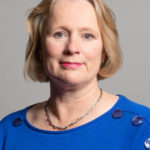
    Vicky Ford – 2022 Comments on Ethiopia

    The comments made by Vicky Ford, the Minister of State for Development in the Foreign, Commonwealth & Development Office, on 19 October 2022.

    Back in Ethiopia with two priorities: conflict in the north and the drought.

    As International Development Minister, look forward to seeing UK aid supporting the humanitarian responses but will also express UK’s deep concerns over renewed fighting. Ceasefire needed now.

  • Vicky Ford – 2022 Statement on the Rohingya Crisis

    Vicky Ford – 2022 Statement on the Rohingya Crisis

    The statement made by Vicky Ford, the UK Minister for Development, at the United Nations General Assembly on 22 September 2022.

    Your Excellency Prime Minister Hasina; distinguished guests.

    Thank you for the opportunity to join you today to remember the tragic events of 5 years ago. And for the chance to press for a durable solution, and to mobilise adequate resources to support the Rohingya until they can return to Myanmar.

    Prime Minister Hasina, your government and the people of Bangladesh have our upmost respect. You have generously hosted one million Rohingya refugees for 5 years. And I pay tribute to your leadership and humanitarian values.

    Friends and colleagues. Nobody should be forced to flee their home or their country of birth. It is a tragedy that so many have been unable to return to their communities, that so many lives have been stalled, and that there has been no accountability for the atrocities endured.

    Confronted by so much pain and hardship, the courage, resilience, and spirit that the Rohingya continue to display is all the more admirable.

    I wanted to reiterate our deep concerns by the increasing violence in Myanmar. In Rakhine state, Rohingya communities are caught in the cross fire of recent fighting between the Myanmar Armed Forces and Arakan Army.

    I am saddened to hear about the horrendous attack on a school in Sagaing. We condemn the killings. There can be no justification for the killing of children and innocent civilians.

    Since 2017, the UK has provided £340 million of support to the Rohingya and neighbouring communities in Bangladesh. And £25 million for the Rohingya and other Muslim communities in Rakhine State. This has provided lifesaving food, water, shelter, healthcare and protection.

    We continue to be a major contributor to the core funding of humanitarian agencies, providing £108 million this year, which underpins their ability to respond to the crisis. Our total portfolio of support makes us one of the largest global humanitarian donors.

    International Financial Institutions have an important role to play in sustaining the Rohingya response, and we welcome their continuing dialogue with your government.

    We will continue to support the Rohingya and, importantly, the local communities around the camps.

    Preparing the Rohingya to return to Myanmar, when it is safe and sustainable to do so, is vital.

    So we are pleased that the Government of Bangladesh has endorsed the rollout of the Myanmar Curriculum and a new Skills Framework. This will have a positive impact, and should be followed by expanded livelihood opportunities in Cox’s Bazar and on Bhasan Char, to better equip refugees for their sustainable return to Myanmar.

    Prime Minister, we agree with you that the international community must play its part to create the conditions for safe, voluntary and dignified returns.

    We will continue to work alongside the international community to improve conditions for the Rohingya in Myanmar, and mitigate the risk of further atrocities. This includes using targeted sanctions and building a global coalition of countries committed to tackling the flow arms to Myanmar.

    This year we marked 5 years since the military led ethnic cleansing of the Rohingya people. We used the importance of this tragic anniversary to hold to account those responsible for atrocities in Rakhine state.

    We have not forgotten what they did, and last month the UK announced a further round of sanctions to target businesses with close links to the Myanmar military, who funded the clearance operations in 2017.

    Accountability for these atrocities is vital to end the cycle of violence, which is why we intend to intervene in the International Court of Justice case brought by The Gambia, of which we are a longstanding supporter.

    To achieve true justice for the Rohingya, their citizenship in Myanmar must be restored. The systematic human rights violations they have suffered for decades must end. And Rohingya people must be meaningfully included in future visions of Myanmar society.

    We will use all available opportunities, including at the G7 and with our ASEAN partners, to push for a long-term solution to the crisis and its root causes. We will also use our role as penholder to keep the situation in Myanmar on the UN Security Council’s agenda, and explore all available Council tools.

    We will continue to do all we can to ensure the Rohingya can voluntarily, safely and sustainably return home, when conditions allow. And help the people of Myanmar enjoy the peace, justice and prosperity they deserve.

    Thank you.

  • Vicky Ford – 2022 Speech to the Global Funds Replenishment Pledging Session

    Vicky Ford – 2022 Speech to the Global Funds Replenishment Pledging Session

    The speech made by Vicky Ford, the Minister of State for Development, at the United Nations General Assembly on 21 September 2022.

    Excellencies, colleagues, friends.

    What the Global Fund has achieved to date is nothing short of extraordinary.

    Saving 50 million lives, investing billions in healthcare systems and providing leadership on COVID-19. The UK was a founding supporter of the Global Fund, and we are its third largest ever donor having contributed more than £4.4 billion to date. This is just one important part of our contribution to fighting preventable diseases.

    We have invested over £2 billion in Gavi – the vaccine alliance – helping them to save 15 million lives and help countries prepare for the roll out of new malaria vaccines. UK expertise in R&D gives us a unique ability to drive forward innovation that can make a step-change in progress.

    We have invested around £400 million in Product Development Partnerships, harnessing the best of British scientific excellence to fight diseases of poverty.

    Our support for the Innovative Vector Control Consortium, helped it develop ground-breaking technologies which have averted up to 27 million cases of malaria including a novel type of bed net, that kills mosquitoes resistant to traditional insecticides.

    And our £500 million investment in Unitaid supported innovations that cut the cost of the best paediatric HIV medicines by 75%.

    This year, we set out our approach to strengthening global health in our International Development Strategy. As part of that we will continue to be a strong supporter and contributor to the Global Fund, helping to save lives, strengthen health systems and help countries prepare for and prevent pandemics.

    We will work with the Global Fund to fight for what counts, and make the world a safer place for everyone.

  • Anne-Marie Trevelyan – 2022 Speech to the Australian Chambers of Commerce

    Anne-Marie Trevelyan – 2022 Speech to the Australian Chambers of Commerce

    The speech made by Anne-Marie Trevelyan, the Department for International Trade, in Adelaide, Australia on 2 September 2022.

    Good afternoon everyone

    Thank you, David and Don, for your warm welcome and to the Australian British Chamber of Commerce for inviting me to speak today.

    I want to acknowledge the Kaurna people of the Adelaide Plains and pay respect to their elders past, present and emerging.

    It’s great to be here in Adelaide, the final stop on my Australia and New Zealand trade tour.

    This great city doesn’t just regularly top lists of the most liveable and friendly places on the planet…

    It’s also known for its progressive spirit.

    This is, the city where the Aboriginal flag was flown for the first time – just over the road in Victoria Square.

    And speaking as a female politician, it’s thought provoking to reflect that South Australia was among the first places in the world to give women the vote, back in 1894.

    Today, South Australia has gained a formidable reputation for both complex industry and creative forward thinking:

    Alongside the food and drink produced by your agricultural sector and sold around the world…

    You are growing an extraordinary naval engineering and advanced manufacturing sector; I have been able to catch up with some great UK businesses welcomed here, from BAE systems working on your next generation of frigates, to MacTaggart Scott and Babcock, focused on providing critical technology and long-term support to your Navy.

    The dynamic combination of industry, research, and entrepreneurs, is making new Adelaide districts like Lot 14 and Tonsley, hotbeds for the cyber security, quantum computing and renewable energy sectors…

    South Australia isn’t just meeting the challenges of the modern, globalised world, it’s embracing them.

    So, it was great that in January our Foreign Secretary and the South Australian Premier cemented our partnership through a Memorandum of Understanding.

    Over the last four days, I have seen for myself that the bonds connecting the UK with Australia are stronger than ever.

    We, of course have the historical, cultural, sporting and linguistic ties that have linked our nations over the centuries…

    And the visitors we each welcome every year from one another’s countries –are now back on the rise following Covid-19.

    We also have a shared perspective on the world:

    Our joint belief in the values of democracy, free and fair trade, and the rules-based international order.

    We welcome Australia’s ongoing commitment to a free, stable and open Indo-Pacific region, based on the rule of law, human rights, sovereignty and territorial integrity.

    Right now, close to home for us, we are feeling those shared values threatened in Europe by Putin’s illegal and unprovoked attack on Ukraine.

    War on European soil, with an aggressor challenging the democratic and sovereign rights of a country, a neighbour, to exist.

    In times like these, deep and longstanding friendships like the one we have with Australia, are more important than ever.

    Together, we show the world that we stand up for liberty, that we will fight back against tyranny and we will defend, for our citizens, the shared values on which our societies are built.

    And those values are at the heart of how we are using the power of free trade to reinforce the UK and Australia’s enduring partnership.

    Our commercial relationship is, of course, already flourishing…

    Last year, we did over £14 billion worth of business with one another.

    British design and engineering will be integral to the new Qantas direct flights between Sydney and London. With Rolls-Royce engines manufactured in Bristol, and Airbus aircraft wings made in North Wales, soon to be powering even closer links between our countries…

    While Clare Valley Riesling and Coonawarra Cabernet Sauvignon are firm favourites in UK supermarkets.

    Almost every day there’s another example of a new investment or commercial deal between our nations.

    But our trading partnership is about much more than the simple exchange of goods and services – excellent though these are!

    Our mutual trade is a powerful means of addressing some of the biggest issues of the day… working together in multilateral fora such as the G20, the OECD and with the like-minded World Trade Organization members that make up the Ottawa Group.

    Just a few months ago at the WTO, we collaborated on the global response to the food security crisis sparked by the war in Ukraine, along with a series of other major challenges.

    Don and I are both very much focused on building this close and productive relationship.

    Right now, we’re working closely on the UK’s accession to the Comprehensive and Progressive Agreement for Trans Pacific Partnership.

    The UK is aiming to accede by the end of this year, and joining CPTPP is a demonstration of our foreign policy focus aligning with the global economic tilt towards the Indo-Pacific.

    For the UK, the benefits of membership are compelling: Access to a high standards, free trade area – a powerful trade bloc, growing at pace which we look forward to joining.

    As a like-minded friend to Australia and other CPTPP nations – we will bring a new, strong and persuasive voice to the partnership… and unrelentingly make the case for upholding our values, protecting high standards and increasing collaboration on joint priorities.

    e are, of course, also furthering our bilateral relationship through the UK-Australia Free Trade Agreement, which we signed a few months ago.

    When the deal was first discussed, Prime Minister Boris Johnson famously said Australia would give us Tim Tams, while we would give you Penguin Bars.

    I’ve no doubt that the fierce debate on the delights of UK versus Australian confectionery and Marmite versus Vegemite will, much like our conversations around cricket, continue long into the future…

    (I’m a Marmite girl, sorry!)

    But this agreement is a win-win for businesses in both our countries.

    Together we have achieved a world class, comprehensive and modern deal.

    It won’t just end tariffs on goods and slash red tape for businesses. It will open opportunities for our citizens to live and work in each other’s countries.

    The FTA will allow us to enhance regulatory financial services cooperation, keep our digital markets open and boost collaboration.

    I’ve no doubt that the deal’s focus on technology and innovation is going to be an amazing springboard for businesses, both in the UK and across Australia…

    And firms here in Adelaide like Fivecast…the digital intelligence start-up that is now one of South Australia’s hotly tipped companies and which is expanding into the UK, will be at the heart of that success!

    Our Free Trade Agreement also sets out our mutual commitment to answering the big questions around labour standards, gender equality, environmental sustainability, and clean energy to tackle the impacts of climate change.

    As hosts of COP 26 last year in Glasgow, the UK set out our determination to help the world tackle the threats of climate change, not only by walking the walk at home with our 10-point plan, but also a sour number one foreign policy priority.

    Our FTA opens the door to close collaboration between us as we both move to low carbon economies, to share our experiences, from the political to technical, from financial frameworks to challenging technologies.

    A great example of this cooperation is, Wrightbus, a Northern Ireland-based business, providing hydrogen fuel cell powertrain technology to manufacturer called Volgren – so that you can develop zero emissions buses at pace, here in Australia.

    Our Free Trade Agreement marks the start of a golden age of commerce between our countries.

    A new door opened for our entrepreneurs and businesses to easily share goods, ideas, their people’s talents and innovations.

    The UK is focused on ratifying the agreement as soon as possible.

    The reason I have to head home tomorrow is because I’ll be presenting the enabling legislation for the FTA to the House of Commons on Tuesday – the next stage towards implementing this legislation, so our firms and citizens can start to enjoy its benefits.

    I know your government is focused on moving ahead at pace too.

    It is important to remember, that all the hours we’ve spent around the virtual negotiating tables will mean very little, if the Agreement’s benefits are not fully realised.

    And I am the first to say that we shouldn’t expect busy companies to wade through 32 chapters and technical legal language either.

    So, for the UK, an important next step will be spell out to our businesses, in practical terms, how they can harness the deal to grow.

    We’ve already started this work and we’re liaising with our Australian partners on this process.

    Fostering closer trade ties with Australia has a strategic, as well as an economic dimension.

    Last year your leaders decided to start a new chapter in your naval defence journey, by rolling in a new closer relationship with the UK and the USA.

    This new trilateral defence partnership is committed to the preserve of security and stability in the Indo Pacific.

    Our AUKUS partnership will be a 50 year bond, starting with us working with Australia to start your requisition of nuclear-powered submarines.

    I am personally committed to ensuring that the whole ecosystem…which is required to build, upskill and maintain our own UK submarine enterprise will be right alongside you, our Australian friends and allies, as you start on this complex and technically demanding defence commitment.

    This will span everything from construction, to creating a nuclear engineering skills ecosystem, to training of your sailors, to the through-life, maintenance, support and decommissioning of your AUKUS submarines. This is an extraordinary journey you are embarking on

    As well as the initial part of the journey the actual building of the submarines, AUKUS – is a deep strategic partnership – and reflection our mutual trust and long-term cooperation:

    Through shared training of your and our submariners, to collaborating on our plans and sharing expertise – we will cement our nations’ geopolitical ties and better position ourselves to meet future challenges together.

    The UK and Australia are continually exploring new opportunities to work, trade and invest together.

    In fact, name pretty much any field and there’s an exciting joint project underway:

    Last year, we launched the Space Bridge, which will open new trade, investment, research and collaboration opportunities for our respective space sectors.

    In July, we signed a deal to allow British raw milk cheesemakers to sell their produce to Australia for the first time.

    While a few days ago, in Sydney, I launched our Net Zero Innovation Handbook, which has been developed by our Digital Trade Network.

    The handbook aims to highlight to Australian businesses, some of the exciting opportunities unlocked by UK companies on their net zero journeys.

    It’s really valuable reading, so if you haven’t already, I’d encourage you to have a look.

    Ladies and Gentlemen

    I hope I have given you a sense of the scale of our joint ambition today.

    I am very much focused on developing future trade and investment opportunities that will allow our relationship to flourish. I know Don is doing the same.

    So one last thought:

    Trade brings our nations closer, our businesses grow stronger and our citizens enjoy the rewards.

    And from everything I’ve seen on this trip I know our businesses do want us to work more closely together…

    So that we can build both our economic strength, and with it greater security…

    …whether that’s through providing the clean energy that will power our homes and businesses, or by assuring safe international waters that enable the world’s shipping to move goods around the world.

    We’ve achieved so much together already but we can look forward with anticipation that for our countries, there is a genuinely exciting future ahead…

    Through our renewed and revitalised trading relationship that will bring immense benefits to us all.

    Thank you

  • Caroline Spelman – 2002 Speech to Conservative Spring Forum

    Caroline Spelman – 2002 Speech to Conservative Spring Forum

    The speech made by Caroline Spelman, the then Shadow Secretary of State for International Development at Conservative Spring Forum in Harrogate on 23 March 2002.

    My debut as Shadow Secretary of State for International Development has been nothing short of a baptism of fire. September 11th has thrust this normally cinderella subject into the spotlight. Appointed on September 13th we were straight into an international crisis, a crisis with all the potential for sparking a Third World War.

    Thank god many of the gloomy predictions of Labour’s left wing proved spurious. Our leader’s decision to give the Government bi-partisan support throughout the campaign has been entirely vindicated. He came across as a statesman and our party as a responsible, resolute and reliable Opposition. It was both the right thing to do, and the right thing for us.

    My opposite number, Clare Short has a reputation for enjoying a good spat. But this time her adversaries were on her own backbenches and she got full support from me. As a result she finds it very hard to be scathing with me and thus often she seems disarmed by my gentle reason. She knows now that the Conservatives are serious about International Development and she cannot levy the charge that we lack heart in this matter.

    People say she walks on water because she is often out of step with her own party leadership. She openly challenges many of the Government’s decisions exposing the deep divides that exist in Labour, for which we should be grateful. She may sometimes seem like a thorn in Tony Blair’s side but deep down I suspect it suits him to have her ventilate the dissent within his own party.

    Jenny Tonge the Lib/Dem spokesman on International Development does a very good job of shooting herself in the foot. Remember her naïve soundbite when she called for Afghanistan to be ‘bombed with food’, they did, and what happened? Two houses collapsed in the process.

    If you want further evidence of Liberal Dem naivety just look at their stance on Zimbabwe. In April 2000, Jenny Tonge was chastising Conservatives for being nasty to poor Mr Mugabe. She helpfully reminded us all that Mugabe was a democratically elected leader. Some democracy. Some leader. Surprise surprise all Dr Tongue’s press releases about Zimbabwe have had to be taken off the Lib/Dem website.

    Nearer to home she issued a press release describing her visit to a Children’s Hospice. Apparently she was impressed by the children’s courage- only problem, the hospice hasn’t yet been built- Nice one Jenny!

    One wonders if the Lib /Dems are capable of organising a jumble sale let alone the country.

    International Development is an area ripe for new ideas. Clare Short and I may not go in for fisticuffs over the ballot box but there are real differences in our approach to Third World problems. Just last week while Clare Short was calling for aid to be withheld from Tanzania. I argued that she was targeting the wrong part of the problem. By withholding aid, the only people she was harming were the people of Tanzania, one of the poorest countries in the world.

    I want our approach to the problems of the Developing World to be practical. I want to encourage independence not dependency. Give people the tools they need to lift themselves out of poverty. This means revamping debt relief and freeing world markets to make it easier for poor countries to export their produce .Giving people a decent education because from education flows health, wealth and a real future. Currently every minute a woman dies while pregnant or giving birth in the Developing World, 7,000 people die of AIDs every day in Africa, 200 million Africans live on less than a dollar a day, a quarter of children in Afghanistan die before the age of five. This tragic litany can make people feel it’s all hopeless but who is it running a local charity shop, raising funds, and collecting for charities, more often than not it will be a Conservative. We know an individual can make a difference. International Development is where the Conservatives, traditionally generous donors, can show their heart and mean it.

    I am no exception. When I went out to the Afghan border before Christmas it was not just to gawp at the problems there but to try and make a difference. I discovered that a local charity which treats the victims of landmines had just lost their only evacuation vehicle. I mentally resolved to raise the money to replace it. I am delighted to say that with the help of a local agency, Islamic Relief, I have already raised over £50,000 and no doubt some of you have been donors to this Appeal – for which I say a big thank you. If nothing else this shows that Conservatives care and that we put it into action. Rhetoric is all very good, but it doesn’t save lives. Conservatives are above all practical – and we can be justifiably proud of th

    I would venture that this small gesture has more real impact than the sight of Tony Blair bestriding the continent of Africa like some Western Medicine Man ‘healing the scars’ of that continent. Apart from the rather grandiose idea what actually did he achieve? Particularly as he studiously avoided the one area of Africa that was in the spotlight and relevant to this country at the time, namely Zimbabwe.

    Can anybody give me one example of where Tony Blair’s newly discovered passion for Africa has made one jot of difference to the lives of people on that continent? That’s all I’m asking for – one example? No, I didn’t think so. In international development, like so many other areas of government, the emphasis is on style at the expense of delivery. Well, you can’t spin global poverty. Africans don’t want Tony to feel their pain – they want actions, not rhetoric.

    International development is about helping the most vulnerable. We want to make others’ lives better..

    And I’ll tell you who they are not . The poorest people in the world are NOT Labour Party donors. If Lakshmi Mittal can afford to give £125,000 to the Labour Party, and £400,000 to a campaign to introduce Tariffs in America, he is not deserving of UK aid. Clare Short’s department has now provided Mr Mittal with three loans totalling £153 million. You should not be able to buy international development.

    I want to show that we care about international development we care because we have learnt from experience the cost of turning your back on a problem: in 1938 Neville Chamberlain famously described Czechoslovakia as ‘the far away country of which we know little’. Conservatives must never be satisfied with knowing little. Conservatives are above all practical and clear-headed – and this must infuse our policy on international development. We’re not about grand gestures or media grandstanding. Above all we are practical and realistic.

    The Conservative Party has achieved great things in the past – in Britain and the world. Now more than ever we have to show that we can achieve great things in the future.