Category: International Development

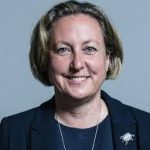
  • Anne-Marie Trevelyan – 2020 Comments on Matching Public Donations

    Anne-Marie Trevelyan – 2020 Comments on Matching Public Donations

    The text of the comments made by Anne-Marie Trevelyan, the Secretary of State for International Development, on 14 July 2020.

    We are matching generous donations from the British people to the emergency appeal pound for pound, meaning your money will go twice as far in helping to protect millions of the world’s most vulnerable people from the deadly effects of coronavirus.

    Clean water and healthcare in refugee camps are essential in containing coronavirus in the developing world – helping stop the spread of the pandemic and protecting the UK from further waves of infection.

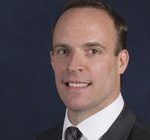
  • Dominic Raab – 2020 Statement on the DFID-FCO Merger

    Dominic Raab – 2020 Statement on the DFID-FCO Merger

    Below is the text of the statement made by Dominic Raab, the Foreign Secretary, in the House of Commons on 18 June 2020.

    I begin by thanking the hon. Lady and welcoming this opportunity to respond to her question on the merger between DFID and the FCO. On Tuesday, the Prime Minister announced that they will merge to become the Foreign, Commonwealth and Development Office. I can tell the House that the process will start immediately and will be completed by September. Alongside this merger, Her Majesty’s trade commissioners will now report formally to the ambassadors and high commissioners in their respective countries. The Prime Minister will set the UK’s overall international strategy, through the National Security Council, and by integrating development policy with our diplomatic network, the UK will be following a similar model to that of some of our closest international partners, such as Australia and Canada.

    This move is about placing our world-class aid programme at the beating heart of our foreign policy decision making. We will integrate the development expertise and know-how that DFID does so well with the diplomatic reach and clout of the Foreign Office, ensuring that our impact abroad is bigger than the sum of its parts. Far from diminishing our ambitions, it will elevate them. As the Prime Minister set out on Tuesday, we retain our commitment to spending 0.7% of our gross national income on development, but through closer integration we will maximise the impact of our aid budget in helping the very poorest in the world, while making sure we get the very best value for taxpayers’ money.

    For too long, we have indulged an artificial line, dividing the goals that our aid budget and foreign policy serve. This coronavirus crisis has confirmed just how artificial that line is. Across Whitehall, I have chaired the international ministerial group, bringing all relevant Departments together to support the most vulnerable countries exposed to covid-19; to energise our pursuit of a vaccine, working with our international partners; to return stranded British citizens from abroad; and to keep vital international supply chains open. In every one of these areas, we have been compelled to align our development, trade, security and wider foreign policy objectives. As in many a crisis, necessity has proven the mother of innovation. For example, at the GAVI vaccine summit, which the Prime Minister recently hosted, we smashed the target for vaccine funding, with $8.8 billion raised. That was a major success, where our development and foreign policy objectives had to be integrated to serve our dual aim of securing a vaccine for the British people, while making it accessible for the most vulnerable people, right across the world. Likewise we are working to bolster the health systems and institutional resilience of the most vulnerable countries, doing so not only out of a sense of moral responsibility, but to safeguard the UK from a potential second wave of the virus. I am afraid those demarcating a boundary between our national interests and our moral responsibilities ​in the world are mistaken. Covid has reinforced just how inextricably interwoven they are, just how much they reinforce each other and why we need to integrate them in our foreign policy decision making. It is to boost our impact and influence in the world, and that is exactly what we are doing.

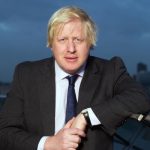
  • Boris Johnson – 2020 Statement on Global Britain

    Boris Johnson – 2020 Statement on Global Britain

    Below is the text of the statement made by Boris Johnson, the Prime Minister, on 16 June 2020.

    Mr Speaker, before I begin, I am sure the whole House will join me in paying tribute to the memory of Jo Cox, who was cruelly murdered four years ago today. Her sister, Kim Leadbeater, spoke for us all when she urged everyone to remember Jo by pulling together with “compassion and kindness”.

    I was concerned to learn that the hon. Member for East Dunbartonshire (Amy Callaghan) is now in hospital: we all send her our best wishes.

    With permission, I will make a statement about the ambitions of a global Britain and the lessons of the covid-19 pandemic. We are living through a daily demonstration of how events on the far side of the world influence not only British security and prosperity, but something as elemental as the state of our health, and whether we can go to work or go shopping. This crisis offers vivid proof of the seminal importance of international engagement and exactly why our country must perform its global role. I have begun the biggest review of our foreign, defence and development policy since the end of the cold war, designed to maximise our influence and integrate all the strands of our international effort. The overriding aim is to bring this country’s strengths and expertise to bear on the world’s biggest problems, seizing the opportunities of Britain’s presidency of the G7 next year and the UN climate change conference—COP26—which we will host in Glasgow.

    The UK possesses the third biggest aid budget and diplomatic network in the world: we owe it to our people to make best use of these assets, which scarcely any of our peers can match. The British taxpayer has a right to expect that we will achieve the maximum value for every pound that we spend. One cardinal lesson of the pandemic is that distinctions between diplomacy and overseas development are artificial and outdated. For instance, to protect ourselves against another calamity, the UK will need to work alongside our friends to strengthen international bodies such as the World Health Organisation, and help vulnerable countries to improve their health systems and achieve greater resilience. It makes no sense to ask whether it amounts to aid or foreign policy: they are one and the same endeavour, designed to achieve the same goals, which are right in themselves and serve our national interest.

    On 4 June, I chaired a virtual summit of the global vaccine alliance, which raised enough money to immunise 300 million children. I doubt whether any other occasion will save more lives, avoid more suffering, or produce a better example of the good this country can do by its international engagement, in the true and broad sense, alongside our friends. Yet today, as anybody who has any experience of the matter will know, a dividing line between aid and foreign policy runs through our whole system, with our Department for International Development working independently from the Foreign and Commonwealth Office, and our aid budget parcelled out between different arms of Whitehall.

    DFID outspends the Foreign Office more than four times over, yet no single decision maker in either Department is able to unite our efforts or take a comprehensive overview. We give as much aid to Zambia as we do to Ukraine, although the latter is vital for European security, ​and we give 10 times as much aid to Tanzania as we do to the six countries of the western Balkans, which are acutely vulnerable to Russian meddling. Regardless of the merits of those decisions, no single Department is currently empowered to judge whether they make sense or not, so we tolerate an inherent risk of our left and right hands working independently.

    Faced with the crisis today and the opportunities that lie ahead, we have a responsibility to ask whether our current arrangements, dating back to 1997, still maximise British influence. Those well-intentioned decisions of 23 years ago were right for their time. They paved the way for Britain to meet the UN target of spending 0.7% of national income on aid—a goal that was achieved by the coalition Government in 2013, that has been maintained ever since, including this year, and that remains our commitment. Yet those judgments date from a relatively benign era when China’s economy was still much smaller than Italy’s and the west was buoyed by victory in the cold war.

    We must now strengthen our position in an intensely competitive world by making sensible changes, so I have decided to merge DFID with the Foreign and Commonwealth Office to create a new Department: the Foreign, Commonwealth and Development Office. This will unite our aid with our diplomacy and bring them together in our international effort.

    DFID has amassed world-class expertise and all of its people can take pride in how they have helped to transform the lives of hundreds of millions of people around the world. To select but a few examples, they have striven to protect millions of children across the world from polio, which is now on the verge of global eradication; they have paved the way for millions of girls to attend school for the first time in countries such as Pakistan, as I have seen for myself; they have done their utmost to ease the suffering in Syria; and in Sierra Leone they were central to the defeat of an outbreak of the Ebola virus. All that amounts to the finest demonstration of British values, following in the great tradition of the country that ended the slave trade and resisted totalitarianism.

    It is precisely that ambition, vision and expertise that will now be at the heart of a new Department, taking forward the work of UK aid to reduce poverty, which will remain central to our mission. The Foreign Secretary will be empowered to decide which countries receive or cease to receive British aid, while delivering a single UK strategy for each country, overseen by the National Security Council, which I chair. Those strategies will be implemented on the ground by the relevant UK ambassador, who will lead all the Government’s work in the host country. In that, we are following the examples of Australia, Canada and New Zealand, all of which run their development programmes from their Foreign Ministries. We will align other British assets overseas, including our trade commissioners, who will come under the authority of the UK ambassador, bringing more coherence to our international presence.

    Amid this pandemic, the House may ask whether this is the right moment to reorganise Whitehall, but I must say that in reality this crisis has already imposed fundamental changes on the way that we operate. If there is one further lesson, it is that a whole-of-Government approach, getting maximum value for the British taxpayer, is just as important abroad as it is at home. This is exactly the moment when we must mobilise every one of ​our national assets, including our aid budget and expertise, to safeguard British interests and values overseas. The best possible instrument for doing that will be a new Department charged with using all the tools of British influence to seize the opportunities ahead. I therefore commend this statement to the House.
  • Department for International Development – 2020 Press Release on Global Access to Vaccine

    Department for International Development – 2020 Press Release on Global Access to Vaccine

    Below is a press release issued by the Department for International Development on 24/04/2020.

    UK is one of 20 countries and global organisations, like the WHO, to pledge to give the world access to new vaccines and treatments

    Pledge follows calls from the PM and UK Ministers for greater global co-operation in fight against coronavirus

    UK will also virtually co-host new Coronavirus Global Response Summit on 4 May 2020

    Countries from around the world today (Friday, 24 April) joined the UK in pledging to give everyone equal access to new coronavirus vaccines and treatments around the world. The move is aimed at boosting global supply of the vaccine, once one is approved for use, to help prevent a second wave of the pandemic.

    At the World Health Organization virtual launch event today, First Secretary of State Dominic Raab joined the UN Secretary General, World Health Organization (WHO) Director General and the leaders from the 20 countries, including France, South Africa and Malaysia to pledge the UK’s support for the new “COV-access agreement”.

    This is an unprecedented global agreement between international health organisations and countries. It follows calls from the UK for the countries to work together, including at last month’s G20 meeting.

    The UK is one of the biggest supporters of the global effort to find a coronavirus vaccine, providing £250 million to international research on the disease to the Centre for Epidemic Preparedness Innovations. It is also one of the biggest supporters of the WHO and Gavi, the Global Vaccine Alliance, which distributes vaccines in the poorest countries.

    UK scientists at Oxford and Imperial College London Universities are also leading efforts to develop a working vaccine. Human trials started this week in Oxford, and the government has given £42.5 million in funding to support clinical trials at both institutions.

    The UK confirmed today that it will co-host a Coronavirus Global Response Summit on 4 May, aiming to raise £7 billion to develop vaccines, treatments and tests to help end the coronavirus pandemic.

    It was also announced that the UK will host the major the Global Vaccines Summit virtually on the 4th June, to ensure Gavi is fully funded and at the heart of our efforts to ensure equitable access for any vaccine.

    Speaking to other leaders in a video message alongside the UN Secretary General and WHO Director General this afternoon First Secretary of State Dominic Raab said:

    “The UK is already one of the biggest donors to the international COVID-19 response, and today we are proud to support the WHO’s Call to Action to bring global health partners together to accelerate progress toward a vaccine.”

    International Development Secretary Anne-Marie Trevelyan said:

    “British expertise and funding is already leading efforts to find a coronavirus vaccine and treatments, which will save lives in the UK and around the world. Following calls from the Prime Minister it is great to see other nations working collectively in the fight against coronavirus. Making sure vaccines, treatments, technologies are available in the most vulnerable countries is vital to ending the pandemic – keeping us, and the rest of the world safe from future infections.”

    “COV-access agreement”

    The new commitment in the agreement follow continued international lobbying from the UK for more global co-operation on the pandemic, including at last week’s G20 finance and World Bank meetings, and includes pledges to:

    Provide access to new treatments, technologies and vaccines across the world

    Commit to an unprecedented level of international partnership on research and coordinate efforts to tackle the pandemic and reduce infections

    Reach collective decisions on responding to the pandemic, recognising that the virus’ spread in one country can affect all countries
    Learn from experience and adapt the global response

    Be accountable, to the most vulnerable communities and the whole world.

    As part of this agreement the WHO also announced the appointment of two new Special Envoys to lead global co-operation on vaccine research and help ensure equal access to any successful vaccines. Sir Andrew Witty, the British former head of global drugs giant GSK was appointed alongside Dr. Ngozi Okonjo-Iweala, Board Chair of Gavi.

    A new “COV-access Hub” was also announced by the WHO to support co-operation on the research, development and production of new vaccines, treatments and technologies to fight coronavirus.

  • Department for International Development – 2020 Press Release on Global Vaccine Summit

    Department for International Development – 2020 Press Release on Global Vaccine Summit

    Below is a press release issued by the Department for International Development on 24/04/2020.

    The UK hosted Global Vaccine Summit on June 4 will now be an entirely virtual event.

    The Summit is an important milestone to secure support for Gavi’s five-year strategy, which will immunise 300 million children and save up to 8 million lives by 2025, and for Gavi’s vital work to strengthen health systems around the world and help to tackle coronavirus in some of the world’s poorest countries. This will help stop future waves of infection spreading globally, including coming to the UK.

    The UK government and Gavi, the Vaccine Alliance, are working with partners to finalise plans for the Summit programme and format, which will be shared with partners in due course.

  • Department for International Development – 2020 Press Release on Protecting Children From Disease

    Department for International Development – 2020 Press Release on Protecting Children From Disease

    Below is a press release issued by the Department for International Development on 29/04/2020.

    The UK today confirmed that it will be the largest supporter of the international alliance to vaccinate children against deadly diseases, saving millions of lives.

    Speaking to MPs, International Development Secretary Anne-Marie Trevelyan announced a funding pledge equivalent of £330 million a year over the next five years to Gavi, the Vaccine Alliance, which will help fund immunisation of 75 million children in the world’s poorest countries.

    Preventable diseases, like measles, polio and typhoid, still kill hundreds of thousands of people each year. By vaccinating millions of children against other deadly diseases, we are supporting healthcare systems in the world’s poorest countries so they can cope with rising coronavirus cases. Health experts have warned that if coronavirus is left to spread in developing countries, this could lead to the virus re-emerging in the UK later in the year and put further pressure on our NHS.

    International Development Secretary Anne-Marie Trevelyan said:

    “The coronavirus pandemic shows us now more than ever the vital role vaccines play in protecting us all. By supporting Gavi, the Vaccine Alliance, we are helping stop the spread of infectious diseases, saving millions of lives and keeping Britain safe.

    “As coronavirus vaccine trials begin, we need to make sure any successful vaccine will be available to everyone. Gavi will be integral to achieving this, so we can protect the UK and the NHS from future waves of infection.”

    The UK has been a longstanding donor to Gavi since its formation in 2000. With the support of over 25 other countries such as Norway, Italy and the United States, the Vaccine Alliance has since immunised over 760 million children, saving more than 13 million lives.

    Bill Gates, co-chair of the Bill & Melinda Gates Foundation said:

    “When the world beats the COVID-19 pandemic and life returns to normal, Gavi – and the UK’s support of it – will be a major reason why. Gavi has spent the last 20 years delivering vaccines to the world’s poorest countries. They’ve been incredibly effective, and with this new funding, they’ll be able to continue their work when a COVID vaccine is ready. Today, the UK is being generous and thinking global, which also happens to be the best way to fight disease.”

    Today’s announcement comes as the UK recently announced that the Global Vaccine Summit on 4 June will go ahead as a virtual summit, hosted by Prime Minister Boris Johnson. It will bring countries together, to follow the UK’s lead, in stepping up and funding Gavi’s work to save millions of lives and help prevent and address future pandemics.

    The UK is leading international efforts to find a coronavirus vaccine, as the largest donor to the Coalition for Epidemic Preparedness Innovations (CEPI)’s coronavirus appeal. Thanks to this investment, future coronavirus vaccines will be made available at the lowest possible price to the NHS.

    Dr Ngozi Okonjo-Iweala, Chair of the Gavi Board said:

    “Gavi’s work has never been more important. Right now it is playing a vital role both keeping immunisation programmes going across the world, reducing the chances of there being further global disease outbreaks, as well as helping developing countries respond to the COVID-19 pandemic.

    As long as there are still pockets of this disease somewhere, everywhere is at risk. This pledge will make a huge difference to these efforts and I’d like to thank the UK, as Gavi’s biggest donor since its inception, for their leadership over the past two decades.”

    Dr Seth Berkley, CEO of Gavi said:

    “I’d like to thank the UK public for this pledge: an investment in Gavi is an investment in a safer, healthier world. This funding will not only protect hundreds of millions of children against disease, it will also help health systems to repair and rebuild after the enormous impact of COVID-19 has subsided.

    This is our best shield against future pandemics which, as we have seen all too clearly in recent months, do not respect borders. Finally, it means we can continue our work leading international efforts to ensure universal access to a COVID-19 vaccine, as well as to maintain the infrastructure needed to deploy it at scale around the world, which offers our best means of ending this crisis.”

  • Anne-Marie Trevelyan – 2020 Statement on Global Response to Covid-19

    Anne-Marie Trevelyan – 2020 Statement on Global Response to Covid-19

    Below is the text of the statement made by Anne-Marie Trevelyan, the Secretary of State for International Development, in the House of Commons on 6 May 2020.

    With permission, Mr Speaker, I would like to update the House on the UK’s support for the global effort to tackle the coronavirus pandemic.

    The world is now having to address the biggest threat that it has faced in decades: an invisible killer on a global scale. Here in the UK, communities across the country are united in their determination to beat it, making their own personal sacrifices by staying at home, protecting our NHS and saving lives.

    There is a daunting outlook for countries in the developing world, simultaneously facing a health crisis, a humanitarian crisis and the risk of a protracted economic crisis leading to much greater hardship for years to come. The threat of famines, exacerbated by the worst locust plague for 70 years, fragile healthcare systems that enable the spread of the disease and economic disruptions risk a much longer and harder road back to recovery than for wealthy countries.

    However, through the altruism of the British people and the expertise of our scientists and engineers, the UK is proudly playing a leading role in the global response. On Monday, together with other world leaders, my right hon. Friend the Prime Minister co-hosted a virtual global coronavirus response pledging conference. He called on countries around the world to step up their efforts and work together on this, the

    “most urgent shared endeavour of our lifetimes”.

    World leaders responded, and some £6.5 billion was pledged for the covid-19 response, including the UK’s own £388 million commitment for vaccines, tests and treatments. The UK is proud to stand with our international partners—this is a truly global effort, and the only way to fight this pandemic is together.

    The UK is a development superpower, and we are also a scientific and medical world leader. This enables our response to this global pandemic to be greater than the sum of its parts. From Gloucestershire’s Dr Edward Jenner, who laid the foundations for immunology, to our researchers who developed vaccines for measles and Ebola, the UK has led the scientific response to many global health challenges in the past. I am so proud to be able to say that UK-based scientists, such as those at the Liverpool School of Tropical Medicine, are playing key roles in the global response to this deadly new virus. Scientists in Bedfordshire who developed rapid diagnostic devices to manage the recent Ebola outbreak, funded with taxpayers’ money through UK aid, are using that expertise to develop new rapid diagnostic tests.

    Researchers at Oxford University, funded through CEPI— the Coalition for Epidemic Preparedness Innovations —are now progressing to clinical trials, with funding from the UK Government’s vaccines taskforce, which is also funding a vaccine trial starting soon at Imperial College. In partnership with a British success story, AstraZeneca—one of the world’s largest pharmaceutical companies—our Oxford researchers are working towards ​their vaccine being manufactured at scale. We know that any vaccine might prove to be the solution, so through our Department for International Development aid budget, the UK is the largest single contributor of any country to CEPI’s international efforts to find a coronavirus vaccine. Through this fund, we are working to improve our understanding of the virus and to support scientists around the globe. CEPI is already backing nine potential vaccines.

    The Foreign Secretary outlined at the launch of the World Health Organisation’s access to covid-19 tools accelerator that the UK is proud to work with our international partners to ensure that new vaccines are accessible to everyone, as quickly as possible. No one will be safe until we are all safe. So we will need vaccines against this deadly disease, at home and abroad. Once a vaccine is found, delivering it globally will be the next big challenge. To help with that, we have invested the equivalent of £330 million a year for the next five years in GAVI, the global vaccine alliance that delivers vaccines in 68 of the poorest countries around the world. On 4 June, the UK will be hosting the global vaccine summit to co-ordinate international investment efforts for GAVI. Together with the announcement made by the Prime Minister on Monday, that is a combined additional investment in global health security that comes to more than £2 billion, helping combat the spread of disease. In investing globally, we are helping to protect our citizens—our families—from future waves of infection, and protecting our NHS.

    The global pandemic is one part of the challenge facing the world. DFID’s immediate coronavirus response to date amounts to £744 million. But this is on top of our work to pivot much of our existing work to provide health, humanitarian and economic support where it is needed most, as part of our response to these crises, with a health response that builds on the UK’s long-standing record of supporting countries to prepare for and respond to large disease outbreaks, including as the third largest donor to the World Health Organisation. We are investing on the frontier of research into new rapid diagnostics and therapeutics that can detect and treat coronavirus. Working in partnership with Unilever, we have launched an innovative hand-washing campaign that will reach 1 billion people around the world—a major contribution to global sanitation and hygiene. With the support of British and international non-governmental organisations, and advice from the London School of Hygiene and Tropical Medicine, we will reach one in seven people around the world with information on the most effective ways to stop the virus spreading and save lives.

    We are also working to reduce the global economic impact of the virus by preventing its spread, protecting both the UK public and the stability of our economy. Last month, the UK, together with other G20 countries, announced a commitment to suspend debt service payments to the poorest countries until the end of 2020. This will create up to $12 billion of additional fiscal space. DFID has also made up to £150 million available to the International Monetary Fund for debt relief. These measures will enable developing countries to direct greater domestic resources to their own healthcare efforts, helping to prevent the virus from spreading around the world. We are supporting developing country Governments to make proportionate, evidence-based trade-offs between containing the virus and maintaining open trade, so that ​essential goods and services, including critical medical and food supplies, can continue to move around the world. That supports developing countries, but it also means that British consumers will get the vital goods they need.

    Covid-19 is a global pandemic. It does not respect national borders. Individual efforts will succeed only as part of a global response. The UK will continue to play a leading role in galvanising the most effective co-ordinated international action. In 2017, the scientific community in the UK proudly played a key role in the international response to the Ebola outbreak in west Africa. I am proud to update the House that we are doing so again.

    We are using British expertise and funding to demonstrate leadership internationally. Recognising that needs will be great, we are doing whatever it takes to ensure that vaccines, treatments and technologies are available, to save lives and to support economies in the most vulnerable countries, and to help end the pandemic. That will help reduce the risk of the world being attacked by a second wave of infection. As the Prime Minister said on Monday:

    “It’s humanity against the virus—we are in this together, and together we will prevail.”

    I commend this statement to the House.