Category: Health

  • Wes Streeting – 2025 Speech to the NHS Providers Conference

    Wes Streeting – 2025 Speech to the NHS Providers Conference

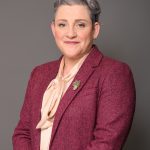
    The speech made by Wes Streeting, the Secretary of State for Health and Social Care, in Manchester on 12 November 2025.

    Thanks so much for that introduction, and thanks to all of you for being here.  

    I’m delighted to be here given the, or to give, the announcement that everyone’s been talking about in the news today. That is the government’s reforms to NHS system architecture.  

    And I’m really grateful, Daniel, for the leadership for you and NHS Providers is showing at such a challenging time, but before I get into the challenges, let me just start with the positives. Because right now, we’re achieving things in the NHS. We’ve not seen for a long, long time and I know it’s not been easy. I’ve made considerable demands on you. And will continue to do so. But you’ve shown over the last year, or so, that while the NHS was broken, it wasn’t beaten. 

    You provided 5 million more elective appointments, 135,000 more cancer, diagnoses within the 28-day target, and cut waiting lists by over 200,000. Ambulance response times and 12-hour waits in A&E are down. There are two and a half thousand more GPs. In fact, we now have the highest number of GPs on record. 

    You’ve opened over a hundred Community Diagnostic Centres at evenings and weekends. New surgical hubs to bust the backlog. The extra doctors, nurses and mental health staff we need to treat patients on time and together, we built the 10-year plan for health to create the truly modern health service that we’re all crying out for. 

    These are the green shoots of recovery that are beginning to renew confidence and restore faith in our National Health Service for both patients and for our staff, our investment and modernisation are paying off. And with it, ambition and optimism are returning. It’s why I can come here today and say, with credibility, that we can still cut waiting times to 18 weeks, by the end of this Parliament. 

    Something few thought possible when we made the commitment in opposition. And while we can do it, and we can do it while delivering year-on-year improvements to Urgent and Emergency Care, we can get back to seeing people within four hours and while rebuilding general practice, so that patients can get an appointment with their doctor when they need one. 

    So, I want to begin by saying to all of you genuinely. Thank you. There’s sometimes a perception out there that I’m going to have to really battle this system and all of you to modernise and it’s such a misrepresentation of the leaders I work with. NHS leaders and frontline staff are not only chomping at the bit for change. You’re the ones showing the world that it can be delivered.

    There’s a real can-do culture back in the NHS, but and it’s a big but – there is also a great deal of jeopardy, out there from economic constraints, winter pressures, industrial action. And the political forces willing us all to fail. 

    So there’s a lot of pressure on our shoulders, because we all know how important the NHS is to our country. How central it is to the lives of every family in this land. And how strongly we believe in the values that have underpinned it since 1948, values that are becoming increasingly contested. 

    So, it’s important, I think for us to keep in mind, the consequences, if we get this wrong. Millions are counting on us and there’s much much more to do, so this isn’t the moment to ease off the gas. This is the moment to push our foot harder on the accelerator. 

    One reason why we see renewed confidence is the rigid focus you’ve brought to reducing waste and increasing productivity while improving services at the same time. In fact, reducing waste and increasing productivity are essential to improving patient services and staff experience.  

    This government is investing an extra £26 billion in the NHS this year. 

    We continue to be relative winners of Budgets and Spending Reviews. Although you and I know what the word relative means which is why I’m always relatively happy at how we do at Budget time. And we owe it to patients, to staff and to taxpayers to make sure that every penny that’s going into this service is money well spent. 

    That’s why I’m really proud that for the first time in years, the NHS is in balance, seven months into the financial year. It’s not going to be easy to stay on track for the rest of this year, especially with the double whammy of strikes and winter to come. 

    But breaking even is a huge shift from the £6.6 billion deficit we were looking at.

    There are people out there saying that universal health care, free at the point of need is no longer affordable or possible. And everyone in this room and beyond is proving them wrong.  

    So, this isn’t just a technocratic accounting triumph. It is the foundation of everything else because it’s ultimately what will allow us to invest again in staff technology and services, all of which add up to better patient experience. It also gives me, but all of us, credibility with the Chancellor. The government inherited public finances with a £22 billion black hole. 

    And it won’t have escape your notice that the public finances and the wider economy are still under serious strain. So, there is no money to waste and I think that it’s really important that we accept with some humility that one of the reasons the Chancellor is having to make some unpopular choices is to protect investment in the NHS. 

    This government will always put our public services and our NHS first. But the investment this government is making in the NHS also comes with a moral duty for us as NHS leaders, because every penny that goes into treating the sickness in our society is a penny that could have been spent on tackling the wider social determinants of health, much of which sits outside the NHS. 

    On prevention rather than cure. Of course when I say savings, it sounds very benign. In reality, I do want to take this opportunity to acknowledge that this has been particularly hard for ICBs.  

    I’ve asked a lot of you this year, last year, I said that ICBs will have a more focused purpose, as strategic Commissioners. They’re the drivers of the transformation from a National Health Service to a Neighbourhood Health Service and a preventative health service. 

    Given that focus brief, we’re asking ICBs to downsize significantly.  

    Having seen redundancies in organisations I’ve worked in previously, I want you to know. I do not take this lightly. I know this will have been weighing heavily on all of you and the people who work for you and I certainly don’t want ICB leaders to take the flag for decisions and timetables on head count that are ultimately my responsibility. 

    I’m very alive to the uncertainty that’s hung over staff for far too long. And I don’t mind saying, it’s made me uncomfortable, as it should. Because I know we’re not just talking about jobs, we’re talking about people’s livelihoods. And again that is my responsibility. Not yours. I want to be honest with you and through you to your staff that I have not resolved this quickly enough. 

    But this is worth doing and we can now bring certainty to people. From today I’m giving ICBs the go ahead and the funding for the voluntary redundancy programs that staff have been waiting for. This will see overall head count cut by 50 percent which will particularly, not exclusively, but particularly, affect roles in corporate services, communications and administration. 

    Alongside this, we’re moving ahead with the abolition of NHS England and we’ll complete it to the timetable the Prime Minister announced in March. Head count across my Department and NHS England will also be halved, returning to the size we had in 2010, when the NHS delivered the shortest waiting times and highest patient satisfaction in history. This move will free up more than a billion pounds a year, which will be reinvested in frontline care. 

    To, anyone listening at home. And who knows? Someone might be listening at home. I want to reassure you that our investment is not simply pouring more water into a leaky bucket. We’re plugging the holes cutting out the waste, and rebuilding our National Health Service. And to those of you here today, and hopefully you’re listening. 

    We aren’t simply changing staff numbers. We are ending the constant assurance, ad hoc demands and micromanagement that you’ve been subjected to. The centre will instead enable you to focus on improving services for patients. A new department that empowers rather than suffocates NHS leaders and frontline staff. And I have to say, the way in which leaders across the service are responding to the scale of the challenge I’ve placed on you has been extremely and genuinely impressive.  

    We’ve seen an uptick in flu jabs, among staff and the public, we’ve stress tested plans much earlier, we’re investing in new ambulances, building new urgent treatment centres and introducing new mental health crisis centres. 

    Online access to GP practices should stem the tide of the 4 million patients who go to A&E each year because they can’t get through to their local surgery. So thank you to all of those GPs who have successfully introduced this new system. You’ll be crucial in unclogging emergency departments, freeing up beds and saving lives this winter.  

    And on the social care side, we’re working more closely with local authorities to ensure people get the care and support they need at home rather than languishing in hospital beds. But we know that the NHS is already running hot. A&E and ambulance demand is already higher than it was in 2024. 

    Flu is coming earlier and there is a particularly nasty strain this season. Those are the challenges we have to rise to for many patients, who come through our doors. This winter, it will be the one time in the entire year when they experience the NHS. What impression do we want them to leave with? 

    Do you want to be just about managing? That can’t be our benchmark. We can’t accept the winter crisis as an annual event like the John Lewis Christmas ad. We have to improve year on year. And of course, with all these challenges, the last thing patients need this winter is strike action by the BMA. 

    I was really proud of the way that NHS leaders and frontline staff pulled together to get through the last round of resident doctor strikes.  

    We saw an additional 11,000 procedures going ahead compared with the June 2024 war count. We managed to keep the costs of industrial action, down to the tune of a hundred million pounds less than the previous round. 

    And despite the busiest July on record for A&E, this was the highest proportion of patients seen within four hours in four years. I think that is a considerable achievement. And I want all of you to know that it wasn’t lost on me how hard you all worked to keep the show on the road. 

    But the truth is that strikes do have unavoidable and serious consequences, particularly when they’re called during winter. That is why I made a comprehensive offer to the BMA last week in a final attempt to prevent strike action. Coming on top of a 28.9 percent pay rise which they have already received from this government. 

    I would have thought that the offer to go even further with extra jobs prioritisation and money back in their pockets would have demonstrated how serious this government is about improving resident doctors lives and career prospects. Yet the BMA rejected the offer out of hand, refusing to even put it to their members. 

    If strikes do go ahead, this will cost around £240 million and we will not be able to afford the same offer again, so my message to BMA is simple: postpone the strikes, trust your members and give resident doctors a say. Patients, doctors and the wider NHS staff all lose if strikes go ahead. And there is still time for everyone to win.

    That brings me to a broader point about choices and trade-offs. When we pull together, and when we mobilise behind the ideas in the 10 Year Health Plan, we can deliver year-on-year improvement, change and transformation that gets the NHS back on its feet and fit for the future. Where parts of our team fail to recognise that we can’t solve everything, for everyone, everywhere, all at once, that’s when we run into difficulties.  

    That’s what makes our collective job, much harder. And I know I’m preaching to the choir in this room because as leaders, there are choices and trade-offs that you face every day and it’s really important that we continue to work together to face those choices and trade-offs in an honest way. 

    Because the progress of the last 18 months, tells a bigger story, one of a service beginning to believe in itself again. That’s quite something. Given the horrendous state of neglect the NHS was in after 14 years of under investment and mismanagement. And we have to be honest that some of what we’re doing has never been tried before. Success won’t happen overnight.  

    We, I, will make some mistakes along the way. That is all part of learning and improving. But together we’ve begun restoring confidence, we’ve built strong foundations for real improvements. We’ve moved from barely scraping by to having real hope and big ambitions. 

    I said there’d be fewer targets and less bureaucracy and there are. I said there’d be no more short-termism and we now have multi-year funding settlements to give you the certainty you need. I said the centre would be smaller and it will be. I said the power would be handed back to patients professionals and providers and it is being. All of this is why we’re here today in a position to declare that the NHS is on the road to recovery. 

    And at the heart of that revival is our 10-year plan for health. It sets out how we’ll transform the service of today into an NHS fit for the future. Our three big shifts will create a new model of care that not only catches up with the rest of the pack, but leads the world. 

    The plan breaks with the fiction that you can run a health service, one and a half million staff who deliver 600 million patient interactions every single day, from an office building in Whitehall. The new care model is backed by a new operating model, anchored in clear and consistent principles, power and resources should flow to local providers, frontline staff, and ultimately be placed in the hands of patients.  

    Autonomy should be earned by meeting public expectations delivering, high quality care with excellent financial oversight through world-class leadership. Good performance should be incentivised and rewarded. Poor performance should be held rigorously to account. And transparency and choice are essential, not nice to have. That’s what lay behind our decision to publish new NHS League tables. 

    I know there was a concern when I announced them last year that this would be about naming and shaming and good, old-fashioned, manager bashing. I hope you can see now that this is actually about confronting the challenges we all face with grown-up honesty.  

    I was delighted for example, with the way the Queen Elizabeth Hospital in Kings Lynn, a hospital which is literally being propped up on stilts, responded to being bottom of the table.  

    Let me just share with you what the executive managing director, Chris Bown said. He said, and I quote, the issues about our waiting times in our emergency department being too long, our waiting times for cancer care, and elective care being too long, and our financial situation, are not attributed directly to the state of the building. There are things we must do within this building to improve the experience of patients and staff.  

    Now, the reason I highlight that as an example is, he could easily have said it’s all because my hospital’s falling down. 

    And I know he could have said that because I recall offering that defence myself on BBC local radio, in his part of the world earlier that day. And in contrast to what I said, what Chris did was offer the warts and all honesty that is the first step on the road to recovery, not making excuses and covering backsides, but actually taking responsibility and showing a determination to improve. 

    Even when factors are stacked against you, that is how we turn the NHS around. But even as we let go of the top-down approach of the past, we’re not abandoning trusts to their fate. Those at the bottom of the tables will receive more support. At the other end, good performance will be incentivised and rewarded. 

    This new culture of openness drives change and builds confidence that the NHS can learn and improve, which is crucial to restoring people’s faith in the NHS itself.  

    And today I want to talk about the next steps we’re taking on our new operating model. The first step is a real empowerment of primary care and general practice. Already, the hard work and innovation of GPs across the country are helping to renew public confidence in the NHS as the reversal of a decade of declining patient satisfaction shows.  

    And I know it’s not easy. The demands of a 21st century population, the demands of ageing and rising health need have led to unsustainable workloads. We’ve already halved the number of targets in the GP contract and are investing an extra £1.1 billion. But the bright future that general practice deserves will only come through fundamental modernisation. 

    That’s why we’re introducing two new neighbourhood contracts. A single neighbourhood provider contract for the delivery of enhanced services, for patients, through expert, multi-disciplinary teams and a multi-neighbourhood provider contract to lead the Neighbourhood Health Service at scale.

    This is taking the best of the NHS to the rest of the NHS. Learning from some of the trailblazing GP Federations already doing this. Pooling resources and expertise will deliver better services over larger areas, like frailty or end-of-life care, and deliver a more efficient back office so more of GPs time is spent with patients. And as Neighbourhood Health Services reduce demand on acutes, new, financial flows will see savings return to them, helping to accelerate the left shift.  

    I should say at this point, just for the avoidance of doubt, because there might be more media attention on this speech than usual, our second step – reinvent the NHS Foundation Trust model for modern times. Today, we’re launching a new generation of Foundation Trusts called Advanced Foundation Trusts. They will be the front runners towards a more autonomous accountable and integrated NHS. 

    And I can announce that eight trusts are in the running for this new status. They come from across the country from Dorset to Northumbria and they are a mix of acute mental health, and community Trusts. They represent both the best of our NHS and the diversity of NHS. Those who are successful will have demonstrated that they’re delivering on the public’s priorities. High quality care for patients, value for money and progress on the left shift. 

    They’ll be the kind of providers who don’t need the sense of breathing down their neck or trying to micromanage their finances.  

    And they will benefit from real and immediate freedoms, including the ability to reinvest surpluses accumulated last year in future capital projects, more operational, autonomy and fewer ad hoc requests from the centre. 

    We’ll continue to open new freedoms and deliver greater autonomy for Advanced Foundation Trusts in the coming years. And in 10 years time, we want every Trust to have achieved that status. 

    Our third step is the creation of Integrated Healthcare Organisations, or IHOs. Advanced Foundation Trusts will be among the first to take on IHO contracts and hold the whole health budget for a defined population. 

    I’ve heard from so many leaders about how hard it can be to invest in prevention because the savings fall in another part of the system. IHOs will reverse this disincentive, if it makes sense to invest in community care to prevent unnecessary hospital admissions, they’ll be rewarded for doing just that. Any trust can become one, not just the big acutes.
    And so there is no reason, by the way, they couldn’t be led by Primary Care professionals.

    In fact, one of the two trusts currently under consideration for IHO status is a Community Trust. And that diversity will continue. If a nurse is best placed to lead a community service, a GP best place to lead a hospital or an acute Trust best place to lead Neighbourhood Health Services, well then that’s what they’ll do.  

    Because what matters is what delivers for patients. None of this is simply a renaming exercise. However, technocratic it might sometimes appear or even feel. Good system architecture is how we bring to life the vision and ambition in the 10-year plan. 

    I’m offering that as a reminder to myself as much as anyone else. We’re breaking the NHS out of its short-term cycles, annual plans of emergency, bundles of rolling crises, complex rules, unnecessary targets. Instead, our approach is, and will be, if you deliver for patients, if you manage your finances well, if you innovate, then you will have the space to lead.  

    Because plans don’t deliver change people do, and this conference is a reminder that confidence comes from good leadership and that good leadership in the NHS has never mattered more. Great NHS leaders, listen to staff and patients and turn that listening into action. 

    They don’t wait for permission to do the right thing. They don’t require a diktat from NHS, England, their attitude says we can do better, and we will. The difference now is that the system will support you to unleash your entrepreneurialism, creativity and innovation. All this adds up to a very different kind of NHS. 

    It marks a fundamental shift from command and control to collaboration and confidence. And when people feel they are part of a system that learns listens and leads. Confidence returns and confidence is everything. The NHS was built on it, the confidence of a nation that believed in universal healthcare, free at the point of use. The confidence of staff, who knew they were part of something bigger than themselves. What we’re doing together is restoring that confidence. The coming years won’t be a walk in the park. There are no magic wands. No silver bullets. Keeping up momentum will require all of the energy and grit and initiative that’s got us heading in the right direction. 

    We need to up our elective activity, to hit the ambitious targets the Prime Minister set us. To get people seen as quickly as possible in urgent and emergency care and to keep improving access to GPs, and we need to maintain our firm grip on the finances.  

    But for the first time in years, the NHS can look forward with confidence rather than back in frustration, because we’ve got a plan, that’s not just ambitious and realistic. We’ve got a plan that is working and that is why the NHS is on the road to recovery. Thank you very much.

  • Stephen Kinnock – 2025 Speech at RCGP Annual Conference

    Stephen Kinnock – 2025 Speech at RCGP Annual Conference

    The speech made by Stephen Kinnock, the Care Minister, in Newport, Wales on 9 October 2025.

    As the front door to the NHS, it is general practice that is at the coalface of the devastation that poor health causes in the most deprived communities.

    How it leaves children too sick for school, and adults too weak to work.

    How these consequences play out over the course of a lifetime, and how they become entrenched in families generation after generation.

    This is why closing the health gap between the richest and poorest is one of this government’s top priorities.

    Because the fact that a child born in Blackpool will now live 10 years fewer than a child born in Hampshire is utterly shameful.

    I know that the injustice of this postcode lottery piles ever increasing pressure on the GP practices already bearing the brunt of historic underinvestment.

    The college’s own research last year found that in the poorest parts of the country, there are an extra 300 patients per GP, and those of you serving in some of the most deprived parts of England receive less funding compared to practices in better off places.

    This, in the very areas where great healthcare is in the greatest need.

    And so this government is committed to doing better by you and by everyone in our country, not just the wealthy few.

    The Prime Minister promised last week a Britain built for all, and that means no longer leaving grotesque health inequalities unaddressed.

    So I can confirm today that I have formally commissioned a review of the Carr-Hill formula through the National Institute for Health and Care Research.

    This will ensure that resources… [clapping]. Thank you.

    This will ensure that resources are targeted where they are most needed, so that no practice in England is left short changed and no patient is left without care.

    Now, I’ve been in this role long enough now to see the very real difference we can make to people’s lives when we come together to deliver what patients need.

    And my promise to you is that this government does not and never will take your experience and expertise, nor your loyalty to our service, to our health service, and to public service for granted.

    Which is why we hit the ground running from day one [political content removed].

    We invested an additional £1.1 billion into general practice, the biggest increase in over a decade, and funded 2 above-inflation pay increases.

    And in one of our first decisions, Wes Streeting and I reformed the ARRS to provide you with greater flexibility and entrust you with putting together the staff your practices need.

    Part of those changes included an extra £82 million – the first step to hiring an extra 2,000 GPs.

    In fact, we now have the highest number of GPs on record: more than 50,000, of which about almost 40,000 are fully qualified.

    And we’re increasing the number of GP training places in line with the campaign that the RCGP announced today.

    That is a win for practices and a win for patients. We will not accept a situation where GPs can’t get a job and patients can’t see a GP [clapping]. Thank you.

    We also swept away a swathe of meaningless and unnecessary targets, because your time is valuable and should be spent caring for patients, and we will shortly be consulting on legislation that finally recognises and honours GP status, expertise and parity with other specialties.

    Amidst all of this, patient satisfaction in general practice has gone from 61% last year to 75% this year.

    You should be applauding yourself, because that is a credit to all of the hard work that you are putting in.

    It shows that after more than a decade of cuts, we are putting general practice back on the road to recovery. So, thank you all very much.

    Thank you for all that you have done to get us from where we were 14 months ago to where we are today.

    We are moving in the right direction, step by step, and as we fix the foundations, we’re looking forward with a 10 year plan that offers a vision of the truly modern health service that you are crying out for.

    One of the key enablers of our 10 year plan is the move to the Neighbourhood Health Service, which we’re clear will only work with GPs at the heart of it. Just look at the difference that so many of you are already making for patients by taking advantage of the reforms we made to the Advice and Guidance scheme.

    Figures released today show that more than half a million people have now been referred to services like dieticians, physiotherapists and sexual health experts instead of being dumped onto hospital waiting lists.

    For patients, it all adds up to quicker treatment, closer to home. That’s fewer wasted journeys, fewer cancelled appointments and fewer people left in limbo.

    It also frees up hospitals to focus on the most urgent cases. And it stops GP practices seeing the same patients time and time again while they wait for hospital treatment.

    That is what a neighbourhood health service looks like. It is emphatically not about bringing an end to the partnership model, which we absolutely support and where it is working well, it should and it will continue.

    But we’re also creating an option to work over larger geographies, leading to new neighbourhood providers with teams of skilled professionals.

    We will introduce the new neighbourhood contract starting next year and arrangements for the multi-neighbourhood provider will follow.

    We are already making the shift from hospital to community a reality, and I firmly believe that the Neighbourhood Health Service offers a potentially game changing opportunity for GPs to shape the future of care, a future where you’re liberated from the parts of the job that you hate, the form filling and the box ticking, and you can focus on what you came into the profession to do, where you have the tools, the equipment, and the autonomy to provide world class care and where you’d be proud to treat patients in world class facilities. Where you come in for a shift with a sense of purpose, and you go home with a sense of achievement.

    That is the promise that comes with this government.

    An NHS back on its feet and fit for the future.

    And the stakes could not be higher. According to a survey published in the summer, half of millennials in the UK are planning to use private healthcare in the next year.

    Young professionals aged 35 to 44 are increasingly opting for employment with medical insurance. Forget company cars, career progression or holidays. Nowadays, job seekers are lured by fast and easy access to a doctor and routine tests at their convenience.

    That presents an existential threat to the NHS. Because if a generation of patients opt out, they will eventually ask why are they paying so much tax for a service that they no longer use?

    That is the path to 2-tier healthcare, which would widen the health inequalities that we all want to close, and would put the future of the NHS itself at risk by turning it into a poor service for poor people.

    So there is simply no getting away from the fact that we have to move with the times and, in particular, make the shift from analogue to digital.

    And standardising online access and triage is a vitally important element of that shift. It is also key to our manifesto pledges to end the ‘8am scramble’ by widening the window that patients have to request appointments, and to bringing back the family doctor, by in many cases giving patients the option to choose a specific GP when they make that online booking.

    So I am really pleased that as of last financial year, 85% of PCNs said all their practices already had online consultation available for admin and clinical requests, at least for the duration of core hours.

    I saw one for myself just recently: the Grand Union Health Centre in Paddington, while another London surgery reduced waits from 14 days to 3, with 95% of patients seen within a week thanks to the introduction of online facility.

    They, like many practices up and down the country, have really got this cracked and they’re offering a better service to patients as a result of giving them the choice to phone up, walk in or log on.

    But don’t just take my word for it.

    I was delighted to read this week your support for online access, Kamila, while Dr Joe McMannus, a GP and clinical director in Oxfordshire, calls it a game changer for staff and patients.

    Dr Duncan Gooch, chair of the primary care network at the NHS Confederation, said the system can and, I quote, help ensure fair access to advice and treatment, adding that many of our members are operating in this way already and have been positive about the impact.

    Managing demand and providing better access reduces stress on staff, reduces conflict with patients and creates a positive environment where job satisfaction is high, he says.

    I’m sure he speaks for many of you, and I’m grateful to the overwhelming majority who have enthusiastically embraced this move to modernisation.

    Of course, we fully understand that there are practices which, for varying reasons, are struggling to get their systems up and running. For them, we have put in place a mix of tailored support measures available nationally, both online and directly from ICBs.

    These include funding for software, peer to peer support, webinars and hands-on help with workflows, staff training and processes through the General Practice Improvement Programme, which currently has 600 practices taking part.

    All these tools and more are still on offer, so please do take advantage of them if you need to. But ladies and gentlemen, what I simply cannot get my head around and what we will not tolerate is the rump of refuseniks and their cheerleaders and the BMA who are intent on whipping up this issue.

    And I suspect that patients are just as mystified. Here are the facts.

    We negotiated and agreed a contract package in February that included the requirement to have online access available throughout core hours.

    We agreed to delay the implementation by 6 months to give practices time to prepare. We established clear safeguards that mean GPs can divert those with urgent needs to the telephone. And we insisted that surgeries must remain fully accessible by phone and walk in.

    So we are profoundly puzzled as to why this has suddenly blown up as an issue. The BMA claims that GPs are terrified. Really?

    And they say the patients are at risk from an avalanche of online requests that will lead to hospital style waiting lists.

    But neither of these doomsday scenarios have so far materialised.

    Indeed, research recently published in the BMJ examining 10.5 million patient contacts found no evidence of supply-induced demand, with practices able to tailor a care according to need, safely and with fair prioritisation.

    Even the HSSIB notes that significant benefits of using online consultation tools include improved access, reduced telephone call volumes, more effective allocation of clinical time, and improved health and wellbeing.

    So you can imagine how taken aback I was then to read one GP with 20 years’ experience saying, and I quote, the new system feels almost like modern day slavery.

    I mean, come on, we’re asking GPs to allow patients online consultations, and of course, you’re entitled to your views on that and how it might affect your working practices.

    But to suggest that it is akin to being forced into prostitution or coerced to work on a cannabis farm for zero pay and zero control over your life – that is, frankly, too much and going too far.

    We’re always happy to have discussions with the BMA to understand their concerns and to talk about how we can work through them together.

    What we will not do is unpick the contract that we agreed with them in February, nor will we abandon modernisation and turn the NHS into a museum for 20th century healthcare.

    That would be a betrayal of the patients all of us here are fighting for.

    Look, I know that everything in the garden is definitely not rosy. When we said that the NHS was broken, we didn’t just mean for patients.

    General practice in particular is still recovering from years of being underfunded, undervalued and overstretched.

    But as the Secretary of State for Health has said, the NHS is hanging by a thread.

    And instead of pulling on that thread, we should all be pulling in the same direction. We’re clear that the future of the NHS depends on building a health service that values GPs, invests in GPs and supports GPs.

    And so we will uphold our commitment to developing a new contract within this Parliament.

    Ladies and gentlemen, the truth is that for the first time in a very long time, you have a government that is on your side.

    If we are to close the widening gap, expand access to primary care and catapult the NHS into the 21st century, then we need to be on the same side.

    Because restoring the NHS founding promise to provide first class healthcare for everyone, whoever you are, whatever your background and wherever you live, is truly a team effort.

    And only by working together as partners will we pull it off and rescue the NHS from the biggest crisis in its history.

    Thank you very much.

  • Keir Starmer – 2025 Speech at the Launch of the 10 Year Health Plan

    Keir Starmer – 2025 Speech at the Launch of the 10 Year Health Plan

    The speech made by Keir Starmer, the Prime Minister, in Stratford, London on 3 July 2025. This is the redacted edition issued by the Cabinet Office which omits political content.

    Thank you Rachel, thank you Wes. And thank you Denyse. Come and sit down with us. Denyse’s story is fantastic. Because she works here. She lives in this borough and she uses the services here.

    What a great testament that is. And Denyse, thank you for your introduction and thank you for your words.

    It’s a privilege to be here with you in Stratford. I’ve seen the work that you have been doing this morning. And I’m sorry for interrupting your work.

    I do understand how hard it is. My mum worked in the NHS. She was a nurse, a proud nurse. My sister worked in the NHS and my wife still works in the NHS in one of the big London hospitals. So I do understand what you do, how you do it, what you put in and why you do it.

    So let me start by saying a big thank you to all of you for what you do, and if I may, through you, to say thank you to all NHS staff right across the country who do what they do as public servants by treating and caring for other people.

    Thank you also for welcoming us here. To your Neighbourhood Health Centre. Because it’s buildings like this here that represent the future of the NHS.

    As I’ve just had the chance to go around and see some of the work that’s going on here. The 24 teams that you have got working on dentistry. I’m really pleased to see that you don’t need an appointment, you can walk in. You have got children and families up there on the next floor having their teeth done. That’s hugely important.

    And that’s what a Neighbourhood Health Service can do working in partnership with the people it serves. And Denyse you are the embodiment of that.

    Power and control in their hands. Care closer to their community. Services organised around their lives.

    But look – before I say a bit more about the future in a minute. But it is important that we go back a year to the NHS left by the last government. With record waiting lists. The lowest ever satisfaction. I know the toll that takes on staff who work so hard.

    100,000 children waiting more than six hours in A&E.

    Now – I’m not going to stand here and say that everything is perfect now. We have so much work to do and we will do it.

    But let’s be under absolutely no illusions. Because of the fair choices we made, the tough [political content redacted] decisions we made the future already looks better for our NHS.

    That’s the story of this Government in a nutshell. With breakfast clubs, hugely important for children coming into schools so they are ready to learn.

    Potholes across the country – filled. Fuel duty – frozen. Four interest rate cuts, hugely important for mortgage holders.

    Setting up Great British energy, levelling up workers’ rights, record investment in affordable housing, infrastructure the length and breadth of our country.

    It’s all down to the foundation we laid this year. All down to the path of renewal that we chose.

    The decisions made by the Chancellor, by Rachel Reeves which mean we can invest record amounts in the NHS.

    Already over 6000 mental health workers recruited.

    1700 new GPs.

    170 Community Diagnostic Centres, really important, already open.

    New surgical hubs, new mental health units, new ambulance sites. Record investment – right across the system.

    And because of all that the results are crystal clear.

    At the last election a year ago, we promised two million extra appointments in the NHS in the first year of [political content redacted] government.

    We have now delivered four million extra appointments and that’s thanks to your hard work and that of your colleagues.

    4 million. That’s a record amount for a single year ever. And I want to thank you for the part that you have played in that.

    That is what change looks like.

    A promise made and a promised delivered.

    And turning those statistics into the human is really important. So let me tell you about Jane.

    At Christmas, she was taken to hospital with back pain.

    And the diagnosis was not good. She needed her gallbladder removed. Jane asked as you can imagine “how long will I have to wait”.

    And they said – “I’m sorry, but at the moment it could take up to ten months.”

    Yet – because we have speeded up electives, because we have speeded up appointments, by May – she was offered a private appointment, paid for by the NHS, as part of our plan.

    And now Jane is pain free.

    Five months – not ten.

    She’s got five months back – free from pain, free from anxiety and in a sense her life is no longer on hold.

    That’s what change looks like in human terms. [Political content redacted.]

    But we have to keep going.

    We are fixing the foundations. We made choices no other government would have made and we are starting to repair the damage done to the NHS and public health, through Covid and austerity.

    But reform isn’t just about fixing problems. It’s also about seizing opportunities.

    And the way I see it – there is an opportunity here.

    Because the NHS is at a turning point in its history.

    We’re an older society now. Disease has changed.

    Conditions are chronic, they are long-term, they need to be managed. And that means we need to reform the NHS to make it fit for the future.

    With the technology that is available to us now, we have an unprecedented chance to do that to make care better.

    To transform the relationship between people and the state. To give patients more power and control. And this is about fairness.

    Millions of people across Britain no longer feel they get a fair deal.

    And it’s starting to affect the pride, the hope, the optimism they have in this great country.

    Our job is to change that. And the NHS is a huge part of it. I mean – for 77 years this weekend the NHS has been an embodiment if you like of British pride, hope, that basic sense of fairness and decency.

    77 years – of everyone paying in, working hard, doing the right thing, secure in the knowledge, that if they or their family needs it, the NHS will be there for them.

    In ten years’ time – when this plan has run its course, I want people to say this was the moment, this was the government that secured those values for the future.

    And look – when people are uncertain about the deal they are getting from this country, what fairer way is there to respond to that than by giving them more control.

    By partnering with them, to build an NHS that is fit to face the future.

    That’s what this plan that we are launching today will do.

    And it will do so in three ways.

    Three shifts that will transform healthcare in this country.

    First – we will shift the NHS away from being only a sickness service to a health service that is genuinely preventative in the first place, prevents disease in the first place.

    That means a stronger focus on vaccination, on screening, early diagnosis.

    Things like innovative weight loss services – available in pharmacies.

    Working with major food businesses – to make their products healthier.

    Better mental health support, particularly for our young people. And starting with children aged sixteen this year we will raise the first entirely smoke-free generation.

    Second – we will shift the NHS away from being a hospital-dominated service to being a community, neighbourhood health service.

    You can see why we chose to come here. Places like this are the future of our NHS. You don’t have to book an appointment. You can just walk in. There are families here and people who use the services live in this area.

    Now of course hospitals will always be important – for acute services especially.

    But I say it again – disease has changed. And we must change with it.

    And not only can we do that. We can do it in a way that improves care and convenience for millions of people.

    So just imagining nurses, doctors, pharmacists, dentists, carers, health visitors all under one roof.

    But also, services like debt advice, employment support, smoking cessation: preventative services which we know are so crucial for a healthy life.

    Now that is an exciting prospect.

    You know – the idea that the future of healthcare is no longer defined by top-down citadels of the central state.

    But is instead here – in your home, in your community, in your hands, that’s an inspiring vision of change.

    It will bring the state and the people it serves into a partnership on something we all care deeply about.

    But more importantly. It means a future where we have better GP access, no more 8am scrambles, more dental care for your children, better care on your doorstep and a Neighbourhood Health Centres like this in our coastal towns, in rural counties, in every community across the country. Every community across the country.

    Finally – the third shift from the analogue NHS we have at the moment to a truly digital health service.

    A health service capable of seizing the enormous opportunities before us in science and technology.

    In genomics, in artificial intelligence, advanced robotics.

    Look – I have seen in your everyday lives what this can do.

    I’ve spoken to stroke patients who have had their lives saved by technology and AI because it could find the blood clot in their brain in milliseconds, giving them just enough time to be operated on and saving their lives.

    So this plan – backs technology to deliver. Because it can and will save thousands of lives. But it’s not just about saving lives.

    AI and technology is an opportunity to make services more human.

    That always sounds counterintuitive, but it does because what it gives all of you and all of your colleagues is more time to care, more time to do the things that only human beings can do which is that care that is needed, the professional skills that you have. So this will make it a more human service as well.

    It gives you more time to care, to do all the things that brought you into the NHS in the first place.

    And it’s not just cutting-edge technology either.

    Technology like the phones in the pockets of everyone in this room we can use that too.

    Now, you won’t hear this often in a speech – but look at your phones. But look at your apps! Seriously! Because what you see on that screen is that entire industries have reorganised around apps.

    Retail, transport, finance, weather – you name it.

    Why can’t we do that with health?

    Why not the NHS app on your phone?

    Making use of the same dynamic force to cut waiting lists at your hospital.

    To make it easier for you to get a GP appointment, to give you more control over our health.

    There’s no good reason why we can’t. So I can announce today, as part of this plan, that we can, and we will transform the NHS App so that it becomes an indispensable part of life for everyone.

    It will become – as technology develops – like having a doctor in your pocket.

    Providing you with 24 hours advice, seven days a week.

    An NHS that really is always there when you need it.

    Booking appointments at your convenience, ordering your prescriptions, guiding you to local charities or businesses that can improve your wellbeing.

    And perhaps most importantly, holding all healthcare data in an easily accessible, single patient record.

    Don’t underestimate how important that is.

    I’ve been up to Alder Hey hospital in Liverpool many times, it’s a children’s hospital, it’s a brilliant hospital.

    One of the times I was there I was on the ward, particularly young children were having heart surgery.

    I have to tell you it was really humbling both seeing what the children were going through but also what the professional staff were doing.

    When I went into a particular ward, I saw a two year old boy who had just had major heart surgery, it’s an incredible thing to see.

    And I spoke to his parents who were at his bedside throughout.

    One of the things they raised with me was the distress they felt that they had to go through every single condition that he had over and over again, whether they went to Blackpool, in Liverpool, at Alder Hey.

    They were actually welling up telling me it’s a really difficult story for us, this is really hard. And we don’t want to keep having to repeat it, why can’t it be recorded the first time around?

    I will remember their faces and the story they told me for a very long time.

    But we can fix that. We can make it more accessible. We can bring this together in one place.

    And there are other examples as well. That red book that every child gets. Why can’t that be digital? There’s no good reason.

    And so that’s exactly what we’ll do.

    We will turn this app into a new front door for the entire NHS.

    A reformed, modernised and renewed – Neighbourhood Health Service.

    That is the plan we launch today.

    That is the change we will deliver.

    [Political content redacted.]

    The NHS on its feet. Facing the future. Delivering fairness and security for working people.

    Thank you.

  • Wes Streeting – 2025 Speech at RCOG World Congress

    Wes Streeting – 2025 Speech at RCOG World Congress

    The speech made by Wes Streeting, the Secretary of State for Health and Social Care, at the ExCel centre on 23 June 2025.

    Well thank you, Ranee, for your welcome, and thanks to the college for giving me this opportunity to address you today, and a warm welcome to those of you who’ve travelled from across the world to be here.

    The National Health Service began with a literal birth. Aneira Thomas, named after my predecessor Aneurin Bevan, was born at one minute past midnight on the 5th of July 1948.

    Since then, tens of millions of babies have been delivered by the NHS. Bringing new life into the world is a wonderful thing, and it’s great to be in a room full of the people who spend their professional lives supporting it. You know better than most that this is also a moment of risk and jeopardy for women and their babies, and that that risk is considerably higher than it should be because of the state of the crisis in our maternity and neonatal services here in the UK.

    Within the past 15 years we’ve seen appalling scandals that blew the lid on issues ranging from care, safety, culture and oversight. Morecambe Bay, Shrewsbury and Telford, East Kent, Nottingham. The last government responded with initiatives like Better Births in 2016 and the Maternity Transformation Programme. But despite improvements on some metrics, inequalities in maternal and neonatal outcomes have become more visible, not less.

    The rate of maternal deaths has been consistently rising. Babies of Black ethnicity are still more than twice as likely to be stillborn than babies of White ethnicity, and Black women are still 2 to 3 times more likely to die during pregnancy or shortly after birth than White women. Tragically, that gap is closing slightly, but partly because more White women are dying in childbirth. In September, the Care Quality Commission’s National Review of Maternity Services in England found that almost half of all trusts were rated as requiring improvement on safety. Another 18% were rated as inadequate.

    There is a widespread lack of staff and in some places a lack of potentially life-saving equipment, and some services don’t even record incidents that have resulted in serious harm. Taxpayers who are footing the bill for our failure to get a grip with everything else I’ve just said. It’s no wonder clinical negligence payouts have reached an all-time high – £2.8 billion last year, with maternity accounting for 41% of all the money paid out.

    These are the facts. But behind these alarming statistics are people and the lives that have been taken from them. I spent a lot of time with victims of NHS maternity and neonatal scandals and failures during the last year. Listening. Listening to them share with a total stranger the most personal, painful accounts of their experiences and the trauma that occurs when we fail them.

    When I say ‘we’, I don’t just mean the maternity units that failed them. I mean NHS leaders and managers that put protecting their reputations over protecting patients. Or when we put legal advice that says do not admit liability over doing what is right by families. I mean the regulators who failed to hold them to account. And I mean politicians, including me, because the first step in putting this right is being honest about our own mistakes and failures.

    And the truth is, we’re not making progress fast enough on the biggest patient safety challenge facing our country. And I know what that means. Because of the many hours I’ve spent with families left completely traumatised by our failure to get it right every time.

    When I visit the Nottingham families, they arrange themselves around the horseshoe table in date order, with those whose experience goes furthest back sat to my left, and the most recent sat to my right. The most recent was just last year, and I honestly dread the prospect of going to another meeting with another family arriving at that end of the table with another story to tell. This time, one that has happened on my watch.

    Across all of the meetings I’ve had every story is unique, but there are common themes. Some are there because their children died, some because their children suffered injuries that have left them with lifelong complications and disability. Others are women who suffered terrible life-changing injuries during childbirth, or fathers left traumatised and unsupported with severe mental health challenges.

    I’ve seen photographs of their children. I’ve seen the ashes of their children in the tiniest little boxes, and I’ve also seen more courage than I could ever imagine mustering if I had to walk a day in their shoes. Carrying the weight of their trauma.

    All of them have had to fight for truth and justice. They describe being ignored, gaslit, lied to, manipulated and damaged further by the inability for a trust to simply be honest with them that something has gone wrong. They talk to me about the trauma that they experience compounded time and time again. When a hospital trust or regulator simply turns their back on them, when all they’re searching for is answers.

    It’s their bravery that has brought me to the place that I am today. I want to say publicly how sorry I am. Sorry for what the NHS has put them through. Sorry for the way they’ve been treated since by the state. And sorry that we haven’t put this right yet. Because these families are owed more than an apology. They’re owed change, they’re owed real accountability and they’re owed the truth.

    So today I’m setting out a different approach to the one that’s failed before. We’re going to do it with rather than to these families. And we’re going to put the voices and experiences of mums, dads and children at the heart of our approach to improving quality, safety and accountability.

    Maternity safety will become the litmus test for all safety in the NHS. I’m taking personal responsibility for it as Secretary of State and as the staff leading maternity and neonatal services. I need your help because we’re a team and I can’t do this without you. I know the majority of births in England are safe, and I urge all women to engage with their maternity service and raise any concerns they may have about themselves or their baby.

    But for too long, those cases where things do go wrong have been swept under the carpet, and this cannot continue. I know I’m talking to an audience that will embrace this challenge. You will come to work every day to care for people. You are tired, tireless and dedicated in your work. I suspect you’re tired, too, with the pressures you’re under. You go to work to do the right thing, and every day there are healthy babies being delivered safely, with mums receiving great care.

    But we also know that staff are being put in an impossible position far too often. It’s the moral dilemma I’ve heard from midwives, obstetricians and neonatologists across the country. They feel conflicted because they don’t feel their maternity ward or neonatal unit is delivering a safe service every time, and they don’t want to work in an unsafe environment. So they consider leaving. But they also tell me that if they walk away, they’d be letting it down even further.

    This is not a choice any member of staff should have to face. And I’m aware that there’s a risk that we further demoralise a workforce that’s already been on its knees and felt battered working in an NHS in crisis. I also worry about the risk of causing unnecessary fear or anxiety among mums going into labour, and the dads and loved ones holding their hands through the experience is a dilemma I wrestle with all the time. But I won’t do any of us any favours if we’re not honest about the scale of the challenge, so that we can provide a response able to meet it.

    Over the last year, I’ve been wrestling with how we tackle the problems in maternity and neonatal units. And I’ve come to the realisation that while there is action we can take now, we have to acknowledge that this has become systemic. It’s not just a few bad units up and down the country. Maternity units are failing. Hospitals are failing. Trusts are failing. Regulators are failing. There’s too much obfuscation, too much passing the buck and giving lip service, too much shrugging at a cultural problem that we fail to address.

    Because of that, we have enormously wide race and class inequalities in maternity care. Women, especially Black, Asian and working class women, are not listened to or given the chance to be advocates for their own health. We have an implicit message from the system that tells women not to have a miscarriage at the weekend. We have women who are classed as having a normal birth still leaving traumatised and scarred. And most concerning of all, we have the normalisation of deaths of women and babies.

    We must stop and stop now with the mindset that these things just happen. Our inability to deal with this goes wider than maternity, in fact wider than our health service. It goes to the very core of how Britain responds to state failure.

    I should give a little context for my own outlook. I don’t have a conventional background for someone whose title is Right Honourable. I was born not far from here, actually, at the Mile End Hospital to teenage parents. I experienced poverty growing up and, beside a loving family, the reason I’m stood here today as a member of the British Cabinet is because the state got it right – in my case, council housing, a great state education, a welfare state that clothed and fed me.

    But I also saw the way the state often treats people from backgrounds like mine. The way the DSS [Department of Social Security], the social security staff talked to my mum like she was dirt at the bottom of their shoes. The fights my grandmother used to have with Tower Hamlets Council when she ran the local tenants union. So I came into office with a healthy degree of cynicism and scepticism about the state. That doesn’t often come naturally to those of us with left-wing politics who fundamentally believe in an active state.

    I’ll be honest with you, as I’ve listened to these family’s experiences of the state and NHS failure, that cynicism has boiled over into hot tears and real anger about what they’ve been put through and what they’re still living with. From the Horizon Post Office scandal to the infected blood scandal, the degradation of responsibility and trust in our institutions is compounding a cynicism and malaise at the ability of British politics, or even democracy, to deliver for people.

    This is a dangerous place for a country to be. If we do not admit the scale of the failure in maternity services, we’re condemning ourselves to etching that mistrust deeper. If we cannot admit openly that we as institutions and as a state have got this wrong, we will never be able to fix it or rebuild that trust. Too many children have died because of state failure, and I will not allow this to continue under my watch.

    So to face up to this, we have to change 2 fundamental things. First, we must ensure real accountability when things go wrong and give justice to those who’ve been wronged. Second, we must drive real improvements in maternity and neonatal care, which will require clear direction, a change of culture and for all of us to mobilise as a team to get this right.

    Today I’m announcing a rapid national investigation of maternity and neonatal services, co-produced to include the families who have suffered the worst injustices of maternity care, modelled on the Darzi investigation into the state of the NHS. This will be an evidence-based investigation setting out what’s going wrong and priorities for action. It will look in detail at up to 10 maternity units that are giving us greatest cause for concern. And it will report directly to me by Christmas.

    Crucially, the investigation team and terms of reference will be co-produced with the victims of maternity scandals. The investigation will also pull together the recommendations from the other reviews that have taken place to assess progress and provide clarity and direction for the future, so that everyone in the system knows what they’re working to.

    I’m currently discussing with Leeds families the best way to grip the challenges brought to light in that trust by their campaigning reports in the media and the latest CQC report, and I’ll be ordering an investigation into 9 specific cases identified by families in Sussex who are owed a thorough account of what happened in those cases.

    I’m also establishing a National Maternity and Neonatal Task Force, which I will chair, bringing together experts, staff, campaigners and representatives of families to help me drive improvement across the NHS.

    We will call on international colleagues so that we understand what works and how to learn from the best and take to the rest, and the Royal College will have a really important role to play in that. I will also continue to meet families throughout the year, to give them a chance to hold me to account and provide them with a direct route to feedback.

    To me, the taskforce will answer some of the most pressing issues the families have put at the top of the list. Namely, how can we ensure that women and their partners are always listened to when they raise concerns about their pregnancy or labour? What else should we be doing to save babies and women from dying or being severely harmed? How do we get better at spotting when things go wrong in units, and how do we tackle this before it grows?

    We’ll also bring in a package of measures to start taking action now, increasing accountability across the board and bringing in the cultural change we need to see within the next month. The NHS Chief Executive, Jim Mackey, and Chief Nursing Officer, Duncan Burton, will meet the trusts of greatest concern including Leeds, Gloucester, Mid and South Essex, and Sussex to hold them to account for improvement working with the NHS leadership.

    I will set strong and consistent expectations for trust chairs, chief executives and boards, with overhauled oversight and performance frameworks and a new performance dashboard. We’ll roll out the new MOSS digital system to flag potential safety concerns and trust much earlier, and support rapid action and roll out a national maternity and neonatal inequalities data dashboard.

    Our 10 Year Plan and upcoming Dash review will look to tackle this safety crisis at its root, with an overhaul of the wider patient safety landscape. We will work to declutter this crowded landscape so that the patient experience works for patients again. I brought Mike Richards back to the CQC as chair to turn around that failing organisation, and I will work closely with him to make sure that the commission is working effectively on behalf of patients and the public.

    Together, these measures will create real accountability, cut through the noise to prevent patterns spiralling and work towards tangible improvements for women and babies. I’m also going to do this with you, as well as the Royal College of Midwives and the other colleges and professional bodies.

    The Royal College has a reach across the globe and there are maternity professionals from many, many countries here today. These challenges and maternity care are not just in our country. I want to learn from the best systems internationally, and then to showcase how we are taking on the challenge of tackling inequalities across pregnancy and birth head on. Strong clinical leadership really matters. I can’t do this without you. I’m committed to doing this with you, not to you.

    So I know some of what I’ve said today will have been tough to hear, especially for people who give up their time early on a Monday morning to be here because you care about delivering safe and high quality care, and you take pride in your profession. Together, we’ll make sure that women and their partners feel heard and listened to, to make every birth a safe birth, to make high quality the hallmark of maternity services in this country and to banish avoidable maternity and baby deaths to the history books. So I’m looking forward to working with you in that endeavour.

    Thank you very much.

  • Lizzi Collinge – 2025 Speech on Access to NHS Dentistry

    Lizzi Collinge – 2025 Speech on Access to NHS Dentistry

    The speech made by Lizzi Collinge, the Labour MP for Morecambe and Lunesdale, in the House of Commons on 22 May 2025.

    NHS dentistry has been a recurring theme for me both before the election and since, as I know is true for most colleagues, which is why this Labour Government have made it a priority. However, we are starting from a very difficult place.

    Let me set out just how bad the situation is in Morecambe and Lunesdale. Last year, I knocked on the door of a man in Morecambe who had lost most of his teeth because he did not have access to dental care. Just yesterday, a constituent wrote to me asking me to speak in this debate. She and her husband travel more than 80 miles four times a year just to see their NHS dentist. They are retired and cannot afford to go private, and, like many older people, they need regular and more complex care. We do not have to look far to see the root of the problem—so to speak. Dentists have been telling us for years that the NHS dental contract is not fit for purpose. The contract creates perverse incentives. Dentists are discouraged from treating the patients who need them the most. I appreciate that this is partly because in the ’90s and early ’00s, the contract incentivised the over-treating of patients, but now the pendulum has swung back too far the other way, and we have to find a balanced approach.

    Dental decay is one of the leading causes of hospital admissions in children. In 2023, over 30,000 children ended up in hospital needing their teeth removed.

    Paulette Hamilton (Birmingham Erdington) (Lab)

    The Government have an historic commitment to prevention. Birmingham Erdington is one of the youngest constituencies in the country. Does my hon. Friend agree that we must continue to build on supervised brushing and targeted fluoride applications in early years settings to protect the youngsters?

    Lizzi Collinge

    My hon. Friend is absolutely right. Prevention is always better than cure. When I sat on Lancashire county council’s health scrutiny committee, we took evidence that showed that things such as supervised brushing and help with fluoride were some of the most cost-effective interventions, and they could prevent the horror of 30,000 children going into hospital for preventable tooth removal.

    Dental health has become a stark marker of inequality. Without ongoing care and access to that preventive care, children in less well-off families are more likely to suffer worsening dental problems.

    The contract was a major problem. It locked in those perverse incentives, but the situation was then worsened by over a decade of neglect of all areas of public health under the previous Government. Too many families do not go to the dentist until it is too late and it is very expensive, so we need those preventive measures that my hon. Friend the Member for Birmingham Erdington spoke about and we need access to NHS dentists. We know that if people are not able to go to the dentist, it means they turn up at A&E, but they are sent away with painkillers and antibiotics, and that does not fulfil their needs.

    I am pleased that our Government are taking this issue seriously. I am pleased that we recognise the scale of the problem, and I am pleased that we are taking action not only on NHS dentistry, but on preventive care. We owe it to families in Morecambe and Lunesdale and across the country to fix this broken system. We need a dental contract that actually works, fair funding for local services and access to care that is available when people need it.

  • Steff Aquarone – 2025 Speech on Access to NHS Dentistry

    Steff Aquarone – 2025 Speech on Access to NHS Dentistry

    The speech made by Steff Aquarone, the Liberal Democrat MP for North Norfolk, in the House of Commons on 22 May 2025.

    I am grateful to the hon. Member for Great Grimsby and Cleethorpes (Melanie Onn) for securing this debate—the application for which I was pleased to support.

    I would like to tell the House about Philip, who wrote to me, in his own words, in “desperation”. He is a proud armed forces veteran and was recovering from a recent surgery for lung cancer when he suffered a fall, which caused him to lose a number of his teeth. After his maxillofacial surgery, he was horrified to discover that there were no dentists taking NHS patients near him, and his previous dentist had simply removed him from their system. He needed dentures—not just for cosmetic reasons, but to be able to eat proper meals—and was facing a future without any of this support.

    Cases like Philip’s will ring true, I am sure, for far too many people here, and indeed across my constituency. I am pleased to say that in this instance, my team and I got straight on the case and were able to help Philip to secure an NHS appointment with a local dentist earlier this week. We look forward to seeing him with a full smile again soon. However, we cannot do that for the two thirds of my constituents who are not seeing an NHS dentist, and nor should we have to. We need to fix the broken system that is letting down people in North Norfolk.

    One exciting prospect on the horizon is the establishment of a dental school at the University of East Anglia, as my near neighbour, the hon. Member for South Norfolk (Ben Goldsborough), has already mentioned. The school has support from Members of all parties in Norfolk, and we are excited for Norfolk to start training and placing its own dentists in the coming years. However, the University of East Anglia needed funding for places from the Government confirmed before 2 May in order to appear in the UCAS applications for students beginning in September 2026, but the Treasury has demanded that any such spending not be confirmed until the spending review in a few weeks’ time. For the sake of less than six weeks of bureaucracy, my constituents face yet another full year of delay.

    Nevertheless, I am pleased that it was confirmed this week that Cromer will have an expanded dental practice that will take on new NHS patients. The Lib Dem-led North Norfolk district council has worked to secure a new lease with the Dental Design Studio on the former tourist information centre. The new practice will have five surgeries, all at ground level to improve accessibility. After years of decline, we may finally be seeing the green shoots of improvement in North Norfolk’s part of the dental desert.

    I am pleased to have the opportunity today to stand up for everyone who has struggled with our crumbling system over the past few years—for people like Philip, for the many children facing tooth decay, for all those on waiting lists and for those forced to fork out for private treatment. Things must improve, and they can. I will be fighting hard to ensure that they do.

  • Chris Webb – 2025 Speech on Access to NHS Dentistry

    Chris Webb – 2025 Speech on Access to NHS Dentistry

    The speech made by Chris Webb, the Labour MP for Blackpool South, in the House of Commons on 22 May 2025.

    Anyone who has had severe toothache knows the unbearable agony. In those moments, it feels like there is nothing worse. But imagine watching your four-year-old child suffer that same pain and being told that he cannot be helped. That was the reality for my constituent, Louise. A single mum, Louise got in touch with me when she was at breaking point. She had to watch her son suffer through constant distress: crying in agony, unable to sleep and refusing his food. When she managed to see an emergency dentist, she was told he would need between four and eight teeth extracted under local anaesthetic, but the wait time for that procedure was up to two years. Louise was left with no choice but to manage her son’s pain with daily Calpol and ibuprofen. That is not healthcare—it is abandonment.

    Sadly, Louise’s story is not rare. In my constituency of Blackpool South, people are being driven to desperate measures. They are turning up at A&E in agony because they cannot get dental appointments. Some are even resorting to pulling out their own teeth at home—DIY dentistry in 21st-century Britain. NHS dentistry was left to decay under the previous Government. I stood over there on the Opposition Benches one year ago today, highlighting the problems we have in Blackpool. In Blackpool South, just 34% of adults have seen an NHS dentist in the last two years. That is a sharp fall from over 50% a few years ago and well below the national average. Only 45% of children were seen in the past year—a figure that is lower than almost anywhere else in England.

    People living in poverty are most at risk of poor dental health, and in my constituency, poverty is a daily reality for so many. Children’s tooth decay is one of the clearest signs of how deep this crisis runs. In Blackpool, one in five three-year-olds and nearly one in three five-year-olds have visible dental decay—among the highest rates in the country. Behind every number is a child missing class because of dental pain, and a parent like Louise who feels helpless; all this in a town that already faces some of the deepest health inequalities in the country.

    I am pleased that the Government have rolled out 700,000 more urgent dentist appointments, and I know the Government are committed to recruiting new dentists in areas that need them most, like Blackpool. I welcome the Government’s commitment to reforming the dental contract, but I urge them to act now. The BDA points out that a reformed service will not work if there is no workforce left by the time it is finally introduced. The sector needs a clear timetable for negotiations, a firm deadline for a new system and a sustainable funding model. The Government need to build a system not on crisis care, but on prevention and early access, and it has never been more urgent.

    People in Blackpool South are not asking for special treatment. They are just asking for treatment—and the simple assurance that toothache will not become trauma.

  • Claire Young – 2025 Speech on Access to NHS Dentistry

    Claire Young – 2025 Speech on Access to NHS Dentistry

    The speech made by Claire Young, the Liberal Democrat MP for Thornbury and Yate, in the House of Commons on 22 May 2025.

    I thank the hon. Member for Great Grimsby and Cleethorpes (Melanie Onn) for introducing this debate.

    Thornbury and Yate is a dental desert. According to a recent newspaper report, not a single dentist in Thornbury and Yate is taking on new NHS patients for the third year in a row, leaving people having to travel long distances for care, or forced to pay for private treatment. I am sure, as a fellow south-west MP, the Minister will be as concerned as I am to hear that in September 2024 the NHS dental activity delivery rate was lowest in the south-west, at 61.6%, compared to the highest in London, at 94.7%. Not surprisingly, in the south-west, around one in every 460 people had to be taken to A&E with a dental problem in 2023-24. That was substantially higher than in London, where the figure was only one in every 860 people. The area covered by the NHS Bristol, North Somerset and South Gloucestershire integrated care board is the worst of all worlds, with fewer dentists, adjusted for population size, and lower dental activity delivery rates alongside higher numbers of A&E visits with dental problems.

    I want to highlight two cases that show the impact that is having on vulnerable people. One constituent wrote:

    “Despite contacting more than a dozen dental practices in and around South Gloucestershire and Bristol, I have been told by every single surgery that no NHS appointments are available. However, I have been offered private appointments if I am willing to pay…The situation is even more distressing as my wife is currently pregnant and requires urgent dental care, which is crucial for her health and that of our unborn child. Pregnant women are entitled to free NHS dental care, yet this right is rendered meaningless when no NHS appointments are available.”

    Another constituent wrote to me: a cancer patient who needed major dental treatment ahead of intense radiotherapy. Bristol dental hospital advised them they would need lifelong follow-up care, but during covid that treatment was stopped and they were discharged back to their NHS dentist. Soon after—surprise, surprise—the practice ceased to provide NHS dentistry and they could not find another, so they were forced to pay for their essential treatment.

    Charlie Maynard (Witney) (LD)

    There seems to be a consensus across the House that the NHS dental contract is broken. That is the consensus across the country as well, including in my constituency. If there is one thing we can get out of the debate today, it is a timeline to which the Government will commit to fixing the situation and to bringing legislation before the House. Does my hon. Friend agree that would be of benefit?

    Claire Young

    I do. We also need solutions for people like my constituent in the meantime; they have already had to pay £1,400 for treatment and they face another £2,000-worth of work to be able to eat normally. That is a stiff fee when you are reliant on personal independence payment and your spouse’s pension. My constituent feels that they have nowhere to turn.

    To sum up, patients like my constituents deserve access to an NHS dentist. We need an emergency scheme to guarantee access to free NHS dental check-ups for those already eligible: children; new mothers; those who, like my constituent’s wife, are pregnant; and those on low incomes. We need a dental rescue package that brings dentists back into the NHS from the private sector by fixing the dental contract and using flexible commissioning to meet patients’ needs in the meantime.

  • Linsey Farnsworth – 2025 Speech on Access to NHS Dentistry

    Linsey Farnsworth – 2025 Speech on Access to NHS Dentistry

    The speech made by Linsey Farnsworth, the Labour MP for Amber Valley, in the House of Commons on 22 May 2025.

    I thank my hon. Friend the Member for Great Grimsby and Cleethorpes (Melanie Onn) for securing this vital debate. This issue touches on every community, but I will focus on how the crisis is playing out in my constituency.

    Amber Valley has less than a quarter of the national average number of NHS dentists per 100,000 people. When I speak to residents on the doorstep and in my surgeries, I hear the same heartbreaking stories from people in pain who are unable to access an NHS appointment. Some have become so desperate that they have resorted to pulling out their own teeth. During my campaign, I made a promise to the people of Amber Valley to fight for better access to NHS dental care, and that remains my most urgent pledge. We do have a handful of dedicated, hard-working dentists who are maintaining NHS patient lists against difficult odds—dentists such as Dr Nadia Duarte at Amber Valley dental practice—but most surgeries simply do not have the resources to keep their NHS lists open. This puts huge pressure on the few that do, with waiting lists stretching over two years. Simply put, anyone is extremely lucky to get an NHS appointment in Amber Valley.

    Amber Valley dentists have told me that our surgeries received the lowest payment per NHS treatment when compared with neighbouring constituencies. This has made it almost impossible to recruit and retain the quality NHS staff we need. I took this up with the Derbyshire integrated care board, saying not just that this was unfair, but that it had created a crisis of health inequality for Amber Valley. I am grateful that it listened and acted. We have secured an additional £240,000 to address this underpayment, allow our surgeries in Amber Valley to take on more NHS staff and make it easier for us to get the NHS appointments we need. It is a real win for Amber Valley, but nothing less than my constituents deserve, although it is only a small part of the solution and one that will take time to bear fruit. That is why I particularly welcome the Government’s commitment to 700,000 additional emergency NHS dental appointments each year, and I urge my constituents to access one of the 16,298 such appointments in Derbyshire.

    I promised the people of Amber Valley that I would speak up for them and fight for the dental care that should be their right, so although I am grateful for the progress the Government have made so far, I say to my hon. Friend the Minister: please, let us go further and faster so that no one in Amber Valley has to suffer without the dental care they need.

  • Jo Platt – 2025 Speech on Access to NHS Dentistry

    Jo Platt – 2025 Speech on Access to NHS Dentistry

    The speech made by Jo Platt, the Labour MP for Leigh and Atherton, in the House of Commons on 22 May 2025.

    I thank my hon. Friend the Member for Great Grimsby and Cleethorpes (Melanie Onn) for securing the debate.

    For far too long, people across the country have struggled to access NHS dental care, and I have heard heartbreaking stories in my constituency. One constituent has struggled to find an NHS dentist, which has left him without access to the dentures he needs. He told me:

    “All I want is to return to work as I have always worked but having no upper teeth is holding me back as I am so embarrassed.”

    Poor dental health should not be a barrier to individuals returning to work, and my constituent’s situation is unacceptable. It simply should not happen.

    However, there are glimmers of hope. This Government’s announcement of 700,000 extra urgent dental appointments is a vital step forward, and nearly 18,000 of those appointments will be delivered in Greater Manchester, including for residents in Leigh and Atherton, who have been waiting for far too long. It is a sign of intent and a recognition that action is overdue, but for all this to work we need the workforce in place, and that is where the challenge remains.

    Railway Road dental practice in Leigh has been trying to replace a senior dentist for nearly nine years. Despite advertising, there has been no interest. It is a clear sign that practices, particularly in areas of high deprivation, need better support to attract and retain staff. The Government’s golden hello scheme is a smart move, as it offers financial incentives to bring dentists into the areas that need them most. Through the NHS long-term workforce plan, we are increasing dental training places by 40%.

    As the right hon. Member for New Forest East (Sir Julian Lewis) said, we must acknowledge the people who have kept NHS dentistry going through difficult times. I pay tribute to Mr Dobranski, a local dentist who has given 53 years of his life to the NHS. His service to the people of Leigh is nothing short of remarkable, and I sincerely thank him for it.

    Yes, the challenge is big, but I am encouraged by the steps being taken. The extra appointments, the investment in the workforce and the renewed focus on prevention are all signs that we are finally facing up to the crisis.