Category: European Union

  • Jacob Rees-Mogg – 2022 Statement on Retained EU Law

    Jacob Rees-Mogg – 2022 Statement on Retained EU Law

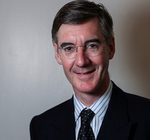
    The statement made by Jacob Rees-Mogg, the Secretary of State for Business, Energy and Industrial Strategy, in the House of Commons on 22 September 2022.

    On 31 January, to mark the two-year anniversary of the UK’s departure from the European Union, the Government set out their plans to bring forward the Retained EU Law (Revocation and Reform) Bill.

    Retained EU law is a category of domestic law created at the end of the transition period. It consists of EU-derived legislation that was preserved in our domestic legal framework by the European Union (Withdrawal) Act 2018 to ensure continuity as we left the EU.

    However, retained EU law was never intended to sit on the statute book indefinitely. The time is now right to bring the special status of retained EU law in the UK statute book to an end on 31 December 2023, in order to fully realise the opportunities of Brexit and to support the unique culture of innovation in the UK.

    To achieve this, the Bill I have introduced today includes the following provisions;

    Sunsetting retained EU law

    The Bill will sunset the majority of retained EU law so that it expires on 31 December 2023. All retained EU law contained in domestic secondary legislation and retained direct EU legislation will expire on this date, unless otherwise preserved. Any retained EU law that remains in force after the sunset date will be assimilated in the domestic statute book, by the removal of the special EU law features previously attached to it. This means that the principle of the supremacy of EU law, general principles of EU law, and directly effective EU rights will also end on 31 December 2023. There will no longer be a place for EU law concepts in our statute book.

    Before that date, Government Departments and the devolved Administrations will determine which retained EU law can be reformed to benefit the UK, which can expire, and which needs to be preserved and incorporated into domestic law in modified form. They will also decide if retained EU law needs to be codified as it is preserved, in order to preserve specific policy effects which are beneficial to keep.

    The Bill includes an extension mechanism for the sunset of specified pieces of retained EU law until 2026. Should it be required, this will allow Departments additional time where necessary to implement more complex reforms to specific pieces of retained EU law, including any necessary legislation.

    Ending of supremacy of retained EU law in UK law by 2023

    Currently, retained direct EU legislation still takes priority over domestic UK legislation passed prior to the end of the transition period when they are incompatible. This is not in keeping with our status as an independent, sovereign trading nation, and the Government’s 2019 commitment to remove this.

    Therefore, the Bill will reverse this order of priority, to reinstate domestic law as the highest form of law on the UK statute book. Where it is necessary to preserve the current hierarchy between domestic and EU legislation in specific circumstances, the Bill provides a power to amend the new order of priority to retain specific legislative effects.

    Assimilated law

    Following the removal of the special features of EU law from retained EU law on 31 December 2023, any retained EU law that is preserved will become “assimilated law” to reflect that EU interpretive features no longer apply to it.

    Facilitating departures from retained EU case law

    To ensure that EU law concepts do not become “baked in” through over-cautious court judgments, the Bill will also provide domestic courts with greater discretion to depart from the body of retained case law. It will also provide new court procedures for UK and devolved law officers to refer or intervene in cases involving retained EU case law.

    Modification of retained EU legislation

    To correct an anomaly created by European Union Withdrawal Act which gave some retained direct EU legislation legislative parity with Acts of Parliament for some purposes, despite it not having been properly scrutinised, the Bill will downgrade the status of retained direct EU law for the purposes of amendment. The Bill will modify powers in other statutes, to facilitate their use to amend retained direct EU law in the same way they can be used on domestic secondary legislation. This will enable the amendment of retained direct EU law, with the appropriate level of parliamentary scrutiny.

    Powers relating to retained EU law

    The Bill will also create powers to make secondary legislation so that retained EU law or assimilated law can be amended, repealed and replaced more easily. This Bill will allow Government via Parliament to clarify, consolidate and restate legislation to preserve its current effect. Using these powers, the Government via Parliament will ensure that only regulation that is fit for purpose, and suited for the UK will remain on the statute book.

    Business impact target

    Having left the EU, the UK has further opportunities to reform its regulatory regime. The UK Government published their consultation response to the “Reforming the Better Regulation Framework” and is in the process of implementing the wider reforms outlined.

    As part of these reforms, the Bill repeals the business impact target, which is outdated and not fit for purpose. Any subsequent replacement of the business impact target, when combined with the other wider reforms, will ensure that the UK’s regulatory framework is fit for the UK economy, business and households, into the future.

  • Michael Ancram – 2002 Speech on Europe and America – Not Europe or America

    Michael Ancram – 2002 Speech on Europe and America – Not Europe or America

    The speech made by Michael Ancram, the then Shadow Foreign Secretary, at the Conservative Foreign Affairs Forum on 13 March 2002.

    Some weeks ago I spoke about the benefits of building partnerships of sovereignty rather than supranational structures. Tonight I want to pursue that debate in terms of its implications for our relations with Europe and with the United States of America.

    The end of the Cold War and the fall of the Berlin Wall, even more than September 11, represented a fundamentally important turning-point in international affairs. These events launched a process of change in which many cherished old assumptions perished. The era of the great countervailing blocs, of two great superpowers balancing against one another with a mix of military and economic might, ended. The solidity it offered was replaced by a fluidity last seen in the nineteenth century. This time, however, there was the added dimension of the “rogue state” complete with weapons of mass destruction – and unlike the blocs in the Cold War with no compunction about using them. This is a new challenge calling for new responses and new forms of relationships.

    At the heart of this new geopolitical environment stands America. America is in relative as well as in real terms probably the greatest superpower the world has ever known. It is the predominant force in the world today, and its predominance continues to grow. Count up the aircraft carriers, the aircraft, the frigates, the battle groups and the conclusion is inescapable. As we have seen in Afghanistan, its military power and reach are awesome.

    Nor is America’s strength merely military. Its technology leads the world. Its universities are the most advanced, its Nobel laureates the most numerous, its production now back to almost thirty percent of the entire global output. America is in every sense of the word a superpower. It is on its own not a bloc, not a supranational institution but a very big sovereign nation, jealous of its sovereignty and its independent rights of self-determination. In fact America with her flag, her sense of allegiance, and the clear values which underpin her nationhood is the epitome of the modern sovereign nation state.

    Yet like all great powers throughout history the USA gives rise to strong reactions and mixed feelings. These range on the one hand from the downright hostility of certain countries and regimes towards America, to feelings of great kinship and shared friendship in the face of common threats on the other. Between these, there has always been a danger that feelings of jealousy or inferiority, the instinctive envy of the ‘overdog’, could grow in the breasts of European integrationists as much as antagonism will grow in the hearts of those who have always seen American capitalism as the antithesis of the socialist utopias in which they still believe. The European Union official who was recently quoted saying that “it is humiliating and demeaning if we feel we have to go and get our homework marked by Dick Cheney and Condi Rice” was showing early symptoms of those feelings.

    Our Foreign Secretary’s ill-judged accusation that the US President’s foreign policy was motivated more by domestic politics than by international security considerations was a further manifestation. References by senior Europeans to American foreign policy as simplistic and absolutist in contrast to the sophistication of European foreign policy, only serve further to fan the embers of anti-Americanism and to set Europe against America. It is a misguided trend which stems from a false belief that a United Europe should somehow counterbalance the United States.

    What all this does, however, is to pose the choice – Europe or America. It infers that there are no realistic options outside this choice; and by inference that the wise will opt for Europe. It is a false choice because there is another. The Nations of Europe and America; the one I strongly support.

    Over the coming months the first option will be played out in the chancelleries of Europe as well as in our own British Cabinet Room on the delicate subject of Iraq. Already we have seen many of our European partners raising the flag of non-involvement in any future action to deal with Saddam Hussein and his weapons of mass destruction. Already we have heard senior Europeans striving to exculpate the regime in Iraq from accusations of ‘evil’. Once again the inference being created is ‘Europe against action in Iraq, US for action in Iraq.’ Again it is a false choice.

    The real option is the sharing with America of the evidence of real threats to international security stemming from Iraq and other similarly ‘rogue’ states, and the shared determination to deal with the problem. Europe and America rather than Europe or America.

    The Europe or America proposition is a dangerous one, particularly when it is posed with anti-American sentiment. Hostile rhetoric is an easy game for some Europeans to play. But it plays straight into the hands of those in the US who rejoice in what they see as their ‘unipolar moment’ and believe that they can go it alone. The truth is that Europe needs the US, and that the US needs Europe. The first because Europe is many years away from having the military resources required for its security and needs American intelligence and manpower. The second because September 11 demonstrated to America that it is now vulnerable and that it needs us and our European partners.

    Which leads directly to the Nations of Europe and America proposition, a partnership not of superpowers but of shared interests and shared objectives. With our close relationships with both, we are ideally placed to help build and secure this proposition. It will require a less introverted and bureaucratic Europe and a sense of shared values around which a renewed Atlantic Charter can be formed.

    It is an opportunity that our current Government cannot grasp. Mr Blair is publicly tholed to the building of a superpower Europe with all that that entails. A common foreign policy, that of the lowest common denominator. A common defence policy whose military capability will not even be fully and effectively operational for a decade. A single currency with the loss of economic self-governance and even greater harmonisation. This superpower Europe would find little to share in partnership with the American superpower with whom it would be designed to compete. It would be Europe or America – and Europe would be the loser.

    Europe and America is an opportunity we should grasp, but to do so we need to redirect the purpose and nature of the European Union. There could be no better moment. Europe, in preparation for the IGC in 2004, is examining its future structures, partly through the Giscard d’Estaing Convention, but more widely as well.

    Too often in the past this process has been caricatured as a fight between those who seek a more integrated and centralised Europe –with the New Labour firmly among them – and those who seek to see Britain withdraw from Europe. The Conservative Party adheres to neither of these positions.

    Where New Labour integrationists look for a pooling of sovereignty in Europe and where the anti-Europeans want no part in any European arrangements, we look for a partnership of sovereignties. We believe we are part of Europe, but that the relationship within the EU must be one in which our sovereignty is not ultimately dissolved by ‘pooling’ or rendered meaningless by a legally binding Euro-constitution.

    Where the New Labour centralists want ever closer monetary union, and ever greater regulation, and where the anti-Europeans want straight-forward divorce, we look for the strengthening of the single market, whilst retaining our own fiscal and macro-economic management.

    We believe that influence comes not from coercion or centralisation or harmonisation, or from hang-ups about single currencies or common foreign policies or European Armies, but from cooperation and mutual understanding. We are neither of the above. We are Constructive Europeans working within a Europe of Sovereign Nation States.

    We understand the present malaise that is afflicting the European Union. We can understand the erosion of democracy and legitimacy that has been allowed to occur. We know that enlargement, which we totally support, is opening up new divisions and in turn making the total reform of the entire Union, its structures and its methods, both essential and unavoidable. This is where from our Conservative European standpoint as Constructive Europeans within a Europe of Nations we have a significant role to play.

    It is our chance in the months ahead to develop and present a raft of new ideas for making EU institutions more accountable to national parliaments in order to strengthen democratic accountability. A Europe Minister based in Brussels but reporting back regularly to Parliament; committees of Parliament shaping the Commission’s agenda; and much earlier and more effective systems of scrutiny of matters European in the national parliaments.

    We should not be afraid to urge the re-opening of the treaties to bring Europe up to date with the modern world. We should seek constructively to reverse its centralising tendencies. We should challenge the aquis and urge repatriation of large parts of agricultural and foreign aid policy. We should be prepared to revisit those areas that have not worked. We would find surprising allies in Europe in so doing.

    We can show that the Lisbon Process is not working. The facts are that unemployment in Europe is still rising, and that the ‘competitive knowledge-based Europe’ simply isn’t happening.

    We can respond. Our constructive plans for European economic reform should be tied to low taxation, to enterprise, to innovation and above all to light regulation.

    All of these can help to lay the foundations for a genuine partnership of interests with the US. By creating a European Union which is genuinely a partnership of its member nations, which does not demand conformity of approach on international relations or in response to American initiatives, where there can be different layers of enthusiasm and participation. By encouraging a common understanding of the importance of America to us and the contribution we can make to America. By building the base of a lasting partnership in which there is competition rather than rivalry and admiration rather than envy; and where advice and consultation occur naturally and mutually from within the partnership rather than as hostile comment shouted from the sidelines.

    As Constructive Europeans who believe in the importance of the sovereign nation state we would be ideally placed to develop even closer relations with the most powerful sovereign nation state of all, the US. Yet to do so we must look at how, as America’s friend and partner, we can best influence how that power can more effectively be deployed to advance the concept of Europe and America.

    The old tried and tested if unwritten formula of the Atlantic Charter– partnership, not subservience – was right, and it still commands the overwhelming support of informed British opinion. We are the colleague and partner who offers advice in the spirit of greatest friendship and well-meaning. This is the basis of our ‘special relationship’ with America, greatly revived since September 11, which I would like now to see strengthened and entrenched as a durable feature of international relations in this new Century. That means not standing aside from America, but being actively involved with her; not indulging in the US-bashing so beloved by the Left, but participating in the delivery of a higher moral responsibility which has fallen upon the US precisely as a result of the overwhelming might which she possesses.

    But America cannot carry forward these responsibilities on her own. Nor can that spirit of openness and freedom, so crucial to American life, be protected by unilateral action. That openness can best be preserved and strengthened by America deploying her undoubted wealth and might not in the style of imperial mastership but in new and imaginative ways. It was President Theodore Roosevelt who identified the need for America to speak softly and to carry a big stick. Never has that advice been more relevant or more difficult to deliver. The big stick is present in unprecedented measure. But there needs also to be a spirit of international partnership and support, well presaged in the international coalition brought together in pursuit of el Qa’eda and the Taleban. America knows only too well that terrorism can never be defeated, or even contained, within the US itself; hence the international campaign against the scourge of international terrorism. Nor however can it be finally defeated from the decks of America’s gigantic carrier fleet. It can be ‘degraded’, if not physically destroyed, by military action; but it cannot be eradicated from the hearts and minds of those who are recruited to terrorism by threat or use of the big stick alone.

    The conditions in which terrorism can flourish and which terrorism seeks therefore to promote must be responded to as well. Terrorism is criminal but it feeds on the society in which it finds shelter and support, and on the prejudices and hatreds and fears and inadequacies of that community. As well as the big stick, this is where the soft talk and imaginative deployment of resources has a role to play, and where we can help America play it.

    Last December I visited Washington and had talks with senior members of the Administration. There was no arrogance of power, there was no desire for American hegemony. There was, and still is, a very clear appreciation of the awesome responsibility that has fallen to the United States through the way in which international events have developed in the last decade. The knowledge that history will judge them by their response is clear in their minds.

    They were examining every option, analysing every nuance, evaluating every possible consequence of every possible action or initiative. They left me very reassured that whatever courses of action are chosen they will be based on some of the most fundamental and comprehensive analyses of the facts and the options ever carried out. The fundamental truth is that being so powerful America is relied upon by much of the world. Often she must act in ways others cannot, and this unfairly attracts the stigma of arrogance. To the contrary, in my view American foreign policy is grounded in realism, with a well-honed understanding of the limitations of their role, and the extent of the world’s expectations of them.

    And that is why we can as America’s friend and partner advise her to look even more widely. The areas for soft talk are numerous and growing. Let me set out a few of those that I see to be most urgent.

    To work with Muslim moderates everywhere, but particularly in the Middle East and especially in Saudi Arabia where efforts to balance Islamic populism with Western values is a cause of potential dangerous instability. And while on the Middle East to help Israel down the difficult road of accepting a viable Palestinian state on her borders in return for guaranteed security for the democratic state of Israel.

    To help Russia overcome its current sense of exclusion by extending the hand of genuine cooperation on security, on internal terrorism and on economic development. Bringing Russia into the big tent and according her the respect and status she should enjoy is an important element of the agile partnerships of nations we should be seeking to create.

    To develop new thinking on global economic development in place of outdated and unsuccessful aid doctrines, especially in Africa, understanding that the keys to development lie in good governance, respect of property rights, the removal of trade barriers and acceptance of the rule of law.

    But most immediately and urgently to work together, and to seek regional support in so doing, to control and remove weapons of mass destruction and their delivery systems currently in the hands of unscrupulous regimes which threaten the stability not only of their regions but of the wider international community as well.

    And alongside this we should support the Americans in pressing our European partners in NATO into serious increases in defence expenditure. In the most diplomatic way the US should find the means of explaining to the European Union that the ESDP is an absurd distraction and duplication within the European theatre, and that its real timescale itself indicates that it is both a cover-up for inadequate defence budgets and a faintly pathetic attempt at Euro-machismo. ESDP is symptomatic of a wider malaise, a growing anti-Americanism and introspection. ESDP can be interpreted as advice for too many nations in Europe “to get America off our backs” and a disguise for inaction. America should join us in pressing for a strengthened European capability within NATO, just as NATO has backed America in the global anti-terrorism campaign.

    These are some of those areas which together amount to a powerful agenda of involvement and of partnership that can mobilise America’s wealth and strength in a way which will unite the world rather than divide it. It contrasts starkly with the tone emanating from EU institutions with their talk of a rival currency, of a balancing of superpowers and of challenging American hegemony. This is the language of confrontation, of Europe or America.

    I conversely have sought to set out a path for the nations of Europe and America. A Europe which in terms of the relationship with America is not a rival but a complement, not a critic but a counsellor. We here in Britain can lead the way, bringing America and Europe closer together on the basis of the common interests which we epitomise. A partnership of true friends. Europe and America together, with us at the hinge. A partnership for freedom, prosperity and peace.

  • Ursula von der Leyen – 2022 State of Union Address

    Ursula von der Leyen – 2022 State of Union Address

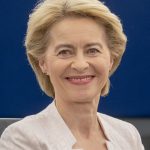
    The address made by Ursula von der Leyen, the President of the European Commission, on 14 September 2022.

    A UNION THAT STANDS STRONG TOGETHER

    INTRODUCTION

    Madam President,

    Honourable Members,

    My fellow Europeans,

    Never before has this Parliament debated the State of our Union with war raging on European soil.

    We all remember that fateful morning in late February.

    Europeans from across our Union woke up dismayed by what they saw. Shaken by the resurgent and ruthless face of evil. Haunted by the sounds of sirens and the sheer brutality of war.

    But from that very moment, a whole continent has risen in solidarity.

    At the border crossings where refugees found shelter. In our streets, filled with Ukrainian flags. In the classrooms, where Ukrainian children made new friends.

    From that very moment, Europeans neither hid nor hesitated.

    They found the courage to do the right thing.

    And from that very moment, our Union as a whole has risen to the occasion.

    Fifteen years ago, during the financial crisis, it took us years to find lasting solutions.

    A decade later, when the global pandemic hit, it took us only weeks.

    But this year, as soon as Russian troops crossed the border into Ukraine, our response was united, determined and immediate.

    And we should be proud of that.

    We have brought Europe’s inner strength back to the surface.

    And we will need all of this strength. The months ahead of us will not be easy. Be it for families who are struggling to make ends meet, or businesses, who are facing tough choices about their future.

    Let us be very clear: much is at stake here. Not just for Ukraine – but for all of Europe and the world at large.

    And we will be tested. Tested by those who want to exploit any kind of divisions between us.

    This is not only a war unleashed by Russia against Ukraine.

    This is a war on our energy, a war on our economy, a war on our values and a war on our future.

    This is about autocracy against democracy.

    And I stand here with the conviction that with courage and solidarity, Putin will fail and Europe will prevail.

    THE COURAGE TO STAND WITH OUR HEROES

    Honourable Members,

    Today – courage has a name, and that name is Ukraine.

    Courage has a face, the face of Ukrainian men and women who are standing up to Russian aggression.

    I remember a moment in the early weeks of the invasion. When the First Lady of Ukraine, Olena Zelenska, gathered the parents of Ukrainian children killed by the invader.

    Hundreds of families for whom the war will never end, and for whom life will never go back to what it was before.

    We saw the first Lady leading a silent crowd of heartbroken mothers and fathers, and hang small bells in the trees, one for every fallen child.

    And now the bells will ring forever in the wind, and forever, the innocent victims of this war will live in our memory.

    And she is here with us today!

    Dear Olena, it took immense courage to resist Putin’s cruelty.

    But you found that courage.

    And a nation of heroes has risen.

    Today, Ukraine stands strong because an entire country has fought street by street, home by home.

    Ukraine stands strong because people like your husband, President Zelenskyy, have stayed in Kyiv to lead the resistance – together with you and your children, dear First Lady.

    You have given courage to the whole nation. And we have seen in the last days the bravery of Ukrainians paying off.

    You have given voice to your people on the global stage.

    And you have given hope to all of us.

    So today we want to thank you and all Ukrainians.

    Glory to a country of European heroes. Slava Ukraini!

    Europe’s solidarity with Ukraine will remain unshakeable.

    From day one, Europe has stood at Ukraine’s side. With weapons. With funds. With hospitality for refugees. And with the toughest sanctions the world has ever seen.

    Russia’s financial sector is on life-support. We have cut off three quarters of Russia’s banking sector from international markets.

    Nearly one thousand international companies have left the country.

    The production of cars fell by three-quarters compared to last year. Aeroflot is grounding planes because there are no more spare parts. The Russian military is taking chips from dishwashers and refrigerators to fix their military hardware, because they ran out of semiconductors. Russia’s industry is in tatters.

    It is the Kremlin that has put Russia’s economy on the path to oblivion.

    This is the price for Putin’s trail of death and destruction.

    And I want to make it very clear, the sanctions are here to stay.

    This is the time for us to show resolve, not appeasement.

    The same is true for our financial support to Ukraine.

    So far Team Europe have provided more than 19 billion euros in financial assistance.

    And this is without counting our military support.

    And we are in it for the long haul.

    Ukraine’s reconstruction will require massive resources. For instance, Russian strikes have damaged or destroyed more than 70 schools.

    Half a million Ukrainian children have started their school year in the European Union. But many others inside Ukraine simply don’t have a classroom to go to.

    So today I am announcing that we will work with the First Lady to support the rehabilitation of damaged Ukrainian schools. And that is why we will provide 100 million euros. Because the future of Ukraine begins in its schools.

    We will not only support with finance – but also empower Ukraine to make the most of its potential.

    Ukraine is already a rising tech hub and home to many innovative young companies.

    So I want us to mobilise the full power of our Single Market to help accelerate growth and create opportunities.

    In March, we connected successfully Ukraine to our electricity grid. It was initially planned for 2024. But we did it within two weeks. And today, Ukraine is exporting electricity to us. I want to significantly expand this mutually beneficial trade.

    We have already suspended import duties on Ukrainian exports to the EU.

    We will bring Ukraine into our European free roaming area.

    Our solidarity lanes are a big success.

    And building on all that, the Commission will work with Ukraine to ensure seamless access to the Single Market. And vice-versa.

    Our Single Market is one of Europe’s greatest success stories. Now it’s time to make it a success story for our Ukrainian friends, too.

    And this is why I am going to Kyiv today, to discuss this in detail with President Zelenskyy.

    Honourable Members,

    One lesson from this war is we should have listened to those who know Putin.

    To Anna Politkovskaya and all the Russian journalists who exposed the crimes, and paid the ultimate price.

    To our friends in Ukraine, Moldova, Georgia, and to the opposition in Belarus.

    We should have listened to the voices inside our Union – in Poland, in the Baltics, and all across Central and Eastern Europe.

    They have been telling us for years that Putin would not stop.

    And they acted accordingly.

    Our friends in the Baltics have worked hard to end their dependency on Russia. They have invested in renewable energy, in LNG terminals, and in interconnectors.

    This costs a lot. But dependency on Russian fossil fuels comes at a much higher price.

    We have to get rid of this dependency all over Europe.

    Therefore we agreed on joint storage. We are at 84% now: we are overshooting our target.

    But unfortunately that will not be enough.

    We have diversified away from Russia to reliable suppliers. US, Norway, Algeria and others.

    Last year, Russian gas accounted for 40% of our gas imports. Today it’s down to 9% pipeline gas.

    But Russia keeps on actively manipulating our energy market. They prefer to flare the gas than to deliver it. This market is not functioning anymore.

    In addition the climate crisis is heavily weighing on our bills. Heat waves have boosted electricity demand. Droughts shut down hydro and nuclear plants.

    As a result, gas prices have risen by more than 10 times compared to before the pandemic.

    Making ends meet is becoming a source of anxiety for millions of businesses and households.

    But Europeans are also coping courageously with this.

    Workers in ceramics factories in central Italy, have decided to move their shifts to early morning, to benefit from lower energy prices.

    Just imagine the parents among them, having to leave home early, when the kids are still sleeping, because of a war they haven’t chosen.

    This is one example in a million of Europeans adapting to this new reality.

    I want our Union to take example from its people. Reducing demand during peak hours will make supply last longer, and it will bring prices down.

    This is why we are putting forward measures for Member States to reduce their overall electricity consumption.

    But more targeted supported is needed.

    For industries, like glass makers who have to turn off their ovens. Or for single parents facing one daunting bill after another.

    Millions of Europeans need support.

    EU Member States have already invested billions of euros to assist vulnerable households.

    But we know this will not be enough.

    This is why we are proposing a cap on the revenues of companies that produce electricity at a low cost.

    These companies are making revenues they never accounted for, they never even dreamt of.

    In our social market economy, profits are good.

    But in these times it is wrong to receive extraordinary record profits benefitting from war and on the back of consumers.

    In these times, profits must be shared and channelled to those who need it the most.

    Our proposal will raise more than 140 billion euros for Member States to cushion the blow directly.

    And because we are in a fossil fuel crisis, the fossil fuel industry has a special duty, too.

    Major oil, gas and coal companies are also making huge profits. So they have to pay a fair share – they have to give a crisis contribution.

    These are all emergency and temporary measures we are working on, including our discussions on price caps.

    We need to keep working to lower gas prices.

    We have to ensure our security of supply and, at the same time, ensure our global competitiveness.

    So we will develop with the Member States a set of measures that take into account the specific nature of our relationship with suppliers – ranging from unreliable suppliers such as Russia to reliable friends such as Norway.

    I have agreed with Prime Minister Støre to set up a task force. Teams have started their work.

    Another important topic is on the agenda. Today our gas market has changed dramatically: from pipeline gas mainly to increasing amounts of LNG.

    But the benchmark used in the gas market – the TTF – has not adapted.

    This is why the Commission will work on establishing a more representative benchmark.

    At the same time we also know that energy companies are facing severe problems with liquidity in electricity futures markets, risking the functioning of our energy system.

    We will work with market regulators to ease these problems by amending the rules on collateral – and by taking measures to limit intra-day price volatility.

    And we will amend the temporary state aid framework in October to allow for the provision of state guarantees, while preserving a level playing field.

    These are all first steps. But as we deal with this immediate crisis, we must also look forward.

    The current electricity market design – based on merit order – is not doing justice to consumers anymore.

    They should reap the benefits of low-cost renewables.

    So, we have to decouple the dominant influence of gas on the price of electricity. This is why we will do a deep and comprehensive reform of the electricity market.

    Now – here is an important point. Half a century ago, in the 1970s, the world faced another fossil fuel crisis.

    Some of us remember the car-free weekends to save energy. Yet we kept driving on the same road.

    We did not get rid of our dependency on oil. And worse, fossil fuels were even massively subsidised.

    This was wrong, not just for the climate, but also for our public finances, and our independence. And we are still paying for this today.

    Only a few visionaries understood that the real problem was fossil fuels themselves, not just their price.

    Among them were our Danish friends.

    When the oil crisis hit, Denmark started to invest heavily into harnessing the power of the wind.

    They laid the foundations for its global leadership in the sector and created tens of thousands of new jobs.

    This is the way to go!

    Not just a quick fix, but a change of paradigm, a leap into the future.

    STAYING THE COURSE AND PREPARING FOR THE FUTURE

    Mesdames et Messieurs les Députés,

    La bonne nouvelle est que cette transformation nécessaire a commencé.

    Elle a lieu en mer du Nord et en mer Baltique, où nos États membres ont massivement investi dans l’éolien en mer.

    Elle a lieu en Sicile, où la plus grande usine solaire d’Europe produira bientôt la toute dernière génération de panneaux solaires.

    Et elle a lieu dans le nord de l’Allemagne, où les trains régionaux roulent désormais à l’hydrogène vert.

    L’hydrogène peut changer la donne pour l’Europe.

    Nous devons passer du marché de niche au marché de masse pour l’hydrogène.

    Avec REPowerEU, nous avons doublé notre objectif : nous voulons produire dix millions de tonnes d’hydrogène renouvelable dans l’Union européenne, chaque année d’ici 2030.

    Pour y parvenir, nous devons créer un animateur de marché pour l’hydrogène, afin de combler le déficit d’investissement et de mettre en relation l’offre et la demande futures.

    C’est pourquoi je peux annoncer aujourd’hui que nous allons créer une nouvelle Banque européenne de l’hydrogène.

    Elle aidera à garantir l’achat d’hydrogène, notamment en utilisant les ressources du Fonds pour l’innovation.

    Elle pourra investir 3 milliard d’euros pour aider à construire le futur marché de l’hydrogène.

    C’est ainsi que se bâtira l’économie du futur.

    C’est cela, notre Pacte vert pour l’Europe.

    Et nous avons tous vu au cours des derniers mois à quel point le Pacte vert pour l’Europe est important.

    L’été 2022 restera dans les mémoires. Nous avons tous vu les rivières asséchées, les forêts en feu, la chaleur extrême.

    Et la situation est bien plus grave encore. Jusqu’à présent, les glaciers des Alpes ont servi de réserve d’urgence pour des rivières comme le Rhin ou le Rhône.

    Mais comme les glaciers d’Europe fondent plus vite que jamais, les sécheresses futures seront beaucoup plus graves.

    Nous devons travailler sans relâche à l’adaptation climatique et faire de la nature notre premier allié.

    C’est pourquoi notre Union poussera pour un accord mondial ambitieux pour la nature lors de la conférence des Nations Unies sur la biodiversité qui se tiendra à Montréal cette année.

    Et nous ferons de même lors de la COP27 à Sharm el-Sheikh.

    Mais à court terme, nous devons aussi être mieux équipés pour faire face au changement climatique.

    Aucun pays ne peut lutter seul contre les phénomènes météorologiques extrêmes et leurs forces destructrices.

    Cet été, nous avons envoyé des avions de la Grèce, la Suède ou d’Italie pour combattre des incendies en France et en Allemagne.

    Mais comme ces évènements deviennent plus fréquents et plus intenses, l’Europe aura besoin de plus de capacités.

    C’est pourquoi aujourd’hui j’annonce que nous allons doubler notre capacité de lutte contre les incendies au cours de l’année prochaine.

    L’Union Européenne achètera dix avions amphibies légers et trois hélicoptères supplémentaires pour compléter notre flotte.

    Voilà la solidarité européenne en action

    Honourable Members,

    The last years have shown how much Europe can achieve when it is united.

    After an unprecedented pandemic, our economic output overtook pre-crisis levels in record time.

    We went from having no vaccine to securing over 4 billion doses for Europeans and for the world.

    And in record time, we came up with SURE – so that people could stay in their jobs even if their companies had run out of work.

    We were in the deepest recession since World War 2.
    We achieved the fastest recovery since the post-war boom.

    And that was possible because we all rallied behind a common recovery plan.

    NextGenerationEU has been a boost of confidence for our economy.

    And its journey has only just begun.

    So far, 100 billion euros have been disbursed to Member States. This means: 700 billion euros still haven’t flown into our economy.

    NextGenerationEU will guarantee a constant stream of investment to sustain jobs and growth.

    It means relief for our economy. But most importantly, it means renewal.

    It is financing new wind turbines and solar parks, high-speed trains and energy-saving renovations.

    We conceived NextGenerationEU almost two years ago, and yet it is exactly what Europe needs today.

    So let’s stick to the plan.

    Let’s get the money on the ground.

    Honourable Members,

    The future of our children needs both that we invest in sustainability and that we invest sustainably.

    We must finance the transition to a digital and net-zero economy.

    And yet we also have to acknowledge a new reality of higher public debt.

    We need fiscal rules that allow for strategic investment, while safeguarding fiscal sustainability.

    Rules that are fit for the challenges of this decade.

    In October, we will come forward with new ideas for our economic governance.

    But let me share a few basic principles with you.

    Member States should have more flexibility on their debt reduction paths.

    But there should be more accountability on the delivery of what we have agreed on.

    There should be simpler rules that all can follow.

    To open the space for strategic investment and to give financial markets the confidence they need.

    Let us chart once again a joint way forward.

    With more freedom to invest. And more scrutiny on progress.

    More ownership by Member States. And better results for citizens.

    Let us rediscover the Maastricht spirit – stability and growth can only go hand in hand.

    Honourable Members,

    As we embark on this transition in our economy, we must rely on the enduring values of our social market economy.

    It’s the simple idea that Europe’s greatest strength lies in each and every one of us.

    Our social market economy encourages everyone to excel, but it also takes care of our fragility as human beings.

    It rewards performance and guarantees protection. It opens opportunities but also set limits.

    We need this even more today.

    Because the strength of our social market economy will drive the green and digital transition.

    We need an enabling business environment, a workforce with the right skills and access to raw materials our industry needs.

    Our future competitiveness depends on it.

    We must remove the obstacles that still hold our small companies back.

    They must be at the centre of this transformation – because they are the backbone of Europe’s long history of industrial prowess.

    And they have always put their employees first – even and especially in times of crisis.

    But inflation and uncertainty are weighing especially hard on them.

    This is why we will put forward an SME Relief Package.

    It will include a proposal for a single set of tax rules for doing business in Europe – we call it BEFIT.

    This will make it easier to do business in our Union. Less red tape means better access to the dynamism of a continental market.

    And we will revise the Late Payment Directive – because it is simply not fair that 1 in 4 bankruptcies are due to invoices not being paid on time.

    For millions of family businesses, this will be a lifeline in troubled waters.

    Der Mangel an Personal ist eine weitere Herausforderung für Europas Unternehmen.

    Die Zahl der Arbeitslosen ist so niedrig wie nie zuvor.

    Das ist gut!

    Aber gleichzeitig liegt die Zahl der offenen Stellen auf Rekordniveau.

    Ob Lastwagenfahrer, Kellnern oder Flughafenpersonal.

    Ob auch Krankenpfleger, Ingenieurinnen oder IT-Technikerinnen.

    Von Ungelernt bis Universitätsabschluß, Europa braucht sie alle!

    Wir müssen daher viel stärker in die Aus- und Weiterbildung investieren.

    Dazu wollen wir eng mit den Unternehmen zusammenarbeiten.

    Denn sie wissen am besten, welche Fachkräfte sie heute und morgen brauchen.

    Und wir müssen diesen Bedarf besser in Einklang bringen mit den Zielen und Wünschen die Arbeitssuchende selbst für ihren Berufsweg haben.

    Darüber hinaus wollen wir gezielter Fachkräfte aus dem Ausland anwerben, die hier Unternehmen und Europas Wachstum stärken.

    Ein wichtiger erster Schritt ist, ihre Qualifikationen in Europa besser und schneller anzuerkennen.

    Denn Europa muss attraktiver werden für die, die etwas können und sich einbringen wollen.

    Deshalb schlage ich vor, 2023 zum Europäischen Jahr der Aus- und vor allem auch der Weiterbildung zu machen.

    Sehr geehrte Damen und Herren Abgeordnete,

    zu meinem dritten Punkt für unseren Mittelstand und unsere Industrie.

    Unabhängig davon, ob wir über maßgeschneiderte Chips für die virtuelle Realität sprechen oder über Speicherzellen für Solaranlagen – der Zugang zu Rohstoffen ist entscheidend für den Erfolg unserer Transformation hin zu einer nachhaltigen und digitalen Wirtschaft.

    Lithium und seltene Erden werden bald wichtiger sein als Öl und Gas.

    Allein unser Bedarf an seltenen Erden wird sich bis 2030 verfünffachen.

    Und das ist ein gutes Zeichen!

    Denn es zeigt, mit welchem Tempo unser Europäischer Green Deal vorankommt.

    Das Problem ist nur, dass derzeit ein einziges Land fast den kompletten Markt beherrscht.

    Wir müssen vermeiden erneut in Abhängigkeit zu geraten wie bei Öl und Gas.

    An diesem Punkt kommt unsere Handelspolitik ins Spiel.

    Neue Partnerschaften helfen uns, nicht nur unsere Wirtschaft zu stärken, sondern auch unsere Interessen und unsere Werte global voranzubringen.

    Mit gleichgesinnten Partnern können wir auch außerhalb unserer Grenzen Arbeitsstandards und Umweltstandards sichern.

    Wir müssen vor allem unsere Beziehungen zu diesen Partnern und zu wichtigen Wachstumsregionen erneuern.

    Ich werde daher die Abkommen mit Chile, Mexiko und Neuseeland zur Ratifizierung vorlegen.

    Und wir treiben die Verhandlungen mit bedeutenden Partnern wie Australien und Indien voran.

    But securing supplies is only a first step.

    The processing of these metals is just as critical.

    Today, China controls the global processing industry. Almost 90 % of rare earths and 60 % of lithium are processed in China.

    We will identify strategic projects all along the supply chain, from extraction to refining, from processing to recycling. And we will build up strategic reserves where supply is at risk.

    This is why today I am announcing a European Critical Raw Materials Act.

    We know this approach can work.

    Five years ago, Europe launched the Battery Alliance. And soon, two third of the batteries we need will be produced in Europe.

    Last year I announced the European Chips Act. And the first chips gigafactory will break ground in the coming months.

    We now need to replicate this success.

    This is also why we will increase our financial participation to Important Projects of Common European Interest.

    And for the future, I will push to create a new European Sovereignty Fund.

    Let’s make sure that the future of industry is made in Europe.

    STANDING UP FOR OUR DEMOCRACY

    Honourable Members,

    As we look around at the state of the world today, it can often feel like there is a fading away of what once seemed so permanent.

    And in some way, the passing of Queen Elizabeth II last week reminded us of this.

    She is a legend!

    She was a constant throughout the turbulent and transforming events in the last 70 years.

    Stoic and steadfast in her service.

    But more than anything, she always found the right words for every moment in time.

    From the calls she made to war evacuees in 1940 to her historic address during the pandemic.

    She spoke not only to the heart of her nation but to the soul of the world.

    And when I think of the situation we are in today, her words at the height of the pandemic still resonate with me.

    She said: “We will succeed – and that success will belong to every one of us”.

    She always reminded us that our future is built on new ideas and founded in our oldest values.

    Since the end of World War 2, we have pursued the promise of democracy and the rule of law.

    And the nations of the world have built together an international system promoting peace and security, justice and economic progress.

    Today this is the very target of Russian missiles.

    What we saw in the streets of Bucha, in the scorched fields of grain, and now at the gates of Ukraine’s largest nuclear plant – is not only a violation of international rules.

    It’s a deliberate attempt to discard them.

    This watershed moment in global politics calls for a rethink of our foreign policy agenda.

    This is the time to invest in the power of democracies.

    This work begins with the core group of our like-minded partners: our friends in every single democratic nation on this globe.

    We see the world with the same eyes. And we should mobilise our collective power to shape global goods.

    We should strive to expand this core of democracies. The most immediate way to do so is to deepen our ties and strengthen democracies on our continent.

    This starts with those countries that are already on the path to our Union.

    We must be at their side every step of the way.

    Because the path towards strong democracies and the path towards our Union are one and the same.

    So I want the people of the Western Balkans, of Ukraine, Moldova and Georgia to know:

    You are part of our family, your future is in our Union, and our Union is not complete without you!

    We have also seen that there is a need to reach out to the countries of Europe – beyond the accession process.

    This is why I support the call for a European Political Community – and we will set out our ideas to the European Council.

    But our future also depends on our ability to engage beyond the core of our democratic partners.

    Countries near and far, share an interest in working with us on the great challenges of this century, such as climate change and digitalisation.

    This is the main idea behind Global Gateway, the investment plan I announced right here one year ago.

    It is already delivering on the ground.

    Together with our African partners we are building two factories in Rwanda and Senegal to manufacture mRNA vaccines.

    They will be made in Africa, for Africa, with world-class technology.

    And we are now replicating this approach across Latin America as part of a larger engagement strategy.

    This requires investment on a global scale.

    So we will team up with our friends in the US and with other G7 partners to make this happen.

    In this spirit, President Biden and I will convene a leaders’ meeting to review and announce implementation projects.

    Honourable Members,

    This is part of our work of strengthening our democracies.

    But we should not lose sight of the way foreign autocrats are targeting our own countries.

    Foreign entities are funding institutes that undermine our values.

    Their disinformation is spreading from the internet to the halls of our universities.

    Earlier this year, a university in Amsterdam shut down an allegedly independent research centre, which was actually funded by Chinese entities. This centre was publishing so-called research on human rights, dismissing the evidence of forced labour camps for Uyghurs as “rumours”.

    These lies are toxic for our democracies.

    Think about this: We introduced legislation to screen foreign direct investment in our companies for security concerns.

    If we do that for our economy, shouldn’t we do the same for our values?

    We need to better shield ourselves from malign interference.

    This is why we will present a Defence of Democracy package.

    It will bring covert foreign influence and shady funding to light.

    We will not allow any autocracy’s Trojan horses to attack our democracies from within.

    For more than 70 years, our continent has marched towards democracy. But the gains of our long journey are not assured.

    Many of us have taken democracy for granted for too long. Especially those, like me, who have never experienced what it means to live under the fist of an authoritarian regime.

    Today we all see that we must fight for our democracies. Every single day.

    We must protect them both from the external threats they face, and from the vices that corrode them from within.

    It is my Commission’s duty and most noble role to protect the rule of law.

    So let me assure you: we will keep insisting on judicial independence.

    And we will also protect our budget through the conditionality mechanism.

    And today I would like to focus on corruption, with all its faces. The face of foreign agents trying to influence our political system. The face of shady companies or foundations abusing public money.

    If we want to be credible when we ask candidate countries to strengthen their democracies, we must also eradicate corruption at home.

    That is why in the coming year the Commission will present measures to update our legislative framework for fighting corruption.

    We will raise standards on offences such as illicit enrichment, trafficking in influence and abuse of power, beyond the more classic offences such as bribery.

    And we will also propose to include corruption in our human rights sanction regime, our new tool to protect our values abroad.

    Corruption erodes trust in our institutions. So we must fight back with the full force of the law.

    Honourable Members,

    Our founders only meant to lay the first stone of this democracy.

    They always thought that future generations would complete their work.

    “Democracy has not gone out of fashion, but it must update itself in order to keep improving people’s lives.”

    These are the words of David Sassoli – a great European, who we all pay tribute to today.

    David Sassoli thought that Europe should always look for new horizons.

    And through the adversities of these times, we have started to see what our new horizon might be.

    A braver Union.

    Closer to its people in times of need.

    Bolder in responding to historic challenges and daily concerns of Europeans. And to walk at their side when they deal with the big trials of life.

    This is why the Conference on the Future of Europe was so important.

    It was a sneak peek of a different kind of citizens’ engagement, well beyond election day.

    And after Europe listened to its citizens’ voice, we now need to deliver.

    The Citizens’ Panels that were central to the Conference will now become a regular feature of our democratic life.

    And in the Letter of Intent that I have sent today to President Metsola and Prime Minister Fiala, I have outlined a number of proposals for the year ahead that stem from the Conference conclusions.

    They include for example a new initiative on mental health.

    We should take better care of each other. And for many who feel anxious and lost, appropriate, accessible and affordable support can make all the difference.

    Honourable Members,

    Democratic institutions must constantly gain and regain the citizens’ trust.

    We must live up to the new challenges that history always puts before us.

    Just like Europeans did when millions of Ukrainians came knocking on their door.

    This is Europe at its best.

    A Union of determination and solidarity.

    But this determination and drive for solidarity is still missing in our migration debate.

    Our actions towards Ukrainian refugees must not be an exception. They can be our blueprint for going forward.

    We need fair and quick procedures, a system that is crisis proof and quick to deploy, and a permanent and legally binding mechanism that ensures solidarity.

    And at the same time, we need effective control of our external borders, in line with the respect of fundamental rights.

    I want a Europe that manages migration with dignity and respect.

    I want a Europe where all Member States take responsibility for challenges we all share.

    And I want a Europe that shows solidarity to all Member States.

    We have progress on the Pact, we now have the Roadmap. And we now need the political will to match.

    Honourable Members,

    Three weeks ago, I had the incredible opportunity of joining 1,500 young people from all over Europe and the world, who gathered in Taizé.

    They have different views, they come from different countries, they have different backgrounds, they speak different languages.

    And yet, there is something that connects them.

    They share a set of values and ideals.

    They believe in these values.

    They are all passionate about something larger than themselves.

    This generation is a generation of dreamers but also of makers.

    In my last State of the Union address, I told you that I would like Europe to look more like these young people.

    We should put their aspirations at the heart of everything we do.

    And the place for this is in our founding Treaties.

    Every action that our Union takes should be inspired by a simple principle.

    That we should do no harm to our children’s future.

    That we should leave the world a better place for the next generation.

    And therefore, Honourable Members, I believe that it is time to enshrine solidarity between generations in our Treaties.

    It is time to renew the European promise.

    And we also need to improve the way we do things and the way we decide things.

    Some might say this is not the right time. But if we are serious about preparing for the world of tomorrow we must be able to act on the things that matter the most to people.

    And as we are serious about a larger union, we also have to be serious about reform.

    So as this Parliament has called for, I believe the moment has arrived for a European Convention.

    CONCLUSION

    Honourable Members,

    They say that light shines brightest in the dark.

    And that was certainly true for the women and the children fleeing Russia’s bombs.

    They fled a country at war, filled with sadness for what they had left behind, and fear for what may lie ahead.

    But they were received with open arms. By many citizens like Magdalena and Agnieszka. Two selfless young women from Poland.

    As soon as they heard about trains full of refugees, they rushed to the Warsaw Central Station.

    They started to organise.

    They set up a tent to assist as many people as possible.

    They reached out to supermarket chains for food, and to local authorities to organise buses to hospitality centres.

    In a matter of days, they gathered 3000 volunteers, to welcome refugees 24/7.

    Honourable Members,

    Magdalena and Agnieszka are here with us today.

    Please join me in applauding them and each and every European who opened their hearts and their homes.

    Their story is about everything our Union stands and strives for.

    It is a story of heart, character and solidarity.

    They showed everyone what Europeans can achieve when we rally around a common mission.

    This is Europe’s spirit.

    A Union that stands strong together.

    A Union that prevails together.

    Long live Europe.

  • Ursula von der Leyen – 2022 Statement on Energy

    Ursula von der Leyen – 2022 Statement on Energy

    The statement made by Ursula von der Leyen, the President of the European Commission, on 7 September 2022.

    We are facing an extraordinary situation, not only because Russia is an unreliable supplier, as we have witnessed over the last days, weeks, months, but also because Russia is actively manipulating the gas market. I am deeply convinced that with our unity, our determination, our solidarity, we will prevail. And we have, over the last six months, during this war, very much increased our preparedness and we have weakened the grip that Russia had on our economy and our continent. We have done three things, as you recall: The first one was demand reduction. Demand reduction, so save gas in order to save it in the storage. We have created a joint storage, and this is really a success story, because now we are already at 82% with the joint storage in Europe. As you know, our goal was to reach 80% at the end of October. So we overshoot it, and that is good.

    The second step that we have taken was: Diversify away from Russian fossil fuels. And you know that we have stopped the import of Russian coal. We are winding down the Russian oil. And we have been working very hard to diversify away from Russia towards other reliable suppliers, like for example the United States or Norway, Azerbaijan, Algeria and others. Actually today, Norway is delivering more gas to the European Union than Russia. And we were able, if you look at the cuts that Russia has done in gas, to completely compensate so far the gas imports through other reliable suppliers.

    And of course, the third step is the most important one. This is massive investments in renewables. We have REPowerEU on the table. The renewables are cheap, they are home-grown, they make us independent. We will deploy renewables this year that are an equivalent to round about 8 billion cubic metres. So the renewables are really our energy insurance for the future.

    But we also see that the Russian manipulation of the gas market has spillover effects on the electricity market. So there is, on the one hand, the Russian manipulation, but there are also other factors during this summer. We see the effects of climate change. We see the drought. Hydropower has been reduced by 26% in the European Union, and by 46% in Portugal. And we have the fact that we have less nuclear electricity in the European Union at the moment being. And this is the reason why we are now confronted with astronomic electricity prices for households and companies, and with an enormous market volatility. Therefore, we will put forward a set of five different immediate measures.

    The first one is smart savings of electricity. What has changed over the summer, because of the elements I was just mentioning, is that we see that there is a global scarcity of energy. So whatever we do, one thing is for sure: We have to save electricity, but we have to save it in a smart way. If you look at the costs of electricity, there are peak demands. And this is what is expensive, because, in these peak demands, the expensive gas comes into the market. So what we have to do is to flatten the curve and avoid the peak demands. We will propose a mandatory target for reducing electricity use at peak hours. And we will work very closely with the Member States to achieve this.

    The second measure: We will propose a cap on the revenues of companies that are producing electricity with low costs. The low-carbon energy sources are making in these times – because they have low costs but they have high prices on the market – enormous revenues. Revenues they never calculated with; revenues they never dreamt of; and revenues they cannot reinvest to that extent. These revenues do not reflect their production costs. So, it is now time for the consumers to benefit from the low costs of low-carbon energy sources like, for example, the renewables. We will propose to re-channel these unexpected profits to the Member States so that the Member States can support the vulnerable households and vulnerable companies.

    The third measure is that the same goes, of course, for the unexpected profits of fossil fuel companies. Oil and gas companies have also made massive profits. Therefore, we will propose that there is a solidarity contribution for fossil fuel companies. Because all energy sources must help to overcome this crisis. Member States should invest these revenues to, as I said, support vulnerable households and vulnerable companies, but also to invest them in clean home-grown energy sources, as the renewables are, for example.

    The fourth point is addressing the energy utility companies that must be supported to be able to cope with the volatility of the markets. Here, it is a problem of securing futures markets. And for that, liquidity is needed. These companies are currently being requested to provide unexpected large amounts of funds now, which threatens their capacity not only to trade, but also the stability of the futures markets. It is a liquidity problem. Therefore, we will help to facilitate the liquidity support by Member States for energy companies. We will update our temporary framework and enable thus state guarantees to be delivered rapidly.

    The fifth and the last point: We aim at lowering the costs of gas. Therefore, we will propose a price cap on Russian gas. Of course, the objective is here very clear. We all know that our sanctions are deeply grinding into the Russian economy, with a heavy negative impact. But Putin is partially buffering through fossil fuel revenues. So here, the objective is: We must cut Russia’s revenues, which Putin uses to finance his atrocious war in Ukraine. And now our work of the last months really pays off. Because, at the beginning of the war, if you looked at the imported gas, 40% of it was Russian gas, since a long time. Today, we are down to 9% only.

    So these are the five measures that we will discuss with the Member States at the informal Energy Ministers Council on Friday. These are tough times, and they will not be over soon. But I am deeply convinced that, if we show the solidary, the unity and we have the determination for that, we have the economic strength, we have the political will, that then we shall overcome.

  • Chris MacManus – 2022 Comments on Need for Brussels Belfast Engagement

    Chris MacManus – 2022 Comments on Need for Brussels Belfast Engagement

    The comments made by Chris MacManus, the Sinn Fein MEP for Midlands Northwest in The Republic of Ireland on 9 September 2022.

    I welcome the opportunity to engage with our MLA colleagues at this roundtable event. However, I do not believe it should be up to individual MEPs or political groups to organise such events. This should be an ongoing formal engagement.

    Today we have had, what were on occasions, frank exchanges between MEPs and MLAs from across the political spectrum. These exchanges were healthy and productive, that is why I believe it is important that the European Parliament and the Assembly formalise engagements such as this and that we have direct dialogue between the elected representatives of both institutions.

    I consider this to be both a practical and crucial step we can and should take, as EU legislation can often have an impact for the north of Ireland, therefore it is important elected representatives from the north and other sectoral interests are heard in the drafting of any such legislation.

    It is also worth noting that the Assembly itself has sought mechanisms for direct dialogue in the past and that the European Parliament agreed to this. Indeed, Vice President of the European Commission Maroš Šefčovič referred to such a concept in his non-papers. It is now time to make formal those assurances.

  • Timothy Kirkhope – 2002 Speech at the European Convention

    Timothy Kirkhope – 2002 Speech at the European Convention

    The speech made by Timothy Kirkhope on 21 March 2002.

    This is the second convention on which I have sat, having been on the Charter of Fundamental Rights Convention. Although I was not totally happy with the results of that Convention, it did establish a new model of negotiation which excites me and many other people too. The Guardian newspaper in Britain this morning rightly said that this Convention will be seen to have more democratic legitimacy than the secretive wrangling of national leaders as witnessed most recently at the Barcelona summit.

    We must remember that Europe is not on trial here. Europe is part of the equation, part of the democratisation of Europe. After all, the peoples of Europe want to see all the institutions, not only the European ones but also the national Parliaments themselves, look carefully at their own activities. Maybe they want to reclaim some powers from Europe. At the same time, there is a general lack of confidence in politicians that we will have to address in the work we do here.

    I want to just support you, Mr. President, in what you have said about young people. I believe that the future of Europe is not just ours. I hope I’ve got a little of a future left in Europe, but young people have a much bigger future and a bigger stake in the future of Europe. It is therefore essential for us, as part of the listening process that we are now embarking on, to make sure that young people are a significant part of the consultation process and that their aspirations for the future are listened to. I shall certainly consult very carefully with young people, Mr President. You identified it yourself and I think you hit the nail on the head, as they say, in doing so.

    My only other remark is this. When consulting civil society, it is terribly important for us to draw the boundaries of civil society as widely as possible. There are some who call themselves representatives of civil society but who actually represent narrow vested interests. In order to avoid this problem, we must consult widely as part of the listening process.

    Whatever we get at the end of this process, I hope it is a great success, and I hope we regain public confidence in our institutions.

  • David Heathcoat-Amory – 2002 Speech to the European Convention

    David Heathcoat-Amory – 2002 Speech to the European Convention

    The speech made by David Heathcoat-Amory to the European Convention on 22 March 2002.

    Our prime task is to create a Europe on the firm foundations of democratic involvement and consent. If we don’t get this right everything else will fail. To do this we must be honest with ourselves: the present EU is widely regarded as remote, unaccountable and wasteful. The gap between the political class in Europe and the public has never been wider. Our task this year is to close it. This will not be done by juggling with the existing EU institutions, each seeking more powers. That would intensify the problem, not solve it. Instead we must ask a very basic question: How do people feel themselves to be democratically represented? The answer is overwhelmingly at the level of the nation state. There is no European demos which compares with this. It follows that the only solution is to transfer back to national level a substantial number of powers exercised at EU level.

    Second, the acquis commounitaire must not be exempt from our scrutiny. It runs to 5,000 pages, the supreme expression of bureaucratic man. It is also an unfair burden on the applicant countries which struggle to implement and enforce it. The acquis must be radically pruned back. The EU must find a reverse gear to match its forward gears.

    Third, we must find new decision-making mechanisms for those matters which we agree should be decided supranationally. Again there is an inescapable role here for national parliaments. To do this we must be bold and creative. It is a strength of this Convention that we can step outside the confines of the traditional debate and look for new solutions.

    Does this mean a retreat for Europe? Possibly, for some vested interests and established conventions. But for Europe as a whole it would be an advance, and an advance on secure foundations.

  • Michael Ancram – 2002 Building True Partnerships in Europe Speech

    Michael Ancram – 2002 Building True Partnerships in Europe Speech

    The speech made by Michael Ancram on 9 May 2022.

    “How times have changed! A few years ago critical questioning of the future shape, direction or structures of Europe would have been condemned as an anti-European act. Either you were for ‘le projet’ or you were against it. There was no middle ground.

    “Today Europe itself is talking about its future. Fifty years on the European Union is facing a sort of midlife crisis; a crisis of identity, a crisis of purpose and a crisis of authority. A crisis acknowledged even by the Laeken Declaration. There is a sudden realisation that not all is well.

    “The pathetically low turnouts in the last European elections. The negative votes in the Irish and Danish referendums. The re-emergence of extreme national politics, particularly in France. The growing popular dissatisfaction with and feelings of alienation from European Institutions. The European economy presents a far from rosy long term picture. There is suddenly a fluttering in the European dovecote.

    “Stopped in its tracks is the arrogance which has so marked the European Commission over recent years. Gone the sense of inevitable and unstoppable progression. Both replaced by confused rhetoric. The same voices which recently contemptuously dismissed American policy as “simplistic” now plead anxiously for the US to resist the ‘unilateralist temptation’.

    “Suddenly there is talk of consultation. The Convention on the future Shape of Europe. But there is little evidence that the fundamental problem, the deficit in the democratic process at a European level, the alienation of people from institutions, has even begun to be addressed, or whether the means for doing so even exist. What is certain is that Europe is uncertain, more uncertain about itself than it has been since its inception.

    “We see a demographic time-bomb in Europe which the EU has failed to address. A growing, technological gap between European countries and the US. A need for greater innovation and deregulation, as growing unemployment threatens the livelihood of millions of people. It is against this backdrop of economic failure that we must begin to consider the structural failures of the EU as it stands today.

    “Over the coming year we in the Conservative Party will be developing a clear strategic view of Britain’s Foreign Policy at the start of the twenty-first century, and defining British interests within the international arena.

    “It is with this in mind that I address the issue of the EU today. We will apply this rigorous process to the EU as well, asking how it fits or should fit with Britain’s and other countries’ national interests. We will address that fundamental question as to the role the EU should fulfil in the 21st century. What should it do, and what should it not do? How can we make it more effective for and more relevant to British citizens?

    “I do not propose to answer those questions in detail tonight. There is much work to be done first. I intend to analyse closely where Europe finds itself today. We will identify those areas requiring rigorous examination and consideration, and where necessary reform.

    “That is why we call today for a fundamental review of the way the EU is currently working. We believe that this is a necessary precursor to genuine constructive reform. If the current EU process is not prepared to undertake such a fundamental review, we will look for alternative and credible ways of doing so. It is an opportunity which must not be missed if we are to reshape Europe to meet the genuine challenges of the new century.

    “The time is ripe for a constructive but realistic debate about the future structures of Europe. It is a debate in which we are happy to take part.

    “The current uncertainty creates above all a crisis of identity. We therefore have to start with the very basic question as to what precisely we mean by Europe.

    “‘Europe’ is a concept. It is a collective, broad-brush description, not a nationality. It is a geographical entity, rather than a “land” with the true sense of belonging that flows from that term.

    “How do we define Europe? Just look at the multiplicity of geographical descriptions and definitions. Northern Europe, Southern Europe, Middle Europe, Eastern Europe, Mediterranean Europe, Central Europe, Slavonic Europe, Scandinavian Europe. I could go on.

    “This multiplicity of descriptions of Europe also hides a massive diversity of languages, peoples, cultures, economies, and histories. Some aspects are shared. Many more are different. One has but to look at the patchwork quilt of the history of Europe. It underlines the infinite diversity in our continent which cannot be straight jacketed by simplistic description.

    “Indeed the history of European unity, until the Second World War, was a history of military subjugation, an empirical aspiration that could never succeed when pitted against the diversity and national sentiment that existed within Europe – and still exists today.

    “The origins of the EU lie in the conflict that wracked Europe between 1939 and 1945. The leaders of the nations of Europe determined it should never happen again. The resulting Common Market was based on consent, around a “bottom up” principle which sought to build links and co-operation at the lowest levels and with NATO’s help it worked. Europe has seen an unprecedented period of peace and has been much the better for it.

    “However, since its inception we have also seen an seemingly inexorable move towards full European unity, as “harmonisation” has stealthily been imposed upon us all.

    “Despite the subsidiarity principle that decisions should be taken at the lowest appropriate level, the impacts of European integration continue to weave their way into the nooks and crannies of everyday life.

    “In the Common Agricultural Policy, for example, a vitally important sector of our national economies continues to be dominated by an inefficient European structure. We see at the same time an increasing incidence of fraud in EU budgets. We see a lack of responsiveness to local needs, inevitable when the minutiae of a system are essentially determined by a supranational authority.

    “The endemic tendency to wish to encompass everything has led to the EU being regarded with a growing sense of distance and irrelevance by vast numbers of its voters. The lack of democratic accountability, compounded by new directives constantly being imposed from above, only serves to add to popular alienation from “Europe”. The need for reform and change is now more pressing than ever.

    “The EU stands at an important crossroads in its development. Recent political events in France stands as a stark warning of the potential outcome of that sense of detachment from a remote political elite felt by millions of people across Europe.

    “In this information age, with more well informed and empowered citizens than ever before, the urgent challenge is to correct the democratic deficit and to bring the real interests of people back to centre-stage.

    “Reform must not be a one-way track. There are a variety of options, each of them with adherents and arguments in their favour.

    “There are those whose sense of disillusionment with the EU and growing supranationalism lead them to support complete withdrawal from the EU, either with the intention of going it alone or as a full member of NAFTA.

    “Diametrically opposed to them, there are those in favour of building an integrated United States of Europe, an “advanced supranational democracy which must be strengthened” – whatever that might mean – , even more closely linked than at present, with a central government presiding over a common foreign and security policy, a common economic and fiscal policy, underpinned by a single currency, and with a common social policy.

    “And there is a third option. A partnership of sovereign nations, bound by the single market and the rules of free trade, but otherwise working at different levels of participation and involvement, tailoring common ventures and aspirations to the national interest and the national modus operandi. A Europe for all seasons, and all national traits and imperatives, which recognises and maximises national strengths in a constructive way.

    “Let me look at each of these options in turn.

    “To withdraw from the EU, either to go it alone or to engage in a NAFTA-like trade area, would be a damaging course, forfeiting authority and benefit. We benefit from our trade with Europe.

    “Europe may well be facing economic problems. It is however certainly not in our interests for these to continue. Moreover our trade is vitally tied up with Europe and affected by European legislation. Norway and Switzerland, as members of the European Economic Area, must comply with European law, but they have no influence over these laws ands regulations. Withdrawal would replicate this weakness for us.

    “On the other hand the supranational approach, suggesting that institutionalised cooperation can achieve everything, and therefore must pool everything, is totally missing the point. More can be achieved through voluntary co-operation than through enforced conformity.

    “In the face of current European uncertainty Tony Blair’s government might appear ambivalent. Far from it. While their language at home may be tailored to create the impression that the Europe of Nations is still an option for them, their language abroad and more importantly their actions within Europe tell a different tale.

    “Regrettably what happened at Nice was both a functional failure and a failure of vision by our Government. Having rejected the vast bulk of extensions to QMV proposed by the French Presidency prior to Nice, most were meekly accepted.

    “A simple accession process, acknowledged by Robin Cook as necessary for enlargement, turned in to a treaty which had little to do with enlargement, which we passionately favour, and everything to do with political integration.

    “The Nice Treaty further alienated people from the institutions of the European Union and may, perversely, as we warned, imperil or delay enlargement.

    “The failure to concentrate on the core objective of enlargement was symptomatic of a government which talks of constructive engagement but fails to come up with actual policies which address the real challenges of an enlarged EU.

    “The rhetoric of integration is also there, on record, for all to see. Speaking in Warsaw in 2000 Tony Blair declared the need for a Europe “strong and united”. In Birmingham last year he was quite open about it, saying that a “more effective common foreign and security policy…is vital”. He obviously learnt little from the farce of trying to achieve a common European line in the aftermath of 11 September.

    “At the same time Jack Straw calls for an ever greater pooling of our sovereignty.

    “Their deeds and words all point, not to a desire to make the EU work for the citizens of its member states, but to their desire to submerge British sovereignty and that of other European countries in an ever more centralised Europe. They may work by stealth, but their agenda remains the creation of a supranational Europe.

    “It is the wrong direction for Europe, and we reject it. It threatens not only the end of popular sovereignty, but also a further divorce of the political process from its legitimacy – the people themselves. It either presages the unacceptable tyranny of the majority imposing common policies on reluctant member countries, or the equally unacceptable tyranny of the lowest common denominator. Neither is acceptable.

    “The coercion of conformity and harmonisation would stifle the diversity that is the very essence of Europe. As a result of a common interest rate, a single currency and a single fiscal policy, inevitable internal tensions would arise. Division and internal discord would ferment from the forcing together of very different economies, bringing in to the open the threat of new axes as the largest members push ahead with their ambitions at the expense of the interest of their smaller partners. We have already had a taste of this when Ireland was reprimanded under the growth and stability pact, whereas Germany for a similar ‘offence’ was not.

    “These tensions will become even more apparent after enlargement. EU enlargement is a project that has always enjoyed the total support of the Conservative Party. But we must also recognise the need to plan properly for it.

    “Already such tensions are beginning to show in the failure to face up to the shortcomings of the Common Agricultural Policy, and in the increasingly sharp exchanges between the accession countries and Brussels as the realisation dawns that the EU has taken insufficient account of their needs with regard to structural funds and agricultural subsidies. This is a salutary warning of the internal divisions we risk if we do not move swiftly to reform.

    “We want to see genuine and constructive reform. We do not see it in Romano Prodi’s ‘advanced supranational democracy’. A supranational European state would undermine the goodwill and genuine co-operation required in Europe. It would be harking back. It would be building a bloc after the era of blocs is ended.

    “It would also be naively ambitious. To attempt to be a superpower bloc, rivalling America, is foolish. America is a sovereign superpower with vast resources. Europe is not. We need America far more than America needs us. We must stick to the partnership of Europe and America. We must reject the anti-American rhetoric of some leading Europeans who want to make it Europe or America.

    “Our constructive approach to European reform will start with the world as it is, not as we might wish it to be. The events of 11 September were a wake-up call. The call to Europe was very clear. It reminded us once again that the comfortable and stable world of cold war blocs was over. Mass equilibrium, based on the doctrine of mutually assured destruction, was ended. The threats were different. The friendships and alliances needed to meet them were different. The world into which the European Union had been born and raised was gone. The European mindset has to change.

    “The message of 11 September to Europe was ‘adaptability and flexibility’. That is why we root our approach to the reform debate firmly on the ground of the Europe of sovereign Nations.

    “We need to use the current debate on the future structure and shape of Europe to look at what is working and what is not. That which is working and is consistent with the Europe of the future should be preserved and strengthened. That which is not working, or is out of date or is no longer consistent with the evolving nature of Europe should be reformed or discarded. Anything less than this rigorous approach will be a sham.

    “The Treaties, the ‘acquis’, the directives, should all be open to re-examination to assess their effectiveness and continuing relevance – and open to change if necessary. A genuine review and reform process cannot object to revisiting those elements which appear either not to be working or not working as well as they should. There can be no sacred cows, no no-go areas, no sealed vaults.

    “Such a ‘keep out’ attitude would prove the enemy of genuine reform. Fortunately there is growing recognition in other European countries that at least some of the treaties may need reform. Only Britain’s Government seem to see the Treaties as untouchable totems of commitment to Europe. It is massively short-sighted. It assumes that once a regulation is in place it will remain effective through all circumstances, and will not be affected by the changing international and economic situation.

    “By adapting to change and revisiting the treaties, the regulations and if necessary the ‘acquis’ and in making a constructive assessment of their continuing relevance and value to people as opposed to institutions, we can hope to move once again towards a ‘bottom-up’ Europe. A Europe that starts with the needs and aspirations of the people of Europe, not the ambitions of its bureaucrats, and which can once again make itself relevant to people’s lives.

    “Relevant does not mean meddling in every nook and cranny of every day life but being a useful engine to increase the economic prosperity and success of European countries. People who currently feel distant from the EU must be convinced of the benefits to them. Our constructive review must ask the central questions. Do these treaties, these directives, this ‘acquis’ still serve the real interests of the peoples of France, Germany, Holland, Belgium, and so on. And above all do they serve the interests of the people of Britain.

    “For instance the Common Foreign and Security Policy. This is a concept that will not work and should be abandoned. The history of the CFSP is a already a trail of failures. Re-buff over Israel, inaction over Zimbabwe, division and delay after 11 September, and the inevitable undermining of NATO. All demonstrate the inflexible, unwieldy nature of the CFSP and show that it is simply not practical.

    “The Rome Treaty preamble demanding ‘ever closer union among the peoples of Europe’ requires further thought. Such wording sits uneasily in today’s world and we should be prepared to consider rephrasing it in a way which better reflects the network, flexible, nature of modern international co-operation.

    “We need to reconsider the role and powers of the Commission in initiating policy, questioning whether this is the most effective, or appropriate, way to operate.

    “Coincidentally it already appears that the Commission is in fact losing power to the Council Secretariat and to a mish-mash of other agencies and committees. Whilst this loss of power by the Commission is not something to be mourned, we need to consider how the structural distribution of powers can be more effectively organised to ensure greater democratic accountability, rather than simply shifting the power around internally.

    “We need also to look closely at those elements of the EU which are working but which can be improved.

    “The Single Market has the potential to bring economic benefit, but there is work to be done to make it function more effectively and fairly. We will continue to work towards the completion of the single market. We will continue to press for further deregulation and improved competitiveness.

    “We must recognise that the world’s economy is now global. In a world of increasingly fierce economic competition, ineffective and burdensome regulations hinder rather than help economic success. Companies today often find they are being sent out to compete in the global marketplace with one hand tied behind their back. The distinction now needs to be clearly made between what is necessary to provide a level playing field, and what is an unnecessary burden.

    “At the heart of EU reform must lie “a democratic process which uphold the rights of all member states, big and small, and guarantees the rights of the people and of every citizen”. These goals, set out by Romano Prodi in April, cannot be reached by the road to integration or his ‘advanced supranational democracy’. Centralisation and integration are inimical to them. Reform can only begin to achieve these goals if it is firmly rooted in the domestic democratic processes of each member state. It could encompass the prospect of the Commission agenda being shaped by national legislatures.

    “Our democratically elected national parliaments can best, certainly better than anything else in the EU, interpret the national interest and represent the will of the people. It is at a national level that people still feel the greatest sense of identity, and sense of belonging. Moreover if genuine accountability is to be created in Europe, and the growing rift between the plans of the European bureaucrats who determine Europe’s agenda and the genuine wishes and will of the people who ultimately pay for the EU is to be ended, then national parliaments must remain the best channel for genuine democratic control.

    “Too often, when the democratic deficit in Europe is mentioned, it is suggested that the simple answer is for the European Parliament be given more powers. This is simply shifting power within EU institutions, not returning it to the people themselves. We must return to the founding principle that the EU is the servant of the people of Europe and the national parliaments that represent them; it is not their master.

    “It is too early to be specific. Genuine reform must be preceded by genuine analysis. We should hope that this will be undertaken by the Convention, although the early signs are not encouraging. There is currently too much grandiose talk of writing a constitution. There is already too much planning for further centralised structures such as a European Diplomatic Service . All of this is the antithesis of resolving the democratic deficit. It will make it deeper.

    “We are open to genuine reform. Not doctrinal reform to a set agenda, but reform to build a more workable Europe to meet enlargement. Not destructive reform, but constructive reform which works for the peoples of Europe. Not theoretical reform, but reform which reconnects people with what Europe means for them.

    “We want to see a Europe that looks outward rather than inward, Taking on the international economic challenges of the world rather than spending so much of its time focussed on internal bureaucratic battles.

    “What I have set out today is not a detailed blueprint, nor at this stage before the in-depth analysis has been done is it intended to be. What it seeks to represent is a broad outline, a framework within which we can work on the more detailed substance of our approach to Europe, and which demonstrates our willingness to engage constructively in this vital debate.

    “We are faced with a great opportunity. An opportunity to sail between the jagged Scylla of withdrawal, and the vortex of Charybdis which is the European Superpower. Both of these are concepts of the 20th century. We are looking towards the 21st century, the globalisation of economics, the new fluidity of relationships, the reality of the American superpower and the slumbering giant of China. We are looking for a Europe which will be better suited to meet these challenges. Our Europe will be agile and supple and cognisant of the national forces within it which are its strength.

    “Ours is a Europe in which the strengths of each member can be deployed to the full, where non-conformity is a strength and not a weakness, where flexibility and differences of emphasis are an advantage and not a hindrance. A Europe where we can go on being British and Italian and French and German and so on, with our rich and diverse histories and culture in the knowledge that it is through this diversity that we will achieve greater strength and genuine goodwill than ever would be possible than through artificial and forced conformity.

    “Partnership rather than incorporation, subtlety rather than stubbornness, and with Britain at the fulcrum. We want a Europe which will work with the grain of the world rather than against it, a Europe in which we can go on being British and doing that which is in the interests of our people.

    “That is the Europe of the true partnership of nations. It is a constructive Europe, a Europe for all seasons, a Europe which can work.”


  • Michael Ancram – 2002 Speech to the Scottish Conservative Party Conference

    Michael Ancram – 2002 Speech to the Scottish Conservative Party Conference

    The speech made by Michael Ancram in Perth, Scotland on 17 May 2002.

    It is a particular pleasure to be back among so many old friends addressing the Scottish Conservative Party Conference in Perth again.

    We meet at a time of growing frustration in Scotland. Not with the Parliament. Certainly not with our MSPs who under David McLetchie do such sterling work.

    But frustration with the failure of those who run the Scottish Executive, those Labour and Liberal political inadequates who are undermining Scotland with their incompetence, diminishing Scotland with their pettiness, and burying Scotland in their mediocrity.

    You have a vital duty to perform for Scotland next year. You must chuck them out. You must sweep them away. You must replace them with Conservatives who have the vision to take Scotland forward again. You must win.

    This motion today has been most ably moved by a real winner, my parliamentary colleague Peter Duncan. He is the shining proof that you can and will win.

    Today’s debate has been important and constructive. Constructive in the excellent contributions we have heard. Important because we live once again in a disturbingly unstable world.

    It is a world where the Cold War certainties and the ironic but real equilibrium of the great blocs are gone, replaced by invisible enemies, by unscrupulous regimes and by the threat of weapons of mass destruction and of terrorists capable of using them against us all.

    September 11 woke us up to this. It reminded us of our vulnerability and made us conscious of the need to build and strengthen friendships in the world again.

    I have always believed in loyalty, and trust and friendship.

    Loyalty to those who have stood and still stand by us; trust in those with whom we can do business; and friendship with those whose values we share.

    Immediately after 11 September Tony Blair understood this. I paid tribute to his role in building the international coalition against terrorism, and we gave him our support – as we continue to give support to our brave servicemen and women who he has deployed actively in that fight on our behalf. On this day of reported engagement in Afghanistan today we wish them well.

    But then power went to Tony Blair’s head.

    Building coalitions suddenly turned into his extraordinary vainglorious ‘I can heal the World’ speech to his conference last October.

    Heal the world! He can’t even heal the public services here at home.

    Far from bringing healing, his so-called ‘ethical foreign policy’ has been shot through by betrayal and surrender.

    Blair told his Conference he would heal the scars of Africa, that “if Rwanda happened again today … we would have a moral duty to act there”, and that he would “not tolerate … the behaviour of Mugabe’s henchmen”.

    Brave words which raised hopes in Zimbabwe. Black and white Zimbabweans alike believed that Blair would move to halt the excesses of Robert Mugabe and his thugs and to secure the fair elections which would have got rid if him.

    But as is so often the case, Blair’s promises were only words.

    He went to Africa in January, but he never went near Zimbabwe.

    When the illegal land grabs began, he wrung his hands and did nothing. The same when voter registration began to be rigged last November.

    When we called for real pressure on Mugabe, he and Jack Straw accused us of irresponsibility. Well, whatever happened to their responsibility?

    In the face of murder and torture in Zimbabwe and the stolen election whatever happened to Blair’s ‘moral duty to act’?

    And since the elections in March what has he done? The murders continue, the torture and the violation of human right grows, the land grabs become ever more vicious, and what do Blair and Straw do?

    Where is the active non-toleration he promised? As Zimbabwe bleeds, they dither and they still do nothing. The betrayal continues, and it shames us all.

    There is still just a chance to retrieve something.

    We must build on the targeted sanctions and bring together a wider international coalition including the US, the Commonwealth, the EU, and the neighbouring states in Southern Africa to exert real pressure on the Mugabe regime to hold new free and fair elections under international scrutiny. Only that way can true democracy be restored and the betrayal be ended.

    There is another great betrayal.

    This Government have spent the last six months seeking to betray our fellow British citizens in Gibraltar, to sell out their British sovereignty, just to curry a little favour with Spain. I have little against Spain, but I do mind about loyalty and friendship.

    Blair and Straw together have turned their backs on centuries of loyalty to Britain. They have used the tactics of the bully down the ages, bad mouthing the people of Gibraltar, and issuing veiled threats as to what will happen if the Government does not its way get.

    They have sought to stitch up a shabby backroom deal with Spain to share sovereignty over the rock.

    But sovereignty shared is sovereignty surrendered, and ends up as no sovereignty at all.

    This has from the outset been a misbegotten and dishonourable process. Gibraltarians will have no part of it. And, as I made clear in Gibraltar last Monday, neither will we.

    An incoming Conservative Government will not feel bound by any deal on sovereignty which has not received the freely and democratically expressed consent of the people of Gibraltar.

    The Government is now set on a course which can only end in tears, in confrontation with the Spanish Government or with the people of Gibraltar or with both. They should without delay suspend these wretched talks, turn back from this betrayal and think again.

    And then there is Surrender.

    Surrender to the growing forces of integration in Europe.

    Surrender to the concept of a common foreign policy, so that we no longer know today – for instance on the Middle East – whether there is such a thing as British Foreign policy any more.

    Undermining NATO by our ill advised and headlong rush into the European Rapid Reaction Force without any prospect of securing the resources to make it work.

    Surrendering ever more areas of decision making within Europe. Thirty-one national vetoes surrendered in the Nice Treaty alone.

    Surrender is a word which flows readily from New Labour lips. It will not flow from ours.

    Certainly the ‘ethical foreign policy’ is dead and buried, replaced by sell-out, betrayal and surrender.

    And in the middle of all this poor old Jack Straw. Chased by Hain and Hoon who both want his job, and ignored by Tony Blair who does it.

    Our foreign policies will be based on the world as we find it. We will stop the fantasising and return to the basic principle of building our foreign policy on our national interests and on doing what we do best.

    In the Middle East we have a role to play, particularly with the lessons we learned the hard way in Northern Ireland, in showing how out of the most violent and darkest of situations, dialogue can be restarted and a roadmap of a possible way through to a two state agreement can be produced. Not by military action, nor by international bullying. But through dialogue which must be home grown.

    And there are wider international objectives we must pursue. September 11 created a new bond of friendship and shared values between the US and the UK in the knowledge that we can do things better together than by ourselves.

    This historic relationship has always been one of partnership not subservience.

    That is what we must now work on.

    A renewed Atlantic Charter based on the reality that Europe and America work best in partnership rather than in rivalry, with the UK at the heart of it.

    There are however those in Europe today who believe that the EU will only meet its objectives when it becomes a rival to America with its own Foreign and Security policy.

    They set a false and dangerous choice, one which could drive the US away from us at a time when the US does not so much need us as we need the US. It would be bad for Europe and for us.

    We want to see not Europe or America but Europe and America with us as the natural bridge.

    Europe must change, and Europe knows it. For the first time Europe is actually talking about itself critically, looking to the shape and structure it should take to meet the challenges of the 21st century.

    The growing gulf between people and institutions in the EU underlines the need for change and calls for greater democratic accountability, and so do we. Recent votes in Europe make that process ever more relevant and ever more urgent.

    That process has begun, and we want to be constructively engaged in it. We want to see a fundamental review of Europe to ascertain what is working, what is not, what is out of date and what can be improved. We believe that as the EU prepares with our support for enlargement the time for such a review has come.

    We believe in conducting that review there should be no ‘no-go’ areas, no sealed vaults, no untouchable ‘acquis’. We must be rigorous.

    That which is working in the right direction and is valuable, such as the single market, we must improve and strengthen. That which is not working or is obsolete we should discard.

    The ways forward are there.

    They certainly do not include the ridiculous suggestion yesterday of creating a new powerful presidential position at the top of Europe to give Emperor Blair something to look forward to in his retirement.

    Nor are they the cynical ‘now we see you, now we don’t’ Euro-games being played by the Prime Minster and his favourite side-kick ‘Honest’ Steve Byers.

    Such suggestions and games only increase cynicism and alienation.

    We want to deal seriously with the future of Europe. We want to see an enlarged Europe, a partnership of sovereign nations, working together to strengthen the single market whilst retaining basic rights of national self-determination.

    We want a European Union built from the bottom up, an EU which derives its power from the national parliaments and which is accountable to them.

    We are part of the EU and intend to remain so.

    But we also occupy that unique position from which we can bring Europe and America closer together – and the Commonwealth too.

    We can return to our traditional role of bringing people together, of bringing democracy and free trade to other countries to their benefit and ours.

    And in doing so we can show that we still believe in the United Kingdom of which Scotland is such a crucial part.

    That as so often in the past we are the only party which has pride in our values, in our history and in our future too.

    People instinctively know that in Iain Duncan Smith we have a leader who will always hold that pride and those values high.

    They cannot say the same for Tony Blair.

    So let our message be loud clear. We are proud of our country. We are proud of what we stand for.

    We will stand up for loyalty, for trust and for friendship again.

    We will show that the days of losing are over. That the days of being driven back are behind us.

    We have come out from behind the shadow of our own fear and have found our confidence again. We are on our way back.

    Let us go out from here and win.

  • Michael Ancram – 2002 Britain and Europe: A Conservative Renaissance? Speech

    Michael Ancram – 2002 Britain and Europe: A Conservative Renaissance? Speech

    The speech made by Michael Ancram on 12 June 2002.

    I am honoured by your invitation to address you. Over many years your Organisation has carried a great reputation for original thinking and for informed debate. We all honour the name and memory of Konrad Adenauer, whose vision and determination rescued Germany from the ruins of war and created a new, wider confidence in Europe as a whole. We are all in debt to him.

    I want to speak today about what I see to be a new confidence and dynamism in the politics of the Centre Right in Europe. I want to talk about what is happening in the British Conservative Party as it climbs back from two massive defeats and how that fits the changing political landscape of the United Kingdom. And I want to look at the British Conservative perspective view the European Union and the changes that are taking place there too.

    I ask whether there is a conservative renaissance in Britain and Europe. The signs are encouraging. Leaving aside the right wing victories in America and Australia, within Europe the picture is bright. Centre right governments in Spain, Austria and Italy; in Denmark and Norway; most recently in the Netherlands and France; looking good in the Czech Republic; and with respect and pleasure we watch the unfolding campaign here in Germany with Herr Stoiber looking set fair. Conventionally I should not comment on your elections, but I wish you every success. We are with you all the way.

    We meet in changing – not to say tumultuous – times, in both world and domestic politics. 11 September served as a tragically stark reminder of the seismic shift in the international scene triggered the end of the Cold War. Gone finally are the old foreign policy certainties of the counter-balancing cold war blocs, the security reassurance of known and measured opponents. Instead we face a time of fluidity, of change, of uncertainty.

    The cold war equilibrium of the symmetrical threat anchored by the doctrine of Mutually Assured Destruction (MAD) has given way to the asymmetry of the international terrorist threat. The Sumo-like embrace of known enemies has given way to the fear of the invisible enemy and the unknown threat. We face the possibility of potential nuclear conflict in the Indian sub-continent and of the use of weapons of mass destruction in the Middle East. We live with the constant knowledge that the international terrorist with total disregard for human life – including their own – could strike anywhere at any time and with catastrophic results.

    We are having to learn new rules, new methods and new objectives in pursuit of successful diplomacy; or more accurately perhaps we are having to rediscover those successfully deployed by our ancestors in the 19th Century when the world was last in so fluid a state.

    What is certain is that the world has changed and that we must change with it. Obstinate certainty must be replaced by more sensitive flexibility, the arrogant exercise of power by a more subtle agility, and the coalition of security by a coalition of national interests. There is a new tide in the affairs of men sweeping across Europe and we must ride it.

    Part of that tide undoubtedly is the renaissance of the Centre.

    People are realising that in this changing world the rigid dogma of the left ill serves their interests. They realise that the command economy and the corporate state can no longer deliver –if they ever could – and that it is people as individuals and within their communities who know best.

    The British Conservative Party under Iain Duncan Smith is changing to reflect this changing world. We as a party are seeking to show that we spring from the real world; the world as it is, not the world as we would necessarily like it to be. We seek to cut through spin and to face realities. And one of the starkest realities is that while our country prospers from its increasing wealth and burgeoning technology, it is still a country in which we witness daily the growing phenomenon of those who are being left behind.

    These are the new vulnerable, those who cannot get their children a decent education, or cannot get medical treatment when they need it, or who live in fear of crime and anti-social behaviour. These are our people. We are a party that genuinely cares about helping the vulnerable in our society. Nor is this position opportunist. Over 150 years ago the towering Conservative figure of Benjamin Disraeli wrote that it was the sole duty of power to ‘secure the social welfare of the people’. From this has always sprung our One Nation tradition, which is being given new life today.

    We are a party that seeks to give everyone the opportunity to succeed.

    A Party that recognises it is local people who know what is best for their locality not some centralised Government bureaucracy.

    A Party that trusts people.

    Tony Blair’s New Labour claimed to understand this when they came to power in 1997. They said that they would bring hope and that they would offer people a brighter future. They promised the earth.

    And they have failed to deliver. Failing public services as a result of over-regulation and constant interference, and failing trust as a result of continuous let down.

    This is par for the course with left-wing Governments across the western world. They re-brand themselves but at the end of the day they are still the over-centralising, bossy, all-controlling governments that they have always been.

    Why? Because in the end they don’t trust people – they don’t trust ordinary people to know what is best for their own localities, for their own communities. They always know best.

    We start from the other end. Conservatism trusts the people. This goes to the heart of modern conservatism: trusting individuals, standing up for individual freedoms. Helping those in our society who are vulnerable. Working with the world as we find it, addressing practicalities to make that world better and address the problems faced by millions of our citizens and those worldwide.

    We trust people to do their jobs. We trust them to know what’s best for their family. We trust them with their own money. We trust them to run their own lives.

    When people are trusted, they build communities. We support those local communities. Conservatives believe in the individual, and we believe in those individuals coming together to form communities. Communities that can respond to local needs and help the vulnerable in those communities far better than any impersonal and distant Government could.

    We trust teachers to teach. And in trusting the professionals we can better hope to deliver. Yet in the UK today we cannot find enough people who want to come into or stay in teaching, because the government does not trust them to do their jobs without constant interference. In the last year 4440 pages of regulations have gone to teachers, 17 pages for each working day of the year, all requiring some input from already hard-pressed teachers.

    Education is the source of hope for people. It is the means by which they can better their lives and change their futures, yet our education system consistently fails the most disadvantaged. Truancy is a serious problem. Up by 11% since 1997. The gap between the best and the worst schools is growing. 500% increase in the number of assaults on teachers by parents and pupils, mostly in the worst schools. Is it surprising that 39% more teachers are leaving the profession before retirement than in 1997. And now for the first time for many years we are seeing teachers on strike or threatening to do so.

    We have much to learn from countries like Germany on how to tackle these issues, and on how to improve our education system; and we are prepared to learn.

    And why should the law-abiding majority in our society suffer increasingly at the hands of a minority of vicious and violent and often surprisingly young criminals?

    The British Government has also taken away the local policeman’s discretion and freedom to tackle crime. Instead they have resorted to centralisation, less face to face human contact, more bureaucracy and less understanding of neighbourhoods.

    Neighbourhood policing is the way forward; personal interaction and local knowledge. A system where the police officer knows the people he or she is looking after – and the criminals in the area – and where they know him. Under conservative mayor Rudi Giuliani such an approach produced tremendous results in New York. We believe it could do the same for us. n contrast in London last year street crime roes by 38%. You are now more likely to be mugged in London than in Harlem, New York!

    But there is more to cracking crime than simply locking people up. We will as my colleague Oliver Letwin said offer people a way off the conveyor belt of crime. We will provide exit routes, not just by tackling crime and its causes but by exploring also the causes of good behaviour and law-abiding behaviour.

    At the core of this is the emerging concept of the neighbourly society. A society which is based around a respect for people. To build up and preserve the local relationships and networks of identity and self-worth that make people feel included, that make them an important and valued part of the community.

    In health care it is the same. Our local family doctors are part of the fabric of the local community. They know their neighbourhoods and the needs of those communities ands neighbourhoods far better than any central government department based miles away can ever hope to. We will trust doctors to know what is best for their patients.

    The British Government concentrates too much on its own political health rather than the health of patients around the country, on spin doctors rather than real doctors. And in the midst of it all they have, in our view, lost sight of what really matters – making sick people better.

    We have looked at health care provision in Europe. The best systems are those based on doctors and patients having choice. Having the flexibility and choice that enables them to react to their own needs and those of the locality. Once again we have looked at Germany. Your 5 year survival rate for leukaemia is 39% against ours of under 28%. For prostate cancer your survival rate is 68% against 44% in the UK. There is indeed a lot for us to learn.

    These are the main political challenges facing us in the United Kingdom today, and these are the ways in which we as a party are seeking politically to address them.

    We do so in a changed atmosphere. One which is based on a new sense of national self-confidence, of pride in our country and in our monarchy. This is politically our natural environment. Up to ten days ago this view was mocked by our own left-wing media. It was rubbished by one of your own well known publications. All now have red faces.

    The British people gave their answer. Last week they came out in their millions in London and across the UK as a whole to demonstrate their affection for the Queen, their support for the monarchy and their total pride in their country and what it stands for.

    At home, in the face of massive challenges the tide is finally turning slowly but steadily in our favour.

    As at home, so too abroad we face massive challenges. 11 September has vividly and tragically brought home to us many of the challenges that began with the end of the Cold War. As I said earlier, flexibility is the key to meeting these challenges in what is an increasingly changing international scene.

    After 11 September Tony Blair showed the value of flexibility. He was realistic about what was required to meet the threat, helping to build an international coalition which allowed nations to contribute at the level at which they felt happiest. The bureaucracy of a common position where all must conform to the lowest common denominator was avoided. Europe was able to react at different levels of enthusiasm and participation. The attempts of the most ardent European integrationist to seek a common foreign policy which would have meant sailing at the speed of the slowest ship in the convoy were resisted. And rightly so. It would have been totally unrealistic to have done otherwise.

    We as Conservatives believe in realism, not making promises you can’t keep, and in understanding our history – not denying it. These criteria will be the hallmark of a successful foreign policy in the coming decades. That is why we believe in the development of a Europe that works with America rather than in rivalry to it. America is in fact the greatest superpower the world has ever known; militarily, economically and educationally. It can and will work in partnership with Europe, but not with an antagonistic Europe. We must develop a Europe which is flexible and agile and which politically complements rather than politically competes.

    We need to work to create an EU that is modern, de-centralised, that trusts its members and is not constantly trying to aggregate more of their powers to itself. An EU that is outward looking.

    The Conservative Party is not interested in withdrawal from the EU – to do so would be a dangerous abdication of genuine influence. Nor should we follow the supranational approach beloved of so many in the EU, an approach that submerges everything in a vast supranational concept.

    Our long-held belief that Europe must change to bring it closer to the people that actually live within it is now matched by a realisation in Europe itself that all is not well with “le projet”. Recent referendums and other electoral tests have demonstrated the growing alienation of the peoples of Europe from its institutions. If Europe is to carry true democratic legitimacy and accountability it must find a way of reconnecting with its peoples again. And Europe has realised this need for itself.

    The Convention on the Future of Europe represents this realisation, a realisation first of all of the need for consultation. But that consultation must not be narrow either in scope or agenda. This convention must address all the fundamental problem facing the EU today and in particular the glaring democratic deficit. What we want, and what the Convention should concentrate on achieving, is a Europe of democracies – not a Europe of over-bearing bureaucrats.

    The only certainty in Europe today is that Europe is uncertain, more uncertain about itself than it has been since its inception.

    Against a backdrop of the threat of economic problems, a European demographic time-bomb, a technological gap between the EU and the US, a need for greater deregulation we can see the structural flaws of the European Union.

    That is why we call for a fundamental review of the way the EU is currently working. Such a review is necessary before genuine constructive reform. The twin nettles of review and reform must be grasped if the EU is to meet successfully the challenges of the 21st century.

    The EU stands at an historic crossroads. Recent political events in France stand as a warning of the potential outcome of that sense of detachment from a remote political elite felt by millions of people across Europe. In response to this sense of detachment various prescriptions have been offered.

    Some people suggest the supra-national solution. Some the withdrawal solution. Both are wrong. I have already mentioned the drawbacks of withdrawal. As for the supra-national approach one has but to look at the CFSP for an example of the pitfalls of moving too fast and too far. It is a policy initiative wracked by lack of clarity, weasel words, muddle and impracticality. It is a policy which in practice would require every member state to sign up to the lowest common denominator. The aspiration of a more effective foreign policy is a noble one, but the CFSP route is a misguided one, as indeed is any attempt to coerce what is naturally incoercible.

    An attempt to do so would make foreign policy far less effective. We saw the response to 11 September. Various countries had different views on the most appropriate response, and therefore a common line, a common policy, was impossible. I respect the right to disagree. Indeed I think it is vitally important that nations retain this basic right as national interests differ. But it serves to demonstrate the impracticality of a common policy.

    In the press over recent weeks we have seen the chaos that characterises European security policy. Commissioners Patten and Kinnock have been open in their criticism of the role being played by Javier Solana. Giscard D’Estaing has called for a common European diplomatic service. Romano Prodi wants to push ahead with a single European foreign policy. Jack Straw wants to redefine sovereignty to fit this model. Yet at the same time he and the Prime Minister are calling for a Europe of Nations.

    So who is right? Who do we believe? Who speaks for Britain and Europe on these important matters. So unclear is the message, so confused the language, so indistinct the objective, no wonder ordinary people feel cut off from their European masters. No wonder they are suspicious and distant.

    By contrast we offer a clear approach – a view of Europe that is constructive, positive and forward looking. Europe needs to change to bring it back in touch with the peoples and parliaments of the nations of Europe. They are the original and abiding source of its legitimacy. Reform should aim to put them back at the heart of the European Union again.

    We want to be constructive participants in that process of achieving reform, and our preferred way forward is clear.

    A partnership of sovereign nations, bound by the single market and the rules of free trade, but otherwise working at different levels of participation and involvement, tailoring common ventures and aspirations to the national interest and the national modus operandi. A Europe for all seasons, and all national traits and imperatives, which recognises and maximises national strengths in a constructive way.

    Defence co-operation on an flexible basis, working together as and when required, with each country contributing through NATO at the level with which it is most comfortable.

    The deeds and words of the EU leadership at this time all point, not so much to a desire to make the EU work for the citizens of its member states, but to their desire to submerge – or as some might somewhat disingenuously suggest ‘pool’ – British sovereignty and that of other European countries in an ever more centralised Europe. Whatever the word, and even ‘pooling’ by definition means diluting, their agenda remains quite clearly the creation of a supranational Europe. What Romano Prodi rather infelicitously described as “an advanced supranational democracy which must be strengthened”, but which in the language of ordinary people in concept, in structure and in power is a superstate by any other name.

    We believe profoundly that this is the wrong direction for Europe, and we reject it. It threatens not only the end of popular sovereignty, but also a further divorce of the political process from its legitimacy – through their national parliaments the people themselves. It either presages the unacceptable tyranny of the majority imposing common policies on a reluctant minority of member countries, or the equally unacceptable tyranny of the lowest common denominator.

    The coercion of conformity and harmonisation would stifle the diversity that is the very essence of Europe, and in doing so could give birth to the tensions which would be meat and drink to nationalist movements across Europe.

    These tensions will become even more apparent after enlargement. EU enlargement is a project that has always enjoyed the total support of the Conservative Party. But we must also recognise the need to plan properly for it.

    The tensions that this creates are beginning to show in the failure to face up to the shortcomings of the Common Agricultural Policy, and in the increasingly sharp exchanges between the accession countries and Brussels as the realisation dawns that the EU has taken insufficient account of their needs with regard to structural funds and agricultural subsidies. This is a salutary warning of the internal divisions we risk if we do not move swiftly to reform.

    We want to see genuine and constructive reform. We do not see it in Romano Prodi’s ‘advanced supranational democracy’. A supranational European state would undermine the goodwill and genuine co-operation required in Europe. It would also be harking back. It would be building a bloc when the era of blocs is ended.

    It would also be naively ambitious. To attempt to be a superpower bloc, rivalling America, is foolish. America is a sovereign superpower with vast resources. Europe is not. We need America far more than America needs us. We must stick to the partnership of Europe and America. We must reject the anti-American rhetoric of some leading Europeans who want to make it Europe or America. There are too many politicians in Europe today, and not only in the Commission, who seems to think there is something macho in being critical of America, in portraying its foreign policy as ‘simplistic’ against the perceived ‘sophistication’ of Europe’s. While quiet and well-based criticism can be an act of true friendship, this smug unpleasant anti-American undertone emanating from the upper echelons of Europe can only damage the interests of Europe. Nor would the description of European foreign policy as ‘sophisticated’ be readily recognised in the Middle East or in the Indian sub-continent at this point in time. Europe would be better engaged in examining critically itself rather than in being so ready to insult its friends.

    That is why the current debate on the future structure and shape of Europe is so vital.

    We need to use the current debate to look at what is working and what is not. That which is working and is consistent with the Europe of the future should be preserved and strengthened. That which is not working, or is out of date or is no longer consistent with the evolving nature of Europe should be reformed or discarded. Anything less than this rigorous approach will be a sham.

    The Treaties, the ‘acquis’, the directives, should all be open to re-examination to assess their effectiveness and continuing relevance – and open to change if necessary. A genuine review and reform process cannot object to revisiting those elements which appear either not to be working or not working as well as they should. There can be no sacred cows, no no-go areas, no sealed vaults

    By adapting to change and revisiting the treaties, the regulations and if necessary the ‘acquis’ and in making a constructive assessment of their continuing relevance and value to people as opposed to institutions, we can hope to move once again towards a ‘bottom-up’ Europe. A Europe that starts with the needs and aspirations of the people of Europe, not the ambitions of its bureaucrats, and which can once again make itself relevant to people’s lives.

    We are open to genuine reform. Not doctrinal reform to a set agenda, but reform to build a more workable Europe to meet enlargement. Not destructive reform, but constructive reform which works for the peoples of Europe. Not theoretical reform, but reform which reconnects people with what Europe means for them, and which will make a useful contribution to improving their lives.

    I have tried to give you a view about what is happening in my Party, in my country and our perception of current developments within the European Union. In a strangely inevitable way I have been led back in each case to the same fundamental democratic truth – the central importance of the people. But that is in the nature of democracy. It is what it means.

    It is a regrettably an endemic weakness of politicians to believe that they always know better than the people. Some of our political leaders tell me that it is not a politician’s job to listen but to lead. In fact it is possible to do both, but each action must be commensurate with the other. The 20th Century was essentially an era in which politicians worked to grand designs and built grand structures, where they sought to impose vaulting philosophies and ideologies, and expected people simply to follow, coercing them when they did not.

    However harsh the ideology, however draconian the philosophy, it was invariably pursued in the name of the people, often seeking spurious and unjustified legitimacy from that claim. Towards the end of the 20th Century we saw the worst of these totalitarian dictatorships overthrown by the very force from which they had sought to claim their legitimacy. It was the people who laid low the Berlin Wall. It was the people who brought to its knees and ultimately broke up the mighty Soviet Union. It was the people who liberated themselves and in doing so Eastern Europe. It was the people who reopened the gates of freedom and individual liberty.

    And it was in the name of the peoples of Europe and the determination to protect them from the ravages of any future European war that what is now the European union was begun. This was a dream which was civilised, democratic and well meaning, and many of my generation welcomed it with open arms. But it too has succumbed to the aggrandising ambitions of political journeymen. In so doing it has begun seriously to lose touch with the peoples who are through their parliaments the font of its legitimacy. These same people are making clear their frustration, and not always in the most comfortable democratic of ways.

    On a smaller scale the popular reaction to an increasingly remote and out of touch government in my country is the same. The residual corporate state, the surviving elements of the leviathan largely dismantled by the Thatcher years, still creates resentment through its continuing arrogant tendency to believe that come what may it knows best. Once again it is the people who are demonstrating the growing disenchantment and sense of alienation – in our case by not voting..

    And it is my Party too where the leadership had tended to become remote from its grass-roots, and where through radical democratic reform the link between the leadership and party members has now been revived.

    The message in each area is same. Heed the people. Trust the people. Work with and for the people.

    Democracy is a tender plant. Across Europe it is constantly under threat. Our goal is its entrenchment in the face of massive change. The Centre Right has never been better placed to help bring about that entrenchment. That is our common cause. I believe that together in a flexible Europe we can and will succeed.