Category: Energy

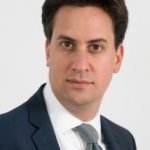
  • Ed Miliband – 2022 Comments on Shell’s Profits

    Ed Miliband – 2022 Comments on Shell’s Profits

    The comments made by Ed Miliband, the Shadow Climate and Net Zero Secretary, on 3 February 2022.

    With oil and gas profits booming in recent months because of the spike in energy prices, it is clearer than ever that the North Sea oil and gas producers who have made a fortune recently should be asked to contribute.

    Labour would keep energy bills low, and we wouldn’t be landing costs with bill payers as they head into a spring of higher taxes and rising prices.

    Our plan, part paid for with a one-off windfall tax on North Sea oil and gas profits, would save most households £200 off their bills, with targeted support of up to £400 on top of that to the squeezed middle, pensioners and the lowest earners.

    Labour will reform our broken energy system so we deliver the green transition we need, energy security, and bills that are affordable.

  • Rishi Sunak – 2022 Statement on the Energy Price Cap

    Rishi Sunak – 2022 Statement on the Energy Price Cap

    The statement made by Rishi Sunak, the Chancellor of the Exchequer, in the House of Commons on 3 February 2022.

    Mr Speaker,

    The UK’s economic recovery has been quicker and stronger than forecast.

    In the depths of the pandemic, our economy was expected to return to its pre-crisis level at the end of 2022.

    Instead, it got there in November 2021 – a full year earlier.

    Unemployment was expected to peak at nearly 12%.

    Instead, it peaked at 5.2% and has now fallen to just over 4% – saving more than 2 million jobs.

    And with the fastest growing economy in the G7 this year…

    Over 400,000 more people on payrolls than before the pandemic…

    And business investment rising…it’s no wonder Mr Speaker, that borrowing is set to fall from £320bn last year…

    …the highest ever peacetime level…

    …to £46bn by the end of this Parliament.

    As we emerge from the depths of the worst recession in 300 years, we should be proud of our economic record.

    The economy is stronger because of the plan we put in place; because of the actions we took to protect families and businesses.

    And that plan is working.

    But for all the progress we are making – the job is not yet done.

    Right now, I know the number one issue on people’s minds is the rising cost of living.

    It is the independent Bank of England’s role to deliver low and stable inflation – and the Governor will set out their latest judgements at midday today.

    And just as the government stood behind the British people through the pandemic…

    …so we will help people deal with one of the biggest costs they now face – energy.

    The energy regulator, OFGEM, announced this morning that the energy price cap will rise in April to £1,971 – an increase of £693 for the average household.

    Without government action, this would be incredibly tough for millions of hardworking families.

    So the government is going to step in to directly help people manage those extra costs.

    Mr Speaker,

    Before I set out the steps we are taking, let me explain what’s happening to energy prices, and why.

    People’s energy bills are rising because it is more expensive for the companies who supply our energy to buy oil, coal, and gas.

    Of the £693 increase in the April price cap, around 80% comes from wholesale energy prices.

    Over the last year, the price of gas alone has quadrupled.

    And because over 85% of homes in Britain are heated with a gas boiler, and around 40% of our electricity comes from gas, this is hitting households hard.

    The reasons gas prices are soaring are global.

    Across Europe and Asia, a long, cold winter last year depleted gas stores.

    Disruption to other energy sources like nuclear and wind left us relying more than usual on gas during the summer months.

    Surging demand in the world’s manufacturing centres in Asia…

    …at the same time as countries like China are moving away from coal…

    …is further increasing demand for gas.

    And concerns about a possible Russian incursion into Ukraine are putting further pressure on wholesale gas markets.

    And so prices are rising.

    Mr Speaker,

    The price cap has meant that the impact of soaring gas prices has so far fallen mainly on energy companies.

    So much so, that some suppliers who couldn’t afford to meet those extra costs have gone out of business as a result.

    It is not sustainable to keep holding the price of energy artificially low.

    For me to stand here and pretend we don’t have to adjust to paying higher prices would be wrong and dishonest.

    But what we can do is take the sting out of a significant price shock for millions of families…

    …by making sure the increase in prices is smaller initially and spread over a longer period.

    Mr Speaker,

    Without government intervention, the increase in the price cap would leave the average household having to find an extra £693.

    The actions I’m announcing today will provide, to the vast majority of households, just over half that amount – £350.

    In total, the government is going to help around 28 million households this year.

    Taken together, this is a plan to help with the cost of living worth around £9bn.

    We’re delivering that support in three different ways.

    First, we will spread the worst of the extra costs of this year’s energy price shock over time.

    This year, all domestic electricity customers will receive an upfront discount on their bills worth £200.

    Energy suppliers will apply the discount on people’s bills from October.

    With the government meeting the cost in full.

    That discount will be automatically repaid from people’s bills in equal £40 instalments over the next five years.

    This is the right way to support people while staying on track with our plans to repair the public finances.

    And because we are taking a fiscally responsible approach, we can also provide more help, faster, to those who need it most – the second part of our plan.

    We’re going to give people a £150 Council Tax rebate to help with the cost of energy, in April – and this discount won’t need to be repaid.

    And I do want to be clear with the House that we are deliberately not just giving support to people on benefits.

    Lots of people on middle incomes are struggling right now, too – so I’ve decided to provide the council tax rebate to households in Bands A to D.

    This means around 80% of all homes in England will benefit.

    And the third part of our plan will provide local authorities with a discretionary fund of nearly £150m…

    …to help those lower income households who happen to live in higher Council Tax properties…

    …and households in bands A-D who are exempt from Council Tax.

    We’re also confirming today that we’ll go ahead with existing plans to expand eligibility for the Warm Home Discount by almost a third…

    …so that 3m vulnerable households will now benefit from that scheme.

    And that’s not all we’re doing to help vulnerable households.

    We’re providing £3bn over this Parliament to help more than half a million lower income homes become more energy efficient, saving them on average £290 per year.

    Increasing the National Living Wage to £9.50 an hour in April, a pay rise of over £1,000 for 2 million low paid workers.

    And providing an effective tax cut for those on Universal Credit, allowing almost 2 million households to keep an average of £1,000 per year.

    The payment through energy suppliers will apply across England, Wales and Scotland.

    Energy policy is devolved in Northern Ireland, with a different regulator, and the government does not have the legal powers to intervene.

    So we will make sure the Executive is funded to do something similar, with around £150m for Northern Ireland through the Barnett formula next year.

    And because the Council Tax system is England only, total Barnett consequentials of around £565m will be provided to the devolved administrations in the usual way.

    Mr Speaker,

    I know that some in this House have argued for a VAT cut on energy.

    However, that policy would disproportionately benefit wealthier households.

    There would also be no guarantee that suppliers would pass on the discounts to all customers.

    And we should be honest with ourselves: this would become a permanent Government subsidy on everyone’s bills.

    A permanent subsidy worth £2.5 billion every year – at a time when we are trying to rebuild the public finances.

    Instead, our plan allows us to provide more generous support, faster, to those who need it most, providing 28m households with at least £200, and the vast majority receiving £350.

    It is fair, it is targeted, it is proportionate – it is the right way to help people with the spike in energy costs.

    Mr Speaker,

    Today’s announcements are just one part of the government’s plan to tackle this country’s most pressing economic challenges.

    A plan for growth – with record investments in infrastructure, innovation and skills.

    A plan to restore the public finances – with debt falling by the end of this Parliament.

    A plan to cut waiting lists and back the NHS with £29bn over three years and a permanent new source of funding.

    And, with the measures I’ve announced today – a plan to help with the rising cost of energy with £350 more in the pockets of tens of millions of hard working families.

    That’s our plan to build a stronger economy – not just today but for the long term.

    And I commend it to this House.
  • Ed Miliband – 2022 Statement on a Windfall Tax for Oil and Gas Producers

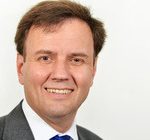
    Ed Miliband – 2022 Statement on a Windfall Tax for Oil and Gas Producers

    The statement made by Ed Miliband, the Labour MP for Doncaster North, in the House of Commons on 1 February 2022.

    I beg to move,

    That this House notes the cost-of-living crisis hitting families across the country and that the energy price cap is predicted to rise by 50 per cent from April; recognises that rocketing energy prices are hitting businesses as well as household budgets; calls on the Government to introduce a windfall tax on the profits of North Sea oil and gas producers; and further calls on the Government to use that windfall tax to help fund a package of support for families and businesses facing the energy price crisis.

    In the last few days, we have often heard the Government say that they are desperate to talk about the biggest issues facing the country. Conservative Member after Conservative Member has lined up to say that there is nothing they would rather do than end the distractions and talk about the burning issues facing people. I have to say, Madam Deputy Speaker, where are they all? Where are they? Today, we are giving them—[Interruption.] There are a few of them, but not very many. Today, we are giving them and the House the chance to talk about those issues, and there is no bigger issue facing families than the energy price crisis. For months, we have waited for the Government to tell us what it is that they are going to do and there has been silence. Today, we are making a generous offer to focus on what really matters and to give them the chance to support the principle of a windfall tax on the oil and gas companies to help to address the energy crisis.

    Let me set out the case. In just six days’ time, we will know the scale of the price cap increase to be announced by Ofgem. It is expected, on the latest gas prices, that there will be a £600 increase in the cap, on top of the £120 increase we have already seen. April’s increase alone is expected to drag 1.5 million more families into fuel poverty. Let us be absolutely clear what that means. Consider a recent Citizens Advice case of a man in his 60s from Devon who had given up his job as an engineer when he was diagnosed with spinal cancer. He had been claiming universal credit but cannot work and recently saw that drop by £20 a week. He told Citizens Advice:

    “I don’t buy the things I need to buy. I’m constantly looking at the bank account. I put things off as I can’t afford the petrol to drive. I feel isolated and stressed, but what can I do? I’m living in one room to keep the heat down as low as I possibly can, but everything is just mounting up. It’s direct debit after direct debit.”

    I have had similar cases in Doncaster. This is the reality facing millions in our country, and that is before the price cap has actually gone up. It is against the backdrop of inflation running at nearly 6% and the national insurance rise on top. So people are facing very difficult times. Businesses, too, are facing great difficulty as a result of what is happening.

    Dr Rupa Huq (Ealing Central and Acton) (Lab)

    Does not my right hon. Friend agree that the Government’s version of the energy price cap, along with “use it or lose it” penalties on developers, banning letting fees for tenants and gender pay gap reporting, have his fingerprints all over them from our 2015 Labour manifesto, but that, unfortunately, they have made the schoolboy error of copying homework incorrectly? That is why we now need a windfall tax to rectify those errors. In a parallel universe—the Miliverse—this was done right, but sadly it has been done all wrong by them!

    Edward Miliband

    I thank my hon. Friend for that intervention. I am old enough to remember when an energy price cap was living in a “Marxist universe” and now it is Government policy.

    The Federation for Small Businesses reports that 45% of members are seeing soaring costs from higher energy bills. Meanwhile, the Energy Intensive Users Group, representing vital industries such as steel and pharmaceuticals, has called repeatedly for “immediate action”.

    This is an economic crisis plain and simple. What is extraordinary is that the Government, months into the crisis, have not produced a single solution. Where is the solution? There can be no greater evidence of a Government paralysed by inaction. Millions of families who want reassurance are instead subject to the spectacle of a rule-breaking Prime Minister still too distracted by trying to save his own skin.

    Our case today is that millions of struggling families should not be left to face this situation alone and that we should do all we can to act. It is right to look to those benefiting from this crisis to make a contribution.

    John Redwood (Wokingham) (Con)

    I am glad the right hon. Gentleman is highlighting this issue. Does he agree that gas prices are a lot dearer in Europe and the UK than they are in America because we are short of gas here? Would it not therefore be a good idea for us to get more gas out of our North sea to ease the squeeze?

    Edward Miliband

    The right hon. Gentleman and I differ somewhat on this. The real problem is that we have not gone far enough or fast enough on the green transition. The more we are subject to the volatility of fossil fuels—the prices are set internationally—the more we are at risk of the kind of crisis we are seeing at the moment.

    If there is one principle that should get us through these tough times, it is that those with the broadest shoulders should bear the greatest burden. Britain’s families and businesses are facing the toughest times, but that is not true of everyone. For the oil and gas sector, the price spike has been a bonanza—a trebling of prices today compared with a year ago. Let us be clear about the effect that is having on oil and gas company profits.

    Listen to Bernard Looney, the chief executive of BP. He says this: the rise in prices is a “cash machine” for his company. Those were his words—a “cash machine”. Let those words ring in the ears of right hon. and hon. Members in this House. Let us be clear about who is on the other side of the cash machine: the British people. In other words, it is an ATM from which the oil and gas companies collect billions and into which the British people pay—people like the man in Devon who could only afford to heat one room. He is one of the millions paying into the cash machine for BP.

    Once the companies are withdrawing the cash from the cash machine, where is the unexpected windfall going? Let us not fall for the argument that may be made in this debate—that it is somehow going into investment or workers in the oil and gas sector. [Interruption.] The hon. Member for West Aberdeenshire and Kincardine (Andrew Bowie) says from a sedentary position that it is. Let me tell him that he is wrong. All the evidence is that the companies are so flush with cash that billions are being used to inflate the share price in buybacks from shareholders. BP did a share buyback of over £1 billion in August, but it was so overwhelmed with cash that it did another worth nearly £1 billion in November. Shell has done the same, with a £1.1 billion share buyback in December. But that is not enough: it says it will do another one, worth £4 billion, at pace, in 2022.

    This is simply a redistribution of wealth from the energy bills of the British people—those who can least afford it—to the shareholders of those companies. The question before us, then, is one that has confronted previous Governments: should we do something about the situation or say that it is wrong to take account of the windfall in the tax decisions that we make? I say that it is not wrong to take account of it—it is fair and it is right and it is principled.

    Tim Loughton (East Worthing and Shoreham) (Con)

    The right hon. Gentleman is setting out the problem, but the trouble is that his solutions do not add up. Does he acknowledge that last year Shell and BP, the two largest oil and gas producers, posted a £26.9 billion and £22.5 billion loss respectively? How much would his windfall tax get from those situations? Does he also acknowledge that the biggest investments in renewable energy—not least hydrogen, into which hundreds of billions are being invested—come from companies such as BP and Shell, which we need to continue investing in alternative non-fossil fuels?

    Edward Miliband

    I will answer all the hon. Gentleman’s points. We would raise £1.2 billion from the windfall tax. I will come to this later in my speech, but the tax position is incredibly generous for companies, including Shell and BP. He says that their money is going into renewables, but I am afraid that he is not correct. Shell’s near-term plans involve investment of just £2 billion to £3 billion in low carbon activities and £8 billion on upstream fossil fuel production. It is just greenwash to say that these companies have somehow moved out of fossil fuels and into renewables. The truth is that when profits have risen by billions and billions and when billions are being paid out in share buybacks, it is not credible that somehow a one-off tax rise, taking just a small proportion of the windfall profits that these companies did not expect, will somehow lead to a collapse in investment.

    There is a clear consensus that a windfall tax is the right thing to do. An overwhelming majority of people support it—including, I might point out to Government Members, three quarters of Conservative voters. I do not know what Conservative Members are waiting for: they should support a windfall tax because some of the people who vote for them—or used to vote for them, anyway—also support it. Leading charities have endorsed it and some Conservative Members, including the right hon. Member for Harlow (Robert Halfon) and the former business Minister the right hon. Member for Kingswood (Chris Skidmore), have supported it too.

    Of course the oil and gas companies do not want the windfall tax to happen. Let us take their arguments head on. As I have said, the argument that the tax will lead to a collapse in investment is not credible given what the companies are doing with this windfall, and it also misunderstands the long-term basis of these companies’ investment plans. I should also point out that the companies would keep a significant proportion of the windfall, even under our proposals. It is an unexpected, unearned windfall, half of which they would keep.

    Secondly, as I said to the hon. Member for East Worthing and Shoreham (Tim Loughton), the proposal comes against a backdrop of the incredibly generous tax position in the UK, which meant that BP and Shell actually paid no net tax at all between 2018 and 2020.

    Thirdly, there is a wider context. [Interruption.] The hon. Member for East Worthing and Shoreham is muttering, from a sedentary position, that those companies are not making profits. Actually, they are forecast to make near-record profits this year, as the hon. Gentleman will see if he looks at what outside analysts are saying.

    As I was saying, there is a wider context. The oil and gas sector provides important employment for our country and communities. We need a phased transition, but, as I said to the hon. Gentleman, the long-term answer to this crisis is not more reliance on fossil fuels. Indeed, the Business Secretary himself has said:

    “the UK is still too reliant on fossil fuels.”—[Official Report, 20 September 2021; Vol. 701, c. 95.]

    The answer must be instead to go further and faster on renewables, nuclear and other zero-carbon alternatives, but that is not what the fossil fuel companies are doing with their profits.

    Matt Western (Warwick and Leamington) (Lab)

    My right hon. Friend is making a powerful speech. He has identified the immediate issue of energy poverty and crisis that we have in this country. Those of us who are old enough to have lived through the 1970s and 1980s recall how the Norwegians used the wealth generated from the North sea to create sovereign wealth funds. Should we not be thinking about that? Could we perhaps not just use the windfall tax, but deploy such funds in the way that my hon. Friend is describing, to invest in renewables and invest in our country?

    Edward Miliband

    My hon. Friend has made a powerful point.

    Labour has come up with a clear and costed plan. We plan, by levying the windfall tax, to reduce VAT to zero, to increase the warm homes discount from £150 to £400, and to extend it from the 2.2 million families who currently receive it to 9 million. On top of that, we have set aside £600 million to help our businesses out. This is in stark contrast with what is being proposed by the Conservatives—the Government of the day, who, six days before the announcement of the rise in the price cap, seem to have nothing to say. What is their explanation for why they are not acting? It is very hard to find the explanation, although perhaps we will hear one today. The one person who has ventured to provide one is the Education Secretary, who has said:

    “A windfall tax on oil and gas companies that are already struggling in the North Sea is never going to cut it.”

    Even the oil and gas companies do not describe themselves as struggling. They say that this is a cash machine. I have to ask what planet the Government are living on. Does it not say everything about them that it is the struggles of companies making billions from an expected windfall that stir them, not the struggles of the British people? How dare they leave families in the lurch because of their refusal to stand up to vested interests in the oil and gas sector?

    Alan Brown (Kilmarnock and Loudoun) (SNP)

    In 1998, when Labour was in power, oil prices bottomed out at $12 a barrel. By 2008, the price had risen to nearly $100 a barrel. What did Labour do with that money? It is regrettable that it did not create an oil sovereign fund, as Norway did.

    Edward Miliband

    I am very proud of the investments that the last Labour Government made in our public services.

    Alexander Stafford (Rother Valley) (Con)

    Will the right hon. Gentleman give way?

    Edward Miliband

    No, I am going to make progress.

    The truth is—we cannot get away from it—that the Conservatives are a party bankrolled to the tune of nearly £5 million by oil and gas interests since 2016. Bankrolled by oil and gas executives, they cannot act on behalf of the British people.

    Let me end by saying this. The British people are fed up with what they have seen from the Government in recent months. They want a Government who are on their side. They want a Government who will act for them. That is why we need a windfall tax. It is a test of whose side they are on, and whose side we are all on in this House—on the side of gas and oil companies making billions of profits, or on the side of millions of struggling families. We know whose side we are on. If this Government were truly on the side of the British people, they would act, and that is why I urge Members on both sides of the House to vote for our motion tonight.

  • Kwasi Kwarteng – 2022 Statement on Sizewell C

    Kwasi Kwarteng – 2022 Statement on Sizewell C

    The statement made by Kwasi Kwarteng, the Secretary of State for Business, Energy and Industrial Strategy, in the House of Commons on 27 January 2022.

    The UK was the first major economy to legislate for a target of net zero greenhouse gas emissions by 2050. As set out in the net zero strategy and the Prime Minister’s 10-point plan for a green industrial revolution, nuclear will continue to be an important and reliable source of clean electricity as we strive to decarbonise the UK economy. By 2050, we expect that the electricity system will be built on a foundation of renewables such as wind and solar, but these will need to be bolstered by reliable low-carbon power. The UK Government recognise that large-scale nuclear is the only proven technology available to provide continuous, low-carbon electricity at scale. Ministers are therefore firmly committed to deploying new nuclear in order to strengthen Britain’s energy security and reduce our exposure to volatile global gas prices, provided there is clear value for money for consumers and taxpayers.

    In 2016 we took the decision to enter into a contract for difference over Hinkley Point C in Somerset, which is currently under construction and expected to begin generating power by 2026, when it will start providing 3.2 GW of electricity. However, with five of the UK’s six nuclear stations scheduled to close by 2028, the Government have made a commitment to bring a further large-scale nuclear project to a final investment decision during this Parliament, subject to value for money and all relevant approvals. To facilitate this, we have introduced legislation for a new financing mechanism, the regulated asset base (RAB) model, through the Nuclear Energy (Financing) Bill. It is estimated that RAB could lower the cost of each new large-scale nuclear power project by more than £30 billion, compared to the existing contracts for difference model. The RAB model is also expected to reduce Britain’s reliance on overseas developers for finance by substantially widening the pool of private investors to include British pension funds, insurers and other institutional investors from like-minded countries.

    After Hinkley Point C, the Sizewell C project in Suffolk is the most advanced nuclear project in the UK. As a replica of Hinkley Point, Sizewell offers a high level of design maturity and an identified supply chain. The company developing the project has applied for both a development consent order and nuclear site licence and believes it can begin construction during this Parliament. If built, the new plant could deliver around 7% of the UK’s current electricity needs (enough to power the equivalent of around 6 million homes) and create tens of thousands of jobs across the country. New nuclear is not only at the heart of our plans to ensure greater energy independence, but to drive economic growth.

    The Government entered into Sizewell C project discussions in January 2021. Following significant investment from EDF, the project requires additional financial support to further mature it to a point where other private investors (and, subject to value for money considerations and relevant approvals, the Government) could consider a direct investment in the project development company. Sufficient early development funding prior to the construction of major projects is a key determinant of subsequent project performance, and to this end the Prime Minister’s 10-point plan committed in 2020 to provide nuclear development funding for this purpose.

    I am pleased to announce that I will today enter into an option agreement with EDF Energy Holdings Ltd, which provides Government with an option over the land at Sizewell C and conditionally over the shares in the development company in exchange for an option fee of £100 million. EDF Energy Holdings Ltd will invest that £100 million in further developing the Sizewell C electricity infrastructure project. Should the project reach a successful final investment decision, subject to value for money and all relevant approvals, the Government would recover this funding together with a financing return, either through an equity stake in the project, or in cash.

    This agreement represents an important milestone for both the Government’s nuclear strategy and the project, which has the potential to significantly contribute to the UK’s decarbonisation and security of supply objectives. However, I am clear that this agreement does not represent a Government decision that the Sizewell C project will progress. Neither is it an indication that similar commercial arrangements would necessarily be desirable for other prospective nuclear projects. Decisions on the Sizewell C Project will be dependent on decisions in respect of planning and designation under the Nuclear Energy (Financing) Bill if passed into law.

    Noting that the future of the Sizewell C project is not confirmed, the agreement the Government have reached with EDF provides the taxpayer with downside protection should the project not proceed. In return for the £100 million, the Government will be granted an option on the Sizewell site and conditionally over the shares in certain circumstances of the development company. In the event the negotiations with EDF do not successfully result in a positive investment decision satisfactory to all parties, then subject to certain conditions, taxpayers would be entitled to seek acquisition of either EDF’s shares in the Sizewell C development company or the site itself, or if neither can be delivered by EDF, the taxpayer would be entitled to a reimbursement of the £100 million with a financing return. This in turn would provide Government with the possibility of proceeding with alternative nuclear or low-carbon infrastructure, and therefore support the realisation of our net zero objectives.

    Today’s announcement further demonstrates our commitment to energy security, investing in our thriving nuclear sector and creating thousands of jobs.

  • Lee Rowley – 2022 Statement on Sizewell C Power Station

    Lee Rowley – 2022 Statement on Sizewell C Power Station

    The statement made by Lee Rowley, the Parliamentary Under-Secretary of State for Business, Energy and Industrial Strategy, in the House of Commons on 14 January 2022.

    This statement concerns the application for development consent made under the Planning Act 2008 by NNB Generation Company (SZC) Limited for the construction and operation of the Sizewell C nuclear power station, with associated infrastructure near Leiston in Suffolk.

    Under section 98(3) of the Planning Act 2008, the examining authority must submit its report to the Secretary of State by the end of the period of three months beginning with the deadline for completion of its examination of the application, or, if earlier, the end of the day on which it completes the examination, unless the Secretary of State sets a new deadline under section 98(4) of that Act. Where a new deadline is set, the Secretary of State must make a statement to Parliament to announce it.

    A request has been made to the Secretary of State by the planning inspectorate to extend the report writing stage of the examination by six working weeks, from 14 January 2022 to 25 February 2022. The reasons given for this request were that a significant number of change requests were submitted by the applicant during the pre-examination and examination stages of the planning process. These changes require significant additional consideration from the examining authority. The examining authority has also been affected by unexpected health issues which have impacted upon the reporting stage of the process.

    Taking these reasons into account and, after careful consideration, the Secretary of State has decided to reset the statutory timescale for the report writing stage, extending the deadline for the examining authority to submit its report to the Secretary of State by six working weeks, from the original deadline of 14 January 2022 to 25 February 2022.

    However, mindful of the need to avoid unnecessary delays to the development consent processes, the Secretary of State requests the examining authority make best efforts to complete its report as soon as is reasonably practicable within the extended period.

    The decision to set the new deadline for the report writing stage for this application is without prejudice to the decision on whether to grant or refuse development consent.

  • Anne Marie Morris – 2022 Comments on Losing the Conservative Whip

    Anne Marie Morris – 2022 Comments on Losing the Conservative Whip

    The comments made by Anne Marie Morris, the MP for Newton Abbott, on 12 January 2022 after losing the Conservative Party whip for supporting cuts to energy bills.

    It is deeply disappointing to have had the whip removed by the government, especially on a matter of simply standing up for what I believed to be the best interests of my constituents.

    I believe removing VAT is the right thing to do and I won’t apologise for supporting measures that would help my hard-working constituents at a time when the cost of living is rising.

    I believe that any disagreement over parliamentary procedure will always come second to standing up for the best interests of my constituents.

  • Ed Miliband – 2022 Comments on Michael Gove’s Promise to Cut Tax on Energy

    Ed Miliband – 2022 Comments on Michael Gove’s Promise to Cut Tax on Energy

    The comments made by Ed Miliband, the Shadow Climate Change and Net Zero Secretary, on 11 January 2022.

    Broken promises don’t pay the bills.

    Both Boris Johnson and Michael Gove promised to cut VAT on energy bills. But when push comes to shove, when families and pensioners really need support, they’ve broken that commitment.

    While Michael Gove backpedals, Rishi Sunak is missing in action.

    Labour would give families security by immediately cutting VAT on energy bills now – part of our plan to save households around £200 or more, with extra support for those feeling the squeeze the most, paid for by a windfall tax on oil and gas companies facing record profits.

    A Labour government will invest in renewables, nuclear and upgrading homes to solve the long term problem that the Conservatives have created in our broken energy system.

  • Pat McFadden – 2022 Comments on Rising Energy Bills

    Pat McFadden – 2022 Comments on Rising Energy Bills

    The comments made by Pat McFadden, the Shadow Chief Secretary to the Treasury, on 6 January 2022.

    The Government’s incompetence and failure has contributed to this crisis – destroying UK gas storage, regulation failures which customers will now have to pay for and more.

    Ministers could ease the burden on families right now by cutting VAT on energy bills.

  • David Cameron – 2006 Speech on Energy to the LGA Conference

    David Cameron – 2006 Speech on Energy to the LGA Conference

    The speech made by David Cameron, the then Leader of the Opposition, on 6 July 2006.

    “Thank you for inviting me to speak to you today.

    I want to talk about the importance of local democracy and the potential of local government.

    About what Joseph Chamberlain, in 19th century Birmingham, called the “municipal gospel” – the good news of reform, improvement and rebuilding.

    If ever a city needed a gospel, 19th century Birmingham was it.

    I am sorry to say the city was in the grip of rather reactionary civic leaders, called “the Economists”, whose only concern was to keep the rates down.

    They did not believe in “improvement”, especially when it cost money.

    But Chamberlain had a bolder vision for Birmingham.

    Using legislation passed by Disraeli’s government he cleared slums and built Corporation Street in their place.

    The centre of Birmingham became an economic powerhouse, and a place of beautiful urban design.

    Now I wouldn’t want to do everything Chamberlain did.

    I wouldn’t take the gas and water companies into public ownership, for instance.

    But I do want us to recover his spirit.

    The spirit of civic pride.

    For there are great things which local government can do.

    And there is a growing realisation in our country that many decisions that are now made centrally would be better made locally.

    So today, I’d like to set out my vision for empowering local government.

    And I’d like to illustrate that vision with a specific example of how local government can help tackle the great challenges we face.

    That example is climate change, where local government has a huge part to play in meeting our national – indeed our international – ambitions.

    In all our work on local government, I’m extremely fortunate to have the support and advice of an incredibly strong team that really understands the issues.

    People like Caroline Spelman and Eric Pickles.

    Sandy Bruce-Lockhart.

    A growing number of talented and experienced council leaders.

    And I want to make it clear today that we want to work with talented local government leaders across the political spectrum.

    No one party has a monopoly on wisdom, and we should be generous and open-minded in celebrating and learning from success, whatever the party label.

    PAST CONSERVATIVE COMMITMENT TO LOCALISM

    I know that devolution and deregulation have been the buzzwords of this conference.

    Government ministers have stood here this week and promised to hand more power and control back to local government.

    I was as delighted to hear that – as no doubt you were too.

    And I hope that you will approve of the localising vision that I will set out today.

    But first I think a note of humility is in order.

    It’s easy for Westminster politicians to talk about giving up power.

    But in practice, devolving power seems the hardest thing to do.

    This is certainly true of the last Conservative government.

    Despite our deepest Conservative values and instincts…

    …trusting people…

    …sharing responsibility…

    …believing that government should be closer to people, not further way…

    …the last Conservative government introduced a number of measures that centralised, rather than localised power.

    Of course there were some moves in the opposite direction, like local management of schools and the transfer of responsibilities in social care.

    And of course there were strong arguments at the time for the centralising measures that were taken.

    Protecting people from the costs of politically extreme councils.

    Promoting efficiency.

    Helping create jobs and wealth by stopping business from being fleeced.

    TODAY’S CONSERVATIVE COMMITMENT TO LOCALISM

    Well, since then, times have changed.

    Conservative leaders have certainly changed.

    That is, incidentally, one area where I am trying to reduce the rate of change.

    But my Party as a whole is changing.

    So I stand before you today, perhaps not quite a repenting sinner…

    …but at the very least an enthusiastic disciple of the localist creed.

    So what does that mean in practice?

    Today I want to set out four specific commitments that demonstrate our determination to give you more power…

    …empowering you to serve your local communities better.

    FOUR SPECIFIC COMMITMENTS

    First, we will address the democratic deficit caused by regionalisation and regional Assemblies.

    I believe passionately that Regional Assemblies are a costly and unnecessary bureaucratic barrier between local government and local people.

    Our position on Regional Assemblies could not be clearer.

    We will abolish them and return their powers to the local authorities where they belong.

    Secondly, we will address the cost and hassle imposed on councillors by the Standards Board.

    While its intent is positive, its bureaucracy just gets in the way.

    So we will abolish that too.

    Third, we will untie your hands when it comes to spending money.

    You know better than anyone what your local communities need.

    So you should be free to make your own spending priorities.

    We will progressively phase out the ring-fencing of government grant.

    All in all, we need a bonfire of the directives, audit systems, best value regimes, ring-fencing and all of the stark paraphernalia of the Whitehall control-freak regime that tells local authorities what they can and can’t do.

    My fourth commitment is about the structure of local government.

    I don’t think we need another local government reorganisation.

    We want to see stability in local government structures, and so we would scrap the review that David Miliband started. It’s wasting time, it’s setting council against council – and it’s a distraction from the real task of improving services and increasing efficiency.

    We will not hold yet another review of options like the creation of unitary authorities.

    We understand the value of civic pride, the impact of local democracy, and the inspiration that strong local leadership can bring.

    TACKLING CLIMATE CHANGE: A LOCAL GOVERNMENT PRIORITY

    There’s another powerful way of illustrating our commitment to localisation.

    It is to focus on what I believe is one of the greatest challenges for local government.

    Twenty years ago, at the height of the cold war, local councils had a key role in contingency planning for the greatest threat to the survival of mankind.

    Namely, a nuclear exchange between the two superpowers.

    The world has changed dramatically since then.

    Today, in the twenty first century, the greatest long term threat this planet faces is climate change.

    I’ve seen the evidence for myself.

    Earlier this year, I went to the Arctic.

    That’s where temperatures are rising faster, and where the effects of climate change are more pronounced.

    The consequences of those effects – the melting of the ice and the rise in sea levels – are potentially catastrophic for the rest of the world.

    I had the opportunity to interrogate the experts and put the arguments of the sceptics.

    It left a lasting impression, and it left me convinced that we must all rise to this great challenge.

    And in the battle against climate change, here in Britain, local government is in the front line.

    That’s because there is a direct connection between the choices we all make in our daily lives, at a local level, and the future of our planet.

    And I passionately believe that we all have a shared responsibility to rise to the challenge of climate change.

    My responsibility as a national politician is clear.

    To provide leadership.

    To push the issue up the political agenda.

    To champion the innovation and fresh thinking we need.

    And to set tough targets for reducing our carbon emissions.

    Your responsibility as local political leaders is also clear.

    To look at every aspect of local government and ask:

    How can we change the way we do things so we reduce our carbon emissions?

    How can we use less energy?

    How can we help local people and organisations to use less energy?

    How can we change the energy we use?

    THE CLIMATE CHANGE OPPORTUNITY

    I am fundamentally optimistic about our ability to rise to this challenge.

    I know that Britain is today lagging behind many other countries in our response to climate change.

    But it doesn’t always have to be like that.

    We here in Britain can lead the world in a decade if we act decisively today.

    That does mean radical changes in the way we live, work and play.

    But that doesn’t mean putting a brake on progress – far from it.

    When I think about climate change and our response to it, I don’t think of doom and gloom, costs and sacrifice.

    I think of a cleaner, greener world for our children to enjoy and inherit.

    I think of the almost unlimited power of innovation, the new technologies, the new products and services, and the progress they can bring for our planet and all mankind.

    Local government has a critical role to play.

    Think about the impact you have:

    The planning system… housing …

    … the massive purchasing power of local government procurement…

    … and the impact of education in our schools.

    Local councils have a vital part to play in delivering a low carbon future.

    We need to waste less energy; to generate more energy locally, and to generate more energy from renewable sources.

    Local authorities can make it happen, and I want to give you all the encouragement and help you need.

    DECENTRALISED ENERGY

    It will involve a new way of thinking about energy.

    Put simply, we need to move away from the old-fashioned top-down model of energy supply.

    The future of energy is not top-down, it’s bottom-up.

    In a word, the future’s not centralised – it’s decentralised.

    Decentralised energy – electricity generated in smaller, more local units like neighbourhood combined heat and power schemes – could make a huge contribution to reducing carbon emissions and improving energy efficiency.

    Decentralised energy offers an exciting vision of 21st century energy supply, re-engineering the system and opening it up to new, smaller technologies and more local participants.

    But we’ll never realise that vision unless we change our attitude to energy.

    In Britain we are still lumbered with the same backward-looking, central-planning mindset that has dominated thinking on electricity since the first half of the last century.

    There will always be a need for a robust and secure National Grid.

    Energy security is vital, but it is a myth that it can only be provided from remote and inefficient power stations…

    …or that electricity has to travel hundreds of miles to market.

    We live in a fast-changing world of scientific research and innovation.

    We’re on the brink of amazing technological breakthroughs that could transform the effectiveness and affordability of green energy options.

    I want Britain to be at the forefront of the green energy opportunity, and I want local government to be in the forefront of Britain’s environmental progress.

    That in turn requires action from national government.

    We need to spark a new green energy revolution in this country.

    We must remove the barriers that stand in the way of exciting innovation in fields like renewable and decentralised energy.

    BEST PRACTICE

    Already councils up and down the country are taking the lead in pioneering 21st century solutions to the new energy challenge.

    Last month, I presented the Ashden Awards which highlight and reward the successful use of sustainable energy.

    One of the main awards was won by Barnsley Council which has pioneered the most extensive application of biomass heating in the UK, using waste wood to heat community housing and other public buildings.

    They’ve taken out the old coal and gas burners and put in new ones that burn woodchips.

    As a result, the council has saved nearly 3,000 tonnes of carbon dioxide emissions a year.

    And Woking Borough Council isn’t waiting for a global solution to climate change.

    It has pioneered the use of decentralised energy to reduce carbon emissions.

    Combined heat and power; solar power, geothermal power, hydrogen fuel cells.

    All are playing a part in meeting Woking’s energy needs.

    In total Woking has been able to reduce its carbon emissions by a staggering 77% across its municipal estate.

    I want to see these islands of local government innovation become the everyday experience right across Britain.

    ENERGY REVIEW

    This needs vision and leadership from national government to set the right framework and create the right incentives.

    Today, we are publishing the interim findings of our own Energy Review.

    We have consulted widely with industry leaders and relevant experts.

    There is much more detailed policy work to be done.

    And we will study the conclusions of the Government’s own Energy Review carefully.

    But we are clear about our strategic objectives, the key principles that underpin our approach, and the policy direction we are taking.

    Our strategic objectives should be to reduce carbon emissions from the electricity supply industry and to guarantee an affordable and secure electricity supply.

    The policy direction we’re taking is based on two key principles.

    First, that government’s role should be to set the right framework for emissions reductions and energy security.

    Government should not be in the business of specifying a particular mix of electricity generation capacity.

    Our second principle is that industry’s role should be to develop the best and most affordable technology within this framework.

    We think it’s wrong to start with the technology you want to see, and set the framework afterwards.

    These principles, applied to the strategic objectives of carbon reduction and affordable energy security, point towards the three main components of the policy direction we are taking.

    We can guarantee carbon reduction by developing a long-term ‘cap and trade’ regime for carbon emissions.

    That means setting a limit on the overall amount of carbon dioxide that the electricity sector can emit, and allowing generators to buy or sell permits to emit carbon dioxide within the overall cap.

    We can guarantee that there will always be enough electricity generating capacity to keep the lights on by establishing a capacity payment system.

    That means paying generators to have spare capacity on stand-by.

    And we can spark a revolution in green energy by improving the regulatory structure for renewable and decentralised energy.

    That means getting rid of all unreasonable obstacles to investment in renewable and decentralised energy, for example making it easier for local generators to sell any spare electricity they generate back to the National Grid.

    There must be a level playing field for renewable and decentralised energy to compete on equal terms with nuclear power.

    That means, for example, improving and streamlining planning procedures both for nuclear and for green energy.

    ENERGY REVIEW SUMMARY

    So our position is clear.

    Guaranteed carbon reduction to tackle climate change.

    Combined with guaranteed security of energy supply to make sure the lights stay on.

    We want to give green energy a chance.

    That means no special favours or subsidies for nuclear power.

    Where the Government see nuclear power as the first choice…

    Under our framework it would be a last resort.

    Where the Liberal Democrats rule out nuclear power…

    We rule out subsidies and special favours for nuclear power.

    That is the strong and responsible position to take.

    CONCLUSION

    In renewable and decentralised energy, as in so many areas, councillors of all parties can lead a revolution in the way that Britain is run.

    There is an appetite for change.

    A hunger for progress.

    And a thirst for more local democracy and participation.

    I can feel it at this conference and I can feel it everywhere I go.

    Out there are the 21st century Chamberlains, the civic leaders who will be talked about in another hundred years’ time.

    Remembered for their vision.

    Recognised for their achievements.

    Rewarded with the legacy of strong communities and lasting civic pride.

    My job is to give you the power to make it happen.

  • Kwasi Kwarteng – 2021 Statement on Bulb Energy Going into Administration

    Kwasi Kwarteng – 2021 Statement on Bulb Energy Going into Administration

    The statement made by Kwasi Kwarteng, the Secretary of State for Business, Energy and Industrial Strategy, in the House of Commons on 24 November 2021.

    As many people in the House will know, when energy suppliers leave the market, the regulator, Ofgem, runs a competitive supplier-of-last-resort process. Last week, Bulb informed the Government and Ofgem that it would be leaving the market. Ofgem has advised that the supplier-of-last-resort process is not viable for Bulb because of the size of its customer book. Ofgem has, with my consent, applied to the court to appoint energy administrators. If appointed by the court, the administrators will continue to operate Bulb under what is called the special administration regime, which is set out clearly in legislation.

    We will update the House once the court has made its determination, but I wish to clarify a couple of points. First, a special administration regime is a temporary arrangement that provides an ultimate safety net to protect consumers and ensure continued supply. The special administration regime will keep bills at the lowest cost that it is reasonably practical to incur while ensuring that the market remains stable. The House should understand that we do not want the company to be in this temporary state for longer than is absolutely necessary. Supplies remain secure and credit balances will be protected. Finally, all domestic customers in Great Britain are, of course, protected by the energy price cap, which remains firmly in place.