Category: Culture

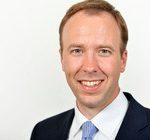
  • Matt Hancock – 2021 Comments on Pilot Events with Large Audiences

    Matt Hancock – 2021 Comments on Pilot Events with Large Audiences

    The comments made by Matt Hancock, the Secretary of State for Health and Social Care, on 5 April 2021.

    We are all longing to see stadiums full of sporting fans and gigs packed with music lovers, but as we continue the roll out of our vaccination programme, we must find a way to do so safely.

    By piloting a range of measures to reduce transmission, we can gather vital scientific evidence to inform our plans for allowing events in the future.

    Thanks to the input of our clinicians and the best science available, we can prepare for the moment where we will be able to gather again in some of our best-loved cultural venues.

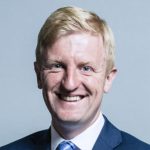
  • Oliver Dowden – 2021 Comments on Pilot Events with Large Audiences

    Oliver Dowden – 2021 Comments on Pilot Events with Large Audiences

    The comments made by Oliver Dowden, the Secretary of State for Digital, Culture, Media and Sport, on 5 April 2021.

    Our sports stars and great performers need us to find ways to get bums back on seats safely. This science-led pilot programme will be the springboard in getting the buzz back of live performance. We’ve supported the sports and arts with unprecedented sums, but it’s now time to make that Great British Summer of live events a reality.

  • Oliver Dowden – 2021 Comments on the Culture Recovery Fund

    Oliver Dowden – 2021 Comments on the Culture Recovery Fund

    The comments made by Oliver Dowden, the Secretary of State for Digital, Culture, Media and Sport, on 2 April 2021.

    Our record breaking Culture Recovery Fund has already helped thousands of culture and heritage organisations across the country survive the biggest crisis they’ve ever faced.

    Now we’re staying by their side as they prepare to welcome the public back through their doors – helping our cultural gems plan for reopening and thrive in the better times ahead.

  • Oliver Dowden – 2021 Comments on Broadband

    Oliver Dowden – 2021 Comments on Broadband

    The comments made by Oliver Dowden, the Secretary of State for Digital, Culture, Media and Sport, on 1 April 2021.

    Our plan to level up communities across the UK by giving them the fastest broadband on the planet is working. We’re now on track to connect 60 per cent of homes and businesses to gigabit speeds by the end of the year and I’m thrilled to see the tens of thousands of jobs being created as we build back better from the pandemic.

    But we want to go further and faster, which is why today the Prime Minister and I sat down with the biggest names in broadband to discuss what more we can do together to end the battle over bandwidth.

    It was a useful and constructive meeting where we emphasised our goal to speed up investment from our £5 billion Project Gigabit fund if providers can put forward workable plans to accelerate the delivery of lightning-fast connections for every part of the UK.

  • Oliver Dowden – 2021 Comments on Support for Sports

    Oliver Dowden – 2021 Comments on Support for Sports

    The comments made by Oliver Dowden, the Secretary of State for Digital, Culture, Media and Sport, on 27 March 2021.

    We know that the restrictions on spectators continue to have consequences for many sports. That includes Rugby Union and its clubs at the elite level through to the grassroots.

    That’s why we’re helping our major spectator sports, with money already benefiting more than 100 organisations, from women’s football, to netball, badminton and basketball, with more to follow as we navigate our roadmap back to normality.

    This funding will support the survival and continued visibility of men’s domestic rugby union at the highest level, allowing the league to complete its season.

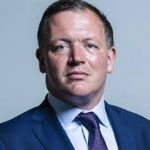
  • Damian Collins – 2021 Speech on the Department for Digital, Culture, Media and Sport

    Damian Collins – 2021 Speech on the Department for Digital, Culture, Media and Sport

    The speech made by Damian Collins, the Conservative MP for Folkestone and Hythe, in the House of Commons on 10 March 2021.

    The Government have provided substantial support for the cultural, sporting and creative sectors since the start of the covid pandemic. This has been welcome but also essential, as many organisations within these sectors rely on revenue from tickets and events to survive. Through no fault of their own, they have been required to close, and the cultural recovery fund, in addition to the funding to support sports and TV and film production, has helped many important bodies to keep going that otherwise might have closed for good.

    However, we now need to focus on the road ahead, through to the lifting of the covid social contact restrictions on 21 June and beyond. The coronavirus has challenged the whole of our society, but it has also exposed further weaknesses in sectors that in some cases we already knew about. The point has been well made about the need for pandemic insurance for the events industry. Events and live performances have already become incredibly important to the music sector, because the remuneration that artists get from on-demand streaming services is relatively low, but these events will not take place unless an insurance scheme can be put in place.

    This is not just about events that could be held this summer; it needs to be done on an ongoing basis. It could be some time before the industry has any certainty, because new variants of covid might require further restrictions on the capacity of audiences and therefore restrict the viability of the event itself. Just as, several years ago, the Government partnered with the insurance industry to create Flood Re to minimise the risk of flood insurance and reduce the costs, we need a similar scheme to help to make insuring live events viable and reduce the cost to people putting on those events.

    In football, the lack of a strong national governing body for the sport that is able to ensure fair dealing in financial matters has been badly exposed. Many football clubs were in great distress before the pandemic struck. Clubs in the championship division of the English football league were routinely spending more than they earned each year on players’ salaries alone, and were running a financially unsustainable model. There has been no real recognition of the impact of the covid restrictions on professional football. The money within the game has not been enough to solve all the problems, and the support that has been given is minimal. Many clubs continue to rack up large debts. At the moment, a lot of the football league is being run on unpaid taxes. It is believed that the amount of unpaid taxes owed to HMRC by football clubs could be in the hundreds of millions of pounds. We need a proper financial regulator for football to ensure that clubs are run on a sustainable basis for the long term, but in the short term we may need to look at how some sort of financial assistance can be given to those most in distress. Clubs outside the premier league are largely community assets, and they need to be run in a sustainable way.

    I want to make two other points briefly. The last 12 months have exposed just how influential disinformation and hate speech on social media can be, particularly in relation to anti-vaccine campaigns to undermine confidence in the vaccine and spread conspiracy theories about the pandemic. It makes the bringing forward of the online harms Bill this year so important for the Department, and we must also ensure that there are proper resources for Ofcom, as the regulator, to ensure that there can be proper auditing and inspection of the way social media companies respond to campaigns of disinformation and hate speech, and other speech that can cause harm through social media networks. We have been talking about this for many years and I am glad that the Bill is coming, but it is also an imperative.

    Finally, the pandemic has also had a big impact on the advertising industry and broadcasting revenues from advertising, just as other media have struggled with revenue from advertising. There is no guarantee that this money will bounce back, particularly as audiences are increasingly diverting their attention to online services—social media to receive news and on-demand platforms to view content. Increasingly, many people spend time not watching broadcast material at all, but playing games and doing other things online. This potentially undermines the public service broadcasting model in this country. I welcome the fact that we have the PSB review, but we need to understand that the long-term impacts of rising production costs for television due to the impact of Netflix and Amazon Prime and of declining advertising revenues because of switching audience attention are fundamentally changing the market, and if we have media that—

    Madam Deputy Speaker (Dame Rosie Winterton)

    Order. I am afraid we do have to move on.

  • Kevin Brennan – 2021 Speech on the Department for Digital, Culture, Media and Sport

    Kevin Brennan – 2021 Speech on the Department for Digital, Culture, Media and Sport

    The speech made by Kevin Brennan, the Labour MP for Cardiff West, in the House of Commons on 10 March 2021.

    It is a pleasure to follow the Chair of the Select Committee, the hon. Member for Solihull (Julian Knight). Although we are on different political sides, those of us who serve on the Committee are in complete agreement on these issues.

    Last week, when we debated the cultural and entertainment sectors, I made a few points on which I thought the Government could act in the Budget. The first related to the plight of freelance musicians, artists and others who have been excluded from the Chancellor’s criteria for support. I pointed out that in Wales some funds have been set aside for support, but that what we really needed was cross-UK action from the Chancellor. The Chancellor has done the very minimum in his Budget, by simply recognising that it has been so long for some of the excluded—that is, the newer self-employed—that they have now become eligible for the self-employment income support scheme. He has done nothing to support those excluded by his arbitrary criteria. He has decided that they are to be treated as second-class citizens. It is deliberate and unjust, and it will not be forgotten by musicians, artists and others who have been snubbed.

    My second point was on the need to help to restart the live music sector with, as the Select Committee Chair said, a Government-backed insurance scheme. Our Committee wrote to the Chancellor to call for such a scheme and the response from the Government was a classic example of blinkered Treasury thinking. The insurance market cannot provide the cover needed for festivals because of covid uncertainty. The Government say that they have an irreversible plan for reopening; were they to underwrite a scheme, that would show confidence in not only live music but their own pronouncements. If their own words turned out to be true, they would never have to pay out anything.

    Other countries have taken similar action, with much lower vaccine roll-out rates, and of course it is being done for film and television. For the want of a tent peg, many festivals will have to be collapsed this summer. That is the Chancellor’s second failure of policy and action. As the Select Committee Chair pointed out, there are now opportunities for the scammers and outlaw companies such as Viagogo to take advantage by once again ripping off people who want to buy tickets for events that might never happen and might never exist.

    Thirdly, the Chancellor should have announced a scheme to ensure that musicians and artists could resume touring in EU countries. I note the launch of the “Carry on Touring” campaign’s website today. On social media today I saw the case of someone called Ed Lyon, a classical musician who has just spent six weeks and £945 to obtain a work permit for Belgium. Previously, in normal times, he could have just hopped on a train. The Chancellor is utterly complacent about the loss of export earnings to UK that this continuing fiasco will bring. Lord Frost is now his Cabinet colleague. Why has he not been told to do the job that he so abjectly failed to do in December when he delivered a no-deal Brexit for artists, musicians and their ancillary support industries?

    This Budget, despite some investment, did not do nearly enough to save jobs and support growth in the creative industries—the sectors with the fastest growth potential. It has left freelance workers out in the cold, it has thrown a summer of music into a muddy field of uncertainty and it has closed the gate on touring for our creative artists and musicians. Far from doing “whatever it takes”, it has taken away the opportunity to create.

  • Julian Knight – 2021 Speech on the Department for Digital, Culture, Media and Sport

    Julian Knight – 2021 Speech on the Department for Digital, Culture, Media and Sport

    The speech made by Julian Knight, the Conservative MP for Solihull, in the House of Commons on 10 March 2021.

    This pandemic has highlighted just how widespread the responsibilities of the Department are: from our rich coastal communities that rely on tourism, to the world-renowned theatres, galleries and museums of our cities, our festivals and music events. They are all significant drivers not just of tourism spending, but of domestic spending. DCMS also has oversight of the charity sector, which has been ravaged by this pandemic.

    Across the DCMS space, this has been the hardest hit of any sector in the economy. It was among the first to close and is likely to be the last to reopen. Covid is almost designed to damage the sector because it relies on the close interaction of people.

    Many DCMS businesses are incredibly complex and, in the past, have not relied heavily on Government support; they have just got on making money and employing millions of people. This means, though, that the Treasury is perhaps less familiar with the intricacies of their work than with other more regulated businesses and industries such as financial services. It also means, to be frank, that there is less knowledge about how best to support them as we recover.

    Before the pandemic, Britain’s DCMS sectors were some of the fastest growing, with the creative industries growing at three times the rate of the UK economy as a whole. The creative industries alone contributed over £115 billion to the UK in 2019. That is equivalent to £315 million almost every day, which is a phenomenal contribution. We have world leadership in many of the sectors, including games, music—we have 9% of global music sales—and, as I will return to shortly, festivals and live music events. Covid-19 has meant that most of those sectors have been shuttered for almost a year, with several months yet before they are able to reopen under the Government’s road map. The Prime Minister’s road map set out dates that can now be the target for entertainers, producers, technical staff and audiences alike to get their shows back on the road, so to speak.

    The DCMS sectors are estimated to account for over a fifth of the UK economy. Without the growth from those sectors, the UK economy would have been in recession for three of the last four years; yet DCMS spends less than 1% of total Government spending. Although it has some very fine Ministers and officials, it is still seen as somewhat of a Cinderella Department within Westminster. That should not be the case, because those sectors are crucial to our aspirations for global Britain.

    Approximately one third of our creatives have been unable to access any Government support during the pandemic, apart from universal credit. It has been difficult for them to meet the rules of the Treasury support schemes due to the fact that they may not have enough evidence of past income to prove what they need. Those excluded are still excluded, and I have to say that many of them are in a very desperate state indeed today.

    The culture recovery fund, which the Minister will no doubt refer to, was incredibly welcome, with its £1.57 billion for the arts, but that money was less than half what the sector said that it needed. The second tranche of money is coming to the end of its allocation while thousands of creative businesses remain unable to operate, whereas the tranche of money announced in December still has not been fully distributed. There are question marks over the pattern of distribution, which my Committee will raise with the Arts Council on 12 April. There is a feeling that perhaps those with the sharpest elbows—those with the biggest names—have benefited the most.

    I am hopeful, though, that the welcome extra £300 million of investment into the culture recovery fund that was announced in the Budget will mean, effectively, that some of the harder-to-reach community organisations that may not have benefited from the first tranche of cash will be able to benefit in the months ahead. They will help to rebuild our cultural recovery from the ground floor up. It is, however, probably still not enough to see our world-leading arts through the pandemic and post-pandemic period. It is therefore vital that the Department for Digital, Culture, Media and Sport gets the recovery right, and continues to provide sector-specific tailored support to those industries, which must be given the support and certainty to reopen as it becomes safe to do so.

    There are questions to be asked about the support that those sectors are getting from DCMS, and how best it ought to be directed. For many months the Digital, Culture, Media and Sport Committee has been arguing for a number of measures, be it an extension of VAT relief so that companies are in a position to sell tickets and benefit from it, to the expansion of reinsurance schemes to cover live events, live performances and the music festival season.

    It was a relief to see in the Budget last week that the Chancellor listened, and that an extension of the VAT cut has been announced. Undoubtedly, that will be the push needed over the summer for many of our hospitality and tourism businesses, which have suffered so greatly, but for cultural events and exhibitions alike that may not be enough. To benefit from the reduced rate, they must be able to sell tickets and, up to this point, events have not been happening.

    For live events truly to survive this season, the reassurance of a Government-backed insurance scheme is key. It is estimated that a £650 million insurance scheme for live events would allow more than £2 billion of activity to go ahead. That is thousands of jobs across the country— 975 festivals. I know that everyone thinks of them as basically a bunch of kids in a muddy field in Glastonbury, but that is an outlier; we are talking about festivals of small, medium and large scale in all our constituencies across the country. We all know people who appreciate these cultural events—the way they feed into our cultural bloodstream and their vital importance to our way of life.

    While there is any possibility of events being cancelled, the industry relies on Government-backed insurance. There is market failure; no one in the private sector is covering covid. The industry cannot survive without a second summer season in a row. It must be said that the live events sector, in which we are world leaders, is near vanishing point. I was pleased to see the extension of the film and TV production restart scheme, giving producers the confidence to return to production, yet the same confidence is key for live events to be able to survive.

    At this juncture, I want to flag to the House an important matter that is increasingly coming to my attention. The uncertainty surrounding the live events sector and the increasing desperation of consumers to enjoy themselves once again is leading to the potential for real consumer detriment, with the sale of tickets for events that will not take place or have no possibility of taking place at full capacity.

    I am increasingly getting reports of individuals who say that they are hosting a festival but have no permission to do so yet, yet they are selling tickets on the promise of live entertainment in the future. Even if they later have to cancel that festival, there is every chance that they will still make some money, because many people may not ask for their money back as a refund. I alert the House that, without the surety of an insurance scheme and getting everything in black and white, there is an opportunity for potentially less scrupulous individuals to make money out of our hopes and ambitions for a great summer.

    That is without even looking into the tremendous knock-on effects on the local economies of places that play host to live events. As I referenced earlier, Glastonbury generates over £100 million for the south-west, but more generally, in all our constituencies, for every £10 spent on a live music ticket, £17 is spent in the local economy. Essentially, without the creative industries and live events, there will be no economic recovery from the pandemic.

    The UK is poised to host COP26 later this year. The world will be watching on as we host that great event. It is key that we get the pilots up and running. The National Exhibition Centre, one of the largest organisers and hosts of events in the country, tells me that without the pilots—without ways of testing covid-security, access into events and the way they are organised, and without trying to get individuals re-involved in the supply chain—there is every chance that COP26 will be like the austerity games, the Olympic games post the second world war; they will not be the jamboree that the Prime Minister hopes for, because we do not have the wherewithal. We are losing muscle from these sectors, and we need to replenish it in short order. I therefore urge the Government to get a handle on this and to ensure that the pilots go ahead as quickly as possible—a date of May is mentioned to me as essential—to ensure success at the back end of the year.

    The cultural and creative sectors are one of the UK’s greatest exports, but they do vital work in our communities too. Even among those institutions that will survive the pandemic, such as the Royal Shakespeare Company, there is likely to be a reduction in outreach programmes. Similarly, with another significant underspend in the National Citizen Service, poor and minority ethnic children, already worst affected by the prolonged closure of schools, will be those worst affected by a lack of outreach programmes and access.

    Social mobility stands to suffer significantly as the arts and performance struggle. In normal times, Britain’s cultural and creative sectors are world-beating, thriving growth sectors; without significant support in the recovery, the damage of covid-19 will scar these industries for years to come.

    Finally, I wish to touch on EU visas. Creatives and those in all the parts of the sectors covered by DCMS, including the games industry, performance, music, theatre and cultural events, are frankly bemused at the current arrangement—or lack thereof—with our partners in the EU. In effect, the industry has had a no-deal Brexit. Many Members represent fishing constituencies and we have spent a lot of time and bandwidth talking about that; however, we did not settle the issue of access for our creative people, in respect of whom we had an economic advantage over the EU and with the EU prior to departure. That is a major oversight.

    We now face the prospect of having to go to each country in turn to negotiate visa arrangements individually. As yet, we do not know precisely what our asks are, which I find quite incredible considering our huge balance of trade surplus in the creative sectors. We really must ensure that individuals are able to travel as freely as possible and to take their equipment with them through cabotage. After all, the sector is all about people. It is about some of our most creative people—people who represent Britain on the world stage and make our lives better. Although the Government have offered a lot of support over the past 12 months—I acknowledge that—we cannot take our eye off the ball now. More work needs to be done and we all need to put our shoulders to the wheel.

  • Steve Reed – 2021 Comments on Helping Museums and Theatres

    Steve Reed – 2021 Comments on Helping Museums and Theatres

    The comments made by Steve Reed, the Shadow Communities Secretary, on 22 February 2021.

    Theatres, galleries, cinemas and museums are the cultural heartbeat of our town centres but they are under threat as never before because of this Government’s incompetence and economic mismanagement.

    The Chancellor’s dither and delay has created uncertainty for businesses, cost jobs and threatened our recovery, despite Labour’s repeated calls to provide businesses with breathing space by extending the business rate holiday and the VAT cut for hospitality and leisure.

    Britain can’t afford the Chancellor to make the same irresponsible mistake all over again. He must give businesses certainty and reduce the risk of losing both jobs and life-enhancing cultural institutions.

  • Oliver Dowden – 2021 Comments on Women’s Sport

    Oliver Dowden – 2021 Comments on Women’s Sport

    The comments made by Oliver Dowden, the Secretary of State for Digital, Culture, Media and Sport, on 19 February 2021.

    We are committed to helping our treasured sports through these challenging times. And today’s announcement is more evidence of our support for them.

    In particular, Women’s sport has faced acute pressures. The past few years have seen fantastic progress – with greater participation, employment, commercial opportunities and visibility in the media. I am determined not to let it take a back seat again.

    This targeted funding will enable sports to keep playing and inspire many more stars of the future.