Category: Culture

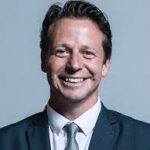
  • Nigel Huddleston – 2022 Statement on Incorrect Information Provided by Government

    Nigel Huddleston – 2022 Statement on Incorrect Information Provided by Government

    The statement made by Nigel Huddleston, the Parliamentary Under-Secretary of State for Digital, Culture, Media and Sport, in the House of Commons on 24 March 2022.

    I am repeating the following written ministerial statement made today in the other place by my noble Friend, the Minister for Arts, Lord Parkinson of Whitley Bay:

    On 9 June 2020, the then Minister for Digital and Culture, Dame Caroline Dinenage MP, answered a parliamentary question from Anneliese Dodds MP (53581) on the tax treatment of emergency grants provided to freelancers by Arts Council England at the beginning of the pandemic, April 2020.

    The question was answered, in consultation with the Arts Council, on the basis of information believed to be true at the time. It stated that:

    “The Arts Council always recommends that grant recipients refer to HMRC and/or an independent advisor for advice that takes full account of their personal circumstances for tax. In general, as per the agreement reached between the Inland Revenue and the Arts Council of Great Britain in 1978, which we understand still applies, it is the Arts Council’s understanding that:

    Grants awarded to support people to take time out to develop and explore their artistic and cultural practice—such as those grants recently made under the Arts Council’s emergency response fund for Individuals—should not be treated as taxable income.

    Grants awarded to support the delivery of a specific project or projects would be treated as taxable income.”

    Arts Council England was subsequently informed by HMRC that it considered the payments made from the emergency response fund would fall into the taxable category. This was on the basis that—similar to other covid relief grants—they were made to support businesses and jobs, replacing lost revenue of the claimants. This means that, where the claimant is self-employed, the receipts should be included in the computation of their trading profits.

    Given the complexity of the tax treatment of grants, and the importance of this issue to recipients, Arts Council England and DCMS queried this decision with HMRC officials. Ultimately, however, HMRC were of the view that these grants needed to be treated consistently with other support funds.

    There was a regrettable delay between this decision being finalised and recipients being informed of the tax treatment by the Arts Council. In addition, incorrect information was given from HMRC channels which relied on the statement made in the original answer to the parliamentary question, compounding the confusion.

    I therefore asked DCMS and HMRC officials to agree that individuals would not be penalised where they had unknowingly submitted incorrect information and that they would be given the opportunity to correct their tax returns.

    Arts Council England wrote on 19 January to all those in receipt of payments from its emergency response fund to advise them of HMRC’s position.

    7,484 grants were awarded under Arts Council England’s “Emergency Response Fund for Individuals” programme, totalling £17.1 million, meaning an average grant of c. £2,285.

    Recipients were therefore advised, ahead of the submission deadline, that:

    they would not be charged a penalty if they filed their self-assessment return up to a month after the deadline;

    if they needed to correct their tax return, HMRC would not charge any penalties for errors related to the grant payment in the original return; and that

    if recipients did not correct their tax return—for instance, because they remain unaware that they have made an error—and HMRC subsequently discovers the error, HMRC would not charge a penalty if the error is a result of relying on incorrect official information.

    This was an unfortunate error on the part of a number of Government and non-governmental bodies. I am very sorry for it. I trust the actions taken by my officials and agreed with HMRC have ensured that no individual is unfairly penalised as a result of this error.

  • Nadine Dorries – 2022 Statement on Online Safety

    Nadine Dorries – 2022 Statement on Online Safety

    The statement made by Nadine Dorries, the Secretary of State for Digital, Culture, Media and Sport, in the House of Commons on 17 March 2022.

    Today the Government are introducing the Online Safety Bill. For most people, the internet has transformed relationships and working environments, but illegal and harmful content appearing online is a growing problem. This groundbreaking Bill will keep users safe while protecting freedom of expression and democratic debate online. Under the new laws, in-scope services will need to:

    Tackle criminal activity—There will be no safe space for criminal content online. Platforms will have to remove terrorist material or child sexual abuse and exploitation quickly, and will not be allowed to promote it in their algorithms.

    Protect children—The strongest protections in our new laws are for children and young people. They will be protected from harmful or inappropriate content such as grooming, bullying, pornography and the promotion of self-harm and eating disorders.

    Enforce their terms and conditions—The largest online platforms with the widest reach, including the most popular social media platforms (category 1 services) will need to set out clearly what harmful content accessed by adults is allowed on their sites, and enforce their terms of service consistently, while protecting freedom of expression and democratic debate.

    The strongest provisions in our legislation are for children. All companies in scope of this legislation will need to consider the risks that their sites could pose to the youngest members of society. This Bill will require companies to take steps to protect children from inappropriate content and harmful activity online, including from content such as pro-suicide material. The Bill will also require providers who publish or host pornographic content on their services to prevent children from accessing that content, including using age-verification technology where appropriate.

    Furthermore, this Bill will ensure companies take robust action against illegal content. We have included a new list of priority offences on the face of the Bill, reflecting the most serious and prevalent illegal content and activity, against which companies must take proactive measures. These will include, amongst others, revenge pornography, fraud, the sale of illegal drugs or weapons, the promotion or facilitation of suicide, people smuggling and the illegal sex trade. The Bill will also introduce a requirement on in-scope companies to report child sexual exploitation and abuse imagery detected on their platforms to the National Crime Agency. This will ensure companies provide law enforcement with the high-quality information they need to safeguard victims and investigate offenders. The updated Bill will also tackle scam adverts, by requiring the largest platforms to put in place proportionate systems and processes to prevent fraudulent adverts from being published or hosted on their service.

    This legislation will not prevent adults from accessing or posting legal content. Rather, the major platforms will need to be clear what content is acceptable on their services and enforce their terms and conditions consistently and effectively. We have refined the approach to defining content that is harmful to adults, so that all types of harmful content that category 1 services (the largest online platforms with the widest reach, including the most popular social media platforms) are required to address will be set out in regulations subject to approval by both Houses. This will provide clarity about the harms that services must address and will reduce the risk of category 1 services taking an overly broad approach to what is considered harmful. In addition, these companies will not be able to remove controversial viewpoints arbitrarily, and users will be able to seek redress if they feel content has been removed unfairly. Both Ofcom and in-scope companies will have duties relating to freedom of expression, for which they can be held to account. Category 1 services will also have duties for democratic and journalistic content. They will need to set in their terms and conditions how they will protect this content on their platforms explicitly. This will ensure that people in the UK can express themselves freely online and participate in pluralistic and robust debate.

    The Bill provides Ofcom with robust enforcement powers to take action when platforms do not comply. Options available to Ofcom include imposing substantial fines, requiring improvements and pursuing business disruption measures (including blocking). The Bill also includes criminal offences for senior managers who fail to ensure their company co-operates with Ofcom, and gives them the information they need to regulate effectively. The Government have also announced additional information-related offences, including ensuring employees do not give false information during interviews, which will further help ensure that companies give Ofcom full and accurate information. We will bring these criminal sanctions into force as soon as possible after Royal Assent (generally two months, in line with standard practice), to further promote strong compliance.

    The threat posed by harmful and illegal content and activity is a global one and the Government remain committed to building international consensus around shared approaches to improve internet safety. Under the UK’s presidency of the G7, the world’s leading democracies committed to a set of internet safety principles. This is significant as it is the first time that an approach to internet safety has been agreed in the G7. We will continue to collaborate with our international partners to develop common approaches to this shared challenge that uphold our democratic values and promote a free, open and secure internet.

    We are grateful for the extensive engagement and scrutiny of the Bill from the Joint Committee, DCMS Select Sub-committee and the Petitions Committee, which has helped us to create a framework that delivers for users and maintains the UK’s reputation as a tech leader. The Bill is sustainable, workable, and proportionate, and will create a significant step-change in the experience people have online.

    We are also publishing the response to the report of the Joint Committee on the draft Online Safety Bill alongside publication of the Bill, and we thank the Committee once again for its work and its recommendations.

  • Nadine Dorries – 2022 Statement on Chelsea Football Club

    Nadine Dorries – 2022 Statement on Chelsea Football Club

    The statement made by Nadine Dorries, the Secretary of State for Digital, Culture, Media and Sport on 10 March 2022.

    Putin’s attack on Ukraine continues and we are witnessing new levels of evil by the hour. We are now turning the screw on influential oligarchs enabling his regime.

    The important measures announced today will clearly have a direct impact on Chelsea FC and its fans but we are working hard to make sure the club and the national game are not unnecessarily harmed.

    We have granted the club a licence so it can fulfil its fixtures, pay its staff and existing ticket holders can attend matches. We know football clubs are cultural assets and we are committed to protecting them.

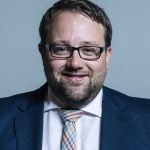
  • Chris Elmore – 2022 Speech on Russia’s Attack on Ukraine

    Chris Elmore – 2022 Speech on Russia’s Attack on Ukraine

    The speech made by Chris Elmore, the Shadow Minister for Digital, Culture, Media and Sport, in the House of Commons on 3 March 2022.

    I thank the Secretary of State for advance sight of her statement. I associate myself and the official Opposition with the comments that the Secretary of State has made about the courage of the Ukrainian people and those who are returning to fight for their country. I add my support to all the journalists who have travelled from the UK and around the world to report—free reporting, challenging Putin’s agenda and countering his disinformation. Those journalists are heroes and we owe them a great debt.

    We are in agreement. Indeed, my hon. Friend the Member for Manchester Central (Lucy Powell), who cannot be here today, has long been calling on the Government and sporting and cultural bodies to take tough action against Russian aggression and Belarusian complicity.

    Our thoughts today are with the Ukrainian people and armed forces. We see acts of heroism day after day and courage beyond words in the face of Putin’s illegal invasion. Only a few hours ago, Russian troops took control of the city of Kherson, a stepping stone to the port of Odesa, where Ukraine’s main naval port and navy reside. With each passing day, the situation continues to escalate. This situation requires the fullest and strongest possible international response.

    Across this House, we all recognise the importance that Putin and Russia place on participating and succeeding in sporting and cultural events, from chess to ballet, to football. Indeed, in 2010, when Russia won its bid to host the 2018 World cup, Putin spoke enthusiastically about the impact that football had had on his native Leningrad during the second world war and how

    “it helped people to stand tall and survive.”

    Success in sport buoys a nation, boosts national pride, and offers an unrivalled feel-good factor, bringing people together. Indeed, sport can offer a cloak of legitimacy and deflection. Despots such as Putin crave this international attention and spotlight. We know the value that Putin places on hosting international tournaments and on Russia competing in international competitions. That is why we have been calling for full and immediate sporting and cultural sanctions against Russia and Belarus from the start, and for those countries to be banned from international competitions.

    UEFA and Formula 1 moved quickly to cancel events in Russia. Others have now followed suit. Regrettably, though, some have dragged their feet, or are hedging their bets. International sporting and cultural bodies must hit Putin where it hurts and send a clear, immediate and unequivocal message to the Russian people that Putin has turned their country into a pariah state. We welcome this morning’s decision by the Paralympic committee to ban Russia from competing in the winter Paralympics. We should see no fudges, no ifs, no buts—outright bans must be the norm.

    We fully support what the Secretary of State has announced today, but we have some questions. What further discussions is she having with sporting bodies on the complete and total boycott of Russia and Belarus? I understand that some, such as FINA, have said that Russian athletes and officials can take part, but with neutral status. She rightly raises tennis, but Russian and Belarusian players will still be able to play at upcoming grand slams, including Wimbledon, under a neutral flag—

    Ms Dorries indicated dissent.

    Chris Elmore

    I can see the Secretary of State shaking her head, so does she agree with me and the Opposition that we must do more to ensure a total ban from tennis tournaments, ensuring that no Russian or Belarusian will play at Wimbledon?

    On culture, we have seen British institutions, many of them recovering from covid, left with no clear guidance regarding the cancellation of the Russian touring ballet, for example. It should not be for individual organisations, teams or nations to boycott Russia alone. What guidance will the Secretary of State provide to UK organisations and institutions to ensure that they speak with one voice, and what pressure will she place on international bodies that do not ban Russia and Belarus outright?

    What is the Secretary of State doing about those who have bought their way into the fabric of British life, such as Abramovich and others, buying football clubs and gifting to arts and other valued institutions? What is the advice for arts and cultural institutions that have received and do receive gifts from oligarchs and those who prop up Putin’s regime? What about football and sport more widely? Will she act quickly on Abramovich and other oligarchs to ensure that they cannot profit from Putin’s war? Why are the Government allowing oligarchs such as Abramovich time and notice to sort out their affairs and divest any assets that would otherwise be subject to sanctions?

    We stand ready to support the Government’s actions, but we want to see them go further and faster on international bans. We also want to see the Government take Russian money out of our world-renowned institutions such as the Premier League and our arts and cultural scene. We have seen sportwashing, culturewashing and artwashing of dirty Kremlin-linked Russian money. We need action to tackle that now.

    Finally, on disinformation, we welcome Ofcom’s investigation into RT. Online disinformation and fake news is rife. Russian bot factories are spouting lies and trying to distort the truth of Putin’s atrocities in Ukraine. We welcome the Secretary of State’s announcements this morning, but I ask her to go further. The online safety Bill should include additional measures on tackling that disinformation before it is put to the House for Second Reading. Can she give that commitment today?

    It is right that the international response to Putin’s aggression should be exclusion from sporting and cultural events. Words must become deeds, and Putin should feel the consequences of his actions.

  • Nadine Dorries – 2022 Statement on Russia’s Attack on Ukraine

    Nadine Dorries – 2022 Statement on Russia’s Attack on Ukraine

    The statement made by Nadine Dorries, the Secretary of State for Digital, Culture, Media and Sport, in the House of Commons on 3 March 2022.

    We have entered the eighth day of Ukraine’s fight for survival. In the week since Vladimir Putin launched his unprovoked, premeditated and barbaric attack on a free and peaceful neighbour, the UK has led a united Western response to his brutality. We are working with allies around the world on multiple fronts to ensure that the Russian dictator feels the full cost of his invasion. On the military front, we have provided Ukraine with the weaponry to inflict significant losses on the invading Russian forces. On the economic front, we have worked with international partners to cripple the Russian economy, but as history has shown us, there are other powerful ways of isolating rogue regimes.

    Culture and sport can be as effective as economic sanctions if used in the right way, and so in the last week I have been working to mobilise the full might of the UK’s soft power against the Russian state, and applying pressure both publicly and privately across the sectors to use every lever at their disposal to entrench Putin’s position as an international pariah. Culture is the third front in the Ukrainian war. Earlier this week, I brought together governing bodies from across sport and I made the UK’s position clear: Russia should be stripped of hosting international sporting events, and Russian teams should not be allowed to compete abroad.

    Across sport, the arts and entertainment, we are ostracising Putin on the global stage. The upcoming Champions League final and Formula 1 Grand Prix will no longer be held in Russia. Likewise, Russia has been banned by UEFA, FIFA, World Rugby, the International Tennis Federation and the International Olympic Committee. Venues across the country have cancelled upcoming performances by the Bolshoi and Siberian ballets. Disney and Warner Bros. have pulled their films from Russia. Netflix has stopped its projects. BBC Studios and ITV Studios have stopped trading with Russia too, and Russia has been banned from taking part in the Eurovision Song Contest.

    Putin is now suffering a sporting and cultural Siberia of his own making, and it will be causing the Russian leader real pain. Ask Ukrainian tennis player Sergiy Stakhovsky, who gave a very moving interview on the radio earlier this week. A few weeks ago, he was playing at the Australian Open. Now he is back in Ukraine, preparing to fight for his country’s survival. He said that Putin loves nothing better than watching Russia’s sports teams’ glory on the world stage, his athletes draped in the Russian flag.

    Putin needs the kudos of these global events to cover up his illegitimacy and the hideous acts he is perpetrating in Ukraine. The Russian despot is desperately trying to hide the grim extent of his invasion from his own people. That is why I strongly support, and continue to encourage, the kinds of emotional displays of solidarity we have seen across sporting events in the last week, including the Carabao cup final and the Six Nations. Lights and symbols cannot stop bullets and bombs, but when Russians see their favourite footballers wearing shirts emblazoned with the bright blue and yellow of the Ukrainian flag, it helps to open their eyes to the cold reality of Putin’s actions. Likewise, every time an international organisation or figure publicly stands up against what Putin is doing in Ukraine, they chip away at his wall of lies. I thank and applaud all those who have done so, in this country and internationally, and I continue to push for organisations to exile Putin’s Russia from their ranks.

    That is why I have called on UNESCO to bar Russia from hosting its annual world heritage conference in June. It is absolutely inconceivable that that event could go ahead in Putin’s country as he fires missiles at innocent civilians in neighbouring Ukraine. If it does go ahead, the UK will not be attending. That is also why I urged the International Paralympic Committee urgently to rethink its decision to allow athletes from Russia and Belarus to compete. Such pressure works; the IPC’s decision was the wrong call, and I welcome the fact that overnight it has listened and this morning it has reversed that decision. I wish our athletes the best of luck in Beijing over the coming days. Later today, I will be hosting a summit with countries from all over the globe to discuss how we can continue to use the power of sport to isolate Putin at home and abroad. We have to keep ratcheting up the pressure. Putin must fail.

    In my Department, we have been working tirelessly to use the power of tech and the media against the Russian dictator and to shut down and counter his propaganda and lies, because they are key weapons in his arsenal. The Department’s counter-disinformation unit has been working to identify and remove Russian disinformation online. Alongside the US and others, we have been working closely with platforms to take pre-emptive action against Putin, and to demonstrate the consequences of his brutality in real time to the Russian people. Apple has paused all sales in Russia, Google has added new safeguarding features to Google Maps and Search, and WhatsApp is hosting a helpline for Ukraine’s state emergency service that sends people information and critical news about the local situation.

    While big tech has stepped up in a really positive way, we are also encouraging and supporting platforms to go even further to tackle certain challenges, including disinformation, service disruptions and the humanitarian crisis triggered by the conflict.

    In this digital age, the Ukrainian war is being fought on the ground and online, so we need to use tech wherever we can as a force for good to counter Putin’s aggression, to expose his weaknesses and to bolster the people fighting for their survival in Ukraine.

    From the very moment that Putin began his invasion, I was very clear that he must not be allowed to exploit our open and free media to spread poisonous propaganda into British homes. RT’s own editor-in-chief has called the network an “information weapon” of the Russian state. That is why I wrote to Ofcom last week, urging it to examine any potential breaches of the broadcasting code. Ofcom has since opened 27 investigations into RT and is now reviewing whether to revoke RT’s licence entirely.

    In the meantime, those investigations have been overtaken by events. I was very glad to see yesterday that the channel is now officially off the air on British televisions, after it was shut down on Sky, Freeview and Freesat. I have also written to Meta and TikTok asking them to do everything that they can to prevent access to RT in the UK, as they have done in Europe. I am glad that YouTube has already answered this call and done so.

    We are on the side of free media. That is why it was brilliant to see that the audience for the BBC’s Russian language news website has gone up from 3.1 million to 10.7 million in the past week. Despite his best efforts to censor reporting in Russia, Putin’s own citizens are turning to factual, independent information in their millions.

    At this point, I would like to offer my heartfelt thanks and admiration to all those journalists, working for the BBC, ITV and other news outlets, who are risking their lives to bring us unbiased and accurate news from a live war zone. We will keep ratcheting up the pressure on Putin, and I will use all the levers in my Department to ensure that he is fully ostracised from the international community.

  • Robert Cooke – 1972 Speech on Public Service Broadcasting

    Robert Cooke – 1972 Speech on Public Service Broadcasting

    The speech made by Robert Cooke, the Conservative MP for Bristol West, in the House of Commons on 23 February 1972.

    I beg to move.

    That leave be given to bring in a Bill to provide for the greater freedom of public service broadcasting; and for purposes connected therewith.
    At present, all broadcasting is just that, and until the spoken and televised word are as freely available as the printed word some element of public service will remain.

    I seek to provide for greater freedom within the existing framework and to modify that framework in such a manner as to pave the way to the ultimate freedom for broadcasting which the Press in Britain now enjoys.

    When the printing press was invented, the church was against it because it helped to disseminate knowledge and spread education beyond the closely guarded confines of church and court life. There are still some clergy today who are against local radio, though their reasons remain obscure. Radio has been a means of mass communication for half a century, yet it retains many of the shackles that it acquired at the outset due to public and parliamentary fear that it would be misused. I suspect that some of the heirs and successors of those timid and suspicious churchmen of centuries ago sit in this House, and I have noted the suspicion or caution with which some hon. Members approach any proposal for the extension of mass communications. They are not confined to one side of the House.

    That is why with the arrival of television, which is the ultimate in powerful and intrusive means of reaching every household, it was regarded as being too dangerous to be let out of the hands of those to whom radio was entrusted 50 years ago. Later we created the I.T.A. and the companies which work within its framework, in the affairs of one of the smallest of which I have some experience and interest. It is not they who are under attack today, but the massive and in some ways rather splendid bureaucracy that, alas, the B.B.C. has become.

    I recognise that the B.B.C. produces a vast quantity of first-rate material, and long may that continue, but the B.B.C. problem undoubtedly exists and must be tackled. One reads in this morning’s newspapers of a massive shake-up in its current affairs department. Resignations are talked of. There is a report of a savage attack by a union on administrative waste at the top. There is a report of a settlement of a libel case involving the B.B.C., and the number of public apologies made by the corporation for its actions have increased greatly in the last 18 months. It has set up a special complaints committee, but with a fanfare of publicity and somewhat narrow terms of reference.

    It is against this background of the B.B.C. problem and the need to reorganise independent television long before 1976, when the new pattern of contracts and, one hopes, two channels instead of one will emerge. It is time to set up a small group to report within a year on the future of broadcasting as a whole.

    My Bill provides for a review of broadcasting by a group of not more than seven nor fewer than three persons, at least one of whom shall be a woman and one of whom shall be under the age of 45, appointed by the Minister of Posts and Telecommunications, subject to the affirmative Resolution of this House so that the House will have absolute control of its composition. My Bill defines its terms of reference. It would seek to modify the existing framework in such a way as to give a greater number of separate originators of programmes greater freedom to express divergent views, and, broadly, to place broadcasting on the same footing as the national and local Press. The I.T.A. would be known as the Television Authority, with two channels served by separate competing companies preserving regional character, with ample opportunity for clash of view. Indeed, by extending the opportunities for coverage of controversy of a national or local character, public participation would be vastly increased.

    The television authority would continue to exert an influence over the programme companies. The companies would continue to be financed by advertising. The same disciplines over them would apply via the authority as applies at present. I would not preclude in my Bill the possibility of a company which did not comply with the reasonable wishes of the authority finding itself fined for its malpractices, which has not been happening recently but could, I believe, happen if the House would give my Bill the force of law in due course.

    In the case of the B.B.C., to some people even to suggest change is like advocating the demolition of West-minister Abbey. I am asking my review body to consider the possibility of a broadcasting corporation receiving licence fees as at present but augmented by clean sponsorship; that is, not allowing any sponsor to make a personal appearance or to advertise but merely to have the name of an organisation prepared to sponsor a programme attached to it, and only after the programme has been produced, so that there could be no collusion between the sponsor and the programme producers. The corporation would have responsibility for transmission, as the B.B.C. does now, but Channel 1 and Channel 2 Television, should replace B.B.C.1 and B.B.C.2 and they should be completely separate, each with its own policy and views on current affairs and matters of that kind. They could be relied upon then to produce a different but nevertheless balanced clash of views.

    I believe that the present situation gives the B.B.C. far too great an exclusive artistic patronage but that with two channels one could get divergence of view and much wider scope for artistic patronage. So many other benefits flow from having two quite separate channels that I need not detail them here.

    Lastly, I come to the question of overseas services, which would be replaced by a new corporation, Radio-Television Great Britain, which would broadcast into Europe and into the world at large with material drawn from all available sources—B.C.1, B.C.2, T.A.1 and T.A.2; and similarly with radio. I believe that in this way Britain’s voice abroad would be far more representative than it is at present. It is within this framework, and with the knowledge that many more channels of communications will shortly be possible by means of cable to every household, that the review should be conducted. There could be 60 channels via cable to each household, revolutionising the means of communication and taking some of the burden off the far-stretched postal services.

    I do not believe that a better future for broadcasting lies in councils, committees or commissions to control and confine the talents of those who work in radio or television. We talk a good deal in this House of the right of freedom of speech.

    This Bill is designed to help us find a way to confer that freedom upon those who broadcast, in the belief that freedom of speech and clash of view is where the real safeguard of the truth lies.

    Finally, my Bill is a kind of backbencher’s Green Paper, a basis for discussion. I do not imagine for a moment that the House will be unanimous about all its details, but the central theme, about which we must all agree, is that freedom of speech and communication is the greatest possible safeguard of the truth.

  • Nadine Dorries – 2022 Comments on Moving DCMS Staff to North

    Nadine Dorries – 2022 Comments on Moving DCMS Staff to North

    The comments made by Nadine Dorries, the Secretary of State for Digital, Culture, Media and Sport, on 14 February 2022.

    The days of London-centric decision making belong in the past. It’s an exciting time for DCMS as we expand our regional offices and tap into a more diverse talent pool.

    Our strength comes from our people and this will allow us to recruit the best, wherever they may be, to deliver the wide range of DCMS policies which drive growth and enrich lives all over the UK.

  • Nadine Dorries – 2022 Statement on News UK Undertakings

    Nadine Dorries – 2022 Statement on News UK Undertakings

    The statement made by Nadine Dorries, the Secretary of State for Digital, Culture, Media and Sport, in the House of Commons on 10 February 2022.

    On 1 February 2021 News UK submitted an application requesting the Secretary of State to release in full the undertakings accepted in 2019. The 2019 undertakings were accepted in lieu of the conditions put in place when the newspapers were acquired by News International in 1981.

    The conditions included provisions relating to the continued publication of The Times and The Sunday Times as separate newspapers, to the number and power of the independent national directors of Times Newspapers Holdings Ltd, and to editorial control over the journalists working for, and political comment and opinion published in, each of newspapers.

    The undertakings accepted in 2019 made changes to the conditions, to allow for sharing of journalistic resources between the two publications and to strengthen the arrangements relating to the independent national directors. News UK now seeks the release of the undertakings in their entirety.

    On 24 June DCMS issued a public “invitation to comment”, which included a redacted copy of the application, and the written views received from the editors and independent national directors. On 30 July, DCMS requested Ofcom and the Competition and Markets Authority to advise by 24 September on the public interest considerations and changes to market circumstances relevant to the case, respectively. The CMA’s report concludes that releasing the undertakings would have a significantly positive impact on News UK’s financial position and ability to adapt to changing market conditions. Ofcom’s report concludes that the impact on media plurality of releasing the undertakings is likely to be limited and that, on balance, releasing the undertakings is unlikely to operate against the public interest needs for free expression of opinion and accuracy of news.

    On 25 November, acting in a quasi-judicial capacity, I announced that, having taken into account the reports and all relevant information submitted to the Department, I was minded to grant the request by News UK and release the undertakings. I consulted publicly on this minded-to decision and did not receive any further evidence relevant to my decision. I therefore confirm that I am satisfied that there has been a material change of circumstances since the acceptance of the undertakings in 2019 and that, having considered the public interest considerations applying to newspapers, the undertakings are no longer appropriate or necessary for the purpose they were intended to achieve and so should be released.

    In accordance with the Enterprise Act 2002, I have taken a final decision to approve the application and will notify News UK that the undertakings relating to The Times and The Sunday Times are to be released.

  • David Moyes – 2022 Comments on Kurt Zouma

    David Moyes – 2022 Comments on Kurt Zouma

    The comments made by David Moyes, the manager of West Ham United, on 8 February 2022.

    It’s something we’re all disappointed with and something we can’t understand. He’ll learn from it, but today I had to pick a football team that gave me the best chance of winning the game as manager of West Ham. I know how people feel, but I’m also a football manager here. My feeling was that Kurt has apologised and I understand a lot of people will not just be accepting of an apology.

  • Chris Philp – 2022 Statement on Child Online Safety

    Chris Philp – 2022 Statement on Child Online Safety

    The statement made by Chris Philp, the Parliamentary Under-Secretary of State for Digital, Culture, Media and Sport, in the House of Commons on 8 February 2022.

    Protecting children online is a Government priority and the strongest protections in the draft Online Safety Bill are for children.

    The Online Safety Bill will establish new statutory duties requiring companies to take robust steps to improve safety online. The duties will cover user-to-user services—those that allow users to upload and share content that may be encountered by others—and search engines. All companies in scope will need to protect their users from illegal content and activity, and companies with services that are likely to be accessed by children will be required to protect children from legal but harmful content. While the Bill is technology neutral, we expect companies to use age verification technologies to prevent children from accessing services that pose the highest risk of harm to them, such as online pornography.

    The online safety regime covers many of the most visited pornography sites, social media, video sharing platforms, forums and search engines—thereby capturing many of the sites through which children access pornography. These companies will have to prevent children from accessing pornography or face enforcement action by Ofcom.

    The Government recognise the concern, raised by the Joint Committee during pre-legislative scrutiny of the Bill and by other child online safety stakeholders, that the Bill needs to go further to protect children from online pornography on services that do not currently fall within its scope.

    To strengthen protections for children further, we will make changes to the Bill to incorporate a stand-alone provision requiring providers who publish or place pornographic content on their services to prevent children from accessing that content. This addresses the concerns that have been raised about a gap in scope for non-user-generated pornography, and ensures that all services that would have been captured by part 3 of the Digital Economy Act, and all the user-to-user and search services covered by the Online Safety Bill, will be required to protect children from pornography. This new duty will be enforced by Ofcom with providers being subject to the same enforcement measures as other in-scope services.

    The Government are committed to bringing forward the most comprehensive approach possible to protecting children online. We will introduce the Online Safety Bill as soon as parliamentary time allows and will continue to engage with Members of Parliament in both Houses on the protections for children within the Bill.