Category: Culture

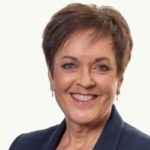
  • Sarah Green – 2022 Parliamentary Question on Arts Council Funding

    Sarah Green – 2022 Parliamentary Question on Arts Council Funding

    The parliamentary question asked by Sarah Green, the Liberal Democrat MP for Chesham and Amersham, in the House of Commons on 1 December 2022.

    Sarah Green (Chesham and Amersham) (LD)

    What assessment she has made of the potential impact of Arts Council England funding decisions on leading cultural institutions.

    The Parliamentary Under-Secretary of State for Digital, Culture, Media and Sport (Stuart Andrew)

    Decisions about which organisations to fund and at what level were taken by the Arts Council, an arm’s length body from Government. The Arts Council remains committed to supporting the core cultural institutions. For example, three institutions that receive the most funding in the portfolio are the Royal Opera House, the National Theatre and the Southbank Centre. Many high-profile, established organisations such as the Royal Shakespeare Company and Opera North will continue to receive funding.

    Sarah Green

    I thank the Minister for his answer. Arts Council England’s decision to stop funding English National Opera in London and to effectively demand that it relocates to Manchester will leave hundreds of talented artists and professionals either out of work or forced to uproot their lives. Some of them live in my constituency and are understandably devastated by the decision that they now face, but they also feel blindsided, given that they had very little warning. Will the Minister tell me whether the artists directly impacted by the removal of ENO funding were consulted in advance of the decision? If not, why not?

    Stuart Andrew

    I know that the Arts Council has taken a considerable amount of time to look at the unprecedented number of applications—more than 1,700—that were received and that it has assessed them very carefully. It is making sure that £12.6 million is available in transition funding for those that will be leaving. The time has been increased from three months to seven months, so that there is support for them for up to 12 months. We would certainly encourage the Arts Council and the English National Opera to continue the dialogue that they are having.

    Mr Speaker

    I call the Chair of the Digital, Culture, Media and Sport Committee.

    Julian Knight (Solihull) (Con)

    On a similar theme, levelling up is undoubtedly a noble ambition, and the Arts Council funding has been too London-centric for too long¸ partly due to the subsidies to the Royal Opera House, which, if the Minister ever visits there, he will see is a bit like the Starship Enterprise, in terms of facilities. In correcting the imbalance, however, does he agree that the Arts Council needs to be careful about not potentially wrecking established institutions such as English National Opera, which was given very little notice of funding cuts? As a result, it is threatening legal action. A soft landing is needed. Does he agree that he needs to speak to the Arts Council to ensure that, when it makes such decisions in future, it has a plan in place to ensure that those institutions are at least protected and have a way in which to cope with the decision?

    Stuart Andrew

    I reiterate that the Arts Council is an arm’s length organisation. We have had several meetings to hear about the long processes that it has undertaken to consider each of the awards that it has made. We pushed it to increase the transition period of funding, recognising the difficulty that that may present to other people. We hope that both Arts Council England and English National Opera will work together—we certainly encourage them to—on the possibilities for the future of the organisation.

    Mr Speaker

    I call the shadow Minister.

    Barbara Keeley (Worsley and Eccles South) (Lab)

    We all support the fairer distribution of arts funding and the principle that communities outside London should get a fairer share so that everybody everywhere can enjoy the arts, but levelling up should not be about pitting arts organisations against one another. What we have seen is an attempt to address regional disparity by shifting some funding to the regions, but doing so from a funding pot that has been shrinking since 2010. Does the Minister agree that these very short timeframes and the lack of consultation on these cuts to funding could have a very damaging impact on the ecosystem of the arts?

    Stuart Andrew

    Well, I have to say that London will still be getting the lion’s share of funding from the Arts Council. I make no apology for what we are seeing in areas such as Blackburn, which had never received any funding: four projects there are now receiving funding. Why cannot talented artists in Blackburn get the same access to those opportunities as artists in London? I do not understand the problem.

  • Rupa Huq – 2022 Parliamentary Question on Arts Council Funding

    Rupa Huq – 2022 Parliamentary Question on Arts Council Funding

    The parliamentary question asked by Rupa Huq, the Independent MP for Ealing Central and Acton, in the House of Commons on 1 December 2022.

    Dr Rupa Huq (Ealing Central and Acton) (Ind)

    What steps she is taking to support the tourism sector and visitor economy.

    The Parliamentary Under-Secretary of State for Digital, Culture, Media and Sport (Stuart Andrew)

    The UK was one of the first countries to remove the barriers to both domestic and international visitors, and set out a post-covid tourism recovery plan in summer 2021. An inter-ministerial group for the visitor economy was formed this year, and will meet again in December to discuss cross-departmental policy priorities in support of this important sector.

    Dr Huq

    With the axe looming over the English National Opera and the Donmar Warehouse—both national attractions that have helped the tourism the Minister has described to be a multibillion-pound industry for so many years—and local newbies such as the Ealing Project venue and ActOne cinema facing a tough environment with the post-covid footfall downturn and looming bills, could the Government, now that they are in reset mode, reconsider the impact of Arts Council cuts on London so that we can get tourism flowing through our capital again, from centre to suburb?

    Stuart Andrew

    The Arts Council is an arm’s length body; it makes the decisions and has done so very carefully. It is working with various organisations that will be leaving the funding. However, it is right that we share the funding around the rest of the country; I make no apology for that. I want people not just to come to London to visit our wonderful facilities here, but to go around the whole country and experience what a great country we have to offer for tourism.

    Mrs Pauline Latham (Mid Derbyshire) (Con)

    I welcome what the Minister said about spreading the money around the country. I invite him to come to the Derwent valley mills world heritage site, which is key to the whole of the spine that goes through Derbyshire. It is in disrepair and we need to get tourism back on track for Belper in particular. I would also like him to come to adjacent sites where we have “the clusters”, which are very ancient roads, to see how he can help with some funding.

    Stuart Andrew

    It would be great to go from Qatar to Derbyshire and I would be more than happy to accept my hon. Friend’s invitation. She is right to talk about the many opportunities that we need to look at, including, particularly, the offer in the rest of the country for tourism from not just this country, but around the globe. One of my priorities is to get more people to come to London, of course, but then to visit other great counties such as Yorkshire, as I am sure you would agree, Mr Speaker.

  • Desmond Swayne – 2022 Parliamentary Question on Matt Hancock and the Conservative Whip

    Desmond Swayne – 2022 Parliamentary Question on Matt Hancock and the Conservative Whip

    The parliamentary question asked by Desmond Swayne, the Conservative MP for New Forest West, in the House of Commons on 1 December 2022.

    Sir Desmond Swayne (New Forest West) (Con)

    What steps her Department is taking to support the film and television industry.

    The Secretary of State for Digital, Culture, Media and Sport (Michelle Donelan)

    As set out in our broadcasting White Paper earlier this year and when I visited Pinewood and Shepperton studios last week, the Government are taking action to support British broadcasters and our world-leading film and television industries. That includes ensuring that public service content is easy to find on a wide range of TV platforms; delivering our £21 million UK global screen fund; and continuing to support our screen sector tax reliefs, which provide nearly £1 billion of support to more than 1,000 projects.

    Sir Desmond Swayne

    Given the sheer spunk of the contribution that my right hon. Friend the Member for West Suffolk (Matt Hancock) has made to television, it would be churlish not to restore the Whip, wouldn’t it?

    Michelle Donelan

    As my right hon. Friend knows, that is not a decision for me, but we can always depend on the right hon. Member for West Suffolk to attack a challenge with gusto, and I was not surprised at all to see him taking on all sorts of animal parts during the show. It has become a little bit of a thing for my predecessors to join that show, but I hope I can provide reassurance that I have no intention of ever doing so.

    Mr Speaker

    Never say never.

    Kevin Brennan (Cardiff West) (Lab)

    Of course, a very important part of our film and television industry is the music that goes with it and the composers who provide that music. At this juncture, it would be wrong of me to not recognise and send sympathy to the family of Christine McVie, one of Britain’s greatest ever songwriters, who sadly passed away yesterday. [Hon. Members: “Hear, hear.”]

    I was glad to hear what the Minister of State aid about AI earlier, because that will affect film and TV composers, as well as other people within the industry. Will she ensure that in undertaking the AI review, the Government listen very carefully to the views of songwriters and composers who work in the film and television industry during their consultation?

    Michelle Donelan

    I echo the hon. Member’s sympathies. Of course, we will listen to all relevant voices, and I am happy for the hon. Member to meet with either myself or the Minister of State, who is responsible for this.

  • Christian Wakeford – 2022 Parliamentary Question on Football Governance

    Christian Wakeford – 2022 Parliamentary Question on Football Governance

    The parliamentary question asked by Christian Wakeford, the Labour MP for Bury South, in the House of Commons on 1 December 2022.

    Christian Wakeford (Bury South) (Lab)

    Whether she plans to implement the recommendations of the fan-led review of football governance.

    The Secretary of State for Digital, Culture, Media and Sport (Michelle Donelan)

    The Government published their response to the recommendations of the independent fan-led review of football governance in April 2022. We do recognise the need for football fans to be at the heart of the game and for the reforms to ensure that the game is successful and sustainable in the long term. Football clubs are at the core of local communities and, for too long, fans have been an afterthought for some club owners.

    Christian Wakeford

    Football’s coming home, but it seems that a football regulator is not. Without a football regulator, there will be no say for fans and no financial or fit-and-proper assessment of new owners, with more clubs like Bury being at risk. Almost a year on from the fan-led review, the Government are no further on in implementing any of the changes. In that time, we have seen the sale of Chelsea and the near collapse of Derby. Why are the Government dragging their feet?

    Michelle Donelan

    It is important that I praise the work of my hon. Friend the Member for Chatham and Aylesford (Tracey Crouch), who got the fans’ voice right at the heart of her report. I and the Minister responsible for sport have met multiple football supporters’ groups and will continue to do so. The White Paper will be published imminently.

    Kevin Foster (Torbay) (Con)

    At last week’s annual general meeting of the Torquay United Supporters Trust, there was much debate about how the World cup in Qatar and the discussions around it have yet again focused attention on the governance of the game of football. Does my right hon. Friend agree that it is absolutely vital that we make changes to ensure fans get a voice, that there is real engagement with their clubs, and that we do not see more of the incidents we have seen across this country, where clubs have been moved from their historic locations into other communities due to disputes over stadium ownership?

    Michelle Donelan

    We on the Government Benches understand how important it is to get this right, and we will get it right. We will put fans’ voices right at the heart of what we do, and ensure that whatever we do has the teeth to ensure change.

    Jeff Smith (Manchester, Withington) (Lab)

    In the years since the fan-led review was published, Southend United faced a winding-up petition and a transfer embargo after financial failings; Derby County was in administration; Chelsea could only carry on because of special exemptions when its owner was sanctioned; and the Mayor of the West Midlands wrote to the Football League to express his worries that Birmingham City’s future is in jeopardy under its current ownership. Which clubs will face trouble next year, the year after, or each year until the Government stop delaying the introduction of an independent regulator? The Prime Minister committed to implementing all the recommendations of the review, so why do they not just get on with it? After the next election, a Labour Government will.

    Michelle Donelan

    After the next election, a Conservative Government will continue to get on with the job, as we have always been doing. The Government recognise the importance of acting decisively, but also of getting this policy right; we have been considering it and consulting very carefully. Of course, in the meantime, those in football can take forward some of the reforms themselves, including financial redistribution, which we continue to urge them to do. The report will be imminent.

  • Gary Sambrook – 2022 Parliamentary Question on Grassroots Participation in Sport

    Gary Sambrook – 2022 Parliamentary Question on Grassroots Participation in Sport

    The parliamentary question asked by Gary Sambrook, the Conservative MP for Birmingham Northfield, in the House of Commons on 1 December 2022.

    Gary Sambrook (Birmingham, Northfield) (Con)

    What steps her Department is taking to encourage grassroots participation in sport.

    The Secretary of State for Digital, Culture, Media and Sport (Michelle Donelan)

    Grassroots sports bind our communities together and make people happier as well as healthier. Since 2019, Sport England has invested over £200,000 in my hon. Friend’s constituency, including £40,000 during the pandemic. In October, I announced £35 million of Commonwealth games physical activity legacy funding, opening up sporting opportunities across the west midlands. The Government are continuing to invest directly in grassroots sports facilities. I am sure that I can meet my hon. Friend to discuss this further.

    Gary Sambrook

    I recently met Matt and Alan from Northfield Town football club, who have ambitious plans for a new all-weather football pitch and female facilities for changing rooms and toilets. How can we support Northfield Town football club to make the new facilities a reality?

    Michelle Donelan

    Government investment, along with that from the Football Association and the Premier League, is delivered through the Football Foundation. Since 2019, the foundation has invested about £8 million in more than 300 projects in the Birmingham area, targeted based on local football facility plans. I am sure that the foundation would be keen to hear from Northfield Town about its ambitions. We will facilitate that via my office.

  • Sarah Olney – 2022 Parliamentary Question on the Potential Impact of Artificial Intelligence on Intellectual Property Rights

    Sarah Olney – 2022 Parliamentary Question on the Potential Impact of Artificial Intelligence on Intellectual Property Rights

    The parliamentary question asked by Sarah Olney, the Liberal Democrat MP for Richmond Park, in the House of Commons on 1 December 2022.

    Sarah Olney (Richmond Park) (LD)

    What assessment she has made of the potential impact of artificial intelligence on intellectual property rights for performers and creative workers.

    The Minister of State, Department for Digital, Culture, Media and Sport (Julia Lopez)

    The recent Intellectual Property Office consultation on artificial intelligence and intellectual property sought evidence and views on text and data mining. A response was published in June. We recognise that the creative industries have significant concerns about the potential impacts of the TDM proposal and as a result, we are reflecting on whether to progress it in its current form. The IPO will be engaging with interested parties over the coming months to help to inform the Government’s thinking and we will set out the next steps in due course.

    Sarah Olney

    It was encouraging to hear the Minister tell the Lords Communications and Digital Committee last week that she is confident that the text and data mining proposal will not go ahead. That has been warmly welcomed by the creative industries, which depend heavily on intellectual property rights for their income stream. What steps will the Minister be taking to ensure that any revised proposals to promote AI do not cause economic harm to the creative industries? Will she provide an update on her conversations with the Intellectual Property Office, including the detail of its plans to extend the consultation on the proposal?

    Julia Lopez

    I thank the hon. Lady for raising the issue and speaking on behalf of the creative industries; IP is the lifeblood of many of those industries. As I said in the Lords Committee, I am not convinced of the value of the proposal. Yesterday, the Under-Secretary of State for Digital, Culture, Media and Sport, my hon. Friend the Member for Sutton and Cheam (Paul Scully), and I met the Minister of State, Department for Business, Energy and Industrial Strategy, my hon. Friend the Member for Mid Norfolk (George Freeman), who has responsibility for the Intellectual Property Office. As I mentioned, he is extending the consultation on this and we will be talking to him in the meantime. We hope to provide further details as soon as we can.

  • Paul Scully – 2022 Statement on Government Amendments to the Online Safety Bill

    Paul Scully – 2022 Statement on Government Amendments to the Online Safety Bill

    The statement made by Paul Scully, the Parliamentary Under-Secretary of State for Digital, Culture, Media and Sport, in the House of Commons on 30 November 2022.

    The Online Safety Bill is a vital piece of legislation, and this Government are committed to ensuring that it does more to protect children and ensure that any provisions for adults consider the importance of free speech. On 29 November, the Secretary of State for Digital, Culture, Media and Sport, my right hon. Friend the Member for Chippenham (Michelle Donelan), issued a written ministerial statement (WMS) setting out a number of policy changes to achieve this aim.

    The approach we are taking has three main aims. We are strengthening the protections for children in the Bill, ensuring that adults’ right to legal free speech is protected, and also creating a genuine system of transparency, accountability and control to give the British public more choice and power over their own accounts and experience. The Secretary of State’s WMS yesterday set out these changes in detail, alongside additional changes we are seeking to make.

    Given the Bill’s stage of passage, it is not possible to make the majority of these changes at Report stage, as the amendments relate to clauses that were debated on the first day of Report. Therefore, as mentioned in the Secretary of State’s WMS of 29 November, the Government intend to return a limited number of clauses to a Public Bill Committee. This process would allow the proposed changes to go through robust and thorough scrutiny in the Commons, and would provide for line-by-line scrutiny of the amendments being made. The recommitted clauses would then come back to the whole House for debate at a third day of Report stage. A vote on this recommitment motion will take place immediately after Report stage on 5 December.

    As amendments for consideration at Committee cannot be formally tabled before that vote has passed, I am therefore setting out alongside this statement indicative drafting to demonstrate the amendments we will be tabling should a Committee stage take place, so that parliamentary colleagues can consider them in detail and understand the Government’s intentions with the Bill. These amendments are substantively final and the policies that they reflect will not change; the draft amendment paper, attached as annex A, includes explanatory statements of each amendment. However, small tweaks to the drafting may be required before the amendments are formally tabled, to ensure that they are as clear and effective as possible. Amendments in the paper are based on the most recent Bill print, which follows amendments at the Bill’s previous Public Bill Committee stage.

    I am acutely aware of, and fully agree with, Parliament’s desire to see this legislation enacted. I will therefore be seeking to keep the recommittal process as short as possible within the bounds of allowing proper consideration of the changes, and anticipate that should the recommittal process proceed, the Bill will be passed to the House of Lords for consideration in January. I intend to work closely with Parliament to ensure that we are able to get this vital piece of legislation on to the statute book in this parliamentary Session.

    The attachment can be viewed online at: http://www.parliament.uk/business/publications/written-questions-answers-statements/written-statement/Commons/2022-11-30/HCWS403/.

  • Wes Streeting – 2022 Comments on FIFA and OneLove Armband

    Wes Streeting – 2022 Comments on FIFA and OneLove Armband

    The comments made by Wes Streeting, the Labour MP for Ilford North, on Twitter on 21 November 2022.

    FIFA is a disgrace.

    But we know where @England and @FAWales stand and it’s appreciated. Players have been put in an impossible position.

    Will be cheering England on today. A great team with a strong moral backbone – excellent role models for our country.

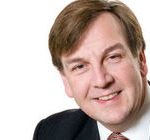
  • John Whittingdale – 2022 Question on Government Funding for the BBC World Service

    John Whittingdale – 2022 Question on Government Funding for the BBC World Service

    The question made by Sir John Whittingdale, the Conservative MP for Maldon, in the House of Commons on 8 November 2022.

    What funding his Department provides to the BBC World Service.

    The Parliamentary Under-Secretary of State for Foreign, Commonwealth and Development Affairs (David Rutley)

    The Foreign, Commonwealth and Development Office is providing the BBC World Service with a flat cash three-year settlement of £94.4 million annually. Since 2016, the FCDO has provided over £468 million to the World Service via the World2020 programme, funding 12 language services and enhancements to BBC Arabic, Russian and English.

    Sir John Whittingdale

    Does my hon. Friend agree that the BBC World Service plays an ever more important role in countering disinformation, particularly from Russia and elsewhere? Will he therefore look to increase the amount of support that his Department gives to the World Service, and does he share my concern that the BBC is proposing to reduce funding by £28 million with the loss of 10 radio services?

    David Rutley

    I recognise my right hon. Friend’s long-standing interest in this issue. The FCDO greatly values the World Service’s role in countering disinformation, particularly President Putin’s harmful narratives, and it has provided an additional £1.44 million this year to support this work on top of our annual £94 million funding. The changes reflect the BBC’s ambition to become a digital-first organisation and, as a result, audiences will still retain access to all 42 language services.

  • Michelle Donelan – 2022 Speech at the Rugby League World Cup Number 10 Reception

    Michelle Donelan – 2022 Speech at the Rugby League World Cup Number 10 Reception

    The speech made by Michelle Donelan, the Secretary of State for Digital, Culture, Media and Sport, on 8 November 2022.

    Hi everyone, thank you very much for having me here. I want to start by saying a huge thank you to the Elmbridge Eagles for their amazing display. I don’t think anything like this has happened before in No10, and I’m sure you can all go home knowing you’ve smashed some records.

    We’ve had such a great year of major sporting events in this country – first with the Women’s EUROs, then the Birmingham Commonwealth Games, and also the World Gymnastics Championships in Liverpool.

    But as a proud northerner who grew up just down the road from the Warrington Wolves, I’m particularly pleased to see the Rugby League World Cup rounding off that list.

    I was lucky enough to get to a game on Saturday – England’s women vs Canada. Sadly they can’t be here today because they’re preparing for their next game.

    But as I said, I watched them on Saturday, and I can tell you it was absolutely brutal. It was such a physical game.

    But that’s what makes this sport so thrilling – and it’s why Rugby League fans are some of the most diehard out there.

    So to see places where this sport was born, and where it grew…

    …places where rugby league is the lifeblood of the local community…

    …to see those places now host matches that are at the pinnacle of the international game has been absolutely brilliant.

    It’s been a great tournament so far, and we’ve still got all three finals in Manchester next weekend to look forward to.

    And it goes without saying that putting on this kind of event requires an incredible amount of hard work and dedication – particularly when a global pandemic gets in the way. That caused all sorts of delays and difficulties.

    But this room is full of people who battled through all of those challenges, and ultimately made this event possible…

    …from social impact partners, to tournament ambassadors, to the players themselves.

    You haven’t just delivered a major international tournament. You’ve delivered an event that has been genuinely groundbreaking.

    For the first time ever, it’s one where the mens’, womens’ and wheelchair tournaments have all been held at the same time…

    …one where everyone playing has received equal participation fees…

    …and one where women and wheelchair tournament winners will all receive prize money – again, for the first time ever…

    Together, all of those things have sent a very loud signal across the world that rugby league is a sport for all.

    Those kinds of signals really matter. Visibility matters. Particularly for children and other people who might be thinking of taking up the sport, but who assume it’s not for them.

    But thanks to your efforts, they’ll be able to turn on the BBC and see that it is.

    And that’s all while the tournament is going on.

    But of course there’s the legacy, too.

    And the last thing that makes this tournament groundbreaking is that we haven’t waited for the event to be over to get going on that legacy.

    In fact, we’ve flipped it round.

    In the run-up to the event, this tournament had already invested a significant part of the government’s £30 million pot of funding into the grassroots, through its social impact programme.

    It did so by partnering with multiple organisations – many of whom are here today…

    …and that programme has already funded the refurbishment of dozens of clubhouses, changing rooms and artificial pitches – as well as all sorts of equipment, a mental fitness programme, international development and a special volunteer scheme.

    And that was before a single try was even scored.

    It’s a fantastic achievement, and proof that in the end, an event like this is about so much more than sport.

    It’s about uniting communities…

    …it’s about instilling a real sense of pride in the towns and cities that get to host the games…

    …and most of all, it gives us all something to feel good about – in a way that we don’t often get with other things.

    That’s what makes sport so powerful – and you all played a role in that.

    So thank you, and I hope you have a wonderful afternoon celebrating your achievements.