Category: Culture

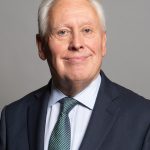
  • John Whittingdale – 2022 Speech on BBC Local Radio

    John Whittingdale – 2022 Speech on BBC Local Radio

    The speech made by John Whittingdale, the Conservative MP for Maldon, in the House of Commons on 8 December 2022.

    I congratulate my right hon. Friend the Member for Hemel Hempstead (Sir Mike Penning) on obtaining this debate. It is also a pleasure to follow the right hon. Member for Hayes and Harlington (John McDonnell). I do not often agree with what he says but, apart from a couple of sentences, I agreed with practically every word.

    The BBC spends something like £4.1 billion each year on public service content, of which £477 million—just over 10%—is spent on radio. A quarter of that, or around 3% of the BBC’s total spend, is spent on local radio, yet what BBC local radio provides is hugely valued by a very large number of listeners. It is an essential and widely trusted local information service.

    I have listened to and appeared on BBC Essex over many years. The station’s presenters, including Dave Monk, Sadie Nine and Sonia Watson, are familiar friends to many of my constituents. People share their living room with them, and their news reports are trusted. That was particularly the case during the covid pandemic, when all the surveys showed that people relied on and trusted information from local media more than information from almost any other source.

    But it is not just about news. BBC local radio does a tremendous amount of community events to support voluntary organisations. Just a few weeks ago, I presented a Make a Difference award to one of my constituents in Essex who had been recognised by BBC Essex for her remarkable, life-saving bravery.

    The BBC’s mission is to be distinctive, and one of its public purposes is to serve the diverse communities of all the UK’s nations and regions. BBC local radio does both. The requirement to be distinctive is something BBC local radio meets better than a lot of the rest of the BBC. Nobody else does what BBC local radio does. There are plenty of very good local radio stations—I have Heart Essex, Radio Essex and community stations such as Caroline Community Radio in my constituency—but they are predominantly music-based. They do not pretend to provide the kind of very localised talk-based content that only BBC local radio provides.

    I accept that this year’s licence fee settlement is difficult for the BBC, but £159 represents a lot of money for households, particularly with the rising cost of living, so it was the right decision to freeze the licence fee. That has put pressure on the BBC, but local radio is a tiny proportion of its expenditure, and the BBC tells us that it is not cutting the amount of money it spends but is redirecting it, so £19 million has been taken away from radio and put into online news.

    I spoke to Rhodri Talfan Davies, the BBC’s director of nations, about why the BBC made that decision, and he told me it was because people no longer listen to the radio to get their news and because people, particularly young people, are increasingly going online, and the BBC somehow has a duty to follow them. I think that is profoundly mistaken for two reasons. First, there is still a significant audience for radio, particularly among the elderly population, who often cannot get out. They rely on the radio.

    Richard Foord (Tiverton and Honiton) (LD)

    I recognise what the right hon. Gentleman says about elderly constituents who depend on local radio. Angela Kalwaites does a fantastic show on BBC Radio Devon covering stories from the county’s faith communities. Some of my constituents who listen to her show are frail and elderly and can no longer get themselves to their local church or chapel. They tune in to her programme to get that connection with local people. Does the right hon. Gentleman agree that this move would hit some of our eldest constituents hardest?

    Sir John Whittingdale

    I agree. Many of our elderly constituents rely on radio and are less familiar with online. They will not necessarily go on to the BBC News website or a commercial website. They enjoy the fact they can listen to local news content from people they know well. As my right hon. Friend the Member for Hemel Hempstead and the right hon. Member for Hayes and Harlington have both said, this is now going to stop for a lot of the country at 2 pm. We are lucky in Essex, as it is going to continue until 6 pm on weekdays, but after that we will become part of a regional network, with a show that covers Essex, Cambridgeshire, Suffolk, Norfolk, Northamptonshire and Three Counties Radio, which means another three counties, as it says on the tin. So that makes eight counties. Eight counties is not local radio. This will result in a significant reduction in the amount of local content, at times when people want still to be able to access that.

    Secondly, instead of providing for local radio, the BBC is going to increase its spend on local online news content, yet that area is already well supplied. Local news publishers more and more are providing online content. Existing print-based newspapers have websites and there are now many online-only publishers, such as Nub News, which I referred to in the questions this morning. They are operating in a challenging and competitive environment, and are under tremendous economic pressure. They already see the BBC, which provides content for nothing, as a major competitor. The latest Ofcom survey showed that, when people want to go online to access news content, 62% go to the BBC website, 34% go to Google and 10% go to any local newspaper site. So already local commercial providers feel that the BBC is a threat and that is why Frances Cairncross said in her report that the BBC needs

    “to think more carefully about how its news provision can act as a complement to, rather than a substitute for”

    private news provision. Yet this, the area where the BBC is going to invest more, is bound to have an even greater competitive impact on commercial news providers. So I hope that Ofcom, which has a duty to look at the impact of the BBC’s activities, will examine that. I hope it will also look at the operating licences for BBC local radio and, if necessary, strengthen them to make sure that they continue to provide genuine local content, not local content across eight counties.

    If the BBC wants to support local news provision, there is an easy way in which it can do so. When I was Secretary of State, I played a small part in the creation of the Local Democracy Reporting Service, where the BBC pays for local journalists who are employed by local news providers to collect and distribute local news content across all the local news providers. That scheme has been a huge success. It is welcomed right across all the local newspapers. The BBC acknowledges that it is a great success. So, if the BBC wants to put more money into local news provision, it should do it by increasing its support for the Local Democracy Reporting Service, which works with local newspapers, rather than by increasing the amount of money it spends competing with local newspapers.

    It is not for us here or for the Government to tell the BBC how to spend its money, but the message that will go out this afternoon is that the BBC has got this wrong and it needs to think again.

  • John McDonnell – 2022 Speech on BBC Local Radio

    John McDonnell – 2022 Speech on BBC Local Radio

    The speech made by John McDonnell, the Labour MP for Hayes and Harlington, in the House of Commons on 8 December 2022.

    I speak not only in my capacity as secretary of the National Union of Journalists parliamentary group, but to represent my constituents. The NUJ has circulated a briefing to all Members of Parliament who have expressed an interest in local radio. I will refer to elements of it because it sets what the right hon. Member for Hemel Hempstead (Sir Mike Penning) said in context.

    I congratulate the right hon. Gentleman on securing the debate. It is interesting that on this particular subject we have come together over the years on a cross-party basis to exert an influence on the BBC as best we can. Our debates in this House have exerted an influence: hon. Members who have been around for a while will remember previous debates in which we have fended off onslaughts on BBC radio.

    Let me put our concerns on the record—I hope the BBC is listening. The current plans mean that most of the afternoon and evening output will be shared. Overall, BBC local staffing is expected to reduce by 48 posts. After 2 pm on weekdays, the BBC will produce 18 afternoon programmes across England. Local stations will be forced to share information. What will that do? Exactly as the right hon. Gentleman says, it will seriously diminish a service that is highly valued by listeners and plays a role for all in underpinning local democracy by holding us to account and reporting on what is happening— not just with MPs, but with local councils and local agencies.

    As the right hon. Gentleman says, there is example after example of local BBC stations providing a conduit of information during crisis after crisis. From weather crises and covid to accidents and other unfortunate incidents, they provide the information people rely on. Why are they important, as against other stations? Because they are seen as a reliable source of information and they provide a vital service on which all our communities depend. The cuts mean that there will now be just 40 hours a week of guaranteed local programming.

    Let me reiterate the role that constituents have told us BBC local radio does. It connects communities. It provides local news. It provides reportage of sport, entertainment and religious services. It has been the bedrock of the BBC’s role as a public service. Interestingly, it is not just us saying that, but the BBC itself. In its latest annual report, the BBC boasts about how local radio

    “delivered real value by keeping people safe and informed through challenging times such as Storm Arwen, where audiences in the North East were left without power for weeks.”

    The BBC itself gives examples from the pandemic, when many people were isolated in their homes. The BBC itself says “it makes a difference.” That is why we are bewildered when 5.7 million people listen to local radio and it comes under attack once again.

    There is quotation after quotation from people who may not be working in the service at the moment and may therefore be more independent. I agree with the right hon. Gentleman that people do not want to put their jobs at risk at this stage. The former voice of BBC Radio Suffolk’s afternoons, Lesley Dolphin—who was very well known to a lot of people—wrote this to the director-general of the BBC:

    “BBC managers are proud that they have journalists on the ground in every county, but local radio is so much more than a news service—it is embedded in local communities and gives people a sense of place, a chance to celebrate heritage and art. It will be impossible to do that if programmes are shared across a wider area.”

    When we debated this issue recently, early in November, there was huge cross-party support for local radio. One Member said that local stations

    “provide a lifeline for news and education, mitigate against rural isolation and support people’s rural mental health.”

    Another said that it was

    “a great incubator for new talent”

    in his area, and a third described it as

    “one of the crown jewels of our public sector broadcaster.”—[Official Report, 1 November 2022; Vol. 721, c. 774-778.]

    The importance of local broadcasting becomes even clearer when all of us are reporting the decline in local newspaper circulation in our areas. The BBC local radio service has stepped into that gap to an even greater extent to ensure that there is local reportage, holding us all—at every level of representative democracy—to account. Press Gazette has reported that 265 local newspaper titles have gone. The BBC says that it is pursuing a digital-first policy, chasing younger viewers, but the NUJ and others have put forward alternatives so that broadcasters can improve the whole system more effectively by working differently and using technological solutions. Unfortunately, the BBC has not engaged in that discussion constructively enough.

    I agree with what the right hon. Gentleman said about staffing. All BBC local radio staff have now been told that their jobs are at risk. They have been told that the managers will “roll out” the plans, which means that some of those staff will not know their futures for up to a year. We can imagine the sense of insecurity that that creates.

    During the November debate, the Media Minister, the hon. Member for Hornchurch and Upminster (Julia Lopez), said the Government were

    “disappointed that the BBC is reportedly planning to make such extensive cuts to its local radio output.”—[Official Report, 1 November 2022; Vol. 721, c. 764.]

    The view that we can express to the BBC is that this is a cross-party issue. It is certainly of concern to the Opposition parties, but it is also of deep concern within the Government. I will not let the Government off the hook, because I want to put on record my opposition to the freezing of the BBC licence fee, but in the context of the resources that the BBC now has, as the right hon. Gentleman said, there must be some element of prioritisation for the valuable role played by BBC local radio.

    Let me quote from another broadcaster most people will recognise, Fi Glover, who has been a prominent broadcaster over the years. When she was interviewed recently on “The Media Show”, she said:

    “There has never been a more important time in the dissemination of information to have a strong local news network. If you can’t tell the story of the people around you, who you know and see every day then into that void can fall really unpleasant things. Once that part of the forest has been cut down, it won’t ever grow again.”

    So what did she think of these plans? She said,

    “it is bonkers.”

    I agree with her completely. I hope that the BBC is listening, and I hope it will think again.

    Let me say this on behalf the of NUJ: it stands ready to be involved in any consultations or negotiations to find an alternative way forward, which I think the majority of Members would also seek.

  • Mike Penning – 2022 Speech on BBC Local Radio

    Mike Penning – 2022 Speech on BBC Local Radio

    The speech made by Sir Mike Penning, the Conservative MP for Hemel Hempstead, in the House of Commons on 8 December 2022.

    I beg to move,

    That this House has considered the future of BBC Local Radio.

    I thank the Backbench Business Committee and the 100-odd colleagues from across the House who joined the application for this debate. For those who are watching and perhaps thinking that the Benches are a bit sparse, actually if everybody speaks for 10 minutes, we will fill the time perfectly. This is a great opportunity for colleagues across the House to send a message not only to the excellent Minister on the Front Bench, but to the BBC. I also thank the House of Commons Library for its excellent and balanced paper on the subject. I will try to explain to the BBC, with colleagues, where it has gone fundamentally wrong with the demise of local radio. Local radio provides a service to our constituents and our communities that commercial radio cannot provide. If the BBC is trying to compete with commercial radio in that space, then frankly it has lost the ethos of what the BBC is supposed to be about.

    There is a tax on all our constituents who have a TV or a computer that is able to receive a BBC programme. It is called the licence fee and it is a criminal offence not to have it. It was put in place all those years ago so that the BBC could provide a service that people could trust was impartial and was not going to come from any other source.

    Mr David Davis (Haltemprice and Howden) (Con)

    Does my right hon. Friend agree that impartiality is right at the front of the BBC’s ethos, but that in practice many of us in this Chamber—certainly, I do—find that BBC local radio, in my case Radio Humberside, is far more impartial than any national programme?

    Sir Mike Penning

    My right hon. Friend hits the nail on the head. I will come on to explain the matter of trust and how local radio is not allowed a level playing field, when it comes to programmes such as “Newsnight” or the cost of some BBC presenters. During covid, my constituents were massively reliant on the information coming from Three Counties Radio. They trusted it, they understood it and the presenters were literally their voice of information about what was going on during the pandemic.

    As the cold weather hits parts of the country—fortunately, although my part of the country is cold, the weather there will be nowhere near as difficult as the sort that some will have—there is no doubt that some schools will close. Where is the information that people can trust going to come from? Clearly, it will come from their local radio station. Some commercial radio stations will pick that up—that is fine—but actually that is the job of the BBC, because it takes the licence fee.

    The BBC gets about £3.5 billion from the licence fee and a further £1.5 billion from other sources. It is not for this House to tell the BBC how to spend that money, but we can give it advice. Some of that advice has been brought to me by my constituents, who are literally in tears that some presenters on local radio stations in my part of the world have been given pre-redundancy notices before Christmas, telling them that they should apply for their jobs. In some cases, those jobs will not be there.

    Let us look at what the BBC has decided to do. It is proposing to allow our local radio stations to go a bit longer in the morning, until about 2 pm, and then we will be regionalised.

    Colum Eastwood (Foyle) (SDLP)

    I am grateful to the right hon. Gentleman for securing the debate. An announcement was made last week about my local radio station, Radio Foyle, and we will not even get morning programming. There will not be a local voice on Radio Foyle in the north-west of Northern Ireland until 1 o’clock in the afternoon. The breakfast programme is being stripped away and more than half of the news staff are being got rid of to save £420,000. BBC Northern Ireland’s budget is £55 million. In effect, it will destroy a local radio station, going against what its own charter says about providing local people with access to local news, all to save a measly £420,000. The BBC has a massive number of staff in Belfast and two massive buildings, but the axe is falling on the local community in the north-west of Northern Ireland. Surely the right hon. Gentleman would agree that that is an absolute disgrace.

    Sir Mike Penning

    The hon. Gentleman represents the voice of his constituents in an excellent way in the House this afternoon. Knowing the Province as I do—once in uniform and then as a Minister of State in the Northern Ireland Office—I know how important the local radio stations are. The interesting thing is that I do not think the BBC really knows what it wants to do. What is its ethos? Where is it going? For instance, in my part of the world it will cut local radio in the afternoon, but in his part of the world it will cut it in the morning. I would argue that both are very important.

    To go back to my earlier point, we are now in winter. Parents will take their children to school, and it is quite possible that sometimes—especially in the northern parts of this great country of ours—those children will have to go home early. Schools will do their level best, but it is the local radio stations that will tell parents which schools will be open the following day, which will be open that evening, and whether they need to collect their children early—I hear that all the time on my local radio station. The people involved are dedicated, and they are not the very rich people who work for the BBC.

    When the Secretary of State came to the House to answer questions on this issue a few weeks ago, it was shocking that the Department had been told what was happening only the day before, because I had been told on the Friday by some local radio stations that they knew about it then. It is shocking that what is really an extension of Government—because the BBC takes the licence fee—did not tell the Government what was going on so that we could tell the House. That is absolutely disgusting and fundamentally wrong. Mr Speaker quite rightly complains bitterly when things are announced outside the House, but this was also about people’s jobs and our communication with our constituents.

    I went back to listen to some of the comments from people in local radio—I have to be careful here, because I want to protect them and not put them in an even more difficult position—and they said, “Mr Penning, it is not a level playing field. I’m not allowed to have another job, apart from working for the BBC.” A few people are on slightly different contracts, but the vast majority have contracts that say they cannot have another job in broadcasting.

    I named a gentleman in this Chamber who works for the BBC and who has been on our TV quite a lot recently because of the World cup—the gentleman’s name is Gary Lineker. I said that I thought that it was fundamentally unfair that he earns £1.35 million, or slightly more—that has been declared by the BBC as his income—and others, such as Zoe Ball on Radio 2’s “The Zoe Ball Breakfast Show”, earn just short of £1 million. I do not know about Zoe Ball’s contract, but what we know about Gary Lineker’s contract is that not only does he do advertisements for a certain company that makes crisps, but he works on BT Sport. My local radio people are not allowed to do that.

    I got lambasted by a Daily Mail journalist who said, “Stop picking on Gary Lineker.” I am not picking on him; I just think it is unfair that our local radio people are now prevented from having a job, while he can go and do jobs galore. I am not going to be a hypocrite; I have declared other interests outside this House. That is within my contract. Others who work in local radio cannot work in other ways. There are people who have been given their pre-redundancy notice and told that they need to apply for their job, but their jobs will not be there.

    What can the Minister do for us this afternoon? He is an excellent Minister, but his job, rightly, is not to run the BBC. It is for this House, however, to send a message to the BBC that it has got it fundamentally wrong to attack that low-hanging fruit—our local radio station presenters—without understanding the damage that that will do to our communities around the country.

    Andy Carter (Warrington South) (Con)

    This is a message that we need to send not only to the BBC, but to the regulator, Ofcom. The service licences under which BBC local radio operates are so woolly that, frankly, there are no obligations in place that require it to be specifically local to the area that it is required to serve. Given that we are in a mid-term review of the BBC, is it not time that Ofcom had some teeth and required the BBC to do what it is set out to do?

    Sir Mike Penning

    My hon. Friend has read my mind. As he may have noticed, I do not read speeches in this House because my dyslexia prevents me, so I try to memorise what I am going to say, and I was about to move on to Ofcom.

    Because the licence fee is a tax and people have to pay it, there has to be regulation. Ofcom provides that regulation. It is for the Government to set the parameters, for Ofcom to regulate and for the BBC to decide how to deliver its services. I find it inconceivable that Ofcom would sit back and allow this to happen when it is Ofcom’s job to ensure that the BBC fulfils its role and does what it was supposed to do when we set it up with a licence fee all those years ago.

    I am conscious that many colleagues across the House want to speak this afternoon, and I am really interested to hear what they say. The BBC has done brilliant things and has some brilliant programmes. I have fallen out with it many a time; I do not go on “Newsnight” these days, because it is cheaper just to phone up all the people who watch it—200,000, which is smaller than the number of people who listen to their local radio station in my part of the world.

    Dean Russell (Watford) (Con)

    My right hon. Friend and I share a local station, BBC Three Counties Radio. I am sure he agrees that every single one of its 250,000 listeners must enjoy the shows. As he says, it gives important local voices the power to reach into people’s homes when they are needed—it did that perfectly during the pandemic. I pay tribute to BBC Three Counties and all its presenters for their work.

    Sir Mike Penning

    I too congratulate BBC Three Counties, not just because of its work in the pandemic but because it picks up many local issues for us.

    I congratulate the BBC on managing to unite this House in a way that we probably have not seen for quite some time. This Chamber is confrontational by nature—it does what it says on the tin, really—but I can almost guarantee that colleagues are here today because they want to look after their constituents and want their constituents to get the best possible value from the BBC.

    If this is all about money, I cannot understand why the BBC is spending £5 billion, of which £3.5 billion is taxpayers’ money, but it cannot find a better way. If people cannot look after Radio Foyle instead of saving peanuts in cash terms, and if they cannot look after our local station Three Counties Radio, frankly they need to get another job, because they are not running their organisation correctly.

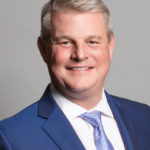
  • Stuart Andrew – 2022 Speech on the English National Opera

    Stuart Andrew – 2022 Speech on the English National Opera

    The speech made by Stuart Andrew, the Parliamentary Under-Secretary of State for Digital, Culture, Media and Sport, in the House of Commons on 5 December 2022.

    This is certainly a fun way to end a Monday evening! I am grateful to my hon. Friend the Member for Bromley and Chislehurst (Sir Robert Neill) for securing this debate and highlighting the importance of the performing arts sector. I thank all other hon. Members for their contributions, and their engagement on this important topic.

    My hon. Friend is a passionate supporter of the arts and culture, and I appreciate his and other Members’ thoughts on how we can continue to support and champion the sector, particularly in this area, so that people up and down the country can enjoy the benefits of arts and culture, and what it can bring to our communities. It is worth reflecting on our commitment to the arts and culture sector. My Department secured and delivered the culture recovery fund at a time when almost all our performing arts and culture venues were closed due to the pandemic. This debate would tell a very different story if we had not provided such unprecedented support at that time; it would be a story of how we would need to rebuild a decimated industry.

    There was significant support that helped the whole economy, including arts and culture, such as the self-employment income support scheme and the furlough scheme, but the House will remember—as I reminded my hon. Friend in a debate only a fortnight ago—that the Government also supported about 5,000 organisations through the unprecedented culture recovery fund. Tax reliefs for theatres, orchestras, museums and galleries were also increased until 2024 as part of the Budget. Worth almost a quarter of a billion pounds, the additional tax reliefs have supported, and continue to support, the arts and culture sectors in the UK to continue to produce world famous content on the global stage. Taken together, those interventions have supported the sector through the challenges of covid and steered it into recovery.

    A number of members have raised with me over the past couple of weeks the issue of the increasing cost of energy bills. I assure hon. Members that we are aware of the extremely challenging situation facing organisations. My noble Friend Lord Parkinson has hosted a series of roundtables to discuss those very issues, and we will continue to do so.

    It is important for us to talk about the Government’s levelling-up intentions, because one theme is supporting cultural and heritage assets. This is another boost for arts and culture, and a recognition of its role in the economy and in our communities. Department for Digital, Culture, Media and Sport officials and our arm’s length bodies have been supporting the assessment and prioritisation process for the levelling-up fund, and I am pleased that the second round includes the potential for up to two £50 million flagship culture and heritage projects.

    Sir Robert Neill

    I appreciate the Minister’s remarks. I do not think the energy costs are a great problem for any of the arts companies, frankly. I gently say to him he refers fairly to the levelling-up agenda and the fund. He will be aware that the previous Secretary of State wrote to the Arts Council in February, instructing it to use the major holders of the national portfolio, of which the ENO was one, to do more of their investment outside London. ENO has been prepared to do that, but will he help me understand how something that ceases the company to exist does anything to level up, or to do more of its work outside London? Will he address the specific issues of the Arts Council’s decision?

    Stuart Andrew

    Of course I will, and I am coming on to that. I think it is important to point out that there are three main reasons why we need to have this levelling-up agenda in culture: it is important that access to arts and culture is more fairly spread; that the economic growth that comes from creativity should be felt by everybody; and that the pride of place that culture and heritage can bring to communities should be felt in every corner of the country. That is why we have asked the Arts Council to invest more in the recently identified levelling up for culture places.

    Central to all of this is our delivery partner, as my hon. Friend has mentioned—Arts Council England—and, as we have heard, it has recently announced the outcome of its latest investment programme, which will be investing £446 million in each year between 2023 and 2026. There were a record number of applications for this competitive funding, which will support 990 organisations across the whole of England. This means more organisations will be funded than ever before and, crucially, in more places.

    Dame Margaret Hodge

    I am really grateful to the Minister for giving way. It is just that I cannot stand this hypocrisy about levelling up. This is not levelling up. To cut the ENO will not level up. It is doing a fantastic job in opening up opera to other people. If the Minister sees what the Arts Council has done elsewhere, it has cut the touring grant for the Welsh National Opera and it has cut the touring grant for Glyndebourne. The result of all those three actions means far fewer people will have access to opera over the coming years as a result of crass decisions taken by the Arts Council.

    Stuart Andrew

    I will come on to those points, but I am afraid I do not accept the premise that we are not levelling up areas around the country. I just do not accept that.

    Barbara Keeley (Worsley and Eccles South) (Lab)

    What about Oldham?

    Stuart Andrew

    If the hon. Member will just let me speak, in Blackburn, for example, there was no funding from the Arts Council at all, but there are now four projects. We are seeing that all over the country. To bring this to life, the investment programme includes £150,000 per year to Magpie Dance, a new joiner in the constituency of my hon. Friend the Member for Bromley and Chislehurst. In short, I am unapologetic about this shift of support to more organisations that will be helping more people around the country and will be supporting more people.

    I understand that many hon. Friends may disagree with some of the individual decisions that have been made. These decisions were made entirely independently of Government, so I cannot comment on the individual outcomes.

    Barbara Keeley

    You are cutting them!

    Stuart Andrew

    The premise, but not the individual applications—and that is the critical point. This is an arm’s length body, and if there were any ways in which it was breaching the terms set by the Government, we would of course intervene, but it was following the instructions that were set.

    Sir Robert Neill

    Does the Minister take responsibility?

    Stuart Andrew

    Let me finish, please.

    These decisions were taken against well-established criteria by regional teams spread across nine offices across England via directors with expertise in their discipline, be that theatre, music, touring and so on, and they have been overseen by the national council, so I hope Members will forgive me for repeating my message of last week, but it is important.

    Ms Harman

    Will the Minister give way?

    Stuart Andrew

    I just want to come on to this point. English National Opera, in particular, is just one decision out of 1,700. As I say, there are 990 organisations in the next portfolio, and unfortunately 700 were unsuccessful on this occasion. Many hon. Members will have been following this coverage, and I can confirm that the Arts Council has offered English National Opera a package of support. We are keen that the Arts Council and English National Opera work together on the possibilities for the future of the organisation. I welcome many of the suggestions put forward, and I encourage the exploration of those ideas during engagement between English National Opera and Arts Council England. We need to explore all suggestions made.

    Ms Harman

    I am hoping that this speech is a sort of front, and that behind the scenes the Government recognise that the instruction they have given to the Arts Council is wrong, and that the decision the Arts Council has made is wrong and that the Government are going to do something about it. Otherwise it is too depressing to think that a Minister responsible for the arts should make a speech that does not address any of the points brought forward with great seriousness and gravity by the hon. Member for Bromley and Chislehurst. I am hoping that this is a bit of a front, and that there is some intelligent, creative, recognising-art-loving life behind the scenes in this Government, because we cannot see any signs of that in the Minister’s speech.

    Stuart Andrew

    I am really sorry, but I do not understand how funding more organisations than ever before, in more parts of the country than ever before, is not spreading that opportunity for artists around the rest of the country. I make no apology for that whatsoever, and I am surprised that people do not want rising talent in Blackpool or Birmingham to have the same opportunities —[Interruption.] This is not divisive; this is about trying to help other people around the country. As I said, I go back to the main point that I encourage all these ideas to be explored—of course they should be. We are keen for that to happen. Through this programme, opera will continue to be well funded, with it remaining at around 40% of overall investment in music. Organisations such as the English Touring Opera and Birmingham Opera Company will receive increased funding, and there are many new joiners such as OperaUpClose and Pegasus Opera. The Royal Opera House will continue to be funded. Those statistics are likely to underestimate the level of opera activity being funded, as some organisations in the programme will fall under combined arts.

    For those who are concerned about what this decision may mean for London, let me say that we remain committed to supporting the capital—of course we do—and we recognise and appreciate that London is a leading cultural centre, with organisations that benefit the whole country and greatly enhance the UK’s international reputation as a home for world-class arts and culture. That is clearly reflected in the next investment programme, when around one third of the investment will be spent in London, equivalent to approximately £143 million a year. I am sure hon. Friends will agree that when we step back and look at the bigger picture, it is exciting to see that it also gives opportunities to people around the country to enjoy what many have in London. I reiterate that we encourage Arts Council England and English National Opera to continue their dialogue and explore all those issues. I have said that in each of the debates—I think this is the third or fourth we have had—and I look forward to seeing the outcome of those discussions.

  • Robert Neill – 2022 Speech on the English National Opera

    Robert Neill – 2022 Speech on the English National Opera

    The speech made by Sir Robert Neill, the Conservative MP for Bromley and Chislehurst, in the House of Commons on 5 December 2022.

    It is a pleasure but also a sadness to rise to speak in this Adjournment debate, because it is not a discussion we should be having in a society that prizes excellence, attainment and opportunity. It is about the disgraceful behaviour of Arts Council England in removing the English National Opera from the national portfolio and about what some of us perceive to be a significant underappreciation of the performing arts, as opposed to other art forms, in the way we deal with our arts and culture policy—perhaps, I regret to say, in the attitude of Arts Council England itself from time to time.

    Let me set out very briefly what causes that. The English National Opera is approaching its 100th anniversary. It was founded by Lilian Baylis to deliberately make opera, in its best and most effective sense, available to everybody—I will come back to the fact that opera is not some kind of elite form in the way it is so often wrongly characterised. That is the same mission that Arts Council England was given: to make art and excellence available to everybody. Regrettably, recent decisions have put that at risk.

    For 55 years or so, ENO has had its home at the London Coliseum. It has been a nurturer of talent and, for many people, as audiences and as professional singers, the gateway to opera. It has done a great deal. It has had its challenges from time to time; the Coliseum is a large theatre, and there was a time when the company struggled to find its way in a sense, artistically and financially. It also had some brilliant times, and I remember, as a young student in London, going to the ENO when it was at Sadler’s Wells, before it moved down to the Coliseum. I remember seeing fantastic productions there that opened people’s eyes to what music can do; what that extraordinary juxtaposition of theatre, music and the visual performance can do, in a way that no other art form arguably can.

    The ENO’s unique thing was that it was affordable and it did it in English, so the barrier that sometimes makes operas and art forms seem remote did not exist at the English National Opera. That has always been one of its important calling cards. That has also meant that talented people—from Bryn Terfel to Susan Bullock and many others—started their careers and have worked their way to becoming international stars because of the ENO.

    Tim Loughton (East Worthing and Shoreham) (Con)

    I congratulate my hon. Friend on bringing this debate, although it is regrettable that we have to have it. I can attest, as somebody who has enjoyed many particularly un-highbrow productions at the Coliseum, to what he is saying. The ENO has sought to diversify and to open its doors to the less advantaged. It has given free tickets to young people and has encouraged them to get involved with the beauty of music in an accessible way and in English at such a young age. Does he not think it is ironic that the ENO is the victim of a supposed diversification programme by the Arts Council, which is giving questionable money to all sorts of politically motivated causes up and down the country, and that this could scupper the future of such a fantastic institution that has done so much to bring the arts to those who absolutely benefit from it more than most?

    Sir Robert Neill

    I certainly agree with my hon. Friend. The ENO has been about expanding horizons and expanding opportunities. The irony is also that, because of the hard work of its current leadership, and because of the work that has been done by its chair, Dr Harry Brünjes, by its board, and by its chief executive, it is on a sound financial footing.

    The ENO was praised by the chair of the Arts Council as being never better led, and the Arts Council’s internal documents show that its governance is beyond reproach. On its financial situation, risk is seen as moderate—for any company in theatre, that is, frankly, very good. It has actually built up reserves and has done all the right things, putting the operation on a much more commercially aware basis. Those at the ENO spend time bringing in musicals to cross-subsidise some of the less accessible and more challenging work, but that is an important part of their mission, too. They have done everything expected of them in the Arts Council’s own objectives, and have ticked the box on the Art Council’s own internal assessments of the Let’s Create objective.

    Why is it, then, that a company that has done everything asked of it, and succeeded, has the rugged pulled from under it by the Arts Council, on 24 hours’ notice, with no consultation, no evidence base—that we have seen—to underpin it, no strategy to underpin the approach to opera as an arts form or, generally, to the way that vocal arts are dealt with in the United Kingdom? Why is it, then, that the chorus and orchestra are threatened with redundancy and the creatives are likely to be on notice? That is all on the basis of a laudable objective of the Government to spread where the arts are found in this country. I do not disagree with that, but it is done in such a manner that the Government’s own objective is, I regret to say to the Minister, undermined and almost discredited.

    Dame Margaret Hodge (Barking) (Lab)

    I congratulate the hon. Gentleman on securing this debate, although as the hon. Member for East Worthing and Shoreham (Tim Loughton) said, it is sad that he had to do so. Does he not agree that this is the most scandalous decision, given every objective of the Government and of the Arts Council to widen participation and access to this unique form of art? The ENO is the one place where British young artists have the opportunity to develop their careers, to start performing to the public and to be seen by both national and international opera houses.

    The Arts Council worked with the theatre that I chair in east London to put on a performance of “Noye’s Fludde” by Britten. They brought in about 50 young children from Newham and Tower Hamlets in east London, who participated as actors in that production. They managed to win an award out of it, which was absolutely tremendous. Is that not all about widening participation, opening access and levelling up?

    Sir Robert Neill

    The right hon. Lady is entirely right. A few statistics bear that out: 50% of the ENO’s audience come to see an opera for the first time. I was at its new production of “It’s a Wonderful Life” only last week. On Friday I went to see the last performance of “The Yeoman of the Guard”. I have never seen a younger audience in an opera house on either of those occasions. A few months ago I was at “Tosca” when it first opened and saw the same thing—standard repertoire, some would say—young people who are enthusiastic about serious art done to an international level. To undermine that would be vandalism of the very worst order.

    Nickie Aiken (Cities of London and Westminster) (Con)

    I congratulate my hon. Friend on securing this Adjournment debate. I was particularly concerned to hear the news of the Arts Council not supporting ENO in the way it should, particularly as the London Coliseum is based in my constituency. I have had conversations with the Arts Council and with the ENO. Does my hon. Friend agree, as I suggested to them, that the ENO should consider a model along the lines of the Royal Shakespeare Company, which has an impressive regional base but keeps its London base because London attracts international tourists as well as British tourists? It is so important for the levelling-up agenda to have a regional base but also to keep the London flagship.

    Sir Robert Neill

    My hon. Friend is absolutely right. That is the whole point. This should not be an either/or. The whole point is to ensure that we have a secure company in London that can do its work, but ENO has been more than willing from the very beginning to do more work outside London. It planned to do a show in Liverpool before the pandemic. As it happens, other cuts elsewhere to Welsh National Opera have meant that Liverpool will get less opera now rather than more. That is a bizarre way of going about things.

    Ms Harriet Harman (Camberwell and Peckham) (Lab)

    I thank the hon. Member for introducing this important Adjournment debate. I agree absolutely with the case he sets out in his speech for the Arts Council decision to be withdrawn. As the hon. Member for Cities of London and Westminster (Nickie Aiken) proposed, the decision should be reviewed, reshaped and should not go ahead. It is baffling and an absolute shame that three people who have done so much for the arts—Nick Serota, Darren Henley and Claire Mera-Nelson—should have made this wrong decision. Will he join me in urging them to withdraw the decision, recognise that they got it wrong and that the ENO has exemplified levelling up, and undo this terrible mistake?

    Sir Robert Neill

    The right hon. and learned Lady is absolutely right, not least because the decision was made with no notice, no prior consultation and no ability for the ENO to go through a proper consultation process with its staff, who may be rendered redundant. I suspect that lays the Arts Council open to judicial review, but I am sure it would not want to get into that position when a compromise solution is readily available.

    Sir Robert Buckland (South Swindon) (Con)

    I am grateful to my hon. Friend for giving way; I am conscious of the time. That is the most shocking aspect of this sorry saga: the suddenness of the decision, the abruptness of the withdrawal of funding and the failure to even consider a phased approach or a more modulated approach, as suggested by my hon. Friend the Member for Cities of London and Westminster (Nickie Aiken). Nobody wants to talk about legal action, so surely the sensible way forward is for the Arts Council to think again about the gravity of its decision and to give the ENO a fair hearing at the very least.

    Sir Robert Neill

    My right hon. and learned Friend is obviously right. The perhaps unprecedented number of interventions in this Adjournment debate from hon. Members on both sides of the House demonstrates how strongly people feel about the issue. That is the message to the Minister and the ENO: people support the ENO and say that the Arts Council should think again and find a way forward that achieves the objective.

    Several hon. Members rose—

    Sir Robert Neill

    I will take the remaining interventions, then close quickly to give the Minister time to respond.

    Mr Jonathan Lord (Woking) (Con)

    I commend my hon. Friend for his excellent arguments and all other hon. Members who are supporting them. As MP for Woking, I have had quite a big postbag on this issue from not just opera-loving constituents, who are disgusted by the decision, but first-class musicians and singers who will effectively lose their job. I, too, appeal to the Minister to ensure that the decision is withdrawn.

    Sir Robert Neill

    I am massively grateful to my hon. Friend.

    Jim Shannon (Strangford) (DUP)

    I am grateful to the hon. Gentleman for bringing forward the debate. I believe, as he does, that it is outrageous that Arts Council England is withdrawing the funding. Does he agree that it is about ensuring the upkeep of our theatres, and encouraging people to visit the wonderful theatres that hon. Members have mentioned in their constituencies across the United Kingdom, especially after the impact of covid on the performing arts industry?

    Sir Robert Neill

    The hon. Gentleman is right. What I found extraordinary was the Arts Council’s suggestion that there was no growth in the audience for opera—or for “grand opera”, as it was demeaningly titled, which indicates someone who does not know much about opera. Actually, the figures from the ENO show a significant growth post covid—more than before—but the Arts Council makes no allowance for that. It has flawed figures, no strategy and a flawed consultation—a flawed approach from day one.

    Sir Peter Bottomley (Worthing West) (Con)

    I congratulate and thank my hon. Friend on raising the subject. Seven years ago, the Arts Council was worried about the ENO’s business plan and management. The business plan has gone well, the management have done well, and the singers and musicians have done brilliantly. Is it not time to back a British success?

    Sir Robert Neill

    I entirely agree with the Father of the House.

    Andy Slaughter (Hammersmith) (Lab)

    I may not be able to match the hon. Gentleman’s regular attendance, but the last two productions that I saw at the Coliseum either side of covid were Les Dennis in “HMS Pinafore” and Harrison Birtwistle’s “The Mask of Orpheus”, which gives an idea of the range that is on display. It is a great London, national and international institution, and it is being ruined, so I congratulate him on what he has said, and all other hon. Members. The decision has to be reversed.

    Sir Robert Neill

    I will conclude by asking the Minister what more he needs to hear. When I was a barrister, I would occasionally say to my clients, “The evidence is overwhelming.” He should go outside, have a word and think about it. If he was the advocate, I would say, “Have a word with your clients and tell them to reflect, because there’s time to change this.” The ENO is willing to offer a way forward: it wants to and will do more outside London and it will meet the Department’s objectives, but that cannot be done on the timescale and funding that is available.

    Can we please have a proper strategy to underpin the approach to opera and a proper funding settlement to keep the ENO stable until it can go through due process? There needs to be a proper discussion about moving to a viable venue—there is all this nonsense about a place in Manchester, but no one in Manchester has even been consulted. Let us find a proper means for the ENO to perform outside London in a way that delivers good-quality art for people, and then let us sit down to consider a proper level of transition funding, as was done for the Birmingham Royal Ballet, which took five years to go and do work outside London.

    Above all, I beseech the Minister that we should maintain the chorus and the orchestra. They cannot move out of London, because they have families, so they will be made redundant and the chorus and the orchestra will be destroyed. An orchestra and a chorus take years to build up. It is not a production line; it is years of work of an ensemble coming together.

    Keep the ENO in being and it can do a vast amount elsewhere in the country. It will contribute to levelling up like nothing else. Please do not destroy it, through a misapplication, I am afraid, of a laudable policy; many of us do not disagree with the Government’s policy, but I am afraid it has been badly mishandled by the Arts Council. Arm’s length though it is, because the previous Secretary of State gave instructions to the Arts Council as to how it should do its funding, the Minister has a right and a duty to tell it, “Think again. Reflect. Come to a better solution.”
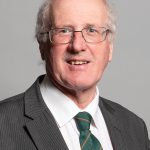
  • Jim Shannon – 2022 Speech on the Online Safety Bill

    Jim Shannon – 2022 Speech on the Online Safety Bill

    The speech made by Jim Shannon, the DUP MP for Strangford, in the House of Commons on 5 December 2022.

    It is a pleasure to speak in the debate. I thank Members who have spoken thus far for their comments. I commend the right hon. Member for Chelmsford (Vicky Ford) for what she referred to in relation to eating disorders. At this time, we are very aware of that pertinent issue: the impact that social media has—the social pressure and the peer pressure—on those who feel they are too fat when they are not, or that they are carrying weight when they are not. That is part of what the Bill tries to address. I thank the Minister for his very constructive comments—he is always constructive—and for laying out where we are. Some of us perhaps have concerns that the Bill does not go far enough. I know I am one of them and maybe Minister, you might be of the same mind yourself—

    Madam Deputy Speaker (Dame Rosie Winterton)

    Order.

    Jim Shannon

    The Minister might be of the same mind himself.

    Through speaking in these debates, my office has seen an increase in correspondence from parents who are thankful that these difficult issues are being talked about. The world is changing and progressing, and if we are going to live in a world where we want to protect our children and our grandchildren—I have six grandchildren —and all other grandchildren who are involved in social media, the least we can do is make sure they are safe.

    I commend the hon. Member for Batley and Spen (Kim Leadbeater) and others, including the hon. Member for Watford (Dean Russell), who have spoken about Zach’s law. We are all greatly impressed that we have that in the Bill through constructive lobbying. New clause 28, which the hon. Member for Rotherham (Sarah Champion) referred to, relates to advocacy for young people. That is an interesting idea, but I feel that advocacy should be for the parents first and not necessarily young people.

    Ahead of the debate, I was in contact with the Royal College of Psychiatrists. It published a report entitled “Technology use and the mental health of children and young people”—new clause 16 is related to that—which was an overview of research into the use of screen time and social media by children and young teenagers. It has been concluded that excessive use of phones and social media by a young person is detrimental to their development and mental health—as we all know and as Members have spoken about—and furthermore that online abuse and bullying has become more prevalent because of that. The right hon. Member for Witham (Priti Patel) referred to those who are susceptible to online harm. We meet them every day, and parents tell me that our concerns are real.

    A recent report by NHS Digital found that one in eight 11 to 16-year-olds reported that they had been bullied online. When parents contact me, they say that bulling online is a key issue for them, and the statistics come from those who choose to be honest and talk about it. Although the Government’s role is to create a Bill that enables protection for our children, there is also an incredible role for schools, which can address bullying. My hon. Friend the Member for Upper Bann (Carla Lockhart) and I talked about some of the young people we know at school who have been bullied online. Schools have stepped in and stopped that, encouraging and protecting children, and they can play that role as well.

    We have all read of the story of Molly Russell, who was only 14 years old when she took her life. Nobody in this House or outside it could not have been moved by her story. Her father stated that he strongly believed that the images, videos and information that she was able to access through Instagram played a crucial part in her life being cut short. The Bill must complete its passage and focus on strengthening protections online for children. Ultimately, the responsibility is on large social media companies to ensure that harmful information is removed, but the Bill puts the onus on us to hold social media firms to account and to ensure that they do so.

    Harmful and dangerous content for children comes in many forms—namely, online abuse and exposure to self-harm and suicidal images. In addition, any inappropriate or sexual content has the potential to put children and young people at severe risk. The Bill is set to put provisions in place to protect victims in the sharing of nude or intimate photos. That is increasingly important for young people, who are potentially being groomed online and do not understand the full extent of what they are doing and the risks that come with that. Amendments have been tabled to ensure that, should such cases of photo sharing go to court, provisions are in place to ensure complete anonymity for the victims—for example, through video links in court, and so on.

    I commend the right hon. Member for Basingstoke (Dame Maria Miller), who is not in her place, for her hard work in bringing forward new clause 48. Northern Ireland, along with England and Wales, will benefit from new clause 53, and I welcome the ability to hand down sentences of between six months and potentially five years.

    Almost a quarter of girls who have taken a naked image have had their image sent to someone else online without their permission. Girls face very distinct and increased risks on social media, with more than four in five online grooming crimes targeting girls, and 97% of child abuse material featuring the sexual abuse of girls—wow, we really need to do something to protect our children and to give parents hope. There needs to be increased emphasis and focus on making children’s use of the internet safer by design. Once established, all platforms and services need to have the capacity and capability to respond to emerging patterns of sexual abuse, which often stem from photo sharing.

    The Minister referred to terrorism and how terrorism can be promoted online. I intervened on him to mention the glorification of IRA terrorism and how that encourages further acts of terrorism and people who are susceptible to be involved. I am quite encouraged by the Minister’s response, and I think that we need to take a significant step. Some in Northern Ireland, for instance, try to rewrite history and use the glorification of terrorism for that purpose. We would like to see strengthening of measures to ensure that those involved in those acts across Northern Ireland are controlled.

    In conclusion, there are many aspects of the Bill that I can speak in support of in relation to the benefits of securing digital protections for those on social media. This is, of course, about protecting not just children, but all of us from the dangers of social media. I have chosen to speak on these issues as they are often raised by constituents. There are serious matters regarding the glorification and encouragement of self-harm that the Bill needs to address. We have heard stories tonight that are difficult to listen to, because they are true stories from people we know, and we have heard horror stories about intimate photo sharing online. I hope that action on those issues, along with the many others that the Government are addressing, will be embedded in the Bill with the intent to finally ensure that we have regulations and protection for all people, especially our children—I think of my children and grandchildren, and like everybody else, my constituents.

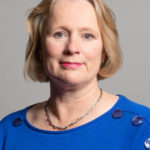
  • Vicky Ford – 2022 Speech on the Online Safety Bill

    Vicky Ford – 2022 Speech on the Online Safety Bill

    The speech made by Vicky Ford, the Conservative MP for Chelmsford, in the House of Commons on 5 December 2022.

    It is great that the Bill is back in this Chamber. I have worked on it for many years, as have many others, during my time on the Science and Technology Committee and the Women and Equalities Committee, and as Children’s Minister. I just want to make three points.

    First, I want to put on the record my support for the amendments tabled by my right hon. Friend the Member for Basingstoke (Dame Maria Miller). She is a true, right and honourable friend of women and girls all across the country. It is vital that women and girls are protected from intimate image abuse, from perverse and extreme pornography, and from controlling and coercive behaviour, as well as that we make a new offence to criminalise cyber-flashing.

    Secondly, I want to talk about new clause 16 and self-harm, especially in relation to eating disorders. As I said in this place on Thursday, it is terrifying how many young people are suffering from anorexia today. The charity Beat estimates that 1.25 million people are suffering from eating disorders. A quarter of them are men; most are women. It also reminds us that anorexia is the biggest killer of all mental illnesses.

    It is very hard to talk about one’s own experiences of mental illness. It brings back all the horrors. It makes people judge you differently. And you fear that people will become prejudiced against you. I buried my own experiences for nearly 40 years, but when I did speak out, I was contacted by so many sufferers and families, thanking me for having done so and saying it had brought them hope.

    There may be many reasons why we have an increase in eating disorders, and I am sure that lockdown and the fears of the pandemic are a part of it, but I do remember from my own experience of anorexia 40 years ago how I had got it into my head that only by being ultra-thin could I be beautiful or valued. That is why images that glamorise self-harm, images that glamorise eating disorders, are so damaging. So it is really concerning to hear in recent surveys that more than one in four children have seen content about anorexia online. It is great that Ministers have promised that all children will be protected from self-harm, including eating disorders. When it comes to adults, however, I understand that Ministers may be considering an amendment similar to new clause 16 that would make it illegal to encourage self-harm online, but that it might not cover eating disorders, because they are just considering giving adults the right to opt out of seeing such content.

    I was lucky that by the time I turned 18 years old I was over the worst of my anorexia, but when I look back at my teenage self, had I been 18 at the peak of my illness and had access to social media, I do not think I would have opted out of that content; I think I might have sought it out. It is incredibly important that the definition of self-harm absolutely recognises that eating disorders are a form of self-harm and are a killer.

    My third point is that I welcome the measures to protect children from sexual abuse online and join my voice with all those who have thanked the Internet Watch Foundation. I have been honoured to be a champion of the foundation for over a decade. The work it does is so important and so brave. The Everyone’s Invited movement exposed the epidemic of sexual violence being suffered by young women and girls in our schools. As Children’s Minister at the time, I listened to their campaigners and learned from them how online pornography normalises sexual violence. There must be measures to prevent children from accessing all online porn. I was worried that Barnardo’s contacted me recently saying that more needs to be done to address the content that sexualises children in pornography. I hope the Minister will work closely with all children’s charities, including the wonderful Children’s Commissioner, as the Bill goes through the rest of its stages.

  • Carla Lockhart – 2022 Speech on the Online Safety Bill

    Carla Lockhart – 2022 Speech on the Online Safety Bill

    The speech made by Carla Lockhart, the DUP MP for Upper Bann, in the House of Commons on 5 December 2022.

    I welcome the fact that we are here today to discuss the Bill. It has been a long haul, and we were often dubious as to whether we would see it progressing. The Government have done the right thing by progressing it, because ultimately, as each day passes, harm is being caused by the lack of regulation and enforcement. While some concerns have been addressed, many have not. To that end, this must be not the end but the beginning of a legislative framework that is fit for purpose; one that is agile and keeps up with the speed at which technology changes. For me, probably the biggest challenge for the House and the Government is not how we start but how we end on these issues.

    Like many Members, I am quite conflicted when it comes to legal but harmful content. I know that is a debate for another day, but I will make one short point. I am aware of the concerns about free speech. As someone of faith, I am cognisant of the outrageous recent statement from the Crown Prosecution Service that it is “no longer appropriate” to quote certain parts of the Bible in public. I would have serious concerns about similar diktats and censorship being imposed by social media platforms on what are perfectly legitimate texts, and beliefs based on those texts. Of course, that is just one example, but it is a good example of why, because of the ongoing warfare of some on certain beliefs and opinions, it would be unwise to bestow such policing powers on social media outlets.

    When the Bill was first introduced, I made it very clear that it needed to be robust in its protection of children. In the time remaining, I wish to address some of the amendments that would strengthen the Bill in that regard, as well as the enforcement provisions.

    New clause 16 is a very important amendment. None of us would wish to endure the pain of a child or loved one self-harming. Sadly, we have all been moved by the very personal accounts from victims’ families of the pain inflicted by self-harm. We cannot fathom what is in the mind of those who place such content on the internet. The right hon. Member for Haltemprice and Howden (Mr Davis) and those co-signing the new clause have produced a very considered and comprehensive text, dealing with all the issues in terms of intent, degree of harm and so on, so I fully endorse and welcome new clause 16.

    Likewise, new clauses 45 and 46 would further strengthen the legislation by protecting children from the sharing of an intimate image without consent. Unfortunately, I have sat face to face—as I am sure many in this House have—with those who have been impacted by such cruel use of social media. The pain and humiliation it imposes on the victim is significant. It can cause scars that last a lifetime. While the content can be removed, the impact cannot be removed from the mind of the victim.

    Finally, I make mention of new clause 53. Over recent months I have engaged with campaigners who champion the rights and welfare of those with epilepsy. Those with this condition need to be safe on the internet from the very specific and callous motivation of those who target them because of their condition. We make this change knowing that such legislative protection will increase online protection. Special mention must once again go to young Zach, who has been the star in making this change. What an amazing campaign, one that says to society that no matter how young or old you are, you can bring about change in this House.

    This is a milestone Bill. I believe it brings great progress in offering protections from online harm. I believe it can be further strengthened in areas such as pornography. We only have to think that the British Board of Film Classification found that children are coming across pornography online as young as seven, with 51% of 11 to 13-year-olds having seen pornography at some point. That is damaging people’s mental health and their perception of what a healthy relationship should look and feel like. Ultimately, the Bill does not go far enough on that issue. It will be interesting to see how the other place deals with the Bill and makes changes to it. The day of the internet being the wild west, lawless for young and old, must end. I commend the Bill to the House.

  • Jamie Stone – 2022 Speech on the Online Safety Bill

    Jamie Stone – 2022 Speech on the Online Safety Bill

    The speech made by Jamie Stone, the Liberal Democrat MP for Caithness, Sutherland and Easter Ross, in the House of Commons on 5 December 2022.

    Clearly I am on my feet now because I am the Liberal Democrat DCMS spokesman, but many is the time when, in this place, I have probably erred on the side of painting a rosy picture of my part of the world—the highlands—where children can play among the heather and enjoy themselves, and life is safe and easy. This week just gone I was pulled up short by two mothers I know who knew all about today. They asked whether I would be speaking. They told me of their deep concern for a youngster who is being bullied right now, to the point where she was overheard saying among her family that she doubted she would ever make the age of 21. I hope to God that that young person, who I cannot name, is reached out to before we reach the tragic level of what we have heard about already today. Something like that doesn’t half put a shadow in front of the sun, and a cold hand on one’s heart. That is why we are here today: we are all singing off the same sheet.

    The Liberal Democrats back new clause 17 in the name of the right hon. Member for Barking (Dame Margaret Hodge). Fundamental to being British is a sense of fair play, and a notion that the boss or bosses should carry the can at the end of the day. It should not be beyond the wit of man to do exactly what the right hon. Lady suggested, and nobble those who ultimately hold responsibility for some of this. We are pretty strong on that point.

    Having said all that, there is good stuff in the Bill. Obviously, it has been held up by the Government—or Governments, plural—which is regrettable, but it is easy to be clever after the fact. There is much in the Bill, and hopefully the delay is behind us. It has been chaotic, but we are pleased with the direction in which we are heading at the moment.

    I have three or four specific points. My party welcomes the move to expand existing offences on sharing intimate images of someone to include those that are created digitally, known as deep fakes. We also warmly welcome the move to create a new criminal offence of assisting or encouraging self-harm online, although I ask the Government for more detail on that as soon as possible. Thirdly, as others have mentioned, the proposed implementation of Zach’s law will make it illegal to post stuff that hits people with epilepsy.

    If the pandemic taught me one thing, it was that “media-savvy” is not me. Without my young staff who helped me during that period, it would have been completely beyond my capability to Zoom three times in one week. Not everyone out there has the assistance of able young people, which I had, and I am very grateful for that. One point that I have made before is that we would like to see specific objectives—perhaps delivered by Ofcom as a specific duty—on getting more media savvy out there. I extol to the House the virtue of new clause 37, tabled by my hon. Friend the Member for Twickenham (Munira Wilson). The more online savvy we can get through training, the better.

    At the end of the day, the Bill is well intentioned and, as we have heard, it is essential that it makes a real impact. In the case of the young person I mentioned who is in a dark place right now, we must get it going pretty dashed quick.

  • Suzanne Webb – 2022 Speech on the Online Safety Bill

    Suzanne Webb – 2022 Speech on the Online Safety Bill

    The speech made by Suzanne Webb, the Conservative MP for Stourbridge, in the House of Commons on 5 December 2022.

    This is the first time I have been able to speak in the Chamber for some time, due to a certain role I had that prevented me from speaking in here. It is an absolute honour and privilege, on my first outing in some time, to have the opportunity to speak specifically to new clause 53, which is Zach’s law. I am delighted and thrilled that the Government are supporting Zach’s law. I have supported it for more than two years, together with my hon. Friend the Member for Watford (Dean Russell). We heard during the Joint Committee on the Draft Online Safety Bill how those who suffer from epilepsy were sent flashing images on social media by vile trolls. Zach Eagling, whom the law is named after, also has cerebral palsy, and he was one of those people. He was sent flashing images after he took part in a charity walk around his garden. He was only nine years of age.

    Zach is inspirational. He is selflessly making a massive difference, and the new clause is world-leading. It is down to Zach, his mum, the UK Epilepsy Society, and of course the Government, that I am able to stand here to talk about new clause 53. I believe that the UK Epilepsy Society is the only charity in the world to change the law on any policy area, and that is new clause 53, which is pretty ground-breaking. I say thank you to Zach and the Epilepsy Society, who ensured that I and my hon. Friend the Member for Watford stepped up and played our part in that.

    Being on the Joint Committee on the Draft Online Safety Bill was an absolute privilege, with the excellent chairmanship of my hon. Friend the Member for Folkestone and Hythe (Damian Collins). People have been talking about the Bill’s accompanying Committee, which is an incredibly good thing. In the Joint Committee we talked about this: we should follow the Bill through all its stages, and also once it is on the statute books, to ensure that it keeps up with those tech companies. The Joint Committee was brought together by being focused on a skill set, and on bringing together the right skills. I am a technological luddite, but I brought my skills and understanding of audit and governance. My hon. Friend the Member for Watford brought technology and all his experience from his previous day job. As a result we had a better Bill by having a mix of experience and sharing our expertise.

    This Bill is truly world leading. New clause 53 is one small part of that, but it will make a huge difference to thousands of lives including, I believe, 600,000 who suffer from epilepsy. The simple reality is that the big tech companies can do better and need to step up. I have always said that we do not actually need the Bill or these amendments; we need the tech companies to do what they are supposed to do, and go out and regulate their consumer product. I have always strongly believed that.

    During my time on the Committee I learned that we must follow the money—that is what it is all about for the tech companies. We have been listening to horrific stories from grieving parents, some of whom I met briefly, and from those who suffered at the hands of racism, abuse, threats—the list is endless. The tech companies could stop that now. They do not need the Bill to do it and they should do the right thing. We should not have to get the Bill on to the statute books to enforce what those companies should be doing in the first place. We keep saying that this issue has been going on for five years. The tech companies know that this has been talked about for five years, so why are they not doing something? For me the Bill is for all those grieving families who have lost their beautiful children, those who have been at the mercy of keyboard warriors, and those who have received harm or lost their lives because the tech companies have not, but could have, done better. This is about accountability. Where are the tech companies?

    I wish to touch briefly on bereaved parents whose children have been at the mercy of technology and content. Many families have spent years and years still unable to understand their child’s death. We must consider imposing transparency on the tech companies. Those families cannot get their children back, but they are working hard to ensure that others do not lose theirs. Data should be given to coroners in the event of the death of a child to understand the circumstances. This is important to ensure there is a swift and humane process for the coroner to access information where there is reason to suspect that it has impacted on a child’s death.

    In conclusion, a huge hurrah that we have new clause 53, and I thank the Government for this ground-breaking Bill. An even bigger hurrah to Zach, Zach’s mum, and the brilliant Epilepsy Society, and, of course, to Zach’s law, which is new clause 53.