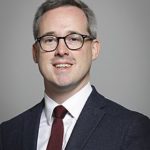
Category: Culture

  • Michelle Donelan – 2023 Statement on Channel 4

    Michelle Donelan – 2023 Statement on Channel 4

    The statement made by Michelle Donelan, the Secretary of State for Digital, Culture, Media and Sport on 9 January 2023.

    Happy new year, Mr Speaker.

    Channel 4 is a great British success story. It was set up by Margaret Thatcher and it has done exactly what she wanted it to do: positively disrupting British broadcasting and driving an expansion in the UK’s independent production sector, which is now surging at £3 billion. However, in the last decade, the media landscape has been transformed by technology and the entry of new, rapidly growing streaming platforms. Channel 4, along with all public sector broadcasters, faces unprecedented competition for viewers in terms of both programming and talent.

    Channel 4 is uniquely constrained in its ability to respond to those challenges. There are limits on the broadcaster’s ability to raise capital and make its own content. Under current legislation, Channel 4 operates as a publisher-broadcaster, meaning that all its shows are commissioned or acquired from third parties, such as independent producers or other broadcasters, who typically retain the rights relating to those programmes.

    The challenges faced by Channel 4 are very real. That is why the previous Administration decided to proceed with the sale in order to free the broadcaster from the constraints that were holding it back under public ownership. Over the last few months, I have carried out my own examination of the business case for the sale of Channel 4. I have listened to stakeholders and taken a close look at the broadcaster’s long-term sustainability and the wider economic outlook, and I have decided that pursuing a sale is not the best option to ease the challenges facing Channel 4. However, doing nothing also carries a risk. Change is necessary if we want to ensure that the corporation can continue to grow, compete and keep supporting our thriving creative industries. Anyone who says otherwise is burying their head in the sand.

    After discussions with Channel 4, I am therefore announcing an ambitious package of interventions to boost the broadcaster’s sustainability. Under this agreement, Channel 4 will continue to play its own part in supporting the UK’s creative economy, doubling both the number of jobs outside London and its annual investment in the 4Skills training programme for young people. Meanwhile, we will introduce a statutory duty on Channel 4 to consider its sustainability as part of its decision making. We are working with Channel 4 to agree updated governance structures to support that long-term sustainability.

    We will provide Channel 4 with new commercial flexibilities, including by looking to relax the publisher-broadcaster restriction to enable it to make some of its own content. In doing so, we will work closely with the independent production sector to consider what steps are necessary to ensure that Channel 4 continues to drive investment in indies, particularly the newest, smallest and most innovative producers. That includes increasing the level of Channel 4’s independent production quota, which is currently set at 25% of programmes, and potentially introducing specific protections for smaller independent producers. Any changes will be introduced gradually and following consultation with the sector. Finally, we will make it easier and simpler for Channel 4 to draw down on its private £75 million credit facility.

    Alongside the changes to Channel 4, the media Bill will introduce a wide range of measures to modernise decades-old broadcasting regulations, including prominence reforms. Further details will be announced in due course.

  • Gordon Brown – 2008 Speech at Paralympics Reception

    Gordon Brown – 2008 Speech at Paralympics Reception

    The speech made by Gordon Brown, the then Prime Minister, at 10 Downing Street in London on 23 October 2008.

    Can I say first of all what a huge privilege it is for me to be here with Tessa this evening to speak on behalf of the whole of the United Kingdom in thanking you for making us so proud of what you have achieved, so proud of our country and so proud of the so many great successes that happened in Beijing.

    Tessa came in by plane, I met you at the airport as you came back, and I wanted to communicate at that time just how pleased the people of Britain were, delighted at your successes, proud of what you have done. But I hope that you have managed to witness over these last few weeks since you came back just how much the British people are in support of what you have done, feel proud of everything that you have achieved and want to extend their congratulations to all of you:  second in the medal table, 102 medals, 42 of them gold – and remember gold is going up in value as a result of what is happening – incredible performances by 206 athletes in 18 different sports, and for all the work that was done to help us realise our potential as a team in what is undeniably the greatest sporting challenge in the world.

    I would like us to thank Mike Brace and Phil Lane of Paralympics UK for what they have achieved, I would like to thank Sue Campbell of UK Sport, Boris Johnson and Tessa because you know of her commitment over many years to what you are doing. And I want to thank all the coaches, all the performance directors, all the support teams, everybody who has given of their time tirelessly to support all the athletes as well. And ultimately it is of course you the athletes to whom the real plaudits belong, and I am delighted that so many are here from so many different parts of the country tonight.

    Now I don’t want to single out any particular athlete because you have done so much as a team, and the team spirit has been so magnificent. But we have the youngest athlete, 13 year old swimmer, Ellie Symonds, who took a spectacular double Gold, and we are very proud of what she has done. And she is coming on her school holidays next week to London, so I am going to invite her in to the Cabinet meeting so she can make better decisions than we do.  And to the oldest archer, Fred Stephens, who made his Games debut at the age of 62, congratulations as well.

    And we have got people here from the largest squad athletics, with 36 British competitors, congratulations to all of you, to the smallest wheelchair fencing with only one person. And so from the largest squads to the smallest squads, from the youngest athlete to the oldest athlete, you inspired the nation with your stunning performances.  And it was an honour for me to be there at Heathrow to meet you as you came back.

    It is amazing, because as Tessa said, you have to train all through the season, you have to get up and work, sometimes in dark mornings, you have to work through the evenings, you have to maintain your commitment through difficult times, you have to give up and sacrifice so much to be so successful. And there is a story told about Picasso, the painter, and he was on a TV programme and he was asked at the age of 72 would he just draw one of his usual drawings and show how he did it, and he drew a doodle for 45 seconds, and the interviewer then said:  here is Picasso, a great man, it only took him 45 seconds and probably this painting is worth a million pounds. And Picasso said to him:  ‘No, it didn’t take 45 seconds, it took me all my 72 years’.

    And the point is that it is the training that goes on beforehand, and not the event itself, and all the experience that you have to build up, that makes you such successful athletes and we really are proud of you.

    Let me remind you also of the sparkling performance of Danny Kenny, the most successful individual competitor.  He picked up an incredible 4 Gold medals and a Silver, and we congratulate him on what he did.  Well done Danny.

    And the four hugely impressive victories of Dave Roberts, who equalled Dame Tanni Grey-Thompson’s career record of 11 Paralympic Golds. Congratulations  to Dave.

    And the spectacular success with the equestrian team, of Rider Lee Pearson who won three Gold medals to take his personal tally to nine and he remains unbeaten in the Games.  Well done and congratulations.

    And I should really mention all of you by name for your successes.  It was a fantastic two weeks, it leaves a huge lasting legacy. Do you know what you are doing?  You are inspiring young people, many talented young people who previously didn’t know that they could also with their potential succeed in athletics. And your inspiration as role models to young people, not just in your own communities but right round the country, is something that augurs so well for our country in the future.

    I met Nelson Mandela at his 90th birthday party and there was a concert for Nelson Mandela held, as many of you may have seen sometimes on the television, and Nelson Mandela gave a speech and then he came up, and I was lucky enough to be sitting next to him.  And then on to the stage came a singer, Amy Winehouse, and I had to explain to Nelson Mandela who Amy Winehouse was, and that was quite a difficult thing to do. And she said you know Nelson Mandela and my husband have a great deal in common, and she said they have both spent a lot of time in prison.  And when they were singing Free Nelson Mandela at the end, that song, she was singing Free Blakey My Fella.

    But there is an important part of this story, I was privileged to sit next to Nelson Mandela and in his speech he said he had climbed one mountain and he had succeeded in abolishing apartheid. But here he was at the age of 90 calling on us to climb another mountain to tackle all the injustices that exist in the world. And I am coming to you this evening and saying you have climbed this huge mountain, this great success in Beijing that makes the whole nation so proud of what you have achieved, and in every community of the country there will have been, and I know there have been celebrations for the things that you have managed to do, but we have another mountain to climb because London 2012 beckons us as well.  And everybody I have met is saying that they are going to compete in London 2012 and I hope that you will, and we can show the world not just the great success of our Paralympics team, but show the world that we can do so much to help people in every country of the world.

    You are an inspiration to us. What you have succeeded in doing has filled the nation with so much pride.  We go forward to 2012 with huge confidence in what you can do and tonight it just gives me so much pleasure and it is a real privilege to be able to say on behalf of the whole of the country, well done, congratulations on your success, we look forward to we look forward to to congratulating you again in 2012, but simply thank you, thank you for what you have done.

  • Gordon Brown – 2010 Message to the Winter Olympics Team

    Gordon Brown – 2010 Message to the Winter Olympics Team

    The message sent by Gordon Brown, the then Prime Minister, on 12 February 2010.

    When Britain won the right to host the Summer Games in 2012, we did it with a promise to inspire a generation of young people in this country.

    And as Great Britain’s team for the Vancouver Winter Olympics, you are now the most important torchbearers of that promise.

    Nothing has more power to inspire young people than seeing our best athletes competing at the very pinnacle of their sport.

    While you’re away, it will be hard to truly appreciate the impact that your performances over the next fortnight will be having at home.

    But you will all be aware of the unique place that elite sportsmen and women hold in our culture – and the extraordinary relationship Britons have with our sporting heroes.

    The country is tremendously proud of your achievements in reaching the Games – and proud of a team that can boast current world champions and a host of outstanding talent.

    The whole nation is behind you – as ambassadors not only for your sport and your country, but also for London 2012.

    I wish you every success and the very best of luck.

  • Michelle Donelan – 2023 Comments on the Privatisation of Channel 4

    Michelle Donelan – 2023 Comments on the Privatisation of Channel 4

    The comments made by Michelle Donelan, the Secretary of State for Digital, Culture, Media and Sport, on 5 January 2023.

    Channel 4 is a British success story and a linchpin of our booming creative industries. After reviewing the business case and engaging with the relevant sectors I have decided that Channel 4 should not be sold.

    This announcement will bring huge opportunities across the UK with Channel 4’s commitment to double their skills investment to £10 million and double the number of jobs outside of London. The package will also safeguard the future of our world leading independent production sector. We will work closely with them to add new protections such as increasing the amount of content C4C must commission from independent producers.

  • Stephen Parkinson – 2022 Speech to Mark 70 years of the Waverley Criteria (Lord Parkinson)

    Stephen Parkinson – 2022 Speech to Mark 70 years of the Waverley Criteria (Lord Parkinson)

    The speech made by Stephen Parkinson, Lord Parkinson, on 12 December 2022.

    Thank you for joining us this evening. The 70th anniversary of the Waverley Criteria – and the establishment of the Reviewing Committee on the Export of Works of Art and Objects of Cultural Interest – might seem a rather rechercé reason to gather you all together (even for an Arts & Heritage Minister with a strong interest in history) but I was keen to mark this occasion for a number of reasons.

    The first is to celebrate the wide-reaching impact of the Committee’s work, and the extraordinary works of art and cultural objects it has saved for the nation.

    The second is to thank Sir Hayden Phillips, who steps down as Chairman after eight years – and to welcome his successor, Andrew Hochhauser.

    The third is to take the opportunity to reflect on the effectiveness of the criteria, and how we can make sure they remain relevant and effective for the next seventy years.

    As many of you will know, the Waverley Criteria arose from a 1952 report by John Anderson, 1st Viscount Waverley, who chaired a committee appointed to investigate a means of controlling the export of works of art from the UK.

    But their roots are in another anniversary we marked this year. When Thomas Gainsborough’s Blue Boy was sold to an American collector in 1922, the sale symbolised for some the end of England. Coming so soon after the end of the First World War, its loss seemed to echo the loss of a whole generation of young men. The ‘farewell’ exhibition held here in the National Gallery attracted 90,000 people, many of them moved to tears.

    In January – 100 years to the day since he left – the Blue Boy returned to London, and dazzled crowds here in the National Gallery once more.

    One of the reasons the loss of the Blue Boy captured such headlines in the 1920s was that no legal mechanism existed to prevent it. Export controls introduced as an emergency measure at the outbreak of the Second World War presented an opportunity – but they were not designed with the art market in mind, which is where Lord Waverley came in.

    His Committee considered the difficult issues involved, and concluded that export control should be limited to objects of high importance. It recommended the introduction of three criteria – connection to our history, aesthetic importance, and significance for further study – to help prevent the loss of objects distinguishable as “national treasures”, without placing undue hindrance on the free trade of cultural material.

    Over the last seven decades, those criteria have saved many hundreds of important works for the nation.

    And they have truly been enjoyed by everyone. The rolling slide presentation of outstanding works saved from export show how museum collections throughout the United Kingdom have been enriched thanks to the Waverley Criteria.

    It is an important reminder of the breadth and impact of the scheme. I am delighted that curators from institutions across the country who have benefited from it are here this evening.

    The Annual Report which has been published today details the most recent pieces which have been saved – including, appropriately enough for this Advent season, a beautiful Nativity by Baldassare Tommaso Peruzzi of the English School from around 1650.

    The quality of the advice, and depth of understanding, of the Committee and its expert advisors is impressive. Its annual reports are always a delightful read and a particular treat for a Minister.

    Of course, national treasures do not come cheap. Key funding organisations play a crucial role in supporting acquisitions saved as a result of the Waverley Criteria. I am delighted that representatives from the National Heritage Memorial Fund and the Art Fund are able to join us today. Thank you for the vital role you play.

    The current fundraising campaign, involving a number of funding bodies, to keep Sir Joshua Reynolds’s Portrait of Omai in the UK is a prime example of this. I commend the National Portrait Gallery for all it is doing to keep this spectacular work in this country for the public to enjoy and learn from – and I was thrilled to see that the National Portrait Gallery is almost halfway to raising the funds needed.

    But cases like this give rise to questions which this 70th anniversary is an appropriate moment to ask. Only around a third of the items placed under an export bar end up being bought and kept in the UK – a proportion which has stayed about the same over time and certainly over the last 10 years, although figures are somewhat down for 2021/22. With sharp inflation in the art market, and pressures on acquisition budgets, how can we ensure that precious works can still be afforded in the decades to come? While I, as the Minister presented with the Committee’s recommendations, am rightly not told who is selling or who might be buying, are we considering items’ connection to the history of other countries, or whether they are destined for public display rather than private collection?

    For seven decades, the Waverley Criteria have worked very well to preserve our cultural heritage and secure public access to national treasures. But the scheme has also been adapted to keep up with an evolving cultural landscape.

    The recent introduction of legally binding offers is a key example of how the process has been updated to safeguard museum funding and enable more items to find homes across the UK.

    So, as we mark this anniversary, I am keen to hear thoughts about how we can make sure the process works just as effectively over the next seventy years.

    I have asked Sir Hayden, as the outgoing Chairman, to give me his views – and I would like to hear more, from the people in this room and from across the sector. So I’m very grateful to the colleagues from DCMS, the Arts Council, and the National Gallery for organising this event tonight – and hope we can all mark the 70th anniversary of the Waverley Criteria by recommitting ourselves to ensure that they continue to save extraordinary works and share them with the widest public audience.


  • Stephen Parkinson – 2022 Speech on the Arts and Creative Industries Strategy (Lord Parkinson)

    Stephen Parkinson – 2022 Speech on the Arts and Creative Industries Strategy (Lord Parkinson)

    The speech made by Stephen Parkinson, Lord Parkinson of Whitley Bay, on 8 December 2022.

    The terms of the Motion imply that protecting our world-leading creative industries and ensuring that more people have the opportunity to enjoy or take part in them through levelling up are somehow in opposition, and I must disagree. The point of levelling up is to make sure that everyone, in every part of the United Kingdom, can be part of the arts and creative industries’ success story. That is a story that many noble Lords have told eloquently again today. The noble Viscount’s Motion talks of “the case for” a strategy towards the arts and creative industries, implying that there is not one already. I am happy to reassure him that there is, and glad to have the opportunity to explain how it is shaping the approach taken by the Government and our partners, such as Arts Council England.

    Specifically, I point noble Lords to: the levelling-up White Paper, which was published in February; the work we are conducting with the Creative Industries Council to develop a sector Vision; and Arts Council England’s 10-year strategy, Let’s Create, which was developed in consultation with the public and people from across the arts and cultural sectors, and approved by government Ministers when it was published in 2020.

    For more than three-quarters of a century, the Arts Council has nurtured cultural life in this country and kept it separate from party politics. It is a cross-party legacy; it succeeds the Council for the Encouragement of Music and the Arts, which was set up in the dark days at the beginning of the Second World War by the national Government led by Neville Chamberlain. As noble Lords rightly reminded us, it was given its royal charter and new name in 1946, under Labour’s Attlee Government. It is a cross-party model of which we should be proud and which has been emulated across the world. Its decisions about which organisations to fund and by how much are taken at arm’s length from government Ministers, so if I do not go into detail on some of the specific organisations raised by noble Lords today, that is not to be slopey-shouldered but to defend that arm’s-length principle, which the noble Baroness, Lady Andrews, and others extolled.

    As a number of noble Lords noted, Arts Council England plays a central role in supporting arts and culture in this country. It recently announced the outcome of its investment programme for 2023 to 2026, investing £446 million each year in arts and culture across England. It is doing that in a slightly different way to previous rounds, but in line with the trend the Arts Council itself has been pursuing for a number of years and over a number of rounds. It might be helpful to take a step back to provide a bit of context.

    Most cultural organisations in this country do not rely on funding from the Government or from the Arts Council. As the noble Baroness, Lady McIntosh, said, it is just one piece of the jigsaw, albeit a vital one. We saw the Culture Recovery Fund, the emergency support of more than £1.5 billion that the Government provided during the pandemic, helping more than 5,000 cultural organisations across England. Many of them had little relationship with the Government or the Arts Council until the pandemic hit—or indeed with the British Film Institute, Historic England or the National Lottery Heritage Fund, which helped us to distribute that emergency funding—but they were grateful for the help that came when they needed it. As a result of the work we did in the pandemic, we have a sort of Domesday Book of culture, showing the full range of organisations across England that weave the rich tapestry of cultural life in this country.

    More than 5,000 organisations received support through the Culture Recovery Fund. Only 1,700 applied for Arts Council funding in the next investment programme. While noble Lords are right to probe how that money is being spent, it is important to remember that it is only one way in which arts and culture are supported in this country. None the less, 1,700 represents a record number of applications for the Arts Council’s competitive funding and a record number of organisations, 990, will receive funding as a result—more organisations than ever before and in more parts of the country. Some 276 organisations are set to join the portfolio for the first time, with 215 of them outside London. This reflects our commitment to distribute funding and access to arts and culture more fairly. However, in London more organisations will be funded in the next round than the last—283 compared with 268.

    The noble Viscount, Lord Chandos, talked about the size of the pie that is available in funding. I am pleased that my right honourable friends Oliver Dowden and Nadine Dorries secured an uplift for the Arts Council at the last spending review. There was an additional £43 million for the Arts Council’s grant in aid. We did not succumb to the macro temptation mentioned by the noble Lord, Lord Londesborough. Thanks to this larger pie and increases from the National Lottery, Arts Council England will be spending £30 million per year more through its core investment programme than in the previous NPO round.

    The question is how that larger pie should be sliced. In the last portfolio London benefited disproportionately, receiving around £21 per capita compared to an average of £6 per capita in the rest of the country. Even accounting for the important role that London plays as our capital and the wonderful organisations housed here, that is a stark discrepancy. Some 133 local authorities across England did not receive any funding—not a penny. A national portfolio should be based across the nation. I am sure that noble Lords would agree that it is not the case that there is no culture of note in places like Bolsover, Mansfield or Blackburn. These areas are all now represented in the new portfolio, which covers 217 local authorities compared to 180 last time.

    Working with the Arts Council, DCMS identified 109 levelling-up for culture places which received historically lower levels of funding, or which had lower levels of participation through metrics we set out transparently and published on the Arts Council’s website. Because of that decision, investments in those levelling-up for culture places were more than doubled.

    The noble Baroness, Lady McIntosh, asked about the instruction to the Arts Council. The letter from the previous Secretary of State to the Arts Council was published and set out precisely what she asked it to do. It is important to stress that it was not giving instructions based on specific institutions or art forms, but it was asking the Arts Council to ensure that the taxpayer subsidy—which comes from taxpayers across the country—is spread more equitably across England. That is consistent with the arm’s-length principle we all cherish.

    As a result, towns like Mansfield will receive funding for the first time. Mansfield District Council will receive £1.7 million over three years to manage Mansfield Museum and Mansfield Palace Theatre. Unanima Theatre, which brings young people and adults with intellectual and developmental disabilities together, will benefit from nearly £700,000 over three years—something I hope noble Lords welcome.

    We have seen an increase in the number of organisations led by people with disabilities in the new portfolio to 32. I had the pleasure of visiting one of them, DASH in Shropshire, three weeks ago. We have also seen a huge increase in the number of organisations led by people from black, Asian and ethnic-minority backgrounds, from 53 in the last portfolio to 1483 in the next. Arts, culture and creativity are all enriched when everybody is able to tell and share their stories. I congratulate the Arts Council on its work to enable that.

    At the same time, we recognise the special role played by our nation’s capital. It houses world-class institutions. People visit them from all over this country, and indeed from all over the world. We see that particularly at the moment as tourists flock to London to enjoy the cultural offering. Those institutions perform a levelling-up function in providing a national stage on which people can perform. For the fictional Billy Elliot, it was dancing with the Royal Ballet which persuaded his family of the value of dance as an artistic medium. That story is based on “Dancer”, a play by Geordie playwright Lee Hall, which premiered at the Live Theatre in Newcastle and was heavily influenced by the photographer Sirkka-Liisa Konttinen’s book Step by Step, about a dancing school in nearby North Shields, the town of my birth. The film “Billy Elliot” made over $100 million at the box office. It won three BAFTAs and was nominated for three Oscars, which is an illustration of the economic benefit and soft power of UK culture. We want to see more films and plays like it. That is why I am proud to see an additional £90,000 going to New Writing North to encourage new playwrights like Lee Hall and continued funding of £640,000 for the Live Theatre and its connected organisations. Like the noble Lord, Lord Shipley, I am delighted by the cultural renaissance we are seeing on Tyneside.

    Noble Lords and people beyond this House may disagree with some of the individual funding decisions taken by the Arts Council. They were made entirely independently of the Government, so, as I said, I cannot comment in detail on individual outcomes. They were taken against well-established criteria and expectations, with careful consideration taken by employees and the regional and national councils of the Arts Council, who have a deep understanding of the sector. Some of them are appointed by the Government; some are appointed by other politicians such as the Mayor of London. Many others are simply drawn from people with expertise across the sector and in their regions.

    A number of noble Lords have mentioned the English National Opera. I saw earlier that its excellent chairman Dr Harry Brünjes and its excellent chief executive Stuart Murphy were here watching our debate. I think one of their colleagues has stayed behind; they are all very welcome. The English National Opera has done tremendous work. I pay tribute to it and all the staff for the work they have done, including the fantastic ENO Breathe programme, which has been helping people with respiratory problems as we emerge from the pandemic. The noble Viscount, Lord Chandos, asked about transitional funding for the ENO. I confirm that Arts Council England has offered the ENO a package of support. We are keen that the Arts Council and ENO work together on the possibilities for the future of the organisation.

    My right honourable friend the Secretary of State encouraged the Arts Council to provide a larger and longer pot of transitional funding, which will be available to all organisations affected by the decisions in this portfolio. [N.B. this reference is to the Arts Council England Transition Programme for organisations previously in the National Portfolio, but who were unsuccessful in their application for the 2023-26 Investment Programme.] I reassure noble Lords that in the new investment programme, Arts Council England’s investment in opera, orchestras and other classical organisations will represent around 80% of all investment in music. I hope that will be music to the ears of the noble Baroness, Lady Wheatcroft.

    Through this programme, opera will continue to be well funded, remaining at around 40% of overall investment in music. Organisations such as English Touring Opera and the Birmingham Opera Company will receive increased funding. There are many new joiners such as Opera Up Close and Pegasus Opera Company based in Brixton, which I had the pleasure of visiting yesterday. The Royal Opera House will continue to be funded, receiving the largest amount of any organisation in the portfolio of more than £22 million—about the same as all of the east Midlands.

    London’s role as a global cultural centre is clearly reflected in the next investment programme, with 61 London organisations receiving funding for the first time, including the Jewish Museum and the Foundling Museum. Arts Council priority places in the capital such as Croydon and Brent will receive £18.8 million over the next three years. In Croydon alone investment will double, and the borough will see three organisations join the portfolio. We are levelling up within London as well as between London and the rest of the country.

    As noble Lords have noted, this funding round was extremely competitive. With a record number of applications, it was inevitable that some organisations would be disappointed. As the noble Baroness, Lady McIntosh, said, it was ever thus. There is no automatic entitlement for arts organisations to continue receiving public funding in perpetuity. We recognise that leaving the portfolio can be an anxious and challenging experience, particularly as we emerge from the pandemic and with the challenges of the winter we all face. But this can also lead to organisational innovation and development in the organisations that did not get as much as they were bidding for. As the noble Viscount, Lord Chandos, said at the start, the nature of the arts is to be open to dynamic change, and I agree with him that this should be encouraged carefully, mindful of the need for balance.

    A number of noble Lords mentioned the Creative Industries Sector Vision that we are developing, which will set out our 2030 ambitions to drive growth and employment in our world-renowned creative industries as well as increase the positive impact that they can play in our lives. I recognise that the delays in publication have been frustrating, but we will publish it early in the new year—I hope that is better than “in due course”. At the heart of the sector vision is £50 million of investment from DCMS to drive growth across the country through the Create Growth programme, the UK Games Fund and the UK Global Screen Fund. UKRI has announced over £100 million of support for R&D and innovation in the creative industries, including the Creative Catalyst and CoSTAR programmes.

    In August last year, we announced our flexi-job apprenticeship offer, including a £7 million fund to support sectors with flexible employment patterns and project-based working, which is particularly the case in the creative industries. Five active flexi-job apprenticeship pilots are currently under way, with creative employers such as the BBC and the National Theatre. The ScreenSkills apprenticeship pilot, supported by DCMS, Netflix and Warner Media, also focuses on widening participation and diversifying the talent pipeline in the TV and film sectors. Both the Department for Education and DCMS continue to work closely with the creative sectors through the creative advisory group to explore further possibilities and flexibilities for apprenticeships, alongside other post-16 pathways, including T-levels, higher technical qualifications and skills boot camps. I am delighted that the noble Baroness, Lady Bull, has agreed to chair the expert panel to inform the new cultural education plan.

    The noble Lord, Lord Storey, spoke with passion about ensuring that everyone, whatever their background, has the opportunity to take part in arts and culture. You should not have to sofa-surf in London or know someone already in the business in order to pursue a career in the arts that can be rewarding in every sense of the word. As a former comprehensive schoolboy who grew up in Tyneside and rural Suffolk, I feel passionately about this and welcome the expertise that the noble Baroness, Lady Bull, will bring, along with her fellow panel members, to help us to deliver that. She is right to highlight the commission of the Local Government Association, chaired by the noble Baroness, Lady Young of Hornsey—I am pleased to say that I will attend its launch later this afternoon.

    A number of noble Lords talked about the international reputation of UK arts and creativity. The cultural sector is a key asset that boosts perceptions of this country abroad, with both a financial and a reputational return on investment. Research shows that people who have been exposed to UK culture and education report more interest in doing business with the UK than those who have not—an average difference of 11 percentage points.

    The noble Viscount, Lord Stansgate, talked importantly about the two cultures, which have never been closer, and the importance of science and scientific researchers. He may have seen the new exhibition at the Science Museum, “Injecting Hope”, about the search for a Covid vaccine. This will move from London to tour China and India. Earlier this week, I was at the Grant Museum of Zoology at University College London, which benefited from the £4 million pot of funding from the DCMS/Wolfson Foundation.

    The noble Viscount and the noble Baroness, Lady Crawley, mentioned the importance of touring. We have supported the sector to adapt to new arrangements with the European Union, and we worked extensively with it and directly with EU member states to clarify arrangements on the movement of people, goods and haulage. We have worked across Government and with the industry to develop guidance on landing pages on GOV.UK specifically for touring musicians and other creative professionals. We have worked to ensure that that is clear, accessible and available to people, and we continue to work with the sector to make sure that it is.

    I mentioned the Government’s commitment through the Culture Recovery Fund, but a number of noble Lords asked about freelancers. The Omicron strain hit about this time last year, and I am glad to say that we provided £1.5 million of emergency funding specifically for freelancers, matched by £1.35 million from the theatre sector, which was distributed through the Theatre Artists Fund, Help Musicians and the Artists Information Company. This helped in addition to the money provided to organisations to ensure that they were able to open their doors and employ freelancers when the pandemic abated.

    The last Budget increased tax reliefs for theatres, orchestras, museums and galleries until 2024. These additional tax reliefs are worth almost £250 million to the sector and are a fantastic boost to it to keep producing the content for which we are world famous. Taken together, along with the other pan-economy support measures that the Treasury provided, these interventions supported the cultural sector throughout the challenges of Covid. Furthermore, the £500 million Film and TV Restart Scheme helped us to ensure that our screen sector could continue to produce content safety, protecting over 100,000 jobs and more than £3 billion of production spending.

    We continue to be aware that arts and cultural organisations face new challenges because of the increase in energy prices. I recently hosted a series of round-table discussions with people from the performing arts, heritage and museum sectors to ensure that we maintain our focus on the ongoing impact of energy price increases and inflation as well as identifying opportunities to improve energy efficiencies. The Government continue to support all sectors in the economy this winter with the Energy Bill Relief Scheme, but I have heard first-hand how important this support has been to our cultural organisations. DCMS has worked closely to inform the Treasury-led review of the scheme, which will be published by the end of this year, and we have provided evidence on the nuanced challenges faced particularly by the cultural sector as part of this review.

    In the Autumn Statement last month, the Chancellor set out his plans to restore stability to the economy, protect high-quality public services and build long-term prosperity. He also announced a £13.6 billion package of support for payers of business rates in England, which will support people in the cultural sector too. Plans for the second round of the Levelling Up Fund were confirmed, with at least £1.7 billion to be allocated to infrastructure projects around the UK before the end of the year. One of the themes for that fund is supporting cultural and heritage assets, which will give another important boost to the sector.

    The noble Lord, Lord Leong, asked about text and data mining, and we recognise the concerns that the sector raised about this. My honourable friend Julia Lopez raised this with the IP Minister in the Department for Business, Energy and Industrial Strategy, who has agreed to engage further on the text and data mining exemption. We will consider all of the evidence before making a decision.

    The noble Lord, Lord Foster, asked about creative clusters programmes. Since the last spending review, UKRI has announced more than £100 million of support for the creative industries to support innovation. The decision to fund Creative Clusters is made by UKRI, but I am keen to work with it to look at the results of the programme and other interventions to see what has worked and ought to be replicated.

    So the Government recognise and appreciate that London is a leading cultural centre, with organisations that benefit not just the capital but the whole country and that are enjoyed the world over. But that is true of other towns and cities too: only last night, Veronica Ryan won the Turner Prize—I congratulate her—which was announced at Tate Liverpool. Next year, the eyes of the world will be on that city as it hosts the Eurovision Song Contest, inspiring people around the world about the power of music.

    Through the Arts Council’s next investment portfolio, by increasing investment outside London, it will help to generate culture and creative opportunities for more people in places that have been underserved for too long. In doing so, it will help to redress an historic imbalance in arts funding. I firmly believe that that work, alongside the investments and other programmes that I outlined, can ensure that our world-class arts and culture can continue to thrive into the future.this specific contribution

    I thank all noble Lords who have spoken in this debate and the Minister for summing up. I endorse the comments of many noble Lords who welcomed his return to the Front Bench with this portfolio. The richness and breadth of the contributions from the 20 or so speakers are a symbol of the richness and breadth of the creative industries and the arts and culture sector. I have certainly learned a great deal and been challenged to think in a new way about many things.

    I mentioned that there had been 20-odd speakers, but my noble friend Lady McIntosh and the noble Baroness, Lady Bull, probably represent the experience of about six people between them, whether as performers, producers or academics.

    The Minister picked me up on implying or suggesting that levelling up was in conflict with maintaining our world-leading position. I had meant to make it clearer in my opening remarks that, at least in the medium and long term, I think that they are not in conflict—but in what we are seeing in the clumsy and ill-planned implementation, at the very least, in the short term, there is that danger.

    I also wanted to make it clear that this is not about us metropolitan Londoners going out, educating and bringing culture to the north or any other part of the country. As has been mentioned, there are wonderful and long-established institutions all over the country. The noble Lord, Lord Shipley, talked about Sage Gateshead, which is one of the great cultural achievements of the past 25 years, and was very much the initiative of the local community. Indeed, it is two-way traffic; the wonderful Kings Place office building with its two concert halls was the result of a Newcastle property developer, Peter Millican.

    I welcome the Minister’s indication that the Secretary of State is pushing—if I understood him correctly—to make the transitional payments available widely to affected organisations and to make them larger and longer, although anything that is transitional rather than ongoing will clearly still be only some small consolation.

    The noble Lord, Lord Foster, was I think the first of several noble Lords to mention the absence of the creative industries from the five sectors prioritised in the Autumn Statement. I found that depressing and a bit ominous. This month’s Chancellor was the Secretary of State at the beginning of the coalition Government for what is now DCMS. His ruthless pruning of the departmental budget may have aided his ascent up the slippery pole of his political career, but it did nothing for the sector. That is when so much of the damage was done, whatever modest adjustments there have been to funding more recently.

    At the heart of many noble Lords’ concerns is the question of the arm’s-length nature of the Arts Council’s position, and whether it has been dented or breached. I have a different view from my noble friend Lady McIntosh, but I guess I am a bit defeatist, and the reality may be that the arm’s length is not being and will not be maintained, so it is better to acknowledge it by bringing more direct into the department.

    I will wind up with one last comment. My noble friend Lord Leong, my newest colleague, said that he sometimes wondered whether he had found himself in Hogwarts. This is my 40th or 41st year in the House, and the only difference is that I know that it is Hogwarts.
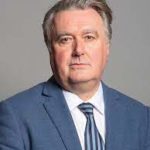

  • George Freeman – 2022 Speech on Remuneration for Songwriters and Composers

    George Freeman – 2022 Speech on Remuneration for Songwriters and Composers

    The speech made by George Freeman, the Minister for Science, Research and Innovation, in Westminster Hall, the House of Commons, on 7 December 2022.

    It is a pleasure to serve under your chairmanship, Mr Hollobone—in the warmth of your chairmanship in this cool room this morning. I congratulate the hon. Member for Cardiff West (Kevin Brennan) on securing the debate and on his ongoing work in this field. I welcome the chance to update him on the progress that has been made and to re-emphasise the message that I gave at the Dispatch Box several months ago before the turmoil of the summer. I want to reiterate the commitment made by my officials, the Government and me to get the issue right and to strike the right balance and continue the pressure that I know he welcomes in trying to secure that.

    I am here as Minister for Science, Research and Innovation in the Department for Business, Energy and Industrial Strategy, and as Minister with responsibility for the Intellectual Property Office. I also co-chair the Office for AI with the Department for Digital, Culture, Media and Sport. I am also here as a Member for Parliament and a citizen of this country who is very cognisant and aware, as the hon. Member for Cardiff West has highlighted, of the role of music in our society and our economy. I am the husband of a theatre director, Fiona Laird, who has composed her own music. I have watched her go through the motions as a creator and as a musical theatre director. She composed the music for her recent Royal Shakespeare Company production of “The Merry Wives of Windsor”. We have a friend, a digital entrepreneur in the music scene, who uses the global streaming revolution to get a foothold as a minor artist in this incredible global economy. I therefore have some personal feel for the challenge, and I know how strongly the industry respects the commitment of the hon. Member for Cardiff West to try to get the balance right.

    The strengths of the UK music industry are a major part of our economy. It contributed £4 billion to our economy in 2021, and probably more this year. A key component of that is exports. British music brought £2.5 billion into the UK in 2021. It is also a major force for soft power. Next week I will be in Japan making a speech on global science soft power. I suspect the Japanese associate the UK with the Beatles, Ed Sheeran and the fabulous creative artists we saw celebrated in the Jubilee, as well as with our science. They go together as global projections of our values as a democracy and a creative powerhouse in the world.

    I absolutely share the hon. Member’s view that songwriters and composers should enjoy a fair share of the value. The challenge is to make sure we get a framework in the UK where that is true—it is a lived experience and reality—without unilaterally moving so hard or fast that we undermine the sector. We must try to establish best practice, which fits with the wider work I am doing on innovation and regulation. This country has an opportunity to set the global standards in many of these sectors, which could then, through our soft power, become international standards. That is how we see this.

    The principles of fairness and sustainability underpinned the inquiry by the Digital, Culture, Media and Sport Committee into music streaming, which kicked off so much of this. I want to reassure Members that those principles absolutely underpin the Government’s approach. I will address the issues that the hon. Member has raised and give him the update that he asks for. On streaming, we kicked off a significant piece of work on data, which the Intellectual Property Office has completed. The data gives us a good grasp of what is going on, which is key to fair remuneration. Too often, information that identifies songwriters and composers, along with their works and owners, is incomplete, inaccurate or missing entirely, which means that creators often face delays in being paid, and some are not paid at all. That predominantly affects not rock stars and superstars but the smaller creators on modest incomes, who depend on that data for their livelihoods.

    That is why, since the DCMS Committee’s inquiry last year, the IPO has established a working group on metadata, which we have tasked with developing industry-led improvements. These are complex issues and there is no silver bullet, as the hon. Gentleman knows, but the working group has made real progress on a good code of practice on metadata and a two-year roadmap for industry to deliver tangible improvements through education and technical solutions. That output is very close to completion. Since returning to office a month ago, I have asked to see it, so that I can ensure that it reflects the undertakings that I gave to the hon. Gentleman and the House. Officials in the Intellectual Property Office will share it with the music industry more widely very early in the new year to seek final agreement.

    Similarly, the IPO has established a working group to develop a code of practice on transparency. That code is also close to completion, and we will be seeking wider industry agreement on that early in the new year, too. I hope and believe that those actions on data and transparency will achieve their aim: real improvements in the fair remuneration of songwriters and composers, and songwriters enjoying more timely and accurate data payments as a result of the improvements in data. Those are key elements of the package.

    Let me turn to competition and the distribution of revenues. However good the data is, many feel—the hon. Gentleman made this point very well—that the share of streaming revenues that go to songwriters and publishers, particularly the smaller creatives at the lower end of the pecking order, as it were, is too low. It is key that the remuneration is fair and internationally competitive. Let me break those two points down. As the hon. Gentleman said, the CMA published its final report on the market for music streaming last week. The report was launched after the DCMS Committee and the Government encouraged the CMA to look into this and other claims.

    We read the report carefully. As the hon. Gentleman said, it found no suggestion that publishing revenues were being deliberately suppressed by distorted or restricted competition. The report also set out the fact that the overall share of streaming revenues enjoyed by publishers and songwriters increased from 8% in 2008 to 15% in 2021. At the same time, the share enjoyed by the recorded music industry has remained steady. It is true that the publishing share has declined slightly since 2017—from 17% to 15%—but during that time overall publishing revenues paid out by the larger streaming services in the UK have more than doubled. More and more money is being paid out to songwriters and publishers from streaming, which is great. Because songwriters typically enjoy the largest share of publishing royalties—an average royalty rate of 84% in 2021—the vast majority of the publishing share is going to songwriters.

    The key point, however, is whether streaming revenues are fairly distributed within the ecosystem. There are still many who feel justifiably that the devil is in the detail. They want to know how that overall number is allocated, and think that we need to do more to ensure that the allocation is fair. The question of how revenues are distributed between artists, songwriters, record labels, publishers and streaming platforms is complex, and we have a responsibility to ensure that any arrangements work for the industry as a whole. There is no perfect solution, but I repeat that there is more that we can do, by working with the industry, to get closer to something that is widely recognised as fairer.

    Record labels and publishers each play an important role in supporting and investing in British artists and songwriters. We do not want any unilateral or dramatic reapportionment to undermine the UK sector, but we want to ensure that we do right by the next generation of talent, which we require to feed the whole sector. The Copyright Royalty Board in the US recently laid down that song rights holders should receive around 15% of streaming revenues, which is similar to what we have achieved in the UK. Given that, and given the movement in France, which the hon. Gentleman highlighted, it is interesting that there is a global movement towards ensuring that this growing sector is based on principles of fair remuneration.

    I will come on to the changes to copyright law. The DCMS Committee recommended several changes aimed at improving remuneration, including a right to equitable remuneration for streaming, a right to regain ownership of copyright, and a right to renegotiate contracts; those are measures that the hon. Gentleman brought forward in his private Member’s Bill. I made it clear at the time that further consideration of those measures was an active priority, and that remains the case. We have seen some positive action from some in the music industry on remuneration for creators. The three major record labels have agreed to disregard unrecouped advances in older contracts, which means that many artists are now being paid from streaming for the first time. Several independent record labels have announced minimum digital royalty rates in their contracts of 25% or more, even for contracts agreed prior to streaming. There has been some progress and these steps are welcome, but I appreciate that creators want to see more substantial and wide-ranging action on remuneration; that is why, in the coming months, we will be actively considering the evidence from the research, as well as the voluntary action taken by the industry, and weighing up our approach on remuneration.

    I will come on to a specific proposal that I am making to bring all of this together, including looking at the text and data-mining issue, which is my next point; it is causing real concern for rights holders. As the hon. Member for Cardiff West was kind enough to say, I was out of office when this reform was announced. In the few short weeks I have been back, I have already met with the DCMS Minister for the creative industries, my hon. Friend the Member for Hornchurch and Upminster (Julia Lopez), to highlight the fact that we must get this right. Of course, the UK wants to be a leader in AI—we are, and we want to continue building on that, but we must not allow that support to undermine our creative industries. My hon. Friend the Member for Hornchurch and Upminster absolutely agrees with me, and we have established a small taskforce of officials between the two Departments to ensure that we get this right. Following that meeting and this debate, I propose to convene a roundtable between DCMS and the Department for Business, Energy and Industrial Strategy of the key WHvoices across the sector to look at the whole issue. It will look at the rate of progress, the report from the Intellectual Property Office and the CMA, and the AI piece to see if we can get a proper settlement that everyone acknowledges would be fair and reflects the principles that we have set out, which—I will repeat again—are absolutely fundamental to our approach.

    I believe deeply that, if we get this right, we can establish a Government-supported but industry-led code of conduct that will be respected around the world. It will improve and continue the process by which the industry is improving and ensure that we continue that momentum, so that it does not require private Members’ Bills to keep nudging the industry and we have leadership in setting the standards for fair remuneration that are the envy of the world. As the co-chair of the Office for Artificial Intelligence and Minister with responsibility for the Intellectual Property Office on this issue, I will suggest that my hon. Friend the Member for Hornchurch and Upminster and I convene that roundtable; I will obviously be in touch with the hon. Member for Cardiff West and the DCMS Committee.

    In closing, with two minutes on the clock, I will highlight the fact that we believe that there is an opportunity here. The industry has shown willingness to move in the right direction. The Government signal that our preference is not to legislate; our preference is to encourage the industry to move in the right direction but, if we must legislate to get this right, we reserve that right. However, our preference remains to avoid that—not least because we would like to get a quicker solution for the benefit of all those in the industry.

    Kevin Brennan

    I understand what the Minister asked, because we have not discussed it previously, but I do not want the point about composer buyouts to be lost in the discussion. I welcome what the Minister said about convening a roundtable and his continued commitment. We need a discussion at some point about the implication of the increasing trend for composer buyouts.

    George Freeman

    I am grateful to the hon. Gentleman for putting that on the record; I will put it on the record that we will include that in the roundtable discussion. I will pick up the detailed point that he made and write to him on it, because that is part of the mix. I hope that the House and the hon. Member for Cardiff West can see that we are making progress, and I look forward to working with him on this in the months ahead.

  • Kevin Brennan – 2022 Speech on Remuneration for Songwriters and Composers

    Kevin Brennan – 2022 Speech on Remuneration for Songwriters and Composers

    The speech made by Kevin Brennan, the Labour MP for Cardiff West, in Westminster Hall, the House of Commons on 7 December 2022.

    I beg to move,

    That this House has considered remuneration for songwriters and composers.

    Good morning. It is always a pleasure to see you in the Chair, Mr Hollobone. I should at the outset declare that I am a member of the Ivors Academy, PRS for Music and the Musicians’ Union, and I chair the all-party parliamentary group on music.

    Last night was quite special because some of us, including the Secretary of State for Digital, Culture, Media and Sport, were invited to Abbey Road Studios in St John’s Wood for an event in the famous Studio Two, where the Beatles recorded the vast majority of their material that has ever been released. We were treated to a wonderful performance by a young singer called Olivia Dean, who is also a songwriter; she performed her song “The Hardest Part” quite beautifully for us. I predict big things for her in the next 12 months or so. It was a reminder of the wonderful talent for songwriting and composing in this country, and the great legacy we have.

    I was fortunate recently to help host the Ivors Academy’s composer week here in the House of Commons, when several composers came to celebrate great British achievement in composing. That great legacy is also a live one, with young performers such as Olivia Dean. The legacy of Abbey Road itself is not just the Beatles, but Pink Floyd and many other great artists, including more recently Stormzy, Adele and Ed Sheeran. But behind some of those great performers are often professional songwriters. Amy Wadge, who lives quite close to my constituency in south Wales, is behind some of Ed Sheeran’s biggest hits, as she co-writes with him. We should remember not just the artists, but the songwriters and composers.

    Visiting Abbey Road last night reminded me that we should protect the legacy of our great recording studios, including the Maida Vale Studios, which the BBC is now selling off, and which there is an opportunity to keep, as a going concern, as a recording studio. It would be a loss to the country if the studio were sold off for flats, rather than maintained as a recording studio.

    This morning I want to talk about three things to do with songwriters and composers, and give the Minister an opportunity to respond. First, the Select Committee on Digital, Culture, Media and Sport wrote a groundbreaking report on the economics of music streaming, which contained a series of recommendations in relation to songwriters and composers, as well as to performers. I know the Minister has taken a close interest in that inquiry, particularly in relation to some work going on in the Intellectual Property Office. I am glad to see him back in his role; we discussed a lot of these matters when I introduced my private Member’s Bill, the Copyright (Rights and Remuneration of Musicians, Etc.) Bill, into the House of Commons a year ago. He made several commitments at that stage that I hope he might revisit a little today.

    Secondly, I will talk about composer buyouts and the growing problem they present to our songwriters and composers, and the threat to the future pipeline of songwriters and composers.

    The third point I will discuss—to give the Minister a heads-up—is artificial intelligence and the implications of the data mining of musical works.

    Jim Shannon (Strangford) (DUP)

    I commend the hon. Gentleman; he is a dear friend of mine, and a dear friend of many. On the Back Benches we like his wit—we will probably get some of his wit today at Prime Minister’s Question Time. It is a delight to hear him talk with passion on a subject that means so much to him. Does he agree that the unfair disadvantage for the songwriters and composers who have made their breakthrough via a viral song on a social media streaming platform, only to receive a minimal payment, must be addressed by Government? The industry has had more than enough time to fix it, and it has refused to do so. I believe there is clearly a legislative requirement—the broken record will not be fixed.

    Kevin Brennan

    I completely agree with the hon. Gentleman. I know that he is a bit of a musician himself. I am not going to go into lengthy detail about that issue this morning. However, suffice to say, the recent Competition and Markets Authority report into competition issues in the music industry, and, in particular, into the cross ownership of both publishing and recording rights of the major record companies, did not decide to proceed to a full market investigation. In a way, it threw the ball back to the Government, by saying that it

    “is not to say that we think the market gets a ‘clean bill of health’ or cannot be improved further… We think it is a matter for the Government and policymakers to determine whether the current split is appropriate and fair, and to explore whether wider policy interventions are required, for example those relating to the copyright framework and how music streaming licensing rates are set.”

    I note that in France, for example, a form of equitable remuneration—to use the technical term—which is a guaranteed payment when music is streamed, was successfully introduced recently. The research into equitable remuneration from the Intellectual Property Office research programme is over three months late already. Will the Minister update us on what is happening in those groups that were set up in the Intellectual Property Office? What is happening in relation to the research?

    I also put this to the Secretary of State for Digital, Culture, Media and Sport, yesterday at the DCMS Committee, but can the Minister take a closer interest and put some ministerial input into driving that work further forward and bringing it to a conclusion? There has been some turmoil and changes in Government since we discussed this a year ago, but I know he had hoped it would have been done by last September, and for a number of reasons—not entirely his fault, and because the work is complex—the work is still incomplete. Some ministerial input is what I am calling for.

    When we discussed this a year ago, the preference was that the industry should come to an agreement. That is what it has done in France to improve remuneration for songwriters and performers. If the industry did not do that, the Government were prepared to consider action. I remind the Minister of that, and ask him to respond today as to where he and the Government stand now.

    The CMA concluded that it does not have the power to determine whether the current split is appropriate and fair. In the United States, things are done differently—it has a copyright court that determines those things. The judge there described some of the assumptions that the Competition and Markets Authority made about the problems that might be caused if the split was changed, and how that might disadvantage songwriters or other artists, as “heroic” assumptions. I was surprised to see that in the CMA report. But if the CMA does not have the power to do it, and it is instead a policy issue for the Government to resolve, what avenues are the Government pursuing and exploring to resolve the issue?

    The second point I will mention is the issue of buy-outs. Parliament has determined, over many decades, that songwriters and composers should be entitled to a royalty when their work is performed or recorded. It did so because it recognises that the creative act involves the creation of intellectual property. That is extremely important, and many people do not understand that it is a key source of income for songwriters and composers.

    This is nothing new; throughout history, people have wanted to get their hands on composers’ and songwriters’ money and get a piece of the pie, whether it is Colonel Tom Parker with Elvis Presley or whoever else. In recent years a particularly pernicious practice has emerged among some media companies of demanding up front, when they commission a piece of music—perhaps for a TV series or film—that the composer or songwriter signs a contract that waives their right to royalties, which they have a right to for their lifetime and beyond. It was Parliament’s intention that that should be the case.

    Some might say, “Well, that’s their choice. They don’t have to sign the contract. A contract is something entered into equally by two parties,” but the power dynamic is weighted towards the powerful media companies. Composers know that they will end up on a blacklist of some sort if they do not agree to sign away some or all of their rights. They are often prepared to do some of that, but they are increasingly being asked to completely give up their rights to royalties when they are commissioned. Some composers got in touch with me before this debate and described the practices of one particular media company called Moonbug. When it commissions works from composers, it demands that they give up 100% of their royalties.

    The Government might say, “This is a private matter. It is a contractual matter,” but there is room for Government leadership. They should support a code of conduct for the industry to make sure media companies are not routinely able to get away with this pernicious practice, which is becoming more and more common.

    The third thing I want to talk about is artificial intelligence and the potential threat to our songwriters and composers from a decision that the Government announced earlier in the year—I understand they are now reviewing it. I have spoken to the Minister about this privately, and I have expressed my concerns. I know other Members have done so too, as have stakeholders in the music industry.

    Christina Rees (Neath) (Ind)

    I congratulate the hon. Gentleman on securing this very important debate and on his superb leadership of the APPG on music. Does he agree that the proposed text and data-mining exception to promote AI would remove the need for a licence to reproduce copies of original works, so would remove any opportunity for performers and creators to be remunerated for their talent and work? Furthermore, because there is not an opt-out for performers and creators, it will have a severe detrimental effect on their creative personality, because in the future it will be done by a computer.

    Kevin Brennan

    The hon. Lady has made part of my speech for me, so I thank her for that. She emphasises the point that I wish to make. To be clear, if the Government’s original position on this matter were to be maintained, any tech company could freely data mine creative output, including musical works, to produce, using artificial intelligence, not an exact copy of that music but a kind of facsimile, in order to commercially exploit it. The composer would not have any ability to give permission for that and rights holders would not be able to license it. It seemed strange for a Conservative Government to trample over property rights in that way. I hope it was a decision taken in some of the turmoil that has been going on recently in government, and that they will actively reconsider it.

    I spoke to the Secretary of State at the Digital, Culture, Media and Sport Committee yesterday, and she indicated that the matter is under review. I pressed her on the Government’s likely direction of travel and whether it would go back towards allowing reasonable exemptions, perhaps for academic purposes, as long as it really is for that reason and is negotiated properly with rights holders and the industry, but not allowing free access for people to exploit other people’s work and, in a sense, be able to pickpocket their intellectual property, then reproduce it in a slightly different format using artificial intelligence. The implications of that for songwriters and composers and their ability to make a living is quite considerable in future.

    I hope the Minister can tell us a bit more about the review and why the Government came to such a conclusion originally. I understand why he might want to promote tech. We all want to see innovation using technology, but it cannot be done at the expense of people’s creative rights and intellectual property. When he responds, perhaps he will tell us about the timeline for the review and about who he is listening to on this subject, and perhaps he can lean into what the direction of travel is.

  • Paul Scully – 2022 Speech on BBC Local Radio

    Paul Scully – 2022 Speech on BBC Local Radio

    The speech made by Paul Scully, the Parliamentary Under-Secretary of State for Digital, Culture, Media and Sport, in the House of Commons on 8 December 2022.

    I thank my right hon. Friend the Member for Hemel Hempstead (Sir Mike Penning) for securing the debate and the Backbench Business Committee for supporting it. The BBC is a great national institution that has played a vital role in informing, educating and entertaining audiences since it was created 100 years ago. Its charter requires it to act in the public interest and provide distinctive content that reflects and represents people and communities from all corners of the UK. That includes providing, as we have heard, genuinely local content that is directly relevant to audiences.

    As we have heard, local services are a key part of the BBC’s public service remit and an example of how it can use its licence fee funding to provide services that may be underserved by the market. BBC local radio is one of its crown jewels and remains highly valued by audiences. We heard that testimony in the debate when my right hon. Friend the Member for Hemel Hempstead and my hon. Friend the Member for Watford (Dean Russell) talked about BBC Three Counties Radio; my hon. Friend the Member for Cleethorpes (Martin Vickers), my right hon. Friend the Member for Haltemprice and Howden (Mr Davis) and the right hon. Member for Kingston upon Hull North (Dame Diana Johnson) talked about BBC Radio Humberside; and my hon. Friends the Members for North Norfolk (Duncan Baker) and for North West Norfolk (James Wild) talked about BBC Radio Norfolk.

    My right hon. Friends the Members for Maldon (Sir John Whittingdale) and for Rayleigh and Wickford (Mr Francois) and my hon. Friend the Member for Southend West (Anna Firth) talked about BBC Essex; Mr Deputy Speaker and my right hon. Friend the Member for Pendle (Andrew Stephenson) even talked about BBC Radio Lancashire—well done to them for getting that in; and the hon. Members for Strangford (Jim Shannon) and for Foyle (Colum Eastwood) talked about BBC Radio Foyle, funnily enough. There are so many pairs there—I am wondering which are the Smashie and Nicey of the House in terms of their DJs.

    My right hon. Friend the Member for Wokingham (John Redwood) talked about BBC Radio Berkshire; my hon. Friend the Member for Worcester (Mr Walker) talked about BBC Hereford & Worcester; the hon. Member for York Central (Rachael Maskell) talked about BBC Radio York; the hon. Member for Easington (Grahame Morris) talked about BBC Radio Tees; and the hon. Member for Tiverton and Honiton (Richard Foord) talked about BBC Radio Devon. My hon. Friend the Member for Warrington South (Andy Carter) was greedy and talked about two—BBC Radio Merseyside and BBC Radio Manchester. Not surprisingly, the right hon. Member for Orkney and Shetland (Mr Carmichael) talked about BBC Radio Orkney and BBC Radio Shetland.

    The hon. Member for Barnsley East (Stephanie Peacock) talked about BBC Radio Sheffield. My hon. Friend the Member for Worcester talked about doing the regional round, and I remember talking to Toby Foster in the morning in Sheffield when I was hospitality Minister about the struggle of that sector during covid. I think I still owe him a visit to his comedy club. These things do stick in the mind and we are regularly tested at a local level.

    We also heard from the right hon. Member for Hayes and Harlington (John McDonnell) about BBC Radio London, which he shares with me and the Media Minister, my hon. Friend the Member for Hornchurch and Upminster (Julia Lopez), who is unfortunately in her sick bed with covid so could not respond to the debate. We have great presenters and journalists, such as Susana Mendonça, the great political journalist, and I enjoy sparring energetically and enthusiastically with Eddie Nestor often during drivetime.

    As we have heard, there are some fantastic examples that remain highly valued by audiences up and down the country. Those local services bring communities together and play a vital role in reflecting local experiences and delivering local news. Developed in the late 1960s and 1970s, the BBC’s 39 local radio services in England still reach 5.8 million listeners every week and collectively have a higher share than stations including BBC Radio 5 Live and BBC Radio 6 Music, even though coverage on FM and DAB is not universal across England.

    As we all know, BBC local radio is especially valued outside London and the south-east, where there tends to be less competition from commercial services. BBC local stations in places such as Derby, Stoke, Lincolnshire, Gloucestershire, Cumbria and Shropshire have a larger audience share and reach than the average for BBC local radio. The Media Minister has already made it clear to the House, in answer to an urgent question a few weeks ago, that she was disappointed—we are all disappointed—that the BBC is planning to reduce its local radio output. These are precisely the kinds of services that the BBC is uniquely well placed to provide.

    I was also disappointed that last week, as we have heard, the BBC announced proposed changes to its radio output in Northern Ireland, including cuts to BBC Radio Foyle’s output. BBC Radio Ulster, including Foyle, reaches nearly a third of radio listeners in Northern Ireland and is a vital part of Northern Ireland’s media landscape. Understandably, the BBC’s announcement has caused a significant reaction in Northern Ireland, as we have heard, and I know that it was raised by the hon. Member for Foyle with the Prime Minister at Prime Minister’s questions on 30 November—reaching the highest levels.

    We recognise that commercial local news providers have concerns about the potential impact of the BBC’s plans to increase investment in online news services. The charter requires the BBC to consider its market impact, and to seek to avoid unnecessary adverse impacts on competition that are not necessary for the fulfilment of its mission and public purposes. The Government are considering the regulation and governance of the BBC’s market impact as part of the mid-term review—my hon. Friend the Member for Warrington South raised this issue—and we will obviously bring that back to this place as soon as we can. Ofcom is also reviewing the BBC’s online news proposals, including an assessment of the concerns raised by the News Media Association and the BBC’s own analysis.

    We cannot ignore the considerable concerns that have been raised in response to the BBC’s recent announcement —not just today, but in recent weeks. Since the BBC’s announcement, my hon. Friend the Media Minister has met the BBC’s leadership, and she has expressed our shared concerns in this House. She made it clear that the BBC must continue to provide distinctive and genuinely local radio services, with content that represents communities from all corners of the UK. She also emphasised that we expect it to consider the views of this House when it makes the decision about whether to proceed.

    The Prime Minister also committed in this House to raising the changes to BBC services in Northern Ireland with the BBC. The Prime Minister has since himself met the director-general of the BBC, and they discussed the proposed changes to BBC Radio Foyle and the importance of the BBC considering the views of stake- holders when deciding whether to proceed. The Secretary of State wrote to the BBC earlier this week to remind it of its responsibilities under the charter, including the importance of transparency about changes to services.

    Last week, the Digital, Culture, Media and Sport Committee held an evidence session with the BBC on its planned changes to local radio, and I welcome the important role that the Committee plays in ensuring that the BBC is accountable for its decision making.

    Grahame Morris

    Would the Minister clarify what the current position is with Ofcom? My understanding is that the Media Minister was going to seek Ofcom putting pressure on the BBC in respecting its obligations under the terms of the charter.

    Paul Scully

    Indeed, and the Media Minister was actually due to meet Ofcom this morning, I believe, but unfortunately that obviously changed because of her illness. However, she will continue to work with Ofcom to make sure that the greatest pressure is brought to bear on this.

    Separately, we have asked the BBC for advice on how it would manage a major local incident—we have heard a lot about flooding today, for example—that requires a dedicated rolling news service, given the BBC’s important responsibilities under the charter and agreement to support emergency broadcasting. The latter is really important. At its best, for example during covid, BBC local radio is able to bring communities together. It plays a vital role in reflecting local experiences and delivering local news. It is a lifeline, as we have heard, for many older people living in rural areas, and it is a source of reliable information in emergencies, which is part of its public value.

    The Secretary of State also raised the BBC’s proposals with Ofcom last month, and it has confirmed that it is monitoring the BBC’s local radio proposals in England. In particular, it will scrutinise the BBC’s detailed plans for sharing programming on local radio. Ofcom has made it clear that it expects the BBC to continue to deliver for all audiences as it transitions to a digital-first organisation, and will hold it to account in areas where it needs to do more. As I say, we will continue those discussions with Ofcom to make sure that happens.

    I want to take this opportunity to stress that the BBC is, rightly, operationally and editorially independent from the Government, and decisions on service delivery are ultimately a matter for it. The BBC agrees with the Government on the need for the organisation to reform over the coming years, and recognises that there will be challenges as the BBC moves towards becoming a digital-first organisation and that those reforms will involve difficult decisions.

    Rachael Maskell

    I held something back from my speech because I wanted to put it specifically to the Minister. If the BBC were to put the question I suggested to local radio about making its own reforms, would the Minister and the Department step in if it was to build new partnerships, perhaps with universities and other community groups, to strengthen the local position of the BBC and to have further reach but also greater capacity for the future?

    Paul Scully

    The hon. Lady raises an interesting point, but I would not want to put words in the Media Minister’s mouth. I will certainly make sure that she reflects on that, because I do not want to be treading on her toes or to make her decision. I know she will have heard that. I am sure she will be flicking over from BBC Radio London, on her sickbed, to the Parliament channel to hear what is discussed today, so she will have heard what the hon. Lady said.

    The Government welcome the BBC’s plans, as part of the reforms, to maintain its overall investment in local services, and that includes £19 million from broadcast services being moved to online and multimedia production to adapt to audience changes. The BBC has also confirmed that it is protecting local news bulletins throughout the day and local live sport and community programming across all 39 stations. There will be fully local programming between 6 am and 2 pm, with neighbouring or regional sharing in most of the remaining listening hours. We have heard the difficulties that Members have with that regional sharing. In Northern Ireland, we understand that the changes will result in local investment in BBC iPlayer, which in itself is to be welcomed. But the recent announcements do appear to fundamentally change important BBC local services, particularly BBC local radio, which is an essential part of the public service remit.

    Andy Carter

    I heard what the Minister said about weekday services. The point I made earlier was that, on many stations, the peak of the week is Sunday morning, which is a fundamentally important point for audiences, yet that is when local radio is being shared and regionalised. Does he accept that that is a point in the audience day when local radio should be local?

    Paul Scully

    I totally agree. My hon. Friend has a background in radio and speaks with great experience. The BBC should not be salami-slicing its services. It should be responsive to local need, and that includes looking at the peak times my hon. Friend describes.

    We all agree the BBC has been entertaining and informing us for 100 years. We want the BBC to continue to succeed over the next century in a rapidly evolving media landscape and we are clear that BBC radio has a significant role to play in that success. In the light of the concerns raised in the debate, the BBC needs to clarify itself how it is going to manage those long-term tensions between modernising and becoming more sustainable while also maintaining its core public service function and output. I recognise that the BBC faces difficult decisions in reforming its services and becoming the digital-first organisation it seeks, but the debate has highlighted concerns shared across the House about the BBC’s proposals to reduce its local radio output.

    I stress again that the BBC is independent from the Government, but it is now for the BBC to reflect on the concerns raised in the debate and elsewhere on its proposals. It must also clarify whether it has other plans to change local radio services in future, particularly in Scotland and Wales.

    The Government are undertaking a mid-term review, as I said earlier, which will evaluate how the BBC and Ofcom assess the market impact and public value of the BBC in an evolving marketplace and how that relates to the wider UK media ecology, including with regard to commercial radio and local news sectors. That will take regard of the views of this House and the review is ongoing.

  • Stephanie Peacock – 2022 Speech on BBC Local Radio

    Stephanie Peacock – 2022 Speech on BBC Local Radio

    The speech made by Stephanie Peacock, the Labour MP for Barnsley East, in the House of Commons on 8 December 2022.

    I begin by thanking the Backbench Business Committee for granting this important debate, and I congratulate the right hon. Member for Hemel Hempstead (Sir Mike Penning) on securing and leading it.

    The BBC is a great British institution, a cornerstone of our creative economy and an important part of our day-to-day lives. From CBeebies to Bitesize to Radio 4, the BBC has something for everyone, providing round-the-clock news, education, entertainment and culture. It is absolutely right that institutions such as the BBC modernise in an increasingly digital world and keep pace with global media giants, but in doing so, we must protect the traditional yet vital services, such as the excellent local radio network, that make our BBC the world-leading service it is.

    Today’s debate has focused on the contribution of local radio across our country. From Easington to Worcester to Wokingham, there is agreement across this House that the BBC should review its decision to end local programming on weekdays after 2 pm and secure the future of the local radio network. Given the importance that local communities place on local BBC radio, and the fact that it is an intrinsic part of what their licence fee goes towards, there is concern that reducing local radio content will drive a wedge between the BBC and the public to its detriment. Indeed, BBC local radio contributes a huge amount to each area it serves, and I certainly know that BBC Radio Sheffield does that in my local area.

    Everyone across the Chamber has paid tribute to their local stations, particularly the hon. Member for Southend West (Anna Firth), who did so poignantly. The hon. Member for North Norfolk (Duncan Baker) and others shared the statistic that local radio reaches nearly 6 million people—that is 15% of adults in the UK. First and foremost, it provides truly local news. Although the BBC has provided assurances that local news bulletins and live sport will continue to run under its proposals, the National Union of Journalists has warned that the BBC’s erosion of local output could mark the beginning of the end for local radio. My right hon. Friend the Member for Hayes and Harlington (John McDonnell), the chair of the NUJ group, outlined its concerns passionately and in detail.

    Dame Diana Johnson (Kingston upon Hull North) (Lab)

    I am grateful to my hon. Friend for giving way, and I apologise for not being here; I was in the Westminster Hall debate, too. My hon. Friend might be able to help me with this. BBC management has said that the impact of its proposals would be the loss of 48 roles. However, in the Radio Humberside and Radio Lincolnshire regions alone, it wants to close seven staff presenter roles, plus around five other jobs may go in the planned restructure. That is around 12 jobs across two out of the 39 local radio stations. It may be that our area is being hit particularly hard, but if that is spread across all the areas, that would be a loss of around 200 jobs, would it not?

    Stephanie Peacock

    My right hon. Friend is absolutely right, and as we have heard in the debate, it is not just Radio Humberside; it is across the country, and I know that colleagues from Northern Ireland have made this case as well.

    This is a real concern to local journalists and to listeners, because local radio is such an important part of our lives. Whether it is local traffic updates, school closures or extreme weather events, the provision of trustworthy local news is vital, especially at a time when misinformation is becoming common but hard to spot in a digital world. BBC local radio’s news facilities, for example, provided a lifeline during the pandemic, giving reliable and localised case numbers, guidance and vaccination updates for each individual area.

    It is not just “breaking news” bulletins that keep people informed. Regular local programming gives people access to the arts, charities, education and cultural events that are truly relevant to them, helping to ensure that each area remains connected to its past and present. The hon. Member for North West Norfolk (James Wild) spoke about some of the programmes in his area. It is precisely that kind of programming that faces the axe under these proposals.

    The past few months have also shown us how BBC local radio can contribute to the healthy functioning of our democracy, enabling national leaders to be held to account on local issues and local leaders to be questioned by those they directly represent. Regional and national alternatives to such shows simply will not have the same effect, and once these local opportunities are gone, it will be extremely hard to get them back, as the hon. Member for Watford (Dean Russell) described.

    Local radio helps connect those at risk of digital exclusion to their communities. Although many people, and particularly the younger generation, now access a lot of their media online, there still exists a group who cannot access the digital world. Some cannot get a reliable fast connection due to their location; some were never taught the skills to navigate the online world; and others simply cannot afford the price of a phone bill or broadband. For people in that group—particularly older people or those living in rural areas—truly local programming matters, as the right hon. Member for Maldon (Sir John Whittingdale) described. In a period when loneliness is increasing, now is simply not the time to threaten cutting people off. My hon. Friend the Member for York Central (Rachael Maskell) rightly pointed out that many lonely people turn on the radio for connection and companionship when they are on their own.

    Of course, we understand the need to modernise our institutions, as outlined by the BBC in the four pillars it set out yesterday. Over the last 20 years, the media landscape has changed dramatically. Indeed, when the last remit for public service broadcasters such as the BBC was created, it was done through reforms to the Communications Act 2003. Back then, online platforms such as YouTube had not even launched, and nor had devices, such as the iPhone, that brought the internet to our pockets. Now global media giants such as Amazon have become major players, and phones challenge radio and TV for our attention. It is due to these changes that the media Bill must be brought forward as soon as possible, with the obvious exclusion of the privatisation of Channel 4, so that our public service broadcasters can continue to cater for British audiences in the modern world.

    In the meantime, the BBC has remained competitive in the digital space through BBC News online, iPlayer, BBC Sounds and more. Although these updates and changes are necessary to capture digital and young audiences, they do not need to come at the expense of traditional services that are still contributing to communities across the country. BBC local radio still has value in today’s society, and that must be taken into account. The hon. Member for Warrington South (Andy Carter) made that case very strongly.

    The News Media Association has warned that the BBC moving its content from radio to online could force competition with local written news from commercial providers, threatening their ability to generate sustainable revenue. The BBC needs to ensure that its modernisation plans continue its tradition of promoting local journalism rather than stifling it. The hon. Member for Cleethorpes (Martin Vickers) quoted his local NUJ rep, who articulated that.

    We recognise that the BBC, by its very nature, must remain impartial and independent, but that does not stop it from making its decision-making processes transparent, to ensure that its plans help create a BBC that caters for all its audiences. The BBC must be clear with the public on what analysis and consultation it undertook to prompt its decision to restrict local radio services and what assessment it has made of the impact this will have on its listeners.

    That is particularly important in the light of Ofcom’s fifth annual report on the BBC, which found that some audiences, such as those in lower socioeconomic groups, have been persistently less satisfied and are less likely to use its services. Like every other organisation, the BBC must be clear on its best practice for managing cuts to its workforce. Local journalists should not be finding out through the media that over 100 audio jobs will be cut, placing their livelihoods at risk overnight just before Christmas.

    Local radio has been at the heart of communities for generations, and this debate has highlighted how important it is for so many people up and down the country. I know that many across Barnsley enjoy and rely on Radio Sheffield. We hope the BBC can review its decision to cut local radio and support the network for many years to come.