Category: Criminal Justice

  • David Lammy – 2021 Speech to Labour Party Conference

    David Lammy – 2021 Speech to Labour Party Conference

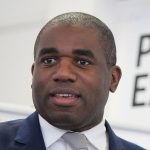
    The speech made by David Lammy, the Shadow Secretary of State for Justice, in Brighton on 28 September 2021.

    David Lammy, Tottenham CLP.

    I am excited to give my first ever conference speech, it has only taken me 21 years as an MP to get here.

    When I first entered Parliament people told me I looked like Denzel Washington. These days I look more like Forrest Whittaker. But I am proud to stand here as the first ever Black Shadow Justice Secretary.

    Conference, I am proud that my parents arrived in the UK as part of the Windrush generation. My mother worked for the London Underground to support our family single-handedly. My aunts gave their working lives to the NHS.

    Growing up in the shadow of Tottenham’s Broadwater Farm Estate, life was tough. In Thatcher’s Britain, we lived under the indignity of poverty. Racism was rife. Signs saying “No Blacks, No Dogs, No Irish” had only just disappeared.

    I was just twelve when I was first stopped and searched by the police. They said I matched the description of a mugger. The reality was just like how Gavin Williamson confused Marcus Rashford with Maro Itoje, they could not tell one Black person from another.

    Conference, I will never forget where I came from. I understand how justice is intertwined with everything else. Education, economics, class, race, work, welfare, housing, even health.

    Prison is only for other people until someone you know ends up there. The courts are only distant until you become a victim of crime. The justice system is only abstract until it is not. We take it for granted at our peril.

    But conference, taking justice for granted is exactly what the Conservatives have done. The pandemic has hit the justice system like a baseball bat but the Tories had knocked it onto its knees already.

    Since 2010, the Tories closed 295 courts. The Crown Court backlog is now at an all-time high of 60,000 cases. Victims are giving up on the criminal justice system altogether. They are not being given court dates until up to four years later – if they get one at all.

    Prosecutions and convictions for rape are at an all-time low. The government is now desperately setting up temporary ‘Nightingale courts’ to deal with the backlog they created. But just 30 nightingale courts are open, a fraction of the hundreds of permanent courts this government closed.

    It is a classic example of Conservative false economy. Cutting infrastructure over a decade. Now having to pay more to Sellotape the broken parts together again.

    Conference, we are all proud of the legal aid system that was created by Clement Attlee’s Labour government in 1949. Its purpose is to provide legal advice for those who cannot afford it. But since 2010, the Conservatives have cut legal aid by 38%.

    What’s left is a legal system that only serves the rich.

    In government, Labour will ensure that courts, prisons, the Probation Service, and Legal Aid are never left so vulnerable again. Probation, once the national service for second chances, has been abused by failed Tory ideology.

    We should take a moment to celebrate that this year the government have finally listened to Labour and the trade unions by performing a screeching U-turn. The National Probation Service is back.

    Conference, I want to pay a tribute to the hidden heroes working in our probation service, our prisons, our courts, and right across the justice system. For sacrificing so much to keep the wheels of justice turning in a pandemic with little help from the government.

    To you, we say this: thank you. But now the Tories are coming after the rule of law. Conference, they are coming after your human rights. We will fight them.

    Conference, they are coming after Judicial Review. We will fight them.

    Conference, whatever rights they come for next we will fight them.

    This government is slapping the victims of Grenfell, Hillsborough and the Windrush scandal in the face. Victims who depend on their legal rights to hold the government to account. Unlike the government which wants to water them down, Labour will strengthen your Human Rights.

    Building on the internationalist, progressive values we all share in government Labour would legislate to bring The United Nations Convention on the Rights of the Child into domestic law. Make no mistake, the values that make our country great: openness, community and the rule of law are all being trampled by Boris Johnson’s government.

    A charlatan who swept to power by championing division, bigotry and lawlessness.

    The tragic deaths of Sabina Nessa, Sarah Everard, Bibaa Henry and Nicole Smallman this year should have been a turning point for change. But instead of addressing the epidemic of violence against women and girls, the Tories have ignored it. Proposing tougher sentences for those who graffiti statues than the minimum for those found guilty of rape.

    Enough is enough. Women have to feel safe on our streets.

    Labour is putting ending violence against women and girls at the very top of our agenda. Fast-tracking rape and sexual assault cases in our courts, increasing minimum sentences for rapists, creating a new offence for street harassment, ensuring victims of domestic abuse get the legal aid they need and, finally conference, making misogyny a hate crime.

    Labour will put victims first.

    The Tories have promised a Victims’ Bill in several Queens’ speeches but never delivered. Labour have produced legislation that would enshrine victims’ rights in law. It has been published. Introduced to Parliament. It is ready to go.

    It has been another year of widening inequality. City Law firms are making billions in profit while low-paid workers see their tax bill rise and wages fall.

    Labour recognises the importance of the private sector working in partnership with the public sector. That’s why today we are announcing that a Labour government would support the introduction of a new national pro-bono service. With binding pro bono targets to support those who can’t afford legal advice and are ineligible for legal aid.

    Conference, it cannot be right that 51% of children in prison are Black, Asian or minority ethnic. Labour will address the unfairness that runs right through the justice system. Finally implementing the Lammy Review. Introducing targets to bring in more women and more ethnic minorities to the most senior positions in our courts. We will reform the judiciary so that judges look more like the people they judge.

    Under the Conservatives, everything in the justice system that is meant to be up is down and everything that is meant to be down is up. Anti-social behavior is up, convictions are down, the court backlog is up, rehabilitation is down, racial unfairness is up, access to justice is down.

    Boris Johnson promised he would level the country up but instead he is levelling the country down. Labour will turn what is supposed to be up, up. And everything that is supposed to be down, down.

    The Conservatives are bringing the country down, Labour will bring the country up.

    Together we can make the UK the fairest country in the world.

    Thank you.

  • Priti Patel – 2021 Comments on Extended Legal Action Against Protesters

    Priti Patel – 2021 Comments on Extended Legal Action Against Protesters

    The comments made by Priti Patel, the Home Secretary, on 24 September 2021.

    The British public are rightly furious that the behaviours of a selfish minority have been putting lives at risk and causing untold disruption on our roads and now at Dover. We will not tolerate the recklessness of these few activists and the police continue to have our full support in cracking down on their dangerous behaviour.

    The public and the police want officers back serving their communities and cutting crime, not dealing with people happy to put the safety and needs of others at risk.

  • Kit Malthouse – 2021 Statement on Injunction to Protect M25

    Kit Malthouse – 2021 Statement on Injunction to Protect M25

    The statement made by Kit Malthouse, the Policing Minister, in the House of Commons on 22 September 2021.

    With permission, Mr Speaker, I would like to make a statement about protests.

    There is widespread anger throughout the country about the disruption, danger and misery that so-called climate protesters have caused with their selfish actions. On 13, 15, and 17 September, a group called Insulate Britain staged co-ordinated sit-down protests on the M25, leading to major traffic delays. They also targeted the wider road network—namely, the M1, M3 and M11. Dealing with that involved Surrey police, Essex police, Thames Valley police, Hertfordshire constabulary, Kent police, and the Metropolitan police as the lead force. A total of 241 arrests were made across those three days.

    On Monday, those groups attempted to block the carriageway at junction 1A of the M25 in Kent, the M25 in Hertfordshire and junction 4 of the A1. Hertfordshire constabulary was present at both scenes and made 29 arrests. Yesterday, protesters blocked both M25 carriageways between junction 9 and junction 10. Surrey police arrived on the scene within three minutes and officers cleared the carriageway quickly. It is clear that police response times have improved significantly following the first two days of protests. The affected forces have dedicated significant resources to spotting protesters and removing them quickly.

    Protest is a right, but it must be balanced against the rights of others to go about their daily lives. The right to protest is not unqualified and does not include a right to endanger others, to intimidate people or to break the law. The events of recent days have crossed this line. As anyone should know, sitting in the road is extremely dangerous, both to themselves and to others. Delays caused by protests between 13 and 17 September have cost drivers in excess of £500,000. This figure does not take into account the knock-on effect for the local road network, for manufacturing businesses or for those who missed their connections at ports. Previous actions of Extinction Rebellion, of which I understand Insulate Britain is an offshoot, have cost the taxpayer £50 million and diverted valuable police resources. We have all heard the heart-breaking stories about people not getting the medical treatment they needed, and seen people standing by their cars crying in frustration at this appallingly stupid and selfish behaviour. We have all had enough.

    The Government have been working hard to address these concerns. The Home Secretary and I are in constant contact with the police, and we have been crystal clear in our support for their robust and swift enforcement of the law. There is absolutely no excuse for this selfish and disruptive behaviour. The irony is that it actually undermines the cause of climate change, as well as creating more traffic and pollution. These protesters live in a free country where they can lobby politicians, stand for election and boot us out of office if they do not like what we do. There is now widespread agreement in this House and across the political spectrum that climate change demands major action. In November, the UK will host a huge international conference where we will discuss and debate these very issues. But we do not change policies or make law in this country through mob rule or being held to ransom, and these people should not suppose for one moment that the public are with them.

    The Police, Crime, Sentencing and Courts Bill, which is under consideration in the other place, contains proportionate measures better to enable the police to deal with disruptive protests. By putting public nuisance on to a statutory footing, as recommended by the independent Law Commission, we will increase the powers available to the police for dealing with this sort of protest. However, the disruption to our transport network is now so harmful and dangerous that we need to take swift action. The Home Office and the Department for Transport have been working closely with National Highways to keep the situation under review and explore options for enabling the police to take a more robust approach.

    With our full support, National Highways has now won an interim injunction to prevent protesters from occupying the M25. As colleagues will know, an injunction is a judicial order, made in this case by the High Court, that can require someone either to do something or to refrain from doing something. This injunction prohibits people from blocking, endangering, slowing down, obstructing or otherwise preventing the free flow of traffic on the M25. If a person breaches the injunction, or if they encourage or help others to do so, they will be held in contempt of court and may be imprisoned or fined. The fine is unlimited. This should act as a major deterrent, and it recognises that this law breaking is serious, with consequences that match the offending.

    The police should be fighting crime in our neighbourhoods, not chasing activists across busy motorways. That is why we have taken this action now, and we are working with National Highways on obtaining a full injunction later this week.

    This is a free country but that freedom, particularly to assemble, to speak out and to protest, does not come without responsibilities to respect the rights of others and the democratic process. The British people expect us to make decisions in a civilised, democratic manner, and they expect that those who seek to bully or blackmail are sent packing, so it is with some pleasure that I commend this statement to the House.

  • Kit Malthouse – 2021 Comments on M25 Climate Protesters

    Kit Malthouse – 2021 Comments on M25 Climate Protesters

    The comments made by Kit Malthouse, the Policing Minister, on 22 September 2021.

    These protests have endangered the lives of road users and the police officers who have responded quickly and responsibly.

    The police should be fighting crime in our neighbourhoods, not chasing activists across busy motorways. This is why we are taking this action now and we’ll be working with National Highways on a full injunction.

  • Priti Patel – 2021 Comments on M25 Climate Protesters

    Priti Patel – 2021 Comments on M25 Climate Protesters

    The comments made by Priti Patel, the Home Secretary, on 22 September 2021.

    This injunction is an important step in stopping these activists putting lives needlessly at risk on our busy roads.

    Peaceful protest is a cornerstone of our democracy and there will always be space for people to make their voices heard. It cannot be at the expense of public safety.

    The police have our full support in cracking down on this reckless behaviour.

  • Nick Thomas-Symonds – 2021 Comments on Police Pay Review Progress

    Nick Thomas-Symonds – 2021 Comments on Police Pay Review Progress

    The comments made by Nick Thomas-Symonds, the Shadow Home Secretary, on 14 September 2021.

    This announcement is yet further evidence that our police have no confidence in this Government or the Home Secretary.

    The Government – shamefully – has pushed through a real terms pay cut which is insulting to our brave police who have gone above and beyond during the pandemic. The system needs to be fair and transparent.

    Now that the Police Superintendents Association has joined the Police Federation in withdrawing from the pay-review body, the Home Secretary must – urgently – address how it can be reformed so police have confidence in a system that works for them.

  • Robert Buckland – 2021 Speech at Jesus College

    Robert Buckland – 2021 Speech at Jesus College

    The speech made by Robert Buckland, the Lord Chancellor, at Jesus College at Cambridge University on 9 September 2021.

    In my previous incarnation as Solicitor General I was honoured to last speak at the 35th symposium and so it is a particular pleasure to be asked back now as Lord Chancellor.

    This is now my third symposium. It’s my pleasure to join you as much as now as it was then. As we leave COVID it’s great to be here in the company of many, many people who have great expertise in economic crime – the facts of it and how we can and should react to it.

    What strikes me is that the facts on economic crime continue to be staggering. Fraud for example is the most common type of crime in the UK with 4.6 million offences in the year ending March 2021 and accounting for approximately 42% of all crime committed against individuals. What is just as stark is the cost to our society, estimated to run into the billions every year.

    And what about the toll on people’s health – on their mental and physical wellbeing – that is much more difficult to quantify but it is easy to see just how real it is and how damaging its long-term effects can be. It also undermines trust in business, distorts markets, and erodes investor confidence in our economy – all things that we should not be prepared to accept at the best of times but, for obvious reasons, can ill-afford in the current climate.

    This type of offending has changed enormously in recent years and COVID-19 has only accelerated that. Indeed, in the two years since the government published its Economic Crime Plan to strengthen the UK’s whole system response to economic crime, the increase in the availability and uptake of digital services across the economy, as well as the stark realities of the pandemic, have increased the opportunities for economic criminals to exploit and given rise to new ones.

    These include taking advantage of our growing reliance on online banking, shopping and communication in order to commit fraud; making more use of popular crypto assets for the purpose of laundering money; and even targeting COVID-19 stimulus measures in order to try and defraud the public purse.

    For us in government, these last 18 months have obviously been dominated by overcoming the challenges posed by COVID and that has been true across almost every area and level of government, but nevertheless we have continued wherever possible to make progress in our mission to deter, to prevent, and to punish a broad range of economic crimes.

    The question at hand when I spoke at the symposium four years ago was: whose responsibility is economic crime and are they really up to it? My answer then was that all of us have a duty in relation to economic crime and that, if we are serious about combatting it, we need a co-ordinated response – one that is rooted in relationships between the criminal justice system and the private sector.

    As we continue rising to the challenge of economic crime it is that relationship building which remains a focus for us as policymakers. This was emphasised at the meeting of the Economic Crime Strategic Board chaired by my colleague, the Home Secretary, back in February. It included leading figures from the financial, legal, and accountancy sectors and was able to agree a number of actions within our seven strategic priorities to build on our response to economic crime.

    Collaboration is the theme that runs throughout that work. The upcoming delivery of the Fraud Action Plan will outline that whole system response, with specific ambitions such as looking at the ways in which we can work with the private sector to ‘design out’ fraud right at the source; boosting public/private co-operation more generally to address vulnerabilities; and improving high-value intelligence sharing.

    Capitalising on the UK’s presidency of the G7 to strengthen the international response to illicit finance and corruption was also among the actions that arose out of that February meeting. I think the G7 is critical to this because these are global criminal enterprises we are talking about and the UK alone cannot put them out of business.

    All these actions were of course detailed in the update to the Economic Crime Plan that was published earlier this year. It also gave a snapshot of the progress we are already making. From publishing the third National Risk Assessment of Money Laundering and Terrorist Financing, to allocating tens of millions of pounds of funding for reform and to combat economic crime.

    I think it is fair to say that we now know more about this type of crime and are better resourced to meet the threat of it than ever before – but we are not complacent, and we have not slowed down on this, and we are determined to go further.

    Now the Beating Crime Plan that we published in the summer is a great example of how we want to capitalise on the gains we have already made. The Plan itself looks at the many different levers we can pull on in government to bring down those stubbornly high rates of crime in our country in a number of different categories, which very much includes economic crime.

    Our approach as set out in the plan is about facing up to the realities of the threat as it exists today. As I have already mentioned, we know that it is constantly changing and evolving to exploit weaknesses in new ways of doing things and those new technologies in particular.

    That means we need to be agile and, instead of focussing on individual frauds, take a systemic approach to ensure that we reduce the opportunities to carry out economic crimes successfully, as well as making sure that criminal justice agencies have both the tools and skills to deal with it. The Beating Crime Plan sets out a framework for how we will do that.

    One of my priorities as Lord Chancellor has been to improve our response not just to crime itself but to how we treat victims of crime. That should be our starting point no matter which part of the criminal law we are looking at and, first and foremost, the framework commits us to providing better care to victims.

    This will include specific measures such as expanding the National Economic Crime Victim Care Unit, but we will also look more broadly at how we can improve our communications with the public about this type of crime.

    We know that protecting people also means strengthening defences where they are at risk. By working with the technology, financial, telecommunications, and accountancy sectors we are going to agree sector charters that I believe will make people more safe and secure, as well as looking again at the case for additional regulation in paid-for advertising online, which we know is a conduit for fraud.

    What it also requires is a more comprehensive understanding of how frauds are perpetrated, so that we are better prepared to combat them. We are replacing Action Fraud with a new national fraud and cybercrime reporting system, as well as bolstering the response from the National Crime Agency and the national security community – so that we can learn more and identify the most dangerous individuals and prolific criminal gangs involved in this sort of offending.

    The City of London police naturally deal with more economic crime than many constabularies and act as national lead force for fraud. We want to increase their capacity and that of Regional Organised Crime Units to investigate these crimes; and establish a new fraud investigative function within the National Crime Agency itself, which will target the most complex and serious frauds.

    The measures contained within the Beating Crime Plan are a continuation of the work we started in our Economic Crime Plan – they complement, they build upon the changes we have already made as we react to the ever-growing and ever-changing threat of economic crime in our country.

    What sits beside all that work is corporate criminal liability law. I am hugely proud of the world-class and internationally renowned work we do to prosecute a range of highly complex economic crimes. But we must always be prepared to look again at whether the law in this area is sufficiently equipped to tackle economic crime, or if we need reforms to better hold companies to account for their own criminal wrongdoing, or that undertaken on their behalf.

    Back in 2018 when I was Solicitor General, I posed the question about whether a new corporate offence of failing to prevent economic crime, similar to those already put on the statute book by this government concerning failure to prevent bribery and tax evasion, could be helpful.

    The test for the introduction of new legislation always needs to be a rigorous one, but I know that the Serious Fraud Office have previously raised concerns about restrictions that prevent them from prosecuting these offences successfully and I firmly believe expanding and reforming the law in this area merits more work.

    In November of last year I published the government’s response to our Call for Evidence on Corporate Liability for Economic Crime and whether the law in this area was fit for purpose. A range of stakeholders responded expressing many differing views on the existing legal framework, but I was not satisfied that the findings provided a conclusive evidence-base on which to justify immediate reform. They did however raise some important questions, in particular about the operation of the identification doctrine which represents the general common law test under which corporations can be attributed with criminal liability.

    With that in mind, in November last year, I – along with colleagues from right across government – asked the Law Commission to carry out an in-depth review into the current law on corporate criminal liability for economic crime offences. Specifically, whether new offences need to be created that would make it easier for criminal justice agencies to prosecute fraud, money laundering, and false accounting.

    In their current form, there is concern that the law on corporate criminal liability does not always appropriately criminalise corporate misbehaviour, especially when applied to large corporations. Reform may indeed be needed to ensure that organisations of all sizes can be held to account and serious crimes can be punished appropriately.

    At the same time, it is of course important to ensure that any reform does not impose an undue burden of compliance on companies – so it must also take account of the impact of increased costs on law-abiding corporations to ensure they are not overburdened by processes they are expected to follow. To help ensure that any options they propose do take account of this, the Commission recently issued a discussion paper and carried out a short consultation between June and the end of August this year.

    The responses to this will inform the Law Commission’s options paper that will be provided to the Government by the end of this year or early next. This work should give us a more comprehensive understanding of the options for reform and their implications.

    The analysis is taking place at an opportune time and will be able to take into account the impact of both the new tax evasion offence introduced under the Criminal Finances Act 2017 and the additional regulatory requirements introduced in the Money Laundering, Terrorist Financing and Transfer of Funds Regulations 2017.

    I continue to be grateful to the Law Commission for undertaking this work and I hope that what will result from it are recommendations that will strengthen the law and ensure that firms that aid and abet this sort of criminal behaviour realise that it will not carry on with impunity.

    To bring all this back to the question at hand during this symposium, the answer is sadly quite simple. Corruption and illicit finance pose a huge threat to our security, to our prosperity. It has the ability not only to undermine the values we hold dear as a society, but also to prop up the kind of authoritarian regimes that wreak havoc in the world. We are all acutely aware of the knock-on effect this has for human rights internationally and on our efforts to combat environmental damage – both of which it puts in huge jeopardy.

    The instability this sort of crime poses both to our economy and in terms of our national security, mean that if we do not get it under control then we will all pay a much bigger price than we are already paying now. But it need not be this way.

    By drawing together the various strands of work I have mentioned, I think we are starting to make a real difference. If the public and private sectors can continue to work in tandem, then it will be possible to improve our response – both at the source where these crimes are committed and operationally where they must be met with every resource of the law.

    We are determined to keep up the pressure on this issue, so that we can really see results. At the same time, we want to proceed with the sensible caution that will make sure the UK remains transparent on economic crime, as well as being open and fair to global businesses. It is this careful balance that will ensure we maintain the confidence of investors and maximise their investment in our country at a crucial time for our economy.

    Ultimately, we want to make sure that it is not society who must pay for economic crime, but instead the criminals who carry it out. As we begin to recover from COVID, it is imperative that we work together to make that happen – particularly on those emerging threats that I mentioned. I know that this symposium is a conduit for debate on that basis and I hope the discussions that you have had and will have throughout the remainder of the week are fruitful ones.

    Once again, my grateful thanks to you all.

  • Nick Thomas-Symonds – 2021 Comments on Cressida Dick

    Nick Thomas-Symonds – 2021 Comments on Cressida Dick

    The comments made by Nick Thomas-Symonds, the Shadow Home Secretary, on 10 September 2021.

    Labour looks forward to continuing to work with the Commissioner on reducing serious violence, disproportionality in our criminal justice system and ensuring we have police on our streets keeping the people of London safe.

    The Metropolitan Police must always work to increase trust and confidence in every community, and ensure that lessons are learned from the injustices of the past.

  • Nick Thomas-Symonds – 2021 Comments on Laughing Gas Possession

    Nick Thomas-Symonds – 2021 Comments on Laughing Gas Possession

    The comments made by Nick Thomas-Symonds, the Shadow Home Secretary, on 3 September 2021.

    Under the Conservatives we have seen anti-social behaviour rocket recently and serious concerns about people openly dealing drugs, clamping down on this must be a priority.

    It is right that the Independent Advisory Council on the Misuse of Drugs assesses the concerning use of nitrous oxide, to assess the harm this causes and considers different options. However, this will not be an answer to the terrible impact Conservative cuts to policing have caused.

  • Michael Ellis – 2021 Comments on Sentences Being Increased

    Michael Ellis – 2021 Comments on Sentences Being Increased

    The comments made by Michael Ellis, the Attorney General, on 26 August 2021.

    The ULS scheme allows anyone, including victims of crime, to ask for a review of certain sentences they believe are too low. In 2020, this meant that over 60 criminals had their sentences increased and many more victims and their families had a second chance at justice.

    In the vast majority of cases judges get it right, but the scheme remains an important tool to ensure that cases can be reviewed where there may have been a gross error in the sentencing decision. It’s not just about increasing sentences, the scheme also provides an important avenue for my office to ask the Court of Appeal for guidance, to help shape the sentencing framework and ensure more consistent sentencing for complex cases.